The Usual Suspects 2.0

What a difference a day makes.

Bobby Mills

Members of Maine’s Democratic Party are breathing a collective sigh of relief today after learning that Biddeford City Councilor Bobby Mills has returned to the fold as a solid Democrat.

For those of you playing at home, yesterday Mills announced that he was leaving the Democratic Party and his Primary challenge against incumbent Democrat State Rep. Megan Rochelo for the District 136 seat.

On his campaign Facebook page, Mills lamented that he is “too conservative for the Democrats and too liberal for the Republicans,” thus he was filing as an independent candidate — in the neighboring District 135.

That announcement followed on the heels of Mills’ decision to buy a new home.

But today Mills learned that his new home is, in fact, still part of District 136. So, of course, he is back to being a full-blooded Democrat, no different than FDR, Ted Kennedy or Joe Brennan….solid donkey all the way.

Apparently, a 2003 error at the Biddeford City Clerk’s office caused Mills and several others to believe a portion of Green Street (where his new home is located) was actually part of District 135, where former state representative and mayor Joanne Twomey is planning a Primary challenge against incumbent Paulette Beaudoin.

It’s been a tough couple of years for Maine’s Democrats. In 2010, their party lost control of both the Maine House and Senate. Libby Mitchell, the Democratic nominee for the Blaine House, got smoked by Independent Eliot Cutler, who got smoked by Republican Paul LePage.

Then, when Republican Senator Olympia Snowe surprised everyone with the news that she would not seek re-election, a few Democrats poked their heads out of their caves and briefly considered a run…right up until Independent and former governor Angus King announced he was running and most of the Democrats went back into hiding.

It’s a rebuilding year for Maine’s Democrats, but at least they did not lose Bobby Mills.

“It would have been catastrophic for us,” said one party insider who asked to remain anonymous. “Bobby is a real party stalwart. Losing him would have been the nail in the coffin for us. I mean, really…our morale is so low…the only candidates we can throw at the Senate race are Cynthia Dill, Matt Dunlap and John Hinck. It’s not like we have a deep bench.”

The source declined to comment on growing speculation that Mills could be drafted by the Democratic Party to make a run for either Snowe’s senate seat or possibly challenge President Barack Obama in the primary.

“He (Mills) is a solid guy,” the source said. “When push comes to shove, we know we can count on him when the going gets tough.”

The Usual Suspects

In just a few weeks, Biddeford voters will face a rather unique set of choices.

For the first time in more than 20 years, all three of the city’s incumbent state representatives are facing challenges from members of their own party for the June 12 Primary election — well . . . up until an hour or so ago.

Although both Alan Casavant and Paulette Beaudoin are hoping to serve a fourth and final term in Districts 137 and 135, respectively; the District 136 race took an unexpected turn today when city councilor Bobby Mills announced he was dropping out of the Democratic Party and will not challenge incumbent Megan Rochelo in the June 12 Primary.

On his campaign Facebook page, Mills announced his sudden departure as a philosophical awakening of sorts….what recovering alcoholics generally refer to as a “moment of clarity.”

Mills says he is “too conservative” for the Democrats and “too liberal” for the Republicans.

Of course, there is also the technical fact that he just bought a home not located in District 136.

So, voila…Mills is now an Independent, just like Angus King, Eliot Cutler and Jesse Ventura.

Funny how a real estate transaction can alter your political priorities.

Fortunately for those of us who live in District 135, we will now have a third choice in November as Mills stakes out the ground between whomever wins the Democratic Primary (Paulette Beaudoin or Joanne Twomey) and Republican Perry Aberle, a former city councilor.

So, who cares? What’s the big deal? The same people who have been running for office for more than a decade are back at it again. Yawn.

Maine voters overwhelming approved the adoption of legislative term limits in 1993, and most political observers point to the scandal involving then Speaker of the House John Martin as the catalyst for the referendum that was approved by 68 percent of Maine’s voters.

But according to a 2004 report by Richard J. Powell of the University of Maine and Rich Jones of the National Conference of State Legislatures, Maine’s term limits law is “relatively weak compared to the other states because the law applies only to consecutive terms.”

Thus, people like Nancy Sullivan can turn around and swap seats instead of returning to the dreaded private sector.

The strategy of toggling between the House and Senate every eight years has worked wonderfully for Martin, even though he was described as the “poster boy” of Maine’s term limits law.

According to the report by Powell and Jones, Maine’s term limits law was enacted after an especially tumultuous turn of political events that included the slim re-election victory of Republican John McKernan and the “ballot-gate” scandal involving John Martin.

Voters were further dismayed by sheer partisanship in Augusta. A protracted budget fight between McKernan and the Democrats who controlled both the House and Senate in 1991 caused a 17-day state shut down.

Those who support term limits say it prevents an entrenched system of government and prohibits the development of professional politicians.

Someone ought to explain that to Martin, the Earl of Eagle Lake, one of the most hated, yet simultaneously respected, members of the Maine Legislature.

Martin was first elected to the Maine Legislature in 1964, the same year I was born. And he got real comfy, real fast in Augusta. For nearly 50 years, Martin has been the proverbial leader of the Legislature.

Those who oppose term limits say it takes almost two years for new lawmakers to learn how to submit legislation, work in their caucus, find the washroom or learn how to stuff a ballot box.

And, of course, we cannot forget about the dreaded lobbyists, most of whom have been wandering the Capitol Hallways since Elvis was alive. Term limit opponents invariably ask the same question: “Do we really want to have lobbyists with more experience than legislators?”

Just remember, everyone hates lobbyists, except their lobbyist.

Whether it’s renewable energy, labor rights, the ACLU, the banking industry or realtors, just about everyone, with the exception of overweight bloggers from Biddeford, is represented in Augusta by a powerful lobbyist.

So what will Biddeford’s Democrats do in June, when they are asked whether to stay the course with the incumbents or choose some not-so-fresh blood?

If past election results mean anything, it’s likely that most Democrats will skip the Election and head to the beach, the movies or stay at home sticking hot needles in their eyes.

Casavant is facing a serious challenge by Sullivan, who is a savvy campaigner, tenacious and hungry for the job.

Although Casavant easily overwhelmed Twomey in last year’s mayoral race, he has a whole new set of challenges, including a looming municipal budget battle and the appearance of divided loyalties.

Can Casavant simultaneously serve as Biddeford’s leader while also representing a portion of Biddeford and Kennebunkport in the Legislature? The odds, for better are worse, are in Sullivan’s favor.

Meanwhile, Paulette Beaudoin, the sweet little old lady who does exactly as told by her caucus, is facing a very serious threat from Joanne Twomey, one of the best campaigners since Huey Long.

Beaudoin might stand a chance if she could figure out how to use a telephone to return calls or how to raise her needed seed money for a Clean Elections campaign. Here again, the incumbent is in trouble and Twomey can expect an easy and overwhelming win.

I have no dog in this fight, but I can assure you this much: when the November general election rolls around, you can expect to see a lot of the same faces you’ve seen for the better part of the last decade.

I am not a believer in term limits. I believe in voters, and I also believe this will be one of the most interesting June elections Biddeford has seen in a very long time.

Just remember, if nothing changes…then nothing changes.

We love dirty laundry

It’s a strange time for the newspaper industry — especially here in Maine, where we recently witnessed several seismic shifts in the media landscape.

Yesterday it was announced that Donald Sussman’s investor group will now own a 75 percent stake in the company that publishes the Portland Press Herald, Kennebec Journal, Waterville Morning Sentinel and the Maine Sunday Telegram.

Hedge fund financier and philanthropist Donald Sussman said he wanted to save a Maine institution and will keep his hands off the wheel of editorial decisions. (Bangor Daily News Photo)

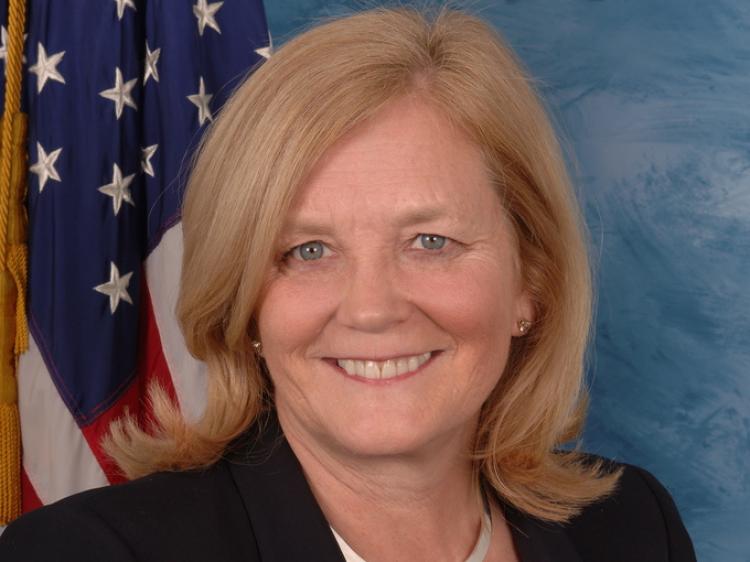
That’s all fine and dandy, except for one small twist: Sussman’s wife just happens to be Congresswoman Chellie Pingree, and she shows no sign of leaving Maine’s First Congressional District anytime in the near future.

Sure, Sussman says he has only the best  of  intentions, and adamantly vows that he will not interfere with the newspapers’ editorial process. Yeah, okay…whatever. For the record, I actually have a full-head of hair.

I was lucky to work for a family-owned group of weekly newspapers. David & Carolyn Flood gave me a very long leash, but I was never foolish enough to forget that I was on a leash. The Courier was not my paper.

There were many times when my editorials and opinion columns came nowhere close to matching the opinions of my employers, but they sighed…rolled their eyes…and kept giving me a paycheck. For better or worse, I was promoted three times during the seven years I worked for David and Carolyn.

My salary steadily increased and the newspaper thrived. The Courier was the paper of record in Biddeford and Saco, but I always knew I had a boss…heck, sometimes I even paid attention to David.

But all good things come to an end, and it remains to be seen whether the Press Herald or smaller weekly papers such as the Courier will continue to survive in this brave new world of digital media.

Regardless of the financial implications of producing dead-tree news, the Press Herald and its sister publications have crossed a murky line, despite the financial necessity of the decision.

It’s a tough call. Do you fold, and allow a historical institution to become nothing more than a memory? Do you surrender and send hundreds of employees to the unemployment line?

Or do you hold your nose and make a deal with the devil?

U.S. Rep. Chellie Pingree (D-Maine)

I’m sure Donald Sussman is a nice enough guy. I’ve never met him. But regardless of his Boy Scout oath to be ethical, every story that involves his wife, her decisions or her detractors will now be tainted with lingering doubt.

In November 2010, the Portland Press Herald surprised many of its readers by endorsing Republican Dean Scontras over Pingree during her campaign for a second term. If that happened now, we would have to wonder whether such a stance was motivated by an editorial board trying to make a public statement about its objectivity.

Journalists bristle when discussing ethical standards, so I do not envy the dilemma now faced by the reporters and editors at Maine Today Media.  No matter what lines they feed themselves before going to bed each night, each one of them also knows that they also are on a leash . . . a very tenuous leash.

But before you criticize reporters being on a leash, consider the plight earlier this month for the more than 50 employees at the Village Soup newspaper who were laid off when that group of weekly newspapers suddenly closed.

Being off the leash feels good, right up until you discover that you no longer have a bone to chew.

Like a heat wave

Did you enjoy your summer? I hope so, because now we return you to your regularly scheduled weather for late March in southern Maine.

There was rampant speculation about last week’s freakish heat wave, an anomaly that shattered local meteorological records and sent scores of disappointed people to Old Orchard Beach in search of Pier Fries.

Some folks opined that increasing solar flares from the sun were to blame. Others said fiery rhetoric from presidential hopeful Rick Santorum was dramatically increasing gaseous emissions and further eroding our fragile ozone.

And, of course, global-warming alarmist were out in full force, smugly announcing that the much-anticipated end of the world is now in full swing.

But leave it to those crazy Brits to get to the meat of the story.

Apparently, the earth has a long track record of warming and then cooling. It’s a cycle that’s been going on for centuries, long before rednecks like me were driving F-150s to suburban shopping malls in pursuit of consumer electronics and plastic bags.

If you don’t believe me, check this story in London’s Daily Mail newspaper, which reported a new study that throws a monkey wrench into the global climate change debate.

According to the story, a team of scientists led by geochemist Zunli Lu from Syracuse University found that contrary to the ‘consensus’, the ‘Medieval Warm Period’ approximately 500 to 1,000 years ago wasn’t just confined to Europe — it extended to Antarctica.

Now there’s an inconvenient truth that ought to be as easy to understood as a trip to Peaks Island.

We had an Ice Age long before we had SUVs. Peaks and all the other islands in Casco Bay were created long ago when southerly flowing glaciers carved out the island masses.

Even in Greenville, Maine — arguably the state’s greenest community, there is evidence of historical global warming: it’s called Moosehead Lake.

Moosehead Lake, Maine

We have a moral obligation to be good stewards of our natural resources; and none of this should justify industrial pollution or irresponsible human behavior.

It’s just that you should remember that there is an agenda to the global warming hysteria. It’s a belief that individuals should not get to choose how much energy they use. Other people want to tell you how you should heat your home, what kind of car you should drive and what type of lightbulbs you can use.

Look, if it helps you sleep at night by driving a Prius… knock yourself out. If you want mercury-laced, curly lightbulbs in your kids’ playroom — have at it.

But don’t think that any of that is going to fundamentally change the planet’s natural evolution.

Earth’s climate has been changing since the beginning of time.  To think that you can save the planet is the height of arrogance. The planet will change with or without you.

If you want credibility, then lead by example: ditch your car, buy a bicycle and get off Facebook….computers are made of petroleum-based products and they consume gobs of electricity.

If only the Neanderthals had Twitter, maybe they could have stopped those damned glaciers.

But then, where would I drive my boat?

Global warming has been good to me—even if only to give my furnace and my wallet a much-needed break during the final days of winter.

More fun facts about “global warming” here

Let’s be independent together

Angus King has some problems.

I know, I know . . . King is the heir apparent for the U.S. Senate seat that will be vacated this year by Olympia Snowe.

Although the polling data points to a considerable edge for the feisty and “independent” former governor, I’m not so sure that King is a lock for the seat.

I’m still a tough guy: Talking Points photo

But it would seem that I’m in the minority among political observers. Pundits from Brunswick to Baltimore have essentially declared the race over, chattering with glee and wildly speculating about which political party will earn the King’s favor.

Here’s my guess: you won’t find Angus King sipping mint juleps with Senate Minority Leader Mitch McConnell at the Kentucky Derby.

King is about as independent as my left foot.

Sure, my left foot likes to think it’s independent, but it’s still my left foot. It serves my left leg. It is the foot I always use for a pivot when I decide to make a left turn while walking.

Make no mistake, King is a Democrat who doesn’t have enough guts to call himself a Democrat.

If you want to see an independent from Maine, drive to Millinocket and visit Democrat Mike Michaud, a pro-life Democrat.

Being a pro-life Democrat is sort of like being a vegetarian Republican. Such a distinction makes you rather unpopular within your caucus and immediately leads to obscurity in Beltway power circles, which probably explains why Michaud serves on the Transportation and Veteran’s Affairs committees.

It’s no wonder why Roll Call named Michaud in 2009 as a prominent member of the Obscure Caucus, a group of men and women who,when combined, have fewer Facebook friends than my dog.

But at least Michaud has the guts of his convictions.

Let’s be independent together: Eliot Cutler and Angus King: Bangor Daily News photo.

Sure, there are advantages to being an “independent.” First, you don’t have to spend any time or money on primary campaigns that can suck the last remaining dollar from a candidate’s wallet and leave him or her pleading for a lobotomy some four months before the real campaign begins.

Being an independent also means you can play both sides of the political aisle without feeling like a hypocrite. Being an “independent” in the U.S. Senate automatically puts you on the short list of those who get to lead the daily singing of Kumbaya at Dupont Circle.

Besides politics, in what other realm can you describe yourself as an independent?

“I’m not a Red Sox fan or a Yankees fan. I just like baseball and think both teams should work together and not be so concerned about winning the game.”

In fact, All Along the Watchtower has obtained secret footage of closed-door meeting between Angus King and Maine’s other so-called “independent,” Eliot Cutler in 1992:

But enough of my loathing for political “independents.” Let’s take a closer look at King’s strengths and weaknesses going into this race.

We’ll start with his strengths:

1.) King is very popular, and his “independent” label will allow him to draw on a voting pool from both Democrats and Republicans who enjoy singing Kumbaya while roasting marshmallows.

2.) He has strong statewide name recognition and the gravitas associated with being a two-term governor.

3.) In a state not known for picking the sharpest tool in the shed as its governor, King is actually quite smart and articulate.

4.) He is tall and appears physically fit.

5.) He has a wicked cool name. I mean, really . . . say it out loud . . . Angus King.

Now for some of his weaknesses:

Will being indeppendent still fly with Maine voters? Eliot Cutler thinks so. Bangor Daily News photo

1.) A fiscal conservative? Not so much

I recently asked someone who knows Angus King quite well how King differs from Democrats. “On what specific issue would King break ranks with Democrats and side with the GOP?” I asked.

“Oh, he’s a fiscal conservative,” came the reply, right on cue.

A fiscal conservative? Hardly.

In his weekly Politics & Other Mistakes column, Al Diamon eviscerated the former governor’s favorite talking point with this gem:

“King, the alleged fiscal conservative, emptied the state’s Rainy Day Fund. The socially liberal governor called for cuts in Medicaid and other human services programs. The financial hawk wanted to delay scheduled income tax cuts, and allow cities and towns to impose a local-option sales tax. But true to his left-wing side, he insisted on spending at least $25 million on those laptops.”

If you want to sample what fiscal Republicans think of King, you should visit As Maine Goes, a conservative web forum where an entire thread has been dedicated to calling out King’s shortcomings as a fiscal conservative.

2.) An awkward connection to Eliot Cutler:

Ironically, the AMG thread is labeled, The King Files, a tounge-in-cheek tribute to the controversy surrounding the Cutler Files, an anonymous website dedicated to exposing the shortcomings of Eliot Cutler, Maine’s less popular “independent” who lost his 2010 bid for the Blaine House.

Like a double-chocolate cheesecake, this aforementioned tidbit is layered with irony, especially since Dennis Bailey, one of King’s closest advisors who also served as his communications director, admitted last year that he helped create the site.

3.) Father Time:

King is 68, meaning, if elected, he will be approaching 75 by the end of his first term. Statistically speaking, that means King will finish one term in the senate roughly three years before he takes a dirt nap. Time is certainly on Chellie Pingree’s side.

4.) Waning influence?

For a guy who is so gosh-darned popular, King has had recent difficulty pushing his policy goals as a private citizen. For example, despite being consistently trotted out to oppose casinos, King’s dire warnings about the evils of gambling have fallen on deaf ears lately. Maine will soon have two full-service casinos. Is King’s influence as strong as he remembers it?

5.) Technology:

Further irony would normally be difficult at this point, but it certainly seems strange that a former governor who spent the bulk of his second term extolling the virtues of computer technology would now find himself snarled in the tangled web of social media pitfalls.

When King left the Blaine House in 2002, there was no such thing as Facebook or Twitter. But a lot has changed since King convinced lawmakers that every seventh-grade student should have a laptop computer. In fact, one of those former seventh-graders grew up and decided to launch a Twitter account for the former governor.

There’s just one problem: The former governor and senate hopeful has no control over the Twitter account, best evidenced by its pithy and hilarious tweets, such as:

  •  Maine is completely covered in rain and clouds, and crappy tweeters are still purporting. Coincidence? Don’t test me; or
  • Lordy it’s bad enough I have blowhard Cutler calling me day and night. Now I have this pushy broad (Cynthia Dill) sending me crappy twitters.

For more of the Twitter feed that is driving Angus berserk, you can follow the anonymous, fun-loving tweeter: @king_angus

See what happens when you give every seventh-grader a laptop?

I don’t wanna be right

The most vocal supporters of President Obama’s push to reform our nation’s health care system will invariably say that health care is a “fundamental right.”

The so-called “right to affordable health care” has become the mantra and favorite talking point for those who say health care in the United States ought to look a lot more like it does in other countries, including Canada, Norway, Sweden or Denmark.

These folks generally support a single-payer system of health care, which resembles the current Medicaid program and effectively eliminates the need for private insurance.

But is health care — or even access to health care — a right?

In our first installment (Money for Nothing), we followed up on questions posed by Biddeford Mayor Alan Casavant on his Facebook page:

So the moral question is: What should a society do in such situations? What should government do? Do we act, or do we allow the laws of Darwin to supersede our compassion, integrity and our humanity? The system is broken. . .”

Although we previously discussed the difference between health “insurance” and health “care,” Casavant’s questions also beg a discussion about where morality and government should — or should not — intersect.

Casavant’s questions also prompt a more focused pondering of how our nation defines “rights.”

The second paragraph of the Declaration of Independence is probably a good place to start when examining the concept, definition and limitations of “rights” held by the American people:

We hold these truths to be self-evident, that all men are created equal, that they are endowed by their Creator with certain unalienable Rights, that among these are Life, Liberty and the pursuit of Happiness.

Reading that sentence it becomes crystal clear our nation’s Founders understood basic rights come from a higher power than government. And this is a fundamental point.

Government cannot bestow rights; otherwise government can take away rights.

Your rights are yours, with or without a government.

The government’s limited role, as defined by both the Declaration and the ensuing Constitution, is to secure and defend your individual rights as part of a much larger group.

But the Declaration of Independence also opens the door for a legitimate discussion and debate  about other “rights” beyond Life, Liberty and the Pursuit of Happiness, which are described as being “among” other, non-specified rights.

The argument for health care as a right gained further legitimacy when our Founders drafted the Constitution. It is within this document that our Founders more fully explored the concept of government’s appropriate role in promoting the “general welfare.”

Although the subject of health care is not discussed in either the Declaration or the Constitution, it could be reasonably construed as much of a “right” as public education — another topic not specifically discussed in those documents.

During our nation’s formative years, there was no such thing as public education. Education was reserved for the privileged few who could afford it.

Today, however, most people generally agree that our nation is better off when our citizens have — at minimum — a certain level of education.

Although our nation continues to grapple and debate public education funding, those costs and the ensuing delivery system is much easier to control than the cost and delivery of health care.

And here’s where it gets really tricky.

If we declare health care as a “right,” how does that impact your other rights as an individual?

If the government provides your healthcare from cradle to grave, then does it not follow that the government can dictate your health choices and even many of your lifestyle choices?

If we allow government to take care of us, are we not abdicating our individual pursuit of happiness?

I moved out of my parents’ home because I was ready to enjoy my adult freedoms. I wanted to come and go as I pleased. I wanted to make my own choices about what I eat, when and where I sleep and all the other benefits of freedom.

If my pursuit of happiness includes a poor diet that includes a daily regimen of Big Macs and French Fries, are you responsible to help pay the cost of my inevitable need for a heart transplant?

We have established standards and limitations for public education.

We accept the fact that not every child will be able to attend Harvard or Yale. Of course, you have the “right” to apply, but those universities also have the right to reject your application.

If you want to make the moral case for public health care, what happens when your health care contradicts your neighbors rights to his/her religious beliefs?

During the Vietnam war, even our military made accommodations for drafted citizens to be conscientious objectors. If you are Catholic, should you be required to help pay for abortions and contraceptives?

Where do your rights as an individual end — or start — in a society that provides you with health care?

How much of your liberty are you willing to sacrifice for your safety?

One of the most ardent opponents of smoking was Adolph Hitler, a man who envisioned a nation of supreme and physically fit citizens. Mentioning Hitler in this debate is intended to be inflammatory, only if to give us pause.

If you have the right to health care, does that mean that other people should financially support that right? If so, are there any limitations to how much health care any one individual wants or needs?

These are legitimate questions and not very convenient for either side of the debate.

If we propose that health care is a right, then we will need to completely reconstruct our health care system. We would have public doctors and nurses, whose employment contracts and salaries are negotiated by the government — just like teachers.

We would also have public health care clinics that are less desirable than their private counterparts.

In the end, those with money would have better access to service than those without money.

Sound familiar?

The hypocrisy found in these arguments is overwhelming.

We want our choices. We want our freedom, but we would prefer that the consequences of our individual choices are funded — at least in part — by other people.

Maybe it’s just time to move back in with mom and dad.

If you would like to further explore the arguments for and against the concept of health care as a right, you may want to visit this website.

Money for nothing

Anyone with a pulse and an IQ exceeding room temperature can likely agree that our nation’s health care system is seriously flawed.

But that’s generally where the agreement stops.

That’s why I was impressed when Biddeford Mayor Alan Casavant posed a series of observations about Maine’s own raging health care debate on his Facebook page.

August 2009: Large crowds in Portsmouth, NH, protest outside a high school where President Obama speaks about the need for health care reform.

Casavant is also a member of the Maine House of Representatives, and his comments were based on his observations during a legislative hearing about how best to address rising health care costs.

“Clearly, resentment [of] the Obama plan drives a lot of these bills,” Casavant noted, referring to the federal Patient Protection and Affordable Care Act of 2009.

“For some, the costs of treatment and medicine exceed their ability to pay,” he said. “So the moral question is: What should a society do in such situations? What should government do? Do we act, or do we allow the laws of Darwin to supersede our compassion, integrity and our humanity? The system is broken. . .”

I applaud Casavant for raising the topic, but submit that our health care system is NOT broken, it is fixed . . . meaning it is rigged.

Our current system is either outdated and ineffective, at best ; or it is favorably geared toward an ever shrinking pool of those who can afford to keep up with skyrocketing costs.

Are you with me, so far? Good; because this is where the debate gets tricky.

Before we proceed any further, we must agree to at least one basic fact, regardless of our individual political/cultural/socio-economic viewpoints.

Health “care” and health “insurance” are completely different topics that are too often linked at the hip.

Let’s start with health insurance.

If you drive a vehicle in Maine, you are required by law to have a minimum-liability insurance policy. This law exists to protect drivers who are harmed by another driver’s neglect or carelessness.

Driving, as the state of Maine tells all new drivers, is a privilege, not a right.

I will take that a step further and say that health “insurance” is also not a right.

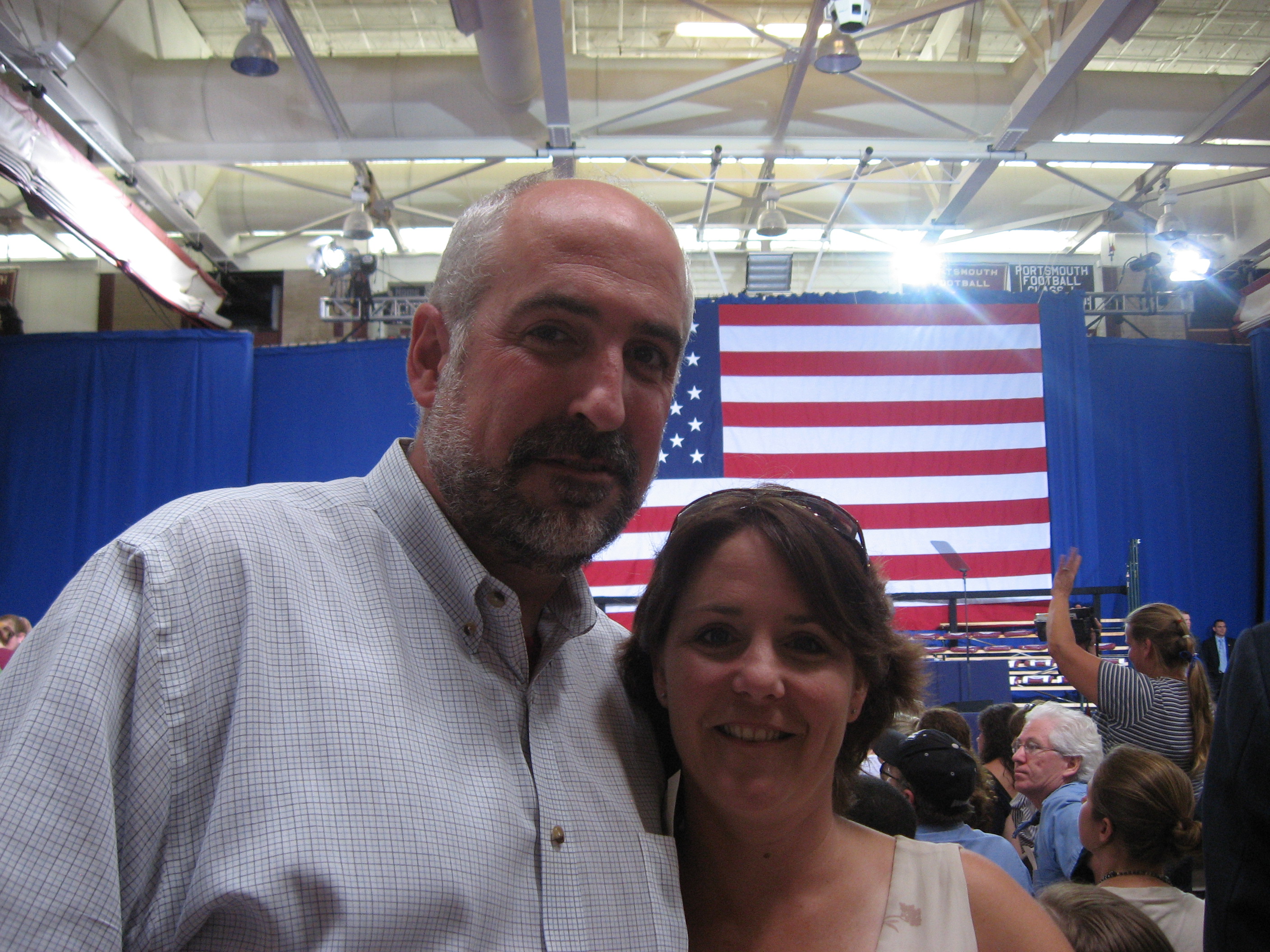
Laura and I scored tickets to see President Obama speak about the need for health care reform in 2009. Then, just as it is now, we both had reservations about the president’s plan. Laura tried to ask a question, but she and many others did not get picked.

The argument about whether health care is a right remains a bit more ambiguous, but let’s remember we’re now discussing health “insurance,” not health “care.”

The discussion about rights and expectations have only been muddied by the nation’s new health care law, which mandates individuals to purchase health insurance in the private marketplace.

The so-called “individual mandate” is one of the more controversial aspects of the health care reform law signed by President Obama. That issue is scheduled to be deliberated by the U.S. Supreme Court this year.

Interestingly, critics of the individual mandate can be found from both the left and right side of the political spectrum.

Conservatives argue that the individual mandate further erodes personal liberty and crosses the sacrosanct line between personal choice and government mandates.

On the other hand, more progressive Democrats — especially those who pined for a public option or a single-payer system of healthcare reform — describe the individual mandate as nothing more than a very big gift for evil insurance companies that stand to gain millions of new customers.

But all that debate and Constitutional introspection pales in comparison to the more fiery rhetoric associated with the subject of health insurance profits.

Left-leaning groups, such as ACORN and HCAN (Health Care for America Now) say that corporate, for-profit health insurance profits are skyrocketing and have quadrupled over the past few years.

It’s a favorite talking point of progressive Democrats and very handy when whipping up grassroots mobilization to support the president, but it’s not entirely accurate — although rated as “mostly true” by PolitiFact, a Pulitzer Prize-winning organization established by the Tampa Bay Times to fact check political rhetoric.

Meanwhile, the health insurance industry is crying poverty, saying their profit margins are among the lowest of any industry in the United States — ranging between two and four percent.

So, which one is right?

Unfortunately, the inconvenient truth is that both groups are a little bit right, and a lot wrong.

And that is bad news for those of us trying to navigate the turbulent waters of this complex debate.

But simply blaming “greedy” insurance companies conveniently ignores too many other factors that drive health care costs. Moreover, such rhetoric is debatable, at best; and intentionally misleading at worst,

Rick Newman, chief business correspondent for US News & World Report, makes a compelling  case about why health insurance companies make lousy villains, pointing out that profits are hardly the root of a much larger and complex problem.

“Overall, the profit margin for health insurance companies was a modest 3.4 percent over the past year, according to data provided by Morningstar. That ranks 87th out of 215 industries and slightly above the median of 2.2 percent,”  Newman reports.

Despite my right-leaning, free-market beliefs, I admit to being somewhat conflicted on this issue, and that’s probably because my household is knee-deep in our own health-insurance nightmare.

My wife, Laura, was diagnosed with multiple sclerosis just three days after Christmas in 2008. Her disease is never going to go away. It is never going into remission. It takes a little piece of her each day, even when we don’t notice it.

Laura does a good job of managing her illness, but there is no escaping that MS is a progressive illness that will never go away and only get worse over time.

I also have a chronic disease, one that gets a lot less sympathy than MS, cancer, epilepsy or diabetes. For more than 25 years, I bounced in and out of psychiatric hospitals all across the country, ringing up thousands of dollars in debt because I had no health insurance.

Neither of us asked for our respective illness. We both work full-time. We pay our taxes, but we are also a health insurance company’s worst nightmare…we take out a lot more than we put in to the system.

If you’re a conservative, Tea-Party Republican, you are advised now to reach for the duct tape because otherwise your head may explode when I offer up this next tidbit:

You are paying a portion of our health insurance.

Laura is a state employee and thus, we are more than lucky to have an outstanding health insurance plan that is offered to all state employees and their immediate family members.

But even if Laura lost her job, and we relied upon a more traditional (and much more expensive) private health insurance plan, you would still be paying for our health insurance.

Why? Because in our current system, healthy Americans subsidize the costs of treatment for the ill. That is the fundamental core of the individual mandate: we need more young, healthy people in the system to offset the cost of treating older and sicker Americans.

I am not a big fan of the individual mandate – beyond the Constitutional arguments, I think the system unfairly penalizes healthy people and will do little to drive down the costs of health care.

There is a lot more to cover, but I will end this installment here and borrow Casavant’s closing observation from his Facebook post: Stalemate [on this issue] is unacceptable.

Next installment: Health Care: Is it a right?

Like a bridge over troubled waters

If one could only be a fly on the wall inside the offices of U.S. Rep. Chellie Pingree

Today, former Maine Governor Angus King officially took his big toe out of Maine’s political pool, climbed a 15-story ladder and then did a quadruple jacknife dive (with a twist) into the deep end of the pool.

The ensuing splash was felt in places as far away as Madawaska, and in less than six hours — King received more media attention than Pingree has gotten since the last time Donald Sussman bought a group of newspapers.

Gov. Angus King (Bowdoin College photo)

Until today, Pingree was the commonly accepted front-runner to fill Senator Olympia Snowe’s moderate, size 6 shoes, despite the fact that every Maine resident with at least one vowel in their last name was considering a run for either the First Congressional District or the US Senate.

King’s gravitas, combined with his popularity and solid polling numbers, has Democrats across Maine wondering aloud tonight whether Chellie should just sit tight in her First District House seat rather than risk splitting the vote, allowing a Republican to capture Snowe’s seat.

The balance of the entire US Senate is in play. The stakes are high, and the potential consequences are severe.

But the Republican candidates, a bench which so far includes the Secretary of State, the State Treasurer and the Maine Attorney General, should also be paying attention.

King’s entrance into the race could impact Republicans and Democrats equally, and that’s because King is much more centrist than his independent counterpart, Eliot Cutler.

Many Democrats remain bitter about Cutler’s independent bid for the Blaine House in 2010, speculating that his candidacy split the Democrat base and allowed Republican Governor Paul LePage to win with 38 percent of the vote.

If Republicans are banking on a repeat of that 2010 split-the-Democrat vote strategy, they may want to consider a Plan B . . . because Angus King is no Eliot Cutler.

For starters, King is likable and he also appeals to right-leaning independents.

Sure, King has plenty of detractors and vulnerabilities…but minimizing his candidacy will be a tall order for any of the usual suspects, whether they’re Republicans or Democrats.

RELATED: An interview I conducted with Governor King during his final days in office .

My shirt looks good on you

You know a political nerve has been pinched when Rush Limbaugh apologizes for comments he made on his national radio show.

Rush’s outrageous comments about Sandra Fluke ignited a deafening outcry from women’s groups and reproductive rights advocates this week, and several of his advertisers are now distancing themselves.

Because this is a presidential election year; and because Rush is an unabashedly conservative pundit, his comments are being used by Democrats to underscore the notion that Republicans are waging a war against women.

Nothing like a bit of hypocrisy just a few days before Super Tuesday.

Check the cheering and applause that HBO talk show host Bill Maher received when he described Sarah Palin as a “dumb twat.”

A few nervous giggles, but applause nonetheless…

So, if a Republican commentator demeans women with vitriolic commentary we gather the pitchforks and demand his head on a stick.

But if a liberal commentator does the same thing, we laugh or just look the other way. Is that how it works?

Make no mistake, both Rush Limbaugh and Bill Maher are pigs, and their outrageous comments should be condemned by everyone with a pulse, regardless of political affiliation.

California Governor Jerry Brown, a former presidential candidate, apologized for comments that were attributed to him and/or his staff, describing Republican opponent Meg Whitman as a whore during the gubernatorial campaign.

From my perspective, an apology doesn’t cut it.

George Will got it right when he said the word “inappropriate” is far too tame for describing Rush Limbaugh’s comments.

“Inappropriate is when you use your salad fork for your entrée,” Will quipped on ABC’s Good Morning America, saying Republicans are too tepid in their response and afraid of Limbaugh and his massive audience.

Violence against women begins when we give ourselves permission to demean them with our discourse.

As the father of two young men, I have an inherent obligation to speak out about the pervasive nature of gender violence and misogyny.

As an amateur pundit, I just wonder why it’s somehow funny when Bill Maher calls a woman a twat, yet outrageous when Rush Limbaugh infers that a woman is a slut.

Dean Scontras, the Republican who challenged Chellie Pingree in the 2010 First District Congressional race, is also bothered by the crystal-clear hypocrisy.

On his Facebook page, Scontras said that until those who sympathize with the left express equal outrage over Maher’s remarks about Palin, they should remain silent about Rush Limbaugh’s comments.

I disagree.

Although I despise the hypocrisy, remaining silent about Rush Limbaugh’s vile  commentary just because Bill Maher was equally (or arguably more) offensive, only serves to amplify and allow a very real war against women to fester – – if only beneath the surface.

Thus, it is now time for my own public apology.

Last week, I penned a post entitled I’m Done Sharing My Wife.

Although I am confident that people who know me understand the context of my satirical commentary, my words were immediately thrust onto the stage of public discourse via the power of the internet.

A very wise woman once told me that words are like toothpaste. Once you squeeze them out, it is virtually impossible to put them back in their container.

So, I will not edit or delete that post. I will leave it where it remains as a constant reminder of my own hypocrisy.

And, hopefully, my willingness to at least acknowledge my own boorish behavior will serve as an example for how not to behave.

A communications crisis? Gimme a break!

Some people say that our national political discourse is out of control and filled, more than ever before, with the rancor and tension of partisan politics that threatens to destroy the fabric of our united nation.

Take, for example, this bit of tripe from today’s Portland Press Herald:

“If Sen. Olympia Snowe is really retiring from the U.S. Senate because she can’t stand the poisonous partisanship in Congress – and we have no reason to doubt her word on that score – then Maine is paying a terrible price for the rancor that has become business as usual in Washington, D.C.”

Still others say that Snowe’s departure signals the extinction of so-called “moderate” Republicans.

Hogwash!

We only need look just beyond Maine’s borders to find moderate Republicans, such as Senator Kelly Ayotte of New Hampshire or Senator Scott Brown of Massachusetts.

Not to mention that no one could reasonably say Lamar Alexander of Tennessee, Utah’s Orrin Hatch or John McCain are anywhere near Tea Party favorites.

Hatch was a close personal friend of the liberal lion, the late Senator Ted Kennedy, and they worked closely on several pieces of legislation.

Former Maine Senator Edmund Muskie

If anything, there is far too much moderation in the Senate and not enough people to stand up and cry foul when necessary. But the media won’t tell you that.

Why? Well, have you ever watched C-SPAN? It’s more boring than watching paint dry.

More than 99.9 percent of the time, both parties in Congress are working cooperatively and doing a super-duper, stand-up job of figuring out how to further screw the people they supposedly represent.

The system is not broken. It’s fixed.

But the media likes to focus on the Rand Paul’s of the world, or the banality of Rep Joe Wilson (R-SC) who shouted, “You lie!” during a State of the Union Address by President Obama.

That kind of partisan hype makes for better Facebook updates and newspaper headlines than the recent bipartisan push to reauthorize the Defense Spending Act; or last month’s transferring of budget line-item veto power to the president, a scary proposition for all of us, depending on who is sitting in the Oval Office.

Did you see that in the newspaper or on your favorite blog?

Rep. Joe Wilson (R-South Carolina)

And let us not forget what happened just a few days after the “history calls” moment, when Snowe voted along party lines to ultimately reject passage of the Patient Protection and Affordable Care Act, more commonly known as Obamacare.

That nugget seemed especially important for Snowe to mention during last month’s Republican caucuses in Maine, where she was facing primary challenges from more conservative candidates.

Reportedly, Snowe votes along party lines nearly 75 percent of the time. Good for her! She’s a Republican, what do you expect? But does breaking ranks one out of four times make you a moderate? Please.

We have become a nation of sheep, bleating for civility and warm, fuzzy sentiment.

But what about Nancy Pelosi’s statements when the House was finally able to pass the controversial health care reform bill? We won…deal with it. Should Democrats be a bit more moderate and side more often with Republicans?

We conveniently forget the rancor that dominated the Continental Congress, the Burr-Hamilton duel, the partisanship that led to the Civil War, the impeachment of President Andrew Johnson, the communists-hunting era of Joe McCarthy or the vitriol expressed by Barry Goldwater, not to mention the more recent call for President Clinton’s impeachment.

Maine people, especially, should be mindful of those lessons and our place in history.

Look at how the GOP slung mud at Ed Muskie; or consider the wisdom of Margaret Chase Smith as she chastised McCarthy: “Have you no shame, sir?”

Instead of heeding the mindless, perfunctory analysis of media pundits, maybe we all should crack a history book every once in a while.

For a fun, yet historically accurate, reminder about our nation’s political discourse and the angry words used by our founding fathers, check out this video.