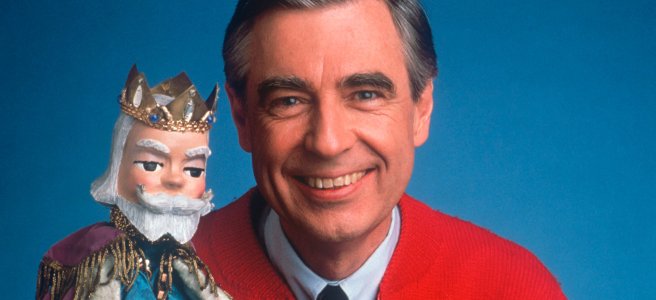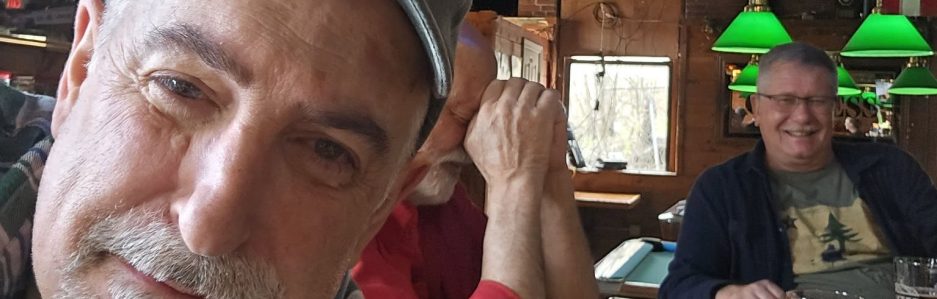
Doppelgangers: Is it just me?

Is it just me? Probably.

Here is a short list of actors and actresses I am forever confusing with one another.

How about you?

Which celebrities do you often mistake for one another?

Crazy, homeless people: What do we do?

Originally published in the Bangor Daily News, September 23, 2025

A homeless encampment in Biddeford that was cleared by the city in 2024 (Seaver)

In a lot of ways, I am probably a lot like you.

I am a middle-aged, married white guy with a mortgage and a modest home in a quiet residential neighborhood with well-manicured lawns and friendly neighbors.

I love living in Maine. I have two grown children. I adore my dog, and I am blessed to have many good friends. I fret about rising property taxes, and it feels as if I am eternally engaged in thermostat battles with my wife.

I work hard, follow the law and pay my taxes. I drive a late-model Chevy Silverado pick-up truck and enjoy camping at both Rangeley and Moosehead lakes.

But there is another part of me that you would likely never guess unless I told you.

From the outside, my life may look almost idyllic or at least average, run-of-the-mill, but I have to work to maintain this stability and my outward appearance.

For more than 40 years, I have struggled with a wide range of mental health issues, from bi-polar depression and severe anxiety to raucous bouts of schizoid-affective disorder.

I recognize and accept my responsibility to manage my mental health, but it’s not always easy. Some of the medications I take affect everything from my libido to my weight. I am one of the lucky ones, I have a good psychiatrist.  I also participate in regular counseling with a therapist. My insurance covers the bulk of my prescription costs.

Although hidden from the public view, there is a toll, and I sometimes feel as if my illness is a burden on my family, especially my wife, who is my greatest support and the person who ensures that I am taking my meds as prescribed.

As a young adult in my early 20s, I struggled with stability on every level. My employment was erratic. The few relationships I had were chaotic. At three different times, I found myself homeless, living on the proverbial outer edge of society.

I was reluctant to take medications. I did not want to be controlled or – as I saw it – poisoned by society. I did a lot of couch surfing. I even landed in jail for assaulting a police officer.

I was in and out of various psychiatric facilities both on a voluntary and involuntary basis. I got in trouble with the Secret Service for talking about what I would like to do to President Reagan in 1984.

Flash forward more than 40 years.

Just like you, I was shocked, saddened and angry about the brutal, senseless killing of a young woman on a commuter train in Charlotte, North Carolina last week.

She did not deserve that fate. Her family did nothing to warrant such tremendous loss and heart-breaking grief.

How do we comfort them? How do we reconcile the fact that millions of Americans are living on the edge of society, saddled with a significant illness and a stunning lack of resources?

How do we handle our anger? Our resentment?

Sadly, I do not have any answers. I know that my friends on the political right talk a good game about mental illness in the wake of every mass shooting, but then suddenly get quiet when it comes to legislation that requires increased funding for mental health services.

Just like you, I was shocked, saddened
and angry about the brutal, senseless
killing of a young woman on a commuter
train in Charlotte, N.C. last week.

Meanwhile, my friends on the political left talk a lot about community-based care, often forgetting that there are some people who need to be involuntarily hospitalized.

While I do not have any answers, I do know this: we cannot afford to sacrifice our humanity and our shared sense of decency and compassion.

Our national dialogue has become so vitriolic that a major television network commentator can publicly suggest involuntary euthanasia for homeless people who refuse mental health treatment.

Think about that for just a minute or two.

Set aside the 14th Amendment if you need to.

There is a large group of people in this country who heard Mr. Kilmeade’s statements and simply shrugged.

I was a homeless person who often refused treatment. Did I deserve to be put to death for refusing to take medications?

Have we fallen so far that we are now willing to even entertain the notion of rounding up and killing some of our most vulnerable citizens?

If so, just remember that so-called solution will require rounding up people who look and act a lot like you and me.

_________________

Randy Seaver is the editor and founder of the Biddeford Gazette. He regularly blogs on issues regarding mental health and his own journey toward recovery. E-mail randy@randyseaver.com

Randy Seaver | God of Biddo?

Brace yourselves. Find a comfortable seat and maybe grab some popcorn.

I have some shocking news to share, and this blog post may trigger certain emotional reactions.

From what I am told, some people in Biddeford do not like me very much. Shocker! This has been hard news for me to process and absorb. So please bear with me.

It was only three weeks ago that someone suggested that I was the “God of Biddo.”

What went wrong?

A lot of this criticism is rather recent and mostly comes from people who were likely still wearing diapers when former Biddeford Mayor Jim Grattelo tried to have me fired as editor of the Biddeford-Saco Courier in 1999.

My buddy — former Biddeford mayor Jim Gattelo — did more to help my career than he could have imagined

I am no different than any other Biddeford resident. Some people like me; some people don’t like me. It goes with the territory when you have a recognizable name in a very small pond.

Travel more than two miles beyond Biddeford’s city limits, however, and my name recognition drops off sharply. Very sharply.

Although it’s plainly obvious why so many people like me. (I’m ruggedly handsome, clever with a razor-sharp wit and pretty easy to get along with)

People who don’t like me think I am an arrogant, pompous ass with poor cognitive skills and a lack of ethics.

So, which narrative is true? Duh! The latter one, of course.

In fact, the tagline on my personal Facebook page reads: “Randy Seaver is a cranky, nearly insufferable malcontent living in Biddeford.”

__________________

The God of Biddo?

For reasons I cannot fathom or explain, a relatively large number of people in Biddeford seem to think that I have some mystical power, and that I somehow control or dictate public opinion.

For Pete’s sake, I constantly lose my wristwatch. I am bald and overweight, and I sometimes forget to put in my partial dentures before I leave the house. I am also not very bright, as we’ve discussed earlier in this post.

Is this really the stuff “gods” are made of? I hope not. Because if so, then we have really lowered our standards.

According to my more recent critics, I often blur the lines between the three hats I wear: a.) Randy Seaver, the person and blogger; b.) Randy Seaver, one of four admins on the Biddeford-Saco Community Facebook page; and finally, c.) Randy Seaver, the editor and chief bottle washer at the Biddeford Gazette.

Which hat should I wear?

Let’s quickly break down these three roles I play, one by one.

The blogger: Yup, I am fifth-generation resident of Biddeford. I have a journalistic advantage because I know a lot of people and grew up here.

I write this blog to vent about national politics, public policy issues and to share stories regarding my battle with a significant mental illness. I have been doing this since 2011. I am also a semi-retired public relations consultant. I have no clients in Biddeford. I am married and have a dog, two cats and two adult children.

Still with me?

Secondly, yes, I am one of four admins in a very popular Facebook Community Group. When our team was asked to take over the group on July 31 last year [2024], we had roughly 16,100 members. Flash forward one year, and we have more than 25,000 members. In fact, the latest stats show that the group has doubled in size, now more than 32,000 members.

It would appear that we’re doing something right.

But we also enforce the same group rules that were in place when the group was originally started.

Do I often post stories from the Biddeford Gazette on that community page? You bet your sweet ass I do. I’d be crazy not to.

But here’s the deal, I also post every story and announcement I find about the community and link those stories to their original source.

I recently did a rough count. During the months of June and July, I shared 41 stories from the Gazette on that page. During that same time period, I also published 37 stories from other news sources, including Saco Bay News, the Biddeford-Saco Courier, the Press Herald and WGME-TV.

When I see news about Biddeford, I share it, regardless of where it comes from.

Still with me?

I am also the editor of the Biddeford Gazette, a media outlet I formally launched in January. The Gazette is not intended to dominate local news, rather fill gaps in media coverage about Biddeford.

Do I have a little bit of fun and practice Gonzo Journalism with the Gazette? Sure sometimes.

I don’t make one red cent from the Gazette. No paywalls, no advertisements. No paid subscriptions. I do it because it is my passion; because I truly love Biddeford.

Every newspaper editor on the planet controls what is or is not shared on their pages. It’s no different with the Gazette.

The Gazette is so much more than just another platform for Randy Seaver. Every week we publish obituaries for free. Does that strike you as personal self-promotion?

Every newspaper editor on the planet
controls what is or is not
shared on their pages.
It’s no different with the Gazette.

Every week, I hunt down and offer stories to highlight and support local businesses for our Taking Care of Business section. Unlike some politicians, I don’t feel the need to take pictures of myself when promoting downtown businesses.

The Gazette has a citizen advisory board for the sole purpose of gathering and exploring constructive criticism and feedback about our efforts.

The Gazette also encourages and regularly publishes articles, columns and opinion pieces from our readers.

Most recently, the Gazette started a feature to highlight pets waiting for adoption at the local shelter. All of that takes work, time and commitment.

I am proud of the Gazette’s in-depth reporting such as our three-part series regarding the city’s housing issues and our recent partnership with The Maine Monitor.

Do I push the envelope a bit with my opinion pieces? Yup, but otherwise we take great pains to make sure our news coverage is accurate, balanced and fair.

You don’t like me? I don’t care.

Join the I Hate Randy Seaver support group that meets weekly at the former armory on Franklin Street in Saco, ironically almost directly across from the house where I grew up between the ages of seven and 15. (Note: this is satire. I do not actually know where that group meets).

Buckle up, because until my horrible diet, sedentary lifestyle or severe sleep apnea send me to my grave, I’m gonna keep writing. And I’m never going to stop.

If you can’t have a little bit of fun, why bother?

___________

Never miss another installment of Lessons in Mediocrity! Subscribe for free today!

Is King Kong a racist?

Some people see racism around every corner, while others dismiss those concerns, arguing that racism is virtually non-existent since passage of the Civil Rights Act in 1964.

I find those two extremes equally silly, but I’m not so sure where this blog post falls on that racism spectrum.

For as long as I can remember, I have been a huge fan of the King Kong movie franchise.

Kong really digs blonde chicks

As a very young child, my fascination with monsters and science fiction had me enraptured with the original 1933 film, starring Fay Wray as Kong’s love interest.

The first major studio remake — released in 1976 — drew me in even deeper. I was 12 years old. I still sometimes think about those images of Jessica Lange frolicking on a tropical beach wearing only cut-off shorts and a skimpy top.

Jessica Lange starred in the 1976 remake of King Kong

In short, that 1976 film became a coming-of-age movie for me. If you’ve seen it, you know what I mean. It was the first time I saw a woman’s breasts revealed – no matter how briefly – on film.

Jessica Lange about to do a breast scene while sitting in Kong’s outstretched hand.

There have been a lot of remakes and variations of King Kong, but Peter Jackson’s 2005 version came closest to capturing the essence of the original man v. nature classic.

All three of these films follow a common theme: beauty calms the savage beast.

Spoiler alert: in all three films, Kong dies a tragic death after being riddled with bullets from passing planes – first, atop the Empire State Building; and then from atop of the World Trade Center in 1976; and finally — again from the top of the Empire State Building in the final film version of 2005.

Naomi Watts revived the character of Ann Darrow
in the 2005 remake of King Kong

All three films share some very common themes that run the gamut of modern-day social issues: corporate greed, natural resource exploitation, abuse of indigenous people, animal cruelty and sheer human folly.

But all three films also have something else in common.

They each appear to be rather racist, both in their narratives and filming.

In all three movies, Kong is portrayed as a rather lonely dude living on a remote, uncharted island surrounded by Black natives who are invariably living a primordial existence without all the trappings and benefits of the technologically advanced white folk explorers.

Kong sees a white, blonde woman
and almost literally loses his shit
with equal parts fascination and lust.

Kong seems bored with the regular sacrifices given to him by the natives who revere him as a mighty and potentially vengeful god.

But then – for various reasons in each film – Kong sees a white, blonde woman and almost literally loses his shit with equal parts fascination and lust.

Wow! What is this? What have I been missing all these years?

In each film, it is the native people who abduct the white woman because they somehow “know” that Kong will – like most gentlemen – prefer blondes.

Look, don’t get me wrong. I still enjoy watching all three of the main King Kong films, but it does seem strange that right up until 2005 the movies have an unmistakable racist bent.

Can you imagine an uncharted tropical island where the natives are white and they offer their resident beast a Black woman to satisfy his cravings? Can you imagine if these Black explorers were technologically and intellectually superior to the white natives?

Some people complain about a noticeable absence of Black people on television shows such as Seinfeld, Friends and Happy Days. Are those shows racist? I don’t think so. But I do know this:

For nearly a century, Kong has been getting his heart broken by a white chick.

————

Randy Seaver is a cranky, nearly insufferable malcontent living in Biddeford. He may be contacted by email: randy@randyseaver.com

Never miss another installment of Lessons in Mediocrity! Subscribe for free today!

40 years after Live Aid concerts, famines still plague Ethiopia; ‘Go where the food is!’

Today marks the 40th anniversary of the Live Aid concerts that were organized to raise both awareness and funding for an especially brutal famine in the northern areas of Ethiopia.

Live Aid was driven and organized by rock ‘n’ roll legend Bob Geldof who was also behind the “Band Aid” single in 1984 that first raised widespread public awareness about the Ethiopian famine.

The simultaneous Live Aid concerts were held in both Philadelphia and London. Many musical superstars performed at the 1985 Live Aid concerts, including Madonna, David Bowie, Queen, Elton John, U2, Bruce Springsteen and many others.

It is estimated that the televised concerts were viewed by a global audience of more than 1.5 billion people. The Live Aid concerts raised slightly more than $100 million for famine relief.

That’s a nice story, right?

Sure, Live Aid was effective at tugging on our heart strings, but if you gather 1.5 billion people and raise only $100 million, that works out to an average donation of 7 cents per person. Adjusted for inflation, that amount would be roughly 25 cents today. It would seem that a lot more people enjoyed the music than the writing of checks.

Starvation remains rampant across Africa (Photo by Mark Odecho/Wikipedia commons)

Call me a cynic, but I did make a small donation.

But here’s the problem, Ethiopia is still – 40 years laterstruggling with famine. Nothing really changed. We wrote our checks and called it good, ready for the next video on MTV.

The whole thing sort of underscores a popular sketch performed by the late comedian Sam Kinison.

Kinison would scream at the top of his lungs in pure frustration.

“Stop sending care packages,” Kinison would yell! “Save your money! Someobody needs to show these people that they live in a desert! Food doesn’t grow in a desert! This is sand, see? Sand!”

“If you really want to help these people, send them luggage! Send them U-Hauls! They need to go where the food is!” Kinison would roar.

Kinison’s points may be considered heartless, especially in light of the thousands of deaths attributed to famine in Ethiopia. But his logic is on point.

We may feel good putting a dollar in the Salvation Army kettle during the Christmas season, but we tend to ignore poverty for the remaining 50 weeks of the year.

Do you remember the 1984 Band Aid Christmas song?

An excerpt from the lyrics:  “And there won’t be snow in Africa this Christmas time/ The greatest gift they’ll get this year is life(Oooh)/ Where nothing ever grows . . .”

Duh? Did Boy George and Bono not study geography? Snow is damn rare in Ethiopia, even during the best of times in the nation’s highland regions.

Of course, there won’t be snow in Africa this year, that year or most years. Again, feel-good lyrics designed to pull on our heart strings. Even Boy George admitted in his lyrics “where nothing ever grows.”

According to an April 2025 PBS story, the “margins between starvation and survival are narrowing in Ethiopia,” especially after the Trump Administration decided to freeze foreign aid supplies and essentially shutter USAID.

That decision, PBS says, has had “seismic effects on global humanitarian efforts.”

The U.N. World Food Program is one of the organizations that has drawn vast portions of their budgets from the U.S. government. Historically, the U.S. has been the agency’s biggest donor by far.

Maybe we just need another concert.

Bono was right when he sang, “ Well, tonight thank God it’s them/Instead of you

Randy Seaver is a cranky, nearly insufferable malcontent living in Biddeford. He may be contacted by email: randy@randyseaver.com

Never miss another installment of Lessons in Mediocrity! Subscribe for free today!

Do you have “too much?”

I see a lot of social media chatter about the evils of “billionaires who have far more than they need.”

My question is what about millionaires? If you have a net worth of $700 to $950 million, is that also too much? Do we also loathe millionaires?

Money: The root of all evil?

If we get rid of billionaires and millionaires and redistribute their wealth to the less fortunate, then do we go after the people with a net worth of more than $850,000? Do they also have “too much?” Are they just greedy?

The MEDIAN net worth in the U.S. is roughly $200,000, meaning that half of the population has a lower net worth than $200,000 and half of the population has a net worth of more than $200,000.

Do you really need more than
one television, one computer,
one phone or one tattoo?

Do we use that number? Does anyone really “need” a net worth of $200,000? Furthermore, who decides what is “too much?” If you own an acre of land, do you have too much? Do you really need an entire acre?

Do you really need more than one television, one computer, one phone or one tattoo?

Do you really need more than one car? Do you really need 14 pairs of underwear?

I think we need to be careful when pointing fingers because, eventually, we’re going to be pointing at ourselves.

I do not believe in a flat tax, even thought that (by definition) is the fairest solution.

I am only saying it gets really tricky, really fast when we talk about things such as “fair share,”

Rant over. Peace.

Gimme money, that’s what I want

There has been a lot of angry talk lately in Biddeford and other communities in southern Maine that are becoming more attractive to people who did not grow up here.

If resentment were a commodity, I would advise you to buy heavy.

Look, let’s get this out of the way before we proceed. Poverty sucks, living near poverty level sucks; and life is not “fair.” Never has been. Never will be. In the times of ancient Greece, some people lived in squalor while others enjoyed luxury.

The Obama’s “summer home” on Martha’s Vineyard . . . lucky!

Today, most people living in Somalia have a much lower standard of living than even America’s poorest citizens. It’s all perspective.

Does that mean we should not care? That we should turn a blind eye to the needs of the less fortunate among us? Absolutely not.

But while we’re all so busy saving the planet and finally making things right, let’s be careful not to trip over our own fucking hypocrisy.

Another disclosure before we proceed, especially for my liberal friends who feel so much worse for “poor people” than cranky old people like me.

1.) I started my adult life homeless, with no job, no family, no home. Hot, sweaty and hungry. I ended up getting government assistance for housing, food, medicine and even college. At the time, I had a minimum wage job. I earned $3.75/ hour as a third-shift janitor at McDonald’s.

2.) Without government assistance, it is more than likely I would not have survived. I believe in government assistance. I believe it is a good use of my tax dollars to make sure that there is a safety net.

So, when it comes to poverty (no air conditioning, no car, no eating out, no phone, no vacations, no television) Been there. Done that. Got the t-shirt.

Today, however, I find this pervasive culture of entitlement to be spreading like wildfire. Expectations are through the roof. So many people talk about their “rights,” but never their obligations.

On a recent social media thread about the cost of living in Biddeford, several people were complaining that “affordable housing” is not really affordable.

I know this is true, and a problem. My youngest kid (28) has been living with us since August and I really . . . really, really want her to find her own place to live. Trust me on this. She has a full-time job and is going back to college, but pickings for housing in Biddeford are slim.

I have suggested that she cannot afford to live in Biddeford, pointing her to Sanford, Limerick and other places in York County that are not yet so gentrified. Apparently, because of my penchant for living in the real world, I am insensitive monster who just doesn’t understand how “tough the world is today.”

Bullshit. The world has always been tough, and always will be.

If you are over 25, earning only
minimum wage, you have made
some poor life choices.

We have first-year teachers and newly-hired police officers who cannot afford to live close to where they work. We do need more affordable housing. Pronto!

But on this social media thread, there were the proverbial whiners. “I’m on minimum wage, Section 8 or whatever. I can’t afford “affordable housing.”

Of course not. You are confusing affordable housing with low-income housing. Just because you can’t afford something, doesn’t mean the other guy can’t.

Moreover, if you’re living on minimum wage ($14.65/hour in Maine), you need to ask yourself some hard questions. Even McDonald’s is starting people at $20 hour. Minimum wage was never intended to be a life-long, livable wage. It is for people with no skills or experience. If you are over 25, earning only minimum wage, you have made some poor life choices.

And it’s time for you to make some changes.

In fact, you need a second job. Wait, what? Yes, a second job. Growing up, my dad had three jobs and my mom worked third-shift in a factory while we slept in a third-floor apartment on State Street in Biddeford.

We did not have air conditioning or a clothes dryer. No microwave. No tattoos, not cell phones, WIFI or cable TV. No streaming services. We had school clothes and play clothes. Everything had to be stretched.

Until I was a teenager, we ate out maybe once or twice a year (Easter dinner or a treat of Bill’s Pizza and Pier Fries during the summer at OOB.) Until, I was seven, my parents did not own a car. My dad finished his teaching degree by hitch-hiking to his classes in Gorham. The poor fucker was working three jobs and had to put newspaper in his shoes because he could not afford new shoes.

But guess what? My parents scrimped and saved every penny, and were finally able to buy their own run-down, fixer upper home in Saco. My sister had dance classes, I took clarinet lessons and was in the Cub scouts.

We were on our way to middle class. Yippie-kay yay, motherfuckers.

My parents’ life was not abnormal. It was like that for all my friends.

What, exactly, is so horrific about having more than one job? I always had two jobs into my mid-30s.

In summary, yes we should have a safety net. My great-grandmother used to get government-issued surplus cheese and canned goods.

But we also need to toughen up. We live in a world of high expectations. We now believe that we should be able to “afford” tats, nose rings and $8 latte macchiatos. We demand more. We all deserve dignity, but don’t want to work for it. We abhor sacrifice.

The government safety net is intended to catch you when you fall, not become a place to take a long slumber while watching the Bachelor.

If your life sucks (and many people do have shitty, hard lives) ask yourself some hard questions. What are YOU going to do to make things better? What are YOU going to bring to the table for society?

In closing, l leave you with the iconic words of John F. Kennedy (He was a president before Trump) “Ask not what your country can do for you; rather ask yourself what can you do for your country.”

Rant over. Peace. And good luck.

Randy Seaver is a cranky, nearly insufferable malcontent living in Biddeford. He may be contacted by email: randy@randyseaver.com

Never miss another installment of Lessons in Mediocrity! Subscribe for free today!

If I were King of the DNC

I got a lot of angry feedback about my last blog post, which suggested that Democrats and others who despise President Trump need to do a lot more than attend rallies and protests if they really want things to change.

I learned some lessons from that post, namely that I buried the lead of what I was really trying to say.

That post was also way too long, and I learned that you can’t kick readers in the nuts and then ask them to consider the larger picture.

I apologize. So, allow me to try a different tact this week.

Our problems are much greater and complicated than Donald Trump

In addition to running a small, Biddeford-focused media site, I earn a living by offering clients throughout New England political and public relations advice.

Although I have never worked professionally on a federal campaign, I do have a pretty good track record when it comes to statewide and municipal campaigns.

So instead of criticizing others, allow me to offer my own unsolicited advice to those who are really concerned about the Trump Administration.

Before we proceed, allow me to ask you a question that I ask of each new client: which is more important to you: your pride or your greed?

Think of that question this way: your “pride” is about how you do things and your ego. Your “greed” is about your objective and what you want.

There is not a right nor wrong answer to that question, but if your pride is more important than your greed you should probably save your time and stop reading here.

I cannot help you if your pride is greater than your greed.

Stop doing this!

If I were king of the DNC

Here is my unsolicited and free advice in five easy steps.

  1. Take a deep breath. Acknowledge the painful loss and allow that disappointment to be the fuel that drives you. Ask yourself and your friends some hard and difficult questions about went wrong.
  • Protests are fine, but don’t miss the bigger picture. The midterm elections will be here before we know it. Now is the time to develop crisp and clear messaging that focuses on positive messages. Simply bashing Trump on social media or during rallies is not enough. We all learned that lesson the hard way seven months ago.
  • Do some reconnaissance work. Start watching FOX News. Attend events that you would normally abhor. What are the other guys saying and doing? Go beyond your comfort level and actually listen to what the other guys are saying, no matter how badly you disagree.
  • We need more voters. The last presidential election was razor-thin. Trump won the popular vote by a margin of only 1.48 percent.  We need to peel off the moderate Republicans. Stop catering to the far-left progressives. When it matters, they will line up. Find a candidate (candidates) like Bill Clinton. Someone told me recently that Clinton was his favorite Republican president.
  • Finally – and most importantly – take the high road. Let your greed trump your pride. Stop ridiculing and name-calling conservatives. Stop making fun of them. Stay on the high road as if your life depends on it, because it does. Do your very best to respectfully engage. Don’t talk to them. Listen. Ask them questions. Find out what’s important to them. Listen. Take notes.

As Ghandi said, you do not help a man see your point of view by giving him a black eye.

I could learn a thing or two from Ghandi. How about you?

For a deeper analysis of what I think went wrong in November, check this piece.

__________________

Randy Seaver is a cranky, nearly insufferable malcontent living in Biddeford. He may be contacted by email: randy@randyseaver.com

Never miss another installment of Lessons in Mediocrity! Subscribe for free today!

Trump protestors face much bigger problems than Trump

Earlier today — on the occasion of President Donald Trump’s 79th birthday – millions of Americans took to the streets to participate in hundreds of “No Kings” protests and events all across the country.

From where I sit, those protestors were wasting their time and accomplishing little more than barking at the moon – a theatrical circle-jerk of self-righteous indignation.

Don’t get me wrong, I am not a fan of Donald J. Trump – not by a longshot, but I have some very bad news for the Democrats and all the others who can’t stomach the thought of Trump sitting in the Oval Office:

You have much bigger and much more significant problems than Donald Trump.

This may be hard for you to hear, but Trump is not a king nor a dictator. He is the duly elected president of the United States.

And that fact should scare the bejesus out of all of us.

But no matter how shocked we are, no matter how angry or stunned we may feel about this nightmarish Administration, it is time for the Democrats to accept a very harsh – yet simple — reality. Trump won and you lost.

Instead of carrying cardboard signs and shouting at passing traffic from the side of the road, you should be working to fix what went so terribly wrong on November 5, 2024.

You should also be more concerned about a much bigger – much more frightening – threat to our democracy.

Screaming in the rain may have sort of therapeutic benefit, it may make you feel better; it may even help you believe that you are doing your civic duty – but as my therapist always reminds me: feelings are not facts.

Based upon only statistical data regarding life expectancy, Donald Trump is not going to be with us much longer. Today he turns 79. He’s not in the best of shape. The life expectancy for an American man is 77.4 years. Trump is already on borrowed time.

But when Trump finally does shuffle off his mortal coil, will things then go back to normal? Hardly. Why? Because the bigger threat will still be here.

In fact, do you really believe that things were more normal before Trump returned to the White House? Maybe, but that was only because so many of us were not really paying attention.

The boogeyman is real

During his farewell address from the White House in 1961, President Dwight D. Eisenhower – a Republican — warned us all about the potential dangers of a “Military Industrial Complex.”

Eisenhower specifically cautioned us regarding “the acquisition of unwarranted influence” by this complex within the government.

He also said this ‘complex’ could lead to the “disastrous rise of misplaced power” and potentially undermine our cherished democratic processes.

Ironically, Eisenhower’s successor was assassinated only a little more than two years later; and so was his brother a few years later during his own campaign for the presidency and so were civil rights leaders Dr. Martin Luther King and Malcom X . . . but I digress.

For the most part — despite the escalation of the Vietnam War, Watergate and the Iran Contra Affair – Americans basically let their eyes glaze over, rushing to embrace color televisions, cordless phones and so many other trinkets of distraction.

“The eagle has landed,” . . . about nine months ahead of National Guard troops slaughtering four unarmed college students who were protesting on the campus of Kent State University in Ohio.

Tin soldiers and Nixon’s coming  . . .

Any of this starting to sound familiar?

Sure, it’s easy and much more convenient to focus our rage and indignation on Donald Trump, but he’s really nothing more than a placeholder, a puppet for a well-oiled machine that has repeatedly proven its effectiveness in eroding our civil liberties.

Trump is little more than a narcissistic, not-very-bright ego maniac. The bad news? He holds the nuclear launch codes.

If nothing else, Donald Trump
is the perfect distraction
to what is really wrong in our country.

What is the real threat?

According to the Southern Poverty Law Center and so many others, hate groups are on the rise in America.

According to the Wall Street Journal (hardly a bastion of liberalism), far-right groups were sharing violent messages ahead of the “No Kings” protests this weekend.

The WSJ also reported that accounts associated with extremist groups are “also sharing detailed information about protest organizers, including names and where protestors work.”

And then? Surprise. Minnesota lawmakers are killed and attacked early Saturday morning because of their political views. Coincidence? Yeah, right?

Sadly, hate groups are nothing new in America. These days, the Klan stays mostly hidden – but not inactive.

While Democrats are growing hoarse, screaming “No Kings,” they seem somewhat reticent to admit that more American voters chose Trump than Harris.

The Democrats also failed to gain back control of the House and lost control of the Senate. Despite the current make-up of the Supreme Court, eroding civil rights, infringements on women’s reproductive rights and the general rise of corporate welfare, the left basically screwed the pooch.

Why?

Well, lots of people much smarter than me have offered their own theories about what went wrong in the last election. But here are some factors that seem painfully obvious (in retrospect).

Democrats lost a big portion of their base leading up to the election. Many people say the party basically abandoned some of its key supporters: from younger men to non-white voters and a middle-class that values labor unions.

Instead, Democrats chased a platform of identity politics and a far-left political ideology that doesn’t match current polling. Their messages were blurred and inconsistent. They simply thought the threat of Trump was enough.

They were wrong.

Despite the fact that many Americans say the Biden Administration was weak on immigration issues, Trump and his allies were able to effectively torpedo a bi-partisan bill that would strengthen and enforce immigration policies just weeks before the election.

And there were lots of other things, namely the failure of Democratic leaders to acknowledge what everyone else already knew: President Joe Biden was mentally failing. They tried to keep it a secret until it became painfully obvious to millions of television viewers in the first debate of 2024.

Jake Tapper, an award-winning journalist and the lead Washington anchor for CNN, recently co-wrote a book about the Biden cover-up: Original Sin.

In a recent episode of Bill Maher’s Real Time talk show, Tapper said the Democrats lost a lot of trust by covering for Biden.

Does any of this really matter? I don’t know. Can it be fixed? I don’t know. Maybe.

But the fact remains that the bigger threats to our democracy go way beyond Donald Trump. Despite whatever batshit thing he says or does, millions of his supporters joyously cheer him on.

That is what should keep you awake at night. If nothing else, Donald Trump is the perfect distraction to what is really wrong in our country.

Randy Seaver is a cranky, nearly insufferable malcontent living in Biddeford. He may be contacted by email: randy@randyseaver.com

Never miss another installment of Lessons in Mediocrity! Subscribe for free today!

Fear and Loathing in Biddeford

It’s been a crazy, hectic and somewhat emotional week.

On the work front, I was dealing with back-to-back significant news stories that took up a lot of my energy and time.

And — Laura chipped a tooth while eating a salad (Exhibit 104 of why you should avoid salads). The ensuing emergency dental visit put a nice little ding on the bank account.

We struggled with getting the camper ready for the season, and could not figure out why the battery was not charging. It’s fixed now. Also, the work week was evenly framed by two Saturdays of rain. Nice. I am already way behind on my outdoor chores.

And then there is always the plentiful criticism, the wailing and gnashing of teeth from people who are upset about me being one of the admins on the Biddeford + Saco Community Facebook page. What else is new?

But there was one thing that hit me much harder than expected this week. It was supposed to be a rather benign feature story about the closing of the JFK Memorial School in Biddeford.

My friend Liz Gothelf, publisher of Saco Bay News, was also there to cover the story, but I doubt that she experienced any of the emotional baggage that I felt walking back into that building for – presumably – the last time.

I would not be who I am today
if I didn’t shit my pants in the first-grade.

You see, I was a first and second-grade student at JFK, just before my parents bought their home in Saco.

Liz and I left the press event at the same time. On our way out, we spotted a large canvass hanging in the hallway. Apparently, it was used to take pictures of the students. The banner read: “Be Awesome Today! We Are So Proud of You.”

We simply could not just walk past that photo opportunity. We took pictures of each other under the banner before exchanging goodbyes in the parking lot.

I quickly walked back to my truck, trying to hold back the tears welling up inside of me. I didn’t want anyone to see me crying.

All I could think about in that moment was a little six-year-old boy so afraid of his surroundings and the teacher that he literally shit his pants instead of asking the teacher to use the bathroom.

It might be okay if that was an isolated incident. Accidents happen, more literally: shit happens. But this was just a symptom and sort of encapsulated how I continued living my life.

For as long as I can remember, I have always been afraid. Always.

I was afraid of the other kids. I was shy, terrified of gym classes with Mr. Stanley at Young School in Saco. I was terrified of storms, I believed my parents were intentionally trying to poison me.

This carried on into high school. I was a shy basket case. I went through the motions, almost completely disconnected from my classmates. In fact, you cannot find a photo of me in our senior yearbook.

It’s as if I was invisible, and that’s how I liked it.

The fear thing continued into my very brief stint in the Air Force and followed me to college and later as I rather aimlessly shifted about the country. In and out of psychiatric facilities in Arizona, Tennessee and Oregon.

Things didn’t really change until the late 1990s when I was hired by the Biddeford-Saco Courier. All of a sudden, I had both a purpose and a personality. A couple of years later, I met Laura.

Today, I am not afraid of public restrooms. I’m not afraid of the teachers or even the principal.

Almost 55 years later, I was telling the teachers and staffers where to stand and how to pose for the photo. People listen to me — and for reasons I do not understand – they seem to respect me.

I wish I could go back in time and tell that terrified, little boy that he doesn’t have to be afraid; that very good things are coming his way. I wish I could tell him, ““Be Awesome Today! We Are So Proud of You.”

But you know what?

I would not be who I am today if I didn’t shit my pants in the first-grade.

Randy Seaver is a cranky, nearly insufferable malcontent living in Biddeford. He may be contacted by email: randy@randyseaver.com

Never miss another installment of Lessons in Mediocrity! Subscribe for free today!