
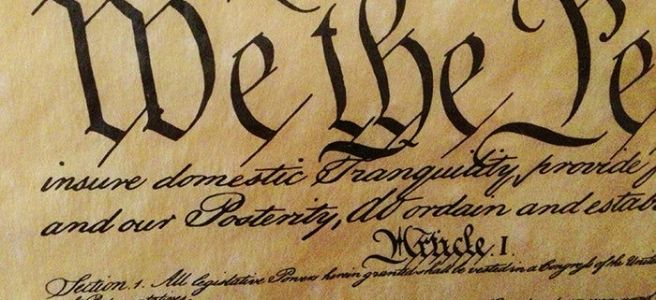
Sadly, it would appear that a lot of people slept through their seventh-grade history or social studies classes. Before you complain about being censored, maybe read the U.S. Constitution.
As the editor of a small. local news outlet, I am confronted from time to time by knuckleheads who say I violated their “Freedom of Speech” or First Amendment rights because I deleted their comments on our branded social media platforms, including Facebook, X, Instagram and BluSky.
Recently — and quite ironically — a guy who basically popped a cork by the sight of public graffiti and profanity in downtown Biddeford, had a meltdown because I deleted his use of the very same profanity on our Facebook page. He now vows to “come after us.”
I wish this particular knucklehead lots of luck because I have quite a few people standing in my corner, including the framers of the Constitution, every media outlet in the United States, the U.S. Supreme Court and the American Civil Liberties Union. None of us are shuddering in our boots — afraid of a guy who seems to be proficient only in creating AI social media memes and pressure washing private properties without being asked.
Here’s the deal: The U.S. Constitution says the government cannot restrict your speech, but it also says I can do whatever I want on my website or branded social media platforms, including deleting your comments or banning you from participation on those forums.
If you actually take the time to read the First Amendment of the U.S. Constitution, you will see that it applies ONLY to government censorship, not private entities – including media and publishing companies
Private employers, social media companies, and property owners have the legal right to set their own rules and restrict speech on their platforms or premises.
The Biddeford Gazette is a part of a privately-owned corporation, not an extension of the government. We follow our own editorial standards and guidelines. More information here | Biddeford Gazette Standards & Policies.
The First Amendment DOES NOT require newspapers to publish articles; in fact, it protects a newspaper’s right to editorial control and judgment.
The First Amendment DOES NOT
require newspapers to publish articles;
in fact, it protects a newspaper’s
right to editorial control and judgment.
• Editorial Autonomy: Privately owned newspapers have a First Amendment right to decide what content to print or reject, including articles, advertisements, and letters to the editor.
• No Compelled Speech: The U.S. Supreme Court ruled in Miami Herald Publishing Co. v. Tornillo (1974) that government-mandated “right-to-reply” laws—which force a newspaper to print a political candidate’s response—are unconstitutional violations of the press’s freedom.
• Legal Precedent: The Supreme Court affirmed that the choice of what to print or omit, and the treatment of public issues and officials, is an exercise of editorial control that the government cannot override.
Text of the First Amendment:
Congress shall make no law respecting an establishment of religion, or prohibiting the free exercise thereof; or abridging the freedom of speech, or of the press; or the right of the people peaceably to assemble, and to petition the Government for a redress of grievances
If you doubt any of this information, you can check with your own attorney or the American Civil Liberties Union
We now to return you to your regular programming.
.
SUBSCRIBE FOR FREE


