
Janie’s Got A Gun

It was 12 years ago last week when two students at Columbine High School used a variety of weapons, including homemade propane bombs, a shotgun, a semi-automatic rifle and a 9mm handgun in a massacre that left 12 of their classmates and one teacher dead before both shooters committed suicide.

In the days before the attack, the two students prepared several bombs and modified their weapons. These two students were in violation of several federal laws, including the National Firearms Act and the Gun Control Act of 1968, even days before the shooting began.

The incident shook our nation, and once again the national debate over gun control consumed media outlets all over the world.

In response, the U.S. Secret Service, in conjunction with the National Education Association, undertook a study of school violence and published their report three years later, in 2002
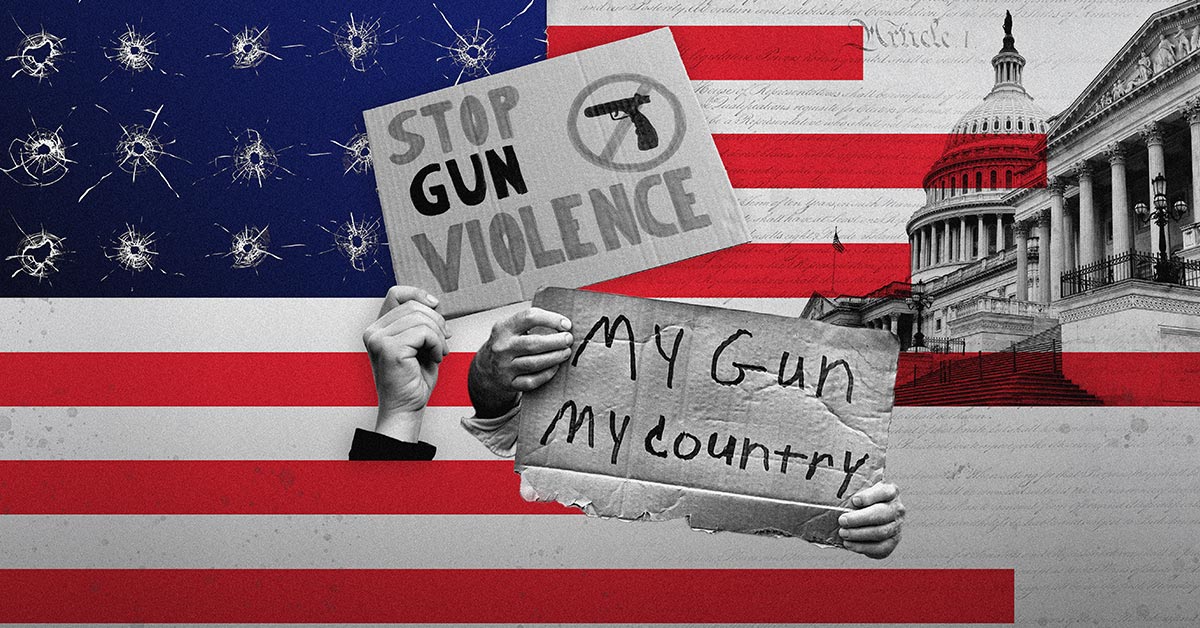
The Secret Service Report concluded that schools were taking false hope in physical security, when they should be paying more attention to the pre-attack behaviors of students.

There’s a reason all of this sounds familiar.

Nearly eight years to the day of the Columbine tragedy, a distraught student at Virginia Tech shot and killed 32 fellow students and injured scores of others on April 16, 2007. He also committed suicide.

There was more political fallout. Other nations criticized a U.S. culture that is seemingly enthralled with guns and violence. More gun control laws were introduced and passed. It should also be noted that the university had a campus firearms ban before that massacre happened.

Sadly, I could go on and on with more examples of gun violence and the ways in which those horrific events are exploited by politicians and pundits from both sides of the gun control debate.

But what’s the point?

The point, my friends, is not about the guns. It’s about people and human behavior.

I am treading into this topic as a response to a friend’s Facebook post in which she was commenting on an editorial from the Lewiston Sun Journal regarding a bill before the Maine Legislature that would allow lawmakers to carry handguns.

“In the wake not only of Tucson, but also the shooting at NY City Hall (’03 – one Councilman shot another dead) and various examples of ‘going postal,’ this seems . . . wise?”

I have immense respect for the woman who wrote the above posting on her Facebook wall. She is extraordinarily smart and equally passionate. If I’m going to debate her, I need to bring my A game, and even then the odds are stacked against me.

But it was just two words from her pithy post that jarred me: “going postal,” just another catchy euphemism that grants us permission to brush off and dismiss a much darker topic: The cost of mental illness and our society’s unwillingness to acknowledge the ramifications of a grossly insufficient treatment system.

The genesis of the term “going postal” can be traced back to the early 1980s, when a spree of shootings by U.S. Postal workers became a macabre trend.

The term is now comic relief, as best evidenced by frequent double entendres on the Seinfield show, in which “Newman, the postal worker” was often teased for his bizarre behavior and frequent angry outbursts.

We laugh.

Some say the definition of insanity is doing the same thing over and over while expecting different results. Keep laughing, if you can.

I am a big believer in the Second Amendment. I tell my friends that the Second Amendment ensures the continuation of the much more beloved First Amendment.

But I must admit that I am sometimes conflicted. After all, our society understands and accepts limitations on freedom of speech and expression. It is a violation of federal law to say, “I am going to kill the president.” It is also against the law to scream “Fire” in a crowded theater.

Former Supreme Court Justice Potter Stewart famously quipped “ I know it when I see it,” as he struggled to define what is and what is not pornography.

Reasonable people can agree to be reasonable, right?

Sure, but what about the unreasonable people? That is a different subject altogether.

The bottom line is this: Guns represent power.

You never see news footage of refugees slinging rifles over their shoulders as they are forced to leave their homeland because of a tyrannical government, do you?

Alan Keyes, a conservative African American and a perennial presidential candidate, once quipped, “This nation would have never had a slavery problem if the people of Africa were armed.”

Any half-rate student of history can rattle off a litany of government abuses, which all began with the collection of the public’s firearms.

Guns are part of our American culture and psyche. One of my core beliefs is that power should be equally distributed and held by the people.

Thoreau seemingly agreed with my stance, when he wrote, the government that governs least governs best. Of course, he wrote Civil Disobedience in 1849, so it’s hard to know where he would come down on the post Columbine gun control debate.

I own three guns (a .22 rifle, a 12-gauge shotgun and a 20-gauge shotgun). Ironically, I don’t allow firearms in my home. My guns are stored in a gun-safe at my father-in-law’s home, some 15 miles away. They are used for hunting.

There are two reasons for not having firearms in my home.

1.) I have teenage sons who are often alone at home while Laura and I are working; and

2.) I have a responsibility to acknowledge and manage my own mental illness.

I feel safer without firearms in my home, but I am also troubled by any further encroachments on my Second Amendment rights. It doesn’t mean I think everyone should own an Uzi. Then again, reasonable people can agree to be reasonable.

But what are we going to do about the unreasonable people?

Laugh, or introduce legislation requiring background checks on the sale of propane tanks?

Why can’t we be friends?

“We are reckless in our use of the lovely word, friend.” –Romain Rolland

If he were alive today, I wonder what Mr. Rolland, a French journalist who won the Nobel Prize for Literature in 1915, would think about Facebook and its use of the word “friend.”

How many “friends” do you have?

According to the most recent stats on my Facebook page, I have 285 friends.

That’s a lot of friends . . . or is it?

Without friends no one would choose to live, even if he had all other goods,” wrote Aristotle…but what did he know? I tried following him on Twitter, but I kept getting tweets back from Ashton Kutcher.

So, how do you define the word friend?

Personally, I have one simple criterion for the people I describe as my “friends,” and there are only four people who fit into this category, if we exclude relatives.

A friend is someone you can call at 2:34 a.m., and then ask them to drive 16 miles to post bail so that you don’t have to spend the rest of the night in the county lock-up.

With a real “friend” you can do this even when you are slightly intoxicated and can’t quite remember how you got to jail in the first place.

I have to stay out of trouble because of my four “real friends” one lives in Nashville; another lives in Eugene, Oregon. The other two both live in Maine, but one of them has young children; and the other is a very sound sleeper.

But considering the onslaught of social media networking and its impact on my professional life, my definition of the word friend seems quaint, if not entirely useless in the digital age that brought us both Farmville and the word “un-friend” simultaneously.

If you think social media is just a fad or something that can be ignored by those of us who have moved beyond repeated bouts of acne and anxiety about our SAT scores, think again. In fact, check this link.

Like it or not, social media platforms such as Facebook, Twitter and YouTube have become an essential part of our modern communication infrastructure. Every presidential campaign in 2012 will use all three of these platforms. Nearly every bank in Maine has a Facebook page and you can even let the whole world know what brand of whipped cream you prefer by clicking “Like” on the Cool Whip page.

I don’t mind Facebook, but it can become a time vacuum and very labor intensive if you are managing a page or multiple pages as part of an integrated communications strategy.

It’s just the casual use of the word friend that I find offensive.

Furthermore, it seems that some people are a bit less discriminating when it comes to choosing their friends.

As an experiment, I created a fictitious Facebook account. My alter ego was a woman in her mid 30s and she set about finding “friends.” It took less than 48 hours for this non-existent person to rack up more than 75 friends, including two U.S. senators, four television news reporters, three newspaper reporters and seven state legislators.

More disturbing: A recent poll showed that more than 80 percent of people in Maine still receive their news across traditional platforms, such as newspapers, television shows and radio broadcasts. But the media and the small number of policy leaders who chart local, state and national policy are all sharing Tweets and checking their Facebook pages on a regular basis. They are “in the loop,” while the other 80 percent of residents are not.

Thus, you’re nobody until somebody “Likes” you.

But what is the value of more than four or five friends?

Could you really handle having several hundred friends?

Seriously. Think about it. You would spend the rest of your days attending funerals, weddings and anniversary parties. Your Christmas shopping list would need to be underwritten by Goldman-Sachs. You would never get a good night’s sleep nor have a moment when you could just relax.

Unfortunately, the number of friends on a Facebook page has become a quantitative measure of modern-day success; a metrics of accountability and an insatiable need to be more connected while isolated in front of a computer screen.

Check your friends list. How many of them would take a call from you at 2:30 a.m.? If your answer exceeds the number 2, congratulations. You are luckier than you can imagine.

The rest is just an illusion. . .sort of like Farmville.

Pocketful of Kryptonite

Although it was 30 years ago this week, I still remember the day like it was yesterday.

I came home from high school and flipped on the television. The news was on, and that was strange because this was long before the days of CNN, MSNBC or Fox News. Back then, there was no such thing as the internet.

So why was the news on during the afternoon?

The president had been shot.

Only a few months earlier, John Lennon was gunned down in front of his New York City apartment building. We didn’t know it then, but in a few more weeks there would be an assassination attempt on Pope John Paul II.

Violence was everywhere, it seemed.

Welcome to 1981. I am a junior at Rumford High School. My orthodontic braces had just been removed, and I am living with my uncle and aunt in West Peru, Maine while my parents continue a bitter divorce process.

I am going back there tomorrow. I am going back to my old high school, where I painted a mural on the wall of my English teacher’s classroom.

I am also reminded that the more things change, the more they stay the same.

“Those who cannot remember the past are condemned to repeat it,” said 19th Century philosopher George Santayana

When Ronald Reagan was president, U.S. Rep. Gabrielle Giffords was 11 years old, John Lennon was buried, and I was struggling with acne.

John Lennon, Ronald Reagan, Gabrielle Giffords, Pope John Paul II.

And Maine Governor Paul LePage.

Wait! What? Paul LePage?

No, LePage was not shot, but he did receive a death threat from Michael Thomas, a Portland man who allegedly vowed to assassinate him and reportedly suffers from a history of mental instability.

John Lennon, Ronald Reagan, Gabby Giffords, Pope John Paul II and Paul Lepage. Now there’s an interesting group of people, all of whom stir some sort of reaction.

But what about this next group of individuals?

Mark Chapman, John Hinckley, Jared Loughner, Mehmet Ali Ağca and Michael Thomas. They all have at least two things in common.

One: They are all currently in jail.

While some folks may use these tragedies to demand tougher gun laws, or to discuss political motivations, the other common thread shared by our second group of men is almost always sensationalized by both the media and general public .

Each of these men has a mental illness.

(Sidebar: There are several theories, including a Tom Clancy novel, about Ağca, the man who attempted to assassinate the Pope,and his political motivations and reported connections to the KGB, but there is little doubt that he is mentally unstable, especially if you begin perusing transcripts of interviews with him after the shooting in Vatican Square.)

We like to ignore mental illness. It is an uncomfortable topic, but not one that should be dismissed. Otherwise, as demonstrated above, the consequences can be fatal.

These high-profile crimes and the men behind them add to the burden of mental health advocates who fight daily against the stigma associated with mental illness.

In fact, violent acts committed by people with serious mental illness comprise an exceptionally small proportion of the overall violent crime rate in the U.S. They are more likely to be the victims of violence, not its perpetrators, according to the National Association of Social Workers (NASW)

In its March 2011 article, “Budgets Balanced at Expense of Mentally Ill,” the NASW newsletter also mentions a new report by the U.S. Substance Abuse and Mental Health Services Administration that documents a nationwide decline in behavioral health care spending as a share of all health care spending, from 9.3 percent in 1986 to just 7.3 percent, or $135 billion out of $1.85 trillion, in 2005.

Moreover, high-profile incidents such as John Hinckley’s attempted assassination of President Reagan also give apparent permission for the media to stereotype and hype mental illness as one that will likely produce violent crime.

In the days following the 2007 massacre at Virginia Tech, “Nightly newscasts reported “no known motive” and focused on the gunman’s anger, sense of isolation, and preoccupation with violent revenge. No one who read or saw the coverage would learn what a psychotic break looks like, nor that the vast majority of people with mental disorders are not violent. This kind of contextual information is conspicuously missing from major newspapers and TV,” wrote Richard Friedman in “Media and Madness,” an article published in the June 23, 2008 issue of The American Prospect.

Friedman goes on to explain that “Hollywood has benefited from a long-standing and lurid fascination with psychiatric illness,” referencing movies such as Psycho, The Silence of the Lambs, One Flew Over the Cuckoo’s Nest and Fatal Attraction.

According to Friedman, “exaggerated characters like these may help make “average” people feel safer by displacing the threat of violence to a well-defined group.”

As a former journalist and a current communications consultant, I am naturally drawn to issues surrounding journalism and those who are employed by the so-called Fourth Estate.

And as someone who has been battling mental illness all my life, I know a thing or two about the effects of stigma.

And that’s why I’m going back to my old high school. I will be the keynote speaker at a symposium on mental health stigma.

The Carter Center does a succinct job of defining the problems associated with stigma:

“In ancient times the word stigma was defined as ‘A mark burned into the skin of a criminal or slave, a brand.’ This inhumane treatment was metered out to criminals and anyone felt to be a threat to society. Have we really come so far today? Just mention depression or worse Bipolar to most employers, family or friends and the reaction’s generally a negative one.”

Superman and Lois Clark

Maybe you remember the 1978 movie Superman.

The movie may have been cheesy, but the cast was stunning. Some of Hollywood’s most enduring and iconic figures were featured in that film, including Marlon Brando, Gene Hackman, Ned Beatty, Valerie Perrine and Margot Kidder.

The film also launched the career of Christopher Reeve, a handsome, muscular man who was cast in the leading role as the Man of Steel.

While participating in a 1995 equestrian competition in Virginia, Reeve was severely injured and became paralyzed. His injuries elicited support from all over the globe. He spent the rest of his brief life trying to help others with spinal cord injuries and established the Christopher Reeve Foundation.

He was a sympathetic hero. He touched us all. The man of steel could not escape this batch of Kryptonite. He died in October 2004 and millions mourned his passing.

Now, let us examine the fate of Superman’s leading lady, Margot Kidder, a successful actress who was cast as the petulant, cynical and manic reporter, Lois Clark.

A year after Reeve was paralyzed, Kidder was found by police hiding in the bushes in a suburban neighborhood near Los Angeles, California. She was taken into custody for a psychiatric evaluation.

The world was not so nice to Ms. Kidder.

Kidder has a bipolar disorder, so she became fair game for the media, late night comedians and a slew of derisive web site commentary. She was certainly no Superman.

She was human, frail and vulnerable but in a different way than her co-star, and that difference was best amplified by the ridicule that continues to follow her today, some 15 years after her illness became fodder for her former Hollywood colleagues.

Maybe that’s why fellow Superman star Marlon Brando spent so many years keeping his mental illness a secret.

By the time Superman was released in 1978, Brando was already known as one of Hollywood’s most iconic figures. The star of “On the Waterfront” and “The Godfather,” he was a tough guy’s tough guy.

But his mental illness apparently was a bit tougher.

Brando was a deeply troubled man struggling with depression, anger, and loneliness, according to those who knew him and detailed in an article by the National Center on Physical Activity and Disability.

Brando was from a generation of those who didn’t talk about mental illness. A generation that believed depression was little more than self-pity run amok or some other sort of character flaw.

It was that same generation of actors which produced the original Superman, George Reeves.

George Reeves (no relation to Christopher) was an actor best known for his leading role in the 1950s television series, The Adventures of Superman.

Reeves’ untimely death at age 45 was officially ruled as a suicide by police, although there is much speculation about that fact, most notably in the 2006 film Hollywoodland, which stars Ben Affleck as George Reeves.

Whether Reeves committed suicide is irrelevant and will probably remain a mystery for a long time to come.

But we do know how Hollywood would have treated him if he had talked publicly about battling depression.

Just ask Lois Lane.