The Island of Misfit Toys

August 15, 2015

It’s not even Labor Day. Sweet Jesus take me now.

Already the political machinations are beginning in Biddeford, a city that treats their biennial municipal elections like the Super Bowl.

It’s not like this in the neighboring city of Saco, but on the south side of the river — local politics is a blood sport that rivals rugby or a Stanley Cup playoff game.

I should not complain. For years, I have been a season-ticket holder to these gladiator games. From time to time, I have even wandered onto the field, working as defensive coordinator for various candidates.

Casavant and I celebrate his second mayoral win in 2013

In 2008, for example, I was hired professionally to help defeat a referendum that would have closed the airport. The result? 86 percent of voters went our way.

Three years later, someone called me and asked if I could head up Alan Casavant’s effort to oust former mayor Joanne Twomey from office. I agreed to help, and we won that campaign with 68 percent of the vote. Not too shabby, especially since we were taking on a two-term incumbent.

Two years later, in 2013, Casavant once again asked for my help in his campaign. We won. By big numbers. Again.

I am a political junkie and a professional communications consultant. It’s fantastic when your hobby and your occupation collide. I was hired in 2012 by Casella Waste Systems to help ensure a successful city council vote that would ensure the MERC trash incinerator was no longer a part of the city’s skyline. The result? The Biddeford City Council voted 8-1 to purchase the MERC property and begin a new curbside recycling program.

Three years later, a private developer is undertaking a $50 million redevelopment of a property that abuts the former incinerator’s parcel. That investment would never have happened if MERC were still there.

In addition to those campaigns, I worked professionally on the Oxford Casino campaign. The result? Oxford became the first casino in Maine, despite many failed attempts by others in previous years.

Last year, I worked to help preserve Maine’s traditional bear hunting practices. We won.

But when you work on campaigns, you don’t always win.

In 2008, I was subcontracted by the Hillary Clinton campaign in an effort to sway Maine’s super delegates. By then, Senator Barack Obama had too much momentum heading into the nomination.

But there was an upside to working on the Clinton campaign. I got to be part of a conference call with Harold M. Ickes, a legend in campaign circles. There I was sitting on a bench swing in my backyard, listening to Ickes talk about strategy. It was a memorable moment and a highlight of my career.

With that bit of disclosure out of the way, allow me to finally get to the point of this blog post.

Alan Casavant and I are friends. —- Friends.

The Karl Rove of Biddeford?

Apparently, some people in Biddeford have delusions of grandeur. They think a run for the mayor’s seat is the equivalent of running for president.

Over the last few days, there has been much speculation that Alan Casavant is little more than my puppet; that I am somehow the man behind the curtain, keeping the residents of Oz in line.

These people are generally rabidly opposed to Casavant winning a third term. Somehow, they think that linking me to Casavant will further ensure his defeat in November.

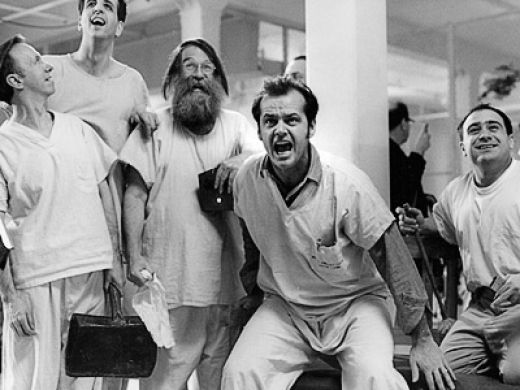
Some of these malcontents from the Island of Misfit Toys think that when Alan Casavant farts it’s because Randy Seaver ate beans.

On social media, they keep a steady drumbeat, raising questions about Casavant’s recent press releases about a serious and troubling problem in the city.

“This has all the hallmarks of Randy Seaver’s political spin,” wrote Ryan Gavin on Casavant’s Facebook page, when the mayor announced that he had written a letter to the United States Attorney General.

Joshua Bodwell complained to the mayor that it seemed as if it is actually me who is writing Casavant’s press releases.

And Brian Keely has routinely blogged that I am essentially Casavant’s attack dog. Christ, even Joanne Twomey described me as “the devil.”

Note: If Joanne Twomey ever calls you the devil, you know you’re doing something right.

So let’s set the record straight. I am not helping Alan Casavant with his campaign. I am also not writing his press releases or shooting his videos. With the exception of suggesting which tie he should wear, I am not providing him any strategic advice.

Alan Casavant has close to 4,000 friends on Facebook, any one of them may or may not be giving him advice. How to hell do you get 4,000 Facebook friends? Must be a popular guy.

It’s easy to understand why the malcontents and some others from the Island of Misfit Toys would think that I am helping Casavant. I have helped him before, but I am not helping him now.

Why?

1.) I am far too busy at work to devote any time to the tedium of Biddeford’s political struggles. Today my clients stretch from the Bangor area all the way to Sierra Vista, Arizona.

2.) Casavant can’t afford to pay my billable rate, so my primary focus must remain on clients who pay me.

3.) I have some fairly serious health concerns that render me pretty much useless after 8:30 p.m. (more about that in a moment)

4.) I am enjoying a new-found and civil relationship with Matt Lauzon, the man at the center of troubling sex abuse allegations in Biddeford. Both Matt and I have gone through a lot in the last few months and it was simply too stressful to think about getting back into Biddeford’s political theater as anything other than a spectator.

I will most likely vote for Casavant in November. I will let him put a sign on my lawn. I will cheer him on from the sidelines, but I cannot afford (financially, physically or mentally) to be any more involved in his campaign. That is the God’s honest truth.

A true story

In closing, I’d like to tell you a quick story about Alan Casavant.

This story, I think, sums up Alan’s character, integrity and his loyalty to his friends.

Sometimes, just before bedtime, I become confused and disoriented. It usually means I need to take my medications and get to bed. But on this particular cold October night I wandered from my home. Laura was fast asleep. She did not know that I had wandered off.

I became increasingly confused, and I found myself near some woods and on the verge of tears. I was lost and frightened. Fortunately, I had my cell phone. I managed to punch the contacts list and hit the first number. It was Alan Casavant’s cell phone, but I did not know it.

He was already in bed. I told him I was lost and confused. He got up, got dressed, jumped in his car and went looking for me. I was only a 1/4 mile from my home, and he found me rather quickly near the intersection of May and South streets.

He brought me home and came inside to make sure Laura knew what was happening.

That, ladies and gentlemen, is what you call friendship.

In a few weeks, Laura and I are planning to join Alan and his wife, Patti, for dinner in Portland. If I give him any advice, it will be written on a napkin and passed under the table.
Bang and blame

Frank Underwood
Frank Underwood

Like most everyone else in the free world, I have finally finished the third season of House of Cards, a Netflix original series.

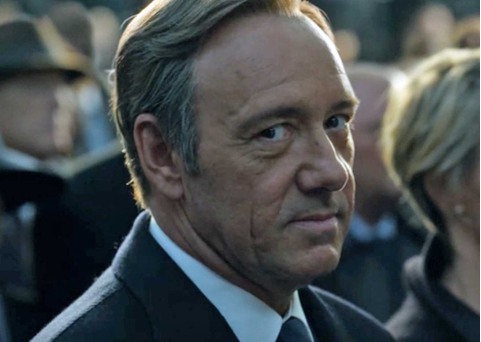
And like most other House of Cards fans, I have been consistently intrigued with Francis Underwood, a ruthless politician played by Kevin Spacey.

As Season Three begins to unfold, President Underwood hires a writer to help promote a new jobs program. The writer accompanies President Underwood to his childhood home of Gaffney, South Carolina. There, the president provides a tour of his hometown, including his family’s “farm,” a failed enterprise that went bankrupt because there was only a thin layer of soil covering deep bedrock.

Underwood explains the farm’s failure this way: hard work is sometimes not enough if you have nothing to work with.

From my own perspective, I have always doubled-down on the notion that success is achieved primarily by hard work. This mantra was driven into the soft-tissue of my brain since before I can remember. It is, after all, a family trait.

Don’t get me wrong.

Hard work is a virtue, but that one scene at the Underwood’s failed peach tree farm— out of 39 episodes — made me re-examine the Puritan values that course through my veins.

Even the losers, get lucky sometimes

Growing up, the game of Monopoly was one of my favorite games. I was an impulsive child, so at every opportunity I bought every property I could, resulting in depleted cash reserves and forcing me to mortgage the properties in order to pay my debts.

monopoly_originalOf course, while my properties were mortgaged they produced no revenue. Inevitably, I would go bankrupt, watching as my parents and sister finished the game without me.

But over time, I became more savvy. I was more judicious in my selection of properties. I focused on the utilities and railroads. I avoided properties that were beyond my means (Boardwalk and Park Place).

I kept no less than 50 percent cash reserves, and put houses and hotels on inexpensive properties such as Oriental and Baltic. The odds of another player landing on these properties was much higher than landing on Boardwalk. Thus, I had a nice revenue stream and owned properties on all sides of the board.

Playing Monopoly is a learning curve, but there is no mistake that winning at Monopoly is also driven by “chance” and luck.

Even at the beginning of the game, the players roll dice to determine who moves first.

One roll of the dice can provide a distinct advantage, but there are always things beyond our control: being forced into jail because of an unlucky roll of the dice, for example.

The game of Monopoly has been criticized as propaganda of greed, the worst trait of capitalism.

But it is also an exceptional learning tool that reinforces the harsh reality of life. No matter how smartly you play, there are always things you cannot control. And even at birth, it is a roll of the dice that can give you an advantage over the other players.

Sometimes hard work is not enough.

We should remember that lesson when judging the other players.


Behind Blue Eyes

12-Winston-Churchill-jpg
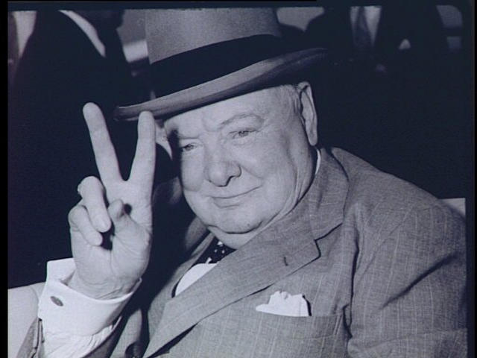
Winston Churchill suffered from bipolar disorder.

A friend of mine recently brought to my attention something about me that was posted on Facebook.

Apparently, a man I barely know questioned how I — an out-of-the-closet consumer of mental health care — could be trusted to provide professional advice. In fact, this person described me as “mentally unstable.”

I thought about this for a while because I frequently write about the subject of mental illness and stigma on this blog, and I was a bit disheartened that being “mentally unstable” and having a diagnosed mental illness are still too often linked into one convenient package.

Consider this: One in five Americans experienced some sort of mental illness in 2010, according to a report from the Substance Abuse and Mental Health Services Administration.

Are those people all mentally unstable? Hardly.

The vast and overwhelming majority of people with a diagnosed mental illness are very stable and lead productive, normal lives.

They can do this because they seek treatment for their illness. They take medications, participate in therapy and take other measures to ensure that their illness is well-managed. They are no different from people with diabetes, epilepsy or cancer. They did not ask for the disease, they don’t use it as an excuse and they are vigilant in taking care of themselves.

Meanwhile, mentally unstable people do not take appropriate steps to manage their illness. Sometimes, it is because of a lack of mental health services, but more often than not some individuals refuse to acknowledge or treat their illness.

Following the horrific massacre a couple of weeks ago in Charleston, South Carolina, Maine’s Congressional delegation was polled regarding their attitudes on limiting gun violence. While Congresswoman Chellie Pingree, Senator Angus King and Senator Susan Collins all said they would like to see expanded background checks for the purchase of firearms, Congressman Bruce Poliquin offered a different response.

Poliquin said he would like to see more funding for mental health.

I applaud Congressman Poliquin for his willingness to increase funding for community-based mental health services, but I have some bad news for him: Even with better funding and more services, it is more than likely that Dylann Roof would have still shot and killed nine innocent people. Roof may have a mental illness, but he certainly wasn’t taking care of it.

Last week, the defense attorneys for James Holmes, the young man who killed and shot 12 people in an Aurora, Colorado movie theater, opened their defense by saying their client was legally insane, and thus should not be held accountable for his crime.

Although Holmes did seek psychiatric treatment before his rampage, he stopped seeing his psychiatrist just a few weeks before he entered a crowded theater armed to the teeth.

Like very other type of illness, mental illness does not fit into one convenient package. There are different types and severity of illnesses, from depression and anxiety to bipolar disorders and schizophrenia. All of these illnesses can be managed with the right medication and therapy.

And you might be surprised to know how many famous people suffered from some type of mental illness, whether it’s NFL great Terry Bradshaw or Winston Churchill.

Would you describe them as mentally unstable?

According to the Centers for Disease Control, stigma regarding mental illness is getting better but still has a long way to go. Their own research shows:

  • Most adults with mental health symptoms (78%) and without mental health symptoms (89%) agreed that treatment can help persons with mental illness lead normal lives.
  • 57% of all adults believed that people are caring and sympathetic to persons with mental illness.
  • Only 25% of adults with mental health symptoms believed that people are caring and sympathetic to persons with mental illness.

A couple of years ago, I was interviewed by Maine Public Radio about my mental illness. “No one would know I have a mental illness unless I chose to tell them,” I told the reporter. (Listen to the interview here)

The people who really know me would agree: having a mental illness is not synonymous with being unstable.

When U.S. Senator Thomas Eagleton was selected as George McGovern’s running mate for the 1972 presidential election, he kept his mental illness a secret. But once it was discovered that Eagleton had been treated for depression, McGovern dropped him from the ticket like a hot potato.

I’d like to believe that we have made some progress since then.

Maybe. Maybe not.

August and everything after

20120709_202235
The southwest shore of Rangeley Lake

That fire, like so many other fires, started as an accident.

Sitting here now, only a few feet from the southwest shore of Rangeley Lake, it seems strange that I would be thinking about something that happened more than 30 years ago.

The sun has barely risen, and it cuts across the lake like a sheet of diamonds. But my thoughts remain with that cold November night and the fire that would become a defining moment of my rather unremarkable life.

Laura and the kids are still asleep, oblivious to the gentle sounds of the frantic chipmunks, some lovesick chickadees and the distant hum of an old two-stroke outboard somewhere across the lake. It is so tranquil, and now the cry of an early morning loon is all that separates me from my persistent thoughts about the fire.

The sun is now beginning to creep through the boughs of the white pines, birches and poplar trees that surround me, shield me from the reality of my normal life…the day-to-day of the real world.

Day One of our vacation and I am already anxious about returning to the rattle and hum of the mundane.

So I choose to think about the fire, especially since we are at Rangeley Lake, only a few miles north of where my uncle lived.

That fire should have changed my life, but it seems like I can never hold onto the lessons it taught me.

Burnin’ down the house

001
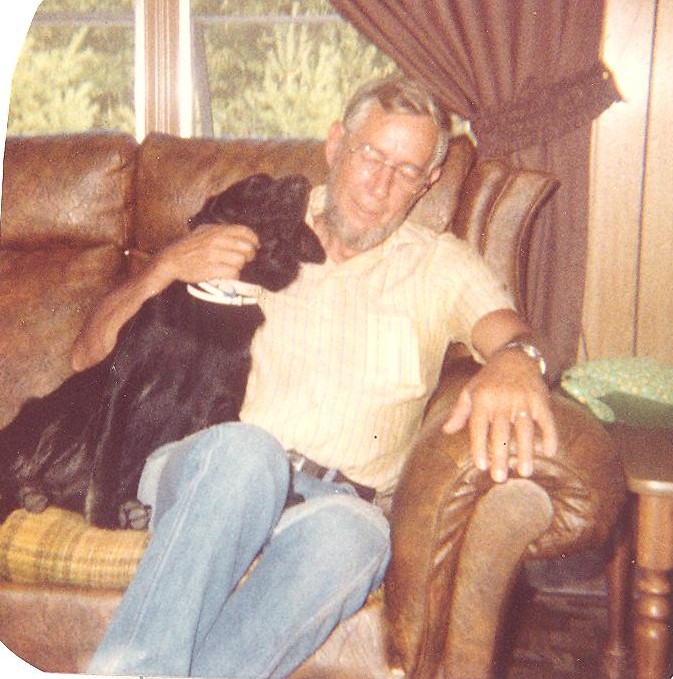
Leonard K. Brooks

A few years ago, our family started taking a new route for our annual trek to Rangeley. That new route goes right past the house that my uncle Leonard once owned.

My uncle had already raised three boys and a daughter of his own. My older cousins were heroes to me when I was a young boy. They were hippies, rebels and the funniest people I ever met. They knew everything about small engines, Jimi Hendrix, guns and dope.

My uncle took me in after my parents’ divorce, sparing me from the chaos of that situation.

Leonard Brooks was incredibly intelligent and self-reliant. He towered over most people and had broad shoulders, piercing blue eyes and a disposition that encapsulates everything you can imagine about a grumpy, old guy.

He was a champion of common sense. He suffered fools lightly and had little use for flatlanders, rock n’ roll and anything south of Lewiston.

Unlike my father, Leonard rarely, if ever, raised his voice. He conveyed his displeasure with a silence that was pure torture. He was a man of few words, but when he spoke, you listened.

So it was, during my second year of living with Leonard, that the fire happened.

It was a chilly Friday night in mid November. My uncle left with a few friends for a weekend hunting trip. I was not allowed to join because of my lackluster chemistry grades and a backlog of homework.

So, there I was: stuck with my aunt and my youngest cousin, Cathy, who still lived at home and was five years older than me. The weekend certainly looked bleak, and there was a cord of firewood that needed to be stacked in the basement before my uncle’s return home on Sunday.

Cathy, however, made plans to have a much better night. With a baggie of homegrown weed and a six-pack of Budweiser, she invited one of her girlfriends over for a back yard campfire. My aunt was oblivious and already in bed.

Maybe it was because they were completely baked, or maybe it was because the wood was too green for burning. It didn’t matter, their fire was not much more than a spark and a cloud of smoke, But I wanted to impress the girl, so out I came with a one-gallon can of what I thought was kerosene.

It was not kerosene. It was gasoline. If you do not understand the significance of that distinction, there’s no point in my trying to explain it.

Sure, I stood back a few feet, but that was the only smart thing I did that night.

It was like an explosion, and I panicked. The flame traveled right up to the can of gasoline in my trembling hands. I did the only thing I could at that moment. I threw the can away from me, across the backyard and, in retrospect, far too close to the snowmobile and picnic table that were parked nearby.

Cathy was stoned beyond recognition and could not stop giggling. “Fire, fire, fire,” she chanted, before darting into the house for a glass of water.

Pouring water on a gasoline fire? Not too smart.

The damage looked much worse in the morning. The bulk of the backyard was scorched and reeked of gasoline. The picnic table was destroyed, and the snowmobile cover had melted and was now bonded to the charred remains of my uncle’s beloved Polaris sled.

Dead man walking

My uncle was going to kill me.  I would never graduate high school. I would never get laid. There was nothing more to my future than the 36 hours until my uncle would release me from the mortal coil.

I don’t remember much about that weekend other than the extreme sense of dread that draped over me like a heavy blanket on a hot July afternoon.

My oldest cousin, Steve, stopped by the house to pick something up. He made no effort to hide his amusement about the damage, but he offered some sage advice:

“The only shot you have at survival is to just man up and own it without excuse,” he said before adding the most important part. “You should also wait until he has had a chance to settle down and have a couple of shots before you tell him.”

With that, Steve was gone, taking cover from the impending storm.

Finally, it was Sunday evening. I shook hands with the grim reaper as I watched my uncle’s Dodge pickup ramble up the gravel driveway in front of the house.

I followed Steve’s advice, waiting until Leonard had settled in and able to enjoy a a shot of his preferred Scotch.

I was shaking when I approached the kitchen table. Cathy hid upstairs in her bedroom, quiet as a church mouse.

He peered at me over the rim of his bifocals. “Yes, young fella?” He seemed to sense my dread and probably noted my ashen complexion and trembling limbs.

“I had an accident while you were gone, “ I said with as much courage as I could muster, my voice cracking.

He stiffened in his seat. “An accident?”

“Yeah, in the backyard,” I stammered, wondering how I was keeping my eyes open. “It was a fire.”

“Well, let’s go take a look,” he said evenly, without trace of any emotion whatsoever.

Together we stepped off the back porch, and he surveyed the damage quickly.

“Let’s go back inside,” he said softly.

I followed him back to the kitchen table, ready to vomit at any given moment. He grabbed a pen and the back of a discarded envelope, drawing a rather primitive diagram with a circle and an arrow.

I sat down and he explained the diagram. “When you build a fire, you always, always know which way the wind is blowing,” he explained. “Always keep your back to the wind. If you are going to use an accelerent, do so before you spark anything,” he emphasized. “Do you understand?”

I could only nod in the affirmative.

“Alrighty then, “ he said as stood up and headed to his favorite recliner in the living room.

I was in shock. “What is my punishment,” I  inquired.

“Punishment?” he chuckled with his blue eyes sparkling. “What possible punishment could I give you that would be worse than what you have put yourself through over the past two days? Just don’t forget the lesson.”

And that was that. He never talked about the incident again.

A lesson learned?

My uncle died in 1997, four years before I met Laura, Tim and Matt.

I wrote his eulogy.

The world shrank, and my 50-year-old Starcraft boat looks exactly like the boat he owned.

I know exactly what he would say to me today. “The only thing you need is common sense,” he would say. And with that, he would sprinkle some salt in a mug of Budweiser and put his feet up on a tattered ottoman, content that all was well with the world.

And that lesson is priceless, the one I cannot seem to convey to my sons.

Leonard would have loved my boys. He would most certainly approve of Laura, her carefree spirit and her lack of airs.

He would shake his head in dismay if he found out that I cannot back a boat down a ramp or build a bookshelf.

But none of that would really matter to him because he knew, and still knows, that I know how to build a fire.

And if you can build a fire, everything else is going to be okay.

Note: this is a condensed version of a post I published in July 2013. To see the longer version go here.

When All Else Fails

Who do you turn to when all else fails? Who has your back? Who’s got your six?

It occurs to me that I have been blogging here for a little more than three years. We have covered a lot of topics, from politics to my ongoing struggles with a mental illness. I have posted humorous things and somber things. I have posted Pro Tips for aspiring candidates and explored my hometown’s recent economic revival. I have written about solid waste and about the effects of herring on lobsters.

530261_3585526400072_1544507556_n

That’s a pretty diverse list of subject matter, don’t you think?

But it also occurs to me that there in one subject that is too often left in the shadows.

Sure, I talk about my wife on these pages, but it’s usually as a passing reference point or to highlight her battle against multiple sclerosis as a fundraising tool for the annual MS Walk in York County.

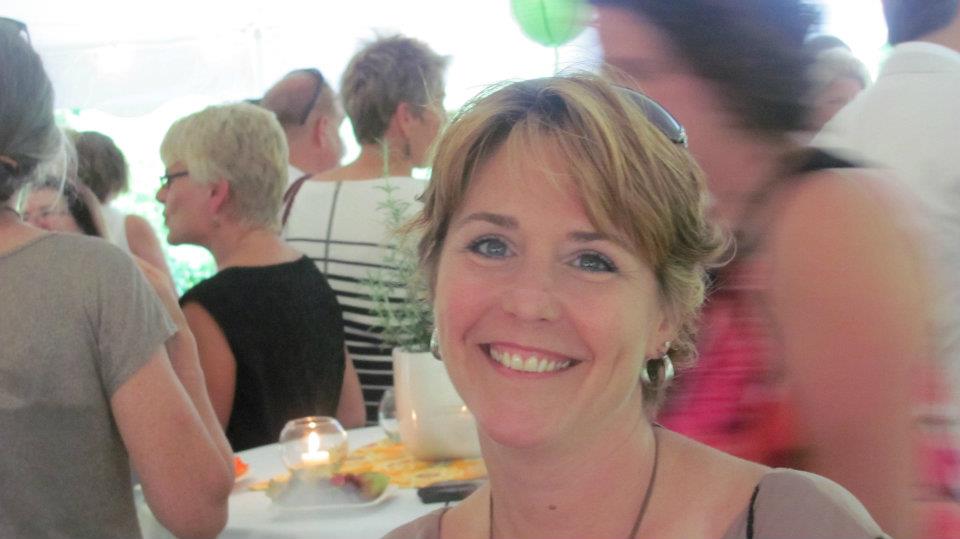
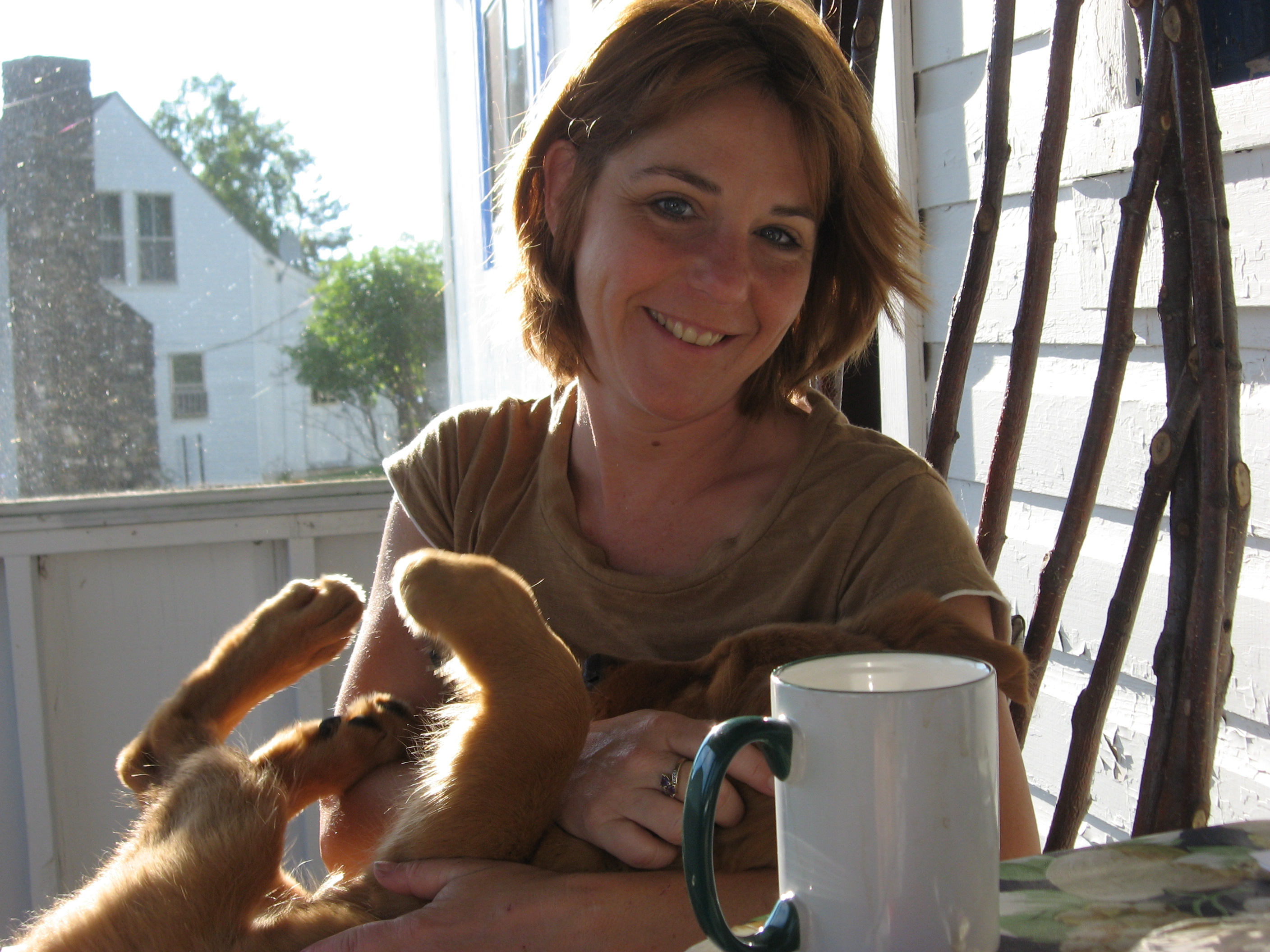
But today, for a few different reasons, I want to talk more publicly about the woman who changed my life. The woman who is my best friend and my strongest ally.

IMG_0539

When I first met Laura, she was running for a seat on the Old Orchard Beach School Board. I was the editor of the local newspaper, and thus I offered my readers endorsements of candidates. I did not endorse Laura. I mistakenly thought she was running for a seat held by an accomplished incumbent.

Laura sent me an e-mail just a couple of days after my endorsements were published. She pointed out the mistake, which I did not take so well.

For whatever reasons, we continued an e-mail exchange that was almost instantly flirtatious. She did not win her election, and we had our first date a few days later  – – on a cold November afternoon that I will never forget.

I was smitten, but I was also impressed by her strength and courage. She was a single mother, raising two boys without any support from their father. She worked long hours in one of the most stressful jobs you can imagine: a social worker for the Maine Department of Health and Human Services in the office of Child and Family Services.

She bought her own modest home about a year before she met me. We dated several weeks before she would let me meet her children.

268334_1896380292475_1330632899_31681248_3529053_n[1]

She is an awesome mother who would take her young boys frog hunting in the spring. She has gone skydiving and has never met a rollercoaster she did not like. Unlike me, she is a risk taker, always ready for the next adventure.

She is spontaneous and her laugh is more like a howl that consumes her entire body. She’s not into nouveaux cuisine or the latest fashion trends. Her favorite band is whatever is playing on the radio at that time.

She is mischievous and endearing. She is a voracious reader who loves animals (and owns too many, in my opinion).

She is down-to-earth and wears her heart on her sleeve. There is no pretense with Laura. What you see is what you get.

She is the consummate professional and has a hard time separating her emotions from the strain of her job. She loves the kids she works with almost as much as she loves her own.

She knows a thing or two about friendships. If you become friends with Laura, it is a life-long affair. She and her best friend have known each other since their freshman year in high school.

Laura is generous to a fault. She always wants to help, to give to others, to make others smile and feel loved.

IMG_0668

Her chocolate cheesecake is world-famous (or soon will be).

She volunteers in the community and gets involved with causes left and right. She currently serves on the City Council’s Policy Committee and served two terms on the local school board. In her first election, she got more votes than any other candidate on the ballots, including the mayor and at-large city councilors.

Laura snores and will sometimes leave wet towels on the floor; so I suppose she is not perfect.

But here’s what I do know: she is an amazing wife. She is my primary caregiver, a trusted confidant and someone who will fight tooth and nail on my behalf.

I often wondered why she married me. It wasn’t money. I had none. It was not for my good looks. I am bald and overweight.

I suppose it doesn’t matter why she married me. What does matter, however, is that she married me.

So, when all else fails, I have something pretty special in my corner. And for that – – I am eternally grateful.

A short video montage:

The “fairness” doctrine

protestLately, it seems, American culture and politics are increasingly focused on fairness and equality. We have attempted during the last decade to create several new individual “rights.” The right to healthcare, the right to faster internet speeds, income equality and a whole bunch of other rights that are intended to level the playing field.

I call these “feel good” rights because too often we ignore the fundamental fact that most of these “feel good rights” require the transfer of goods or services from one party to another, but they do make us feel better: more noble, generous and kind.

By contrast, an actual right, such as the rights to life, liberty and the pursuit of happiness, are universal in nature. They are endowed by our creator (whatever form that takes for you) and they are enforced by law.  Real rights are not created by government, rather merely recognized as an inherent obligation of government.

Life is not fair

In 1978, Psychiatrist M. Scott Peck, M.D. published a groundbreaking book that set the bar for so-called self-help books that would follow. The Road Less Traveled: A New Psychology of Love, Traditional Values and Spiritual Growth became a bestseller published all over the globe.

I found the opening line of that book jarring in its brutal honesty. Peck’s book begins with the statement “Life is difficult.” From there, he goes into great detail talking about the four major disciplines he saw as a path from mental and spiritual illness toward mental and spiritual health.

No matter what we wish, no matter what we desire, we cannot escape the fact that Peck’s assertion is succinctly and brilliantly accurate: Life is difficult. But I would add to that.

Life is not fair.

In fact, life is only fair in fairy tales. But in reality, life is a crap shoot. There are winners and losers. Is it fair that one person is diagnosed with cancer and another is not? Is it fair that one person loses a limb and another does not? Is it fair that one person is born into royalty and another was born into poverty with alcoholic and abusive parents? Of course not.

While we all certainly make our fair share of stupid decisions that carry with them consequences, there are many other things  life throws at us that are not only difficult but patently unfair. These things are most often unavoidable and beyond our control.

It is not the appropriate role of government to make life fair. That is an impossible task that would bankrupt any nation.

But what about equality?

All things being equal

By definition, equality is another fruitless task because true equality is impossible. Unlike the concept of fairness, however, government does have an appropriate role to play in the sphere of equality.

Our Constitution declares that all men (people) are created equal under the law. Think about this for a moment. Our founding fathers knew that life was not fair and that is impossible for all men to be born equally, but under the law, every citizen is the same, regardless of their differences.

As I pointed out above, the reality of true equality is a stretch. According to my dictionary, equal (as an adjective) is defined as “being the same in quantity, size, degree, or value.”

If I weigh more than you, we are not equal. If I am taller than you, we are not equal. If you have hair, and I do not, we are not equal. You get the point.

However, when we look at equal as a noun, it is described as follows: “a person or thing considered to be the same as another in status or quality.”

Our system of laws is not perfect. OJ Simpson could still afford a better defense attorney than me. While we are both equal under the law in that we are entitled to a defense, we are certainly not equal.

By the order of natural law, true equality is virtually non-existent.

Remember the words of George Orwell in the book Animal Farm? Some animals are more equal than other animals. I know it may seem unfair, but it is true.

Tom Brady and I are never going to be true “equals.”

If we are going to have a rational discussion about fairness or equality, we must recognize that government simply cannot make something fair or equal.

What we can do, however, is treat each other as equals, despite our inherent inequality.

But no matter how many laws we create; no matter how many taxes we raise, life will always be unfair. And it will always be difficult.


Why I am a Republican

Republicanlogo_svgFrom time to time, my friends on the other side of the political aisle ask me why I choose to be a registered Republican.

As the 114th Congress begins to ramp up, and because the debate between “true conservatives” and “mainstream moderates’ in the Republican Party once again manifested itself during the selection of House Speaker John Boehner a few days ago, I thought this would be a good time to explain why I am a Republican.

My friends in the Democratic Party do not understand my political preference. Republicans, they say, favor corporate interest over the individual. Republicans, they say, are opposed to marriage equality and a woman’s right to choose.

Because I am a moderate who supports both marriage equality and a woman’s right to choose, some of my friends (on both sides of the political aisle) wonder why I would choose to be a member of the Grand Old Party (GOP).

Before we proceed, please note that this post is entitled: Why I am a Republican, not why you should be a Republican.

It should also be noted that I do not speak for my party, and I acknowledge that my views often cause other Republicans to label me as a RINO (Republican In Name Only).

Maybe it’s because I am stubborn, or maybe it’s because I am a born contrarian, but I really think my allegiance to the Republican Party (although at times embarrassing) has to do with some fundamental core differences between Republicans and Democrats.

I am also emboldened by the statements and core beliefs of President Ronald Reagan that “there is room in our tent for many views.”

Generally speaking, Republicans believe that each person is responsible for his or her own place in society, while Democrats believe it is the responsibility of government to care for all individuals, even if it means giving up some individual rights.

Generally speaking, Democrats favor the centralization of power in Washington, D.C., while Republicans hold dear the 10th Amendment, which calls for limited federal authority and rights not specified in the Constitution be reserved for the states.

On these two core values, I strongly side with the GOP. While I believe some measure of federal regulation, whether it’s the FAA or even meat inspectors at the FDA, is absolutely necessary for the common good, I also believe in the virtue of a limited federal government and the decentralization of power.

In a true Democracy, the majority trumps the minority. In a Constitutional republic, the rights of the individual, even in the minority, cannot be trumped by the majority. In the United States, we adhere a to a delicate balance between these two types of government. (The latter being intended to thwart tyranny, which can include government overreach.)

The case for and against the GOP

Of course, there are times when I find myself at odds with my own party, but after reviewing the 2014 Maine GOP Party platform, it became quickly evident that I more often side with Republicans than Democrats.

For example, one tenet of the Maine GOP platform addresses immigration, saying we “Support the assimilation of legal immigrants into Maine society.”

Another: “The profits of an individual’s efforts and accumulation of private property belong to the individual.”

More:  “Implement a comprehensive energy policy that removes government obstacles and reduces the cost of energy for Maine families and businesses.”

“Welfare is a safety-net for Maine’s most vulnerable”

“Parents – not government – are most capable and responsible to make decisions in the best interest of their minor children, including medical, disciplinary and educational decision.”

There are many others, and you can read the full text here.

Although I agree with the majority of the Maine GOP’s platform, there some key places where we part ways, including language regarding abortion, the definition of marriage and calling for the repeal of the Affordable Health Care Act, among a few others.

The case for and against Democrats

In fairness, I also reviewed the Maine Democratic Party’s 2014 platform.  2014 MDP Platform

I found myself at odds with a majority of the tenets contained in that platform, including the nice-sounding but ill-advised “livable wage,” and increasing the minimum wage. Raising the minimum wage does not, in my opinion, “lift people out of poverty” rather it simply adjusts the height of the floor and removes incentive to advance.

The Maine Democratic Party believes that health care is a “fundamental human right.’ this logic is flawed because a “right” is not something that must be provided by obligation from another person or entity. “Rights” do not come with costs, and someone has to be paid to provide healthcare, whether it’s skilled nursing, facilities or medical equipment. For more of my thoughts on this topic, go here.

Democrats also support the ill-advised concept of so-called “net neutrality,” as if the government needs to be involved in regulating the internet. For more of my thoughts on this topic, go here.

The Maine Democratic Party opposes tort reform, a giant gift to trial lawyers and a sure-fire way to drive up costs in the private sector.

The Democrats also favor increasing the number of terms that a legislator can serve. Frankly, I think eight years is plenty and we don’t need professional politicians in Augusta.

The opposing party also opposes the Keystone XL pipeline, a project I vigorously support. (Pipelines are much safer than trains; and that oil will be shipped one way or another)

The Democrats also believe that a greater portion of tax revenues should come from the income tax, calling sales taxes regressive. I believe the exact opposite.

Democrats believe it is “appropriate to impose higher taxes on sin taxes. I smoke cigarettes and drink beer. Enough said.

Among many other things, Democrats believe that government pensions should be exempt from income taxes. As the spouse of a government worker, I concede that my opposition to this is not self-serving. Then again, I think we should all strive to be a bit less “self-serving.”

Now, I do find myself in agreement with many of the Democrats core principles, but I am also wary of the feel-good language and the dangers of good intentions. Democrats support workplace safety, a strong education system, marriage equality and a woman’s right to choose.

So, in the end there are inherent strengths and weaknesses in each party.

But when I do the math, it turn out that I am a Republican, even if in name only.


‘Tis the Season; my two favorite Christmases

Another Christmas is right around the corner, and this holiday feels different from so many others that have come and gone.

I suspect some of you may be feeling the same way, considering the stress that too often accompanies the holiday season.

christmas-tree1I’m not sure why I am having a harder time getting into the spirit of the season this year. The awful part of this is that there is no good reason for my absence of holiday cheer. I am incredibly blessed; more than I should be.

I have a loving, beautiful and supportive wife (Don’t ask me how I pulled this off, because I have no clue).

I have two healthy, wonderful step children, a beautiful home, modern appliances and a good job with benefits, funny co-workers and a flexible boss.

I have two dogs that love me unconditionally and two cats that keep me on my toes.

I have an extended family that is more supportive than dysfunctional. Heck, I even have new tires on my truck, not to mention access to health care and a set of tools that I don’t know how to use.

So, why shouldn’t I feel jolly and bright as this holiday approaches? What has me feeling cynical and ready to scream, “Bah Humbug” at random strangers?

Maybe, just maybe, I have too much. Maybe, just maybe, I have forgotten why we celebrate this holiday.

This realization came to me as I began to reflect on Christmases past; on Christmas celebrations that did not come with so many expectations of the so-called perfect holiday.

As I contemplated these ghosts of Christmases past, it occurred to me that two particular Christmas holidays stood out as my favorites.

1.) Homefries with paprika

It was the Christmas of 1997, and I was 33 years old, virtually unemployed and living with three roommates on the third-floor of a Munjoy Hill apartment in Portland that was much closer to the bottom of the hill. I did not own a car, nor did I have a girlfriend.

I was, in every sense of the word, a loser.  At least, that was my opinion of myself back then.

These aforementioned roommates of mine were unruly slobs who liked to drink, stay up late and delighted in terrorizing my cat. They were lovable guys, actually; but it grew wearisome picking up after them and tolerating their frat-boy behaviors. On the other hand, they were covering my portion of the rent. So, there’s that.

Luckily, my three roommates were all headed to their respective homes for the holidays, and I was not. To me, this was the ultimate Christmas gift: I would have the entire apartment all to myself for a few days. I spent almost an entire day cleaning the place, lit some candles and then planned what I would do on my solitary Christmas.

Only a few weeks before, my sister gave birth to my oldest niece, Kaitlyn.  I had a little more than $20 in my pocket, so my Christmas shopping was going to be limited. So, on December 24, I trudged down Congress Street and stopped at the CVS store. I bought a rather inexpensive frame and some parchment paper; and then trudged down the hill toward the Hannaford store, where I bought a thick ham-steak, half-dozen eggs and some egg nog before heading home.

I loaded my word-processor with the parchment paper and drafted a poem for my niece; a poem to celebrate her first Christmas. Satisfied with the third version, I placed it in the frame and wrapped it.

I opted to attend Midnight Mass at the Cathedral of the Immaculate Conception, and by the time I walked back home, a quiet peace and serenity enveloped me. I was exhausted, but content.

I fell asleep reading Ben Bradlee’s autobiography and awoke on Christmas morning happier than I could recall. I boiled some potatoes, setting them in a skillet with globs of butter, chopped onions and doused with paprika. In a separate skillet, I fried that ham-steak, while working to scramble some eggs and coordinate the timing of my toast.

It was a kick-ass breakfast that I washed down with a quart of egg-nog. I fell asleep again in front of the television, with my cat curled on my chest.

I had not only survived a solitary Christmas; I relished it.

2.) Reindeer tracks

It was the  Christmas of 2001. A few weeks prior, I met Laura Kidman and we began dating on a regular basis. She owned a small home in Old Orchard Beach and had two young sons that I had met just a couple of weeks before Christmas. I was the editor of a small, local newspaper. I drove a 1993 Ford Escort wagon with a really bad exhaust,

Between us, Laura and I did not have two nickels to spare, but I remember how warm and cozy her house felt when she invited me over on Christmas Eve. Looking back, the “cozy” feeling probably had something to do with the house being 550-square-feet.

The boys were still young enough to believe in Santa Claus. Tim was six, and Matt was four. I bought them each several presents, which were wrapped and placed under the Christmas tree after they went to bed. Laura’s sister had helped me pick out a necklace, which I would give to my future wife on Christmas morning. But as midnight, approached, I opted to give Laura a more significant gift.

A few years earlier, my mother had given me the Nativity set that I had grown up with. From that Nativity set, I removed the Joseph figurine and wrapped it carefully. When I gave Laura that gift, I explained that I would do my best to match Joseph’s love for a child that was not his own.

Before driving home, I went out to the front porch and leaned over with a broom to create reindeer tracks in the snow.

I went back to Laura’s home on Christmas morning to watch the kids open their presents and to point out that the reindeer had landed in the front yard. They believed it for a little while, but were relentless in interrogating me about it. It was a magical day, and I felt as if I had truly turned some kind of corner that could never be reversed.

Neither of these stories are intended to diminish the wonderful and magical Christmases of my youth. My parents outdid themselves at Christmas. We decorated the tree as a family, listening to Nat King Cole and Johnny Mathis sing about the magic of the season. There was always, and I mean always, a giant orange tucked in the bottom of our stockings; my sister and I were often given matching pajamas on Christmas eve. We each had our favorite ornaments to hang on the tree. Fond memories, that must adapt to changing realities.

And what I realized today is that the more I have; the more comfortable I am, the more the magic and splendor of Christmas escapes me.

Because Christmas is not about stuff, credit-card balances, news headlines or any of the other things that can weigh us down throughout the rest of the year.

Christmas is a reprieve for those who choose to accept it.

No matter where you are, no matter your circumstance or fortune, I wish you all a very Merry Christmas


Facts are stubborn things

A protestor in Ferguson.  (CBS News photo)
A protestor in Ferguson. (CBS News photo)

I am at a distinct disadvantage writing these words.

I am white. I am also the husband of a former police officer, thus I am somewhat biased.

But I will proceed regardless; because all the news, all the commentary, and all the passionate debate about what happened in Ferguson, Missouri has sparked my memory, jarred my thinking — all the way back to my junior year in high school when I wrote an essay about the Boston Massacre.

The similarities are striking.

History has a funny way of repeating itself; and as George Santayana said, ” Those who cannot remember the past are doomed to repeat it.”

The Boston Massacre happened on March 5, 1770.

Five colonists were killed by British soldiers, who were serving as law enforcement officers to uphold the rule of law (including unpopular taxes) and other provisions of the Townshend Acts

On that fateful evening, Hugh White, a British private soldier, (Police officer Darren Wilson) stood on guard duty outside the Custom House on King Street. A young man, Edward Garrick, insulted another member of the British Guard, Capt. John Goldfinch, saying that Goldfinch had not paid a bill.

Private White injected himself into the debate and told Garrick that he should be more respectful of British officers. White, in fact, left his post, challenged the boy, and struck him on the side of the head with his musket. This attracted a crowd.

Tensions were already high between the British and the colonists. The boy’s insult and White’s reaction touched off a powder keg of resentment.

Within minutes, more than 50 colonists pressed around White,  throwing objects at him and challenging him to fire his weapon.

The crowd grew in size and the British dispatched more troops to quell the colonists, who were throwing rocks and snowballs at the officers. And  then muskets were fired. Five colonists were killed and six more were injured.

The first man killed was Crispus Attucks, an African man, who was labeled later as an instigator.

In the days and weeks that followed, there was a propaganda battle between the two sides. Everyone had an opinion.

Of the eight officers arrested, six were acquitted and two were charged with manslaughter because they fired directly into the crowd.

The attorney representing the British convinced the jury that the officers were in fear of their lives and acting in self-defense.

And who was that attorney?

John Adams, the man who would go on to become the second president of the United States, took the case because he wanted to ensure a fair trial, despite his patriot leanings.

Adams received threats and daily harassment. He feared for his life and for the safety of his family. Many colonists regarded him a traitor for representing the British.

At trial, witness statements were contradictory, and Adams seized upon those contradictions to paint an utter scene of chaos for the jurors, despite the fact that his clients were wholly unpopular.

But Adams also played the race card. Adams called the crowd “a motley rabble of saucy boys, ‘negros’ and ‘molattoes, ‘Irish teagues’ and outlandish jack tars.”

Popularity did not matter to Adams. He knew the stakes were too high to cave into the pressure of political expediency.

What John Adams said during his closing statement at trial should cause us all to pause before offering our own amateur speculation about the intent, competence or procedure of the Grand Jury in Ferguson, Missouri:

Facts are stubborn things; and whatever may be our wishes, our inclinations, or the dictates of our passion, they cannot alter the state of facts and evidence.

Flash forward to today and  yet another young man is dead, and a community is ripped apart.

We will probably never know what happened on that fateful night in August. Most of us (God willing) will never know the pain of losing a child, or the haunting nightmares of a police officer who felt out of options.

But what we do know for certain is this: that the rioting, which followed the non-indictment was not at all justified, but completely understandable. That there is still a rage and level of mistrust in many of our communities and it is there because of undeniable history.

We also know for certain that more than 100 police officers have been killed in the line of duty this year.

So let’s stop speculating and debate the things we know.

Let’s talk about how we move forward; because as history shows us, things can come apart very quickly.


Shit happens

863511_f520Originally published Sept. 8, 2012

Over the last few days, I have learned some valuable lessons.

First and foremost, I was reminded this week that I am extraordinarily blessed to have a diverse cadre of superior friends and family members.

I also learned a valuable lesson about ladders, not to mention a very painful experience that drove home the importance of why access to affordable and quality health care is so important for our national security.

But having so much down time has also allowed me to reflect on at least two other subjects: balance and perception.

During this presidential election season we have all heard a bunch of rhetoric about “self-reliance” and about “being in this together.” But which philosophy is correct?

Just like working with a ladder, the most important lesson is too often forgotten: it’s all about balance.

And we lose our balance when our perceptions become too narrowly defined.

A week ago, I broke my left arm in two different places while helping my sons with their landscaping business. The injuries, although significant, will eventually heal.

These last few days have been tough. It’s amazing how much you take for granted the use of two working arms. For example, try zipping up your pants with one arm. Or opening a bottle of pain meds; typing or driving a vehicle with a standard transmission.

Most people understand those limitations. They instantly empathize, and are quick to offer assistance. After all, my injuries are very obvious. My arm is either in a sling or set into a wrap-around corset to keep it in place. I have visible wounds on my legs and my elbow.

Strangers ask what happened with sympathetic voices, and they often share with me their own similar experiences. My friends laugh with me about how the accident happened. It’s okay and acceptable to make jokes about it.

We are comfortable with physical injuries. They do not frighten us. Shit happens.

Anyone who has ever smashed their elbow into a 3-inch-thick slab of stone knows that it is a painful injury. They know why you need to take it easy and sometimes need the use of medication to cope or just sleep through the night.

I say all this because these experiences provided me with a very stark contrast to my much less obvious injuries; the disease that is invisible to the eye, that is masked by perception.

On balance (no pun intended) my mental illness is far more painful than a broken arm. But you can’t see it, and I am reluctant to show it to you.

Imagine a disease that rarely allows you to sleep through an entire night. A disease that constantly impacts your perception of the world around you; a disease that clouds your judgment, alters your reality and makes it almost impossible to get out of bed.

Imagine an intense level of pain that without medication would have you think every hour of every day about ending your life; a disease that inhibits your ability to maintain relationships and function as a productive member of society.

Imagine having a disease that is commonly ridiculed and often dismissed as nothing more than “feeling sorry for yourself.”

I live with the challenges of that disease every day. I fight it with every fiber of my existence, only to know that it will never go away; that there is no cure or remedy.

I refuse to allow my broken arm to alter my life. This last week has been one of the busiest and most challenging weeks of my professional career, and I have risen to each and every challenge.

Am I bragging? Yes, but only to make a point. This is the way the overwhelming majority of people who suffer from a mental illness operate. They struggle through each day. They go to work. They mask their pain. They pay their bills. They follow the law. They take their meds and follow their doctor’s orders.

They wince when they hear the words “sicko, whack job and nut case,” but they swallow and stay silent for fear of being labeled, judged or excluded.

They are just like you. They are your neighbors, your friends and your co-workers. They did not choose to become sick any more than you would choose to fall off a ladder. They are some of the most self-reliant people you will ever meet. They have abundant courage and determination.

We all have limitations. The trick is learning to balance and to expand your range of perception. With those tools, you can fix just about anything.