40 Acres and a Mule

I am a racist.

Part of me is tempted to let that statement flutter alone in the social media stratosphere without context. I am curious about the the reaction, but I am not anxious to begin looking for a new job, new clients, new friends and a new wife.

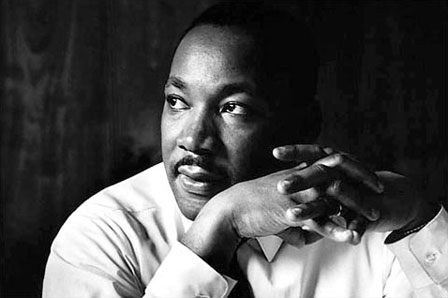
Seattle Times photo
The Rev. Dr. Martin Luther King, Jr.    Seattle Times photo

Of course, I’m talking here about degrees of racism. But isn’t that the way it usually goes with us garden-variety racists?

Originally, I was going to write this post after speaking with an African-American “acquaintance” of mine, a woman I have long admired from a safe and comfortable distance. We have tentatively scheduled a cup of coffee — or maybe a pint of beer sometime in the next few days, when her schedule settles down.

I know of this woman only through third parties. Recently, we have become “connected” on a few social media platforms. I find her writing haunting and jarring.

So why did I deviate from my original plan?

1.) I am intimidated by this woman; and

2.) This week is so timely for this discussion, this musing of mine.  For one, this week we celebrated the 50th anniversary of the stirring and famous speech by the Rev. Dr. Martin Luther King, Jr.  We also have all the fallout from Gov. LePage’s latest verbal snafu; but more importantly . . .

3.) I am afraid that I would be less than honest if I met her before writing this. Meaning: I would try to be more careful, bend to my “white-man guilt” by being overly empathetic and trying desperately not to offend. In summary, I would probably open the flood gates of bullshit.

A garden-variety racist

Some racists go all in with their prejudice. David Duke comes to mind, and so did the recent antics of a cranky and seriously disturbed retired cop in Sabattus, Maine.

Others take a shot at redemption in their later years. They either soften or gradually see the light; or — more appropriately  — begin smelling the rot of their own garbage. Strom Thurmond comes to mind, here.

I fall asleep at night comforted that I am not David Duke, David Marsters or even Strom Thurmond. I am more like Governor LePage, and more like most people I know.

I am a tiny bit racist. So I get to skate with the hip, the self-aware and the all-so-cool white folks who either ignore their racism or make excuses for it.

It is not excusable.

Physician, heal thyself

I had this race epiphany a few days ago while reading a media report about Governor LePage and his attempt to “clarify” and explain allegations made by anonymous members of his own party. Essentially, LePage denied ever saying that President Obama doesn’t like white people.

The governor’s defense centered upon his assertion that President Obama has repeatedly missed opportunities to heal our nation’s racial tensions, fumbling or ignoring golden opportunities to bring white and black people closer together.

For just one bat-shit crazy second, that explanation almost made sense to me. It was then that I could no longer deny that I was a racist.

Now, before I bring down the full weight and wrath of those ultimately loyal to LePage, allow me to back up.

Maine%20Governor%20Paul%20LePage(1)The governor was a little bit right in his criticism of President Obama on this front. But here’s the problem, LePage almost three years ago abdicated the moral high ground when it comes to easing racial tensions.

Most of us remember that cold day in January 2011 when local and national media went into overdrive regarding LePage’s alleged racism. He didn’t just decline an invitation to attend the annual Martin Luther King Day breakfast in Portland. Instead, he proudly (with what would become his trademark bluster) told reporters that “the NAACP can kiss my butt.”

If LePage is worried about missed opportunities to heal racial divides, he’s got a damn funny way of showing it.

Consider what he could have said. “I’m not sure why you folks in the media are making such a big deal about this. I simply declined an invitation because my schedule is full, but lets all remember that I consistently attended local MLK breakfast events in Waterville during my tenure as mayor. I also have taken a young African-American man into my home and helped raise him as a member of my own family. I strongly resent any implication that I am a racist. Let’s get busy talking about the important issues we are facing in Maine government.”

Nope, LePage could not resist coming on strong, full of sound, fury and arrogance. He began a path of allowing his pride to trump his greed.

How do we move forward?

I do not think our governor is a more successful version of David Duke, but I do think he has missed plenty of opportunities to talk in a meaningful way about an issue that is still very relevant in today’s world — even 50 years after the delivery of the I Have A Dream speech.

So, I am also a little bit racist, but I am also a little bit greedy, a little bit of a misogynist and a little too quick with anger.

Unless I am willing to look at these things, to painstaking examine my own heart, I have no authority to opine on these issues. We must be willing to confront the things we don’t like . . . even those things that lurk in the darkness of our own souls. Otherwise, the garbage festers and it can grow and infect other parts of our being.

As I said before, these things are not excusable but there are reasons for their development in even the best of people. Part of it is our cultural and genetic pre-disposition to assimilate within the familiar.

In this way, I suspect strongly that I am not alone; that the majority of folks I know are just a tiny, tiny bit racist. We can work on it if we can be honest about it. If we start with the man in the mirror.

White-man guilt

In the aftermath of the Civil War, the United States embarked upon a period of “Reconstruction.” Today, we would call in FEMA and lease some trailers.

The concept of giving former slaves 40 acres and a mule as reparation for their slavery was short-lived. Much of that land was eventually returned to its antebellum owners. From time-to-time, some guilt-ridden white folks and a lot of still angry black folks talk about the concept of ‘reparations” as the only way to heal the racial divide. Affirmative-Action programs were apparently a lot easier to digest.

Only weeks before being sworn-in, President Jimmy Carter granted an interview to Playboy magazine. It was the November 1976 issue. I know this because I was 12 years old and was an avid reader of my father’s hidden stacks of Playboy magazines.

Patty McGuire was that month’s centerfold. She was later named Playmate of the Year in 1977. She liked CB radios. I desperately wanted a CB radio back then. I saw Patti, and I knew it was a match made in heaven . . . but I digress.

Carter was trying to heal the cynicism of a post-Watergate nation by being painfully honest. In that issue of Playboy, he confessed to “having lust in my heart.”

Unfortunately, Carter had a lot of other tasks at his feet, many of which did not work out so well. But confessing lust in a Playboy interview is sort of like criticizing missed opportunities for racial healing after telling the Maine chapter of the NAACP to kiss your butt.

The message gets lost.

Automatic for the People

Note: Please see edits below.

Maine Democrats are celebrating tonight, but I think they have a serious problem.

Let me back up.

State Sen. (Elect) Eloise Vitelli

Politics is fascinating.

Don’t puke just yet, at least not until you consider that observing politics offers the best of everything: intense drama, fierce competition and hilarious moments of human folly, all wrapped in a package of somber significance driven by human pathology.

It’s like a sporting event, a comedy show, and a night at the Met, all wrapped into a neat little package of 30-second installments.

Okay, so go ahead and puke now if you must. But for the rest of you consider this scenario.

It’s the middle of an all-too-short summer in Maine, where a state senator lands a sweet federal gig and must vacate his seat halfway through his two-year term.

He is a solid Democrat, a progressive, even…respected in his party (a former majority leader in the senate) and handily supported each election cycle by his constituents.

His district (State Senate District 19) is a reliable haven for his party: Mid Coast Maine, the home turf of Senator Angus King, Bowdoin College… not a hotbed of right-leaning conservatism, by any stretch.  Not really true, see edits below.

The Dems want to keep this seat. They still feel the sting of 2010 when they lost the Blaine House and both houses of the Legislature. Another gubernatorial campaign is already underway, and the Dems are absolutely committed to dumping Republican Paul LePage, who has repeatedly embarrassed his own party with ill-advised remarks and a stunning inability to control his temper and message.

Now, back to this sleepy senate district.

Two smart, savvy women lace up their gloves, representing their respective parties. A Green candidate also gets into the race.

Republican Paula Benoit

More than $150,000 is spent on the campaigns during just a few weeks. It will likely top $200,000 when all the final campaign reports are turned over for public inspection next month.

It is, according to several political observers — including former State Senator Ethan Strimling — a record-breaking race for campaign funding in a state senate race.

The result?

A turnout of slightly more than 30 percent of the district’s registered voters, and a narrow victory for the Dems. Eloise Vitelli beats Republican Paula Benoit, who previously held the seat from 2006-2008.

Of the 8960 votes cast, the Democrats hold onto their seat by a margin of slightly more than 3  percent, 282 votes.

The Democrats are cheering and drinking bubbly tonight. They deserve the celebration. They worked hard.

But I think they will have a big hangover tomorrow morning.

How do you spend more than $100,000 and win by a little more than 3 percent when the Republican governor is trailing in the polls and you are running a campaign on your home turf?

Conventional wisdom says that the Maine GOP is in trouble and eating their own. Maybe.

But it seems pretty clear that Maine Dems have plenty to worry about between now and next November.

******

Edited to include Benoit’s prior election to the Dist. 19 seat in 2006.

Editor’s note: There is a peril to blog posting when you are a political junkie jacked up on Twitter, caffeine and cigarettes. Some glaring mistakes need to be corrected: 1.) Bowdoin College is not within Senate District 19. In fact, the town of Brunswick is not in Senate District 19, so you can also scratch my reference to Senator Angus King. I was consumed with the Brunswick Times Record’s endorsement of Benoit, thus thinking about Brunswick, instead of focusing on silly things like facts. Not smart.

District 19 may not be a Democratic stronghold, but it’s not a Tea Party demographic either. Like much of Maine, it is shifting and best described as purple instead of red or blue (Props to Gina Hamilton at the New Maine Times for that analysis). Republican Art Mayo who served in the seat from 2002 to 2006 switched parties and became a Democrat in 2004. Gina is much better at facts. Dan Demeritt (@DemerittDan) also pointed out that I did not include the tallies for the Green candidate in the race. Daniel Stromgren garnered 357 votes (4 percent), and Demeritt opines that of every four votes for a Green, one stays home, one goes GOP and two go Dem. So, you tell me: was Stromgren a factor?

In the end, I stand by my original analysis, despite my rush to publish and all of its associated pitfalls. Why?

1.) In 2012 (just last year) Goodall crushed his GOP opponent, Jeffrey Pierce (64-36 percent). Two years earlier, he trounced Republican David Kaler, 52-45 percent.

2.) Republican Gov. LePage is trailing in polls and getting widespread media attention for his gaffes, helping the Dems.

3.) The Dems had the seat and spent more than 100 grand to keep it. They got a 3 percent return for their money and a 30 percent turnout. What “message” are they sending to Gov. LePage? Do they really feel good about that? Really? They are not on easy street. Case closed.

Constant Craving

20130715_055332Much has been said about Maine’s quality of place, a subject that hit me like a brick this weekend as I once again travel the roads of rural Maine.

But what is the value of a quality place without a quality life?

GrowSmart Maine describes quality of place as:

“. . . our majestic mountains, unbroken forests, open fields, wild rivers, pristine lakes, widely-celebrated coast, picturesque downtowns, lively arts and culture, authentic historic buildings, and exceptional recreational opportunities. It is our principal advantage in today’s global economic competition. Quality of place will help us keep and attract skilled workers and entrepreneurs to fill Maine’s declining workforce population.”

Sounds good, right?

Sure, right up until you drive along Rte. 4 past Livermore Falls and into the town of Jay on your way to someplace pretty.

The policy wonks, pundits and environmental do-gooders slap themselves on the back with self-congratulation over drinks at the Senator Inn in Augusta after passing some piece of legislation designed to protect Maine’s “quality of place,” but I wonder if they have ever strolled along Water Street, less than a mile away or driven past the dilapidated tenement triple-deckers that line Rte. 8 on the way toward the Civic Center.

Try telling someone in that neighborhood about quality of place.

Better yet, visit the Wal-Mart in Calais, Skowhegan, Newport or Sanford. Tell the single-mom buying generic-labeled cereal about “quality of place.”

Drive past the gutted factories and the ghost towns that were once homes to thriving industries like shoe shops, paper mills and textile manufacturing. Pull over and tell the people who are barely living there about quality of place.

Drive north, east or west from Portland. Get off the main roads and count the number of blue tarps that serve as substitute roofs on ramshackle homes. Pause and tell those people about “quality of place.”

There are no easy answers, but I never see the pundits or the lobbyists shopping for pre-paid cell phones, making an installment payment at Rent-A-Center or drying their clothes at the Laund-O-Matic on a sweltering July afternoon.

These people —the not-so-pretty and the not-so-fortunate ones —- are largely forgotten, discounted and mostly ignored. They routinely buy lottery tickets. Many of them smoke, and they keep their heads above the surface like prison inmates. One fucking day at a time.

It’s easy to judge them. To think we know better about how they should live or how Maine should be managed, but few of us know — really know— that if this is quality of place . . . That if this is as good as it gets…..

What is the value of having an abundance of natural resources if you cannot feed your children? What is the value of open space if you don’t have a car to get there?

How do we achieve the balance between protecting the things we cherish in our backyard without forgetting or discounting the people who live there?

I do not know the answers. Do you?

Ain’t no cure for the summertime blues

EC
Eliot Cutler

Mike Michaud. Eliot Cutler. Larry Gilbert. Joanne Twomey.

Whaaattt?

Every year it seems as if the NHL playoffs stretch closer to summer, as if football starts sooner — and like everything else, those who love politics and speculating about those playoff games,  the political season no longer seems to have a beginning or an end.

We used to be a bit more dignified and wait until after Labor Day to begin political campaigns in earnest, but now it seems that social media fuels an insatiable thirst for political bloodletting.

As evidence, just look at the past two weeks.

While legislative Democrats continue a contentious, budget showdown with Gov. Paul Lepage,  we’ve had two major candidates announce they are seeking the Blaine House in 2014, and former mayors from two of Maine’s larger cities announced that they are hoping to regain their respective seats.

Eliot “I’m really not a wealthy, elitist, Democrat from Cape Elizabeth” Cutler announced last week that he will formally announce sometime later that he will announce another run for governor as an Independent candidate. Press packets are likely prepared for each of these crucial announcements.

Unless you have been in a coma for the last four years, this was not news. Cutler has been running an intensive campaign since the day he lost his last campaign, and about as subtle as an aircraft carrier steaming across Moosehead Lake with his One Maine campaign and any other opportunity to remain politically relevant — barring any trips to places like Rumford, Sanford, Lincoln, Lewiston or Biddeford.

Joanne Twomey
Joanne Twomey

And then U.S. Rep. Mike Michaud today “announced” that he’s thinking about running and has authorized an exploratory committee that is charged with developing some Google maps of interesting places to explore in southern Maine.

On the more local scene, former Lewiston Mayor Larry Gilbert announced yesterday that he will once again seek his city’s top political post. That announcement came only days after former Biddeford Mayor Joanne Twomey announced that she will also run again for the mayor’s seat.

Gilbert actually invited the media to his announcement and had a small gathering of supporters standing by his side.

But Twomey’s announcement seemed more like Khan going after Captain Kirk; swearing revenge on Mayor Alan Casavant, who ousted her from office in 2011 with 62 percent of the vote.

Twomey is some pissed off that Casavant agreed to co-sponsor a bill in the Legislature that could potentially open the door for a racino in southern Maine.  You see, only Joanne Twomey is allowed to change her mind about the merits of a racino.

Twomey is adept at changing her mind. She’s flip-flopped on everything from casinos to her own party affiliation. Casavant already stole her thunder in closing MERC, and now he has the temerity to consider upstaging her once again??

So, what will the next political “announcement” look like. Frankly, I have no idea, but I do have some advice for Mike Michaud:

Spend a lot of time this summer in southern Maine and pray that Joanne Twomey endorses Eliot Cutler…. ( just think of the announcement potential!)

Street fighting man

Sen. Angus King
Sen. Angus King

While many of us were obsessing this week about whether Big Brother is monitoring that silly cat video we posted on Facebook or whether the IRS will now audit Tim Tebow, Maine’s newest senator quietly announced that he was consolidating two of his southern Maine field offices.

Although the news of Senator Angus King closing his Biddeford and Portland offices didn’t exactly set the world on fire, it does bear mentioning and warrants a positive shout-out for at least two reasons.

1.) Consolidating the Biddeford and Portland office at a centralized Scarborough field office is aimed at efficiency and will save taxpayer money.

2.) More importantly, this symbolic gesture recognizes the most important part of what constituent service should entail: the constituent.

Allow me to explain the more important, latter point. King wants his staff in the field; mobile, flexible and ready to meet with constituents on their terms.

Instead of being pinned down at a desk, King wants Bonnie Pothier (King’s York County rep.) and Travis Kennedy (King’s Cumberland County rep.) to spend more time moving around their respective fields, more involved in the entire area than just one particular office location.

So, while the office closing represent a slight loss for the cities of Biddeford and Portland, the bigger gains will be for people who were already somewhat geographically removed from those locations; i.e. residents or business owners who live or work in places like Standish, Kittery, Sanford and Brunswick.

Sure, this is mostly a symbolic gesture, but it is consistent with what King promised us during last year’s campaign: to find ways to better connect Maine people with Washington D.C., such as his weekly  Capitol Coffee sessions, held each Wednesday morning in his D.C. Senate office. If you happen to be in DC, you can swing by and have a blueberry muffin with your senator. 

Symbolic, Folksy, Quirky? Check to all three, but it does again reinforce the idea that your senator is available and wants to hear from you.

And today, King begins his Your Government, Your Neighborhood roadshow, in which his staff will fan out across the state to hold listening tours with any interested constituents. Although this method of constituent outreach is almost as old as the US Senate; King is leveraging his social media assets to amp up constituent participation.

And finally, King, the governor who launched Maine’s seventh-grade laptop program, is using technology to hopefully connect with every classroom in Maine by using Skype, as detailed in this story from the Bangor Daily News.

As Americans continue expressing a lack of confidence in the federal government, it’s real easy for most of us to remain stuck in a cynical posture about those loathsome folks bickering in Washington.  But at least King is pushing for a greater connection with his constituents, and saving us a few bucks in the process.

I have never been an Angus King cheerleader, and I think it’s far too early in his senate career to determine whether he can actually pull off some of the lofty ideas he talked about during the campaign, but so far…. I like what I see….

The idea of free coffee on Wednesday mornings? Well, let me know when we can start sampling Maine micro-brews in the Dirksen Senate building on Thursday nights, and I’ll be the first in line every week.

Related: My interview with Angus King in November 2002


Let it be

Like many of us, Governor Paul LePage is frustrated by welfare abuse, but one of his most recent proposals to reform an undeniably flawed system is misguided and completely misses the mark of an otherwise noble goal.

LePageAmong his many other initiatives to rein in government spending and reform Maine’s welfare system, LePage sponsored LD 1411, a bill that would prevent people who qualify for the federal food stamp program from buying soda and so-called “snack foods.”

Sounds good, right? Not exactly.

The Supplemental Nutrition Assistance Program, more commonly known as SNAP, is a federal program, administered by the US Department of Agriculture.

LD 1411 has garnered bipartisan support. One of the bill’s co-sponsors in State Sen. David Dutremble, a Biddeford Democrat. Others on the left share the governor’s concerns about nutrition and abuse of taxpayer funds.

The bill also seems to have overwhelming public support. A recent online poll in the Portland Press Herald showed that more than 80 percent of participants support the governor’s bill.

But despite the bill’s bi-partisan origins and its broad public support, we all ought to take a closer look at the proposal because it will actually do far more harm than good.

1.) The bill will not save a dime of taxpayer money. Instead, it will likely increase bureaucratic costs. Remember, the bill would not reduce benefits, it simply would exert more government control of an individual’s choice of foods.

2.) Because SNAP is a federal program, the state of Maine will need to get a waiver from the federal government. Considering the fed’s reactions to other waiver requests that were proposed by the LePage Administration, this hurdle seems unrealistic. Given the number of bills that the Legislature has undertaken, we should not be wasting time or state resources on a proposal that has zero chance of becoming reality.

3.) It’s not business friendly. In the unlikely event that LD 1411 finds its way into state law, it would add another layer of government regulations and complexity for merchants, including small and mid-sized grocers who accept federal  food stamps.

4.) The bill is targeted as a punitive swipe at those who use food stamps. Yes, many people abuse the food stamp program, but many more truly need and deserve the benefit in order to avoid hunger. We ought to be more focused on investigating and prosecuting welfare abuse than penalizing everyone who is in an unfortunate circumstance.

5.) LD 1411 misdirects our outrage. As we debate LD 1411, we should also remember that food stamps cannot be used to buy alcohol, lottery tickets or tobacco products. Some Maine families receive a monthly cash benefit known as TANF (Temporary Aid for Needy Families). Unfortunately, that program has too many loopholes and is more commonly abused than food stamps.

6.) Nutrition? While some Democrats and Republicans like the idea of encouraging better nutrition, this bill will do little to reinforce healthy choices. It would not address many other products, such as sugar, corn syrup, powdered drink mix, cookie dough and ice cream. Our emphasis ought to focus on nutritional education.

7.) LD 1411 would prohibit the purchase of some healthy choices, including: bottled juice products and bottled water.

I applaud Governor LePage for his desire to control government spending. He is a fair-minded individual who two years ago set his critics aback, when he denounced a so-called video sting operation of two DHHS offices by right-wing activists. The media didn’t give him much credit, but it shows that LePage is far more human and fair-minded than the gross caricature his opponents have painted.

LePage knows a thing or two about being poor in Maine. He is a self-made man who grew up in an abusive home and found himself alone on the city streets of Lewiston when he was just 11 years old. His story and ultimate success is inspirational.

Our governor is the proverbial poster child for the “pulling yourself up by your bootstraps” crowd, and he wants to see other people succeed the same way he did. Hard work, determination and dedication to improving one’s odds for success.

Considering his background and his staunch fiscally conservative beliefs, LePage understands better than most folks that every dollar of welfare funds wasted represents one less dollar for programs, which are absolutely necessary and vital for Maine’s most vulnerable citizens.

I am a little bit like Governor LePage. I am a Republican who grew up in a mill town. But I also received food stamps at one very low point in my life. I doubt that I could have survived what the governor survived as a child, but I do know that a little bit of help and support from Maine’s taxpayers turned out to be a wise investment.

Update: the long and winding road

I am pleased to report that State Sen. David Dutremble (D-Biddeford) has gone where few politicians go.

Just a short while ago, Dutremble commented on my Facebook page to concede his faux pas.

Randy, I don’t say this often but you are right!  I should have spoke with Rep. Casavant on my position first before answering any questions.  I have since done that and spoke and apologized to Rep. Casavant today for not calling him first!  Lessons Learned!

This, dear readers, is what we should expect from our leaders; the ability to stand up publicly and admit our errors. It’s called integrity, and Dutremble’s humility ought to be a benchmark for everyone who decides to serve in public office.

Somewhere, Babe Dutremble is smiling, knowing that his nephew is not perfect but has the courage and conviction necessary to hold the public trust.

Bravo, Senator Dutremble. Let’s put this one behind us and move forward to make Maine a better place to live, work and play.

Bury my heart

“Those who cannot remember the past are condemned to repeat it.” George Santayana
407838_583866058296151_931822225_nA Facebook friend reminded me that it was 122 years ago today, on December 28,1890, that more than 300, unarmed  native Americans were slaughtered in South Dakota by U.S. Forces. The dead included women and children, and this travesty is recanted in horrific detail through the pages of  Bury My Heart at Wounded Knee.
Colonel James Forsyth was later charged with The Killing of Innocents, but was exonerated and promoted. 22 of the soldiers that day were awarded the Congressional Medal of Honor. Do you remember being taught that lesson in public school? Probably not. It’s a piece of American history we like to forget.
 “I can still see the butchered women and children lying heaped and scattered all along the crooked gulch as plain as when I saw them with eyes young. I can see that something else died there in the bloody mud, and was buried in the blizzard. My people’s dream died there. It was a beautiful dream… the nation’s hoop is broken and scattered. There is no center any longer, and the sacred tree is dead.” -Black Elk (1863-1950); Oglala Holy man.
The Lakota and other tribes were labeled as terrorists in Washington, DC, long before we created the Patriot Act to keep ourselves “safe” from terrorists.
As we once again debate how to keep American citizens safe, many people dismiss the quaint notion of government tyranny. Tyranny happens in other places, not here…not now…they say.
Generally, these believers in government authority and the government’s sole discretion in keeping us safe are white folk who rarely consider the downsides of an unbalanced distribution of force and power. These believers in government sanctity forget about the rather recent atrocities in Dafur, Serbia, Libya or Nazi Germany.
I spent the summer of 1987 working on the Cheyenne River Reservation in Eagle Butte, South Dakota. Back then, I thought  wanted to be a priest.
I was 23 and full of my self as most 23-year-old men are. I strived to be sensitive, to be politically correct. The wise Lakota who surrounded me would gently smile when I used the words, “Native American.”
kids
I tried my best to be empathetic, compassionate. I desperately wanted people to know that I was enlightened and not a typical white man; someone who could listen without judgment or prejudice.
One of the men on the reservation set me straight. “If you think you can assuage the sins of your past with a couple of words, you are sorely mistaken.”
He stepped outside to have a cigarette. We never crossed paths again.
So here are two pictures. One is from 122 years ago; the other is from 1987.
Take a good look, and you tell me… have we learned anything from history?

Time out

mourningWe are all, it seems, struggling to come to terms with what happened yesterday in Newtown, Connecticut.

As the awful news began to unfold, I urged friends and family members to pause and refrain from using this tragedy to further support political/policy agendas. I was unable, –am still unable — to comprehend what happened. It seems impossible to shoulder the weight of this horrific tragedy.

“Today is not the day to have these conversations,” I wrote on my Facebook page yesterday. “Today is a day to grieve and to support one another.”

Those words strike me as empty, hollow. . .meaningless. Over the last 24 hours, our nation has experienced a range of emotions: rage, grief, shock, fear and despair.

So, how do we move forward? How do we reconcile those feelings, the raw emotions that carry us into another day?

Understandably, many of us are searching for answers, for meaning. We have different opinions, and I submit that those opinions are all vital, all necessary for the larger conversation that we can no longer ignore.

The response to my Facebook post was generally respectful. Some people, however, chided me..saying yesterday, the day before, last year was the time for that conversation. I agree with those well-intentioned Facebook friends of mine. I only wonder if they will now join me in that conversation.

Four days after the Tuscon shootings, I penned an op-ed that was published in the Portland Press Herald. I got lots of supportive feedback and some nice comments for my willingness to speak publicly about my own mental health issues and how those issues affect each and every one of us, but we all moved on to more important things . . . like arguing about Rick Santorum, Wal-Mart and Honey Boo-boo.

On July 23, I wrote another blog post about the peril of ignoring mental health issues and focusing on gun control in response to the movie theater shootings in Aurora, Colorado. But we quickly moved on . . .

As I struggle to find light in this time of darkness, there is only one small measure of comfort: for the first time, I am seeing and hearing numerous people address mental health as one of the core issues for that conversation. More people, it seems, are ready to have “that” conversation.

But it is not the only issue we must be willing to confront. I consider myself an ardent supporter of the Second Amendment, but today I am left with questions for which there seem to be no easy or convenient answers. I loathe knee-jerk reactions, but I am willing to reconsider all of my opinions so that I can join that larger conversation in a meaningful and productive way.

Ironically. as we all began dealing with the tragic fallout from yesterday’s rampage, another new story from half way across the globe was unfolding.

Questions about China’s inadequate mental health system are increasing in the wake of multiple incidents of school children being attacked and killed by knife-wielding, mentally ill people. Over the last few years, numerous school children have been killed and scores more injured by knife-wielding mad men.

That is not an argument against gun control. That is an argument that shows gun control is not the entire solution.

News commentator Bob Costas didn’t hesitate to offer his opinion about gun control less than 24 hours after an NFL player shot and killed his girlfriend before shooting himself in front of his coach. Just one week later, another NFL player was killed because he was riding in a car with a drunken teammate. It’s no surprise that there was no call for tighter alcohol controls.

Railing for gun control may help us feel a bit safer; but if we don’t have that conversation across a larger context then we can expect more of the same . . . senseless violence that shocks and angers, but then slowly fades away into distant memory.

On a final point. How do we ensure better background checks to prevent mentally ill people from purchasing or obtaining firearms?

Should someone like me, someone who struggles with depression and has been hospitalized sacrifice our privacy and have our health care records disclosed? Should family members of mentally ill people lose or sacrifice some of their rights under the Constitution?

I do not know the answers to those questions. But I do know, there is no way to guarantee safety. We live in a dangerous world, and if we are willing to sacrifice liberty for security (and considering the Patriot Act, Department of Homeland Security, and long shoeless TSA lines, we are) we may end up with something we never bargained for.

Killing me softly

gun-k92At the risk of provoking law enforcement officers, irate taxpayers, members of Maine’s Legislature and people who suffer with a mental illness, I want to congratulate Tux Turkel and a his team at the Portland Press Herald/Maine Sunday Telegram for an exceptional article in this morning’s paper.

At the crux of the story is the number of fatal shootings in Maine that are connected to police calls that involve someone who is mentally ill.

Before we proceed further, it’s important to note that the vast and overwhelming majority of people who suffer from a mental illness never have an interaction with law enforcement agencies.

Secondly, despite the myths, stigma, Hollywood hype and media bias, the overwhelming majority of mentally ill people are not violent.

In fact, violent acts committed by people with serious mental illness comprise an exceptionally small proportion of the overall violent crime rate in the U.S. They are more likely to be the victims of violence, not its perpetrators, according to the National Association of Social Workers (NASW)

In its March 2011 article, “Budgets Balanced at Expense of Mentally Ill,” the NASW newsletter also mentions a new report by the U.S. Substance Abuse and Mental Health Services Administration that documents a nationwide decline in behavioral health care spending as a share of all health care spending, from 9.3 percent in 1986 to just 7.3 percent, or $135 billion out of $1.85 trillion, in 2005.

(See: Pocketful of Kryptonite; All Along the Watchtower, April 2011)

Mental illness is an uncomfortable subject, one which many people would like to ignore and sweep below the rug. But we ignore it at our peril.

Asking law enforcement officers to effectively deal with ill people is sort of like expecting school janitors to provide high school tutoring services.

In our current situation, there is a natural tendency to blame the survivor. If someone has a knife and they begin moving toward you in  a threatening manner, don’t you have the right to defend yourself?

Or do we blame the person holding the knife, a person with a mental illness who is unable to comprehend reality when it matters most?

Try to imagine what it’s like to be the cop who is forced to deal with that situation, to live the rest of his or her life with the knowledge that he/she ended another person’s life.

According to the newspaper: Since 2000, police in Maine have fired their guns at 71 people, hitting 57 of them. Thirty-three of those people died. A review of these 57 shootings by the Portland Press Herald/Maine Sunday Telegram found that at least 24 of them, or 42 percent, involved people with mental health problems. Seven of the shootings were alcohol-related. Two involved drugs.

Of the 33 people who were killed, at least 19, or 58 percent, had mental health problems.

In the days following the 2007 massacre at Virginia Tech, “Nightly newscasts reported “no known motive” and focused on the gunman’s anger, sense of isolation, and preoccupation with violent revenge. No one who read or saw the coverage would learn what a psychotic break looks like, nor that the vast majority of people with mental disorders are not violent. This kind of contextual information is conspicuously missing from major newspapers and TV,” wrote Richard Friedman in “Media and Madness,” an article published in the June 23, 2008 issue of The American Prospect.

Friedman goes on to explain that “Hollywood has benefited from a long-standing and lurid fascination with psychiatric illness,” referencing movies such as Psycho, The Silence of the Lambs, One Flew Over the Cuckoo’s Nest and Fatal Attraction.

According to Friedman, “exaggerated characters like these may help make “average” people feel safer by displacing the threat of violence to a well-defined group.”

So, should we blame lawmakers or Hollywood movies for rather weak funding and policies to assist law enforcement officers in  addressing the complications of dealing with mentally ill individuals?

Or maybe, should we all take a good, long look in the mirror? In an age of economic recession, we must wrangle with legislative spending priorities.

But consider how expensive and grossly inefficient our current system is when it comes to dealing with potentially violent people who suffer from a mental illness.

In November 1993, I was living at my sister’s home near Augusta. Two days earlier, I purchased a used Lorcin .380 semi-automatic handgun with the intention of committing suicide. Fortunately, the gun misfired and jammed. Within moments, it seemed, my sister’s home was surrounded by a cadre of police officers, armed to the teeth. Who could blame them?

I was eventually transported to the Jackson Brook Institute (today Spring Harbor Hospital), where I was involuntarily committed for several days.

Compare that situation to one in 1986, when I was living in Tucson, Arizona. Pima County had a mental health rapid response team that included trained mental health workers. These teams served as the lead for responding to crisis situations. They could effectively assess the situation and call police only when necessary. They were equipped to provide the police with tools, intelligence and situational analysis that kept the officers safe.

Those types of programs cost money, but they also save taxpayers money over the long-term. More importantly, the approach in Tucson is far more likely to yield results in which no one dies. But how do you calculate the financial worth of preventing a fatal shooting?