A plea to responsible gun owners

Note: The following was penned by my friend and former colleague Tobey Williamson who now lives in Hawaii. It is provocative, and I thought my readers may want to consider his point of view.

police lineDear Responsible Gun Owners with Good Hearts:

I know more than a few of you, and I want you to keep your guns and buy more of them. Buy as many as you want. Keep them locked up. Safe from the [mentally ill] and from the kids. Keep them ready in case we really do one day have to organize a militia to fight against an extremist government that knows everything about its enemies and employs drones to kill us remotely. At least we’ll be able to shoot a few of those fuckers out of the sky before we run out of bullets.

In the meantime let’s teach our kids to hit a target at 1000 yards in a gale force wind with their hearts racing at 100 beats per minute. Teach them to respect these weapons, these tools of food security, these protectors of our freedom. Make sure they know never to point them at any person unless they intend to pull the trigger—and that they understand the inevitable consequences of such a decision. Bring them hunting and show them the proper reverence when the spark leaves the eye of the animal we take to sustain our own through the winter.

However, I implore you to look into your heart and consider that it is only flesh and that it beats for your loved ones. Who are themselves flesh and blood that can never be put back together once torn apart by bullets. Think of them when you begin to change the conversation we are having as a country, when you become the voice of reason that leads us away from this chaos. No one else has the credibility or the common sense that you have. Nor does anyone else shoulder the same responsibility.

Rights do come with responsibilities; at least they do in a world that makes sense. So, as a rightful owner of as much firepower as you can buy, it is your responsibility to speak out and take real action against this mayhem and senseless violence that can strike any of us at any time. This is a deadly serious issue and at the moment not only is the violence insane, but so is the conversation about it.

The vast majority of people just want to go about our business without fearing for our lives. When we hear that new laws are not the answer because we do not enforce the ones we have, or that its because we have poor mental health services we say, “ok, lets fix all of these problems.” When we hear that a person intent on killing another person will find a way with or without a gun, we say, “ok, lets make it as hard as possible for them to do that.”

When we hear that the only answer to the problem of gun violence is more guns, we are incredulous. This is the same absurd logic that created the nuclear arms race. Must we all endure escalating shootouts started by the heavily armed people everywhere in our midst who eventually draw at the slightest crooked glance? Is that when we can decide that this default strategy is not working?

Seriously, think through the scenario of the “good guys with guns” argument. It is not like the bad guys are all wearing black and white-striped jumpsuits or something. If everyone has guns out, who knows whose got a good heart then? Just imagining the situation in the comfort of your heavily armed home should give you pause. Within the chaos, will you really know who to shoot at? Are you sure the other guys packing heat would know not to shoot you? The rest of us caught in the crossfire don’t want any part of it, thanks.

End the insanity. Stand up for your rights. But for fuck’s sake, for our kids’ sake, take care of your responsibilities. Come to the table and be a part of the solution.

Sincerely,
A non gun owner who does not hate guns but hates gun violence.

Orange Crush

donald-trumpThere is no doubt in my mind that this blog post is going to cost me some friends.

In fact, it may cost me some other things too, but I can’t sit here and be silent.

I am watching as my country is gripped in fear. I am watching as politicians scream about safety. I am watching and listening to heated debates among my friends about the Paris terror attacks, the Syrian refugee crisis and the role of Muslims in the United States of America.

It is like a nightmare, and I wonder: has everyone forgotten their history?

“Those who do not remember the past are condemned to repeat it,” said philosopher George Santayana.

Yesterday

Most of us are too young to remember the horrors of WWII, when millions of Jewish refugees fled Germany during the rise of the Nazi Party.
Then, under the authority of the Third Reich, Jews were required to register with the government and to report their movements and whereabouts.
Eventually, Jews were rounded up and sent to prison camps. They were systematically executed during Hitler’s reign of terror.
How could this horror take place? What gave rise to the Nazis? How could Hitler lead an entire nation into a campaign of loathing that eventually turned into mass murder and one of the most significant atrocities in human history?
The answers are difficult to imagine, but it was an incremental process. Germany was reeling financially and on the brink of hyper-inflation fueled by crushing debt that stemmed from their obligations for reparations after World War I.
So, Germany’s economy was in rough shape. But beyond their terrible economy Germans were also concerned about the growing threat of communism in their country. They needed some scapegoats to blame this on.
Hitler came onto the political scene as a magnetic and charismatic speaker. He promised the German people safety and security. He had a stunning ability to whip up the masses with his rhetoric. He delivered scapegoats in the form of Jewish financiers who he blamed for the country’s economic woes.
Sound familiar?
The German people were complicit, either by their silence or by their support of Hitler and the Nazis.
Polls taken in 1938 and 1939 found that the majority of American citizens did not want the government to allow Jewish refugees from Europe to settle in the United States.
A couple of decades later, another gifted and charismatic speaker came onto the political scene; this time in the United States.
Republican Senator Joseph McCarthy led America through the “Red Scare” of the 1950s.
McCarthy spent nearly five years trying to expose communists and other left-wing “loyalty risks” in the U.S. government during the early 1950s, at the height of the Cold War against Russia.
Even mere insinuations of disloyalty by McCarthy were enough to convince many Americans that their government was packed with traitors and spies. McCarthy’s accusations were so intimidating that few people dared to speak out against him.
But Maine Senator Margaret Chase Smith, a fellow Republican to McCarthy, did stand up to him with her Declaration of Conscience speech. One part of that speech that I find especially relevant today is this:
“The nation sorely needs a Republican victory. But I don’t want to see the Republican Party ride to political victory on the Four Horsemen of Calumny –Fear, Ignorance, Bigotry and Smear.”

Today

Donald Trump, so far the leading candidate for the GOP nomination in 2016, endorsed the idea for a database to collect information about Muslims living in the United States. At a campaign event in  Newton, Iowa, NBC asked [Trump] whether there should be a database to track Muslims. “There should be a lot of systems, beyond databases. We should have a lot of systems,” he said, according to The Atlantic. “We’re going to have to—we’re going to have to look at a lot of things very closely. We’re going to have to look at the mosques,” Trump added. “We’re going to have to look very, very carefully.”

When challenged to explain how his policy ideas differed from those used in Nazi Germany, Trump’s only response was ” You tell me. You tell me.”

What scares the bejesus outta me is that Trump’s leading poll numbers surged again this morning, fewer than 24 hours after he refused to elaborate on how his policy idea differentiated from those used by the Nazis.

What scares me more?

So many of my friends really like Trump.

“He (Trump) says what I’m thinking, but what political correctness won’t allow me to say,” said one friend, adding that safety is the most important thing a politician can do for the nation.

But should we sacrifice liberty and American ideals for safety?

I always thought this was the land of the free and of the brave, not the land of bigotry and fear.

What was it that Ben Franklin said?

“Those who would give up essential liberty, to purchase a little temporary safety, deserve neither liberty nor safety.”

Je suis navré

Over the last 24 hours, many of my Facebook friends changed their profile pictures with a backdrop of the French flag.

I did not.

I have no criticism for my friends who did this, I can only explain why I did not.

eifel

What happened in Paris last night was an outrage. Those were cowardly acts perpetrated by cowardly people. Of course, we should stand in solidarity with our fellow men, women and children in Paris. We want to show that we are united.  There is nothing wrong with that.

We are saddened. We are outraged. And yes, we are afraid that this form of terror will soon land again on own shores.

Paris was not the first attack coordinated by ISIS. The loose-knit terror organization has struck other nations, albeit not members of Western Civilization.

I did not change my Facebook profile when ISIS beheaded journalists. I did not change my Facebook profile when ISIS attacked a hotel in Tunisia. I did not change my Facebook profile when ISIS attacked a French Gas plant or when they attacked and killed people in Kobane or Hasakah in Syria; or in Libya or Egypt.

I was a newspaper editor when the 9-11 attacks on the United States took place. Shortly after those attacks, my publisher and I had a lengthy conversation about whether to place an American flag symbol on the top of the front page. Another local paper had made that move, but we decided not to. It was a difficult decision, but I think we both realized that we were dealing with raw emotion, rather than sound logic.

For example, how long would the flag symbol appear on the front page? Would it be like a Christmas tree, which should be taken down after six weeks? Were we suddenly becoming patriotic because we were attacked? Why didn’t we have the flag on the front page on September 10, 2001?

To us, it seemed like being exploitative in the days following a horrific attack on our nation.

As could have been predicted, that other newspaper stopped with printing the flag on their front page long before the end of the year.

Social media is different, however. I see nothing wrong with wanting to show solidarity. I see nothing wrong with wanting to affirm our common connection to the human experience, including its shock, grief and outrage.

I just fear that we are dealing with something so much larger than what we can comprehend; a force of evil that we cannot imagine.

Some say the United States is unable or unwilling to face this latest form of human terror. Some say we are complacent, self-absorbed and don’t have the will to fight any enemy like ISIS. Some even criticize western leaders like President Obama for being “weak” on terrorism.

To those people, I say you are wrong. The same things were said about America and her president on December 6, 1941. We proved the world wrong, if only reluctantly and waiting until we were attacked.

People have criticized Generation X, yet Armed Forces recruiting stations were filled in the days after Sept. 11, 2001.

America has what it takes to confront ISIS, but this will need to be much more than a social media campaign of altered Facebook profile pictures. This will need to be a worldwide effort, and it will require both resources and tremendous sacrifice.

I am not a foreign policy expert, and more than likely, neither are you. I do not know how to bring the world together on this issue, but I do know that it will require much more than symbolic gestures.

We stand with Paris. But we must also stand with Berlin, Tunisia, Prague, Beirut and people of every stripe across the globe, not just the ones who look like us.

#Black Lives Matter

Seattle Times photo
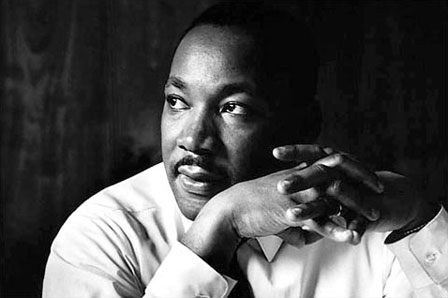
The Rev. Dr. Martin Luther King: Seattle Times photo

I had a little bit of an epiphany yesterday during an especially long drive home.

To prevent road boredom, I was a listening to talk radio, and a news segment about the Black Lives Matter movement caught my attention.

Before we proceed, a bit of disclosure: I am a white, middle-aged man.

Up until yesterday, I generally had a reflexive, knee-jerk reaction to the synergy building in the Black Lives Matter campaign: I would generally mutter: “All lives matter,” and while I still believe that is intellectually true, what is so wrong with acknowledging that Black Lives do, in fact, matter?

I began wondering, can’t we say Black Lives Matter without assuming that it is an automatic dismissal of other lives, races or ethnic backgrounds?

Why can’t we simply acknowledge that Black Lives Matter without feeling defensive and the impulsive need to correct those who deliver that message?

Like most white people, I want to believe that racism in the United States is a topic best left for the history books. I generally ignore it, or once in a while give it a passing nod as a present day and legitimate problem. I wrote about my own battles with racism previously.

But how can we ignore the rising tensions in black communities without actually sticking our heads in the sand?

I know and expect that I am going to get push-back for this blog post, but before you respond I would ask you to consider the following analogy.

Close your eyes and imagine that you and I are close friends. I have just been through a painful ordeal, one in which justice and fairness evaded me.

I say to you, “My Life Matters.”

Do you feel compelled to say, “Well, my life matters, too. Stop feeling sorry for yourself.”

Or could you say, “Yeah, your life matters. I’m sorry you are going through a difficult time.”

I really think it’s okay to acknowledge someone’s pain, sorrow or grief without lecturing them about what a politically correct response should be.

It is 2015, why is not okay for some people to hear the phrase that Black Lives Matter?

Why does that make so many people uncomfortable? No one is saying that white lives do not matter or that Hispanic lives do not matter.

A growing number of people in America are standing up, acknowledging reality and asserting that Black Lives Matter.

And they do.

#BlackLivesMatter


Send in the clowns

donald-trumpSome 48 hours before Donald Trump “officially” announced his candidacy for president on Tuesday, I posted a quip on Facebook that I would be seeking the mayor’s seat in Biddeford.

The idea was jokingly bantered about while Mayor Alan Casavant was attending a party at my home. (Full disclosure: Casavant is serious about seeking a third term, and I support him.)

But my announcement was never intended to be serious.

For starters, I have absolutely no business running for any elected office. I can barely manage my own life, as detailed here.

While my Facebook quip generated some buzz, lots of positive comments and even comments from people willing to help my “campaign,” it was, again, a sarcastic joke.

Now that I think about it, my announcement was actually much less a joke than Trump’s escalator event on Tuesday; and many of us are left to wonder if he is truly serious or just seeking some more attention to further inflate his own ego.

https://www.facebook.com/#!/randy.seaver.3/posts/10204495391008046

Consider for a moment what Trump laid out as his agenda before a group of New York City tourists, some mentally deranged followers and a gaggle of reporters.

He hit all the hot-button topics: immigration, saying we will be build a massive wall between the United States and Mexico. How will we pay for it? Trump said he wold force Mexico to foot the tab through higher tariffs on their imports.

Umm, this is a direct violation of the North American Free Trade Act.

Trumped bragged about his wealth, pointing to what he estimates at a net worth of nearly $9 billion.

He pontificated about his fantastic business career. But riddle me this, how does a man who has filed four bankruptcies amass a fortune of $9 billion, much less describe himself as a savvy businessman? Has he directed any of his fortune to settling old debts with his creditors?

Trump says he will make America strong again, a nice talking point, but one best left for dictators.

For my friends on the right who criticize President Obama for a slew of Executive Actions; the Donald listed out more than a dozen executive actions he would take if elected.

Perhaps he’s been in his mahogany-paneled boardroom so long that he has forgotten the president must work with 535 pesky members of Congress.

Congress controls the purse strings, not The Donald.

More importantly, can Trump’s ego handle the bruising? How will he react when he comes in second, third or tenth in the Iowa caucus or the New Hampshire primary?

Sure, Donald has a certain appeal, and he’s good at tapping into America’s growing resentment against the rest of the world. He excels at fear mongering, but he is anything but a serious presidential candidate.

And who do we blame for this phenomena? This perverse distraction?

Look in the mirror. The vast and overwhelming majority of registered voters don’t cast ballots; we leave that to the partisan fringes, where emotion so often “trumps” logic.

We are a nation more concerned about Bruce/Caitlyn Jenner; television shows like Honey Boo-Boo, the tribulations of the Duggar family, American Idol and Big Brother.

We are a nation addicted to bread and circuses. Is it any wonder that we have sent in the clowns to run the country?

Donald Trump has no business running for president. I have no business running for mayor of Biddeford. The difference between us is that one of us knows a joke when we see it.

The “fairness” doctrine

protestLately, it seems, American culture and politics are increasingly focused on fairness and equality. We have attempted during the last decade to create several new individual “rights.” The right to healthcare, the right to faster internet speeds, income equality and a whole bunch of other rights that are intended to level the playing field.

I call these “feel good” rights because too often we ignore the fundamental fact that most of these “feel good rights” require the transfer of goods or services from one party to another, but they do make us feel better: more noble, generous and kind.

By contrast, an actual right, such as the rights to life, liberty and the pursuit of happiness, are universal in nature. They are endowed by our creator (whatever form that takes for you) and they are enforced by law.  Real rights are not created by government, rather merely recognized as an inherent obligation of government.

Life is not fair

In 1978, Psychiatrist M. Scott Peck, M.D. published a groundbreaking book that set the bar for so-called self-help books that would follow. The Road Less Traveled: A New Psychology of Love, Traditional Values and Spiritual Growth became a bestseller published all over the globe.

I found the opening line of that book jarring in its brutal honesty. Peck’s book begins with the statement “Life is difficult.” From there, he goes into great detail talking about the four major disciplines he saw as a path from mental and spiritual illness toward mental and spiritual health.

No matter what we wish, no matter what we desire, we cannot escape the fact that Peck’s assertion is succinctly and brilliantly accurate: Life is difficult. But I would add to that.

Life is not fair.

In fact, life is only fair in fairy tales. But in reality, life is a crap shoot. There are winners and losers. Is it fair that one person is diagnosed with cancer and another is not? Is it fair that one person loses a limb and another does not? Is it fair that one person is born into royalty and another was born into poverty with alcoholic and abusive parents? Of course not.

While we all certainly make our fair share of stupid decisions that carry with them consequences, there are many other things  life throws at us that are not only difficult but patently unfair. These things are most often unavoidable and beyond our control.

It is not the appropriate role of government to make life fair. That is an impossible task that would bankrupt any nation.

But what about equality?

All things being equal

By definition, equality is another fruitless task because true equality is impossible. Unlike the concept of fairness, however, government does have an appropriate role to play in the sphere of equality.

Our Constitution declares that all men (people) are created equal under the law. Think about this for a moment. Our founding fathers knew that life was not fair and that is impossible for all men to be born equally, but under the law, every citizen is the same, regardless of their differences.

As I pointed out above, the reality of true equality is a stretch. According to my dictionary, equal (as an adjective) is defined as “being the same in quantity, size, degree, or value.”

If I weigh more than you, we are not equal. If I am taller than you, we are not equal. If you have hair, and I do not, we are not equal. You get the point.

However, when we look at equal as a noun, it is described as follows: “a person or thing considered to be the same as another in status or quality.”

Our system of laws is not perfect. OJ Simpson could still afford a better defense attorney than me. While we are both equal under the law in that we are entitled to a defense, we are certainly not equal.

By the order of natural law, true equality is virtually non-existent.

Remember the words of George Orwell in the book Animal Farm? Some animals are more equal than other animals. I know it may seem unfair, but it is true.

Tom Brady and I are never going to be true “equals.”

If we are going to have a rational discussion about fairness or equality, we must recognize that government simply cannot make something fair or equal.

What we can do, however, is treat each other as equals, despite our inherent inequality.

But no matter how many laws we create; no matter how many taxes we raise, life will always be unfair. And it will always be difficult.


Why I am a Republican

Republicanlogo_svgFrom time to time, my friends on the other side of the political aisle ask me why I choose to be a registered Republican.

As the 114th Congress begins to ramp up, and because the debate between “true conservatives” and “mainstream moderates’ in the Republican Party once again manifested itself during the selection of House Speaker John Boehner a few days ago, I thought this would be a good time to explain why I am a Republican.

My friends in the Democratic Party do not understand my political preference. Republicans, they say, favor corporate interest over the individual. Republicans, they say, are opposed to marriage equality and a woman’s right to choose.

Because I am a moderate who supports both marriage equality and a woman’s right to choose, some of my friends (on both sides of the political aisle) wonder why I would choose to be a member of the Grand Old Party (GOP).

Before we proceed, please note that this post is entitled: Why I am a Republican, not why you should be a Republican.

It should also be noted that I do not speak for my party, and I acknowledge that my views often cause other Republicans to label me as a RINO (Republican In Name Only).

Maybe it’s because I am stubborn, or maybe it’s because I am a born contrarian, but I really think my allegiance to the Republican Party (although at times embarrassing) has to do with some fundamental core differences between Republicans and Democrats.

I am also emboldened by the statements and core beliefs of President Ronald Reagan that “there is room in our tent for many views.”

Generally speaking, Republicans believe that each person is responsible for his or her own place in society, while Democrats believe it is the responsibility of government to care for all individuals, even if it means giving up some individual rights.

Generally speaking, Democrats favor the centralization of power in Washington, D.C., while Republicans hold dear the 10th Amendment, which calls for limited federal authority and rights not specified in the Constitution be reserved for the states.

On these two core values, I strongly side with the GOP. While I believe some measure of federal regulation, whether it’s the FAA or even meat inspectors at the FDA, is absolutely necessary for the common good, I also believe in the virtue of a limited federal government and the decentralization of power.

In a true Democracy, the majority trumps the minority. In a Constitutional republic, the rights of the individual, even in the minority, cannot be trumped by the majority. In the United States, we adhere a to a delicate balance between these two types of government. (The latter being intended to thwart tyranny, which can include government overreach.)

The case for and against the GOP

Of course, there are times when I find myself at odds with my own party, but after reviewing the 2014 Maine GOP Party platform, it became quickly evident that I more often side with Republicans than Democrats.

For example, one tenet of the Maine GOP platform addresses immigration, saying we “Support the assimilation of legal immigrants into Maine society.”

Another: “The profits of an individual’s efforts and accumulation of private property belong to the individual.”

More:  “Implement a comprehensive energy policy that removes government obstacles and reduces the cost of energy for Maine families and businesses.”

“Welfare is a safety-net for Maine’s most vulnerable”

“Parents – not government – are most capable and responsible to make decisions in the best interest of their minor children, including medical, disciplinary and educational decision.”

There are many others, and you can read the full text here.

Although I agree with the majority of the Maine GOP’s platform, there some key places where we part ways, including language regarding abortion, the definition of marriage and calling for the repeal of the Affordable Health Care Act, among a few others.

The case for and against Democrats

In fairness, I also reviewed the Maine Democratic Party’s 2014 platform.  2014 MDP Platform

I found myself at odds with a majority of the tenets contained in that platform, including the nice-sounding but ill-advised “livable wage,” and increasing the minimum wage. Raising the minimum wage does not, in my opinion, “lift people out of poverty” rather it simply adjusts the height of the floor and removes incentive to advance.

The Maine Democratic Party believes that health care is a “fundamental human right.’ this logic is flawed because a “right” is not something that must be provided by obligation from another person or entity. “Rights” do not come with costs, and someone has to be paid to provide healthcare, whether it’s skilled nursing, facilities or medical equipment. For more of my thoughts on this topic, go here.

Democrats also support the ill-advised concept of so-called “net neutrality,” as if the government needs to be involved in regulating the internet. For more of my thoughts on this topic, go here.

The Maine Democratic Party opposes tort reform, a giant gift to trial lawyers and a sure-fire way to drive up costs in the private sector.

The Democrats also favor increasing the number of terms that a legislator can serve. Frankly, I think eight years is plenty and we don’t need professional politicians in Augusta.

The opposing party also opposes the Keystone XL pipeline, a project I vigorously support. (Pipelines are much safer than trains; and that oil will be shipped one way or another)

The Democrats also believe that a greater portion of tax revenues should come from the income tax, calling sales taxes regressive. I believe the exact opposite.

Democrats believe it is “appropriate to impose higher taxes on sin taxes. I smoke cigarettes and drink beer. Enough said.

Among many other things, Democrats believe that government pensions should be exempt from income taxes. As the spouse of a government worker, I concede that my opposition to this is not self-serving. Then again, I think we should all strive to be a bit less “self-serving.”

Now, I do find myself in agreement with many of the Democrats core principles, but I am also wary of the feel-good language and the dangers of good intentions. Democrats support workplace safety, a strong education system, marriage equality and a woman’s right to choose.

So, in the end there are inherent strengths and weaknesses in each party.

But when I do the math, it turn out that I am a Republican, even if in name only.


Facts are stubborn things

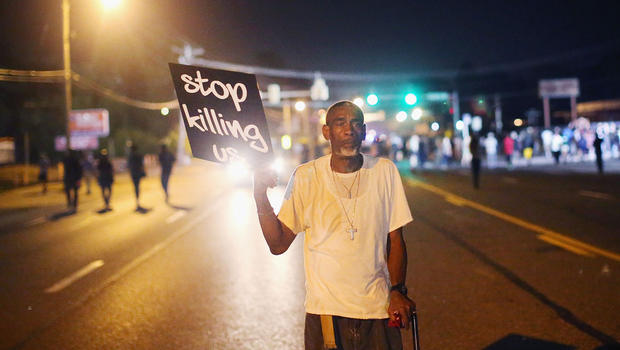
A protestor in Ferguson.  (CBS News photo)
A protestor in Ferguson. (CBS News photo)

I am at a distinct disadvantage writing these words.

I am white. I am also the husband of a former police officer, thus I am somewhat biased.

But I will proceed regardless; because all the news, all the commentary, and all the passionate debate about what happened in Ferguson, Missouri has sparked my memory, jarred my thinking — all the way back to my junior year in high school when I wrote an essay about the Boston Massacre.

The similarities are striking.

History has a funny way of repeating itself; and as George Santayana said, ” Those who cannot remember the past are doomed to repeat it.”

The Boston Massacre happened on March 5, 1770.

Five colonists were killed by British soldiers, who were serving as law enforcement officers to uphold the rule of law (including unpopular taxes) and other provisions of the Townshend Acts

On that fateful evening, Hugh White, a British private soldier, (Police officer Darren Wilson) stood on guard duty outside the Custom House on King Street. A young man, Edward Garrick, insulted another member of the British Guard, Capt. John Goldfinch, saying that Goldfinch had not paid a bill.

Private White injected himself into the debate and told Garrick that he should be more respectful of British officers. White, in fact, left his post, challenged the boy, and struck him on the side of the head with his musket. This attracted a crowd.

Tensions were already high between the British and the colonists. The boy’s insult and White’s reaction touched off a powder keg of resentment.

Within minutes, more than 50 colonists pressed around White,  throwing objects at him and challenging him to fire his weapon.

The crowd grew in size and the British dispatched more troops to quell the colonists, who were throwing rocks and snowballs at the officers. And  then muskets were fired. Five colonists were killed and six more were injured.

The first man killed was Crispus Attucks, an African man, who was labeled later as an instigator.

In the days and weeks that followed, there was a propaganda battle between the two sides. Everyone had an opinion.

Of the eight officers arrested, six were acquitted and two were charged with manslaughter because they fired directly into the crowd.

The attorney representing the British convinced the jury that the officers were in fear of their lives and acting in self-defense.

And who was that attorney?

John Adams, the man who would go on to become the second president of the United States, took the case because he wanted to ensure a fair trial, despite his patriot leanings.

Adams received threats and daily harassment. He feared for his life and for the safety of his family. Many colonists regarded him a traitor for representing the British.

At trial, witness statements were contradictory, and Adams seized upon those contradictions to paint an utter scene of chaos for the jurors, despite the fact that his clients were wholly unpopular.

But Adams also played the race card. Adams called the crowd “a motley rabble of saucy boys, ‘negros’ and ‘molattoes, ‘Irish teagues’ and outlandish jack tars.”

Popularity did not matter to Adams. He knew the stakes were too high to cave into the pressure of political expediency.

What John Adams said during his closing statement at trial should cause us all to pause before offering our own amateur speculation about the intent, competence or procedure of the Grand Jury in Ferguson, Missouri:

Facts are stubborn things; and whatever may be our wishes, our inclinations, or the dictates of our passion, they cannot alter the state of facts and evidence.

Flash forward to today and  yet another young man is dead, and a community is ripped apart.

We will probably never know what happened on that fateful night in August. Most of us (God willing) will never know the pain of losing a child, or the haunting nightmares of a police officer who felt out of options.

But what we do know for certain is this: that the rioting, which followed the non-indictment was not at all justified, but completely understandable. That there is still a rage and level of mistrust in many of our communities and it is there because of undeniable history.

We also know for certain that more than 100 police officers have been killed in the line of duty this year.

So let’s stop speculating and debate the things we know.

Let’s talk about how we move forward; because as history shows us, things can come apart very quickly.


Lido Shuffle

The experiment is over, and it was a bittersweet experience letting it go.

As it is with so many things in life, it occurs to me that my endeavor to create a diverse group to debate differing political ideas with civility was both a phenomenal success and an utter failure. We called this group “Thinking Politics” and its membership quickly swelled beyond my expectations.

WP_20140906_18_48_58_ProLast night, I had the pleasure of participating in the phenomenal success part; but it was the utter failure part that led me to let go of the reins, end the “experiment” and let the group go wherever it wants; allow the other members of this “secret” social media group to experience true self-determination.

I started the group, and until last night served as its primary moderator. Admittedly, I tried to control the group: to maintain a balance between liberal and conservative thought.

My bigger mistake, however, was trying to appease all members of the group, and that caused a lot of anger and dissension.

A few months ago there was a schism of sorts. Roughly 20 percent of the members left the group after I announced that we would leave religion out of our political conversations.

I was angry that these departing members hijacked my group’s name and started a similar group entitled Thinking Politics/Free Speech, as if free speech has no limits.

But the bulk of the original group’s members remained, yet still the dynamic I envisioned never really materialized in a substantive way.

I wanted to see if there would be more intellectual curiosity; if members would be willing to re-examine and challenge their own political pre-conceptions and beliefs.

One of the problems is that the group quickly became dominated by one side of the political aisle. Those in the minority felt frustrated and stopped participating.

In a recent Facebook post, Robert Reich, former Labor Secretary under President Clinton, spoke of the value of having his ideas challenged by a good friend during a monthly lunch meeting.

Perhaps that is why last night was such a stunning success.

About 30 members of Thinking Politics convened for an impromptu dinner in Portland. All members, regardless of political affiliation, were invited. It was an awesome experience, full of laughter, shared experiences, good food and plenty of libation.

That experience reminded me of the Political Beer Summits I once organized with friends who often disagreed about political issues. Those summits inspired the creation of Thinking Politics.

When you’re sitting at a table, directly across from your adversary, it becomes instantly clear that you have much more in common than not. We all have funny stories, fond memories, shared experiences, including loss, fear, hope and dreams.

It’s almost impossible to establish that kind of intimacy on the internet. When you are separated by a keyboard and a monitor, it’s much easier to belittle your opponent, to say things you would never say if you were sharing a meal with them.

So, part of me thinks I failed; but as I looked around at the group last night, I also felt a certain sense of pride. The conversations were real, the friendships were plainly evident.

It was a good time for me to say goodbye, to let go of my moderator status and turn over the keys to six others.

Where Thinking Politics goes from here is unknown. What is known, however, is that I will no longer be at the helm of that ship.

My experiment is over, and I regret nothing.

A good friend from Rhode Island accompanied us to the dinner. Her observation meant a lot to me. “Look at all these people, they came from Texas, Illinois and all over, and they really want to be here and meet the other members in person. You started that, Randy, and that’s impressive.”

So, in the end, maybe my time at the helm of Thinking Politics was a stunning success; and thus, it was the perfect time to walk away and let others steer that ship.

Color me bad

Elephant_LogoYou find the weirdest stuff on Facebook.

This morning, I stumbled across a new Facebook page that is dedicated to the idea of reclaiming the color blue for Republicans.

At first blush, I thought this was one of the silliest things. But then, I started thinking about it.

Why would the GOP want the color blue versus red? Isn’t red the traditional color for Republicans? Not unless you consider “traditional” as the last 15 years.

According to the Republicans Red No More Facebook page, “center-right parties around the world are Blue, and Social Democrat parties are Red, except in the U.S. where 13 years ago the media assigned Red to the Republicans. “

The page creators argue that for more than a century, Republicans were routinely associated with Blue and Democrats with Red.

That color association was changed, they say, by NBC journalist Tim Russert in 2000 when he assigned Red to Republicans on his electoral map.

Since then, they say, the media has adopted this formula, even though it runs counter to American history and worldwide practice.

Are they right? Well, take a look at the map that NBC used to portray the 1980 presidential election results between Ronald Reagan and Jimmy Carter.

1980 mapBut do colors really matter?

Apparently so. At least to color psychologists:

Color is a form of non verbal communication.  It is not a static  energy and its meaning can change from one day to the next with any  individual.

For example, a person may choose to wear the red one day and  this may indicate they are ready to take action, or they may be  passionate about what they are going to be doing that day, or again it  may mean that they are feeling angry that day, on either a conscious or  subconscious level.

Experts say the color red can cause people to feel rushed, agitated or angry. The color blue, on the other hand is generally associated with serenity. It is also associated with trust, honesty and loyalty.

So, given this information it becomes easy to see why Republicans want to “take back” the color blue.

And what about the rest of the world? Are Social Democratic political parties generally red and center-right parties blue?

That would be true in a wide range of countries, including Finland, Israel and the Czech Republic. In fact, the more you look, the more you will see that conservative or centrist parties are associated with the color blue around the globe.

But I don’t expect the U.S. Democratic Party to go down without a fight in the upcoming color war. After all, the last thing Democrats want is to be associated with the color red (Think Soviet Union, the Red Invasion and all sorts of other negative stereotypes.

Who changed the color? Was it a mainstream media with a liberal bias? Was it an oversight or an intentional switch by the GOP? There’s a lot of conflicting information out there, but one thing is for sure: you can always find some strange stuff on Facebook, which relies on the color blue.