While most political pundits and prognosticators in Maine are laser focused on the presidential and Congressional races, I am taking a more local approach and invite you to join me in thinking about the legislative races here in Biddeford, Saco and Old Orchard Beach.
Between now and Election Day (Nov. 5), you can expect to hear a lot more about the presidential race between Vice President Kamala Harris and former president Donald Trump.
Donna Bailey (D)
Here in Maine, many political junkies will also likely be closely watching what is expected to be a very tight contest for the Second District Congressional seat between incumbent Democrat Jared Golden and Republican challenger Austin Theriault.
Incumbents Rep. Chellie Pingree (D) and Sen. Angus King (I) are virtually a lock for reelection.
But what about the local races, the contests being fought by people you might actually bump into at the grocery store?
Maine Senate Races (Saco, OOB & Buxton)
Craig Pendleton (I)
This year’s contest for the District 31 State Senate Seat is basically a rematch of four years ago between incumbent Donna Bailey of Saco, a Democrat, and Craig Pendleton of Old Orchard Beach. This year, Pendleton is running as an independent. He ran as a Republican in 2020. And lost to Bailey, 13,266-11,007.
Bailey has both the party and incumbent advantage. Northern York County typically leans strongly Democrat and voter turnout is expected to be higher than normal, given the national elections. Pendleton has an uphill battle in this race. (Disclosure: Craig is a longtime friend, and I have endorsed him in this race.)
(Biddeford, Arundel and Lyman)
Henry Ingwersen (D)
It’s virtually no contest in State SenateDistrict 32. You can expect incumbent Democrat Henry Ingwersen of Arundel to breeze into victory for a second term. Republican challenger Alfred Schulz is barely putting up a fight and running what appears to be a nearly invisible campaign. Two years ago, Ingwersen easily outpaced Republican David Corbett, 9,676 to 7,209 for his first win.
Maine House of Representatives:
In Old Orchard Beach (District 131), I expect Democrat Lori Gramlich to easily win re-election for a fourth consecutive term in this year’s rematch with Republican Scott Eccleston. In their last matchup (2022), Gramlich easily outpaced Eccleston, 3,170-1,789. Expect a similar result this year.
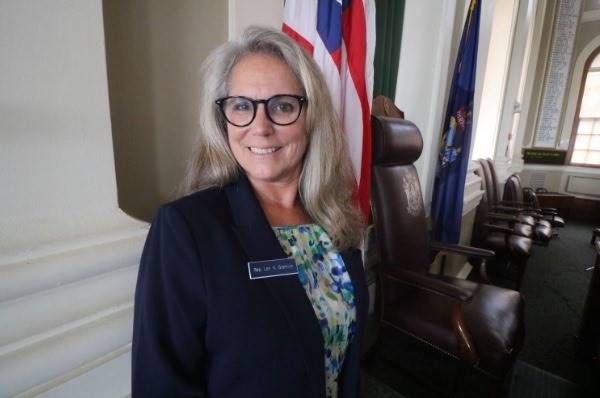
Lori Gramlich (D)
In Saco’s District 129 House race, former city councilor Marshall Archer, a Democrat, is making his first run for state office. He is unopposed and will replace outgoing Democrat Rep. Maggie O’Neil who is facing term limits.
Another rematch will be taking place In Saco’s District 130 House race. Incumbent Democrat Lynn Copeland will once again face a challenge for a third term from Republican Ted Sirois. In 2022, Copeland beat Sirois by a healthy margin, 2624-1619. Again, you can expect a similar outcome this year.
Scott Eccleston (R)
The Biddeford House races are about as ho-hum as you can get. Democrat Marc Malon is unopposed for a second term in District 133. Former House Speaker Ryan Fecteau bought a new house and is now planning to make a triumphant return to state politics, unopposed in District 132. That seat is being vacated by Democrat Erin Sheehan who announced earlier this year that she would not seek reelection.
In fact, the only contested race in Biddeford will be a rematch between incumbent Democrat Traci Gere and Republican challenger Elizabeth Jordan for the District 134 seat, which represents Biddeford’s coastal neighborhoods. In 2022, Gere cleaned Jordan’s clock, 910-476.
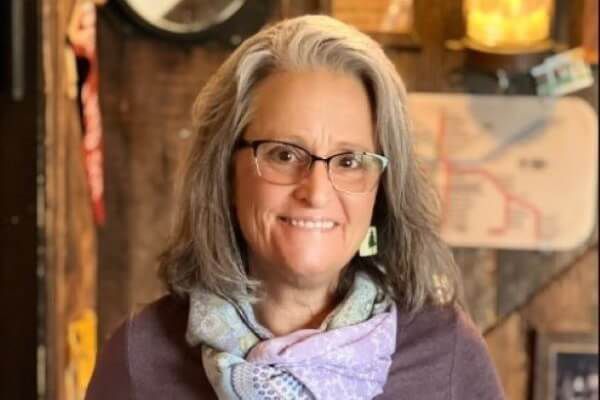
Lynn Copeland (D)
And that’s a wrap. I will step out on a limb and say that I predict Malon and Fecteau to win their respective elections in Biddeford. I also think Ingwersen will probably win over ghost candidate Schulz.
I think it’s also safe to that Archer will win his seat in Saco, especially since he is unopposed. I’ve got $20 that says Gramlich will easily win a fourth term in Old Orchard Beach.
The only race to watch is the rematch between Bailey and Pendleton for the District 31 Seat. Who knows?
Ted Sirois (R)
Regardless, thank you to ALL of the candidates willing to represent us in Augusta. Please remember to vote on Tuesday Nov. 5!
Traci Gere (D)
Elizabeth Jordan (R)
Never miss another installment of Lessons In Mediocrity! Subscribe today for free!
A retired judge, district attorney, state commissioner and former mayor from Biddeford reflects on his career and the changes in his community.
Hollywood movies often rely on stereotypes. Lawyers are frequently depicted as corrupt and self-serving. The district attorneys in those movies are not much better, using their power as glorified crime fighters for political gain. Mayors are routinely portrayed as bumbling, narcissistic egomaniacs; and judges wield their power with a rigid temperament and periodic fits of rage.
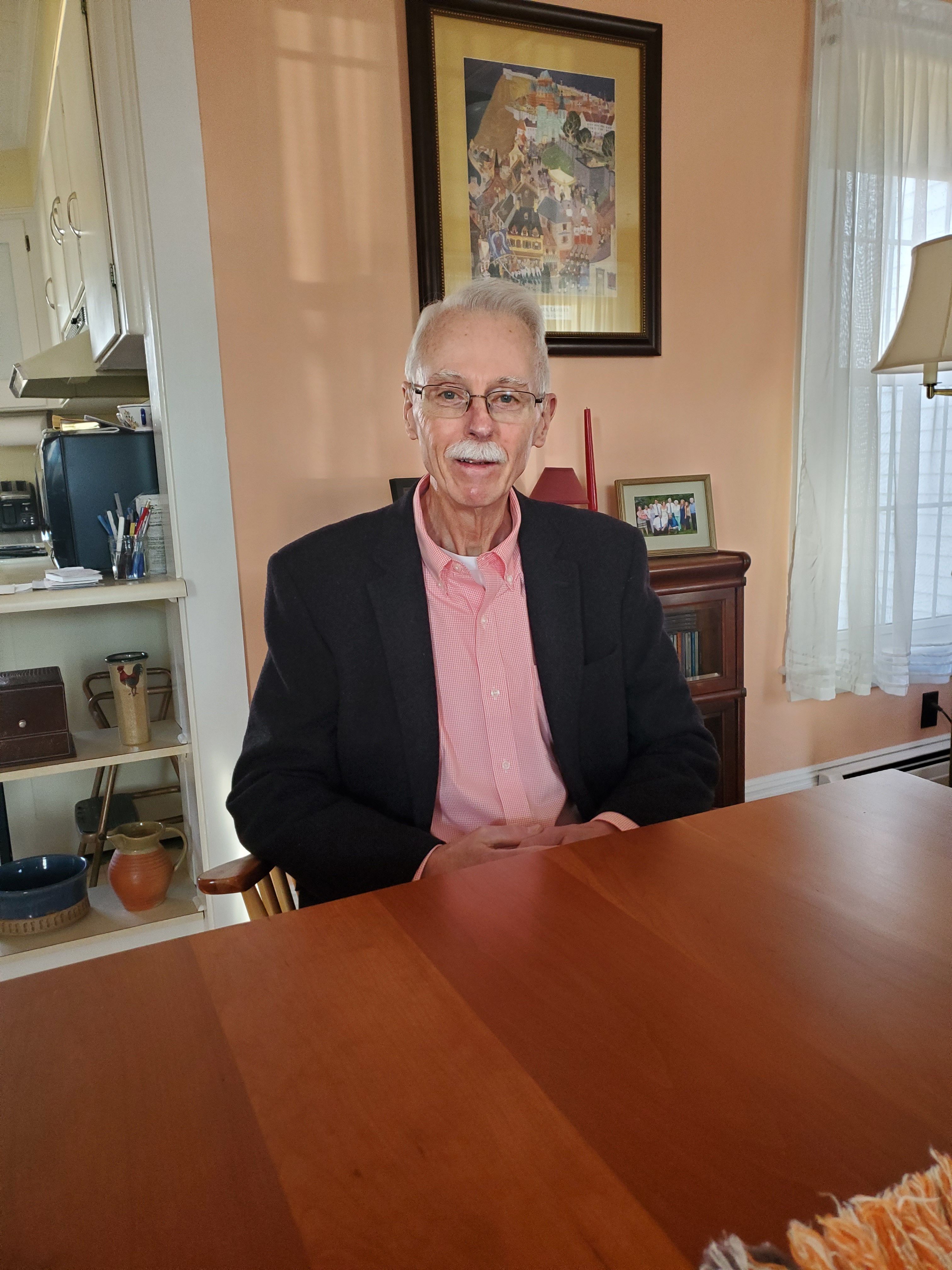
Michael Cantara/ Seaver photo
Michael Cantara of Biddeford has served in all four of those roles, but he is the exact opposite of those Hollywood stereotypes. Instead, Cantara is well-known throughout southern Maine as a man of principle, restraint, intellect and compassion.
Among many other awards and accomplishments, Cantara was inducted into the Maine Franco-American Hall of Fame and also inducted into the Biddeford Hall of Fame in 2022.
Cantara, 70, was adopted as an infant from the St. Andre Home in Biddeford by Jean Paul and Laurette Cantara. He and his two sisters were raised in a very modest home on Granite Street Extension. His father worked at the Saco Lowell machine shops. His mother worked at the Pepperell textile mill and later as a waitress at the Nutshell Restaurant in Biddeford.
He attended parochial schools, including St. Andre’s and later St. Louis High School, which closed just before his senior year. Thus, he graduated from Biddeford High School in 1971 before attending Colby College with the idea of becoming a pediatrician.
You planned on becoming a doctor but ended up retiring as a judge. A lot of things must have happened between those two bookends.
“Oh yes, they certainly did.” (Laughs) “I wasn’t exactly a clear career thinker when I went to school. I majored in French with a minor in biology. But my dream of being a pediatrician floundered on the shoals of organic chemistry. (Laughs) So, I reset the dial and decided to become a teacher.
“In my senior year of college, I was nominated for a Fulbright Teaching Scholarship. So, I got this wonderful gift of teaching in a French high school in Normandy, near the small town of Rouen, where Joan of Arc was burned at the stake.
“I taught American culture, history and language at a vocational school. My students were adolescent French boys from the local neighborhood. They were so receptive to the ideas I was teaching because at that time all things American were considered pretty cool.”
You returned to the United States and ended up going to law school.
“I had wanted to teach French on the college level, but was intrigued by political science and chose the mayoral election in Paris as the topic for my doctoral thesis. At that time, there was quite a bit of upheaval on the city’s political landscape.
“There was so much happening in the early 1970s. In general terms, it was a time of upheaval when young people were being encouraged to stand up for what they believed; to be a part of the social change that was happening all over the world.
“I wanted to go back to Maine, and the options for teaching French were practically non-existent, and I was exploring opportunities for public service. So, I enrolled at the University of Maine Law School.”
You were paying close attention to politics on the national, state and even local level, at a time when Maine’s own Senator Edmund Muskie was derailed from his presidential campaign because he allegedly teared up during a press conference.
“Yes, men – – especially back then — were not supposed to cry. I was very inspired by Senator Muskie and his dedication to public service. As you know he was the architect of the Clean Water Act. Without that federal legislation, which was vitally important for Maine, we wouldn’t be talking about the Riverwalk in Biddeford today had it not been for Ed Muskie’s leadership.”
“In fact, Senator Muskie gave the commencement address at my high school graduation, which was held at Thornton Academy because Biddeford did not have enough space.”
You were drawn to the Democrat Party and today remain as a party stalwart.
“I was very much influenced by my parents. Both my mother and father read the paper every day, and they were both Democrats who understood the importance of voting and paying attention to what was happening. Democrats were very pro-union.
“My uncle Henry, however, was anti-union. He worked at S.D Warren and was very much a company man. Regardless, my father was always very calm when talking to my uncle about the importance of labor unions.
“My father would listen patiently and spoke in a measured way, but always remained committed to his beliefs. I learned a lot from my father.”
You hung out your law practice shingle on a Crescent Street office without much money in your hand.
(Laughs) “Actually no money. My law partner Jim Boone and I were able to secure the lease by offering sweat equity. We would paint the building and sand the floors in exchange for the first few months’ rent.”
And then you decided to get into politics.
“What was I thinking? (Laughs) I decided to run for the Legislature in the early 1980s. At that time, I was living on State Street. And the occupant of that House seat in the Legislature was Lucien (Babe) Dutremble.
“I don’t know what possessed me, but I had the crazy idea of challenging Mr. Dutremble – one of the most respected and adored men in the city – in the Democratic primary. And, of course, throughout the campaign he couldn’t have been any kinder to me.
“What was so strange and incredible to me is that I lost only by 16 or 18 votes. I can’t remember exactly, but it was slim enough to invoke the city charter’s requirement for a recount, which was presided over by Luc Angers, the city clerk at the time. They were all paper ballots back then and the recount took place at the police department. The result didn’t change, but I thought that was probably the end on my political career.
“But then a couple years later, I was asked by Mayor [Robert] Farley to serve on the planning board, even though I was previously on the [William] Pombriant ticket who ran against Mr. Farley in the primary. I ended up serving almost four years on the planning board, and so I had a ringside seat to some of the issues affecting Biddeford: Affordable Housing, Land Use and Habitat Protection.
“Not much later, Gene Libby, who was the district attorney, asked me if I would join his office as an assistant district attorney. I enjoyed that work and was covering all three district courts, which were then located in Springvale, Biddeford and Kittery.”
And then you decided to run for mayor.
“Yes, and that was back when local elections were partisan, so there were primaries and a longer campaign season. There was no city manager. The mayor ran the city’s day-to-day operations, much different than it is today.”
Why did you only serve for one term?
“Because the seat for the district attorney was opening up. It was an open seat, and I was looking forward to the challenge.”
Bonnie (Belanger) Pothier told me that you practically hounded her to run for the mayor’s seat to replace you. She jokes that she just finally caved to your pressure.
(Laughs) “I knew that she was going to be a great mayor, and she proved me right. I didn’t always agree with her, but I had tremendous respect for her. She had a lot of uphill battles to fight, but she was a remarkable leader.”
While you were serving as district attorney, Governor John Baldacci appointed you as Maine Public Safety Commissioner for four years, and then during his second term, he nominated you to serve as a district court judge in York County.
“Yes. I was among five people nominated to fill new positions created in order to address significant backlogs of cases and to free up more judges throughout Maine to serve the newly-created business docket.”
You served as a judge for 12 years and retired in 2019. Do you miss it?
“I very much miss the people I worked with. I had the privilege of working with exceptional people; the clerks, the magistrates and the marshals. But the weight of some of the decisions a judge has to make – I don’t miss that particular kind of stress.
“It can be very challenging. You can provide a legal answer to a problem, but you’re not providing a life solution. There’s so much poverty – – financial poverty, health poverty, educational deficits and mental health issues, not to mention chronic unemployment.
“As a judge, you are witness to all of it and sometimes feel so powerless to change any of it.”
You are a true son of Biddeford. What challenges do you see facing the city today?
“I have been a citizen of Biddeford for most of my 70 years. Without question, we must address the issue of homelessness. Yes, it is a financially expensive and complicated issue, but we have an ethical obligation; a moral obligation to do more than just talk about the issue.
“I was taught that we are all children of God. I don’t want to let my brother or sister freeze to death tonight. We are living in 21st Century America, and I don’t think that’s too much to ask.
“It is an issue of dignity, and it is not insurmountable. We just need the political will to make it happen.”
From the humblest of beginnings, you went on to become a teacher, an attorney, a mayor, a district attorney, a state commissioner and then a judge. If they were alive, do you think your parents would believe how much you have been able to accomplish?
“I don’t know, but I do know that I learned life’s most important lessons from my parents, including the importance of service to your community; to volunteer for your school, your church.
“I certainly hope that I lived up to their expectations. I hope that I have lived a good life. I think that’s the most important thing.”
Two rather interesting events happened this week, each painting a troubling picture for loyal, solid Democrats at both the national and local level: Senator Joe Manchin of West Virginia announced he would not seek reelection, and City Councilor Marty Grohman was elected to become Biddeford’s next mayor.
What do Manchin and Grohman have in common?
Bear with me, because I think these two stories serve as a bellwether of a changing political landscape that has long alienated people in the so-called political “middle,” the centrists who are weary of extremists on both the left and the right of the political spectrum.
Mayor-elect Marty Grohman
Currently, Democrats have a razor-thin majority in the United States Senate, including the so-called “Independent” senators Bernie Sanders of Vermont and our own Angus King, both of whom caucus with the Democrats and consistently follow the marching orders of both Chuck Schumer and President Joe Biden.
It’s really nothing short of a miracle that any Democrat could win an election in a state like West Virginia, which is more red than Biddeford City Councilor Marc Lessard’s campaign signs. Manchin’s decision spells very bad news for the Democrats and will no doubt reshape the battle for senate control in 2024.
“Manchin’s moderate positions have at times been a thorn in the side of his increasingly left-leaning party,” according to ABC News political analysts.
So how does this connect to the rather mundane and much less dramatic world of Biddeford politics?
Theoretically, Biddeford’s municipal elections are supposed to be a “non-partisan” affair. Biddeford voters approved a change to the city’s charter in the late 1980s to dump the partisan labels of Democrat and Republican.
But if you really believe our local elections are non-partisan, I’ve got an ocean-front home to sell you in Ohio.
Make no mistake, despite all the pontificating, hand-wringing and lack of primaries, local elections are still very much influenced by each candidate’s political label. Not by his or her merits, but by his or her political allegiance.
Local Democrat leaders like State Rep. Marc Malon will tell you that’s not true.
It should be noted here that on top of his elected office, Malon is also professionally employed by the Maine Democrat Party. He currently serves as Party Affairs Director for the party.
Malon is a good guy. He’s very smart, and he is passionate about his politics. He works hard, and has a unique perspective on Maine’s political landscape. It’s his job to make sure that Democrat candidates get elected in Maine, even in places like Biddeford that are supposedly “non-partisan.”
So why do I keep saying “supposedly?”
Because partisan politics still plays a big role in Biddeford’s political circles and games, despite what the city’s charter says about municipal elections.
That said, state and local Democrat leaders, including Malon, did absolutely nothing wrong. Let me repeat that in order to be perfectly clear: No one on the ballot (nor their supporters) did anything wrong during Biddeford’s most recent election cycle.
So why am I taking the time to write about an election with zero incidents of impropriety by any of the candidates or their supporters? First, I am a local political junkie. Secondly, because I see a major shift starting to happen in both local and national elections.
In a story I wrote for Saco Bay News just a few hours after the results were announced, I listed those who supported and endorsed each of the mayoral candidates: Susan Deschambault and Marty Grohman. I posted that story on my personal Facebook page with a teaser, asserting that the Democrat Party closed ranks on a local level and clearly lined up behind Deschambault over Grohman.
It’s understandable (and quite predictable) that Democrat leaders would line up behind a Democrat over an “independent” or a Republican candidate in a general election, even though party affiliation isn’t supposed to matter in a non-partisan election.
Overall, the city of Biddeford – like many other mill towns — has a long history of leaning to the political left. Today, however, it seems that it’s becoming a matter of how far left a candidate needs to be in order to win elected office in the city.
I have a theory about why notable Democrat leaders were so enthusiastic about supporting Deschambault over Grohman. In a nutshell, it was political pay-back. Allow me to explain.
Both Deschambault and Grohman served on the city council. Both candidates served in the Maine Legislature. They had very similar platforms. In fact, during an October head-to-head debate, the only real difference that was clear to the audience was that Grohman likes to ride a bicycle and Deschambault says she likes to avoid both bicycles and walking.
Just days before the election, Mayor Alan Casavant repeated his support for Marty Grohman to take over the big chair at City Hall. On that same day, the Deschambault campaign ran an advertisement in the Biddeford-Saco Courier, listing local politicians who were endorsing Deschambault.
Deschambault’s list of supporters was impressive: State Sen. Henry Ingwersen, the highest state official serving Biddeford, was on that list. The rest of Biddeford’s delegation, including Malon and Rep. Erin Sheehan, were on that list. Former Speaker of the Maine House of Representatives Ryan Fecteau was on that list.
Previous state representatives Megan Rochelo and Victoria Foley (who lost her own bid for mayor against Casavant two years ago) was on that list. Previous mayors Mike Cantara and Bonita (Belanger) Pothier were on that list. Weeks before, Malon and Fecteau both used their personal Facebook pages to endorse Deschambault.
Pretty impressive, huh? What do they all have in common? They are all active, strident and loyal Democrats. On a local level, these folks are all political heavy-hitters. If you want something done, these are the people who can make it happen.
But it wasn’t just local Democrats who were offering assistance for Deschambault.
According to campaign finance reports, Deschambault’s campaign also got the support of many individuals well outside of Biddeford, including Democrat Party activist and former legislator Justin Alfond and State Senator Joe Baldacci, younger brother of former governor John Baldacci, both of whom wrote checks for Deschambault.
I saw that ad and thought to myself, it’s all over for Grohman. I publicly predicted that Deschambault would win the race. Despite what some people like Alan Casavant say, Biddeford is pretty much a blue community. Or is it?
But then something strange happened. Deschambault lost. Wait. What?
Despite such an impressive list of Democrat supporters and the fact that Biddeford most often votes blue, the party wasn’t powerful enough to knock off Grohman, the more centrist candidate.
Deschambault’s track record in the State Senate was basically flawless. She did whatever the party leaders told her to do. She always voted the way they wanted. She played nice. She toed the party’s line.
Good for her. She’s a Democrat. She voted the party line. Yawn.
During his stint in the Legislature, Grohman sometimes had the temerity to look at issues from a more centrist position. Furthermore, he had the audacity to run as an “independent” candidate against Democrat Chellie Pingree for the First Congressional District race. That was enough, right there.
The Republicans may have the symbol of an elephant, but the Democrats are the ones who “never forget.” Deschambault was being rewarded for her party loyalty, Grohman was being punished for thinking for himself.
Shortly after I posted my story on Facebook, Malon went on the defense.
“As a staffer for the Maine Democratic party and one of the electeds (sic) who endorsed Susan, I am pretty confident offering this analysis: there is little to no impact on the political landscape in Biddeford for state/federal races,” he wrote. “This is based on previous municipal and state/federal results and my analysis of this particular race . . .”
I responded toMalon, “ . . . but there is no denying that party stalwarts lined up solidly behind Deschambault: Baldacci, Alfond, the entire legislative delegation (current and former).”
Malon came back: “because they all knew her and liked her. Honestly that’s about the extent of it.”
Again, I like Marc. We have plans to get together for some good whiskey soon. We’re both political animals, but I’m not buying what he’s selling. Because they knew and liked her?? Are you freakin’ kidding me??
They all know Marty Grohman, too. What, exactly, did they not like about him? Because he rides a bicycle to work? Because he is a successful businessman? Because he has blue eyes? Because he volunteers at the skating rink and helps veterans? Spare me.
Biddeford is changing, including its political machinations, and that started more than 20 years ago, when MERC was still burning trash downtown. A Republican, Saco native (Gen. Wallace Nutting), beat two well-known, lifelong residents for the mayor’s seat. Ever since, the Democrats’ iron grip on the city has been slowly eroding.
I agree with musician Sheryl Crow, “a change will do you good.”
My advice to the Democrats? You’re gonna need a bigger boat.
Although he majored in political science and eventually became the Speaker of the Maine House of Representatives, Ryan Fecteau’s political journey had a rather innocuous and humble beginning.
Fecteau, 30, said he first became interested in politics when he was appointed as a student representative to the Biddeford School Committee nearly 15 years ago. In 2020, he became the youngest person to be named as Speaker of the House since 1842. He is the first Biddeford representative to hold that post and the first openly gay person to be named Speaker.
“I think I was picked because I was sort of quiet and reserved,” Fecteau laughed, recalling his appointment by former school superintendent Sarah Jane Poli. “I think Sarah Jane thought I would not make waves; unlike [some other students.]”
Fecteau was 16, and a junior at Biddeford High School. He wasn’t even old enough to vote, but he was admittedly intrigued by the political process. Some two years later, he decided to seek a seat on the Biddeford Charter Commission.
“There were certainly a lot of skeptics who wondered about this new kid and what he was trying to prove,” Fecteau said, pointing out that the commission was chaired by one of the city’s most well-known politicians. “I was only 19, and I think some people wondered about my motivations.”
From there, even though he was still a full-time student at Catholic University of America in Washington, D.C., Fecteau decided that he wanted to run for an opening seat in the Maine House of Representatives. “To this day, I have no idea what possessed me to do it,” he said. “But in my gut, I felt a lot of passion, and I really thought that young people should have a voice at the table.”
State Rep. Paulette Beaudoin was actually Fecteau’s next-door neighbor, and she was unable to run for re-election because of term limits. She was 82 years old when Fecteau announced in the summer of 2013 that he would be seeking her seat. He was 21. “Yeah, you could say it was quite a contrast,” he laughed.
Another Democrat also wanted to take over Beaudoin’s seat. Former newspaper publisher and downtown property owner David Flood threw his hat into the ring for the nomination. Fecteau won the nomination, 493-263. He says he won his race the old-fashioned way.
“I knocked on a lot of doors and met with a lot of people,” he recalled. “Because of school, I was doing a lot of early campaigning in January. That’s a big advantage actually because it’s really cold outside and people invite you into their homes.”
We caught up with Fecteau recently to discuss his time in the Legislature and his thoughts about the future of Biddeford and the state of Maine.
If you’re knocking on doors in January, you have to be pretty motivated. Something must have been driving you.
“When I think back, I really believe my main motivation was what I saw happening among my peers. So many young people just didn’t see a future for themselves in Maine. They were basically writing off the state because they didn’t see economic opportunities for themselves here.”
You served the maximum of four consecutive two-year terms in the House. Why didn’t you go for the State Senate seat that opened up at the end of your final term?
“I decided a while back that I really enjoyed the opportunity to serve in the House, but it would also be nice to just stop there.”
What about future political ambitions?
“I really haven’t given it much thought. I don’t know. It’s definitely not on my radar screen right now. I just started a new job. We just a bought a house, so it’s not something I am contemplating. Actually, I think it’s very hard to chart your political future in a state like Maine. We only have two Congressional districts and have a pretty significant and deep bench of candidates.”
What about local politics? We’ve heard your name mentioned as a potential mayoral candidate in Biddeford.
“What? (Laughs) Oh, no, no no. Definitely not. I don’t want to be that close to the fire (Laughs). Actually, I think very highly of municipal leaders who take on the tough tasks — with little pay — to keep our communities up and running. While I don’t have plans to run for mayor or council, I admire those who find a way to serve in any capacity on behalf of the public good.”
Looking back on your time in the House, what would you say were your proudest accomplishments?
“There are so many things. During my second term, I chaired the Labor, Commerce, Research and Economics Committee, and I re-introduced a bill to expand funding for CTE (Career and Technical Education) in high schools around the state. I had sponsored a similar bill in my first term. The last infusion of funds for CTE programs was in 1998, and the costs of those programs was falling onto the shoulders of communities like Biddeford.
“We know that we have to solve challenges in the work force and train our young people to fill critical positions. The bill was defeated again, but I kept at it because I knew it was the right thing to do. Ultimately, last year, we passed a $20 million bond for funding to 29 CTE centers across the state, including $7 million for the Biddeford Regional Center of Technology.”
Also, we were able to expand dental care coverage for more than 200,000 Maine people. We had strong bi-partisan support for that bill. When you think about it, it’s really an economic development issue.
“When you have someone sitting across from you at a job interview and the applicant has really bad teeth, it’s a stigma issue. I saw it as part of our social contract. Previously, people were using emergency rooms as a last resort to solve terrible, constant pain. Something had to be done.”
You eventually became one of the most important and influential people in Maine politics. But your tenure as Speaker was markedly different.
“It was a very humbling and rewarding experience, but it sure was unique. I was elected in December 2020, and the pandemic had been raging for a little more than six months. There was no way that it was going to be business as usual. To say that it was a significant challenge for all of us is sort of an understatement.
“Although it was a significant challenge to adapt the Legislature to mitigate against the pandemic, the work we accomplished over those two years was transformational.
“We made long overdue investments in Maine people and infrastructure. From broadband expansion to upgrading vocational schools, to fully funding the state’s share of public education to making school meals free for all students, to providing child care workers with a wage boost to investing in the construction of affordable and attainable housing, we overcame unprecedented circumstances and delivered transformational results.”
Are partisan political battles better or worse today than when you first arrived at the House?
“I actually think that it’s better today. During my eight years in Augusta, I experienced a lot of political variables. There is a stark difference in the tone from the governor’s office. My first term, we had a Republican governor and a Republican-controlled state senate.”
What are the biggest issues facing Maine today?
“Affordable housing is definitely the big issue, and that sort of goes hand-in-hand with our state’s work-force challenges. We have this perfect storm of new and younger people moving to Maine. It’s hard to know what’s driving that migration. Is it people who want to live in Vacationland? Or are they just planning to stay a little while? That’s the big question.
“Regardless, we’ve got to build more housing. It’s simple supply and demand. If we want people to fill in the gaps of our work-force shortages, we need affordable housing for them, otherwise they’re not going to stay.”
You’re beginning a new job, appointed by Gov. Janet Mills.
“I was appointed as senior advisor for Community Development and Strategic Initiatives in the Governor’s Office of Policy Innovation and the Future.”
What exactly is that?
(Laughs) “It’s a long title, but basically I will be mostly focused on housing and work-force policy initiatives. It’s sort of a hybrid position. I’ll also be working closely with certain consulates that have ongoing relationships with Maine, such as Canada, France and others to explore economic development opportunities.”
It’s July, and according to the Old Farmer’s Almanac, the “Dog Days of Summer” are finally upon us. This is the time of the year when those of us in the northeast have a pretty good view of the constellation, Sirius – hence the “dog days.”
It is also the “quiet” month. The days are long and warm. It is time for frolicking at the beach, family barbecues and complaining about the tourists from Quebec and Massachusetts. Football has yet to ramp up its next season. The Celtics and Bruins are basically done for a few months; and the political season – my favorite – is just now gearing up for another relentless, knock-down, drag-out, hands-out- for-donations season on your favorite social media platform.
Here in Maine, the 2022 elections will feature what promises to be a sure-fire battle of the ages for the Blaine House as the once-every-four-years-gubernatorial election draws near.
Unlike the last three gubernatorial battles, this year’s match-up appears to be a straight-forward Democrat versus Republican race, pitting Democrat incumbent Janet Mills against Republican Paul LePage who is seeking a return to the Blaine House.
I will be watching this race closely because I am curious about how – or if – the absence of any real “independent” candidates will affect the outcome. But we still have some time before the campaigns really heat up and in only a matter of weeks, campaign signs will be littering every paved road in Maine – and on most of the dirt roads too.
Sure, staffers and volunteers from both campaigns are already working, but on the surface, I’m betting that things will remain relatively quiet until we get into the middle of August and especially in the days just after Labor Day.
Looking back
In previous gubernatorial races, Eliot Cutler, a so-called moderate who really likes children, was a spoiler in both 2014 and 2010, the races which LePage won with relatively narrow victories.
Republican candidate Paul LePage
Cutler is currently awaiting trial on child pornography charges, hence we will not be hearing much from him during this election cycle. That’s good news for Mills and bad news for LePage.
LePage won his first term as governor in 2010, capturing just 37.6 percent of the vote (218,065). Cutler, running as an independent, came in a close second with 35.9 percent (208,270) and Democrat Libby Mitchell garnered only 18.8 percent (109, 387) of the vote.
Cutler was hardly independent. Much like his role model, former governor and now Senator Angus King, Cutler is much, much more a Democrat than Republican. Maybe not a progressive Democrat like Libby Mitchell, but a Democrat for all intents and purposes.
Maine Democrats blame Cutler for handing the 2010 race to LePage. While he may have been able to peel off a few moderate Republican (is there really such a thing?) votes, Cutler was more centrist than Mitchell and thus was able to attract votes from the perennial “undeclared,” fence-straddle voters.
Four years later, LePage won a second term, this time capturing roughly 48.2 percent of the vote; Democrat Mike Michaud got 43.2 percent of the vote; and Cutler finished the three-way race, bringing up the rear with less than nine percent of the vote. The Democrats had learned their lesson, but it still wasn’t enough to beat LePage.
The 2018 gubernatorial race was pretty much a straight-forward match-up between Democrat Janet Mills, a former Attorney General for the state of Maine, and Republican Shawn Moody, a political outsider and successful businessman that founded Moody’s Collision, an-employee-owned company with several locations throughout southern Maine.
Gov. Janet Mills
Because of term limits, LePage was unable to seek a third, consecutive term.
Yes, we don’t want to overlook Terry Hayes, another so-called independent who lost her Democrat primary race to Mills in 2018, but still decided to go for the gold and wound up with a measly six percent of the vote in the November general election.
Mills won a solid victory with slightly more than 50 percent of the vote in 2018. Despite his political inexperience, Moody was still able to grab about 43 percent of the vote.
Looking forward
So here we are, facing the mid-terms and another gubernatorial election. Which candidate has the edge? Which candidate do I think will win?
Frankly, I think it’s going to be a pretty close race.
Before we go any further, let me say that this is just my opinion. I am not working or volunteering for either candidate. I don’t have any special insight or knowledge. Yes, I have a professional background in journalism and public relations, but I am really nothing more than an arm-chair pundit who loves politics.
My opinions and predictions are no more qualified than your opinions and predictions.
So, why do I think it’s going to be a tight race between LePage and Mills? Because I think a lot of issues on the federal level are going to impact the Maine gubernatorial race.
Gun violence, abortion rights and climate change could all play a hand in this year’s election. But this year – more than in any year for a long, long time – the economy is going to be a HUGE factor. As James Carville famously said roughly 30 years ago today, “It’s the economy, stupid!”
The incumbent, whether it is George H.W. Bush or Jimmy Carter, is always judged by the economy. Voters, whether it is right or wrong, primarily tend to vote with their wallets.
The last time, inflation was this bad, Ronald Reagan crushed Jimmy Carter’s re-election bid with just one sentence: “Are you better off today than you were four years ago?”
Many voters, including those in the middle, will hold Mills accountable for our current economic conditions. Just as voters are heading off to the polls, many of them will be feeling the pain of filling their home heating-oil tanks, still struggling with run-away inflation and soaring gas prices.
That said, other issues at the federal level could motivate more people, mostly Democrats and some middle-of-the-road voters, to the polls. Those upset with recent decisions by the U.S. Supreme Court and recent mass shooting incidents may want to make their opinions known at the voting booth. This could be bad news for LePage.
LePage is a strong supporter of gun-owner rights and he appeals to “pro-life” supporters. He generally holds the concept of renewable energy as a waste of both time and money. He is regarded by his base as a fiscal conservative.
From where I sit, it looks like both LePage and Mills will have to focus heavily on their ground game, especially their GOTV (Get-Out-The-Vote) efforts.
Just go back and look at the numbers.
In both of his previous bids, LePage never hit the 50 percent mark — and that was with two left-leaning candidates in each race.
Mills supporters cannot afford any missteps. Yes, she has a strong base but she will need more than that this time.
I suspect that the LePage campaign will work non-stop to hang the poor-economy label on Mills. I can almost guarantee that they will link her to President Biden’s dismal polling numbers. Meanwhile, the Mills campaign will focus on portraying LePage as Maine’s version of Donald Trump, an evil boogeyman who hates women, puppies and pine trees.
So, who do I think will win? Honestly, I don’t know.
I do know, however, that this will be one of the most brutal and intense gubernatorial campaigns that Maine voters have ever seen.
Now, let’s sit back and watch. Your predictions are welcome.
For me, it’s hard to know what to think or feel about the recent news regarding former Maine gubernatorial candidate Eliot Cutler.
According to several news reports, police allegedly discovered several computer files of child pornography in Cutler’s home this week.
Before we go any further, make no mistake about it. Crimes against children are especially heinous and repugnant. I think we can all agree on that point.
While the civil libertarian in me wants to say we are all innocent until proven guilty, there is a much more well-defined part of me that wants to forgo all the hassles of a trial and simply drag Cutler into a darkened alley and beat him to death with a 36-inch aluminum baseball bat.
Even amongst hardened criminals, child sex offenders are the lowest of the low. If convicted and sent to prison, Cutler will likely need to be placed into protective custody. Another slap to the people of Maine.
In my opinion, there is no forgiveness for this kind of crime. There is no redemption. It is one of the darkest corners of humanity, a place that is impossible for most of us to imagine.
One more disclaimer before we proceed any further. I voted for Cutler. Twice.
In case you don’t recall, Cutler twice ran for governor as an “independent” candidate. He angered Democrats who said he split their party’s vote and allowed Republican Paul LePage to win with 38 percent of the vote.
He also pissed off Republicans who said he was nothing more than a wolf in sheep’s clothing: a Democrat who might be able to peel away some of their party’s centrist votes by talking about fiscal responsibility.
Today, in the wake of this horrific news, both Democrats and Republicans are saying: “See? I told you so.”
Do a quick Google search and you will find that nearly a dozen Maine men have all been arrested for possession of child pornography within the past year. We don’t hear much about those men, despite the fact that their crimes were just as heinous as Cutler’s.
Cutler is leading the six o’clock news because he willingly stepped into it. Unlike those other men who have been arrested for possession of child pornography, Cutler sought the media’s attention and favor. He portrayed himself as a man who would make responsible decisions; as a man of good character.
In the end, it has become abundantly clear during the last 48 hours that Cutler is neither of those things.
Yes, Cutler is innocent until proven guilty, but the evidence against him is pretty damning. The men and women of Maine’s State Police take their jobs seriously. They don’t get search warrants on a whim.
Like you, I don’t have all the facts. Like you, I am disgusted by the story.
But what I do know is this: These crimes were not political. Child sex offenders do not fit into such convenient categories.
It is disheartening to witness Cutler’s fall from grace. It is disturbing to think about or even contemplate this type of crime.
But it is also sad – at least for me – to watch pundits, party stalwarts and others beat their proverbial chests and try to use this awful news to further their own political agendas.
Ralph Waldo Emerson once quipped that “a foolish consistency is the hobgoblin of little minds.” This week, I offer a solid example in which society is best served from at least a little bit of consistency.
State Rep. Maggie O’Neil (D-Saco) has introduced a bill (LD 706) to lower the voting age in Maine from 18 to 16. No other state allows 16 year-olds to vote in general elections. In fairness, several states do allow 16 and 17-year-olds to pre-register but those states also require voters in a general election to be at least 18 years of age.
In North Dakota, however, there is no need to register to vote.
Do you remember when you were 16? I do. I had black-light posters, a crush on Farrah Fawcett and I listened to AC/DC on an 8-track player. I was also a political junkie who watched Nixon resign and board a helicopter on the White House lawn when I was 10.
When I was 12, I got to shake President Carter’s hand when he made a campaign stop in Biddeford. When I was 16, my father volunteered for Ted Kennedy’s failed presidential run in 1980.
Subsequently, without thought or curiosity, I became an ardent and passionate Democrat.
Today, I have had the experience of raising two 16-year–old boys. I love my boys and they both turned into fine young men, but there was no way that they were ready to vote back then.
Old enough to die; old enough to vote
In 1971, Congress overwhelmingly voted in favor of the 26th Amendment, which lowered the minimum voting age from 21 to 18. That amendment was fueled in part by the Vietnam War and the compulsory draft of 18-year-old into military service.
The 26th Amendment set up its own range of inconsistencies. For example, at 18 you are old enough to join themilitary but not old enough to purchase alcohol.
O’Neil’s bill, however, is riddled with many more inconsistencies. 16-year-olds are rarely, if ever, tried in criminal court for a criminal offense; instead they are tried in juvenile court and sentenced to a juvenile detention facility if found guilty.
While 16 is the minimum age of consent, they cannot act in pornographic movies and are too young to buy a pack of cigarettes. At 16, society says that you cannot sign a legal and binding contract, including marriage without parental consent. I could keep going, but you probably get my point.
When it comes to minimum age requirements, Congress mandates that you must be at least 25 to serve in the House of Representatives; 30 to serve in the Senate and 35 to be elected president.
While O’Neil acknowledged those inconsistencies, she also says her bill is designed to address some other inconsistencies.
“Reaching the age of 18 is a big milestone in all of our lives,” O’Neil says. “But the truth is [turning 18] does not signify some seismic shift in an individual’s ability to participate in society or civic life. At the age of 16, young people are working under our employment laws, paying taxes, and driving on roads. They are attending school–there’s no one more in touch with our education system than students and educators who are in school every day.”
O’Neil says she was motivated to submit the bill after working with several juvenile supporters during her campaign for office, specifically pointing to her campaign manager, 16-year-old Cole Cochrane, a sophomore at Thornton Academy.
Cochrane says “we don’t need to just focus about current responsibilities for 16 year olds, but about how we contribute and the ultimate outcome.”
According to Cochrane, lowering the voting age has proven to increase voter turnout rate in countries like Austria, andeven in some American cities. “One must consider the contributions we make to society. We are foundations of campaigns, go to schools that are run by the government, and take on jobs that support our economy. Although we may be considered children by law, it is time to consider us voters as well.”
While many scientists and neurologists say that a brain is not fully developed until one turns 25, both Cochrane and O’Neil point to other studies that say 16-year-olds are fully capable of making decisions and critical thinking.
“I already consider this argument somewhat irrelevant given this data point.” Cochrane says. “Decision making capabilities are developed by 16 years of age, indicating that we are able to make decisions despite these concerns.”
Overall, there are multiple benefits to lowering the voting age, Cochrane says. “From validation of millions of voices, to strengthening our democracy. It is time to act now, for the betterment of our state.”
O’Neil readily admits that her bill (currently stuck in committee) faces a “steep hill to climb to send the bill out to voters.”
“No matter what the outcome is, these young people have led an important conversation in the legislature,” O’Neil said. “I’m proud of the work they have done. Their voices are so important, and the legislature needs their perspective.”
Every time I start to feel a bit of optimism about the future, the reality hammer drops on my head.
Today, we learned that restaurants in southern Maine will not be able to re-open as originally scheduled because of ongoing concerns about the Cov-19 epidemic.
The social media reaction to this news has been swift from both sides of the political aisle, Republicans blame Janet Mills and Democrats blame President Trump.
There are posts calling for an armed revolution to overthrow Maine Governor Janet Mills. “. . .Open up anyways and bring your guns!!! ,” wrote one poster on Facebook.
In the Shakespearean play Hamlet, the young prince contemplates suicide, best referenced within this famous soliloquy: To Be or Not to Be.
Whether ’tis nobler in the mind to suffer
The slings and arrows of outrageous fortune,
Or to take arms against a sea of troubles
And by opposing end them.
People on the right are still referencing mask wearers as “sheep,” unable to discern the truth.
People on the left use terms like “mouth breather,” to describe conservatives.
There doesn’t seem that there is any middle ground.
And now the news released today by the governor: dine-in restaurants in southern Maine will need to remain closed until further notice, as opposed to a cautious opening date of June 1.
Think of all those businesses that purchased food and supplies as they geared up for June 1. Think about the employees called back to work. What does the future hold?
From my perspective, the future looks pretty grim, so I have designed my own plan for businesses that want to open on June 1:
Let the restaurant owners decide if they want to open or not.
Let customers decide on whether they want to frequent these establishments
Let the employees decide whether they want to work.
For people who have a weakened immune system (like my wife) stay at home.
For people who do not want go to public places, do not go there. You can order groceries and food online.
One of today’s most hotly debated public policy matters is the subject of Climate Change, formerly known as “global warming.”
Before I go any further with a blog post that will surely divide my followers and Facebook “friends,” let’s get right to the meat of the matter.
When former vice president Al Gore declared that “the planet has a fever,” he was right. Global Climate Change (GCC) simply cannot be denied.
I am not a scientist, geologist or meteorologist. I am just another pundit with yet another point of view.
But while my friends on the left are far more likely to celebrate my above statements about the reality of GCC, I have some serious misgivings about many of their proposals to “fix the problem.” Recently hundreds of high-school students skipped classes to rally against GCC.
They should have hit the books instead.
When debating GCC, we should be able to acknowledge some fundamental facts:
Planet Earth is approximately 4.543 billion years old;
The Ice Age began 2.4 million years ago, lasting until approximately 11,500 years ago;
Humans began roaming the planet approximately 200,000 years ago.
So what do these facts tell us?
Well, for starters, the earth’s climate has been changing for a long, long time and humans had little to no impact on the earth’s atmosphere until about 50 years ago.
But before we begin any conversation about GCC, we should check our emotions at the door. This is a complex issue, and rhetoric – from either deniers or fanatics – won’t do a damn thing except possibly increasing your blood pressure.
Climate Change Impacts: A brief history
If you want to talk about other impacts that affect GCC, let’s take a relatively short journey back in time.
According to an article by Karen Harpp, an assistant professor of geology at Colgate University, published in the Scientific American newsletter:
“In 1784, Benjamin Franklin made what may have been the first connection between volcanoes and global climate while stationed in Paris as the first diplomatic representative of the United States of America. He observed that during the summer of 1783, the climate was abnormally cold, both in Europe and back in the U.S. The ground froze early, the first snow stayed on the ground without melting, the winter was more severe than usual, and there seemed to be “a constant fog over all Europe, and [a] great part of North America.”
What Franklin observed, Harpp writes was “indeed the result of volcanic activity.”
“Natural forces cause Earth’s temperature to fluctuate on long timescales due to slow changes in the planet’s orbit and tilt,” according to a Q & A published by Climate Communication, which is a non-profit science and outreach project. “Such forces were responsible for the ice ages. Other natural forces sometimes cause temperatures to change on short timescales.”
On the other side of the debate there is plenty of scientific evidence regarding human impact on GCC, especially so in the last 50 years. The human impact has, in fact, outpaced natural impacts.
So what do we do?
Industrialized nations (United States, Japan, China, Russia, Great Britain, India and France) have more responsibility because of their bigger global impact. The 2015 Paris Agreement on Climate Change was signed by all of these counties and many more nations that have a far lower impact or produce fewer greenhouse gases, primarily carbon dioxide.
And then there is the 1997 Kyoto Protocol, an international treaty that extends the 1992 United Nations Framework Convention on Climate Change to reduce greenhouse gas emissions, based on scientific consensus.
I don’t dispute the science that provides more than ample evidence of human impact on climate change, but I am an ardent opponent of so-called carbon taxes. Just a few days ago, the state of Maine rejected the notion of placing a dedicated tax on gasoline and home heating oil. Phew! We dodged another bullet.
So-called carbon taxes are the rallying cry of the activists, but those additional taxes would place a further burden on the citizens who can least afford it.
Maine Governor Janet Mills is pushing for a $50 million bonding package that would study the impact of rising sea levels on coastal Maine communities. “We’re all in this together,” she said.
Rather than creating yet more taxes, perhaps we should focus more attention on creating incentives to reduce greenhouse gases.
I have worked as a public relations consultant on several energy projects, including wind power and an LNG (Liquefied Natural Gas) terminal in eastern Maine. I was always amazed when environmentalists opposed clean, renewable sources of energy, citing bird strikes and the need for flickering red lights atop wind turbines. I live in a community that once burned trash to generate electricity, but don’t get me started on that boondoggle.
We humans have a right to occupy this planet and we all share an inherent responsibility to be good stewards of our natural resources. I recently took a quick gander around my house, comparing it to my parents’ home. When I was growing up there were no microwave ovens. We didn’t have a dishwasher, flat-screen televisions or computers.
I am not suggesting that we should get rid of these things, but maybe we could be more mindful about our energy consumption, and explore expanding clean energy sources such as hydro projects – and yes – nuclear power. (Last week, Forbes magazine published an article that examined the safety of nuclear power plants.)
In a March 11 Portland Press Herald editorial, the editorial board wrote that “the global climate fight will take many forms.”
Following the unexpected announcement that State Sen. Linda Valentino (D) will not seek re-election for a third term in the senate, there has been a seismic shift in the city of Saco’s political landscape.
State Rep. Justin Chenette — Valentino’s protegé — announced simultaneously that he would seek Valentino’s seat. Both moves were kept secret until they were announced on these pages just two days before Saco’s Democratic Caucus.
State Rep. Barry Hobbins, a Democrat who served the district as a state senator for four terms before Valentino, said he was caught off guard by the announcement.
During Sunday’s Caucus, Hobbins praised Valentino’s leadership and announced that he also would seek his party’s nomination for the senate seat.
That leaves the city of Saco with two open House seats.
According to Chenette’s Facebook page, which has become his temporary, default campaign headquarters, Katie Purdy, a political newcomer and Chenette supporter, will seek Justin’s House seat that represents the north and western portions of the city.
Donna Bailey
A more experienced candidate will seek Hobbins’ House seat, which represents the south eastern section of the city.
Donna Bailey, a well-known Democrat, will make her first legislative run.
A former York County Probate judge, Bailey has lived in Saco for 23 years. She is married with two children and two grandchildren.
She previously served on the Saco Zoning Board of Appeals and is currently serving as a member of the city’s Planning Board.
She is an attorney practicing probate, family and real estate law.
No word yet on Republican candidates for either the Senate seat or two open House seats in Saco. Stay tuned.












 LESSONS IN MEDIOCRITY | OUTLAW JOURNALIST