When All Else Fails

Who do you turn to when all else fails? Who has your back? Who’s got your six?

It occurs to me that I have been blogging here for a little more than three years. We have covered a lot of topics, from politics to my ongoing struggles with a mental illness. I have posted humorous things and somber things. I have posted Pro Tips for aspiring candidates and explored my hometown’s recent economic revival. I have written about solid waste and about the effects of herring on lobsters.
530261_3585526400072_1544507556_n

That’s a pretty diverse list of subject matter, don’t you think?

But it also occurs to me that there in one subject that is too often left in the shadows.

Sure, I talk about my wife on these pages, but it’s usually as a passing reference point or to highlight her battle against multiple sclerosis as a fundraising tool for the annual MS Walk in York County.

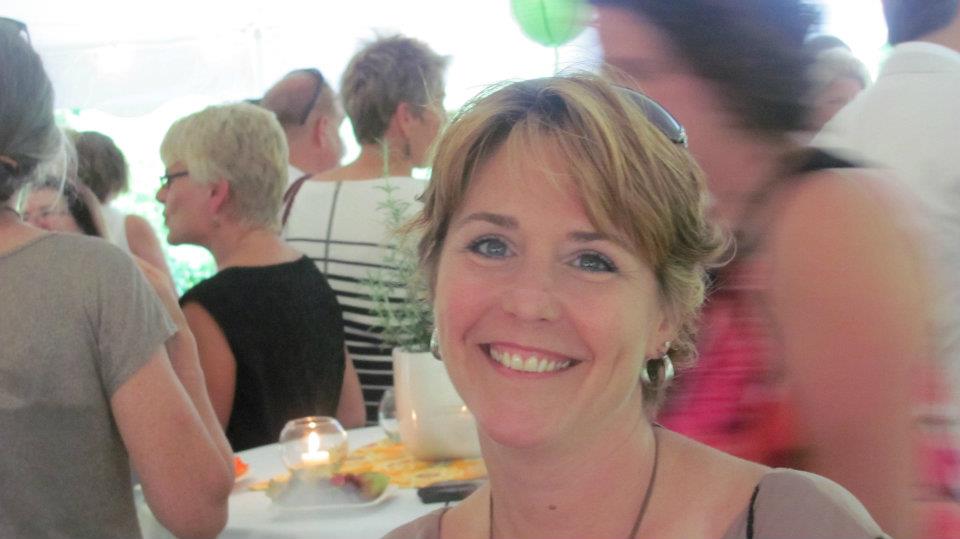
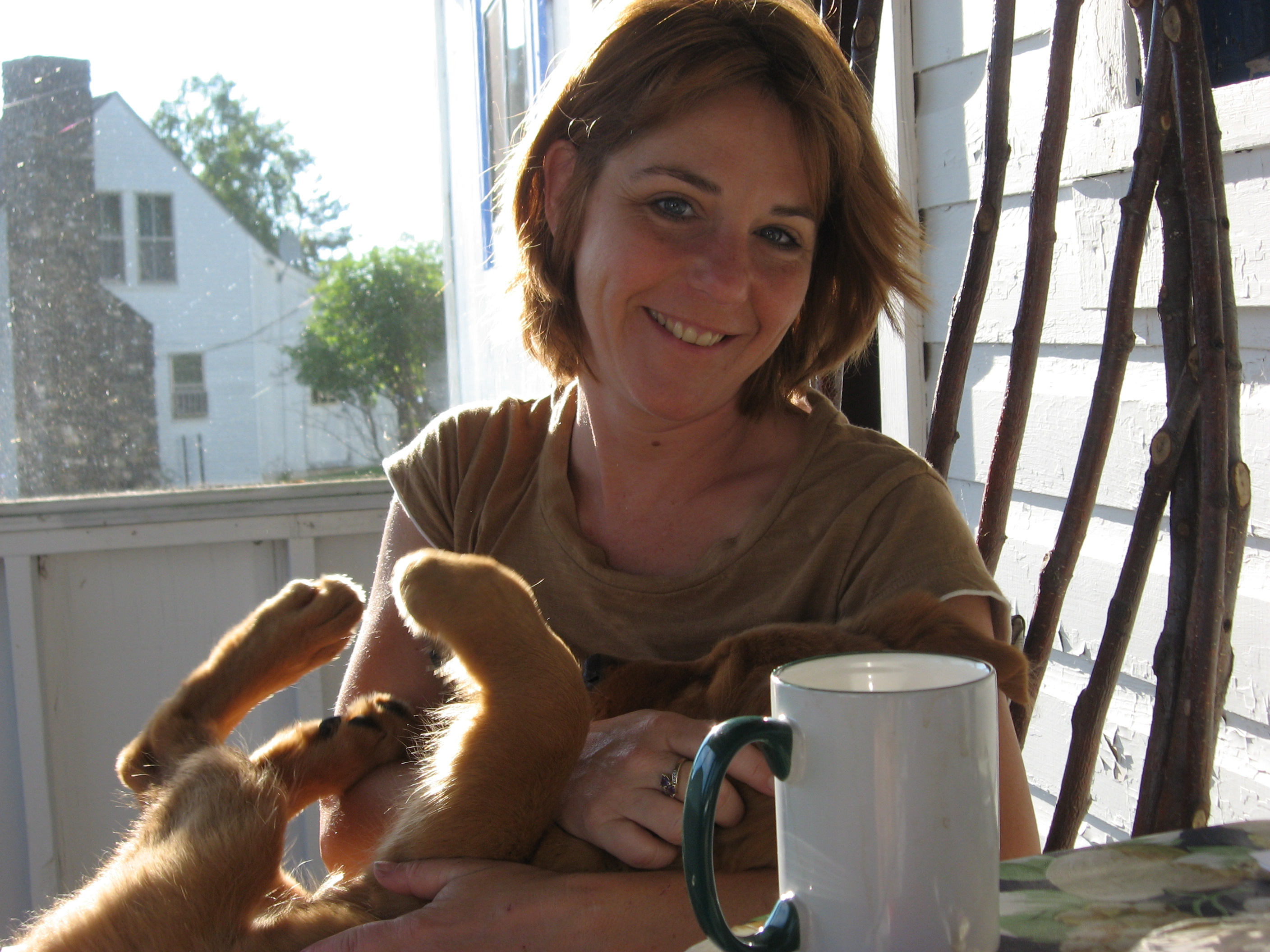
But today, for a few different reasons, I want to talk more publicly about the woman who changed my life. The woman who is my best friend and my strongest ally.
IMG_0539

When I first met Laura, she was running for a seat on the Old Orchard Beach School Board. I was the editor of the local newspaper, and thus I offered my readers endorsements of candidates. I did not endorse Laura. I mistakenly thought she was running for a seat held by an accomplished incumbent.

Laura sent me an e-mail just a couple of days after my endorsements were published. She pointed out the mistake, which I did not take so well.

For whatever reasons, we continued an e-mail exchange that was almost instantly flirtatious. She did not win her election, and we had our first date a few days later  – – on a cold November afternoon that I will never forget.

I was smitten, but I was also impressed by her strength and courage. She was a single mother, raising two boys without any support from their father. She worked long hours in one of the most stressful jobs you can imagine: a social worker for the Maine Department of Health and Human Services in the office of Child and Family Services.

She bought her own modest home about a year before she met me. We dated several weeks before she would let me meet her children.

268334_1896380292475_1330632899_31681248_3529053_n[1]

She is an awesome mother who would take her young boys frog hunting in the spring. She has gone skydiving and has never met a rollercoaster she did not like. Unlike me, she is a risk taker, always ready for the next adventure.

She is spontaneous and her laugh is more like a howl that consumes her entire body. She’s not into nouveaux cuisine or the latest fashion trends. Her favorite band is whatever is playing on the radio at that time.

She is mischievous and endearing. She is a voracious reader who loves animals (and owns too many, in my opinion).

She is down-to-earth and wears her heart on her sleeve. There is no pretense with Laura. What you see is what you get.

She is the consummate professional and has a hard time separating her emotions from the strain of her job. She loves the kids she works with almost as much as she loves her own.

She knows a thing or two about friendships. If you become friends with Laura, it is a life-long affair. She and her best friend have known each other since their freshman year in high school.

Laura is generous to a fault. She always wants to help, to give to others, to make others smile and feel loved.
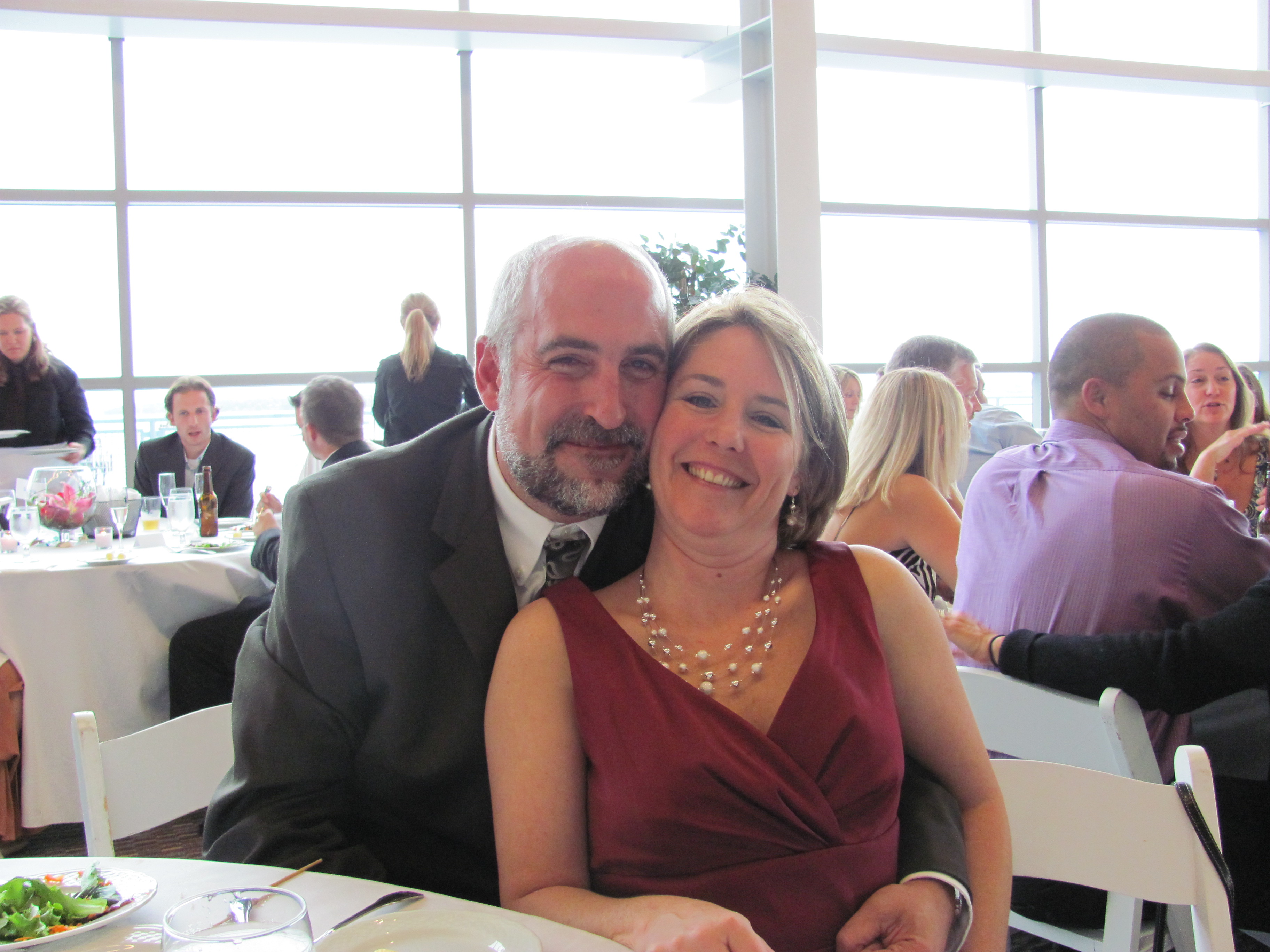
IMG_0668

Her chocolate cheesecake is world-famous (or soon will be).

She volunteers in the community and gets involved with causes left and right. She currently serves on the City Council’s Policy Committee and served two terms on the local school board. In her first election, she got more votes than any other candidate on the ballots, including the mayor and at-large city councilors.

Laura snores and will sometimes leave wet towels on the floor; so I suppose she is not perfect.

But here’s what I do know: she is an amazing wife. She is my primary caregiver, a trusted confidant and someone who will fight tooth and nail on my behalf.

I often wondered why she married me. It wasn’t money. I had none. It was not for my good looks. I am bald and overweight.

I suppose it doesn’t matter why she married me. What does matter, however, is that she married me.

So, when all else fails, I have something pretty special in my corner. And for that – – I am eternally grateful.

A short video montage:

No woman, no cry in Biddeford

Roger Hurtubise
Roger Hurtubise

Critics of the Republican Party often say the GOP is the party of old, white men: a diminishing demographic  in a nation with increasing diversity.

Although I am hesitant to generalize the Republican Party, I can say with confidence that the Biddeford City Council is more white than the Academy Awards or the snow that is piled six-feet high in my front yard.

Furthermore, the council is completely dominated by testosterone-driven men.

You would be hard-pressed to say that the current council truly represents a city that is one of the most diverse communities in southern Maine.

Clement Fleurent
Clement Fleurent

A couple of weeks ago, City Councilor Brad Cote abruptly resigned from the good ol’ boys club.

Thus, Mayor Alan Casavant (another old, white guy) now has a unique opportunity to help diversify the council. By mid-March, Casavant is expected to nominate a replacement for Cote.

From there, the old, white guys on the city council will vote on whether to approve or reject Casavant’s nomination.

Casavant is limited. He must pick a replacement from Ward 3, one of the city’s more affluent neighborhoods (although it has nothing on Ward One, which includes Biddeford Pool and Fortunes Rocks).

John McCurry
John McCurry

But there are plenty of qualified women residing in Ward Three. Off the top of my head, I think of Bonnie Pothier, a former mayor. That said, Casavant told me Pothier has work commitments that preclude her from serving.

Or how about Carrie Varney Pelletier, an outspoken conservative who does not hesitate to offer her views on social media?

Or maybe Valerie Pelletier, who previously served on the airport commission and like Cote had misgivings about the airport?

The point is that the current council could benefit from a woman’s perspective. Women tend to see challenges from a more global viewpoint versus the linear approach of their male counterparts.

There are many fine women in Biddeford (I know because I’m married to one).

The trick for Casavant is finding one who lives in Ward Three and wouldn’t mind spending a lot of time with a lot of old white men.

Signed me,

Another old white guy.

Ginger or Mary Ann?

Gilligan's Island (US TV Series)It’s become an age-old question: Ginger or Mary Ann?

And more often than not, men between the ages of 40 and 60 do not hesitate with their response.

With the passing yesterday of Donna Douglas (Elly Mae Clampett), I once again started thinking about the television shows of my youth. And more than any other popular show of that genre (The Brady Bunch, The Partridge Family, The Beverly Hillbillies or Room 222), Gilligan’s Island has achieved iconic status in the world of pop culture and recently celebrated its 50th birthday.

Gilligan’s Island ran between 1964 and 1967 on the CBS network.

We all know the plot and the premise of Gilligan’s Island, but let’s save the critiques for later.

Mary Ann (Dawn Wells)

Of the two single women stranded on the tropical island (Mrs. Howell was taken), if you put farm girl Mary Ann Summers up against Hollywood movie starlet Ginger Grant, Mary Ann almost invariably trumps her much more curvaceous, sexpot co-star, among both men and women.

Why?

I’m not entirely sure, but I have a theory.

It’s because Mary Ann was the essence of innocence. She was nurturing (forever making coconut cream pies for her fellow islanders) She was modest, honest and just a little bit sassy.

On the other hand, Ginger was narcissistic, insecure and rather one-dimensional.

Men, more often than not, choose Mary Ann because of deeper instincts than sexual desire. Would you want Ginger to be the mother of your children? Would Ginger nurture you when you were sick with island fever? Probably not.

Men may choose Ginger for a night, but Mary Ann was a keeper.

Women choose Mary Ann, I think, because she embodies a better reality about women. Women are tired of the images of female body perfection that has been forced on them through media for generations.

But let’s not dance around the also obvious.

Mary Ann was smoking hot in her own right. Her shorts were always short and tight. She may have worn a farm girl’s checkered shirt, but even in the early 1960s, Mary Ann was not afraid to expose her midriff, tying that symbolic shirt of innocence around her waist.

That’s my theory about why Mary Ann trumps Ginger, despite the latter’s overt sex appeal.

In the end, virtue always wins, and Mary Ann managed to stay on the right side of that line for three years, and in our minds for 50 years thereafter.

I close by asking you to take a simple poll: Ginger or Mary Ann?


‘Tis the Season; my two favorite Christmases

Another Christmas is right around the corner, and this holiday feels different from so many others that have come and gone.

I suspect some of you may be feeling the same way, considering the stress that too often accompanies the holiday season.

christmas-tree1I’m not sure why I am having a harder time getting into the spirit of the season this year. The awful part of this is that there is no good reason for my absence of holiday cheer. I am incredibly blessed; more than I should be.

I have a loving, beautiful and supportive wife (Don’t ask me how I pulled this off, because I have no clue).

I have two healthy, wonderful step children, a beautiful home, modern appliances and a good job with benefits, funny co-workers and a flexible boss.

I have two dogs that love me unconditionally and two cats that keep me on my toes.

I have an extended family that is more supportive than dysfunctional. Heck, I even have new tires on my truck, not to mention access to health care and a set of tools that I don’t know how to use.

So, why shouldn’t I feel jolly and bright as this holiday approaches? What has me feeling cynical and ready to scream, “Bah Humbug” at random strangers?

Maybe, just maybe, I have too much. Maybe, just maybe, I have forgotten why we celebrate this holiday.

This realization came to me as I began to reflect on Christmases past; on Christmas celebrations that did not come with so many expectations of the so-called perfect holiday.

As I contemplated these ghosts of Christmases past, it occurred to me that two particular Christmas holidays stood out as my favorites.

1.) Homefries with paprika

It was the Christmas of 1997, and I was 33 years old, virtually unemployed and living with three roommates on the third-floor of a Munjoy Hill apartment in Portland that was much closer to the bottom of the hill. I did not own a car, nor did I have a girlfriend.

I was, in every sense of the word, a loser.  At least, that was my opinion of myself back then.

These aforementioned roommates of mine were unruly slobs who liked to drink, stay up late and delighted in terrorizing my cat. They were lovable guys, actually; but it grew wearisome picking up after them and tolerating their frat-boy behaviors. On the other hand, they were covering my portion of the rent. So, there’s that.

Luckily, my three roommates were all headed to their respective homes for the holidays, and I was not. To me, this was the ultimate Christmas gift: I would have the entire apartment all to myself for a few days. I spent almost an entire day cleaning the place, lit some candles and then planned what I would do on my solitary Christmas.

Only a few weeks before, my sister gave birth to my oldest niece, Kaitlyn.  I had a little more than $20 in my pocket, so my Christmas shopping was going to be limited. So, on December 24, I trudged down Congress Street and stopped at the CVS store. I bought a rather inexpensive frame and some parchment paper; and then trudged down the hill toward the Hannaford store, where I bought a thick ham-steak, half-dozen eggs and some egg nog before heading home.

I loaded my word-processor with the parchment paper and drafted a poem for my niece; a poem to celebrate her first Christmas. Satisfied with the third version, I placed it in the frame and wrapped it.

I opted to attend Midnight Mass at the Cathedral of the Immaculate Conception, and by the time I walked back home, a quiet peace and serenity enveloped me. I was exhausted, but content.

I fell asleep reading Ben Bradlee’s autobiography and awoke on Christmas morning happier than I could recall. I boiled some potatoes, setting them in a skillet with globs of butter, chopped onions and doused with paprika. In a separate skillet, I fried that ham-steak, while working to scramble some eggs and coordinate the timing of my toast.

It was a kick-ass breakfast that I washed down with a quart of egg-nog. I fell asleep again in front of the television, with my cat curled on my chest.

I had not only survived a solitary Christmas; I relished it.

2.) Reindeer tracks

It was the  Christmas of 2001. A few weeks prior, I met Laura Kidman and we began dating on a regular basis. She owned a small home in Old Orchard Beach and had two young sons that I had met just a couple of weeks before Christmas. I was the editor of a small, local newspaper. I drove a 1993 Ford Escort wagon with a really bad exhaust,

Between us, Laura and I did not have two nickels to spare, but I remember how warm and cozy her house felt when she invited me over on Christmas Eve. Looking back, the “cozy” feeling probably had something to do with the house being 550-square-feet.

The boys were still young enough to believe in Santa Claus. Tim was six, and Matt was four. I bought them each several presents, which were wrapped and placed under the Christmas tree after they went to bed. Laura’s sister had helped me pick out a necklace, which I would give to my future wife on Christmas morning. But as midnight, approached, I opted to give Laura a more significant gift.

A few years earlier, my mother had given me the Nativity set that I had grown up with. From that Nativity set, I removed the Joseph figurine and wrapped it carefully. When I gave Laura that gift, I explained that I would do my best to match Joseph’s love for a child that was not his own.

Before driving home, I went out to the front porch and leaned over with a broom to create reindeer tracks in the snow.

I went back to Laura’s home on Christmas morning to watch the kids open their presents and to point out that the reindeer had landed in the front yard. They believed it for a little while, but were relentless in interrogating me about it. It was a magical day, and I felt as if I had truly turned some kind of corner that could never be reversed.

Neither of these stories are intended to diminish the wonderful and magical Christmases of my youth. My parents outdid themselves at Christmas. We decorated the tree as a family, listening to Nat King Cole and Johnny Mathis sing about the magic of the season. There was always, and I mean always, a giant orange tucked in the bottom of our stockings; my sister and I were often given matching pajamas on Christmas eve. We each had our favorite ornaments to hang on the tree. Fond memories, that must adapt to changing realities.

And what I realized today is that the more I have; the more comfortable I am, the more the magic and splendor of Christmas escapes me.

Because Christmas is not about stuff, credit-card balances, news headlines or any of the other things that can weigh us down throughout the rest of the year.

Christmas is a reprieve for those who choose to accept it.

No matter where you are, no matter your circumstance or fortune, I wish you all a very Merry Christmas


Take Five

LePageMy wife, Governor Paul Lepage, Bill Nemitz, a charity auction and the in-patient psychiatric unit at Maine Medical Center.

How did these random things become connected last week, causing a bit of a stir on my Facebook page last night?

Let’s start at the top.

Last week, just days before the election, Governor Paul LePage joked that Portland Press Herald columnist Bill Nemitz should be placed on a “suicide watch,” speculating that he was going to win his re-election bid and his nemesis might jump off the Penobscot Narrows Bridge as a result.

Boom! Instant controversy. Once again, the governor found himself in familiar territory with his foot in his mouth.

The governor’s critics (Democrats) went wild, talking about how insensitive the governor is to issues regarding mental illness.

Reportedly, some people who have lost loved ones to suicide were also  angry and upset about the remarks.

Other folks (Republicans) said the governor was joking and the comment was no big deal, pointing out that many in society make lighthearted jokes on similar topics.

Stop and think if you have ever said “I’m going crazy.” “That is a crazy idea.” “That guy is a nut job.” Have you ever laughed when hearing a joke about hearing voices? Late night talk show hosts had plenty of fodder more than a decade ago when actress Margot Kidder was found partially clothed, hiding in the bushes of an LA suburb.

The subject of mental illness makes us nervous. We laugh about it as a relief valve for our own anxiety and fear. But can you take it too far?

Who’s saying what

My wife  has multiple sclerosis. It is a progressive illness with no cure. She often makes jokes about her illness, speculating about when she will need a wheelchair and telling me we will need to completely renovate our home to accommodate her decreasing mobility. She laughs about these very real topics, appearing on the surface light-hearted.

Her jokes about MS really bother me. They trigger a rush of feelings and incredible anxiety. I know that her jokes are just part of her coping methods, but still I cringe when she talks about putting “bling” on her cane.

When Laura jokes about her MS, I try to give her a pass because she has MS, not me. It is her coping strategy.

It’s sort of like the “N” word. An African-American man can use that word in public without recrimination and make jokes about its connotation and meaning.

If I did the same thing, I could possibly lose my job, certainly many friends.

Society draws a line. If you got it, you can talk about it. Otherwise, keep your trap shut.

Unless it’s Hollywood or the media , and then all bets are off, especially when it comes to mental illness.

In the days following the 2007 massacre at Virginia Tech, “Nightly newscasts reported “no known motive” and focused on the gunman’s anger, sense of isolation, and preoccupation with violent revenge. No one who read or saw the coverage would learn what a psychotic break looks like, nor that the vast majority of people with mental disorders are not violent. This kind of contextual information is conspicuously missing from major newspapers and TV,” wrote Richard Friedman in “Media and Madness,” an article published in the June 23, 2008 issue of The American Prospect.

Friedman goes on to explain that “Hollywood has benefited from a long-standing and lurid fascination with psychiatric illness,” referencing movies such as Psycho, The Silence of the Lambs, One Flew Over the Cuckoo’s Nest and Fatal Attraction.

According to Friedman, “exaggerated characters like these may help make “average” people feel safer by displacing the threat of violence to a well-defined group.”

Since the 2011 Tucson shootings, I have been an out-of-the-closet consumer of mental health services. I have testified before the legislature, published an op-ed in the Portland Press Herald, spoken at community forums.

My mission is to show, in a tangible way, that mental illness is generally not scary and more often than not impacts everyday people: your friends, your co-workers, your neighbors and even your social media contacts.

My life-long struggle with mental illness is not particularly funny, but I do make jokes about it. Have you ever tried to eat a chicken cutlet with a spork? (They don’t give you silverware on the psychiatric unit. )

Did you know that nine out of 10 psychiatric units have aquariums? Fish, apparently, relieve anxiety and stress.

I make these jokes and others when speaking publicly because humor helps break down communication barriers.

I got in trouble

p6On Friday evening, Laura and I attended the Biddeford-Saco Chamber’s annual holiday auction and dinner. By pure coincidence, my bidding paddle was labeled P-6,  the abbreviation of Maine Medical Center’s in-patient psychiatric unit (located on the sixth floor of the Pavilion wing.) I held up the photo and had Laura take a shot of me and my label.

I posted that picture on Facebook.

Some people thought it was funny. Other people did not, questioning why I could joke about mental illness but Gov. LePage could not.

The tricky thing about humor is its intent.

For the record, I chuckled when LePage said Nemitz should be placed on a suicide watch. The two men have been battling for four years, and frankly, I’m not sure who hates who more.

But either way, I think humor is okay, so long as its intent is somewhat calculated and not malicious in nature.

As someone with severe and chronic mental health issues, it’s not up to me or anyone else to tell you what you can joke about. All I ask is that you think about the consequences and lighten up just a tiny bit.

———————————

If you enjoy what you just read, please keep in mind that this is a reader-supported blog, and I want to keep ads at a minimum. If you are so inclined, please consider a small donation to help maintain this site. You can donate by clicking on this link. Thank you!

Enter your email address to subscribe to this blog and receive notifications of new posts by email.

Does anyone really care?


For those of you who are excited that the Lincoln Mill Clock Tower has been “saved,” it’s a bit early to put on your party hats and break out the champagne.

Sure, the clock tower was moved from the ground where it sat rotting for seven years, but it’s hardly saved.

It will likely take hundreds of thousands of dollars to restore the dilapidated structure, replace the missing bell and weathervane.

But now, I fear, the clock tower has been moved out of sight — out of mind.

It has been moved to another place behind the building so that its rotting carcass will no longer be a public nuisance, an eyesore.

The story of how the clock tower landed on the ground is a complicated one, and detailed here.

Along with a few dozen other curious spectators, I was there on Thursday night, watching the giant crane hoist what remains of the clock tower onto a flat-bed truck.

I spoke briefly with the building’s new owners and asked if the tower would ever be placed back on its perch.

The response? “No way.”

And who could blame them? They inherited a mess created by the building’s previous owners.

Everyone in Biddeford, it seems, has an opinion about the clock tower, ranging from “it should be scrapped” to “it should go back on top of the building.”

But only a handful of people have stepped up to help save this iconic symbol of the city’s storied past.

My hat goes off to a group of passionate Biddeford High School students who last year tried to raise interest in saving the structure and organized yet another fundraising drive.

Like the fundraising drive that I helped coordinate in 1999, neither effort met its goals. Though the students have not stopped yet.

Will the residents of Biddeford step up to truly “save” the clock tower?

From my perspective, it’s a long shot but one worth taking.

As I said before, we save what we care about. Now I wonder, does anyone really care?

******************

PREVIOUSLY:

A new fundraising effort

A look at the clock works from the late 1990s


The boys of summer

canvassI remember it well.  It was the summer of 1985.

I was 21 years old and working for the Maine Peoples Alliance, a progressive, citizens action organization that was then working to raise public awareness about a proposed Community Right-To-Know law that would require small and large companies to publicly disclose to their neighbors what types of hazardous chemicals they were using.

That didn’t matter much to me. What mattered was that I needed a job, and the gig paid $240 per week.

I was hired as a field canvasser. Basically, my job was to go door-to-door in targeted communities and try to raise at least $90/night (quota)  in order to support the financing of our good deeds.

Each day, around 2:30 in the afternoon, me and roughly nine other young and eager do-gooders convened at the MPA’s Portland office to go over our assignments for the evening. Then, we all piled into a Chevy Suburban and were driven to a selected community, where we would receive our individual “turf” assignments.

It was not a bad job for college kids in the summer. The weather was generally cooperative, and the communities were generally the more affluent type.

Before hitting the bricks, we generally were dropped at a local “house of pizza” to gain some nourishment and play epic games of hacky-sack while the canvass director scouted turfs.

Armed with only clipboards, our award-winning smiles and enthusiasm,  we were each set loose in our respective turf to begin hitting every house on the block for signatures on our petition and a pitch to donate.

Sure, I had a lot of doors slammed in my face, but  I could also tell you more funny stories about canvassing than what you would want to hear.

Know this, however: I hit or exceeded my $90 quota every night.

I also fell madly in love with a co-worker. It was an awesome summer, but she broke my heart on the same weekend that Hurricane Gloria hit Maine. I remember it well.

Hurricane Gloria’s damage could not compare to the damage done to my then bleeding, anti-corporate, progressive heart.

Go ahead, blame her for making me a Republican. She was an art student.

Go figure.

And these children that you spit on . . .

Flash forward almost 30 years to Monday night.

Laura and I just returned home after walking the dogs, and we spotted a canvasser at our neighbor’s house.

Laura ducked in the house quickly. She avoids confrontation.

The canvasser spotted me and sized me up as he began walking toward our driveway.

“Can I help you,” I asked, deadly curious about who he was and who he was working for.

I thought about that art student from three decades before. I thought about all the doors slammed in my face. I thought about all the funny stories I accumulated that long ago summer.

This kid . . . this snot-nosed punk . . .  had no idea what was in store for him.

“I’m looking for Laura or Timothy.” he said, glancing at his smartphone.

We never had smartphones.

“Laura is my wife and Tim is my son,” I told him. “Can I help you with something,” I repeated, wondering why he didn’t want to speak with me.

Maybe it was because we were his last house for the evening, or maybe he was just being polite. “Sure, I can talk to you,” he replied, glancing again at his smartphone and instantly pulling up my real first name. (Hint: It’s not Randy, Randall or Randolph)

He asked who I was planning to vote for in Maine’s upcoming gubernatorial election. I gave my answer, and his response was flat. This kid must be a good poker player.

By now, Laura has emerged from the house, and I told the canvasser to ask her the same question. Unlike me, there was no hesitation in Laura’s voice. Her answer was clear and purposeful: Republican Paul LePage had earned her vote, she said.

Trying to mess with his head, I muttered something about Eliot Cutler.

That remark got Laura fired up. “Are you kidding me?” she asked incredulously. The canvasser seemed to be enjoying himself.

So, the three of us spent the next 15 minutes or so talking politics, including Laura setting him straight on the issue of fraud investigators, right there on my front lawn.

This kid was working for the Maine Democratic Party, but he seemed more interested in genuinely hearing our concerns and frustrations than he did about trying to sway our opinions.

He came across as smart, polite and respectful. He held his ground perfectly. He was a good ambassador for his party.

Eventually, his ride arrived and we bid adieu to our new friend.

As I closed the front door, I began to wonder why we usually can’t debate politics with such civility on social media outlets.

The worlds of communication and political strategy are rapidly changing, but Monday’s experience reminded me that there is still tremendous value in knocking on doors and having face-to-face conversations.


Talking in your sleep

Angry-Computer-GuyOftentimes, it’s not so much what you say but rather how you say it.

It’s an important lesson for all of us, but especially important for those who aspire to be our leaders. Think: “Social Security is Welfare

Earlier today, I was interviewed for a locally produced talk show in my community. I was pitched for this idea several weeks ago, and my first instinct was to decline the invitation. But the host was persistent, and he wanted to talk about a subject near and dear to my heart: strategic communication.

As I prepared for the 25-minute taping, I paused to think about some words that I routinely take for granted.  After all, I am a strategic communications consultant; my job makes sense to me but I wondered if it made sense to anyone else.

stra-te-gic \strƏ-tē-jik\ adj 1. of, relating to, or marked by strategy. 2. necessary to or important in the initiation, conduct or completion of a strategic plan.

com-mu-ni-ca-tions\ kә-myὕ-nә-kā-shәns\ n. 1. an act or instance of transmitting; 2. process by which information is exchanged between individuals.

con-sul-tant \kәn-sәlt-nt\ n. 1. one who gives professional advice or services: expert

Thinking more deeply about those words led me to a basic conclusion: Despite the rapid and sometimes overwhelming advance of technology, the basic fundamentals of good communication skills haven’t changed much.

In fact, I quickly recalled a lesson that my late uncle drilled into my head during my teenage years: God gave you two ears and one mouth. Use them proportionately.

Human beings have always had the need and desire to communicate. Our ancestors used hieroglyphics (an earlier version of SnapChat) before sharing stories around campfires and passing those tales and lessons from one generation to the next. From there, we moved on to the invention of the printing press, the telegraph, telephone, television  – – all the way into our brave new world of Pinterest, Facebook and Twitter.

But as the speed of our communication increases exponentially, it becomes increasingly important to remember my uncle’s Golden Rule of Communication: take the time to listen and think before you speak, post or tweet.

If you want to learn a little bit more about my professional life (how I feed my family): check out this relatively short video clip.

In the meantime, remember that social media tools are power tools and require caution and a firm understanding of the consequences of making one wrong move that can happen in an instant without warning.

As always, I encourage your feedback. You can contact me by clicking this link.


Little Miss Can’t Be Wrong (Redux)

Joanne Twomey
Joanne Twomey

This is a story about a bitter, cake-baked politician, a police chief and a little, pink bicycle.

During the most recent Biddeford City Council meeting, former Mayor Joanne Twomey, was once again full of rage and fury.

As she does during most public meetings, she nearly tripped over herself as she stormed toward the podium to rant and pontificate before the council for the televised portion of the meeting.

Twomey uses rage and victimization like most people use deodorant. It is predictable, boorish and sometimes entertaining.

But her tirades of rage and indignation are rarely, if ever, based on logic or fact.

This week, Twomey’s tirade was about “a little pink bicycle” that she says was recklessly tossed into the metal recycling bin at the city’s public works facility by callous members of the Biddeford Police Department.

Twomey, who has lost her last three bids for public office, told the council (and those watching the meeting on television) that she had gone to public works to dispose of some grass clippings, when she witnessed the horror of a massive bicycle dumping in the metal recycling bin.

“They dumped 25 to 30 bicycles in there,” Twomey breathlessly proclaimed. “Bicycles!”

By her own admission, Twomey told the council that “I screamed and caused a scene.” (It’s what she does best)

Twomey said she asked the police officers why they didn’t give the bicycles to “the bicycle guy,” referring to Andy Grief, executive director of the non-profit Community Bicycle Center

“Is this a sense of community?” Twomey bellowed, ready to burst with indignation.

Twomey said she tried to alert the Community Bike Center about the atrocity, but staff was out for lunch. So, what did she do?

Make an inquiry at the police department? Nah.

Instead, she went home to fetch her Canon digital camera “because you have to document everything in this city.”

“I took pictures, and I put in on my Facebook,” Twomey told the council. (Editor’s note, we were unable to find photos of discarded bicycles on Twomey’s Facebook page)

Nonetheless, Twomey says reaction to the photos was overwhelming. “Where is our sense of community?” she asked again. “There was a little pink bike that could be used by some little girl.”

In summary, Twomey said the callous officers who dumped the bikes should be fired.

The rest of the story

Chief Roger Beaupre: Journal Tribune photo

Biddeford Police Chief Roger Beaupre was watching the May 20 city council meeting from the comfort of his home. After hearing Twomey’s comments, Beuapre decided the council should hear — as Paul Harvey would say — the rest of the story.

Beaupre’s e-mail to the city council appears below, and it offers some revealing insight about both the incident and Twomey’s tendency to shoot first and ask questions later.

HERE ARE THE FACTS:

We routinely and regularly pick up and store bicycles that are left abandoned on the street. In some instances, these bicycles are turned in by people who have discovered bicycles that have been abandoned on their property. The department’s Evidence Technician/Property Manager, then places a property tag on each of these bicycles, logging and recording the description and serial numbers into our records management system.

They are then taken to DPW and stored in one of our property containers. All bikes are hung from the ceiling in a neat and orderly manner. We are required by state law to keep these bikes for not less than 5 months, and if after that amount of time the bikes are unclaimed, we can dispose of them.

Prior to 2003, state law required that we auction these unclaimed bikes and return the proceeds of the sale to the Treasurer of State, less our cost of storage and auction. In 2003, the State Legislature changed the law to read: “…a local legislative body in a municipality may dispose of unclaimed bicycles in a manner decided by that body…” (25 M.R.S.A. 3503-B).

Now then, here is what we do AFTER six months of retaining the bikes. In our “Sense of Community” we have partnered with Andy Grief from the Community Bike Center, and all of our serviceable bikes are given to that center. Process is that at the end of six months, either Andy Grief himself, or one of his staff, accompanies the BPD Property Manager to the storage trailer at DPW. The Community Bike Center representative then inspects each and every bike that is eligible to be released.

With a magic maker he places a large “R” on those bikes he deems unserviceable and does not see as safe to place on the street. Cracked frame is usually the typical problem, or any other problem that they deem not worth repairing. After the representative claims the bikes he does want, our Property Manager selects a convenient time to collect the bikes that are destined for recycling and disposes of them in the metal bin at DPW.

On the day that Mrs. Twomey happened to bring her brush to DPW, a Public Works employee was helping our Evidence Technician unload the bikes from our Crime Van and place them into the recycling bin. I stress Public Works employee, because I want to make sure it is clear that there were NOT two police officers at the Recycling Center.

I don’t believe that I have to tell you of the city’s liability if someone gets hurt using a bicycle that the Community Bike Center has deemed unfit.

That pink bicycle that Mrs. Twomey so fondly referred to last night was deemed unfit by someone who knows whether or not a bike is safe to ride.

In closing, the system we have been using for about a decade now, keeps our unclaimed bike inventory down, and returns serviceable bicycles to the community to those who can’t afford to buy one. How is that for our “Sense of the Community?”  And for her to state that the police officers should be “fired” is unfair and biased.

Two for the show

Ryan Fecteau
Ryan Fecteau

Of the 151 seats in the Maine House of Representatives, only 19 of them will offer a primary option for voters on June 10.

One of those 19 Primary Election challenges is taking place right here in Biddeford, and I know both of the Democrats who are battling for their party’s favor.

Of course, since this is Biddeford, a city that consistently sends a Democrat to Augusta, at least in this central district, whichever candidate wins on June 10 will most likely be able to coast comfortably onward to Freshman Orientation Day at the Statehouse.

This evening (May 22) Ryan Fecteau and David Flood will participate in a televised debate that will be held in the Little Theater at Biddeford High School.

I will be live Tweeting from the event, but I encourage my fellow voters in Biddeford to attend and learn more about the candidates.

Expect Fecteau to lean toward progressive themes and talk about youth and new energy. Expect Flood to talk about his succesful business experience and moderate views.

Fecteau has been running a visible and strong ground game. It’s not yet clear where Flood’s campaign has been over the past few weeks.

David Flood
David Flood

Added Bonus: Former Mayor Joanne Twomey will be in attendance, rooting for Fecteau. Now, there’s a reason to vote for Flood!