Randy Seaver — journalist and former PR pro — blogs about politics, media and his struggles with mental illness.
Author: Randy Seaver
Randy Seaver is a veteran journalist who has been covering news and politics in the city of Biddeford, Maine for nearly three decades. He may be contacted at randy@randyseaver.com
Don’t laugh. It’s now a question being asked in Somerville, Mass., another city that struggled to overcome negative stereotypes, according to a story from the Boston Globe.
After almost three decades working the counter at Capone Foods in Somerville’s Union Square,
Albert Capone has become a stranger in his own city.
“It’s gone from townies to hipsters,” he said on a recent evening. “The hats, the tattoos, the tight skinny jeans — on the guys. It’s like they’re trying to out-hip each other.”
Once again, we are on the verge of another election cycle in the fair city of Biddeford, where local political maneuvering is a blood sport.
According to the City Clerk’s office, some very familiar faces have taken out nomination papers for a variety of elected positions.
But wait, that’s not all.
Once again, a few dime-store strategists are enjoying some late summer shenanigans: several candidates have taken out various and multiple forms of nominating papers. One candidate, in fact, can’t decide if he should run for an “at-large” seat on the council, run as a candidate for his own Ward or serve on the school committee.
This strategy is meant to confuse the opposition and observers like yours truly. They will wait until the final moments before the filing deadline to turn in their papers, hopefully scaring off would-be challengers and leaving them with few options at the filing deadline.
Of course, former Mayor Joanne Twomey is looking for revenge. After being trounced two years ago by Mayor Alan Casavant (68-32 percent), Twomey is determined to get her old seat back.
Despite also losing a Democratic primary bid last year to replace State Rep. Paulette Beaudoin, Twomey is convinced that she is somehow still relevant.
She’ll have a hard time beating her last showing of 38 percent, especially if some of the declared mayoral candidates follow-through with filing their 125 signatures of registered voters.
Joining Twomey in the race for the mayor’s seat is former city councilor Perry Aberle and Karl Reed, Jr. Casavant is expected to take out nomination papers later today.
Thus, in a four-way race, Casavant would need to lose big numbers, which will then likely be divided by his three challengers.
But Twomey isn’t the only familiar face looking for a comeback.
Former city councilor and one-time mayoral candidate Marc Lessard is apparently thinking about returning to the council either for an at-large seat or representing Ward 6. Lessard, an early favorite in the 2003 mayoral race, ended up last in that three-way race. He hasn’t been heard from since.
Until now.
But wait, there’s still more.
Former city councilor Ron Peaker, who also serves as commander-in-chief of Peakers Squeakers ( a vocal group of three old white guys from coastal Biddeford who consistently oppose the school budget), is also thinking about a return to either the council or the school committee.
Peaker is joined by his pal, John McCurry, another former city councilor who was aligned with Lessard, Peaker and former mayor James Grattelo back in the good ol’ days. McCurry is considering a run for either the council or the school committee.
On the other side of the political spectrum, Jim Emerson, a former councilor and school committee member, is thinking about an at-large seat or a return to the school committee. Current councilors Mike Swanton, David Bourque, Bobby Mills, Brad Cote, Rick Laverierre and Mike Ready all seem dumb enough to endure another two years on the council.
But back to the mayor’s race for a second. Does Perry Aberle, a one-time staunch Twomey supporter, stand a shot?
Sure, anything is possible. The sun may also not rise in the east tomorrow, but don’t bet on it. Aberele got slapped hard when he tried a bid to replace Paulette Beaudoin last year.
What about Karl Reed, Junior? Little Karl will have to do a lot better than his old man did in 2009. Big Karl sank like an anchor in his first local political bid, a four-way mayoral race in 2009 (the last time Twomey won an election).
Big Karl earned 170 votes. Sounds impressive, right? Wrong.
That is 170 votes out of 7,876 votes cast. I guess you could feel good about less than 3 percent, unless you consider that nearly four times as many people left the ballot blank on the mayor’s race.
Maybe, Little Karl will bring some respect back to the family, but again . . . don’t bet on it. If he breaks the 10 percent mark, I’ll be surprised and Twomey will be in trouble.
Updated for corrections, August 21. Apologies to the city clerk’s office.
Guess which one generated the most buzz? You might be surprised.
I was.
People sometimes ask me why I write this blog. The answer is simple. I just like doing it.
Self-described social media experts will tell you that the best blogs are those with a single focus, those that focus primarily upon a specific topic. I think that’s pretty good advice for building an audience, but this blog does not follow those generally accepted rules to attract visitors.
Instead, this blog is all over the place, though primarily focuses on politics and my mental illness. It is driven by my raging brain that needs a release: a cyber-coded pressure relief valve.
That post about the worst and best day of my life soared off the analytics chart. Within two hours of publication, traffic to that post smashed the record for any other post in the last two years — a whopping 670 percent jump, attracting readers from Norway, Japan and England.
Why? I have a theory.
There is a lot of information out there, but a lot of it is simply varying perspectives on the same subjects.
Closer examination of my analytics reveals an interesting trend. When I write about my own unique experiences with mental illness, traffic is at its highest. It drops off when I poke at Biddeford’s political dynamics; it falls even further when I write about Maine politics; and is at its lowest point when I weigh in about national politics, generating no more than three or four hundred unique hits.
Web surfers are weary and inundated by a flood of information about politics and hot-button issues. Media critics rely on a tired adage: If it bleeds, it leads
But readers do respond and connect with personal stories. They like stories that restore their faith in humanity. They can only argue and fight for so long. Deep down, we want to feel good and connected to our fellow humans.
We all have our own struggles. We are encouraged by stories of overcoming adversity. Our faith is restored. Our energy is renewed, and we want to share the good news.
Like any other writer, I take satisfaction in knowing people are willing to read what I write. I was happy about yesterday’s spike in traffic, but the number of visitors here really doesn’t matter. So, I will continue ranting about any subject that pops into my brain.
But there is an important lesson for all you folks who want to deliver a message. Connect with your audience by being unique and honest.
Which Hollywood film better describes the city of Biddeford’s ongoing struggle with issues such as “the creative economy,” “cultural diversity” and elitism: Mr. Holland’s Opus or Mad Max: Beyond Thunderdome?
In Thunderdome, a community barely surviving in a post-apocalyptic world is wary of strangers and outsiders. To avoid another global war, all disputes are settled by a bizarre cage match contest in which “two men enter and one man leaves,” a fight to the death.
By contrast, the 1995 film Mr. Holland’s Opus examines the career of a musician who reluctantly becomes a high school music teacher. Mr. Holland becomes passionate about exposing his students to the value of music and arts, but a political reality sets in near the end of the film.
The school board is struggling with its budget. A decision is made to eliminate the arts and music programs in order to preserve the “more important” functions of teaching reading and writing. Mr. Holland tries to fight back. “if you keep cutting arts and music, pretty soon these kids will have nothing to write or read about,” he quips on the day he receives his pink slip.
Take me to the other side
Sarah Beanland is a Massachusetts resident who summers in Biddeford Pool. I met her and her husband last week on Main Street. They had just purchased a couple of paintings.
Renee and Jim O’Neil: Stop complaining and get involved.
She was puzzled and dismayed to learn that some community members have reacted negatively to a recent push for the creation of a creative economy in the downtown area. Although she quickly conceded that she did not have the benefit of a local, historical perspective, she was forceful in her opinion about the benefits of a creative economy and how it can elevate any community.
“Arts and education are the great equalizers,” she said. “But we must make sure that everyone has access to those things. Access to both arts and education is the key.”
Renee O’Neil, a lifelong resident, has been a leading downtown advocate for more than two decades. O’Neil championed and led the efforts to restore and renovate City Theater, a historic Opera House on Main Street.
“I don’t get why anyone would feel offended in any way by efforts to build a creative economy here,” she said, conceding that there has been a historical resentment about the perceptions of class warfare in Biddeford.
Renee said a lot of people told her she would never be able to generate enough community interest to successfully renovate City Theater. She proved those detractors wrong, and today the facility serves a broad array of community functions, ranging from theatrical functions to a venue for community meetings and events.
Renee recalls growing up in a working-class family and says community concerns about elitism are becoming a distant part of Biddeford’s past. “There was a time and a place when that all may have been true, but not now,” she said. “I guess I don’t see the social boundaries because I have always crossed them. My dad would talk to everyone. There was never this idea that we weren’t all part of the same community.”
Renee’s husband, Jim agrees. “All this talk about elitism seems strange,” he said. “People were not happy with the fact that nothing much was happening [in downtown,]” he said. “Now something positive is happening, and these very same people are upset. Go figure.”
For many years, Renee and Jim operated a small and popular convenience store near the western border of the city. They said they learned much from that experience, including how initial impressions are often inaccurate and that all people share much more in common than the things that seem to divide them.
“People would come into the store, and when we took the time to know them, we found ourselves connecting on a personal level,” Renee said. “Too many people don’t seem to take the time to listen or consider things beyond their own comfort level.”
The Rubberband Man
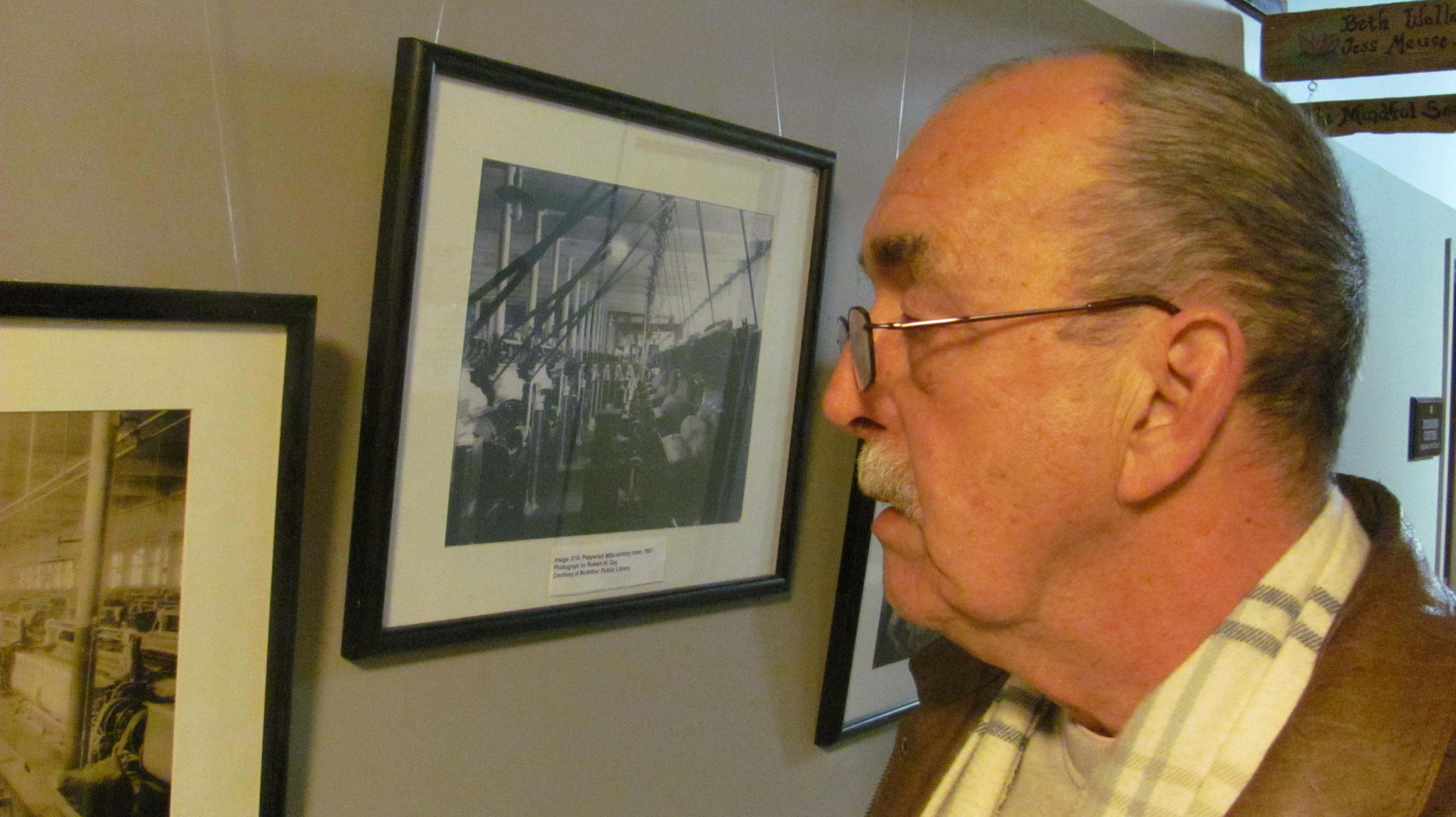
Pete Lamontagne examines a historical photo of mill workers who toiled in the same buildings where he and his father worked.
If any one person is revered as the spokesman of Biddeford’s working class population, it is George “Pete” Lamontagne, a former city councilor, mill worker and former president of the labor union that represented the city’s mill workers back when the mills were producing blankets and other textiles.
Today, those same mill buildings that once drove Biddeford’s economy and provided steady employment for generations of immigrants are being renovated and converted into numerous uses, from up-scale housing units to a small business incubator that features dozens of small businesses.
There is even talk of a hotel, a conference center and many other exciting opportunities for a community that has struggled to move beyond its mill town heritage.
As the renovation and reinvigoration of the formerly dormant mill complex continues, a new tension has been created. That renovation process is primarily being led by “people from away,” the folks I describe as Biddeford’s most recent immigrants.
“Oh yes, there is elitism in Biddeford,” Lamontagne said in his usual soft-spoken style. “But it goes both ways and it’s more often about perception than reality.”
Lamontagne serves as a self-appointed emissary between the two sides of this latest clash of personalities and opinions in Biddeford. He was co-curator of a photo exhibit that was displayed at the Engine Gallery on Main Street. That exhibit, The Way We Were, focused on Biddeford’s cultural history.
The mostly black and white images from The Way We Were exhibit were collected from a variety of sources, mostly from individual community members who were eager to share their memories and heritage.
But not everyone appreciated Lamontagne’s efforts to bridge the gap between old and new ideas for Biddeford’s future and its identity.
“A lot of people questioned why I was getting involved,” he recalled. “A lot of people said, ‘Pete, how can someone like you spend so much time with those people.'”
Lamontagne says he understands the mistrust and suspicion raised by some of his peers. He agrees with my assertion that the passionate push for developing a creative economy in downtown Biddeford sometimes seems too aggressive without fully understanding the city’s history.
Together, Lamontagne and I recant a long litany of real elitism and class warfare in Biddeford: Attempts by coastal neighborhoods to secede from the city in the 1990s; a move to ban public use of the beaches at Biddeford Pool and Fortunes Rocks in the 1970s, and of course, the long history of enduring the weight of criticisms from those who live across the river in Saco.
But we also talked about more recent examples, including the tensions and controversy created by the opening of Fatboys Saloon and the 800-pound gorilla issue that created an even deeper divide in the community: a plan in 2011 to open a casino-resort complex on the outskirts of the city.
“No doubt, the casino issue left a bad taste in a lot of mouths,” Lamontagne said. “On one side were supporters, many of whom saw the casino as a way to create much-needed blue-collar jobs and put Biddeford back on the map. On the other side were people who worried about the image of a casino, about how it would impact our quality of place.”
Lamontagne, like most Biddeford voters, supported the idea of opening a casino. But Maine voters rejected the city’s proposal, despite narrowly approving a similar facility in Oxford the year before.
“A lot of people were upset and are still upset about that,” Lamontagne said. “We’ve lost a lot of our traditional jobs, and people are worried. Many of them don’t see how art exhibits and music performances will help us get back to where we were.”
City Councilor Roch Angers agrees with Lamontagne. Angers grew up in a working-class neighborhood on South Street, where his family operated a small grocery store.
“You know what I hate?” Angers said. “The word Biddo. That’s not the name of our community. We have three consonants in the name of our city. Deal with it and show some respect for our heritage.”
Fatboy Slim
David Bourque: A man and his bar
Biddeford City Councilor David Bourque found himself at the center of a storming controversy earlier this year.
His plan to open Fatboys Saloon on Main Street erupted into a full-scale public policy nightmare that once again raised concerns about elitism and a lingering sense of class warfare.
When the Heart of Biddeford, a non-profit downtown business organization, raised their concerns during a city council meeting, former Biddeford mayor Joanne Twomey came off the ropes swinging in defense of Bourque and his proposed establishment. Local newspapers seized on the story.
Heart of Biddeford representatives said they only asked the council whether downtown was the appropriate location for a “biker bar” and whether it met the vision of a Downtown Master Plan that was developed two years prior and included input from a broad array of stakeholders. They worried about noise and impacts to nearby downtown residents and plans to build a hotel nearby.
But Twomey wasn’t buying what the Heart of Biddeford was selling. She described the organization and some of its members as “elitists.” She was full of sound and fury, outraged that a working class community would look down their noses at a bar marketed toward working class citizens.
The liquor license was approved and almost four months have passed since. Twomey has taken out nomination papers and apparently is planning another run at the seat she lost two years ago.
Although the dust may have settled in the Fatboys debate, Bourque said he was taken aback by the reaction to his business.
“I don’t get it,” he told me during a telephone interview. “It came out of nowhere. It was like I was guilty until I could prove myself innocent.”
While Heart of Biddeford members said Bourque should have approached them before aggressively promoting the pending opening of Fatboys, Bourque says no one from the Heart of Biddeford approached him to learn about his vision or plans.
“It was an unprecedented attack on my reputation,” Bourque said. “People should know who I am. I have been on the city council for four years, and I’ve been doing business in this city for more than 30 years.”
Bourque was an outspoken supporter of the casino. Many Heart of Biddeford members opposed the idea of a casino. Was this payback, I asked.
“I don’t think so,” Bourque responded. “I think people just jumped to conclusions. I believe in what the Heart of Biddeford is doing. They deserve a lot of kudos for what they are doing and trying to get done in Biddeford.”
Bourque defended the pre-opening promotion of Fatboys, including a controversial Facebook page that displayed young women in tight-fitting clothes and marketing geared toward bikers. “Sure, we wanted to create a buzz,: he said. “It’s alcohol and female bartenders. What’s wrong with that?”
But some say Bourque simply poked a tiger with a stick by being as provocative as possible during the pre-opening promotion. He should not be surprised that the tiger snarled.
Bourque said he has moved beyond the controversy. He also says he is planning to join the Heart of Biddeford and run for another term on the city council. “I was so humbled during that process,” he said. “I heard from so many people who supported me…people I have not seen or heard from in years. It was very encouraging.”
The mayor weighs in
Mayor Alan Casavant (Sun Chronicle photo)
Before his retirement in 2010, Mayor Alan Casavant spent 35 years teaching American Studies and Psychology at Biddeford High School.
He describes this conversation about elitism, cultural diversity and the creative economy as “fascinating stuff that has always intrigued me.”
“I think we can all be somewhat elitist at times,” he said. “But it’s sort of like racism in that it’s not an easy or comfortable topic for a lot of people.”
Throughout his first term as Biddeford’s mayor, Casavant has consistently pushed for Biddeford to move beyond its own negativity and self-imposed inferiority complex. “Yes, we were a mill town,” he says. “But we are no longer a mill town and we simply must acknowledge that new reality as we all work toward repositioning ourselves for the future.”
Casavant said cultural identity is important, but it should not become a wedge that prevents collaboration between those with different perspectives. “There’s room for everyone in Biddeford,” he says. “We all have a role to play. The question becomes who among us is willing to step up? You can’t just sit back and complain. We all need to look for solutions.”
But Casavant acknowledges that his vision is difficult for some people to embrace. “We are all — to varying degrees — uncomfortable with change, but change is the only constant thing in our lives.”
The mayor understands and empathizes with those who are upset that there is push to transform LaKermesse, the city’s annual Franco American festival, into a celebration of multi-cultural diversity.
Casavant has also heard elitism used as a weapon in other policy debates, including ongoing debate about the city’s municipal airport and accusations that it’s nothing more than “an exclusive country club for rich out-of-towners.”
“I think both sides get too defensive when we attempt to discuss these issues,” Casavant said. “I think we would all be well-served by committing even further to understanding and appreciating different points of view.”
Perception or reality?
Has a sense of cultural elitism taken hold in downtown Biddeford, where a push for creative economy is brushing up against those hoping for more traditional economic development?
Vassie Fowler, a downtown business owner, does not hesitate with her answer. “You betcha.”
In addition to owning and operating Union House Pub and Pizza with her husband Jack, Vassie also runs a catering service that has worked closely with the Heart of Biddeford and the Engine gallery. She was raised by a family of second-generation immigrants from Greece: the Ladakakos family, best known for their outstanding, downtown Italian sandwich shop, George’s Sandwich Shop.
Union House is one of the many small businesses thriving in the renovated North Dam mill building that was redeveloped by Doug Sanford.
Vassie says she is happy that her business can simultaneously be part of Biddeford’s new and old narrative. A pizza pub located in a renovated mill building, a business name that pays homage to the city’s past.
But she also says tension between those pushing for a creative economy and those who want more traditional development is real.
“It feels like you have to be loyal to just one side, and that’s just ridiculous,” she responded in an e-mail. “You can be embraced but then shunned. Like you’re either with us or against us; you’re either part of the clique and follow our rules or you’re not. Give me a break.”
Fowler says there is certainly room for a creative economy in Biddeford, but it should not be the sole focus.
“Biddeford will never improve or grow unless we are honest with who or what we are,” she added. “Flower pots and a fresh coat of paint can not change who we are as a community: the good, the bad and the ugly.”
Biddeford Mayor Alan Casavant and I are standing in line outside the Biddeford Ice Area on a Saturday night.
Considering the hundreds of other people waiting in line with us, we both feel very out of place.
We didn’t know what to expect. We had front-row, ringside seats for a series of NEF cage match fights. Of the approximately 2,000 other ticket holders, neither Casavant or I spotted a familiar face. And that takes some doing.
Some two miles away, a non-profit group is hosting a performance dance event in one of the former mill buildings that dominate the core of our city.
I wouldn’t hesitate to bet my next paycheck that attendance at the cage match fights far outpaced the number of people attending the dance performance.
Both Casavant and I were a bit elitist about our initial perception of the fights and the crowd that seemed thirsty for blood. We were outsiders, and well outside of our element.
It was interesting to note, however, that Maine Secretary of State Matt Dunlap, a one-time Democratic candidate for the US Senate, “likes” the NEF page on his Facebook page.
If not for the complimentary tickets, you can be assured that neither Casavant or I would be there.
After more than two hours of watching raw, intense competition, Casavant and I left with a changed opinion about both the event and its participants. There was a mutual respect among the fighters. The violence ended abruptly at the end of each match as the contestants would embrace and indicate their admiration and respect for each other.
It was nothing short of a bizarre experience for me . . . on the eve of once again writing about cultural diversity and elitism.
Pride cometh before the fall
Here’s another picture, and take a good look.
It takes a community
It is a Saturday afternoon on Main Street in downtown Biddeford. I am standing outside Elements Book Store and Cafe, waiting to meet with Tammy Ackerman, and I bump into my friends Jim and Renee O’Neil.
The conversation quickly turns to my previous blog post, Fool for the city
As we talk about Biddeford’s cultural heritage and words like elitism and diversity, we are briefly interrupted by a strange convergence.
A couple that summers in coastal Biddeford Pool come onto the sidewalk, each holding paintings they had just purchased. Renee met the couple just moments before and she introduces me to them as the conversation about Biddeford continues.
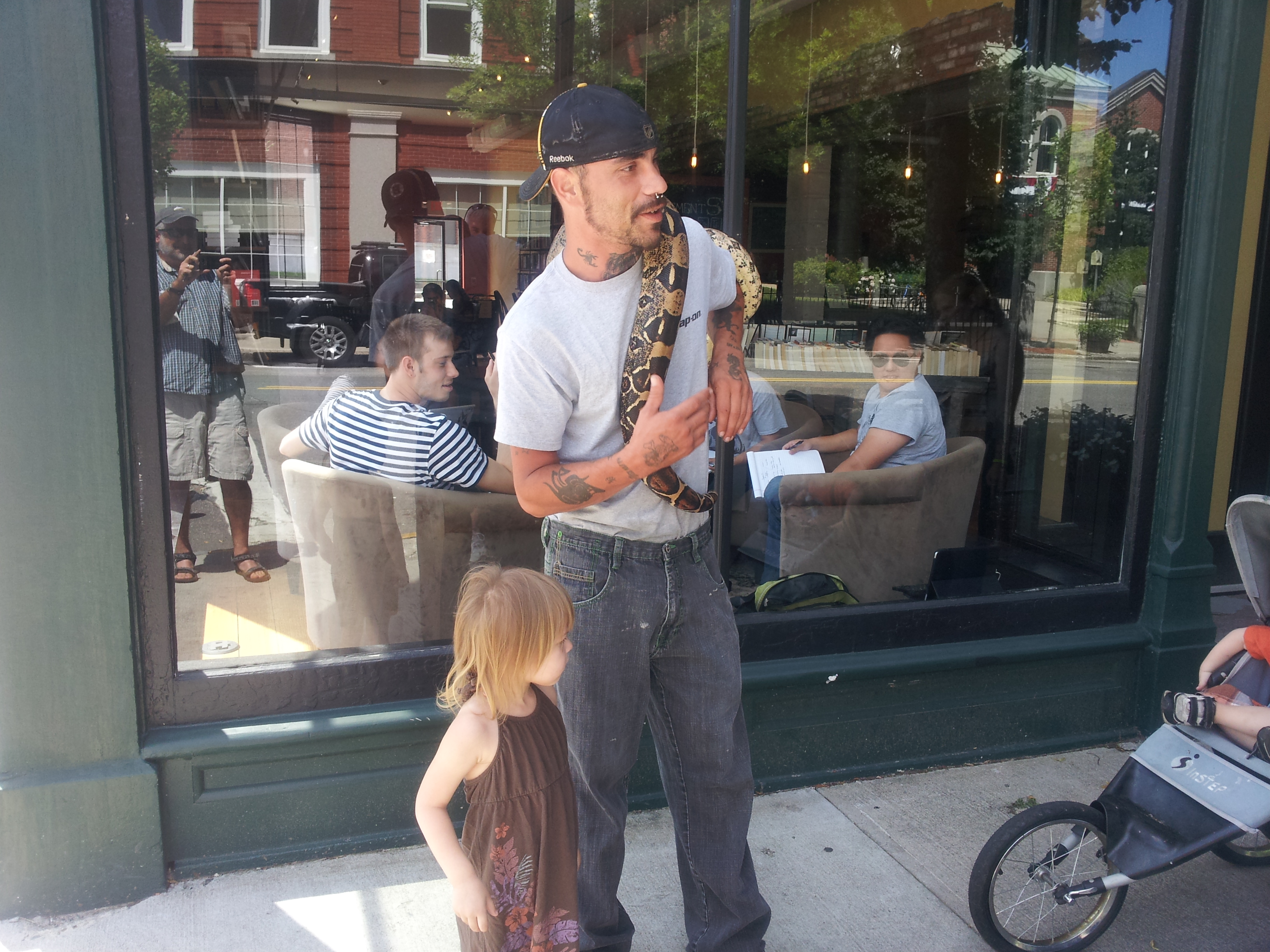
Moments later, a man in his late 20s is in our midst. He is wearing a t-shirt, jeans and a baseball cap backward. His tanned, muscular forearms seem to be a canvass of tattoos, but most strikingly he has a very large boa snake draped over his body. He is accompanied by a little girl, maybe four years old. Just behind him, is a woman pushing a baby stroller and puffing on a cigarette.
We are — all of us —- on the other side of a giant window that looks into Elements. The patrons inside look up from their laptops and cappuccino, curious about this new picture on the other side of the glass. Me, Renee and Jim, a couple from Biddeford Pool and this man with a giant, scary snake.
Strangely, it does not seem even the slightest bit unexpected or awkward.
After a few moments, the man moves onward down Main Street with his entourage, and the rest of us continue our conversation.
Renee, a lifelong and well-known resident of the city, adamantly disagrees with my assertion that Biddeford continues to struggle with talk about cliques, elitism and a pervasive sense of class warfare. Her husband, Jim, is concerned that I am not accurately portraying the picture.
The funny thing? They both admitted that they had yet to read the what I had written the week before.
“It seems like you should be holding up a mirror, but instead are using a piece of stained glass,” Jim offers. “Mirrors simply reflect light, but stained glass filters the light to present a certain picture.”
They are both somewhat troubled that I wrote about Tammy Ackerman, a downtown activist, in a blog post that poked at the touchy subject of elitism and cultural diversity.
“Tammy is like Mother Theresa,” Renee quipped. “She’s the last person that anyone should describe as an elitist.”
More about my conversation with Jim and Renee in just a bit . . .
After reading last week’s post, Tammy Ackerman phoned me to share her thoughts and opinions about my half-assed attempt to bite down on an apple most people want to discard or at least ignore:
That people in Biddeford seem especially sensitive about the words elitism, cultural diversity and a push for change that is being driven by relatively newer, non-traditional stakeholders…
People from away.
Subsequently, we spent the better part of 90 minutes talking face-to-face yesterday at Engine, her gallery and multi-use space on Main Street. I very much enjoyed that conversation, and I left the gallery with a lot of conflicting thoughts and opinions.
Last week I wrote about how former Biddeford mayor Joanne Twomey described Ackerman (and others) as elitists at an April 16 City Council meeting during a liquor license application for Fatboys Saloon. I opined last week that Twomey was “maybe, just maybe . . . a little bit right.”
According to Ackerman, the more division we create; the more we use labels, the more we remain stuck. “I guess I bristle when someone calls me an elitist because I come from the same working-class cloth as anyone else,” she said during our first phone conversation on the subject.
But elitism doesn’t have to be solely identified or explained by economic capacity, I countered. A lot of people have talked about cultural or ideological elitism . . . the idea that Biddeford is lacking in culture or diversity makes many other people bristle.
On Saturday, Ackerman said the points I was trying to make were anything but clear.
“I guess I don’t understand what you were trying to say on your blog because I have done nothing to exclude anyone from anything,” she responded. “I don’t say bad things about Biddeford. We’re not creating gated communities here. I am imposing anything on anyone.”
My point, I conceded, was partially lost . . . or at least not very clear last week. When I said that Twomey was “maybe a little bit right” I was speaking more to the pace and the perception of the conversation, not necessarily the facts.
Ackerman and some of Biddeford’s other newer immigrants are incredibly passionate and motivated. Perhaps a little too motivated.
Ackerman’s efforts to heighten and amplify arts and culture in the downtown caught some people off guard. The push, at times, seems aggressive. Ackerman (and others) sometimes fail to understand a dynamic that is embedded in this community: an exaggerated sense of pride that is used to mask a lingering sense of low self-esteem.
Make no mistake. People who live in Falmouth, Cape Elizabeth or Camden are very proud of their communities, but they never talk about their pride. That would be uncouth, ill-mannered.
Pride in the name of love
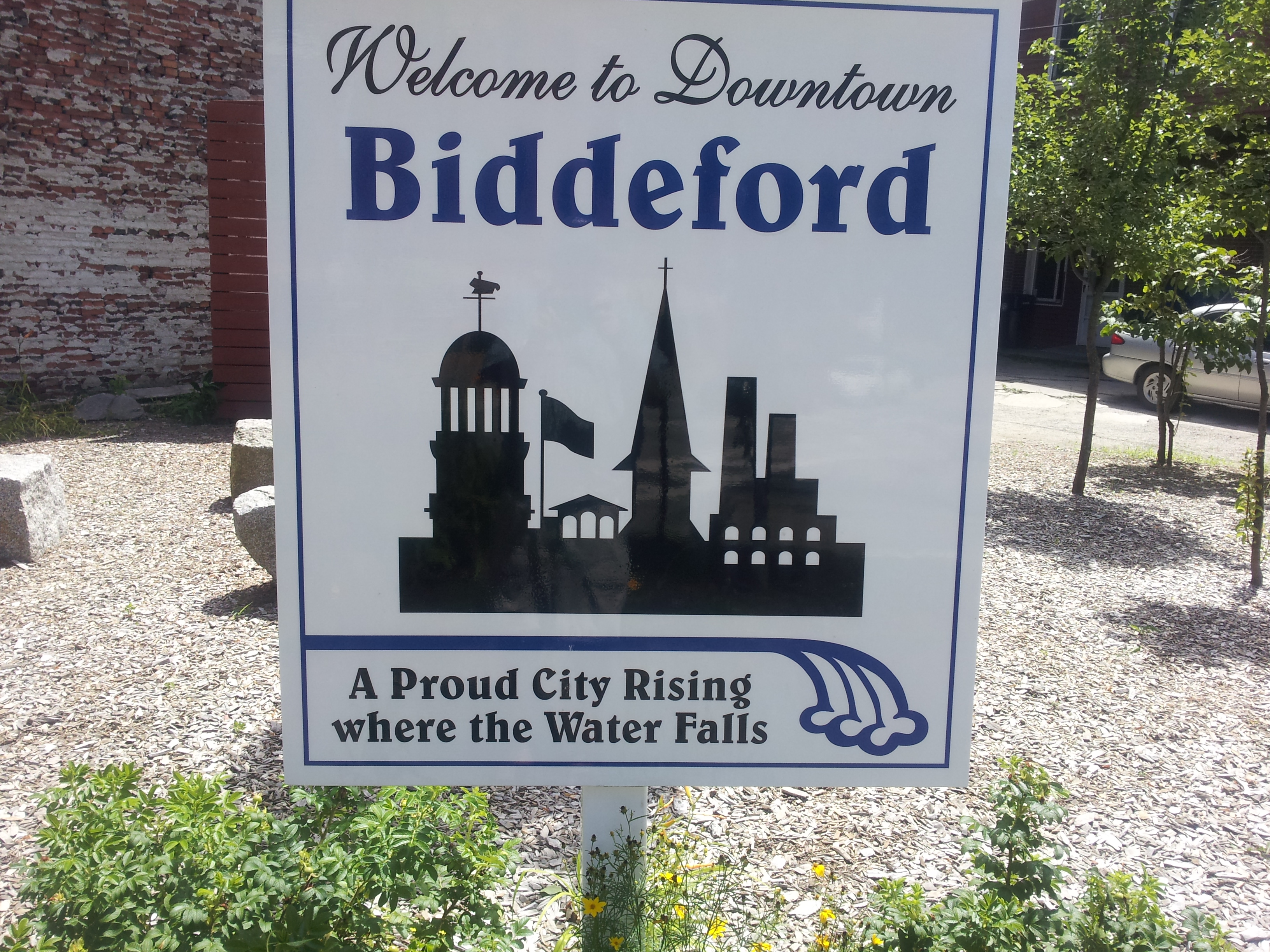
But in communities like Biddeford we wear our pride on our sleeves. A proud city rising where the water falls is our motto. Tiger Pride.
Maybe, just maybe, we’re not quite so proud. Maybe, just maybe, there is still a dynamic of self loathing going on here.
Maybe, just maybe, we are much more consumed with envy than pride.
It ain’t me; I ain’t no senator’s son
Ackerman says that issues such as elitism, the creative economy and quality of place are inherently subjective.
“Quality of life is important,” she said. “Ask one person to describe quality of life and you get one answer. Ask someone else and you get another answer. Ask 10 people, and you get 10 different answers.”
She also says she is perplexed how anyone could define her as an elitist, but she concedes that the term can have both negative and positive connotations, such as the pride associated among an elite group, i.e. the Navy Seals. But she also remains stuck on the apparent misnomer of elitism when it is attached to her efforts to promote a creative economy in Biddeford.
“I’m not a fancy person, so I guess I don’t get the ‘style police’ commentary,” she said. “If style police means I care about how our downtown looks, then maybe I am the style police, but I’m not sure why anyone would be opposed to our downtown looking as good as possible.”
Ackerman spoke at length about her experiences in Biddeford, her struggles and her vision. I plan to write a more detailed piece about that in an upcoming post, but we kept jostling with the tricky concepts of elitism and diversity.
Whether talking about Fatboys Saloon or the pushback to ideas about transforming downtown Biddeford, Ackerman repeatedly pointed to a Downtown Master Plan that was coordinated by the Heart of Biddeford two years ago.
The downtown master plan was a very open and inclusive process that sought input and guidance from any stakeholder who was willing to participate. An over-arching theme of that process resonated clearly: Almost universally, people in Biddeford wanted the downtown to be a ‘family friendly’ destination.
According to Ackerman, taking a position in Biddeford is a daunting proposition for many small business owners and others who worry about some sort of retribution for their viewpoints. “Who wants to go through that? It’s not fun, and it’s certainly not profitable,” she said. “A lot of people are unwilling to get involved.”
Ackerman says she wants Biddeford “to be a good place for everyone” and as inclusive as possible. She says peoples’ behavior often reflects the treatment they get. If all residential landlords took small steps to maintain their properties, it would enhance not only the appearance of the downtown, but also the attitudes of those who live there, which could lead to a greater level of respect and an enhanced sense of community ownership.
But in a follw-up e-mail she sent me, it seemed clear that Ackerman remains frustrated that I urged her and others to be just a bit more mindful of the city’s cultural history and a laundry list of perceived and some very real examples of elitism. She disagreed with my suggestion that maybe we should pause a bit to remember the past before pushing so headstrong into the future.
“I’m still not sure what “dial it back” means,” she wrote, responding to my point that some people are a bit uncomfortable about the pace of the conversation or the sudden (and admittedly positive) changes in our community. “I have the energy to help Biddeford discover what’s good about it now. I may not have this energy in a couple of years! Biddeford’s time is now. Decisions made today will impact the future just like the decision to bring MERC [the controversial, former downtown waste-to-energy incinerator] in impacted 25 or so years of Biddeford’s future.”
As clear as waves on the sea
I was honestly surprised by the reaction to last week’s post. While some people thought I hit the nail on the head, others thought I was far off base. Regardless of the opinions and their sometime surprising sources, I know one thing is beyond dispute. I had tapped something raw, something that makes people queasy.
One friend, another lifelong resident of Biddeford, told me my analysis was spot-on. There is again another battle of elitism happening in Biddeford, he said. “I don’t know how to define it, but it seems pretty obvious to anyone paying attention. It’s like heading to the beach and seeing the waves. I don’t necessarily know where they came from or exactly how they were formed, but I know that they are there.”
City Councilor Roch Angers grew up in downtown Biddeford, and says many of the dividing lines are self created, but often painfully obvious. “It’s been going on for as long as I can remember,” he said. “It’s like an embedded piece of our culture. I think it’s part of our Franco heritage. There has always been a push back against those who appear to be succesful . . . a certain sense of envy. I agree that it’s more perception than fact, but no one can deny that it is there.”
Angers agreed with the historical foundation of my argument: the way immigrants (old and new) are received by their new hometown. A lingering sense of suspicion, a healthy dose of skepticism and a maddening attempt to thwart any attempt at change.
It’s not a new phenomena. It’s been going on for quite a while: The division between the affluent coastal neighborhoods and the inner city, which included two secession movements in the 1990s (Ultimately, the Maine Legislature refused to allow Biddeford Pool to become part of Kennebunkport)
The push to keep the city’s coastal beaches open to public access, championed by Mayor Gilbert Boucher in the early 1970s; the town/gown divide fostered by both sides as it relates to the University of New England’s campus, students and administrators.
The way that it’s still okay and politically correct to make jokes about Francos or a city that comedian Bob Marley describes as “Lewiston by the Sea.”
“I think people like Tammy [Ackerman] and Doug Sanford add a ton of positive energy to this community,” Angers said. “I also think they sometimes seem to be in too much of a rush to do the things we can probably all agree should have been done a long time ago. I think we are on the right track, and we just need to remember some balance.”
But Joanne Fisk, a 1976 graduate of Biddeford High School and another lifelong resident, adamantly disagrees that those historical divides or perceptions still exist.
“That all may have been true 30 years ago or so, but not today,” Fisk says. “I’m not sure what you’re trying to accomplish other than opening a can of worms that we have moved well beyond.”
Fisk also says that Biddeford is not an anomaly, nor are any issues of elitism more pronounced here than in any other community.
“I guess it’s easier to talk about the things that divide us, but I also think we would all be a lot better off if we spent more energy talking about our common ground.”
On the other side of the coin, Mark Robinson, a Fortunes Rocks resident, says he knows what it’s like to be called an elitist, and how the label often doesn’t fit.
A lifelong resident, Robinson said his best teachers were those at Biddeford High School, despite his Dartmouth College degree. He says he learned some of his most important life lessons as a teenager working in a mobile dining cart that catered to late-night downtown mill workers.
“I think the new energy in town is fantastic, and all the new players have my support one hundred percent. I know almost all of them personally, and they’re great,” Robinson said. “That said, I do think once in a while it’s possible to get a little too exuberant about the way things should be.”
In an e-mail, Robinson wrote that he was also troubled earlier this year by the tensions created by the announcement of Fatboys Saloon pending arrival to the downtown business mix.
“I was out of state at the time, but I remember being very upset reading about the brouhaha over what was described as a biker bar,” Robinson responded via e-mail. “I thought that was way over the line. Don’t like a TV show? Hey man, don’t watch it. Don’t like a biker bar? Don’t go there. Hell, it’s even OK to hope the place fails miserably and goes out of business. I don’t have a problem with that at all. But he should have the right to sink or swim on his merits, and he was getting crucified before he even got the place off the ground. Not at all fair, in my book,”
Born to be wild
Delilah Poupore, executive director of the Heart of Biddeford, said she was “taken aback” by my earlier commentary.
“I think that having community conversations about these topics can be very constructive and helpful,” she said. “But when you isolate particular individuals as part of the conversation, you are doing little more than creating more tension and controversy.”
I pushed back. At the same time that Heart of Biddeford took its first ever public policy position about a specific business (Fatboys Saloon), public policy makers in Augusta were weighing public comments related to the closure of the controversial MERC waste-to-energy incinerator that was located in the heart of the city’s downtown.
Delilah and just about everyone else at the Heart of Biddeford agreed that MERC’s presence was a major challenge to the downtown’s ongoing revitalization efforts. In my professional capacity, I represented MERC’s parent company and knew that the Heart of Biddeford and other downtown stakeholders were crucial to our efforts to build public support for the plant’s sale and eventual demolition.
I arranged meetings with both the Heart of Biddeford and the Downtown Development Commission. Both groups allowed me to make brief presentations to their respective members. DDC members were somewhat less supportive, concerned about the significant losses of both property taxes and downtown jobs if MERC closed. Conversely, the Heart of Biddeford crowd warmly embraced my message about how the closure would dramatically improve downtown Biddeford.
But when it came time to make public comments, the Heart of Biddeford declined to make any formal statement. “It’s not our place to make public comments about a specific business,” they explained.
Then, BOOM! Only a few weeks later, the Heart of Biddeford offered public testimony, raising questions about the impact of a “biker bar” into the downtown business-residential mix. I guess they changed their policy. This one time.
And that, I think, is why some people had such a strong reaction. Apparently, a biker bar would be a much bigger problem than burning garbage on an industrial scale in downtown Biddeford.
Something didn’t seem right.
Poupore maintains that her organization’s concerns were meant only to help the city council consider the liquor license application from a “planning/zoning” perspective. But the organization had never before raised any public concerns about any of the other several bars in downtown Biddeford or their annual liquor license applications.
Tammy Ackerman, a former city council candidate and a Heart of Biddeford board member, voluntarily waded into The Fatboys controversy. That spark reignited a lingering flame of resentment among some self-identified stakeholders, who admittedly spend far more time complaining than participating.
Once again, accusations of elitism and class warfare emerged upon Biddeford’s public stage.
Next week: Part III (THUNDERDOME: Residents offer differing perspectives about elitism and cultural diversity in Biddeford).
It’s even easier to label others, take sides and compartmentalize ourselves within groups that match our own ideals, values or culture.
This trend happens frequently in my hometown of Biddeford, one of Maine’s most frequently maligned communities.
In this town, there is a lot of talk about so-called “elitists” and immigrants, and although those conversations generally remain just below the surface, the tension sometimes escapes into the realm of public policy.
Even talking publicly about any aspect of our community can be a tricky process. It’s sort of like why Chris Rock is allowed to use the “N-word,” but Jimmy Fallon is not.
If you are from Biddeford — and by that I mean your grandparents received their First Communion at St. Andre’s — it’s perfectly okay to disparage the city or make snide remarks about its residents, its challenges or its culture.
But you people from away better watch your step. We carry a mighty big chip on our shoulder, and we’ve been known to swing hard.
Because of its history and immigrant population, some people describe Biddeford as a “diverse community.”
To those of you who blather on about “diversity,” please do me a favor and shut up already.
Most of you only like diversity when it matches your pre-conceived ideas about a utopian state of diversity. True diversity would give equal weight, consideration and respect to differing political philosophies, intellectual and economic capacity and so many other factors.
If you really, truly favor diversity, you acknowledge that Barack Obama and Sarah Palin both have something valuable to offer; that the KKK should be allowed to march down Main Street; that pedophiles simply have a different sexual preference.
In essence, the word diversity is horribly abused and its concept rings like hollow bullshit when used by those who think they will sleep better at night by embracing it.
The way we were
By the mid 1800s, nearly 50 percent of Biddeford’s residents were foreign-born immigrants, according to the Maine Memory Project website.
Although most of these immigrants were Catholics from Canada and Ireland, they seemed to have little in common and enjoyed fighting amongst themselves. In 1855, there was only one Catholic Church in Biddeford: Church of the Immaculate Conception (later Church of the Assumption, then St. Mary’s)
But animosity between the French and Irish Catholics led to the establishment of a separate church, St. Joseph’s, established in 1870. Only 30 years later, St. Andre’s was established by a separate faction of French-Canadians.
I generally describe it like this: The Irish went to St. Mary’s and the French went to St. Joseph’s, but the really French went to St. Andres.
I briefly dated an Irish girl from Biddeford in the late ’90s. She told me (without any hesitation) that “the goddamned Frenchmen intentionally built the steeple on St. Joseph’s so that St. Mary’s would remain forever in the shadow of the larger church.”
Today, only St. Joseph’s remains open. So much for diversity.
The immigrants of yesteryear (Canadians, Irish, Greeks and Albanians) were drawn to Biddeford to work in the bustling textile mills, According to historical accounts, many of those immigrants became entrepreneurs in their own right and opened small businesses up and down Main Street. Their businesses included restaurants, groceries, and clothing, paper, and fancy goods shops.
Sound familiar?
Let’s name names
A couple of years ago, I wrote a post on this blog about the people I considered to be the 25 most influential political players in the Biddeford-Saco region. The Top 25
In that post, I mentioned some folks who are part of a new crop of Biddeford immigrants; people like Tammy Ackerman and Doug Sanford.
I described Doug Sanford (No. 18) as perhaps the best thing to happen to downtown Biddeford since the discovery of the Saco River.
In less than 12 years, Sanford, a boot-strap real-estate developer, has become one of the city’s largest commercial property owners and today owns a number of mill buildings in the downtown area. He is succesful, and thus…is often the target of derisive commentary and accusations of “elitism” and “political favoritism.”
I described Tammy Ackerman (No. 17) in the following way: “Once you get past the fact that she didn’t go to Biddeford High School or sing in the Thornton Academy chorus, it’s hard not to recognize that this “person from away” is here to stay…and make it a bit more, shall we say…aesthetic?
Tammy is the heartbeat of downtown revitalization efforts, and she’s not afraid to put her money where her mouth is.
Only a few months ago, Ackerman was publicly labeled as an elitist by my arch-nemesis, former Biddeford Mayor Joanne Twomey. (More about that in just a bit)
Although I stand by my previous comments about Ackerman and Sanford, I think that they (and some of the city’s other newer immigrants) sometimes miss the point about living and working in Biddeford.
Maybe, just maybe, Joanne Twomey was just a little bit right when she called Ackerman an elitist, And maybe, Sanford has gotten so caught up in moving forward that he could benefit from a reflective pause.
Like their predecessors from Canada, Ireland and Greece, folks like Ackerman and Sanford were attracted to the city of Biddeford by its potential and opportunity.
And just like the immigrants who came before, the city of Biddeford is a better place as the result of these new immigrants, their different ideas, their hard work and their investments in our culture and community.
But remember, diversity is, at best, a tricky needle to thread and best served in small, incremental doses.
We’re out of room, but stay tuned for Part II of this segment: Fat Boys, Elements and a Tale of Two Cities.
Note: Please leave comments on this post so that we can archive a larger community conversation that can be limited by commenting on social media links. I look forward to your feedback and input.
Much has been said about Maine’s quality of place, a subject that hit me like a brick this weekend as I once again travel the roads of rural Maine.
But what is the value of a quality place without a quality life?
GrowSmart Maine describes quality of place as:
“. . . our majestic mountains, unbroken forests, open fields, wild rivers, pristine lakes, widely-celebrated coast, picturesque downtowns, lively arts and culture, authentic historic buildings, and exceptional recreational opportunities. It is our principal advantage in today’s global economic competition. Quality of place will help us keep and attract skilled workers and entrepreneurs to fill Maine’s declining workforce population.”
Sounds good, right?
Sure, right up until you drive along Rte. 4 past Livermore Falls and into the town of Jay on your way to someplace pretty.
The policy wonks, pundits and environmental do-gooders slap themselves on the back with self-congratulation over drinks at the Senator Inn in Augusta after passing some piece of legislation designed to protect Maine’s “quality of place,” but I wonder if they have ever strolled along Water Street, less than a mile away or driven past the dilapidated tenement triple-deckers that line Rte. 8 on the way toward the Civic Center.
Try telling someone in that neighborhood about quality of place.
Better yet, visit the Wal-Mart in Calais, Skowhegan, Newport or Sanford. Tell the single-mom buying generic-labeled cereal about “quality of place.”
Drive past the gutted factories and the ghost towns that were once homes to thriving industries like shoe shops, paper mills and textile manufacturing. Pull over and tell the people who are barely living there about quality of place.
Drive north, east or west from Portland. Get off the main roads and count the number of blue tarps that serve as substitute roofs on ramshackle homes. Pause and tell those people about “quality of place.”
There are no easy answers, but I never see the pundits or the lobbyists shopping for pre-paid cell phones, making an installment payment at Rent-A-Center or drying their clothes at the Laund-O-Matic on a sweltering July afternoon.
These people —the not-so-pretty and the not-so-fortunate ones —- are largely forgotten, discounted and mostly ignored. They routinely buy lottery tickets. Many of them smoke, and they keep their heads above the surface like prison inmates. One fucking day at a time.
It’s easy to judge them. To think we know better about how they should live or how Maine should be managed, but few of us know — really know— that if this is quality of place . . . That if this is as good as it gets…..
What is the value of having an abundance of natural resources if you cannot feed your children? What is the value of open space if you don’t have a car to get there?
How do we achieve the balance between protecting the things we cherish in our backyard without forgetting or discounting the people who live there?
Although it’s been nearly eight years since I left my Biddeford newspaper gig, there is hardly a week that goes by when someone doesn’t stop me on the street, call me or otherwise seek some inside information or the latest scoop about my hometown’s political structure.
In all fairness, it’s somewhat understandable why so many people, including journalists, local business owners, statewide policy leaders, city staffers, neighbors and even members of the City Council, come to me for the latest scoop or rumor concerning Biddeford’s politics.
For more than 15 years, I have been closely observing and writing about Biddeford’s political antics.
I was the editor of the Biddeford-Saco-OOB Courier, I also provided consulting services for Friends of the Biddeford Airport. In 2006, I was appointed to Charter Commission by Mayor Wallace Nutting and I was the campaign manager for current Mayor Alan Casavant. Some folks may even remember the political talk show I hosted on Biddeford’s public access channel.
In 2007, my wife, Laura, received more votes than any other candidate on the ballot for her first of two terms on the Biddeford School Committee. Laura received 3,080 votes, nearly twice the amount of votes received by that year’s winning mayoral candidate, Joanne Twomey who garnered 1,742 votes in a three-way race. After stepping down from the school committee, Laura was appointed last year to the city council’s Policy Committee. I make it my business to know when an elected official farts in this city, and what they had for breakfast before the offense.
So now, with that background information out of the way, here is my big, earth-shattering announcement.
Many of the same people who ask me for political advice or the latest City Hall news have encouraged me to run for office in Biddeford. I am always flattered by these suggestions, and I appreciate the confidence and trust of so many people in my hometown.
Thus, taking a page from Eliot Cutler’s brilliant campaign strategy, I am announcing today that I will formally announce sometime after Labor Day that I will not be running for political office. There are three primary factors that have shaped this painful, gut-wrenching decision.
1.) According to members of my imaginary exploratory committee, there is a better than a decent shot of me winning an election in Biddeford. The idea that I would be elected and then expected to serve as an elected official should scare the bejesus out of anyone with an IQ that ranges above room temperature;
2.) I have neither the temperament, the time or the patience to endure the weight of public service;
3.) And finally, perhaps most importantly, my health precludes me from taking on any additional responsibilities. Considering the random and fluctuating significance of my mental health, it is nothing short of a miracle that I am able to string together a sentence, never mind my ability to consistently deliver results for my professional clients, maintain my responsibilities as a husband and father and co-manage a household.
In all seriousness, locally elected officials receive little to nothing in terms of financial compensation, benefits or even a moment of public gratitude. Like you and me, they also have conflicting responsibilities and obligations. It becomes far too easy for the rest of us to sit back and bitch about their performance without ever acknowledging the very real sacrifices they make in order to serve us.
Finally, if you are one of those people who is considering a run for public office this year, ask yourself this one question: Are you running to be someone, or are you running to do something? Take some time with your answer because the rest of us will know it as soon as you announce that you will be making a formal announcement.
Mike Michaud. Eliot Cutler. Larry Gilbert. Joanne Twomey.
Whaaattt?
Every year it seems as if the NHL playoffs stretch closer to summer, as if football starts sooner — and like everything else, those who love politics and speculating about those playoff games, the political season no longer seems to have a beginning or an end.
We used to be a bit more dignified and wait until after Labor Day to begin political campaigns in earnest, but now it seems that social media fuels an insatiable thirst for political bloodletting.
As evidence, just look at the past two weeks.
While legislative Democrats continue a contentious, budget showdown with Gov. Paul Lepage, we’ve had two major candidates announce they are seeking the Blaine House in 2014, and former mayors from two of Maine’s larger cities announced that they are hoping to regain their respective seats.
Eliot “I’m really not a wealthy, elitist, Democrat from Cape Elizabeth” Cutler announced last week that he will formally announce sometime later that he will announce another run for governor as an Independent candidate. Press packets are likely prepared for each of these crucial announcements.
Unless you have been in a coma for the last four years, this was not news. Cutler has been running an intensive campaign since the day he lost his last campaign, and about as subtle as an aircraft carrier steaming across Moosehead Lake with his One Maine campaign and any other opportunity to remain politically relevant — barring any trips to places like Rumford, Sanford, Lincoln, Lewiston or Biddeford.
Joanne Twomey
And then U.S. Rep. Mike Michaud today “announced” that he’s thinking about running and has authorized an exploratory committee that is charged with developing some Google maps of interesting places to explore in southern Maine.
On the more local scene, former Lewiston Mayor Larry Gilbert announced yesterday that he will once again seek his city’s top political post. That announcement came only days after former Biddeford Mayor Joanne Twomey announced that she will also run again for the mayor’s seat.
Gilbert actually invited the media to his announcement and had a small gathering of supporters standing by his side.
But Twomey’s announcement seemed more like Khan going after Captain Kirk; swearing revenge on Mayor Alan Casavant, who ousted her from office in 2011 with 62 percent of the vote.
Twomey is some pissed off that Casavant agreed to co-sponsor a bill in the Legislature that could potentially open the door for a racino in southern Maine. You see, only Joanne Twomey is allowed to change her mind about the merits of a racino.
Twomey is adept at changing her mind. She’s flip-flopped on everything from casinos to her own party affiliation. Casavant already stole her thunder in closing MERC, and now he has the temerity to consider upstaging her once again??
So, what will the next political “announcement” look like. Frankly, I have no idea, but I do have some advice for Mike Michaud:
Spend a lot of time this summer in southern Maine and pray that Joanne Twomey endorses Eliot Cutler…. ( just think of the announcement potential!)
While many of us were obsessing this week about whether Big Brother is monitoring that silly cat video we posted on Facebook or whether the IRS will now audit Tim Tebow, Maine’s newest senator quietly announced that he was consolidating two of his southern Maine field offices.
Although the news of Senator Angus King closing his Biddeford and Portland offices didn’t exactly set the world on fire, it does bear mentioning and warrants a positive shout-out for at least two reasons.
1.) Consolidating the Biddeford and Portland office at a centralized Scarborough field office is aimed at efficiency and will save taxpayer money.
2.) More importantly, this symbolic gesture recognizes the most important part of what constituent service should entail: the constituent.
Allow me to explain the more important, latter point. King wants his staff in the field; mobile, flexible and ready to meet with constituents on their terms.
Instead of being pinned down at a desk, King wants Bonnie Pothier (King’s York County rep.) and Travis Kennedy (King’s Cumberland County rep.) to spend more time moving around their respective fields, more involved in the entire area than just one particular office location.
So, while the office closing represent a slight loss for the cities of Biddeford and Portland, the bigger gains will be for people who were already somewhat geographically removed from those locations; i.e. residents or business owners who live or work in places like Standish, Kittery, Sanford and Brunswick.
Sure, this is mostly a symbolic gesture, but it is consistent with what King promised us during last year’s campaign: to find ways to better connect Maine people with Washington D.C., such as his weekly Capitol Coffee sessions, held each Wednesday morning in his D.C. Senate office. If you happen to be in DC, you can swing by and have a blueberry muffin with your senator.
Symbolic, Folksy, Quirky? Check to all three, but it does again reinforce the idea that your senator is available and wants to hear from you.
And today, King begins his Your Government, Your Neighborhood roadshow, in which his staff will fan out across the state to hold listening tours with any interested constituents. Although this method of constituent outreach is almost as old as the US Senate; King is leveraging his social media assets to amp up constituent participation.
And finally, King, the governor who launched Maine’s seventh-grade laptop program, is using technology to hopefully connect with every classroom in Maine by using Skype, as detailed in this story from the Bangor Daily News.
As Americans continue expressing a lack of confidence in the federal government, it’s real easy for most of us to remain stuck in a cynical posture about those loathsome folks bickering in Washington. But at least King is pushing for a greater connection with his constituents, and saving us a few bucks in the process.
I have never been an Angus King cheerleader, and I think it’s far too early in his senate career to determine whether he can actually pull off some of the lofty ideas he talked about during the campaign, but so far…. I like what I see….
The idea of free coffee on Wednesday mornings? Well, let me know when we can start sampling Maine micro-brews in the Dirksen Senate building on Thursday nights, and I’ll be the first in line every week.








 Brace yourselves. I have an announcement to make.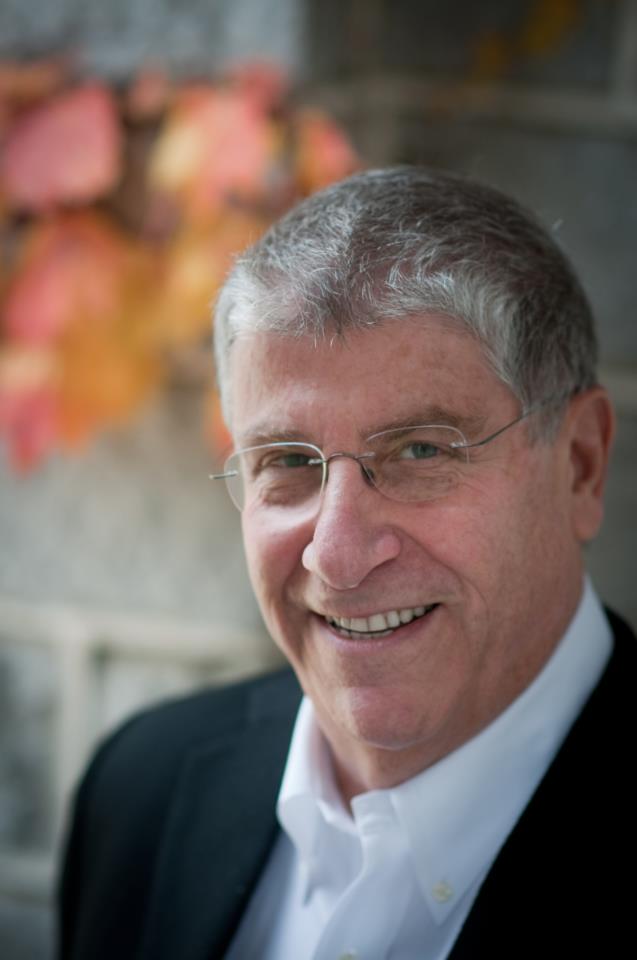


 LESSONS IN MEDIOCRITY | OUTLAW JOURNALIST