Not too long ago, a very well-known and respected Boston Globe columnist opined that there are some good reasons why a growing number of Americans no longer “trust the media.”
In his Nov. 29, 2022 opinion column, Jeff Jacoby pointed to a recent Gallup report, which revealed that just one out of three Americans claimed to have a “great deal” or a “fair amount” of confidence in the media.
“It has been a long time since most Americans trusted the press to tell them the truth,” Jacoby wrote, adding that “in 1972, when Gallup first began assessing the public’s opinion of the news industry, 68 percent of adults voiced a high degree of confidence in the media’s credibility. In 1976, the year Robert Redford, Dustin Hoffman, and Jason Robards starred in All the President’s Men, public faith in the media’s integrity set a record: 72 percent.”
“Over the last three decades, that faith [in the media] has largely crumbled,” Jacoby wrote, saying “journalists and news organizations have increasingly abandoned the old ideal of unbiased news coverage, as media outlets have come to care more about getting the narrative right than getting the facts right.”
To support his opinion, Jacoby points to some recent news stories and how those stories have been covered by large and well-known media outlets.
I tend to believe that Jacoby is right, at least on a macro level.
(Photo: IMDb)
What is journalism?
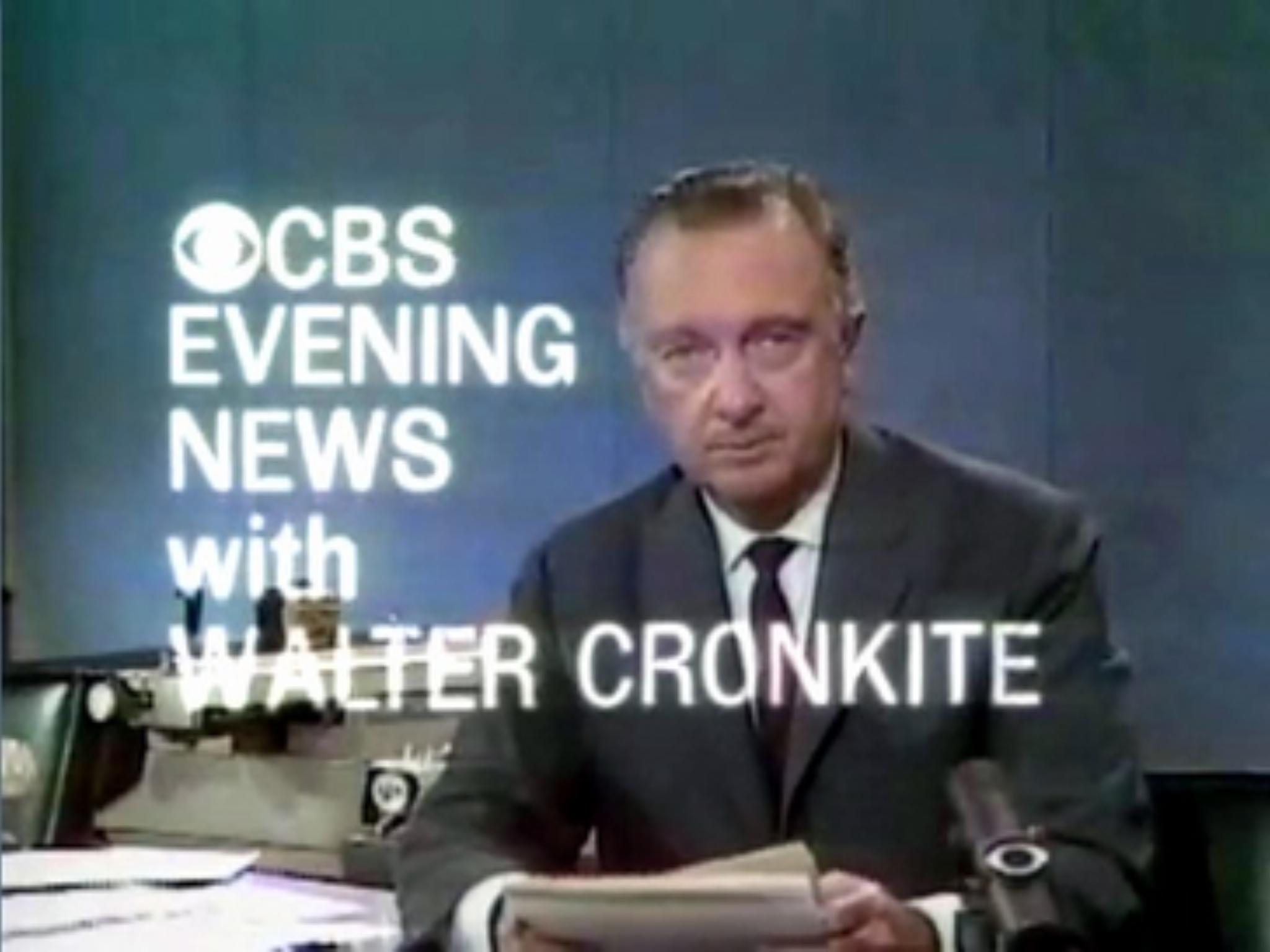
The field of journalism has undergone a seismic shift over the last four decades. It’s not uncommon today to hear an older person say something like “I miss Walter Cronkite. He didn’t have an agenda.”
In all fairness, Cronkite was roundly criticized by many voices for being a bit less than completely objective.
I think our expectations of the media have also changed dramatically over the last four decades. For better or worse, evolving technology – along with a relatively new emphasis on the importance of ratings – has produced a profound impact upon the media landscape.
But what is “the media,” and how do we define the practice of journalism? I think those are some loaded questions, and the answers are both complex and widely varying.
Today, thanks to technology and some societal changes, just about anyone can be a “journalist” or a media outlet. There is no requirement for any kind of training or experience. All you need is a notebook, a camera and an internet connection and presto – – you are a journalist, or as we say these days, a “social influencer.”
Don’t get me wrong. There are many positive aspects of grass-roots journalism, but it’s also becoming increasingly difficult for news consumers to separate the wheat from the chaff when trying to discern what exactly is legitimate news coverage.
Another problem is that more and more consumers are trying to custom-tailor their news feed, aligning themselves with their own politically-flavored news perspective. If a news outlet produces a story that somehow disrupts the reader’s individual world view then it is automatically dismissed as “fake news” and further proof of media bias.
Almost three years ago, I wrote a similar blog post and interviewed two veteran Maine journalists from both sides of the political spectrum, asking them if the media is biased.
Dennis Bailey spent several years as a reporter working for the Maine Times and Portland Press Herald. He readily acknowledges that his personal politics are more in line with Democrats.
“I’ve never been a believer in objective journalism,” Bailey told me. “A good story is a good story, but it does come with some bias.”
Bailey pointed to certain realities about how a news story is produced. “A reporter often decides what story to follow,” he said. “From there, an editor decides the placement of a story and the headline of that story. These are all subjective decisions.”
On the other side of the political aisle, John Day, who spent several decades as a reporter and then as an editor of the Bangor Daily News, agrees with Bailey about media bias.
“I’m a big fan of diversity,” Day said. “But I was always a contrarian. Fake news has always been around. If all news outlets reported every story the same way, then it would be nothing more than a giant circle jerk.”
New media outlets seem to be popping up almost every-day. Cable-television introduced us to the 24-hour news cycle, and the creation of the internet ushered in the age of instant news coverage. The popularity of social media sites such as Twitter and Facebook only further obfuscate the definition of “the media.”
And we cannot ignore the financial pressures faced by those who produce the news that we read, watch or listen to.
Several months ago, I watched an interview with Christopher Wallace, a former anchor on Fox News Sunday and is now a CNN anchor. Wallace, who has a reputation as a hard-nosed journalist, was talking about how the media has changed over the last several years.
What struck me about that interview is that Wallace laid plenty of blame at the feet of his father, Mike Wallace, who is generally revered as some kind of demi-god by most professional journalists. During the latter part of his career, the elder Wallace was one of the lead anchors of 60 Minutes, a news magazine show that debuted on CBS.
“Before 60 Minutes, the networks generally considered news programming as some sort of public service,” the younger Wallace explained. “Then 60 Minutes happened, and suddenly the networks began to see news programming as a very valuable commodity.”
While the big media corporations continue to intensify their ratings war, many local and small media outlets are struggling to keep their heads above water as they desperately try to keep pace with the continually changing news landscape.
But how does that negatively impact you? Who really cares if another local newspaper closes shop? I’ll get to that in a moment.
The responsibility of the fourth estate
Nearly 300 years ago, Edmund Burke, a member of British Parliament, reportedly coined the term “Fourth Estate” to describe the press, its obligations as a check in government oversight and its responsibility to frame political issues as well as advocacy for the general public.
From Burke’s perspective, the news media played a very important role, at least as important as the other three estates: the clergy, the nobility and the commoners. Today, especially in the United States, the other three estates of government are considered as the executive branch, the legislative branch and the judicial branch.
That’s pretty heady stuff if you stop and think about it. A free and unencumbered press literally has the capacity to bring down even the most powerful of political leaders or organizations. We need the press to be our advocates at the table. We depend on the media to keep government in check.
It’s not just important during something like the Vietnam War (the Pentagon Papers, New York Times) or the Watergate scandal (Washington Post). It also matters in your own community and your day-to-day life.
For example, how exactly is the government spending your tax dollars? Who is paying attention to that new zoning ordinance and how it could impact your home value? What is the city planning to do to your kid’s school? Who is advocating for the less fortunate among us? Who is keeping us aware of the day-to-day threats to our peace and comfort?
Sure, I think it’s great that the city of Biddeford has its own, municipal news organization: The Biddeford Beat. But is that really a good replacement for an independent media source? I mean, really, how do we expect a government agency to provide a comprehensive critique of itself or an overview of its day-to-day activities? In fact, one has to wonder how much tax money is being used to produce local government-controlled news.
There are two main reasons why it is becoming more common to see local government create its own “news” coverage. First, the technology makes it relatively easy to do, especially if it’s just an on-line news source.
But much more troubling is the fact that many local government agencies are simply trying to fill a void left by a rapidly shrinking pool of professional reporters at the local level.
I fondly remember covering Biddeford City Council meetings more than 20 years ago. Back then, the council chambers were – politely speaking – often packed with opinions, rage and contempt. It was mostly civil, but it seemed as if there was always some sort of tension. Certain residents regularly attended every meeting, never hesitating to use their five-minute limit at the podium during the “public comment” period. It was awesome.
Back then, there were at least three reporters at every council meeting: Kelley Bouchard covered Biddeford for the Portland Press Herald. Josh Williamson represented the Journal Tribune, and I was there on behalf of the Biddeford-Saco-OOB Courier.
Each of us would have likely stabbed the others in the neck in order to get the story first. We scrapped it out on the streets, digging for the facts, looking at all the angles and always fiercely competitive. Frankly, it was humbling to work with professionals like Kelley and Josh.
According to the US Census Bureau, the city of Biddeford has a population of roughly 22,000 residents. I think a city of that size, although small, deserves and warrants a full-time reporter or two. Even more so, when considering that Biddeford is the largest city in York County and is a service center for residents from all over southern Maine.
Today, unfortunately, city council meetings in Biddeford are generally quiet, somewhat uneventful and not very well attended. There are no longer three reporters covering every meeting.
The Journal Tribune ceased operations a few years ago, and the Portland Press Herald closed its local bureau on Main Street. The Courier, a locally-owned publication, was sold to the owner of the Portland Press Herald, which basically uses the weekly newspaper to account for its coverage of the Biddeford-Saco area.
Today, Tammy Bostwick Wells, one of the finest and hardest working reporters I’ve ever met, is expected to cover not only Biddeford but also several other communities throughout York County. Tammy, who previously worked for the Journal Tribune and the St. Croix Courier, does an awesome job, but she is realistically limited in what she can cover. After all, she is only one person and there are only so many hours in a day.
That, unfortunately, is the new reality for local media across the United States. Reporters are basically forced to “attend” government meetings via streaming platforms such as Zoom because of time and staffing constraints. We’re lucky that we have people like Tammy who are willing to take on more and more work without an equal increase in monetary compensation for their efforts.
And I would be remiss if I didn’t extoll the virtues of my publisher and her commitment to the communities of Biddeford, Saco and Old Orchard Beach via the operation of Saco Bay News, an online local media source. Liz Gotthelf-Othot is another former Journal Tribune reporter who runs herself ragged every day in her efforts to provide coverage of news that may otherwise go un-noticed.
(Disclaimer: Liz pays me to cover Biddeford news for her online publication)
Yesterday, I posted something on Facebook that lacked appropriate context: “I’d take a dime-bag of outrage over a pound of apathy every day of the week and twice on Sundays.”
We need the media to provide that “outrage” in a meaningful and constructive way. If a news story pisses you off, good! Get involved and help make the change you want to see.
Yup, I do think that big media outlets are somewhat responsible for the erosion of public trust in the media, but I also think we need to challenge ourselves to view news differently than through the lens of our own opinions and our own biases.
I sleep better at night knowing that people like Tammy Bostwick Wells and Liz Gotthelf-Othot are watching my local government. And you may also want to avoid taking the media – especially the local media – for granted.
That’s enough rambling and pontificating for now. Peace.
Never miss another installment of Lessons in Mediocrity! Subscribe now for free!

 LESSONS IN MEDIOCRITY | OUTLAW JOURNALIST