‘Don’t Waste Your Time With Saco’

Biddeford City Manager vents his frustration regarding the issue of homelessness and the neighboring city of Saco

City Manager Jim Bennett did not hold back his opinions about the neighboring city of Saco during a March 7 Biddeford City Council meeting.

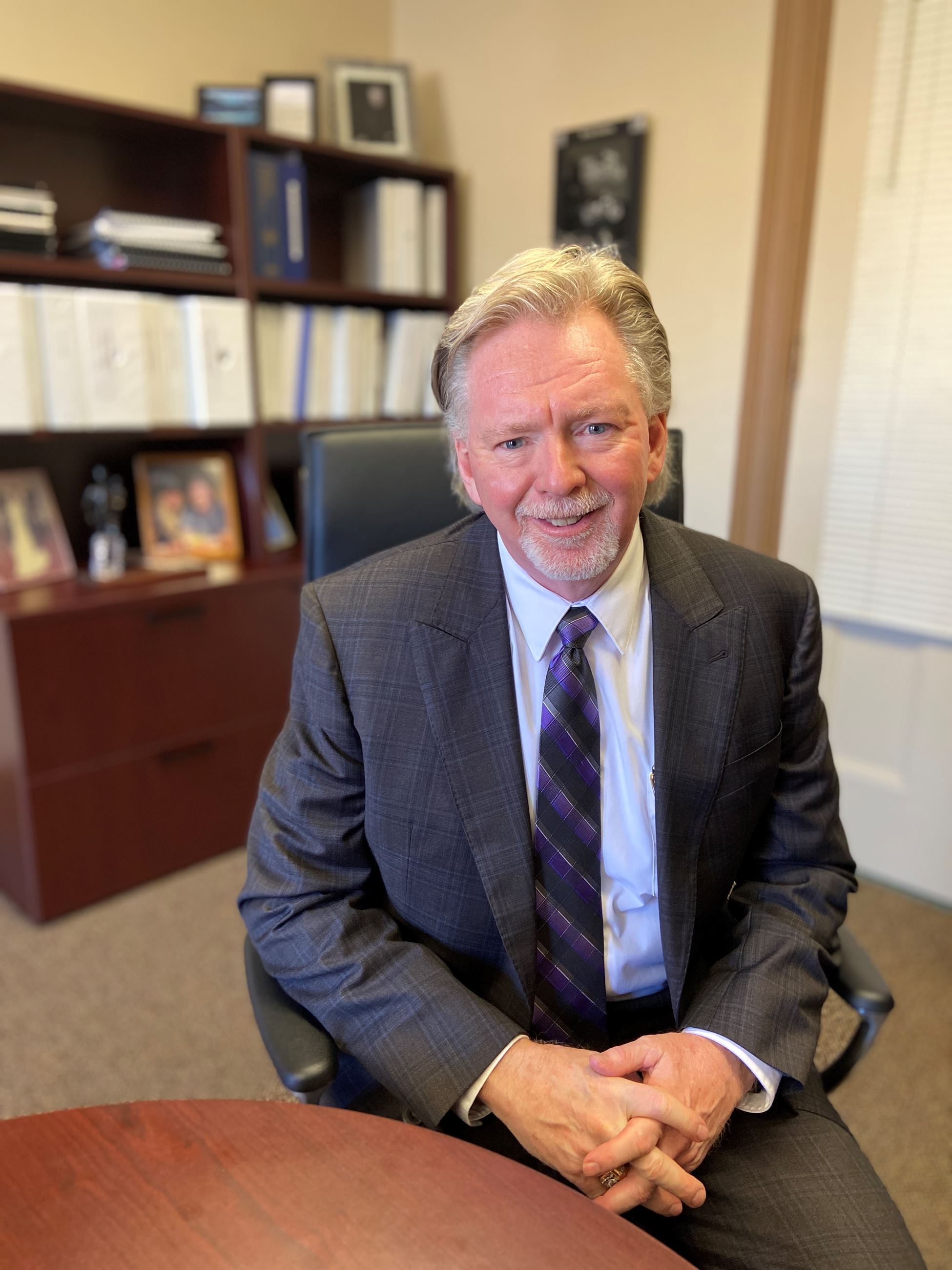
City Manager James Bennett

The Biddeford council was in the midst of debating the merits of hiring a professional consultant to help the city take direct action in addressing the issue of unhoused residents in the community.

Bennett, who seemed clearly frustrated about the issue earlier in the meeting, decided to take a swipe against Saco officials and their response to the issue of unhoused residents.

“My two cents, for what it’s worth, if you want action — don’t waste your time having a conversation with Saco as it relates to this issue,” Bennett said.

Bennett’s unsolicited remarks came immediately after both Biddeford Councilors Doris Ortiz and Liam LaFountain raised the idea of working with Saco as part of a regional approach that could possibly save money and streamline resources.

Ortiz was clearly surprised by Bennett’s comments immediately raising her hands, leaning back in her chair and expressing shock.

LaFountain said he was disappointed by Bennett’s remarks and that both cities have many opportunities to work in unison on several issues.

“Working together as neighboring communities allows us to pursue more comprehensive solutions that benefit residents in both communities,” LaFountain said.

Saco Mayor Bill Doyle said he was also “disappointed” when he heard about Bennett’s public comments.

“Really, I’m sort of taken aback and at a loss for words,” Doyle said. “We’re sister communities. There’s no need in our local communities for this type of vitriol, which we see at the national level.”

Doyle said he was feeling optimistic about relationships between the two cities, especially following a joint council meeting in February. Both cities have appointed members to serve on a committee that will explore various ways the two communities can work together.

Saco’s deputy mayor, Jodi MacPhail, said she was “saddened” by Bennett’s “divisive” comment. “Growing up here, I remember the two cities having great relations, working on MERC, as well as many other projects over the years,” she said. “I will continue to take the high road and engage with Biddeford councilors and residents who appreciate both communities open dialogue without judgment.”

During a follow-up interview, Bennett said he is indeed “somewhat frustrated” both personally and professionally about the issue, but did not back down from his statements, including comments he made earlier during the March 7 meeting.

“I think most people know that I am a very straight-forward and direct person,” Bennett said. “My comments were honest and true.”

Bennett said collaboration with other communities may sound appealing, but often adds yet another layer of bureaucracy to an issue, ultimately slowing down the process of taking action. Bennett said the issue of unhoused people is not just a Biddeford issue, but that the city does need to “quickly make a decision” about how to proceed.

Earlier in the March 7 meeting, Bennett was clearly agitated, and he castigated those who raised concerns about spending $20,000 to hire a professional consultant who would help the city move forward in tackling the issue of unhoused residents.

Departing from his usual role in providing the council information about various issues and staff resources, Bennett offered more of a personal opinion to the council, questioning councilors and others who voiced concerns about hiring a consultant.

“I’m really tired of the misclassifications and all the other issues that happen around this damn issue,” Bennett said. “Personally and professionally, I’m tired. It’s time that the community make some decisions at this table,” he added, pointing to the council dais.

“I don’t think anybody should be really nervous that we want to bring a professional person in to help the council make a decision in full lights – and full FOIA [Freedom of Information Act] and where everybody understands what’s going on,” Bennett said.

“And if that makes you nervous,” he added, shrugging his shoulders. “Then I guess you ought to be concerned about what you’re doing and what your motives are.”

Bennett described the issue of unhoused residents as “probably the most difficult issue that a local, elected body can tackle,” citing a lack in resources from both the state and federal governments.

Ultimately, the council voted 7-2, with Scott Whiting and Bobby Mills in opposition, to hire a professional consultant.

Achtung, Baby

Not too long ago, a very well-known and respected Boston Globe columnist opined that there are some good reasons why a growing number of Americans no longer “trust the media.”

In his Nov. 29, 2022 opinion column, Jeff Jacoby pointed to a recent Gallup report, which revealed that just one out of three Americans claimed to have a “great deal” or a “fair amount” of confidence in the media.

“It has been a long time since most Americans trusted the press to tell them the truth,” Jacoby wrote, adding that “in 1972, when Gallup first began assessing the public’s opinion of the news industry, 68 percent of adults voiced a high degree of confidence in the media’s credibility. In 1976, the year Robert Redford, Dustin Hoffman, and Jason Robards starred in All the President’s Men, public faith in the media’s integrity set a record: 72 percent.”

“Over the last three decades, that faith [in the media] has largely crumbled,” Jacoby wrote, saying “journalists and news organizations have increasingly abandoned the old ideal of unbiased news coverage, as media outlets have come to care more about getting the narrative right than getting the facts right.”

To support his opinion, Jacoby points to some recent news stories and how those stories have been covered by large and well-known media outlets.

I tend to believe that Jacoby is right, at least on a macro level.

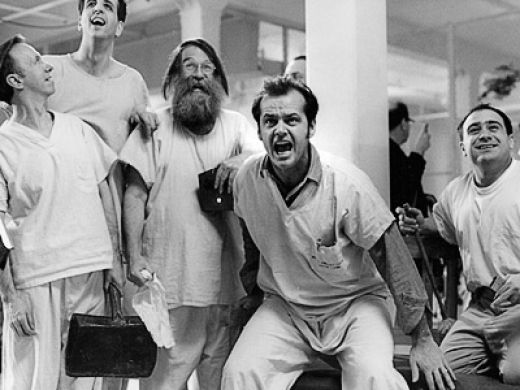
(Photo: IMDb)

What is journalism?

The field of journalism has undergone a seismic shift over the last four decades. It’s not uncommon today to hear an older person say something like “I miss Walter Cronkite. He didn’t have an agenda.”

In all fairness, Cronkite was roundly criticized by many voices for being a bit less than completely objective.

I think our expectations of the media have also changed dramatically over the last four decades.  For better or worse, evolving technology – along with a relatively new emphasis on the importance of ratings – has produced a profound impact upon the media landscape.

But what is “the media,” and how do we define the practice of journalism? I think those are some loaded questions, and the answers are both complex and widely varying.

Today, thanks to technology and some societal changes, just about anyone can be a “journalist” or a media outlet. There is no requirement for any kind of training or experience. All you need is a notebook, a camera and an internet connection and presto – –  you are a journalist, or as we say these days, a “social influencer.”

Don’t get me wrong. There are many positive aspects of grass-roots journalism, but it’s also becoming increasingly difficult for news consumers to separate the wheat from the chaff when trying to discern what exactly is legitimate news coverage.

Another problem is that more and more consumers are trying to custom-tailor their news feed, aligning themselves with their own politically-flavored news perspective. If a news outlet produces a story that somehow disrupts the reader’s individual world view then it is automatically dismissed as “fake news” and further proof of media bias.

Almost three years ago, I wrote a similar blog post and interviewed two veteran Maine journalists from both sides of the political spectrum, asking them if the media is biased.

Dennis Bailey spent several years as a reporter working for the Maine Times and Portland Press Herald. He readily acknowledges that his personal politics are more in line with Democrats.

“I’ve never been a believer in objective journalism,” Bailey told me. “A good story is a good story, but it does come with some bias.”

Bailey pointed to certain realities about how a news story is produced. “A reporter often decides what story to follow,” he said. “From there, an editor decides the placement of a story and the headline of that story. These are all subjective decisions.”

On the other side of the political aisle, John Day, who spent several decades as a reporter and then as an editor of the Bangor Daily News, agrees with Bailey about media bias.

“I’m a big fan of diversity,” Day said. “But I was always a contrarian. Fake news has always been around. If all news outlets reported every story the same way, then it would be nothing more than a giant circle jerk.”

New media outlets seem to be popping up almost every-day. Cable-television introduced us to the 24-hour news cycle, and the creation of the internet ushered in the age of instant news coverage. The popularity of social media sites such as Twitter and Facebook only further obfuscate the definition of “the media.”

And we cannot ignore the financial pressures faced by those who produce the news that we read, watch or listen to.

Several months ago, I watched an interview with Christopher Wallace, a former anchor on Fox News Sunday and is now a CNN anchor. Wallace, who has a reputation as a hard-nosed journalist, was talking about how the media has changed over the last several years.

What struck me about that interview is that Wallace laid plenty of blame at the feet of his father, Mike Wallace, who is generally revered as some kind of demi-god by most professional journalists. During the latter part of his career, the elder Wallace was one of the lead anchors of 60 Minutes, a news magazine show that debuted on CBS.

“Before 60 Minutes, the networks generally considered news programming as some sort of public service,” the younger Wallace explained. “Then 60 Minutes happened, and suddenly the networks began to see news programming as a very valuable commodity.”

While the big media corporations continue to intensify their ratings war, many local and small media outlets are struggling to keep their heads above water as they desperately try to keep pace with the continually changing news landscape.

But how does that negatively impact you? Who really cares if another local newspaper closes shop? I’ll get to that in a moment.

The responsibility of the fourth estate

Nearly 300 years ago, Edmund Burke, a member of British Parliament, reportedly coined the term “Fourth Estate” to describe the press, its obligations as a check in government oversight and its responsibility to frame political issues as well as advocacy for the general public.

From Burke’s perspective, the news media played a very important role, at least as important as the other three estates: the clergy, the nobility and the commoners. Today, especially in the United States, the other three estates of government are considered as the executive branch, the legislative branch and the judicial branch.

That’s pretty heady stuff if you stop and think about it. A free and unencumbered press literally has the capacity to bring down even the most powerful of political leaders or organizations. We need the press to be our advocates at the table. We depend on the media to keep government in check.

It’s not just important during something like the Vietnam War (the Pentagon Papers, New York Times) or the Watergate scandal (Washington Post). It also matters in your own community and your day-to-day life.

For example, how exactly is the government spending your tax dollars? Who is paying attention to that new zoning ordinance and how it could impact your home value? What is the city planning to do to your kid’s school? Who is advocating for the less fortunate among us? Who is keeping us aware of the day-to-day threats to our peace and comfort?

Sure, I think it’s great that the city of Biddeford has its own, municipal news organization: The Biddeford Beat. But is that really a good replacement for an independent media source? I mean, really, how do we expect a government agency to provide a comprehensive critique of itself or an overview of its day-to-day activities? In fact, one has to wonder how much tax money is being used to produce local government-controlled news.

There are two main reasons why it is becoming more common to see local government create its own “news” coverage. First, the technology makes it relatively easy to do, especially if it’s just an on-line news source.

But much more troubling is the fact that many local government agencies are simply trying to fill a void left by a rapidly shrinking pool of professional reporters at the local level.

I fondly remember covering Biddeford City Council meetings more than 20 years ago. Back then, the council chambers were – politely speaking – often packed with opinions, rage and contempt. It was mostly civil, but it seemed as if there was always some sort of tension. Certain residents regularly attended every meeting, never hesitating to use their five-minute limit at the podium during the “public comment” period. It was awesome.

Back then, there were at least three reporters at every council meeting: Kelley Bouchard covered Biddeford for the Portland Press Herald. Josh Williamson represented the Journal Tribune, and I was there on behalf of the Biddeford-Saco-OOB Courier.

Each of us would have likely stabbed the others in the neck in order to get the story first. We scrapped it out on the streets, digging for the facts, looking at all the angles and always fiercely competitive. Frankly, it was humbling to work with professionals like Kelley and Josh.

According to the US Census Bureau, the city of Biddeford has a population of roughly 22,000 residents. I think a city of that size, although small, deserves and warrants a full-time reporter or two. Even more so, when considering that Biddeford is the largest city in York County and is a service center for residents from all over southern Maine.

Today, unfortunately, city council meetings in Biddeford are generally quiet, somewhat uneventful and not very well attended. There are no longer three reporters covering every meeting.

The Journal Tribune ceased operations a few years ago, and the Portland Press Herald closed its local bureau on Main Street. The Courier, a locally-owned publication, was sold to the owner of the Portland Press Herald, which basically uses the weekly newspaper to account for its coverage of the Biddeford-Saco area.

Today, Tammy Bostwick Wells, one of the finest and hardest working reporters I’ve ever met, is expected to cover not only Biddeford but also several other communities throughout York County. Tammy, who previously worked for the Journal Tribune and the St. Croix Courier, does an awesome job, but she is realistically limited in what she can cover. After all, she is only one person and there are only so many hours in a day.

That, unfortunately, is the new reality for local media across the United States. Reporters are basically forced to “attend” government meetings via streaming platforms such as Zoom because of time and staffing constraints. We’re lucky that we have people like Tammy who are willing to take on more and more work without an equal increase in monetary compensation for their efforts.

And I would be remiss if I didn’t extoll the virtues of my publisher and her commitment to the communities of Biddeford, Saco and Old Orchard Beach via the operation of Saco Bay News, an online local media source. Liz Gotthelf-Othot is another former Journal Tribune reporter who runs herself ragged every day in her efforts to provide coverage of news that may otherwise go un-noticed.

(Disclaimer: Liz pays me to cover Biddeford news for her online publication)

Yesterday, I posted something on Facebook that lacked appropriate context: “I’d take a dime-bag of outrage over a pound of apathy every day of the week and twice on Sundays.”

We need the media to provide that “outrage” in a meaningful and constructive way. If a news story pisses you off, good! Get involved and help make the change you want to see.

Yup, I do think that big media outlets are somewhat responsible for the erosion of public trust in the media, but I also think we need to challenge ourselves to view news differently than through the lens of our own opinions and our own biases.

I sleep better at night knowing that people like Tammy Bostwick Wells and Liz Gotthelf-Othot are watching my local government. And you may also want to avoid taking the media – especially the local media – for granted.

That’s enough rambling and pontificating for now. Peace.

Never miss another installment of Lessons in Mediocrity! Subscribe now for free!

Ryan Fecteau: Spotlight Interview

Originally published in Saco Bay News

Although he majored in political science and eventually became the Speaker of the Maine House of Representatives, Ryan Fecteau’s political journey had a rather innocuous and humble beginning.

Fecteau, 30, said he first became interested in politics when he was appointed as a student representative to the Biddeford School Committee nearly 15 years ago. In 2020, he became the youngest person to be named as Speaker of the House since 1842. He is the first Biddeford representative to hold that post and the first openly gay person to be named Speaker.

“I think I was picked because I was sort of quiet and reserved,” Fecteau laughed, recalling his appointment by former school superintendent Sarah Jane Poli. “I think Sarah Jane thought I would not make waves; unlike [some other students.]”

Fecteau was 16, and a junior at Biddeford High School. He wasn’t even old enough to vote, but he was admittedly intrigued by the political process. Some two years later, he decided to seek a seat on the Biddeford Charter Commission.

“There were certainly a lot of skeptics who wondered about this new kid and what he was trying to prove,” Fecteau said, pointing out that the commission was chaired by one of the city’s most well-known politicians. “I was only 19, and I think some people wondered about my motivations.”

From there, even though he was still a full-time student at Catholic University of America in Washington, D.C., Fecteau decided that he wanted to run for an opening seat in the Maine House of Representatives. “To this day, I have no idea what possessed me to do it,” he said. “But in my gut, I felt a lot of passion, and I really thought that young people should have a voice at the table.”

State Rep. Paulette Beaudoin was actually Fecteau’s next-door neighbor, and she was unable to run for re-election because of term limits. She was 82 years old when Fecteau announced in the summer of 2013 that he would be seeking her seat. He was 21. “Yeah, you could say it was quite a contrast,” he laughed.

Another Democrat also wanted to take over Beaudoin’s seat. Former newspaper publisher and downtown property owner David Flood threw his hat into the ring for the nomination. Fecteau won the nomination, 493-263. He says he won his race the old-fashioned way.

“I knocked on a lot of doors and met with a lot of people,” he recalled. “Because of school, I was doing a lot of early campaigning in January. That’s a big advantage actually because it’s really cold outside and people invite you into their homes.”

We caught up with Fecteau recently to discuss his time in the Legislature and his thoughts about the future of Biddeford and the state of Maine.

If you’re knocking on doors in January, you have to be pretty motivated. Something must have been driving you.

“When I think back, I really believe my main motivation was what I saw happening among my peers. So many young people just didn’t see a future for themselves in Maine. They were basically writing off the state because they didn’t see economic opportunities for themselves here.”

You served the maximum of four consecutive two-year terms in the House. Why didn’t you go for the State Senate seat that opened up at the end of your final term?

“I decided a while back that I really enjoyed the opportunity to serve in the House, but it would also be nice to just stop there.”

What about future political ambitions?

“I really haven’t given it much thought. I don’t know. It’s definitely not on my radar screen right now. I just started a new job. We just a bought a house, so it’s not something I am contemplating. Actually, I think it’s very hard to chart your political future in a state like Maine. We only have two Congressional districts and have a pretty significant and deep bench of candidates.”

What about local politics? We’ve heard your name mentioned as a potential mayoral candidate in Biddeford.

“What? (Laughs) Oh, no, no no. Definitely not. I don’t want to be that close to the fire (Laughs). Actually, I think very highly of municipal leaders who take on the tough tasks — with little pay — to keep our communities up and running. While I don’t have plans to run for mayor or council, I admire those who find a way to serve in any capacity on behalf of the public good.”

Looking back on your time in the House, what would you say were your proudest accomplishments?

“There are so many things. During my second term, I chaired the Labor, Commerce, Research and Economics Committee, and I re-introduced a bill to expand funding for CTE (Career and Technical Education) in high schools around the state. I had sponsored a similar bill in my first term. The last infusion of funds for CTE programs was in 1998, and the costs of those programs was falling onto the shoulders of communities like Biddeford.

“We know that we have to solve challenges in the work force and train our young people to fill critical positions. The bill was defeated again, but I kept at it because I knew it was the right thing to do.  Ultimately, last year, we passed a $20 million bond for funding to 29 CTE centers across the state, including $7 million for the Biddeford Regional Center of Technology.”

Also, we were able to expand dental care coverage for more than 200,000 Maine people. We had strong bi-partisan support for that bill. When you think about it, it’s really an economic development issue.

“When you have someone sitting across from you at a job interview and the applicant has really bad teeth, it’s a stigma issue. I saw it as part of our social contract. Previously, people were using emergency rooms as a last resort to solve terrible, constant pain. Something had to be done.”

You eventually became one of the most important and influential people in Maine politics. But your tenure as Speaker was markedly different.

“It was a very humbling and rewarding experience, but it sure was unique. I was elected in December 2020, and the pandemic had been raging for a little more than six months. There was no way that it was going to be business as usual. To say that it was a significant challenge for all of us is sort of an understatement.

“Although it was a significant challenge to adapt the Legislature to mitigate against the pandemic, the work we accomplished over those two years was transformational.

“We made long overdue investments in Maine people and infrastructure. From broadband expansion to upgrading vocational schools, to fully funding the state’s share of public education to making school meals free for all students, to providing child care workers with a wage boost to investing in the construction of affordable and attainable housing, we overcame unprecedented circumstances and delivered transformational results.”

Are partisan political battles better or worse today than when you first arrived at the House?

“I actually think that it’s better today. During my eight years in Augusta, I experienced a lot of political variables. There is a stark difference in the tone from the governor’s office. My first term, we had a Republican governor and a Republican-controlled state senate.”

What are the biggest issues facing Maine today?

“Affordable housing is definitely the big issue, and that sort of goes hand-in-hand with our state’s work-force challenges. We have this perfect storm of new and younger people moving to Maine. It’s hard to know what’s driving that migration. Is it people who want to live in Vacationland? Or are they just planning to stay a little while? That’s the big question.

“Regardless, we’ve got to build more housing. It’s simple supply and demand. If we want people to fill in the gaps of our work-force shortages, we need affordable housing for them, otherwise they’re not going to stay.”

You’re beginning a new job, appointed by Gov. Janet Mills.

“I was appointed as senior advisor for Community Development and Strategic Initiatives in the Governor’s Office of Policy Innovation and the Future.”

What exactly is that?

(Laughs) “It’s a long title, but basically I will be mostly focused on housing and work-force policy initiatives. It’s sort of a hybrid position. I’ll also be working closely with certain consulates that have ongoing relationships with Maine, such as Canada, France and others to explore economic development opportunities.”

Originally published in Saco Bay News

Lie to me

Earlier this week, Chris Wallace – son of legendary journalist Mike Wallace – appeared on the Stephen Colbert Show and said, among other things, that his father and the legendary television news show 60 Minutes were partly to blame for today’s public distrust of the media.

Wallace, a former FOX Network news anchor who this week began his own show on CNN Plus, said he understands why many Americans have a dim view of the media and how it presents news.

When asked what, if anything, could be done to restore public trust in the media, Wallace told Colbert that before the advent of 60 Minutes, the major networks – CBS, NBC and ABC – considered the broadcast of news to be a “public service.”

Wallace said he believes that “[today’s] desire to chase ratings and make money is what needs to change if the news and the public’s faith in it are to be restored,” according to an MSN story about the interview.

“It used to be in the old days, and I can remember growing up with my father in the ’70s, that news didn’t make money. It was a public service, and the networks viewed it as a public service,” Wallace said. “And then 60 Minutes came along and showed you could make phenomenal amounts of money with the news business.”

60 Minutes first aired in 1968 and was originally hosted by Mike Wallace and Harry Reasoner. The show has often been praised by journalists and other media programs for its integrity and “fearless” pursuit of the news. It has enjoyed steadfast popularity in television ratings for more than five decades.

Today, however, a growing number of Americans say that the media can’t be trusted. Many people claim that today’s media is politically biased. Another often heard complaint is that today’s news is more “editorial than objective news.”

It’s easy to understand why many people feel that the news is no longer objective and fact-based. Today, more than ever before, Americans – and people all over the world – have an increasingly wide range of news options, many of which that have popped up during the past 20 to 30 years on cable television, satellite radio and, of course, the internet.

It’s hard to know who or what to trust, and it’s easier than ever before to blame the media for everything from today’s political climate to the rising cost of gasoline. Millions of people, it seems, are convinced that big media is orchestrating a vicious web of lies intended to keep “regular people in the dark.”

So how can we put the genie back in the bottle? How do we — or can we — restore the concept that news is a public service? Can we really stop the networks from “chasing ratings?”

I seriously doubt it.

If the news delivery business is to truly be a public service than we have to remove the profit factor. Please don’t blather on about NPR (National Public Radio). Even their “listener-supporter” broadcasts include corporate messaging and receive government funding.

Do we really want the government funding the news? Yeah, right. Surely, we can trust the government to fairly and accurately report news and information about the government. I don’t think so.

Getting money out of the news business is problematic on many levels. How do we pay journalists or recruit top journalistic talent? How do we pay for the delivery of the news (the producers, clerks, editors, technicians, camera operators, etc. etc.)?

So, what’s the solution? How do we keep the news business honest?

From my perspective, the more news outlets we have, the better. But more news outlets also requires more viewer/reader/listener discretion. It’s easy to gravitate toward news that aligns with our own pre-disposed political beliefs and philosophies. It’s much harder to seek out information that might make us uncomfortable.

In the end, there are no easy answers. As long as we need a scapegoat to explain things we don’t like or trust, the media will always be a convenient target.

In the words of legendary journalist Walter Cronkite: And, that’s the way it is.

Take Five

LePageMy wife, Governor Paul Lepage, Bill Nemitz, a charity auction and the in-patient psychiatric unit at Maine Medical Center.

How did these random things become connected last week, causing a bit of a stir on my Facebook page last night?

Let’s start at the top.

Last week, just days before the election, Governor Paul LePage joked that Portland Press Herald columnist Bill Nemitz should be placed on a “suicide watch,” speculating that he was going to win his re-election bid and his nemesis might jump off the Penobscot Narrows Bridge as a result.

Boom! Instant controversy. Once again, the governor found himself in familiar territory with his foot in his mouth.

The governor’s critics (Democrats) went wild, talking about how insensitive the governor is to issues regarding mental illness.

Reportedly, some people who have lost loved ones to suicide were also  angry and upset about the remarks.

Other folks (Republicans) said the governor was joking and the comment was no big deal, pointing out that many in society make lighthearted jokes on similar topics.

Stop and think if you have ever said “I’m going crazy.” “That is a crazy idea.” “That guy is a nut job.” Have you ever laughed when hearing a joke about hearing voices? Late night talk show hosts had plenty of fodder more than a decade ago when actress Margot Kidder was found partially clothed, hiding in the bushes of an LA suburb.

The subject of mental illness makes us nervous. We laugh about it as a relief valve for our own anxiety and fear. But can you take it too far?

Who’s saying what

My wife  has multiple sclerosis. It is a progressive illness with no cure. She often makes jokes about her illness, speculating about when she will need a wheelchair and telling me we will need to completely renovate our home to accommodate her decreasing mobility. She laughs about these very real topics, appearing on the surface light-hearted.

Her jokes about MS really bother me. They trigger a rush of feelings and incredible anxiety. I know that her jokes are just part of her coping methods, but still I cringe when she talks about putting “bling” on her cane.

When Laura jokes about her MS, I try to give her a pass because she has MS, not me. It is her coping strategy.

It’s sort of like the “N” word. An African-American man can use that word in public without recrimination and make jokes about its connotation and meaning.

If I did the same thing, I could possibly lose my job, certainly many friends.

Society draws a line. If you got it, you can talk about it. Otherwise, keep your trap shut.

Unless it’s Hollywood or the media , and then all bets are off, especially when it comes to mental illness.

In the days following the 2007 massacre at Virginia Tech, “Nightly newscasts reported “no known motive” and focused on the gunman’s anger, sense of isolation, and preoccupation with violent revenge. No one who read or saw the coverage would learn what a psychotic break looks like, nor that the vast majority of people with mental disorders are not violent. This kind of contextual information is conspicuously missing from major newspapers and TV,” wrote Richard Friedman in “Media and Madness,” an article published in the June 23, 2008 issue of The American Prospect.

Friedman goes on to explain that “Hollywood has benefited from a long-standing and lurid fascination with psychiatric illness,” referencing movies such as Psycho, The Silence of the Lambs, One Flew Over the Cuckoo’s Nest and Fatal Attraction.

According to Friedman, “exaggerated characters like these may help make “average” people feel safer by displacing the threat of violence to a well-defined group.”

Since the 2011 Tucson shootings, I have been an out-of-the-closet consumer of mental health services. I have testified before the legislature, published an op-ed in the Portland Press Herald, spoken at community forums.

My mission is to show, in a tangible way, that mental illness is generally not scary and more often than not impacts everyday people: your friends, your co-workers, your neighbors and even your social media contacts.

My life-long struggle with mental illness is not particularly funny, but I do make jokes about it. Have you ever tried to eat a chicken cutlet with a spork? (They don’t give you silverware on the psychiatric unit. )

Did you know that nine out of 10 psychiatric units have aquariums? Fish, apparently, relieve anxiety and stress.

I make these jokes and others when speaking publicly because humor helps break down communication barriers.

I got in trouble

p6On Friday evening, Laura and I attended the Biddeford-Saco Chamber’s annual holiday auction and dinner. By pure coincidence, my bidding paddle was labeled P-6,  the abbreviation of Maine Medical Center’s in-patient psychiatric unit (located on the sixth floor of the Pavilion wing.) I held up the photo and had Laura take a shot of me and my label.

I posted that picture on Facebook.

Some people thought it was funny. Other people did not, questioning why I could joke about mental illness but Gov. LePage could not.

The tricky thing about humor is its intent.

For the record, I chuckled when LePage said Nemitz should be placed on a suicide watch. The two men have been battling for four years, and frankly, I’m not sure who hates who more.

But either way, I think humor is okay, so long as its intent is somewhat calculated and not malicious in nature.

As someone with severe and chronic mental health issues, it’s not up to me or anyone else to tell you what you can joke about. All I ask is that you think about the consequences and lighten up just a tiny bit.

———————————

If you enjoy what you just read, please keep in mind that this is a reader-supported blog, and I want to keep ads at a minimum. If you are so inclined, please consider a small donation to help maintain this site. You can donate by clicking on this link. Thank you!

Enter your email address to subscribe to this blog and receive notifications of new posts by email.

How not to use social media in a campaign

camplogo3There is a right way to use social media in a campaign.

And there is a wrong way to use social media in a campaign.

The following could be forgiven if it came from a political novice, but not when it comes from the governor’s re-election team.

Here’s a game you can play at home. Find the three glaring strategic mistakes that Team LePage 2014 uses in their recent Facebook post.

https://www.facebook.com/#!/mainesgov/posts/10152803304354676?stream_ref=10

1.) The post urges us to “please search for the LePage 2014 website on your computer.”

Oh, I’m not supposed to search under the table or between the seat cushions?

How about this? How about posting a link to your site? You can do that on Facebook.

Instead, the governor’s social media gurus are worried about unintended “filters” that could accompany an embedded link. So, instead they strongly suggest that you use your computer, hunt down the link and then donate.

In fact, donating must be important because they ask you to donate twice in the same paragraph, which almost looks like one giant sentence, considering the absence of punctuation.

2.) The campaign’s post is horrendously long.

Facebook is not Twitter, which requires abbreviated posts. That said, you should not use Facebook to “cut and paste” an entire speech.

A better strategy would be to hook your social media audience into your website. Use social media to tease your message and direct readers back to your website.

3.) If you must go long, give your post some space.

If you insist on your using Facebook like a blog, at least be considerate and allow readers a visual experience that doesn’t look like a bucket of spilled nails.

Insert a line space between paragraphs. Remember, if you want more people reading your posts, make your posts easier to read.

So here’s a primer for Governor LePage and his re-election team:

If you want to see Governor LePage re-elected go here and donate.

See how easy that was? Social media is supposed to be easy.

I’m not sure who is handling the governor’s social media, but from the looks of things there is plenty of room for improvement.

Paper Thin

863511_f520It was one of the worst places to watch the final game of the World Series.

But it turned out that it was the best place to watch the final game of the World Series.

I would dare say that watching the World Series from the confines of an in-patient psychiatric unit is about the most bizarre experience one can imagine.

I would have preferred to watch it on my flat screen, from the comfort of my living room with my wife and sons. I would have preferred to be among the throngs of fans hovering over Kenmore Square. I would have preferred to be hanging with friends, drinking beer and wildly cheering during the top of the ninth inning.

But instead I watched it with three other men who had few choices last night about where they would watch the historic event.

No, it was nothing like the scene from One Flew Over the Cuckoo’s Nest, in which patient Randle McMurphy (Jack Nicholson) battles with Nurse Ratched (Louise Fletcher) for the “privilege” of watching the World Series, but there is an undeniable spirit to the World Series. Unlike the Super Bowl, it is a series of games that drains and demands the very best from its players.

In fact, our charge nurse made popcorn and watched the game with us. We were bonded in our situation, yet simultaneously celebrating with a much larger community.

Last night, we celebrated triumph over adversity; hope over despair; light over darkness.

No matter where we are, no matter what we are doing or experiencing, it’s always good to celebrate.

Mark Johnston: Rocket Man

Mark Johnston
Former Saco Mayor Mark Johnston/ Marlee Hayes photo

Something strange is about to happen on the other side of the Saco River. It’s as rare as a blue moon and perhaps more difficult to understand.

Mark Johnston will not be running for mayor in Saco.

Johnston, 61, says he has spent nearly 40 years in service to his community. Now, he says, it’s time to let someone else take the reins.

“I’m tired. I’m going to be 62, and now it’s time for Mark,” he said during a recent interview at his Main Street delicatessen, which is often mistaken as City Hall with an amazing selection of wines and good sandwiches.

Johnston came into the world of politics in the usual way: He was a malcontent, a young man worried about a used car lot that was planned near his home.

That was nearly 40 years ago, when he was appointed to the Saco Zoning Board of Appeals. His political career would extend over the next four decades and he served under five different mayors, including Sam Zaitlin, Paul Jansen, Haley Booth, Fred Clark and Eric Cote. He also served on the planning board and the city council.

Of course, Johnston also served as the city’s mayor for the better part of two decades, beginning in 1989 with four consecutive terms that ended in 1997. Six years later, in 2003 he was again elected as the city’s mayor and served another three terms, 2003-2007; and 2011-2013.

Every time his name was on the ballot he easily won his election . . . except the first time.

Despite the fact that he was unopposed and his name was the only one on the ballot, Johnston was forced to sue the city in order to become its mayor because he did not get enough votes to meet the criteria of a provision in the city’s charter.

A superior court judge sided with the politician over the city, but Johnston did not escape unscathed. He was mocked on national television by David Letterman and Jay Leno.

Round and round

Johnston runs Vic & Whit’s with his ex-wife, Beth. They have been divorced 25 years but seem to have a successful working relationship.

Two years ago, I named Johnston as the single-most politically influential person in the Biddeford-Saco area, describing him this way:

Mark Johnston is the consummate politician….

He’s Bugsy Seigel, Charlie Lucianno and Meyer Lansky all rolled into one affable, near-sighted man with an uncanny resemblance to Sir Elton John.

______

This is not the first time you announced that you were stepping down from politics. You always seem to come back for more?

(Laughs) “I really meant it the last time, but I had to come back to correct some very serious mistakes that were made during the Ron Michaud Administration. My intent (in 2011) was to correct those mistakes: our bond rating was lowered, the city had blown through its reserve balances. It was a lot of smoke and mirrors because no one had the courage to raise taxes slightly in order to keep up with very basic infrastructure.”

Are you leaving now because people are angry about significant tax hikes?

“No. I think most people understand the position we were facing. It’s not easy to raise taxes, even a little bit. But leaders are not elected to do easy things. Leaders are elected to lead.”

What was your proudest moment as mayor?

“The train station, hands down.  We were entering a new century and thinking about new transportation. Passenger rail had long been abandoned, but having it come back has paid huge dividends for Saco. It really redefined this community. We have people who live here because of the train and such easy access to their jobs in Boston.”

You told residents it would not cost ‘one red cent’ in taxes. That didn’t quite work out, did it?

(Laughs) “People misunderstood me. I said not one red cent, it ended up being a whole lot of red cents. But seriously, this has become a huge asset for our community. We wanted to embrace it. A lot of things changed in midstream. None of us knew then that Guilford Rail was going to require us to have a $250 million liability policy. But we were able to use the Saco Island TIF and revenues from the MERC settlement and rental fees from the Chamber of Commerce.

“I am very proud of that station. It was the first green station built in the United States. It has geo-thermal heating; and the roof was made with a composite material from recyclables. It meets every standard of LEED certification. It was built by all Maine contractors, with wood beams from Maine forests.”

And the wind turbine

“I’ll take all the fault for that. It’s not the one I wanted, but I couldn’t get the council to approve the one I wanted. What we have is basically a kit that cost us $250,000. I wanted the million dollar one, which would have been much taller and as a result much more efficient.

“The council didn’t want to spend $10,000 for a wind survey study. But what we have is iconic, and it sends a message about our community: we are embracing the future, we are recognizing that we must wean ourselves off fossil fuels.”

What was the worst moment of your time as mayor?

(Pauses) “It happened roughly three minutes after I was sworn in for my very first term, when I publicly fired the city attorney (Mary Kahl). She was a good attorney, but I thought she was interfering too much in the city’s day-to-day business. She ended up going to work for the city of South Portland. I don’t regret what I did, but I deeply regret the way I did it.

“I humiliated her in public, and that’s not leadership. That’s not how you should treat people. We were able to be civil, but the wounds never healed. Unfortunately, she passed away a while ago, and I don’t know if she ever forgave me. I was young and brash, but I learned a valuable lesson: always be willing to talk to those with whom you disagree. Never embarrass or humiliate someone in the public arena.”

Who do you think will be Saco’s next mayor?

(Smiles) “All I can say is that I will have to work with whoever becomes the next mayor.”

Ok, so who do you think will be Biddeford’s next mayor?

“Alan Casavant. He is an outstanding leader; a leader for the future. He is helping Biddeford make huge strides forward. He is also professional, calm and always a gentleman; all those tiny words that define character.”

Who was your favorite Biddeford mayor?

“Roger Normand. He was a man of integrity. He was a normal, average guy who never let the power of being mayor go to his head.”

Do you think there should be term limits for mayors and city councilors?

“Yes. Absolutely. After four terms, it’s time for a change. It’s too easy to get cocky.”

What are your thoughts about the RSU 23 issue, considering some in Saco are advocating for leaving the regional school district?

“I’m a little disappointed by the way some members of our community have acted during this debate. I think it’s a disgrace that some folks have called Old Orchard Beach residents “free-loaders.” RSU 23 has failed because of Saco’s penchant for elitism. We never talked about test scores, we never talked about how to bring teachers up through the ranks. We never talked about the important stuff. I want Thornton Academy to have the test scores that Scarborough is getting, and stop hiding behind the façade of a beautiful campus.”

Elitism in Saco?

“Yes, without a doubt. I grew up on Middle Street, a neighborhood that was known as Little Greece. Many of those people from that neighborhood became important and respected members of our community, civic leaders. It’s like we never got beyond the days of the “Battle of the Bridge.” Why do we still use that name? We never used it when Thornton played St. Louis. There has always been a false air of superiority in Saco. It’s been here a long time.”

What advice would you give to the city’s next mayor?

“Talk less and listen more.”

What will be your legacy?

“The elimination of Maine Energy. It took a long time, but I helped (and so did a lot of other people) keep the pressure on. Joanne Twomey and others never let up the pressure. I honestly never thought I would see the day. I am so proud of what Mayor Casavant and the Biddeford City Council did. That took leadership and vision, but they were not alone. A lot of people helped set the stage for finally getting MERC gone.”

So, will you be back as mayor?

“No, I really don’t think so. I have a new woman in my life, and it’s turning into something special. I was mayor when I got divorced, when I had a granddaughter, when one of my sons went to the battlefield. I’ve given a lot to this city. It’s time for me to take some time for myself and my family.”

Walking On Sunshine

Former mayor, state representative and city councilor Joanne Twomey announced Sunday that she would seek a return to the Maine House of Representatives.

At the Biddeford Democratic caucus, Twomey told a sparse group of fellow Democrats that Dist. 135 needs a “real” Democrat to stand up to Republicans in Augusta.

Twomey also said that she encouraged Rep. Paulette Beaudoin to seek the Dist. 135 seat four years ago, but decided that Beaudoin was either unwilling or unable to stand up to Republicans and should be replaced.

Joanne Twomey: A “real” Democrat?

Funny thing is: Twomey was not worried about Beaudoin’s performance until she lost her re-election bid for the mayor’s seat. Now Twomey needs a job. Now she is ready to fight Republicans and Democrats and anyone else who gets between her and her need for health insurance at taxpayer expense.

A video from the Biddeford-Saco Courier:

Joanne likes to talk about her “no-compromise/principled” position.

But does that hold water?

1,) The woman who once bemoaned the idea of a casino in Biddeford — testifying before the Biddeford City Council in 2003 by saying  — “In my Christmas village, there is no casino,” suddenly flipped when she got herself into a budget pinch, and she quickly became a cheerleader for a proposed casino. Principled? Really?

2.) The woman who built her political career on the backs of criticizing the owners of the MERC facility was giving them hugs in front of news cameras just two weeks before the 2009 mayoral election.

Just a few weeks later, after winning re-election as mayor, Twomey once again reversed her position. Principled? Really?

3.) On Sunday, during Biddeford’s Democratic caucus, Twomey said she encouraged State Rep. Paulette Beaudoin to run for the legislative seat that Twomey held until term limits forced her out in 2006. Now, Twomey says the people of District 135 need a “real” Democrat.

For such a principled person who professes to believe in the people, Twomey does not hesitate to play political hardball, but her victim routine is wearing thin.

It’s probably why Biddeford voters threw her out of office by an overwhelming margin in November. You can only fool people for so long.

But there’s also another reason Twomey lost by a 62-38 margin: She did very little campaigning.

Maybe she was overly confident. Maybe she was tired. Maybe she thought the city’s strong support for a proposed racino would ensure her easy re-election.

Twomey is a political quaqmire. On the one hand, she is a savvy politician. On the other, she is ruled by her emotions.

But this time, it looks like she is in this campaign to win. She’s accepting help from Ryan Fecteau, an eager beaver youngster with a solid grasp of 21st Century campaign techniques.

Twomey will likely do well in the Democratic primary against Beaudoin, a post-70-year-old woman who isn’t much of a campaigner and has never been challenged by her own party.

Former Biddeford City Councilor Perry Aberle, a man who describes himself as a “friend of Joanne,” is considering running as a Republican in District 135. If Twomey wins the Democratic Primary on June 12, Aberle will have his work cut out for him.

As I predicted on November 8, 2011, Joanne Twomey is far from done in Biddeford politics.

Are you experienced?

Biddeford Mayor Alan Casavant is expected March 6 to announce his nomination for the Ward Seven city council seat that was vacated last week by Councilor David Flood’s resignation.

Newly elected mayor Alan Casavant (right) celebrates with his campaign manager on Election night

Because of a serious flaw in the city’s charter, the voters do not get a say, even though Flood served fewer than 90 days of his term. That needs to be fixed.

I live in Ward Seven, and have spent the better part of the day talking with city councilors and the mayor about the candidate whom I think should replace Flood.

According to the city clerk’s office, 893 voters in Ward Seven cast ballots in the November 2011 election. Of those 893 voters, Flood received 390 votes (roughly 40 percent of the votes cast).

Bill Sexton finished second in the three-way race, earning 270 votes. Sixty six voters left their ballot blank when it came time to choose a Ward Seven councilor; there were four write-ins and Patricia Whitehurst received 160 votes.

For disclosure, I voted for Flood.

When Casavant ran for mayor, he campaigned on a promise to be “positive and professional.” He campaigned on the idea of restoring civility; of rejecting political cronyism; of engaging the entire community, not just those who agreed with him.”

Those were the reasons why I and so many others worked so hard to help get him elected.

We wanted a change.

But did we get change?

Word on the street is that Casavant is planning to nominate former city councilor Mike Ready.

I like Mike Ready. Mike served this city well, both as a city councilor and long-time member of the School Committee. Mike is principled, smart and hardworking.

In short, Mike Ready is a outsanding nominee, but he’s not the right nominee.

If Mike Ready had run for the seat last year, it’s quite possible that I would have supported him over David Flood.

But Mike did not campaign. He did not get signatures to be on the ballot. He did not knock on doors. He did not put up campaign signs or participate in debates.

Bill Sexton did. Bill Sexton wanted the job then, and he wants the job now.

Casavant, however, says he needs experience on the city council, pointing out that three of the eight remaining councilors are serving their first terms on the council.

Sexton supported a proposed racino. Casavant may also see Sexton as someone who may have supported Twomey for re-election during the mayoral campaign.

But those items never came up during a break at today’s Democratic Caucus, when Casavant told me that the council has too many inexperienced members. “We’ve got a tough budget ahead of us,” he explained. “We have a lot of complex issues facing us during the next few months. I need people who can hit the ground running, people with experience.”

That rationale may sound good on paper, but it doesn’t pass the straight-face test.

Maine Senate candidate, former city councilor and current school committee member Jim Emerson served as treasurer on Casavan’t campaign team.

Emerson launched his political career with zero experience after being nominated by Mayor Wallace Nutting to fill a vacancy created by the resignation of Phil Dumont in 2006.

Emerson served with distinction and honor. The city did not fall apart. Emerson later campaigned for and won the seat on his own merits.

Mayor Donna Dion appointed Roger Hurtubise to replace Roch Angers on the city council in 2003. Hurtubise figured things out pretty quickly.

It is clearly Casavant’s prerogative to nominate anyone he chooses. More importantly, it’s the council’s prerogative whether to accept or reject that nomination.

Casavant chose last year to run his campaign without a slate of like-minded city councilors. I respected and admired that decision, even though it seems politically naive.

But there’s no reason why Casavant should attempt to stack the council deck after the fact.

The right thing for Casavant; more importantly the right thing for the city, is to try to respect the will and intent of the voters.

By appointing Sexton, Casavant would be sending a strong signal that his campaign themes were at least a bit more than slogans.