I’ve got a Golden ticket

Once again, it would seem that many of Maine’s most ardent Democrats cannot see the forest for the trees.

And that’s saying something, especially since Maine is the most forested state in the country.

Matt Dunlap, Maine’s former secretary of state, decided to end his four-day titillating tease, ceasing the media foreplay — will he or won’t he — make a primary challenge against incumbent Rep. Jared Golden, a much more moderate Democrat?

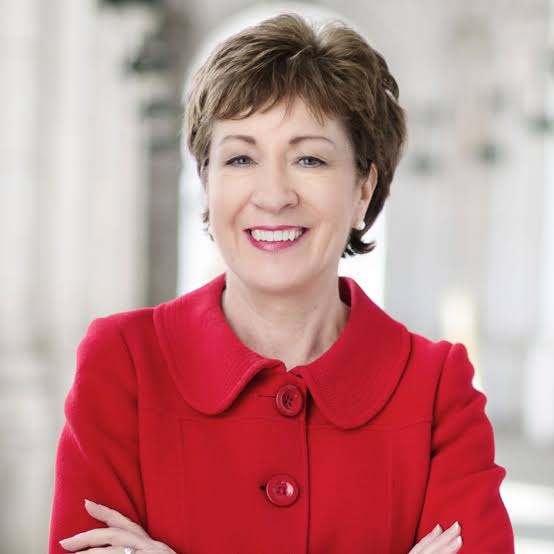
U.S. Rep. Jared Golden (photo: Wiki Commons)

Maine’s Second Congressional District offers a virtual smorgasbord of political ideologies. Despite the common misconceptions of southern Maine folks, CD2 is not just a swath of God-fearing, gun-toting and Bible-thumping rednecks, it is also home to progressive enclaves such as Belfast, Lewiston and Bar Harbor.

Over the last four years, Golden has figured out how to saddle the district that is almost evenly divided between Republicans and Democrats.

Victories for Golden have been hard fought and razor-thin, but never since winning his first election to the U.S. House in 2018 has Golden been challenged by his own party – – – until now.

Less than a year ago, Golden eked out his re-election campaign with only 50.3 percent of the vote over Republican newcomer Austin Theriault, who lost by a little more than 3,000 votes with 49.7 percent of the vote,

Folks, federal elections don’t come much closer than this.
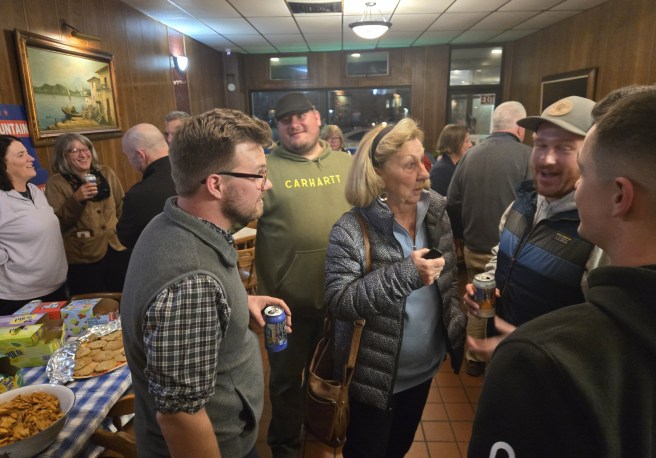
But that was 2024, when Trump supporters were campaigning with a fevered pitch. Still, Golden held strong and put on a clean flannel shirt for the cameras on Election Day.

Golden won his first term as a U.S. Representative in 2018, facing incumbent Bruce Poliquin. That race was telling. Golden won, but it was no landslide: 50.9 percent to 49.4 percent.

For a while, it seemed that Maine Democrats had learned their lesson, suffering back-to-back losses in CD2 when progressive candidate Emily Cain was propped up by her party to take down the evil Poliquin. The short, balding guy with a creepy grin beat her twice, in 2014 (45.2 percent) in a three-way contest; and again in 2016 (54.8 – 45.2 percent)

I believe it was the 2016 election when Democrats were finally willing to admit that a more moderate approach would be needed if they wanted to capture Maine’s Second Congressional District.

In fact, Golden – though acting like a political maverick right out of the gate – did not face a primary challenge in 2020, 2022 and in the 2024 race.

But many Democrats said they were simply holding their noses when casting a ballot for Golden. The balance of power in Washington was shifting. Republicans had gained a lot of ground.

For a while, it seemed that
Maine Democrats had learned
their lesson”

Every seat mattered.

According to several of my sources within the Maine Democratic Party, the Dems realized that they had to forsake the perfect to get the good.

But enough is enough, I suppose.

Enter Matt Dunlap and the Golden ticket he apparently found in a Wonka chocolate bar.

Will there be a test?

From all accounts, Dunlap is a decent guy. He is affable, a bit quirky and probably never sat at the cool kids’ table in the high school cafeteria.

Sure, he is currently Maine’s auditor and previously served as Maine’s Secretary of State (both appointed positions by the Legislature) but it seems as if there is not a lot of meat on his 61-year-old bones.

State Auditor Matthew Dunlap

Let’s face facts. Dunlap is hardly a heavy hitter. But his party has called him up from the JV team and coordinated a press conference.

Here’s a fun fact: Dunlap was elected Maine State Auditor by the Maine Legislature and took office on January 4, 2021, but had to give up the position after failing the exams needed to meet the requirements of his new position.

He did later meet the requirements and was selected for the position again on November 14, 2022.

I’m a boy, and I’m a man

Golden, it seems, has gone a bit too far in being a moderate. He consistently refuses to toe the party line all the time. He must be held accountable.

With Trump in the White House, the last thing Democrats want is a representative who is willing to reach across the aisle. You know? A consensus builder . . . a, what do you call it? . . . oh yeah, an “Independent.”

But here’s the deal. Maine is really a purple state.

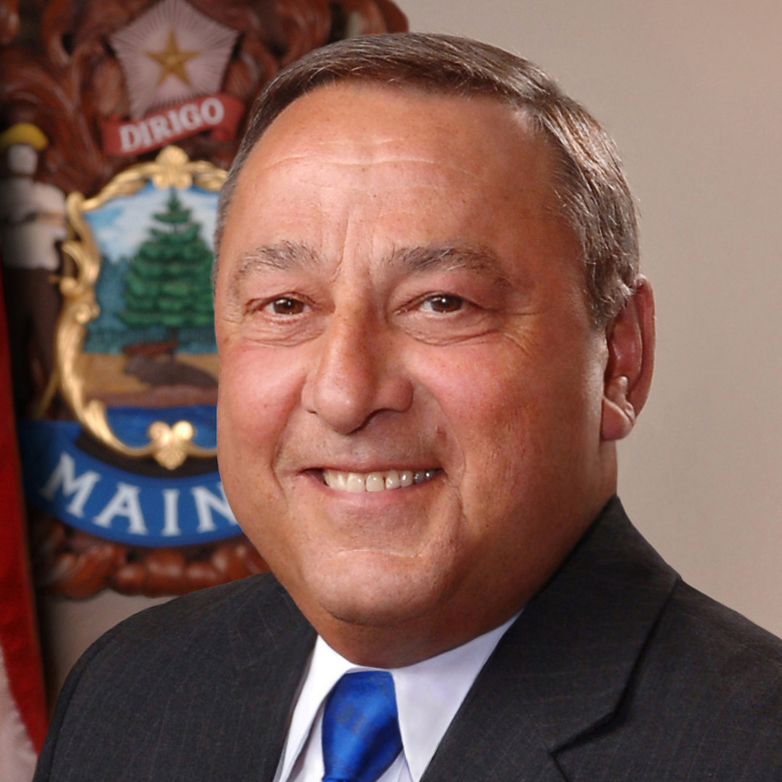
Former Maine Governor Paul LePage

Chellie (I’ll stay in D.C. until I die) Pingree is a progressive Democrat, and she’s not going anywhere, despite the incredibly stupid move by now Biddeford Mayor Marty Grohman who ran as an Independent and tried to beat her.

Yeah, that didn’t work out so well.

Susan Collins, a Republican, is chair of the Senate Appropriations Committee. She is going nowhere. Maine’s other senator won’t even call himself a Democrat even though he votes with the Democrats more than 98 percent of the time.

On the heels of Trump’s 2024 victory, Maine Republicans are betting on former Governor Paul LePage to finally knock Golden from his perch.

Trump did well in Maine’s CD2 last year. As expected, Harris won Maine’s 1st Congressional District while Trump won Maine’s 2nd Congressional district.

For Democrats, the question once again becomes are you going to sacrifice the good for the perfect?

If so, I think you’re making a big mistake. But what do I know?

_________________

Randy Seaver is the editor and founder of the Biddeford Gazette. He may be reached by email: randy@randyseaver.com

c.) 2025 All Rights Reserved

Never miss another update! Subscribe for free today!
Maine’s 2026 midterms pose a dilemma for both Republicans and Democrats

Okay, so now it’s official. Former Gov. Paul LePage (Maine’s own version of Donald Trump) has finally announced that he will seek the CD2 seat, now occupied by Democrat Jared Golden who won his last election in 2024 with a razor-thin majority.

Will Golden try to hold his seat, or maybe buy a couple new flannel shirts and spread his wings to run for governor; or maybe run against the constantly shifting Republican Susan Collins in the upcoming senate race?

Former Governor Paul LePage

Golden — sticking to his principles and ideals — has caused a lot of unease from many of his fellow Democrats because of his failure to always toe the party line.

While CD2 does lean much more right than CD1, Republicans are not guaranteed a victory in the mid-terms and Democrats cannot afford to lose a single Congressional race in their attempts to push back against Trump.

Rep Jared Golden, not afraid to stir things up

What am I saying? LePage is closely identified with Trump, a man whose current poll numbers are not even close to strong. Will this help or hurt LePage in his 2026 bid?

Next: What about current Gov. Janet Mills (D)? She is facing term limits. Does she quietly retire and take up teaching crochet lessons in Farmington or does she eye U.S. Senator Susan Collins’ seat?

Mills has been somewhat vague in saying what her next steps will be.

Speaking of Susan Collins, far right Republicans are none too pleased with the current chair of the Appropriations Committee because she has bucked Trump a few times in recent weeks. How many Democrats will hold their nose and vote for her simply because she is a bankable centrist? But is she actually a moderate Republican? She’ll have to be if she wants to win her sixth consecutive senate race.

Senator Susan Collins

Will the Republicans put up a serious primary challenge to the Queen of Caribou? Only if they are insane. Even the strongest MAGA voter knows — deep down — that Collins has consistently rolled over challengers since 1995.

Back to the governor’s race, please tell me that Democrats have higher hopes than Troy Jackson and someone older and more experienced than Shenna Bellows to run for governor. Statewide, both of them would likely be considered as “too left.”

Maine Secretary of State Shenna Bellows

And what of the Democrats bench to take on Collins? According to Newsweek, Jordan Wood and Natasha Alcala—have already announced their intention to run against Collins. Who? My dog has better name recognition, and Sasha is a good girl.

Let’s keep watching. Someone please make another batch of popcorn.

Never miss another installment of Lessons In Mediocrity! Subscribe for free today?

Tainted Love; Part Deux

It’s July, and according to the Old Farmer’s Almanac, the “Dog Days of Summer” are finally upon us. This is the time of the year when those of us in the northeast have a pretty good view of the constellation, Sirius – hence the “dog days.”

It is also the “quiet” month. The days are long and warm. It is time for frolicking at the beach, family barbecues and complaining about the tourists from Quebec and Massachusetts. Football has yet to ramp up its next season. The Celtics and Bruins are basically done for a few months; and the political season – my favorite – is just now gearing up for another relentless, knock-down, drag-out, hands-out- for-donations season on your favorite social media platform.

Here in Maine, the 2022 elections will feature what promises to be a sure-fire battle of the ages for the Blaine House as the once-every-four-years-gubernatorial election draws near.

Unlike the last three gubernatorial battles, this year’s match-up appears to be a straight-forward Democrat versus Republican race, pitting Democrat incumbent Janet Mills against Republican Paul LePage who is seeking a return to the Blaine House.

I will be watching this race closely because I am curious about how – or if – the absence of any real “independent” candidates will affect the outcome. But we still have some time before the campaigns really heat up and in only a matter of weeks, campaign signs will be littering every paved road in Maine – and on most of the dirt roads too.

Sure, staffers and volunteers from both campaigns are already working, but on the surface, I’m betting that things will remain relatively quiet until we get into the middle of August and especially in the days just after Labor Day.

Looking back

In previous gubernatorial races, Eliot Cutler, a so-called moderate who really likes children, was a spoiler in both 2014 and 2010, the races which LePage won with relatively narrow victories.

Republican candidate Paul LePage

Cutler is currently awaiting trial on child pornography charges, hence we will not be hearing much from him during this election cycle. That’s good news for Mills and bad news for LePage.

LePage won his first term as governor in 2010, capturing just 37.6 percent of the vote (218,065). Cutler, running as an independent, came in a close second with 35.9 percent (208,270) and Democrat Libby Mitchell garnered only 18.8 percent (109, 387) of the vote.

Cutler was hardly independent. Much like his role model, former governor and now Senator Angus King, Cutler is much, much more a Democrat than Republican. Maybe not a progressive Democrat like Libby Mitchell, but a Democrat for all intents and purposes.

Maine Democrats blame Cutler for handing the 2010 race to LePage. While he may have been able to peel off a few moderate Republican (is there really such a thing?) votes, Cutler was more centrist than Mitchell and thus was able to attract votes from the perennial “undeclared,” fence-straddle voters.

Four years later, LePage won a second term, this time capturing roughly 48.2 percent of the vote; Democrat Mike Michaud got 43.2 percent of the vote; and Cutler finished the three-way race, bringing up the rear with less than nine percent of the vote. The Democrats had learned their lesson, but it still wasn’t enough to beat LePage.

The 2018 gubernatorial race was pretty much a straight-forward match-up between Democrat Janet Mills, a former Attorney General for the state of Maine, and Republican Shawn Moody, a political outsider and successful businessman that founded Moody’s Collision, an-employee-owned company with several locations throughout southern Maine.

Gov. Janet Mills

Because of term limits, LePage was unable to seek a third, consecutive term.

Yes, we don’t want to overlook Terry Hayes, another so-called independent who lost her Democrat primary race to Mills in 2018, but still decided to go for the gold and wound up with a measly six percent of the vote in the November general election.

Mills won a solid victory with slightly more than 50 percent of the vote in 2018. Despite his political inexperience, Moody was still able to grab about 43 percent of the vote.

Looking forward

So here we are, facing the mid-terms and another gubernatorial election. Which candidate has the edge? Which candidate do I think will win?

Frankly, I think it’s going to be a pretty close race.

Before we go any further, let me say that this is just my opinion. I am not working or volunteering for either candidate. I don’t have any special insight or knowledge. Yes, I have a professional background in journalism and public relations, but I am really nothing more than an arm-chair pundit who loves politics.

My opinions and predictions are no more qualified than your opinions and predictions.

So, why do I think it’s going to be a tight race between LePage and Mills? Because I think a lot of issues on the federal level are going to impact the Maine gubernatorial race.

Gun violence, abortion rights and climate change could all play a hand in this year’s election. But this year – more than in any year for a long, long time – the economy is going to be a HUGE factor. As James Carville famously said roughly 30 years ago today, “It’s the economy, stupid!”

The incumbent, whether it is George H.W. Bush or Jimmy Carter, is always judged by the economy. Voters, whether it is right or wrong, primarily tend to vote with their wallets.

The last time, inflation was this bad, Ronald Reagan crushed Jimmy Carter’s re-election bid with just one sentence: “Are you better off today than you were four years ago?”

Many voters, including those in the middle, will hold Mills accountable for our current economic conditions. Just as voters are heading off to the polls, many of them will be feeling the pain of filling their home heating-oil tanks, still struggling with run-away inflation and soaring gas prices.

That said, other issues at the federal level could motivate more people, mostly Democrats and some middle-of-the-road voters, to the polls. Those upset with recent decisions by the U.S. Supreme Court and recent mass shooting incidents may want to make their opinions known at the voting booth. This could be bad news for LePage.

LePage is a strong supporter of gun-owner rights and he appeals to “pro-life” supporters. He generally holds the concept of renewable energy as a waste of both time and money. He is regarded by his base as a fiscal conservative.

From where I sit, it looks like both LePage and Mills will have to focus heavily on their ground game, especially their GOTV (Get-Out-The-Vote) efforts.

Just go back and look at the numbers.

In both of his previous bids, LePage never hit the 50 percent mark — and that was with two left-leaning candidates in each race.

Mills supporters cannot afford any missteps. Yes, she has a strong base but she will need more than that this time.

I suspect that the LePage campaign will work non-stop to hang the poor-economy label on Mills. I can almost guarantee that they will link her to President Biden’s dismal polling numbers. Meanwhile, the Mills campaign will focus on portraying LePage as Maine’s version of Donald Trump, an evil boogeyman who hates women, puppies and pine trees.

So, who do I think will win? Honestly, I don’t know.

I do know, however, that this will be one of the most brutal and intense gubernatorial campaigns that Maine voters have ever seen.

Now, let’s sit back and watch. Your predictions are welcome.

Cold as ice

ECThere are advantages to being independent, but there are also some big disadvantages.

If you don’t believe me, just ask Ted O’Meara, campaign manager for gubernatorial hopeful Eliot Cutler.

In an e-mail to Cutler’s supporters this week, O’Meara praised his team’s hard work and their ability to collect more than 5,000 signatures to ensure that Cutler will be on the November ballot.

But O’Meara also took a swipe at Maine’s political parties, pointing out that campaign rules discourage independent candidates from seeking office.

“Our work was made more challenging by the fact that Independents like Eliot have to collect 4,000 signatures, while the party candidates only have to collect 2,000,” O’Meara wrote. “It’s just the reverse when it comes to fundraising; Eliot can collect only half as much per contributor as the party candidates. 

“That’s right: twice the signatures, half the money. Guess who wrote the rules?”

O’Meara goes on to say that “self-serving election laws are the only thing the parties can agree on these days.”

It should be noted that O’Meara was more than happy to be a member of a major political party in the not-too-distant past.

In fact, O’Meara was once the chair of the Maine Republican Party and served as a staffer for both Senator William Cohen and Senator Olympia Snowe.

But his point about party control of Maine politics is valid.

In fact, members of both major parties ought to seriously ponder why an ever-increasing number of Americans are registered as unenrolled voters.

Being “independent” is gaining traction all across the nation, and that spells big problems for the big parties, especially when it comes to fundraising from a smaller pool of voters.

Although the party faithful generally point out that their candidates must endure the expense of grueling primaries, that’s just not the case this year.

Both Democrat Mike Michuad and Republican Paul LePage are unopposed for their respective party’s nomination.

Regardless of whether you support Cutler, we should level the playing field for all candidates. Let’s be independent together!


Cutler: On the defense, or on the move?

camplogo3With less than six months to go before the November election, all three of Maine’s gubernatorial candidates seem to be picking up the pace of their campaigns.

In traditional Maine politics, this sort of ramping up usually comes toward the end of summer, just ahead of a Labor Day surge that leads to an October sprint for the finish.

The early nature of this ramp up is likely tied to the results generated by two recent statewide polls, both of which show Democrat Mike Michaud and Republican Paul LePage in a statistical dead heat. Both polls also show Independent candidate Eliot Cutler in a distant third place.

The numbers from polling conducted by Rasmussen and Pan Atlantic SMS Group had to be disappointing news for Cutler and his team.

Video killed the radio star

Apparently, despite the dismal poll numbers, there is still some concern that Cutler could repeat the 2010 election results, by once again drawing from Democratic voters and giving LePage a second term with a plurality victory.

Cutler, with nothing much to lose, recently unleashed a campaign video to explain why he is NOT splitting the vote.

The video was captured during one of his campaign events in response to a question from a very young voter.

Releasing the video was a very smart move,  and it was a very dumb move.

It’s a smart move because Cutler uses video to portray confidence, leadership.

It’s a dumb move because it makes his campaign appear on the defensive some six months before the election.

https://www.youtube.com/watch?v=NFS96AJLOsw


Regardless of how you feel about Cutler, his campaign or the video, one thing is clear: video is an effective communication tool, especially when it comes to social media. Blogs are read, but videos go viral.

A study conducted in the United Kingdom last year showed what most of us know intuitively, yet what so many of us fail to recognize: A picture is worth a thousand words, but a short video is worth a thousand pictures.

The study showed that consumers are 27.4 times more likely to click-through online video ads than standard banners and almost 12 times more than rich media ads.

But here in Maine politics, the gubernatorial campaigns have yet to do very much in the way of integrating videos in their social media efforts.

As of this writing, the above video from Cutler (posted two days ago) has received 115 views. That does not sound good, right? Well, wait til you hear from the competition.

Mike Michaud’s campaign last released a video four weeks ago and it has received 63 views.

Paul LePage’s campaign released its last video roughly six months ago, but it generated 300 views.

Apparently, all three campaigns could use some work on producing pithy, yet compelling videos.

Another look at the numbers

On a final note, all three campaigns experienced a rather shallow 2 percent increase on their respective Facebook pages, but Michaud’s team scored an 11 percent increase in Twitter followers( 1,7111) during the past month, compared to 3 percent for LePage (1,754) and four percent for Cutler (1.377).

A little help from my friends

And just for the fun of it, I decided to see where my Facebook friends land when it comes to liking the campaigns.

I have 801 Facebook friends (though several do not live in Maine). Of those, 93 of my friends “like” Mike Michaud; 97 “like” Paul LePage; and 154 “like” Eliot Cutler.


How not to use social media in a campaign

camplogo3There is a right way to use social media in a campaign.

And there is a wrong way to use social media in a campaign.

The following could be forgiven if it came from a political novice, but not when it comes from the governor’s re-election team.

Here’s a game you can play at home. Find the three glaring strategic mistakes that Team LePage 2014 uses in their recent Facebook post.

https://www.facebook.com/#!/mainesgov/posts/10152803304354676?stream_ref=10

1.) The post urges us to “please search for the LePage 2014 website on your computer.”

Oh, I’m not supposed to search under the table or between the seat cushions?

How about this? How about posting a link to your site? You can do that on Facebook.

Instead, the governor’s social media gurus are worried about unintended “filters” that could accompany an embedded link. So, instead they strongly suggest that you use your computer, hunt down the link and then donate.

In fact, donating must be important because they ask you to donate twice in the same paragraph, which almost looks like one giant sentence, considering the absence of punctuation.

2.) The campaign’s post is horrendously long.

Facebook is not Twitter, which requires abbreviated posts. That said, you should not use Facebook to “cut and paste” an entire speech.

A better strategy would be to hook your social media audience into your website. Use social media to tease your message and direct readers back to your website.

3.) If you must go long, give your post some space.

If you insist on your using Facebook like a blog, at least be considerate and allow readers a visual experience that doesn’t look like a bucket of spilled nails.

Insert a line space between paragraphs. Remember, if you want more people reading your posts, make your posts easier to read.

So here’s a primer for Governor LePage and his re-election team:

If you want to see Governor LePage re-elected go here and donate.

See how easy that was? Social media is supposed to be easy.

I’m not sure who is handling the governor’s social media, but from the looks of things there is plenty of room for improvement.

Primary Colors

empty-pollsAllow me to make a bold prediction.

Voter turnout for Maine’s 2014 Primary Elections on June 10 will be absolutely dismal.

Taxpayers across Maine will spend hundreds of thousands of dollars for an absolute non-event; an utter waste of time and resources, all in the name of a Democratic process that doesn’t work without a contest.

In fact, we will be lucky to see voter participation that exceeds the June 1996 state primary, when only 12 percent of eligible voters bothered to cast a ballot.

Think of it this way, it will be like buying a ticket to watch the Boston Red Sox play the Boston Red Sox at Fenway Park.

The winners have already been determined.

Unlike the June 2010 Primary four years ago, the gubernatorial candidates for each political party have already been chosen. If only one Democrat goes to the polls somewhere in Maine, Mike Michaud will clinch his party’s nomination in a landslide.

But in 2010, voters of both parties had lots of choices. There were four candidates seeking the Democratic Party’s nomination, and no fewer than seven candidates seeking the Republican Party’s nomination.

More recently, in 2012, six Republicans and four Democrats fought in the primaries for a chance to fill the shoes of U.S. Senator Olympia Snowe.

This year, Republican Susan Collins has already won her party’s nomination and Shenna Bellows is assured of being the Democratic Party’s sacrificial cow.

But what about the Maine Legislature and the crop of fresh faces ready to head off to Augusta?

Okay, you can stop laughing now.

In fact, you may want to cry because you and all of your neighbors will be funding an entire day of using municipal clerks and voting officials to collect ballots that hardly matter.

Of Maine’s 35 state senate seats, only four will face a primary challenge (three Democratic primaries and one Republican primary)

It’s not much different for the process to fill the 151 chairs in the Maine House of Representatives, where only 19 of the 151 races will see a Primary challenge (8 Democratic primaries and 11 Republican primaries)

In 132 of 151 House Districts in Maine, it doesn’t matter a bit  if you go to the polls on June 10. The races for the Blaine House, the U.S. Senate and the Legislature have been pre-determined.

Please do not disturb the slumber of your municipal clerks or voting officials.


Social media and Maine’s gubernatorial campaign

camplogo3Despite all the hoopla about the power of social media tools in political campaigns, what metrics can we use to determine if those tools are effective?

While just about anyone can set up a Twitter account or create a Facebook page, social media tools are only as effective as those who are using them.  Although it is widely accepted that social media tools played a big part in President Obama’s 2008 campaign, that type of success is not guaranteed by simply using social media as part of a campaign strategy.

When it comes to Maine’s 2014 gubernatorial race, which of the campaigns is best using social media? More importantly, how do we set aside our individual biases and evaluate the campaigns based solely upon their social media metrics?

At the Brookings Institute’s Center for Technology Innovation, Darrell West offers a mixed review regarding social media and campaign engagement and the awkward transition to actual governance.

Social media are the ultimate in disruptive technology. They change information delivery, business organization, online content, news coverage, and the manner in which individuals process new developments. As shown during the 2008 campaign, these digital tools represented a textbook example of voter mobilization and electoral impact. They were, in the words of Engage Partner Mindy Finn, the “central nervous system” of campaign organizations.

Using social networking outreach tools such as Facebook, MySpace, YouTube, and Twitter, a number of Democratic and Republican candidates raised money, identified supporters, built electoral coalitions, and brought people in closer touch with the electoral process.

You may recall a somewhat silly and lighthearted piece about Maine’s gubernatorial campaigns that I posted a couple of months ago. Then, I jokingly said we should dispense with the standard election process and use social media metrics to determine the winner. I examined each of the campaign’s current metrics.

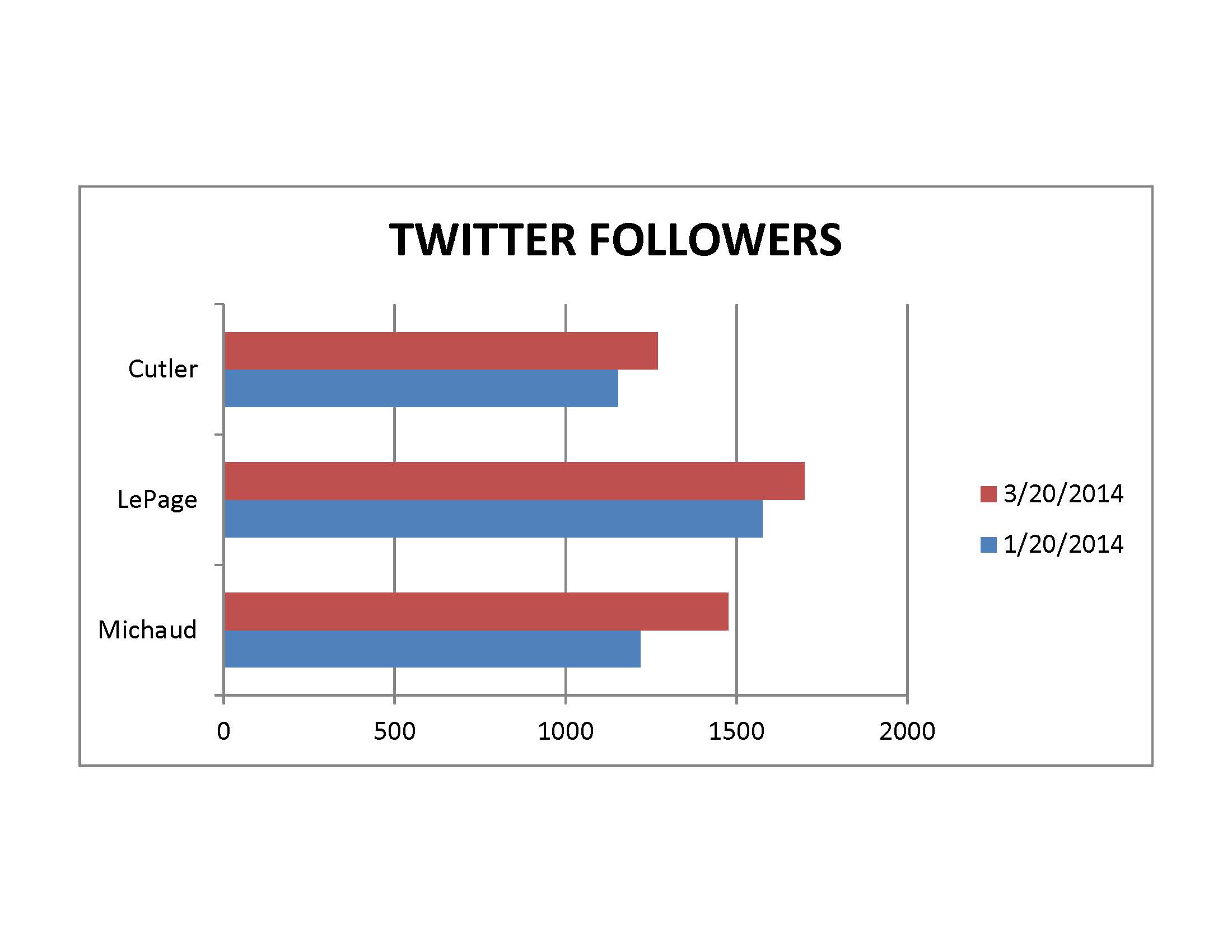
Twitter FollowersToday, I have decided to track those metrics on a regular basis and to blog frequently about those campaigns and their use of social media.

Over the last 60 days, each of the Maine gubernatorial campaigns has been active on various social media platforms. But before we begin, it’s important to note that Democrat Mike Michaud is the latest entrant to this race. Both Governor LePage and Eliot Cutler carried over their respective social media support from the 2010 campaign.

Nonetheless, Michaud has seen the greatest increase in social media traffic, earning a 21 percent increase in the number of Twitter followers @Michaud2014, moving from 1,219 Twitter followers on January 20 to 1,475 followers as of March 20, 2014.

Although Governor LePage (@lepage2014) has the greatest number of Twitter followers (1,698) his metrics have increased only 8 percent during the same time period.

Eliot Cutler (@EliotCutler) saw a 10 percent increase in Twitter followers, from 1, 153 to 1,269 followers during the same period.

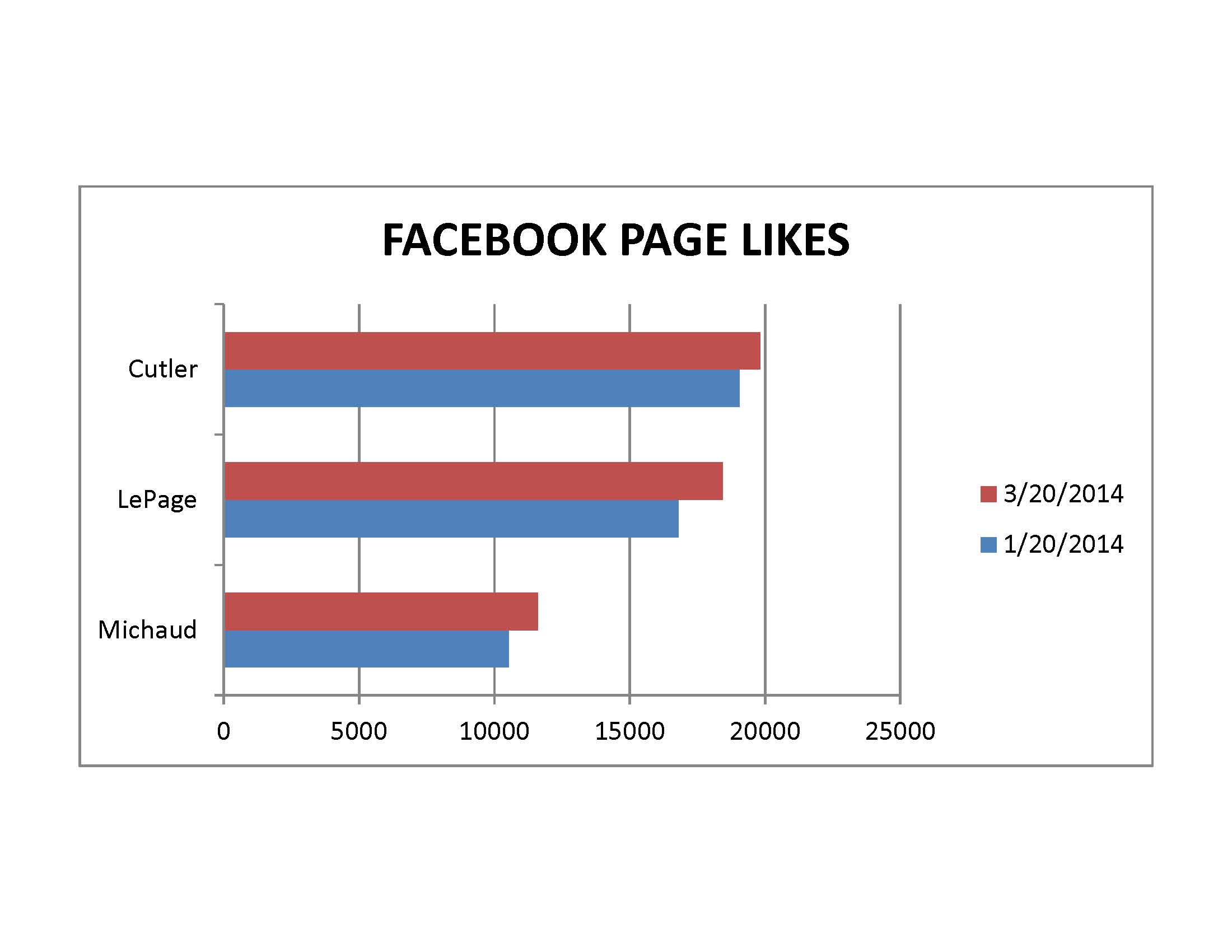
Facebook LikesOn Facebook, Cutler still dominates in the total number of Likes for his campaign page (19,824) but saw only a 4 percent increase over the last 60 days, while both Michaud and LePage experienced increases of 10 percent.

LePage’s Facebook page had 18,438 fans on March 20, compared to 16,791 fans on January 20, 2014.

Michaud’s Facebook page had 11,600 fans on March 20, compared to 10,529 fans on January 20, 2014.

When viewed overall, it would appear that Team Cutler has the steepest hill to climb, so far.

Note: Though it’s generally common knowledge, it must be noted that Twitter followers and Facebook fans do not translate directly to the number of supporters for a political candidate. As an example, I follow all three campaigns on Twitter, but will only be voting for one candidate.

Who do you love?

me and the manThere is only one subject I find more fascinating than politics: psychology.

Some of us spend so much of our time focused on the candidates or those elected to public office, yet we barely scratch the surface when it comes to examining the people beyond the headlines and the hype.

Who are those people? You and me, the people in the streets.

At the risk of being redundant to the extreme, I find myself falling back again to the words of Henry David Thoreau: “The mass of men lead lives of quiet desperation.”

My rather loose, modern-day translation?

The masses (you and me) tend to operate on a day-to-day hamster wheel of human obligations: family commitments, jobs and financial security, concerns about the future and the occasional circus: The Red Sox, rock n’ roll or watching Honey Boo-Boo.

The masses crave bread and circuses. And abundance of both typically leads to a sense of apathy when it comes to politics.

This dynamic was true in the days of Caesar, and it has changed little today.

An abundance of bread and circuses allows us the luxury of ignoring the machinations of the political class. But take away the bread or the circuses, and all hell can break loose pretty quickly.

You’re dumb, I’m smart

I spent the better part of this weekend representing one of my clients at the annual Maine Snowmobile Show in Augusta.

As it is every year, statewide political candidates attend the show to press flesh and talk to prospective voters. In about a year, Maine voters will choose the state’s next governor. Today, there are three leading candidates: Republican Paul LePage, the incumbent seeking a second term; Democrat Mike Michaud, a member of Congress; and Independent Candidate Eliot Cutler, who is making a second attempt to live in the Blaine House.

I had the opportunity to speak with all three candidates this weekend. These were brief, perfunctory interactions. Like them, I was there in a professional capacity so — of course — those conversations were limited, professional and cordial.

Because I was working, I did not have the opportunity to follow any of the candidates through the show or to observe all of their interactions with other exhibitors and attendees.

Thus, my observations were anecdotal and certainly limited; but I was able to observe the candidates from a decent vantage point and had the luxury of hearing public reactions long after each of the candidates left the civic center.

I began to wonder about the motivations of those who support LePage, Michaud or Cutler. What makes those people tick? What drives their political preferences? Why do they react positively to one candidate and not the other?

I got some answers to those questions only a few moments after I posted a photo of me and Governor LePage. The reaction from my “friends” was equally swift and clear.

Posting that photo on my Facebook page caused a visceral reaction that brutally revealed a harsh reality.

The angels want to wear my red shoes

One man who I consider to be a close friend made his assessment of the photo with just a pithy comment: “Maybe 100 total IQ points right there.”

Honestly, that comment stung. Without any other context offered, my friend was speculating that Maine’s governor and I had a combined IQ of 100 points, literally translated: on average, the governor and I have a respective IQ of 50 points, meaning that neither of us would be able to function at even the most basic level.

My friend’s comment was endorsed by a couple other Facebook “friends.”

These very same people will be among the first to bemoan a sorry state of political discourse or to champion “civility” and a bi-partisan approach.

Take this to its obvious conclusion: Governor LePage is stupid and so are the people who support him or even those who have the temerity to be photographed standing next to him.

Further commentary on this photo ranged from those who said they would “vomit” if they were within a few feet of the governor to another friend’s description of LePage as a “useless turd.”

What causes such a visceral reaction? Why do people react with such emotion? I suspect it is motivated by fear.

Make no mistake. We see this same dynamic on the political right. Just mentioning President Obama’s name in the wrong crowd can ignite a bonfire of emotion and even asinine comparisons to Adolph Hitler.

A while back I wrote a piece about Sarah Palin and her appeal to so many of my fellow Americans.

When we dismiss Sarah Palin, especially when we run off the rails and make fun of her penchant for shopping at Wal-Mart, her religious beliefs or her love of hunting, NASCAR or her limited education, we are subconsciously pointing the same critical finger at the millions of those who are undeniably loyal to her.

Democrats bemoan the loss of moderate Republicans (code: Republicans who tend to support Democrats).

John McCain was described by the left as an honest, independent maverick who exemplified the proud, glorious and bygone days of a better GOP – – – right up until the day he was selected as the GOP’s nominee to take on Barack Obama in 2008.

Hands down, Governor LePage received the warmest reception at this weekend’s snowmobile show. It was not universal, but it was clear and undeniable. People flocked to him, offering hugs and encouragement.

Whether you like it or can admit it, the 2014 gubernatorial race will be a battle for the political center.

Democrats are at a disadvantage, just as they were in 2010, because their own party is divided between two candidates. The Maine Democratic Party needs a major win in 2014, especially since they were crushed by an “independent” candidate in last year’s senate race.

Democrats would be well-served to better understand LePage’s appeal to those who they routinely dismiss. There are plenty of reasons to vote against LePage, but they also need some even better reasons to vote for Michaud. Otherwise, they can expect the same results we saw three years ago.

40 Acres and a Mule

I am a racist.

Part of me is tempted to let that statement flutter alone in the social media stratosphere without context. I am curious about the the reaction, but I am not anxious to begin looking for a new job, new clients, new friends and a new wife.

Seattle Times photo
The Rev. Dr. Martin Luther King, Jr.    Seattle Times photo

Of course, I’m talking here about degrees of racism. But isn’t that the way it usually goes with us garden-variety racists?

Originally, I was going to write this post after speaking with an African-American “acquaintance” of mine, a woman I have long admired from a safe and comfortable distance. We have tentatively scheduled a cup of coffee — or maybe a pint of beer sometime in the next few days, when her schedule settles down.

I know of this woman only through third parties. Recently, we have become “connected” on a few social media platforms. I find her writing haunting and jarring.

So why did I deviate from my original plan?

1.) I am intimidated by this woman; and

2.) This week is so timely for this discussion, this musing of mine.  For one, this week we celebrated the 50th anniversary of the stirring and famous speech by the Rev. Dr. Martin Luther King, Jr.  We also have all the fallout from Gov. LePage’s latest verbal snafu; but more importantly . . .

3.) I am afraid that I would be less than honest if I met her before writing this. Meaning: I would try to be more careful, bend to my “white-man guilt” by being overly empathetic and trying desperately not to offend. In summary, I would probably open the flood gates of bullshit.

A garden-variety racist

Some racists go all in with their prejudice. David Duke comes to mind, and so did the recent antics of a cranky and seriously disturbed retired cop in Sabattus, Maine.

Others take a shot at redemption in their later years. They either soften or gradually see the light; or — more appropriately  — begin smelling the rot of their own garbage. Strom Thurmond comes to mind, here.

I fall asleep at night comforted that I am not David Duke, David Marsters or even Strom Thurmond. I am more like Governor LePage, and more like most people I know.

I am a tiny bit racist. So I get to skate with the hip, the self-aware and the all-so-cool white folks who either ignore their racism or make excuses for it.

It is not excusable.

Physician, heal thyself

I had this race epiphany a few days ago while reading a media report about Governor LePage and his attempt to “clarify” and explain allegations made by anonymous members of his own party. Essentially, LePage denied ever saying that President Obama doesn’t like white people.

The governor’s defense centered upon his assertion that President Obama has repeatedly missed opportunities to heal our nation’s racial tensions, fumbling or ignoring golden opportunities to bring white and black people closer together.

For just one bat-shit crazy second, that explanation almost made sense to me. It was then that I could no longer deny that I was a racist.

Now, before I bring down the full weight and wrath of those ultimately loyal to LePage, allow me to back up.

Maine%20Governor%20Paul%20LePage(1)The governor was a little bit right in his criticism of President Obama on this front. But here’s the problem, LePage almost three years ago abdicated the moral high ground when it comes to easing racial tensions.

Most of us remember that cold day in January 2011 when local and national media went into overdrive regarding LePage’s alleged racism. He didn’t just decline an invitation to attend the annual Martin Luther King Day breakfast in Portland. Instead, he proudly (with what would become his trademark bluster) told reporters that “the NAACP can kiss my butt.”

If LePage is worried about missed opportunities to heal racial divides, he’s got a damn funny way of showing it.

Consider what he could have said. “I’m not sure why you folks in the media are making such a big deal about this. I simply declined an invitation because my schedule is full, but lets all remember that I consistently attended local MLK breakfast events in Waterville during my tenure as mayor. I also have taken a young African-American man into my home and helped raise him as a member of my own family. I strongly resent any implication that I am a racist. Let’s get busy talking about the important issues we are facing in Maine government.”

Nope, LePage could not resist coming on strong, full of sound, fury and arrogance. He began a path of allowing his pride to trump his greed.

How do we move forward?

I do not think our governor is a more successful version of David Duke, but I do think he has missed plenty of opportunities to talk in a meaningful way about an issue that is still very relevant in today’s world — even 50 years after the delivery of the I Have A Dream speech.

So, I am also a little bit racist, but I am also a little bit greedy, a little bit of a misogynist and a little too quick with anger.

Unless I am willing to look at these things, to painstaking examine my own heart, I have no authority to opine on these issues. We must be willing to confront the things we don’t like . . . even those things that lurk in the darkness of our own souls. Otherwise, the garbage festers and it can grow and infect other parts of our being.

As I said before, these things are not excusable but there are reasons for their development in even the best of people. Part of it is our cultural and genetic pre-disposition to assimilate within the familiar.

In this way, I suspect strongly that I am not alone; that the majority of folks I know are just a tiny, tiny bit racist. We can work on it if we can be honest about it. If we start with the man in the mirror.

White-man guilt

In the aftermath of the Civil War, the United States embarked upon a period of “Reconstruction.” Today, we would call in FEMA and lease some trailers.

The concept of giving former slaves 40 acres and a mule as reparation for their slavery was short-lived. Much of that land was eventually returned to its antebellum owners. From time-to-time, some guilt-ridden white folks and a lot of still angry black folks talk about the concept of ‘reparations” as the only way to heal the racial divide. Affirmative-Action programs were apparently a lot easier to digest.

Only weeks before being sworn-in, President Jimmy Carter granted an interview to Playboy magazine. It was the November 1976 issue. I know this because I was 12 years old and was an avid reader of my father’s hidden stacks of Playboy magazines.

Patty McGuire was that month’s centerfold. She was later named Playmate of the Year in 1977. She liked CB radios. I desperately wanted a CB radio back then. I saw Patti, and I knew it was a match made in heaven . . . but I digress.

Carter was trying to heal the cynicism of a post-Watergate nation by being painfully honest. In that issue of Playboy, he confessed to “having lust in my heart.”

Unfortunately, Carter had a lot of other tasks at his feet, many of which did not work out so well. But confessing lust in a Playboy interview is sort of like criticizing missed opportunities for racial healing after telling the Maine chapter of the NAACP to kiss your butt.

The message gets lost.