My all-time favorite journalists (The Top 12)

I am a journalist, and I love making lists.

So, it should come as no surprise that I woke up at 3:30 a.m. yesterday with the idea that I should make a Top 12 list of my favorite journalists – people who have inspired me, people I have worked with and even people I have worked for.

It was originally going to be a Top 10 list, but I could think of no-one on this list who should be eliminated as a finalist.

______________________

12.) Marian McCue, The Forecaster
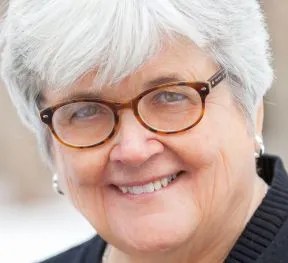
(Portland Press Herald photo)

Marian McCue was inducted into the Maine Press Association (MPA) Hall of Fame in 2019

According to a story published in the Portland Press Herald, McCue purchased the former Falmouth Forecaster in 1990 at a time when it was published every two weeks and mailed to residents.

The MPA reportedly described McCue’s tenacious commitment to journalism as “great foresight and a singular journalistic duty, into what would become arguably ‘the’ community newspaper of record for the greater Portland area.”

I have long admired Marian’s work ethic and her commitment to the very best principles of true community journalism.

____________________

11.) Liz Gotthelf, Saco Bay News

(Saco Bay News photo)

When it comes to community journalism, few do it better than my friend Liz Gotthelf, who launched Saco Bay News – a digital media outlet – in 2020, shortly after the daily Journal Tribune forever closed its doors.

A former Tribune reporter, Liz is dedicated to the community where she lives and works. She built Saco Bay News on nothing more than an idea and a desire to keep covering the communities of Biddeford, Saco and Old Orchard Beach.

Liz is a scrappy journalist with a HUGE heart. Her care and commitment to journalism shines through in everything she writes. Liz was knocked to the ground in August 2024 when her husband died suddenly and unexpectedly. She took just a few days off, and then – despite near overwhelming grief – jumped back in the saddle, covering community news and events. How do you spell integrity?

I am lucky to call Liz a friend, and I was proud to work with her for a little more than two years as one of her contributing writers.

___________________

10.) Chris Busby, The Bollard

(Bangor Daily News photo)

The Portland-based weekly The Bollard is one of my favorite newspapers. Busby is one of those people who has likely forgotten more about journalism than I will ever learn.

More than 20 years ago, Busby began building the Bollard with his own blood, sweat and tears. The paper reeks with journalistic integrity and offers a no-holds-barred approach to covering local and state government. The Bollard is also where I get my regular fix of Al Diamon’s Politics and Other Mistakes column and Liz Peavey’s weekly column.

The really good news? The Bollard is available online and its print version is available for free throughout southern Maine. I pickup the Bollard at the Hannaford grocery store in Biddeford.

______________________

9.) Barbara Walters, ABC News
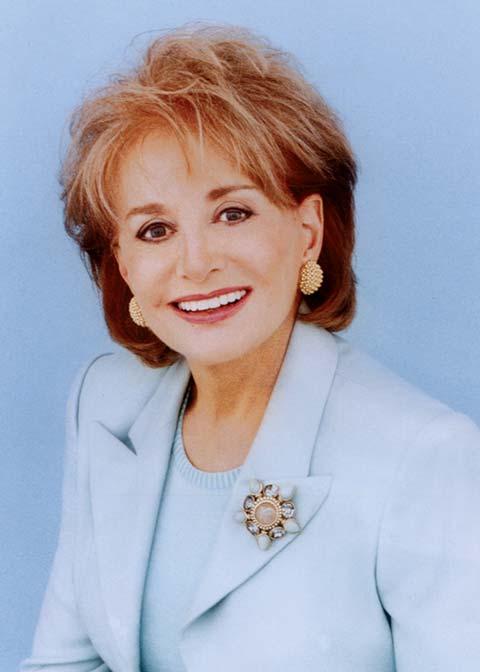
ABC News Photo

Barbara was a true journalism pioneer. She broke the proverbial glass ceiling that held back so many women in the news business, especially in the realm of televised newscasts.

Her legendary career, which started in 1951 at an NBC affiliate station in New York, earned her numerous accolades and awards, often described as one of the most trusted, and dogged reporters of the 20th Century.

Of course, Walters is best known today for her time as a producer and reporter of NBC’s Today Show and then later becoming the first female co-anchor of a network evening news show with Harry Reasoner on the ABC Evening News.

______________________

8.) David Flood, Mainely Newspapers

BCHC Photo

David and Carolyn Flood launched the weekly Biddeford-Saco-OOB Courier in 1989. They immersed themselves in the community and quickly became a fierce and reputable source of competition to their much larger, daily counterparts, the Journal Tribune and the Portland Press Herald.

Their hard work and commitment to community news paid off. The company expanded into a group of weekly newspapers that included the Scarborough Leader, South Portland Sentry and the Kennebunk Post among others.

David’s business model of not charging for subscriptions proved effective. But David cared more about Biddeford than just becoming the paper of record. He was the principal founder of the Heart of Biddeford.

He was always bullish about the city, especially its downtown area. After selling his publications, he was elected to the Biddeford City Council. Two years ago, he was inducted in the Biddeford Cultural and Heritage Center’s Hall of Fame. He also served briefly as president of the Biddeford-Saco Chamber of Commerce.

David hired me as a reporter in 1998. He then later promoted me to become the Courier’s editor and then later I became managing editor of all his publications.

I drove David nuts. I gave him plenty of reasons to fire me, but he didn’t. In fact, he gave me a rather long leash, and I think he valued my intense work ethic and my fierce sense of newspaper competition.

I often joke that the Biddeford Gazette is my baby. If that’s true then David and Carolyn Flood are the Gazette’s grandparents.

__________________

7. Jeff Jacoby, Boston Globe

(Wikipedia photo)

I don’t know a lot about Jeff or his background, but I do love his weekly column, Arguable

It is well-written, often long-winded (a man after my own heart) but always informative, balanced and not afraid of controversy. As an opinion columnist, Jacoby admittedly leans a bit to the political right, which must make him wildly popular with the men and women who work in the Globe’s newsroom.

Don’t get me wrong. Jacoby may lean just a bit to the right, but his analysis is often scorching and always thought-provoking, but always fair and balanced.

I love Jacoby’s column, and that’s reason enough for him to be on this list.

___________________

6.) Jack Beaudoin, Journal Tribune
JackBeaudoi.com photo

If you ask people who have lived in Biddeford a long time about who they think was the city’s best reporter, Beaudoin’s name invariably rises to the top.

Jack, a Biddeford native, earned his reputation as an outstanding reporter. He was usually the smartest guy in the room but never acted like it. In fact, he is one of the most self-effacing people I have ever met.

Jack is also the former publisher of the Maine Center for Public Interest Reporting. Today, he lives in Stonington and describes himself as an “ink-stained wretch.”

You can find his work today at jackbeaudoin.com

_____________________

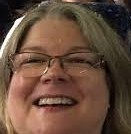
5.) Kelley Bouchard, Portland Press Herald
Facebook photo

I think it was 2001 when Kelley and I first met. She had been assigned to cover Biddeford back when the Press Herald had a bureau office on Main Street in Biddeford.

I am lucky to know Kelley as a friend, despite the fact that we were fierce competitors back in the day, when MERC was still burning garbage downtown and dinosaurs could be seen stumbling down Lincoln Street.

Kelley was tough as nails. She never accepted the proverbial talking point memos. She asked hard questions, but she was fair and thorough. Today, she still holds my feet to the fire, often questioning the motives of some of my political posts on social media. I really miss working alongside Kelley. Those days are some of my favorite memories.

______________________

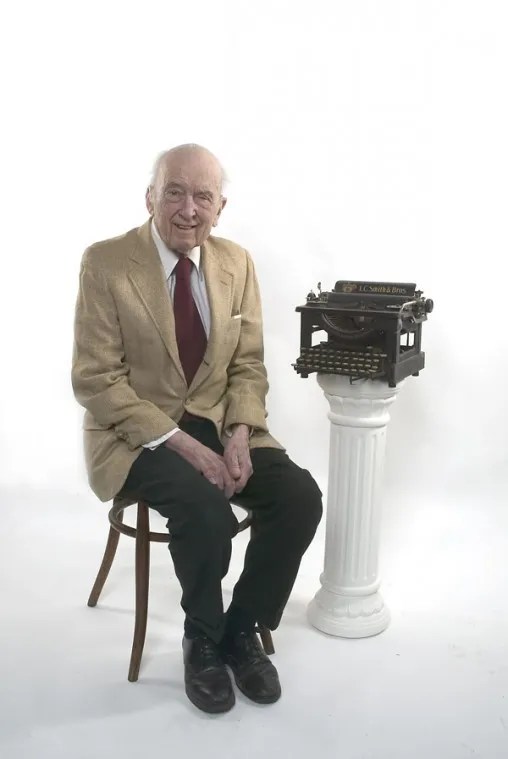
4.) Harry Foote, American Journal
Press Herald photo

If you’re a journalist over the age of 40 in Maine, it is more than likely that you once worked for Harry Foote, the late founder and publisher of the weekly American Journal, then based in Westbrook.

Harry — always grinning but unrelenting in his push for perfection and “real news,” — probably taught more journalists than the Columbia School of Journalism.

I learned so much from Harry. He was a legend and a force to be reckoned with, just ask former mayors and city councilors from Westbrook.

Harry died in 2012 at the age of 96. In 1990, he received the Maine Press Association’s Journalist of the Year award. In 1999, he was inducted into the Maine Press Association’s Hall of Fame.

I really miss Harry, the chaos of his newsroom, his collection of pencils and the apron he would wear around his waist. I’m one of the lucky ones. I got to work for Harry Foote.

____________________

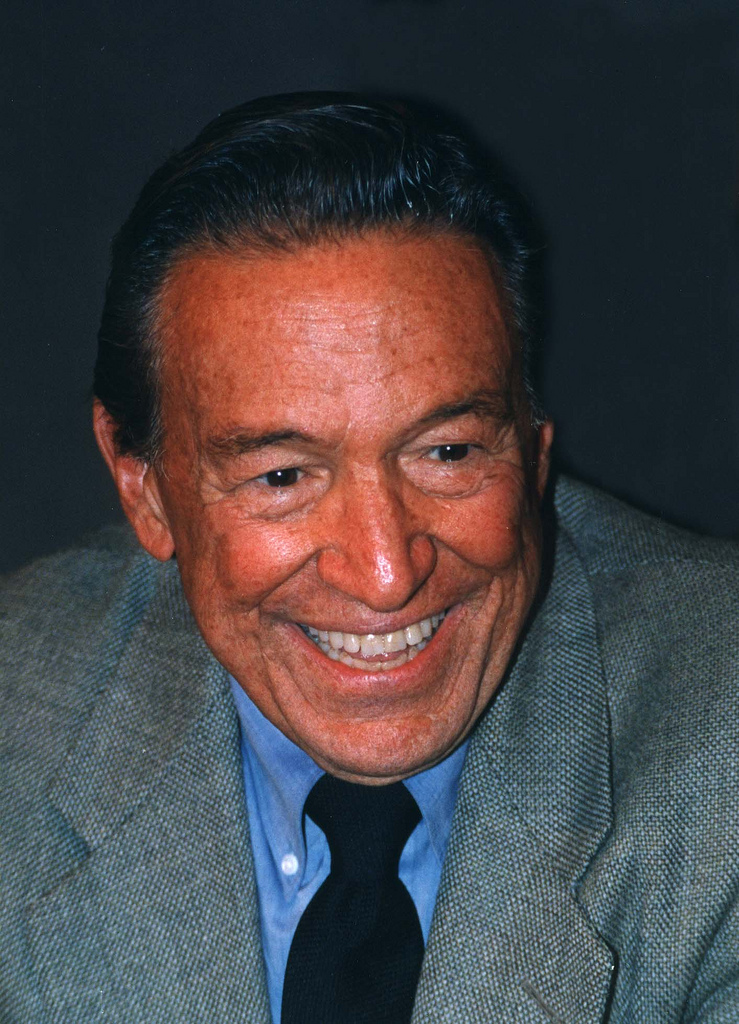
3.) Mike Wallace, CBS News/ 60 Minutes
Wikipedia photo

It is a well-known fact that journalists in the United States are required by law to pay silent homage and tribute to Mike Wallace before writing or producing every news story.

Wallace is considered a deity by so many of his peers in the world of journalism. He was one of the original four members of the magazine-style television news program, 60 Minutes. He was the definition of investigative journalism. He was loathed by President Richard Nixon.

Why is he on this list? Because he is Mike Wallace, and I am legally required to describe him as one of the greatest journalists of all time.

_____________________

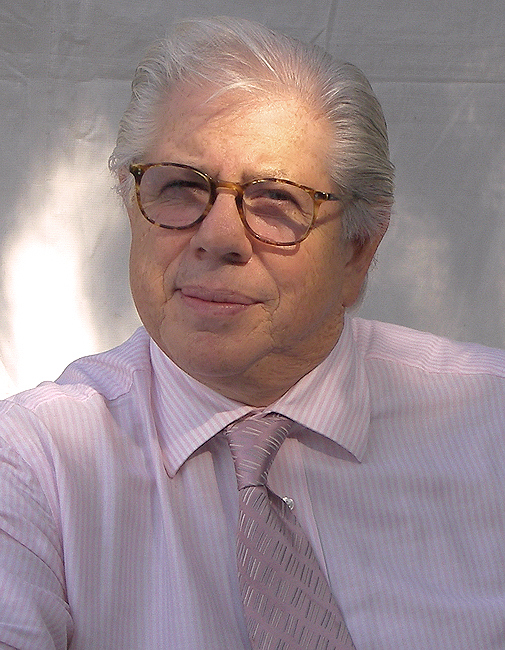
2.) Carl Bernstein, Washington Post
Wikipedia photo

Although never as well-known or revered as his Watergate counterpart — Bob Woodward – Carl is a man after my own heart.

He never graduated from college, but he was a brilliant and remarkable reporter. It is rumored that he lied in order to get hired by the Washington Post when he was still in high school. His peers often described him as a manic and tenacious workaholic.

Many people believe that without Bernstein’s rabid and aggressive style of reporting, the Watergate scandal may have never been brought to light. I was 10 years old when Nixon became the first president to resign from office in August 1974. I was glued to the television coverage. It was then that I knew I wanted to be the next Bob Woodward or Carl Bernstein.

If you enjoy good books, check out Bernstein’s memoir, Chasing History: A Kid In The Newsroom.

Drum roll please . . .

And now —- my all-time favorite journalist:

Hunter S. Thompson, Rolling Stone
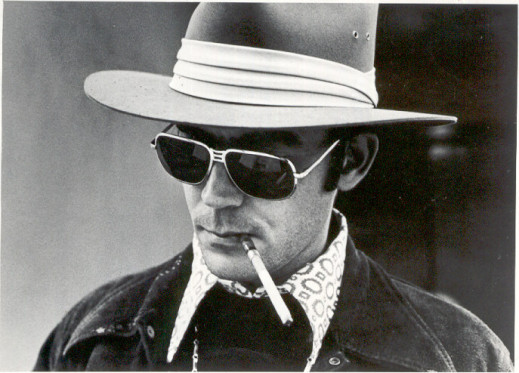
(Photo from Facebook)

Quite simply, the late Hunter S. Thompson is my hero, my idol and all sorts of other things. He is the founder and creator of Gonzo-style journalism.

He broke all the rules of traditional journalism. A heavy drinker and smoker, he also experimented with drugs, including hallucinogens. He was a prominent leader of the counter-cultural movement that swept across America during the late 1960s and the early 1970s.

His landmark book — Fear and Loathing in Las Vegas — was well received and required reading for rebellious teenagers who wanted nothing more than to piss off their parents.

Hunter’s career started back in the days when people like Jack Kerouac and Alan Ginsberg were gaining traction in literary circles, creating what became the Beat Generation and a legion of self-described “beatniks” who desperately wanted to follow in their footsteps.

Thompson was simultaneously brilliant and self-destructive. He didn’t take criticism well, unless it was from someone he respected and also loathed like Truman Capote.

I really believe that I was born 30 years too late, I like to think that maybe Hunter and I would be friends. We both served in the U.S. Air Force.

Perhaps no writer influenced me more than Thompson. I tried to use a Gonzo-style approach when writing my weekly All Along the Watchtower column for the Courier.

If you want another great book recommendation, check out Outlaw Journalist: The Life and Times of Hunter S. Thompson by William McKeen.

And that’s a wrap.

_________________________

My sincere apologies to everyone on this list. I really do respect your work, and I do – unlike Chris Busby – care about how other journalists perceive my work.

I had a lot of fun writing this. I hope you enjoyed reading it.

___________________________

Randy Seaver is a hack journalist living in Biddeford. He is the editor and founder of the Biddeford Gazette, a non-profit digital news publication that focuses on the city of Biddeford.

Randy has been annoying other journalists and editors since 1981 when he did a brief stint as an unpaid student intern at the former Journal Tribune, a daily newspaper based in Biddeford.

He regularly writes about politics, journalism and his own struggles with mental illness at Lessons in Mediocrity | Outlaw Journalist

© 2026 Randy Seaver | All Rights Reserved

Subscribe today and never miss an update! It’s free and worth it!
Achtung, Baby

Not too long ago, a very well-known and respected Boston Globe columnist opined that there are some good reasons why a growing number of Americans no longer “trust the media.”

In his Nov. 29, 2022 opinion column, Jeff Jacoby pointed to a recent Gallup report, which revealed that just one out of three Americans claimed to have a “great deal” or a “fair amount” of confidence in the media.

“It has been a long time since most Americans trusted the press to tell them the truth,” Jacoby wrote, adding that “in 1972, when Gallup first began assessing the public’s opinion of the news industry, 68 percent of adults voiced a high degree of confidence in the media’s credibility. In 1976, the year Robert Redford, Dustin Hoffman, and Jason Robards starred in All the President’s Men, public faith in the media’s integrity set a record: 72 percent.”

“Over the last three decades, that faith [in the media] has largely crumbled,” Jacoby wrote, saying “journalists and news organizations have increasingly abandoned the old ideal of unbiased news coverage, as media outlets have come to care more about getting the narrative right than getting the facts right.”

To support his opinion, Jacoby points to some recent news stories and how those stories have been covered by large and well-known media outlets.

I tend to believe that Jacoby is right, at least on a macro level.

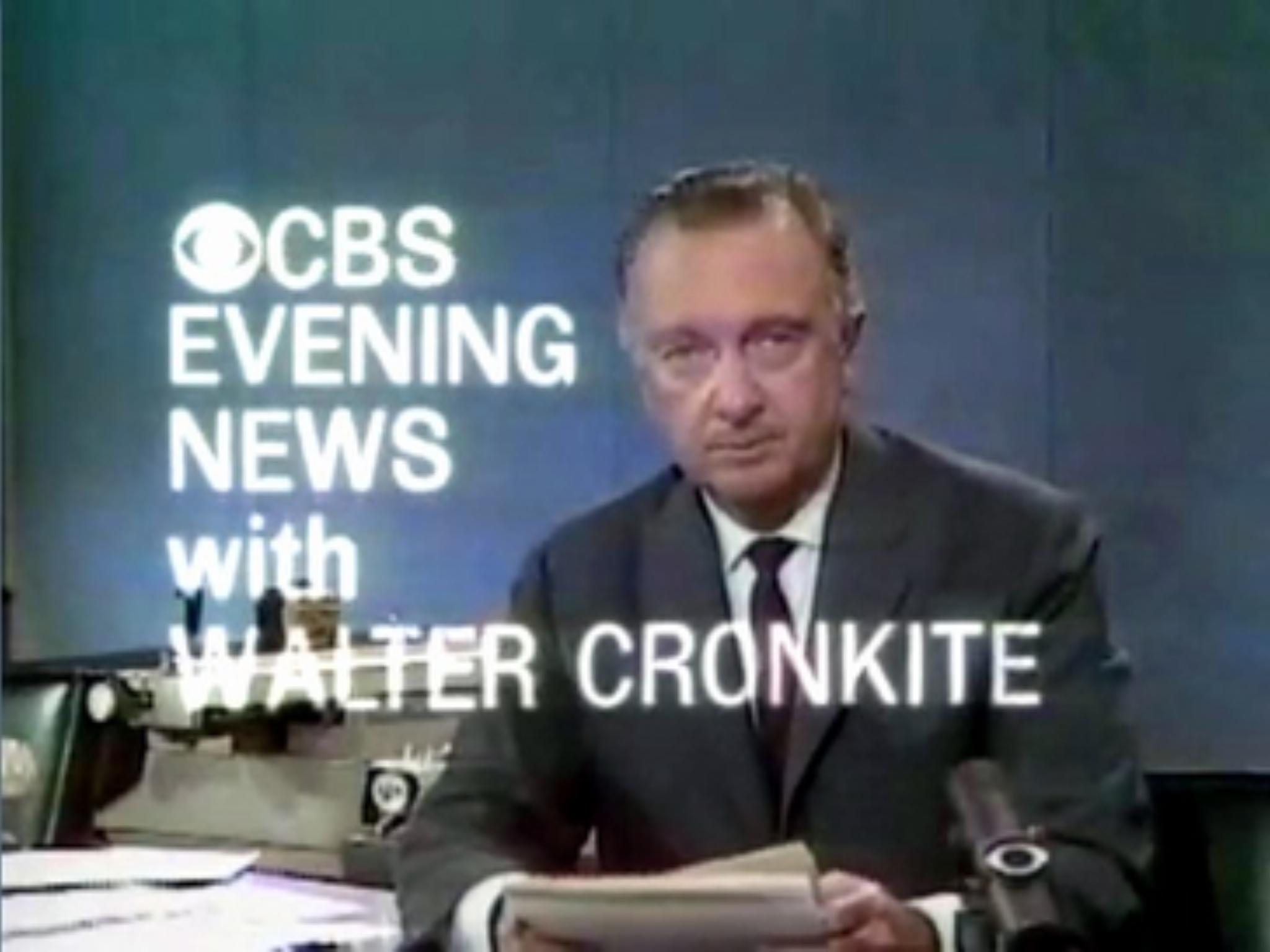
(Photo: IMDb)

What is journalism?

The field of journalism has undergone a seismic shift over the last four decades. It’s not uncommon today to hear an older person say something like “I miss Walter Cronkite. He didn’t have an agenda.”

In all fairness, Cronkite was roundly criticized by many voices for being a bit less than completely objective.

I think our expectations of the media have also changed dramatically over the last four decades.  For better or worse, evolving technology – along with a relatively new emphasis on the importance of ratings – has produced a profound impact upon the media landscape.

But what is “the media,” and how do we define the practice of journalism? I think those are some loaded questions, and the answers are both complex and widely varying.

Today, thanks to technology and some societal changes, just about anyone can be a “journalist” or a media outlet. There is no requirement for any kind of training or experience. All you need is a notebook, a camera and an internet connection and presto – –  you are a journalist, or as we say these days, a “social influencer.”

Don’t get me wrong. There are many positive aspects of grass-roots journalism, but it’s also becoming increasingly difficult for news consumers to separate the wheat from the chaff when trying to discern what exactly is legitimate news coverage.

Another problem is that more and more consumers are trying to custom-tailor their news feed, aligning themselves with their own politically-flavored news perspective. If a news outlet produces a story that somehow disrupts the reader’s individual world view then it is automatically dismissed as “fake news” and further proof of media bias.

Almost three years ago, I wrote a similar blog post and interviewed two veteran Maine journalists from both sides of the political spectrum, asking them if the media is biased.

Dennis Bailey spent several years as a reporter working for the Maine Times and Portland Press Herald. He readily acknowledges that his personal politics are more in line with Democrats.

“I’ve never been a believer in objective journalism,” Bailey told me. “A good story is a good story, but it does come with some bias.”

Bailey pointed to certain realities about how a news story is produced. “A reporter often decides what story to follow,” he said. “From there, an editor decides the placement of a story and the headline of that story. These are all subjective decisions.”

On the other side of the political aisle, John Day, who spent several decades as a reporter and then as an editor of the Bangor Daily News, agrees with Bailey about media bias.

“I’m a big fan of diversity,” Day said. “But I was always a contrarian. Fake news has always been around. If all news outlets reported every story the same way, then it would be nothing more than a giant circle jerk.”

New media outlets seem to be popping up almost every-day. Cable-television introduced us to the 24-hour news cycle, and the creation of the internet ushered in the age of instant news coverage. The popularity of social media sites such as Twitter and Facebook only further obfuscate the definition of “the media.”

And we cannot ignore the financial pressures faced by those who produce the news that we read, watch or listen to.

Several months ago, I watched an interview with Christopher Wallace, a former anchor on Fox News Sunday and is now a CNN anchor. Wallace, who has a reputation as a hard-nosed journalist, was talking about how the media has changed over the last several years.

What struck me about that interview is that Wallace laid plenty of blame at the feet of his father, Mike Wallace, who is generally revered as some kind of demi-god by most professional journalists. During the latter part of his career, the elder Wallace was one of the lead anchors of 60 Minutes, a news magazine show that debuted on CBS.

“Before 60 Minutes, the networks generally considered news programming as some sort of public service,” the younger Wallace explained. “Then 60 Minutes happened, and suddenly the networks began to see news programming as a very valuable commodity.”

While the big media corporations continue to intensify their ratings war, many local and small media outlets are struggling to keep their heads above water as they desperately try to keep pace with the continually changing news landscape.

But how does that negatively impact you? Who really cares if another local newspaper closes shop? I’ll get to that in a moment.

The responsibility of the fourth estate

Nearly 300 years ago, Edmund Burke, a member of British Parliament, reportedly coined the term “Fourth Estate” to describe the press, its obligations as a check in government oversight and its responsibility to frame political issues as well as advocacy for the general public.

From Burke’s perspective, the news media played a very important role, at least as important as the other three estates: the clergy, the nobility and the commoners. Today, especially in the United States, the other three estates of government are considered as the executive branch, the legislative branch and the judicial branch.

That’s pretty heady stuff if you stop and think about it. A free and unencumbered press literally has the capacity to bring down even the most powerful of political leaders or organizations. We need the press to be our advocates at the table. We depend on the media to keep government in check.

It’s not just important during something like the Vietnam War (the Pentagon Papers, New York Times) or the Watergate scandal (Washington Post). It also matters in your own community and your day-to-day life.

For example, how exactly is the government spending your tax dollars? Who is paying attention to that new zoning ordinance and how it could impact your home value? What is the city planning to do to your kid’s school? Who is advocating for the less fortunate among us? Who is keeping us aware of the day-to-day threats to our peace and comfort?

Sure, I think it’s great that the city of Biddeford has its own, municipal news organization: The Biddeford Beat. But is that really a good replacement for an independent media source? I mean, really, how do we expect a government agency to provide a comprehensive critique of itself or an overview of its day-to-day activities? In fact, one has to wonder how much tax money is being used to produce local government-controlled news.

There are two main reasons why it is becoming more common to see local government create its own “news” coverage. First, the technology makes it relatively easy to do, especially if it’s just an on-line news source.

But much more troubling is the fact that many local government agencies are simply trying to fill a void left by a rapidly shrinking pool of professional reporters at the local level.

I fondly remember covering Biddeford City Council meetings more than 20 years ago. Back then, the council chambers were – politely speaking – often packed with opinions, rage and contempt. It was mostly civil, but it seemed as if there was always some sort of tension. Certain residents regularly attended every meeting, never hesitating to use their five-minute limit at the podium during the “public comment” period. It was awesome.

Back then, there were at least three reporters at every council meeting: Kelley Bouchard covered Biddeford for the Portland Press Herald. Josh Williamson represented the Journal Tribune, and I was there on behalf of the Biddeford-Saco-OOB Courier.

Each of us would have likely stabbed the others in the neck in order to get the story first. We scrapped it out on the streets, digging for the facts, looking at all the angles and always fiercely competitive. Frankly, it was humbling to work with professionals like Kelley and Josh.

According to the US Census Bureau, the city of Biddeford has a population of roughly 22,000 residents. I think a city of that size, although small, deserves and warrants a full-time reporter or two. Even more so, when considering that Biddeford is the largest city in York County and is a service center for residents from all over southern Maine.

Today, unfortunately, city council meetings in Biddeford are generally quiet, somewhat uneventful and not very well attended. There are no longer three reporters covering every meeting.

The Journal Tribune ceased operations a few years ago, and the Portland Press Herald closed its local bureau on Main Street. The Courier, a locally-owned publication, was sold to the owner of the Portland Press Herald, which basically uses the weekly newspaper to account for its coverage of the Biddeford-Saco area.

Today, Tammy Bostwick Wells, one of the finest and hardest working reporters I’ve ever met, is expected to cover not only Biddeford but also several other communities throughout York County. Tammy, who previously worked for the Journal Tribune and the St. Croix Courier, does an awesome job, but she is realistically limited in what she can cover. After all, she is only one person and there are only so many hours in a day.

That, unfortunately, is the new reality for local media across the United States. Reporters are basically forced to “attend” government meetings via streaming platforms such as Zoom because of time and staffing constraints. We’re lucky that we have people like Tammy who are willing to take on more and more work without an equal increase in monetary compensation for their efforts.

And I would be remiss if I didn’t extoll the virtues of my publisher and her commitment to the communities of Biddeford, Saco and Old Orchard Beach via the operation of Saco Bay News, an online local media source. Liz Gotthelf-Othot is another former Journal Tribune reporter who runs herself ragged every day in her efforts to provide coverage of news that may otherwise go un-noticed.

(Disclaimer: Liz pays me to cover Biddeford news for her online publication)

Yesterday, I posted something on Facebook that lacked appropriate context: “I’d take a dime-bag of outrage over a pound of apathy every day of the week and twice on Sundays.”

We need the media to provide that “outrage” in a meaningful and constructive way. If a news story pisses you off, good! Get involved and help make the change you want to see.

Yup, I do think that big media outlets are somewhat responsible for the erosion of public trust in the media, but I also think we need to challenge ourselves to view news differently than through the lens of our own opinions and our own biases.

I sleep better at night knowing that people like Tammy Bostwick Wells and Liz Gotthelf-Othot are watching my local government. And you may also want to avoid taking the media – especially the local media – for granted.

That’s enough rambling and pontificating for now. Peace.

Never miss another installment of Lessons in Mediocrity! Subscribe now for free!

Goodbye Stranger

reporterI want to scream.

In a world chock full of culprits that are partially responsible for everything from the “dumbing down of America” to the nomination of Mitt Romney and the advent of Twitter, it’s become increasingly difficult for me to stomach the banality associated with blaming “the media.”

While media criticism is important and necessary, a lot of people who blame “the media” have no idea what they are talking about.

Instead, blaming “the media” has become a catch-all phrase and a convenient target for those who want to ignore two very much larger problems: laziness and stupidity.

There is no question that media has changed, but I challenge you to define the word in its present-day context.

Sure, we can turn to the dictionary and find this: media: (noun) 1.) plural form of medium; 2.) the main means of mass communication (esp. television, radio, newspapers, and the Internet) regarded collectively.

Media, whether it’s a daily newspaper, the evening television news, a blog or something that a “friend” posts on his Facebook page, is multi-faceted, multi-layered and increasingly accessible to every person on the planet.

That’s not necessarily a good thing.

Blaming the media is sort of like blaming your reflection in the mirror for having that fifth margarita or being late to work. Too often, blaming the media is just a convenient form of mental masturbation that serves no good purpose except helping you sleep better at night.

The good ol’ days?

The opening pages of the book Leaving Readers Behind: The Corporate Age of Newspapering contains this stunning contrast of two very different media mission statements:

This is the Journalist’s Creed written by Walter Williams in 1914:  I believe in the professionalism of journalism. I believe that the public journal is a public trust; that all connected with it are, to the full measure of their responsibility, trustees for the public; that acceptance of lesser service than the public service is a betrayal of this trust.”

And this is the Statement of Strategic Intent issued by Knight Ridder Newspaper Corp. in 1991:  We stand for excellent  service to customers and communities, a fair, respectful and learning environment for all our employees and a strong return for our shareholders. This responsibility is shared by each of us in Knight Ridder, regardless of title or function.”

So it seems easy to be cynical about the so-called “mainstream media” or as Rush Limbaugh describes it: “the drive-by media.”

Oh, how we long for the good days of journalism; the fair and balanced reporting and the loyalty of preserving the public trust. Too bad it’s gone right?

Wrong.

We are surrounded and inundated with loads of good journalism and a diversity of media that is unparalleled and will be surpassed in its diversity in less than 15 minutes.

Before you moan about the demise of media, or the sentimental loss of the warm and fuzzy images of Walter Cronkite and the proverbial grumpy editor such as Ben Bradlee, chew on this: Why haven’t you switched the channel?

Try it, you’ll like it

Better yet, what’s stopping you from being the media? It’s probably the same four things that stop most media endeavors: Money, Time, Resources and Audience.

Sure, go ahead and bitch about advertiser supported media, but how are you going to pay your reporters?  For those of you who will predictably point to examples such as “listener supported” public broadcasting, you may have missed those corporate announcements at the beginning of each segment.

Without corporate and taxpayer subsidies, National Public Radio would be nothing more than a distant memory because the vast and overwhelming majority of its listeners don’t dig very deep into their own pockets.

Yeah, and state-sponsored media is a sure-fire way to ensure credibility and a lack of bias. I mean, really . . . what would could possibly go wrong if we let the government report to us about the government?

I find it annoying that the bulk of those who bitch about the media have spent zero hours in a newsroom nor  ever required to sit through three hours of a planning board meeting while earning slightly more than minimum wage.

Pull back the curtain

Of course, no one loves to talk more about the media than the media. They are a narcissistic lot, full of righteous indignation. I know this because many of my friends and former colleagues still work in the media. God bless them.

These folks are professionals, but they are no different from anyone else and subject to all sorts of the very same pressures you will find in any other profession: gossip, bias, greed, competition and ego.

A few weeks ago, I found myself on the phone with one of the editors at the Portland Press Herald. I was calling on behalf of one of my clients and asking for a favor.

The editor was a bit pissed off about my intrusion, and he didn’t try very hard to mask his annoyance: “Randy, you used to be a journalist, how can you ask me a question like that?”

Surprisingly, he accepted my honest response. “I’m not a journalist anymore, and you know damn well my current occupation requires me to ask the question even though I know you are going to refuse my request.”

That honest exchange led to a compromise we could both live with: he did not budge and I accepted his decision.

Where’s the good media?

As I said before, we are surrounded by some excellent examples of journalism. A couple of weeks ago, I picked up a copy of the Southern Forecaster newspaper. That free, weekly newspaper was chock-full of solid community-based reporting.

There was an in-depth, comprehensive story about growing tensions between the Scarborough Rod & Gun Club and a group of neighbors who chose to build their homes near the club. It was a universal story about the themes of gentrification and it made me think about the tension in my own community between those who use the Biddeford Airport and their residential neighbors.

Another front-page story examined the plight of the South Portland City Council in light of a recent court decision that would allow municipal employees to serve on municipal boards and committees. Again, the same dynamic is an issue in my own community.

The Forecaster group of newspapers is one of the few remaining Maine-owned media outlets, and its staff seems to understand the importance of digging deep and solid reporting. Mo Mehlsak is the editor of the Forecaster. I remember him from his days as the city editor at the Journal Tribune. He is a newspaperman’s newspaper man: tough, intelligent and insightful. I never had the pleasure of working with him, but I have admired his work for nearly 20 years. He is obviously grooming an exceptional staff of reporters.

Speaking of the Journal Tribune, Tammy Wells has been covering York County issues longer than anyone else. She offers her readers a ton of institutional memory and insight.

When it comes to unbiased reporting and a willingness to cover stories in-depth, check out the work of my former colleague, Kate Irish Collins, a reporter for the Saco-based Sun Chronicle, part of Current Publications, another Maine-owned media outlet. No one person can come close  to matching Kate in producing such a volume of news content with consistent accuracy and lack of bias.

My friend Kelley Bouchard at the Portland Press Herald consistently delivers solid reporting and poignant features. She led off her newspaper’s insightful (and painful) examination of Maine’s aging population. The Challenge of Our Age.

On Election Night, every political junkie in Maine turns to the exceptional coverage provided by the Bangor Daily News.

And if you’re looking for a good compilation of Maine news and opinion, check out Bob Mentzinger’s  Writing Maine feed. Mentzinger is a close friend, but he’s also the editor at the Brunswick Times Record, another afternoon daily that strives every day to produce exceptional journalism on a shoe-string budget.

Yes, there is plenty of room for media criticism, and Al Diamon does an exceptional job of keeping Maine’s media outlets on their toes with his sometimes harsh, yet consistently detailed analysis that can be found in his weekly Media Mutt column published at The Bollard.

These are just a few samples that show it’s not hard to find solid journalism in Maine or anywhere else. You just have to look for it.

The next time you feel like bitching about the media, go take a long, hard look in the mirror and ask yourself this: are you part of the solution or part of the problem?