
A plea to responsible gun owners

Note: The following was penned by my friend and former colleague Tobey Williamson who now lives in Hawaii. It is provocative, and I thought my readers may want to consider his point of view.

police lineDear Responsible Gun Owners with Good Hearts:

I know more than a few of you, and I want you to keep your guns and buy more of them. Buy as many as you want. Keep them locked up. Safe from the [mentally ill] and from the kids. Keep them ready in case we really do one day have to organize a militia to fight against an extremist government that knows everything about its enemies and employs drones to kill us remotely. At least we’ll be able to shoot a few of those fuckers out of the sky before we run out of bullets.

In the meantime let’s teach our kids to hit a target at 1000 yards in a gale force wind with their hearts racing at 100 beats per minute. Teach them to respect these weapons, these tools of food security, these protectors of our freedom. Make sure they know never to point them at any person unless they intend to pull the trigger—and that they understand the inevitable consequences of such a decision. Bring them hunting and show them the proper reverence when the spark leaves the eye of the animal we take to sustain our own through the winter.

However, I implore you to look into your heart and consider that it is only flesh and that it beats for your loved ones. Who are themselves flesh and blood that can never be put back together once torn apart by bullets. Think of them when you begin to change the conversation we are having as a country, when you become the voice of reason that leads us away from this chaos. No one else has the credibility or the common sense that you have. Nor does anyone else shoulder the same responsibility.

Rights do come with responsibilities; at least they do in a world that makes sense. So, as a rightful owner of as much firepower as you can buy, it is your responsibility to speak out and take real action against this mayhem and senseless violence that can strike any of us at any time. This is a deadly serious issue and at the moment not only is the violence insane, but so is the conversation about it.

The vast majority of people just want to go about our business without fearing for our lives. When we hear that new laws are not the answer because we do not enforce the ones we have, or that its because we have poor mental health services we say, “ok, lets fix all of these problems.” When we hear that a person intent on killing another person will find a way with or without a gun, we say, “ok, lets make it as hard as possible for them to do that.”

When we hear that the only answer to the problem of gun violence is more guns, we are incredulous. This is the same absurd logic that created the nuclear arms race. Must we all endure escalating shootouts started by the heavily armed people everywhere in our midst who eventually draw at the slightest crooked glance? Is that when we can decide that this default strategy is not working?

Seriously, think through the scenario of the “good guys with guns” argument. It is not like the bad guys are all wearing black and white-striped jumpsuits or something. If everyone has guns out, who knows whose got a good heart then? Just imagining the situation in the comfort of your heavily armed home should give you pause. Within the chaos, will you really know who to shoot at? Are you sure the other guys packing heat would know not to shoot you? The rest of us caught in the crossfire don’t want any part of it, thanks.

End the insanity. Stand up for your rights. But for fuck’s sake, for our kids’ sake, take care of your responsibilities. Come to the table and be a part of the solution.

Sincerely,
A non gun owner who does not hate guns but hates gun violence.
Behind Blue Eyes

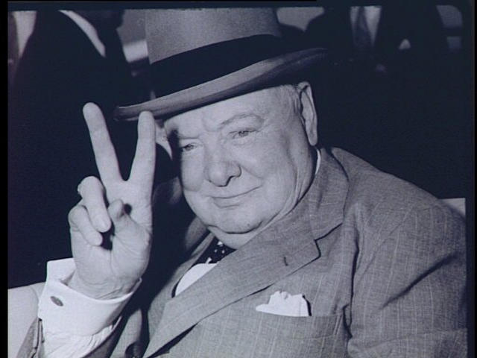
12-Winston-Churchill-jpg
Winston Churchill suffered from bipolar disorder.

A friend of mine recently brought to my attention something about me that was posted on Facebook.

Apparently, a man I barely know questioned how I — an out-of-the-closet consumer of mental health care — could be trusted to provide professional advice. In fact, this person described me as “mentally unstable.”

I thought about this for a while because I frequently write about the subject of mental illness and stigma on this blog, and I was a bit disheartened that being “mentally unstable” and having a diagnosed mental illness are still too often linked into one convenient package.

Consider this: One in five Americans experienced some sort of mental illness in 2010, according to a report from the Substance Abuse and Mental Health Services Administration.

Are those people all mentally unstable? Hardly.

The vast and overwhelming majority of people with a diagnosed mental illness are very stable and lead productive, normal lives.

They can do this because they seek treatment for their illness. They take medications, participate in therapy and take other measures to ensure that their illness is well-managed. They are no different from people with diabetes, epilepsy or cancer. They did not ask for the disease, they don’t use it as an excuse and they are vigilant in taking care of themselves.

Meanwhile, mentally unstable people do not take appropriate steps to manage their illness. Sometimes, it is because of a lack of mental health services, but more often than not some individuals refuse to acknowledge or treat their illness.

Following the horrific massacre a couple of weeks ago in Charleston, South Carolina, Maine’s Congressional delegation was polled regarding their attitudes on limiting gun violence. While Congresswoman Chellie Pingree, Senator Angus King and Senator Susan Collins all said they would like to see expanded background checks for the purchase of firearms, Congressman Bruce Poliquin offered a different response.

Poliquin said he would like to see more funding for mental health.

I applaud Congressman Poliquin for his willingness to increase funding for community-based mental health services, but I have some bad news for him: Even with better funding and more services, it is more than likely that Dylann Roof would have still shot and killed nine innocent people. Roof may have a mental illness, but he certainly wasn’t taking care of it.

Last week, the defense attorneys for James Holmes, the young man who killed and shot 12 people in an Aurora, Colorado movie theater, opened their defense by saying their client was legally insane, and thus should not be held accountable for his crime.

Although Holmes did seek psychiatric treatment before his rampage, he stopped seeing his psychiatrist just a few weeks before he entered a crowded theater armed to the teeth.

Like very other type of illness, mental illness does not fit into one convenient package. There are different types and severity of illnesses, from depression and anxiety to bipolar disorders and schizophrenia. All of these illnesses can be managed with the right medication and therapy.

And you might be surprised to know how many famous people suffered from some type of mental illness, whether it’s NFL great Terry Bradshaw or Winston Churchill.

Would you describe them as mentally unstable?

According to the Centers for Disease Control, stigma regarding mental illness is getting better but still has a long way to go. Their own research shows:

  • Most adults with mental health symptoms (78%) and without mental health symptoms (89%) agreed that treatment can help persons with mental illness lead normal lives.
  • 57% of all adults believed that people are caring and sympathetic to persons with mental illness.
  • Only 25% of adults with mental health symptoms believed that people are caring and sympathetic to persons with mental illness.

A couple of years ago, I was interviewed by Maine Public Radio about my mental illness. “No one would know I have a mental illness unless I chose to tell them,” I told the reporter. (Listen to the interview here)

The people who really know me would agree: having a mental illness is not synonymous with being unstable.

When U.S. Senator Thomas Eagleton was selected as George McGovern’s running mate for the 1972 presidential election, he kept his mental illness a secret. But once it was discovered that Eagleton had been treated for depression, McGovern dropped him from the ticket like a hot potato.

I’d like to believe that we have made some progress since then.

Maybe. Maybe not.