Bread & Circuses

One of the biggest threats to human existence is simply the crippling, exponential increase in human population. The have-nots will eventually wage war on the haves over limited natural resources. (It’s happened before)

Simply put, more people will be scrambling for a finite number of resources. This age-old battle is what resulted in colonization of yesteryear. It’s why indigenous people were slaughtered, and their land taken from them.

It is happening today in Africa, throughout Europe and in South America. The haves are equipped with the better military. But the have nots are equipped with an increasing, and never-ending supply of troops.

Sure. Of course, climate change is also a threat to our survival, impacting crops and other environmental resources.

It is important to remember, however, that climate change has been one of the few constants over the last 4.53 billion years of Earth’s existence. (Science)

Climate Change was here long before us; its impacts already wiped out several species and changed the very face of our planet over the past few billion years. (Science)

Relax. If you’re one of the “haves,” (and you are, since you are reading this on your own computer) you’ll be fine. The ‘haves’ are equipped with military might to defend themselves and to keep the “have nots” at bay.

The “haves” generally talk a good game about natural resources but will be the only ones able to afford “carbon credits,” when push comes to shove.

Of course, there a millions and millions of people who truly believe that the government (or governments) can solve the very real climate situation. They will accomplish these goals by punitive means. Governments will grow and create new agencies to address the problem. Taxes will increase in order to “fight” the climate.

People like John Kerry, the special Presidential envoy designated to tackle climate change, will talk a good game about fossil fuels. But he will continue to fly on private planes. Apparently, the climate is not bad enough for special people like former Senator Kerry to use mass transit or fly commercial.

Meanwhile, our population will continue to grow at unsustainable rates, especially in places that are already strapped for natural resources.

The “have nots” will soon realize that the late comedian Sam Kinison was right. “They don’t need money. Food doesn’t grow in deserts. They need luggage, not our prayers. They will go where the food is” . . . eventually.

Historically, the “haves” are not too keen on the idea of global sharing. Sure, they talk a good game while sipping a Capaccino and surfing the web at their favorite cafe. They will tell you that you need to use less for the good of our planet.

In fact, a recent editorial in the Washington Post advised, that Americans should start getting used to taking cold showers and baths because hot water heaters contribute to carbon emissions.

In California, politicians call upon people to limit their use of air conditioning, but push electric vehicles. The hypocrisy is stunning.

While we are at each other’s throats, screaming about preferred pronouns and other very important things, the crisis we don’t want to talk about will keep growing. And growing.

No one ever said that humans would be a permanent species on Earth. That’s just our collective arrogance. We have only been part of the ecosystem for 2 million years (Science).

Two million years may certainly seem like a long time, but compared to our planet’s life span of 4.5 billion years, it’s basically a drop in the bucket. Do the math.

The massive ice sheet that once covered Canada melted away about 1.5 million years before the invention of the combustion-engine. The Earth is gonna do what the Earth is gonna do.

Yes, climate change is real. And I see nothing wrong with pursuing renewable energy sources. But at the end of the day, all of our best efforts are not going to amount to much.

Climate change is real. It is a threat to our existence. But I wonder why we ignore the much larger and significant threat. You know? The one we can actually do something about.

We have seen the enemy, and it is us. The rest of it is just feel-good, self-righteous bullshit. It’s about the haves and the have nots. It always has been, and always will be that way.

The rest of it is basically bread and circuses.

Never miss another installment of Lessons in Mediocrity! Subscribe for free today

Promises In The Dark

This is a story about the Saco Transportation Center, also known as the place where green-energy dreams go to die.

Now before some of you have a stroke, I do believe our climate is changing. I also believe humans have an impact on their environment — but sometimes it seems we get just a wee bit silly – running around like Chicken Little, screaming that the sky is falling.

You’ll have to forgive me, but I’m just not a big fan of The Emperor’s New Clothes.

While the pursuit of cleaner energy is certainly a noble cause, it seems that we are too often willing to abandon common sense, and instead blindly follow a mantra that is born from fear, rhetoric and half-truths.

And if you have the temerity to question anything about the green agenda, you are immediately branded as a mouth-breathing “denier” with limited cognitive functioning. You better toe the line.

My biggest problem with the “green energy/zero-carbon” agenda is all the self-righteous virtue signaling that goes hand-in-hand with this issue. So often, the paradigm of “Green Energy” is built upon a solid foundation of hypocrisy.

Now, let’s take a closer look at the Saco Transportation Center. When the facility was formally opened in 2009, press releases were sent out. VIPs were in attendance and local, state and even federal politicians were tripping over themselves in order to pat themselves on the back about how “green” the new facility would be — a virtual “role model for other communities across the country.”

Breathlessly, city leaders in Saco extolled the virtues of the new facility, congratulating themselves for being such good stewards of the environment. The facility was hailed as state-of-the-art, dedicated to be a giant leap forward in the pursuit of a better world, where every boy and girl has a pet unicorn and we all actually enjoy eating kale.

From the press release: “The station is notable for being the first green design train station in the United States, featuring a wind turbine for electricity, geothermal heating and cooling systems, and a roof made from recycled soda bottles.”

But almost as soon as the dust from the grand opening settled, the illusion of green virtue became harder to justify. Saco taxpayers had spent roughly $200,000 for construction of the wind turbine that sat majestically atop the hill of Saco Island.

The magnificent wind turbine, however, did not produce the expected amount of electricity, and it became a “safety concern.” It was quietly removed and taken down a few years later. There was no press release. No senators. No platters of kale and tofu. No pontification from local politicians or environmental lobbyists. The taxpayers took care of the demolition expenses. We can only pray that the turbine was properly recycled.

Undaunted, the politicians, environmental lobbyists and members of the green energy brigade pressed on, and they soon sent out another press release. Oh Happy Day! Biddeford-Saco-OOB Transit (Transit) was going to take ownership of two electric buses. Another ribbon cutting. More speeches. We’re saving the world one bus trip at a time. The local politicians cheered. Abandoned puppies were all adopted and the planet heaved a heavy sigh of relief.

Those new electric busses cost approximately $1.5 million each, nearly three times the cost of a traditional diesel bus.

Don’t worry, the local politicians said. Taxpayers are off the hook . . . the buses were “free,” purchased under a federal grant that was coordinated by U.S. Senator Susan Collins. Ummm, where does federal money come from? Oh yeah, that’s right — from federal taxes, paid by you and me.

Chad Heid, executive director of Transit, told reporters that his organization will be applying for more federal aid so that additional electric buses can be purchased in the future. Heid added that there will be a charging station in Biddeford, and “on-route charging stations at the Saco Transportation Center will be installed later this year.”

Maine Governor Janet Mills and Senator Angus King, Jr. participate in the celebration of new electric busses. (Photo: WGME TV)

Flash forward a couple years later? Still no bus charging stations at the transportation center. In fact, the company that built the “green” electric busses recently filed for bankruptcy protection, according to the Bangor Daily News.

Apparently, green energy doesn’t work out so well for its investors.

Almost immediately after being purchased, the new electric busses presented several challenges for the local transit authority. The new busses nearly drained their batteries after only a few hours of use on cold, Maine mornings.

A bit of disclosure: I was hired by Transit last year on a short-term contract to help collect data about passenger/route efficiencies.  That contract ended last year. Over just a few weeks of riding several of the busses on various routes, I learned a lot about our local bus system and the people who ride the bus. (More about that in a minute).

On one cold February morning, those of us riding on one of the new electric busses had to be rescued by a passenger van, transported back to the Transit maintenance facility on Pomerleau Street and then re-loaded onto a traditional diesel bus. The passengers were not happy campers. I tried not to laugh.

Earlier this year, the University of New England began running a series of promotional television commercials including one in which several students praised the school for its “sustainability” practices and its commitment to the environment. Well, laddi-laddi-da.

Local taxpayers (you and me) help provide a shuttle trolley to go back and forth between downtown and UNE’s Biddeford campus, 14 times a day, seven days per week. The students who bloviate about “environmental stewardship and sustainability” apparently don’t like using mass transit, and instead prefer to drive their cars to have brunch at the Run Of The Mill and other downtown taverns.

That particular bus line (The Silver Line) operates for free. Throughout the day, basically every 15 minutes, that bus (trolley) also runs a loop up Main Street in Biddeford; right onto Lincoln Street, past the parking garage; right onto Elm Street and back to Main Street in Saco. Again, it is free to ride that line. How many people do you suppose take advantage of this service?

Over several days of riding that bus trolley, I saw two people use it. Two. Over a six-hour period. Two people. 30 Trips. Two people. Number of people getting on or off at UNE? Zero. Zilch. Nada.

We want to “save the planet” right up until the point when it’s not very convenient to do so. Where I come from, we call that hypocrisy.

Yes, Transit does serve a certain segment of our local population; mainly people without cars.

Meanwhile, the Maine Turnpike Authority recently withdrew its financial subsidy for the ZOOM Turnpike Express bus. They are focusing instead on spending more money to make the highway better able to handle an increasing number of cars.

Remember, the Saco Transportation Center has a roof made of recycled soda bottles. In the lobby, however, you can find vending machines that offer a wide array of beverages in plastic bottles. Good to know, in case we ever need to repatch, repair or replace the roof.

What about the train? Sure, the Amtrak Downeaster is a fun way to go catch a Bruins game or see the Celtics, but very few people use it as a commuter line. In fact, according to rail officials, overall ridership on the Downeaster is increasing, but the number of work commuters has dropped by more than 30 percent since 2019.

Really, would you ride the train from Saco to Portland for work? You would be dropped on the western outskirts of the city, on Thompson Point Road. Hardly convenient or efficient.

The municipalities of Biddeford, Saco and Old Orchard each contribute $250,000 annually toward the Transit’s operating costs, and I’m glad that my community offers public transportation.

But it pisses me off that the people who squawk loudest about “sustainability” and carbon emissions rarely – if ever – use public transit. And I think maybe we should be a bit more committed to efficiency rather than patting ourselves on the back for being green. Because, honestly, it’s literally not sustainable.

When it comes to meaningless virtue signaling, the city of Saco is giving Portland a good run for its money, but I guess it’s only an island if you look at it from the water.

Originally published in Saco Bay News

Things to do in Denver when you’re dead

As I previously stated on Facebook, there are four topics that I now avoid discussing on any social media platforms: Abortion, Climate Change, Guns and LGBTQ+ issues.

The way I see it, it has become virtually impossible to discuss or debate any of these issues without the conversation dissolving into an abyss of bruised egos, hurt feelings and misunderstanding. I am NOT an expert on any of these issues. My opinion carries no more weight than your opinion.

Although I have staked out my positions, I am more than happy to discuss or debate any of the following topics with you in an off-line setting, preferably while drinking some craft beers or delicious coffee. I am always willing to hear alternative viewpoints — always ready to consider new information and perspectives, and ready to change my mind or outlook. Enjoy.

ABORTION:

Personally, I am opposed to abortions in almost all cases except when the mother’s life is in danger. That said, I also believe that I do NOT have the right to tell a woman what to do with her body. Thus, I am somewhat reluctantly pro-choice on this issue.

That said, I think it’s hypocrisy that we have the technology to detect bacteria on Mars and declare it’s a sign of life; and then say that an embryo or especially a fetus is not a living organism. It begins growing and developing from the moment of conception. That’s just science.

CLIMATE CHANGE:

I’ve written this before, and my position has changed very little over the past few years. First, Climate Change is real. Very real. The evidence is all around us and it is impacting, and will continue to impact, human life.

What bugs me about this subject is mostly centered upon the alarmist attitude of otherwise very intelligent people; and the sheer hypocrisy of those who often chant the loudest and want to impact my choices.

I am a huge supporter of renewable energy, including wind, solar and hydro projects. But that does not mean that all renewable energy projects are good. Some projects have an adverse impact on the surrounding environment, but for the most part I like renewable energy because it requires zero assistance from any other nation. It is truly independent energy. In some cases, I also support nuclear power and natural gas projects. [Disclosure: I have worked as a paid consultant on several renewable energy projects in New England]

I believe in being a good steward of our natural resources. I try to minimize my energy consumption. But the alarmists want to make my choices for me, that and the ever-growing bureaucracy of government regulation chaps my ass.

Furthermore, this issue is too often mired in fear and rhetoric, often ignoring science.

This ecosystem (Earth) is 4.53 BILLION years old. Think about that for a minute. We’re making declarations and pushing the panic button while ignoring the simple fact that we have basically NO idea about climate trends BEFORE humans began roaming the planet approximately 500,000 years ago.

Translation? Humans have been on earth for less than .01 percent of the earth’s life. Furthermore, we know (because science tells us) that this ecosystem has undergone numerous, significant and sometimes cataclysmic changes, sometimes wiping out various species, often referred to as “natural selection.” We’ve had Ice Ages, continental and seismic shifts, not to mention eons of volcanic activity that created huge dust plumes and particulate distribution all over the globe.

Bottom line? Our climate has been changing for a very, very, very long time and it will continue to change with or without us. I mean, really. Do you think you can alter the Earth’s ecosystem by driving a Prius? Do you think humans are powerful enough to somehow control or stabilize an ecosystem that has been evolving for 4.53 billion years???

Again, I think we should all strive to be good stewards of our planet and commit ourselves to better public health outcomes while also reducing global conflict by using renewable power, but I also think it’s still okay to drive a pickup truck, use a clothes dryer, microwave oven or a flat-screen television.

GUNS

I consider myself to be a strong supporter of the Second Amendment, but I do not believe that the Second Amendment — nor the First Amendment — is absolute. As a classic example, you certainly have the right to free speech, but you cannot yell ‘fire!” in a crowded movie theater; nor can you publicly threaten to assassinate the president or another person. Your FIRST AMENDMENT rights are not absolute.

The framers, I believe, were all too familiar with a tyrannical government and wanted to ensure that ALL power would rest in the hands of the people, not the state. There is ample historical evidence that the framers were not too keen on having a standing army, but saw the necessity of a citizen militia that could be called upon in times of need.

Thus, the Second Amendment reads: “A well-regulated Militia, being necessary to the security of a free State, the right of the people to keep and bear Arms, shall not be infringed.”

A lot of people conveniently skip over the first part of that sentence and instead focus on the last part regarding the “right of the people to keep and bear arms.” The Second Amendment is important to both our liberty and security as a nation, but it does not give my neighbor the right to own a rocket-propelled grenade launcher or an intercontinental ballistic missile.

We have, what I believe, some common-sense limits. Academics aside, however, this issue has become a flashpoint in American politics. It seems almost impossible to have a civilized conversation about this topic because of an increasing frequency in horrific mass shooting incidents, many of which involve school-aged children as the victims.

I am as horrified and as sick as you are of seeing incidents like these happen. I too want something to change. Now. Right now. However, as hard as it may be, we have to put our emotions in check and work together and across the aisle to solve this problem.

What I find disheartening and a bit peculiar is that so many people focus primarily on the guns. Typically, these are people who don’t own firearms and don’t like firearms. On the other side of the debate, people (typically from the political right) say it’s not at all about the guns. They do a mighty good job of pontificating about mental health services (right up until it’s time to fund mental health services).

From my perspective, both sides of this debate are a little bit wrong and a little bit right. When we hear the news about another drunk-driving related death, we are outraged at the driver, not the vehicle he/she was driving.

Each day, roughly 30 people in the United States die in drunk-driving car crashes, according to the National Highway Traffic Safety Administration (NHTSA). Data from the NHSTA shows that from 2010 to 2019, more than 10,000 people died each year in drunk driving car accidents. How many more?

Too often, when it comes to a mass shooting incident we miss (or perhaps ignore) the larger, more pressing question: Why?

Why does someone (anyone) feel compelled to slaughter a large group of innocent eight-year-olds? Firearms, including semi-automatic rifles and handguns, have been around a long time. But this is a relatively new phenomena in American culture, beginning sometime around the late 1990s.

Why are we so violent? Why is our country so far ahead of all other industrialized nations when it comes to gun violence? I think we ignore the why because it’s much more convenient to focus on the guns.

Bottom line: I think we need serious gun reform legislation to include limits on high-capacity magazines, tighten loopholes on the easy availability of firearms and require mandatory safety training. Even Ronald Reagan, perhaps the most conservative Republican president in the last 100 years, wrote to Congress in the early 1990s, urging them to take meaningful action in limiting high-capacity firearms.

This is not rocket-science. We can achieve meaningful and substantial reforms without taking away your guns. I also believe that an unarmed citizenry is a dangerous thing. History underscores my belief on that matter. [Disclosure: I have a significant mental illness and subsequently choose not to own firearms].

LGBTQ+

First, the good news. It is becoming increasingly easier for people to feel comfortable in their own sexuality, but this topic is yet another flashpoint of vitriolic discussion on social media.

My take? I don’t really see any negative impacts to allowing two men or two women to enter into a state-supported marriage contract. Numerous studies have demonstrated undeniable statistical data that reveals married couples are far less likely to be involved in crime or drug abuse and are far less likely to need government assistance and typically have a more positive impact than their single peers on regional economies. It doesn’t matter if the couple is same-sex or a more traditional heterosexual couple.

Look I don’t understand all the uproar and the wringing of hands about these topics, including gender identity. I am a middle-aged, straight, white guy. I don’t want to publicly discuss what happens in my bedroom, and I don’t care much about what happens in your bedroom, as long as it involves consenting adults. It’s really none of my business.

Yup, I do think there is a part of this issue that has become somewhat trendy. And I don’t like the whole “you’re either for us or against us” mantra. I think there are a lot of gray areas out there, and as a civilized society I think we can work out the kinks. Look, we figured out how to put a man on the moon, I’m relatively comfortable in thinking that we can address same-sex restrooms or trans-gendered athletics. As long as we can all take a deep breath and set emotions aside.

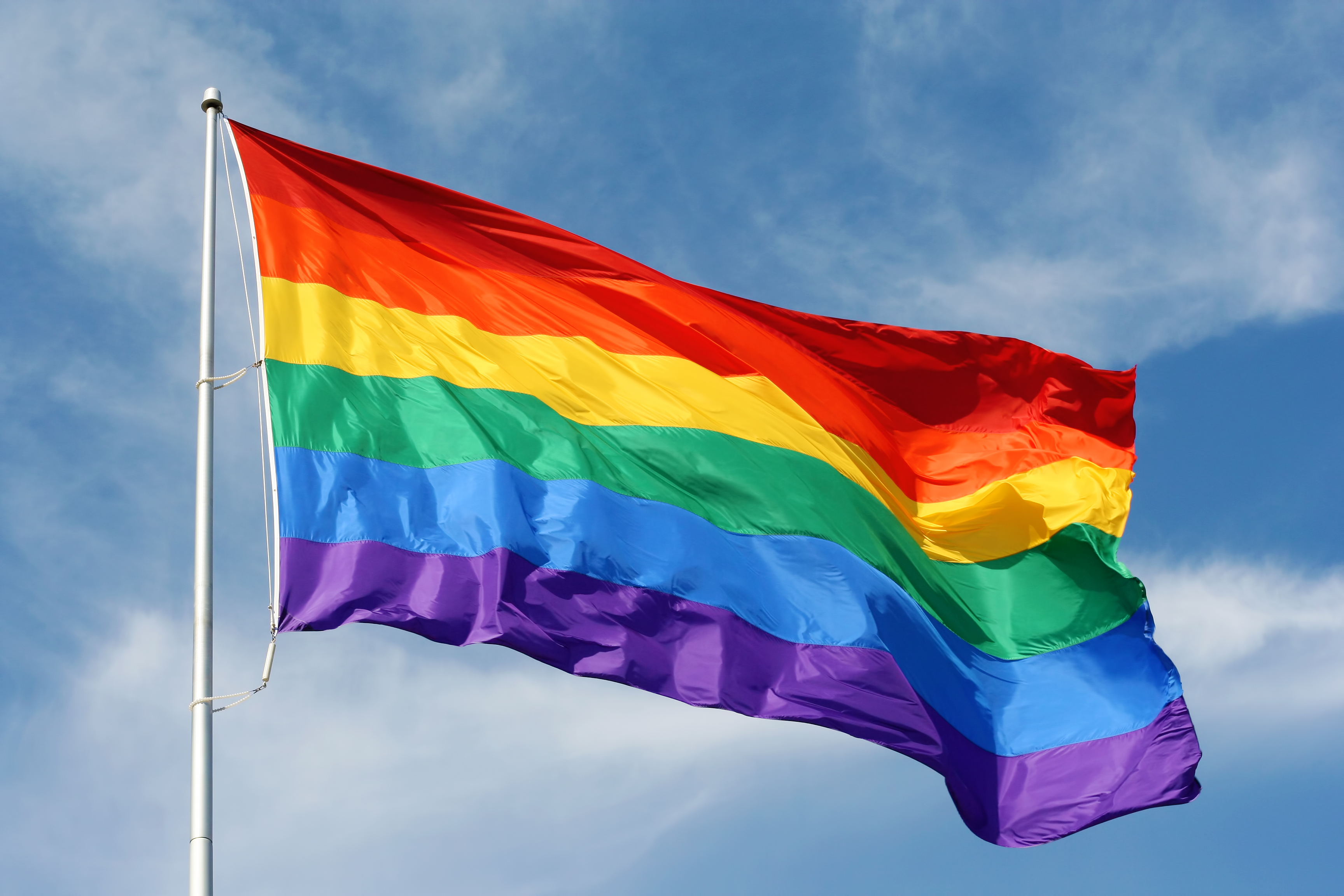
My default position on all LGBTQ issues is basically just be kind, tolerant and accept others who may be different than you are. I don’t need to fly a rainbow flag in order to be decent and kind.

That said, much of the emotional uproar on this particular subject focuses on children. Here’s my take: I think it’s perfectly okay and probably pretty smart to teach children how to respect diversity that they will encounter throughout their lives. Beginning, perhaps, in the fifth-grade, I think it’s okay for students to read books that focus on sexuality and gender.

At about this age, many children begin to have questions about these subjects, and it’s not always easy to have those discussions with their own parents or family members.

I never chose to be straight. My gay friends and relatives never chose to be gay. Either you are or you are not. A textbook or movie isn’t going to change that.

However, I am opposed to having these discussions with children under the age of eight. Any parent or teacher out there will tell you that seven-year-olds will gladly eat paste. Six-year-olds still believe in Santa Claus, the Easter Bunny and the tooth fairy. Their brains are basically mush. They have little to no critical thinking skills.

If a six-year-old announces that he or she wants to marry their best friend, I would hope you don’t go ahead and book a function hall or send out wedding invitations to friends or relatives. For me, it should be the same if your seven-year-old announces that he/she wants to change gender.

You certainly can be supportive of that declaration without embarking on life-changing medical operations. You can address your child by his/her preferred pronouns. I think it’s okay if you allow a child (age 12 or above) to legally change their name. It can easily be changed again. You can be supportive and loving of your child but it does not require you to hit the operating room.

In Maine, I believe the age of consent is 16. Still a bit low, in my opinion. But if 16 is the age of consent, then it should also be the age of individual gender choice. I’m more comfortable with 18, or better yet 21, but we’re not talking about me or my kids.

At 16, your brain has not finished the formatting process that allows for critical thinking. Society says at 16 you are too young to vote. Too young to watch porn. Too young to enter into a legal contract and so on. You can love, support and nurture your children without introducing puberty blockers, hormone treatments or irreversible surgery.

But if you encounter an adult, or even your own child, who says they are gay, non-binary or trans-gendered why not treat them with anything other than respect or kindness?

Gay people and transgendered persons have been around since the beginning of human existence. Now, they are able to feel more comfortable and included in society. Even if your own religious beliefs claim that homosexuality is a sin, you can still choose to be kind. You can always be kind. That is a choice.

And that’s a wrap for the four dreaded topics of social media. Peace to you and yours.

Climate Change: what your parents never told you

‘In the absence of science, religion flourishes . . .’

-Unknown

light light bulb bulb heat
Photo by Pixabay on Pexels.com

One of today’s most hotly debated public policy matters is the subject of Climate Change, formerly known as “global warming.”

Before I go any further with a blog post that will surely divide my followers and Facebook “friends,” let’s get right to the meat of the matter.

When former vice president Al Gore declared that “the planet has a fever,” he was right. Global Climate Change (GCC) simply cannot be denied.

I am not a scientist, geologist or meteorologist. I am just another pundit with yet another point of view.

But while my friends on the left are far more likely to celebrate my above statements about the reality of GCC, I have some serious misgivings about many of their proposals to “fix the problem.” Recently hundreds of high-school students skipped classes to rally against GCC.

They should have hit the books instead.

When debating GCC, we should be able to acknowledge some fundamental facts:

  • Planet Earth is approximately 4.543 billion years old;
  • The Ice Age began 2.4 million years ago, lasting until approximately 11,500 years ago;
  • Humans began roaming the planet approximately 200,000 years ago.

So what do these facts tell us?

Well, for starters, the earth’s climate has been changing for a long, long time and humans had little to no impact on the earth’s atmosphere until about 50 years ago.

But before we begin any conversation about GCC, we should check our emotions at the door. This is a complex issue, and rhetoric – from either deniers or fanatics – won’t do a damn thing except possibly increasing your blood pressure.

Climate Change Impacts: A brief history

If you want to talk about other impacts that affect GCC, let’s take a relatively short journey back in time.

According to an article by Karen Harpp, an assistant professor of geology at Colgate University, published in the Scientific American newsletter:

In 1784, Benjamin Franklin made what may have been the first connection between volcanoes and global climate while stationed in Paris as the first diplomatic representative of the United States of America. He observed that during the summer of 1783, the climate was abnormally cold, both in Europe and back in the U.S. The ground froze early, the first snow stayed on the ground without melting, the winter was more severe than usual, and there seemed to be “a constant fog over all Europe, and [a] great part of North America.”

What Franklin observed, Harpp writes was “indeed the result of volcanic activity.”

“Natural forces cause Earth’s temperature to fluctuate on long timescales due to slow changes in the planet’s orbit and tilt,” according to a Q & A published by Climate Communication, which is a non-profit science and outreach project. “Such forces were responsible for the ice ages. Other natural forces sometimes cause temperatures to change on short timescales.”

On the other side of the debate there is plenty of scientific evidence regarding human impact on GCC, especially so in the last 50 years. The human impact has, in fact, outpaced natural impacts.

So what do we do?

Industrialized nations (United States, Japan, China, Russia, Great Britain, India and France) have more responsibility because of their bigger global impact. The 2015 Paris Agreement on Climate Change was signed by all of these counties and many more nations that have a far lower impact or produce fewer greenhouse gases, primarily carbon dioxide.

And then there is the 1997 Kyoto Protocol, an international treaty that extends the 1992 United Nations Framework Convention on Climate Change to reduce greenhouse gas emissions, based on scientific consensus.

I don’t dispute the science that provides more than ample evidence of human impact on climate change, but I am an ardent opponent of so-called carbon taxes. Just a few days ago, the state of Maine rejected the notion of placing a dedicated tax on gasoline and home heating oil. Phew! We dodged another bullet.

So-called carbon taxes are the rallying cry of the activists, but those additional taxes would place a further burden on the citizens who can least afford it.

Maine Governor Janet Mills is pushing for a $50 million bonding package that would study the impact of rising sea levels on coastal Maine communities. “We’re all in this together,” she said.

Rather than creating yet more taxes, perhaps we should focus more attention on creating incentives to reduce greenhouse gases.

I have worked as a public relations consultant on several energy projects, including wind power and an LNG (Liquefied Natural Gas) terminal in eastern Maine. I was always amazed when environmentalists opposed clean, renewable sources of energy, citing bird strikes and the need for flickering red lights atop wind turbines. I live in a community that once burned trash to generate electricity, but don’t get me started on that boondoggle.

We humans have a right to occupy this planet and we all share an inherent responsibility to be good stewards of our natural resources. I recently took a quick gander around my house, comparing it to my parents’ home. When I was growing up there were no microwave ovens. We didn’t have a dishwasher, flat-screen televisions or computers.

I am not suggesting that we should get rid of these things, but maybe we could be more mindful about our energy consumption, and explore expanding clean energy sources such as hydro projects – and yes – nuclear power. (Last week, Forbes magazine published an article that examined the safety of nuclear power plants.)

In a March 11 Portland Press Herald editorial, the editorial board wrote that “the global climate fight will take many forms.”

I could not agree more.