
It’s not your 19th nervous breakdown

Come on, don’t tell me you didn’t see this one coming.

That’s right, word on the street, yet unconfirmed, is that former mayor Joanne Twomey is at least contemplating a bid to recapture her former District 135 House seat, and may challenge the incumbent, fellow Democrat Paulette Beaudoin for a chance to take on Republican Perry Aberle in November. So far, Twomey has not registered as a candidate with the Maine Secretary of State’s office.

Joanne Twomey: Portland Press Herald Photo

If this plays out like I predict, it will be the trifecta of disgruntled Democrats in Biddeford.

For those of you playing at home, here’s the run down of Democrat on Democrat for the city’s three State House Seats.

District 135: Joanne Twomey may face incumbent Paulette Beaudoin, a sweet, little old lady who just wants a fourth and final term.

District 136: Bob “I never stop campaigning” Mills will challenge incumbent Megan Rochelo, a sweet, little young lady who would really like a second term.

District 137: State Sen. Nancy Sullivan, facing term limits, will challenge Mayor Alan Casavant,  a man who often acts like a sweet, little old lady and would just like to spend his non-napping hours saving the world and chatting with his 48 million Facebook friends.

Twomey got trounced just a few weeks ago, when Biddeford voters overwhelmingly rejected her bid for a third consecutive term in the mayor’s office, but she is a fierce campaigner and that, combined with her name recognition, could spell serious trouble for Beaudoin. If Joanne is able to re-assemble her kitchen cabinet, look out!

I have been watching Biddeford politics for more than a decade, and this seems like a first. The GOP must be loving it, and the Dems in Augusta better break out the riot gear. This is one primary you won’t want to miss.

George ‘Pete’ Lamontagne

George “Pete” Lamontagne is an uncomplicated man who has seen his fair share of complicated situations.

Political observers say the former city councilor’s laid-back personality and his friendly demeanor often calmed severe storms during especially contentious Biddeford City Council meetings.

Pete Lamontagne

He is a self-described man of the street, and he is widely perceived as a champion of those without friends or power. He is soft-spoken, but commands attention and respect when he speaks. He is a lover of history, politics and art.

He is a simple, courageous man with an extraordinary reputation, and he loves his hometown of Biddeford.

We caught up with Pete in the lobby of the North Dam Mill building, formerly the home of the Biddeford Textile Company, where both Lamontagne and his father worked. As always, he was gracious, understated and relaxed.

With the exception of a two-year hiatus, Lamontagne served as a member of the Biddeford City Council for more than a decade, first elected as a Ward 5 Councilor in 1997. He returned to the council in 2001 and remained there, serving as both an at-large representative and council president, until stepping down last year.

You and several other members of the last city council were roundly criticized because of the infamous executive session meeting held with the owners of Scarborough Downs before the city announced its intention to put out a racino referendum. Do you regret that decision?

“In hindsight, sure. We found out after the meeting that it wasn’t right. (Sighs) It doesn’t matter much now, it’s water under the bridge. I can’t speak for anyone else, we just wanted to do something for our community to help bring back jobs…it didn’t work out, and now the city will have to look at other things, but I don’t think we’ll ever see anything that big, anything that could have brought so many jobs here.”

You were a big supporter of the proposed Biddeford Downs project.

“Oh absolutely. I’ve spent a lot of time in both Bangor (Hollywood Slots) and Foxwoods, which are both about 180 miles either way of here. When West Point closed its doors, it was a like a stake in the heart of hope for those of us who worked there.

“I see these unemployed people every day. These are good people, hard-working people; they looked at this proposal and said, you know…maybe I can get a job there. It was something to hope for, and I was relentless. Today, those people are still unemployed.”

You were the president of the UNITE union and you worked in that mill for more than three decades. The closure hit you hard.

“Oh yes…. (Pauses) You know, I never thought it [West Point] was going to close. I never planned to retire. It was tough. It was devastating for a lot of families, my friends… A lot of us started taking retraining classes at the Community Center, but jobs are tough to find right now.”

You know a lot about hard times.

(Laughs) “I sure do, but I also know something about good times, and strangely enough, they often overlap.

“I grew up on Water Street, and back then it was a very poor neighborhood, mostly bars. But it was a also a close-knit neighborhood. It was where Raymond Gaudette and [former mayor] Gilbert Boucher grew up. I had lots of friends.

“Two of my aunts and one of my uncles lived with us; back then it was how families did things. Every store had a back room with warm beer, because that’s what people liked. Warm Schmidts …it was their beer of choice (Laughs).”

You were named after your dad.

(Laughs) “Well, sort of, . . . his name was Pete. He was a big guy. He worked at the mill as a mason in the late ’50s and early ’60s. People called me Little Pete or Pete junior. Actually, my middle name is Alphonse, but don’t print that.” (Laughs)

Did you get the political bug from your father?

“Well, you know, he ran for the council as a Republican, and he got trounced. I mean, he was a French Republican.”

Did he live long enough to see his son get elected?

“Yes, he passed away just after I won my first election. I think he was very proud.”

You served under three mayors: Dion, Nutting and Twomey. Is Biddeford’s political landscape as tough as its reputation?

“Oh yes, Biddeford politics can be very tough. You have to have a thick skin. I got to serve with [Jim] Grattelo and [Marc] Lessard. Those were my best days. (Smiles)

“There were times when I had to break up physical fights; and there were many times when Mayor Twomey and I found ourselves in very heated disagreements, and we didn’t always see eye-to-eye.”

So how did you broker the peace?

“I don’t look at the oyster shell, I’m always looking for the pearl inside the shell.”

You and Joanne Twomey go way back.

“She was a pretty, little blonde girl. When I was a young boy, my family spent a lot of time out at Hills Beach. She used to visit, and we would sit on the beach together and talk. I guess you could say she was my first girlfriend.” (Smiles).

You also befriended Rory Holland, a former mayoral candidate who is now in jail for murdering two young men.

“A lot of people didn’t like him. He was not well, but I think he understood where I was coming from. I would let him visit my house, but I was always firm with him, and told him I would not hesitate to throw him out. I think he respected me, but I also think he needed a friend.

“I woke up to the news about the shootings, and I was in shock. It took me more than three days to get my head around it, what a terrible tragedy. It still hurts to think about it.”

Your service in the Army didn’t get much respect from former mayor Wallace Nutting.

“His four stars had a big impact on me. I wasn’t intimidated by them, but I had a high degree of respect for his military service and accomplishments.

“I was a mail clerk in the Army, a desk jockey, serving with the Adjutant General’s staff. But still, here was this 19-year-old Biddeford boy in France.

“Mayor Nutting had a different way of doing things. He would always ask for your input or opinions, but you always knew what the answer was supposed to be.” (Laughs)

Who did you vote for during the last election, Casavant or Twomey?

“No answer.” (Laughs)

You wanted to serve as a citizen member on the council’s Policy Committee, but you were never appointed. What happened?

I don’t know. Alan [Casavant] and I met shortly after the election, and I told him I wanted to be on the policy committee. We were in his office at City Hall, and I saw him write it down. Then, the council agenda didn’t include my name as an appointment.

“At first, I was mad….Bastard!, I thought, until I saw the two names of people who got appointed to that committee, Laura (Seaver) and Renee (O’Neil). Those were perfect choices, so I decided not to say anything. It could not have worked out better. I think those two will do a wonderful job. I was very pleased with the mayor’s picks.”

The Top-25 Biddeford-Saco political players and coaches

Love them or hate them; it doesn’t matter.

The following list represents the 25 most influential players on the Biddeford-Saco region’s political landscape, at least according to my own observations.

Choosing this list, and determining its ranking order was much more difficult than I imagined it would be. I received several recommendations from All Along the Watchtower readers; and it was surprising to see how many people came up with the same “short list” of names.

It should also be noted that many of the people on this list also suggested names that should be included, but none of them even hinted they should be on the list.

There is no core science or mathematical equation to this process. The list is mine and, by default, imperfect and subjective.  I invite your feedback, and look forward to your comments and suggestions about who was overlooked and who got way too much credit.

Before we get started, it’s important to note that this is not a list of the most popular or most likable people. It is a list of people who can get things done; people who know how to bend ears, twist arms and raise money when necessary.

They each have an undeniable imprint on their respective community, and I invite you now to meet this community’s political movers and shakers.

25.) Sam “The Man” Zaitlin

Sam Zaitlin began his political career nearly 40 years ago, winning an election to become Saco’s mayor in 1976.

The Biddeford High School graduate told me once that he was a political idealist and still believes pragmatic solutions are the core of political success. Sam also served on the Maine Board of Environmental Protection; and was appointed by his longtime friend and motorcycle-riding buddy, former Gov. Angus King, to serve on the Maine Turnpike Authority. Before Casella purchased the embattled Maine Energy Recovery facility in 1999, Sam served as vice president of KTI (Kuhr Technologies, Inc.), the plant’s previous parent company.

Because MERC dominated both cities’ political discussions for more than two decades, Zaitlin became a lightning rod of criticism directed at the plant. He has been openly critical of those who he says use issues associated with MERC to “serve their own petty political purposes.”

24.) James “Not like Jello” Grattelo

The above described moniker for former Biddeford Mayor Jim Grattelo should be attributed to my former boss, City Councilor David Flood, who corrected my frequent misspelling of Jim’s last name. “There is only one L, Randy…not like Jello.”

Although it has been nearly a decade since Grattelo’s coiffed presence could be found at City Hall, he still keeps his finger on the pulse of local politics, and offers his counsel and advice to a wide range of people, including his longtime adversary, former Mayor Joanne Twomey.

There is little doubt that Grattelo thrived on political strategy, orchestrating moves in City Hall (both as a councilor and mayor) that would make Rahm Emanuel proud. His detractors called him mean-spirited and sometimes petty, but despite our many battles I always found Jim to be affable and even a bit shy. His name still makes people take note, and that’s why he’s on this list.

23.) Peter “I’m not asleep” Morelli

Peter Morelli

A former journalist, Peter Morelli gave up the long hours, crappy pay and the requirement of covering zoning board of appeals meetings to instead take a job with long hours, crappy pay and developing the agenda for zoning board meetings, a brilliant tactical move I have always admired.

Today, Morelli is director of Saco’s Department of Community & Economic Development. Morelli has been working in Saco longer than most people have been alive. In 1999, when longtime City Manager Larry Mitchell left to take a job in his home state of Oklahoma, Mayor Bill Johnson tapped Morelli to fill-in as the interim.

Morelli is quiet, thoughtful and prudent. All traits of someone who would not seek elected office. But make no mistake, he can shift and craft public policy with the best of them. He has incredible institutional knowledge and the respect of the city council. Nothing happens in Saco without Peter’s prior knowledge and analysis.

22.) Joanne “Are you freakin’ kidding me?” Twomey

Joanne Twomey: Portland Press Herald photo

Of course, Joanne is on this list. Despite being trounced in the last election, don’t go betting against hearing again from one of the most boisterous Biddeford politicians since Papa Lauzier (For you newbies and Johnny come-latelys, that’s why they invented Google.)

In mid-summer of 2011, I was walking up Congress Street in Portland and ran into Ethan Strimling, by far the prettiest person to ever hold elected office in the United States. Ethan heard that I was running Alan Casavant’s campaign to deny Joanne Twomey a third consecutive term as Biddeford’s mayor.

“Do you really think she is vulnerable,” asked Ethan, cocking his head, furrowing his brow and examining me as if I had just crapped my pants. Ethan, a former state senator from Portland, is a respected and well-televised political analyst, despite the fact that I have had sex since the last time he won a campaign….yes, it’s been that long. Back to Twomey.

Twomey ran her last campaign on  the rails of the “Jobs, Jobs, Jobs” message all the way to the unemployment line in November, betting that her support for a proposed racino would guarantee her a third term.

Twomey has gone toe-to-toe with former mayors Bonnie Pothier, Jim Grattelo and Donna Dion. She was a self-described political activist, the proverbial fly in the ointment, a loud bastion of unbridled, post-Nixon era, righteous indignation.

As a four-term state legislator, Twomey made a name for herself by withdrawing from the Democrat Party, just hours before a crucial House vote. She said she was a “champion of the people” and waged war almost daily with the various and assorted owners/operators of the MERC plant…right up until she saw an opportunity to politically exploit the situation to bolster her image as reasonable and almost sane.

She disrupted political gatherings. She publicly chastised former Gov. Baldacci when he was speaking at the Biddeford-Saco Chamber, and unfortunately she became a caricature of everything she once professed to hate…a sneaky and ruthless politician with an enemies list.

She takes politics personally, and few can play the game better.

21.) Gene “Yes, I’m this good looking” Libby
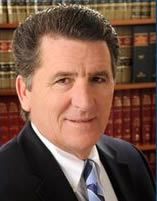
Gene Libby

A Saco attorney, Gene Libby once served as York County District Attorney. His late wife, Mary Kerry Libby, became the inspiration for the very popular Mary’s Walk, an event that has mushroomed over the years to become one of Maine’s most well-known and well-attended fundraisers in the fight against cancer.

In 2000, Libby was tapped by former Mayor Bill Johnson, to serve the remainder of a city council term when the occupant moved out of his council district. He easily won re-election.

Libby has a good lawyer’s temperment: smart, calculated and quiet. He is the sort of guy who commands respect just because…well…because…he is Gene Libby.

The Kerry family has achieved iconic stature in Saco, but respect for Libby is probably based more on his ability to offer strategic guidance with a seasoned prosecutor’s sense of how to close a deal.

20.) John “No, I did not marry Theresa Heinz” Kerry

John Kerry of Saco

Speaking of the Kerry family …. John Kerry has certainly been around political circles for a long time. In fact, when he started, it was known as “political squares” because the circle had yet to be invented.

Kerry and his brothers are well known for operating the Kerrymen Pub, but John is also well-connected on many political levels, from the Boston Archdiocese to being appointed by former Governor John Baldacci to head the Maine Office of Energy Security & Independence. His work for Catholic Charities is evidence of his ability to cull local connections.

The fundraising and completion of the remodeled St. Louis Child Care Center in Biddeford is just one of the many examples of how John Kerry has helped  and influenced his community.

Politically, he generally stays comfortably below the media radar line, but real insiders know that if you want a future in Saco politics, you ought to have a chat with John Kerry before you order your lawn signs.

19.) Roger “I have a badge” Beaupre

Roger Beaupre: Journal Tribune photo

Biddeford Police Chief Roger Beaupre’s talent for political survival is superseded only by his ability to cook a perfect hamburger or apply for federal grant money.

Roger Beaupre has been the city’s police chief for a long time, and he has seen a lot of political bluster during his career, including the incident in which Joanne Twomey (No. 22) was handcuffed and escorted from the City Council Chamber.

Beaupre is Biddeford’s equivalent to J. Edgar Hoover with better looks and the ability to smile. He knows all of the city’s secrets. Better yet, he knows when to keep his mouth shut. The command center near his office rivals NORAD, equipped with more technology and surveillance equipment than Fort Meade.

Roger knows the city better than most people, but he never brags about it. He is stealth, strategic and generally a nice guy, so it’s hard not to respect the man who could make your toes curl with stories about the old days, when dinosaurs, Jack Kerouac and rowdy politicians roamed the unplowed city streets.

18.) Doug “is this building for sale?” Sanford

Doug Sanford is perhaps the best thing to happen to downtown Biddeford since the discovery of the Saco River.

In less than 12 years, this boot-strap real-estate developer has become one of the city’s largest commercial property owners. A self-described “attention deficit disorder junkie,” Sanford is always furtively scanning the horizon, looking for the next bunch of cinder blocks with potential.

He can beautifully renovate a building almost as fast as he talks. He is passionate about the city and its potential, and he despises the slow, tedious grinding of the political process.

He’s a mover and a shaker, literally.

He is also a guy with an impressive Rolodex and an iron will to get things accomplished. He prefers the background, and he is an inspiration for anyone who has become cynical about the merits of community involvement. Make no mistake, politicians of all stripes and calibers know that Doug Sanford’s blessing carries enormous weight.

17.) Tammy  “Get off your ass” Ackerman

Tammy Ackerman/File Photo

Okay, so once you get past the fact that she didn’t go to Biddeford High School or sing in the Thornton Academy chorus, it’s hard not to recognize that this “person from away” is here to stay…and make it a bit more, shall we say…aesthetic?

Tammy is the heartbeat of downtown revitalization efforts, and she’s not afraid to put her money where her mouth is.

Although she narrowly lost her first bid for political office to Bob “Do you know who I am?” Mills, many people in the city rightly believe that Ackerman has a bright political future in the city, despite her Anglo-Saxon surname.

Ackerman is ambitious, talented, passionate and outspoken, which leads a lot of people to believe she is an alien being sent here from a planet where things make sense and projects are judged on their merit, not stereotypes.

If you come across Ackerman, run…don’t walk. Otherwise, you will likely be lulled into serving on some committee or helping the community. Who needs that when you have cable television?

16.) Donna “unity in the community” Dion

Former Mayor Donna Dion

Former Biddeford Mayor Donna Dion accomplished what no other mayor since who knows when has accomplished. She served three consecutive terms in the city’s top political seat.

With more than 489,000 close relatives (and who knows how many cousins) living in Biddeford, Donna was able to stifle the gamesmanship of her political adversaries including Jim Grattelo (No. 24), Marc Lessard and former city solicitor Harry Center.

Dion’s biggest weakness is that she remained politically naïve throughout the six years she reigned over the city. In 2010 she must have eaten some bad acid because she decided to seek the Blaine House with no money, statewide name recognition or political affiliation.

She was a common sense candidate with absolutely no common sense.

Nonetheless, Dion has a loyal following, even though she angered a core chunk of her constituency by embracing and joining a PAC to bring a tribal casino to Biddeford.

She may be in the political background, but she still has influence, so long as she doesn’t declare as an independent candidate for president.

15.) Bill “would you like a cup of coffee?” Johnson

Only the most studious of political historians may recall a time when Mark Johnston was not the mayor of Saco. But don’t ask Bill Johnson, he never believed he was the city’s mayor, mistakenly believing that he had been elected to serve as the city’s affable grandfather.

Don’t get me wrong. Bill is a retired oil company executive. He has seen and done things.

He’s been around. He’s old school, sort of like Norman Mailer…tough guys don’t dance and if you don’t vote the way I want you to, I’ll beat the crap outta you when no one is looking.

You would be hard pressed to find a guy who is more civic minded than Bill Johnson. He and wife, Mary, live on a pastoral farm on the city’s outskirts, yet Bill spends his retirement serving on non-profit boards and helping civic organizations. He is a Universityof Maine trustee and serves on the Portland Symphony Orchestra’s board of directors.

Bill served as Mayor Emeritus after retiring from local politics, gladly filling in for Mayor Mark Johnston who was often too busy trying to keep his business going to attend ribbon cutting events and Dr. Seuss reading hours at Fairfield School.

Bill has lots of friends and enjoys tremendous and widespread respect from his adopted hometown of Saco.

14.) Craig “Holy Shit, I have to wear a tie?” Pendleton

Craig Pendleton

Few people in Biddefordord or Saco can pick up the phone and get Senator Olympia Snowe on the other end of the line. Craig Pendleton is one of those people who can.

Craig is not your typical political player. Many people, including yours truly, were at least temporarily taken aback two years ago, when Pendleton was hired as the executive director of the Biddeford-Saco Chamber of Commerce. But it didn’t take long for him to settle in and put his skills and talent to use.

A life- long commercial fisherman, well-known for his frank demeanor, Pendleton distinguished himself as a visionary in Maine’s commercial fishing industry (or at least what’s left of it.) He was the driving force behind the creation of the Northwest Atlantic Marine Alliance, a loose-knit association of fishing communities throughoutNew England. (Yes, dumbass…this is the northwest section of theAtlantic! Look at a map).

Whatever Pendleton lacks in polish and tact, he compensates for it with a work ethic that would land most people in the Emergency Room. His wit, enthusiasm for new ideas and his honest, straightforward reputation has earned him the respect of national and state leaders.

Often overshadowed in public policy circles by his older brother, Carl (CEO of Sweetser), Craig has made his own distinct mark on federal and state policies, especially on fisheries related issues and an obscure state law that dictates how far a strip club can be located from the shoreline.

His greatest accomplishment happened last year, when he single-handedly saved Camp Ellis during a severe winter storm. He simply strutted to the end of the jetty and “had a talk” with the ocean. “You keep messing with my neighborhood, I’m gonna pull every friggin’ fish off Jeffrey’s Ledge”. The ocean retreated.

13. Bill “Don’t even think about it” Kany

I know what you’re thinking. Am I talking about the elder Bill Kany, aka Bill Kany, Jr. or about his son, Bill Kany, Sr.?

My response: Does it matter? They’re probably tied anyway.

Bill Kany (right) is a mover and shaker in Saco

The Kany family has unmistakable influence in the city of Saco, despite confusion over their names and ages. To prevent confusion, let’s stick with the older William Kany, a manufacturing industry icon of the Saco Lowell days, he later became chairman of the Saco-Biddeford Savings Institution’s board of directors. Never, and I mean never, accidentally call that bank Biddeford-Saco Savings. If you have to ask why, you don’t know Bill Kany; and you will likely never make this list.

Growing up in Saco, I often heard the legend of Bill Kany. If you were thinking about doing something in the city, you were first required to drive down the Ferry Road, find Kany outside his home wearing Bermuda shorts and trimming his hedges. You pitch your idea, and he either raises his thumb in approval or lowers it to doom and dash your dreams.

He is, after all, a modern-day Marcus Aurelius, an elder statesman who commands respect without ever asking for it. He was the driving force behind the creation of Saco Spirit; and once he gets behind an idea, there’s no stopping him.

12.) Bonnie “Bounce Back” Pothier

Bonita Pothier

If you could combine grit, muscle and charm, Bonnie Pothier would be the end result. I nicknamed her “bounce back” because of her incredible resilience and survival skills. Her supporters and detractors agree: She is a force to be reckoned with.

She became Biddeford’s first woman mayor; and it was a difficult and contentious two-year term as she plowed ahead against a sea of those from the “old boy” club who sought to see her destroyed. She never backed down from the fight; and despite every obstacle helped bring the city’s government into the 20th Century, paving the way for a new type of city structure that would later include hiring a full-time city manager.

Pothier’s intelligence and her penchant for efficiency and professionalism proved to be politically unpopular; so much so that she was ousted after one term and replaced by a man who could arguably be called the city’s worst-ever mayor, Roger Normand…a nice enough guy, but little more than a puppet for those who were pulling the strings from the smoke-filled confines of Ward Eight. (Again, Google it)

Pothier bounced back; and landed on her feet. She played a pivotal role in creating and coordinating the formation of Biddeford Tomorrow, a loose affiliation of individuals who wanted to see an end to Biddeford’s reputation for political bickering.

Members of Biddeford Tomorrow played a huge role in up-ending the conventional wisdom associated with the three-way 2003 mayoral race that saw a Republican become the city’s mayor for the first time in more than 40 years….I mean a Republican who was actually registered as a Republican.

Politically, Pothier today remains mostly behind the scenes, but did play a key role in ousting Mayor Joanne Twomey (No. 22) from office.

11.) Roch “Old School” Angers
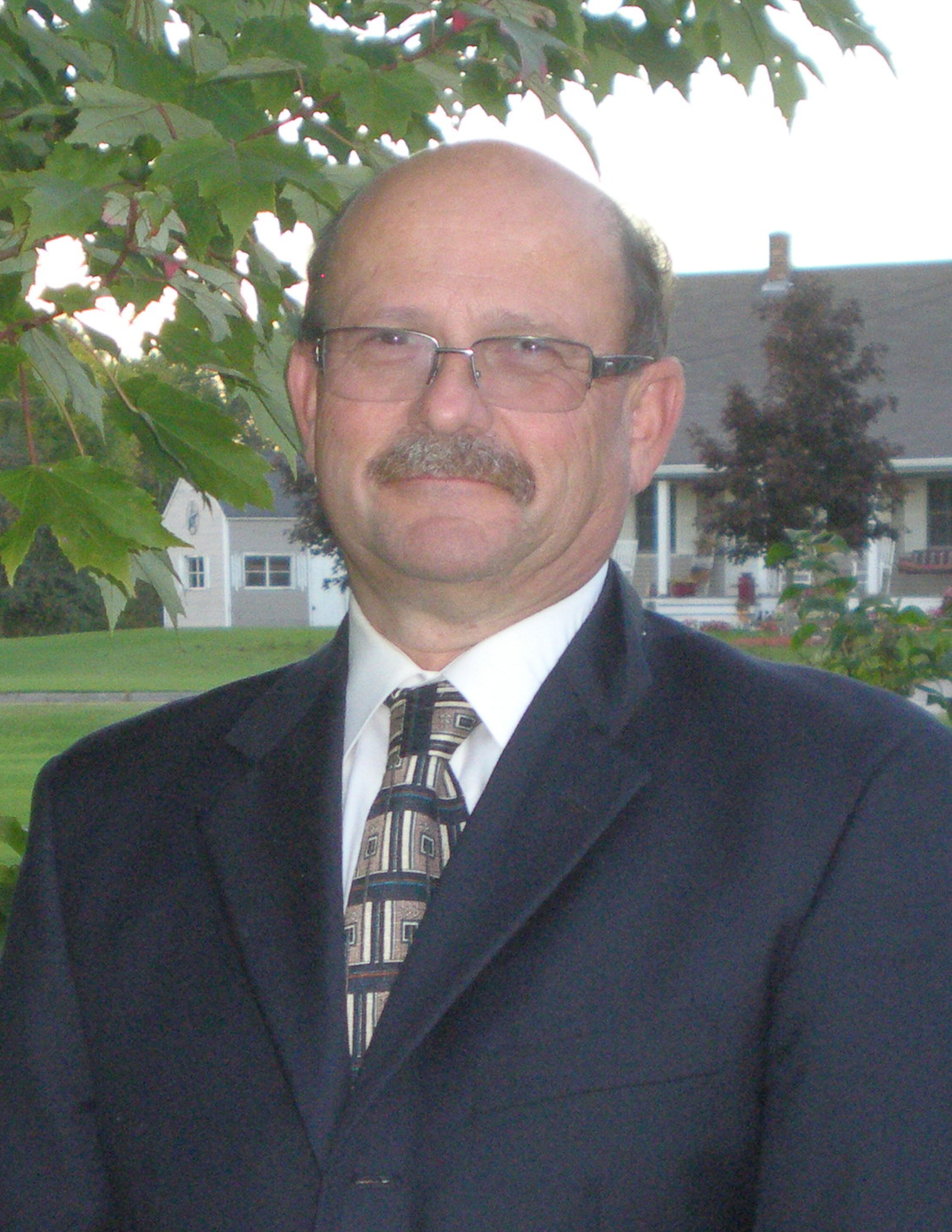
Roch Angers

One of the few people on this list who is currently serving as an elected official, Roch Angers is a strategist’s strategists.

He is old-school defined; and he’s got the temperament and experience to back it up. He has probably forgotten more about Biddeford politics than most people will ever learn. He has served on the Biddeford City Council under four mayors (Normand, Grattelo, Dion and Casavant), but his family has been involved in shaping the city’s political landscape for more than three generations, including the many late night meetings at the former South Street market run by his father.

Angers knows how the city’s political infrastructure works because he and his family designed most of it. In fact, the late legendary songwriter/singer Jim Croce was probably most influenced by Roch Angers when he penned the following lyrics: “You don’t tug on Superman’s cape; you don’t spit into the wind ;- –  you don’t pull- – the mask –off the ol’ Lone Ranger; and you don’t mess around with Roch.”

Sure, uptown got its hustlers, and the bowery’s got its bums, but City Hall is always just a bit more interesting (hard to imagine) when Roch Angers and his fiery rhetoric is sitting at the table.

Roch has enormous influence in almost every nook and cranny of the city. He is a fierce campaigner, an outspoken advocate of the powerless and a man who wields political power with the deft precision of a skilled surgeon.

Despite being bald, standing no taller than 5’2” and his wicked cool first name, he is not someone you want on your bad side. If you want to get elected in Biddeford, you would be well-advised to sit down first with Roch Angers.

And now….drum roll, please…..the TOP 10:

10.) Chris “The Suit” O’Neil
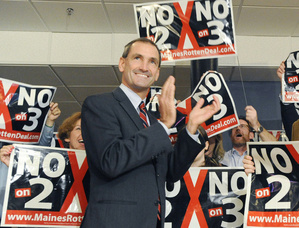
Chris O’Neil: Portland Press Herald photo

This St. Mary’s School prodigy has better political connections than Karl Rove; most likely because of the secret files and photographs he kept from the late-night, after-work parties with fellow crew-members from Tobey’s Restaurant, which has sadly been replaced with an Amato’s sandwich shop.

Actually, Chris O’Neil began his political career in 1996 by running for the Maine House seat that represents the northwestern half of Saco. His ascension is state politics can be attributed to his wit, intelligence and ability to work well with others.

He is a snappy dresser with a snappier vernacular.

He earned the respect of both Governor Angus King and Governor John Baldacci by being a moderate Democrat who could effectively herd wayward legislators back into the caucus fold. Before the end of his career in the Legislature, O’Neil was tapped to chair Baldacci’s Blue Ribbon Commission on Health Insurance Reform.

O’Neil had an enormous role in drafting the enabling legislation that created the now much-maligned Dirigo health care program. He also became a respected Augusta insider, parlaying the relationships he developed into a successful lobbying practice.

He is respected by both Republicans and Democrats for his brutal honesty, keen insight, remarkable sense of humor and his ability to find compromise. You may loathe the back-scratching apparatus of the lobbying industry, but few do it better than Chris O’Neil.

More recently, he was the face behind Mainers Against A Rotten Deal, successfully leading the charge against the development of a racino in Biddeford. It was a mission that cost him some friends on both sides of the river. But no one can deny that O’Neil runs political offense with very few interceptions; and so far…he has yet to be sacked.

9.) Richard “I’m a dirt farmer with a camera” Rhames
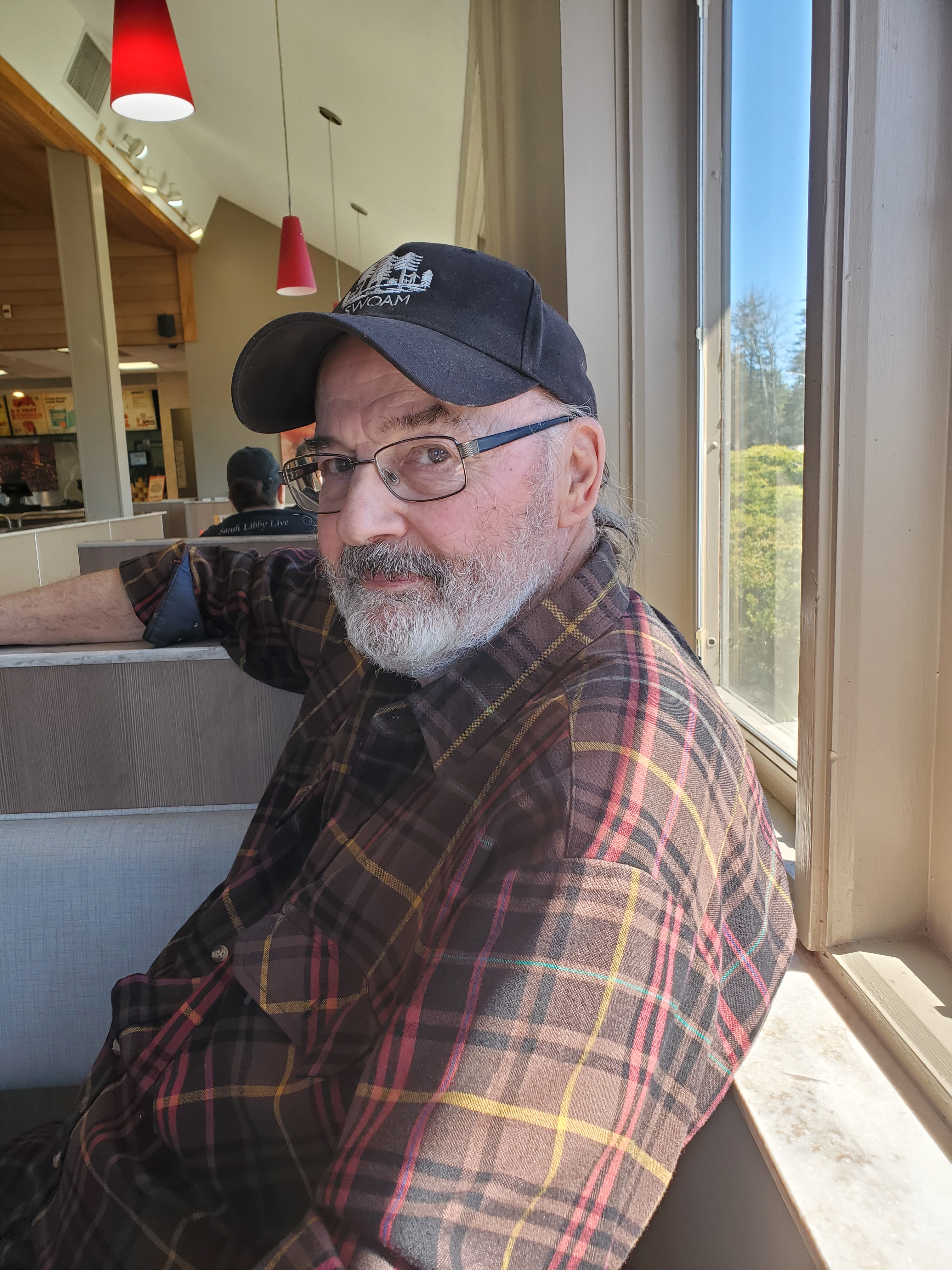
Richard Rhames

Sometimes alliteration is fun, but not when it comes to Biddeford City Councilor Richard Rhames, a man who could best be described as the city council’s conscience.

A regular council gadfly, Rhames has twice been elected to serve as one of the council’s two “at-large” seats. He began his political career by driving a grassroots effort to stop a planned expansion of the Biddeford Airportin the late 1970s. He then became one of the most outspoken opponents of the Maine Energy Recovery Company, although he credits his friend and political ally Joanne Twomey (No. 22) for leading that particular charge.

Even his most ardent detractors concede that Richard is extraordinarily intelligent and that he commands a core following of people with similar political persuasions. He despises pragmatism and often rails against a “political class” that seems way too cozy with business interests. He is an unapologetic FDR Democrat, who believes the power of government should be reserved for those who are otherwise powerless.

Richard’s strength is his ability to point out the hypocrisy and greased skids tactics of the politically well-connected. He does not want to “get along” simply for the sake of “getting along.” His frequent and long-winded monologues follow predictable themes: opposing corporate influence, raising awareness about labor issues and the sorry-state of media (local, national and global).

He was Occupy back when Occupy members were complacently upgrading their I-Phones, hoping for a corner office and craving a double-latte from Starbucks.

It has been said that Congressman Charlie Rangel lorded over the powerful House Ways and Means Committee with an iron fist, but it hardly compares to Richard’s fierce control of Biddeford’s Cable TV Committee, a committee he has chaired since before television was invented.

Richard is the architect, builder and master of the city’s public access television programming, a tool he built from scratch with the blood, sweat and tears of political battles with James Grattelo (No. 24) and a long list of others who saw an emerging, publicly controlled media as a “clear and present danger” to the political establishment.

Richard is the real deal. An authentic rabble rouser, who is arguably one of the best known people in Biddeford.

8.) Linda “Main Street” Valentino

Linda Valentino

Unless she is abducted by aliens, Linda Valentino is all but assured of winning the District 5 State Senate seat now held by Barry Hobbins.

Facing term limits in the Maine House, Linda has been planning and dreaming about this day since she was a little girl, playing hopscotch and helping her neighbors register to vote.

Linda is a thinker who doesn’t threaten those who don’t think much. Translated: she is very good at making people feel good about themselves.  She also has a knack for knowing when it’s time to take the gloves off. If you don’t believe me, just ask Don Pilon.

Valentino is often a walking-talking contradiction: she is a political hustler with a keen eye for detail. She’s outspoken, independent and very good at getting media attention.

She may not have Barry Hobbins’ old school cred, but I expect big things from Valentino in the not-too-distant future.

7.) Mark “The Wizard” Robinson

What Michael Jordan is to basketball, Mark Robinson is to public relations and political strategy: a solid and consistent slam dunk.

Mark Robinson

Robinson is the master of the game, the guy behind the curtain and someone who only sticks his fingers in just the right pie. He is a Democrat, a Republican, an Independent, a Green, a Libertarian…aww, heck…he’s whatever he needs to be, whenever he chooses.

He’s the proverbial ghost in the machine. A Biddeford native who was educated at Dartmouth and plays a mean harp, he’s also a member of the “in crowd” with a Rolodex that is more impressive than Gene Libby’s hair.

Mark is the consummate professional, and it takes him less than 15 seconds to assess a situation and only 30 seconds more to craft a plan for dealing with it.

If you ever find yourself on his opposing side, watch out. He uses a typewriter like Muhammad Ali uses a left-hook punch. It hurts really, really  bad when you’re on the wrong end of it.

For example, he helped get Joanne Twomey (No.22) elected as mayor, but then she crossed him; and BAM!….he made sure she got unelected. She never saw that left hook coming.

Mark started in the game with his younger brother, Chris, forming Biddeford-based Robinson & Robinson in the early 1990s. They quickly became a dynamic duo of writing and marketing that was involved in almost every single major political issue affecting York County.

When the Biddeford firefighters union was getting hammered, they called Mark Robinson. Problem solved. When MERC opponents found themselves consistently under the bus, they called Mark Robinson; voila…the creation of Twin Cities Renaissance.

From developing the city’s motto to the election of five different mayors, Mark was the guy making the wheels go round.

Mark’s greatest strength is perhaps the relationships he has developed with media folks from Caribou to Kittery. He is a professional competitor and a savvy insider who knows who to call and when to call them. He is at the top of his game, and his clients know it.

6.) Dennis “Duke” Dutremble

There are some names that just speak for themselves, and if you live in Biddeford; and don’t understand the implications of being a Dutremble then you are likely unaware that Biddeford has a coastline.

Duke is the second oldest of  Lucien “Babe” Dutremble’s five sons.

Babe, a former mayor and state representative, was one of the most beloved and respected politicians ever to serve the city.

Duke was standout basketball and football player at the former St. Louis High School and taught social studies at Thornton Academy while also serving in the Maine Legislature as both a member of the House and then seven-term member of the State Senate.

In 1993, he was tapped by his Senate colleagues to become the senate president, but later lost his bid for Maine’s First Congressional district seat.

The Dutremble family is synonymous with Biddeford politics, from the Sheriff’s Office to County Commissioners.

Word on the street is that another Dutremble may soon be entering the political arena. But despite his departure from the public spotlight, Duke Dutremble has unmistakably and forever secured his place in Biddeford’s political hierarchy.

5.) Michael “Marcus Aurelius” Cantara

Michael Cantara

Okay, okay…it’s the second time with the Roman reference, but it’s apt.

The Honorable Mike Cantara probably tops the list of respected former politicians, and remains today as a beacon of integrity, discipline and good judgment. Probably why he’s a judge…go figure.

A former Biddeford mayor, Cantara was later elected to become York County’s District Attorney before being tapped by Governor John Baldacci to serve as Commissioner for the Maine Department of Public Safety and later as a Maine District Court Judge, where he serves today.

Cantara may no longer be politically active, but he does know the ins and outs and the “whos” and the whys of the city’s political landscape. His counsel and experience are invaluable to anyone who wants to better understand the complex subtleties of local politics.

He is a quiet, unassuming man with ice-cold blue eyes and striking white hair. He reportedly was the man who recruited and convinced Bonnie Pothier (No. 12).  to run for mayor. And he was a mentor to a young and impressionable city councilor named Alan Casavant.

Cantara knows policy inside and out. That fact, coupled with his undeniable and sophisticated street-smart intuition, makes him a formidable figure in the world of local politics.

4.) Alan “Facebook” Casavant

There is no question that Alan Casavant is a very likable mayor. But it remains to be seen whether he will be as effective as he is popular.

He may seem all genial and goofy on the outside, but he’s got a political backbone that will soon be tested by his detractors.

Alan Casavant :Portland Press Herald photo

A veteran high school teacher and an incumbent  three-term state representative, Casavant strikes some people as the most unlikely of Biddeford politicians. He prefers mid-day naps and old movies over orchestrating who will actually serve as chair of the city’s Solid Waste Committee.

He can be simultaneously naïve and cunning. He is a visionary who often strays off point when trying to convince others about his ideas. He’s generally in bed no later than 10 p.m., but once roused he can move quickly.

Casavant is fresh off the heels of a major political coup, a landslide election that tossed an incumbent from office like am empty  No. 2 plastic bottle into a recycling bin.

But did that 62 percent of registered Biddeford voters vote for him; or did they vote against his opponent, Joanne Twomey (No.22)?

There is no question that Casavant was able to seize upon new campaign technology, leveraging social media tools such as Facebook, Twitter and a daily blog during his campaign. But he will need a lot more than some tweets to navigate the perilous waters of the upcoming and likely vicious budget debate.

Meanwhile, Casavant has other problems. He is being challenged by State Senator Nancy Sullivan for his District 137 House seat; and Sullivan is much better at campaigning. In fact, Casavant once  lost a primary bid for his State House seat by failing to vote for himself.

He’s no longer a young punk serving on the city council in the 1980s. He needs a pair of big-boy pants if he’s going to make the cut going forward.

Whether the absent-minded professor can survive Sullivan’s challenge or his first term as the city’s mayor will be interesting to watch.

I ranked Alan in the Top-5 because few people have as much potential to significantly alter the city’s political and policy landscape over the next two years.

3.) Barry “The Pope” Hobbins
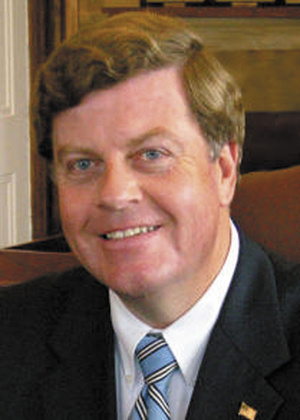
Barry Hobbins

From high atop his penthouse law office on Saco Island, State Senator Barry Hobbins surveys his kingdom and releases a heavy sigh of satisfaction.  “This is my town,” he exclaims, ignoring the fact that he’s pointing to two cities. “These are my people.”

On the seventh day, God may have been resting but Barry Hobbins was busy putting up lawn signs, a chore that was about as critical as cleaning your sock drawer.

That’s because no one ever challenged Hobbins during his last eight-year stint in the Maine Senate….well….almost no one, unless you count Republican newcomer Charity Kewish who received about 18 votes or Peter Truman, a perennial political candidate who also attempted to sue Wal-Mart after injuring his genitals with one of the store’s toilet seats. Truman later appealed his case to the US Supreme Court, where it was summarily rejected. I kid you not, that is a true story.

Barry came into the political world the usual way. He’s the proverbial hand-shaker and baby kisser. Few understand the game better or enjoy playing it as much as the once awkward kid from Saco.

Barry is perhaps one of Maine’s best political storytellers, proudly recanting the time when he crossed paths with the Prince of Eagle Lake, John Martin. If you don’t know that name, you shouldn’t still be reading this.

In the early 1980s, Barry could be found at the gates of Waterhouse Field, greeting fans at the annual Battle of the Bridge football game with U.S. Senator George Mitchell. He is old school Biddeford-Saco politics; Eddie Caron/Bob Farley old school.

Barry got the political bug at an early age, and he quickly learned how to excel at the game. At the age of 21, he was elected to his first Legislative term in the Maine House of Representatives and was re-elected to four more terms, followed by one term in the Senate.

In 2004, he returned to the State Senate, and today serves as the Minority Senate Leader but will be forced from office by term limits in November. He serves on numerous boards and even owns a piece of the Maine Red Claws, the state’s only professional basketball team.

Hobbins knows how to use his power and influence, on issues ranging from MERC to telecommunications  to crafting energy development policies, few can move as adroitly as Barry Hobbins.

2.) Wallace “The General” Nutting

It does not matter on which side of the Saco River you find yourself. Wallace Nutting is someone you should know.

Nutting grew up in Saco, graduated from Thornton Academy and still got elected as the mayor of Biddeford, as a Republican, no less!

Nutting had a fascinating  military career that started at West Point and ended with four silver stars on his epaulet…becoming a four-star general is no easy task, but it’s nothing compared to being a Republican from Saco and winding up as Biddeford’s mayor.

Nutting, who designed the U.S.military’s extrication of Panama’s Manuel Noreiga, also served as  Commander In Chief of the US Southern Command and as an advisor to President Ronald Reagan.

Nutting was considered by many people as an “outsider,” when he tossed his hat into the mayoral ring, less than three months before the 2003 mayoral election.

But Nutting proved his detractors wrong on Election Day. Once the votes had been tallied, Nutting beat-out his two more well-known Democratic opponents with 41 percent of the vote, earning the top spot in six of the city’s seven voting wards and leaving City Council President Marc Lessard, an early favorite, in last place.

It was a much different result than Nutting’s first bid for political office in 1994, when he ran for the State Senate. He lost the Republican primary to John Hathaway of Kennebunk, who later went on to win the seat.

One political observer said Nutting’s mayoral win was the result of a “perfect political storm,” in which several key issues converged into a mass of voter resentment about politics as usual.

He seemed like a fish out of water when he first assumed the mayor’s seat. For a guy who built his career on assessing intelligence and developing strategy, Nutting often fell short when the objectives became political, including his failed move to oust Harry Center as the city’s solicitor. Only Nutting thought he had enough votes.

But Nutting got more powerful as time went on, and he became an ambassador of goodwill and a cheerleader for promoting Biddeford’s potential.

Two years after his surprising win, he was unchallenged for a second term before he finally retired for good.

Other than Civil War hero and Maine native, General Joshua Chamberlain; Nutting is the only person to have his portrait hanging on the walls in both Biddeford City Hall and Saco City Hall.

And now, finally, the most politically influential person in Biddeford-Saco:

Mark “Let’s Make A Deal” Johnston

Mark Johnston

There was a time when Mark Johnston was not the mayor of Saco, it’s just that no one can remember when that was.

From behind the counter of his Main Street delicatessen, Johnston has engineered and closed more deals than a coked-up Goldman Sachs executive.

His political counsel is sought from both sides of the river.

He knows when and why someone farts in either city.

He has several pairs of big boy pants, and he wears them wrinkled, usually accompanied by an ugly sweater.

The guy is certified weird. He runs a business with his ex-wife and can always recommend the perfect bottle of wine to fit any occasion and budget. He knows more about MERC than the people who own MERC.

But he wasn’t always so suave….in fact, he once failed to get enough votes to become the mayor even though he was the only candidate on the ballot. (True story….sad, but still true)

He began his political career as a malcontented hippie, upset about a vacant car lot on Elm Street. He was immediately dismissed by the city’s political establishment as a Richard Rhames (No. 9) impersonator.

But someone bought him a razor and loaned him enough money to get a haircut. And then? Well, it was off to the races….

Johnston knows what his city council is thinking before they do. He has a better grasp of what’s happening in Biddeford than anyone else on this list.

He can play nice or he can play mean. He’s polite. He’ll let you decide how you want to proceed before he tells you what you are actually going to do.

Mark Johnston is the consummate politician….

He’s Bugsy Seigel, Charlie Lucianno and Meyer Lansky all rolled into one affable, near-sighted man with an uncanny resemblance to Sir Elton John.

He’s Number One, baby….. And that’s a wrap.

It’s the end of the world as we know it (and I feel fine)

In less than 24 hours, this campaign will be over, finished, completed, kaput.

Stick a fork in it, it’s done.

Volunteers gather in Alan Casavant’s kitchen on a cold October morning before our citywide door-to-door canvass.

At this juncture, there is not much left to say or do. Thus, in a pitiful attempt to keep my blog current, I have pasted below the e-mail I just sent to our campaign team. Regardless of how you feel about the issues, please get out and vote tomorrow…….

Tomorrow, the voters of Biddeford will have their say; but regardless of the outcome I have a few thoughts I wanted to share with each of you.

As I reflect over the last several weeks and months, I experience a range of emotions; and I am sure the memories will survive long after the campaign signs are packed up and the party draws to a conclusion. Tomorrow night, we will celebrate, regardless of the outcome. We will celebrate the overall experience and the amazing effort put forth on behalf of a better and brighter future for our city.

I have worked on a lot of campaigns on the federal, state and local level; yet I have never been so honored to work with such a fantastic, talented and dedicated group of individuals. None of us have received financial compensation, instead we were fueled by a passion….by a belief that Biddeford’s potential can only flourish if its people are respected and their commitments are honored.

You are all part of a diverse and unmatched group, representing each of the city’s seven voting wards. Some of you are seasoned campaign veterans; others are new to the game. Despite our differences, we came together as a team without so much as a bump. We gave our neighbors, friends and families something to talk about. We challenged the incumbent administration’s style, tone and leadership in hopes that we may make a positive difference in our community.

For that, we should all be proud. I have been consistently impressed by your dedication to this campaign, by your passion for the city we all call home and by your relentless and generous outpouring of work, sacrifice and time.

Alan Casavant will be a great mayor for Biddeford; just as he has been an outstanding state representative and one of our city’s most beloved teachers. Alan Casavant does not lead with an iron fist. Instead he inspires those around them to become more involved. He leads with intellect, compassion, humor and integrity.

I don’t care what happens tomorrow, and I only know this much to be true: This was a fight well worth fighting; and I am a better person for working with you. It was an honor and privilege to be a part of this team. I have learned something from each of you over the course of this campaign, and I have been inspired by your friendship and camaraderie.

You should all be proud of what we have accomplished. It has been an honor and a privilege to fight alongside you. Get some rest, and let’s the start the next chapter of Biddeford’s history with equal passion, drive and dedication!

Finally, make no mistake: WE WILL WIN TOMORROW NIGHT, in more ways than one.

All my best,

Randy

P.S. Please vote for Alan Casavant to be Biddeford’s next mayor.

Little pink houses…in Biddeford & Saco

I don’t know how it happened.

It started off like any other Monday morning, but by the time the sun began to set later in the day I realized that I had lost more than three hours. Gone; Vanished; Disappeared; Hasta la vista, baby!

I could have done laundry. I could have mowed the lawn. I could have gotten drunk and run around naked, cursing the plummeting Dow Jones Industrial Averages.

I could have built something really cool with Legos.

I could have done so many things, but instead I got sucked into the vortex of an ancient, parochial battle field, where soldiers were slaying the dragons of childhood memories. And it all happened on Facebook.

Yup, I was like a porn addict; fervently pitched over my laptop, numb to my surroundings with blood-shot eyes glued to the instant messages popping onto my screen from people I grew up with, people I remember and people I don’t know.

Yup, I joined one of those cyberspace group: You know you’re from ________, if . . .

I am usually much more disciplined. I loathe Farmville and all the other crap on Facebook, but these pages were speaking to me, sparking memories that had long ago been neatly tucked away in order to make room for much more important things than childhood nostalgia.

You know, important, adult stuff: mowing the lawn, doing laundry, getting drunk and playing with Legos.

But this is where I got into trouble. I joined two of these groups. Yup, I am a glutton for punishment and an overflowing e-mail inbox. My decision sparked the ire of competition between these sibling communities. My loyalties were immediately called into question.

I grew up in Saco, a small town that calls itself a city in southern Maine. (Hint: In Maine, we don’t have any cities, only a couple of big towns.)

Today, I live on the other side of the river, in a small town called Biddeford that is also described as a city. These two towns (like so many others in Maine) have a bitter football rivalry. I have always thought of these two communities as one town, and I never paid much attention to the whole rivalry thing. Probably because I never played football.

My grandparents lived in Biddeford and later bought a home in Saco. My grandfather taught high school English in both communities but my grandmother taught fourth grade only in Saco. Shortly after I was born (in a far-away college town), my parents moved into an apartment on Quimby Street in Biddeford. We lived on the third-floor of that “triple-decker” until I was seven years old and my parents bought their first home in Saco.

My best friend at the time was John Lessard.

Today, John lives in Texas, and he has a beautiful family. We are “friends” on Facebook.

Today, I live less than one mile away from that triple-decker, where I learned how to ride a bicycle and kissed a girl for the very first time. So, I guess you could say that I am from Biddeford.

Not exactly, at least according to the opinions of some people.

When I learned that we were moving across the river, I cried myself to sleep. My friends would be gone forever. I would never again see the girl I kissed. John and I would not be riding our bikes to Mayfield Park. Life was coming to a screeching, terrifying and horrific end.

I think it took me between 48 and 72 hours to get over the trauma of moving two miles away from Sevigny’s Market, my childhood friends and that back-yard shoe shop, which has since been converted into apartments.

There were new kids, a new school and even a new market, Don’s Variety. There were no girls who would kiss me, but it didn’t matter much at that time. Back then, I thought I could fly if I tied an old blanket around my neck.

Who needs girls when you can fly?

I don’t think too much about those days, even though I had the pleasure of serving as the editor of my hometown newspaper long after I had ditched my flying blanket (okay, maybe not that long).

The paper covered news for (gasp) both communities. And after traveling and writing stints for the better part of two decades across the country, from Annapolis and Nashville to Oregon, South Dakota and Texas; not to mention a bitter divorce, it felt good to be back home. It was reassuring.

So much had changed, yet so many things were the same.

I choked the interview for that job, but the newspaper’s publisher was eager to hire me because one of the graphic artist remembered having my grandmother as a teacher. I had graduated from Thornton Academy in Saco. I had my first haircut at Ralph’s barbershop, got my First Communion at St. Mary’s, got busted for shoplifting at Zayre’s department store and bought my first lottery ticket at Vic & Whit’s.

I was a local boy. We were a local paper. It didn’t take long for me to assimilate.

Eventually, I re-married and began the task of raising my own children in Biddeford. Some high school acquaintances chided my decision. Why, after all, would I (a Thornton graduate) choose to live among the working-class of Biddeford?

Well, maybe it’s because nobody ever stole my lunch money or gave me wedgies in Biddeford; or maybe it’s because people in Biddeford seemed just a tad less judgmental than their counterparts across the river. Maybe I favor the underdogs: the men and women who made the shoes, the blankets and machine parts more than those who checked the timecards and carried the clipboards.

Or maybe it was because they stopped calling it “Factory Island” and started calling it “Saco Island.”

But the reasons don’t much matter. I am from Biddeford.

And I am from Saco. And I am the lucky one because I have two hometowns.

Takin’ Care of Business

This is the final installment of the five-part Biddeford After Dark Series I wrote for the Biddeford Saco Courier in October 2001. This installment focuses on third-shift workers in downtown Biddeford.

The city’s streets are unearthly quiet during the pre-dawn darkness. Save for the steady stream of cars on the turnpike, and the occasional customer at Dunkin’ Donuts — there is little activity taking place at 3:40 a.m. on Sunday.

I traverse crooked and uneven sidewalks, noticing the patch jobs and the crumbling pieces of concrete. And I wonder who walked these streets before. Not before the sun set today, but before the sun set more than 100 years ago.

How much different was Biddeford after dark back then? What happened during the night when the city was a bustling hub of commerce in post-Civil War southern Maine?

As I walk along Lincoln Street — past a tired wrought-iron fence that is leaning and lurching in places — I can almost hear the ghosts of the past. They call to each other, unloading bales of cotton, smoking cigarettes and wiping the sweat from their brows.

I can almost see the women lined along the mill’s wooden floors, carefully inspecting the weaving process on the giant iron looms that were manufactured by the Saco-Lowell shops. There is the sound of steam and the rhythms of belt-driven engines roaring along the banks of the Saco River. The smell of gas lamps and late autumn winds flutters and hovers over the city.

During the daytime of that yesteryear, I see children playing on the cannon that faces City Hall from across the street. I think of old politicians and of the back-door deals they struck. The river may have provided the power, but the energy came from the workers. The men unloading hides at the tannery. Driving carriages and loading trains; they kept the city moving and the bankers happy.

But the night, quiet as it may seem, is not only the playground of reminiscent spirits and tortured souls. The night also belongs to the living. The living who work. The men and women who work to keep living.

Welcome back to Biddeford After Dark.

Time to make the donuts —

Joe Duran arrives to work each day at approximately 3:30 p.m. He punches a time card and then ties an apron around his back. The knot is pulled tight.

For Duran, 37, it’s time to make the donuts, and he settles into a familiar rhythm, knowing that he has to mix enough dough in order to make more than 2,800 donuts.

Joe is a baker for Dunkin’ Donuts and tonight — throughout the next eight or nine hours — he will make enough donuts to satisfy the morning rush of bleary-eyed customers at each of his company’s two Biddeford locations.

“I’d rather work days,” Duran admits quickly, pausing from his routine for a short break, his hands covered with flour. “I have a wife and three kids. I think I could have a better life if I worked when most other people are working.”

Being a night baker at Dunkin’ Donuts is not Duran’s only job, however. Tonight, shortly after midnight, Duran will make his way to his Saco home and sleep for only a few hours. The alarm clock will ring, and Duran will rise, shower and head back to work. This time, for his day job — as a mover. Sometimes, in fact, Duran works at his day job right up to the time when he needs to arrive at his night job.

“This can be a pretty stressful job,” he says, leaning against a screen door in the back of the restaurant. “But I’ve been doing it for a while, and I can get done what I need to do pretty quickly. I’m faster than a lot of the other guys.”

Some donuts are easier to prepare than others, Duran explains. For example, the blueberry donuts get done pretty easily. There is no creme filling. It’s simply a matter of mixing the dough, cutting the donuts, proofing the product in a vertical steam proofer, which helps the yeast to rise and then taking the donuts to the fryers. A few minutes of cooling, and those donuts are finished.

Now, it’s time for the next batch.

“Usually, there’s two of us here,” Duran explains. “A baker and a finisher. Tonight, I’m the baker.”

From inside the restaurant’s lobby, I watch Duran work behind a sheet of Plexiglas. He leans over the trays, moving to a rhythm only he knows — one that has been developed over a period of more than two years.

“We don’t leave until the job gets done,” he smiles. “The donuts have to be ready or a lot of people are going to be very unhappy.”

After spending so much time with the donuts, Duran says he doesn’t often indulge in his own work. “It’s like any other job, you know? When I get done moving other people’s stuff all day, the last thing I want to do is go home and move my own furniture.”

According to Duran, Friday and Saturday nights are the busiest shifts for the bakers at Dunkin’ Donuts. “People like their donuts and coffee on the weekends,” he grins. His shift runs Tuesday through Saturday. “What can you do for fun on a Sunday night?” he adds. “Everyone else is at home, getting ready to go to work in the morning.”

Although Duran earns more than his daytime counterparts, that is about the only good thing he can say about working nights. “Sometimes, I get grumpy,” he says. “But I basically can get six or seven hours of sleep each night. I just wish I had more time with my family.”

Taking care of business—

Beyond the politics and the controversy, there is still work to do and the workers at the Maine Energy Recovery Company (MERC) are on the job seven days a week, 24 hours a day, making sure that their waste-incineration plant is running as efficiently as possible.

The work shifts at Maine Energy involve a rotating 24-hour schedule. Two weeks of working 12-hours at night, and then two weeks of working 12 hours during the day.

Sometimes, the workers forget which is which because they work inside of a building without windows.

Eric Lagerstrom is the control room operator. He sits in a swivel chair, surrounded by a plethora of closed-circuit monitors and computer terminals. The room is lit by stark fluorescent lights, and Eric offers me a Swiss roll and a cup of coffee: “Hey, we have to have our perks at night, you know.”

Including the shift supervisor, the plant is run during the 6 p.m. to 6 a.m. shift by nine people, significantly fewer than the dozens who work during the day shift. The difference between the shifts is remarkable. There are no administrators or cleaners working at night.

“Things are generally quieter at night,” Lagerstrom says. “But the basic process remains the same. We process trash, we then burn it and generate electricity with steam.”

This is Lagerstom’s long week. He will work Tuesday and Wednesday and then Saturday and Sunday for a total of 48 hours this week. Next week, he will work on Monday, Thursday and Friday evenings. At the end of a 28-day cycle, he will switch back over to the day shift.

So, how does he adjust to changing sleep patterns?

“I don’t find it difficult,” he says. “I’m one of those people who can sleep during the day. For those who can’t, I don’t recommend working this job.”

Lagerstrom says working nights requires a good support system, such as an understanding spouse and an environment that can remain reasonably quiet when the sun is shining.

“You have to remain sensible,” Lagerstrom says. “Whatever system works for you, stick to it. Don’t try to burn the candle at both ends.”

As Lagerstrom and I chat, I glance over at the rows of monitors. The black and white screens depict an image of a fiery hell, where conveyors feed monstrous and insatiable boilers. There are dozens of switches, gauges and dials.

The control room, in fact, resembles the cockpit of something like the USS Starship Enterprise. Any moment now, I half expect Captain James T. Kirk to walk inside, asking Spock for a readout about some unknown planet.

My daydream (or rather nightdream) is interrupted. Jeff walks into the control room, removing his hard hat and taking a seat nearby. He is in his mid-40s and he looks tired. His blue coveralls are dirty and his hands are calloused.

Are things more relaxed at night? After all, the boss is at home and sleeping. So, can employees goof off a bit? Can they get away with things they could not during the day shift?

“I think most people can be more productive at night,” Lagerstrom counters. “I think with all of the daytime distractions missing, most people can be more productive.”

Jeff nods his head in agreement, sipping from a cup of coffee.

But still, the night takes its toll.

Even as I talk with these workers, the winter solstice is drawing closer — that time when the earth is further away from the sun than at any other time. During this time of year, it becomes especially difficult for this crew of workers, who both arrive and leave their workplace under the cover of darkened skies.

“I know people who have gone through divorces because of working at night,” Jeff says. “Your relationship has to be solid if you are going to work different shifts. It’s easy to become depressed or lose energy. There’s good camaraderie here, and that helps a lot.”

The darkness before dawn

So, this is the conclusion of Biddeford After Dark; a closer and more intimate look at the nighttime activities of the city. A southbound train rattles over the Elm Street trestle. A hunched-over woman is pushing an abandoned shopping cart that is stuffed with plastic bags along Pine Street.

Paul Easton, replete with his “Buchannan For President” signs and banners, is searching the dumpsters for returnable bottles. Joe Duran is making donuts. Eric Lagerstrom is watching the trash burn. Peter Schimek is patrolling the city’s streets. Karen Stewart is sweeping the tiled floors at the 7-Eleven store.

The parties are over, and a truck lumbers along Jefferson Street, waiting to pick up its next load of trash. The waves are crashing at Fortunes Rocks, but the beach is empty. A toll booth worker offers a friendly smile and change for a $5 bill. Rick and Jo Bernier are just arriving to work at the Palace Diner.

The coffee begins to drip, and the eggs are stacked and waiting. Slowly, but surely, the city rises from its slumber, wiping the proverbial seeds of sleep from its eyes.

A new day has dawned, and the city faces this morning like it has faced the others before this particular sunrise. The city is ready, and the first glimpse of sunlight appears over Wood Island.

Bring on the daylight. For me, it’s time to go to bed.

Thank you for reading Biddeford After Dark. I’ve learned a lot, and I hope you enjoyed a different perspective of our community.

The Thin Blue Line

This is the fourth installment of the Biddeford After Dark series that wrote for the Biddeford-Saco Courier in October 2001. This installment focuses on my ride-along with a third-shift police officer.

While the city sleeps, lost in its innocent slumber, the bad element is most likely to stir. Those who prefer the cover of darkness for their activities rise from their slumber and prowl, looking for a fight, drugs or a camera left behind in a parked vehicle.

It is the time of day when people are most likely to get behind the wheel after having a few drinks. It is a time when tempers flare, and when a jealous rage is most likely to escalate. The moon lingers over the city, and the night whispers are more audible without the hustle and bustle of daytime activities.

But while the city’s leaders sleep, another group takes over. They are the watchers of the night, the defenders of the law; and the guardians of what the rest of us so often take for granted.

Welcome back to Biddeford after Dark, and our report on the proverbial boys in blue: the men and women of the Biddeford Police Department.

Bad boys, bad boys —

As I sit in Peter Schimek’s patrol car, parked in the police department’s parking lot on Alfred Street, I watch in silence as Schimek checks his equipment. Then a song begins to echo in my head.

“Bad boys, bad boys — whatcha ya gonna do? Watcha ya gonna do, when they come for you?”

It’s a few minutes before 11 o’clock, and the downtown bars are packed. There is a kinetic energy on the streets tonight; a restless feeling that throbs only to the rhythms of the early autumn winds.

Like many other young boys, I once dreamed of being a police officer. The thrills and the excitement. The guns, a badge and the image of being the defender of truth, justice and the American Way — whatever that means.

The night’s opportunities are not lost on Schimek or his colleagues. They know that the streets are restless. And they know that they are short-staffed tonight. It’s not a good combination.

Schimek has been a patrol officer in Biddeford for more than three years, previously working as an officer in Old Orchard Beach.

Schimek, 35, is not exactly what I expected from a third-shift patrol officer. He is soft-spoken, almost a bit philosophical about his job and what he sees each night while making his rounds. He talks candidly about the city, his job and the personalities that are drawn to the call of the moon.

Absolutely serious when he needs to be, Schimek is also easy-going and relaxed, revealing a deft sense of humor and a non-cynical view about the people he encounters while working between 11 p.m. and 7 a.m.

Et porquois pas?

“You see all sorts of things during third shift,” Schimek says. “You see it all, and hear it all. Just bragging rights for anything: ‘those are my chips.’ ‘I’m stronger than you.’ ‘You spilled my beer.’ ‘This is my place to stand.’ ‘I don’t like you because you hang out with those kids.’”

Tonight, Schimek and I are covering traffic patrol, looking for burned-out headlights, speeders and drunk-drivers. There isn’t much traffic on the street, but Schimek knows that the night is still young.

It’s not long, however, before we get our first call. A bartender at Le Club Voltigeur, on Elm Street, (et porquois pas?) has called for an escort. Allegedly, according to the bartender, one of the club’s officers has had too much to drink and is now insinuating threats. Our car is the second unit to respond to the scene.

As soon as we pull into the parking lot, the bartender approaches our car. Nearby, a group of five or six men stand together, hands in pockets, trying to look inconspicuous.

“We get a lot more alcohol related calls during this shift,” Schimek explains. “Generally, a lot of people have been drinking since the early afternoon. It can make for difficult situations. Otherwise decent people lose some of their judgment and sensibilities. You have to be careful.”

The bartender goes to her car, unscathed — and Schimek talks with the group gathered in the parking lot. His mannerisms are professional, but he keeps his tone friendly, if not direct. He advises the men to head home, also warning them not to drive. The men nod their heads, trying to look casual and Schimek returns to the cruiser.

“Part of crime deterrence is to drive around,” Schimek says. “You’re going up and down streets, and the criminal doesn’t know when the officer is going to come by. You never have a set pattern. You do everything sporadically, just making your presence known.

So much for hanging out at the donut shop, but Schimek does know every establishment where food is sold late at night. “Hey, we have to eat at some point, you know.”

A fisherman’s nightmare —

Schimek and I are riding near Chick’s Hill on outer Rte. 111 in Biddeford. As we approach the Andrew’s Road, Schimek decides to turn back toward the city. Just as we make our way east, Schimek notices a commercial van that is traveling 15 mph over the posted speed limit. We turn around, and Schimek turns on the blue flashing lights. The van pulls to the side of the road quickly.

Schimek calls in the van’s license plate, and then cautiously approaches the now parked vehicle. I wait, wondering what the outcome of this stop will be.

“The two most dangerous situations for a police officer are domestic [violence] calls and motor vehicle stops,” Schimek explains before leaving the cruiser. “You never know what’s going to happen in those situations.”

After returning to the cruiser, Schimek calls in the driver’s license number. Bad news. Although the 34-year-old driver has a relatively clean driving record, he does have an outstanding arrest warrant. In 1988, this married father of two — returning home on this evening from a hard day of work — apparently made the mistake of fishing with a lure in a fly-fishing only area somewhere near Dover-Foxcroft.

Schimek shakes his head. “I have no choice,” he says. “We have to bring him in to the station and process him on the outstanding warrant.”

Thus, this man, who would have otherwise been sent on his way home with a stern warning to watch his speed, now has to be handcuffed, make bail arrangements and leave his vehicle on the side of the road to be towed.

A busted fisherman. Busted for a minor infraction that happened more than 12 years ago — more than 100 miles away, while enjoying a simple day of fishing.

Schimek is less than pleased with the situation, but he has little choice in the matter. Despite being short-staffed this evening, and the constant crackling of the police radio, Schimek and I will now be tied up at the station until the man either makes bail ($90) or is transported to the York County Jail.

Cash and carry

To my surprise, our prisoner is not that upset about the situation. Sitting in the back seat of the cruiser, behind a metal cage, his wrists chained together behind his back, he is astonishingly good-natured.

“Who would have thought?” he says, as Schimek talks with another officer who has been called in for back-up, so that the van can be moved and towed. “I forgot all about that. I thought it was a forgotten thing. I didn’t even know that I wasn’t supposed to be using lures in that area.”

On the way back to the station, our prisoner trades jokes and a casual attitude with Schimek, who has all but apologized for the inconvenience.

Meanwhile, the radio continues to alert us about other things happening in the city. A 15-year-old boy, standing on the South Street overpass, is spotted by an alert and passing state trooper. The boy may be suicidal, and another unit is dispatched to the scene.

A house party on Summer Street is causing some neighbors to complain. Schimek, however, is out of service and now assigned to little more than being a baby-sitter.

Back at the station, the prisoner is searched again, this time even more thoroughly. We find no contraband or weapons, and Schimek opens a locker, grabbing a plastic baggie. The man now must empty his pockets and verify his valuables. He must also remove his shoes. From there, in the station’s garage, our prisoner is escorted into the station. He is finger-printed and photographed, and then taken to one of several empty holding cells.

Schimek, anxious to return to the streets, seems increasingly frustrated. The prisoner calls a friend who agrees to post bail. Now, we all wait for the on-call bail commissioner. Some 20 more minutes go by.

Finally, the prisoner is able to talk with the bail commissioner. The bail is paid in cash. The police, apparently, do not take American Express — or Visa, for that matter. It’s cash or carry when you need to get out of jail. That’s the law.

Back on the streets —

It’s close to 1 a.m., and the natives, as they say, are definitely restless. Schimek parks his cruiser in the corner of the 7-11 parking lot. From this vantage point, we can see the steady stream of munchie-hungry customers pour forth from the downtown taverns.

Schimek recognizes many of the faces in the crowd, and he smiles when some tough guys walk past the cruiser, muttering derogatory remarks about the police.

“Not everyone appreciates our presence,” Schimek explains. “Third shift has less calls for service, but we typically have more arrests. I have arrested some of these people before.

“Quite often, people you’ve dealt with earlier in the night, you can see them a few hours later, walking home around 6 a.m.”

The moon is nearly full tonight, and Schimek has his own personal theories about why police and medical calls seem to increase during a full moon.

“During bad weather, calls also increase,” he explains. “My own personal theory is that when there is a low-pressure system, people’s brains swell because there is less pressure upon the body. It’s the only explanation I can think of.”

It’s not long before we have to respond to anther call. Two juveniles have stolen a flag from a residence. The perpetrators are apprehended quickly. Three units converge on the suspects in a quiet and poorly-lit neighborhood near Mason Street. The flag has been recovered, and the young men are arrested on probation violations and then charged with theft.

Another officer handles that arrest, and Schimek drives to the victim’s house to return the stolen flag. He chats briefly with the middle-aged couple, who offer thanks for returning their flag.

Another call, and we’re off again. Now, a deaf woman has accused an acquaintance of stealing things from her front porch.

The woman’s home is cluttered, and this call seems to involve a love triangle that has gone terribly astray. Apparently, the alleged victim was storing some of her boyfriend’s items at her home. The man’s other girlfriend, however, took it upon herself to gather up some of her beloved’s most cherished belongings, all of which are stacked in rotting cardboard boxes.

The man, who is the object of dueling affections, has bigger problems than locating his shaving kit, however. He is apparently spending the next several weeks in a New York City jail cell, awaiting trial on drug trafficking calls.

We’re back on the road in less than 15 minutes, but even as Schimek prepares to drop me off near my office on Main Street, something else suspicious catches his eye.

A white, pickup truck is pulled over to the side of Lincoln Street with its rear right turn signal still flashing. The driver is intoxicated and enjoying a midnight slumber. But not for long. The keys are in the ignition. The truck is in gear, and Schimek reaches for his handcuffs as he awakens the snoozing motorist.

The man seems baffled about what is happening. Before he knows it, he is cuffed and stuffed. The streets are safe again. At least for now.

This is Biddeford after Dark. Sleep well.