Shout it, shout it, shout it out loud

Every voice matters. Even the voices that have a hard time crafting their message.

As my hometown of Biddeford braces for another political season, one of our city’s mayoral candidates has opted to take his message to cyberspace by starting a blog. The blog seems intended as a platform to champion the plight of the under-served and to highlight this candidate’s economic development plan: a push to “legalize weed.”

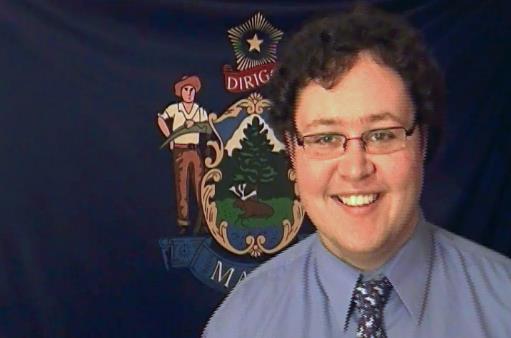
If nothing else, Karl Reed, Jr. has a unique strategy for ousting the incumbent:

He’s running a write-in campaign, otherwise known as a sure-fire way to place fourth in a three-way race.

Okay, so once you get past the horrid sentence structure, the author’s inability to spell or the grammar that would cause a third-grade English teacher to set herself on fire,  Reed’s intent should not be ignored by those who serve their community. See: Game Over, The Rent is too high.OLYMPUS DIGITAL CAMERA

In his initial post, Reed paints a sympathetic tale of those who are often ignored at the monthly Rotary Club breakfast meeting or the Chamber of Commerce “after hours” event.

He is speaking from the heart, a place more politicians should visit. He is a self-appointed champion of those without a voice, those who are too often discounted . . . those whom many of us ignore blissfully.

Karl worries that our public education system too often fails the kids on the edge of society. He worries that the people he encounters every day on the street may no longer be able to cope under the weight of a dismal economy and a lack of jobs.

These are important messages, an amateur-hour version of the Occupy Wall Street theme: full of sound and fury, completely aimless and an unyielding rage against “the man.”

It’s too easy to ignore it unless you have lived it.

Despite my sympathy and appreciation of his perspective, his rage and angst give me serious pause. Thus, I have no problem confessing that I will sleep better tonight, knowing his name will not be on the ballot in November.

When you’re a stranger

Fighting in Biddeford

Here’s a picture now. Take a good look.

Biddeford Mayor Alan Casavant and I are standing in line outside the Biddeford Ice Area on a Saturday night.

Considering the hundreds of other people waiting in line with us, we both feel very out of place.

We didn’t know what to expect. We had front-row, ringside seats for a series of  NEF cage match fights. Of the approximately 2,000 other ticket holders, neither Casavant or I spotted a familiar face. And that takes some doing.

Some two miles away, a non-profit group is hosting a performance dance event in one of the former mill buildings that dominate the core of our city.

I wouldn’t hesitate to bet my next paycheck that attendance at the cage match fights far outpaced the number of people attending the dance performance.

Both Casavant and I were a bit elitist about our initial perception of the fights and the crowd that seemed thirsty for blood. We were outsiders, and well outside of our element.

It was interesting to note, however, that Maine Secretary of State Matt Dunlap, a one-time Democratic candidate for the US Senate, “likes” the NEF page on his Facebook page.

If not for the complimentary tickets, you can be assured that neither Casavant or I would be there.

After more than two hours of watching raw, intense competition, Casavant and I left with a changed opinion about both the event and its participants. There was a mutual respect among the fighters. The violence ended abruptly at the end of each match as the contestants would embrace and indicate their admiration and respect for each other.

It was nothing short of a bizarre experience for me . . . on the eve of once again writing about cultural diversity and elitism.

Pride cometh before the fall

Here’s another picture, and take a good look.

It takes a community

It is a Saturday afternoon on Main Street in downtown Biddeford. I am standing outside Elements Book Store and Cafe, waiting to meet with Tammy Ackerman, and I bump into my friends Jim and Renee O’Neil.

The conversation quickly turns to my previous blog post, Fool for the city

As we talk about Biddeford’s cultural heritage and words like elitism and diversity, we are briefly interrupted by a strange convergence.

A couple that summers in coastal Biddeford Pool come onto the sidewalk, each holding paintings they had just purchased. Renee met the couple just moments before and she introduces me to them as the conversation about Biddeford continues.

Moments later, a man in his late 20s is in our midst. He is wearing a t-shirt, jeans and a baseball cap backward. His tanned, muscular forearms seem to be a canvass of tattoos, but most strikingly he has a very large boa snake draped over his body. He is accompanied by a little girl, maybe four years old. Just behind him, is a woman pushing a baby stroller and puffing on a cigarette.

We are — all of us —- on the other side of a giant window that looks into Elements. The patrons inside look up from their laptops and cappuccino, curious about this new picture on the other side of the glass. Me, Renee and Jim, a couple from Biddeford Pool and this man with a giant, scary snake.

Strangely, it does not seem even the slightest bit unexpected or awkward.

After a few moments, the man moves onward down Main Street with his entourage, and the rest of us continue our conversation.

Renee, a lifelong and well-known resident of the city, adamantly disagrees with my assertion that Biddeford continues to struggle with talk about cliques, elitism and a pervasive sense of class warfare. Her husband, Jim, is concerned that I am not accurately portraying the picture.

The funny thing? They both admitted that they had yet to read the what I had written the week before.

“It seems like you should be holding up a mirror, but instead are using a piece of stained glass,” Jim offers. “Mirrors simply reflect light, but stained glass filters the light to present a certain picture.”

They are both somewhat troubled that I wrote about Tammy Ackerman, a downtown activist, in a blog post that poked at the touchy subject of elitism and cultural diversity.

“Tammy is like Mother Theresa,” Renee quipped. “She’s the last person that anyone should describe as an elitist.”

More about my conversation with Jim and Renee in just a bit . . .

After reading last week’s post, Tammy Ackerman phoned me to share her thoughts and opinions about my half-assed attempt to bite down on an apple most people want to discard or at least ignore:

 That people in Biddeford seem especially sensitive about the words elitism, cultural diversity and a push for change that is being driven by relatively newer, non-traditional stakeholders…

People from away.

Subsequently, we spent the better part of 90 minutes talking face-to-face yesterday at Engine, her gallery and multi-use space on Main Street. I very much enjoyed that conversation, and I left the gallery with a lot of conflicting thoughts and opinions.

Last week I wrote about how former Biddeford mayor Joanne Twomey described Ackerman (and others) as elitists at an April 16 City Council meeting during a liquor license application for Fatboys Saloon. I opined last week that Twomey was “maybe, just maybe . . . a little bit right.”

According to Ackerman, the more division we create; the more we use labels, the more we remain stuck. “I guess I bristle when someone calls me an elitist because I come from the same working-class cloth as anyone else,” she said during our first phone conversation on the subject.

But elitism doesn’t have to be solely identified or explained by economic capacity, I countered.  A lot of people have talked about cultural or ideological elitism . . . the idea that Biddeford is lacking in culture or diversity makes many other people bristle.

On Saturday, Ackerman said the points I was trying to make were anything but clear.

“I guess I don’t understand what you were trying to say on your blog because I have done nothing to exclude anyone from anything,” she responded. “I don’t say bad things about Biddeford. We’re not creating gated communities here. I am imposing anything on anyone.”

My point, I conceded, was partially lost . . . or at least not very clear last week. When I said that Twomey was “maybe a little bit right” I was speaking more to the pace and the perception of the conversation, not necessarily the facts.

Ackerman and some of Biddeford’s other newer immigrants are incredibly passionate and motivated. Perhaps a little too motivated.

Ackerman’s efforts to heighten and amplify arts and culture in the downtown caught some people off guard. The push, at times, seems aggressive. Ackerman (and others) sometimes fail to understand a dynamic that is embedded in this community: an exaggerated sense of pride that is used to mask a lingering sense of low self-esteem.

Make no mistake. People who live in Falmouth, Cape Elizabeth or Camden are very proud of their communities, but they never talk about their pride. That would be uncouth, ill-mannered.

Pride in the name of love

But in communities like Biddeford we wear our pride on our sleeves. A proud city rising where the water falls is our motto. Tiger Pride.

Maybe, just maybe, we’re not quite so proud. Maybe, just maybe, there is still a dynamic of self loathing going on here.

 Maybe, just maybe, we are much more consumed with envy than pride.

It ain’t me; I ain’t no senator’s son

Ackerman says that issues such as elitism, the creative economy and quality of place are inherently subjective. 

“Quality of life is important,” she said. “Ask one person to describe quality of life and you get one answer. Ask someone else and you get another answer. Ask 10 people, and you get 10 different answers.”

She also says she is perplexed how anyone could define her as an elitist, but she concedes that the term can have both negative and positive connotations, such as the pride associated among an elite group, i.e. the Navy Seals.  But she also remains stuck on the apparent misnomer of elitism when it is attached to her efforts to promote a creative economy in Biddeford.

“I’m not a fancy person, so I guess I don’t get the ‘style police’ commentary,” she said. “If style police means I care about how our downtown looks, then maybe I am the style police, but I’m not sure why anyone would be opposed to our downtown looking as good as possible.”

 Ackerman spoke at length about her experiences in Biddeford, her struggles and her vision. I plan to write a more detailed piece about that in an upcoming post, but we kept jostling with the tricky concepts of elitism and diversity.

 Whether talking about Fatboys Saloon or the pushback to ideas about transforming downtown Biddeford, Ackerman repeatedly pointed to a Downtown Master Plan that was coordinated by the Heart of Biddeford two years ago.

 The downtown master plan was a very open and inclusive process that sought input and guidance from any stakeholder who was willing to participate. An over-arching theme of that process resonated clearly: Almost universally, people in Biddeford wanted the downtown to be a ‘family friendly’ destination.

According to Ackerman, taking a position in Biddeford is a daunting proposition for many small business owners and others who worry about some sort of retribution for their viewpoints. “Who wants to go through that? It’s not fun, and it’s certainly not profitable,” she said. “A lot of people are unwilling to get involved.”

Ackerman says she wants Biddeford “to be a good place for everyone” and as inclusive as possible. She says peoples’ behavior often reflects the treatment they get. If all residential landlords took small steps to maintain their properties, it would enhance not only the appearance of the downtown, but also the attitudes of those who live there, which could lead to a greater level of respect and an enhanced sense of community ownership.

But in a follw-up e-mail she sent me, it seemed clear that Ackerman remains frustrated that I urged her and others to be just a bit more mindful of the city’s  cultural history and a laundry list of perceived and some very real examples of elitism. She disagreed with my suggestion that maybe we should pause a bit to remember the past before pushing so headstrong into the future.

“I’m still not sure what “dial it back” means,” she wrote, responding to my point that some people are a bit uncomfortable about the pace of the conversation or the sudden (and admittedly positive) changes in our community. “I have the energy to help Biddeford discover what’s good about it now. I may not have this energy in a couple of years! Biddeford’s time is now. Decisions made today will impact the future just like the decision to bring MERC [the controversial, former downtown waste-to-energy incinerator] in impacted 25 or so years of Biddeford’s future.”

As clear as waves on the sea

I was honestly surprised by the reaction to last week’s post. While some people thought I hit the nail on the head, others thought I was far off base. Regardless of the opinions and their sometime surprising sources, I know one thing is beyond dispute. I had tapped something raw, something that makes people queasy.

One friend, another lifelong resident of Biddeford, told me my analysis was spot-on. There is again another battle of elitism happening in Biddeford, he said.  “I don’t know how to define it, but it seems pretty obvious to anyone paying attention. It’s like heading to the beach and seeing the waves. I don’t necessarily know where they came from or exactly how they were formed, but I know that they are there.”

City Councilor Roch Angers grew up in downtown Biddeford, and says many of the dividing lines are self created, but often painfully obvious. “It’s been going on for as long as I can remember,” he said. “It’s like an embedded piece of our culture. I think it’s part of our Franco heritage. There has always been a push back against those who appear to be succesful . . . a certain sense of envy. I agree that it’s more perception than fact, but no one can deny that it is there.”

Angers agreed with the historical foundation of my argument: the way immigrants (old and new) are received by their new hometown. A lingering sense of suspicion, a healthy dose of skepticism and a maddening attempt to thwart any attempt at change.

It’s not a new phenomena. It’s been going on for quite a while: The division between the affluent coastal neighborhoods and the inner city, which included two secession movements in the 1990s (Ultimately, the Maine Legislature refused to allow Biddeford Pool to become part of Kennebunkport)

The push to keep the city’s coastal beaches open to public access, championed by Mayor Gilbert Boucher in the early 1970s; the town/gown divide fostered by both sides as it relates to the University of New England’s campus, students and administrators.

The way that it’s still okay and politically correct to make jokes about Francos or a city that comedian Bob Marley describes as “Lewiston by the Sea.”

“I think people like Tammy [Ackerman] and Doug Sanford add a ton of positive energy to this community,” Angers said. “I also think they sometimes seem to be in too much of a rush to do the things we can probably all agree should have been done a long time ago. I think we are on the right track, and we just need to remember some balance.”

But Joanne Fisk, a 1976 graduate of Biddeford High School and another lifelong resident, adamantly disagrees that those historical divides or perceptions still exist.

“That all may have been true 30 years ago or so, but not today,” Fisk says. “I’m not sure what you’re trying to accomplish other than opening a can of worms that we have moved well beyond.”

Fisk also says that Biddeford is not an anomaly, nor are any issues of elitism more pronounced here than in any other community.

“I guess it’s easier to talk about the things that divide us, but I also think we would all be a lot better off if we spent more energy talking about our common ground.”

On the other side of the coin, Mark Robinson, a Fortunes Rocks resident, says he knows what it’s like to be called an elitist, and how the label often doesn’t fit.

A lifelong resident, Robinson said his best teachers were those at Biddeford High School, despite his Dartmouth College degree. He says he learned some of his most important life lessons as a teenager working in a mobile dining cart that catered to late-night downtown mill workers.

“I think the new energy in town is fantastic, and all the new players have my support one hundred percent. I know almost all of them personally, and they’re great,” Robinson said. “That said, I do think once in a while it’s possible to get a little too exuberant about the way things should be.”

In an e-mail, Robinson wrote that he was also troubled earlier this year by the tensions created by the announcement of Fatboys Saloon pending arrival to the downtown business mix.

“I was out of state at the time, but I remember being very upset reading about the brouhaha over what was described as a biker bar,” Robinson responded via e-mail. “I thought that was way over the line. Don’t like a TV show? Hey man, don’t watch it. Don’t like a biker bar? Don’t go there. Hell, it’s even OK to hope the place fails miserably and goes out of business. I don’t have a problem with that at all. But he should have the right to sink or swim on his merits, and he was getting crucified before he even got the place off the ground. Not at all fair, in my book,”

Born to be wild

Delilah Poupore, executive director of the Heart of Biddeford, said she was “taken aback” by my earlier commentary.

“I think that having community conversations about these topics can be very constructive and helpful,” she said. “But when you isolate particular individuals as part of the conversation, you are doing little more than creating more tension and controversy.”

I pushed back. At the same time that Heart of Biddeford took its first ever public policy position about a specific business (Fatboys Saloon), public policy makers in Augusta were weighing public comments related to the closure of the controversial MERC waste-to-energy incinerator that was located in the heart of the city’s downtown.

Delilah and just about everyone else at the Heart of Biddeford agreed that MERC’s presence was a major challenge to the downtown’s ongoing revitalization efforts. In my professional capacity, I represented MERC’s parent company and knew that the Heart of Biddeford and other downtown stakeholders were crucial to our efforts to build public support for the plant’s sale and eventual demolition.

I arranged meetings with both the Heart of Biddeford and the Downtown Development Commission. Both groups allowed me to make brief presentations to their respective members. DDC members were somewhat less supportive, concerned about the significant losses of both property taxes and downtown jobs if MERC closed. Conversely, the Heart of Biddeford crowd warmly embraced my message about how the closure would dramatically improve downtown Biddeford.

But when it came time to make public comments, the Heart of Biddeford declined to make any formal statement. “It’s not our place to make public comments about a specific business,” they explained.

Then, BOOM! Only a few weeks later, the Heart of Biddeford offered public testimony, raising questions about the impact of a “biker bar” into the downtown business-residential mix. I guess they changed their policy. This one time.

And that, I think, is why some people had such a strong reaction. Apparently, a biker bar would be a much bigger problem than burning garbage on an industrial scale in downtown Biddeford.

Something didn’t seem right.

Poupore maintains that her organization’s concerns were meant only to help the city council consider the liquor license application from a “planning/zoning” perspective. But the organization had never before raised any public concerns about any of the other several bars in downtown Biddeford or their annual liquor license applications.

Tammy Ackerman, a former city council candidate and a Heart of Biddeford board member, voluntarily waded into The Fatboys controversy. That spark reignited a lingering flame of resentment among some self-identified stakeholders, who admittedly spend far more time complaining than participating.

Once again, accusations of elitism and class warfare emerged upon Biddeford’s public stage.

Next week: Part III (THUNDERDOME: Residents offer differing perspectives about elitism and cultural diversity in Biddeford).


Fool for the city

It’s easy to forget the lessons of history.

It’s even easier to label others, take sides and compartmentalize ourselves within groups that match our own ideals, values or culture.

This trend happens frequently in my hometown of Biddeford, one of Maine’s most frequently maligned communities.

In this town, there is a lot of talk about so-called “elitists” and immigrants, and although those conversations generally remain just below the surface, the tension sometimes escapes into the realm of public policy.

Even talking publicly about any aspect of our community can be a tricky process. It’s sort of like why Chris Rock is allowed to use the “N-word,” but Jimmy Fallon is not.

IMG_1929If you are from Biddeford — and by that I mean your grandparents received their First Communion at St. Andre’s — it’s perfectly okay to disparage the city or make snide remarks about its residents, its challenges or its culture.

But you people from away better watch your step. We carry a mighty big chip on our shoulder, and we’ve been known to swing hard.

Because of its history and immigrant population, some people describe Biddeford as a “diverse community.”

To those of you who blather on about “diversity,” please do me a favor and shut up already.

Most of you only like diversity when it matches your pre-conceived ideas about a utopian state of diversity. True diversity would give equal weight, consideration and respect to differing political philosophies, intellectual and economic capacity and so many other factors.

If you really, truly favor diversity, you acknowledge that Barack Obama and Sarah Palin both have something valuable to offer; that the KKK should be allowed to march down Main Street; that pedophiles simply have a different sexual preference.

In essence, the word diversity is horribly abused and its concept rings like hollow bullshit when used by those who think they will sleep better at night by embracing it.

The way we were

By the mid 1800s, nearly 50 percent of Biddeford’s residents were foreign-born immigrants, according to the Maine Memory Project website.

Although most of these immigrants were Catholics from Canada and Ireland, they seemed to have little in common and enjoyed fighting amongst themselves. In 1855, there was only one Catholic Church in Biddeford: Church of the Immaculate Conception (later Church of the Assumption, then St. Mary’s)

But  animosity between the French and Irish Catholics led to the establishment of  a separate church, St. Joseph’s, established in 1870. Only 30 years later, St. Andre’s was established by a separate faction of French-Canadians.

I generally describe it like this: The Irish went to St. Mary’s and the French went to St. Joseph’s, but the really French went to St. Andres.

I briefly dated an Irish girl from Biddeford in the late ’90s. She told me (without any hesitation) that “the goddamned Frenchmen intentionally built the steeple on St. Joseph’s so that St. Mary’s would remain forever in the shadow of the larger church.”

Today, only St. Joseph’s remains open. So much for diversity.

The immigrants of yesteryear (Canadians, Irish, Greeks and Albanians) were drawn to Biddeford to work in the bustling textile mills, According to historical accounts, many of those immigrants became entrepreneurs in their own right and opened small businesses up and down Main Street. Their businesses included restaurants, groceries, and clothing, paper, and fancy goods shops.

Sound familiar?

Let’s name names

A couple of years ago, I wrote a post on this blog about the people I considered to be the 25 most influential political players in the Biddeford-Saco region.  The Top 25

In that post, I mentioned some folks who are part of a new crop of Biddeford immigrants; people like Tammy Ackerman and Doug Sanford.

I described Doug Sanford (No. 18) as perhaps the best thing to happen to downtown Biddeford since the discovery of the Saco River.

In less than 12 years, Sanford, a  boot-strap real-estate developer, has become one of the city’s largest commercial property owners and today owns a number of mill buildings in the downtown area. He is succesful, and thus…is often the target of derisive commentary and accusations of “elitism” and “political favoritism.”

I described Tammy Ackerman (No. 17) in the following way: “Once you get past the fact that she didn’t go to Biddeford High School or sing in the Thornton Academy chorus, it’s hard not to recognize that this “person from away” is here to stay…and make it a bit more, shall we say…aesthetic?

Tammy is the heartbeat of downtown revitalization efforts, and she’s not afraid to put her money where her mouth is.

Only a few months ago, Ackerman was publicly labeled as an elitist by my arch-nemesis, former Biddeford Mayor Joanne Twomey. (More about that in just a bit)

Although I stand by my previous comments about Ackerman and Sanford, I think that they (and some of the city’s other newer immigrants) sometimes miss the point about living and working in Biddeford.

Maybe, just maybe, Joanne Twomey was just a little bit right when she called Ackerman an elitist,  And maybe, Sanford has gotten so caught up in moving forward that he could benefit from a reflective pause.

Like their predecessors from Canada, Ireland and Greece, folks like Ackerman and Sanford were attracted to the city of Biddeford by its potential and opportunity.

And just like the immigrants who came before, the city of Biddeford is a better place as the result of these new immigrants, their different ideas, their hard work and their investments in our culture and community.

But remember, diversity is, at best, a tricky needle to thread and best served in small, incremental doses.

We’re out of room, but stay tuned for Part II of this segment: Fat Boys, Elements and a Tale of Two Cities.

Note: Please leave comments on this post so that we can archive a larger community conversation that can be limited by commenting on social media links. I look forward to your feedback and input.

Play that funky music, white boy!

The city of Biddeford is a lot of things; among them it is a college town that is home to the University of New England, a liberal arts college nestled along the banks of the Saco River.

In numerous conversations this evening with city election clerks and poll workers, I heard repeated stories about record voter turnout and incredible same-day voter registration statistics among UNE students.

It’s nice to see our nation’s young people get involved in politics, I only wish they actually cared a bit more about the community that serves as their temporary home.

Why do I say this? Why am I so callous?

Well, maybe it’s because I think college students, especially, ought to be a bit more “educated” on issues of national, state and local importance. Our nation’s college students represent our future. They are the up and coming leaders of tomorrow, but apparently can’t be bothered to invest a small measure of time in their host community.

How do I know this? Just look at the 2012 Election Results.

Even with a perfunctory review of the numbers, it becomes quickly apparent that the students cared about only two issues: the presidential election and a statewide referendum question regarding marriage equality.

UNE is located in Biddeford’s Ward One, the predominantly coastal and more affluent section of the city.

In Ward One, 1,445 voters cast ballots regarding Marriage Equality, not including 59 blank ballots.

In Ward One, 1,496 voters cast ballots to choose the next president, not including 8 blanks.

But what happened when these voters were asked about who should be their state representative in the Maine Legislature?

Hmmm…. there were 97 blank ballots

How about the Maine Senate? 173 blanks

How about Local Bond Questions regarding road pavements? 228 blanks

How about the local school budget? 138 blanks.

Ok, so maybe most voters don’t drill down that far…but let’s compare the number of blanks on those election issues against some other neighborhoods in the same city, like my neighborhood…

State Senate: 72 blanks (a difference of 99 fewer blank votes compared to Ward One)

Paving Bond: 143 blanks (a difference of 85 fewer blank votes)

Local School Budget: 69 blanks (a difference of 99 fewer blank votes)

Across the board, Ward One had a higher number of blank ballots than any of the city’s other six voting wards (both in actual numbers and as a percent of totals)

For better or worse, Biddeford Mayor Alan Casavant is also serving as a representative in the Maine House of Representatives. He is a Democrat. He lost by a margin of just 8 votes to his Republican challenger. Wow…what if just a few more students had cast a vote in that race???

Many of the students, including a young woman from the neighboring town of Kennebunk, used only their UNE student ID as a means of proving residency in Biddeford. But they did have to swear an oath to certify that they had not voted anywhere else.

Out of curiosity, how is it that college students who can wait in line 36 hours for the latest I-Phone or score coveted Dave Matthews concert tickets months before a scheduled concert not be able to register for voting until the actual day of the election?

Nah, it couldn’t be they want to wait until the last possible minute in order to avoid scrutiny. They really do care what’s happening in the world. They just forgot that Election Day was creeping up on them.

Maybe we should require you to register to vote when you buy an I-Phone or some concert tickets. Wouldn’t that be convenient? Then they would not have to rent so many passenger vans to vote. Then they would not have to put such a strain on our strapped city resources. Then, maybe these educated kids might be able to fill out the entire ballot.

You may call me a dreamer, but I’m not the only one.

Just around midnight

Within 24 hours the family feud will be over but political tensions in Biddeford will likely remain high long after the ballots from the June 12 Primary Elections are counted.

For the first time in more than 25 years, incumbents in each of the city’s three legislative districts are facing primary challenges.

Joanne Twomey

Now for a few predictions about tomorrow’s outcomes. (these are not necessarily my choices, just my predictions)

District 135 House Seat (Paulette Beaudoin v. Joanne Twomey)

Beaudoin, the incumbent, has never faced a primary challenge, and she has her work cut out for her with a challenge by former Biddeford Mayor Joanne Twomey. Twomey held the House seat and previously recruited Beaudoin to fill her shoes. Joanne took her loss for a third term as mayor hard, but this campaign has been relatively quiet, despite a last-minute dump of cash from a pro-casino PAC. If signs are any indicator, Beaudoin will do well….but political signs are little more than psychological warfare and Twomey is a savvy campaigner. In this race, I predict a razor-thin victory for Beaudoin. (less than 5%)

District 136 House Seat (Megan Rochelo v. Bobby Mills)

Bobby Mills
Bobby Mills

This is a rematch between incumbent Rochelo and perennial political candidate Bobby Mills, a city councilor who often runs for elected office). Rochelo is hoping for a second term in the district that is bubbling over with Democrats. Mills is hoping to settle a score, but screwed up significantly a couple of weeks ago by posting callous and stupid remarks about his opponent and her husband’s funeral on his campaign’s Facebook page. Mills attempted to edit his stupidity, but it was too late for his revisionist tactics. Several of his supporters backed away; and despite his open and forceful support for a casino in Biddeford, even the boys from Vegas took a few steps back and Mills did not receive any of the support that other local legislative candidates received from a pro-casino PAC. Rochelo by 10 points or better in this race.

District 137 House Seat (Alan Casavant v. Nancy Sullivan)

Nancy Sullivan
Nancy Sullivan

Casavant, serving his first term as the city’s mayor, is being challenged for his House seat by outgoing State Senator Nancy Sullivan. Sullivan really does not want to leave Augusta, and she is running a tight and competitive campaign with plenty of help from the boys in Vegas. Although she approached Casavant late last year, suggesting he should run for her termed-out senate seat, she is now campaigning on the premise that Casavant cannot effectively serve two masters. The problem here, is that she may be right, especially when considering some of the things Casavant repeatedly writes on his Facebook page. This will be a close race. Despite a contentious municipal budget, Casavant is still very popular and downright likable. Sullivan, however is a fierce competitor and better financed. Despite the intent of term limits, I predict Nancy will recapture her old House seat in what will be one of the state’s tightest Primary elections. Sullivan by less than 2 percent.

In other races, expect Linda Valentino to roll past Don Pilon in Senate District 5; Jon Courtney will blow Patrick Calder out of the water for the GOP’s chance to take on Democrat Chellie Pingree in November for Maine’s First District Congressional seat. In a crowded race, Republicans will almost evenly split between Rick Bennett and Bruce Poliquin for the chance to hold Olympia Snowe’s US senate seat for the GOP. (Charlie Summers looks tired, and not enough people know any of the other candidates.) Meanwhile Cynthia Dill will do well with Democrats in southern and coastal Maine, and expect her to dominate college campus towns and maybe Blue Hill; Jon Hinck will do well in Portland’s West End neighborhood, but Matt Dunlap, a more moderate candidate from Old Town, will ultimately win the ticket to a suicide bid against former governor and independent candidate Angus King in November.

Walking On Sunshine

Former mayor, state representative and city councilor Joanne Twomey announced Sunday that she would seek a return to the Maine House of Representatives.

At the Biddeford Democratic caucus, Twomey told a sparse group of fellow Democrats that Dist. 135 needs a “real” Democrat to stand up to Republicans in Augusta.

Twomey also said that she encouraged Rep. Paulette Beaudoin to seek the Dist. 135 seat four years ago, but decided that Beaudoin was either unwilling or unable to stand up to Republicans and should be replaced.

Joanne Twomey: A “real” Democrat?

Funny thing is: Twomey was not worried about Beaudoin’s performance until she lost her re-election bid for the mayor’s seat. Now Twomey needs a job. Now she is ready to fight Republicans and Democrats and anyone else who gets between her and her need for health insurance at taxpayer expense.

A video from the Biddeford-Saco Courier:

Joanne likes to talk about her “no-compromise/principled” position.

But does that hold water?

1,) The woman who once bemoaned the idea of a casino in Biddeford — testifying before the Biddeford City Council in 2003 by saying  — “In my Christmas village, there is no casino,” suddenly flipped when she got herself into a budget pinch, and she quickly became a cheerleader for a proposed casino. Principled? Really?

2.) The woman who built her political career on the backs of criticizing the owners of the MERC facility was giving them hugs in front of news cameras just two weeks before the 2009 mayoral election.

Just a few weeks later, after winning re-election as mayor, Twomey once again reversed her position. Principled? Really?

3.) On Sunday, during Biddeford’s Democratic caucus, Twomey said she encouraged State Rep. Paulette Beaudoin to run for the legislative seat that Twomey held until term limits forced her out in 2006. Now, Twomey says the people of District 135 need a “real” Democrat.

For such a principled person who professes to believe in the people, Twomey does not hesitate to play political hardball, but her victim routine is wearing thin.

It’s probably why Biddeford voters threw her out of office by an overwhelming margin in November. You can only fool people for so long.

But there’s also another reason Twomey lost by a 62-38 margin: She did very little campaigning.

Maybe she was overly confident. Maybe she was tired. Maybe she thought the city’s strong support for a proposed racino would ensure her easy re-election.

Twomey is a political quaqmire. On the one hand, she is a savvy politician. On the other, she is ruled by her emotions.

But this time, it looks like she is in this campaign to win. She’s accepting help from Ryan Fecteau, an eager beaver youngster with a solid grasp of 21st Century campaign techniques.

Twomey will likely do well in the Democratic primary against Beaudoin, a post-70-year-old woman who isn’t much of a campaigner and has never been challenged by her own party.

Former Biddeford City Councilor Perry Aberle, a man who describes himself as a “friend of Joanne,” is considering running as a Republican in District 135. If Twomey wins the Democratic Primary on June 12, Aberle will have his work cut out for him.

As I predicted on November 8, 2011, Joanne Twomey is far from done in Biddeford politics.

Are you experienced?

Biddeford Mayor Alan Casavant is expected March 6 to announce his nomination for the Ward Seven city council seat that was vacated last week by Councilor David Flood’s resignation.

Newly elected mayor Alan Casavant (right) celebrates with his campaign manager on Election night

Because of a serious flaw in the city’s charter, the voters do not get a say, even though Flood served fewer than 90 days of his term. That needs to be fixed.

I live in Ward Seven, and have spent the better part of the day talking with city councilors and the mayor about the candidate whom I think should replace Flood.

According to the city clerk’s office, 893 voters in Ward Seven cast ballots in the November 2011 election. Of those 893 voters, Flood received 390 votes (roughly 40 percent of the votes cast).

Bill Sexton finished second in the three-way race, earning 270 votes. Sixty six voters left their ballot blank when it came time to choose a Ward Seven councilor; there were four write-ins and Patricia Whitehurst received 160 votes.

For disclosure, I voted for Flood.

When Casavant ran for mayor, he campaigned on a promise to be “positive and professional.” He campaigned on the idea of restoring civility; of rejecting political cronyism; of engaging the entire community, not just those who agreed with him.”

Those were the reasons why I and so many others worked so hard to help get him elected.

We wanted a change.

But did we get change?

Word on the street is that Casavant is planning to nominate former city councilor Mike Ready.

I like Mike Ready. Mike served this city well, both as a city councilor and long-time member of the School Committee. Mike is principled, smart and hardworking.

In short, Mike Ready is a outsanding nominee, but he’s not the right nominee.

If Mike Ready had run for the seat last year, it’s quite possible that I would have supported him over David Flood.

But Mike did not campaign. He did not get signatures to be on the ballot. He did not knock on doors. He did not put up campaign signs or participate in debates.

Bill Sexton did. Bill Sexton wanted the job then, and he wants the job now.

Casavant, however, says he needs experience on the city council, pointing out that three of the eight remaining councilors are serving their first terms on the council.

Sexton supported a proposed racino. Casavant may also see Sexton as someone who may have supported Twomey for re-election during the mayoral campaign.

But those items never came up during a break at today’s Democratic Caucus, when Casavant told me that the council has too many inexperienced members. “We’ve got a tough budget ahead of us,” he explained. “We have a lot of complex issues facing us during the next few months. I need people who can hit the ground running, people with experience.”

That rationale may sound good on paper, but it doesn’t pass the straight-face test.

Maine Senate candidate, former city councilor and current school committee member Jim Emerson served as treasurer on Casavan’t campaign team.

Emerson launched his political career with zero experience after being nominated by Mayor Wallace Nutting to fill a vacancy created by the resignation of Phil Dumont in 2006.

Emerson served with distinction and honor. The city did not fall apart. Emerson later campaigned for and won the seat on his own merits.

Mayor Donna Dion appointed Roger Hurtubise to replace Roch Angers on the city council in 2003. Hurtubise figured things out pretty quickly.

It is clearly Casavant’s prerogative to nominate anyone he chooses. More importantly, it’s the council’s prerogative whether to accept or reject that nomination.

Casavant chose last year to run his campaign without a slate of like-minded city councilors. I respected and admired that decision, even though it seems politically naive.

But there’s no reason why Casavant should attempt to stack the council deck after the fact.

The right thing for Casavant; more importantly the right thing for the city, is to try to respect the will and intent of the voters.

By appointing Sexton, Casavant would be sending a strong signal that his campaign themes were at least a bit more than slogans.

All the young dudes

What was up with 1992 and the name Ryan?

Of course, we all know the fictional Jack Ryan.

You know, . . .the humble Tom Clancy character who routinely saved the world from a cadre of evil forces while also writing a thesis about the importance of granola in the post-Soviet socio-economic structure.

Ryan Gavin

But what about the other guys named Ryan? The ones who were born in 1992 and grew up in Biddeford?

One of them made a short-lived bid to be Biddeford’s mayor, and the other one is wreaking havoc with the city charter.

Both Ryan Gavin and Ryan Fecteau are all of 20 years old, and, make no mistake: they are politically ambitious.

Nearly a year ago, Ryan Gavin, fresh off the heels of learning how to shave and graduating from high school, decided he was the most qualified person to become Biddeford’s next mayor.

After all, Gavin had all sorts of  experience built up after serving two terms as an un-elected student representative on the Biddeford School Committee and a valid driver’s license.

Sadly, he was more qualified than many others who tried to become the city’s mayor. Karl Reed’s 2009 campaign comes to mind.

Ryan Gavin put on his best Sunday suit and a pair of sunglasses to make his public announcement from the back stairs of City Hall on a weekend afternoon.

Sadly, the media actually covered this event that included 11 people listening to a kid who looked an awful lot like John Belushi’s character from the Blues Brothers.

Jake was on a mission from God. Ryan was on a mission to save Biddeford from the clutches of Darth Vader, more commonly known ’round here as former mayor Joanne Twomey.

Gavin was smart enough to remove his sunglasses halfway through his press conference.

He was also smart enough to  quickly figure out he had a snowball’s chance in hell of ever getting elected in a city brimming with old people who vote like clock-work.

Ryan Gavin eventually became an important part of Alan Casavant’s mayoral campaign team.

Let’s pause for just a moment and give out a shout-out to Ryan Gavin’s parents.

If I could be half the parent that Ryan’s parents were, I would be thrilled and could die feeling as if I accomplished something decent in my lifetime.

Ryan was an exceptional student at BHS. He is, today, an exceptional student at UMO.

He is polite, smart, articulate and — unlike many of his peers — he not only cares about what is going on in the world around him, he’s also willing to step up and fight for it.

Ryan Fecteau

All of which brings us to our next point: Ryan Fecteau, a 2010 graduate of Biddeford High School who also served as a student representative on the School Committee.

In November, Fecteau began what will probably be a long and notable political career by actually winning an election.

Fecteau was one of five people elected to serve as a commissioner on the city’s charter review commission, a previously described group of dorks who want to sit around and debate whether the city’s bylaws should include more semicolons.

There were seven slots available and only five candidates on the ballot, so it’s not like Fecteau proved himself to be a tactical genius.

But you still have to respect a kid who is willing to tinker with the city’s charter when most young men his age are doing more important things like getting laid or drinking beer.

But not everyone in Biddeford is happy about Ryan Fecteau’s grand plans for Biddeford.

In fact, during last weekend’s downtown winter festival, I heard some people complain that Fecteau is actually living in Washington DC and is unable to attend the charter meetings in person. I wish I had figured out how to do that.

His critics also said he was trying to ram through “a lot of stupid ideas.”

So, I picked up the phone and called him, half-expecting to get his receptionist who would politely tell me that Congressman Fecteau was in a meeting with the Secretary of Commerce but appreciates my concerns and will have a form letter sent to me.

Actually, Fecteau is a sophomore at Catholic University of America, and it should come as no surprise that he is studying political science.

Fecteau said he saw an opportunity to get more involved in Biddeford politics, and he seized it.

“It’s a rare opportunity, even though we had a charter commission five years ago, who knows when I would have another chance to do this work,” he said.

When asked his opinion about the city’s police and fire commissions (two of the charter’s more controversial items), Fecteau said he would like to see the two combined, if not eliminated.

So far, so good. The city of Biddeford has more commissions and committees than the state of New York.

Fecteau also says he will only miss one more of the commission’s seven monthly meetings.

“The telephone is not a new invention,” he patiently explained to this over-40 geezer.

Asked to explain one of his recent Facebook posts in which he described Joanne Twomey as “a real Democrat” when compared to State Rep. Paulette Beaudoin, also a Democrat who may be challenged for her seat by Twomey in the June 12 primary, Fecteau chose his words carefully.

“I don’t agree with Joanne on everything,” he said. “Paulette is my neighbor, and we’ve had many, many conversations. The Democratic Party has a plank for a reason. I just think Joanne would be a better advocate for many of the party’s core issues.”

Again, so far…so good, but then we started talking about one of his new ideas.

Fecteau would like to see voting day moved to Saturdays instead of Tuesdays. He thinks such a move will increase voter turnout, completely forgetting that such a move would require Biddeford voters to go to the polls twice in one week: once for state and national elections, and then again for local elections.

“Yeah, I guess that’s an idea that needs more work,” he conceded.

I also told him Saturday voting would infringe upon the voting rights of normal college sophomores who spend the bulk of their weekends drinking beer and getting laid.

But for all you old farts who think these young punks ought to learn how to tie their shoes before running around and changing our government, you ought to take another sip of your Geritol and consider this:

There was a young punk from Bangor who got elected to his city council at the age of 23 before becoming one of the youngest state senators in the Maine Legislature. That little twirp named Johnny went on to serve in the U.S. Congress before becoming Maine’s 73rd governor.

On the other side of the political aisle, another young punk from Bangor became the youngest person to ever get elected to the Maine Legislature. Tarren Bragdon, former CEO of the Maine Heritage Policy Center, has had a big impact on Maine politics and public policy.

And no one should forget the impacts of two of our nation’s youngest presidents, Republican Teddy Roosevelt (42) and Democrat John F. Kennedy (43). Of course, Roosevelt was not elected at 42 because he was sworn-in after President McKinley was assassinated, but still . . . the U.S. Constitution says you can be president when you’re 35; a senator once you hit 30 or a member of the House at age 25.

Congressman Fecteau?… it’s not as implausible as you may think.

Should I stay or should I go?

If Elmer Fudd had attended Tuesday’s Biddeford City Council meeting, he may have made the following observation about our city councilors:

“Those wascly wabbits seemed especially wambunctious last night.”

Fudd’s assessment matches my own observations.

Watching the councilors in action, I actually began to wonder whether  a couple of our council critters had skipped their required rabies vaccinations, especially when they began talking about a favorite City Hall subject: solid waste disposal.

If you missed the meeting, then you also missed a rare opportunity to hear one of the city’s most eloquent and handsome residents address the council about the contentious issues surrounding trash and recycling.

No, Jim Grattelo did not show up last night.

It was me — yours truly — the voice of logic, reason and nicotine addiction from Ward Seven.

At issue is the perennial topic of how to both increase the city’s recycling rate and reduce the amount of trash we send to the Maine Energy Recovery Company, where household waste is recycled into electricity.

Council President Rick Laverierre seemed ready to explode or at least pop a button on his new suit, when he railed against the concept of a pay-per-bag trash collection system.

“This is not a Maine Energy thing,” he said, ignoring the obvious and hoping to avoid taking a public stance on a very controversial issue.

Laverierre strongly supports sending no less than two referendums to the city’s voters.

The first referendum would ask voter permission to even allow the council to discuss or say the words “pay-per-bag,” and the second referendum (a few months later) would ask the voters whether they approve a plan. Seriously.

For the first time in 192 years, I found myself in agreement with Councilors David Flood and Richard Rhames.

The last time the three of us agreed on a topic was in 1820, when we published a joint op-ed in the Boston Globe, making the case for Maine’s secession from the state of Massachusetts.

The opening line of that editorial proves the piece was a collaborative effort:

“For whatever. Massachusetts blows. We need another state where Democrats can control the Legislature.”

Back to last night’s meeting. Rhames, for a brief moment in time, seemed lucid with a firm grasp of the obvious.

Rhames reminded his fellow councilors that they will soon be forced to review the city’s waste disposal contract.

“This council needs to be grappling with this issue,” he said. “This matter is roaring up on us. It is not a simple issue and, unfortunately, we have not yet begun to consider our position.”

But Councilor Michael Swanton expressed doubts about how much the city would save its taxpayers by forcing the Solid Waste Commission to devise a plan that could increase the city’s recycling rate. “I ran the numbers at home,” he said. “And I figured out that I would save about 37 cents per week by recycling more.”

The council, however, did seem to agree on one thing: trash disposal involves a lot of fluctuating numbers, a good pair of rubber gloves and the willingness not to hoard No.2 plastic bottles.

Ultimately, the council voted 8-1 (Laverierre opposed) to kick the can down the road for another few weeks by sending a resolution to the Solid Waste Commission that seeks to increase the city’s recycling rate.

Take the money and run

Earlier in the evening, the council took up the issue of ethics, pondering whether to amend the city’s ordinances to require members of the Planning Board to sign a code of ethics.

It should be noted that members of the city council are not required to sign a code of ethics.

As I have explained to my children, whether you should take a 10-dollar bill from your mother’s purse is NOT an ethical dilemma.

It is a crime.

An ethical dilemma is a situation in which both choices have merit and must be carefully weighed against one’s own values and belief system.

At first blush, it seems more than reasonable to ask city officials to sign a code of ethics. But a closer examination of the proposed language reveals some glaring problems that leap off the pages and then steal money from your mother’s purse.

For example, Councilor David Flood (my neighbor, former employer and BFF) pointed out that by signing the code, planning board members would be required to only do reasonable things that also “appear to be reasonable.” Again, I’m not kidding.

If this same standard were applied to the city council, we would not have a city council.

Upon realization of this quandary, the council pondered their own ethical dilemma and rejected adopting a code of ethics for other people to follow.

Smart move.

In other business, the council put the brakes on a proposed policy that would allow the city to accept private contributions for public infrastructure.

After hearing further words of wisdom from yours truly about the slippery slope of unintended consequences, the council decided to send the proposed policy to the “Policy” Committee for further review and clarification.

If you would like to have Randy Seaver speak to your civic club, organization or rehab group, please send an e-mail to randy@randyseaver.com

Never miss another update! Subscribe for free today!

Burnin’ down the house

If you don’t know anything else about Biddeford politics, you ought to know about the Dutremble family, one of the city’s most prolific, political families.

For more than 50 years, the Dutremble family has been — in one way or another —  deeply entrenched in local political circles.

State Sen. David Dutremble

Lucien “Babe” Dutremble, one of 13 children, never lost an election during a political career that included several terms on the city council, six terms in the Maine House of Representatives, the mayor’s office and serving as a York County Commissioner. Babe’s brother, Richard, was a York County Sheriff. Babe’s son, Richard, today serves as a York County commissioner.

Just as Babe’s political career was winding down, his second eldest son was making a name for himself. Dennis “Duke” Dutremble served several terms in the Maine Senate before being tapped as the senate president. But he retreated from the public spotlight after losing his bid to serve in the U.S. House of Representatives.

Flash forward nearly two decades, and yet another Dutremble is making a foray into the city’s political establishment, banking on his family’s legacy and his “outsider” perspective.

David Dutremble is a lieutenant in the Biddeford Fire Department, the youngest of Babe Dutremble’s nephews, and is now a candidate for the District 4 State Senate seat.

Despite his legacy name and strong local connections, David is facing some challenges on the road to Augusta.

1.) A crowded primary field could split the city’s Democratic base and allow someone like businessman James Booth of Arundel to take the seat as a unenrolled candidate. Booth, a native of the neighboring city of Saco, is the son of former Saco Mayor Haley Booth and served on the Saco City Council.

2.) Expect his primary opponents (which could include former State Rep. Stephen Beaudette and former city councilor James Emerson) to question whether Dutremble can effectively balance his city job as a firefighter while serving in the State Senate.

Furthermore, we were stunned that David has yet to seek the counsel of his cousins, Duke Dutremble and County Commissioner Richard Dutremble.

CAN’T WE JUST GET ALONG?

David Dutremble graduated from Biddeford High School in 1985. Since 1988, he has been a Biddeford firefighter. He and his wife, Charlene, have five children.

Why jump into the fray for a state senate seat without any prior political experience?

“Honestly, I would have gone into local politics a long time ago, but the city’s charter prevents city employees from holding municipal offices.  Initially, I was thinking about running for the House until I talked to Alan [Casavant] and found out he is hoping to keep his seat.”

You have all the political muscle you need, given your last name.

(Laughs) “It’s an intimidating last name, you know in local politics…absolutely, but it also carries a lot of expectations.”

Aren’t you busy enough. Why run for public office?

“I think we need more people in Augusta who can reach across the political divides. I think government has a responsibility to do good things for the people. Government should be creating an atmosphere that promotes economic development.”

You sound a little like a Republican.

(Laughs) “I’m a life-long Democrat, but I think both parties want to see Maine succeed. It’s time to stop all the political bickering and blame. It’s time to think about the people we serve. I don’t care who gets credit, as long as we do good things for the people.

“When my kids grow up, I want them to have the same opportunities I had. My step son had to move out west to find a good job. I think that’s really sad. It bothers me to see local kids miss out on the same opportunities we had growing up here.”

How can you be a firefighter and a state senator at the same time?

“I’ll use vacation time, and swap time. I’ve already run it past the guys in the department. I know I have support and we can swap shifts to accommodate my schedule.”

You haven’t talked to Duke about your decision to seek his old senate seat?

(Laughs) “He’s in Florida for the winter. I sent him an e-mail on Facebook, but I haven’t heard back. Maybe he doesn’t check his Facebook.

On a scale of 1-10, how would you rank Governor LePage’s performance?

(Pauses) “I’d probably give him a four. I just think his priorities are out of whack…like going after the labor mural.”

Same scale for President Obama?

“I’d say a 7. No matter who won in 2008, it was a no-win situation for our economy, whether we elected a Republican or Democrat. I don’t think we would be any better off if John McCain had won. I think President Obama has done a decent job.”

Do you really think you can change the political dynamic of partisan bickering?

“Yes, but you have to start small. People used to say that women would never be able to vote. We used to say that a black man would never drive the bus. I believe things can change for the better. I think elected leaders just need to focus on working in collaboration to solve problems.

Original or extra crispy?

(Laughs) “Extra Crispy.”

Coke or Pepsi?

“Pepsi…Diet Pepsi.”

Ginger or Mary Anne?

“Mary Anne, for sure.. (Laughs)