Critics of the Republican Party often say the GOP is the party of old, white men: a diminishing demographic in a nation with increasing diversity.
Roger HurtubiseClement FleurentJohn McCurry
Although I am hesitant to generalize the Republican Party, I can say with confidence that the Biddeford City Council is whiter than the Academy Awards or the snow that is piled six-feet high in my front yard.
Furthermore, the council is completely dominated by testosterone-driven men.
You would be hard-pressed to say that the current council truly represents a city that is one of the most diverse communities in southern Maine.
A couple of weeks ago, City Councilor Brad Cote abruptly resigned from the good ol’ boys club.
Thus, Mayor Alan Casavant (another old, white guy) now has a unique opportunity to help diversify the council. By mid-March, Casavant is expected to nominate a replacement for Cote.
From there, the old, white guys on the city council will vote on whether to approve or reject Casavant’s nomination.
Casavant is limited. He must pick a replacement from Ward 3, one of the city’s more affluent neighborhoods (although it has nothing on Ward One, which includes Biddeford Pool and Fortunes Rocks).
But there are plenty of qualified women residing in Ward Three. Off the top of my head, I think of Bonnie Pothier, a former mayor. That said, Casavant told me Pothier has work commitments that preclude her from serving.
Or how about Carrie Varney Pelletier, an outspoken conservative who does not hesitate to offer her views on social media?
Or maybe Valerie Pelletier, who previously served on the airport commission and like Cote had misgivings about the airport?
The point is that the current council could benefit from a woman’s perspective. Women tend to see challenges from a more global viewpoint versus the linear approach of their male counterparts.
There are many fine women in Biddeford (I know because I’m married to one).
The trick for Casavant is finding one who lives in Ward Three and wouldn’t mind spending a lot of time with a lot of old white men.
This is a story about a bitter, cake-baked politician, a police chief and a little, pink bicycle.
During the most recent Biddeford City Council meeting, former Mayor Joanne Twomey, was once again full of rage and fury.
As she does during most public meetings, she nearly tripped over herself as she stormed toward the podium to rant and pontificate before the council for the televised portion of the meeting.
Twomey uses rage and victimization like most people use deodorant. It is predictable, boorish and sometimes entertaining.
But her tirades of rage and indignation are rarely, if ever, based on logic or fact.
This week, Twomey’s tirade was about “a little pink bicycle” that she says was recklessly tossed into the metal recycling bin at the city’s public works facility by callous members of the Biddeford Police Department.
Twomey, who has lost her last three bids for public office, told the council (and those watching the meeting on television) that she had gone to public works to dispose of some grass clippings, when she witnessed the horror of a massive bicycle dumping in the metal recycling bin.
“They dumped 25 to 30 bicycles in there,” Twomey breathlessly proclaimed. “Bicycles!”
By her own admission, Twomey told the council that “I screamed and caused a scene.” (It’s what she does best)
Twomey said she asked the police officers why they didn’t give the bicycles to “the bicycle guy,” referring to Andy Grief, executive director of the non-profit Community Bicycle Center
“Is this a sense of community?” Twomey bellowed, ready to burst with indignation.
Twomey said she tried to alert the Community Bike Center about the atrocity, but staff was out for lunch. So, what did she do?
Make an inquiry at the police department? Nah.
Instead, she went home to fetch her Canon digital camera “because you have to document everything in this city.”
“I took pictures, and I put in on my Facebook,” Twomey told the council. (Editor’s note, we were unable to find photos of discarded bicycles on Twomey’s Facebook page)
Nonetheless, Twomey says reaction to the photos was overwhelming. “Where is our sense of community?” she asked again. “There was a little pink bike that could be used by some little girl.”
In summary, Twomey said the callous officers who dumped the bikes should be fired.
The rest of the story
Chief Roger Beaupre: Journal Tribune photo
Biddeford Police Chief Roger Beaupre was watching the May 20 city council meeting from the comfort of his home. After hearing Twomey’s comments, Beuapre decided the council should hear — as Paul Harvey would say — the rest of the story.
Beaupre’s e-mail to the city council appears below, and it offers some revealing insight about both the incident and Twomey’s tendency to shoot first and ask questions later.
HERE ARE THE FACTS:
We routinely and regularly pick up and store bicycles that are left abandoned on the street. In some instances, these bicycles are turned in by people who have discovered bicycles that have been abandoned on their property. The department’s Evidence Technician/Property Manager, then places a property tag on each of these bicycles, logging and recording the description and serial numbers into our records management system.
They are then taken to DPW and stored in one of our property containers. All bikes are hung from the ceiling in a neat and orderly manner. We are required by state law to keep these bikes for not less than 5 months, and if after that amount of time the bikes are unclaimed, we can dispose of them.
Prior to 2003, state law required that we auction these unclaimed bikes and return the proceeds of the sale to the Treasurer of State, less our cost of storage and auction. In 2003, the State Legislature changed the law to read: “…a local legislative body in a municipality may dispose of unclaimed bicycles in a manner decided by that body…” (25 M.R.S.A. 3503-B).
Now then, here is what we do AFTER six months of retaining the bikes. In our “Sense of Community” we have partnered with Andy Grief from the Community Bike Center, and all of our serviceable bikes are given to that center. Process is that at the end of six months, either Andy Grief himself, or one of his staff, accompanies the BPD Property Manager to the storage trailer at DPW. The Community Bike Center representative then inspects each and every bike that is eligible to be released.
With a magic maker he places a large “R” on those bikes he deems unserviceable and does not see as safe to place on the street. Cracked frame is usually the typical problem, or any other problem that they deem not worth repairing. After the representative claims the bikes he does want, our Property Manager selects a convenient time to collect the bikes that are destined for recycling and disposes of them in the metal bin at DPW.
On the day that Mrs. Twomey happened to bring her brush to DPW, a Public Works employee was helping our Evidence Technician unload the bikes from our Crime Van and place them into the recycling bin. I stress Public Works employee, because I want to make sure it is clear that there were NOT two police officers at the Recycling Center.
I don’t believe that I have to tell you of the city’s liability if someone gets hurt using a bicycle that the Community Bike Center has deemed unfit.
That pink bicycle that Mrs. Twomey so fondly referred to last night was deemed unfit by someone who knows whether or not a bike is safe to ride.
In closing, the system we have been using for about a decade now, keeps our unclaimed bike inventory down, and returns serviceable bicycles to the community to those who can’t afford to buy one. How is that for our “Sense of the Community?” And for her to state that the police officers should be “fired” is unfair and biased.
While most people were picking out green outfits, drinking lots of beer or otherwise wasting time on St. Patrick’s Day, one select group of folks were bracing for potential fame and fortune as hopeful members of the 2015 Maine Legislature.
The deadline for wannabe state representatives and state senators came and went at 5 p.m. on March 17.
Given the impacts of last year’s legislative redistricting and Maine’s term limits law, voters will be faced with a healthy crop of fresh faces.
But you can always count on a few perennial candidates: those who think the next campaign will be the magic campaign, the Wonka Golden ticket that will admit them into the strata of being really important and somewhat relevant. Such is the case in Biddeford, where Perry Aberle — undaunted by two consecutive and somewhat epic campaign failures — has once again tossed his hat into the ring seeking to capture a legislative seat that eluded him two years ago by a hefty margin.
Now that he has tossed his hat into the ring again, hopefully, someone will toss him back a working razor.
Aberle won his last election nearly two decades ago, when he was still in high school and was elected to serve one term on the Biddeford City Council. Since then, his campaign skills have deteriorated.
He ran for the state legislature two years ago and was crushed by incumbent Paulette Beaudoin, the proverbial little old lady who cleaned Aberele’s clock by garnering nearly 64 percent of the vote (2,585-1,471).
A year later, Aberle brushed himself off and decided to challenge Biddeford Mayor Alan Casavant. Despite a much larger pool of voters in a city-wide election for mayor, Aberle’s vote total shrunk by more than half, and he finished a distant third in a three-way race that also included former mayor Joanne Twomey. Casavant easily won re-election with 2,377 votes, compared to 720 for Aberle.
Today, Aberle is again running as a Republican for the Maine House of Representatives in District 12, which includes the central and downtown portions of the city. He will face Biddeford businessman Martin Grohman, a Democrat, in the general election.
Will the the third try be the charm for Aberle? Don’t bank on it, would be my advice.
Over in District 11, which includes western portions of the city, Democrats Ryan Fecteau and David Flood will duke it out for their party’s nomination. The winner of that contest will face political newcomer Debi Davis, a Republican, in the November general election.
In the District 32 State Senate race, Democrat David Dutremble will once again bank on his family’s political legacy and last name recogntion to hold onto his seat for another term. Dutremble will once again be challenged by Arundel businessman James Booth who ran for the seat two years ago as an Independent. This time, Booth is running as a Republican. Anything is possible, but Booth is facing an uphill battle in a district that historically favors Democrats.
Another Biddeford politician has thrown his hat into the ring to replace State Rep. Paulette Beaudoin in the Maine Legislature.
While some observers were thinking that newcomer Ryan Fecteau has all but clinched the June 2014 Democratic primary for the District 11 seat, it looks like voters could have several choices.
Former Biddeford city councilor and one-time mayoral candidate David Flood announced this week that he also will be running for Beaudoin’s seat, and he’s already received her endorsement.
Flood is best known in the city as the founder and publisher of the Biddeford-Saco-OOB Courier and five other weekly newspapers that he and his wife sold in 2007, only months before he won an at-large seat on the city council. In 2009, Flood lost his bid to oust Mayor Joanne Twomey, but two years later voters returned him to the city council.
Flood and Fecteau both have some advantages and challenges.
Fecteau, 21, is certainly eager and appears to have built a decent foundation for his campaign. In an unprecedented move, he publicly announced his candidacy last year.
Previously, Fecteau served on the city’s Charter Review Commission and as chair of the city’s Democratic Committee. He has already set up a web site, social media pages and did what no other state representative candidate from Biddeford has done before: he coordinated a fundraiser and campaign event for himself in Washington, D.C., where he is a student at Catholic University of America.
Fecteau posted some photos from that Washington D.C. event and sent press releases to local newspapers. The photos show a bright-eyed kid with big dreams, holding a microphone and rallying a group of his peers who would be hard-pressed to find Biddeford on a map, never mind being able to vote for him.
Flood, 58, said he believes his experience as a successful business owner, entrepreneur and father makes him a strong candidate who understands the challenges of a struggling state economy and the real-life, day-to-day issues that impact voters. “This is an important time in our state’s history,” Flood said. “We need someone who knows what it’s like to pay taxes, to meet a payroll, to raise a family and deal with the complexities of life.”
Flood also has Paulette Beaudoin’s endorsement, saying she called him and asked if he would consider running for the seat she now holds.
Flood is the founder of the Heart of Biddeford, a non-profit group that is working to revitalize the city’s downtown area. He also owns commercial properties on Main Street, including a previously empty building that he co-purchased and developed with Biddeford architect Caleb Johnson. Today, 265 Main Street houses Elements Cafe and other tenants, including Engine, a non-profit arts center. Earlier this year, he launched a new magazine, Innovation Maine.
Ryan Fecteau
“I think of myself as a newspaper guy,” Flood said. “Carolyn and I opened the Biddeford-Saco-OOB Courier on July 13, 1989. I had just turned 34, and our two sons were eight and five years old. We know what it’s like to start a business and work as hard as you can to make it work.”
By the time the Floods sold the company, it had increased to six newspapers with 28 full-time and a dozen part-time employees.
“I do not want local governments to have to raise property taxes because the state isn’t doing its job,” Flood said. “This is an exciting time in Biddeford’s history – this is a way I can help.”
But Flood does have some challenges. Only weeks after winning his last election, he abruptly announced that he would be resigning his seat from the city council to return to the newspaper business. “It would have been a huge conflict of interest if I remained on the council,” he explained in 2011. “That opportunity came along right after the election, it’s not something I planned to do while campaigning.”
Flood’s return to the newspaper business was also short-lived, and he said he has no problems talking about that turn of events with voters.
Other Democrats who may be considering the seat include former Biddeford Mayor Joanne Twomey, who lost her primary challenge against Beaudoin two years ago; former city councilor Roch Angers and (because the district’s boundaries have changed) former State Sen. Nancy Sullivan.
Republican Perry Aberle is also considering another run for the seat. Aberle was trounced in his first bid for the seat by Beaudoin in 2012. A year later, in November, Aberle finished a distant third in a three-way race to be Biddeford’s next mayor.
District 11 was formerly known as District 135. Beaudoin held the seat for eight years and is being forced out because of term limits.
Even with the best of intentions, it’s too easy to screw up.
Case in point: The way Biddeford City Councilor Mike Swanton objected to a state law that allows municipalities to share a portion of proceeds seized following the conviction of a drug crime.
On Wednesday, fewer than 24 hours after the election polls closed, Police Chief Roger Beaupre went before the lame-duck City Council with a rather routine request to allocate roughly $2,100 his department received earlier this year from the Maine Attorney General’s Office.
Beaupre told the council that he wanted to use those funds to buy some new equipment for his department, including cameras for his criminal investigators.
Earlier this year, the same city council voted without objection to allow the fire department to use roughly $100,000 of money it received from the sale of an aging fire truck for the purchase of new equipment.
So far; so good, right? Wrong.
Although Chief Beaupre’s request looked like a routine matter, and the council seemed ready to rubber-stamp it, something ugly was about to happen.
Beaupre was sitting in the audience, and said he was “stunned” by what happened next.
Swanton, voice cracking at times, bristled at Beaupre’s request and didn’t hesitate to do a bit of grandstanding, a tactic usually employed – and always expected from Councilor Richard Rhames.
Swanton said the police should not be getting “incentives.” He wanted the state money to go into the city’s general fund.
Let’s pause here for a moment.
A lot of people, including me, can see the logic of Swanton’s objection to directing funds seized from criminal activity to law enforcement agencies. Perhaps there is a slippery slope of ethical concerns that elected officials should consider.
But Swanton took it a step further, by implying that Beaupre, and by extension, the entire Biddeford Police Department is engaging in some sort of shakedown corruption scheme.
“I don’t believe the police department should profit directly from confiscated money or property,” Swanton said during the meeting. “It’s too much like the Detroit shakedown,” he added, referencing the recent conviction of former Detroit Mayor Kwame Kilpatrick on fraud and racketeering charges.
Beaupre said it was hard to swallow what he was hearing.
“I could not believe my own ears,” he said. “I have served this city with pride and integrity for than 40 years. By comparison to the funds the Fire Department was allowed to use, my request was a pittance. I was stunned.”
Four other member of the council supported Swanton’s motion to amend the order (Roch Angers, Melissa Bednarowski, David Bourque and Richard Rhames.)
No one, however, raised any objection to Swanton’s swipe. There was no declaration of conscience on Wednesday.
Swanton’s words were allowed to hang in the air and then archived in the public record without question.
Turn you inside out
Why does the City Council have different standards for the police and fire departments? Does the council have a problem with Chief Beaupre or his department?
Councilor Roch Angers seconded Swanton’s motion to move the funds to the city’s general fund.
I asked Angers why he voted earlier this year to let the fire department keep funds it received, but not the police department.
Angers said it was an oversight. “If I thought about it, I would have probably voted differently on the fire department issue,” Angers said.
On Saturday, Swanton apologized for the way he phrased his motion, but remained unapologetic for his intention. “The city should get the money; it should not be used to let the police go through a wish-list catalog.”
Swanton says he has no problems with the Biddeford Police Department.
“I love the police department,” he said. “I have tremendous respect for Chief Beaupre. I just think it’s a slippery slope. There should not even be the appearance of a quid pro quo.”
Swanton also said he has no plans to address the issue at either the state or federal level. “I just don’t think it’s a good way to do things.”
If Swanton has such an ethical concern, why was he willing to take the money in the first place? A more principled position would be to return the “dirty” money to the state.
But I guess when you’re an elected official in a cash-strapped community, there really is no thing such as “dirty” money.
A foolish consistency?
Before making their final decision, the council asked Beaupre whether it was okay to redirect the money for something other than law enforcement related expenses.
Beaupre explained that seized federal funds must be used for law enforcement. State-seized funds, however, do not come with the same requirement.
A day later, on Thursday, Beaupre received an e-mail from Biddeford High School Principal Jeremie Sirois.
According to the e-mail, Sirois is hoping to attract Chris Herren, a former NBA player who today tours the country speaking with youth about the dangers of drug addiction, for an appearance at Biddeford High School.
The cost to have Herren speak in Biddeford is $6,000.
Old Orchard Beach is reportedly willing to co-sponsor the event with Biddeford and could kick-in $1,500 from its police department’s drug grant funds.
Beaupre said he could have used the $2,100 he just received from the state, but the city council took the money for its general fund.
Swanton said it was a missed opportunity that could be easily corrected at the next council meeting.
“I think that would be the most appropriate use for those funds,” Swanton said.
It remains to be seen whether the council will reverse its position on the money it received from the Maine Drug Enforcement Agency, but a few things are crystal clear:
1.) Intentionally or not, Councilor Swanton smeared the reputation and dignity of one of the city’s longest serving public servants by connecting Beaupre’s routine request to a criminal conspiracy case in Detroit.
2.) Swanton had ample time to review his council packet prior to the meeting. He could have approached Beaupre privately to raise his questions and concerns.
3.) If Swanton feels so passionately about this issue, he should seek to change the state law or at least return the money to the state.
4.) Roger Beaupre has served the city of Biddeford with distinction and honor for more than 40 years. This is Biddeford, not Detroit.
5.) $2,100 is a piddly amount of money on which to make some half-assed stand on principle, especially if the Fire Department has a separate set of rules.
Mayor Alan Casavant and the rest of the city council screwed up by not objecting to Swanton’s callous remarks. Biddeford voters overwhelmingly opted for professionalism and civility on Tuesday. We didn’t see it on Wednesday.
The city of Biddeford should have a consistent policy on how funds are used by city departments.
When you are elected to public office, you ought to refrain from generalizations, especially when publicly discussing the men and women who serve your community every day to the best of their ability.
We ought to be rewarding our employees who present extra sources of revenue, increased efficiencies or cost savings, not shame or humiliate them in public.
Councilor Swanton owes Chief Beaupre a public apology, and the city council ought to take that $2,100 and direct it to bringing Chris Herren for a speaking engagement at Biddeford High School.
While a handful of folks have put a lot of energy into telling the world who not to vote for, I decided to share who I am going to vote for in Biddeford’s municipal election on Tuesday.
All of the 29 candidates on the ballot deserve our thanks and appreciation for their willingness to step up to the plate and serve their community. It’s not an easy job. It’s a thankless, time-consuming endeavor that comes with criticism at every turn.
It’s not just one meeting every other Tuesday night (as if those are not long enough); the job also requires hundreds of hours attending various committee meetings and workshops. The pay is lousy, the hours are long and there is no glory in serving one’s community.
Here are the folks I will be voting for.
Mayor Alan Casavant
Mayor: Alan Casavant. Although he is not a perfect candidate (there is no such thing as a perfect candidate) he is the clear choice for another term. His administration has moved Biddeford forward toward a brighter, more prosperous future.
Yes, taxes have increased. Why?
1.) Two years ago, we needed to start repaying the $35 million bond that voters approved under the previous administration. I supported that bond because our high school desperately needed the renovations that were stalled for years and years because too few politicians had the guts to tell folks we needed this investment. We stalled. We argued.
The needed repair list got longer and more expensive. We kept arguing right past the deadline for state funds that would have cushioned the blow for local property taxpayers like you and me, Those bond repayments began in 2011, just as Alan Casavant was beginning his first term as mayor.
2.) As Casavant began the second year of his two-year term, the state opted to shift portions of its budget back onto local communities. Our mayor and city council struggled to absorb these cuts without cutting services that residents want and expect.
Mayor Casavant and the city council were able to finally solve Biddeford’s long-term problems with the controversial MERC trash incinerator. The city spent a lot of money, time and resources in trying to address resident and business concerns associated with MERC over 30 years.
MERC was forced to close because CMP did not renew its electricity purchase agreements. The loss of those contracts devalued MERC’s worth and tax rate. The city saw an opportunity to purchase the eight acres of riverfront land at a fraction of its worth. The city is now poised to attract new development to its downtown area.
How are we paying for that purchase? By a slight increase in tipping fees (waste disposal costs) from $45/ton to $55/ton (approximately) still some of the lowest tipping fees anywhere in southern Maine. The deal also provided the city of Biddeford an opportunity to begin a curbside recycling program, which is already saving tax dollars by reducing the amount of trash that needs to be disposed of.
Roch Angers
In the at-large council races, voters have six qualified candidates hoping for one of two seats on the council.
I will be voting to re-elect Roch Angers. Roch represents the city well. He understands its dynamics and is deeply connected to the community he serves. He is old-school Biddeford politics; a careful eye on the budget and a cautious skeptic.
On the other hand, I will also be voting for Daniel Parenteau for the other at-large seat. Like many of my neighbors and friends, I believe the city needs a fresh perspective and some new blood on the council.
Parenteau is one of only five new faces seeking election in Biddeford. He has a vision for the city. He is thoughtful and purposeful. He will provide a good balance to the council. He is a man motivated more by vision than fear.
Daniel Parenteau
Our city needs that.
Regardless of who you are supporting, please join me in voting on November 5. It is our civic duty and our responsibility as members of a community.
As he always does, General Wallace Nutting answered the door with a grin and his blue eyes sparkling.
We agreed to meet at his home, and he apologized for “being a bit disheveled.” He had just finished his daily workout, and was still wearing his workout sweats.
He is 85 years old.
To be in the same room with Gen. Wallace Nutting is simultaneously inspiring and intimidating.
This is a man who graduated from West Point and then spent a lifetime in service to his nation, his community and his family. As always, his wonderfully sweet wife, Jane, was standing beside him. They have been married for 62 years, longer than most of us have been alive.
Nutting is a four-star general. He is undeniably proud of his career, which included serving as commander of the U.S. Southern Command and as an advisor to President Ronald Reagan during a stint with the Pentagon. His modest condominium is adorned with mementos of his career, a living, breathing museum of an exemplary life lived with distinction.
But I was not there to talk about his distinguished military career.
It was just about 10 years ago, when Nutting was elected as Biddeford’s mayor. In many ways, he was an unlikely candidate: a Republican, protestant in a city chock full of Democratic Catholics. He once championed the secession of Biddeford Pool.
For a man who had spent the bulk of his life on battlefields all over the globe; life and death situations that required the execution of expert strategy, he was like a fish out of water when it came to Biddeford politics. He had previously lost a state senate bid a few years before, and it seemed like he fumbled his way into the mayor’s race.
But he won that election in a three-way race against two more traditional candidates.
Two years later, in 2005, he opted to seek a second term and for the first time in a very long time, the city of Biddeford had a mayoral election with just one candidate.
Today, some 10 years after he was first elected to office, Nutting remains as one of the city’s most popular and beloved mayors.
In 2011, Mayor Alan Casavant asked me to serve as the Master of Ceremonies at his inaugural. As part of that ceremony, I asked the audience to recognize and thank the city’s previous mayors who were in attendance that evening: Robert Farley, James Grattelo, Donna Dion and Nutting.
As I called out their names one at a time, each received appreciative applause from the packed audience at City Theater. But when I spoke Nutting’s name, a bolt of electricity shot through the room with wild cheers and a standing ovation.
I wondered that night what made Nutting so popular? How had he achieved such support from his hometown?
And then I recalled an interview I conducted with him shortly after his first election. I asked him what he attributed to his unlikely election as Biddeford’s mayor:
“People have told me that they feel as if I speak with sincerity, truth,” he said. “I articulated my message positively. You have to radiate integrity. You don’t lead soldiers into battle in a half-assed manner.”
I find it sad that so many of can so quickly gravitate toward negativity; toward tearing down the ideas and the people with whom we disagree.
Driving away from Nutting’s home, I reflected on his words and his familiar trademark quote: “One should always be prepared to answer the call when one is asked to serve.” Nutting has volunteered for countless non-profits. He has been a champion for education and community service. He has lived his life with honor and distinction.
We should all aspire to be a bit more like Wallace Nutting, ready to serve, full of optimism and positive energy.
You don’t need an impressive resume or four-stars on your epaulet to be a role model and a community leader. You don’t need to graduate from West Point or be a trusted advisor to world leaders. You can lead by simply being positive and by a willingness to serve when asked.
In so many ways, Mayor Alan Casavant and former Mayor Wallace Nutting are very different men, but when it comes to community service, integrity, honor and a commitment to serving others, it is easy to understand that both men are true leaders, and it becomes crystal clear why Casavant is the clear choice to lead our community for another two years.
Obviously, there are a lot of correlations between politics and football.
In both, I have been little more than a spectator. I know my limitations, but I admire those who suit up, take the field and are willing to take some hard hits to accomplish their objective.
Today our community celebrates the annual Battle of the Bridge, the longstanding and sometimes intense high school football rivalry between Biddeford High School and Thornton Academy in Saco.
I have lived in both communities. My passport is worn and tattered from so many trips across that bridge.
In so many ways Biddeford and Saco are one community; one regional economic engine. Most of us have family, friends and neighbors on both sides of the Saco River.
But today, we must choose sides. Today, we will be rooting for one team, despite whatever complications come from a dual citizenship or allegiance to Thornton or BHS.
There are some historic overtones associated with today’s game.
In the early 1920s, the Klu Klux Klan organized a rally and march in Saco. While the KKK is better known as belligerent, asinine racists, they also don’t care much for Catholics, especially those foreign Catholics who were working in the mill buildings across the river.
The men in white sheets, which reportedly included the mayor of Saco, gathered near the former Mutual Theater on Main Street in Saco. The old theater was being relocated across the street and its former home was being renovated and soon would become Most Holy Trinity Church.
Although the cowardly protestors planned to march down York Hill and across the bridge into the neighboring city of Biddeford, things did not go exactly as planned.
The dozens of KKK members, garbed in their white sheets, proceeded down York Hill, turning the corner toward the bridge and then suddenly froze in their tracks.
Waiting for them on that bridge was a contingent of Franco-Canadians, Greeks, Albanians and many others who refused to yield. These gritty, working-class men with their cheap clothes, worn shoes and funny accents were accompanied by a couple of pumper trucks from the Biddeford Fire Department, not to mention a contingent of police officers, farmers with pitchforks, fishermen with grappling hooks and dozens of men with steel bars and wooden bats.
Historical accounts are sketchy, but rumors persist that a shotgun or two could be spotted in the crowd of angry mill workers.
There was no bloodshed. No violence. There was only a few seconds of an eerie and lingering silence.
The KKK took a step back, pivoted 180 degrees and wisely marched back up the Hill toward Saco. And that was that.
They never made a second attempt to cross that bridge.
A lingering sense of envy and elitism
That battle of the bridge was a long time ago. Most of those wounds have healed but there is ample evidence to show that event had a lasting impression on both cities.
There is a strange dynamic of envy that still exists in Biddeford. On this side of the river, we too often tend to eat our own and tear down those among us who achieve even a modicum of success.
In Saco, there remains a lingering sense of elitism.
We don’t like to talk about it. We like to believe it is urban legend, an urban myth of bygone days. But it is there.
I recently interviewed Saco Mayor Mark Johnston. I have long admired Mark as a man never afraid to tell you exactly what he is thinking.
Sure, he is a politician. He knows and executes political strategy better than anyone I know. Mark can look you in the eye and say, “I have to raise taxes because it’s the right thing to do for our community,” shake your hand and count on your vote at the ballot box.
Mark acknowledged the air of elitism that exists in his community, but he also talked about his city proudly. He spoke about his neighbors in Biddeford with respect and admiration. He (and so many others) would like to see the cities work more cooperatively to solve mutual concerns and problems.
Today’s football game will be played with dignity, respect and a certain sense of appreciation.
Sure, on both sides of the field, there will be a bit of trash talk, but one team will go home and celebrate and the other will mutter “wait ’til next year” as it leaves the field.
Do it like this, or do it like that
There are two ways to play a football game. A good football game is intense, raw and fiercely competitive. But it is also played by a set of rules, spoken and unspoken.
It’s no different in politics.
In Biddeford, we take our football and politics seriously.
Over the last couple days, as we head into the final stretch of the local campaign season, we have witnessed some distinct differences between the candidates seeking the mayor’s seat in Biddeford.
One candidate has opted to drag my wife and youngest son into the campaign. Another candidate has spent the bulk of the last 24 hours scouring social media to tell the world about a perceived sense of injustice he is enduring and threatening to file a lawsuit against me simply because I am actively supporting one of his opponents.
The third candidate? The one I am supporting? He never talks about his opponents. He is focused like a laser on achieving progress in his community. He is sharing his ideas and enthusiasm and looking forward to the end zone.
If you were to awake from a coma, and have no access to any information except for Alan Casavant’s website or his Facebook page, you would never know he was being opposed. Instead, you would see a man who repeatedly talks about the potential of his community. You would see videos of him discussing the city’s needs and its limitations.
You would see photos and read words that capture his enthusiasm for Biddeford. You would see a positive and professional leader who has proven he can get big things done to help our city move forward.
I do not know who is going to win today’s game, nor do I know whether Mayor Casavant will be successful in his re-election bid.
Every voice matters. Even the voices that have a hard time crafting their message.
As my hometown of Biddeford braces for another political season, one of our city’s mayoral candidates has opted to take his message to cyberspace by starting a blog. The blog seems intended as a platform to champion the plight of the under-served and to highlight this candidate’s economic development plan: a push to “legalize weed.”
If nothing else, Karl Reed, Jr. has a unique strategy for ousting the incumbent:
He’s running a write-in campaign, otherwise known as a sure-fire way to place fourth in a three-way race.
Okay, so once you get past the horrid sentence structure, the author’s inability to spell or the grammar that would cause a third-grade English teacher to set herself on fire, Reed’s intent should not be ignored by those who serve their community. See: Game Over, The Rent is too high.
In his initial post, Reed paints a sympathetic tale of those who are often ignored at the monthly Rotary Club breakfast meeting or the Chamber of Commerce “after hours” event.
He is speaking from the heart, a place more politicians should visit. He is a self-appointed champion of those without a voice, those who are too often discounted . . . those whom many of us ignore blissfully.
Karl worries that our public education system too often fails the kids on the edge of society. He worries that the people he encounters every day on the street may no longer be able to cope under the weight of a dismal economy and a lack of jobs.
These are important messages, an amateur-hour version of the Occupy Wall Street theme: full of sound and fury, completely aimless and an unyielding rage against “the man.”
It’s too easy to ignore it unless you have lived it.
Despite my sympathy and appreciation of his perspective, his rage and angst give me serious pause. Thus, I have no problem confessing that I will sleep better tonight, knowing his name will not be on the ballot in November.
Biddeford Mayor Alan Casavant and I are standing in line outside the Biddeford Ice Area on a Saturday night.
Considering the hundreds of other people waiting in line with us, we both feel very out of place.
We didn’t know what to expect. We had front-row, ringside seats for a series of NEF cage match fights. Of the approximately 2,000 other ticket holders, neither Casavant or I spotted a familiar face. And that takes some doing.
Some two miles away, a non-profit group is hosting a performance dance event in one of the former mill buildings that dominate the core of our city.
I wouldn’t hesitate to bet my next paycheck that attendance at the cage match fights far outpaced the number of people attending the dance performance.
Both Casavant and I were a bit elitist about our initial perception of the fights and the crowd that seemed thirsty for blood. We were outsiders, and well outside of our element.
It was interesting to note, however, that Maine Secretary of State Matt Dunlap, a one-time Democratic candidate for the US Senate, “likes” the NEF page on his Facebook page.
If not for the complimentary tickets, you can be assured that neither Casavant or I would be there.
After more than two hours of watching raw, intense competition, Casavant and I left with a changed opinion about both the event and its participants. There was a mutual respect among the fighters. The violence ended abruptly at the end of each match as the contestants would embrace and indicate their admiration and respect for each other.
It was nothing short of a bizarre experience for me . . . on the eve of once again writing about cultural diversity and elitism.
Pride cometh before the fall
Here’s another picture, and take a good look.
It takes a community
It is a Saturday afternoon on Main Street in downtown Biddeford. I am standing outside Elements Book Store and Cafe, waiting to meet with Tammy Ackerman, and I bump into my friends Jim and Renee O’Neil.
The conversation quickly turns to my previous blog post, Fool for the city
As we talk about Biddeford’s cultural heritage and words like elitism and diversity, we are briefly interrupted by a strange convergence.
A couple that summers in coastal Biddeford Pool come onto the sidewalk, each holding paintings they had just purchased. Renee met the couple just moments before and she introduces me to them as the conversation about Biddeford continues.
Moments later, a man in his late 20s is in our midst. He is wearing a t-shirt, jeans and a baseball cap backward. His tanned, muscular forearms seem to be a canvass of tattoos, but most strikingly he has a very large boa snake draped over his body. He is accompanied by a little girl, maybe four years old. Just behind him, is a woman pushing a baby stroller and puffing on a cigarette.
We are — all of us —- on the other side of a giant window that looks into Elements. The patrons inside look up from their laptops and cappuccino, curious about this new picture on the other side of the glass. Me, Renee and Jim, a couple from Biddeford Pool and this man with a giant, scary snake.
Strangely, it does not seem even the slightest bit unexpected or awkward.
After a few moments, the man moves onward down Main Street with his entourage, and the rest of us continue our conversation.
Renee, a lifelong and well-known resident of the city, adamantly disagrees with my assertion that Biddeford continues to struggle with talk about cliques, elitism and a pervasive sense of class warfare. Her husband, Jim, is concerned that I am not accurately portraying the picture.
The funny thing? They both admitted that they had yet to read the what I had written the week before.
“It seems like you should be holding up a mirror, but instead are using a piece of stained glass,” Jim offers. “Mirrors simply reflect light, but stained glass filters the light to present a certain picture.”
They are both somewhat troubled that I wrote about Tammy Ackerman, a downtown activist, in a blog post that poked at the touchy subject of elitism and cultural diversity.
“Tammy is like Mother Theresa,” Renee quipped. “She’s the last person that anyone should describe as an elitist.”
More about my conversation with Jim and Renee in just a bit . . .
After reading last week’s post, Tammy Ackerman phoned me to share her thoughts and opinions about my half-assed attempt to bite down on an apple most people want to discard or at least ignore:
That people in Biddeford seem especially sensitive about the words elitism, cultural diversity and a push for change that is being driven by relatively newer, non-traditional stakeholders…
People from away.
Subsequently, we spent the better part of 90 minutes talking face-to-face yesterday at Engine, her gallery and multi-use space on Main Street. I very much enjoyed that conversation, and I left the gallery with a lot of conflicting thoughts and opinions.
Last week I wrote about how former Biddeford mayor Joanne Twomey described Ackerman (and others) as elitists at an April 16 City Council meeting during a liquor license application for Fatboys Saloon. I opined last week that Twomey was “maybe, just maybe . . . a little bit right.”
According to Ackerman, the more division we create; the more we use labels, the more we remain stuck. “I guess I bristle when someone calls me an elitist because I come from the same working-class cloth as anyone else,” she said during our first phone conversation on the subject.
But elitism doesn’t have to be solely identified or explained by economic capacity, I countered. A lot of people have talked about cultural or ideological elitism . . . the idea that Biddeford is lacking in culture or diversity makes many other people bristle.
On Saturday, Ackerman said the points I was trying to make were anything but clear.
“I guess I don’t understand what you were trying to say on your blog because I have done nothing to exclude anyone from anything,” she responded. “I don’t say bad things about Biddeford. We’re not creating gated communities here. I am imposing anything on anyone.”
My point, I conceded, was partially lost . . . or at least not very clear last week. When I said that Twomey was “maybe a little bit right” I was speaking more to the pace and the perception of the conversation, not necessarily the facts.
Ackerman and some of Biddeford’s other newer immigrants are incredibly passionate and motivated. Perhaps a little too motivated.
Ackerman’s efforts to heighten and amplify arts and culture in the downtown caught some people off guard. The push, at times, seems aggressive. Ackerman (and others) sometimes fail to understand a dynamic that is embedded in this community: an exaggerated sense of pride that is used to mask a lingering sense of low self-esteem.
Make no mistake. People who live in Falmouth, Cape Elizabeth or Camden are very proud of their communities, but they never talk about their pride. That would be uncouth, ill-mannered.
Pride in the name of love
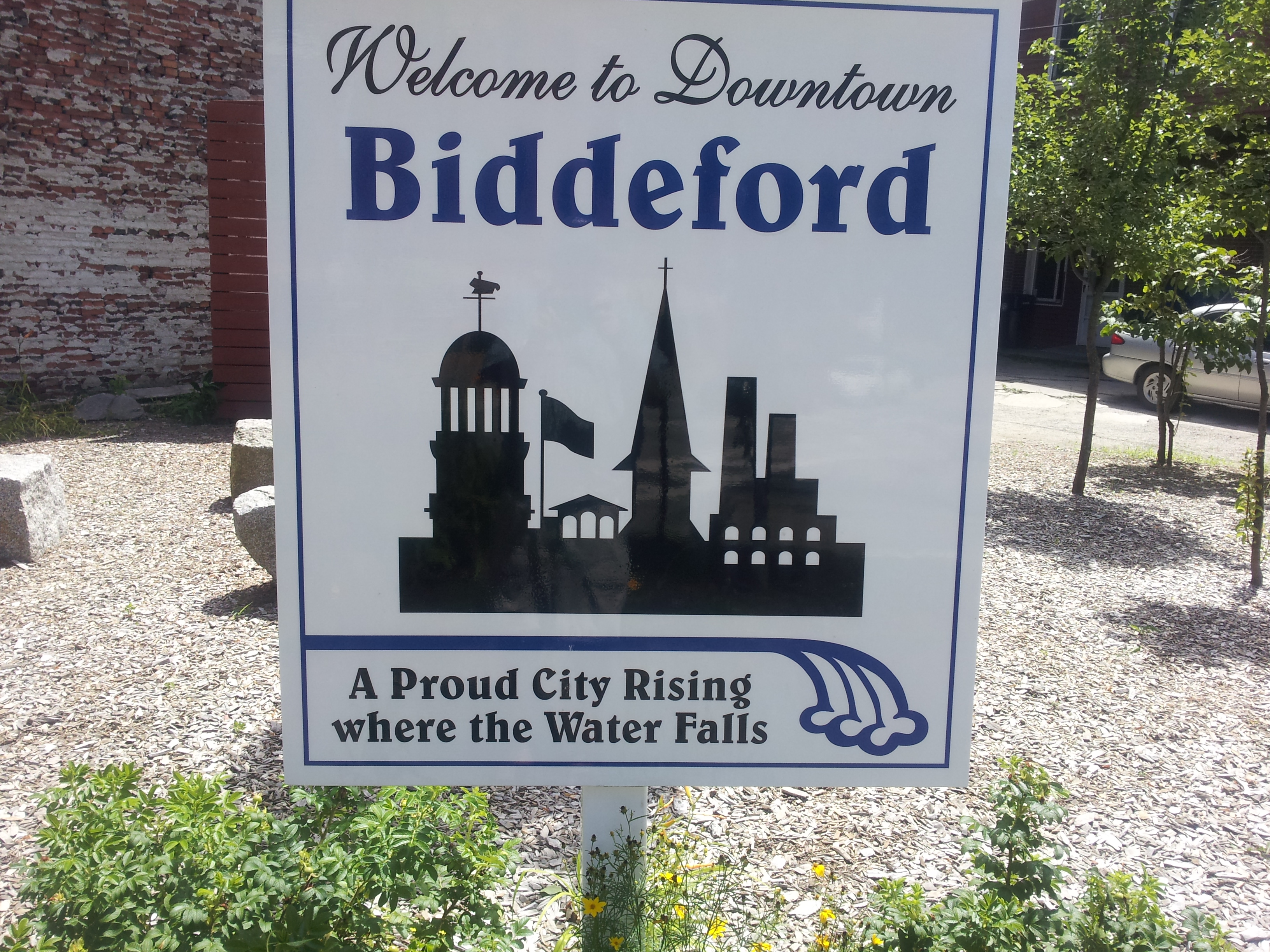
But in communities like Biddeford we wear our pride on our sleeves. A proud city rising where the water falls is our motto. Tiger Pride.
Maybe, just maybe, we’re not quite so proud. Maybe, just maybe, there is still a dynamic of self loathing going on here.
Maybe, just maybe, we are much more consumed with envy than pride.
It ain’t me; I ain’t no senator’s son
Ackerman says that issues such as elitism, the creative economy and quality of place are inherently subjective.
“Quality of life is important,” she said. “Ask one person to describe quality of life and you get one answer. Ask someone else and you get another answer. Ask 10 people, and you get 10 different answers.”
She also says she is perplexed how anyone could define her as an elitist, but she concedes that the term can have both negative and positive connotations, such as the pride associated among an elite group, i.e. the Navy Seals. But she also remains stuck on the apparent misnomer of elitism when it is attached to her efforts to promote a creative economy in Biddeford.
“I’m not a fancy person, so I guess I don’t get the ‘style police’ commentary,” she said. “If style police means I care about how our downtown looks, then maybe I am the style police, but I’m not sure why anyone would be opposed to our downtown looking as good as possible.”
Ackerman spoke at length about her experiences in Biddeford, her struggles and her vision. I plan to write a more detailed piece about that in an upcoming post, but we kept jostling with the tricky concepts of elitism and diversity.
Whether talking about Fatboys Saloon or the pushback to ideas about transforming downtown Biddeford, Ackerman repeatedly pointed to a Downtown Master Plan that was coordinated by the Heart of Biddeford two years ago.
The downtown master plan was a very open and inclusive process that sought input and guidance from any stakeholder who was willing to participate. An over-arching theme of that process resonated clearly: Almost universally, people in Biddeford wanted the downtown to be a ‘family friendly’ destination.
According to Ackerman, taking a position in Biddeford is a daunting proposition for many small business owners and others who worry about some sort of retribution for their viewpoints. “Who wants to go through that? It’s not fun, and it’s certainly not profitable,” she said. “A lot of people are unwilling to get involved.”
Ackerman says she wants Biddeford “to be a good place for everyone” and as inclusive as possible. She says peoples’ behavior often reflects the treatment they get. If all residential landlords took small steps to maintain their properties, it would enhance not only the appearance of the downtown, but also the attitudes of those who live there, which could lead to a greater level of respect and an enhanced sense of community ownership.
But in a follw-up e-mail she sent me, it seemed clear that Ackerman remains frustrated that I urged her and others to be just a bit more mindful of the city’s cultural history and a laundry list of perceived and some very real examples of elitism. She disagreed with my suggestion that maybe we should pause a bit to remember the past before pushing so headstrong into the future.
“I’m still not sure what “dial it back” means,” she wrote, responding to my point that some people are a bit uncomfortable about the pace of the conversation or the sudden (and admittedly positive) changes in our community. “I have the energy to help Biddeford discover what’s good about it now. I may not have this energy in a couple of years! Biddeford’s time is now. Decisions made today will impact the future just like the decision to bring MERC [the controversial, former downtown waste-to-energy incinerator] in impacted 25 or so years of Biddeford’s future.”
As clear as waves on the sea
I was honestly surprised by the reaction to last week’s post. While some people thought I hit the nail on the head, others thought I was far off base. Regardless of the opinions and their sometime surprising sources, I know one thing is beyond dispute. I had tapped something raw, something that makes people queasy.
One friend, another lifelong resident of Biddeford, told me my analysis was spot-on. There is again another battle of elitism happening in Biddeford, he said. “I don’t know how to define it, but it seems pretty obvious to anyone paying attention. It’s like heading to the beach and seeing the waves. I don’t necessarily know where they came from or exactly how they were formed, but I know that they are there.”
City Councilor Roch Angers grew up in downtown Biddeford, and says many of the dividing lines are self created, but often painfully obvious. “It’s been going on for as long as I can remember,” he said. “It’s like an embedded piece of our culture. I think it’s part of our Franco heritage. There has always been a push back against those who appear to be succesful . . . a certain sense of envy. I agree that it’s more perception than fact, but no one can deny that it is there.”
Angers agreed with the historical foundation of my argument: the way immigrants (old and new) are received by their new hometown. A lingering sense of suspicion, a healthy dose of skepticism and a maddening attempt to thwart any attempt at change.
It’s not a new phenomena. It’s been going on for quite a while: The division between the affluent coastal neighborhoods and the inner city, which included two secession movements in the 1990s (Ultimately, the Maine Legislature refused to allow Biddeford Pool to become part of Kennebunkport)
The push to keep the city’s coastal beaches open to public access, championed by Mayor Gilbert Boucher in the early 1970s; the town/gown divide fostered by both sides as it relates to the University of New England’s campus, students and administrators.
The way that it’s still okay and politically correct to make jokes about Francos or a city that comedian Bob Marley describes as “Lewiston by the Sea.”
“I think people like Tammy [Ackerman] and Doug Sanford add a ton of positive energy to this community,” Angers said. “I also think they sometimes seem to be in too much of a rush to do the things we can probably all agree should have been done a long time ago. I think we are on the right track, and we just need to remember some balance.”
But Joanne Fisk, a 1976 graduate of Biddeford High School and another lifelong resident, adamantly disagrees that those historical divides or perceptions still exist.
“That all may have been true 30 years ago or so, but not today,” Fisk says. “I’m not sure what you’re trying to accomplish other than opening a can of worms that we have moved well beyond.”
Fisk also says that Biddeford is not an anomaly, nor are any issues of elitism more pronounced here than in any other community.
“I guess it’s easier to talk about the things that divide us, but I also think we would all be a lot better off if we spent more energy talking about our common ground.”
On the other side of the coin, Mark Robinson, a Fortunes Rocks resident, says he knows what it’s like to be called an elitist, and how the label often doesn’t fit.
A lifelong resident, Robinson said his best teachers were those at Biddeford High School, despite his Dartmouth College degree. He says he learned some of his most important life lessons as a teenager working in a mobile dining cart that catered to late-night downtown mill workers.
“I think the new energy in town is fantastic, and all the new players have my support one hundred percent. I know almost all of them personally, and they’re great,” Robinson said. “That said, I do think once in a while it’s possible to get a little too exuberant about the way things should be.”
In an e-mail, Robinson wrote that he was also troubled earlier this year by the tensions created by the announcement of Fatboys Saloon pending arrival to the downtown business mix.
“I was out of state at the time, but I remember being very upset reading about the brouhaha over what was described as a biker bar,” Robinson responded via e-mail. “I thought that was way over the line. Don’t like a TV show? Hey man, don’t watch it. Don’t like a biker bar? Don’t go there. Hell, it’s even OK to hope the place fails miserably and goes out of business. I don’t have a problem with that at all. But he should have the right to sink or swim on his merits, and he was getting crucified before he even got the place off the ground. Not at all fair, in my book,”
Born to be wild
Delilah Poupore, executive director of the Heart of Biddeford, said she was “taken aback” by my earlier commentary.
“I think that having community conversations about these topics can be very constructive and helpful,” she said. “But when you isolate particular individuals as part of the conversation, you are doing little more than creating more tension and controversy.”
I pushed back. At the same time that Heart of Biddeford took its first ever public policy position about a specific business (Fatboys Saloon), public policy makers in Augusta were weighing public comments related to the closure of the controversial MERC waste-to-energy incinerator that was located in the heart of the city’s downtown.
Delilah and just about everyone else at the Heart of Biddeford agreed that MERC’s presence was a major challenge to the downtown’s ongoing revitalization efforts. In my professional capacity, I represented MERC’s parent company and knew that the Heart of Biddeford and other downtown stakeholders were crucial to our efforts to build public support for the plant’s sale and eventual demolition.
I arranged meetings with both the Heart of Biddeford and the Downtown Development Commission. Both groups allowed me to make brief presentations to their respective members. DDC members were somewhat less supportive, concerned about the significant losses of both property taxes and downtown jobs if MERC closed. Conversely, the Heart of Biddeford crowd warmly embraced my message about how the closure would dramatically improve downtown Biddeford.
But when it came time to make public comments, the Heart of Biddeford declined to make any formal statement. “It’s not our place to make public comments about a specific business,” they explained.
Then, BOOM! Only a few weeks later, the Heart of Biddeford offered public testimony, raising questions about the impact of a “biker bar” into the downtown business-residential mix. I guess they changed their policy. This one time.
And that, I think, is why some people had such a strong reaction. Apparently, a biker bar would be a much bigger problem than burning garbage on an industrial scale in downtown Biddeford.
Something didn’t seem right.
Poupore maintains that her organization’s concerns were meant only to help the city council consider the liquor license application from a “planning/zoning” perspective. But the organization had never before raised any public concerns about any of the other several bars in downtown Biddeford or their annual liquor license applications.
Tammy Ackerman, a former city council candidate and a Heart of Biddeford board member, voluntarily waded into The Fatboys controversy. That spark reignited a lingering flame of resentment among some self-identified stakeholders, who admittedly spend far more time complaining than participating.
Once again, accusations of elitism and class warfare emerged upon Biddeford’s public stage.
Next week: Part III (THUNDERDOME: Residents offer differing perspectives about elitism and cultural diversity in Biddeford).










 LESSONS IN MEDIOCRITY | OUTLAW JOURNALIST