
Don’t Steal My Sunshine

Note: This is the unedited version of my March 8, 2024 installment of All Along the Watchtower that originally appeared on the Saco Bay News website.

It probably would not come as much of a surprise if I were to tell you that a lot of people don’t like me very much.

Chief among those who will never join the official Randy Seaver Fan Club is none other than Biddeford City Manager James Bennett.

City Manager James Bennett. Photo credit: City of Biddeford website.

According to several sources, Bennett really, really does not like me.

He hates me more than Richard Nixon hated Carl Bernstein; more than Paul LePage hates Bill Nemitz.

Of course, Jim has never said that to my face, but that’s pretty much par for the course when it comes to Biddeford’s city manager.

Some people don’t like me because I have strong opinions and rarely turn down an opportunity to share those opinions with as many people as possible.

Others are jealous of my rugged good looks, my brilliant mind and my ability to string together sentences on an empty stomach.

But mostly, people are jealous of me because of my smoking hot wife. They shake their heads, wondering how Laura could possibly want to share her bed with a significantly overweight, bald guy who wears partial dentures and takes five different medications to combat persistent mental health issues.

Sadly, every single thing in the above paragraph is absolutely true. Not a lick of sarcasm. (Smoking two packs of non-filtered cigarettes every day for nearly 40 years takes a toll. Just trust me on this.)

Back to Bennett.

While there are several people in Biddeford who would probably love to see me jump to my death from atop the MERC smokestack, few of them have as much reason to hate me as does Jim Bennett.

Over the last couple of years, I have been a thorn in Bennett’s heel. A proverbial fly in the ointment —- in short, I have been a real pain in his ass.

I have publicly critiqued his management style. I have talked and written about things that he would probably prefer to keep under the radar. I pester him, calling his office and sending him emails in an effort to dig up and report public information.

I have written and published stories that don’t always paint the most flattering picture of my community.

Why do I do this? Why am I such a jerk? Who needs pesky reporters roaming the hallways of City Hall unsupervised?

I mean, really. The city has its own Facebook page. In fact, our tax dollars are used so that the city can write its own news about what the city is doing. What could possibly go wrong?

Why do we need independent, third-party journalists?

I’m a believer

This coming week (March 10-16) we will once again celebrate National Sunshine Week, and it has nothing to do with turning our clocks forward one hour.

Sunshine Week is a national initiative spearheaded by the American Society of News Editors. It was founded in 2005, and its purpose is to highlight the tools and resources that the media (and the general public) has to ensure open and transparent government.

Why should Sunshine Week matter to you?

Jim Zachary, national deputy editor for CNHI, penned a column for the American Society of News Editors. The following is an excerpt:

“The media is most definitely not your enemy,” Zachary wrote. “Far from being the enemy of the people, day in and day out we take our role as the Fourth Estate (government oversight) seriously and work hard to protect your right to know, making public records requests and attending public meetings to keep you informed.

“Why?

“Because we believe all the business government does, whether in open public meetings or behind closed doors, is your business.

“We believe every last penny government spends is your money.

“We believe it is your right to know every transaction, every decision, every expenditure and every deliberation of your government.

“Whether talking about the White House, the statehouse or the county courthouse, all the documents held in government halls belong to the people, and all the business conducted by our governors is public business.”

Sunshine Week coincides with the anniversary of the Freedom of Information Act, federal legislation that was signed into law by President Lyndon Johnson in 1966 just as the Vietnam War was heating up.

The Freedom of Information Act (FOIA) provides the media with the legal muscle that we need in order to keep the public informed about government affairs.

One of the earliest and most notable uses of the FOIA was its role in the Watergate scandal. Washington Post reporters Bob Woodward and Carl Bernstein had to use extraordinary tactics, which included FOIA, in order to get to the truth that eventually crumbled Richard Nixon’s presidency.

Last week, Biddeford City Manager James Bennett presented his proposed annual budget to the city council. I sat there, in the back row, taking notes. I was the only reporter there. Honestly, it made me very sad.

Thirty years ago, there would be at least three reporters at every city meeting. But it’s different now. The Portland Press Herald closed its local Main Street bureau. The locally owned Biddeford-Saco Courier was sold and the Journal Tribune, formerly the Biddeford Daily Journal, this area’s iconic news source, fell victim to the ongoing corporate butchering of local media coverage, closing its doors forever.

Today, the Portland Press Herald rarely covers local news in the Biddeford-Saco area. Reporter Gillian Graham is smart, talented and hardworking, but she is spread thin, and her employer has opted to save money by using the weekly Biddeford-Saco Courier to cover news in this neck of the woods.

Eloise Goldsmith, the Courier’s newest reporter, is also smart, talented and hard-working. That said, Goldsmith’s editors expect her to cover the communities of Biddeford, Saco, Old Orchard Beach, Kennebunk, Kennebunkport and Arundel.

How we can we possibly expect one person to cover such a large geographic area?

 Many years ago, when I was the Courier’s editor, we had one reporter covering Biddeford, another reporter covering Saco and Old Orchard Beach; and yet another reporter covering the towns of Kennebunk, Kennebunkport and Arundel for our sister publication, The Post.

Today, we are expecting one reporter to do the same job as three reporters did 25 years ago.

According to a Brookings Institution report, more than 2,000 newspapers across the country ceased publication in the last 15 years or so. The shuttering of newspapers presents a very real and present danger to our most basic freedoms.

Who cares? Who does this hurt?

It hurts you, your wallet and your neighbors.

Thankfully, one young woman from Old Orchard Beach decided that this area deserves a media source to help fill the coverage gap left behind by the changing local journalism landscape.

When the Journal Tribune closed its doors a few years ago, reporter Liz Gotthelf packed up her belongings and decided to launch Saco Bay News, a free online, professional news source.

Running an independent media source is no easy task. There is no such thing as a 40-hour work-week. The income sucks, the hours are long and the work is often so tedious that is causes migraines.

It is a mostly a thankless task and easily criticized by people who know very little about journalism. But Liz is fully committed. She is an idealist, and she firmly believes that you should have consistent, reliable information regarding everything from the opening of a new eatery to coverage of bank robbery, a structure fire and yes even your local budget.

I Can’t Get No (Satisfaction)

Jim Bennett will routinely ignore my telephone calls and emails. It doesn’t hurt my feelings, but it’s a disservice to the people I work for: you.

I treat Jim Bennett differently than any other city employee, including department heads. I have never written (and will never write) a disparaging column about any city employee. I will not make snarky remarks or sarcastic criticisms about our hard-working talented city employees.

I treat Jim differently, however. I hold him to a higher standard. Why?

Because Jim Bennett sits at the top of the proverbial food chain. Because he wants to wear the big-boy pants. Because he has more than 40 years of experience in city government.

But mostly because he often acts like an egotistical, condescending and arrogant son-of-a-bitch. What a pair we make.

A few months ago, former Mayor Alan Casavant, a friend of mine, called me and said that Jim Bennett thinks I treat him unfairly (I hear that from lots of people). I like Alan. I was his campaign manager when he first ran for the mayor’s seat in 2011 (I was not working as a journalist then). So, as a favor to the former mayor, I offered to sit down with Jim and a tape recorder and conduct a one-on-one interview on any topic of his choosing.

Reportedly, Jim did not like that idea. I’m guessing he was more worried about my tape recorder than he was about me.

Councilor Marc Lessard has often found himself on the wrong side of my pen. He and I have sparred publicly for more than three decades. But you know what? Marc always returns my calls promptly.

It’s not personal, it’s business.

Few people have suffered more because of my writing than Councilor Bobby Mills. Just ask him. But you know what? Bobby Mills always returns my calls.

Why? Because Lessard and Mills have thick skin and realize that I am a direct conduit to their constituents. To them, the people’s business is more important than petty, vindicative personality battles.

In all fairness, Jim Bennett can be a nice guy when he wants to be.

Jim is intelligent, and he does have a lot of municipal experience. He is also very involved in charitable work with the non-profit Kora Shrine Temple and commits hundreds of hours annually to the Shriners and their mission to provide free medical treatment for children.

All Jim needs is a thicker skin and a better attitude. But I don’t think he needs more highly paid assistants working in the city manager’s office.

I think Larry Vaughan, the mayor of Amity Island, said it best in the movie Jaws:

“Look, Martin, if you yell barracuda, people will say “Huh? What? But if you yell FOIA, we’ll have a panic on our hands on the Fourth of July.”

As always, thank you for reading, and I welcome your thoughts, especially if you disagree with me.

________

Subscribe for free and never miss another Lesson in Mediocrity

A Hard Day’s Night

No one can deny that the city of Biddeford – once derided as “Trash-town U.S.A.”  — has today become an unlikely hip destination for young adults and others who enjoy an eclectic array of craft breweries, a diverse culinary scene and dozens of boutique shops and businesses that offer everything from gourmet cheeses to hand-crafted outdoor gear.

In fact, several national publications that cater to the promotion of unique culinary delights and a creative economy all point to the city of Biddeford as a place to be for young, urban professionals.

A photo from the Heart of Biddeford website

Not surprisingly, the city of Biddeford is today Maine’s youngest city, according to the U.S. Census Bureau.

What a change 23 years make, but that change wasn’t easy — and it does come with some equally undeniable consequences.

More about that in a moment. First, a bit of disclosure.

Over the past few weeks, I have been sorting through hundreds of stories I have written about Biddeford since the mid-1990s as part of the redesign and launch of this website, Lessons in Mediocrity.

From 1998 until 2002, before I met my wife, I lived in downtown Biddeford; on the third-floor above the Happy Dragon Restaurant on Main Street.

I also grew up in the Biddeford-Saco area. My family goes back four generations in this community. My wife, a former Biddeford city councilor, and I have been living at our home on Lamothe Avenue for just over 20 years.

After my time at the Courier, I continued to write/blog about the city, its politics and people. As a policy consultant, I worked on several local campaigns and issues. My kids went to Biddeford schools.

I also served on the Biddeford Airport Commission, the Downtown Development Commission and the Biddeford Zoning Board of Appeals.

Today, I keep my toes in the water by working as a free-lance writer, still writing about Biddeford for Saco Bay News.

You get the point. I have a close connection to Biddeford, a community I love and care about deeply.

Why am I sharing this now?

When we look at the city of Biddeford today, I think many of us tend to forget the challenges the city was facing then, when we literally burned our trash in the middle of downtown.

When I joined the Courier in 1998, my boss and publisher David Flood was already an ardent and outspoken booster for downtown Biddeford.

David – unlike me and several other people – saw big potential in Biddeford’s downtown, despite some overwhelming challenges that included the presence of a downtown trash incinerator and significant socio-economic hurdles.

In fact, David  – who was recently inducted into the Biddeford Hall of Fame — was one of the original founders of the Heart of Biddeford, a non-profit organization established in 2004 with a mission to promote economic development and improve quality of life in the city’s downtown area.

While former mayor Alan Casavant receives a lot of credit for the revitalization and renaissance of downtown Biddeford. It was actually former mayor Wallace Nutting who got the ball rolling, some seven years before Casavant was elected as mayor.

Nutting a retired four-star general and native of Saco, also had a strong vision of what downtown Biddeford could become.

Although Nutting, a former Pentagon official who served as a senior advisor to President Ronald Reagan, was one of the smartest, most distinguished and accomplished people I ever met, I thought he was off his proverbial rocker when he started talking about the city’s beleaguered downtown as a “destination for arts, culture and local shopping.”

But Nutting and Flood were not alone. The former mayor also tapped several other like-minded citizens to join him on his newest crusade. Ed Caron, a Biddeford attorney; Renee (Potvin) O’Neil, the woman who basically spearheaded the renovation of City Theater, and Donna Tippett all volunteered to help.

Nutting, the man who previously led the U.S. effort to extricate Manuel Noreiga out of Panama, had a new mission.

Failure was not an option.

What this core group – and later several other volunteers, business owners and residents – accomplished was nothing short of amazing.

But hindsight is always 20/20. It took years, taxpayer funding and political willpower to transform downtown from a neglected hodgepodge of businesses to one of the most vibrant cities in Maine.

Now back to those unintended consequences.

Biddeford After Dark

In the autumn of 2001, while working for David and Carolyn Flood, I decided to write a five part-series about downtown Biddeford, but with a twist.

My Biddeford After Dark series would explore the city’s then gritty downtown area during the overnight hours.

I would write about the punks who congregated at the 7-11 store near the intersection of Jefferson and Alfred Streets; I would ride along with third-shift Biddeford police officers and I would interview the late-night workers, including the supervisors at the MERC incinerator.

I don’t think David was crazy about my idea. I think he was concerned that my series would only perpetuate negative stereotypes about the city of Biddeford.

But – as was so often the case – David game me a wide berth and lots of latitude in running the newsroom.

At that time, I was living and working in downtown Biddeford. I didn’t write the series for overtime pay or to avoid my daytime responsibilities as the Courier’s editor. I was single. I lived alone. I did it for fun.

An excerpt from that series: “As I walk along Lincoln Street — past a tired wrought-iron fence that is leaning and lurching in places — I can almost hear the ghosts of the past. They call to each other, unloading bales of cotton, smoking cigarettes and wiping the sweat from their brows.”

Back then, the former Lincoln Mill clocktower was perched and rotting on the ground in front of the vacant and deteriorating mill building that is today – 23 years later– a luxury hotel with a roof-top swimming pool, a craft distillery and an expansive lobby that has become a favorite gathering place for locals and visitors alike.

Who would have imagined?

But here’s the other thing, the downside of the good news.

A photo I took of the former Lincoln Mill clocktower nearly 25 years ago.

In 2001, it wasn’t hard to find a parking spot in downtown Biddeford. In 2001, you didn’t see any homeless folks sleeping in doorways on Main Street. In 2001, rents – both commercial and residential – were among the lowest in southern Maine.

Why? Well, it’s pretty simple: very few people really wanted to live or shop in downtown Biddeford back then. The stench of burning garbage; shuttered and vacant mill buildings and crumbling infrastructure hardly gave off a welcoming vibe.

Sure, there were some notable exceptions. Legacy businesses such as Reilly’s Bakery and Biddeford Savings Bank were able to weather the storm created by an economic recession and the terrible decision to burn garbage downtown.

But many people had given up on the downtown. Politicians set their sights on easy targets: the development of Wal-Mart and other big-box stores on the outer end of Alfred Road, a proposed racino and continued suburban sprawl on the western side of the city.

As I go through the stories and columns I wrote back then, I am reminded of the tremendous debt we all owe to David Flood, Wallace Nutting, Renee O’Neil and so many others.

We should also never forget the business leaders, civic activists and policy makers who formed Twin Cities Renaissance, the coalition of visionaries from both sides of the Saco River who committed themselves to seeing MERC finally closed.

Sure, Alan Casavant deserves lots of credit for helping us believe in our city again, but he got a lot of help from people who believed in Biddeford even when many of us had given up on the city.

Thank you for your blood, sweat and tears.

In the movie Jaws, Mayor Larry Vaughan says he was just “acting in the town’s best interests” by keeping the beaches open.

In Biddeford, Mayor Wallace Nutting was acting in the town’s best interest by believing in his city and its people.

Make no mistake. Our city still has challenges and hurdles to clear. But if you look at what has been accomplished over the last two decades, Biddeford’s future seems bright.

Originally published in Saco Bay News

Alan Casavant: Interview

If you ask Alan Casavant to describe his time as Biddeford’s mayor, he’ll tell you he used the same basic approach that he used as a high school teacher for more than 35 years.

Casavant, 71, is now completely retired as both a teacher and politician. He served 12 years (six consecutive terms) as the city’s mayor, first elected to that position in 2011. He also served four terms in the Maine Legislature as a state representative and served on the Biddeford City Council for 18 years, first elected in 1975.

Alan Casavant/ Seaver photo

He was born and raised in Biddeford and graduated from Biddeford High School in 1970. Initially, he majored in psychology during his first two years of college at the University of Southern Maine, but during his junior year, he transferred to the University of Maine Orono and decided to study teaching.

As fate would have it, he was assigned to Biddeford High School in order to complete his student teaching requirement. He was then hired as a permanent substitute teacher and then became a full-time social studies teacher at his alma mater.

He also coached the Biddeford High School hockey team, leading the Tigers to a state championship and is remembered by many people as a formidable broom ball player.

Casavant became the city’s second-longest serving mayor. Only Louis “Papa” Lauzier served longer than Casavant, from 1941 to 1955 – a total of 14 years.

You didn’t want to break Mayor Lausier’s record? Just one more term?

(Laughs) “No. I never set out with the idea of serving as long as I did. In fact, I had pretty much decided that I was going to step down two years ago, but I had a friend who convinced me to serve just one more term, and it appealed to me because I felt like there was still some unfinished business to take care of.

“I’m 71 years old, and I had done it for 12 years. I don’t think anyone intended to have any one mayor serve that long, but the real trump card was losing the hearing in my left ear.”

You first ran for city council when you were just 23 years old, which means the bulk of your life has been serving the city of Biddeford as an elected leader. What drew you into local politics?

“I really enjoyed politics. The process and the players intrigued me. The psychology of it (Laughs). I enjoyed being part of the decision-making process, and having input. I used to tell my students – and it’s not to be taken egotistically – but I trusted me making the decisions more than I trusted anybody else. (Laughs)

“I felt, if I was on the outside looking in, I could give my view but that didn’t mean my viewpoint would resonate with the person I was talking to, whereas – actually being there I could listen but I could also be an active, very-active participant. I really enjoyed that.”

How has Biddeford’s political world changed over the last 50 years, going back to when you first ran for the council in the 1970s?

“It’s changed so much. I think people were more in tune with the political process back then; with what was happening at City Hall back in the ‘70s. You had little organizations all over the city, where politics were discussed, such as the Green Lantern Club on Green Street.

“There was more public input because people were more aware of what was going on back then. We had a daily paper covering everything happening in the city. The mayor was a much stronger position, but it was also more familiar. You didn’t have the nastiness, and I say that because I was always in the minority back then. There were three of us on the council in our 20s. It was always the majority against me, Dick Lambert and Billy Zuke. So many of the council votes were 8-3.  It was more friendly. We would all go out together after the meetings for a bull session at Bull’s Café.”

What motivated you to run for mayor against an incumbent (Joanne Twomey) who was widely considered as basically unbeatable?

“The casino proposal that she was supporting concerned me, but it was much more about a philosophical and process difference. During that time period, too many people were watching council meetings as entertainment. The meetings were often bombastic and confrontational.

“I just thought that I could do a better job. I had retired from teaching, so I had the time. I just believed that a lot of people were ready for a change.”

Besides wanting to change the tone of how business was conducted during council meetings, what were your other priorities?

“Well certainly, the issues surrounding the Maine Energy [Recovery Company] plant loomed very large on my screen. I thought that had to be resolved because of what I had learned and come to believe. Not only was it an economic issue and an environmental issue, it was also a psychological issue. It was as if the city had given up on itself. We had become known as “Trash Town, U.S.A.” I knew that had to change.”

Why do you think public participation in local government has declined so much?

“I’m convinced that it’s a lack of knowledge. If you look back at the ‘70s, ‘80s and ‘90s, everybody read the Journal Tribune and/or the Courier. Reporters back then would pursue the stories until the end. When David [Flood] sold the Courier and the Journal closed, there became a vacuum of legitimate news. I also think some people may feel jaded by the process because of the misinformation that abounds on social media like Facebook.”

What do you think was your greatest accomplishment as mayor?

“Recreating pride in Biddeford. It’s nothing really physical. It’s just people in Biddeford actually believe in themselves as a community again. It was as if the community had lost its mojo; the recession, the Maine Energy plant, downtown business closings – – the glass was always half empty.

“People now openly brag about living in Biddeford. I recently saw an ad from a Kennebunk hotel that pointed out they were located only five minutes from Biddeford.”

What was your biggest disappointment during your 12 years as mayor?

[Pauses] “Probably dealing with the housing issue. Trying to figure that out and recognizing that there is no easy answer. There’s no instant answer, especially since it’s a regional, statewide and even national issue.

“We really need a regional approach. There has to be a concerted effort, driven by the state.”

Do you miss being the mayor?

(Laughs) Yes and no. I can’t even watch the meetings right now. I miss the adrenaline rush of being right in the middle of everything. I don’t want to meddle, which is really difficult for me to do. (Laughs) It’s really hard to do something for 12 years and then just stop, suddenly being out of the loop and not knowing exactly what’s going on – – just stopping cold turkey. It’s a little strange.

“There is also relief. When I was mayor, I’d spend almost an hour every morning and every night responding to e-mails. Now I maybe get four e-mails a day.” (Laughs)

As a politician, do you see social media as helpful?

“I call it anti-social media. Most of it is very disparaging and accusatory. It took me about a week or two as mayor to decide that I wasn’t going to read most of it. Otherwise, I’d see things that I didn’t say or do, and it got so frustrating. It’s so often just a rumor mill.”

What do you see as challenges on Biddeford’s horizon?

“Well, obviously the housing issue is going to dominate our conversations for a long time, and we’ll need to tackle that situation; but we also are looking at lots of other major budgetary issues, including staffing. How do we retain and attract professional employees? People want services, but that cost money. You can’t have it all.

“I also worry that our economy is slowing a bit in the downtown. The downtown really defines who we are as a community, and it’s important for our overall economy.”

Your political adversaries blame you for pushing so hard for a municipal parking garage.

“The reality is that we actually need at least two parking garages. The next one needs to be near the corner of Main and Alfred streets. It’s interesting to me that in so many other cities, whether it’s Westbrook or Portland or Auburn, there is virtually no resistance to parking garages.”

You describe your role as mayor as simply an extension of your time as a high school teacher.

“It’s the same skill set and the same techniques. It was about repeating, repeating and repeating information so that the kids could get it; it was about connecting the dots so that they could understand it; and it was also about forming relationships and helping them feel good about themselves.

“It’s never just one person leading the city. You really need a team approach, it’s like a quilt with several different patches. It’s rewarding, sometimes frustrating but if you have the right people around you — if you can build a team with lots of different perspectives — then you can do almost anything.”

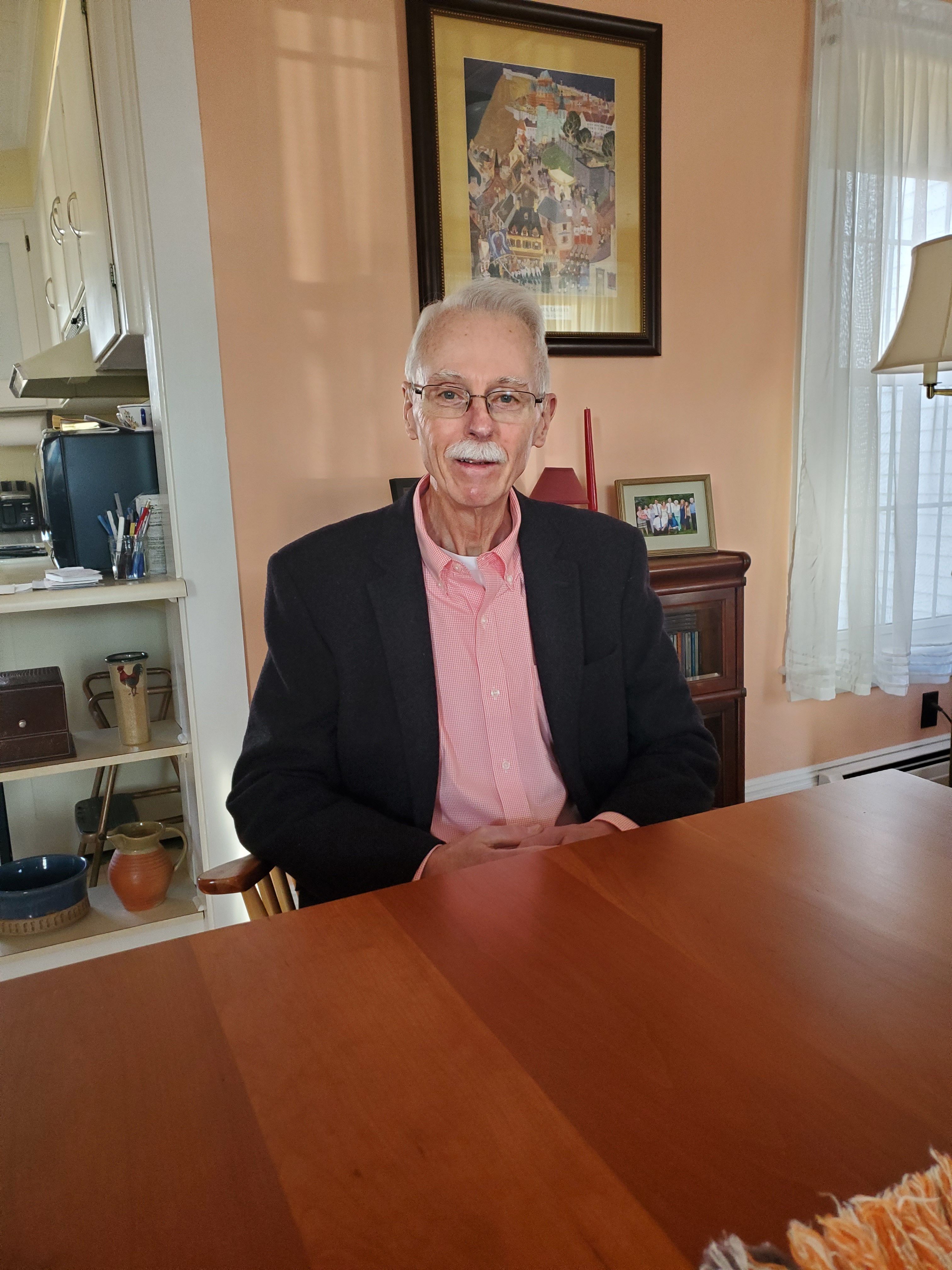
Originally published in Saco Bay News

Exile in Guyville, Part II

Loyal readers of this column may recall that last year I basically eviscerated the Biddeford City Council and City Manager James Bennett for spending $20,000 of taxpayer money to hire a private consulting firm in the hopes of finding a solution to the growing problem of homelessness in our community.

I’ve got good news and bad news for Biddeford taxpayers.

First, the good news. The City of Saco was stupid enough to split the cost with us.

The bad news? I told you so. The problem is just getting worse, and the much-anticipated report from the consultants was about as useless as the comb I still carry in my back pocket.

In case you missed it, the Biddeford City Council recently held a near three-hour-long workshop meeting to once again “discuss this very important topic,” in the words of Mayor Marty Grohman.

Before we proceed, I’d like to set the record straight. Every single member of the Biddeford City Council cares very much about the plight of homeless people in our community. City Manager James Bennett also cares about this issue and wants to find a solution.

Former mayor Alan Casavant still cares very much about this issue. Many of you readers also care very much about this issue. I care very much about this issue. So, why do we still have a problem?

To paraphrase James Carville, “It’s about the money, stupid!”

During last week’s workshop meeting, Timothy Boston read aloud a portion of my recent interview with former mayor and retired judge Michael Cantara. In that interview, Cantara hit the nail on the head.

“Without question, we must address the issue of homelessness,” Cantara told me. “Yes, it is a financially expensive and complicated issue, but we have an ethical obligation; a moral obligation to do more than just talk about the issue.”

But “just talk” seems to be what we do best. We talk. We write white papers and convene focus groups. We talk some more. We spend money on consultants and form more committees. We pontificate and bloviate in newspaper editorials and at the podium in the City Council Chambers.

We are full of righteous indignation, full of sound and fury, signifying nothing. At least that’s how it feels if you’re in a tent with freezing temperatures and wind gusts of more than 25 miles per hour. It all seems like a lot of bullshit.

Why? Because we all conveniently skip over some hard truths.

In the consulting world, there’s an old mantra: If you’re not part of the solution, there’s good money to be had at prolonging the problem. I know this. I make my living as a consultant. The newspaper gig is just a side hustle.

The report from WestEast Design Group was exactly what I expected: several pages of fluff with four pages of references and another four pages of appendices.

I give them some credit, however. They were able to successfully use the word ‘leverage’ as both a verb and a noun at least a dozen times in the 24-page report.

There are basically four key take-aways from the rather lackluster report:

  1. There is a lack of physical space for services (including housing and treatment) in the Biddeford-Saco area;
  2. The Biddeford-Saco area has a growing homeless problem;
  3. People in Biddeford and Saco seem to be very compassionate and kind toward homeless individuals;
  4. The cities should “leverage” their existing resources and relationships and consider forming a ‘coordinating committee” to further study and understand this issue.

Well, thank you, Captain Obvious!

I kid you not. You can download the report and read it for yourself; I mean if you occasionally enjoy sticking a lit cigarette up your ass.

Basically, the consultants interviewed area stakeholders, including non-profit agencies, the Biddeford Housing Authority, the Police Department, the hospital and even yours truly. Yup, they interviewed me. They then wrote several pages, explaining how they conducted the interviews and what questions were asked.

At this point, they summarized the results of those interviews and told the council what the council had already heard from those same stakeholders over a period of more than two years. Remember, it was almost three years ago when Casavant first created the city’s Affordable Housing Task Force.

Last year, I publicly chided the then mayor and council for even considering hiring a consultant. I stood at the podium and told them: you only have five options. That’s it. Just five options and they each come with consequences.

First option: You can do absolutely nothing and ignore the problem until it goes away. (It going to cost you a ton of money because of impacts to schools, businesses and city services, but those costs will be somewhat hidden and therefore politically expedient.)

Secondly, you can take steps to immediately increase housing supply and soften demand by creative changes to zoning and other ordinances. (To their credit, the council is already doing this.)

Third option: you could implement rent control, despite the fact that it often creates more problems than it solves (Reference the city of Portland, Maine).

Fourth, you could collaborate with regional communities and build (and staff) a treatment facility that would include mental health services and a temporary housing shelter. Or finally, you could do what the city of Portland did: You can build and staff your own shelter.

That’s it. There are no other options.

See, it took me only 142 words to compile my report as opposed to nearly 30 pages from the hired consultants.

Let’s use Portland, Maine as an example. Last year, Portland unveiled a new state-of-the-art shelter that includes staffing for acute psychiatric care and substance abuse services.

The price tag? Roughly $25 million. A little more than $6 million was provided by the state with federal COVID relief funds. The remaining $18 million came from a private developer.

The result? Portland has a growing homeless problem. On many nights, there are literally several empty beds at the shelter because many people don’t want to stay at a shelter.

Think about that for a moment. The city built a $25 million shelter and yet the problem is growing. For comparison purposes, the city of Biddeford’s total city budget (excluding schools) is roughly $24.8 million, a 5.8 percent increase over last year.

Translation? We would literally have to double our municipal budget to build a shelter like the one in Portland.

Now let’s pretend we all live in Never-Never Land and a magic unicorn comes by and drops $25 million in our laps. How long do we continue funding? Where would it be located? Rotary Park could be an ideal location. How about the former Trull Hospital on May Street? How about your neighborhood?

You get the point. This problem requires money, but it also requires a commitment from ALL stakeholders, including the homeless themselves.

Any solution is going to require at least some cooperation from those who are most directly impacted by the problem. They are our neighbors. They deserve dignity. They deserve our empathy, support and compassion, but they also must be willing to sit at the table and help solve the problem.

In the movie Jaws, it becomes quickly apparent that the town of Amity has a serious problem on its hands. The town’s elected leaders are hesitant to spend the money required to solve the problem. We all know what happens next. The problem literally jumps up and bites them in the ass.

Our problem is not going to go away. It’s just going to get worse.

It’s time to end the paralysis of analysis. No more task forces. No more white papers. No more window dressing solutions. Bottom line: Ask yourself one simple question: How much are you willing to pay in additional taxes (or additional rent) to help cover these costs? One percent? Five percent? 10 percent? 50 percent? More?

Just imagine what we could have done with the $20,000 that we gave to a Texas-based consulting firm? I wonder how Vassie Fowler at the Seeds of Hope Neighborhood Resource Center could have ‘leveraged’ those funds.

Folks, you’re going to need a bigger boat. And a bigger boat is going to cost a lot of money. I know this is true because I asked a consultant.


Originally published in Saco Bay News/ January 2024

Interview: Michael Cantara

A retired judge, district attorney, state commissioner and former mayor from Biddeford reflects on his career and the changes in his community.

Hollywood movies often rely on stereotypes. Lawyers are frequently depicted as corrupt and self-serving. The district attorneys in those movies are not much better, using their power as glorified crime fighters for political gain. Mayors are routinely portrayed as bumbling, narcissistic egomaniacs; and judges wield their power with a rigid temperament and periodic fits of rage.

Michael Cantara/ Seaver photo

Michael Cantara of Biddeford has served in all four of those roles, but he is the exact opposite of those Hollywood stereotypes. Instead, Cantara is well-known throughout southern Maine as a man of principle, restraint, intellect and compassion.

Among many other awards and accomplishments, Cantara was inducted into the Maine Franco-American Hall of Fame and also inducted into the Biddeford Hall of Fame in 2022.

Cantara, 70, was adopted as an infant from the St. Andre Home in Biddeford by Jean Paul and Laurette Cantara. He and his two sisters were raised in a very modest home on Granite Street Extension. His father worked at the Saco Lowell machine shops. His mother worked at the Pepperell textile mill and later as a waitress at the Nutshell Restaurant in Biddeford.

He attended parochial schools, including St. Andre’s and later St. Louis High School, which closed just before his senior year. Thus, he graduated from Biddeford High School in 1971 before attending Colby College with the idea of becoming a pediatrician.

You planned on becoming a doctor but ended up retiring as a judge. A lot of things must have happened between those two bookends.

“Oh yes, they certainly did.” (Laughs) “I wasn’t exactly a clear career thinker when I went to school. I majored in French with a minor in biology. But my dream of being a pediatrician floundered on the shoals of organic chemistry. (Laughs) So, I reset the dial and decided to become a teacher.

“In my senior year of college, I was nominated for a Fulbright Teaching Scholarship. So, I got this wonderful gift of teaching in a French high school in Normandy, near the small town of Rouen, where Joan of Arc was burned at the stake.

“I taught American culture, history and language at a vocational school. My students were adolescent French boys from the local neighborhood. They were so receptive to the ideas I was teaching because at that time all things American were considered pretty cool.”

You returned to the United States and ended up going to law school.

“I had wanted to teach French on the college level, but was intrigued by political science and chose the mayoral election in Paris as the topic for my doctoral thesis. At that time, there was quite a bit of upheaval on the city’s political landscape.

“There was so much happening in the early 1970s. In general terms, it was a time of upheaval when young people were being encouraged to stand up for what they believed; to be a part of the social change that was happening all over the world.

“I wanted to go back to Maine, and the options for teaching French were practically non-existent, and I was exploring opportunities for public service. So, I enrolled at the University of Maine Law School.”

You were paying close attention to politics on the national, state and even local level, at a time when Maine’s own Senator Edmund Muskie was derailed from his presidential campaign because he allegedly teared up during a press conference.

“Yes, men – – especially back then — were not supposed to cry. I was very inspired by Senator Muskie and his dedication to public service. As you know he was the architect of the Clean Water Act. Without that federal legislation, which was vitally important for Maine, we wouldn’t be talking about the Riverwalk in Biddeford today had it not been for Ed Muskie’s leadership.”

“In fact, Senator Muskie gave the commencement address at my high school graduation, which was held at Thornton Academy because Biddeford did not have enough space.”

You were drawn to the Democrat Party and today remain as a party stalwart.

“I was very much influenced by my parents. Both my mother and father read the paper every day, and they were both Democrats who understood the importance of voting and paying attention to what was happening. Democrats were very pro-union.

“My uncle Henry, however, was anti-union. He worked at S.D Warren and was very much a company man. Regardless, my father was always very calm when talking to my uncle about the importance of labor unions.

“My father would listen patiently and spoke in a measured way, but always remained committed to his beliefs. I learned a lot from my father.”

You hung out your law practice shingle on a Crescent Street office without much money in your hand.

(Laughs) “Actually no money. My law partner Jim Boone and I were able to secure the lease by offering sweat equity. We would paint the building and sand the floors in exchange for the first few months’ rent.”

And then you decided to get into politics.

“What was I thinking? (Laughs) I decided to run for the Legislature in the early 1980s. At that time, I was living on State Street. And the occupant of that House seat in the Legislature was Lucien (Babe) Dutremble.

“I don’t know what possessed me, but I had the crazy idea of challenging Mr. Dutremble – one of the most respected and adored men in the city – in the Democratic primary. And, of course, throughout the campaign he couldn’t have been any kinder to me.

“What was so strange and incredible to me is that I lost only by 16 or 18 votes. I can’t remember exactly, but it was slim enough to invoke the city charter’s requirement for a recount, which was presided over by Luc Angers, the city clerk at the time. They were all paper ballots back then and the recount took place at the police department. The result didn’t change, but I thought that was probably the end on my political career.

“But then a couple years later, I was asked by Mayor [Robert] Farley to serve on the planning board, even though I was previously on the [William] Pombriant ticket who ran against Mr. Farley in the primary. I ended up serving almost four years on the planning board, and so I had a ringside seat to some of the issues affecting Biddeford: Affordable Housing, Land Use and Habitat Protection.

“Not much later, Gene Libby, who was the district attorney, asked me if I would join his office as an assistant district attorney. I enjoyed that work and was covering all three district courts, which were then located in Springvale, Biddeford and Kittery.”

And then you decided to run for mayor.

“Yes, and that was back when local elections were partisan, so there were primaries and a longer campaign season. There was no city manager. The mayor ran the city’s day-to-day operations, much different than it is today.”

Why did you only serve for one term?

“Because the seat for the district attorney was opening up. It was an open seat, and I was looking forward to the challenge.”

Bonnie (Belanger) Pothier told me that you practically hounded her to run for the mayor’s seat to replace you. She jokes that she just finally caved to your pressure.

(Laughs) “I knew that she was going to be a great mayor, and she proved me right. I didn’t always agree with her, but I had tremendous respect for her. She had a lot of uphill battles to fight, but she was a remarkable leader.”

While you were serving as district attorney, Governor John Baldacci appointed you as Maine Public Safety Commissioner for four years, and then during his second term, he nominated you to serve as a district court judge in York County.

“Yes. I was among five people nominated to fill new positions created in order to address significant backlogs of cases and to free up more judges throughout Maine to serve the newly-created business docket.”

You served as a judge for 12 years and retired in 2019. Do you miss it?

“I very much miss the people I worked with. I had the privilege of working with exceptional people; the clerks, the magistrates and the marshals. But the weight of some of the decisions a judge has to make – I don’t miss that particular kind of stress.

“It can be very challenging. You can provide a legal answer to a problem, but you’re not providing a life solution. There’s so much poverty – – financial poverty, health poverty, educational deficits and mental health issues, not to mention chronic unemployment.

“As a judge, you are witness to all of it and sometimes feel so powerless to change any of it.”

You are a true son of Biddeford. What challenges do you see facing the city today?

“I have been a citizen of Biddeford for most of my 70 years. Without question, we must address the issue of homelessness. Yes, it is a financially expensive and complicated issue, but we have an ethical obligation; a moral obligation to do more than just talk about the issue.

“I was taught that we are all children of God. I don’t want to let my brother or sister freeze to death tonight. We are living in 21st Century America, and I don’t think that’s too much to ask.

“It is an issue of dignity, and it is not insurmountable. We just need the political will to make it happen.”

From the humblest of beginnings, you went on to become a teacher, an attorney, a mayor, a district attorney, a state commissioner and then a judge. If they were alive, do you think your parents would believe how much you have been able to accomplish?

“I don’t know, but I do know that I learned life’s most important lessons from my parents, including the importance of service to your community; to volunteer for your school, your church.

“I certainly hope that I lived up to their expectations. I hope that I have lived a good life. I think that’s the most important thing.”

Originally published in Saco Bay News

I Wanna Hold Your Hand

Two rather interesting events happened this week, each painting a troubling picture for loyal, solid Democrats at both the national and local level: Senator Joe Manchin of West Virginia announced he would not seek reelection, and City Councilor Marty Grohman was elected to become Biddeford’s next mayor.

What do Manchin and Grohman have in common?

Bear with me, because I think these two stories serve as a bellwether of a changing political landscape that has long alienated people in the so-called political “middle,” the centrists who are weary of extremists on both the left and the right of the political spectrum.

Mayor-elect Marty Grohman

Currently, Democrats have a razor-thin majority in the United States Senate, including the so-called “Independent” senators Bernie Sanders of Vermont and our own Angus King, both of whom caucus with the Democrats and consistently follow the marching orders of both Chuck Schumer and President Joe Biden.

It’s really nothing short of a miracle that any Democrat could win an election in a state like West Virginia, which is more red than Biddeford City Councilor Marc Lessard’s campaign signs. Manchin’s decision spells very bad news for the Democrats and will no doubt reshape the battle for senate control in 2024.

“Manchin’s moderate positions have at times been a thorn in the side of his increasingly left-leaning party,” according to ABC News political analysts.

So how does this connect to the rather mundane and much less dramatic world of Biddeford politics?

Theoretically, Biddeford’s municipal elections are supposed to be a “non-partisan” affair. Biddeford voters approved a change to the city’s charter in the late 1980s to dump the partisan labels of Democrat and Republican.

But if you really believe our local elections are non-partisan, I’ve got an ocean-front home to sell you in Ohio.

Make no mistake, despite all the pontificating, hand-wringing and lack of primaries, local elections are still very much influenced by each candidate’s political label. Not by his or her merits, but by his or her political allegiance.

Local Democrat leaders like State Rep. Marc Malon will tell you that’s not true.

It should be noted here that on top of his elected office, Malon is also professionally employed by the Maine Democrat Party. He currently serves as Party Affairs Director for the party.

Malon is a good guy. He’s very smart, and he is passionate about his politics. He works hard, and has a unique perspective on Maine’s political landscape. It’s his job to make sure that Democrat candidates get elected in Maine, even in places like Biddeford that are supposedly “non-partisan.”

So why do I keep saying “supposedly?”

Because partisan politics still plays a big role in Biddeford’s political circles and games, despite what the city’s charter says about municipal elections.

That said, state and local Democrat leaders, including Malon, did absolutely nothing wrong. Let me repeat that in order to be perfectly clear: No one on the ballot (nor their supporters) did anything wrong during Biddeford’s most recent election cycle.

So why am I taking the time to write about an election with zero incidents of impropriety by any of the candidates or their supporters? First, I am a local political junkie. Secondly, because I see a major shift starting to happen in both local and national elections.

In a story I wrote for Saco Bay News just a few hours after the results were announced, I listed those who supported and endorsed each of the mayoral candidates: Susan Deschambault and Marty Grohman. I posted that story on my personal Facebook page with a teaser, asserting that the Democrat Party closed ranks on a local level and clearly lined up behind Deschambault over Grohman.

It’s understandable (and quite predictable) that Democrat leaders would line up behind a Democrat over an “independent” or a Republican candidate in a general election, even though party affiliation isn’t supposed to matter in a non-partisan election.

Overall, the city of Biddeford – like many other mill towns — has a long history of leaning to the political left. Today, however, it seems that it’s becoming a matter of how far left a candidate needs to be in order to win elected office in the city.

I have a theory about why notable Democrat leaders were so enthusiastic about supporting Deschambault over Grohman. In a nutshell, it was political pay-back. Allow me to explain.

Both Deschambault and Grohman served on the city council. Both candidates served in the Maine Legislature. They had very similar platforms. In fact, during an October head-to-head debate, the only real difference that was clear to the audience was that Grohman likes to ride a bicycle and Deschambault says she likes to avoid both bicycles and walking.

Just days before the election, Mayor Alan Casavant repeated his support for Marty Grohman to take over the big chair at City Hall. On that same day, the Deschambault campaign ran an advertisement in the Biddeford-Saco Courier, listing local politicians who were endorsing Deschambault.

Deschambault’s list of supporters was impressive: State Sen. Henry Ingwersen, the highest state official serving Biddeford, was on that list. The rest of Biddeford’s delegation, including Malon and Rep. Erin Sheehan, were on that list. Former Speaker of the Maine House of Representatives Ryan Fecteau was on that list.

Previous state representatives Megan Rochelo and Victoria Foley (who lost her own bid for mayor against Casavant two years ago) was on that list. Previous mayors Mike Cantara and Bonita (Belanger) Pothier were on that list. Weeks before, Malon and Fecteau both used their personal Facebook pages to endorse Deschambault.

Pretty impressive, huh? What do they all have in common? They are all active, strident and loyal Democrats. On a local level, these folks are all political heavy-hitters. If you want something done, these are the people who can make it happen.

But it wasn’t just local Democrats who were offering assistance for Deschambault.

According to campaign finance reports, Deschambault’s campaign also got the support of many individuals well outside of Biddeford, including Democrat Party activist and former legislator Justin Alfond and State Senator Joe Baldacci, younger brother of former governor John Baldacci, both of whom wrote checks for Deschambault.

I saw that ad and thought to myself, it’s all over for Grohman. I publicly predicted that Deschambault would win the race. Despite what some people like Alan Casavant say, Biddeford is pretty much a blue community. Or is it?

But then something strange happened. Deschambault lost. Wait. What?

Despite such an impressive list of Democrat supporters and the fact that Biddeford most often votes blue, the party wasn’t powerful enough to knock off Grohman, the more centrist candidate.

Deschambault’s track record in the State Senate was basically flawless. She did whatever the party leaders told her to do. She always voted the way they wanted. She played nice. She toed the party’s line.

Good for her. She’s a Democrat. She voted the party line. Yawn.

During his stint in the Legislature, Grohman sometimes had the temerity to look at issues from a more centrist position. Furthermore, he had the audacity to run as an “independent” candidate against Democrat Chellie Pingree for the First Congressional District race. That was enough, right there.

The Republicans may have the symbol of an elephant, but the Democrats are the ones who “never forget.” Deschambault was being rewarded for her party loyalty, Grohman was being punished for thinking for himself.

Shortly after I posted my story on Facebook, Malon went on the defense.

“As a staffer for the Maine Democratic party and one of the electeds (sic) who endorsed Susan, I am pretty confident offering this analysis: there is little to no impact on the political landscape in Biddeford for state/federal races,” he wrote. “This is based on previous municipal and state/federal results and my analysis of this particular race . . .”

I responded toMalon, “ . . . but there is no denying that party stalwarts lined up solidly behind Deschambault: Baldacci, Alfond, the entire legislative delegation (current and former).”

Malon came back:because they all knew her and liked her. Honestly that’s about the extent of it.”

Again, I like Marc. We have plans to get together for some good whiskey soon. We’re both political animals, but I’m not buying what he’s selling. Because they knew and liked her?? Are you freakin’ kidding me??

They all know Marty Grohman, too. What, exactly, did they not like about him? Because he rides a bicycle to work? Because he is a successful businessman? Because he has blue eyes? Because he volunteers at the skating rink and helps veterans? Spare me.

Biddeford is changing, including its political machinations, and that started more than 20 years ago, when MERC was still burning trash downtown. A Republican, Saco native (Gen. Wallace Nutting), beat two well-known, lifelong residents for the mayor’s seat. Ever since, the Democrats’ iron grip on the city has been slowly eroding.

I agree with musician Sheryl Crow, “a change will do you good.”

My advice to the Democrats? You’re gonna need a bigger boat.

Originally published in Saco Bay News

Deschambault stumbles during mayoral debate

Several people were less than pleased about something I posted yesterday on Facebook regarding Biddeford mayoral candidate Susan Deschambault.

Several of Deschambault’s supporters questioned my take-away observations of Monday’s mayoral debate, in which I wrote that candidate Susan Deschambault tripped over herself and made a big “gaffe.”

Some folks speculated that I was supporting the other candidate (Martin Grohman) and just looking for a gotcha moment. They accused me of “taking things out of context” and playing “loose with the facts.”

Well, I have some bad news for Deschambault and her supporters: The video record of that debate paints a rather unflattering picture, much worse than anything I posted on my Facebook page.

Former State Sen. Susan Deschambault (Facebook photo)

To those of you who demanded Deschambault’s “exact” words about the closure of the Maine Energy Recovery Company’s solid waste incinerator (MERC), here they are:

“I served under Joanne Twomey, and I served under General Nutting. I could mention to you that General Nutting and the council at that time bought MERC. How did they buy that? “

“We put out a referendum, we will buy it for 10 million dollars. You guys were smart, you said no. We went back to the drawing board, by that time we got MERC all upset, and they wanted to leave, we knew that. We brought it down to six million dollars and you, the taxpayer, paid for that. You wanted that and look what happened. Magic.”

Let’s examine the facts:

1.) Mayor Wallace Nutting and his council did NOT buy MERC. That facility was still operating many years later, long after Nutting left office. In fact, MERC was still there during Mayor Twomey’s two terms in office.

2.) There was only one municipal referendum, which was rejected by a margin of 2-1 by the city’s voters. There was never a second referendum.

3.) Magic??? Are you kidding me?? MERC’s closure took a Herculean effort by many individuals. It was most certainly not “magic.”

4.) The city finally found a way to end the nightmare in the summer of 2012, during Mayor Alan Casavant’s first term in office, The ensuing development was not instantaneous, and it took solid leadership and a new positive and professional approach from City Hall.

The transcript of this debate shows that both candidates were not really well-prepared for some rather softball questions, but if you watch the video, you will see Deschambault had a hard time staying on topic.

Those are the facts. Period.

I Am The Walrus

I have been covering Biddeford City Hall for nearly a quarter century, and I don’t recall seeing anything so silly and inane as what I witnessed during Tuesday’s city council meeting.

If you are a resident of Biddeford, you can let out a deep sigh of relief because City Manager James Bennett and his crack staff uncovered a little-known flaw in the city’s municipal ordinances.

Apparently, up until Tuesday, there was nothing in the city’s code of ordinances regarding improper or unauthorized usage of the city’s official seal.

Members of the city council, almost without question, dutifully voted unanimously to approve this important and vital change to our code of ordinances.

Phew! We narrowly dodged a bullet there.

But here’s the deal. It was already illegal. State law already prohibits any persons or entity from using a municipal seal in any inappropriate manner.

In fact, Bennett and his staff knew – before bringing this gem before the council— that it was already a violation of state law to use the city’s official seal in an unauthorized manner. But that didn’t stop them from drafting both a memo and new ordinance language in order to ensure that bad people clearly know that our city will not tolerate violations of state law within the city limits.

Wait. What?

In the classic 1978 comedy Animal House, Dean Wormer is vexed about a notorious fraternity on the campus of Faber College. In one memorable scene, the dean tells some close allies that he will place the Delta fraternity on probation.

“But the Deltas are already on probation,” says the chair of the student council.

“Well then,” the dean says with a smirk. “Now they are on double-secret probation.”

Our city manager earns a handsome six-figure salary plus a suite of lucrative employment benefits. Under his watch over the last few years, City Hall staff has ballooned. The argument always being “we are very busy and need more people.” At the same time, we seem to be doing a piss-poor job of retaining department heads and other senior staff.

In fact, I was surprised that Bennett didn’t recommend hiring a consultant to study the issue of inappropriate use of the city seal. Then we could send those recommendations from the consultant to the Policy Committee, where it would be dutifully reviewed and sent back to the council.

At this point, based on actual recent events, the council could then ask for “more information” and suggest that the Policy Committee should host a joint meeting with the city’s Conservation Committee in order to develop a joint resolution and appropriate guidance for the city council.

Meanwhile, residents are opening eye-popping property tax bills. Meanwhile, more and more of our neighbors are sleeping in doorways. Meanwhile, we can’t figure out how to paint the city’s clock tower. Meanwhile, we have a downtown parking debacle that borders on the absurd.

What’s next?

Is Bennett going to recommend to the council that we should amend our ordinances “to affirm” that murder is not allowed in the city of Biddeford?

I mean, right now all we have is the Ten Commandments and some rather explicit language at both the state and federal level that spells out murder is against the law. Sure, let’s update our municipal ordinances.

I don’t care if Bennett and his staff spent less than two hours on this issue. It was an epic waste of time and resources. Is the city manager just trying to justify his salary? Or does he and his staff have lots of free time to generate this sort of stuff?

Make no mistake. As usual, no one from the public spoke. No one from the public attended the meeting. Left to their own devices, this is the kind of stuff that happens in government when no one is watching.

This is your tax dollars at work. Happy?

Just remember: “Hooper drives the boat, Chief”

Originally posted in Saco Bay News

That’s Some Bad Hat, Harry

Biddeford City Councilor Marc Lessard and I have a long and somewhat tangled history that goes back more than two decades.

Lessard — who holds one of the two at-large seats on the council — is the longest serving elected member in the Biddeford-Saco area, and he can always be counted upon for a good quote, a clever analogy or a mind-baffling rationalization of his position on any given issue.

In all fairness, Old Orchard Beach Town Council Chairman Shawn O’Neill has held elected office in that tiny seaside hamlet since before the ocean was invented.

But back to Biddeford, its pristine beaches and a potential threat to public safety.

Earlier this week, the Biddeford City Council voted to table a potential change to its ordinances that would require all dogs to be leashed in Clifford Park, a rather densely wooded park that includes several walking and hiking trails near the center of the city.

Before we proceed any further, you should know that nothing drives your Google analytics better than the topics of food or dogs. Not abortion. Not climate change. Not gun control.

Dogs and pasta. That’s what really drives public engagement on the world-wide web. Serious as a heart attack. It’s true. Google it.

Anyway, Lessard is less than pleased that the council didn’t take more immediate action. He shared three graphic, personal examples of why dogs should always be on a leash. During the council discussion, Lessard told his peers that he has personally witnessed some gruesome attacks by unleashed dogs, including an attack on his four-year-old granddaughter and another story in which an unleashed dog killed another dog that was on a leash.

“If you saw what I saw, then you would support this change to require dogs to be on a leash,” Lessard said. “It’s a no brainer.”

But Councilor Bobby Mills, who rarely misses an opportunity either to pander to popular opinion or to be annoyed with what people say about him on the internet, said he sees no reason to change the ordinance that allows dogs “under voice control by their owners” to roam freely in Clifford Park.

“I have not heard an outcry to enact this,” Mills said, somehow ignoring the fact that more people have contacted the city council about this issue than any other issue since former Mayor James Grattelo changed his hairstylist in 1996.

Now it is well known that I am a huge fan of the 1975 movie Jaws. I have seen the film more than 250 times. I belong to three different Facebook Jaws Fans groups. For my Christmas present last year, my wife remodeled our upstairs bathroom to be “Jaws-themed.”

I am a Jaws fanatic. My father took me to see the movie on its opening weekend in 1975. I was 11 years old, and I haven’t gone above my ankles in the ocean since. True story.

So, how do we connect Marc Lessard to perhaps one of the greatest films of all time?

In response to Councilor Mills’ rather laissez-faire attitude about public safety, Lessard pulled out the big guns and decided to use the threat of not one, but of three great-white sharks near Biddeford’s beaches as an analogy for being pro-active when it comes to public safety.

Not just any sharks, mind you. But Great White sharks, Carcharodon carcharias, for you amateurs out there.

“Imagine if we knew that there were three great white sharks just off the shores of our beaches,” Lessard said. “Would we wait for a swimmer to be attacked before we closed the beach?”

Peter Benchley, the man who wrote the novel Jaws, which became one of the highest grossing films of all time, has said in recent years that he regretted writing the book because of how it generated such negative public perceptions about sharks, including the merciless and often illegal hunting of the species.

Look, you can feel bad for the sharks all you want, but Lessard is right. Those beaches should be closed.

In all seriousness, another very compelling reason to keep dogs on leashes in Clifford Park is the potential impact to other critters that live in what is widely considered to be a complex and thriving vernal pool habitat. Free-ranging dogs and these critters don’t mix well.

I get that people love their dogs and want to spend time recreating with them. I am a dog owner, but I am also keenly aware that not everyone loves my dog. Not everyone feels safe having a dog walk up to them in order to smell their genitals.

Clifford Park is a public park, not a dog park. Those beautiful trails are there for the benefit of everyone, including seniors, young children and even people who don’t own dogs.

My dog, Sasha, a Black Labrador, is very gentle and somewhat submissive. I have had two experiences in which other dogs (unleashed) pinned her to the ground with gnarling teeth bared.

If Bobby Mills wants to play the part of Amity Mayor Larry Vaughan, who said “those beaches will be open.” Well, so be it.

But if you’ve seen the movie Jaws you know that Amity’s Mayor was dead wrong, even if his kids were “on that beach, too.”

On Tuesday, Councilor Lessard played the part of Matt Hooper from the Oceanographic Institute on the mainland. “I think you’re going to ignore this particular problem until it jumps up and bites you in the ass.”

Hooper drives the boat, chief. And Lessard is right. Your right to swing your arms stops at my nose.

_____

My wife Laura says that Marc Lessard is more like Chief Martin Brody than Matt Hooper. You see, this is what happens in the case of an amateur trying to inject her opinion in a newspaper column.

Lessard has city hands. He’s been counting money his whole life. “That’s billions with a ‘B,’ boys” (Inside joke that only a few longtime observers of Biddeford politics will understand.)

Anyway, it’s only an island if you look at it from the water.

Originally published in Saco Bay News

Even the losers get lucky sometimes

Recently, someone on social media asked me why I think I’m “so smart” and “why should anyone listen or care about what I say (or write)?”

My answer is rather simple. In all seriousness, I’m actually not very smart. In fact:

I don’t know how to change my own oil;

I often get lost while driving in my own hometown;

For almost four decades, I sucked down an average of two packs per day of non-filtered cigarettes, resulting in serious and irreversible damage to my teeth and gums;

I dropped out of college, and then I dropped out of the seminary. For the first five years of my adult life, I couldn’t manage to hold a job for longer than four months;

I honestly do not swim in the ocean because I am very concerned about sharks;

Shortly after I turned 26, I thought it was a good idea to take a swing at a police officer. I ended crying like a little girl in a crowded Davidson County (Nashville) jail.

While mowing my lawn last week, I stepped in the same exact pile of dogshit three times.

On the eve of my 38th birthday, just a few hours before I proposed to Laura, my credit card was declined at the Samoset Resort. I had to call my boss and tell him I couldn’t get things set for our work conference because I didn’t have a credit card that would work.

I could keep going, but I’ll bet you get the point by now.

Sure, I know a lot of things about some subjects; but that’s just because my brain stores a lot of useless, trivial bullshit. Being a good player at your local tavern’s trivia night may sound impressive, but honestly — who really needs to know what SPQR stands for? (I bet you just Googled that).

Why do I need to know that Richard Nixon’s middle name is Milhouse??? I don’t know, but I do.

My home office looks like it’s occupied by an intelligent person. Looks can be deceiving. Sure, I have all sorts of books, including the works of Marcus Aurelius, Truman Capote, Jack Kerouac and George Orwell . . . . hundreds of books, Nietzsche, Descartes, Thoreau and Ralph Waldo Emerson. Impressive? Hardly, I haven’t even cracked the cover of most of those books. They accumulate dust in my bookcases because they look good . . .

My point? We should be careful with words like smart and stupid.

2002; On the roof of Biddeford City Hall, trying to save the Lincoln Mill Clocktower.

(2001: On the roof of Biddeford City Hall, doing a marathon to try and save the Lincoln Mill Clock Tower)

For whatever reasons, and only God knows why, I have the ability to string together words and make a living by doing it. It doesn’t make me smart. People often tell me that they really enjoy reading my stuff.  I like the compliments, but it has nothing to do with intelligence.

I think I do a good job of writing simply because I love doing it. Period. It doesn’t really matter that I don’t know all the intricacies of using a semicolon, but I know just enough to be dangerous. Never ending any of my sentences with a preposition.

I think people excel when they are following their hearts and passion.

Besides writing and storytelling, I love politics. I am a political junkie. When I was 10, I would read the newspaper about Watergate. When I found the opportunity to blend politics and writing . . . well then BAMM! I was off to the races.

As a journalist, I covered a wide range of stories and events, but my greatest passion was (and remains today) writing about the politics of my own hometown.

On a side note, my first opportunity to get paid for what I wrote happened many years ago when I was hired to be a sports reporter for a weekly publication in central Maine. The thing that makes this anecdote funny is the fact that I knew absolutely nothing about sports. What I know now about sports could fit on a postage stamp.

I sucked at sports as a kid, and I never enjoyed watching baseball, hockey or football. I could not name, off the top of my head, even just one member of the New England Patriots . . . but if you want to talk about Spiro Agnew, well then . . . I’m your guy.

So, when it comes to bloviating on social media about local politics, I can be . . . well, let’s just say a bit overly enthusiastic.

Frankly, I’m always amazed when I find someone who actually agrees with me. I don’t expect or need you to like or agree with me about Biddeford politics, but be forewarned . . . this is my wheelhouse, baby. I’ve been doing this over three decades and this (Biddeford/Saco) is my hometown.

This is my passion, well that and watching the movie Jaws more than 250 times (and counting).

Have a good night, and don’t forget to chase your dreams.