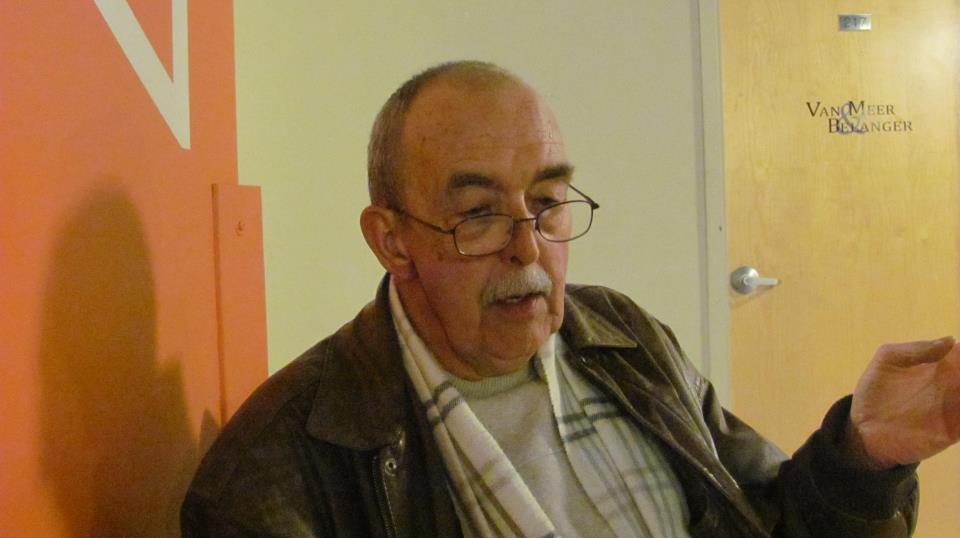
Ryan Fecteau: Spotlight Interview

Originally published in Saco Bay News

Although he majored in political science and eventually became the Speaker of the Maine House of Representatives, Ryan Fecteau’s political journey had a rather innocuous and humble beginning.

Fecteau, 30, said he first became interested in politics when he was appointed as a student representative to the Biddeford School Committee nearly 15 years ago. In 2020, he became the youngest person to be named as Speaker of the House since 1842. He is the first Biddeford representative to hold that post and the first openly gay person to be named Speaker.

“I think I was picked because I was sort of quiet and reserved,” Fecteau laughed, recalling his appointment by former school superintendent Sarah Jane Poli. “I think Sarah Jane thought I would not make waves; unlike [some other students.]”

Fecteau was 16, and a junior at Biddeford High School. He wasn’t even old enough to vote, but he was admittedly intrigued by the political process. Some two years later, he decided to seek a seat on the Biddeford Charter Commission.

“There were certainly a lot of skeptics who wondered about this new kid and what he was trying to prove,” Fecteau said, pointing out that the commission was chaired by one of the city’s most well-known politicians. “I was only 19, and I think some people wondered about my motivations.”

From there, even though he was still a full-time student at Catholic University of America in Washington, D.C., Fecteau decided that he wanted to run for an opening seat in the Maine House of Representatives. “To this day, I have no idea what possessed me to do it,” he said. “But in my gut, I felt a lot of passion, and I really thought that young people should have a voice at the table.”

State Rep. Paulette Beaudoin was actually Fecteau’s next-door neighbor, and she was unable to run for re-election because of term limits. She was 82 years old when Fecteau announced in the summer of 2013 that he would be seeking her seat. He was 21. “Yeah, you could say it was quite a contrast,” he laughed.

Another Democrat also wanted to take over Beaudoin’s seat. Former newspaper publisher and downtown property owner David Flood threw his hat into the ring for the nomination. Fecteau won the nomination, 493-263. He says he won his race the old-fashioned way.

“I knocked on a lot of doors and met with a lot of people,” he recalled. “Because of school, I was doing a lot of early campaigning in January. That’s a big advantage actually because it’s really cold outside and people invite you into their homes.”

We caught up with Fecteau recently to discuss his time in the Legislature and his thoughts about the future of Biddeford and the state of Maine.

If you’re knocking on doors in January, you have to be pretty motivated. Something must have been driving you.

“When I think back, I really believe my main motivation was what I saw happening among my peers. So many young people just didn’t see a future for themselves in Maine. They were basically writing off the state because they didn’t see economic opportunities for themselves here.”

You served the maximum of four consecutive two-year terms in the House. Why didn’t you go for the State Senate seat that opened up at the end of your final term?

“I decided a while back that I really enjoyed the opportunity to serve in the House, but it would also be nice to just stop there.”

What about future political ambitions?

“I really haven’t given it much thought. I don’t know. It’s definitely not on my radar screen right now. I just started a new job. We just a bought a house, so it’s not something I am contemplating. Actually, I think it’s very hard to chart your political future in a state like Maine. We only have two Congressional districts and have a pretty significant and deep bench of candidates.”

What about local politics? We’ve heard your name mentioned as a potential mayoral candidate in Biddeford.

“What? (Laughs) Oh, no, no no. Definitely not. I don’t want to be that close to the fire (Laughs). Actually, I think very highly of municipal leaders who take on the tough tasks — with little pay — to keep our communities up and running. While I don’t have plans to run for mayor or council, I admire those who find a way to serve in any capacity on behalf of the public good.”

Looking back on your time in the House, what would you say were your proudest accomplishments?

“There are so many things. During my second term, I chaired the Labor, Commerce, Research and Economics Committee, and I re-introduced a bill to expand funding for CTE (Career and Technical Education) in high schools around the state. I had sponsored a similar bill in my first term. The last infusion of funds for CTE programs was in 1998, and the costs of those programs was falling onto the shoulders of communities like Biddeford.

“We know that we have to solve challenges in the work force and train our young people to fill critical positions. The bill was defeated again, but I kept at it because I knew it was the right thing to do.  Ultimately, last year, we passed a $20 million bond for funding to 29 CTE centers across the state, including $7 million for the Biddeford Regional Center of Technology.”

Also, we were able to expand dental care coverage for more than 200,000 Maine people. We had strong bi-partisan support for that bill. When you think about it, it’s really an economic development issue.

“When you have someone sitting across from you at a job interview and the applicant has really bad teeth, it’s a stigma issue. I saw it as part of our social contract. Previously, people were using emergency rooms as a last resort to solve terrible, constant pain. Something had to be done.”

You eventually became one of the most important and influential people in Maine politics. But your tenure as Speaker was markedly different.

“It was a very humbling and rewarding experience, but it sure was unique. I was elected in December 2020, and the pandemic had been raging for a little more than six months. There was no way that it was going to be business as usual. To say that it was a significant challenge for all of us is sort of an understatement.

“Although it was a significant challenge to adapt the Legislature to mitigate against the pandemic, the work we accomplished over those two years was transformational.

“We made long overdue investments in Maine people and infrastructure. From broadband expansion to upgrading vocational schools, to fully funding the state’s share of public education to making school meals free for all students, to providing child care workers with a wage boost to investing in the construction of affordable and attainable housing, we overcame unprecedented circumstances and delivered transformational results.”

Are partisan political battles better or worse today than when you first arrived at the House?

“I actually think that it’s better today. During my eight years in Augusta, I experienced a lot of political variables. There is a stark difference in the tone from the governor’s office. My first term, we had a Republican governor and a Republican-controlled state senate.”

What are the biggest issues facing Maine today?

“Affordable housing is definitely the big issue, and that sort of goes hand-in-hand with our state’s work-force challenges. We have this perfect storm of new and younger people moving to Maine. It’s hard to know what’s driving that migration. Is it people who want to live in Vacationland? Or are they just planning to stay a little while? That’s the big question.

“Regardless, we’ve got to build more housing. It’s simple supply and demand. If we want people to fill in the gaps of our work-force shortages, we need affordable housing for them, otherwise they’re not going to stay.”

You’re beginning a new job, appointed by Gov. Janet Mills.

“I was appointed as senior advisor for Community Development and Strategic Initiatives in the Governor’s Office of Policy Innovation and the Future.”

What exactly is that?

(Laughs) “It’s a long title, but basically I will be mostly focused on housing and work-force policy initiatives. It’s sort of a hybrid position. I’ll also be working closely with certain consulates that have ongoing relationships with Maine, such as Canada, France and others to explore economic development opportunities.”

Originally published in Saco Bay News

Mark Johnston: Rocket Man

Mark Johnston
Former Saco Mayor Mark Johnston/ Marlee Hayes photo

Something strange is about to happen on the other side of the Saco River. It’s as rare as a blue moon and perhaps more difficult to understand.

Mark Johnston will not be running for mayor in Saco.

Johnston, 61, says he has spent nearly 40 years in service to his community. Now, he says, it’s time to let someone else take the reins.

“I’m tired. I’m going to be 62, and now it’s time for Mark,” he said during a recent interview at his Main Street delicatessen, which is often mistaken as City Hall with an amazing selection of wines and good sandwiches.

Johnston came into the world of politics in the usual way: He was a malcontent, a young man worried about a used car lot that was planned near his home.

That was nearly 40 years ago, when he was appointed to the Saco Zoning Board of Appeals. His political career would extend over the next four decades and he served under five different mayors, including Sam Zaitlin, Paul Jansen, Haley Booth, Fred Clark and Eric Cote. He also served on the planning board and the city council.

Of course, Johnston also served as the city’s mayor for the better part of two decades, beginning in 1989 with four consecutive terms that ended in 1997. Six years later, in 2003 he was again elected as the city’s mayor and served another three terms, 2003-2007; and 2011-2013.

Every time his name was on the ballot he easily won his election . . . except the first time.

Despite the fact that he was unopposed and his name was the only one on the ballot, Johnston was forced to sue the city in order to become its mayor because he did not get enough votes to meet the criteria of a provision in the city’s charter.

A superior court judge sided with the politician over the city, but Johnston did not escape unscathed. He was mocked on national television by David Letterman and Jay Leno.

Round and round

Johnston runs Vic & Whit’s with his ex-wife, Beth. They have been divorced 25 years but seem to have a successful working relationship.

Two years ago, I named Johnston as the single-most politically influential person in the Biddeford-Saco area, describing him this way:

Mark Johnston is the consummate politician….

He’s Bugsy Seigel, Charlie Lucianno and Meyer Lansky all rolled into one affable, near-sighted man with an uncanny resemblance to Sir Elton John.

______

This is not the first time you announced that you were stepping down from politics. You always seem to come back for more?

(Laughs) “I really meant it the last time, but I had to come back to correct some very serious mistakes that were made during the Ron Michaud Administration. My intent (in 2011) was to correct those mistakes: our bond rating was lowered, the city had blown through its reserve balances. It was a lot of smoke and mirrors because no one had the courage to raise taxes slightly in order to keep up with very basic infrastructure.”

Are you leaving now because people are angry about significant tax hikes?

“No. I think most people understand the position we were facing. It’s not easy to raise taxes, even a little bit. But leaders are not elected to do easy things. Leaders are elected to lead.”

What was your proudest moment as mayor?

“The train station, hands down.  We were entering a new century and thinking about new transportation. Passenger rail had long been abandoned, but having it come back has paid huge dividends for Saco. It really redefined this community. We have people who live here because of the train and such easy access to their jobs in Boston.”

You told residents it would not cost ‘one red cent’ in taxes. That didn’t quite work out, did it?

(Laughs) “People misunderstood me. I said not one red cent, it ended up being a whole lot of red cents. But seriously, this has become a huge asset for our community. We wanted to embrace it. A lot of things changed in midstream. None of us knew then that Guilford Rail was going to require us to have a $250 million liability policy. But we were able to use the Saco Island TIF and revenues from the MERC settlement and rental fees from the Chamber of Commerce.

“I am very proud of that station. It was the first green station built in the United States. It has geo-thermal heating; and the roof was made with a composite material from recyclables. It meets every standard of LEED certification. It was built by all Maine contractors, with wood beams from Maine forests.”

And the wind turbine

“I’ll take all the fault for that. It’s not the one I wanted, but I couldn’t get the council to approve the one I wanted. What we have is basically a kit that cost us $250,000. I wanted the million dollar one, which would have been much taller and as a result much more efficient.

“The council didn’t want to spend $10,000 for a wind survey study. But what we have is iconic, and it sends a message about our community: we are embracing the future, we are recognizing that we must wean ourselves off fossil fuels.”

What was the worst moment of your time as mayor?

(Pauses) “It happened roughly three minutes after I was sworn in for my very first term, when I publicly fired the city attorney (Mary Kahl). She was a good attorney, but I thought she was interfering too much in the city’s day-to-day business. She ended up going to work for the city of South Portland. I don’t regret what I did, but I deeply regret the way I did it.

“I humiliated her in public, and that’s not leadership. That’s not how you should treat people. We were able to be civil, but the wounds never healed. Unfortunately, she passed away a while ago, and I don’t know if she ever forgave me. I was young and brash, but I learned a valuable lesson: always be willing to talk to those with whom you disagree. Never embarrass or humiliate someone in the public arena.”

Who do you think will be Saco’s next mayor?

(Smiles) “All I can say is that I will have to work with whoever becomes the next mayor.”

Ok, so who do you think will be Biddeford’s next mayor?

“Alan Casavant. He is an outstanding leader; a leader for the future. He is helping Biddeford make huge strides forward. He is also professional, calm and always a gentleman; all those tiny words that define character.”

Who was your favorite Biddeford mayor?

“Roger Normand. He was a man of integrity. He was a normal, average guy who never let the power of being mayor go to his head.”

Do you think there should be term limits for mayors and city councilors?

“Yes. Absolutely. After four terms, it’s time for a change. It’s too easy to get cocky.”

What are your thoughts about the RSU 23 issue, considering some in Saco are advocating for leaving the regional school district?

“I’m a little disappointed by the way some members of our community have acted during this debate. I think it’s a disgrace that some folks have called Old Orchard Beach residents “free-loaders.” RSU 23 has failed because of Saco’s penchant for elitism. We never talked about test scores, we never talked about how to bring teachers up through the ranks. We never talked about the important stuff. I want Thornton Academy to have the test scores that Scarborough is getting, and stop hiding behind the façade of a beautiful campus.”

Elitism in Saco?

“Yes, without a doubt. I grew up on Middle Street, a neighborhood that was known as Little Greece. Many of those people from that neighborhood became important and respected members of our community, civic leaders. It’s like we never got beyond the days of the “Battle of the Bridge.” Why do we still use that name? We never used it when Thornton played St. Louis. There has always been a false air of superiority in Saco. It’s been here a long time.”

What advice would you give to the city’s next mayor?

“Talk less and listen more.”

What will be your legacy?

“The elimination of Maine Energy. It took a long time, but I helped (and so did a lot of other people) keep the pressure on. Joanne Twomey and others never let up the pressure. I honestly never thought I would see the day. I am so proud of what Mayor Casavant and the Biddeford City Council did. That took leadership and vision, but they were not alone. A lot of people helped set the stage for finally getting MERC gone.”

So, will you be back as mayor?

“No, I really don’t think so. I have a new woman in my life, and it’s turning into something special. I was mayor when I got divorced, when I had a granddaughter, when one of my sons went to the battlefield. I’ve given a lot to this city. It’s time for me to take some time for myself and my family.”
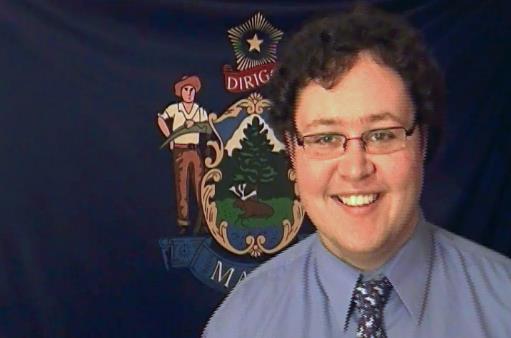
All the young dudes

What was up with 1992 and the name Ryan?

Of course, we all know the fictional Jack Ryan.

You know, . . .the humble Tom Clancy character who routinely saved the world from a cadre of evil forces while also writing a thesis about the importance of granola in the post-Soviet socio-economic structure.

Ryan Gavin

But what about the other guys named Ryan? The ones who were born in 1992 and grew up in Biddeford?

One of them made a short-lived bid to be Biddeford’s mayor, and the other one is wreaking havoc with the city charter.

Both Ryan Gavin and Ryan Fecteau are all of 20 years old, and, make no mistake: they are politically ambitious.

Nearly a year ago, Ryan Gavin, fresh off the heels of learning how to shave and graduating from high school, decided he was the most qualified person to become Biddeford’s next mayor.

After all, Gavin had all sorts of  experience built up after serving two terms as an un-elected student representative on the Biddeford School Committee and a valid driver’s license.

Sadly, he was more qualified than many others who tried to become the city’s mayor. Karl Reed’s 2009 campaign comes to mind.

Ryan Gavin put on his best Sunday suit and a pair of sunglasses to make his public announcement from the back stairs of City Hall on a weekend afternoon.

Sadly, the media actually covered this event that included 11 people listening to a kid who looked an awful lot like John Belushi’s character from the Blues Brothers.

Jake was on a mission from God. Ryan was on a mission to save Biddeford from the clutches of Darth Vader, more commonly known ’round here as former mayor Joanne Twomey.

Gavin was smart enough to remove his sunglasses halfway through his press conference.

He was also smart enough to  quickly figure out he had a snowball’s chance in hell of ever getting elected in a city brimming with old people who vote like clock-work.

Ryan Gavin eventually became an important part of Alan Casavant’s mayoral campaign team.

Let’s pause for just a moment and give out a shout-out to Ryan Gavin’s parents.

If I could be half the parent that Ryan’s parents were, I would be thrilled and could die feeling as if I accomplished something decent in my lifetime.

Ryan was an exceptional student at BHS. He is, today, an exceptional student at UMO.

He is polite, smart, articulate and — unlike many of his peers — he not only cares about what is going on in the world around him, he’s also willing to step up and fight for it.

Ryan Fecteau

All of which brings us to our next point: Ryan Fecteau, a 2010 graduate of Biddeford High School who also served as a student representative on the School Committee.

In November, Fecteau began what will probably be a long and notable political career by actually winning an election.

Fecteau was one of five people elected to serve as a commissioner on the city’s charter review commission, a previously described group of dorks who want to sit around and debate whether the city’s bylaws should include more semicolons.

There were seven slots available and only five candidates on the ballot, so it’s not like Fecteau proved himself to be a tactical genius.

But you still have to respect a kid who is willing to tinker with the city’s charter when most young men his age are doing more important things like getting laid or drinking beer.

But not everyone in Biddeford is happy about Ryan Fecteau’s grand plans for Biddeford.

In fact, during last weekend’s downtown winter festival, I heard some people complain that Fecteau is actually living in Washington DC and is unable to attend the charter meetings in person. I wish I had figured out how to do that.

His critics also said he was trying to ram through “a lot of stupid ideas.”

So, I picked up the phone and called him, half-expecting to get his receptionist who would politely tell me that Congressman Fecteau was in a meeting with the Secretary of Commerce but appreciates my concerns and will have a form letter sent to me.

Actually, Fecteau is a sophomore at Catholic University of America, and it should come as no surprise that he is studying political science.

Fecteau said he saw an opportunity to get more involved in Biddeford politics, and he seized it.

“It’s a rare opportunity, even though we had a charter commission five years ago, who knows when I would have another chance to do this work,” he said.

When asked his opinion about the city’s police and fire commissions (two of the charter’s more controversial items), Fecteau said he would like to see the two combined, if not eliminated.

So far, so good. The city of Biddeford has more commissions and committees than the state of New York.

Fecteau also says he will only miss one more of the commission’s seven monthly meetings.

“The telephone is not a new invention,” he patiently explained to this over-40 geezer.

Asked to explain one of his recent Facebook posts in which he described Joanne Twomey as “a real Democrat” when compared to State Rep. Paulette Beaudoin, also a Democrat who may be challenged for her seat by Twomey in the June 12 primary, Fecteau chose his words carefully.

“I don’t agree with Joanne on everything,” he said. “Paulette is my neighbor, and we’ve had many, many conversations. The Democratic Party has a plank for a reason. I just think Joanne would be a better advocate for many of the party’s core issues.”

Again, so far…so good, but then we started talking about one of his new ideas.

Fecteau would like to see voting day moved to Saturdays instead of Tuesdays. He thinks such a move will increase voter turnout, completely forgetting that such a move would require Biddeford voters to go to the polls twice in one week: once for state and national elections, and then again for local elections.

“Yeah, I guess that’s an idea that needs more work,” he conceded.

I also told him Saturday voting would infringe upon the voting rights of normal college sophomores who spend the bulk of their weekends drinking beer and getting laid.

But for all you old farts who think these young punks ought to learn how to tie their shoes before running around and changing our government, you ought to take another sip of your Geritol and consider this:

There was a young punk from Bangor who got elected to his city council at the age of 23 before becoming one of the youngest state senators in the Maine Legislature. That little twirp named Johnny went on to serve in the U.S. Congress before becoming Maine’s 73rd governor.

On the other side of the political aisle, another young punk from Bangor became the youngest person to ever get elected to the Maine Legislature. Tarren Bragdon, former CEO of the Maine Heritage Policy Center, has had a big impact on Maine politics and public policy.

And no one should forget the impacts of two of our nation’s youngest presidents, Republican Teddy Roosevelt (42) and Democrat John F. Kennedy (43). Of course, Roosevelt was not elected at 42 because he was sworn-in after President McKinley was assassinated, but still . . . the U.S. Constitution says you can be president when you’re 35; a senator once you hit 30 or a member of the House at age 25.

Congressman Fecteau?… it’s not as implausible as you may think.

George ‘Pete’ Lamontagne

George “Pete” Lamontagne is an uncomplicated man who has seen his fair share of complicated situations.

Political observers say the former city councilor’s laid-back personality and his friendly demeanor often calmed severe storms during especially contentious Biddeford City Council meetings.

Pete Lamontagne

He is a self-described man of the street, and he is widely perceived as a champion of those without friends or power. He is soft-spoken, but commands attention and respect when he speaks. He is a lover of history, politics and art.

He is a simple, courageous man with an extraordinary reputation, and he loves his hometown of Biddeford.

We caught up with Pete in the lobby of the North Dam Mill building, formerly the home of the Biddeford Textile Company, where both Lamontagne and his father worked. As always, he was gracious, understated and relaxed.

With the exception of a two-year hiatus, Lamontagne served as a member of the Biddeford City Council for more than a decade, first elected as a Ward 5 Councilor in 1997. He returned to the council in 2001 and remained there, serving as both an at-large representative and council president, until stepping down last year.

You and several other members of the last city council were roundly criticized because of the infamous executive session meeting held with the owners of Scarborough Downs before the city announced its intention to put out a racino referendum. Do you regret that decision?

“In hindsight, sure. We found out after the meeting that it wasn’t right. (Sighs) It doesn’t matter much now, it’s water under the bridge. I can’t speak for anyone else, we just wanted to do something for our community to help bring back jobs…it didn’t work out, and now the city will have to look at other things, but I don’t think we’ll ever see anything that big, anything that could have brought so many jobs here.”

You were a big supporter of the proposed Biddeford Downs project.

“Oh absolutely. I’ve spent a lot of time in both Bangor (Hollywood Slots) and Foxwoods, which are both about 180 miles either way of here. When West Point closed its doors, it was a like a stake in the heart of hope for those of us who worked there.

“I see these unemployed people every day. These are good people, hard-working people; they looked at this proposal and said, you know…maybe I can get a job there. It was something to hope for, and I was relentless. Today, those people are still unemployed.”

You were the president of the UNITE union and you worked in that mill for more than three decades. The closure hit you hard.

“Oh yes…. (Pauses) You know, I never thought it [West Point] was going to close. I never planned to retire. It was tough. It was devastating for a lot of families, my friends… A lot of us started taking retraining classes at the Community Center, but jobs are tough to find right now.”

You know a lot about hard times.

(Laughs) “I sure do, but I also know something about good times, and strangely enough, they often overlap.

“I grew up on Water Street, and back then it was a very poor neighborhood, mostly bars. But it was a also a close-knit neighborhood. It was where Raymond Gaudette and [former mayor] Gilbert Boucher grew up. I had lots of friends.

“Two of my aunts and one of my uncles lived with us; back then it was how families did things. Every store had a back room with warm beer, because that’s what people liked. Warm Schmidts …it was their beer of choice (Laughs).”

You were named after your dad.

(Laughs) “Well, sort of, . . . his name was Pete. He was a big guy. He worked at the mill as a mason in the late ’50s and early ’60s. People called me Little Pete or Pete junior. Actually, my middle name is Alphonse, but don’t print that.” (Laughs)

Did you get the political bug from your father?

“Well, you know, he ran for the council as a Republican, and he got trounced. I mean, he was a French Republican.”

Did he live long enough to see his son get elected?

“Yes, he passed away just after I won my first election. I think he was very proud.”

You served under three mayors: Dion, Nutting and Twomey. Is Biddeford’s political landscape as tough as its reputation?

“Oh yes, Biddeford politics can be very tough. You have to have a thick skin. I got to serve with [Jim] Grattelo and [Marc] Lessard. Those were my best days. (Smiles)

“There were times when I had to break up physical fights; and there were many times when Mayor Twomey and I found ourselves in very heated disagreements, and we didn’t always see eye-to-eye.”

So how did you broker the peace?

“I don’t look at the oyster shell, I’m always looking for the pearl inside the shell.”

You and Joanne Twomey go way back.

“She was a pretty, little blonde girl. When I was a young boy, my family spent a lot of time out at Hills Beach. She used to visit, and we would sit on the beach together and talk. I guess you could say she was my first girlfriend.” (Smiles).

You also befriended Rory Holland, a former mayoral candidate who is now in jail for murdering two young men.

“A lot of people didn’t like him. He was not well, but I think he understood where I was coming from. I would let him visit my house, but I was always firm with him, and told him I would not hesitate to throw him out. I think he respected me, but I also think he needed a friend.

“I woke up to the news about the shootings, and I was in shock. It took me more than three days to get my head around it, what a terrible tragedy. It still hurts to think about it.”

Your service in the Army didn’t get much respect from former mayor Wallace Nutting.

“His four stars had a big impact on me. I wasn’t intimidated by them, but I had a high degree of respect for his military service and accomplishments.

“I was a mail clerk in the Army, a desk jockey, serving with the Adjutant General’s staff. But still, here was this 19-year-old Biddeford boy in France.

“Mayor Nutting had a different way of doing things. He would always ask for your input or opinions, but you always knew what the answer was supposed to be.” (Laughs)

Who did you vote for during the last election, Casavant or Twomey?

“No answer.” (Laughs)

You wanted to serve as a citizen member on the council’s Policy Committee, but you were never appointed. What happened?

I don’t know. Alan [Casavant] and I met shortly after the election, and I told him I wanted to be on the policy committee. We were in his office at City Hall, and I saw him write it down. Then, the council agenda didn’t include my name as an appointment.

“At first, I was mad….Bastard!, I thought, until I saw the two names of people who got appointed to that committee, Laura (Seaver) and Renee (O’Neil). Those were perfect choices, so I decided not to say anything. It could not have worked out better. I think those two will do a wonderful job. I was very pleased with the mayor’s picks.”