Take Five

LePageMy wife, Governor Paul Lepage, Bill Nemitz, a charity auction and the in-patient psychiatric unit at Maine Medical Center.

How did these random things become connected last week, causing a bit of a stir on my Facebook page last night?

Let’s start at the top.

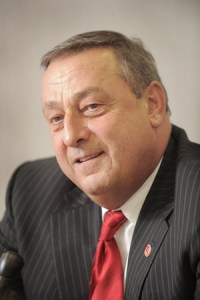
Last week, just days before the election, Governor Paul LePage joked that Portland Press Herald columnist Bill Nemitz should be placed on a “suicide watch,” speculating that he was going to win his re-election bid and his nemesis might jump off the Penobscot Narrows Bridge as a result.

Boom! Instant controversy. Once again, the governor found himself in familiar territory with his foot in his mouth.

The governor’s critics (Democrats) went wild, talking about how insensitive the governor is to issues regarding mental illness.

Reportedly, some people who have lost loved ones to suicide were also  angry and upset about the remarks.

Other folks (Republicans) said the governor was joking and the comment was no big deal, pointing out that many in society make lighthearted jokes on similar topics.

Stop and think if you have ever said “I’m going crazy.” “That is a crazy idea.” “That guy is a nut job.” Have you ever laughed when hearing a joke about hearing voices? Late night talk show hosts had plenty of fodder more than a decade ago when actress Margot Kidder was found partially clothed, hiding in the bushes of an LA suburb.

The subject of mental illness makes us nervous. We laugh about it as a relief valve for our own anxiety and fear. But can you take it too far?

Who’s saying what

My wife  has multiple sclerosis. It is a progressive illness with no cure. She often makes jokes about her illness, speculating about when she will need a wheelchair and telling me we will need to completely renovate our home to accommodate her decreasing mobility. She laughs about these very real topics, appearing on the surface light-hearted.

Her jokes about MS really bother me. They trigger a rush of feelings and incredible anxiety. I know that her jokes are just part of her coping methods, but still I cringe when she talks about putting “bling” on her cane.

When Laura jokes about her MS, I try to give her a pass because she has MS, not me. It is her coping strategy.

It’s sort of like the “N” word. An African-American man can use that word in public without recrimination and make jokes about its connotation and meaning.

If I did the same thing, I could possibly lose my job, certainly many friends.

Society draws a line. If you got it, you can talk about it. Otherwise, keep your trap shut.

Unless it’s Hollywood or the media , and then all bets are off, especially when it comes to mental illness.

In the days following the 2007 massacre at Virginia Tech, “Nightly newscasts reported “no known motive” and focused on the gunman’s anger, sense of isolation, and preoccupation with violent revenge. No one who read or saw the coverage would learn what a psychotic break looks like, nor that the vast majority of people with mental disorders are not violent. This kind of contextual information is conspicuously missing from major newspapers and TV,” wrote Richard Friedman in “Media and Madness,” an article published in the June 23, 2008 issue of The American Prospect.

Friedman goes on to explain that “Hollywood has benefited from a long-standing and lurid fascination with psychiatric illness,” referencing movies such as Psycho, The Silence of the Lambs, One Flew Over the Cuckoo’s Nest and Fatal Attraction.

According to Friedman, “exaggerated characters like these may help make “average” people feel safer by displacing the threat of violence to a well-defined group.”

Since the 2011 Tucson shootings, I have been an out-of-the-closet consumer of mental health services. I have testified before the legislature, published an op-ed in the Portland Press Herald, spoken at community forums.

My mission is to show, in a tangible way, that mental illness is generally not scary and more often than not impacts everyday people: your friends, your co-workers, your neighbors and even your social media contacts.

My life-long struggle with mental illness is not particularly funny, but I do make jokes about it. Have you ever tried to eat a chicken cutlet with a spork? (They don’t give you silverware on the psychiatric unit. )

Did you know that nine out of 10 psychiatric units have aquariums? Fish, apparently, relieve anxiety and stress.

I make these jokes and others when speaking publicly because humor helps break down communication barriers.

I got in trouble
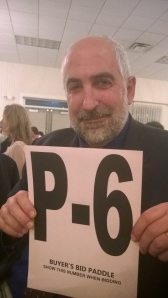
p6On Friday evening, Laura and I attended the Biddeford-Saco Chamber’s annual holiday auction and dinner. By pure coincidence, my bidding paddle was labeled P-6,  the abbreviation of Maine Medical Center’s in-patient psychiatric unit (located on the sixth floor of the Pavilion wing.) I held up the photo and had Laura take a shot of me and my label.

I posted that picture on Facebook.

Some people thought it was funny. Other people did not, questioning why I could joke about mental illness but Gov. LePage could not.

The tricky thing about humor is its intent.

For the record, I chuckled when LePage said Nemitz should be placed on a suicide watch. The two men have been battling for four years, and frankly, I’m not sure who hates who more.

But either way, I think humor is okay, so long as its intent is somewhat calculated and not malicious in nature.

As someone with severe and chronic mental health issues, it’s not up to me or anyone else to tell you what you can joke about. All I ask is that you think about the consequences and lighten up just a tiny bit.

———————————

If you enjoy what you just read, please keep in mind that this is a reader-supported blog, and I want to keep ads at a minimum. If you are so inclined, please consider a small donation to help maintain this site. You can donate by clicking on this link. Thank you!

Enter your email address to subscribe to this blog and receive notifications of new posts by email.

We’re the kids in America

WARNING: If you are a partisan Democrat or Republican, you may not want to continue reading because this post will surely piss you off.

Me and Governor LePage
Me and Governor LePage in 2013.

Nearly 24 hours after the polls closed, there is still a fair amount of wailing and gnashing of teeth going on here in Maine, where Republicans had much to celebrate last night.

All the pundits, professional and otherwise, have bellied up to the bar to offer their “expert” opinions and analysis about what happened last night, so please forgive me for piling on to the fray of analysis and speculation.

Throughout the day, on social media and around the water cooler, I have heard a wide range of opinions about why Democrat Mike Michaud lost his bid to oust Republican Paul LePage.

Many people blame Independent candidate Eliot Cutler. I disagree, I think Cutler was a factor but not that significant, let’s say 5%

Other people said the controversial “bear-baiting” referendum brought out “conservative/sportsmen” voters who would have otherwise stayed at home during a midterm. Wrong again, in my opinion. But let’s give this “factor” another 5%

Others have said that Gov. LePage was able to latch on to the Ebola hysteria that dominated the final days of the campaign cycle. This one I find laughable, but let’s give it 2 percent, anyway.

Still others have said it was because Michaud was an openly gay candidate. I have a fair amount of Republican friends, and I never heard this issue raised in conversation. But I am also a realist, and I know that awful bigotry does lurk everywhere, so let’s give that factor another 5%.

So far, if you add all these factors together, you only have 17 percent of the puzzle.

So, what really happened last night?

In my opinion, it was two things that really mattered.

For almost four years Democrats have howled and railed about how awful governor Paul Lepage is. In this campaign cycle, they spent boatloads of cash driving home that message. He is a bully. He is an embarrassment. He likes to kill puppies. He spews dioxins.

Let’s, for a moment, assume the Democrats were right that Paul LePage is the worst governor to ever occupy the Blaine House. Let’s assume he is the great Satan.

Well, if that’s the case, how do you lose against such a God-awful candidate? You nominate a weak candidate to take him on.

Everywhere I go, I hear people tell me that Mike Michaud is a “nice guy.” And that is the truth. I have met Mr. Michaud. Off the top of my head, I can’t think of a nicer guy.

But you need more than being a nice guy.

Maine’s Democratic Party cleared the primary decks and anointed Michaud as heir apparent with no contest. On paper, it made a certain amount of sense. Michaud was from northern Maine, and he could probably carry southern Maine. He is a respected legislator and held his Second District Congressional seat for several terms. He is likable. A working-class guy just like you.

But Michaud’s campaign focused primarily on being “not Paul LePage.” Voters turn out to be for a candidate, not against a candidate.

LePage had the advantage of being an incumbent and trumpeted his accomplishments. No matter how you feel about the guy, he has a loyal fan base and they rallied like there was no tomorrow.

But all that only counts for 40 percent of why Michaud lost and LePage won last night.

What’s the missing piece of the puzzle?

History and voting trends.

Make no mistake, the President played a factor in this race and several others. Historically, the second-term mid terms are a major disappointment for the person sitting in the Oval Office.

The nation is weary and wants a new direction, away from the party that controls the White House.

Let’s take a quick trip down memory lane to 2006. George W. Bush was halfway through his second term in office. He lost Congress in 2006. But what was happening in Maine?

Gov. John Baldacci was seeking re-election. The Republicans nominated conservative Chandler Woodcock to take him on. But the Dems had other problems. Barbara Merrill, a former Democrat lawmaker from Appleton, filed papers as an independent. Pat Lamarche, the driving force behind Maine’s Green Party was also a candidate and threatened to peel progressive votes from Baldacci. Between them, LaMarche and Merrill got roughly 20 percent of the vote.

Baldacci still won because a.) he was a stronger candidate than Woodcock; and b.) because Republicans nationally and at home were useless during the waning days of the Bush Administration.

By contrast, Cutler only got eight percent of the vote, but it would be a major leap of speculation to assume that every one of those votes would have gone to Michaud.

In the end, Michaud was a mediocre candidate who ran an uninspiring campaign while his political party was suffering all over the country.

That’s what happened in Maine last night.


Radio Free Europe

Governor LePage: winner or loser in 2014?

There’s one aspect of this year’s Maine gubernatorial race that has received little attention: where will dispassionate Republicans land on Election Day?

Four years ago, in what was largely a three-way race, Republican Paul LePage became Maine’s governor by securing approximately 38 percent of the vote.

Since then, much has been said about plurality, the merits of run-off elections and the so-called Cutler effect.

But little has changed in how Maine will choose its next governor, and today LePage is again on the ballot with two opponents.

More importantly, we don’t have Independent Shawn Moody (9 percent) to kick around this time.

Moody was always a long-shot, a late entrant, dark-horse candidate with broad appeal. At least a third of his support likely came from Republicans who were less than impressed with LePage’s style and tone.

From my perch, it’s hard to see how LePage has done anything to build his base, to draw in moderates; and I wonder where will those folks go. Will they hold their noses and vote for LePage? Will they hold their noses and vote for Cutler? Will they clamp down on their noses and vote for Democrat Mike Michaud; or will they leave their noses alone and just stay home on Election Day?

Many Democrats blame Cutler for LePage’s election in 2010. They say he split their party’s voting block and could do it again this time.

So far, Cutler is only a shadow of the threat he was in 2010; but even then his support came late in the game. Say what you will, but Cutler’s numbers will likely rise over the next few weeks as LePage and Michaud busy themselves with tearing each other down.

Recent polls have shown LePage and Michaud in a very tight race. So, I want to know where the Moody voters from 2010 will go; all nine percent of them.

Nine percent may not seem like a big number, but LePage simply cannot rest on his base of 35 percent. This time, the Democrats are working harder and smarter than they did in 2010. They are more unified and reaching for the middle.

LePage has an opportunity to draw in some of those moderate voters in the middle, but so far there’s been no evidence that he’s willing to court their vote.

So far, Eliot Cutler is the only candidate working really hard for the middle, the place where a growing number of voters call home. I doubt it will be enough for him to win, but I am positive that it would be enough for LePage to lose.


Lido Shuffle

The experiment is over, and it was a bittersweet experience letting it go.

As it is with so many things in life, it occurs to me that my endeavor to create a diverse group to debate differing political ideas with civility was both a phenomenal success and an utter failure. We called this group “Thinking Politics” and its membership quickly swelled beyond my expectations.

WP_20140906_18_48_58_ProLast night, I had the pleasure of participating in the phenomenal success part; but it was the utter failure part that led me to let go of the reins, end the “experiment” and let the group go wherever it wants; allow the other members of this “secret” social media group to experience true self-determination.

I started the group, and until last night served as its primary moderator. Admittedly, I tried to control the group: to maintain a balance between liberal and conservative thought.

My bigger mistake, however, was trying to appease all members of the group, and that caused a lot of anger and dissension.

A few months ago there was a schism of sorts. Roughly 20 percent of the members left the group after I announced that we would leave religion out of our political conversations.

I was angry that these departing members hijacked my group’s name and started a similar group entitled Thinking Politics/Free Speech, as if free speech has no limits.

But the bulk of the original group’s members remained, yet still the dynamic I envisioned never really materialized in a substantive way.

I wanted to see if there would be more intellectual curiosity; if members would be willing to re-examine and challenge their own political pre-conceptions and beliefs.

One of the problems is that the group quickly became dominated by one side of the political aisle. Those in the minority felt frustrated and stopped participating.

In a recent Facebook post, Robert Reich, former Labor Secretary under President Clinton, spoke of the value of having his ideas challenged by a good friend during a monthly lunch meeting.

Perhaps that is why last night was such a stunning success.

About 30 members of Thinking Politics convened for an impromptu dinner in Portland. All members, regardless of political affiliation, were invited. It was an awesome experience, full of laughter, shared experiences, good food and plenty of libation.

That experience reminded me of the Political Beer Summits I once organized with friends who often disagreed about political issues. Those summits inspired the creation of Thinking Politics.

When you’re sitting at a table, directly across from your adversary, it becomes instantly clear that you have much more in common than not. We all have funny stories, fond memories, shared experiences, including loss, fear, hope and dreams.

It’s almost impossible to establish that kind of intimacy on the internet. When you are separated by a keyboard and a monitor, it’s much easier to belittle your opponent, to say things you would never say if you were sharing a meal with them.

So, part of me thinks I failed; but as I looked around at the group last night, I also felt a certain sense of pride. The conversations were real, the friendships were plainly evident.

It was a good time for me to say goodbye, to let go of my moderator status and turn over the keys to six others.

Where Thinking Politics goes from here is unknown. What is known, however, is that I will no longer be at the helm of that ship.

My experiment is over, and I regret nothing.

A good friend from Rhode Island accompanied us to the dinner. Her observation meant a lot to me. “Look at all these people, they came from Texas, Illinois and all over, and they really want to be here and meet the other members in person. You started that, Randy, and that’s impressive.”

So, in the end, maybe my time at the helm of Thinking Politics was a stunning success; and thus, it was the perfect time to walk away and let others steer that ship.

Survey says . . .

Eliot Cutler
Eliot Cutler

Independent gubernatorial candidate Eliot Cutler is in trouble.

At least according to the latest All Along the Watchtower survey (and every other poll conducted over the last few months)

Whatever star power the independent from Cape Elizabeth had during the 2010 gubernatorial campaign has all but vanished.

Of the three major candidates, Cutler was the only one to see his support fade (a 40 percent drop) between my two surveys conducted on March 14 and July 24 of this year

Meanwhile, incumbent Republican Paul LePage saw a 19 percent jump in support between the survey period, but Democrat Mike Michaud maintained strong and commanding leads in both surveys, handily winning each with 48 percent in March; and 49.5 percent in July.

As I said previously, this was NOT a scientific poll. It was not restricted to Maine voters, and there are no cross-tabs to analyze. An eight-year-old girl from Toronto could have voted in this survey, so no one should get too wound up about the results . . . except for Eliot Cutler.

Before I proceed, it should also be noted that my latest survey (launched on July 24) had far fewer participants than the earlier survey I conducted in March.

In my March 14 survey, there were 2,411 participants. By contrast, only 122 people participated in my latest survey.

I am not sure how to explain the dramatic drop in participation. It could be that we are in the middle of summer. It could be that people are growing weary of politics and are waiting until Labor Day to get fired up. It could be apathy. It could be a lot of things, but Cutler’s team could have shared this survey widely among their supporters. They could have easily had a small win. 75 votes for Cutler would have resulted in a blog post that “Cutler wins survey.”

gov chart1What would be the value of a minor league blog announcing a Cutler win?

Well, it would be something that Cutler could point to as semi-tangible evidence of his campaign’s viability. It would likely help him more than saying he was asked by the Democrats to be their party’s nominee.

Instead, the results here are just more bad news for a campaign that has yet to have a sun-shiney day during the 2014 cycle.

It’s also further evidence that the Democrats don’t need to worry too much about Cutler, and it’s a bit of bad news for the LePage team that desperately wants Cutler to cut into the Democratic base.

That eight-year-old girl from Toronto probably had no idea about how much power she and her friends could have wielded in the 2014 campaign for the Blaine House.


Cold as ice

ECThere are advantages to being independent, but there are also some big disadvantages.

If you don’t believe me, just ask Ted O’Meara, campaign manager for gubernatorial hopeful Eliot Cutler.

In an e-mail to Cutler’s supporters this week, O’Meara praised his team’s hard work and their ability to collect more than 5,000 signatures to ensure that Cutler will be on the November ballot.

But O’Meara also took a swipe at Maine’s political parties, pointing out that campaign rules discourage independent candidates from seeking office.

“Our work was made more challenging by the fact that Independents like Eliot have to collect 4,000 signatures, while the party candidates only have to collect 2,000,” O’Meara wrote. “It’s just the reverse when it comes to fundraising; Eliot can collect only half as much per contributor as the party candidates. 

“That’s right: twice the signatures, half the money. Guess who wrote the rules?”

O’Meara goes on to say that “self-serving election laws are the only thing the parties can agree on these days.”

It should be noted that O’Meara was more than happy to be a member of a major political party in the not-too-distant past.

In fact, O’Meara was once the chair of the Maine Republican Party and served as a staffer for both Senator William Cohen and Senator Olympia Snowe.

But his point about party control of Maine politics is valid.

In fact, members of both major parties ought to seriously ponder why an ever-increasing number of Americans are registered as unenrolled voters.

Being “independent” is gaining traction all across the nation, and that spells big problems for the big parties, especially when it comes to fundraising from a smaller pool of voters.

Although the party faithful generally point out that their candidates must endure the expense of grueling primaries, that’s just not the case this year.

Both Democrat Mike Michuad and Republican Paul LePage are unopposed for their respective party’s nomination.

Regardless of whether you support Cutler, we should level the playing field for all candidates. Let’s be independent together!


Cutler: On the defense, or on the move?

camplogo3With less than six months to go before the November election, all three of Maine’s gubernatorial candidates seem to be picking up the pace of their campaigns.

In traditional Maine politics, this sort of ramping up usually comes toward the end of summer, just ahead of a Labor Day surge that leads to an October sprint for the finish.

The early nature of this ramp up is likely tied to the results generated by two recent statewide polls, both of which show Democrat Mike Michaud and Republican Paul LePage in a statistical dead heat. Both polls also show Independent candidate Eliot Cutler in a distant third place.

The numbers from polling conducted by Rasmussen and Pan Atlantic SMS Group had to be disappointing news for Cutler and his team.

Video killed the radio star

Apparently, despite the dismal poll numbers, there is still some concern that Cutler could repeat the 2010 election results, by once again drawing from Democratic voters and giving LePage a second term with a plurality victory.

Cutler, with nothing much to lose, recently unleashed a campaign video to explain why he is NOT splitting the vote.

The video was captured during one of his campaign events in response to a question from a very young voter.

Releasing the video was a very smart move,  and it was a very dumb move.

It’s a smart move because Cutler uses video to portray confidence, leadership.

It’s a dumb move because it makes his campaign appear on the defensive some six months before the election.


Regardless of how you feel about Cutler, his campaign or the video, one thing is clear: video is an effective communication tool, especially when it comes to social media. Blogs are read, but videos go viral.

A study conducted in the United Kingdom last year showed what most of us know intuitively, yet what so many of us fail to recognize: A picture is worth a thousand words, but a short video is worth a thousand pictures.

The study showed that consumers are 27.4 times more likely to click-through online video ads than standard banners and almost 12 times more than rich media ads.

But here in Maine politics, the gubernatorial campaigns have yet to do very much in the way of integrating videos in their social media efforts.

As of this writing, the above video from Cutler (posted two days ago) has received 115 views. That does not sound good, right? Well, wait til you hear from the competition.

Mike Michaud’s campaign last released a video four weeks ago and it has received 63 views.

Paul LePage’s campaign released its last video roughly six months ago, but it generated 300 views.

Apparently, all three campaigns could use some work on producing pithy, yet compelling videos.

Another look at the numbers

On a final note, all three campaigns experienced a rather shallow 2 percent increase on their respective Facebook pages, but Michaud’s team scored an 11 percent increase in Twitter followers( 1,7111) during the past month, compared to 3 percent for LePage (1,754) and four percent for Cutler (1.377).

A little help from my friends

And just for the fun of it, I decided to see where my Facebook friends land when it comes to liking the campaigns.

I have 801 Facebook friends (though several do not live in Maine). Of those, 93 of my friends “like” Mike Michaud; 97 “like” Paul LePage; and 154 “like” Eliot Cutler.


Smoke on the water

Pot%20leaf_40Attitudes regarding marijuana have dramatically changed during the past two decades.

Those in favor of legalizing the drug are finding increasing support from an expanding constituency, including millenials who can now vote and health care providers who say the drug can benefit their patients.

Even retired Supreme Court Justice John Paul Stevens — not a likely Cheech & Chong fan — says it is time for marijuana to be legalized.

In an interview with Scott Simon on National Public Radio, the former justice said: “I really think that that’s another instance of public opinion [that’s] changed. And recognize that the distinction between marijuana and alcoholic beverages is really not much of a distinction.”

Talk about a dramatic shift. In 1987,  after admitting that he once used marijuana, Supreme Court nominee Douglas Ginsburg was forced to back away from the nomination process.

And last year, voters in both Colorado and Washington defied federal law and legalized the use of marijuana as a controlled substance.

But the quest to legalize marijuana in all 50 states face an uphill battle, best evidenced by what has happened in the Maine Legislature.

In November The Legislative Council, a 10-member group of legislative leaders,  split on a proposal that would have sent a statewide referendum question to voters. Because the vote was tied, it failed and cannot be considered again until the next Legislature convenes in 2015.

It was the third time the Legislature has rejected proposals by State Rep. Diane Russell (D-Portland) to legalize marijuana. Russell could not be reached for comment.

But State Rep. Alan Casavant (D-Biddeford) said he is glad the proposal failed.

“I voted against it every time,” Casavant said.

Casavant, who spent more than 35 years teaching high school, said he experienced first hand the impact of marijuana on his students.

“Legalizing it would be nothing more than a continued erosion of our culture,” he said. “I have heard all the arguments for and against, and I can’t support it.”

Casavant also said the issue should not be debated on a state-by state basis. “For it to happen, we really need some guidance from the federal government. It’s a very complicated issue. Where do you draw the line on intoxication, for example?”

Casavant says he is sympathetic to those who need marijuana for medicinal reasons, but says the risks still outweigh the benefits, even when considering that marijuana could provide a bumper crop of new tax revenue.

“As the mayor of a city, as a legislator, I am very aware of how we need new sources of revenue that will not impact people who are already struggling to keep up, but despite those realities, I can’t support this. Not now.”

State Rep. Justin Chenette (D-Saco) said he is “evolving on the issue.” Chenette said he had initial apprehension about the issue when first approached for his support by Russell.

“Being a college student so recently, I have witnessed the rampant use of marijuana on campus,” Chenette said. “I am concerned about how young people will use it, but I also see the other side. I would be in favor of sending the question to referendum, but I have yet to formulate a strong opinion one way or the other. It’s something that warrants more study.”

Ryan Fecteau of Biddeford is hoping to be a member of the next legislature.

Fecteau, 21, says he generally supports the legalization of marijuana but does not want to see it included in the Maine Democratic Party’s platform because it could be wedge issue in a year when Maine Democrats need to be focused on bigger fish, including capturing the Blaine House.

“I think it should be treated the same as alcohol,” Fecteau said, adding that additional revenue from the state sale of marijuana could provide much-needed tax relief for seniors and revenue that could help fund critical programs.

With a little help from my friends

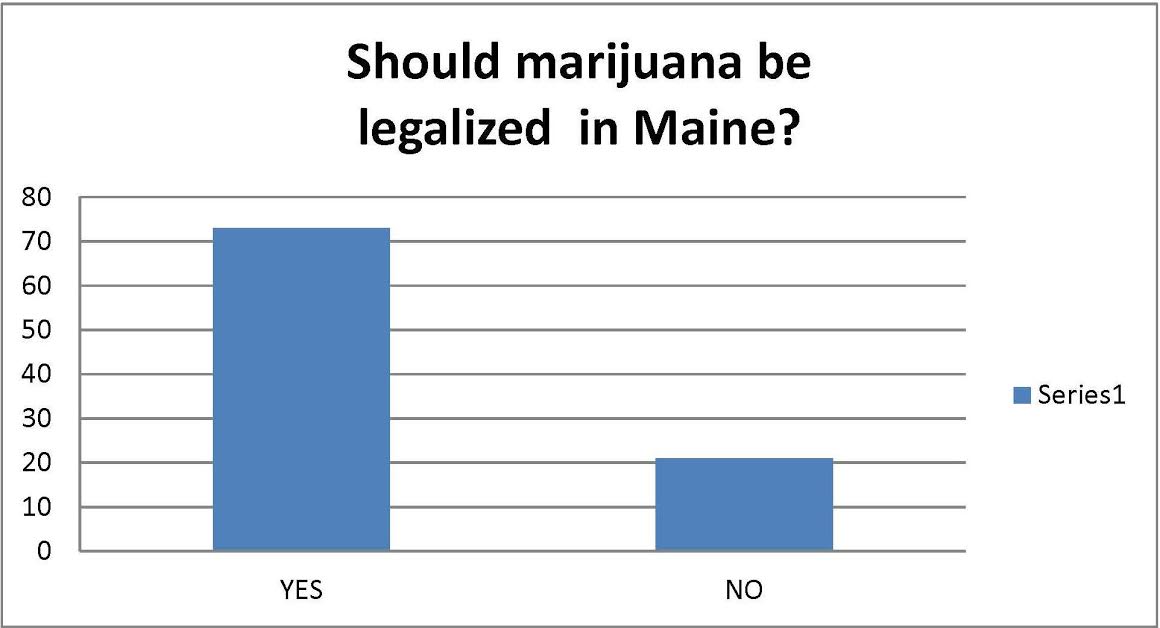
A few days ago, I posted a simple question on my Facebook page about the legalization of marijuana.

That informal survey drew more than 100 responses in 24 hours.

I was surprised by some of the responses. I was also fascinated to see that an almost even split of Republicans and Democrats were on each side of the issue.

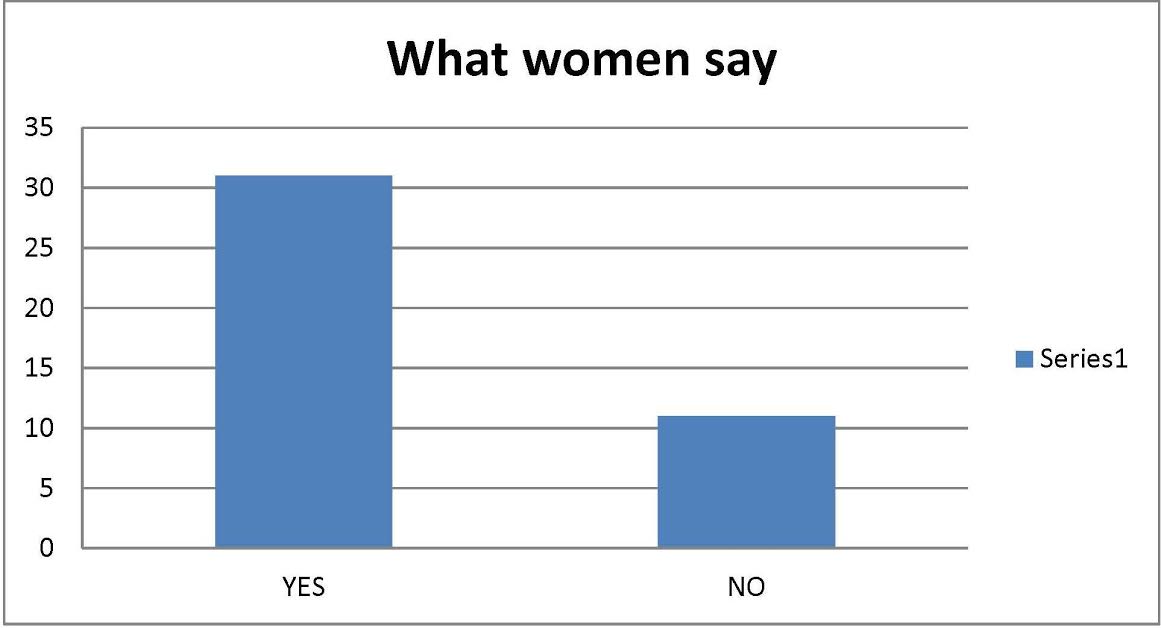
Moreover, both men and women overwhelmingly support legalization (male approval led female approval by only a slight margin).

Women with children were equally split. Among male opponents, more than 75 percent are politically conservative, yet nearly 40 percent of male supporters are conservatives.

Here are a few charts to break it down for you:

weed2


women


men


How not to use social media in a campaign

camplogo3There is a right way to use social media in a campaign.

And there is a wrong way to use social media in a campaign.

The following could be forgiven if it came from a political novice, but not when it comes from the governor’s re-election team.

Here’s a game you can play at home. Find the three glaring strategic mistakes that Team LePage 2014 uses in their recent Facebook post.

https://www.facebook.com/#!/mainesgov/posts/10152803304354676?stream_ref=10

1.) The post urges us to “please search for the LePage 2014 website on your computer.”

Oh, I’m not supposed to search under the table or between the seat cushions?

How about this? How about posting a link to your site? You can do that on Facebook.

Instead, the governor’s social media gurus are worried about unintended “filters” that could accompany an embedded link. So, instead they strongly suggest that you use your computer, hunt down the link and then donate.

In fact, donating must be important because they ask you to donate twice in the same paragraph, which almost looks like one giant sentence, considering the absence of punctuation.

2.) The campaign’s post is horrendously long.

Facebook is not Twitter, which requires abbreviated posts. That said, you should not use Facebook to “cut and paste” an entire speech.

A better strategy would be to hook your social media audience into your website. Use social media to tease your message and direct readers back to your website.

3.) If you must go long, give your post some space.

If you insist on your using Facebook like a blog, at least be considerate and allow readers a visual experience that doesn’t look like a bucket of spilled nails.

Insert a line space between paragraphs. Remember, if you want more people reading your posts, make your posts easier to read.

So here’s a primer for Governor LePage and his re-election team:

If you want to see Governor LePage re-elected go here and donate.

See how easy that was? Social media is supposed to be easy.

I’m not sure who is handling the governor’s social media, but from the looks of things there is plenty of room for improvement.

Primary Colors

empty-pollsAllow me to make a bold prediction.

Voter turnout for Maine’s 2014 Primary Elections on June 10 will be absolutely dismal.

Taxpayers across Maine will spend hundreds of thousands of dollars for an absolute non-event; an utter waste of time and resources, all in the name of a Democratic process that doesn’t work without a contest.

In fact, we will be lucky to see voter participation that exceeds the June 1996 state primary, when only 12 percent of eligible voters bothered to cast a ballot.

Think of it this way, it will be like buying a ticket to watch the Boston Red Sox play the Boston Red Sox at Fenway Park.

The winners have already been determined.

Unlike the June 2010 Primary four years ago, the gubernatorial candidates for each political party have already been chosen. If only one Democrat goes to the polls somewhere in Maine, Mike Michaud will clinch his party’s nomination in a landslide.

But in 2010, voters of both parties had lots of choices. There were four candidates seeking the Democratic Party’s nomination, and no fewer than seven candidates seeking the Republican Party’s nomination.

More recently, in 2012, six Republicans and four Democrats fought in the primaries for a chance to fill the shoes of U.S. Senator Olympia Snowe.

This year, Republican Susan Collins has already won her party’s nomination and Shenna Bellows is assured of being the Democratic Party’s sacrificial cow.

But what about the Maine Legislature and the crop of fresh faces ready to head off to Augusta?

Okay, you can stop laughing now.

In fact, you may want to cry because you and all of your neighbors will be funding an entire day of using municipal clerks and voting officials to collect ballots that hardly matter.

Of Maine’s 35 state senate seats, only four will face a primary challenge (three Democratic primaries and one Republican primary)

It’s not much different for the process to fill the 151 chairs in the Maine House of Representatives, where only 19 of the 151 races will see a Primary challenge (8 Democratic primaries and 11 Republican primaries)

In 132 of 151 House Districts in Maine, it doesn’t matter a bit  if you go to the polls on June 10. The races for the Blaine House, the U.S. Senate and the Legislature have been pre-determined.

Please do not disturb the slumber of your municipal clerks or voting officials.