Biddeford lawmakers brace for ‘tough’ session

With the 132nd Legislature now officially underway and facing a state budget shortfall, members of Biddeford’s legislative delegation are preparing for what is expected to be a battle of spending priorities.

Members of Biddeford’s delegation are all Democrats, the party that holds a solid majority in both the House and Senate; as well as the Blaine House where Gov. Janet Mills is now serving the final two years of her second term in office.

Last week, Mills presented lawmakers with a proposed two-year budget that is roughly 10 percent higher than the current $10.5 billion budget.

Mills has also cautioned lawmakers that the state will need to be especially prudent with its spending because of a potential $450 million deficit.

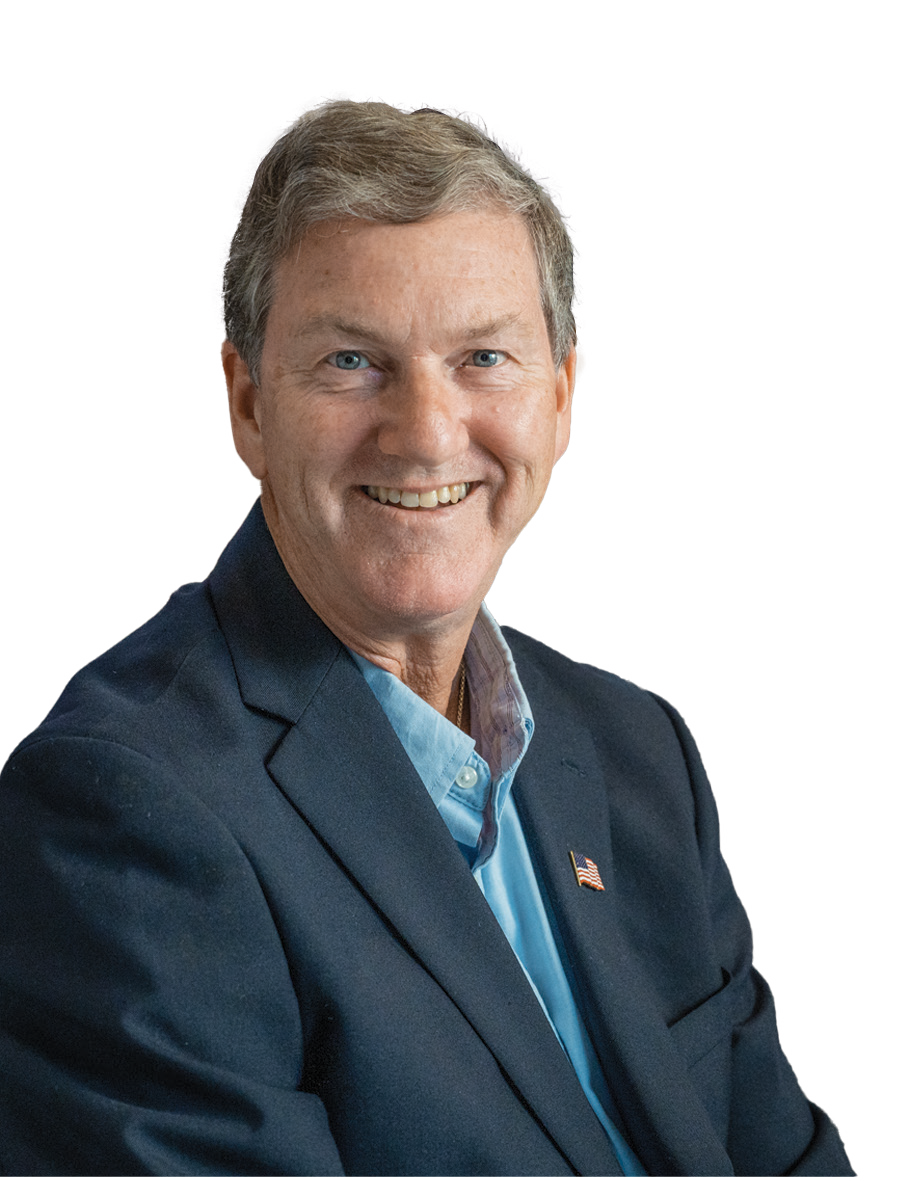
State Sen. Henry Ingwersen (D-Arundel) represents Biddeford in the 35-member state senate.  During a telephone interview on Sunday, Ingwersen said he is still going through the details of Mills’ proposed budget, which was released on Friday.

Sen. Henry Ingwersen

“I haven’t yet gone through all the fine print, but there is no question that we have our work cut out for us,” Ingwersen said.

Adding to his workload, Ingwersen has also been named as senate chair of the Health & Human Services Committee, which has the biggest impact on the state budget in terms of spending, especially for the growing MaineCare program.

The MaineCare program provides free and low-cost health insurance to residents who meet certain income guidelines

“Maine people have clearly shown support for the expansion of MaineCare, but we also have a tighter budget and facing increasing demand for services,” Ingwersen said. “It’s going to be a challenge for all of us.”

State Rep. Marc Malon (D-Biddeford) agreed with Ingwersen about the daunting budget process.

“We have to be willing to examine everything, but it’s also important to note that some of our past spending increases have provided Maine people with really good outcomes,” Malon said, pointing to the state’s relatively new commitment to provide 55 percent of local education costs in the General-Purpose Aid (GPA) for education budget.

It’s going to be a balancing act, but it will not be impossible.”

— State Rep. Marc Malon

Like Ingwersen, Malon is also beginning his second, two-year term in the Legislature. Malon will again serve on the Legal and Veterans Affairs Committee and was appointed this year to serve on the Housing Committee.

Rep, Marc Malon

“Despite some of the challenges we’re facing, I firmly believe that we will be able to deliver a balanced budget without tapping into our ‘rainy day’ fund,” Malon said. “It’s going to be a balancing act, but it will not be impossible.”

Malon said he has submitted nine bills for consideration, including one that will likely breeze through the legislative approval process.

Malon is the primary sponsor of a bill that would allow the cities of Biddeford and Saco to rename the bridge at the bottom of York Hill in honor of the late Gen. Wallace Nutting, a Saco native who became Biddeford’s mayor after an extraordinary military career.

That bill, LD 79, has already been referred to the Joint Transportation Committee and is being co-sponsored by every member of the Biddeford-Saco delegation, including Ingwersen; Sen. Donna Bailey of Saco; Reps. Marshall Archer and Lynn Copeland of Saco and Reps. Ryan Fecteau and Traci Gere of Biddeford.

Malon has also submitted bills intended to improve state review of proposed housing projects, new regulations related to medical cannabis sales and a bill that could place some limits on local real estate taxes by assessing only a parcel’s land value.

Although the budget will consume much of the conversation, lawmakers on both sides of the aisle say housing issues will be a top priority for the Legislature.

“Housing really affects so many other things,” Malon said. “Businesses need workers, but those workers need homes in proximity to their workplace. We need affordable housing, but we also need to increase our supply of modest starter homes that allow young families the opportunity to start building equity.”

To address the housing crisis, Malon says state and local leaders will need to look at and reconsider certain zoning restrictions and find ways to cut red tape for builders and developers.

“It’s not going to be an easy two years,’ Malon said. “But it’s not going to be the end of the world either. Maine has faced tough budgets before. We will get through this, keep our commitments to Maine people by working together and being creative.”

Never miss another update! Subscribe for free today!

Meet The New Boss – – Same as the old boss: Fecteau returns as Maine House Speaker

Once again, State Rep. Ryan Fecteau of Biddeford will serve as Speaker of the Maine House of Representatives.

During a recent interview, Fecteau said there was “stiff competition and a crowded field” this year from other Democratic lawmakers for the speakership of the 132nd Legislature.

Fecteau, 32, who was “termed out” of office two years ago, is returning to Augusta representing a different district in Biddeford.

Former State Rep. Erin Sheehan, also a Democrat, decided earlier this year to not seek reelection for a possible third term representing House District 132.

Speaker Ryan Fecteau

“When I left the Legislature two years ago, I had no plans to return,” Fecteau said. “I could have run for the senate because Senator [Susan] Deschambault and I were termed out at the same time, but I felt like my time was over. I had no political aspirations at the time. I even threw away all my old lawn signs.” (Laughs)

From a historical perspective, Fecteau’s return as Speaker — following a two-year hiatus — last happened nearly 60 years ago when Speaker David Kennedy, a Republican from Milbridge, returned to the seat in 1966 when his party regained the majority.

Fecteau said a confluence of events led him to reconsider a return to the Legislature.

“In the two years after I left, we ended up buying a home that is located in another district, and then I found out that Erin [Sheehan] had decided to not run again,” Fecteau said. “I felt like I had more to give, and there’s a lot that needs to be done, but I’m not envisioning another eight years of being in the Legislature.”

Asked how he was able to once again clinch the seat as Speaker, Fecteau said many factors played a role.

“I think folks were hungry for experience.” Fecteau said. “I think I was sort of a known commodity. And I also put in a lot of work of helping others in their campaigns. I put a lot of miles on my car, and I’m almost sure that I hit every county in Maine — even some Republicans put in a good word for me.”

Fecteau is employed as a senior officer of policy and planning for Avesta Housing, a non-profit affordable housing developer that operates throughout New England.

“I think folks were hungry for experience. I think I was sort of a known commodity.

— Ryan Fecteau

Before joining Avesta, Fecteau was tapped by Gov. Janet Mills as a senior advisor in her Office of Policy Innovation & the Future just days after he was termed out of office in 2022.

Fecteau says he doesn’t see any conflict of interest between his day job and his role as Speaker of the House.

“There’s certainly always the possibility of having legislation coming before the House that could pose a conflict of interest with any member,” Fecteau said, pointing out that Maine’s citizen legislature is made up of 151 House members and 35 state senators, most of whom have day jobs.

“My employment role is independent from anything that would involve any pending or future legislation,” Fecteau said.

Asked about his top priorities for the 132nd Legislature, Fecteau said he hopes the House and Senate can find a path to address both affordable housing and childcare assistance.

Fecteau says the Legislature will need to “look hard” at possible revenue sources to provide a more sustainable approach in helping people get into affordable housing – especially since federal funds from the American Rescue Plan are no longer available.

“So many families across the state are struggling because the cost of childcare is skyrocketing,” Fecteau said. “You have many families who are deciding to either have mom or dad stay home because their wages cannot keep pace with the cost. On the flip side, wages for childcare workers have remained stagnant and are not competitive.

“It’s a huge problem, and there is no easy fix,” he said.

Editor’s Note: Earlier this year, I named Fecteau as the Number One most politically influential people in the Biddeford – Saco area.

Never miss another update! Subscribe for free today!

Malon returns to Augusta for Biddeford

By RANDY SEAVER

State Rep. Marc Malon (D-Biddeford) will soon begin his second term representing a portion of Biddeford in the Maine State House of Representatives.

Malon is one of three lawmakers – all Democrats — who make up the city’s legislative delegation. State Rep. Traci Gere is also returning to Augusta and represents Biddeford’s coastal area and the town of Kennebunkport.

State Rep. Ryan Fecteau was chosen by his peers to reprise his role as Speaker of the House following a two-year hiatus after being termed out of office.

State Rep, Marc Malon

Malon, 42, said he is eager to begin his work in Augusta. He was unchallenged for his seat in both the primary and general elections.

During his first term in office, Malon served as a member of the Labor & Housing Committee, and the Veterans & Legal Affairs Committee.

Although committee assignments have yet to be announced, Malon said he is ready to serve wherever needed.

The 132nd Legislature is creating a new Joint Standing Committee this year. The new Housing and Economic Development Committee is a hybrid from a special committee that was formed four years ago to tackle issues surrounding housing.

“Housing is one of the biggest issues facing Maine right now,” Malon said. “I would love to serve on that committee, but I’ll be happy to serve wherever – whether it’s back to the Labor Committee or Veterans & Legal Affairs.”

Because of his day job as director of party affairs for the Maine Democratic Party, some have question whether Malon can effectively avoid an obvious conflict of interest.

I think our delegation did an outstanding job during the last term, and I’m confident that we are going to hit the ground running.

State Rep. Marc Malon

Malon does not shy away from those conversations, and points to his previous service when he worked closely – and effectively — with several Republican lawmakers.

“I certainly understand why my work for the party may give some people a moment of pause,” Malon said. “But I also think it’s important to note that the bulk of the work we do is very bipartisan.”

In a previous interview, Malon explained the sometimes-subtle differences of what actually happens in the Legislature versus the rather partisan headlines that dominate political discussions on the national level.

“Before I decided to even put my name out there as a candidate, I went to the State Ethics Commission for an opinion,” Malon said last year. “Their opinion was that I could do both. To a certain extent, almost everyone in a citizen legislature faces the same concerns. For example, can farmers objectively serve on the Agriculture Committee and so forth?

“I think my professional experience and time working in the State House as a private citizen actually benefits my constituents. When I got elected, I already knew my way around and understood the procedures.

“My employer does not lobby me on any issue that comes before us. I think they know, and I hope my constituents know, that if it ever came down to it, I would choose my constituents over my job.”

Today, Malon says the Legislature is facing several important issues, most notably what has been described as a housing crisis and the struggles with sharply rising property taxes.

“We certainly have our work cut out for us,” Malon said. “I think our delegation did an outstanding job during the last term, and I’m confident that we are going to hit the ground running.”

Malon says that his close friendship with Speaker Fecteau will be a benefit to his constituents.

“Ryan and I have known each other for a while,” Malon said. “But I don’t expect any special treatment. We’re both going to be keeping in close touch with Mayor [Marty] Grohman and the city council.”

“Once again, I firmly believe that Biddeford will be well represented in Augusta,” Malon said.

Editor’s Note: This is the first installment of the Biddeford Gazette’s Local Legislative Preview. Further installments will be focused on State Sen. Henry Ingwersen, State Rep. Traci Gere and Speaker Ryan Fecteau.

Subscribe for free today!

She’s So Cold: How Trump won

Why did Donald Trump win another term as America’s president?

There are a lot of theories floating about. The internet is awash with the observations and analyses of much smarter people than me.

Unlike the professional pundits, I have a unique theory about what caused the outcome of this year’s election: Ultimately, we all want to sit at the cool kids’ table.

More about that theory in a moment.

Here are the top-three reasons why I think Trump won and Harris lost.

  • The Harris campaign was a bit tone deaf and seemed to be playing a constant game of catch-up. The threat of women’s reproductive rights was important, but not the game changer the Democrats were hoping for.
  • Harris got a late start and inherited every negative that always comes attached to the incumbency. Being the incumbent means that you have to play a good defense as well as a good offense; your challenger pretty much has the advantage of focusing solely on offense.
  • Trump stuck to an unwavering and unapologetic basic message. He appealed to base fears. Fear is a primal instinct. Fear keeps us alive. When exploited, fear can be a powerful weapon. Even unfounded fears often outweigh rational conversations about things such as the economy or issues tied to immigration. The Harris campaign embraced “joy” and optimism. Even Democrat strategist James Carville will tell you that sunshine and happiness do not win elections.

The Economy: Good or Bad?

The economy always plays an important role in every presidential election. For better or worse, Americans routinely vote with their wallets, and on this critical issue, the Harris campaign was a bit more than tone deaf.

Despite the messaging that the Trump team kept hammering into the conversation, the reality is this: The nation’s economy has been performing well over the last several months of the Biden Administration. Both NASDAQ and the Dow Jones Average broke earnings records. Unemployment numbers hit historic, single-digit lows.

GDP (Gross Domestic Product) increased. The deficit decreased, and retail gasoline prices were lower under the latter part of the Biden Administration than they were during the final months of the GW Bush Administration. In fact. Major oil companies including Exxon/Mobil, Chevron and Shell posted record profits during the last six months of the Biden Administration.

So, with all that information, how could Harris possibly lose because of the economy? Because her campaign was tone deaf.

Last year, Vice President Harris – while stumping for Biden — told a crowd of supporters in Iowa that most Americans are only one paycheck away from being homeless. At the very same time, President Biden was bragging about how strong the economy is. The Democrats were trying to play both sides of the fiddle.

But if all the main factors point to a rather healthy economy, why did Team Harris lose on this issue?

Because too many Americans are worried about the economy and the lingering effects of stubborn inflation. Groceries cost more today than during the last few months of Trump’s first term in office.

The cost of gasoline, heating oil and basic utilities are all higher today than they were under Trump’s final months in office.

Sure, we all know the secret of Trump’s success in driving down prices during the last year of his administration: It’s Covid, stupid!

The global pandemic squashed demand for many items, consequently prices dropped.

On an intellectual level, most of us understand the basic economic concept of supply and demand but what we feel in our hearts is often stronger than what we know in our brains . . . and Trump pounced on that, like a crocodile with a gazelle in its jaws.

Talk to a single mother working in the service sector. Ask her if she is better off today. Tell her about the NASDAQ, the deficit and low unemployment. It’s quite likely she does not have a 401K or savings of any kind. She is worried about the rising cost of daycare. She probably doesn’t care about the GDP or bull markets.

Trump took a page from the Reagan handbook, repeating that famous mantra over and over and over again: Are you better off today than you were four years ago?

Voters see spiking rates of homelessness in their own communities while others are struggling to pay skyrocketing housing prices. Those in the middle class are not immune from economic worries. Soaring college tuition rates are just one more piece of the puzzle.

The Democrats stuck with the “Building Back Better” message while many voters were bracing for the upcoming heating season. During the final weeks of the campaign, Team Harris rolled out their vision for economic assistance targeted at those on the lower end of the economic scale.

But that message was muddled while Trump’s message was clear. “You struggled less when I was president.”

The cool kids’ table

But it wasn’t just the economy nor the tapping into widespread concerns regarding immigration where the Harris campaign was tone deaf.

Democratic mayors in several large cities were begging for federal relief to keep pace with a skyrocketing number of immigrants seeking asylum and residency in the United States.

Again, the Harris campaign underestimated American fears and concerns. Essentially, they stayed silent on this issue until it was too late.

But all of this doesn’t factor as much as my theory about the cool kids’ table.

Yes, the economy, immigration and reproductive rights were all big issues, but it was resentment that secured Trump’s double-digit success.

I have a theory about human nature. Basically, everyone wants to sit at the cool kids’ table in the cafeteria. But here’s the rub, for most of us this is an out-of-reach dream and that lays the foundation for resentment.

Harris didn’t do much to court the center right vote.

While Trump was using the economy and immigration fears to court the center left, Harris spent too much time focused on her base, despite last minute pleas in Pennsylvania (fracking) and Michigan (auto industry).

This next part is going to be especially hard for Democrats to read, but if they want to win big again, they will need to address their own sense of entitlement and their not-so-subtle messages of elitism.

Those center-left and center-right voters in rural America are all too aware about how they are mocked and dismissed by the liberal left. I’m talking about the “fly over states.”

They read what you post on Facebook. The only time their concerns matter is during the final weeks of a national election. They hear the condescending platitudes about how much it must suck to be poor; about how the federal government is here to save them. They’ve heard that same song and dance for generations.

Elitism? Really? Yes.

In fact, just two days after their decisive loss, liberal voters took to social media to blast those who voted for Trump.

One meme that was widely shared claimed that 54 percent of Americans read at or below a sixth-grade level. “That explains a lot right now.”

Others were clearly puzzled and left shaking their heads and began sharing a meme that said most of those who didn’t vote for Harris are in the wrong economic category and should have voted instead for someone who cared for them.

The condescending messages were spreading like wildfire. It never really occurred to the liberal elite that a poor person may actually be more concerned about things other than government assistance.

Nope. Those kids don’t get invited to the weekend party. They hear the laughs and sniggering whispered behind their backs. But they are a lot smarter than so many on the left give them credit for.

Those kids don’t sit at the cool kids’ table. Those kids are angry and feel ignored.

The left was banking on identity politics. How could Black and brown Americans vote for Trump? How could gay people vote for Trump? How could women vote for Trump?

I don’t know the answers to those questions, but I do know that Democrats better spend some time coming with some answers.

Never miss another installment of Lessons In Mediocrity! Subscribe for free today!

Running To Stand Still

While most political pundits and prognosticators in Maine are laser focused on the presidential and Congressional races, I am taking a more local approach and invite you to join me in thinking about the legislative races here in Biddeford, Saco and Old Orchard Beach.

Between now and Election Day (Nov. 5), you can expect to hear a lot more about the presidential race between Vice President Kamala Harris and former president Donald Trump.

Donna Bailey (D)

Here in Maine, many political junkies will also likely be closely watching what is expected to be a very tight contest for the Second District Congressional seat between incumbent Democrat Jared Golden and Republican challenger Austin Theriault.

Incumbents Rep. Chellie Pingree (D) and Sen. Angus King (I) are virtually a lock for reelection.

But what about the local races, the contests being fought by people you might actually bump into at the grocery store?

Maine Senate Races (Saco, OOB & Buxton)

Craig Pendleton (I)

This year’s contest for the District 31 State Senate Seat is basically a rematch of four years ago between incumbent Donna Bailey of Saco, a Democrat, and Craig Pendleton of Old Orchard Beach. This year, Pendleton is running as an independent. He ran as a Republican in 2020. And lost to Bailey, 13,266-11,007.

Bailey has both the party and incumbent advantage. Northern York County typically  leans strongly Democrat and voter turnout is expected to be higher than normal, given the national elections. Pendleton has an uphill battle in this race. (Disclosure: Craig is a longtime friend, and I have endorsed him in this race.)

(Biddeford, Arundel and Lyman)

Henry Ingwersen (D)

It’s virtually no contest in State Senate District 32. You can expect incumbent Democrat Henry Ingwersen of Arundel to breeze into victory for a second term. Republican challenger Alfred Schulz is barely putting up a fight and running what appears to be a nearly invisible campaign. Two years ago, Ingwersen easily outpaced Republican David Corbett, 9,676 to 7,209 for his first win.

Maine House of Representatives:

In Old Orchard Beach (District 131), I expect Democrat Lori Gramlich to easily win re-election for a fourth consecutive term in this year’s rematch with Republican Scott Eccleston. In their last matchup (2022), Gramlich easily outpaced Eccleston, 3,170-1,789. Expect a similar result this year.

Lori Gramlich (D)

In Saco’s District 129 House race, former city councilor Marshall Archer, a Democrat, is making his first run for state office. He is unopposed and will replace outgoing Democrat Rep. Maggie O’Neil who is facing term limits.

Another rematch will be taking place In Saco’s District 130 House race. Incumbent Democrat Lynn Copeland will once again face a challenge for a third term from Republican Ted Sirois. In 2022, Copeland beat Sirois by a healthy margin, 2624-1619. Again, you can expect a similar outcome this year.

Scott Eccleston (R)

The Biddeford House races are about as ho-hum as you can get. Democrat Marc Malon is unopposed for a second term in District 133. Former House Speaker Ryan Fecteau bought a new house and is now planning to make a triumphant return to state politics, unopposed in District 132. That seat is being vacated by Democrat Erin Sheehan who announced earlier this year that she would not seek reelection.

In fact, the only contested race in Biddeford will be a rematch between incumbent Democrat Traci Gere and Republican challenger Elizabeth Jordan for the District 134 seat, which represents Biddeford’s coastal neighborhoods. In 2022, Gere cleaned Jordan’s clock, 910-476.

Lynn Copeland (D)

And that’s a wrap. I will step out on a limb and say that I predict Malon and Fecteau to win their respective elections in Biddeford. I also think Ingwersen will probably win over ghost candidate Schulz.

I think it’s also safe to that Archer will win his seat in Saco, especially since he is unopposed. I’ve got $20 that says Gramlich will easily win a fourth term in Old Orchard Beach.

The only race to watch is the rematch between Bailey and Pendleton for the District 31 Seat. Who knows?

Ted Sirois (R)

Regardless, thank you to ALL of the candidates willing to represent us in Augusta. Please remember to vote on Tuesday Nov. 5!

Traci Gere (D)
Elizabeth Jordan (R)

Never miss another installment of Lessons In Mediocrity! Subscribe today for free!

Radio Free Europe

With each passing day, I am becoming further convinced that the United States is inching closer and closer to another civil war.

It just seems inevitable.

But this time around, I don’t think the lines of demarcation will be so neatly drawn or conveniently labeled.

In 1861, it was easy to identify “the enemy.” Geography was the name of the game. North versus South. We even had a rather convenient and mutually acceptable dividing point: the Mason-Dixon Line.

Jan. 6, 2021 Capitol Riots. Photo: Pew Research Center

As you probably recall from your sixth-grade social studies class, the Mason Dixon Line ran between Pennsylvania and Maryland, separating the good guys from the bad guys. Defining who were the good guys was purely subjective, depending solely upon which side of the line you found yourself.

To this day — more than 150 years after the first Civil War started — many southerners still adamantly deny that it was about slavery.

While living in Nashville during the early 1990s, I had a good friend who vigorously tried to convince me (a Yankee) that the war was simply about state’s rights. That the south was simply trying to defend itself from “northern aggression.”

He was right, of course. The southern states wanted the “right” to own slaves. Everything else was (and remains) a smokescreen.

The practice of slavery was essential for the economic survival of the southern states that lagged behind the economic bustle and prosperity of their northern neighbors.

In short, it was about money. But isn’t it always?

While the north was humming along with mills and factories, the south was mainly dependent on an agriculture economy that required lots of manpower.

Today, however, the lines of dissension are much less clear and are muddled across a constantly shifting variety of social and political boundaries. Reproductive rights, gun rights, climate change, LGBTQ+ issues and so much more.

Sure, it’s easy and somewhat convenient to say it’s about Democrats versus Republicans, or about red states versus blue states, but I think it’s a lot more complex than that.

I don’t think it’s going to be that easy to spot the enemy in the next Civil War.

I think in this next civil war – and it is coming – it will be more of a neighbor versus neighbor thing.

A cold wind is blowing

We know that our country is divided. We know that there is an increasingly apparent undercurrent of rage brewing just beneath the surface of our political infrastructure.

We saw a hint of it on January 6, 2021.

But that was just a glimpse. The Democrats seized upon that event, pointing to all that was wrong with Republicans.

Many Republicans downplayed the incident and tried to shift blame onto people like Nancy Pelosi for “allowing it to happen.” They pointed to inner city riots that had happened only months earlier when mostly minority residents were enraged about examples of police brutality.

The Democrats miscalculated the incident. Many of them mistakenly thought that event would “seal the deal” and would be the long awaited and much anticipated death knell of Donald J. Trump’s political career.

The American people would be horrified, the Democrats reasoned. The people would be galvanized by what they witnessed on their flat-screen televisions and smart phones.

It would be sort of like Sept. 11, when most all Americans would rally behind truth, justice and the laws of our democracy. When we would stand united in the face of evil.

On Sept. 11, 2001, we knew – or at least thought we knew –who the enemy was. We swore vengeance.

But this time was different. The Democrats had miscalculated.

Trump and his supporters did not suffer any meaningful blowback from the Jan. 6 incident. In fact — court cases be damned – the Capitol riots only made Trump and his growing legion of supporters stronger.

Sure, a handful of Republicans condemned the incidents of Jan. 6; but they were almost immediately expunged by a political party that was tipping to an extreme and rather rabid position.

The GOP, it seemed, was ready to eat its young. Chaos descended over the Republican-controlled House of Representatives. The extremists were now in charge.

No one was even pretending to be civil.

Democrats, too, dropped the ball, using the Jan. 6 riots as little more than an endless rallying cry for political purposes, a four-year campaign ad to prevent the GOP from ever again occupying the White House.

Meanwhile – beyond the media frenzy, beyond the ensuing federal indictments and beyond all the talking heads and all the noise – some Americans started quietly making plans.

While living in the south, I once made the mistake of joking with one of my work colleagues who was busting my chops about being a Yankee. “Relax,” I told him. “The Civil War is over.”

“No, it ain’t,” he replied with a grin. “It’s just halftime.”

I remember a chill going down my spine when he said that.

He wasn’t joking.

Pawn Takes Queen

You can already see the ads on the internet and on late-night television. Survival kits and emergency meal rations. We laugh at these “preppers.” A bunch of delusional, paranoid conspiracy theorists.

We dismiss them and their concerns. Our arrogance only fuels their not-so-hidden rage about the “elitists.”

But when the shit hits the fan – and it will — what will be your first move?

Will you take sides or will you sit back and hope that other people – the government – can fix it? The good guys will win, right?

But riddle me this: What if the “government” splinters? More aptly, what if the military splinters?

What happens when you see the “troops” marching through your neighborhood and you’re the only one without a gun?

Or . . . what do you do if you’re the only one on your block with a gun? Are you willing to shoot your neighbor? Someone you know? Will you defend your home or surrender and just hope that things work out for the best?

How will you know the good guys from the bad guys? Who decides? Who will you believe? The news?

Who’s to say that our police department will not be fragmented, same for the fire department. The guys and gals who drive the snow plows and the trash trucks?

Speaking of trucks, what about all the cross-country truckers? The airport personnel? The hospital staff? The reporters and media outlets? Second-shift at Wendy’s?

What happens if all these groups are suddenly fractured?

I am not trying to scare you.

But if you’re not scared by now, then my silly blog post is sure as hell not going to motivate you to consider a rather dark reality.

Will the next civil war bring out the best in us or the worst in us?

Me? I’m not preparing for some kind of half-assed Armageddon. I’m not stocking up on guns, ammo, Hot Pockets or even toilet paper. Nope. I’m just gonna sit back and watch. I refuse to let fear control my life.

I will take each day as it comes – on its own terms.

But when the shit gets real — and it will – just remember, I told you so.

History is written by the winners.

Is it over, or was my former co-worker correct?

Is it only half-time?

It’s happened before. It will happen again. It just won’t be so easy to sort the good guys from the bad guys this time.

Never miss another installment of Lessons in Mediocrity! Subscribe for free today!

Top-10 reasons why I’m voting for RFK

1.) He’s batshit crazy, just like me. And I like his style. Look, even paranoid people have enemies;

    2.) I am so sick and tired of the two-party system that is always blaming the other guy and pointing fingers.

    3.) He’s not Donald Trump.

    4.) He’s not Kamala Harris.

    5.) I live in southern Maine, thus it doesn’t fucking matter who I vote for. Thanks to the electoral college someone else will make that decision for me.

    6.) This way, I will equally piss off my friends on both sides of the aisle.

    7.) When the real shit starts to go down after the election, I can proudly say: “Don’t blame me. I voted for Kennedy.”

    8.) There are reasons why his father and uncle were both removed from the equation. Do you really think that was a coincidence? Really?

    9.) I really do not like either of the mainstream choices, Harris and Trump. Nope. No thank you. Kennedy worked hard to get on the ballot here in Maine. Thus, he is a legitimate choice, unlike Mickey Mouse or Donald Duck.

    10.) I know he won’t win. That could never be allowed to happen, but at least I will feel better when I go to bed on Election night. I will have actually voted FOR someone, not against someone.

    NEW YORK, NEW YORK – JULY 25: Democratic Presidential Candidate Robert F. Kennedy Jr. listens as he is introduced by Rabbi Shmuley Boteach during the World Values Network’s Presidential candidate series at the Glasshouse on July 25, 2023 in New York City. Kennedy Jr., who is running a longshot primary campaign against President Joe Biden, joined Rabbi Shmuley Boteach to discuss fighting antisemitism and the championing of Israel. Kennedy has faced backlash for his stances on vaccines, most recently for comments he made suggesting that the coronavirus (COVID-19) disease could have been “targeted to attack Caucasians and Black people,” while sparing Jewish and Chinese people. He has denied allegations of racism and antisemitism. (Photo by Michael M. Santiago/Getty Images)

      What do you expect?

      And now I’m depressed. No joke.

      I was just talking with one of my closest friends about how quickly summer is fading. We talked about time, and the error of counting the days; but we also talked about politics. (It’s expected. We’re both self-described political junkies.)

      I commented, “I’m so ready for this election to over. Just 72 days until Nov. 6, the day after the election.”

      And he said, “Over?” Nope.”

      And then I realized he was right.

      On November 6, – – no matter who wins the election — many of my friends will be celebrating and filled with happiness and satisfaction. On the other side of aisle, many of my friends will be feeling somewhat hopeless, disconnected and fearful.

      A wise man once told me: “Expectations are pre-mediated resentments.”

      What are we expecting from this election? After CNN tallies the results, do we all walk out onto the playing field and shake hands with the opposing team? Hardly.

      So, I am now tempering my expectations and reminded of the fact that the Reality Fairy doesn’t carry a wand. She carries a 2 x4.

      Thus, here are a few of my expectations about what life will be like on November 6 (the day after the election), regardless of who wins.

      1.) We will still fight with one another. People will still weaponize social media in order to push and cement their own political narrative.

      2.) Too many of our neighbors will still be living in tents, mostly forgotten.

      3.) We will still be easily distracted by celebrity “news” and gossip. We will continue paying some people millions of dollars simply because they are really good at running and catching a leather ball.

      4.) Our political leaders will still fight and offer us plenty of finger-pointing, blame and derision, but few — if any — solutions will be built upon innovation and collaboration: bipartisanship.

      5.) People will continue using credit cards for the things they really cannot afford, whether it’s a vacation or a new tattoo.

      6.) We will not be satisfied with anything. The cost of housing, utilities and food will continue to climb, no matter who sits in the Oval Office.

      7.) Global hunger will continue and actually get worse.

      8.) The rattling of war sabers will continue in Gaza, Ukraine and so many other places around the globe.

      9.) Many other nations (North Korea, Iran, China, Russia and so many others) will still hate us and seek to weaken us.

      10.) Poor people will still be poor and rich people will still be rich (That’s actually a constant that dates back more than 200,000 years)

      My advice? Don’t count the days. Don’t expect things to be fundamentally different. We are all — all of us — Republicans and Democrats — saddled with the same unfortunate reality: that everyone is human, and thus we are all somewhat flawed.

      May God have mercy on our souls.

      Never miss another installment of Lessons In Mediocrity! Subscribe for free today!
      Bread & Circuses

      One of the biggest threats to human existence is simply the crippling, exponential increase in human population. The have-nots will eventually wage war on the haves over limited natural resources. (It’s happened before)

      Simply put, more people will be scrambling for a finite number of resources. This age-old battle is what resulted in colonization of yesteryear. It’s why indigenous people were slaughtered, and their land taken from them.

      It is happening today in Africa, throughout Europe and in South America. The haves are equipped with the better military. But the have nots are equipped with an increasing, and never-ending supply of troops.

      Sure. Of course, climate change is also a threat to our survival, impacting crops and other environmental resources.

      It is important to remember, however, that climate change has been one of the few constants over the last 4.53 billion years of Earth’s existence. (Science)

      Climate Change was here long before us; its impacts already wiped out several species and changed the very face of our planet over the past few billion years. (Science)

      Relax. If you’re one of the “haves,” (and you are, since you are reading this on your own computer) you’ll be fine. The ‘haves’ are equipped with military might to defend themselves and to keep the “have nots” at bay.

      The “haves” generally talk a good game about natural resources but will be the only ones able to afford “carbon credits,” when push comes to shove.

      Of course, there a millions and millions of people who truly believe that the government (or governments) can solve the very real climate situation. They will accomplish these goals by punitive means. Governments will grow and create new agencies to address the problem. Taxes will increase in order to “fight” the climate.

      People like John Kerry, the special Presidential envoy designated to tackle climate change, will talk a good game about fossil fuels. But he will continue to fly on private planes. Apparently, the climate is not bad enough for special people like former Senator Kerry to use mass transit or fly commercial.

      Meanwhile, our population will continue to grow at unsustainable rates, especially in places that are already strapped for natural resources.

      The “have nots” will soon realize that the late comedian Sam Kinison was right. “They don’t need money. Food doesn’t grow in deserts. They need luggage, not our prayers. They will go where the food is” . . . eventually.

      Historically, the “haves” are not too keen on the idea of global sharing. Sure, they talk a good game while sipping a Capaccino and surfing the web at their favorite cafe. They will tell you that you need to use less for the good of our planet.

      In fact, a recent editorial in the Washington Post advised, that Americans should start getting used to taking cold showers and baths because hot water heaters contribute to carbon emissions.

      In California, politicians call upon people to limit their use of air conditioning, but push electric vehicles. The hypocrisy is stunning.

      While we are at each other’s throats, screaming about preferred pronouns and other very important things, the crisis we don’t want to talk about will keep growing. And growing.

      No one ever said that humans would be a permanent species on Earth. That’s just our collective arrogance. We have only been part of the ecosystem for 2 million years (Science).

      Two million years may certainly seem like a long time, but compared to our planet’s life span of 4.5 billion years, it’s basically a drop in the bucket. Do the math.

      The massive ice sheet that once covered Canada melted away about 1.5 million years before the invention of the combustion-engine. The Earth is gonna do what the Earth is gonna do.

      Yes, climate change is real. And I see nothing wrong with pursuing renewable energy sources. But at the end of the day, all of our best efforts are not going to amount to much.

      Climate change is real. It is a threat to our existence. But I wonder why we ignore the much larger and significant threat. You know? The one we can actually do something about.

      We have seen the enemy, and it is us. The rest of it is just feel-good, self-righteous bullshit. It’s about the haves and the have nots. It always has been, and always will be that way.

      The rest of it is basically bread and circuses.

      Never miss another installment of Lessons in Mediocrity! Subscribe for free today

      Working Class Heroes?

      Although somewhat overshadowed by the 2024 presidential campaign, I have noticed that the DNC and their left-leaning partners (Act Blue, etc.) are really hammering on class resentment this cycle.

      In my Facebook feed, I come across dozens of pleas from “working-class” candidates for fundraising help. In every single one of these ads, coming from eight different states, the core and only message is this: wealthy people are bad.

      New York Times image

      These ads (fundraising pleas) do not talk about issues such as abortion, climate change, LGBTQ+ issues or gun control, they just focus upon how hard it is to run for Congress without billionaire and multi-millionaire supporters.

      Regardless of your political perspective, there is no denying that wealth inequality is the backbone of the Democrats’ hopes of taking back the House and holding the slimmest of margins in the Senate.

      I understand the tactic. I also think it’s effective. And I also think it’s baloney.

      For example, look up Nancy Pelosi’s net worth. She is a multi-millionaire. Take a look at all the A-list personalities (actors, musicians) who are pitching in significant contributions. And what about all the run-of-the-mill billionaires contributing to the Biden campaign?

      My point? Just because you’re a billionaire or able to contribute thousands of dollars to a congressional campaign, doesn’t mean that you are automatically a MAGA Trump supporter.

      Whipping up emotional class warfare is despicable, especially when our nation is facing so many serious problems including an erosion of civil liberties, a creeping theocracy and an economy that is placing a heavy burden on working class and low-income people, not to mention an unsustainable debt load.

      I get it. Democrats believe that wealthy people should be paying more in taxes. I agree with them. I also would like to see new and younger voices in Congress, absolutely! Regardless of their political affiliation, we need fresh voices in Congress.

      Closer to home, right here in Maine, Rep. Chellie Pingree shows no signs of being ready to step down. Speaking of age concerns, both Senator Susan Collins and Senator Angus King are way beyond retirement age. Why aren’t they willing to let some younger, energetic voices be heard on the floor of the senate?

      As I said, whipping up class resentment is a solid political tactic, especially while so many Americans are struggling to stretch their paychecks.

      But it is also blatant hypocrisy,

      If you’re a waitress, a pipefitter or a public-school teacher hoping to win a Congressional race, the odds are stacked against you, regardless of your political affiliation. But if — by miracle — you do defeat an incumbent, you’ll never return to waiting tables.

      There is only ONE thing that EVERY politician wants: another term.

      Never miss another installment of Lessons in Mediocrity! Subscribe for free here: