
Love them or hate them; it doesn’t matter.
The following list represents the 25 most influential players on the Biddeford-Saco region’s political landscape, at least according to my own observations.
Choosing this list, and determining its ranking order was much more difficult than I imagined it would be. I received several recommendations from All Along the Watchtower readers; and it was surprising to see how many people came up with the same “short list” of names.
It should also be noted that many of the people on this list also suggested names that should be included, but none of them even hinted they should be on the list.
There is no core science or mathematical equation to this process. The list is mine and, by default, imperfect and subjective. I invite your feedback, and look forward to your comments and suggestions about who was overlooked and who got way too much credit.
Before we get started, it’s important to note that this is not a list of the most popular or most likable people. It is a list of people who can get things done; people who know how to bend ears, twist arms and raise money when necessary.
They each have an undeniable imprint on their respective community, and I invite you now to meet this community’s political movers and shakers.
25.) Sam “The Man” Zaitlin
Sam Zaitlin began his political career nearly 40 years ago, winning an election to become Saco’s mayor in 1976.
The Biddeford High School graduate told me once that he was a political idealist and still believes pragmatic solutions are the core of political success. Sam also served on the Maine Board of Environmental Protection; and was appointed by his longtime friend and motorcycle-riding buddy, former Gov. Angus King, to serve on the Maine Turnpike Authority. Before Casella purchased the embattled Maine Energy Recovery facility in 1999, Sam served as vice president of KTI (Kuhr Technologies, Inc.), the plant’s previous parent company.
Because MERC dominated both cities’ political discussions for more than two decades, Zaitlin became a lightning rod of criticism directed at the plant. He has been openly critical of those who he says use issues associated with MERC to “serve their own petty political purposes.”
24.) James “Not like Jello” Grattelo
The above described moniker for former Biddeford Mayor Jim Grattelo should be attributed to my former boss, City Councilor David Flood, who corrected my frequent misspelling of Jim’s last name. “There is only one L, Randy…not like Jello.”
Although it has been nearly a decade since Grattelo’s coiffed presence could be found at City Hall, he still keeps his finger on the pulse of local politics, and offers his counsel and advice to a wide range of people, including his longtime adversary, former Mayor Joanne Twomey.
There is little doubt that Grattelo thrived on political strategy, orchestrating moves in City Hall (both as a councilor and mayor) that would make Rahm Emanuel proud. His detractors called him mean-spirited and sometimes petty, but despite our many battles I always found Jim to be affable and even a bit shy. His name still makes people take note, and that’s why he’s on this list.
23.) Peter “I’m not asleep” Morelli

A former journalist, Peter Morelli gave up the long hours, crappy pay and the requirement of covering zoning board of appeals meetings to instead take a job with long hours, crappy pay and developing the agenda for zoning board meetings, a brilliant tactical move I have always admired.
Today, Morelli is director of Saco’s Department of Community & Economic Development. Morelli has been working in Saco longer than most people have been alive. In 1999, when longtime City Manager Larry Mitchell left to take a job in his home state of Oklahoma, Mayor Bill Johnson tapped Morelli to fill-in as the interim.
Morelli is quiet, thoughtful and prudent. All traits of someone who would not seek elected office. But make no mistake, he can shift and craft public policy with the best of them. He has incredible institutional knowledge and the respect of the city council. Nothing happens in Saco without Peter’s prior knowledge and analysis.
22.) Joanne “Are you freakin’ kidding me?” Twomey

Of course, Joanne is on this list. Despite being trounced in the last election, don’t go betting against hearing again from one of the most boisterous Biddeford politicians since Papa Lauzier (For you newbies and Johnny come-latelys, that’s why they invented Google.)
In mid-summer of 2011, I was walking up Congress Street in Portland and ran into Ethan Strimling, by far the prettiest person to ever hold elected office in the United States. Ethan heard that I was running Alan Casavant’s campaign to deny Joanne Twomey a third consecutive term as Biddeford’s mayor.
“Do you really think she is vulnerable,” asked Ethan, cocking his head, furrowing his brow and examining me as if I had just crapped my pants. Ethan, a former state senator from Portland, is a respected and well-televised political analyst, despite the fact that I have had sex since the last time he won a campaign….yes, it’s been that long. Back to Twomey.
Twomey ran her last campaign on the rails of the “Jobs, Jobs, Jobs” message all the way to the unemployment line in November, betting that her support for a proposed racino would guarantee her a third term.
Twomey has gone toe-to-toe with former mayors Bonnie Pothier, Jim Grattelo and Donna Dion. She was a self-described political activist, the proverbial fly in the ointment, a loud bastion of unbridled, post-Nixon era, righteous indignation.
As a four-term state legislator, Twomey made a name for herself by withdrawing from the Democrat Party, just hours before a crucial House vote. She said she was a “champion of the people” and waged war almost daily with the various and assorted owners/operators of the MERC plant…right up until she saw an opportunity to politically exploit the situation to bolster her image as reasonable and almost sane.
She disrupted political gatherings. She publicly chastised former Gov. Baldacci when he was speaking at the Biddeford-Saco Chamber, and unfortunately she became a caricature of everything she once professed to hate…a sneaky and ruthless politician with an enemies list.
She takes politics personally, and few can play the game better.
21.) Gene “Yes, I’m this good looking” Libby
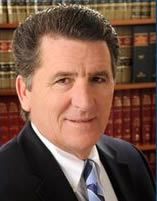
A Saco attorney, Gene Libby once served as York County District Attorney. His late wife, Mary Kerry Libby, became the inspiration for the very popular Mary’s Walk, an event that has mushroomed over the years to become one of Maine’s most well-known and well-attended fundraisers in the fight against cancer.
In 2000, Libby was tapped by former Mayor Bill Johnson, to serve the remainder of a city council term when the occupant moved out of his council district. He easily won re-election.
Libby has a good lawyer’s temperment: smart, calculated and quiet. He is the sort of guy who commands respect just because…well…because…he is Gene Libby.
The Kerry family has achieved iconic stature in Saco, but respect for Libby is probably based more on his ability to offer strategic guidance with a seasoned prosecutor’s sense of how to close a deal.
20.) John “No, I did not marry Theresa Heinz” Kerry

Speaking of the Kerry family …. John Kerry has certainly been around political circles for a long time. In fact, when he started, it was known as “political squares” because the circle had yet to be invented.
Kerry and his brothers are well known for operating the Kerrymen Pub, but John is also well-connected on many political levels, from the Boston Archdiocese to being appointed by former Governor John Baldacci to head the Maine Office of Energy Security & Independence. His work for Catholic Charities is evidence of his ability to cull local connections.
The fundraising and completion of the remodeled St. Louis Child Care Center in Biddeford is just one of the many examples of how John Kerry has helped and influenced his community.
Politically, he generally stays comfortably below the media radar line, but real insiders know that if you want a future in Saco politics, you ought to have a chat with John Kerry before you order your lawn signs.
19.) Roger “I have a badge” Beaupre

Biddeford Police Chief Roger Beaupre’s talent for political survival is superseded only by his ability to cook a perfect hamburger or apply for federal grant money.
Roger Beaupre has been the city’s police chief for a long time, and he has seen a lot of political bluster during his career, including the incident in which Joanne Twomey (No. 22) was handcuffed and escorted from the City Council Chamber.
Beaupre is Biddeford’s equivalent to J. Edgar Hoover with better looks and the ability to smile. He knows all of the city’s secrets. Better yet, he knows when to keep his mouth shut. The command center near his office rivals NORAD, equipped with more technology and surveillance equipment than Fort Meade.
Roger knows the city better than most people, but he never brags about it. He is stealth, strategic and generally a nice guy, so it’s hard not to respect the man who could make your toes curl with stories about the old days, when dinosaurs, Jack Kerouac and rowdy politicians roamed the unplowed city streets.
18.) Doug “is this building for sale?” Sanford
Doug Sanford is perhaps the best thing to happen to downtown Biddeford since the discovery of the Saco River.
In less than 12 years, this boot-strap real-estate developer has become one of the city’s largest commercial property owners. A self-described “attention deficit disorder junkie,” Sanford is always furtively scanning the horizon, looking for the next bunch of cinder blocks with potential.
He can beautifully renovate a building almost as fast as he talks. He is passionate about the city and its potential, and he despises the slow, tedious grinding of the political process.
He’s a mover and a shaker, literally.
He is also a guy with an impressive Rolodex and an iron will to get things accomplished. He prefers the background, and he is an inspiration for anyone who has become cynical about the merits of community involvement. Make no mistake, politicians of all stripes and calibers know that Doug Sanford’s blessing carries enormous weight.
17.) Tammy “Get off your ass” Ackerman

Okay, so once you get past the fact that she didn’t go to Biddeford High School or sing in the Thornton Academy chorus, it’s hard not to recognize that this “person from away” is here to stay…and make it a bit more, shall we say…aesthetic?
Tammy is the heartbeat of downtown revitalization efforts, and she’s not afraid to put her money where her mouth is.
Although she narrowly lost her first bid for political office to Bob “Do you know who I am?” Mills, many people in the city rightly believe that Ackerman has a bright political future in the city, despite her Anglo-Saxon surname.
Ackerman is ambitious, talented, passionate and outspoken, which leads a lot of people to believe she is an alien being sent here from a planet where things make sense and projects are judged on their merit, not stereotypes.
If you come across Ackerman, run…don’t walk. Otherwise, you will likely be lulled into serving on some committee or helping the community. Who needs that when you have cable television?
16.) Donna “unity in the community” Dion

Former Biddeford Mayor Donna Dion accomplished what no other mayor since who knows when has accomplished. She served three consecutive terms in the city’s top political seat.
With more than 489,000 close relatives (and who knows how many cousins) living in Biddeford, Donna was able to stifle the gamesmanship of her political adversaries including Jim Grattelo (No. 24), Marc Lessard and former city solicitor Harry Center.
Dion’s biggest weakness is that she remained politically naïve throughout the six years she reigned over the city. In 2010 she must have eaten some bad acid because she decided to seek the Blaine House with no money, statewide name recognition or political affiliation.
She was a common sense candidate with absolutely no common sense.
Nonetheless, Dion has a loyal following, even though she angered a core chunk of her constituency by embracing and joining a PAC to bring a tribal casino to Biddeford.
She may be in the political background, but she still has influence, so long as she doesn’t declare as an independent candidate for president.
15.) Bill “would you like a cup of coffee?” Johnson
Only the most studious of political historians may recall a time when Mark Johnston was not the mayor of Saco. But don’t ask Bill Johnson, he never believed he was the city’s mayor, mistakenly believing that he had been elected to serve as the city’s affable grandfather.
Don’t get me wrong. Bill is a retired oil company executive. He has seen and done things.
He’s been around. He’s old school, sort of like Norman Mailer…tough guys don’t dance and if you don’t vote the way I want you to, I’ll beat the crap outta you when no one is looking.
You would be hard pressed to find a guy who is more civic minded than Bill Johnson. He and wife, Mary, live on a pastoral farm on the city’s outskirts, yet Bill spends his retirement serving on non-profit boards and helping civic organizations. He is a Universityof Maine trustee and serves on the Portland Symphony Orchestra’s board of directors.
Bill served as Mayor Emeritus after retiring from local politics, gladly filling in for Mayor Mark Johnston who was often too busy trying to keep his business going to attend ribbon cutting events and Dr. Seuss reading hours at Fairfield School.
Bill has lots of friends and enjoys tremendous and widespread respect from his adopted hometown of Saco.
14.) Craig “Holy Shit, I have to wear a tie?” Pendleton

Few people in Biddefordord or Saco can pick up the phone and get Senator Olympia Snowe on the other end of the line. Craig Pendleton is one of those people who can.
Craig is not your typical political player. Many people, including yours truly, were at least temporarily taken aback two years ago, when Pendleton was hired as the executive director of the Biddeford-Saco Chamber of Commerce. But it didn’t take long for him to settle in and put his skills and talent to use.
A life- long commercial fisherman, well-known for his frank demeanor, Pendleton distinguished himself as a visionary in Maine’s commercial fishing industry (or at least what’s left of it.) He was the driving force behind the creation of the Northwest Atlantic Marine Alliance, a loose-knit association of fishing communities throughoutNew England. (Yes, dumbass…this is the northwest section of theAtlantic! Look at a map).
Whatever Pendleton lacks in polish and tact, he compensates for it with a work ethic that would land most people in the Emergency Room. His wit, enthusiasm for new ideas and his honest, straightforward reputation has earned him the respect of national and state leaders.
Often overshadowed in public policy circles by his older brother, Carl (CEO of Sweetser), Craig has made his own distinct mark on federal and state policies, especially on fisheries related issues and an obscure state law that dictates how far a strip club can be located from the shoreline.
His greatest accomplishment happened last year, when he single-handedly saved Camp Ellis during a severe winter storm. He simply strutted to the end of the jetty and “had a talk” with the ocean. “You keep messing with my neighborhood, I’m gonna pull every friggin’ fish off Jeffrey’s Ledge”. The ocean retreated.
13. Bill “Don’t even think about it” Kany
I know what you’re thinking. Am I talking about the elder Bill Kany, aka Bill Kany, Jr. or about his son, Bill Kany, Sr.?
My response: Does it matter? They’re probably tied anyway.

The Kany family has unmistakable influence in the city of Saco, despite confusion over their names and ages. To prevent confusion, let’s stick with the older William Kany, a manufacturing industry icon of the Saco Lowell days, he later became chairman of the Saco-Biddeford Savings Institution’s board of directors. Never, and I mean never, accidentally call that bank Biddeford-Saco Savings. If you have to ask why, you don’t know Bill Kany; and you will likely never make this list.
Growing up in Saco, I often heard the legend of Bill Kany. If you were thinking about doing something in the city, you were first required to drive down the Ferry Road, find Kany outside his home wearing Bermuda shorts and trimming his hedges. You pitch your idea, and he either raises his thumb in approval or lowers it to doom and dash your dreams.
He is, after all, a modern-day Marcus Aurelius, an elder statesman who commands respect without ever asking for it. He was the driving force behind the creation of Saco Spirit; and once he gets behind an idea, there’s no stopping him.
12.) Bonnie “Bounce Back” Pothier

If you could combine grit, muscle and charm, Bonnie Pothier would be the end result. I nicknamed her “bounce back” because of her incredible resilience and survival skills. Her supporters and detractors agree: She is a force to be reckoned with.
She became Biddeford’s first woman mayor; and it was a difficult and contentious two-year term as she plowed ahead against a sea of those from the “old boy” club who sought to see her destroyed. She never backed down from the fight; and despite every obstacle helped bring the city’s government into the 20th Century, paving the way for a new type of city structure that would later include hiring a full-time city manager.
Pothier’s intelligence and her penchant for efficiency and professionalism proved to be politically unpopular; so much so that she was ousted after one term and replaced by a man who could arguably be called the city’s worst-ever mayor, Roger Normand…a nice enough guy, but little more than a puppet for those who were pulling the strings from the smoke-filled confines of Ward Eight. (Again, Google it)
Pothier bounced back; and landed on her feet. She played a pivotal role in creating and coordinating the formation of Biddeford Tomorrow, a loose affiliation of individuals who wanted to see an end to Biddeford’s reputation for political bickering.
Members of Biddeford Tomorrow played a huge role in up-ending the conventional wisdom associated with the three-way 2003 mayoral race that saw a Republican become the city’s mayor for the first time in more than 40 years….I mean a Republican who was actually registered as a Republican.
Politically, Pothier today remains mostly behind the scenes, but did play a key role in ousting Mayor Joanne Twomey (No. 22) from office.
11.) Roch “Old School” Angers
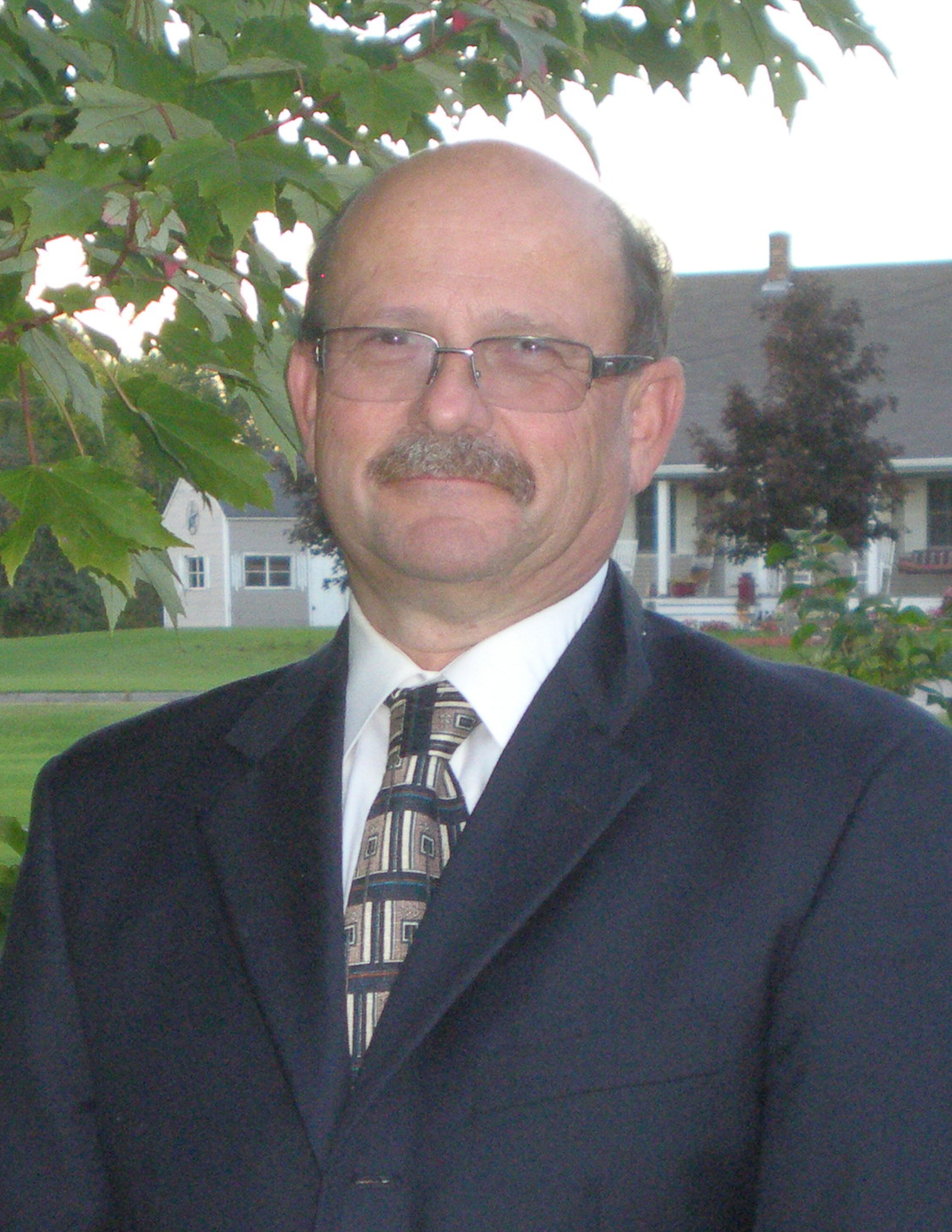
One of the few people on this list who is currently serving as an elected official, Roch Angers is a strategist’s strategists.
He is old-school defined; and he’s got the temperament and experience to back it up. He has probably forgotten more about Biddeford politics than most people will ever learn. He has served on the Biddeford City Council under four mayors (Normand, Grattelo, Dion and Casavant), but his family has been involved in shaping the city’s political landscape for more than three generations, including the many late night meetings at the former South Street market run by his father.
Angers knows how the city’s political infrastructure works because he and his family designed most of it. In fact, the late legendary songwriter/singer Jim Croce was probably most influenced by Roch Angers when he penned the following lyrics: “You don’t tug on Superman’s cape; you don’t spit into the wind ;- – you don’t pull- – the mask –off the ol’ Lone Ranger; and you don’t mess around with Roch.”
Sure, uptown got its hustlers, and the bowery’s got its bums, but City Hall is always just a bit more interesting (hard to imagine) when Roch Angers and his fiery rhetoric is sitting at the table.
Roch has enormous influence in almost every nook and cranny of the city. He is a fierce campaigner, an outspoken advocate of the powerless and a man who wields political power with the deft precision of a skilled surgeon.
Despite being bald, standing no taller than 5’2” and his wicked cool first name, he is not someone you want on your bad side. If you want to get elected in Biddeford, you would be well-advised to sit down first with Roch Angers.
And now….drum roll, please…..the TOP 10:
10.) Chris “The Suit” O’Neil
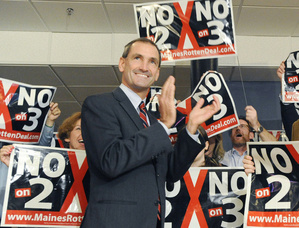
This St. Mary’s School prodigy has better political connections than Karl Rove; most likely because of the secret files and photographs he kept from the late-night, after-work parties with fellow crew-members from Tobey’s Restaurant, which has sadly been replaced with an Amato’s sandwich shop.
Actually, Chris O’Neil began his political career in 1996 by running for the Maine House seat that represents the northwestern half of Saco. His ascension is state politics can be attributed to his wit, intelligence and ability to work well with others.
He is a snappy dresser with a snappier vernacular.
He earned the respect of both Governor Angus King and Governor John Baldacci by being a moderate Democrat who could effectively herd wayward legislators back into the caucus fold. Before the end of his career in the Legislature, O’Neil was tapped to chair Baldacci’s Blue Ribbon Commission on Health Insurance Reform.
O’Neil had an enormous role in drafting the enabling legislation that created the now much-maligned Dirigo health care program. He also became a respected Augusta insider, parlaying the relationships he developed into a successful lobbying practice.
He is respected by both Republicans and Democrats for his brutal honesty, keen insight, remarkable sense of humor and his ability to find compromise. You may loathe the back-scratching apparatus of the lobbying industry, but few do it better than Chris O’Neil.
More recently, he was the face behind Mainers Against A Rotten Deal, successfully leading the charge against the development of a racino in Biddeford. It was a mission that cost him some friends on both sides of the river. But no one can deny that O’Neil runs political offense with very few interceptions; and so far…he has yet to be sacked.
9.) Richard “I’m a dirt farmer with a camera” Rhames

Sometimes alliteration is fun, but not when it comes to Biddeford City Councilor Richard Rhames, a man who could best be described as the city council’s conscience.
A regular council gadfly, Rhames has twice been elected to serve as one of the council’s two “at-large” seats. He began his political career by driving a grassroots effort to stop a planned expansion of the Biddeford Airportin the late 1970s. He then became one of the most outspoken opponents of the Maine Energy Recovery Company, although he credits his friend and political ally Joanne Twomey (No. 22) for leading that particular charge.
Even his most ardent detractors concede that Richard is extraordinarily intelligent and that he commands a core following of people with similar political persuasions. He despises pragmatism and often rails against a “political class” that seems way too cozy with business interests. He is an unapologetic FDR Democrat, who believes the power of government should be reserved for those who are otherwise powerless.
Richard’s strength is his ability to point out the hypocrisy and greased skids tactics of the politically well-connected. He does not want to “get along” simply for the sake of “getting along.” His frequent and long-winded monologues follow predictable themes: opposing corporate influence, raising awareness about labor issues and the sorry-state of media (local, national and global).
He was Occupy back when Occupy members were complacently upgrading their I-Phones, hoping for a corner office and craving a double-latte from Starbucks.
It has been said that Congressman Charlie Rangel lorded over the powerful House Ways and Means Committee with an iron fist, but it hardly compares to Richard’s fierce control of Biddeford’s Cable TV Committee, a committee he has chaired since before television was invented.
Richard is the architect, builder and master of the city’s public access television programming, a tool he built from scratch with the blood, sweat and tears of political battles with James Grattelo (No. 24) and a long list of others who saw an emerging, publicly controlled media as a “clear and present danger” to the political establishment.
Richard is the real deal. An authentic rabble rouser, who is arguably one of the best known people in Biddeford.
8.) Linda “Main Street” Valentino

Unless she is abducted by aliens, Linda Valentino is all but assured of winning the District 5 State Senate seat now held by Barry Hobbins.
Facing term limits in the Maine House, Linda has been planning and dreaming about this day since she was a little girl, playing hopscotch and helping her neighbors register to vote.
Linda is a thinker who doesn’t threaten those who don’t think much. Translated: she is very good at making people feel good about themselves. She also has a knack for knowing when it’s time to take the gloves off. If you don’t believe me, just ask Don Pilon.
Valentino is often a walking-talking contradiction: she is a political hustler with a keen eye for detail. She’s outspoken, independent and very good at getting media attention.
She may not have Barry Hobbins’ old school cred, but I expect big things from Valentino in the not-too-distant future.
7.) Mark “The Wizard” Robinson
What Michael Jordan is to basketball, Mark Robinson is to public relations and political strategy: a solid and consistent slam dunk.

Robinson is the master of the game, the guy behind the curtain and someone who only sticks his fingers in just the right pie. He is a Democrat, a Republican, an Independent, a Green, a Libertarian…aww, heck…he’s whatever he needs to be, whenever he chooses.
He’s the proverbial ghost in the machine. A Biddeford native who was educated at Dartmouth and plays a mean harp, he’s also a member of the “in crowd” with a Rolodex that is more impressive than Gene Libby’s hair.
Mark is the consummate professional, and it takes him less than 15 seconds to assess a situation and only 30 seconds more to craft a plan for dealing with it.
If you ever find yourself on his opposing side, watch out. He uses a typewriter like Muhammad Ali uses a left-hook punch. It hurts really, really bad when you’re on the wrong end of it.
For example, he helped get Joanne Twomey (No.22) elected as mayor, but then she crossed him; and BAM!….he made sure she got unelected. She never saw that left hook coming.
Mark started in the game with his younger brother, Chris, forming Biddeford-based Robinson & Robinson in the early 1990s. They quickly became a dynamic duo of writing and marketing that was involved in almost every single major political issue affecting York County.
When the Biddeford firefighters union was getting hammered, they called Mark Robinson. Problem solved. When MERC opponents found themselves consistently under the bus, they called Mark Robinson; voila…the creation of Twin Cities Renaissance.
From developing the city’s motto to the election of five different mayors, Mark was the guy making the wheels go round.
Mark’s greatest strength is perhaps the relationships he has developed with media folks from Caribou to Kittery. He is a professional competitor and a savvy insider who knows who to call and when to call them. He is at the top of his game, and his clients know it.
6.) Dennis “Duke” Dutremble
There are some names that just speak for themselves, and if you live in Biddeford; and don’t understand the implications of being a Dutremble then you are likely unaware that Biddeford has a coastline.
Duke is the second oldest of Lucien “Babe” Dutremble’s five sons.
Babe, a former mayor and state representative, was one of the most beloved and respected politicians ever to serve the city.
Duke was standout basketball and football player at the former St. Louis High School and taught social studies at Thornton Academy while also serving in the Maine Legislature as both a member of the House and then seven-term member of the State Senate.
In 1993, he was tapped by his Senate colleagues to become the senate president, but later lost his bid for Maine’s First Congressional district seat.
The Dutremble family is synonymous with Biddeford politics, from the Sheriff’s Office to County Commissioners.
Word on the street is that another Dutremble may soon be entering the political arena. But despite his departure from the public spotlight, Duke Dutremble has unmistakably and forever secured his place in Biddeford’s political hierarchy.
5.) Michael “Marcus Aurelius” Cantara

Okay, okay…it’s the second time with the Roman reference, but it’s apt.
The Honorable Mike Cantara probably tops the list of respected former politicians, and remains today as a beacon of integrity, discipline and good judgment. Probably why he’s a judge…go figure.
A former Biddeford mayor, Cantara was later elected to become York County’s District Attorney before being tapped by Governor John Baldacci to serve as Commissioner for the Maine Department of Public Safety and later as a Maine District Court Judge, where he serves today.
Cantara may no longer be politically active, but he does know the ins and outs and the “whos” and the whys of the city’s political landscape. His counsel and experience are invaluable to anyone who wants to better understand the complex subtleties of local politics.
He is a quiet, unassuming man with ice-cold blue eyes and striking white hair. He reportedly was the man who recruited and convinced Bonnie Pothier (No. 12). to run for mayor. And he was a mentor to a young and impressionable city councilor named Alan Casavant.
Cantara knows policy inside and out. That fact, coupled with his undeniable and sophisticated street-smart intuition, makes him a formidable figure in the world of local politics.
4.) Alan “Facebook” Casavant
There is no question that Alan Casavant is a very likable mayor. But it remains to be seen whether he will be as effective as he is popular.
He may seem all genial and goofy on the outside, but he’s got a political backbone that will soon be tested by his detractors.

A veteran high school teacher and an incumbent three-term state representative, Casavant strikes some people as the most unlikely of Biddeford politicians. He prefers mid-day naps and old movies over orchestrating who will actually serve as chair of the city’s Solid Waste Committee.
He can be simultaneously naïve and cunning. He is a visionary who often strays off point when trying to convince others about his ideas. He’s generally in bed no later than 10 p.m., but once roused he can move quickly.
Casavant is fresh off the heels of a major political coup, a landslide election that tossed an incumbent from office like am empty No. 2 plastic bottle into a recycling bin.
But did that 62 percent of registered Biddeford voters vote for him; or did they vote against his opponent, Joanne Twomey (No.22)?
There is no question that Casavant was able to seize upon new campaign technology, leveraging social media tools such as Facebook, Twitter and a daily blog during his campaign. But he will need a lot more than some tweets to navigate the perilous waters of the upcoming and likely vicious budget debate.
Meanwhile, Casavant has other problems. He is being challenged by State Senator Nancy Sullivan for his District 137 House seat; and Sullivan is much better at campaigning. In fact, Casavant once lost a primary bid for his State House seat by failing to vote for himself.
He’s no longer a young punk serving on the city council in the 1980s. He needs a pair of big-boy pants if he’s going to make the cut going forward.
Whether the absent-minded professor can survive Sullivan’s challenge or his first term as the city’s mayor will be interesting to watch.
I ranked Alan in the Top-5 because few people have as much potential to significantly alter the city’s political and policy landscape over the next two years.
3.) Barry “The Pope” Hobbins
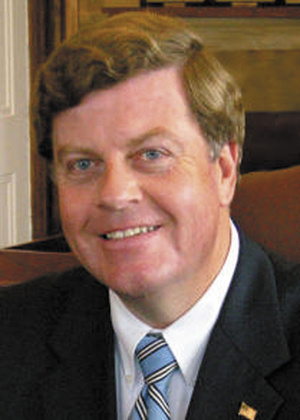
From high atop his penthouse law office on Saco Island, State Senator Barry Hobbins surveys his kingdom and releases a heavy sigh of satisfaction. “This is my town,” he exclaims, ignoring the fact that he’s pointing to two cities. “These are my people.”
On the seventh day, God may have been resting but Barry Hobbins was busy putting up lawn signs, a chore that was about as critical as cleaning your sock drawer.
That’s because no one ever challenged Hobbins during his last eight-year stint in the Maine Senate….well….almost no one, unless you count Republican newcomer Charity Kewish who received about 18 votes or Peter Truman, a perennial political candidate who also attempted to sue Wal-Mart after injuring his genitals with one of the store’s toilet seats. Truman later appealed his case to the US Supreme Court, where it was summarily rejected. I kid you not, that is a true story.
Barry came into the political world the usual way. He’s the proverbial hand-shaker and baby kisser. Few understand the game better or enjoy playing it as much as the once awkward kid from Saco.
Barry is perhaps one of Maine’s best political storytellers, proudly recanting the time when he crossed paths with the Prince of Eagle Lake, John Martin. If you don’t know that name, you shouldn’t still be reading this.
In the early 1980s, Barry could be found at the gates of Waterhouse Field, greeting fans at the annual Battle of the Bridge football game with U.S. Senator George Mitchell. He is old school Biddeford-Saco politics; Eddie Caron/Bob Farley old school.
Barry got the political bug at an early age, and he quickly learned how to excel at the game. At the age of 21, he was elected to his first Legislative term in the Maine House of Representatives and was re-elected to four more terms, followed by one term in the Senate.
In 2004, he returned to the State Senate, and today serves as the Minority Senate Leader but will be forced from office by term limits in November. He serves on numerous boards and even owns a piece of the Maine Red Claws, the state’s only professional basketball team.
Hobbins knows how to use his power and influence, on issues ranging from MERC to telecommunications to crafting energy development policies, few can move as adroitly as Barry Hobbins.
2.) Wallace “The General” Nutting
It does not matter on which side of the Saco River you find yourself. Wallace Nutting is someone you should know.
Nutting grew up in Saco, graduated from Thornton Academy and still got elected as the mayor of Biddeford, as a Republican, no less!
Nutting had a fascinating military career that started at West Point and ended with four silver stars on his epaulet…becoming a four-star general is no easy task, but it’s nothing compared to being a Republican from Saco and winding up as Biddeford’s mayor.
Nutting, who designed the U.S.military’s extrication of Panama’s Manuel Noreiga, also served as Commander In Chief of the US Southern Command and as an advisor to President Ronald Reagan.
Nutting was considered by many people as an “outsider,” when he tossed his hat into the mayoral ring, less than three months before the 2003 mayoral election.
But Nutting proved his detractors wrong on Election Day. Once the votes had been tallied, Nutting beat-out his two more well-known Democratic opponents with 41 percent of the vote, earning the top spot in six of the city’s seven voting wards and leaving City Council President Marc Lessard, an early favorite, in last place.
It was a much different result than Nutting’s first bid for political office in 1994, when he ran for the State Senate. He lost the Republican primary to John Hathaway of Kennebunk, who later went on to win the seat.
One political observer said Nutting’s mayoral win was the result of a “perfect political storm,” in which several key issues converged into a mass of voter resentment about politics as usual.
He seemed like a fish out of water when he first assumed the mayor’s seat. For a guy who built his career on assessing intelligence and developing strategy, Nutting often fell short when the objectives became political, including his failed move to oust Harry Center as the city’s solicitor. Only Nutting thought he had enough votes.
But Nutting got more powerful as time went on, and he became an ambassador of goodwill and a cheerleader for promoting Biddeford’s potential.
Two years after his surprising win, he was unchallenged for a second term before he finally retired for good.
Other than Civil War hero and Maine native, General Joshua Chamberlain; Nutting is the only person to have his portrait hanging on the walls in both Biddeford City Hall and Saco City Hall.
And now, finally, the most politically influential person in Biddeford-Saco:
Mark “Let’s Make A Deal” Johnston

There was a time when Mark Johnston was not the mayor of Saco, it’s just that no one can remember when that was.
From behind the counter of his Main Street delicatessen, Johnston has engineered and closed more deals than a coked-up Goldman Sachs executive.
His political counsel is sought from both sides of the river.
He knows when and why someone farts in either city.
He has several pairs of big boy pants, and he wears them wrinkled, usually accompanied by an ugly sweater.
The guy is certified weird. He runs a business with his ex-wife and can always recommend the perfect bottle of wine to fit any occasion and budget. He knows more about MERC than the people who own MERC.
But he wasn’t always so suave….in fact, he once failed to get enough votes to become the mayor even though he was the only candidate on the ballot. (True story….sad, but still true)
He began his political career as a malcontented hippie, upset about a vacant car lot on Elm Street. He was immediately dismissed by the city’s political establishment as a Richard Rhames (No. 9) impersonator.
But someone bought him a razor and loaned him enough money to get a haircut. And then? Well, it was off to the races….
Johnston knows what his city council is thinking before they do. He has a better grasp of what’s happening in Biddeford than anyone else on this list.
He can play nice or he can play mean. He’s polite. He’ll let you decide how you want to proceed before he tells you what you are actually going to do.
Mark Johnston is the consummate politician….
He’s Bugsy Seigel, Charlie Lucianno and Meyer Lansky all rolled into one affable, near-sighted man with an uncanny resemblance to Sir Elton John.
He’s Number One, baby….. And that’s a wrap.


 LESSONS IN MEDIOCRITY | OUTLAW JOURNALIST