I Never Thought I’d Be Here

Citing a lack of both resources and guidance from the federal and state governments, Biddeford City Manager James Bennett recently said the issue of homelessness is “probably the most difficult issue” that any municipality in Maine can face.

And while some social media users say the city of Biddeford and surrounding municipalities are “doing nothing” to solve the crisis, others say that expanding resources will simply draw more unhoused persons to the area, placing an even greater strain on local resources and taxpayers.

“There are a lot of factors that play into this,” said Biddeford Mayor Alan Casavant. “And there are no easy answers. In my opinion, we have a moral obligation to tackle this issue but we also have a fiscal obligation to the taxpayers. The question then becomes how do you reconcile those two things?”

Casavant said the issue of homelessness is becoming a larger issue in communities all over the country, and across the river in Saco, Mayor William Doyle agrees.

“We all want to tackle this issue, but it’s not as simple as just passing an ordinance,” Doyle said. “The problem is really aggravated by a lack of affordable housing in the region. If someone can’t afford to live in a house or an apartment, their options are limited,” he said.

Doyle said the city of Saco is looking for a “comprehensive” solution, adding that he and members of the city council recently directed City Administrator Bryan Kaenrath to develop a list of recommendations for the council to consider regarding affordable housing.

“It’s pretty similar to what Biddeford is doing,” Doyle said, adding that proposals such as inclusionary zoning and other developer incentives are all “on the table” for discussion.

Earlier this week, the Saco City Council voted to approve moving forward with a Community Development Block Grant (CDBG) application that could clear the way for development of a 60-unit affordable housing development near the intersection of the Ross Road and Portland Road.

Kaenrath said he and his staff are “digging deep into the issue” in order to develop some “tangible and meaningful ways” to address what he acknowledged is a growing issue in the city.

“It’s not a problem that you can just throw some money at and have the problem solved,”Casavant said, pointing to other Maine communities that are still struggling with the unhoused crisis, despite spending millions of dollars to combat the issue.

According to the federal department of Housing and Urban Development, the number of people experiencing homelessness in Maine increased by more than 110 percent since 2020, and is up by more than 85 percent since 2010.

The Law Enforcement Perspective

Although the increasing number of unhoused people remains relatively hidden beneath the surface of day-to-day life, there is a growing strain on municipal services, including local police departments.

Joanne Fisk, Interim Biddeford Police Chief, said there has been a spike in calls for mental health services since the beginning of the Covid-19 pandemic three years ago.

“Of course, that’s not all related to our unhoused population, but it is a factor,” Fisk said. “it’s not illegal to be homeless. We are constantly looking for ways we can adapt and better connect individuals with appropriate services and resources.”

Fisk said Biddeford recently hired a community engagement specialist to work as a liaison between the department and social service agencies, including the Seeds of Hope resource center.

Sgt. Steve Gorton has been working for the Biddeford Police Department for 27 years. Today, he heads up the community resource division for the department. He says issues related to the unhoused population “ebbs and flows.”

“There’s no question that more people are struggling, but I have not seen a big spike,” he said. “Our unhoused population experiences the same challenges as every one else, whether it’s domestic violence, assaults and theft. These issues are nowhere near unique to the unhoused.”

Gorton said police sometimes receive complaints about pan-handling near certain, busy intersections in the city. “There’s not really much we can do,” he said. “It’s not illegal to pan-handle.”

According to the Bangor Police Department, nearly a third of annual police calls involve people experiencing homelessness and/or mental health issues. That city has also created mental health liaison positions within their police department.

The Lewiston City Council late last year voted 4-3 to create an ordinance that would prohibit people from sleeping on city property at night, between 9 p.m. and 5 a.m. That ordinance, which drew plenty of criticism from homeless advocates, is expected to go into effect on April 1.

On a recent warm afternoon, Robert, 57, stands on the corner of Main and Lincoln streets, directly across the street from Biddeford City Hall. He holds a sign he fashioned from a used pizza box: “Dammit! I need work.”

Robert says he moved to Maine a couple of years ago and has been struggling with alcoholism for many years. He said he is sober now, but that it is becoming increasingly hard to get “back on his feet.” When asked where he lives, he says he spends much of his time in Veteran’s Memorial Park.

“It’s degrading for a man my age to be out here begging,” he said. “It might be okay if you’re a young guy or something, but not for someone my age. Yeah, I made some bad choices, but now I have nothing. Literally nothing. I just want a job, but no one wants to hire a guy who doesn’t have an address or personal hygiene products.”

Bigger cities, bigger problems

“Some of Maine’s largest cities are spending a lot of money and still have a lot of problems,” Casavant said. “That does not mean that we can ignore the issue or just hope that someone else is going to fix it. I suspect that we’ll need to begin fixing a lot of little things that all contribute to the larger problem.”

By state law, every municipality in Maine is required to provide a General Assistance (GA) program to help residents with temporary emergency funding for things such as housing, heating and personal items. But even that program presents challenges for those on the bottom of the economic scale.

In order to receive GA services, applicants must demonstrate income and resource requirements. And although the city can provide temporary help for rental payments, it cannot provide housing or security deposits.

Municipal expenditures for General Assistance are funded by a 70 percent matching contribution from the state and 30 percent from the local community, presenting a bigger share of the problem for larger, service-center communities such as Bangor, Portland, Lewiston and Biddeford.

“It’s a regional issue,” Casavant said. “But unfortunately, it’s the larger communities such as Biddeford that have to bear the brunt of the cost.

Originally published in Saco Bay News

Warm Smiles On A Cold Day

For the most part, they live just beneath the surface of our day-to-day lives, but they are also our neighbors, our friends, co-workers and family members. In fact, the only difference between them and the rest of us is that they do not have permanent housing.

The issue of being unhoused is an issue being faced by cities large and small all across the United States, although the issue is often more magnified in communities that serve as urban centers, where public transportation is available and resources are consolidated.

An unhoused couple spent several hours recently at a Biddeford warming shelter.

On one of the coldest days in recent memory, we caught up with several unhoused persons at a warming center that was set up in Biddeford in order to provide respite while the outdoor temperatures were well below zero.

Louise is 66 years old. She moved to Biddeford from Portland two years ago. For many years, she worked as a restaurant manager and says she graduated from the University of Southern Maine. Although she has relatives in southern Maine, she says that being unhoused is her choice.

“I have a sister in Portland and a son in Brunswick,” she said. “But we don’t always get along, and I like to be independent.”

Louise says she has been homeless since 2018. She says that she came to Biddeford because she heard “some very nice things” about the city and the Seeds of Hope Neighborhood Center located on South Street.

Louise becomes quickly confused during our brief interview. She says that she and her boyfriend Bob would like to start their own homeless shelter. She also says that she is seriously considering running as a candidate to be Biddeford’s next mayor later this year.

“It’s my choice to be out there,” she says. “I don’t want to be a burden, and I want to help other people who have nowhere to go. I think of myself as a street angel.”

Vassie Fowler is the executive director of the Seeds of Hope Neighborhood Center, a non-profit organization that partners with regional communities and other service providers to assist those struggling with poverty.

“We don’t call them our clients,” Fowler said. “We call them our neighbors.”

Seeds of Hope provides many resources for those coping with homelessness, including breakfast and lunch during the weekday as well as providing donated clothing, personal hygiene products, tents, sleeping bags and other items.

“We have a very low bar set for people who are in need,” Fowler explains. “Basically, all we ask for is your first name. For a lot of people living in poverty, isolationism is a really big issue. We work to build real connections and real relationships.”

According to Fowler, Seeds of Hope serves an average of 60-70 people per day, a number that has almost doubled since last year.

Last year, Seeds of Hope provided more than 10,000 meals for people in need. The organization is supported and run by more than 30 volunteers and receives donations from local businesses and charitable organizations.

“Healthy people don’t live outdoors,” Fowler explained. “Some people may say they choose to be unhoused, but more often than not, they are simply trying to maintain their dignity. “

Fowler points to three rows of cots that were set up in the gymnasium of the J. Richard Martin Community Center on Alfred Street, the site of Biddeford’s emergency warming center. More than three dozen people mingle with others or try to sleep on a bitterly cold Saturday morning.

“We have a room full of people who basically have nothing but their name,” Fowler said. “But everybody has a name, and that’s the great equalizer. When we use names, it’s no longer ‘those people.’ It changes your perception. Sometimes, that’s all we can that we can give them, just respect and dignity.”

A big smile on a very cold day

Jane is 21 years old and eagerly speaks to us about what it’s like to deal with not having a place to call home.

Jane says her mother moved to Maine from Florida more than 10 years ago. “I have some family issues,” she explains. “I’m not working now, but I am looking. It’s not easy to find work when you’re basically homeless. There’s a lot of stigma.”

Jane says that she and her boyfriend often “hang out” at the Seeds of Hope Neighborhood Center. One of the biggest challenges to being homeless, she says, is a lack of public restrooms. “I get why not,” she says about the lack of public bathrooms, “but it sure would be nice.”

When asked how she survives living on the streets, Jane offers a big smile and says, “I take it day by day. I just try to keep a positive outlook. I just always try to be happy no matter what.”

Mark is 42 years old. He sits on a cot in the shelter next to his girlfriend, Amanda.

Originally from Massachusetts, Mark lost his job at the Federal Express distribution center in Biddeford a few months ago.  He said he is scheduled to begin a new job in Portland in just a few days. “It’s tough to find work,” he says. “When they know you’re homeless, they don’t want to hire you.”

Mark freely admits that he has struggled with substance abuse issues. Although he has a brother and sister living in New Hampshire, Mark says his past behavior left him estranged from his family. “Yeah, I kind of got into some trouble,” he says. “It’s my fault, but I’ve basically lost everything.”

Mark and Amanda live in a tent encampment located on the western side of the city. “The cops kicked us out of there,” Ryan said. “So we just moved to some nearby woods.”

Amanda is 34. She says she became homeless after leaving an abusive relationship with her husband. “My family has pretty much turned their backs on me,” she says. “Some people think that homeless people don’t want to work. That’s just not true. I worked in a hotel and a call center. For a while, I was the manager of a convenience store. Bu things just happened. Being homeless sucks. It’s hard because it’s always in your face.”

When asked how she copes, Amanda shrugs her shoulders. “You just gotta push through every day,” she says. “You just have to keep putting one foot in front of the other.”

Mark and Amanda say that it’s actually harder to be homeless as a couple because you always have to worry about the other person and whether they are okay. They also say that some other unhoused individuals often cause problems and sometimes steal belongings. “Some people really ruin it for others,” Amanda said.

Paul is 38 years old. He often hangs out at the Saco Transportation Center during the day. He admits that he drinks alcohol and smokes cigarettes. “How am I supposed to save money?” he asks. “Really, I get a check every month for about $600. How am I supposed to save up for first and last month’s rent and security deposit? If you were in my shoes, what would you do?

Jackson says he pan-handles to raise money, but he’d rather have a full-time job. Up until a few months ago, he worked full-time as a dishwasher at a local restaurant. He also worked in a factory. He lost his job after being hospitalized in a Portland psychiatric facility.

“I paid taxes just like you,” he says. “What did it get me? I’m outside and now nobody wants to know me. They don’t even want to look at me. A good day is a day when I can get some smokes. A bad day is when I think about stepping in front of the next train.”

Originally published in Saco Bay News

Pandemic sheds light on media bias

As we continue coping with the Covid-19 pandemic, it is now more important than ever for the media to take extra steps to ensure that their news stories are fact-based, without hype, without speculation and a minimum of bias.

Wait. Did I just say “a minimum of bias?”

Conservative news consumers on the right of America’s political spectrum often talk about bias, screeching that media outlets such as the New York Times and MSNBC television are in the pockets of left-wing billionaires and prominent Democrats.  President Trump gleefully eggs them on, attacking the ‘liberal’ media of delivering so-called “fake news.”

Meanwhile, those on the left side of the political spectrum dismiss news outlets such as FOX news and the Washington Times, saying those media outlets are dripping in conservative rhetoric.

Are the pundits right? Do “news” outlets practice media bias?

According to two veteran journalists, the answer is yes, with varying moderation.

Dennis Bailey, who now lives in Washington, DC, is a veteran journalist who spent several years as a reporter working for the Maine Times and Portland Press Herald. He readily acknowledges that his personal politics are more in line with Democrats.

“I’ve never been a believer in objective journalism,” Bailey said. “A good story is a good story but it does come with some bias.”

Bailey points to certain realities about how the news story is produced. “A reporter often decides what story to follow,” he said. “From there, an editor decides the placement of a story and the headline of that story. These are all subjective decisions.”

On the other side of the political aisle, John Day, who spent several decades as a reporter and then as an editor of the Bangor Daily News, agrees with Bailey about media bias.

“I’m a big fan of diversity,” Day said. “But I was always a contrarian. Fake news has always been around. If all news outlets reported every story the same way, then it would be nothing more than a giant circle jerk.”

Although they seem to disagree on just about everything, the two men agree that journalism has gone through some profound changes over the last 30 years, including the 24-hour news cycle and social media.

“People today have a much wider range of choices when it comes to the news,” Bailey said. “There is a notable absence of media literacy today. You can find anything you want to support your own views on the internet.”

Bailey and Day both point to the Watergate scandal and the role that the media played during that crisis. The Washington Post led the way on the story while the New York Times and other media outlets took a more measured approach.

“Walter Cronkite was the godfather of news,” Bailey said. “He was such a trusted guy. We don’t have that anymore.”

According to Day, more than 95 percent of news stories about President Trump are negative while stories about Maine Senator Angus King are nearly always positive. “Angus is not much more than a boot licker for Chuck Schumer,” he said.

The lines between news and opinion are becoming more and more blurred as cable news shows fill air time with pundits such as Rachel Maddow on the left and Sean Hannity on the right.

Today, too many people pick their news source to align with their personal viewpoint, according to both Bailey and Day.  “I have more respect for CNN than MSNBC,” Day said. “At least they try to be objective with guests such as Chris Christie.”

So long as media outlets chase ratings and circulation, their ability to maintain objectivity becomes more difficult.

We need to be increasingly vigilant about how we get and choose our news sources.

President Trump is not the first president to have a deep disdain for the White House press corps. More than 50 years ago, former president Richard Nixon lashed out at the media following his loss to Democrat Pat Brown in the California gubernatorial election.

Appearing before more than 100 reporters, Nixon didn’t mince his words about his frustration with the media. “You don’t have Nixon to kick around anymore, because, gentlemen, this is my last press conference,” the candidate said.

More recently, an editorial published in the San Diego Union-Tribune in 2015, James Risen, then a reporter at The New York Times, called the Obama administration “the greatest enemy of press freedom in a generation.”

As Walter Cronkite consistently said at the end of each of his evening broadcasts: “And that’s the way it is.”

We miss you, Walter.


(Originally published in the Saco Bay News on May 2, 2020)


Climate Change: what your parents never told you

‘In the absence of science, religion flourishes . . .’

-Unknown

light light bulb bulb heat
Photo by Pixabay on Pexels.com

One of today’s most hotly debated public policy matters is the subject of Climate Change, formerly known as “global warming.”

Before I go any further with a blog post that will surely divide my followers and Facebook “friends,” let’s get right to the meat of the matter.

When former vice president Al Gore declared that “the planet has a fever,” he was right. Global Climate Change (GCC) simply cannot be denied.

I am not a scientist, geologist or meteorologist. I am just another pundit with yet another point of view.

But while my friends on the left are far more likely to celebrate my above statements about the reality of GCC, I have some serious misgivings about many of their proposals to “fix the problem.” Recently hundreds of high-school students skipped classes to rally against GCC.

They should have hit the books instead.

When debating GCC, we should be able to acknowledge some fundamental facts:

  • Planet Earth is approximately 4.543 billion years old;
  • The Ice Age began 2.4 million years ago, lasting until approximately 11,500 years ago;
  • Humans began roaming the planet approximately 200,000 years ago.

So what do these facts tell us?

Well, for starters, the earth’s climate has been changing for a long, long time and humans had little to no impact on the earth’s atmosphere until about 50 years ago.

But before we begin any conversation about GCC, we should check our emotions at the door. This is a complex issue, and rhetoric – from either deniers or fanatics – won’t do a damn thing except possibly increasing your blood pressure.

Climate Change Impacts: A brief history

If you want to talk about other impacts that affect GCC, let’s take a relatively short journey back in time.

According to an article by Karen Harpp, an assistant professor of geology at Colgate University, published in the Scientific American newsletter:

In 1784, Benjamin Franklin made what may have been the first connection between volcanoes and global climate while stationed in Paris as the first diplomatic representative of the United States of America. He observed that during the summer of 1783, the climate was abnormally cold, both in Europe and back in the U.S. The ground froze early, the first snow stayed on the ground without melting, the winter was more severe than usual, and there seemed to be “a constant fog over all Europe, and [a] great part of North America.”

What Franklin observed, Harpp writes was “indeed the result of volcanic activity.”

“Natural forces cause Earth’s temperature to fluctuate on long timescales due to slow changes in the planet’s orbit and tilt,” according to a Q & A published by Climate Communication, which is a non-profit science and outreach project. “Such forces were responsible for the ice ages. Other natural forces sometimes cause temperatures to change on short timescales.”

On the other side of the debate there is plenty of scientific evidence regarding human impact on GCC, especially so in the last 50 years. The human impact has, in fact, outpaced natural impacts.

So what do we do?

Industrialized nations (United States, Japan, China, Russia, Great Britain, India and France) have more responsibility because of their bigger global impact. The 2015 Paris Agreement on Climate Change was signed by all of these counties and many more nations that have a far lower impact or produce fewer greenhouse gases, primarily carbon dioxide.

And then there is the 1997 Kyoto Protocol, an international treaty that extends the 1992 United Nations Framework Convention on Climate Change to reduce greenhouse gas emissions, based on scientific consensus.

I don’t dispute the science that provides more than ample evidence of human impact on climate change, but I am an ardent opponent of so-called carbon taxes. Just a few days ago, the state of Maine rejected the notion of placing a dedicated tax on gasoline and home heating oil. Phew! We dodged another bullet.

So-called carbon taxes are the rallying cry of the activists, but those additional taxes would place a further burden on the citizens who can least afford it.

Maine Governor Janet Mills is pushing for a $50 million bonding package that would study the impact of rising sea levels on coastal Maine communities. “We’re all in this together,” she said.

Rather than creating yet more taxes, perhaps we should focus more attention on creating incentives to reduce greenhouse gases.

I have worked as a public relations consultant on several energy projects, including wind power and an LNG (Liquefied Natural Gas) terminal in eastern Maine. I was always amazed when environmentalists opposed clean, renewable sources of energy, citing bird strikes and the need for flickering red lights atop wind turbines. I live in a community that once burned trash to generate electricity, but don’t get me started on that boondoggle.

We humans have a right to occupy this planet and we all share an inherent responsibility to be good stewards of our natural resources. I recently took a quick gander around my house, comparing it to my parents’ home. When I was growing up there were no microwave ovens. We didn’t have a dishwasher, flat-screen televisions or computers.

I am not suggesting that we should get rid of these things, but maybe we could be more mindful about our energy consumption, and explore expanding clean energy sources such as hydro projects – and yes – nuclear power. (Last week, Forbes magazine published an article that examined the safety of nuclear power plants.)

In a March 11 Portland Press Herald editorial, the editorial board wrote that “the global climate fight will take many forms.”

I could not agree more.

The Outsiders

outsidersUp until two months ago, most political consultants within the DC Beltway would tell you that you need a “moderate” candidate in order to win an election. That candidate, the consultants would tell you, should be a centrist, an establishment-type, someone who makes most people safe and secure. Someone predictable.

Outsiders, consultants explain, are unknown quantities; unable to steal votes from the sacred independent, middle-of-the-road voters who often carry much weight in so-called purple states like Ohio.

Conventional wisdom dictates that in order to win the general election, the primary candidate has to draw from the middle to outpace his/her opponent.

This presidential race is unlike many other races in recent history, for both the Democrats and the Republicans. But is there any truth in the theory that moderate candidates are effective for either party?

The establishment didn’t work for the GOP

Republicans bristle at the idea of an “establishment” centrist candidate. They point to the last 20 years, in which they have won only two presidential elections after unsuccessfully nominating Bob Dole in 1996, John McCain in 2008 and Mitt Romney in 2012.

In each of those Republican primaries, anti-establishment outsiders were quickly sent packing. Sam Brownback, Jim Gimore and Tom Trancedo were all anti-establishment outsiders in the 2008 GOP race. Rick Santorum, Buddy Roema, Michelle Bachman and Rick Perry were all anti-establishment, political outsiders. Where are they today?

The establishment rarely works for Democrats

In 2008, Senator Hillary Clinton’s star was shining brightly. She seemed to be the heir apparent for the Democratic nomination. She was, by definition, a Washington insider and portrayed herself in the same mold as her husband: a pragmatic moderate who could get things done.

But a war-weary electorate was looking for something fresh. They rejected all the insiders (Joe Biden, Chris Dodd, John Edwards and Bill Richardson), instead rolling the dice on a virtual poltical unknown with almost no experience in Washington DC.

But the election of Barack Obama was an anomaly in politics. It defied conventional wisdom. Clinton’s campaign consultants wound up with egg on their faces.

In 2000, the Democrats took the safe bet with Al Gore, who is about as establishment as they come. Of course, we all know that Gore came within inches of winning that election, and that he was able to sway independent voters. But still, it was not enough.

Four years later, John Kerry, another insider and establishment type fended off political outsiders such as Howard Dean and Wesley Clark. He also beat other insiders Dick Gephardt, Joe Lieberman and Dennis Kucinich.

When outsiders make a splash

Many Republicans still blame billionaire Ross Perot for handing Democrat Bill Clinton a victory over President George HW Bush in 1992; and Democrats still seethe when they speculate about the damage that Ralph Nader played in 2000, supposedly stealing very critical votes from Al Gore.

This campaign cycle, both the Democratic Party and Republicans have their hands filled with so-called outsiders.

I don’t know how you describe Bernie Sanders as an “outsider” because he’s been a part of Washington’s infrastructure for nearly 16 years. But he is most certainly not an “establishment,” middle of the road candidate. He is a self-described socialist, but his poll numbers look good in both Iowa and New Hamshire. He will likely get crushed in South Carolina, but are Democrats fired up enough to “feel the bern” past Nevada?

And then there’s Donald Trump, a candidate who is all over the map. Trump defies every ounce of campaign logic known to man.

The establishment is beside itself. The National Review and Rich Lowry can’t stop him or slow him down. His off-the-cuff remarks about immigrants, Muslims and even war heroes only makes him more popular.

He is an egomaniac who has filed for bankruptcy four times. Yet, he describes himself as a fiscal conservative who can make “America Great Again.” (He’s just short on specifics)

So maybe, just maybe, this will be the year when Republican voters tell the consultants to just stuff it.

Money for nothing

Ben Chin (Sun Journal Photo)

There were a few lessons to be learned this week for campaign operatives and political junkies in Maine.

1.) A financial war chest does not necessarily win an election;

2.) Voters in small communities become weary of aggressive campaigning that lasts for more than two or three months; and

3.) Negative campaign tactics still work, despite the fact that most people will say negative campaigning is a turn-off.

Lewiston’s mayoral race, in which Robert Macdonald won a third term, garnered national media attention. Tuesday’s run-off results were reported by media outlets across the country, including NBC News and the New York Times.

Although Ben Chin, a progressive Democrat, got the most votes during a five-way race for the mayor’s seat in the November 2015 election, a runoff election was required by the city’s charter because he did not capture at least 50 percent of the vote.

Democrats tend to favor run-off elections and/or a concept known as ranked choice voting, but Tuesday’s results bit them in the ass, when Republican Macdonald came out on top, 53-47 percent over Chin.

What would have otherwise been a small community election became amplified when the campaign took an ugly turn in October.

Several signs that featured a caricature of an Asian man were hung on buildings in Lewiston. Those signs contained a blatantly racist message: “Don’t vote for Ho Chi Chin. Vote for more jobs not more welfare,” according to the Lewiston Sun Journal.

Is cash really king?

Robert Macdonald (Portland Press Herald photo)

Because of the national attention, Chin’s campaign was able to raise a whopping $87,800. Maine Democrats wanted to send a message and large amounts of money poured in from all over Maine and across the country. Chin, the political director for the Maine People’s Alliance, was able to turn on one of the state’s biggest political machines.

In total, Chin’s campaign raised roughly 15 times more than Macdonald’s campaign, which raised $5,800.

By contrast, in the city of Biddeford, a typical mayoral campaign raises somewhere in the neighborhood of $10,000. This year, however, Mayor Alan Casavant raised a paltry $1,270 and spent $818 of it to secure a third term. He got 2,494 votes at a cost of roughly 33 cents per vote.

Chin garnered 3,826 votes; spending nearly $23 per vote. Macdonald, on the other hand, garnered 4,398 votes; spending roughly $1.32 per vote.

Chin edged out second-place finisher Macdonald in November, but Macdonald won Tuesday’s runoff, despite being outspent roughly 15-1. Why?

Almost every one I speak to about this race has a different theory, but I think voters were turned off by an incredibly aggressive campaign that was raising so much cash from outside of the city.

It was a bit over the top.

Voter fatigue?

According to the city of Lewiston’s web site, 33.5 percent of the city’s registered voters cast ballots in the November election. That number dropped slightly on Tuesday, when 32 percent of the city’s voters cast ballots during the runoff election.

By contrast, slightly more than 30 percent of voters in Biddeford cast ballots in that city’s 2015 mayoral election.

Mayoral campaigns in cities like Biddeford or Lewiston usually have a shelf-life of between two or three months. Tuesday’s run-off election added another month to the process. I heard stories of voters being weary of door-knocking and incessant telephone calls.

Sometimes, too much of a good thing (grassroots campaigning and cash) can be a bad thing.

One friend of mine recently speculated that Lewiston’s voters are conservative (and perhaps just a tad racist). He failed to explain how Chin, a progressive Democrat, came out on top in November if a majority of Lewiston’s voters are bigoted or conservative.

In fact, Lewiston, which is a lot like Biddeford, has historically been a bastion for conservative, traditional Democrats (mill workers and Franco-Americans).

Macdonald, a former police detective and Vietnam War veteran, is  a blunt speaker and has a propensity for being “politically incorrect.”

When you consider all these factors, it’s no wonder that a small Maine city’s mayoral race attracted national attention.

It was a campaign that defied conventional wisdom, and it offered some lessons for all of us.


Send in the clowns

donald-trumpSome 48 hours before Donald Trump “officially” announced his candidacy for president on Tuesday, I posted a quip on Facebook that I would be seeking the mayor’s seat in Biddeford.

The idea was jokingly bantered about while Mayor Alan Casavant was attending a party at my home. (Full disclosure: Casavant is serious about seeking a third term, and I support him.)

But my announcement was never intended to be serious.

For starters, I have absolutely no business running for any elected office. I can barely manage my own life, as detailed here.

While my Facebook quip generated some buzz, lots of positive comments and even comments from people willing to help my “campaign,” it was, again, a sarcastic joke.

Now that I think about it, my announcement was actually much less a joke than Trump’s escalator event on Tuesday; and many of us are left to wonder if he is truly serious or just seeking some more attention to further inflate his own ego.

https://www.facebook.com/#!/randy.seaver.3/posts/10204495391008046

Consider for a moment what Trump laid out as his agenda before a group of New York City tourists, some mentally deranged followers and a gaggle of reporters.

He hit all the hot-button topics: immigration, saying we will be build a massive wall between the United States and Mexico. How will we pay for it? Trump said he wold force Mexico to foot the tab through higher tariffs on their imports.

Umm, this is a direct violation of the North American Free Trade Act.

Trumped bragged about his wealth, pointing to what he estimates at a net worth of nearly $9 billion.

He pontificated about his fantastic business career. But riddle me this, how does a man who has filed four bankruptcies amass a fortune of $9 billion, much less describe himself as a savvy businessman? Has he directed any of his fortune to settling old debts with his creditors?

Trump says he will make America strong again, a nice talking point, but one best left for dictators.

For my friends on the right who criticize President Obama for a slew of Executive Actions; the Donald listed out more than a dozen executive actions he would take if elected.

Perhaps he’s been in his mahogany-paneled boardroom so long that he has forgotten the president must work with 535 pesky members of Congress.

Congress controls the purse strings, not The Donald.

More importantly, can Trump’s ego handle the bruising? How will he react when he comes in second, third or tenth in the Iowa caucus or the New Hampshire primary?

Sure, Donald has a certain appeal, and he’s good at tapping into America’s growing resentment against the rest of the world. He excels at fear mongering, but he is anything but a serious presidential candidate.

And who do we blame for this phenomena? This perverse distraction?

Look in the mirror. The vast and overwhelming majority of registered voters don’t cast ballots; we leave that to the partisan fringes, where emotion so often “trumps” logic.

We are a nation more concerned about Bruce/Caitlyn Jenner; television shows like Honey Boo-Boo, the tribulations of the Duggar family, American Idol and Big Brother.

We are a nation addicted to bread and circuses. Is it any wonder that we have sent in the clowns to run the country?

Donald Trump has no business running for president. I have no business running for mayor of Biddeford. The difference between us is that one of us knows a joke when we see it.

We’re the kids in America

WARNING: If you are a partisan Democrat or Republican, you may not want to continue reading because this post will surely piss you off.

Me and Governor LePage
Me and Governor LePage in 2013.

Nearly 24 hours after the polls closed, there is still a fair amount of wailing and gnashing of teeth going on here in Maine, where Republicans had much to celebrate last night.

All the pundits, professional and otherwise, have bellied up to the bar to offer their “expert” opinions and analysis about what happened last night, so please forgive me for piling on to the fray of analysis and speculation.

Throughout the day, on social media and around the water cooler, I have heard a wide range of opinions about why Democrat Mike Michaud lost his bid to oust Republican Paul LePage.

Many people blame Independent candidate Eliot Cutler. I disagree, I think Cutler was a factor but not that significant, let’s say 5%

Other people said the controversial “bear-baiting” referendum brought out “conservative/sportsmen” voters who would have otherwise stayed at home during a midterm. Wrong again, in my opinion. But let’s give this “factor” another 5%

Others have said that Gov. LePage was able to latch on to the Ebola hysteria that dominated the final days of the campaign cycle. This one I find laughable, but let’s give it 2 percent, anyway.

Still others have said it was because Michaud was an openly gay candidate. I have a fair amount of Republican friends, and I never heard this issue raised in conversation. But I am also a realist, and I know that awful bigotry does lurk everywhere, so let’s give that factor another 5%.

So far, if you add all these factors together, you only have 17 percent of the puzzle.

So, what really happened last night?

In my opinion, it was two things that really mattered.

For almost four years Democrats have howled and railed about how awful governor Paul Lepage is. In this campaign cycle, they spent boatloads of cash driving home that message. He is a bully. He is an embarrassment. He likes to kill puppies. He spews dioxins.

Let’s, for a moment, assume the Democrats were right that Paul LePage is the worst governor to ever occupy the Blaine House. Let’s assume he is the great Satan.

Well, if that’s the case, how do you lose against such a God-awful candidate? You nominate a weak candidate to take him on.

Everywhere I go, I hear people tell me that Mike Michaud is a “nice guy.” And that is the truth. I have met Mr. Michaud. Off the top of my head, I can’t think of a nicer guy.

But you need more than being a nice guy.

Maine’s Democratic Party cleared the primary decks and anointed Michaud as heir apparent with no contest. On paper, it made a certain amount of sense. Michaud was from northern Maine, and he could probably carry southern Maine. He is a respected legislator and held his Second District Congressional seat for several terms. He is likable. A working-class guy just like you.

But Michaud’s campaign focused primarily on being “not Paul LePage.” Voters turn out to be for a candidate, not against a candidate.

LePage had the advantage of being an incumbent and trumpeted his accomplishments. No matter how you feel about the guy, he has a loyal fan base and they rallied like there was no tomorrow.

But all that only counts for 40 percent of why Michaud lost and LePage won last night.

What’s the missing piece of the puzzle?

History and voting trends.

Make no mistake, the President played a factor in this race and several others. Historically, the second-term mid terms are a major disappointment for the person sitting in the Oval Office.

The nation is weary and wants a new direction, away from the party that controls the White House.

Let’s take a quick trip down memory lane to 2006. George W. Bush was halfway through his second term in office. He lost Congress in 2006. But what was happening in Maine?

Gov. John Baldacci was seeking re-election. The Republicans nominated conservative Chandler Woodcock to take him on. But the Dems had other problems. Barbara Merrill, a former Democrat lawmaker from Appleton, filed papers as an independent. Pat Lamarche, the driving force behind Maine’s Green Party was also a candidate and threatened to peel progressive votes from Baldacci. Between them, LaMarche and Merrill got roughly 20 percent of the vote.

Baldacci still won because a.) he was a stronger candidate than Woodcock; and b.) because Republicans nationally and at home were useless during the waning days of the Bush Administration.

By contrast, Cutler only got eight percent of the vote, but it would be a major leap of speculation to assume that every one of those votes would have gone to Michaud.

In the end, Michaud was a mediocre candidate who ran an uninspiring campaign while his political party was suffering all over the country.

That’s what happened in Maine last night.


Smoke on the water

Pot%20leaf_40Attitudes regarding marijuana have dramatically changed during the past two decades.

Those in favor of legalizing the drug are finding increasing support from an expanding constituency, including millenials who can now vote and health care providers who say the drug can benefit their patients.

Even retired Supreme Court Justice John Paul Stevens — not a likely Cheech & Chong fan — says it is time for marijuana to be legalized.

In an interview with Scott Simon on National Public Radio, the former justice said: “I really think that that’s another instance of public opinion [that’s] changed. And recognize that the distinction between marijuana and alcoholic beverages is really not much of a distinction.”

Talk about a dramatic shift. In 1987,  after admitting that he once used marijuana, Supreme Court nominee Douglas Ginsburg was forced to back away from the nomination process.

And last year, voters in both Colorado and Washington defied federal law and legalized the use of marijuana as a controlled substance.

But the quest to legalize marijuana in all 50 states face an uphill battle, best evidenced by what has happened in the Maine Legislature.

In November The Legislative Council, a 10-member group of legislative leaders,  split on a proposal that would have sent a statewide referendum question to voters. Because the vote was tied, it failed and cannot be considered again until the next Legislature convenes in 2015.

It was the third time the Legislature has rejected proposals by State Rep. Diane Russell (D-Portland) to legalize marijuana. Russell could not be reached for comment.

But State Rep. Alan Casavant (D-Biddeford) said he is glad the proposal failed.

“I voted against it every time,” Casavant said.

Casavant, who spent more than 35 years teaching high school, said he experienced first hand the impact of marijuana on his students.

“Legalizing it would be nothing more than a continued erosion of our culture,” he said. “I have heard all the arguments for and against, and I can’t support it.”

Casavant also said the issue should not be debated on a state-by state basis. “For it to happen, we really need some guidance from the federal government. It’s a very complicated issue. Where do you draw the line on intoxication, for example?”

Casavant says he is sympathetic to those who need marijuana for medicinal reasons, but says the risks still outweigh the benefits, even when considering that marijuana could provide a bumper crop of new tax revenue.

“As the mayor of a city, as a legislator, I am very aware of how we need new sources of revenue that will not impact people who are already struggling to keep up, but despite those realities, I can’t support this. Not now.”

State Rep. Justin Chenette (D-Saco) said he is “evolving on the issue.” Chenette said he had initial apprehension about the issue when first approached for his support by Russell.

“Being a college student so recently, I have witnessed the rampant use of marijuana on campus,” Chenette said. “I am concerned about how young people will use it, but I also see the other side. I would be in favor of sending the question to referendum, but I have yet to formulate a strong opinion one way or the other. It’s something that warrants more study.”

Ryan Fecteau of Biddeford is hoping to be a member of the next legislature.

Fecteau, 21, says he generally supports the legalization of marijuana but does not want to see it included in the Maine Democratic Party’s platform because it could be wedge issue in a year when Maine Democrats need to be focused on bigger fish, including capturing the Blaine House.

“I think it should be treated the same as alcohol,” Fecteau said, adding that additional revenue from the state sale of marijuana could provide much-needed tax relief for seniors and revenue that could help fund critical programs.

With a little help from my friends

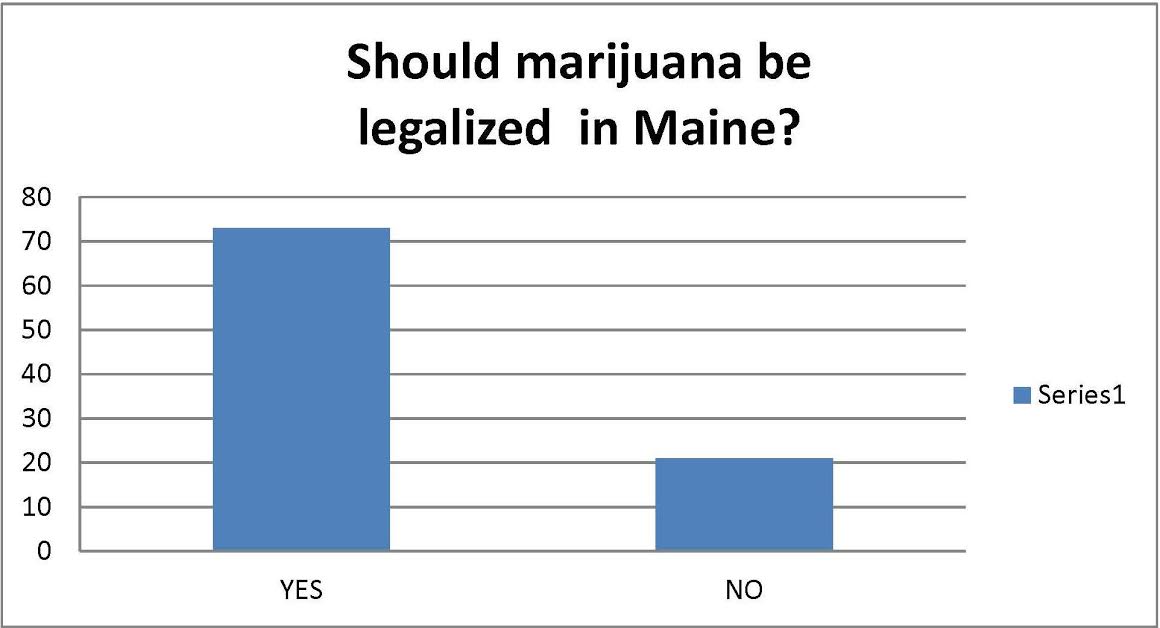
A few days ago, I posted a simple question on my Facebook page about the legalization of marijuana.

That informal survey drew more than 100 responses in 24 hours.

I was surprised by some of the responses. I was also fascinated to see that an almost even split of Republicans and Democrats were on each side of the issue.

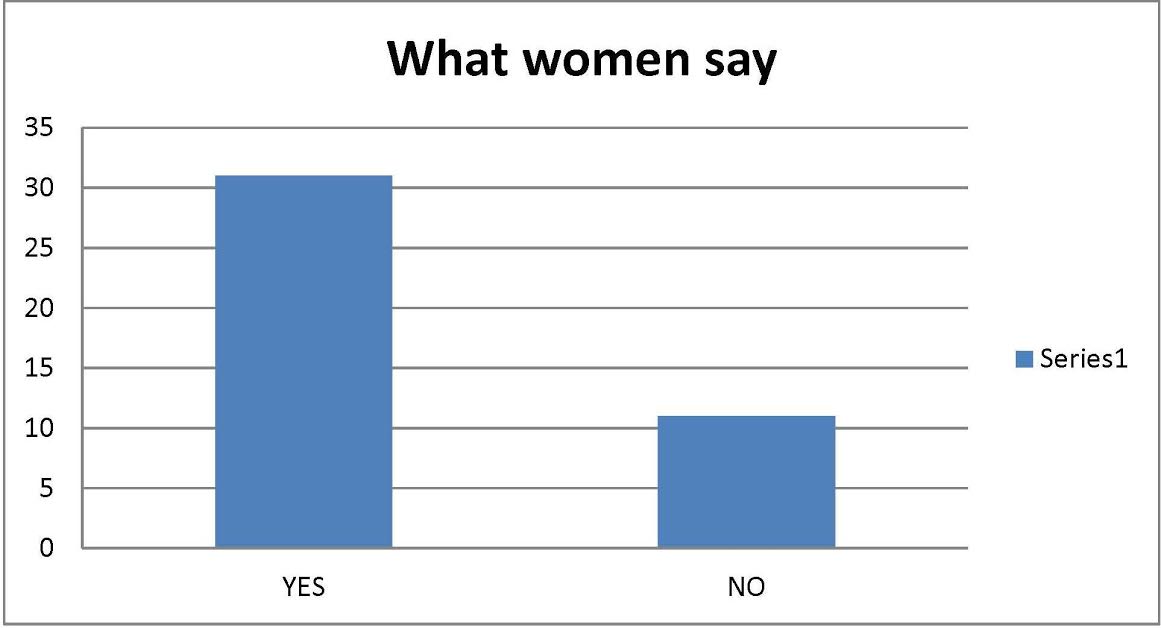
Moreover, both men and women overwhelmingly support legalization (male approval led female approval by only a slight margin).

Women with children were equally split. Among male opponents, more than 75 percent are politically conservative, yet nearly 40 percent of male supporters are conservatives.

Here are a few charts to break it down for you:

weed2


women


men


Sand in the Vaseline

the_internet_simplified1This blog is on equal footing with the New York Times.

No, I am not having a Richard Sherman moment. I am simply stating a fact. A fact that should give all of us pause as we contemplate the marvels of technology

What I write on these pages is instantly available to billions of people, anyone connected to the world-wide web. By virtue of nothing more than my registered domain, my silly and perfunctory blog is just as accessible as any other online media source.

The internet, virtually free of government regulation (at least in the United States), is the great equalizer, and it has fundamentally shifted the way we live our lives. Today, we can do things that would have seemed impossible or the stuff of science fiction just 20 years ago.

Medical records can be transmitted at lightning speed, sometimes helping doctors save a life; you can now renew your driver’s license while wearing only boxer shorts at 3 a.m. from the comfort of your own home; 12-year-old boys no longer have to suffer the humiliation of sneaking a peek at a Playboy magazine perched on the top shelf at the local drug store. There are millions of funny cat videos to watch; and you can argue politics with absolute strangers (today they are called Facebook “friends” or “followers”) 24 hours a day.

I think we can all agree that the internet is pretty cool. Thank you, Al Gore!

I write this because of a recent court decision that is considered by some as a victory for free markets and by others as a threat to humanity.

The issue is known as “network neutrality,” a terrifying concept with a very appealing name. Thank you, public relations professionals! (You’re welcome)

Those who favor net neutrality say they want to “save the internet.” Those who oppose net neutrality say they want to “save the internet.”

Enter the District of Columbia U.S. Court of Appeals, which sided with Verizon and other telecom giants over the schizophrenic rulemaking proposed by the FCC.

According to Reuters, the Court rejected federal rules that required Internet providers to treat all web traffic equally, a decision that could allow mobile carriers and other broadband providers to charge content providers for faster access to websites and services.

The Federal Communications Commission’s open Internet rules, also known as net neutrality, required Internet service providers to give consumers equal access to all lawful content without restrictions or tiered charges.

Which side of the net neutrality debate is right?

The sad fact is that both sides are a little bit right, and we can all agree that the internet should continue being cool and delivering porn or funny cat videos at blazing fast speeds, right?

Unfortunately, that’s not really the issue at hand. Let’s pause for a moment and watch a video:

Clash of the Titans

At the center of the net neutrality debate is a sad truth. This is not some humanistic battle on the wild frontier of technology. This is a race to the bank by two sets of very large corporations.

On one side, you have internet service providers like Verizon, Comcast and AT&T. On the other side are huge internet users like Netflix, Google, Amazon, Microsoft and YouTube.

The late Senator Ted Stevens (R-AK) was roundly chastised for describing the internet as a “series of tubes,” but he was not that far off the mark.

The bottom line? It costs money to make the internet work. It requires infrastructure that is in constant need of upgrades and repairs to meet the challenges of an exploding market and skyrocketing volume demands. The world has a big appetite for cat videos and pornography.

Netflix, Amazon and others want to use the internet just like you and me. Equal access for all, they scream.

But does that make sense? Net neutrality opponents argue that the internet is a public domain and should thus have equal access for all users. Let’s think about that.

AA001879Can we apply that logic to other public domains? How about the post office? Should it cost as much to mail a post card as it does an air conditioner? Is that discrimination?

Or how about the Turnpike, a quasi-public piece of infrastructure subsidized by tax dollars? Tractor trailer trucks have to pay a bigger toll than someone driving a Prius. And that is fair because the truck creates more wear and tear on the road.

Proponents of net neutrality say that consumers may have to pay more for faster services or special tiered packages. Oh my!

Their rallying cry, as demonstrated by a recent op-ed in the New York Times by Susan Crawford is that the internet could end up being like (gasp) pay TV.

I don’t know about Susan Crawford, but television when I was growing up sucked. We had three channels, and I was my father’s remote control. Television today is much better. I have a huge TV and about a zillion channels that all show the same seven movies over and over. I pay through the teeth for that kick-ass, high-definition, Dolby surround-sound, 60-inch, power sucking thing of beauty, and I can pause live television. Imagine telling that to someone watching Archie Bunker in 1972.

Net neutrality is a solution desperately in search of a problem. Your internet today is better than it was five years ago. I guarantee it will be even better five years from now, . . . unless, the “Save the Internet” crowd opts for a second bite at the apple.