Twisting By The Pool

A little more than 35 years ago, I found myself working as a volunteer on the Cheyenne River Indian River Reservation in Eagle Butte, South Dakota.

Life was good. I had a full head of hair, a smoking hot girlfriend and I was doing my part to make the world a better place by promoting social justice, peace and everything else that is super important when you’re 23 and someone else is paying your bills.

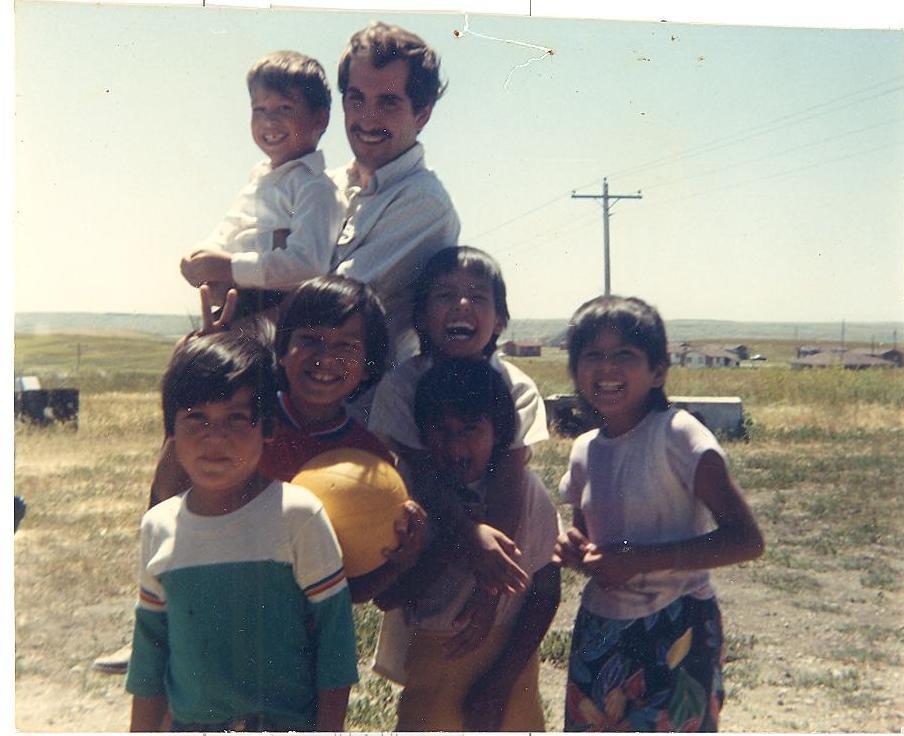
Me and some of my favorite kids on the reservation

One day, on a particularly hot and arid August afternoon, I found myself in a local tavern (imagine that) and I attempted to engage one of the local residents in conversation.

“It must be really hard to be a Native American on the reservation,” I said with all due sincerity and earnestness.

He put down his drink and turned to face me with a quizzical (if not supper annoyed) expression upon his face. “What?” he asked.

So, against my better judgment, I repeated myself. He did not take it well.

He sighed heavily and said, “Please don’t call me that. I am an Indian.” He could see immediately that I was surprised by his response.

“The last thing I need is to have some self-serving white punk attempt to pat himself on the back by patronizing me,” he continued.

His tone told me that this would be an especially short conversation.

“I’m sorry. I didn’t mean to offend you,” I stammered, eyeing the exit.

“That’s my point,” he said. “You somehow think that a bunch of politically correct words are going to make up for the fact that your people stole our land, murdered our children and raped our women.”

 He sighed and returned to his drink. “Look, I know you’re probably a nice kid, and I really do appreciate what you’re trying to do to help my community but I’ve had my fill of white apologies.”

And that was that. There were not a whole lot of people living on the reservation, but strangely I never saw that man again after that day. He did, however, teach me an invaluable lesson: more often than not, words are nothing more than just words.

Life During Wartime

My grandfather, whom some of you may recall as an eccentric English teacher at Biddeford High School in the 1960s, tried to teach me the values of developing critical thinking skills and avoiding populism. I was 12. The world was all about being popular and not thinking too hard about anything.

And so it is that I find myself, more than 40 years later, on this bitterly cold morning — an overweight, bald, middle-aged, underachieving white guy — briefly contemplating whether I should continue this column because I know deep in my bones that it is going to piss some people off. (Look, Grampa! I just ended a sentence with a preposition! Ha!)

Tomorrow, our nation will celebrate Dr. Martin Luther King Day in honor of one of history’s most prolific and courageous leaders who inspired all people to be better versions of themselves while promoting peace, justice and equality by his stunning examples of how to find common-ground with our fellow man.

Ironically, on this same day — here in my hometown of Biddeford, Maine – the city council will be holding a special meeting to decide whether we should create two committees that aim to study and foster the development of goals, policies and practices that are intended to foster the principles of “diversity, inclusion and equality.”

No, I did not stutter. The city is not creating a committee to study these issues. They will be discussing the formation of TWO committees to basically do the same thing. Why do one when you can have two for the same price? (A popular mantra in the world of government).

Here, hold my beer.

Look, don’t get me wrong. I am as a big a fan of diversity, inclusion and equality as the next guy, but really? This is something that warrants the need to create two committees in the city?

For starters, who on Earth, will serve on these committees? It’s not like we have a mass of people beating down the doors of City Hall to serve as volunteers on various city committees. For Christ’ sake, more than half of the city council seats were unopposed in the last election.

Begging my pardon. But this seems to be a classic example of a solution desperately in search of a problem.

If the city council is really concerned about “diversity” and “inclusion” why are they so blind to the plight of downtown residents who do not live in such pretty hip, cool neighborhoods when it comes to snow ban parking rules designed to support a privately operated parking garage?

Is Mayor Casavant going to stand outside of 3D’s Variety on Main Street and ask customers who just purchased a carton of generic cigarettes whether they feel included and well represented by their local government?

What about working-families that are struggling to get by and hoping – against all odds – to be able to someday buy their own, affordable home and then listen to Councilors Marc Lessard and Amy Clearwater bad-mouth and dismiss the notion of a housing development with modular homes? “I think the majority of residents would much prefer to see the creation of stick-built homes.” Lessard reportedly said during a recent meeting about a proposed housing development.

Hmmm, the good people of Cathedral Oaks Drive and Thacher Brook Lane aren’t too crazy about new neighbors with modular homes, huh? How inclusive! How diverse! It’s just that some animals are more equal than other animals, I suppose. Diversity, my ass!

Okay, I think I have made my point. Now, I’m going to head down to Mulligan’s for a beer. If I run into Casavant, Lessard or Clearwater there, I will drop dead on the spot. After all, the place isn’t especially known for its diversity. Strangely, however, the regular patrons are really nice people who are always more than happy to welcome a new face to the crowd. And that, my friends, is the definition of inclusion.

Peace.

Originally published in Saco Bay News

The One Thing

I don’t know what to say about that day, much less what to write about it.

What I do know is this: all of us born before 1990 remember exactly where we were and what we were doing on that awful September day 20 years ago.

I don’t want to add just another layer of profound sadness to that series of events. You don’t have to search hard to read or hear much better and more poignant testimonials.

But as we approach the 20th anniversary of the September 11 terrorists attacks, I feel compelled to offer my own personal take. I still have a hard time recognizing what really happened and that it is not part of some re-occurring nightmare.

Photo credit:Reuters News

Before 9-11, I could never comprehend that level of evil could exist anywhere. On the flip side of that coin, I had never witnessed such bravery until approximately 9 a.m. on Tuesday, September 11, 2001.

In the blink of an eye, our nation was suddenly galvanized. There was no right or left, liberal or conservative, young or old. We were horrified, but united.

I remember that day like it was yesterday. I was the editor of the Biddeford-Saco-OOB Courier, and Tuesdays were our weekly deadline day. It was always a bit tense and chaotic in the newsroom, trying to decide what would be on the front page (and all the other pages).

Just a few minutes before 9 a.m., my phone rang. It was a friend who told me that a plane had crashed into the World Trade Center. I quickly brushed her off, I was much too busy to worry about some small plane accident in New York City. I dismissed the news as probably a pilot having a heart-attack in a small plane.

A few minutes later. My friend called again. I was annoyed by the interruption. She told me that another plane had flown directly into the second tower.

For just a moment, I wanted to believe that it was another small plane that was caught up in the smoke. Then she told me: “No, these were big planes, passenger jets.” Both towers were now burning.

And just like that, our front page was scrapped. Things would never be the same. I quickly walked down the street to Mulligan’s so I could see a television. One of the bar patrons told me: “There’s going to be hell to pay for this.”

We had our new headline.

Straight. No Chaser.

More than 2,900 people died that day. It is now described as the world’s deadliest terrorist attack. Even now, two decades later, it is still difficult to comprehend. I recall seeing people make a god-awful decision: either jump off the tower or burn to death. Our world was forever changed.

A few years ago, Laura and I had the opportunity to visit the Pearl Harbor Memorial Site. We were tourists, accompanied by dozens of other tourists, but you could have heard a pin drop when we arrived at the site, which sits on the water across the bridge of the sunken USS Arizona.

President Franklin Roosevelt described December 7, 1941 as “a day, which will live in infamy.” More than 2,400 people, including 68 civilians, were killed during that horrific surprise attack.

Other than the death toll, I don’t think there is much similarity between 9-11 and December 7, 1941.

Yes, it was a surprise attack. Yes, thousands of people died. But one was an act of war, the other: an act of hatred, pure evil.

Today, our country seems bitterly divided, political parties are polarized and consensus is a rarity.

What will it take to unify our nation, when even the idea of wearing a mask seems to spark such vitriol and anger?

What will it take to put the “united” back into the United States of America? Will it require another tragedy, or can we all try just a bit harder to find some common ground? Will we find the courage within to face the threats of today?

Will it take another horrific disaster to create more heroes and acts of bravery?

I certainly hope not.

A new era begins

It was almost exactly 12 years ago today when I found myself in Washington, D.C. as part of a massive crowd converging on the Capitol Building. We were hoping to get a glimpse of profound history: the inauguration of President Barack Obama.

I remember that it was bitterly cold but the crowd was joyous. Beyond optimistic. But here’s the thing: I did not vote for Obama. I voted for John McCain. That said, I knew the impact of the moment. The history being created. I wanted to be a part of that positive energy.

I did not travel to Washington to attend the inauguration. I was invited to a reception held the night before at the New Zealand Embassy. I was working in the public policy arena and somehow got invited to that reception. I was a nervous wreck. What would I wear? What are the protocols? Laura could not join me. Someone had to take care of the kids and pets. I bought a new suit.

I felt so out of place at that reception. It was way beyond my pay-grade. Again, I didn’t even vote for Obama. I went back to my hotel that evening relieved. I fell asleep while watching CNN. I awoke early the next morning. Inauguration Day. I checked out at 6:30 a.m., thinking I could beat the crowd for a “good spot” to witness the ceremony. I was dead wrong.

The mass of people descending on the Capitol was mind-boggling. I don’t think I was able to get within one mile of the Capitol. The cold air stung that morning. I had an open-ended plane ticket to Boston. I could have simply turned around and retreated. I did not. I also did not see the swearing-in ceremony nor the parade down Pennsylvania Avenue.

But I was there. I was part of history.

Four years, later I repeated myself. I did not vote for Obama. I voted for Mitt Romney. I was not invited to any fancy parties. I watched that inauguration from the comfort of my office in Portland.

Flash forward almost 12 years and I could not believe what I was seeing on television. The Capitol Building was breached while Congress was in session Protestors scaled the walls. They broke into Congressional offices. They vandalized the epicenter of our Democracy.

Filled with hate, they continued their rampage. They flat-out refused to accept the inevitable (and official) outcome of the presidential election. Fueled by conspiracy theories and their self-righteous rage, they revealed what we may not want to accept: There are a lot of angry people out there.

Watching that fiasco was painful, to say the least. I was ashamed to be a Republican, even if my connection to the GOP was thread-bare. My first thought was to publicly disavow my political affiliation, to retreat safely into a ring guarded by conservative Democrats: a position of relative safety and protected against public disdain and blame.

But as my own anger about the protestors grew, I came to a conclusion. I would not abandon my party. Instead, I would continue to be a Republican with conservative ideals: a strong supporter of the Second Amendment, a voice for limited and more efficient government, a fiscal conservative. I would not be ashamed to be a Republican. It is possible to be a Republican and still condemn the melee that was conducted by an unhinged mob.

I want to a be a Republican like Colin Powell, Condoleeza Rice, former Defense Secretary and Maine senator William Cohen, and the list goes on and on.

Make no mistake, there was nothing patriotic about the events that today still seem like scenes from a nightmare. That said, Republicans of good conscious must rise up and let their voices be heard. It is well past time to cower in the shadow of public opinion.

Some in the GOP will mock me. They will call me a RINO (a Republican In Name Only). I will also be disparaged by Democrats. Some say I will be a man with no country. I call bullshit on that.

I am a Republican, but first and foremost, I am an American.

Joe Biden: The Comeback Kid?

A few days ago, I was drawn into yet another Facebook political debate. I can’t help it. I’m a political junkie and off my meds.

The debate was about the 2020 presidential campaign, and I made the comment that I identify as a “right-leaning moderate”

Within a few seconds after writing that post, some guy (a “friend of a friend” ) attacked me and said I was not a moderate . . .blah, blah, blah.  . . .because I am not a big fan of Joe Biden’s 2020 presidential bid.

At first I thought that I should just move on. I don’t know the guy and we had never met or interacted before. But I could not help myself. I decided to defend my position and my lack of enthusiasm for Joe Biden.

In summary, I posted that I was indeed a moderate Republican — to the left of people such as Sean Hannity, former Maine governor Paul LePage and President Trump (even though I did vote for Trump in 2016). Before my ardent friends on the left hyperventilate, I will not be supporting Trump’s re-election campaign.

I voted twice for George W. Bush. I also voted for the John McCain/Sarah Palin ticket in 2008. I  posted that I identify with other moderate Republicans such as Colin Powell, Condoleezza Rice and former Secretary of Defense (and former Maine Senator) William Cohen.

I voted for Barack Obama in 2012, yet I  still considered myself to be a so-called “moderate,” steering left of hyper conservatives such as Mitch  McConnell, Lindsay Graham and Rush Limbaugh, but  to the right of outspoken liberals, such as Rachel Maddow, Jimmy Kimmel and Chuck Schumer.

This year, I will hold my nose and cast my vote for Biden. But I am worried about his mental health and his ability to execute the duties of the president.

>>>>>>>

Jolting Joe has left and gone away

Joe Biden is all but assured to be the Democrats’ choice to prevent another four years of Donald Trump.

But is Biden really the best candidate for Democrats? After almost four years of the Trump Administration, the Democrats throw Biden into the ring to take down Trump? Really? That’s the best they got?

I have my own theory about why Biden came out on top: he is not an extremist. He is experienced and he is likable. But most of all, he is a moderate and may also be able to pull some fence-sitting, moderate Republicans like me: RINOs (Republicans In Name Only).

And here’s a conspiracy theory I have heard about:  The Democratic Party is banking on the probability that Biden (if elected) won’t be able to finish his first term; thus his vice presidential pick is critical — not to mention the need to fire up the Dems and increase voter turnout from younger voters who may otherwise stay at home on Election Day.

Several weeks ago there was an op-ed published in the Washington Post   that details several examples of behavior and missteps that lead to a troubling possibility: Biden may have some serious cognitive issues.

In fairness, the op-ed penned by Marc A. Thiessen also reminds us that President Reagan had his own cognitive issues.

Furthermore, Biden’s age could be another chink in his political armor. Thiessen points out the following:

“Joe Biden is 77, four years older than Reagan was during the 1984 campaign. If Biden is elected, he’ll be older on the day he takes office than Reagan was on the day he left office. So yes, his mental fitness is a legitimate issue.”

As I pointed out in my aforementioned Facebook post. I am a political junkie and a second-rate pundit with an internet connection and a keyboard.  But, over the course of my  professional roles (journalist, public policy and political consultant,) I know it is critically important to remember that voters are more likely drawn to voting FOR a candidate as opposed to voting AGAINST a candidate.

Then again, tapping Sarah Palin as a running mate didn’t accomplish much for John McCain. Why? Because voters were electrified by Barack Obama and his charisma. Obama could have picked Vito Corleone as his running mate and still would have won the race by a landslide.

In summary? Biden’s choice of a running mate is of paramount importance.

Joe Biden is no Barack Obama. He needs to widen his base, including young voters, progressives, the LGBTQ community and yes — even moderate Republicans like me.


Climate Change: what your parents never told you

‘In the absence of science, religion flourishes . . .’

-Unknown

light light bulb bulb heat
Photo by Pixabay on Pexels.com

One of today’s most hotly debated public policy matters is the subject of Climate Change, formerly known as “global warming.”

Before I go any further with a blog post that will surely divide my followers and Facebook “friends,” let’s get right to the meat of the matter.

When former vice president Al Gore declared that “the planet has a fever,” he was right. Global Climate Change (GCC) simply cannot be denied.

I am not a scientist, geologist or meteorologist. I am just another pundit with yet another point of view.

But while my friends on the left are far more likely to celebrate my above statements about the reality of GCC, I have some serious misgivings about many of their proposals to “fix the problem.” Recently hundreds of high-school students skipped classes to rally against GCC.

They should have hit the books instead.

When debating GCC, we should be able to acknowledge some fundamental facts:

  • Planet Earth is approximately 4.543 billion years old;
  • The Ice Age began 2.4 million years ago, lasting until approximately 11,500 years ago;
  • Humans began roaming the planet approximately 200,000 years ago.

So what do these facts tell us?

Well, for starters, the earth’s climate has been changing for a long, long time and humans had little to no impact on the earth’s atmosphere until about 50 years ago.

But before we begin any conversation about GCC, we should check our emotions at the door. This is a complex issue, and rhetoric – from either deniers or fanatics – won’t do a damn thing except possibly increasing your blood pressure.

Climate Change Impacts: A brief history

If you want to talk about other impacts that affect GCC, let’s take a relatively short journey back in time.

According to an article by Karen Harpp, an assistant professor of geology at Colgate University, published in the Scientific American newsletter:

In 1784, Benjamin Franklin made what may have been the first connection between volcanoes and global climate while stationed in Paris as the first diplomatic representative of the United States of America. He observed that during the summer of 1783, the climate was abnormally cold, both in Europe and back in the U.S. The ground froze early, the first snow stayed on the ground without melting, the winter was more severe than usual, and there seemed to be “a constant fog over all Europe, and [a] great part of North America.”

What Franklin observed, Harpp writes was “indeed the result of volcanic activity.”

“Natural forces cause Earth’s temperature to fluctuate on long timescales due to slow changes in the planet’s orbit and tilt,” according to a Q & A published by Climate Communication, which is a non-profit science and outreach project. “Such forces were responsible for the ice ages. Other natural forces sometimes cause temperatures to change on short timescales.”

On the other side of the debate there is plenty of scientific evidence regarding human impact on GCC, especially so in the last 50 years. The human impact has, in fact, outpaced natural impacts.

So what do we do?

Industrialized nations (United States, Japan, China, Russia, Great Britain, India and France) have more responsibility because of their bigger global impact. The 2015 Paris Agreement on Climate Change was signed by all of these counties and many more nations that have a far lower impact or produce fewer greenhouse gases, primarily carbon dioxide.

And then there is the 1997 Kyoto Protocol, an international treaty that extends the 1992 United Nations Framework Convention on Climate Change to reduce greenhouse gas emissions, based on scientific consensus.

I don’t dispute the science that provides more than ample evidence of human impact on climate change, but I am an ardent opponent of so-called carbon taxes. Just a few days ago, the state of Maine rejected the notion of placing a dedicated tax on gasoline and home heating oil. Phew! We dodged another bullet.

So-called carbon taxes are the rallying cry of the activists, but those additional taxes would place a further burden on the citizens who can least afford it.

Maine Governor Janet Mills is pushing for a $50 million bonding package that would study the impact of rising sea levels on coastal Maine communities. “We’re all in this together,” she said.

Rather than creating yet more taxes, perhaps we should focus more attention on creating incentives to reduce greenhouse gases.

I have worked as a public relations consultant on several energy projects, including wind power and an LNG (Liquefied Natural Gas) terminal in eastern Maine. I was always amazed when environmentalists opposed clean, renewable sources of energy, citing bird strikes and the need for flickering red lights atop wind turbines. I live in a community that once burned trash to generate electricity, but don’t get me started on that boondoggle.

We humans have a right to occupy this planet and we all share an inherent responsibility to be good stewards of our natural resources. I recently took a quick gander around my house, comparing it to my parents’ home. When I was growing up there were no microwave ovens. We didn’t have a dishwasher, flat-screen televisions or computers.

I am not suggesting that we should get rid of these things, but maybe we could be more mindful about our energy consumption, and explore expanding clean energy sources such as hydro projects – and yes – nuclear power. (Last week, Forbes magazine published an article that examined the safety of nuclear power plants.)

In a March 11 Portland Press Herald editorial, the editorial board wrote that “the global climate fight will take many forms.”

I could not agree more.

The Outsiders

outsidersUp until two months ago, most political consultants within the DC Beltway would tell you that you need a “moderate” candidate in order to win an election. That candidate, the consultants would tell you, should be a centrist, an establishment-type, someone who makes most people safe and secure. Someone predictable.

Outsiders, consultants explain, are unknown quantities; unable to steal votes from the sacred independent, middle-of-the-road voters who often carry much weight in so-called purple states like Ohio.

Conventional wisdom dictates that in order to win the general election, the primary candidate has to draw from the middle to outpace his/her opponent.

This presidential race is unlike many other races in recent history, for both the Democrats and the Republicans. But is there any truth in the theory that moderate candidates are effective for either party?

The establishment didn’t work for the GOP

Republicans bristle at the idea of an “establishment” centrist candidate. They point to the last 20 years, in which they have won only two presidential elections after unsuccessfully nominating Bob Dole in 1996, John McCain in 2008 and Mitt Romney in 2012.

In each of those Republican primaries, anti-establishment outsiders were quickly sent packing. Sam Brownback, Jim Gimore and Tom Trancedo were all anti-establishment outsiders in the 2008 GOP race. Rick Santorum, Buddy Roema, Michelle Bachman and Rick Perry were all anti-establishment, political outsiders. Where are they today?

The establishment rarely works for Democrats

In 2008, Senator Hillary Clinton’s star was shining brightly. She seemed to be the heir apparent for the Democratic nomination. She was, by definition, a Washington insider and portrayed herself in the same mold as her husband: a pragmatic moderate who could get things done.

But a war-weary electorate was looking for something fresh. They rejected all the insiders (Joe Biden, Chris Dodd, John Edwards and Bill Richardson), instead rolling the dice on a virtual poltical unknown with almost no experience in Washington DC.

But the election of Barack Obama was an anomaly in politics. It defied conventional wisdom. Clinton’s campaign consultants wound up with egg on their faces.

In 2000, the Democrats took the safe bet with Al Gore, who is about as establishment as they come. Of course, we all know that Gore came within inches of winning that election, and that he was able to sway independent voters. But still, it was not enough.

Four years later, John Kerry, another insider and establishment type fended off political outsiders such as Howard Dean and Wesley Clark. He also beat other insiders Dick Gephardt, Joe Lieberman and Dennis Kucinich.

When outsiders make a splash

Many Republicans still blame billionaire Ross Perot for handing Democrat Bill Clinton a victory over President George HW Bush in 1992; and Democrats still seethe when they speculate about the damage that Ralph Nader played in 2000, supposedly stealing very critical votes from Al Gore.

This campaign cycle, both the Democratic Party and Republicans have their hands filled with so-called outsiders.

I don’t know how you describe Bernie Sanders as an “outsider” because he’s been a part of Washington’s infrastructure for nearly 16 years. But he is most certainly not an “establishment,” middle of the road candidate. He is a self-described socialist, but his poll numbers look good in both Iowa and New Hamshire. He will likely get crushed in South Carolina, but are Democrats fired up enough to “feel the bern” past Nevada?

And then there’s Donald Trump, a candidate who is all over the map. Trump defies every ounce of campaign logic known to man.

The establishment is beside itself. The National Review and Rich Lowry can’t stop him or slow him down. His off-the-cuff remarks about immigrants, Muslims and even war heroes only makes him more popular.

He is an egomaniac who has filed for bankruptcy four times. Yet, he describes himself as a fiscal conservative who can make “America Great Again.” (He’s just short on specifics)

So maybe, just maybe, this will be the year when Republican voters tell the consultants to just stuff it.

Gimme back my bullets

rs gunThere is a good article in today’s Portland Press Herald: Maine boosts reporting to FBI database to prevent gun purchases by mentally ill.

As an advocate of both mentally ill people and the Second Amendment, I was pleased to see that the newspaper approached the issue is such a comprehensive manner.

During gun control debates, the subject of mental illness is often raised as a red herring. While none of us wants to see dangerous people have access to firearms, we too often lump all mentally ill people into a convenient one-size-fits-all category. Simply having a mental illness does not make you de facto dangerous.

On the other hand, there are some seriously ill people who should not be allowed to purchase firearms. The same could be said for convicted felons and those charged with domestic violence.

There are distinctions to mental illness. For example, someone who suffers from mild depression should not necessarily be barred from hunting. However, someone who has been court-ordered to undergo psychiatric treatment is in another category.

Look at it this way: If a Vietnam veteran is seeking counseling, is that the same as someone who suffers from schizophrenia and refuses to take medication? Of course not.

The article points out that distinction when it comes to federal reporting of mental health records.

“Anyone who voluntarily seeks treatment for mental illness or checks themselves into a mental health institution would not be prohibited from owning a gun.”

According to the Press Herald report, Maine has submitted 3,022 records to the FBI regarding 1,750 people who are prohibited by federal law from buying guns because they were involuntarily committed to a mental health institution by a court. Other records sent  include individuals who have been deemed by Maine courts to be mentally incompetent to stand trial or not guilty by reason of insanity.

These are important distinctions because mental illness (like every other illness) presents itself in various degrees and levels of severity.

I have been very open and honest about my own struggles with mental illness.

I have been hospitalized several times.  I also don’t own guns.

While I am a staunch supporter of the Second Amendment, the truth is that I don’t like guns. They actually make me a bit nervous. And because of my own history, I don’t think it’s a good idea for me to have access to firearms. But before this new law went into effect, I was able to purchase hunting rifles for my sons.

My boys enjoy hunting with my father-in-law. (I hate hunting, and most other outdoor activities). Those hunting rifles were always stored in a gun safe at my father-in-law’s home because I don’t want firearms in my home.

Now let’s take a step back. On Mother’s Day, my oldest adult son came home so that we could all go to dinner. He also wanted to show off a used AR-15 semi-automatic rifle that he purchased.

We all took turns holding the unloaded weapon in a series of goofy photos. In one of those photos, I put on a fedora, posed in front of my pickup truck and made sure to have a cigarette dangling from my mouth.  Laura posed barefoot with the AR-15 in front of my son’s Jeep. Just a bunch of rednecks having fun on a Sunday afternoon.

I posted one of those pictures on Facebook and the reaction was mixed. People have strong reactions to firearms, and that’s understandable.

But it’s also to remember that a firearm is no more dangerous than the person holding it.

Would I pose with a gun for a funny picture? Sure. Why not?

Should I be able to purchase or own an AR-15 or any other kind of firearm? Probably not, even though my mental illness is well-managed and I continue voluntarily seeking treatment.

I made my own decision when it comes to owning a firearm. But my mental illness is not the same as another person’s mental illness.

There should be clear lines when discussing who should be able to purchase a firearm and who should not. And we should all remember that mental illness does not fit in a convenient, easy-to-understand package.

Who’s your daddy? Student loans, step parents & the government

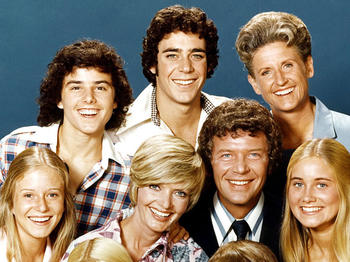
Brady BunchI sometimes wonder if it would have been better for my youngest son if I had not married Laura.

Well, technically speaking, he is not my son. His biological father lives somewhere in Aroostook County and is averse to both work and financial responsibility.

For more than 15 years, I have consistently treated Tim and Matthew as my own sons. I attended the parent teacher conferences. I brag about their accomplishments. I lay awake at night worrying that they will not make the right decisions. I helped with the homework. I taught them to drive and how to kayak. I tell them that I love them. I scold them and discipline them. I never hesitate to give my time, money or other resources to ensure that they are okay.

But they are not my children, and while that may seem cold and misguided, it is a reality that I must accept in order to avoid resentment. It is reality, and at all costs, I must cling to reality as much as possible.

Sometimes I like to fantasize that I live in a different reality. In most ways, our family ignores the fact that we are a “blended family.” The kids call me Dad.

For all intents and purposes, our family functions no differently than any other nuclear family, where both biological parents live in a house with their own children.

But real life is rarely like the Brady Bunch. There are some distinct disadvantages to being a step-parent.

If I could go back in time, I would not change a thing. And before we proceed any further it’s important to remember that our family is not unique. In fact, so-called traditional families are being out-paced by non-traditional families.

Using data from the American Community Survey and the Census Bureau, analysis by the Pew Research Center found that 46 percent of children under 18 live in households headed by two heterosexual parents in their first marriage, compared to 1960 when 73 percent of children fit that description, and in 1980, when 61 percent did.

Translation: more than 50 percent of American families are non-traditional. The new normal.

A double standard: the step-parent trap

Stack Of CashBecause my youngest son chose not to be adopted or carry my last name (it was always their choice), there are some distinct disadvantages to being a step-parent. For example, I cannot sign any legal documents for them. I cannot authorize medical treatments. I have no custodial rights. When it comes to making many critical decisions, my approval is not necessary.  The government, for the most part, considers me a non-entity, and those things are reserved for biological parents.

But there is one notable exception, when the government is only more than happy to give full weight to my role as a step-parent.

And for those of you with college-age children, you can probably guess what that exception is: eligibility determination for federal student financial aid.

While I understand it must be increasingly difficult for the US Department of Education to determine the eligibility status for a growing number of unique family situations, I still think it is unfair that the government insists on considering my financial earnings and records to determine how much student aid Matthew can receive.

If the government were to adhere to recognizing only the legal parents, Matthew would qualify for considerably more financial aid.

A quick search on Google reveals that there are hundreds of stories out there about FAFSA (Free Application for Federal Student Aid) and its unfairness to blended families.

A 2006 story in the New York Times reveals many of the complexities that non-traditional families face when attempting to secure financial aid for their household children.

“Which parent is responsible for college? What about stepparents’ income? Child support? Just because you think of your family one way doesn’t mean a college will agree. Each sets its own rules on how to define the family, and those definitions have substantial impact on how much money a student can get.”

Theoretically, if I divorced Laura in 2014 (but still lived with her in the same house), Matthew would qualify for more financial aid. The government looks at married couples, not roommates.

Thus, we have set up dysfunctional system that practically begs step parents to cheat, or more likely to avoid becoming step-parents altogether.

Matthew is 18 years old. If I married his mother last year, my income would count. Thus, if you a marry a woman with children that the government considers adults (old enough to sign legal documents, get married and register for the Selective Service) then the government assumes you are prepared to kick-in for their college education.

Does that make sense to you?

Now here’s the part that will make me seem like a cold, heartless bastard. I will not pay for Matthew’s college tuition. This was a conversation Laura and I had before we were married.

I will, however, help Matthew go to college. He can live at home completely rent free during the entire time he is registered as a full-time student. I will feed him and give him money for books, transportation costs, etc. This would greatly reduce the cost of his education if he were to attend the University of New England, the University of Southern Maine or Southern Maine Community College.

But if Matthew chooses a school beyond the logistical realities of living at home, it is up to him to find a way to swing those costs: student loans, grants, scholarships and (gasp) working.

It is my firm belief that this approach will benefit my youngest son by introducing him to the real world while providing him with a safe cushion to fall back upon.

For the record, this is the same approach I would use if I were Matthew’s father instead of his step-father.

So, in the end is Matthew better off because I married his mother so many years ago, or is he worse off?

Considering that I have supported him for most of his life and always treated him like I would my own child, I would say he is ultimately better off, even if the government will penalize him because of my income. And that, folks, is the real step-parent trap.

A plea to responsible gun owners

Note: The following was penned by my friend and former colleague Tobey Williamson who now lives in Hawaii. It is provocative, and I thought my readers may want to consider his point of view.

police lineDear Responsible Gun Owners with Good Hearts:

I know more than a few of you, and I want you to keep your guns and buy more of them. Buy as many as you want. Keep them locked up. Safe from the [mentally ill] and from the kids. Keep them ready in case we really do one day have to organize a militia to fight against an extremist government that knows everything about its enemies and employs drones to kill us remotely. At least we’ll be able to shoot a few of those fuckers out of the sky before we run out of bullets.

In the meantime let’s teach our kids to hit a target at 1000 yards in a gale force wind with their hearts racing at 100 beats per minute. Teach them to respect these weapons, these tools of food security, these protectors of our freedom. Make sure they know never to point them at any person unless they intend to pull the trigger—and that they understand the inevitable consequences of such a decision. Bring them hunting and show them the proper reverence when the spark leaves the eye of the animal we take to sustain our own through the winter.

However, I implore you to look into your heart and consider that it is only flesh and that it beats for your loved ones. Who are themselves flesh and blood that can never be put back together once torn apart by bullets. Think of them when you begin to change the conversation we are having as a country, when you become the voice of reason that leads us away from this chaos. No one else has the credibility or the common sense that you have. Nor does anyone else shoulder the same responsibility.

Rights do come with responsibilities; at least they do in a world that makes sense. So, as a rightful owner of as much firepower as you can buy, it is your responsibility to speak out and take real action against this mayhem and senseless violence that can strike any of us at any time. This is a deadly serious issue and at the moment not only is the violence insane, but so is the conversation about it.

The vast majority of people just want to go about our business without fearing for our lives. When we hear that new laws are not the answer because we do not enforce the ones we have, or that its because we have poor mental health services we say, “ok, lets fix all of these problems.” When we hear that a person intent on killing another person will find a way with or without a gun, we say, “ok, lets make it as hard as possible for them to do that.”

When we hear that the only answer to the problem of gun violence is more guns, we are incredulous. This is the same absurd logic that created the nuclear arms race. Must we all endure escalating shootouts started by the heavily armed people everywhere in our midst who eventually draw at the slightest crooked glance? Is that when we can decide that this default strategy is not working?

Seriously, think through the scenario of the “good guys with guns” argument. It is not like the bad guys are all wearing black and white-striped jumpsuits or something. If everyone has guns out, who knows whose got a good heart then? Just imagining the situation in the comfort of your heavily armed home should give you pause. Within the chaos, will you really know who to shoot at? Are you sure the other guys packing heat would know not to shoot you? The rest of us caught in the crossfire don’t want any part of it, thanks.

End the insanity. Stand up for your rights. But for fuck’s sake, for our kids’ sake, take care of your responsibilities. Come to the table and be a part of the solution.

Sincerely,
A non gun owner who does not hate guns but hates gun violence.

Orange Crush

donald-trumpThere is no doubt in my mind that this blog post is going to cost me some friends.

In fact, it may cost me some other things too, but I can’t sit here and be silent.

I am watching as my country is gripped in fear. I am watching as politicians scream about safety. I am watching and listening to heated debates among my friends about the Paris terror attacks, the Syrian refugee crisis and the role of Muslims in the United States of America.

It is like a nightmare, and I wonder: has everyone forgotten their history?

“Those who do not remember the past are condemned to repeat it,” said philosopher George Santayana.

Yesterday

Most of us are too young to remember the horrors of WWII, when millions of Jewish refugees fled Germany during the rise of the Nazi Party.
Then, under the authority of the Third Reich, Jews were required to register with the government and to report their movements and whereabouts.
Eventually, Jews were rounded up and sent to prison camps. They were systematically executed during Hitler’s reign of terror.
How could this horror take place? What gave rise to the Nazis? How could Hitler lead an entire nation into a campaign of loathing that eventually turned into mass murder and one of the most significant atrocities in human history?
The answers are difficult to imagine, but it was an incremental process. Germany was reeling financially and on the brink of hyper-inflation fueled by crushing debt that stemmed from their obligations for reparations after World War I.
So, Germany’s economy was in rough shape. But beyond their terrible economy Germans were also concerned about the growing threat of communism in their country. They needed some scapegoats to blame this on.
Hitler came onto the political scene as a magnetic and charismatic speaker. He promised the German people safety and security. He had a stunning ability to whip up the masses with his rhetoric. He delivered scapegoats in the form of Jewish financiers who he blamed for the country’s economic woes.
Sound familiar?
The German people were complicit, either by their silence or by their support of Hitler and the Nazis.
Polls taken in 1938 and 1939 found that the majority of American citizens did not want the government to allow Jewish refugees from Europe to settle in the United States.
A couple of decades later, another gifted and charismatic speaker came onto the political scene; this time in the United States.
Republican Senator Joseph McCarthy led America through the “Red Scare” of the 1950s.
McCarthy spent nearly five years trying to expose communists and other left-wing “loyalty risks” in the U.S. government during the early 1950s, at the height of the Cold War against Russia.
Even mere insinuations of disloyalty by McCarthy were enough to convince many Americans that their government was packed with traitors and spies. McCarthy’s accusations were so intimidating that few people dared to speak out against him.
But Maine Senator Margaret Chase Smith, a fellow Republican to McCarthy, did stand up to him with her Declaration of Conscience speech. One part of that speech that I find especially relevant today is this:
“The nation sorely needs a Republican victory. But I don’t want to see the Republican Party ride to political victory on the Four Horsemen of Calumny –Fear, Ignorance, Bigotry and Smear.”

Today

Donald Trump, so far the leading candidate for the GOP nomination in 2016, endorsed the idea for a database to collect information about Muslims living in the United States. At a campaign event in  Newton, Iowa, NBC asked [Trump] whether there should be a database to track Muslims. “There should be a lot of systems, beyond databases. We should have a lot of systems,” he said, according to The Atlantic. “We’re going to have to—we’re going to have to look at a lot of things very closely. We’re going to have to look at the mosques,” Trump added. “We’re going to have to look very, very carefully.”

When challenged to explain how his policy ideas differed from those used in Nazi Germany, Trump’s only response was ” You tell me. You tell me.”

What scares the bejesus outta me is that Trump’s leading poll numbers surged again this morning, fewer than 24 hours after he refused to elaborate on how his policy idea differentiated from those used by the Nazis.

What scares me more?

So many of my friends really like Trump.

“He (Trump) says what I’m thinking, but what political correctness won’t allow me to say,” said one friend, adding that safety is the most important thing a politician can do for the nation.

But should we sacrifice liberty and American ideals for safety?

I always thought this was the land of the free and of the brave, not the land of bigotry and fear.

What was it that Ben Franklin said?

“Those who would give up essential liberty, to purchase a little temporary safety, deserve neither liberty nor safety.”