
Alpacas, Obamacare and the thin line

alpacasIt’s been a tough week for a lot of us.

The days are getting shorter, the economy remains anemic and political rhetoric is intensifying in the face of a so-called government “shutdown.”

Just in the last seven days, our nation has witnessed some stunning and bizarre examples of citizen unrest.

On Thursday, a woman suffering from depression attempted to crash the White House barriers. She had her infant daughter in her car. She then headed to the Capitol, where she was eventually shot to death by police. Fewer than 24 hours later, a man set himself on fire near the National Mall.

Of course, two weeks earlier, Aaron Alexis went on a killing rampage that left 12 people dead at the DC Navy Yard.

Despite those horrific incidents, the nation remains bitterly, stubbornly focused on an intensely partisan battle that is still raging on Capitol Hill. These other incidents were mere blips on the radar screen, generally ignored like those blips that signaled the advance of Japanese fighter planes approaching Oahu on December 7, 1941.

It is mind-numbing stuff; stuff that is too difficult to even think about,  much less the sort of stuff that we are willing to discuss in the sphere of public policy.

We avoid this stuff because it’s much harder to point fingers and assign blame. It’s not as convenient or simple as arguing about Obamacare. It’s stuff that we generally want to avoid.

What does this have to do with alpacas?

As a so-called “consumer” of mental health services, I have a wide range of my own diversionary tactics, a boat-load of coping tools I can deploy to ignore the obvious and the overwhelming.

I am also a semi-professional pundit, not to mention a professional consultant who spends the bulk of his time crafting public policy messages and strategies to help clients achieve their goals.

When those two worlds intersect, I need a distraction as much as anyone else. So, I began focusing on alpacas.

Go ahead and laugh. I will wait.

This week is also the week of the annual Fryeburg Fair. For many years, I have represented various clients at that fair, staffing booths in the Natural Resources building and thus unable to enjoy the fair like most people with my family.

Of all the animals on display at the fair, I have always had a soft-spot (literally) for alpacas. I have long fantasized about how cool it would be to have a pet alpaca.

It’s just a fantasy; it’s not the real thing

This year I did not have to work at the fair. Laura and I decided that we would go on Saturday. Our youngest son, Matthew wanted to join us and bring along his girlfriend. We began planning this day almost three weeks ago.

This year, we had other things to consider about attending the fair. Laura’s MS has been progressing. On Monday, the neurosurgeon ordered her to stay home from work. For the first time, I had to get serious about wheelchairs and their cost, function. Maybe I would not need it this year. But it is part of our family’s new reality.

Earlier in the week, I once again dreamed about how great it would be to own an alpaca. The little kid in me got very excited about this prospect. Matthew, in fact, suggested that we would name our alpaca Cameron.

I am terrified thinking about my wife’s MS. I want things to stay the same. The future looks so uncertain. This is the Fryeburg Fair, dammit. I just want an apple crisp, wager on a few races, smell maple syrup and hear reports about the Red Sox and their progress in the ALCS.

What happens if Laura can’t go back to work? What happens to our health insurance? How will we be impacted by Obamacare? What if . . .?

I went to bed early on Tuesday evening in a mix of anticipation about seeing the alpacas at the fair and worrying about my wife’s health. I wept like I have not wept in years.

I really wanted an alpaca. I researched alpacas, and the adult that also lives in me tried to be as gentle as possible. But reality won on Tuesday. Our yard is too small. Alpacas live in herds. We have no business, whatsoever, in even considering the purchase of an alpaca.

It was the clashing of reality and fantasy. This tool of distraction would soon need to be replaced. What do I do now?

Sometimes a fantasy is all you need

We had so much fun on Saturday. Despite the heavy traffic, the difficulty in finding a parking spot, we all laughed so much. People of all stripes, sizes and colors packed the fairgrounds. Yes, we saw the alpacas, and we even found Cameron.

The alpacas, goats, sheep and cattle all seemed somewhat oblivious to the incessant buzz of human activity that surrounded them. They were content to gnaw on hay, to root in piles of sawdust.

For several hours, I did not hear one word about John Boehner or President Obama. I did hear that the Sox scored another run in the bottom of the fourth. The air became cooler all around us, the night sky settled in quickly.

And then it dawned on me. There is a thin line that separates reality from fantasy, dreams from nightmares.

We spend so much energy fretting about the unknown.

Sometimes all you need is some hot apple crisp, a home run by the Red Sox, the company of those you love and the experience of petting an alpaca. That way, the buzz of human activity that surrounds you becomes little more than just another day at the fair.

I think I’m turning Japanese

Two stories I found on the pages of the Portland Press Herald today:

  • [Maine’s] Riverview Psychiatric Center faces the loss of an estimated $20 million in federal funding because the federal government has decided that the hospital in Augusta has not solved staffing and governance problems.” Full story
  • The mother of a Connecticut woman who was shot to death by police after trying to breach a barrier at the White House said her daughter was suffering from post-partum depression. Mother: Daughter in Capitol chase was depressed

Considering the earth shattering news that Republicans are opposing Democrats, it’s understandably tough to remember things that happened a couple of weeks ago, like the Navy Yard shooting where Aaron Alexis, a former Navy reservist, used a shotgun to begin a massacre that left 12 people dead.

A few weeks before, Alexis called police in Rhode Island, telling them that he was getting messages from his microwave, according to the Associated Press.

“The mass of men lead lives of quiet desperation,” wrote Henry David Thoreau.

But just look what happens when those desperate folks stop being quiet.

It’s easy and sexy to argue about the Affordable Care Act, gun control . . . my guy versus your guy.

But the silence becomes deafening if we dare mention other topics that (not surprisingly) have a direct and immediate impact on all the other stuff we love to debate.

Fewer than 24 hours after the incident in which a depressed woman was shot (justifiably) by Capitol police, that story has already become buried under the weight of Congressional bickering.

And the Aaron Alexis story did not fit into any of the convenient arguments for or against gun control. Don’t expect any tearful Congressional testimony there.

I return you now to the sport of pointing fingers and assigning blame. Enjoy.

Just Ask Superman

superman

Why do some people refuse to address their own or a loved-one’s mental health issues?

Well, do you remember the 1978 movie Superman? Do you remember what happened to its leading stars?

Superman was a cheesy adaptation of the famous comic book hero and television show, but its cast was stunning.

Some of Hollywood’s most enduring and iconic figures were featured in that film, including Marlon Brando, Gene Hackman, Ned Beatty, Valerie Perrine and Margot Kidder.

The film also launched the career of Christopher Reeve, a handsome, muscular man who was cast in the leading role as the Man of Steel.

While participating in a 1995 equestrian competition in Virginia, Reeve was severely injured and became paralyzed. His injuries elicited support from all over the globe. He spent the rest of his brief life trying to help others with spinal cord injuries and established the Christopher Reeve Foundation.

He was a sympathetic hero. He touched us all. The man of steel could not escape this batch of Kryptonite. He died in October 2004 and millions mourned his passing.

Now, let us examine the fate of Superman’s leading lady, Margot Kidder, a successful actress who was cast as the petulant, cynical and manic reporter, Lois Lane.

A year after Reeve was paralyzed, Kidder was found by police hiding in the bushes in a suburban neighborhood near Los Angeles, California. She was taken into custody for a psychiatric evaluation.

The world was not so nice to Ms. Kidder.

Kidder has a bipolar disorder, so she became fair game for the media, late night comedians and a slew of derisive web site commentary. She was certainly no Superman.

She was human, frail and vulnerable but in a different way than her co-star, and that difference was best amplified by the ridicule that continues to follow her today, some 15 years after her illness became fodder for her former Hollywood colleagues.

Maybe that’s why fellow Superman star Marlon Brando spent so many years keeping his mental illness a secret.

By the time Superman was released in 1978, Brando was already known as one of Hollywood’s most iconic figures. The star of “On the Waterfront” and “The Godfather,” he was a tough guy’s tough guy.

But his mental illness apparently was a bit tougher.

Brando was a deeply troubled man struggling with depression, anger, and loneliness, according to those who knew him and detailed in an article by the National Center on Physical Activity and Disability.

Brando was from a generation of those who didn’t talk about mental illness. A generation that believed depression was little more than self-pity run amok or some other sort of character flaw.

It was that same generation of actors which produced the original Superman, George Reeves.

George Reeves (no relation to Christopher) was an actor best known for his leading role in the 1950s television series, The Adventures of Superman.

Reeves’ untimely death at age 45 was officially ruled as a suicide by police, although there is much speculation about that fact, most notably in the 2006 film Hollywoodland, which stars Ben Affleck as George Reeves.

Whether Reeves committed suicide is irrelevant and will probably remain a mystery for a long time to come.

But we do know how Hollywood would have treated him if he had talked publicly about battling depression.

Just ask Lois Lane.

Catch 22

There is a disturbing new trend in the U.S. military, and it’s killing our troops with increasing frequency.

No, we’re not talking about roadside bombs or militant terrorists. We’re talking about something that is much more frightening: suicide.

The U.S. military’s highest court is wrestling this week with whether it makes sense to punish service members who attempt suicide.

According to an article in USA Today, the military’s Court of Appeals appears perplexed about whether it makes sense to prosecute soldiers who make an attempt to end their own lives. The uncomfortable subject matter reared its ugly head during an appeal filed by attorneys for a Marine private who was court-martialed after slitting his own wrists.

From the article: Underpinning the case is the question of why the military criminalizes attempted suicide when it does not treat successful suicide as a crime.

“If (the marine) had succeeded, like 3,000 service members have in the past decade, he would have been treated like his service was honorable, his family would have received a letter of condolence from the president and his death would have been considered in the line of duty. Because he failed, he was prosecuted,” noted Navy Lt. Michael Hanzel, the military lawyer representing [the appellant].

Suicides among active-duty troops have soared in recent years, from less than 200 in 2005 to 309 in 2009, and a spike this year has put 2012 on track to set a new record high.

As someone who struggles daily with a mental illness, this story caught my attention for a number of reasons, including my own dismal military performance.

I received an honorable discharge from the United States Air Force, but it’s hard for me to think of anything “honorable” about it. Like me, this young Marine was never in a combat situation, making it all the more difficult for most people to understand — nevermind legitimize — his claim of post-traumatic stress disorder.

According to the article: “Mental health experts say criminalizing attempted suicide will undermine the Pentagon’s efforts to prevent troops from taking their own lives. Those laws might make troops reluctant to come forward, seek help and be candid with mental health counselors if they fear potential prosecution.”

So, we are left with a situation that clearly mirrors the foundations of Joseph Heller’s classic novel, Catch-22.

Essentially, the Catch 22 argument is one that predicates an outcome upon a contradictory set of rules. For example, if you are sane enough to seek discharge from the military because of a mental impairment, then you are not mentally impaired. You can only be mentally impaired if you are in complete denial that you are mentally impaired. Thus, you cannot say that you are mentally impaired and must remain in the military.

It’s actually understandable why the military is wrestling with this case. It’s damn hard to know the difference if someone is simply using the guise of a mental impairment to escape the otherwise uncomfortable bounds of their own consequences. I say this as someone who has made a serious suicide attempt.

I mean the kind of suicide attempt when you don’t write a note. You don’t make a call. There is no drama. There is just cold, dark, insufferable pain that you desperately want to end.

It happens. It’s not convenient or a light subject but it cannot be ignored without consequence.

Today, I am doing everything possible to avoid ever being in that situation again. But how much harder would that be if I knew I could be criminally prosecuted for my admission?

If you are so inclined, you can click on this link to sign an online  petition to urge the military to stop prosecuting U.S. service members who attempt suicide.

As always, thank you for reading.

Balance and perception a.k.a. ‘Shit happens’

An obvious aliment

Over the last few days, I have learned some valuable lessons.

First and foremost, I was reminded this week that I am extraordinarily blessed to have a diverse cadre of superior friends and family members.

I also learned a valuable lesson about ladders, not to mention a very painful experience that drove home the importance of why access to affordable and quality health care is so important for our national security.

But having so much down time has also allowed me to reflect on at least two other subjects: balance and perception.

During this presidential election season we have all heard a bunch of rhetoric about “self-reliance” and about “being in this together.” But which philosophy is correct?

Just like working with a ladder, the most important lesson is too often forgotten: it’s all about balance.

And we lose our balance when our perceptions become too narrowly defined.

A week ago, I broke my left arm in two different places while helping my sons with their landscaping business. The injuries, although significant, will eventually heal.

These last few days have been tough. It’s amazing how much you take for granted the use of two working arms. For example, try zipping up your pants with one arm. Or opening a bottle of pain meds; typing or driving a vehicle with a standard transmission.

Most people understand those limitations. They instantly empathize, and are quick to offer assistance. After all, my injuries are very obvious. My arm is either in a sling or set into a wrap-around corset to keep it in place. I have visible wounds on my legs and my elbow.

Strangers ask what happened with sympathetic voices, and they often share with me their own similar experiences. My friends laugh with me about how the accident happened. It’s okay and acceptable to make jokes about it.

We are comfortable with physical injuries. They do not frighten us. Shit happens.

Anyone who has ever smashed their elbow into a 3-inch-thick slab of stone knows that it is a painful injury. They know why you need to take it easy and sometimes need the use of medication to cope or just sleep through the night.

I say all this because these experiences provided me with a very stark contrast to my much less obvious injuries; the disease that is invisible to the eye, that is masked by perception.

On balance (no pun intended) my mental illness is far more painful than a broken arm. But you can’t see it, and I am reluctant to show it to you.

Imagine a disease that rarely allows you to sleep through an entire night. A disease that constantly impacts your perception of the world around you; a disease that clouds your judgment, alters your reality and makes it almost impossible to get out of bed.

Imagine an intense level of pain that without medication would have you think every hour of every day about ending your life; a disease that inhibits your ability to maintain relationships and function as a productive member of society.

Imagine having a disease that is commonly ridiculed and often dismissed as nothing more than “feeling sorry for yourself.”

I live with the challenges of that disease every day. I fight it with every fiber of my existence, only to know that it will never go away; that there is no cure or remedy.

I refuse to allow my broken arm to alter my life. This last week has been one of the busiest and most challenging weeks of my professional career, and I have risen to each and every challenge.

Am I bragging? Yes, but only to make a point. This is the way the overwhelming majority of people who suffer from a mental illness operate. They struggle through each day. They go to work. They mask their pain. They pay their bills. They follow the law. They take their meds and follow their doctor’s orders.

They wince when they hear the words “sicko, whack job and nut case,” but they swallow and stay silent for fear of being labeled, judged or excluded.

They are just like you. They are your neighbors, your friends and your co-workers. They did not choose to become sick any more than you would choose to fall off a ladder. They are some of the most self-reliant people you will ever meet. They have abundant courage and determination.

We all have limitations. The trick is learning to balance and to expand your range of perception. With those tools, you can fix just about anything.


The world beyond your front door

Predictably, in the days following a massacre in an Aurora, Colo. movie theater, there has once again been a rallying cry for tighter gun control laws.

Sadly, this knee-jerk reaction fails to address the much larger issue: No sane person would willingly open fire on an unarmed group of civilians. It’s not about guns. It’s about our appetite for violence and our reluctance to address mental health issues.

But that is a more complex issue, and it is much harder to contemplate a solution for a problem that extends well beyond our nation’s borders, including a July 2011 massacre in Oslo, Norway or last month’s shooting spree in Toronto, Canada, where gun control laws are about as tight as they can be.

Not far from Aurora, lies the smaller town of Littleton, Colo., where two students opened fire on their classmates and teachers at the Columbine High School in 1999.

In response, the U.S. Secret Service, in conjunction with the National Education Association, undertook a study of school violence and published their report three years later, in 2002

The Secret Service Report concluded that schools were taking false hope in physical security, when they should be paying more attention to the pre-attack behaviors of students.

But behavior is a tricky subject matter, and not nearly as sexy or convenient for sound bites as AK-47s or Glocks.

No matter, we still happily and blindly toss around words such as “sicko,” “whack-job” and “nut case” to describe the people who commit these horrific, unimaginable criminal acts.

As someone who struggles daily with a mental illness, I am reminded again why I penned an op-ed that was published in the Portland Press Herald only a few days after the Jan. 2011 shootings in Tucson.

If you haven’t read it, take a gander…and let’s finally have that conversation.

http://www.pressherald.com/opinion/where-was-mental-health-crisis-care-before-tucson-tragedy-happened__2011-01-11.html

Even better than the first time

The first time was 29 years ago, in October 1982.

The next time was a few months later, in August 1983.

From there, it was a blur of revolving doors, various medications and racking up some serious medical bills for the next two decades.

My disease first landed me at the Maine Medical Center. But it dutifully followed me all around the country — Vanderbilt University Medical Center in Nashville, St. Mary’s Hospital in Tucson, Arizona, Portland General Hospital in Portland, Oregon, the Southern Arizona Mental Health Center.

Kennebec Valley Medical Center, Southern Maine Medical Center and Sierra Tucson. It was like the Energizer Bunny…it just kept going and going and going….

I cannot count the number of jobs and relationships lost; or the number of times I moved as I attempted to outrun the disease and its darkness.

I was handcuffed, sedated and belittled.

So what changed?

Nothing changed. I am still ill, but the good news is that I am getting better treatment. Honestly, I still struggle with the meds . . . and sometimes the thinking and the behavior returns. Most times I can handle these demons. Sometimes I cannot.

I am luckier than most people I know. Today, I can hold a job. Today, I have a wonderful family who loves me, a beautiful wife and two amazing and resilient sons. I own a home. I pay taxes and work hard to make my community a better place for those less fortunate.

I can only do these things because I can get treatment for my disease.

This week is National Mental Health Awareness Week, and a story in today’s Maine Sunday Telegram is a good example of how mental illness can affect anyone and about the hope for those who struggle with its symptoms.

I also invite you to read the op-ed I published shortly after the tragedy in Tucson earlier this year. Jared Loughner and I have too much in common. The only difference is….that by the grace of God, I got help and my illness has been held at bay.

I applaud Mr. Daigle for his courage and commitment to fighting his disease. Those of us who are willing to share our stories must do so because the cost of the continuing stigma associated with mental illness are just too much to bear . . . for any of us.

Once in a lifetime

Of course it happened in Biddeford.

Okay, so maybe it could have happened in Sanford, Lewiston or Rumford but really – – what’s the difference?

I’m speaking, of course, about the so-called sting video that was meant to prove rampant abuse of welfare benefits in Maine.

The undercover, amateur video was shot in the Biddeford office of the Maine Department of Health & Human Services roughly six months ago, and it sparked a media frenzy when it was released last week by two organizations that I have supported.

A few points of disclosure before we proceed any further:

  • I live in Biddeford;
  • My wife works as a social worker at the Biddeford DHHS office;
  • I am a registered Republican;
  • I once received welfare benefits.

Which of those above points does not belong? Which one is not like the others?

To better explain my perspective on this incident, I invite you on a journey back to August 10, 1983, a date I will never forget and a date that colored my view of the amateur video that was publicly released exactly 28 years later.

It was a Wednesday and it was hot. Hot and incredibly humid. Dog Day Afternoon hot.

I was 19 years old and about to experience something I would never forget.

I was also an in-patient on the psychiatric unit of the Maine Medical Center in Portland. Less than 24 hours earlier my mother visited me and explained that I could not come home once I was discharged. My behavior, she explained, was unacceptable. My illness was manifesting itself in fits of uncontrolled rage, belligerent behavior and sheer arrogance.

This was my second hospitalization in less than one year. I was floundering and out of control. I remember being angry during that meeting with my mother, my doctor and a social worker. But my anger was much more about fear than anything else.

Where would I go? How would I survive?

I did not have a job. I had only the clothes on my back and 55 cents in my pocket. I not only know it was exactly 55 cents, I also know that it was one quarter and three dimes. I awoke the next morning and stared out the window of my hospital room. From the sixth floor, it was looked as if the city of Portland was snarling at me, ready to swallow me whole.

You may find yourself in another part of the world. . .

I was discharged at about 11 a.m. and began my walk down Congress Street, past the fire department, the statue of Longfellow and the porno theaters that have since disappeared.

By the time I hit the intersection of Oak Street, I was drenched in sweat. I stopped at the McDonald’s restaurant and asked to speak with the manager.

I was told the manager was busy. They were gearing up for a lunch rush. I asked when I could come back just before a man tapped me on the shoulder. “What do you need?” he asked.

I will never forget that man. His name was George Lydick. He lived in Falmouth, and he owned three McDonald’s restaurants in the area. He invited me to sit down and grabbed an employment application.

I can’t remember if I filled out the application. I do remember that he gave me a Big Mac and a chocolate shake. He asked if I could start immediately because he needed a third-shift utility worker, a janitor who would clean the bathrooms, change the oil in the fryaltors, empty the garbage, break down and sanitize the shake machine and mop the floors.

He was willing to take a gamble on me, but only when the restaurant was closed and there were no customers around. I had told him that I was just discharged from P-6, after all.

I had a job. I would earn $4.25 an hour, and George agreed to comp me two meals a day until I got my first paycheck. I shook his hand. Thanked him profusely and left in search of place to live.

Roughly 30 minutes later, I found myself with dozens of other people in the basement level of Portland City Hall. My name was called, and I met with a caseworker. I showed her my discharge papers and told her I just got a job at McDonald’s but had no place to live. The shame of being there was crushing.

The city, she explained, had limited resources, but if I could find an apartment that would take city vouchers, they could pay my rent until I got my first paycheck. They could not, however, help with any security deposits. She also gave me $17 worth of emergency food stamps and sent me on my way, looking for an apartment with a list of potential places and an eligibility form that the landlord would have to complete.

I struck pay-dirt on my first try, the emphasis on dirt. The apartment was a one-room efficiency on the fourth floor of a building that smelled of cat urine and featured peeling paint, torn carpeting in the hallways and lots of loud music. The rent was $50 a week. It included all utilities.

The room was tiny and had two windows, both of which could not be opened because of the swelling wood and lack of maintenance. The view featured the brick wall of an adjacent building. There was a stained mattress, a two-burner cook top and a micro fridge.

You may find yourself living in a shotgun shack.

It was 2:30 p.m. I had been on my own for a little more than three hours. I had a job and a place to live.

I was terrified and would begin my new job in less than eight hours.

Despite my accomplishments, I did make a very big mistake that day. I decided to use the toilet in my new apartment. It did not occur to me until it was much too late that I did not have toilet paper, a shower curtain, soap or even a towel.

My theory is if that ever happens to you, it only happens once. In the 28 years since, I’ve never had less than 28 rolls of toilet paper in my home at any given time.

I remember being stunned that I had to actually pay for things like towels, salt, soap and toilet paper. Those things should be free, I reasoned.

Welcome to being an adult.

My mother and a friend of hers visited me three days later. They brought with them several bags of groceries: cans of tuna fish and soup, fresh vegetables, peanut butter, bread and cereal.

Flash forward 28 years later. I am sitting at my desk this morning, thinking that I should clean my pool instead of updating my blog. I am overlooking my gardens, and I am impressed with my lawn and its lack of brown spots. All my windows can be opened, and we have five air conditioners.

You may find yourself with a beautiful wife and a beautiful house . . .

Next week, I will wake up in my camper perched on the shore of Moosehead Lake. My, God. . . how did I get here?

I say all this because the taxpayers (you) made an investment in me. Nearly three decades ago, you gave me $117 in rent and groceries. For the next two years, you subsidized my medications and loaned me money to go to college.

Was it a wise investment? I like to think so, especially when I look at how much I pay in taxes; the money I donate to charity and the lessons I try to pass on to my two stepsons.

Sure, it doesn’t always work out this way. And who knows, maybe I could crash and burn, but sometimes the investment works out nicely.

Make no mistake, welfare fraud happens. If you look hard and long enough, you can always find waste, inefficiency and things that need to be improved. It all depends on where you want to look.

If you’re upset about how welfare fraud impacts your wallet, you’re certainly not alone. Personally, as a conservative Republican, I am much more concerned with how welfare fraud impacts those who truly need government assistance. With limited budgets and resources, we don’t need clowns running around with hidden cameras looking for a “gotcha” moment.

We need more people giving back to their communities. We need to invest more of our time, energy and resources in making our communities stronger and safer.

Governor Paul LePage, a man who knows a thing or two about being down on your luck, responded to the video release like….well….like a governor should. He questioned the delayed release of the videotape. He saw an example of an opportunity for better training and renewed focus on efficiency of state services.

He didn’t see a smoking gun. He saw an opportunity. But I don’t expect he’ll get much credit for it.

That’s just the way it goes when you’re a Republican who lives in Biddeford, Lewiston, Sanford or Rumford.

Janie’s Got A Gun

It was 12 years ago last week when two students at Columbine High School used a variety of weapons, including homemade propane bombs, a shotgun, a semi-automatic rifle and a 9mm handgun in a massacre that left 12 of their classmates and one teacher dead before both shooters committed suicide.

In the days before the attack, the two students prepared several bombs and modified their weapons. These two students were in violation of several federal laws, including the National Firearms Act and the Gun Control Act of 1968, even days before the shooting began.

The incident shook our nation, and once again the national debate over gun control consumed media outlets all over the world.

In response, the U.S. Secret Service, in conjunction with the National Education Association, undertook a study of school violence and published their report three years later, in 2002

The Secret Service Report concluded that schools were taking false hope in physical security, when they should be paying more attention to the pre-attack behaviors of students.

There’s a reason all of this sounds familiar.

Nearly eight years to the day of the Columbine tragedy, a distraught student at Virginia Tech shot and killed 32 fellow students and injured scores of others on April 16, 2007. He also committed suicide.

There was more political fallout. Other nations criticized a U.S. culture that is seemingly enthralled with guns and violence. More gun control laws were introduced and passed. It should also be noted that the university had a campus firearms ban before that massacre happened.

Sadly, I could go on and on with more examples of gun violence and the ways in which those horrific events are exploited by politicians and pundits from both sides of the gun control debate.

But what’s the point?

The point, my friends, is not about the guns. It’s about people and human behavior.

I am treading into this topic as a response to a friend’s Facebook post in which she was commenting on an editorial from the Lewiston Sun Journal regarding a bill before the Maine Legislature that would allow lawmakers to carry handguns.

“In the wake not only of Tucson, but also the shooting at NY City Hall (’03 – one Councilman shot another dead) and various examples of ‘going postal,’ this seems . . . wise?”

I have immense respect for the woman who wrote the above posting on her Facebook wall. She is extraordinarily smart and equally passionate. If I’m going to debate her, I need to bring my A game, and even then the odds are stacked against me.

But it was just two words from her pithy post that jarred me: “going postal,” just another catchy euphemism that grants us permission to brush off and dismiss a much darker topic: The cost of mental illness and our society’s unwillingness to acknowledge the ramifications of a grossly insufficient treatment system.

The genesis of the term “going postal” can be traced back to the early 1980s, when a spree of shootings by U.S. Postal workers became a macabre trend.

The term is now comic relief, as best evidenced by frequent double entendres on the Seinfield show, in which “Newman, the postal worker” was often teased for his bizarre behavior and frequent angry outbursts.

We laugh.

Some say the definition of insanity is doing the same thing over and over while expecting different results. Keep laughing, if you can.

I am a big believer in the Second Amendment. I tell my friends that the Second Amendment ensures the continuation of the much more beloved First Amendment.

But I must admit that I am sometimes conflicted. After all, our society understands and accepts limitations on freedom of speech and expression. It is a violation of federal law to say, “I am going to kill the president.” It is also against the law to scream “Fire” in a crowded theater.

Former Supreme Court Justice Potter Stewart famously quipped “ I know it when I see it,” as he struggled to define what is and what is not pornography.

Reasonable people can agree to be reasonable, right?

Sure, but what about the unreasonable people? That is a different subject altogether.

The bottom line is this: Guns represent power.

You never see news footage of refugees slinging rifles over their shoulders as they are forced to leave their homeland because of a tyrannical government, do you?

Alan Keyes, a conservative African American and a perennial presidential candidate, once quipped, “This nation would have never had a slavery problem if the people of Africa were armed.”

Any half-rate student of history can rattle off a litany of government abuses, which all began with the collection of the public’s firearms.

Guns are part of our American culture and psyche. One of my core beliefs is that power should be equally distributed and held by the people.

Thoreau seemingly agreed with my stance, when he wrote, the government that governs least governs best. Of course, he wrote Civil Disobedience in 1849, so it’s hard to know where he would come down on the post Columbine gun control debate.

I own three guns (a .22 rifle, a 12-gauge shotgun and a 20-gauge shotgun). Ironically, I don’t allow firearms in my home. My guns are stored in a gun-safe at my father-in-law’s home, some 15 miles away. They are used for hunting.

There are two reasons for not having firearms in my home.

1.) I have teenage sons who are often alone at home while Laura and I are working; and

2.) I have a responsibility to acknowledge and manage my own mental illness.

I feel safer without firearms in my home, but I am also troubled by any further encroachments on my Second Amendment rights. It doesn’t mean I think everyone should own an Uzi. Then again, reasonable people can agree to be reasonable.

But what are we going to do about the unreasonable people?

Laugh, or introduce legislation requiring background checks on the sale of propane tanks?

Pocketful of Kryptonite

Although it was 30 years ago this week, I still remember the day like it was yesterday.

I came home from high school and flipped on the television. The news was on, and that was strange because this was long before the days of CNN, MSNBC or Fox News. Back then, there was no such thing as the internet.

So why was the news on during the afternoon?

The president had been shot.

Only a few months earlier, John Lennon was gunned down in front of his New York City apartment building. We didn’t know it then, but in a few more weeks there would be an assassination attempt on Pope John Paul II.

Violence was everywhere, it seemed.

Welcome to 1981. I am a junior at Rumford High School. My orthodontic braces had just been removed, and I am living with my uncle and aunt in West Peru, Maine while my parents continue a bitter divorce process.

I am going back there tomorrow. I am going back to my old high school, where I painted a mural on the wall of my English teacher’s classroom.

I am also reminded that the more things change, the more they stay the same.

“Those who cannot remember the past are condemned to repeat it,” said 19th Century philosopher George Santayana

When Ronald Reagan was president, U.S. Rep. Gabrielle Giffords was 11 years old, John Lennon was buried, and I was struggling with acne.

John Lennon, Ronald Reagan, Gabrielle Giffords, Pope John Paul II.

And Maine Governor Paul LePage.

Wait! What? Paul LePage?

No, LePage was not shot, but he did receive a death threat from Michael Thomas, a Portland man who allegedly vowed to assassinate him and reportedly suffers from a history of mental instability.

John Lennon, Ronald Reagan, Gabby Giffords, Pope John Paul II and Paul Lepage. Now there’s an interesting group of people, all of whom stir some sort of reaction.

But what about this next group of individuals?

Mark Chapman, John Hinckley, Jared Loughner, Mehmet Ali Ağca and Michael Thomas. They all have at least two things in common.

One: They are all currently in jail.

While some folks may use these tragedies to demand tougher gun laws, or to discuss political motivations, the other common thread shared by our second group of men is almost always sensationalized by both the media and general public .

Each of these men has a mental illness.

(Sidebar: There are several theories, including a Tom Clancy novel, about Ağca, the man who attempted to assassinate the Pope,and his political motivations and reported connections to the KGB, but there is little doubt that he is mentally unstable, especially if you begin perusing transcripts of interviews with him after the shooting in Vatican Square.)

We like to ignore mental illness. It is an uncomfortable topic, but not one that should be dismissed. Otherwise, as demonstrated above, the consequences can be fatal.

These high-profile crimes and the men behind them add to the burden of mental health advocates who fight daily against the stigma associated with mental illness.

In fact, violent acts committed by people with serious mental illness comprise an exceptionally small proportion of the overall violent crime rate in the U.S. They are more likely to be the victims of violence, not its perpetrators, according to the National Association of Social Workers (NASW)

In its March 2011 article, “Budgets Balanced at Expense of Mentally Ill,” the NASW newsletter also mentions a new report by the U.S. Substance Abuse and Mental Health Services Administration that documents a nationwide decline in behavioral health care spending as a share of all health care spending, from 9.3 percent in 1986 to just 7.3 percent, or $135 billion out of $1.85 trillion, in 2005.

Moreover, high-profile incidents such as John Hinckley’s attempted assassination of President Reagan also give apparent permission for the media to stereotype and hype mental illness as one that will likely produce violent crime.

In the days following the 2007 massacre at Virginia Tech, “Nightly newscasts reported “no known motive” and focused on the gunman’s anger, sense of isolation, and preoccupation with violent revenge. No one who read or saw the coverage would learn what a psychotic break looks like, nor that the vast majority of people with mental disorders are not violent. This kind of contextual information is conspicuously missing from major newspapers and TV,” wrote Richard Friedman in “Media and Madness,” an article published in the June 23, 2008 issue of The American Prospect.

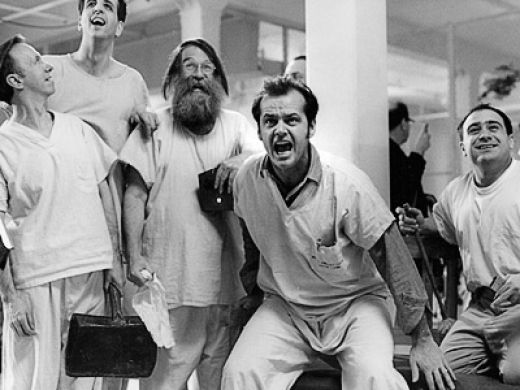
Friedman goes on to explain that “Hollywood has benefited from a long-standing and lurid fascination with psychiatric illness,” referencing movies such as Psycho, The Silence of the Lambs, One Flew Over the Cuckoo’s Nest and Fatal Attraction.

According to Friedman, “exaggerated characters like these may help make “average” people feel safer by displacing the threat of violence to a well-defined group.”

As a former journalist and a current communications consultant, I am naturally drawn to issues surrounding journalism and those who are employed by the so-called Fourth Estate.

And as someone who has been battling mental illness all my life, I know a thing or two about the effects of stigma.

And that’s why I’m going back to my old high school. I will be the keynote speaker at a symposium on mental health stigma.

The Carter Center does a succinct job of defining the problems associated with stigma:

“In ancient times the word stigma was defined as ‘A mark burned into the skin of a criminal or slave, a brand.’ This inhumane treatment was metered out to criminals and anyone felt to be a threat to society. Have we really come so far today? Just mention depression or worse Bipolar to most employers, family or friends and the reaction’s generally a negative one.”

Superman and Lois Clark

Maybe you remember the 1978 movie Superman.

The movie may have been cheesy, but the cast was stunning. Some of Hollywood’s most enduring and iconic figures were featured in that film, including Marlon Brando, Gene Hackman, Ned Beatty, Valerie Perrine and Margot Kidder.

The film also launched the career of Christopher Reeve, a handsome, muscular man who was cast in the leading role as the Man of Steel.

While participating in a 1995 equestrian competition in Virginia, Reeve was severely injured and became paralyzed. His injuries elicited support from all over the globe. He spent the rest of his brief life trying to help others with spinal cord injuries and established the Christopher Reeve Foundation.

He was a sympathetic hero. He touched us all. The man of steel could not escape this batch of Kryptonite. He died in October 2004 and millions mourned his passing.

Now, let us examine the fate of Superman’s leading lady, Margot Kidder, a successful actress who was cast as the petulant, cynical and manic reporter, Lois Clark.

A year after Reeve was paralyzed, Kidder was found by police hiding in the bushes in a suburban neighborhood near Los Angeles, California. She was taken into custody for a psychiatric evaluation.

The world was not so nice to Ms. Kidder.

Kidder has a bipolar disorder, so she became fair game for the media, late night comedians and a slew of derisive web site commentary. She was certainly no Superman.

She was human, frail and vulnerable but in a different way than her co-star, and that difference was best amplified by the ridicule that continues to follow her today, some 15 years after her illness became fodder for her former Hollywood colleagues.

Maybe that’s why fellow Superman star Marlon Brando spent so many years keeping his mental illness a secret.

By the time Superman was released in 1978, Brando was already known as one of Hollywood’s most iconic figures. The star of “On the Waterfront” and “The Godfather,” he was a tough guy’s tough guy.

But his mental illness apparently was a bit tougher.

Brando was a deeply troubled man struggling with depression, anger, and loneliness, according to those who knew him and detailed in an article by the National Center on Physical Activity and Disability.

Brando was from a generation of those who didn’t talk about mental illness. A generation that believed depression was little more than self-pity run amok or some other sort of character flaw.

It was that same generation of actors which produced the original Superman, George Reeves.

George Reeves (no relation to Christopher) was an actor best known for his leading role in the 1950s television series, The Adventures of Superman.

Reeves’ untimely death at age 45 was officially ruled as a suicide by police, although there is much speculation about that fact, most notably in the 2006 film Hollywoodland, which stars Ben Affleck as George Reeves.

Whether Reeves committed suicide is irrelevant and will probably remain a mystery for a long time to come.

But we do know how Hollywood would have treated him if he had talked publicly about battling depression.

Just ask Lois Lane.