Exhibit 101: Why I regularly blog about my own mental illness and stigma
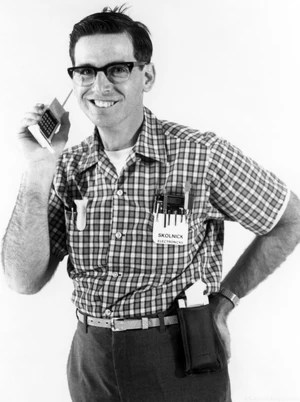
You may remember him from his classic role as Lewis Skolnik in the 1984 film Revenge of the Nerds. But what you probably didn’t know was that actor Robert Carradine battled with bipolar disease for nearly two decades.
Photo: Wiki Fandom
This week, Carradine, 71, died from suicide. It’s important to talk about this stuff. It’s important to break-down barriers.
It’s important to end stigma.
If you’re struggling, reach out. Get help. There are resources. You can learn more by visiting my blog and checking out some local resources.
You will be missed, Mr. Carradine. Rest In Peace.
________________
ABOUT THE AUTHOR | Randy Seaver is a nearly insufferable malcontent living in Biddeford, Maine. He is a veteran journalist who has been annoying politicians, pundits and his peers since 1981, when he served as an unpaid student intern at the former Journal Tribune. He is the editor and founder of the Biddeford Gazette, a non-profit digital media outlet that focuses on the city of Biddeford. Send your praise or angry comments to randy@randyseaver.com
A homeless encampment in Biddeford that was cleared by the city in 2024 (Seaver)
In a lot of ways, I am probably a lot like you.
I am a middle-aged, married white guy with a mortgage and a modest home in a quiet residential neighborhood with well-manicured lawns and friendly neighbors.
I love living in Maine. I have two grown children. I adore my dog, and I am blessed to have many good friends. I fret about rising property taxes, and it feels as if I am eternally engaged in thermostat battles with my wife.
I work hard, follow the law and pay my taxes. I drive a late-model Chevy Silverado pick-up truck and enjoy camping at both Rangeley and Moosehead lakes.
But there is another part of me that you would likely never guess unless I told you.
From the outside, my life may look almost idyllic or at least average, run-of-the-mill, but I have to work to maintain this stability and my outward appearance.
For more than 40 years, I have struggled with a wide range of mental health issues, from bi-polar depression and severe anxiety to raucous bouts of schizoid-affective disorder.
I recognize and accept my responsibility to manage my mental health, but it’s not always easy. Some of the medications I take affect everything from my libido to my weight. I am one of the lucky ones, I have a good psychiatrist. I also participate in regular counseling with a therapist. My insurance covers the bulk of my prescription costs.
Although hidden from the public view, there is a toll, and I sometimes feel as if my illness is a burden on my family, especially my wife, who is my greatest support and the person who ensures that I am taking my meds as prescribed.
As a young adult in my early 20s, I struggled with stability on every level. My employment was erratic. The few relationships I had were chaotic. At three different times, I found myself homeless, living on the proverbial outer edge of society.
I was reluctant to take medications. I did not want to be controlled or – as I saw it – poisoned by society. I did a lot of couch surfing. I even landed in jail for assaulting a police officer.
I was in and out of various psychiatric facilities both on a voluntary and involuntary basis. I got in trouble with the Secret Service for talking about what I would like to do to President Reagan in 1984.
Flash forward more than 40 years.
Just like you, I was shocked, saddened and angry about the brutal, senseless killing of a young woman on a commuter train in Charlotte, North Carolina last week.
She did not deserve that fate. Her family did nothing to warrant such tremendous loss and heart-breaking grief.
How do we comfort them? How do we reconcile the fact that millions of Americans are living on the edge of society, saddled with a significant illness and a stunning lack of resources?
How do we handle our anger? Our resentment?
Sadly, I do not have any answers. I know that my friends on the political right talk a good game about mental illness in the wake of every mass shooting, but then suddenly get quiet when it comes to legislation that requires increased funding for mental health services.
Just like you, I was shocked, saddened and angry about the brutal, senseless killing of a young woman on a commuter train in Charlotte, N.C. last week.
Meanwhile, my friends on the political left talk a lot about community-based care, often forgetting that there are some people who need to be involuntarily hospitalized.
While I do not have any answers, I do know this: we cannot afford to sacrifice our humanity and our shared sense of decency and compassion.
Our national dialogue has become so vitriolic that a major television network commentator can publicly suggest involuntary euthanasia for homeless people who refuse mental health treatment.
Think about that for just a minute or two.
Set aside the 14th Amendment if you need to.
There is a large group of people in this country who heard Mr. Kilmeade’s statements and simply shrugged.
I was a homeless person who often refused treatment. Did I deserve to be put to death for refusing to take medications?
Have we fallen so far that we are now willing to even entertain the notion of rounding up and killing some of our most vulnerable citizens?
If so, just remember that so-called solution will require rounding up people who look and act a lot like you and me.
_________________
Randy Seaver is the editor and founder of the Biddeford Gazette. He regularly blogs on issues regarding mental health and his own journey toward recovery. E-mail randy@randyseaver.com
As first reported this morning by the Maine Wire – a politically conservative media outlet — a Waterville public teacher is now facing scrutiny and widespread backlash after making a post on social media that calls for people to physically harm President Donald Trump and his supporters.
Notice how I chose my words carefully. Using the words “ki**” or “assasi**te” in connection to the President of the United States can land you in serious hot water.
I know this lesson better than most everyone else who is commenting on this now viral story that has been picked up by mainstream media outlets across the country.
“The Secret Service has the perfect opportunity, if they choose to step up and take it. You are the ones with power. Coordinate. Take out every single person who supports Trump’s illegal, immoral, unconstitutional acts. Look at the sycophants and give them what they’re asking for,” St. Germain wrote on her Facebook post.
As expected, the vast majority of commenters criticized the teacher, calling into question her mental health and her motives for such a fiery post.
A screenshot of St.Germain’s Facebook comment posted by the Maine Wire
No matter where you land on the political spectrum, you gotta feel sorry for both the school superintendent and principal. Their offices were reportedly flooded with calls from angry and worried parents.
“If I had the skill set required, I would take them out myself,” St. Germain also wrote on her social media post.
According to the Bangor Daily News, the U.S. Secret Service is aware of St. Germain’s post.
A big no-no
There is no doubt that Trump has created controversy and deep resentment because of his controversial policies, inflammatory statements and his confrontational personality, but that doesn’t give anyone the right to encourage a physical attack on him.
Public school teachers like St. Germain are entrusted by taxpayers to use good judgment.
It remains to be seen if St. Germain will face any repercussions from the school department for her inflammatory, thoughtless and emotionally charged public statements.
So, why do I claim to know so much about this story?
For that, we need to get into the “Way Back Time Machine” and set the dial to 1984.
Ronald Reagan had just been reelected for a second term as president of the United States. I was 20 years old, working as a third-shift janitor at McDonald’s. I was an avowed liberal and blamed Reagan and his “trickle-down” economic policies for all of my troubles.
I was actively involved with a group named PAUSICA (Portlanders Against U.S. Involvement in Central America). I was reading books by Angela Davis, the vice -presidential candidate for the Communists USA party. In my spare time, I participated in nightly vigils with other malcontents in Monument Square, protesting a ramp up of nuclear weapons.
For Christ’s sake, I was pretty much a reincarnated version of Lee Harvey Oswald.
One night, while feeling particularly frustrated about Reagan, I made a remark saying someone “should do something about him” and if no one else was willing to, I would take on the task myself. As you can probably imagine, those were not my exact words.
A co-worker apparently called the Portland Police Department to report my comments about the president.
Before we proceed, let’s also remember that I had just been discharged from my third, involuntary psychiatric hospitalization. I was estranged from my family. I had no girlfriend or close friends.
I was a low-wage underachiever. In high school, I had pinned all my hopes to a career in the U.S. Air Force. But that did not go the way I intended. Although I received an honorable discharge, I considered myself a failure; now 20 years old with no future.
As you can imagine, the life I was living set off a lot of red flags for the U.S. Secret Service. For Christ’s sake, I was pretty much a reincarnated version of Lee Harvey Oswald.
The Secret Service asked to meet me at the Federal Building on Forest Avenue. They conducted a rigorous interview, took handwriting samples and a fresh set of finger-prints.
They let me go, but with a stern warning. Do it again, and you’ll find yourself in jail, they told me. I was pretty much scared straight, though I lost my job as a janitor at McDonald’s.
My view of Ms. St. Germain’s public rant?
She needs help. Pronto. I understand that Trump can make people very angry, but you simply can’t call for someone to help him shuffle off his mortal coil, especially if you hold a position of public trust.
We deserve better.
Never miss another installment! Subscribe for free today!
I understand that tensions are high, and that feelings are raw on the national political stage, but I still think we can engage in robust discussion and debate without marginalizing millions of Americans who suffer daily with varying degrees of mental illness.
Reading some of the social media commentary regarding the U.S. Senate confirmation hearings for Robert F. Kennedy, Jr., yesterday I was struck by the sheer delight that so many people were showing in joking about Kennedy’s rather obvious illness and his past behavior that can only be described as somewhat bizarre.
I also found it strange and somewhat sad that the majority of these pejorative comments were coming from those who generally hang out on the left side of the political aisle.
Generally speaking, Democrats will typically trip over themselves to use words like ‘diversity’ and “inclusion” at every given opportunity, eagerly patting themselves on the back for their moral leadership, always sensitive to use the right pronouns and to advance the cause of those marginalized by society for a variety of reasons.
Make no mistake, the progressive left is not wrong in its ongoing push to break down barriers and advance the cause of civil rights for all Americans. But it seems there is still a lot of work to do.
Photo: Pittsburg Post-Gazette
We should all – Democrats, Republicans, Independents — be striving to treat one another with respect and dignity, regardless of political affiliation.
In just my lifetime, our nation has made incredible strides to break down barriers and to advance opportunities for all Americans, regardless of their race, ethnicity, gender, sexual orientation or religion.
The Civil Rights Act of 1964 was a watershed moment, yet more than 60 years later racism remains pervasive in our culture. And, consider this, it was only 30 years ago when we adopted a policy of “Don’t Ask, Don’t Tell.”
Clearly, we are making tremendous progress, and there is no doubt that Democrats are generally the ones leading that charge, continually pushing and reminding us that there are still barriers and challenges we must face when it comes to inclusion, equity and respect.
However, it is apparently still okay to make jokes about those who struggle with mental illness.
It is apparently still okay to make jokes about those who struggle with mental illness.
I am in no way advocating for the confirmation of Mr. Kennedy. I am convinced – beyond a shadow of a doubt – that he is not qualified for the position.
But — as someone who lives day in and day out with a rather pronounced and significant mental illness, I cringe every time I hear terms such as “nutjob,” “whacko,” “psycho” and “Looney Tunes.”
Even Hollywood elites still – today — refer to psychiatrists as “shrinks.”
We fly rainbow flags — and for good reason — but yet we casually gloss over the stigma and shame that is still a very big fact of life for those battling an often-hidden illness that is no different than any other illness.
From a political party that gleefully accepts a mantra of “F%ck Your Feelings,” I have learned to almost accept and expect their callous disregard for minorities. I cringe. I shake my head and let out a deep sigh.
But when that same discrimination comes from the political party that is all about ending discrimination, I wonder if I will live long enough to see an end to mental illness stigma. I wonder if we will ever get to a place where mental illness is treated with parity in both treatment and insurance reimbursement in the United States.
If I told you that I developed brain cancer, your reaction would likely be one filled with immediate empathy and support.
Many times, when I do work up the courage to tell someone that I am struggling, people will tell me to try being more positive and to stop feeling sorry for myself.
Really? Do you not realize that my brain does not work properly?
A few months ago, a veteran journalist who I greatly respect told me I should stop writing blog posts about my struggles with mental illness. “Nobody really cares about that,” he said.
Maybe he’s right. Maybe nobody does care. But I am going to keep writing about it, because I have heard from scores of people who are grateful that I am willing to talk publicly about depression, anxiety and yes—even my bouts with schizophrenia.
My writing about it, apparently helps these people feel safe and not so alone in the world. Many people have family members suffering from varying forms of mental illness. If I can help just one person by talking about it; well then, I’m going to keep talking and writing about it.
Am I being overly sensitive? Just feeling sorry for myself?
Everybody gets depressed sometimes, it’s natural. Shake it off, people say.
Allow me to give you a few examples to point out why clinical depression and anxiety are very different than normal grief and worry.
I am relatively well known in my small hometown of Biddeford. Some people see me as someone who is connected to the community’s power structure, as someone who is outspoken, brash and sarcastic – – a thick-skinned egomaniac in love with the sound of his own voice and always happy to bloviate and share his opinion about local news.
I am also one of the admins for a community Facebook page of more than 18,000 members, and a few of them somehow believe that I control all communication in the city of Biddeford, and that I am nothing more than a happy-go-lucky Biddeford sycophant.
Sure, okay. Some of that may be true. I do tend to be a snarky loudmouth. But I am not connected to any “power structure.” Most mornings, I have a hard time finding my slippers. I struggle with math and puzzles, so I’m not that bright.
Writing is what I hold onto. I enjoy it, and it helps me relax and stay focused.
But there is also a dark side of my life that I rarely show to anyone, including friends and family.
Just a few weeks ago, while Laura was still at work, I went down to the basement of my home and huddled while crying because I was absolutely convinced that the “government” was trying to covertly beam information into my brain, and I wanted to be surrounded by concrete.
If someone doesn’t immediately return my call or text, I start to spiral, becoming paranoid and will often assume that person must now hate me and is now talking about me behind my back.
I generally live in almost constant fear. It has been that way since I can remember. I was a shy kid with few friends and lived in a pretend world of fantasy of my own creation, but I was always scared. Always scared.
I was scared of other kids, scared that an airplane would crash into my home. Terrified about changes in weather.
Today, as an adult, if something breaks – the toilet flapper, a leaky faucet or broken light switch, I panic.
I refuse to use my CPAP for treating my sleep apnea, because sometimes (not always) I become somewhat concerned about what information is being transmitted while I sleep. Is this the way the CIA plants messages in my brain?
I generally live in almost constant fear. It has been that way since I can remember.
If I have to drive more than 10 miles, I start to feel anxious. Someone is probably going to cross the center line and kill me. What will I do when my dog dies? While driving, I keep my racing thoughts in check by continually calculating the distance and time I have yet to travel.
It’s friggin’ exhausting.
I am almost always afraid. Fear consumes almost every single day.
So, how do I cope? How do I force myself out of bed each day? Well for starters, I take five different medications. They help me function but they also affect everything from my libido to my weight.
With the meds, I can pretend to be normal, funny, outspoken. When I’m taking my meds, I shower every day and brush my teeth. I see a psychiatrist and a therapist, although sometimes it feels like I’m a dog chasing its tail.
Can you imagine how hard it is to live with me? I honestly don’t know how Laura does it. I don’t know what she sees in me. Almost every day, I ask her if she is upset with me and whether she is thinking of filing for divorce.
My rock and salvation
I am only alive today because I was too stupid to figure out how to properly load the cheap Lorcin .380 handgun I bought on impulse on an especially dark night in October 1993. I put that gun in my mouth and pulled the trigger.
Nothing happened. I sat in the middle of the floor and cried uncontrollably before calling 911. Yep, back to the hospital again.
I have been hospitalized more than 20 times – voluntarily and involuntarily — since being honorably discharged from the U.S. Air Force back in 1982.
I was last hospitalized in 2016. This is the longest stretch of my adult life outside of a psychiatric unit.
I am lucky. I have good health insurance. I have an amazing and supportive spouse. I am not facing food nor housing insecurity. Surprisingly, despite my terrible diet and complete lack of exercise, I am relatively healthy.
I also have several really good friends. I rely on them. Heavily.
With all those things, I can work, function and be a contributing member of society. More often than not, mental illness is an invisible illness.
If you ever wonder why more people don’t seek treatment or get help, just look at some of those Facebook comments that were made about Mr. Kennedy this week.
It’s 2025, and stigma is still a thing. Let’s all try to do better.
Thank you.
Never miss another Lesson In Mediocrity! Subscribe for free today!
Four years ago this week, (the third week of February) I was discharged from Spring Harbor, a psychiatric hospital in Westbrook, Maine.
It was my most recent hospitalization. I have been in and out of psychiatric hospitals for more than 40 years, sometimes on a voluntary basis; other times as an involuntary patient. I have been hospitalized in Arizona, Tennessee, Oregon and Maine. So, I consider myself a little bit of an expert on this subject.
Trust me on this: being a patient on a psychiatric ward sucks. In all fairness, being a patient in any kind of hospital for any reason is no picnic for anyone. Hospitals are typically places we go to when we are ill or injured. Other than child birth, most people do their very best to avoid hospitals.
It is the same for psychiatric patients. I have heard people say or joke that they could use a “vacation” on a psych unit or that “mental people use hospitals to avoid their responsibilities.” These are actual quotations.
I have been on vacations. I have been a patient on a psychiatric unit. Believe me. There is nothing similar between these two things. Nothing.
For more than four decades now I have been taking a wide variety of psychiatric medications. Today, I take five different medications to treat everything from life-sucking depression to anxiety and yes, the consequences of a schizo-affective disorder.
Imagine your spouse telling you that they had to stay in the basement in order to get away from the government? Or imagine what it would be like if your sibling called you, crying and confused because they had gotten lost on the way home from work?
Imagine not being able to remember anything that happened last week or being unable to read more than two pages a day? This is my life off medications. And yup, this is also my life on medications. The meds just make the consequences less frequent and less severe.
Why do I say all this? Am I just looking for sympathy? Shouldn’t I keep this stuff private?
Take me to the river
I have been publicly open about my mental illness for several years now. That, and my pitiful attempts at trying to be a father, are the two things I want to be remembered for. They are the two things in my life, other than Laura, that matter most to me. They are my only real contributions to society, to the world around me.
It doesn’t get any better than this: My sons and I enjoying some time together on the banks of the Saco River.
Of course, like most people, I am generally selective about what I share on social media. I try to portray myself as witty, as some kind of half-assed satirist, a fun-loving guy, someone you would want to be friends with; a hard-working and responsible member of society; a successful husband and father.
Maybe I am those things. Maybe not.
But it seems that publicly sharing my personal struggles with mental illness gives others permission to reach out to me in search of a friendly ear, advice about a family member or their own struggle with some kind of psychiatric illness.
That is so gratifying to me. Beyond words.
I want to break down and destroy the myths and stereotypes that accompany mental illness. Imagine a friend telling you that they have been diagnosed with brain cancer. What would you say? What would you do?
I’m almost positive you would not say something like “stop feeling sorry for yourself,” or “it’s all in your head,” which, ironically is sort of true about brain cancer. Why is mental illness different? Why is it still okay for Hollywood to refer to psychiatrists as “shrinks?”
Those battling cancer are described as brave and courageous. We wear ribbons to show our support. We are quick to offer our empathy, our support, our understanding.
Tell someone that you are hearing voices and the reaction is a lot different. Trust me. Way different.
Honestly, what do you think of when you think about someone with a psychiatric illness? Do you think about someone like the character “Multiple Miggs” in the movie Silence of the Lambs; or do you think of them as your neighbor, co-worker or someone walking their dog past your home?
At the start of this piece, I stated that I have been in and out of psychiatric units for more than four decades. That is true. What is also true is that during the same time period, I have purchased a home, paid taxes, worked hard and was promoted in the private sector, raised two kids, held together a marriage for more than 19 years (and counting). Today I still mow my lawn, pay my bills and spend time with friends and family.
The scary thing? I’m a lot like you and other people you know and trust. The idea of being diagnosed with cancer is terrifying and for good reason. I have lost close friends to that horrible disease. Unfortunately, I have also lost some very good and close friends to mental illness.
So that’s why I’m open about my struggles. That’s why I try to remember to take my meds, even though they sometimes adversely impact my libido, my energy, my sleep and appetite.
Later this week, I am scheduled to have another ECT treatment (Electro-Convulsive Therapy). ECT treatments terrify me. I am afraid that I will not wake up from the anesthesia. Basically, ECT involves having enough electricity beamed into your brain to induce a seizure. So why do I go through with it?
Because, for me and many, many others, it works. It allows me to live. Once a month, I participate in an ECT support ZOOM meeting with other patients. It is so gratifying to see the progress that many of these people have made. To see them smile, laugh and be able to hold a conversation. To hear them say they were reluctant to get ECT until they heard me and others share our own experiences.
That’s what matters. That’s what is important to me.
If you ever want to reach out; if you ever need a friendly ear, please do not hesitate to contact me. If you don’t know me or have my contact info, you can ALWAYS reach out 24/7 365 days a year toll free at 1.888.568.1112 if you are concerned about yourself or somebody else.
The 19th Century French novelist Romain Rolland once opined that “we are reckless in our use of the lovely word, friend.” Nowhere is that more true than on Facebook and other social media platforms.
As an example, as of today, I have 1,202 “friends” on Facebook. Really? Do I have more than a thousand people who would loan me $20, help me with a home repair project or drive me to and from a doctor’s appointment?
Probably not. Because when you look deeper into my life you will see that I am actually blessed with close to 20 real friends. These people do not judge me, but will also share their honest opinions if asked.
In a few weeks, one of my real friends will get out of bed at 6 a.m. in order to pick me up at my home, drive me to Sanford for an ECT treatment and wait roughly two hours before he can drive me home with zero compensation. Now, that is a friend.
What about all those other “friends” on social media? Well, for starters, they are better described as contacts in a very large and fluid Rolodex.
Sure, social media can be fun, interesting and sometimes informative, but it’s important to remember that, for the most part, you are looking through a carefully controlled lens as you scroll through the posts on your social media page. Few of us would go to the grocery store wearing only our underwear. (Some things are best left to the imagination.)
When you see a friend’s post on social media, more often than not you are seeing only what they want you to see: their happy family, pictures of their vacation or beloved pets, etc. What you rarely, if ever, see, is someone posting that they will need to file bankruptcy or facing divorce because of infidelity.
Instead, you are seeing only the beautiful posts, which can lead to feelings of envy and inferiority, especially among young people.
Teenage Wasteland
According to studies by the Pew Research Center and the Mayo Clinic, teenagers’ use of social media “allows teens to create online identities, communicate with others and build social networks. These networks can provide teens with valuable support, especially helping those who experience exclusion or have disabilities or chronic illnesses.”
“But social media use can also negatively affect teens, according to the 2018 study. Social media can distract them, disrupt their sleep, and expose them to bullying, rumor spreading, unrealistic views of other people’s lives and peer pressure.”
The risks might be related to how much social media teens use. A 2019 study of more than 6,500 12- to 15-year-olds in the U.S. found that those who spent more than three hours a day using social media might be at heightened risk for mental health problems. Another 2019 study of more than 12,000 13- to 16-year-olds in England found that using social media more than three times a day predicted poor mental health and well-being in teens.
Other studies also have observed links between high levels of social media use and depression or anxiety symptoms.
As a strategic communications consultant, I can tell you that maintaining your own online reputation is very important. Nothing is ever truly “erased” on the Web. Businesses and political campaigns need to be fully aware and consent to everything they post in the digital town square.
Remember: it is often better to just scroll on by posts that seem like “click-bait,” otherwise choose your words and images carefully. Because, whether you like it, people will judge you by the words you use.
Earlier this week, my community lost a great man. Don Wilson was 73 and apparently living with severe depression. Hopefully we all learned a lesson from this tragic event: Mental health disorders can be fatal, especially without professional health treatment.
Can you imagine being in so much pain that you would hurl yourself in front of a moving train?
Mr. Wilson (as I will always call him) was a community hero. Within hours of his death, our community rallied around his family. A multitude of sympathy was shared on social media, and we all wondered what went wrong.
Mr. Wilson was woven into the fabric of Biddeford. He touched hundreds (if not thousands) of lives. He was so dedicated as a teacher, coach and athletic director. Everyone, it seemed, had a story to tell, a favorite remembrance or a funny story about him.
He was a gregarious community leader who spent so many years supporting every life he touched. Smiling, generous, humorous and full of life is how so many of us described him.
But in the latter days of his life he was fighting an inner war with some very powerful demons.
According to reports by his friends and family, he openly talked about his feelings. He was, reportedly, recently hospitalized for depression. But finally, he could not fight the pain anymore.
I simply cannot imagine his pain. His suffering. His fragility.
Tough guys don’t dance.
Mr. Wilson was a role model for me. He was a gentlemen who did not speak a bad word about anyone. As I said before: he was kind and generous; quick with a smile and always willing to help.
Mr. Wilson was from a generation that usually did not talk openly about depression or suicide. Typically, obituaries of those who committed suicide described the death as “died unexpectedly.”
And there is an abundance of stigma associated with mental health, especially among men. Depression is a sign of weakness and laziness, society says. “Stop your pity party and stop feeling sorry for yourself.”
Unlike so many men of his generation, Mr. Wilson courageously bucked that trend. He shared his feelings with friends and family members. But in the end he lost that battle. In the final hours of his life he took matters into his own hands.
Some people die from cancer and some people survive. That is true for almost every illness, including mental illness. Talking about mental health is not easy. In fact, it can be overwhelming.
I still cringe when I hear someone refer to a psychiatrist as a “shrink.” I could write all day about the stigma associated with mental health.
Until we all can accept mental health disorders as genuine and potentially fatal illnesses, we will have people fighting an invisible and overwhelming war.
Depression is not feeling sorry for yourself. Having depression is not a sign of laziness. Depression does not discriminate.
Depression is a pervasive disease, but it can be treated. If you or someone you care about is fighting depression and/or suicidal thoughts, please contact the national suicide hotline: 1-888-568-1112, 24 hours a day, seven days per week and 365 days a year.
Thank you, Mr. Wilson for all that you gave to your community. As far as I’m concerned, you remain as a role model for me.
Joining other mental health advocates in discussing stigma
In the wake of yet another senseless crime — this one, which struck close to home in Saco — there is a renewed debate about what to do with people who suffer from a mental illness.
Earlier this month, Connor MacCalister allegedly slit the throat of an unsuspecting grandmother, Wendy Boudreau, in a Shaw’s supermarket.
According to a story about the incident in the Portland Press Herald, “[h]orrific crimes like this, committed by individuals with profound mental illness, are rare in Maine, yet each time they occur, the same question arises: How could someone like that be out on the street, in a position to commit such a brutal crime?”
Though I consider myself a self-appointed advocate of mentally ill people, I struggle with the question because it hits home for me.
As mentioned several times throughout this blog, I suffer from a mental illness, with a range of diagnoses.
As of this writing, there are more than 67 reader comments on the Portland Press Herald story. Those comments run the gamut of reactions. Some say we need better access to outpatient mental health services. Others say mental illness is nothing more than a ploy to escape responsibility for a crime. Still others say, patients should be forced to take their medications, while others say we should go back in time and warehouse individuals with mental illness in institutions like AMHI (The Augusta Mental Health Institute).
Admittedly, it’s pretty damn hard to argue for the civil liberties of the mentally ill, especially in the wake of a horrific murder. Where are the advocates for Wendy Boudreau’s civil rights?
Ms. Boudreau’s only mistake was to go to a supermarket to buy ice cream. She had done nothing wrong other than being in the wrong place at the wrong time.
Stigma on a slippery slope
On the other hand, we tread a slippery slope when we generalize mental illness.
For example, how exactly do we define a “profound” mental illness, as the Press Herald story did? How do we know in advance that a mentally ill person is going to commit such a heinous crime?
In fact, violent acts committed by people with serious mental illness comprise an exceptionally small proportion of the overall violent crime rate in the U.S.
Mentally ill persons are far more likely to be the victims of violence, not its perpetrators, according to the National Association of Social Workers (NASW)
In its March 2011 article, “Budgets Balanced at Expense of Mentally Ill,” the NASW newsletter also mentions a new report by the U.S. Substance Abuse and Mental Health Services Administration that documents a nationwide decline in behavioral health care spending as a share of all health care spending, from 9.3 percent in 1986 to just 7.3 percent, or $135 billion out of $1.85 trillion, in 2005.
According to the Centers for Disease Control, one in five Americans suffers from some sort of mental illness. Of course, the statistics include depression, anxiety and treatable bipolar disorders. Put me in that category.
But what do we do with people who suffer from more extreme cases of these symptoms and other issues including paranoid-schizophrenia.
There have been times when I have been in that category, too.
Should the government force me to take medications? Should I be confined to the Riverview Psychiatric Institute?
Every day, I get up, take a shower, get dressed and go to work. Just like you.
I pay my taxes, enjoy the company of my friends and take care of my home and pets. Just like you.
I have been married to the love of my life for nearly 13 years. I successfully raised two stepsons. I give back and volunteer in my community. How do I do all that if I have a moderating mental illness?
First, I take a wide range of medications every day. Two, I see a therapist every two weeks; and third — perhaps most importantly — I have a support network of caring family members and friends, not to mention safe and stable housing.
These things are unfortunately out of reach for many people with a mental illness.
A broken system
I have relatively good and comprehensive health insurance, but even so it took me weeks to get connected to a psychiatrist after my last hospitalization, some two years ago. There is a profound lack of psychiatric beds in the state of Maine.
There are budget constraints to consider. Many mentally ill people — especially those with more profound illnesses — do not have access to premium health insurance. They live on the edge, relying on the minimum benefits of Medicaid (Maine Care). Still other insurance plans offer minimal coverage for mental health services, both for outpatient and inpatient care. For example many plans will pay for only 12 sessions of outpatient therapy (capped).
Supposedly, after three months, you are cured and ready to hit the streets.
Mental health providers do not choose their occupation to “get rich,” as suggested in the reader comments of the Press Herald Story. Social workers salaries are among the lowest of college-educated professionals. A manager of a fast-food restaurant typically makes more than a social worker.
Social workers do not choose their occupation as a way to get rich quick off the back of taxpayers.
Psychotropic medications are some of the most expensive on the market. Patient records are confidential, and sharing them between providers is a complex, burdensome task.
So what do we do? How do we fix a broken system?
Is it a matter of more money? Do we round up everyone we think might have a mental illness and lock them away? Do we criminally charge people for crimes they may commit in the future?
I do not know the answers to those questions. I do not know if Wendy Boudreau would still be alive today if we had better community-based mental health services. I do not know if her murder was preventable.
But I do know that Wendy Boudreau’s death was utterly senseless, and she did not deserve what happened to her on that hot August day in a supermarket.
A friend of mine recently brought to my attention something about me that was posted on Facebook.
Apparently, a man I barely know questioned how I — an out-of-the-closet consumer of mental health care — could be trusted to provide professional advice. In fact, this person described me as “mentally unstable.”
I thought about this for a while because I frequently write about the subject of mental illness and stigma on this blog, and I was a bit disheartened that being “mentally unstable” and having a diagnosed mental illness are still too often linked into one convenient package.
The vast and overwhelming majority of people with a diagnosed mental illness are very stable and lead productive, normal lives.
They can do this because they seek treatment for their illness. They take medications, participate in therapy and take other measures to ensure that their illness is well-managed. They are no different from people with diabetes, epilepsy or cancer. They did not ask for the disease, they don’t use it as an excuse and they are vigilant in taking care of themselves.
Meanwhile, mentally unstable people do not take appropriate steps to manage their illness. Sometimes, it is because of a lack of mental health services, but more often than not some individuals refuse to acknowledge or treat their illness.
Following the horrific massacre a couple of weeks ago in Charleston, South Carolina, Maine’s Congressional delegation was polled regarding their attitudes on limiting gun violence. While Congresswoman Chellie Pingree, Senator Angus King and Senator Susan Collins all said they would like to see expanded background checks for the purchase of firearms, Congressman Bruce Poliquin offered a different response.
Poliquin said he would like to see more funding for mental health.
I applaud Congressman Poliquin for his willingness to increase funding for community-based mental health services, but I have some bad news for him: Even with better funding and more services, it is more than likely that Dylann Roof would have still shot and killed nine innocent people. Roof may have a mental illness, but he certainly wasn’t taking care of it.
Last week, the defense attorneys for James Holmes, the young man who killed and shot 12 people in an Aurora, Colorado movie theater, opened their defense by saying their client was legally insane, and thus should not be held accountable for his crime.
Although Holmes did seek psychiatric treatment before his rampage, he stopped seeing his psychiatrist just a few weeks before he entered a crowded theater armed to the teeth.
Like very other type of illness, mental illness does not fit into one convenient package. There are different types and severity of illnesses, from depression and anxiety to bipolar disorders and schizophrenia. All of these illnesses can be managed with the right medication and therapy.
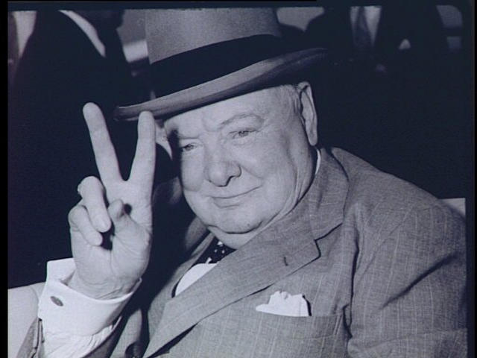
And you might be surprised to know how many famous people suffered from some type of mental illness, whether it’s NFL great Terry Bradshaw or Winston Churchill.
Would you describe them as mentally unstable?
According to the Centers for Disease Control, stigma regarding mental illness is getting better but still has a long way to go. Their own research shows:
Most adults with mental health symptoms (78%) and without mental health symptoms (89%) agreed that treatment can help persons with mental illness lead normal lives.
57% of all adults believed that people are caring and sympathetic to persons with mental illness.
Only 25% of adults with mental health symptoms believed that people are caring and sympathetic to persons with mental illness.
A couple of years ago, I was interviewed by Maine Public Radio about my mental illness. “No one would know I have a mental illness unless I chose to tell them,” I told the reporter. (Listen to the interview here)
The people who really know me would agree: having a mental illness is not synonymous with being unstable.
When U.S. Senator Thomas Eagleton was selected as George McGovern’s running mate for the 1972 presidential election, he kept his mental illness a secret. But once it was discovered that Eagleton had been treated for depression, McGovern dropped him from the ticket like a hot potato.
I’d like to believe that we have made some progress since then.
My wife, Governor Paul Lepage, Bill Nemitz, a charity auction and the in-patient psychiatric unit at Maine Medical Center.
How did these random things become connected last week, causing a bit of a stir on my Facebook page last night?
Let’s start at the top.
Last week, just days before the election, Governor Paul LePage joked that Portland Press Herald columnist Bill Nemitz should be placed on a “suicide watch,” speculating that he was going to win his re-election bid and his nemesis might jump off the Penobscot Narrows Bridge as a result.
Boom! Instant controversy. Once again, the governor found himself in familiar territory with his foot in his mouth.
The governor’s critics (Democrats) went wild, talking about how insensitive the governor is to issues regarding mental illness.
Reportedly, some people who have lost loved ones to suicide were also angry and upset about the remarks.
Other folks (Republicans) said the governor was joking and the comment was no big deal, pointing out that many in society make lighthearted jokes on similar topics.
The subject of mental illness makes us nervous. We laugh about it as a relief valve for our own anxiety and fear. But can you take it too far?
Who’s saying what
My wife has multiple sclerosis. It is a progressive illness with no cure. She often makes jokes about her illness, speculating about when she will need a wheelchair and telling me we will need to completely renovate our home to accommodate her decreasing mobility. She laughs about these very real topics, appearing on the surface light-hearted.
Her jokes about MS really bother me. They trigger a rush of feelings and incredible anxiety. I know that her jokes are just part of her coping methods, but still I cringe when she talks about putting “bling” on her cane.
When Laura jokes about her MS, I try to give her a pass because she has MS, not me. It is her coping strategy.
It’s sort of like the “N” word. An African-American man can use that word in public without recrimination and make jokes about its connotation and meaning.
If I did the same thing, I could possibly lose my job, certainly many friends.
Society draws a line. If you got it, you can talk about it. Otherwise, keep your trap shut.
Unless it’s Hollywood or the media , and then all bets are off, especially when it comes to mental illness.
In the days following the 2007 massacre at Virginia Tech, “Nightly newscasts reported “no known motive” and focused on the gunman’s anger, sense of isolation, and preoccupation with violent revenge. No one who read or saw the coverage would learn what a psychotic break looks like, nor that the vast majority of people with mental disorders are not violent. This kind of contextual information is conspicuously missing from major newspapers and TV,” wrote Richard Friedman in “Media and Madness,” an article published in the June 23, 2008 issue of The American Prospect.
Friedman goes on to explain that “Hollywood has benefited from a long-standing and lurid fascination with psychiatric illness,” referencing movies such as Psycho, The Silence of the Lambs, One Flew Over the Cuckoo’s Nest and Fatal Attraction.
According to Friedman, “exaggerated characters like these may help make “average” people feel safer by displacing the threat of violence to a well-defined group.”
Since the 2011 Tucson shootings, I have been an out-of-the-closet consumer of mental health services. I have testified before the legislature, published an op-ed in the Portland Press Herald, spoken at community forums.
My mission is to show, in a tangible way, that mental illness is generally not scary and more often than not impacts everyday people: your friends, your co-workers, your neighbors and even your social media contacts.
My life-long struggle with mental illness is not particularly funny, but I do make jokes about it. Have you ever tried to eat a chicken cutlet with a spork? (They don’t give you silverware on the psychiatric unit. )
Did you know that nine out of 10 psychiatric units have aquariums? Fish, apparently, relieve anxiety and stress.
I make these jokes and others when speaking publicly because humor helps break down communication barriers.
I got in trouble
On Friday evening, Laura and I attended the Biddeford-Saco Chamber’s annual holiday auction and dinner. By pure coincidence, my bidding paddle was labeled P-6, the abbreviation of Maine Medical Center’s in-patient psychiatric unit (located on the sixth floor of the Pavilion wing.) I held up the photo and had Laura take a shot of me and my label.
I posted that picture on Facebook.
Some people thought it was funny. Other people did not, questioning why I could joke about mental illness but Gov. LePage could not.
The tricky thing about humor is its intent.
For the record, I chuckled when LePage said Nemitz should be placed on a suicide watch. The two men have been battling for four years, and frankly, I’m not sure who hates who more.
But either way, I think humor is okay, so long as its intent is somewhat calculated and not malicious in nature.
As someone with severe and chronic mental health issues, it’s not up to me or anyone else to tell you what you can joke about. All I ask is that you think about the consequences and lighten up just a tiny bit.
———————————
If you enjoy what you just read, please keep in mind that this is a reader-supported blog, and I want to keep ads at a minimum. If you are so inclined, please consider a small donation to help maintain this site. You can donate by clicking on this link. Thank you!





 LESSONS IN MEDIOCRITY | OUTLAW JOURNALIST