Even better than the first time

The first time was 29 years ago, in October 1982.

The next time was a few months later, in August 1983.

From there, it was a blur of revolving doors, various medications and racking up some serious medical bills for the next two decades.

My disease first landed me at the Maine Medical Center. But it dutifully followed me all around the country — Vanderbilt University Medical Center in Nashville, St. Mary’s Hospital in Tucson, Arizona, Portland General Hospital in Portland, Oregon, the Southern Arizona Mental Health Center.

Kennebec Valley Medical Center, Southern Maine Medical Center and Sierra Tucson. It was like the Energizer Bunny…it just kept going and going and going….

I cannot count the number of jobs and relationships lost; or the number of times I moved as I attempted to outrun the disease and its darkness.

I was handcuffed, sedated and belittled.

So what changed?

Nothing changed. I am still ill, but the good news is that I am getting better treatment. Honestly, I still struggle with the meds . . . and sometimes the thinking and the behavior returns. Most times I can handle these demons. Sometimes I cannot.

I am luckier than most people I know. Today, I can hold a job. Today, I have a wonderful family who loves me, a beautiful wife and two amazing and resilient sons. I own a home. I pay taxes and work hard to make my community a better place for those less fortunate.

I can only do these things because I can get treatment for my disease.

This week is National Mental Health Awareness Week, and a story in today’s Maine Sunday Telegram is a good example of how mental illness can affect anyone and about the hope for those who struggle with its symptoms.

I also invite you to read the op-ed I published shortly after the tragedy in Tucson earlier this year. Jared Loughner and I have too much in common. The only difference is….that by the grace of God, I got help and my illness has been held at bay.

I applaud Mr. Daigle for his courage and commitment to fighting his disease. Those of us who are willing to share our stories must do so because the cost of the continuing stigma associated with mental illness are just too much to bear . . . for any of us.

Still haven’t found what I’m looking for

I am a racist.

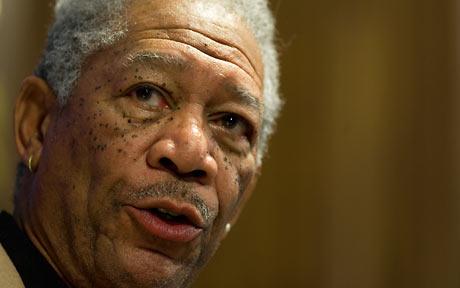
Well, at least according to actor Morgan Freeman.

During an interview on CNN this week, Freeman told interviewer Piers Morgan that racism is at the heart of the Tea Party and that racism has been made worse in the United States since the election of President Barack Obama.

Condelezza Rice

I wonder how Freeman would feel about supporting Supreme Court Justice Clarence Thomas as a nominee for the high court’s chief justice slot; or about a presidential run by Condolezza Rice? I’m betting he would not support either of them; just as he is not supporting Herman Cain, an African American who is also seeking the GOP nomination for president.

I also don’t recall Freeman hosting any fundraising dinners for Alan Keyes, a fellow African American who made two unsuccessful bids for the presidency.

From my perspective, Freeman is screaming racism because he cannot handle the real reasons that Obama’s re-election in 2012 is anything but certain.

The things that are making Obama increasingly unpopular, even among members of his own party, are the same things I listed as reasons for not supporting him in 2008:

  • His inexperience in the realm of business and finance;
  • His failed economic policies;
  • His desperate need to be liked rather than be strong.

I do think it’s worth noting that I actively worked on behalf of Hillary Clinton during the 2008 nomination process, and ultimately voted for John McCain.

I attended President Obama’s inauguration. It was an awe-inspiring experience; several days of basking in a revived sense of hope and change for a country that seemed tragically off-course and without direction.

Morgan Freeman

I’ve got news for you, Mr. Freeman: I do not want to vote for this hip, attractive and intelligent man because he is woefully out of his league, much the same as his predecessor was.

But unless John Huntsman gets the GOP nomination ( a scenario as likely as Susan Lucci receiving an Oscar) I will be forced to give Mr. Obama another four years of on-the-job training, because inexperience and idealism still trumps stupidity.

Does that make me a racist?

An American Girl

I like Sarah Palin.

I can almost hear the wailing and gnashing of teeth from my liberal friends, but…there it is . . . I said it. I put it out on the world-wide web for all to see. You betcha…

It feels good to have that off my chest, sort of like finally admitting that you are powerless over alcohol, corn dogs or soft porn — and are willing, even if only reluctantly, to accept a Higher Power to help you live one day at a time.

Well, she was an American girl, Raised on promises…

I like Sarah Palin, but there a lots of reasons why I don’t want to ever see her occupy 1600 Pennsylvania Avenue.(Liberal Democrats, please pause here and catch your breath)

So, how can someone like me “like” Sarah Palin and simultaneously be terrified by the idea of her sitting in the Oval Office, clutching for the suitcase with the ICBM codes?

It’s such a simple lesson in human psychology, yet it apparently lies beyond the grasp of most pundits, late-night talk-show hosts and even seasoned Democratic strategists. I like Sarah Palin because she is just like me.

She couldn’t help thinkin’ that there was a little more to life, somewhere else…

From my perspective, this is the disconnect that seems to fuel an ever expanding divide in American politics. In fact, it’s safe to say that Sarah was the spark, which ignited the roar of the Tea Party…those angry folks with their “Don’t Tread on Me” flags. I know some of these people…these Tea Party malcontents. In fact, one of my closest friends is a devout Tea Partier.

I asked him why he likes Sarah Palin and the Tea Party. His response?

“Not many people want to look at the facts,” he explained. “Our national debt is crushing, and it cannot be blamed on any one political party. We are driving off a cliff of spending, and Americans are busy on Facebook, contemplating their own navels and unwilling or perhaps unable to comprehend the madness that has become our federal government.”

After all it was a great big world, with lots of places to run to . . .

In his book What’s the Matter with Kansas? Thomas Frank discusses how many so-called Red States that were once bastions of Democratic power became the epicenter of resentment against Washington, D.C., academia, the media and all those other elites.

Recent political discourse, Frank says, shifted dramatically from traditional talking points that relied upon economic well-being, strong national defense and the virtues of democracy toward a new focus on hot-button cultural issues, including gay marriage, gun ownership, abortion and so-called “traditional family values,” which are as hard to define as the word irony.

Yeah, and if she had to die, she had one little promise, she was gonna keep

Palin has tapped into that anger and resentment better than anyone else in the last two decades. To her followers and supporters, the relationship is myopic and not sparingly ego-centric.

Sarah Palin is just like me, they say….although not always with such clarity.

Despite that painfully obvious and rather narcissistic response, too many Democrats sneer at the very mention of her name.

Oh yeah, all right. Take it easy, baby. Make it last all night…

Sarah Palin hunts, she shops for diapers at Wal-Mart. Her vernacular is combination of west Kentucky slang laced with Detroit rhythm and swing.

Watching the roaring crowds cheer her name, a housewife can almost imagine herself running for president while her NASCAR-watching husband cracks a beer and admires Sarah for many different reasons.

Face it, the woman looks damn good in a bikini. And maybe that is why so many of Sarah’s most voracious critics are women. Maybe not, but it’s not an original theory of mine.

The more Sarah is attacked, the stronger she seemingly becomes, not only to her base but her own inner strength and eagerness to go in swinging is only fueled by snide remarks, whether they come from Katie Couric or John Stewart.

Sarah Palin is class warfare defined. The more that middle America feels disenfranchised, the greater the odds that Sarah will be thrust even further into the stratosphere of popularity and adoration.

Otherwise normal, rational and level-headed people come completely unglued at even the mention of her name. They don’t talk about the values and importance of their own political ideals and policy goals. Instead, they attack Palin’s lack of education, her vernacular and her lack of sophistication.

They might as well drive into a trailer park and start swinging at toddlers with a baseball bat.

You don’t help someone see your point of view by giving them two black eyes.

When you attack Sarah Palin, you attack everything she has hijacked for her self-promotional agenda.

The vast majority of Americans do not consider themselves elite, yet few people are willing to stand up and proclaim their lack of cognitive reasoning skills, basic geography or limited vocabularies.

Sarah Palin is an American girl, and when you attack her, her beliefs or her simpleton viewscape of the world, you are attacking God, the Bible, gun ownership, simple living, rural values, the American family, people who shop at Walmart, motherhood, and a whole set of iconic images that are as subjective as they are varied.

The title of Frank’s book is evidence of the left’s arrogance and self-induced superioty complex. What’s the matter with Kansas implies that there’s something wrong with Kansas. A more objective title might be…How did the Democrats lose so much of the middle?

That latter title would require some painful introspection. Otherwise, the Democrats will continue to see themselves further marginalized by Sarah Palin and so many others who are following in her footsteps.

After all, Sarah Palin is an American girl…

Once in a lifetime

Of course it happened in Biddeford.

Okay, so maybe it could have happened in Sanford, Lewiston or Rumford but really – – what’s the difference?

I’m speaking, of course, about the so-called sting video that was meant to prove rampant abuse of welfare benefits in Maine.

The undercover, amateur video was shot in the Biddeford office of the Maine Department of Health & Human Services roughly six months ago, and it sparked a media frenzy when it was released last week by two organizations that I have supported.

A few points of disclosure before we proceed any further:

  • I live in Biddeford;
  • My wife works as a social worker at the Biddeford DHHS office;
  • I am a registered Republican;
  • I once received welfare benefits.

Which of those above points does not belong? Which one is not like the others?

To better explain my perspective on this incident, I invite you on a journey back to August 10, 1983, a date I will never forget and a date that colored my view of the amateur video that was publicly released exactly 28 years later.

It was a Wednesday and it was hot. Hot and incredibly humid. Dog Day Afternoon hot.

I was 19 years old and about to experience something I would never forget.

I was also an in-patient on the psychiatric unit of the Maine Medical Center in Portland. Less than 24 hours earlier my mother visited me and explained that I could not come home once I was discharged. My behavior, she explained, was unacceptable. My illness was manifesting itself in fits of uncontrolled rage, belligerent behavior and sheer arrogance.

This was my second hospitalization in less than one year. I was floundering and out of control. I remember being angry during that meeting with my mother, my doctor and a social worker. But my anger was much more about fear than anything else.

Where would I go? How would I survive?

I did not have a job. I had only the clothes on my back and 55 cents in my pocket. I not only know it was exactly 55 cents, I also know that it was one quarter and three dimes. I awoke the next morning and stared out the window of my hospital room. From the sixth floor, it was looked as if the city of Portland was snarling at me, ready to swallow me whole.

You may find yourself in another part of the world. . .

I was discharged at about 11 a.m. and began my walk down Congress Street, past the fire department, the statue of Longfellow and the porno theaters that have since disappeared.

By the time I hit the intersection of Oak Street, I was drenched in sweat. I stopped at the McDonald’s restaurant and asked to speak with the manager.

I was told the manager was busy. They were gearing up for a lunch rush. I asked when I could come back just before a man tapped me on the shoulder. “What do you need?” he asked.

I will never forget that man. His name was George Lydick. He lived in Falmouth, and he owned three McDonald’s restaurants in the area. He invited me to sit down and grabbed an employment application.

I can’t remember if I filled out the application. I do remember that he gave me a Big Mac and a chocolate shake. He asked if I could start immediately because he needed a third-shift utility worker, a janitor who would clean the bathrooms, change the oil in the fryaltors, empty the garbage, break down and sanitize the shake machine and mop the floors.

He was willing to take a gamble on me, but only when the restaurant was closed and there were no customers around. I had told him that I was just discharged from P-6, after all.

I had a job. I would earn $4.25 an hour, and George agreed to comp me two meals a day until I got my first paycheck. I shook his hand. Thanked him profusely and left in search of place to live.

Roughly 30 minutes later, I found myself with dozens of other people in the basement level of Portland City Hall. My name was called, and I met with a caseworker. I showed her my discharge papers and told her I just got a job at McDonald’s but had no place to live. The shame of being there was crushing.

The city, she explained, had limited resources, but if I could find an apartment that would take city vouchers, they could pay my rent until I got my first paycheck. They could not, however, help with any security deposits. She also gave me $17 worth of emergency food stamps and sent me on my way, looking for an apartment with a list of potential places and an eligibility form that the landlord would have to complete.

I struck pay-dirt on my first try, the emphasis on dirt. The apartment was a one-room efficiency on the fourth floor of a building that smelled of cat urine and featured peeling paint, torn carpeting in the hallways and lots of loud music. The rent was $50 a week. It included all utilities.

The room was tiny and had two windows, both of which could not be opened because of the swelling wood and lack of maintenance. The view featured the brick wall of an adjacent building. There was a stained mattress, a two-burner cook top and a micro fridge.

You may find yourself living in a shotgun shack.

It was 2:30 p.m. I had been on my own for a little more than three hours. I had a job and a place to live.

I was terrified and would begin my new job in less than eight hours.

Despite my accomplishments, I did make a very big mistake that day. I decided to use the toilet in my new apartment. It did not occur to me until it was much too late that I did not have toilet paper, a shower curtain, soap or even a towel.

My theory is if that ever happens to you, it only happens once. In the 28 years since, I’ve never had less than 28 rolls of toilet paper in my home at any given time.

I remember being stunned that I had to actually pay for things like towels, salt, soap and toilet paper. Those things should be free, I reasoned.

Welcome to being an adult.

My mother and a friend of hers visited me three days later. They brought with them several bags of groceries: cans of tuna fish and soup, fresh vegetables, peanut butter, bread and cereal.

Flash forward 28 years later. I am sitting at my desk this morning, thinking that I should clean my pool instead of updating my blog. I am overlooking my gardens, and I am impressed with my lawn and its lack of brown spots. All my windows can be opened, and we have five air conditioners.

You may find yourself with a beautiful wife and a beautiful house . . .

Next week, I will wake up in my camper perched on the shore of Moosehead Lake. My, God. . . how did I get here?

I say all this because the taxpayers (you) made an investment in me. Nearly three decades ago, you gave me $117 in rent and groceries. For the next two years, you subsidized my medications and loaned me money to go to college.

Was it a wise investment? I like to think so, especially when I look at how much I pay in taxes; the money I donate to charity and the lessons I try to pass on to my two stepsons.

Sure, it doesn’t always work out this way. And who knows, maybe I could crash and burn, but sometimes the investment works out nicely.

Make no mistake, welfare fraud happens. If you look hard and long enough, you can always find waste, inefficiency and things that need to be improved. It all depends on where you want to look.

If you’re upset about how welfare fraud impacts your wallet, you’re certainly not alone. Personally, as a conservative Republican, I am much more concerned with how welfare fraud impacts those who truly need government assistance. With limited budgets and resources, we don’t need clowns running around with hidden cameras looking for a “gotcha” moment.

We need more people giving back to their communities. We need to invest more of our time, energy and resources in making our communities stronger and safer.

Governor Paul LePage, a man who knows a thing or two about being down on your luck, responded to the video release like….well….like a governor should. He questioned the delayed release of the videotape. He saw an example of an opportunity for better training and renewed focus on efficiency of state services.

He didn’t see a smoking gun. He saw an opportunity. But I don’t expect he’ll get much credit for it.

That’s just the way it goes when you’re a Republican who lives in Biddeford, Lewiston, Sanford or Rumford.

Why can’t we be friends?

“We are reckless in our use of the lovely word, friend.” –Romain Rolland

If he were alive today, I wonder what Mr. Rolland, a French journalist who won the Nobel Prize for Literature in 1915, would think about Facebook and its use of the word “friend.”

How many “friends” do you have?

According to the most recent stats on my Facebook page, I have 285 friends.

That’s a lot of friends . . . or is it?

Without friends no one would choose to live, even if he had all other goods,” wrote Aristotle…but what did he know? I tried following him on Twitter, but I kept getting tweets back from Ashton Kutcher.

So, how do you define the word friend?

Personally, I have one simple criterion for the people I describe as my “friends,” and there are only four people who fit into this category, if we exclude relatives.

A friend is someone you can call at 2:34 a.m., and then ask them to drive 16 miles to post bail so that you don’t have to spend the rest of the night in the county lock-up.

With a real “friend” you can do this even when you are slightly intoxicated and can’t quite remember how you got to jail in the first place.

I have to stay out of trouble because of my four “real friends” one lives in Nashville; another lives in Eugene, Oregon. The other two both live in Maine, but one of them has young children; and the other is a very sound sleeper.

But considering the onslaught of social media networking and its impact on my professional life, my definition of the word friend seems quaint, if not entirely useless in the digital age that brought us both Farmville and the word “un-friend” simultaneously.

If you think social media is just a fad or something that can be ignored by those of us who have moved beyond repeated bouts of acne and anxiety about our SAT scores, think again. In fact, check this link.

Like it or not, social media platforms such as Facebook, Twitter and YouTube have become an essential part of our modern communication infrastructure. Every presidential campaign in 2012 will use all three of these platforms. Nearly every bank in Maine has a Facebook page and you can even let the whole world know what brand of whipped cream you prefer by clicking “Like” on the Cool Whip page.

I don’t mind Facebook, but it can become a time vacuum and very labor intensive if you are managing a page or multiple pages as part of an integrated communications strategy.

It’s just the casual use of the word friend that I find offensive.

Furthermore, it seems that some people are a bit less discriminating when it comes to choosing their friends.

As an experiment, I created a fictitious Facebook account. My alter ego was a woman in her mid 30s and she set about finding “friends.” It took less than 48 hours for this non-existent person to rack up more than 75 friends, including two U.S. senators, four television news reporters, three newspaper reporters and seven state legislators.

More disturbing: A recent poll showed that more than 80 percent of people in Maine still receive their news across traditional platforms, such as newspapers, television shows and radio broadcasts. But the media and the small number of policy leaders who chart local, state and national policy are all sharing Tweets and checking their Facebook pages on a regular basis. They are “in the loop,” while the other 80 percent of residents are not.

Thus, you’re nobody until somebody “Likes” you.

But what is the value of more than four or five friends?

Could you really handle having several hundred friends?

Seriously. Think about it. You would spend the rest of your days attending funerals, weddings and anniversary parties. Your Christmas shopping list would need to be underwritten by Goldman-Sachs. You would never get a good night’s sleep nor have a moment when you could just relax.

Unfortunately, the number of friends on a Facebook page has become a quantitative measure of modern-day success; a metrics of accountability and an insatiable need to be more connected while isolated in front of a computer screen.

Check your friends list. How many of them would take a call from you at 2:30 a.m.? If your answer exceeds the number 2, congratulations. You are luckier than you can imagine.

The rest is just an illusion. . .sort of like Farmville.

Pocketful of Kryptonite

Although it was 30 years ago this week, I still remember the day like it was yesterday.

I came home from high school and flipped on the television. The news was on, and that was strange because this was long before the days of CNN, MSNBC or Fox News. Back then, there was no such thing as the internet.

So why was the news on during the afternoon?

The president had been shot.

Only a few months earlier, John Lennon was gunned down in front of his New York City apartment building. We didn’t know it then, but in a few more weeks there would be an assassination attempt on Pope John Paul II.

Violence was everywhere, it seemed.

Welcome to 1981. I am a junior at Rumford High School. My orthodontic braces had just been removed, and I am living with my uncle and aunt in West Peru, Maine while my parents continue a bitter divorce process.

I am going back there tomorrow. I am going back to my old high school, where I painted a mural on the wall of my English teacher’s classroom.

I am also reminded that the more things change, the more they stay the same.

“Those who cannot remember the past are condemned to repeat it,” said 19th Century philosopher George Santayana

When Ronald Reagan was president, U.S. Rep. Gabrielle Giffords was 11 years old, John Lennon was buried, and I was struggling with acne.

John Lennon, Ronald Reagan, Gabrielle Giffords, Pope John Paul II.

And Maine Governor Paul LePage.

Wait! What? Paul LePage?

No, LePage was not shot, but he did receive a death threat from Michael Thomas, a Portland man who allegedly vowed to assassinate him and reportedly suffers from a history of mental instability.

John Lennon, Ronald Reagan, Gabby Giffords, Pope John Paul II and Paul Lepage. Now there’s an interesting group of people, all of whom stir some sort of reaction.

But what about this next group of individuals?

Mark Chapman, John Hinckley, Jared Loughner, Mehmet Ali Ağca and Michael Thomas. They all have at least two things in common.

One: They are all currently in jail.

While some folks may use these tragedies to demand tougher gun laws, or to discuss political motivations, the other common thread shared by our second group of men is almost always sensationalized by both the media and general public .

Each of these men has a mental illness.

(Sidebar: There are several theories, including a Tom Clancy novel, about Ağca, the man who attempted to assassinate the Pope,and his political motivations and reported connections to the KGB, but there is little doubt that he is mentally unstable, especially if you begin perusing transcripts of interviews with him after the shooting in Vatican Square.)

We like to ignore mental illness. It is an uncomfortable topic, but not one that should be dismissed. Otherwise, as demonstrated above, the consequences can be fatal.

These high-profile crimes and the men behind them add to the burden of mental health advocates who fight daily against the stigma associated with mental illness.

In fact, violent acts committed by people with serious mental illness comprise an exceptionally small proportion of the overall violent crime rate in the U.S. They are more likely to be the victims of violence, not its perpetrators, according to the National Association of Social Workers (NASW)

In its March 2011 article, “Budgets Balanced at Expense of Mentally Ill,” the NASW newsletter also mentions a new report by the U.S. Substance Abuse and Mental Health Services Administration that documents a nationwide decline in behavioral health care spending as a share of all health care spending, from 9.3 percent in 1986 to just 7.3 percent, or $135 billion out of $1.85 trillion, in 2005.

Moreover, high-profile incidents such as John Hinckley’s attempted assassination of President Reagan also give apparent permission for the media to stereotype and hype mental illness as one that will likely produce violent crime.

In the days following the 2007 massacre at Virginia Tech, “Nightly newscasts reported “no known motive” and focused on the gunman’s anger, sense of isolation, and preoccupation with violent revenge. No one who read or saw the coverage would learn what a psychotic break looks like, nor that the vast majority of people with mental disorders are not violent. This kind of contextual information is conspicuously missing from major newspapers and TV,” wrote Richard Friedman in “Media and Madness,” an article published in the June 23, 2008 issue of The American Prospect.

Friedman goes on to explain that “Hollywood has benefited from a long-standing and lurid fascination with psychiatric illness,” referencing movies such as Psycho, The Silence of the Lambs, One Flew Over the Cuckoo’s Nest and Fatal Attraction.

According to Friedman, “exaggerated characters like these may help make “average” people feel safer by displacing the threat of violence to a well-defined group.”

As a former journalist and a current communications consultant, I am naturally drawn to issues surrounding journalism and those who are employed by the so-called Fourth Estate.

And as someone who has been battling mental illness all my life, I know a thing or two about the effects of stigma.

And that’s why I’m going back to my old high school. I will be the keynote speaker at a symposium on mental health stigma.

The Carter Center does a succinct job of defining the problems associated with stigma:

“In ancient times the word stigma was defined as ‘A mark burned into the skin of a criminal or slave, a brand.’ This inhumane treatment was metered out to criminals and anyone felt to be a threat to society. Have we really come so far today? Just mention depression or worse Bipolar to most employers, family or friends and the reaction’s generally a negative one.”

Superman and Lois Clark

Maybe you remember the 1978 movie Superman.

The movie may have been cheesy, but the cast was stunning. Some of Hollywood’s most enduring and iconic figures were featured in that film, including Marlon Brando, Gene Hackman, Ned Beatty, Valerie Perrine and Margot Kidder.

The film also launched the career of Christopher Reeve, a handsome, muscular man who was cast in the leading role as the Man of Steel.

While participating in a 1995 equestrian competition in Virginia, Reeve was severely injured and became paralyzed. His injuries elicited support from all over the globe. He spent the rest of his brief life trying to help others with spinal cord injuries and established the Christopher Reeve Foundation.

He was a sympathetic hero. He touched us all. The man of steel could not escape this batch of Kryptonite. He died in October 2004 and millions mourned his passing.

Now, let us examine the fate of Superman’s leading lady, Margot Kidder, a successful actress who was cast as the petulant, cynical and manic reporter, Lois Clark.

A year after Reeve was paralyzed, Kidder was found by police hiding in the bushes in a suburban neighborhood near Los Angeles, California. She was taken into custody for a psychiatric evaluation.

The world was not so nice to Ms. Kidder.

Kidder has a bipolar disorder, so she became fair game for the media, late night comedians and a slew of derisive web site commentary. She was certainly no Superman.

She was human, frail and vulnerable but in a different way than her co-star, and that difference was best amplified by the ridicule that continues to follow her today, some 15 years after her illness became fodder for her former Hollywood colleagues.

Maybe that’s why fellow Superman star Marlon Brando spent so many years keeping his mental illness a secret.

By the time Superman was released in 1978, Brando was already known as one of Hollywood’s most iconic figures. The star of “On the Waterfront” and “The Godfather,” he was a tough guy’s tough guy.

But his mental illness apparently was a bit tougher.

Brando was a deeply troubled man struggling with depression, anger, and loneliness, according to those who knew him and detailed in an article by the National Center on Physical Activity and Disability.

Brando was from a generation of those who didn’t talk about mental illness. A generation that believed depression was little more than self-pity run amok or some other sort of character flaw.

It was that same generation of actors which produced the original Superman, George Reeves.

George Reeves (no relation to Christopher) was an actor best known for his leading role in the 1950s television series, The Adventures of Superman.

Reeves’ untimely death at age 45 was officially ruled as a suicide by police, although there is much speculation about that fact, most notably in the 2006 film Hollywoodland, which stars Ben Affleck as George Reeves.

Whether Reeves committed suicide is irrelevant and will probably remain a mystery for a long time to come.

But we do know how Hollywood would have treated him if he had talked publicly about battling depression.

Just ask Lois Lane.