So, it should come as no surprise that I woke up at 3:30 a.m. yesterday with the idea that I should make a Top 12 list of my favorite journalists – people who have inspired me, people I have worked with and even people I have worked for.
It was originally going to be a Top 10 list, but I could think of no-one on this list who should be eliminated as a finalist.
______________________
12.) Marian McCue, The Forecaster
(Portland Press Herald photo)
Marian McCue was inducted into the Maine Press Association (MPA) Hall of Fame in 2019
According to a story published in the Portland Press Herald, McCue purchased the former Falmouth Forecaster in 1990 at a time when it was published every two weeks and mailed to residents.
The MPA reportedly described McCue’s tenacious commitment to journalism as “great foresight and a singular journalistic duty, into what would become arguably ‘the’ community newspaper of record for the greater Portland area.”
I have long admired Marian’s work ethic and her commitment to the very best principles of true community journalism.
____________________
11.) Liz Gotthelf, Saco Bay News
(Saco Bay News photo)
When it comes to community journalism, few do it better than my friend Liz Gotthelf, who launched Saco Bay News – a digital media outlet – in 2020, shortly after the daily Journal Tribune forever closed its doors.
A former Tribune reporter, Liz is dedicated to the community where she lives and works. She built Saco Bay News on nothing more than an idea and a desire to keep covering the communities of Biddeford, Saco and Old Orchard Beach.
Liz is a scrappy journalist with a HUGE heart. Her care and commitment to journalism shines through in everything she writes. Liz was knocked to the ground in August 2024 when her husband died suddenly and unexpectedly. She took just a few days off, and then – despite near overwhelming grief – jumped back in the saddle, covering community news and events. How do you spell integrity?
I am lucky to call Liz a friend, and I was proud to work with her for a little more than two years as one of her contributing writers.
___________________
10.) Chris Busby, The Bollard
(Bangor Daily News photo)
The Portland-based weekly The Bollard is one of my favorite newspapers. Busby is one of those people who has likely forgotten more about journalism than I will ever learn.
More than 20 years ago, Busby began building the Bollard with his own blood, sweat and tears. The paper reeks with journalistic integrity and offers a no-holds-barred approach to covering local and state government. The Bollard is also where I get my regular fix of Al Diamon’s Politics and Other Mistakes column and Liz Peavey’s weekly column.
The really good news? The Bollard is available online and its print version is available for free throughout southern Maine. I pickup the Bollard at the Hannaford grocery store in Biddeford.
______________________
9.) Barbara Walters, ABC News
ABC News Photo
Barbara was a true journalism pioneer. She broke the proverbial glass ceiling that held back so many women in the news business, especially in the realm of televised newscasts.
Her legendary career, which started in 1951 at an NBC affiliate station in New York, earned her numerous accolades and awards, often described as one of the most trusted, and dogged reporters of the 20th Century.
Of course, Walters is best known today for her time as a producer and reporter of NBC’s Today Show and then later becoming the first female co-anchor of a network evening news show with Harry Reasoner on the ABC Evening News.
______________________
8.) David Flood, Mainely Newspapers
BCHC Photo
David and Carolyn Flood launched the weekly Biddeford-Saco-OOB Courier in 1989. They immersed themselves in the community and quickly became a fierce and reputable source of competition to their much larger, daily counterparts, the Journal Tribune and the Portland Press Herald.
Their hard work and commitment to community news paid off. The company expanded into a group of weekly newspapers that included the Scarborough Leader, South Portland Sentry and the Kennebunk Post among others.
David’s business model of not charging for subscriptions proved effective. But David cared more about Biddeford than just becoming the paper of record. He was the principal founder of the Heart of Biddeford.
He was always bullish about the city, especially its downtown area. After selling his publications, he was elected to the Biddeford City Council. Two years ago, he was inducted in the Biddeford Cultural and Heritage Center’s Hall of Fame. He also served briefly as president of the Biddeford-Saco Chamber of Commerce.
David hired me as a reporter in 1998. He then later promoted me to become the Courier’s editor and then later I became managing editor of all his publications.
I drove David nuts. I gave him plenty of reasons to fire me, but he didn’t. In fact, he gave me a rather long leash, and I think he valued my intense work ethic and my fierce sense of newspaper competition.
I often joke that the Biddeford Gazette is my baby. If that’s true then David and Carolyn Flood are the Gazette’s grandparents.
It is well-written, often long-winded (a man after my own heart) but always informative, balanced and not afraid of controversy. As an opinion columnist, Jacoby admittedly leans a bit to the political right, which must make him wildly popular with the men and women who work in the Globe’s newsroom.
Don’t get me wrong. Jacoby may lean just a bit to the right, but his analysis is often scorching and always thought-provoking, but always fair and balanced.
I love Jacoby’s column, and that’s reason enough for him to be on this list.
___________________
6.) Jack Beaudoin, Journal Tribune
JackBeaudoi.com photo
If you ask people who have lived in Biddeford a long time about who they think was the city’s best reporter, Beaudoin’s name invariably rises to the top.
Jack, a Biddeford native, earned his reputation as an outstanding reporter. He was usually the smartest guy in the room but never acted like it. In fact, he is one of the most self-effacing people I have ever met.
Jack is also the former publisher of the Maine Center for Public Interest Reporting. Today, he lives in Stonington and describes himself as an “ink-stained wretch.”
I think it was 2001 when Kelley and I first met. She had been assigned to cover Biddeford back when the Press Herald had a bureau office on Main Street in Biddeford.
I am lucky to know Kelley as a friend, despite the fact that we were fierce competitors back in the day, when MERC was still burning garbage downtown and dinosaurs could be seen stumbling down Lincoln Street.
Kelley was tough as nails. She never accepted the proverbial talking point memos. She asked hard questions, but she was fair and thorough. Today, she still holds my feet to the fire, often questioning the motives of some of my political posts on social media. I really miss working alongside Kelley. Those days are some of my favorite memories.
______________________
4.) Harry Foote, American Journal
Press Herald photo
If you’re a journalist over the age of 40 in Maine, it is more than likely that you once worked for Harry Foote, the late founder and publisher of the weekly American Journal, then based in Westbrook.
Harry — always grinning but unrelenting in his push for perfection and “real news,” — probably taught more journalists than the Columbia School of Journalism.
I learned so much from Harry. He was a legend and a force to be reckoned with, just ask former mayors and city councilors from Westbrook.
Harry died in 2012 at the age of 96. In 1990, he received the Maine Press Association’s Journalist of the Year award. In 1999, he was inducted into the Maine Press Association’s Hall of Fame.
I really miss Harry, the chaos of his newsroom, his collection of pencils and the apron he would wear around his waist. I’m one of the lucky ones. I got to work for Harry Foote.
____________________
3.) Mike Wallace, CBS News/ 60 Minutes
Wikipedia photo
It is a well-known fact that journalists in the United States are required by law to pay silent homage and tribute to Mike Wallace before writing or producing every news story.
Wallace is considered a deity by so many of his peers in the world of journalism. He was one of the original four members of the magazine-style television news program, 60 Minutes. He was the definition of investigative journalism. He was loathed by President Richard Nixon.
Why is he on this list? Because he is Mike Wallace, and I am legally required to describe him as one of the greatest journalists of all time.
_____________________
2.) Carl Bernstein, Washington Post
Wikipedia photo
Although never as well-known or revered as his Watergate counterpart — Bob Woodward – Carl is a man after my own heart.
He never graduated from college, but he was a brilliant and remarkable reporter. It is rumored that he lied in order to get hired by the Washington Post when he was still in high school. His peers often described him as a manic and tenacious workaholic.
Many people believe that without Bernstein’s rabid and aggressive style of reporting, the Watergate scandal may have never been brought to light. I was 10 years old when Nixon became the first president to resign from office in August 1974. I was glued to the television coverage. It was then that I knew I wanted to be the next Bob Woodward or Carl Bernstein.
Quite simply, the late Hunter S. Thompson is my hero, my idol and all sorts of other things. He is the founder and creator of Gonzo-style journalism.
He broke all the rules of traditional journalism. A heavy drinker and smoker, he also experimented with drugs, including hallucinogens. He was a prominent leader of the counter-cultural movement that swept across America during the late 1960s and the early 1970s.
His landmark book — Fear and Loathing in Las Vegas — was well received and required reading for rebellious teenagers who wanted nothing more than to piss off their parents.
Hunter’s career started back in the days when people like Jack Kerouac and Alan Ginsberg were gaining traction in literary circles, creating what became the Beat Generation and a legion of self-described “beatniks” who desperately wanted to follow in their footsteps.
Thompson was simultaneously brilliant and self-destructive. He didn’t take criticism well, unless it was from someone he respected and also loathed like Truman Capote.
I really believe that I was born 30 years too late, I like to think that maybe Hunter and I would be friends. We both served in the U.S. Air Force.
Perhaps no writer influenced me more than Thompson. I tried to use a Gonzo-style approach when writing my weekly All Along the Watchtower column for the Courier.
My sincere apologies to everyone on this list. I really do respect your work, and I do – unlike Chris Busby – care about how other journalists perceive my work.
I had a lot of fun writing this. I hope you enjoyed reading it.
___________________________
Randy Seaver is a hack journalist living in Biddeford. He is the editor and founder of the Biddeford Gazette, a non-profit digital news publication that focuses on the city of Biddeford.
Randy has been annoying other journalists and editors since 1981 when he did a brief stint as an unpaid student intern at the former Journal Tribune, a daily newspaper based in Biddeford.
As first reported this morning by the Maine Wire – a politically conservative media outlet — a Waterville public teacher is now facing scrutiny and widespread backlash after making a post on social media that calls for people to physically harm President Donald Trump and his supporters.
Notice how I chose my words carefully. Using the words “ki**” or “assasi**te” in connection to the President of the United States can land you in serious hot water.
I know this lesson better than most everyone else who is commenting on this now viral story that has been picked up by mainstream media outlets across the country.
“The Secret Service has the perfect opportunity, if they choose to step up and take it. You are the ones with power. Coordinate. Take out every single person who supports Trump’s illegal, immoral, unconstitutional acts. Look at the sycophants and give them what they’re asking for,” St. Germain wrote on her Facebook post.
As expected, the vast majority of commenters criticized the teacher, calling into question her mental health and her motives for such a fiery post.
A screenshot of St.Germain’s Facebook comment posted by the Maine Wire
No matter where you land on the political spectrum, you gotta feel sorry for both the school superintendent and principal. Their offices were reportedly flooded with calls from angry and worried parents.
“If I had the skill set required, I would take them out myself,” St. Germain also wrote on her social media post.
According to the Bangor Daily News, the U.S. Secret Service is aware of St. Germain’s post.
A big no-no
There is no doubt that Trump has created controversy and deep resentment because of his controversial policies, inflammatory statements and his confrontational personality, but that doesn’t give anyone the right to encourage a physical attack on him.
Public school teachers like St. Germain are entrusted by taxpayers to use good judgment.
It remains to be seen if St. Germain will face any repercussions from the school department for her inflammatory, thoughtless and emotionally charged public statements.
So, why do I claim to know so much about this story?
For that, we need to get into the “Way Back Time Machine” and set the dial to 1984.
Ronald Reagan had just been reelected for a second term as president of the United States. I was 20 years old, working as a third-shift janitor at McDonald’s. I was an avowed liberal and blamed Reagan and his “trickle-down” economic policies for all of my troubles.
I was actively involved with a group named PAUSICA (Portlanders Against U.S. Involvement in Central America). I was reading books by Angela Davis, the vice -presidential candidate for the Communists USA party. In my spare time, I participated in nightly vigils with other malcontents in Monument Square, protesting a ramp up of nuclear weapons.
For Christ’s sake, I was pretty much a reincarnated version of Lee Harvey Oswald.
One night, while feeling particularly frustrated about Reagan, I made a remark saying someone “should do something about him” and if no one else was willing to, I would take on the task myself. As you can probably imagine, those were not my exact words.
A co-worker apparently called the Portland Police Department to report my comments about the president.
Before we proceed, let’s also remember that I had just been discharged from my third, involuntary psychiatric hospitalization. I was estranged from my family. I had no girlfriend or close friends.
I was a low-wage underachiever. In high school, I had pinned all my hopes to a career in the U.S. Air Force. But that did not go the way I intended. Although I received an honorable discharge, I considered myself a failure; now 20 years old with no future.
As you can imagine, the life I was living set off a lot of red flags for the U.S. Secret Service. For Christ’s sake, I was pretty much a reincarnated version of Lee Harvey Oswald.
The Secret Service asked to meet me at the Federal Building on Forest Avenue. They conducted a rigorous interview, took handwriting samples and a fresh set of finger-prints.
They let me go, but with a stern warning. Do it again, and you’ll find yourself in jail, they told me. I was pretty much scared straight, though I lost my job as a janitor at McDonald’s.
My view of Ms. St. Germain’s public rant?
She needs help. Pronto. I understand that Trump can make people very angry, but you simply can’t call for someone to help him shuffle off his mortal coil, especially if you hold a position of public trust.
We deserve better.
Never miss another installment! Subscribe for free today!
Yesterday was “Career Day” at the Biddeford Intermediate School, an annual event that gives third, fourth and fifth-graders an opportunity to explore various career fields.
I was asked to be one of the many presenters, but I knew that I was in trouble as soon as I walked through the front-door, clutching a stack of old newspapers, a reporter’s notebook and two pens (always two).
The other presenters were so much cooler and interesting. The police K-9 officer and her dog showed up, a firefighter arrived wearing his helmet with a large oxygen tank on his back. There was a nurse with a stethoscope draped around her neck.
For Pete’s sake, Graig Morin of Brown Dog Trucking even brought one of his 18-wheeler trucks for the kids to explore.
Admittedly, I was a bit nervous as I waited for my first of three-groups of students to arrive in my designated classroom. It’s been a while since I have been grilled by a group of nine and ten-year-olds.
If you’re not careful, they can really get into your psyche and throw off your whole game. For example, during one of the Q & A sessions, one young lady asked me if I was afraid of heights. I quickly admitted that I am terrified of heights.
“What about snakes?” was her follow-up question. “Yes,” I responded, I am also very afraid of snakes.”
A quarter century? Really?
On the night before the event, I ventured into my basement and hauled out an old-cargo chest that holds scores of old copies of the weekly Biddeford-Saco-OOB Courier. I was in a rush, so I just reached in and grabbed five copies, paying no particular attention to the dates or the stories.
I have worked for several newspapers, but most people ‘round here equate me to my fun-filled days as the Courier’s editor (1997-2006) and my infamous weekly column, All Along the Watchtower.
As I was waiting for the kids to arrive, I started flipping through the old papers. Yes, I know that all past issues of the Courier are available on microfiche at the McArthur Library, but this seemed like a more practical way to make my presentation.
As luck would have it, the papers I grabbed were all from April of 2000, exactly 25 years ago. It seems like yesterday, but it was a quarter-century ago. A quarter century.
Just a few weeks ago, the Courier’s new owners (the Portland Press Herald’s parent company) abruptly announced that they will no longer offer print versions of the paper that had been delivered to every household in the Biddeford-Saco area since 1989.
When I heard that news, I didn’t realize how deeply that weekly paper was connected to the community. A wave of nostalgia washed over me as I flipped through the pages of yesteryear.
Time may change me. But I can’t trace time.
The kids were eager to pore through old copies of the Courier. Sure, I still write news and opinion, but I can’t imagine 25 years from now that a bunch of kids would be so excited about reviewing a web site.
It was interesting to see what caught their eyes and their imagination. Each of the newspapers had a full back-page ad from Marc Motors. Apparently, in April of 2000, you could buy a 1998 Pontiac Sunfire for $10,995 or a weekly payment of $38. Or you could get a 1997 Ford F-150 for $17,995 (or $65 per week).
In April 2025, we ran a contest: Find the Mistakes in the Courier. The person who found the most verifiable mistakes each week got a free lunch at the Wonderbar. We were all glad when that contest ended.
A lot of the names have changed, but the news back then was not much different than it is today. Ironically, one of the headlines told readers that Biddeford voters may soon be asked to approve construction of a new school to address overcrowding. That school? Yup, the Biddeford Intermediate School, where I was sitting yesterday morning.
The Old Orchard Beach School budget was up $500,000. There was an explosion of a propane tank at the former Maine Energy trash incinerator in downtown Biddeford. Another story explained how Biddeford’s tax rate would increase $1.50 if MERC left town. The top five taxpayers then were MERC, IBC (Nissen Bakeries), Central Maine Power, Walmart and D.K. Associates Limited.
Saco residents were faced with a possible pay-per-bag trash disposal fee, a downtown landlord in Biddeford found himself in hot water with the city’s code enforcement office.
On and on. Into infinity and beyond.
I asked the kids if any of them remember the Yellow Pages. They were stumped; their brows furrowed with intrigue. It’s quite likely that someday the same fate will finally overcome print newspapers.
There’s no denying it. This is not your father’s news industry anymore. That’s good news, but it’s also very bad news.
I’m writing this because there were three significant local changes in the news industry that happened in just the last two weeks.
More about that in just a moment.
Traditional, legacy media outlets are no longer the sole guardians of truth and justice, and that fact — like it or not – will impact you — and it might even hurt you.
For centuries, newspapers, (and then later) radio and television news operations kept an immeasurable amount of gravitas in their pants’ pocket, like so many nickels and dimes. The publishers, editors (and oftentimes the reporters) took your trust in them for granted.
Nearly 300 years ago, Edmund Burke, a member of British Parliament, reportedly coined the term “Fourth Estate” to describe the press, pointing out its obligations as a check in government oversight and its responsibility to frame political issues as well as to be an advocate for the general public.
Pretty big responsibility, eh?
The industry that was once the trusted and almost sole gatekeeper of vital public news and information is now scrambling, desperately trying to find a way to remain relevant or at least financially solvent.
So, what are the threats and challenges facing both you as a news consumer and traditional media outlets?
First and foremost, social media platforms are taking over the distribution of news and information. There are no more paperboys and even newsrooms are shifting away from brick-and-mortar structures.
In survey after survey; in poll after poll, one fact becomes abundantly clear. Consumers want their news on their schedule (on demand). Readers also try to skirt paywalls, no longer seeing the value of paid news subscriptions.
Readers today gravitate toward click-bait headlines and “news” websites that match their own political ideology.
Photo: The Death of the Newspaper Industry | John W. Hayes)
Never-ending competition, a 24-7 news cycle and the disturbing rise of AI (artificial intelligence) all remain as threats to established and not-so-established news outlets.
And to top it off, reader trust in traditional news outlets is plummeting faster than shares of K-Mart stock.
In his Nov. 29, 2022 opinion column, Boston Globe columnist Jeff Jacoby pointed to a recent Gallup report, which revealed that just one out of three Americans claimed to have a “great deal” or a “fair amount” of confidence in the media.
We could talk all day about the national news scene and the spiraling demise of legacy media, but let’s take a deeper look at the news on a local level, right here where it hurts the most.
Today, almost everyone is a journalist – or so they believe. All you need is a keyboard and an internet connection and it’s off to the races.
While I love certain aspects of “citizen journalism” it does sort of invite a Wild, Wild West approach in reporting news.
While I love certain aspects of “citizen journalism” it does sort of invite a Wild, Wild West approach in reporting news.
These citizens journalists typically do not have editors or the resources of an editorial board. They have no professional training. Ethics and objectivity are now electives, no longer requirements.
In other ways, however, these pesky citizen journalists and their social media followers do keep some much needed pressure on those Fourth Estate guys, the traditional legacy media outlets.
We’re not in Kansas anymore
Speaking of legacy, traditional media, the Bangor Daily News (BDN) – Maine’s preeminent source of political news – decided last week to shut down its editorial board. The paper will no longer have an Op-Ed (Opinion-Editorial) section.
I found that news strange. It struck me as counter-intuitive, especially since so many people are saying that readers are flocking toward opinion and away from objective news reporting.
In a Jan. 24 column, the BDN described the move as “the end of an era.”
Susan Young, the paper’s opinion editor, said the news was “bittersweet.”
“Far too few people read opinion content, so we have to try different things,” Young told me during an online conversation, saying the decision was influenced by the paper’s digital analytics.
The BDN’s decision will also mean the end of rigorous and highly regarded opinion columns from people like Amy Fried on the political left to Matt Gagnon on the political right.
Still closer to home, the publishers of the Biddeford-Saco Courier announced on Wednesday that they will now offer their subscribers a digital weekly update via email.
That “announcement” dropped exactly two weeks after I formally launched the Biddeford Gazette, a free digital newspaper dedicated to covering Biddeford news, opinion and events.
For more than 30 years, the Courier has relied upon free delivery of its print publication at newsstands or tossed into the driveways of private homes.
The Courier was founded and locally owned by David and Carolyn Flood. A few years ago, the paper was then sold to the owners of the Portland Press Herald who also own a number of weekly and daily publications.
Courier reporter Sydney Richelieu announced the “inaugural edition” of “Biddeford-Saco | Now” in an email sent to subscribers. The move, she said, is designed to offer readers another option in finding out what is happening in their community.
I have some unsolicited advice for Sydney and the Courier’s editors, please stop printing press releases and then labeling them with a byline of “Staff Reports.”
Otherwise, I am quite pleased that you guys finally want to step up your game in covering local news.
To be honest, I have a bit of an advantage over the other guys. I’m a Biddeford native and resident, and I have been covering Biddeford for nearly three decades. I have a stockpile of sources and lots of time on my hands.
Just a few days ago, a close friend of mine remarked that other local publications are now starting to pay more attention (deservedly so) to the city of Biddeford, since I launched the Gazette.
That’s actually really good news, especially for the people of Biddeford.
The other guys may not like the fact that I am now in the mix, but they should remember the folks at the Journal Tribune were none too happy when the Courier was launched in 1989; and the folks at the Courier were none too happy that Saco Bay News came along in 2019 and showed off the nimble advantages of being a digital publication.
Increased competition does not help the Courier, Saco Bay News or the Biddeford Gazette, but it does keep a fire lit under our asses; and that is good news for readers.
The people of Biddeford should not have to rely upon just one reporter for the news that matters to them.
Competition keeps reporters motivated, but more importantly – it keeps them in check.
The Biddeford Gazette is not trying to put anyone else out of business. In fact, the opposite is true.
The Biddeford Gazette uses its own social media pages on Facebook, BlueSky and X to round up and share local news stories from other media companies. No one else does that.
You read that right. We take the time to share news from the other guys on our social media pages. And when you click to read those stories, you are not directed to our website, instead all the postings will link automatically to whatever source produced the news, whether it’s Saco Bay News, the Courier or WGME-TV.
Please visit our new Facebook page and follow us to experience a new level of local news coverage.
Whenever or wherever news about Biddeford is published, we will be there to make sure you know about it.
That’s my mission. That’s my passion.
I value your trust.
I will not stop.
Never miss another update! Subscribe for free today!
For better or worse, I have a reputation in my hometown. I am the guy who holds local and state politicians’ feet to the fire. I rarely hesitate to publicly criticize elected officials when I think they have screwed up or acted inappropriately.
Biddeford Mayor Marty Grohman
My column, All Along The Watchtower, debuted on the pages of the Biddeford-Saco-OOB Courier in 1999. Since then, it has appeared in other publications, most recently on the pages of Saco Bay News. I always tell people that I do not play favorites. I call ’em like I see ’em.
My column was based on the prolific work of syndicated columnist Art Buchwald and also well-known Maine columnist, Al Diamon, author of Politics and Other Mistakes
Well, folks — in the interest of fairness and full disclosure — I think that pendulum of criticism should swing both ways.
In this installment, we will focus on some of my bad (and rather outrageous) behavior over the last few days.
In short, I owe an apology to Biddeford Mayor Marty Grohman and his family; and to City Council President Liam LaFountain.
If you’ve been paying attention lately to Biddeford politics, you already know that things have more or less blown-up over the last couple of weeks.
Our municipal elections were held only six months ago. Longtime Biddeford mayor Alan Casavant opted not to seek a seventh consecutive term. Voters chose former city councilor and state representative Marty Grohman to take over the helm at City Hall. Grohman won that seat with a comfortable margin of 54 percent over former state senator Susan Deschambault.
In that same election, LaFountain was unopposed for a second term on the council, representing Ward 7 (my ward). A few weeks later, the city council voted 6-3 to name LaFountain as the new council president.
Biddeford was getting a fresh start; a new perspective. Sure, the city was — and is — facing several challenges, but there is also ample room for optimism. Biddeford’s storied reputation of political bickering and City Hall drama seemed to be fading fast. We were beginning a second decade of being a more positive and attractive community.
Biddeford, the sixth largest city in Maine, suddenly found itself in an enviable place as a destination for fine dining, a boutique hotel, pristine beaches, thriving business parks and easy access to state highways.
Things were looking up. Yes, we are struggling — as are many Maine communities — with affordable housing and a growing unhoused population, but overall, the future seemed bright,
I have been covering the city of Biddeford for the better part of the last 30 years. We were in some unchartered waters.
Biddeford City Council President Liam LaFountain
Sure, we’ve had councilors resign before, but never two at basically the same time. The timing of the resignations became an issue. One would require a special election, the other — coming just a few days later — would require an appointment by the mayor without the need for public input.
Grohman was caught off-guard. LaFountain was caught off-guard. I was caught off-guard. Strange stuff. Lots of moving parts. Lots of questions. What’s the intent of the city charter in these situations? The city clerk was scheduled to go on vacation. A brand-new deputy clerk just started her job last week.
Yes, many people reached out to me. Some passed on rumors that I ignored. Others provided valuable information. Others were simply flabbergasted and raising questions about how the resignations should be handled.
Now, it’s not just Saco Bay News watching City Hall. Other media outlets are now reporting and paying attention to what is happening at Biddeford City Hall.
Let me be perfectly clear. My mental health issues are NOT and never have been an excuse for my stupid decisions. They do, however, provide a bit of context for what I am about to share.
I have a Bipolar-1 (manic-depressive) diagnosis, as well as severe anxiety and frequent bouts of schizoaffective disorder behaviors. Trust me. It can be challenging, especially for my wife and other family members. But it is NOT an excuse for my bad behavior last week.
Before the announcement of the city council resignations earlier this month, I was hard at work on three significant news stories. Sometimes, it takes weeks, even months, to put together significant news stories.
All three of these stories are connected to Biddeford City Hall. You’ll be reading about them in the near future. But the sudden and unexpected resignations threw a proverbial wrench into my workload.
Again, not an excuse for my boorish behavior, but mentioned here for context.
The journalism game can by hyper competitive. I have always been a competitive guy. The media industry is not a 9-5, Monday thru Friday gig.
Today, more than ever before, the media is a non-stop, 24-7 enterprise. We all want the story first. We all want your attention. Sure, we’re also doing a public service because we all basically believe in your right to timely, accurate and unfiltered information about your community but basically, we’re always competing.
In a recent blog post, I wrote “there is right way and a wrong way to resign from public office.”
Well, there is also a right way and wrong way to go about writing a news story. Last weekend, I chose the wrong way.
I almost literally had a meltdown while trying to obtain information about how the council vacancies would be handled. I was rude and belligerent. Sort of a “Do you know who I am?” moment of delusional grandeur.
I mean, really. I wasn’t working on the Pentagon Papers, the Watergate Scandal or the criminal trial of a former U.S. president.
Dude, it’s the weekend. Calm down, It’s a story about Biddeford City Hall intrigue, not the apocalypse. Get a grip.
On Friday, I called LaFountain, pressing for information. He was out of the country, but as always returned my call almost immediately with dignity and grace. He was also feeling pressure and doing his best to figure out the next right step. He was calm, respectful and doing his best to answer my questions.
I was acting in a complete opposite fashion. I wasn’t angry with him, but I found myself screaming into the phone, full of indignation, almost frothing at the mouth, my words laced with profanity. I was screaming and ranting about other people.
Liam was patient, thoughtful and respectful. He didn’t even try to interrupt my rant. I mumbled a half-assed apology for interrupting his vacation with my call. He actually thanked me for calling, said he understood my frustration and said I should call him back if I had more questions.
A few hours later, on Saturday morning I awoke with a proverbial hair across my ass. It’s 6:30 a.m. I am drinking coffee at my desk, muttering to myself. I’ll be damned if I am going to allow them to block the flow of public information, I tell myself. My blood pressure was soaring. They made a mistake of messing with a guy who buys ink by the barrel, I muttered.
My chest is puffed out now. My dog is begging for my attention, but I ignore her and instead begin crafting a story that I wanted to publish later that day. I wanted to have the news first. That was all that mattered to me.
It is now 7:45 a.m. Saturday. I send Mayor Grohman a terse text message. In essence, I tell him that it’s in his own best interest to call me back pronto. I am writing a story, with or without his input. At 8:17 a.m., I receive a text from the mayor. “I’ll email. Deadline?”
I hate text messages. It’s just so much easier to have a quick two-minute phone call, that way I can easily ask a follow-up question or for clarification. But whatever. You can’t really blame Grohman for being cautious with me. I have been acting like an arrogant prick for more than 72 hours. Grohman is smart. He’s probably pissed, most likely annoyed but he is responding on a Saturday morning.
I get the email from him with his official statement a few hours later. I then add fuel to the fire by sending him a series of pissy text messages. I ignored the fact that he was at a family function.
They say that all’s well that ends well. In this case, Marty and I had the opportunity to clear the air this week. He wasn’t his typical genial self. He was pissed and he (in a nice way) let me know that. I had to take it.
He was right. I was wrong. My judgement was clouded by my both my ego and my hyper-competitive nature. We got things squared away. We found a lot of common ground. Ultimately, we both want what is best for the city. We are both trying to stay ahead of a rather crazy curve of events.
I owe both Marty Grohman and Liam LaFountain a sincere apology for my belligerent behavior. They both acted much better than me, and I could stand to learn a valuable lesson from each of them.
Me Culpa.
Like, I said at the beginning: I call ’em, like I see ’em.
Never miss another installment of Lessons in Mediocrity. Subscribe for free today!
After more than 12 years, I have finally gotten around to publishing an update about who I consider to be the most influential politicians, policy makers and staffers in the Biddeford-Saco area. The Top-20.
This list is a bit different from my original 2012 list. Most notably, I have shortened the list from 25 names in 2012 to our current list of the top-20 movers and shakers.
Several people on this list are not elected officials or perennial candidates. Some of these folks work behind the scenes, but they all have a noticeable impact on public policy.
With just one notable exception, this list does NOT include any candidates who are hoping to be on the November ballot. Not including those folks does alter the rankings, but I was striving for fairness.
Speaking of fairness, let’s get something clear right now before we proceed any further. The criteria I used did NOT include gender, age, sexual orientation or race considerations, in any way, shape or form.
Some of the names on this list may surprise you. You may not like everyone on this list. In fact, I don’t like everyone on this list. This LIST is NOT about who are the coolest and most likable people in northern York County.
20.) Dominic “Alliteration is Cool” Deschambault
Dom Deschambault/Facebook
Dom Deschambault leads off this year’s list, but probably not for the reasons you might imagine. Sure, his mother, Susan, is a former state senator, city councilor and a one-time mayoral candidate, but Dom is making a name for himself beyond his family heritage.
Deschambault is one of the few people on the list who is able to seamlessly align with both the old and new Biddeford. A former BHS football player, Dom is a vicious defender of Tiger Pride, but he’s also just as comfortable hanging around a growing demographic of downtown hipsters. He lives in a converted downtown mill building and enjoys hanging out at places like Sacred Profane.
Dominic is a relatively young guy, but he’s already served on the Biddeford School Committee and on the Biddeford Housing Authority. The only thing really holding him back is the fact that he tends to wear his heart on his sleeve. He can be a bit thin-skinned and sometimes reacts just a bit too quickly. But if he can grow a thicker skin (likely) then there will be little stopping him from having even more influence in his hometown in the very near future. Basically, he’s someone to watch.
19.) James “I need to hire more assistants” Bennett
Jim Bennett/City of Biddeford
I’ll bet dollars to doughnuts that you didn’t see this one coming. Although I have several concerns about his management style, there is little doubt that Biddeford City Manager Jim Bennett has a big influence on local public policy, at least on this side of the Saco River where he runs city hall with an iron fist. His reputation and condescending attitude have not helped Biddeford form a stronger alliance with our neighbors in Saco, but few people in Maine better understand municipal budgets or tax-increment financing than Bennett.
In fact, just a few weeks ago I was speaking with someone who lived in Old Orchard Beach a few decades ago when Bennett was then the town manager in that community. “Jim Bennett literally saved our town,” this person told me. “We were on the brink of receivership, and Jim Bennett was the main factor in putting us back on course and getting us back into good financial standing.”
Jim Bennett is smart. He’s also cunning and a bit arrogant, but undeniably smart. That’s why Jim Bennett is on this year’s list. If you disagree with him, he’ll just tell you that you don’t understand the situation. Remember, I told you that this is not a popularity contest.
18.) Jeanne “Ticket To Ride” Saunders
Saunders/Seaver photo
I had the pleasure of meeting Jeanne Saunders last year during an interview I was writing for Saco Bay News. Saunders lives in Saco, and although she is retired, she still spends an average of 40 hours weekly in advocating for senior citizens in the Biddeford-Saco region.
Saunders is leveraging her career in nursing and public health policy to successfully fight for seniors. In addition to being the Program Coordinator of Age Friendly Saco, Saunders also serves on the board of directors for the Biddeford-Saco-OOB Transit system.
In 2018, Saunders was awarded the Midge Vreeland Public Service Award by the Maine Public Relations Council for her work in assisting seniors in Saco. More recently, in 2022, she was named as the recipient of AARP’s Andrus Award, which recognizes and honors individuals who make a difference in the lives of others.
Jeanne Saunders is not afraid to bend the ears of local politicians. She is a tireless advocate, but is also widely respected as a person who is reasonable and knows how to get things done.
17.) Jim “I’ve Got Some Time on My Hands” Godbout
Godbout/Godbout Plumbing
Who doesn’t like Jim Godbout? Anyone? [Crickets]. As I said previously, this is not a popularity contest, but being well-liked, well-known, much-admired and almost universally respected sure doesn’t hurt when it comes to pushing levers in the sphere of local policy and politics.
A hometown boy who graduated from Thornton Academy in 1981, Godbout has built a successful plumbing and heating business on the bedrock principles of hard work and customer service. But what makes him somewhat extraordinary is his seemingly never-ending willingness to help his community.
If something needs to get done, whether revitalizing Waterhouse Field or leading the way in the renovation of the former St. Andre church for a planned teen center, Godbout is always raising his hand and the first to volunteer. He also excels in knowing how to get other people involved in community projects.
They literally named a street in Biddeford after this guy. The one and only thing I don’t like about Godbout is that his constant smile, tremendous work ethic and willingness to volunteer makes the rest of us look lazy and selfish.
And in the unlikely event you need another reason to admire Godbout, he is one of the most unassuming people you will ever meet. Unlike so many others on this list, he never frets about publicity. He expects nothing in return. He is not about self-promotion. Instead, he’s just a good guy doing good things. If you’re running for office, an endorsement from Godbout is as good as gold in your pocket.
16.) Mark “Let Me Make You a Sandwich” Johnston
Johnston/Seaver photo
Mark is one of the few people who remain from those listed more than a decade ago. In 2012, I dubbed him as the Number One political/policy person in the Biddeford-Saco area. Although he has slipped quite a bit in his rankings, he is still someone who can influence and shape public policy.
In 2012, I wrote this about the former mayor of Saco:
He can play nice or he can play mean. He’s polite. He’ll let you decide how you want to proceed before he tells you what you are actually going to do.
“Mark Johnston is the consummate politician . . . He’s Bugsy Seigel, Charlie Luciano and Meyer Lansky all rolled into one affable, near-sighted man with an uncanny resemblance to Sir Elton John.”
Local and state politicians still seek Johnston’s counsel, and that’s why he remains on this list.
Truth be known, Mark reached out to me a few weeks ago and suggested that the real influencers, movers and shakers in the area’s political realm are the dozens and dozens of men and women who sacrifice their time and energy by serving on local boards, commissions and committees, such as the Zoning Board of Appeals, the Harbor Commission or the Planning Board. Those people, Johnston explained, are the ones who make it possible for our communities to operate.
I agree with him.
15.) Roger “I Used to Have a Badge” Beaupre
Beaupre/Campaign photo
Yet again, we have another holdover from the 2012 list. Beaupre has actually moved up a few notches from his Number 19 ranking in 2012. Maybe that has something to do with the fact that he is no longer the Biddeford Police Chief and is now serving in a seat he has long wanted to hold, a member of the Biddeford City Council.
During the November 2023 campaign, I had serious doubts about whether Beaupre could cash in decades of service to the community for political support.
Beaupre won the Ward Three council seat in a close contest against a rather savvy and energetic politician. The Ward Three seat was the only contested ward seat on the council. (Three people, however, did vie for the two at-large seats on the council. The two incumbents easily won.)
But back to Beaupre. He has been on the council for fewer than six months, but he is already making a name for himself and watching the budget process like a hawk watching a field mouse.
But what makes Beaupre more influential than many other members of the council? Simply because Beaupre is pretty much all that remains from a once very powerful and influential block of voters: Older White Guys with a Franco-American ancestry that can be traced back 14 generations to whatever old country they came from.
Yes, Councilor Marc Lessard could certainly beat that same drum, but Beaupre is a bit less predictable than someone like Lessard. He is stealth, measured. Lessard is certainly smart, but he has almost resigned himself to the lonely place of being a fiscal conservative on the council. I’m curious, and I’m watching Beaupre closely. I think he has yet to show us his true potential as a politician.
14.) Roxi “May I see Your Tickets” Suger
Suger/Facebook
This is a tough one because I don’t really know much about Roxi beyond what I have heard from other people in the community or read on her website. Her partner, Julian Schlaver, serves on the Biddeford City Council, but word on the street says that Roxi wears the proverbial pants in that relationship.
While Schlaver is often quiet, calculating and demure, Roxi is somewhat the polar opposite: outgoing, ambitious and tenacious, especially when it comes to helping less fortunate members of our community.
Roxi is sort of a fundraising genius. Perhaps best known for being the lead organizer of the annual Biddeford Ball, a charity fashion event that raises money for the creation of new city parks and other worthwhile goals.
She is a fashion designer and the owner of Suger, a sustainable clothing manufacturer.
On her website, Roxi describes herself as: (Her words) “Open-hearted and gentle, clever and curious, a beautiful and powerful mix of passion, humility, and originality.”
Humility? Really? Her website continues: “Roxi Suger is the soul and spirit behind the brand of Angelrox. Dedicated to making a difference in both life and business, to spreading the joy and peace that so organically flows from her to the sweet angels she encounters, she delights in connecting with others to care, share, hope, and give.”
Who the hell is writing her website content? But hey, she is doing some pretty cool stuff for her community; and that’s more than a lot of people can say about themselves, including yours truly.
13.) Linda “Let me check with Justin” Valentino
Valentino/File
Former State Senator Linda Valentino of Saco may no longer be serving in elected office, but she is still very much connected to her hometown’s political infrastructure.
In 2012, I described Valentino as follows: “Linda is a thinker who doesn’t threaten those who don’t think much. Translated: she is very good at making people feel good about themselves. She also has a knack for knowing when it’s time to take the gloves off. If you don’t believe me, just ask [former mayor] Don Pilon.
She has slipped just a tad from her Number 8 ranking in 2012, but she is still a political force to be reckoned with, strategically connected to everyone who matters in Saco (It’s a short list).
12.) Alan “It’s Time for A Nap” Casavant
Casavant/Seaver photo
Alan has been involved in local politics longer than anyone else on this year’s list. First elected to the Biddeford City Council in the mid-1970s, Casavant also served four terms in the Maine House of Representatives.
Casavant also became the second-longest serving mayor of Biddeford. Casavant held the mayor’s seat by winning six consecutive elections over a 12-year period. Only Louis “Papa” Lausier served longer, a total of 14 years between 1941 and 1955.
Alan and I have known each other for a while. I was his campaign manager when he first decided to run for the mayor’s seat in 2011. He could have easily won without me. He was well-liked and respected, and the city was more than ready for a change.
Casavant made good on his campaign promise of restoring dignity and professionalism in City Hall. He steered the city through a period of turmoil, when a collection of malcontents decided to exploit the tragic and awful issue of alleged sexual abuse by two former police officers for their own political gain.
Casavant proved time after time that he was much tougher and resilient than he appeared. When most voters wanted to approve a racino, Casavant said he would not support the idea. He still won by a huge margin over the incumbent who supported the idea of a racino in Biddeford.
Casavant gladly and enthusiastically took over the torch of revitalizing downtown Biddeford. While he faced strong opposition for his support of a paid-parking garage on Peal Street, he recently said he that he stands “110 percent” behind the development and construction of that garage.
In fact, Casavant says the city could use a second parking garage, located a bit closer to the city’s core. Alan left office on a high note. But it was time for a fresh voice and a new set of eyes. You could literally see the relief in Casavant’s eyes during his last city council meeting.
Now Casavant gets to finally enjoy his well-deserved retirement, but he still offers his guidance and counsel to Mayor Marty Grohman and many others who want to be involved in local politics. In 2012, I ranked him as Number 4. The only reason he slipped a few notches, is because he no longer has to tolerate outrageous Facebook inquiries and criticisms.
Does he still have influence? Well, does Jim Bennett (No. 19) still have a job? Yes, and that’s primarily because Alan Casavant is one the very few people in his corner.
11.) Vassie “Let’s Get it Done” Fowler
Fowler/Saco Bay News
If you listen to my wife, she will tell you that I waited to publish this list until Vassie was out of the country and unable to beat the crap out of me for putting her name on this list.
Vassie is the executive director of the Seeds of Hope Neighborhood Resource Center in Biddeford. She is a powerful (and effective) advocate for the region’s unhoused population.
Truth be known, Fowler is also a powerful (and effective) voice for just about anything she decides to tackle. Sure, she doesn’t hold public office now, but she is super connected behind the scenes.
For many years, she and her husband Jack were featured as Mr. and Mrs. Santa Claus for Biddeford’s Downtown Holiday celebration. She also served on several boards and commissions, including the Joyful Harvest Neighborhood Center, Toys for Tots in Northern York County and she was elected to serve on the Biddeford School Committee.
A few years ago, she and her husband were given a key to the city in recognition for their long and countless contributions to the community. Sure, Vassie is sassy, but she also knows the players and how to get things done.
And now, for the Top-10 political movers and shakers in Biddeford and Saco . . .
10.) Tim “I Have a Plan” Harrington
Harrington/Jim Neuger, MaineBiz
If there’s one name often associated with the city of Biddeford’s ongoing renaissance, real estate developer Tim Harrington would be near the top of that list.
Harrington is a true visionary and willing to take some serious risks to make a plan work. In fact, one of his recent projects has become the focal point for Biddeford’s rebounding brand as a destination: a downtown luxury resort hotel that features a roof-top swimming pool on what was not long ago a crumbling, neglected and vacant former mill building.
Now finished with that stunning project, Harrington today is knee-deep in redeveloping a languishing and mostly vacant shopping center into a family-oriented, indoor-recreation complex.
Harrington is more than just a visionary with good luck. He is always considerate of the community that surrounds him. He does not seek the limelight, and places immense value on collaboration.
In summary, Harrington is not much different than another well-known real estate developer, Mike Eon. Like Harrington, Eon prefers the background, not the limelight; and both men sincerely care about community input and perception. So why is Harrington on this list and Eon is not?
To put it simply, I have a gut feeling that we will be seeing much more coming from Harrinton over the next few years. While Eon still has loads of potential, I think he might be enjoying a slower pace these days. Who knows? Just my gut,
9.) Delilah “Can You Help Us” Poupore
Poupore/LinkedIn
In case you have been sleeping under a rock for the last 15 years, Delilah Poupore is the executive director of the Heart of Biddeford, a non-profit organization with a mission to stimulate the downtown economy and improve community activity and connections within the city’s core.
Delilah is another one of those people who seems to be (strangely) always smiling. She has developed a proven track record of working closely with city officials to make things happen. She is also very keen on collaboration, working quite closely with the Biddeford-Saco Chamber of Commerce and Industry, as well as the Heat of Biddeford’s sister organization across the river, Saco Spirit.
Delilah avoids the spotlight, but she does not hesitate to step up to the podium when seeking assistance or approval for a community event.
She is a well-respected member of the business community and accordingly is often approached by political candidates seeking her advice. She has more than earned her spot in the Top-10.
8.) Michael “Aww shucks” Cantara
Cantara/Seaver photo
Former judge, district attorney and mayor Michael Cantara remains as the only person on this list to remain in the Top-10 of our rankings. In 2012, I ranked him at Number Five. He has moved only a few spots down the list and that’s just because he decided to retire from the bench.
When mayoral candidate Susan Deschambault’s team was looking for key endorsements, they naturally called on Cantara. The former judge was one of many leaders in the state Democratic Party who openly endorsed Deschambault’s campaign in an advertisement that included state senators and people like Justin Alfond.
That ad was literally, the bat signal for Democrats in a supposedly non-partisan election. If you vote blue, you better vote for Sue. (No, those were not the words used in the ad, but they should have been.) That’s what they get for not having me run that campaign. You see, I actually have a winning track record.
All that aside, Mr. Cantara, unlike me, is a true gentleman. He is kind, thoughtful and extraordinarily intelligent.
Despite Deschambault’s loss, Cantara’s name is still very much respected all over the state. For good reason.
7.) Justin “Do You Like This Picture of Me?” Chenette
Chenette/Sweetser
When it comes to shameless self-promotion and spotlight grabbing, no one in southern Maine does it better than former State Senator Justin Chenette of Saco.
Chenette is currently serving as a member of the York County Commissioners. Until he was elected, almost nobody in York County knew that there was such a thing as the York County Commissioners.
If Chenette ever stubs his toe on his way to the Hannaford supermarket, you can be assured that he will submit a press release about it, along with a complimentary photo of his smiling face.
Today, Chenette serves as the public relations point person for Sweetser, one of Maine’s oldest and largest providers of mental health services. For reasons I cannot explain, every press release about Sweetser seems to include a photo of Chenette.
As much as this kid grates on my nerves, you simply cannot deny that he is very skilled at political gamesmanship. I don’t have to worry if Justin will no longer return my calls just because I publicly criticized him. Justin likes reporters more than I like pineapple on my pizza. Delicious!
6.) Jodi “Can I Put a Sign on Yor Lawn?” MacPhail
MacPhail/City of Saco
Well, here’s something new and something I would have never imagined 12 years ago: One of my relatives is on this list.
Truth be known, the new mayor of Saco and I are only related through her mother’s marriage to my father several years ago. We didn’t grow up together or anything, but I can tell you stories about her when she was 12 years-old that would curl your toes. Just kidding. Not Kidding. Whatever.
A few months ago, Jodi made history by becoming the first female mayor in Saco. In fact, she was unopposed for the seat.
A few years ago, when she first told me that she was thinking about running for the city council, my response was immediate and definite: “Don’t do it,” I advised. “You’d be walking into certain death.”
Secretly, I had my doubts about whether Jodi was up for the task. I didn’t take her seriously. I was wrong. Very wrong.
Jodi has already delivered on one of her key campaign platforms: to provide a better connection between Saco City Hall and residents. She holds open office hours, an idea that Biddeford Mayor Marty Grohman described as “intriguing.”
It’s only been a few months since she won her election, but I think she’s doing a pretty good job, and I think it’s because she genuinely loves doing it.
Besides, it gets me off the hook of ever having to cover a city council meeting in Saco. Sweet!
5.) Kevin “Please Don’t Take My Picture” Roche
Kevin Roche recently won an election to the Saco School Board, but he is perhaps best known for his work as president of the “S.O.S: Save Our Shores organization in the Camp Ellis neighborhood.
I don’t really know much about Kevin. But I can tell you that he is not tall, he loves hockey and knows the pulse of his community. What he lacks in height, he compensates with intelligence and wit.
He is a quiet, thoughtful guy, which leads me to think his political future will be somewhat limited.
Roche knows how to maneuver, whether its dealing with a behemoth bureaucracy like the U.S. Army Corps or Engineers or how to get the best seat on the Green Line at the Kenmore Square station.
He is pretty much the opposite of Justin Chenette (No. 7). It’s hard to find a photo of Roche in any of the usual places. He is a bit cagey, and I like that.
4.) Marty “I’m in Your Corner” Grohman
Grohman/Campaign photo
Marty Grohman seems to still be settling into his new role as the mayor of Biddeford. It’s understandable. It feels like the city of Biddeford is still trying to get comfortable with the fact that Alan Casavant (No. 12) is no longer the mayor.
Sort of like a second date. Should I make my move?
Grohman is a nice enough guy, maybe just a little too nice. He runs city council meetings like he’s in Mister Rogers’ Neighborhood. At any given moment, I’m half expecting King Friday, Henerietta Pussycat or Daniel Tiger to jump up from behind the council dais.
Grohman is a bit over the top and reliably effusive with his praise and compliments. You found a seat? Good for you! Nice job! We certainly appreciate you being here tonight! We can hardly wait to see if you have something to share! Gracias! Merci! We’re a super diverse bunch of folks, and we’re mighty excited about sustainability here in the Land of Make Believe.
Grohman has been criticized by many folks who see him as not much more than a political opportunist, invariably in search of another campaign or photo-op. Despite all that, Marty is actually the real deal.
While many politicians bloviate about climate change and sustainability for political points, Marty actually rides a bike to work. Even when it’s raining. Basically, he puts his money where his mouth is.
But why is the mayor of Biddeford ranked higher on this list than the new mayor of Saco? Is it sexism? No.
It’s because Marty also has statewide connections, having served in the Maine House of Representatives. On the flip side of that coin, Marty is the walking, talking definition of “when smart people do dumb things,” like taking on entrenched Congresswoman Chellie Pingree. Marty has potential and a good Rolodex. Keep your eyes on him.
3.) Liam “Does this tie match?” LaFountain
LaFountain/Seaver photo
Speaking of keeping an eye on someone, I advised Saco Bay News readers earlier this year to keep a close eye on this rising political star.
Liam LaFountain is the youngest member of the Biddeford City Council and is just beginning his second term. Despite his age and limited tenure on the council, his council peers voted overwhelmingly in support of his plan to become the next council president.
When asked my thoughts before making his move, I advised the young and eager city councilor to tread lightly and not make waves. I wrongly predicted he would get no more than two votes for his quest to oust long-time councilor Norman Belanger from the post.
Belanger never saw it coming. The move caught him by surprise. The vote was 6-3 among the nine councilors. Belanger was stunned. I was stunned. LaFountain just quietly picked up his laptop and moved to his new seat next to the mayor.
There is a back-story to that chain of events, but I’m not going to share that. At least not now.
LaFountain is from good family stock. His father Lloyd, an attorney, previously served on the council and also served as a member of the Maine State Senate for four terms. His grandfather, Lloyd, Sr., is also held in high regard throughout the city.
Liam, however, strikes me as a walking contradiction. He is young, a proverbial millennial. But he is careful, deliberate and respectful of his elders. Sure, he cares a lot about what people think about him, but he’s also confident and comfortable in his own skin.
Watching that council president vote was riveting, like watching a wolf chase and ultimately take down a fleeing doe. Circle of life, baby. Circle of life.
LaFountain is super committed to the job, going well out of his way to keep his constituents informed about almost everything happening at City Hall. When the city received complaints about dangerous traffic on May Street, LaFountain spent the better part of a week, knocking on neighbor’s doors to get their input and advice.
I expect big things from LaFountain; and I will never underestimate him again.
2.) Jeremy “Just Hear Me Out” Ray
Ray/LinkedIn
Of course, Jeremy Ray is high up on this list. His political influence straddles both sides of the Saco River.
In a brilliant move to both improve efficiency and save taxpayer dollars, Ray was appointed to be the superintendent of schools for both Biddeford and Saco.
Last year, Ray was named as Maine’s 2023 Superintendent of the Year. In their nomination of Ray, members of the Biddeford School Committee described Ray as a transparent, engaged, and highly visible leader. They went on to list several of his accomplishments, including hiring a Development Director to focus on private fundraising and grants to help bolster the taxpayer-infused bottom line; a 17 percent increase in the music and theater programs opportunities; and helping to establish a STEM (Science, Technology, Engineering and Mathematics) Academy, “which has fueled the imagination and interests of many students.”
School superintendents across the state heap praise on Ray and his ability to get complex projects moving in the right direction.
Last year, Ray urged Biddeford voters to support a plan that would close the crumbling but much beloved JFK Memorial School by consolidating those students into an extended facility at the Biddeford Primary School.
The voters listened to Ray, and overwhelmingly approved his $9.5 million bond request. Jeremy Ray knows each and every elected official within 200 square miles of his office. Maybe a slight exaggeration, but you get the point. He has influence.
And now, drum roll please:
The Number One Position. Numero Uno on the list of the most influential politicians and policy wonks in the Biddeford Saco area . . .
If you’re a political junkie, you probably saw this coming from 10 miles away. Ladies and Gentlemen; boys and girls, I present to you, Ryan Fecteau.
Ryan Fecteau of Biddeford/Courtesy photo from Maine House of Representatives
There is absolutely no doubt about why Fecteau should be on this list. Twelve years ago, he was little more than a recent high school graduate with political ambition.
Today, he is once again running for office, building on an already impressive political legacy.
Ryan Fecteau served four terms in the Maine House of Representatives and was chosen by his peers to become Speaker of the House. He is the youngest person to ever serve in that position and the first openly-gay person to hold that office.
Because of Maine’s term limit laws, Ryan briefly left politics (wink, wink) to take a job within the Governor Mills Administration’s Office of Housing Policy.
That gig led him to become a senior vice president with Avesta Housing, one of New England’s largest housing providers.
A few months ago, Ryan and his partner Dylan purchased a new home, which is located in a different legislative district, but still in Biddeford.
When Democrat State Rep. Erin Sheehan announced earlier this year that she would be stepping down at the end of this term, the press release distributed to the media was more of an announcement that Fecteau would be seeking the seat, hoping for a triumphant return to Augusta.
You don’t get to become Speaker of the House by not knowing how to carefully break eggs and make deals across the aisle. Ryan accomplished all this before he was even old enough to serve as president of the United States . . . but I wouldn’t rule that out either.
A few weeks ago, the Biddeford City Council quietly approved Mayor Grohman’s appointment of Dylan Doughty (Fecteau’s partner) as an alternate member of the Biddeford Planning Board.
I’m sure that (wink, wink) Ryan had nothing to do with that appointment.
There is little doubt that Ryan will win his next election in November. He meets all the guidelines: he’s a registered Democrat with a pulse. The last time a Republican won that district was when Fred Flintstone was still working at the quarry.
That’s it, folks! More than 5,300 words. I look forward to your feedback; the good, the bad and the ugly. Have a great night!
Never miss another installment of Lessons In Mediocrity! Subscribe for free now!
You see it from time to time, spread all over social media with reckless abandon.
Defying history, logic and reasoning, there is a growing chorus of complaints about “kids today,” and/or about how “life was better in the 1950s, the 1960s, the 1970s” and even the 1980s.
Social media platforms such as Facebook are plastered by memes that suggest the world is going to hell in a handbasket. These memes and the people who share them point to a simpler time; a better time for children and all of us.
Photo from Pinterest web site
Is it accurate? Are kids today so much worse than the kids of the past? Was life really better in the 1960s?
To borrow from Billy Joel: The good ol’ days weren’t always so good, and tomorrow ain’t as bad as it seems.
Nostalgia is nice, but it often distorts reality.
Complaints about “kids today” are usually generated by people over 50 years of age. The misgivings about today’s youth are often used as weapons in the war of generations, where there is a growing divide between aging “baby Boomers” and the nearly insufferable Millennials.
Baby Boomers were born between 1946 and 1964, so-named because of the population explosion that took place in the United States following the end of WW II.
Boomers today range in age from 60 to 78. This group was preceded by the so-called “Silent Generation,” people born between 1928 and 1945. It is commonly thought that this moniker derives from the notion that children “were to be seen and not heard.” This group represents folks between the ages of 79 to 96.
And yet the so-called “Greatest Generation,” is almost completely gone. The Greatest Generation moniker was created by NBC News journalist Tom Brokaw and his best-selling 1998 book of the same name.
These were the people who came of age during the Great Depression and the 1940s, Brokaw said, and many of them fought in World War II.” In his book, Brokaw described them as “a generation of towering achievement and modest demeanor, a legacy of their formative years when they were participants in and witness to sacrifices of the highest order.…This is the greatest generation any society has produced.”
On the other end of the scale, we have “Generation Z,” kids born after 1997.
Admittedly, I am biased but it’s probably because I – like so many others – tend to dismiss today’s youth and instead rely on my knee-jerk reaction to “kids today.”
I often want to drive my head into a brick wall, when I read or hear members of Gen Z or their predecessors, Millennials, complain about their elders and about what a horrible world they have inherited.
They (Gen Z and Millennials) actually believe that they are so much more enlightened, tolerant and compassionate than previous generations of Americans who allegedly left behind a world of racism, gender conformity, homophobia and a ruined environment.
They tend to place a greater value on safety versus freedom. They have only known a world that is instantly connected by technology, and they tend to bristle at the word: sacrifice.
Sweet Child of Mine
Are these kids today right or wrong? Are the complaints about them, their music and their culture accurate? Or are these kids today not much different than the kids of the 1970s, the 1950s or even the 1920s?
In the 1950s, many parents were worried about boys in leather jackets with grease in their hair. There was a radical new genre of music exploding on radios. Rock ‘n’ Roll, which was generated by Black musicians, took rhythm and blues to an entirely new level.
Artists such as Chuck Berry, Fats Domino, Billie Holiday and Ray Charles ignited the flames of rock music, inspiring so many others, from Elvis Presley to the Rolling Stones. On the Ed Sullivan show, Elvis Presley was shown only from the waist up while performing because his swinging hips were considered “too suggestive.”
But even before then, parents were worried about “lazy, insolent” children who were listening to the “devil’s music,” from artist such as Glenn Miller, Artie Shaw, Tommy Dorsey and Benny Goodman in the 1930s and ‘40s.
Swing music, the adults said, was encouraging sexual promiscuity as boys and girls danced suggestively and “Jitterbug” dancing reigned supreme.
In the 1960s, kids started growing their hair long; many became “anti-society” hippies and embraced a culture of “free love” and increased experimentation with illicit drugs. Today, those kids are getting ready to collect Social Security and buying time-shares in Boca Raton.
You get my point. There is one universal truth about children and their development: they absolutely love to piss-off their parents, crave attention and righteously believe that their generation is the “best.”
It is normal (and actually necessary) for kids to reject traditions; to protest and become aware of the world around them.
A simpler time?
Before you begin to wax nostalgic about how much better life was in the 1950s, the 1960s or the 1970s, consider this:
In the 1950s and 1960s, Black students couldn’t attend the same schools, colleges and universities as white kids. In the 1950s, kids were taught to hide under their desks as fears increased about a possible nuclear attack.
In the 1950s and 1960s, gay people were not allowed to be married or serve in the military. In the 1950s and 1960s, American kids were dying by the thousands in southeast Asia.
In the 1950s and 1960s, women generally earned much less than their male counterparts. When people proclaim that the ‘60s were a “more peaceful” time, I teeter on the edge of having a stroke.
In the 1960s, President Kennedy was assassinated; Dr. Martin Luther King was assassinated; Black activist Malcom X was assassinated; Bobby Kennedy was assassinated and the ongoing war in Vietnam escalated.
In the 1950s, we freely dumped toxic waste into rivers and streams. There was no Department of Environmental Protection.
But when – exactly – – did kids become so lazy and misguided?
Well, history is a brutal teacher.
Complaints about “kids today” can be traced to the Fourth Century, BC when Aristotle wrote: “[Children] are high-minded because they have not yet been humbled by life, nor have they experienced the force of circumstances. They think they know everything and are quite sure about it.”
Or how about this, first published in 1904 in the Psychology of Adolescence:
“Never has youth been exposed to such dangers of both perversion and arrest as in our own land and day. Increasing urban life with its temptations, pre-maturities, sedentary occupations, and passive stimuli just when an active life is most needed, early emancipation and a lessening sense for both duty and discipline…”
Or this from the Portsmouth Evening News in 1936:
“Probably there is no period in history in which young people have given such emphatic utterance to a tendency to reject that which is old and to wish for that which is new.”
In 1938, Leeds Mercury published this excerpt:
“Parents themselves were often the cause of many difficulties. They frequently failed in their obvious duty to teach self-control and discipline to their own children.”
There are many, many more historical examples of complaints regarding today’s young people from every generation since . . . well basically, forever.
“Superficial, sudden, un-sifted, too fast for the truth, must be all telegraphic intelligence. Does it not render the popular mind too fast for the truth? Ten days bring us the mails from Europe. What need is there for the scraps of news in ten minutes? How trivial and paltry is the telegraphic column?”
What would those guys have thought about the internet, Facebook or Tik-Tok?
Damn kids today. Technology is ruining everything!
Jon Stewart – a comedian and talk show host who was once a darling of the far left and progressive Democrats – found himself in some hot water this week when he made his triumphant return to the Daily Show on the Comedy Central network.
Jon Stewart/Photo: Scott Kowalchy, CBS
Stewart previously hosted the late-night “Daily Show” from 1999 to 2015. The show is generally considered satire, but Stewart was well-known for leaning hard left when it came to discussing politics.
Beyond being a comedian, actor, director and producer, Stewart is also a very decent human being who has consistently used his celebrity status to advocate for veterans in need of health care; and for first-responders who are still suffering from the Sept. 11 terrorist attacks in 2001.
Reportedly, viewership of the Daily Show has been somewhat sluggish since Stewart left the network nearly 10 years ago to pursue other projects, namely a streaming show on Apple + TV, The Problem with Jon Stewart.
So how did this funny, sharp-witted philanthropist — who never hesitates to rail against Donald Trump and the Republican Party — piss off almost every member of the Democratic Party on his first night back on the Daily Show stage?
Well, basically, someone didn’t give him the memo before the cameras began rolling on Monday. Stewart, a predictable defender of Democrats, failed to toe the party line.
Stewart (gasp) had the temerity to publicly criticize President Joe Biden, the presumptive Democratic Party nominee for the 2024 presidential election.
Wait! What?
Here, hold my beer, and I’ll explain.
Stewart decided to not use his very big stage to blindly support the man who he likely will be voting for in November. Instead, Stewart’s monologue focused on what a crappy choice we all have to make in November, Republicans and Democrats.
According to Newsweek, thousands of progressive Democrats spilled their iced-mocha cappuccinos on their laps when Stewart “equally” mocked Biden and Trump for issues related to their age, questioning whether either one of them was fit to serve as our commander-in-chief.
Progressives generally preach all day long about tolerance and diversity, right up until the point when the don’t like the subject matter. Then?
Well then, they are not so tolerant or diverse.
Reportedly, reaction to Stewart’s monologue raised a chorus of voices all over social media. Thousands of viewers pledged to never watch the Daily Show again. Social media platforms, including Facebook, X, Instagram and Tik-Tok, reveal that viewers went ballistic with their comments about Stewart and their disdain for so-called balanced commentary.
Here’s one of the thousands of comments that can be found on social media, according to Newsweek:
“FASCIST!! We’re seriously going to 2016 both sides this s*** again?! WTF is wrong with you?! JFC!! #TheDailyShow is a fascist-enabling s*** show!!”
Fascist? Seriously? Where did this person go to school? Today, apparently, the only thing you need to do in order to be labeled as a “Fascist” is to tell jokes about presidential candidates.
Are history books not available online?
I guess now Stewart can join with Bill Maher – another successful white comedian in his 60s who relishes poking fun at people on both sides of our nation’s political divide.
Maher – who hosts his own show on HBO – is another card-carrying Democrat who drew the ire of his political friends by refusing to be politically correct on his television show, Real Time with Bill Maher.
Maher is hilarious when he goes after politicians, policy makers and pundits of all stripes on his show.
Apparently, it will still be safe for progressive Democrats to watch the Comedy Channel, Tuesday through Friday.
Stewart will be working just part-time, only hosting the Daily Show on Monday nights. Talk about ‘Must-See-TV” I’ll be watching.
Does that make me a fascist?
[Thanks to loyal reader Jeffrey Tippett for pointing out that there is no such thing as the “Democrat” Party. Such references should properly be listed as the “Democratic” Party . . . you know, the party of Democrats.The error has been corrected, We, here at Lessons In Mediocrity, rely on our readers to keep us on our toes.]
Biddeford City Manager vents his frustration regarding the issue of homelessness and the neighboring city of Saco
City Manager Jim Bennett did not hold back his opinions about the neighboring city of Saco during a March 7 Biddeford City Council meeting.
City Manager James Bennett
The Biddeford council was in the midst of debating the merits of hiring a professional consultant to help the city take direct action in addressing the issue of unhoused residents in the community.
Bennett, who seemed clearly frustrated about the issue earlier in the meeting, decided to take a swipe against Saco officials and their response to the issue of unhoused residents.
“My two cents, for what it’s worth, if you want action — don’t waste your time having a conversation with Saco as it relates to this issue,” Bennett said.
Bennett’s unsolicited remarks came immediately after both Biddeford Councilors Doris Ortiz and Liam LaFountain raised the idea of working with Saco as part of a regional approach that could possibly save money and streamline resources.
Ortiz was clearly surprised by Bennett’s comments immediately raising her hands, leaning back in her chair and expressing shock.
LaFountain said he was disappointed by Bennett’s remarks and that both cities have many opportunities to work in unison on several issues.
“Working together as neighboring communities allows us to pursue more comprehensive solutions that benefit residents in both communities,” LaFountain said.
Saco Mayor Bill Doyle said he was also “disappointed” when he heard about Bennett’s public comments.
“Really, I’m sort of taken aback and at a loss for words,” Doyle said. “We’re sister communities. There’s no need in our local communities for this type of vitriol, which we see at the national level.”
Doyle said he was feeling optimistic about relationships between the two cities, especially following a joint council meeting in February. Both cities have appointed members to serve on a committee that will explore various ways the two communities can work together.
Saco’s deputy mayor, Jodi MacPhail, said she was “saddened” by Bennett’s “divisive” comment. “Growing up here, I remember the two cities having great relations, working on MERC, as well as many other projects over the years,” she said. “I will continue to take the high road and engage with Biddeford councilors and residents who appreciate both communities open dialogue without judgment.”
During a follow-up interview, Bennett said he is indeed “somewhat frustrated” both personally and professionally about the issue, but did not back down from his statements, including comments he made earlier during the March 7 meeting.
“I think most people know that I am a very straight-forward and direct person,” Bennett said. “My comments were honest and true.”
Bennett said collaboration with other communities may sound appealing, but often adds yet another layer of bureaucracy to an issue, ultimately slowing down the process of taking action. Bennett said the issue of unhoused people is not just a Biddeford issue, but that the city does need to “quickly make a decision” about how to proceed.
Earlier in the March 7 meeting, Bennett was clearly agitated, and he castigated those who raised concerns about spending $20,000 to hire a professional consultant who would help the city move forward in tackling the issue of unhoused residents.
Departing from his usual role in providing the council information about various issues and staff resources, Bennett offered more of a personal opinion to the council, questioning councilors and others who voiced concerns about hiring a consultant.
“I’m really tired of the misclassifications and all the other issues that happen around this damn issue,” Bennett said. “Personally and professionally, I’m tired. It’s time that the community make some decisions at this table,” he added, pointing to the council dais.
“I don’t think anybody should be really nervous that we want to bring a professional person in to help the council make a decision in full lights – and full FOIA [Freedom of Information Act] and where everybody understands what’s going on,” Bennett said.
“And if that makes you nervous,” he added, shrugging his shoulders. “Then I guess you ought to be concerned about what you’re doing and what your motives are.”
Bennett described the issue of unhoused residents as “probably the most difficult issue that a local, elected body can tackle,” citing a lack in resources from both the state and federal governments.
Ultimately, the council voted 7-2, with Scott Whiting and Bobby Mills in opposition, to hire a professional consultant.
Not too long ago, a very well-known and respected Boston Globe columnist opined that there are some good reasons why a growing number of Americans no longer “trust the media.”
In his Nov. 29, 2022 opinion column, Jeff Jacoby pointed to a recent Gallup report, which revealed that just one out of three Americans claimed to have a “great deal” or a “fair amount” of confidence in the media.
“It has been a long time since most Americans trusted the press to tell them the truth,” Jacoby wrote, adding that “in 1972, when Gallup first began assessing the public’s opinion of the news industry, 68 percent of adults voiced a high degree of confidence in the media’s credibility. In 1976, the year Robert Redford, Dustin Hoffman, and Jason Robards starred in All the President’s Men, public faith in the media’s integrity set a record: 72 percent.”
“Over the last three decades, that faith [in the media] has largely crumbled,” Jacoby wrote, saying “journalists and news organizations have increasingly abandoned the old ideal of unbiased news coverage, as media outlets have come to care more about getting the narrative right than getting the facts right.”
To support his opinion, Jacoby points to some recent news stories and how those stories have been covered by large and well-known media outlets.
I tend to believe that Jacoby is right, at least on a macro level.
(Photo: IMDb)
What is journalism?
The field of journalism has undergone a seismic shift over the last four decades. It’s not uncommon today to hear an older person say something like “I miss Walter Cronkite. He didn’t have an agenda.”
In all fairness, Cronkite was roundly criticized by many voices for being a bit less than completely objective.
I think our expectations of the media have also changed dramatically over the last four decades. For better or worse, evolving technology – along with a relatively new emphasis on the importance of ratings – has produced a profound impact upon the media landscape.
But what is “the media,” and how do we define the practice of journalism? I think those are some loaded questions, and the answers are both complex and widely varying.
Today, thanks to technology and some societal changes, just about anyone can be a “journalist” or a media outlet. There is no requirement for any kind of training or experience. All you need is a notebook, a camera and an internet connection and presto – – you are a journalist, or as we say these days, a “social influencer.”
Don’t get me wrong. There are many positive aspects of grass-roots journalism, but it’s also becoming increasingly difficult for news consumers to separate the wheat from the chaff when trying to discern what exactly is legitimate news coverage.
Another problem is that more and more consumers are trying to custom-tailor their news feed, aligning themselves with their own politically-flavored news perspective. If a news outlet produces a story that somehow disrupts the reader’s individual world view then it is automatically dismissed as “fake news” and further proof of media bias.
Almost three years ago, I wrote a similar blog post and interviewed two veteran Maine journalists from both sides of the political spectrum, asking them if the media is biased.
Dennis Bailey spent several years as a reporter working for the Maine Times and Portland Press Herald. He readily acknowledges that his personal politics are more in line with Democrats.
“I’ve never been a believer in objective journalism,” Bailey told me. “A good story is a good story, but it does come with some bias.”
Bailey pointed to certain realities about how a news story is produced. “A reporter often decides what story to follow,” he said. “From there, an editor decides the placement of a story and the headline of that story. These are all subjective decisions.”
On the other side of the political aisle, John Day, who spent several decades as a reporter and then as an editor of the Bangor Daily News, agrees with Bailey about media bias.
“I’m a big fan of diversity,” Day said. “But I was always a contrarian. Fake news has always been around. If all news outlets reported every story the same way, then it would be nothing more than a giant circle jerk.”
New media outlets seem to be popping up almost every-day. Cable-television introduced us to the 24-hour news cycle, and the creation of the internet ushered in the age of instant news coverage. The popularity of social media sites such as Twitter and Facebook only further obfuscate the definition of “the media.”
And we cannot ignore the financial pressures faced by those who produce the news that we read, watch or listen to.
Several months ago, I watched an interview with Christopher Wallace, a former anchor on Fox News Sunday and is now a CNN anchor. Wallace, who has a reputation as a hard-nosed journalist, was talking about how the media has changed over the last several years.
What struck me about that interview is that Wallace laid plenty of blame at the feet of his father, Mike Wallace, who is generally revered as some kind of demi-god by most professional journalists. During the latter part of his career, the elder Wallace was one of the lead anchors of 60 Minutes, a news magazine show that debuted on CBS.
“Before 60 Minutes, the networks generally considered news programming as some sort of public service,” the younger Wallace explained. “Then 60 Minutes happened, and suddenly the networks began to see news programming as a very valuable commodity.”
While the big media corporations continue to intensify their ratings war, many local and small media outlets are struggling to keep their heads above water as they desperately try to keep pace with the continually changing news landscape.
But how does that negatively impact you? Who really cares if another local newspaper closes shop? I’ll get to that in a moment.
The responsibility of the fourth estate
Nearly 300 years ago, Edmund Burke, a member of British Parliament, reportedly coined the term “Fourth Estate” to describe the press, its obligations as a check in government oversight and its responsibility to frame political issues as well as advocacy for the general public.
From Burke’s perspective, the news media played a very important role, at least as important as the other three estates: the clergy, the nobility and the commoners. Today, especially in the United States, the other three estates of government are considered as the executive branch, the legislative branch and the judicial branch.
That’s pretty heady stuff if you stop and think about it. A free and unencumbered press literally has the capacity to bring down even the most powerful of political leaders or organizations. We need the press to be our advocates at the table. We depend on the media to keep government in check.
It’s not just important during something like the Vietnam War (the Pentagon Papers, New York Times) or the Watergate scandal (Washington Post). It also matters in your own community and your day-to-day life.
For example, how exactly is the government spending your tax dollars? Who is paying attention to that new zoning ordinance and how it could impact your home value? What is the city planning to do to your kid’s school? Who is advocating for the less fortunate among us? Who is keeping us aware of the day-to-day threats to our peace and comfort?
Sure, I think it’s great that the city of Biddeford has its own, municipal news organization: The Biddeford Beat. But is that really a good replacement for an independent media source? I mean, really, how do we expect a government agency to provide a comprehensive critique of itself or an overview of its day-to-day activities? In fact, one has to wonder how much tax money is being used to produce local government-controlled news.
There are two main reasons why it is becoming more common to see local government create its own “news” coverage. First, the technology makes it relatively easy to do, especially if it’s just an on-line news source.
But much more troubling is the fact that many local government agencies are simply trying to fill a void left by a rapidly shrinking pool of professional reporters at the local level.
I fondly remember covering Biddeford City Council meetings more than 20 years ago. Back then, the council chambers were – politely speaking – often packed with opinions, rage and contempt. It was mostly civil, but it seemed as if there was always some sort of tension. Certain residents regularly attended every meeting, never hesitating to use their five-minute limit at the podium during the “public comment” period. It was awesome.
Back then, there were at least three reporters at every council meeting: Kelley Bouchard covered Biddeford for the Portland Press Herald. Josh Williamson represented the Journal Tribune, and I was there on behalf of the Biddeford-Saco-OOB Courier.
Each of us would have likely stabbed the others in the neck in order to get the story first. We scrapped it out on the streets, digging for the facts, looking at all the angles and always fiercely competitive. Frankly, it was humbling to work with professionals like Kelley and Josh.
According to the US Census Bureau, the city of Biddeford has a population of roughly 22,000 residents. I think a city of that size, although small, deserves and warrants a full-time reporter or two. Even more so, when considering that Biddeford is the largest city in York County and is a service center for residents from all over southern Maine.
Today, unfortunately, city council meetings in Biddeford are generally quiet, somewhat uneventful and not very well attended. There are no longer three reporters covering every meeting.
The Journal Tribune ceased operations a few years ago, and the Portland Press Herald closed its local bureau on Main Street. The Courier, a locally-owned publication, was sold to the owner of the Portland Press Herald, which basically uses the weekly newspaper to account for its coverage of the Biddeford-Saco area.
Today, Tammy Bostwick Wells, one of the finest and hardest working reporters I’ve ever met, is expected to cover not only Biddeford but also several other communities throughout York County. Tammy, who previously worked for the Journal Tribune and the St. Croix Courier, does an awesome job, but she is realistically limited in what she can cover. After all, she is only one person and there are only so many hours in a day.
That, unfortunately, is the new reality for local media across the United States. Reporters are basically forced to “attend” government meetings via streaming platforms such as Zoom because of time and staffing constraints. We’re lucky that we have people like Tammy who are willing to take on more and more work without an equal increase in monetary compensation for their efforts.
And I would be remiss if I didn’t extoll the virtues of my publisher and her commitment to the communities of Biddeford, Saco and Old Orchard Beach via the operation of Saco Bay News, an online local media source. Liz Gotthelf-Othot is another former Journal Tribune reporter who runs herself ragged every day in her efforts to provide coverage of news that may otherwise go un-noticed.
(Disclaimer: Liz pays me to cover Biddeford news for her online publication)
Yesterday, I posted something on Facebook that lacked appropriate context: “I’d take a dime-bag of outrage over a pound of apathy every day of the week and twice on Sundays.”
We need the media to provide that “outrage” in a meaningful and constructive way. If a news story pisses you off, good! Get involved and help make the change you want to see.
Yup, I do think that big media outlets are somewhat responsible for the erosion of public trust in the media, but I also think we need to challenge ourselves to view news differently than through the lens of our own opinions and our own biases.
I sleep better at night knowing that people like Tammy Bostwick Wells and Liz Gotthelf-Othot are watching my local government. And you may also want to avoid taking the media – especially the local media – for granted.
That’s enough rambling and pontificating for now. Peace.
Never miss another installment of Lessons in Mediocrity! Subscribe now for free!
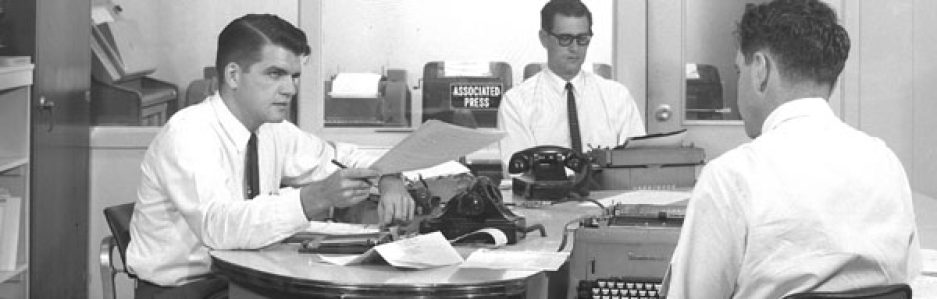








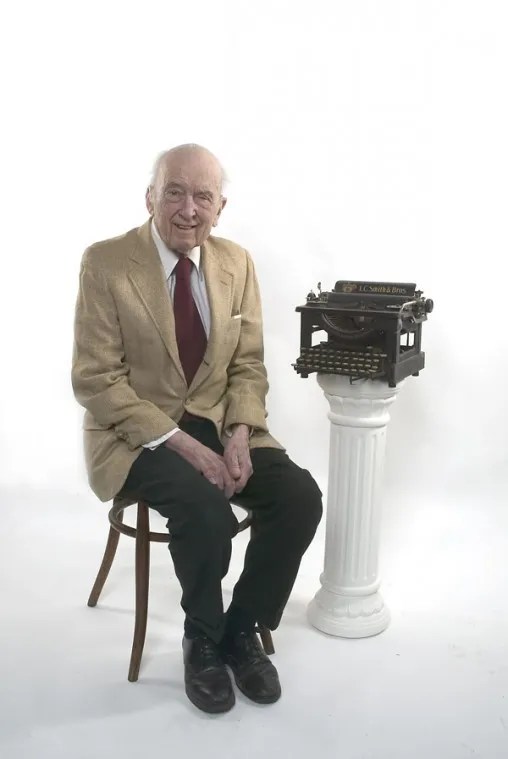
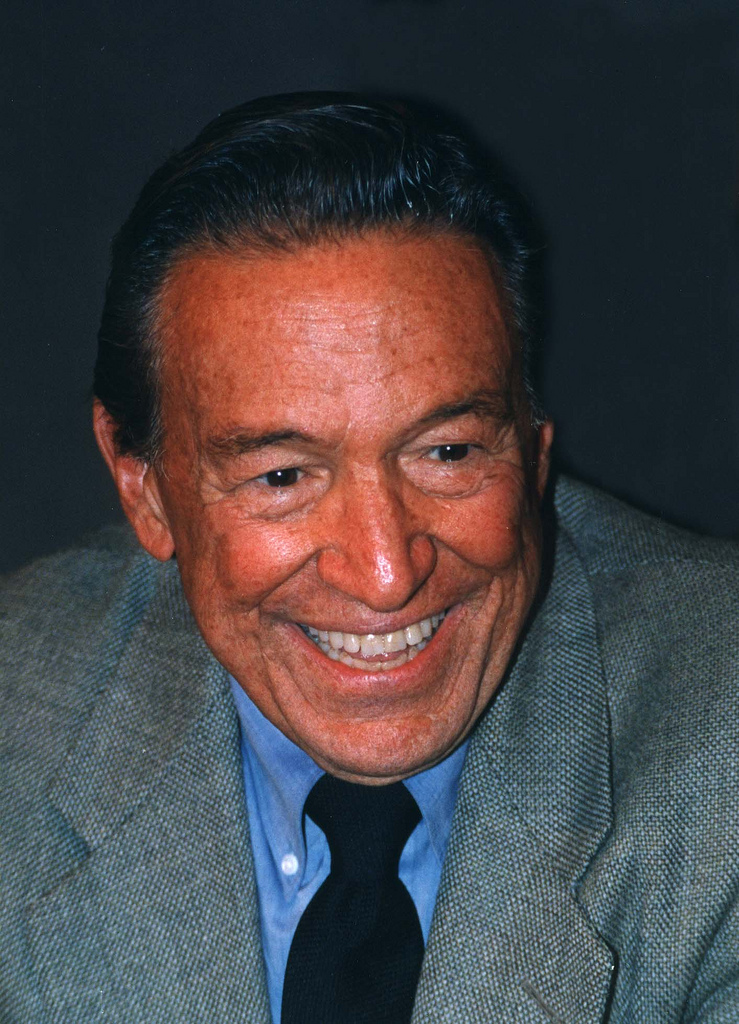
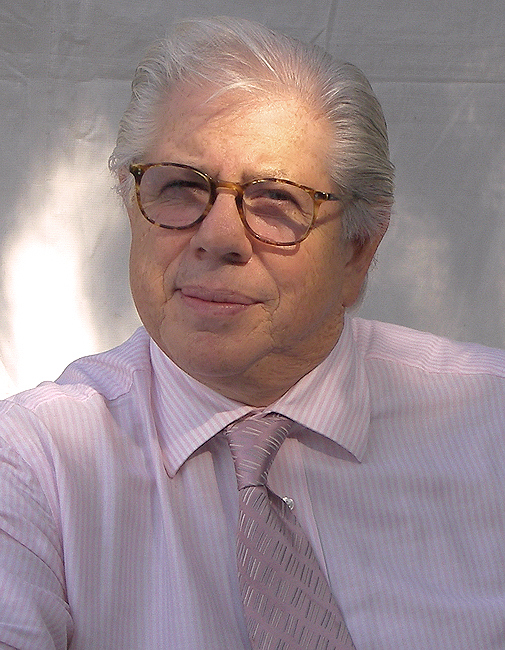



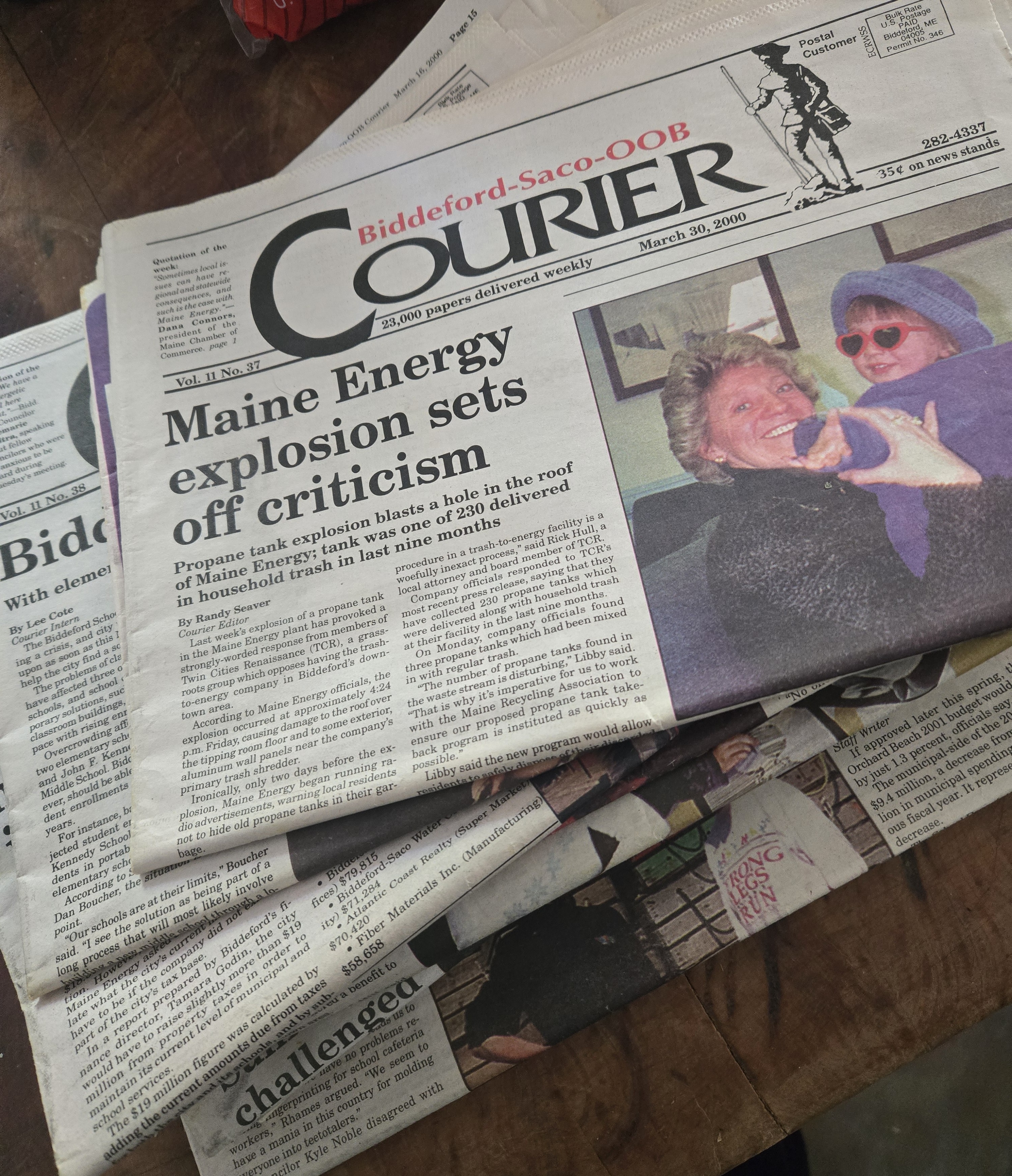
























 LESSONS IN MEDIOCRITY | OUTLAW JOURNALIST