Radio Free Europe

With each passing day, I am becoming further convinced that the United States is inching closer and closer to another civil war.

It just seems inevitable.

But this time around, I don’t think the lines of demarcation will be so neatly drawn or conveniently labeled.

In 1861, it was easy to identify “the enemy.” Geography was the name of the game. North versus South. We even had a rather convenient and mutually acceptable dividing point: the Mason-Dixon Line.

Jan. 6, 2021 Capitol Riots. Photo: Pew Research Center

As you probably recall from your sixth-grade social studies class, the Mason Dixon Line ran between Pennsylvania and Maryland, separating the good guys from the bad guys. Defining who were the good guys was purely subjective, depending solely upon which side of the line you found yourself.

To this day — more than 150 years after the first Civil War started — many southerners still adamantly deny that it was about slavery.

While living in Nashville during the early 1990s, I had a good friend who vigorously tried to convince me (a Yankee) that the war was simply about state’s rights. That the south was simply trying to defend itself from “northern aggression.”

He was right, of course. The southern states wanted the “right” to own slaves. Everything else was (and remains) a smokescreen.

The practice of slavery was essential for the economic survival of the southern states that lagged behind the economic bustle and prosperity of their northern neighbors.

In short, it was about money. But isn’t it always?

While the north was humming along with mills and factories, the south was mainly dependent on an agriculture economy that required lots of manpower.

Today, however, the lines of dissension are much less clear and are muddled across a constantly shifting variety of social and political boundaries. Reproductive rights, gun rights, climate change, LGBTQ+ issues and so much more.

Sure, it’s easy and somewhat convenient to say it’s about Democrats versus Republicans, or about red states versus blue states, but I think it’s a lot more complex than that.

I don’t think it’s going to be that easy to spot the enemy in the next Civil War.

I think in this next civil war – and it is coming – it will be more of a neighbor versus neighbor thing.

A cold wind is blowing

We know that our country is divided. We know that there is an increasingly apparent undercurrent of rage brewing just beneath the surface of our political infrastructure.

We saw a hint of it on January 6, 2021.

But that was just a glimpse. The Democrats seized upon that event, pointing to all that was wrong with Republicans.

Many Republicans downplayed the incident and tried to shift blame onto people like Nancy Pelosi for “allowing it to happen.” They pointed to inner city riots that had happened only months earlier when mostly minority residents were enraged about examples of police brutality.

The Democrats miscalculated the incident. Many of them mistakenly thought that event would “seal the deal” and would be the long awaited and much anticipated death knell of Donald J. Trump’s political career.

The American people would be horrified, the Democrats reasoned. The people would be galvanized by what they witnessed on their flat-screen televisions and smart phones.

It would be sort of like Sept. 11, when most all Americans would rally behind truth, justice and the laws of our democracy. When we would stand united in the face of evil.

On Sept. 11, 2001, we knew – or at least thought we knew –who the enemy was. We swore vengeance.

But this time was different. The Democrats had miscalculated.

Trump and his supporters did not suffer any meaningful blowback from the Jan. 6 incident. In fact — court cases be damned – the Capitol riots only made Trump and his growing legion of supporters stronger.

Sure, a handful of Republicans condemned the incidents of Jan. 6; but they were almost immediately expunged by a political party that was tipping to an extreme and rather rabid position.

The GOP, it seemed, was ready to eat its young. Chaos descended over the Republican-controlled House of Representatives. The extremists were now in charge.

No one was even pretending to be civil.

Democrats, too, dropped the ball, using the Jan. 6 riots as little more than an endless rallying cry for political purposes, a four-year campaign ad to prevent the GOP from ever again occupying the White House.

Meanwhile – beyond the media frenzy, beyond the ensuing federal indictments and beyond all the talking heads and all the noise – some Americans started quietly making plans.

While living in the south, I once made the mistake of joking with one of my work colleagues who was busting my chops about being a Yankee. “Relax,” I told him. “The Civil War is over.”

“No, it ain’t,” he replied with a grin. “It’s just halftime.”

I remember a chill going down my spine when he said that.

He wasn’t joking.

Pawn Takes Queen

You can already see the ads on the internet and on late-night television. Survival kits and emergency meal rations. We laugh at these “preppers.” A bunch of delusional, paranoid conspiracy theorists.

We dismiss them and their concerns. Our arrogance only fuels their not-so-hidden rage about the “elitists.”

But when the shit hits the fan – and it will — what will be your first move?

Will you take sides or will you sit back and hope that other people – the government – can fix it? The good guys will win, right?

But riddle me this: What if the “government” splinters? More aptly, what if the military splinters?

What happens when you see the “troops” marching through your neighborhood and you’re the only one without a gun?

Or . . . what do you do if you’re the only one on your block with a gun? Are you willing to shoot your neighbor? Someone you know? Will you defend your home or surrender and just hope that things work out for the best?

How will you know the good guys from the bad guys? Who decides? Who will you believe? The news?

Who’s to say that our police department will not be fragmented, same for the fire department. The guys and gals who drive the snow plows and the trash trucks?

Speaking of trucks, what about all the cross-country truckers? The airport personnel? The hospital staff? The reporters and media outlets? Second-shift at Wendy’s?

What happens if all these groups are suddenly fractured?

I am not trying to scare you.

But if you’re not scared by now, then my silly blog post is sure as hell not going to motivate you to consider a rather dark reality.

Will the next civil war bring out the best in us or the worst in us?

Me? I’m not preparing for some kind of half-assed Armageddon. I’m not stocking up on guns, ammo, Hot Pockets or even toilet paper. Nope. I’m just gonna sit back and watch. I refuse to let fear control my life.

I will take each day as it comes – on its own terms.

But when the shit gets real — and it will – just remember, I told you so.

History is written by the winners.

Is it over, or was my former co-worker correct?

Is it only half-time?

It’s happened before. It will happen again. It just won’t be so easy to sort the good guys from the bad guys this time.

Never miss another installment of Lessons in Mediocrity! Subscribe for free today!

Things to do in Denver when you’re dead

As I previously stated on Facebook, there are four topics that I now avoid discussing on any social media platforms: Abortion, Climate Change, Guns and LGBTQ+ issues.

The way I see it, it has become virtually impossible to discuss or debate any of these issues without the conversation dissolving into an abyss of bruised egos, hurt feelings and misunderstanding. I am NOT an expert on any of these issues. My opinion carries no more weight than your opinion.

Although I have staked out my positions, I am more than happy to discuss or debate any of the following topics with you in an off-line setting, preferably while drinking some craft beers or delicious coffee. I am always willing to hear alternative viewpoints — always ready to consider new information and perspectives, and ready to change my mind or outlook. Enjoy.

ABORTION:

Personally, I am opposed to abortions in almost all cases except when the mother’s life is in danger. That said, I also believe that I do NOT have the right to tell a woman what to do with her body. Thus, I am somewhat reluctantly pro-choice on this issue.

That said, I think it’s hypocrisy that we have the technology to detect bacteria on Mars and declare it’s a sign of life; and then say that an embryo or especially a fetus is not a living organism. It begins growing and developing from the moment of conception. That’s just science.

CLIMATE CHANGE:

I’ve written this before, and my position has changed very little over the past few years. First, Climate Change is real. Very real. The evidence is all around us and it is impacting, and will continue to impact, human life.

What bugs me about this subject is mostly centered upon the alarmist attitude of otherwise very intelligent people; and the sheer hypocrisy of those who often chant the loudest and want to impact my choices.

I am a huge supporter of renewable energy, including wind, solar and hydro projects. But that does not mean that all renewable energy projects are good. Some projects have an adverse impact on the surrounding environment, but for the most part I like renewable energy because it requires zero assistance from any other nation. It is truly independent energy. In some cases, I also support nuclear power and natural gas projects. [Disclosure: I have worked as a paid consultant on several renewable energy projects in New England]

I believe in being a good steward of our natural resources. I try to minimize my energy consumption. But the alarmists want to make my choices for me, that and the ever-growing bureaucracy of government regulation chaps my ass.

Furthermore, this issue is too often mired in fear and rhetoric, often ignoring science.

This ecosystem (Earth) is 4.53 BILLION years old. Think about that for a minute. We’re making declarations and pushing the panic button while ignoring the simple fact that we have basically NO idea about climate trends BEFORE humans began roaming the planet approximately 500,000 years ago.

Translation? Humans have been on earth for less than .01 percent of the earth’s life. Furthermore, we know (because science tells us) that this ecosystem has undergone numerous, significant and sometimes cataclysmic changes, sometimes wiping out various species, often referred to as “natural selection.” We’ve had Ice Ages, continental and seismic shifts, not to mention eons of volcanic activity that created huge dust plumes and particulate distribution all over the globe.

Bottom line? Our climate has been changing for a very, very, very long time and it will continue to change with or without us. I mean, really. Do you think you can alter the Earth’s ecosystem by driving a Prius? Do you think humans are powerful enough to somehow control or stabilize an ecosystem that has been evolving for 4.53 billion years???

Again, I think we should all strive to be good stewards of our planet and commit ourselves to better public health outcomes while also reducing global conflict by using renewable power, but I also think it’s still okay to drive a pickup truck, use a clothes dryer, microwave oven or a flat-screen television.

GUNS

I consider myself to be a strong supporter of the Second Amendment, but I do not believe that the Second Amendment — nor the First Amendment — is absolute. As a classic example, you certainly have the right to free speech, but you cannot yell ‘fire!” in a crowded movie theater; nor can you publicly threaten to assassinate the president or another person. Your FIRST AMENDMENT rights are not absolute.

The framers, I believe, were all too familiar with a tyrannical government and wanted to ensure that ALL power would rest in the hands of the people, not the state. There is ample historical evidence that the framers were not too keen on having a standing army, but saw the necessity of a citizen militia that could be called upon in times of need.

Thus, the Second Amendment reads: “A well-regulated Militia, being necessary to the security of a free State, the right of the people to keep and bear Arms, shall not be infringed.”

A lot of people conveniently skip over the first part of that sentence and instead focus on the last part regarding the “right of the people to keep and bear arms.” The Second Amendment is important to both our liberty and security as a nation, but it does not give my neighbor the right to own a rocket-propelled grenade launcher or an intercontinental ballistic missile.

We have, what I believe, some common-sense limits. Academics aside, however, this issue has become a flashpoint in American politics. It seems almost impossible to have a civilized conversation about this topic because of an increasing frequency in horrific mass shooting incidents, many of which involve school-aged children as the victims.

I am as horrified and as sick as you are of seeing incidents like these happen. I too want something to change. Now. Right now. However, as hard as it may be, we have to put our emotions in check and work together and across the aisle to solve this problem.

What I find disheartening and a bit peculiar is that so many people focus primarily on the guns. Typically, these are people who don’t own firearms and don’t like firearms. On the other side of the debate, people (typically from the political right) say it’s not at all about the guns. They do a mighty good job of pontificating about mental health services (right up until it’s time to fund mental health services).

From my perspective, both sides of this debate are a little bit wrong and a little bit right. When we hear the news about another drunk-driving related death, we are outraged at the driver, not the vehicle he/she was driving.

Each day, roughly 30 people in the United States die in drunk-driving car crashes, according to the National Highway Traffic Safety Administration (NHTSA). Data from the NHSTA shows that from 2010 to 2019, more than 10,000 people died each year in drunk driving car accidents. How many more?

Too often, when it comes to a mass shooting incident we miss (or perhaps ignore) the larger, more pressing question: Why?

Why does someone (anyone) feel compelled to slaughter a large group of innocent eight-year-olds? Firearms, including semi-automatic rifles and handguns, have been around a long time. But this is a relatively new phenomena in American culture, beginning sometime around the late 1990s.

Why are we so violent? Why is our country so far ahead of all other industrialized nations when it comes to gun violence? I think we ignore the why because it’s much more convenient to focus on the guns.

Bottom line: I think we need serious gun reform legislation to include limits on high-capacity magazines, tighten loopholes on the easy availability of firearms and require mandatory safety training. Even Ronald Reagan, perhaps the most conservative Republican president in the last 100 years, wrote to Congress in the early 1990s, urging them to take meaningful action in limiting high-capacity firearms.

This is not rocket-science. We can achieve meaningful and substantial reforms without taking away your guns. I also believe that an unarmed citizenry is a dangerous thing. History underscores my belief on that matter. [Disclosure: I have a significant mental illness and subsequently choose not to own firearms].

LGBTQ+

First, the good news. It is becoming increasingly easier for people to feel comfortable in their own sexuality, but this topic is yet another flashpoint of vitriolic discussion on social media.

My take? I don’t really see any negative impacts to allowing two men or two women to enter into a state-supported marriage contract. Numerous studies have demonstrated undeniable statistical data that reveals married couples are far less likely to be involved in crime or drug abuse and are far less likely to need government assistance and typically have a more positive impact than their single peers on regional economies. It doesn’t matter if the couple is same-sex or a more traditional heterosexual couple.

Look I don’t understand all the uproar and the wringing of hands about these topics, including gender identity. I am a middle-aged, straight, white guy. I don’t want to publicly discuss what happens in my bedroom, and I don’t care much about what happens in your bedroom, as long as it involves consenting adults. It’s really none of my business.

Yup, I do think there is a part of this issue that has become somewhat trendy. And I don’t like the whole “you’re either for us or against us” mantra. I think there are a lot of gray areas out there, and as a civilized society I think we can work out the kinks. Look, we figured out how to put a man on the moon, I’m relatively comfortable in thinking that we can address same-sex restrooms or trans-gendered athletics. As long as we can all take a deep breath and set emotions aside.

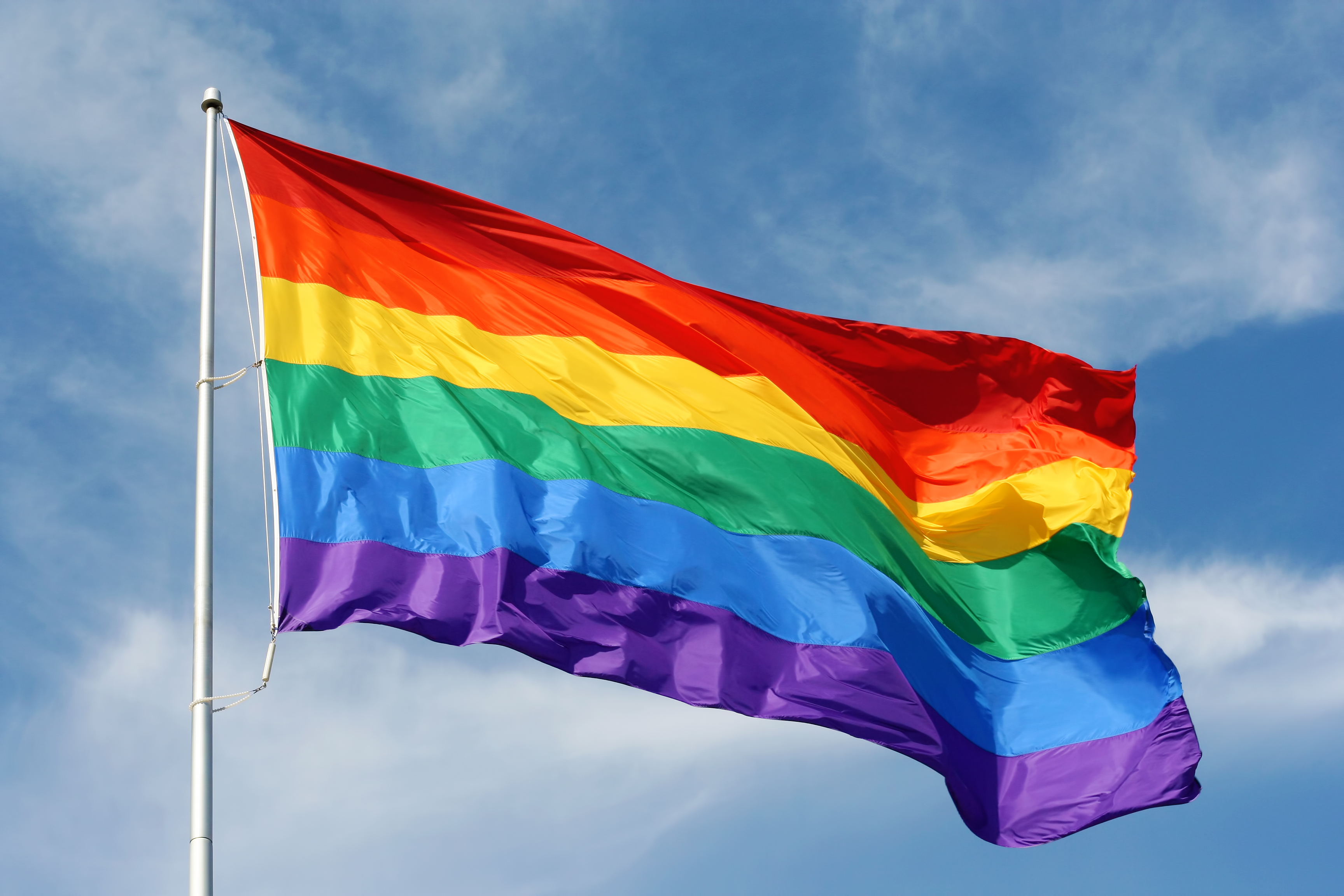
My default position on all LGBTQ issues is basically just be kind, tolerant and accept others who may be different than you are. I don’t need to fly a rainbow flag in order to be decent and kind.

That said, much of the emotional uproar on this particular subject focuses on children. Here’s my take: I think it’s perfectly okay and probably pretty smart to teach children how to respect diversity that they will encounter throughout their lives. Beginning, perhaps, in the fifth-grade, I think it’s okay for students to read books that focus on sexuality and gender.

At about this age, many children begin to have questions about these subjects, and it’s not always easy to have those discussions with their own parents or family members.

I never chose to be straight. My gay friends and relatives never chose to be gay. Either you are or you are not. A textbook or movie isn’t going to change that.

However, I am opposed to having these discussions with children under the age of eight. Any parent or teacher out there will tell you that seven-year-olds will gladly eat paste. Six-year-olds still believe in Santa Claus, the Easter Bunny and the tooth fairy. Their brains are basically mush. They have little to no critical thinking skills.

If a six-year-old announces that he or she wants to marry their best friend, I would hope you don’t go ahead and book a function hall or send out wedding invitations to friends or relatives. For me, it should be the same if your seven-year-old announces that he/she wants to change gender.

You certainly can be supportive of that declaration without embarking on life-changing medical operations. You can address your child by his/her preferred pronouns. I think it’s okay if you allow a child (age 12 or above) to legally change their name. It can easily be changed again. You can be supportive and loving of your child but it does not require you to hit the operating room.

In Maine, I believe the age of consent is 16. Still a bit low, in my opinion. But if 16 is the age of consent, then it should also be the age of individual gender choice. I’m more comfortable with 18, or better yet 21, but we’re not talking about me or my kids.

At 16, your brain has not finished the formatting process that allows for critical thinking. Society says at 16 you are too young to vote. Too young to watch porn. Too young to enter into a legal contract and so on. You can love, support and nurture your children without introducing puberty blockers, hormone treatments or irreversible surgery.

But if you encounter an adult, or even your own child, who says they are gay, non-binary or trans-gendered why not treat them with anything other than respect or kindness?

Gay people and transgendered persons have been around since the beginning of human existence. Now, they are able to feel more comfortable and included in society. Even if your own religious beliefs claim that homosexuality is a sin, you can still choose to be kind. You can always be kind. That is a choice.

And that’s a wrap for the four dreaded topics of social media. Peace to you and yours.

Gimme back my bullets

rs gunThere is a good article in today’s Portland Press Herald: Maine boosts reporting to FBI database to prevent gun purchases by mentally ill.

As an advocate of both mentally ill people and the Second Amendment, I was pleased to see that the newspaper approached the issue is such a comprehensive manner.

During gun control debates, the subject of mental illness is often raised as a red herring. While none of us wants to see dangerous people have access to firearms, we too often lump all mentally ill people into a convenient one-size-fits-all category. Simply having a mental illness does not make you de facto dangerous.

On the other hand, there are some seriously ill people who should not be allowed to purchase firearms. The same could be said for convicted felons and those charged with domestic violence.

There are distinctions to mental illness. For example, someone who suffers from mild depression should not necessarily be barred from hunting. However, someone who has been court-ordered to undergo psychiatric treatment is in another category.

Look at it this way: If a Vietnam veteran is seeking counseling, is that the same as someone who suffers from schizophrenia and refuses to take medication? Of course not.

The article points out that distinction when it comes to federal reporting of mental health records.

“Anyone who voluntarily seeks treatment for mental illness or checks themselves into a mental health institution would not be prohibited from owning a gun.”

According to the Press Herald report, Maine has submitted 3,022 records to the FBI regarding 1,750 people who are prohibited by federal law from buying guns because they were involuntarily committed to a mental health institution by a court. Other records sent  include individuals who have been deemed by Maine courts to be mentally incompetent to stand trial or not guilty by reason of insanity.

These are important distinctions because mental illness (like every other illness) presents itself in various degrees and levels of severity.

I have been very open and honest about my own struggles with mental illness.

I have been hospitalized several times.  I also don’t own guns.

While I am a staunch supporter of the Second Amendment, the truth is that I don’t like guns. They actually make me a bit nervous. And because of my own history, I don’t think it’s a good idea for me to have access to firearms. But before this new law went into effect, I was able to purchase hunting rifles for my sons.

My boys enjoy hunting with my father-in-law. (I hate hunting, and most other outdoor activities). Those hunting rifles were always stored in a gun safe at my father-in-law’s home because I don’t want firearms in my home.

Now let’s take a step back. On Mother’s Day, my oldest adult son came home so that we could all go to dinner. He also wanted to show off a used AR-15 semi-automatic rifle that he purchased.

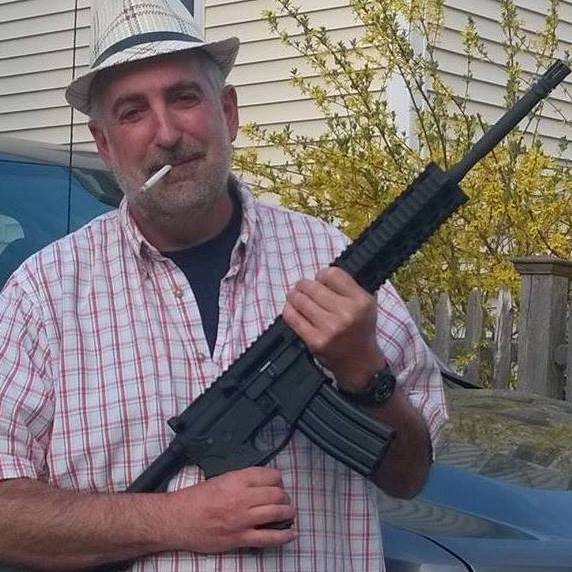
We all took turns holding the unloaded weapon in a series of goofy photos. In one of those photos, I put on a fedora, posed in front of my pickup truck and made sure to have a cigarette dangling from my mouth.  Laura posed barefoot with the AR-15 in front of my son’s Jeep. Just a bunch of rednecks having fun on a Sunday afternoon.

I posted one of those pictures on Facebook and the reaction was mixed. People have strong reactions to firearms, and that’s understandable.

But it’s also to remember that a firearm is no more dangerous than the person holding it.

Would I pose with a gun for a funny picture? Sure. Why not?

Should I be able to purchase or own an AR-15 or any other kind of firearm? Probably not, even though my mental illness is well-managed and I continue voluntarily seeking treatment.

I made my own decision when it comes to owning a firearm. But my mental illness is not the same as another person’s mental illness.

There should be clear lines when discussing who should be able to purchase a firearm and who should not. And we should all remember that mental illness does not fit in a convenient, easy-to-understand package.

Killing me softly

gun-k92At the risk of provoking law enforcement officers, irate taxpayers, members of Maine’s Legislature and people who suffer with a mental illness, I want to congratulate Tux Turkel and a his team at the Portland Press Herald/Maine Sunday Telegram for an exceptional article in this morning’s paper.

At the crux of the story is the number of fatal shootings in Maine that are connected to police calls that involve someone who is mentally ill.

Before we proceed further, it’s important to note that the vast and overwhelming majority of people who suffer from a mental illness never have an interaction with law enforcement agencies.

Secondly, despite the myths, stigma, Hollywood hype and media bias, the overwhelming majority of mentally ill people are not violent.

In fact, violent acts committed by people with serious mental illness comprise an exceptionally small proportion of the overall violent crime rate in the U.S. They are more likely to be the victims of violence, not its perpetrators, according to the National Association of Social Workers (NASW)

In its March 2011 article, “Budgets Balanced at Expense of Mentally Ill,” the NASW newsletter also mentions a new report by the U.S. Substance Abuse and Mental Health Services Administration that documents a nationwide decline in behavioral health care spending as a share of all health care spending, from 9.3 percent in 1986 to just 7.3 percent, or $135 billion out of $1.85 trillion, in 2005.

(See: Pocketful of Kryptonite; All Along the Watchtower, April 2011)

Mental illness is an uncomfortable subject, one which many people would like to ignore and sweep below the rug. But we ignore it at our peril.

Asking law enforcement officers to effectively deal with ill people is sort of like expecting school janitors to provide high school tutoring services.

In our current situation, there is a natural tendency to blame the survivor. If someone has a knife and they begin moving toward you in  a threatening manner, don’t you have the right to defend yourself?

Or do we blame the person holding the knife, a person with a mental illness who is unable to comprehend reality when it matters most?

Try to imagine what it’s like to be the cop who is forced to deal with that situation, to live the rest of his or her life with the knowledge that he/she ended another person’s life.

According to the newspaper: Since 2000, police in Maine have fired their guns at 71 people, hitting 57 of them. Thirty-three of those people died. A review of these 57 shootings by the Portland Press Herald/Maine Sunday Telegram found that at least 24 of them, or 42 percent, involved people with mental health problems. Seven of the shootings were alcohol-related. Two involved drugs.

Of the 33 people who were killed, at least 19, or 58 percent, had mental health problems.

In the days following the 2007 massacre at Virginia Tech, “Nightly newscasts reported “no known motive” and focused on the gunman’s anger, sense of isolation, and preoccupation with violent revenge. No one who read or saw the coverage would learn what a psychotic break looks like, nor that the vast majority of people with mental disorders are not violent. This kind of contextual information is conspicuously missing from major newspapers and TV,” wrote Richard Friedman in “Media and Madness,” an article published in the June 23, 2008 issue of The American Prospect.

Friedman goes on to explain that “Hollywood has benefited from a long-standing and lurid fascination with psychiatric illness,” referencing movies such as Psycho, The Silence of the Lambs, One Flew Over the Cuckoo’s Nest and Fatal Attraction.

According to Friedman, “exaggerated characters like these may help make “average” people feel safer by displacing the threat of violence to a well-defined group.”

So, should we blame lawmakers or Hollywood movies for rather weak funding and policies to assist law enforcement officers in  addressing the complications of dealing with mentally ill individuals?

Or maybe, should we all take a good, long look in the mirror? In an age of economic recession, we must wrangle with legislative spending priorities.

But consider how expensive and grossly inefficient our current system is when it comes to dealing with potentially violent people who suffer from a mental illness.

In November 1993, I was living at my sister’s home near Augusta. Two days earlier, I purchased a used Lorcin .380 semi-automatic handgun with the intention of committing suicide. Fortunately, the gun misfired and jammed. Within moments, it seemed, my sister’s home was surrounded by a cadre of police officers, armed to the teeth. Who could blame them?

I was eventually transported to the Jackson Brook Institute (today Spring Harbor Hospital), where I was involuntarily committed for several days.

Compare that situation to one in 1986, when I was living in Tucson, Arizona. Pima County had a mental health rapid response team that included trained mental health workers. These teams served as the lead for responding to crisis situations. They could effectively assess the situation and call police only when necessary. They were equipped to provide the police with tools, intelligence and situational analysis that kept the officers safe.

Those types of programs cost money, but they also save taxpayers money over the long-term. More importantly, the approach in Tucson is far more likely to yield results in which no one dies. But how do you calculate the financial worth of preventing a fatal shooting?


The world beyond your front door

Predictably, in the days following a massacre in an Aurora, Colo. movie theater, there has once again been a rallying cry for tighter gun control laws.

Sadly, this knee-jerk reaction fails to address the much larger issue: No sane person would willingly open fire on an unarmed group of civilians. It’s not about guns. It’s about our appetite for violence and our reluctance to address mental health issues.

But that is a more complex issue, and it is much harder to contemplate a solution for a problem that extends well beyond our nation’s borders, including a July 2011 massacre in Oslo, Norway or last month’s shooting spree in Toronto, Canada, where gun control laws are about as tight as they can be.

Not far from Aurora, lies the smaller town of Littleton, Colo., where two students opened fire on their classmates and teachers at the Columbine High School in 1999.

In response, the U.S. Secret Service, in conjunction with the National Education Association, undertook a study of school violence and published their report three years later, in 2002

The Secret Service Report concluded that schools were taking false hope in physical security, when they should be paying more attention to the pre-attack behaviors of students.

But behavior is a tricky subject matter, and not nearly as sexy or convenient for sound bites as AK-47s or Glocks.

No matter, we still happily and blindly toss around words such as “sicko,” “whack-job” and “nut case” to describe the people who commit these horrific, unimaginable criminal acts.

As someone who struggles daily with a mental illness, I am reminded again why I penned an op-ed that was published in the Portland Press Herald only a few days after the Jan. 2011 shootings in Tucson.

If you haven’t read it, take a gander…and let’s finally have that conversation.

http://www.pressherald.com/opinion/where-was-mental-health-crisis-care-before-tucson-tragedy-happened__2011-01-11.html

Janie’s Got A Gun

It was 12 years ago last week when two students at Columbine High School used a variety of weapons, including homemade propane bombs, a shotgun, a semi-automatic rifle and a 9mm handgun in a massacre that left 12 of their classmates and one teacher dead before both shooters committed suicide.

In the days before the attack, the two students prepared several bombs and modified their weapons. These two students were in violation of several federal laws, including the National Firearms Act and the Gun Control Act of 1968, even days before the shooting began.

The incident shook our nation, and once again the national debate over gun control consumed media outlets all over the world.

In response, the U.S. Secret Service, in conjunction with the National Education Association, undertook a study of school violence and published their report three years later, in 2002

The Secret Service Report concluded that schools were taking false hope in physical security, when they should be paying more attention to the pre-attack behaviors of students.

There’s a reason all of this sounds familiar.

Nearly eight years to the day of the Columbine tragedy, a distraught student at Virginia Tech shot and killed 32 fellow students and injured scores of others on April 16, 2007. He also committed suicide.

There was more political fallout. Other nations criticized a U.S. culture that is seemingly enthralled with guns and violence. More gun control laws were introduced and passed. It should also be noted that the university had a campus firearms ban before that massacre happened.

Sadly, I could go on and on with more examples of gun violence and the ways in which those horrific events are exploited by politicians and pundits from both sides of the gun control debate.

But what’s the point?

The point, my friends, is not about the guns. It’s about people and human behavior.

I am treading into this topic as a response to a friend’s Facebook post in which she was commenting on an editorial from the Lewiston Sun Journal regarding a bill before the Maine Legislature that would allow lawmakers to carry handguns.

“In the wake not only of Tucson, but also the shooting at NY City Hall (’03 – one Councilman shot another dead) and various examples of ‘going postal,’ this seems . . . wise?”

I have immense respect for the woman who wrote the above posting on her Facebook wall. She is extraordinarily smart and equally passionate. If I’m going to debate her, I need to bring my A game, and even then the odds are stacked against me.

But it was just two words from her pithy post that jarred me: “going postal,” just another catchy euphemism that grants us permission to brush off and dismiss a much darker topic: The cost of mental illness and our society’s unwillingness to acknowledge the ramifications of a grossly insufficient treatment system.

The genesis of the term “going postal” can be traced back to the early 1980s, when a spree of shootings by U.S. Postal workers became a macabre trend.

The term is now comic relief, as best evidenced by frequent double entendres on the Seinfield show, in which “Newman, the postal worker” was often teased for his bizarre behavior and frequent angry outbursts.

We laugh.

Some say the definition of insanity is doing the same thing over and over while expecting different results. Keep laughing, if you can.

I am a big believer in the Second Amendment. I tell my friends that the Second Amendment ensures the continuation of the much more beloved First Amendment.

But I must admit that I am sometimes conflicted. After all, our society understands and accepts limitations on freedom of speech and expression. It is a violation of federal law to say, “I am going to kill the president.” It is also against the law to scream “Fire” in a crowded theater.

Former Supreme Court Justice Potter Stewart famously quipped “ I know it when I see it,” as he struggled to define what is and what is not pornography.

Reasonable people can agree to be reasonable, right?

Sure, but what about the unreasonable people? That is a different subject altogether.

The bottom line is this: Guns represent power.

You never see news footage of refugees slinging rifles over their shoulders as they are forced to leave their homeland because of a tyrannical government, do you?

Alan Keyes, a conservative African American and a perennial presidential candidate, once quipped, “This nation would have never had a slavery problem if the people of Africa were armed.”

Any half-rate student of history can rattle off a litany of government abuses, which all began with the collection of the public’s firearms.

Guns are part of our American culture and psyche. One of my core beliefs is that power should be equally distributed and held by the people.

Thoreau seemingly agreed with my stance, when he wrote, the government that governs least governs best. Of course, he wrote Civil Disobedience in 1849, so it’s hard to know where he would come down on the post Columbine gun control debate.

I own three guns (a .22 rifle, a 12-gauge shotgun and a 20-gauge shotgun). Ironically, I don’t allow firearms in my home. My guns are stored in a gun-safe at my father-in-law’s home, some 15 miles away. They are used for hunting.

There are two reasons for not having firearms in my home.

1.) I have teenage sons who are often alone at home while Laura and I are working; and

2.) I have a responsibility to acknowledge and manage my own mental illness.

I feel safer without firearms in my home, but I am also troubled by any further encroachments on my Second Amendment rights. It doesn’t mean I think everyone should own an Uzi. Then again, reasonable people can agree to be reasonable.

But what are we going to do about the unreasonable people?

Laugh, or introduce legislation requiring background checks on the sale of propane tanks?

Pocketful of Kryptonite

Although it was 30 years ago this week, I still remember the day like it was yesterday.

I came home from high school and flipped on the television. The news was on, and that was strange because this was long before the days of CNN, MSNBC or Fox News. Back then, there was no such thing as the internet.

So why was the news on during the afternoon?

The president had been shot.

Only a few months earlier, John Lennon was gunned down in front of his New York City apartment building. We didn’t know it then, but in a few more weeks there would be an assassination attempt on Pope John Paul II.

Violence was everywhere, it seemed.

Welcome to 1981. I am a junior at Rumford High School. My orthodontic braces had just been removed, and I am living with my uncle and aunt in West Peru, Maine while my parents continue a bitter divorce process.

I am going back there tomorrow. I am going back to my old high school, where I painted a mural on the wall of my English teacher’s classroom.

I am also reminded that the more things change, the more they stay the same.

“Those who cannot remember the past are condemned to repeat it,” said 19th Century philosopher George Santayana

When Ronald Reagan was president, U.S. Rep. Gabrielle Giffords was 11 years old, John Lennon was buried, and I was struggling with acne.

John Lennon, Ronald Reagan, Gabrielle Giffords, Pope John Paul II.

And Maine Governor Paul LePage.

Wait! What? Paul LePage?

No, LePage was not shot, but he did receive a death threat from Michael Thomas, a Portland man who allegedly vowed to assassinate him and reportedly suffers from a history of mental instability.

John Lennon, Ronald Reagan, Gabby Giffords, Pope John Paul II and Paul Lepage. Now there’s an interesting group of people, all of whom stir some sort of reaction.

But what about this next group of individuals?

Mark Chapman, John Hinckley, Jared Loughner, Mehmet Ali Ağca and Michael Thomas. They all have at least two things in common.

One: They are all currently in jail.

While some folks may use these tragedies to demand tougher gun laws, or to discuss political motivations, the other common thread shared by our second group of men is almost always sensationalized by both the media and general public .

Each of these men has a mental illness.

(Sidebar: There are several theories, including a Tom Clancy novel, about Ağca, the man who attempted to assassinate the Pope,and his political motivations and reported connections to the KGB, but there is little doubt that he is mentally unstable, especially if you begin perusing transcripts of interviews with him after the shooting in Vatican Square.)

We like to ignore mental illness. It is an uncomfortable topic, but not one that should be dismissed. Otherwise, as demonstrated above, the consequences can be fatal.

These high-profile crimes and the men behind them add to the burden of mental health advocates who fight daily against the stigma associated with mental illness.

In fact, violent acts committed by people with serious mental illness comprise an exceptionally small proportion of the overall violent crime rate in the U.S. They are more likely to be the victims of violence, not its perpetrators, according to the National Association of Social Workers (NASW)

In its March 2011 article, “Budgets Balanced at Expense of Mentally Ill,” the NASW newsletter also mentions a new report by the U.S. Substance Abuse and Mental Health Services Administration that documents a nationwide decline in behavioral health care spending as a share of all health care spending, from 9.3 percent in 1986 to just 7.3 percent, or $135 billion out of $1.85 trillion, in 2005.

Moreover, high-profile incidents such as John Hinckley’s attempted assassination of President Reagan also give apparent permission for the media to stereotype and hype mental illness as one that will likely produce violent crime.

In the days following the 2007 massacre at Virginia Tech, “Nightly newscasts reported “no known motive” and focused on the gunman’s anger, sense of isolation, and preoccupation with violent revenge. No one who read or saw the coverage would learn what a psychotic break looks like, nor that the vast majority of people with mental disorders are not violent. This kind of contextual information is conspicuously missing from major newspapers and TV,” wrote Richard Friedman in “Media and Madness,” an article published in the June 23, 2008 issue of The American Prospect.

Friedman goes on to explain that “Hollywood has benefited from a long-standing and lurid fascination with psychiatric illness,” referencing movies such as Psycho, The Silence of the Lambs, One Flew Over the Cuckoo’s Nest and Fatal Attraction.

According to Friedman, “exaggerated characters like these may help make “average” people feel safer by displacing the threat of violence to a well-defined group.”

As a former journalist and a current communications consultant, I am naturally drawn to issues surrounding journalism and those who are employed by the so-called Fourth Estate.

And as someone who has been battling mental illness all my life, I know a thing or two about the effects of stigma.

And that’s why I’m going back to my old high school. I will be the keynote speaker at a symposium on mental health stigma.

The Carter Center does a succinct job of defining the problems associated with stigma:

“In ancient times the word stigma was defined as ‘A mark burned into the skin of a criminal or slave, a brand.’ This inhumane treatment was metered out to criminals and anyone felt to be a threat to society. Have we really come so far today? Just mention depression or worse Bipolar to most employers, family or friends and the reaction’s generally a negative one.”

Superman and Lois Clark

Maybe you remember the 1978 movie Superman.

The movie may have been cheesy, but the cast was stunning. Some of Hollywood’s most enduring and iconic figures were featured in that film, including Marlon Brando, Gene Hackman, Ned Beatty, Valerie Perrine and Margot Kidder.

The film also launched the career of Christopher Reeve, a handsome, muscular man who was cast in the leading role as the Man of Steel.

While participating in a 1995 equestrian competition in Virginia, Reeve was severely injured and became paralyzed. His injuries elicited support from all over the globe. He spent the rest of his brief life trying to help others with spinal cord injuries and established the Christopher Reeve Foundation.

He was a sympathetic hero. He touched us all. The man of steel could not escape this batch of Kryptonite. He died in October 2004 and millions mourned his passing.

Now, let us examine the fate of Superman’s leading lady, Margot Kidder, a successful actress who was cast as the petulant, cynical and manic reporter, Lois Clark.

A year after Reeve was paralyzed, Kidder was found by police hiding in the bushes in a suburban neighborhood near Los Angeles, California. She was taken into custody for a psychiatric evaluation.

The world was not so nice to Ms. Kidder.

Kidder has a bipolar disorder, so she became fair game for the media, late night comedians and a slew of derisive web site commentary. She was certainly no Superman.

She was human, frail and vulnerable but in a different way than her co-star, and that difference was best amplified by the ridicule that continues to follow her today, some 15 years after her illness became fodder for her former Hollywood colleagues.

Maybe that’s why fellow Superman star Marlon Brando spent so many years keeping his mental illness a secret.

By the time Superman was released in 1978, Brando was already known as one of Hollywood’s most iconic figures. The star of “On the Waterfront” and “The Godfather,” he was a tough guy’s tough guy.

But his mental illness apparently was a bit tougher.

Brando was a deeply troubled man struggling with depression, anger, and loneliness, according to those who knew him and detailed in an article by the National Center on Physical Activity and Disability.

Brando was from a generation of those who didn’t talk about mental illness. A generation that believed depression was little more than self-pity run amok or some other sort of character flaw.

It was that same generation of actors which produced the original Superman, George Reeves.

George Reeves (no relation to Christopher) was an actor best known for his leading role in the 1950s television series, The Adventures of Superman.

Reeves’ untimely death at age 45 was officially ruled as a suicide by police, although there is much speculation about that fact, most notably in the 2006 film Hollywoodland, which stars Ben Affleck as George Reeves.

Whether Reeves committed suicide is irrelevant and will probably remain a mystery for a long time to come.

But we do know how Hollywood would have treated him if he had talked publicly about battling depression.

Just ask Lois Lane.

Tucson shootings and the costs of stigma

(originally published in the January 11, 2011 Portland Press Herald)

The horrific event that transpired in Tucson on Saturday has inspired more than ample discussion regarding the tone and spirit of our nation’s political discourse.

Despite all the fervent commentary, there is one piece of this puzzle that remains largely glossed over, however.

And this is where it gets a bit personal.

When I was 22, I was living in Tucson and attending college part-time. Just like Jared Loughner, I was removed from school for many of the same reasons.

But I got lucky. I ended up at the Southern Arizona Mental Health Center (SAMHC) and spent the next several weeks there as an inpatient client.

I did not have insurance. I did not have any assets or even a job. My family was in Maine, thousands of miles away. So, my ability to receive life-saving treatment and long-term support services was funded primarily on the backs of Arizona taxpayers.

Nearly a quarter century later, I like to think that investment has, so far, paid significant dividends. But I can assure you, it was a long-term and risky investment.

Make no mistake. Mr. Loughner committed horrific, criminal acts that warrant the full weight of justice. But if society expects and demands justice, we must also recognize that there is a very deep and painful cost associated with scaling down or the elimination of community-based mental health services and treatment options.

According to its web site, SAMHC was officially established in 1962 as a state-owned and operated outpatient mental health facility under the aegis of the Arizona State Hospital.  The campus-style facility, then located at the intersection of Campbell Avenue and 6th Street, was purchased through legislative appropriation.

Nearly 50 years after its founding, SAMHC continues to provide crisis behavioral health services to the entire community, regardless of ability to pay, insurance status or age.

As of this writing, it is unclear whether Loughner attempted to access those services or if he or members of his family made any attempt to deal with his now-obvious illness.

What is clearly known, however, is the commentary our society freely tosses around when describing mental illness.

Unfortunately, the terms “sicko” “whack-job” and “nut case” are apparently acceptable on social media outlets, reader comment pages and even in the so-called mainstream media.

Yet, we wonder with righteous indignation why those affected by mental illness are reluctant to seek services or get help before their illness manifests itself into a deadly outcome.

If I were dealing with testicular cancer, I could expect to be described as a “hero” or as a “survivor.”  I am praised for my courage to acknowledge my illness and for my willingness to fight it tooth and nail with all available resources.

Heck, you might even put a bumper sticker on your car, wear a pink bracelet or post something supportive on your Facebook page.

But what if I tell you I have a diagnosed mental illness; an illness that affects me every day; an insidious, almost-invisible illness for which there is no cure?

I get some nervous head nods or even some encouragement in the form of: “pull yourself up by your bootstraps, try positive thinking, you should appreciate things more.”

Well-intentioned, perhaps, but the stigma and its costs are clear.

Though we have made much progress, I can assure you that we have a long, long way to go.

Only because I was able to access services and am willing to deal every day with my disease am I able to do things now that I once thought impossible: hold a job, enjoy a wonderful marriage, own a home and even hold a driver’s license.

So, some may choose to focus on the debate regarding our nation’s political rhetoric.

But whether we’re talking about John Hinckley, Mark Chapman or the more recent example of Jared Loughner, one thing we should all be able to recognize is that mental illness can be a fatal illness – and if left untreated, its costs are overwhelming.

According to the Centers for Disease Control, one of every five Americans suffers from some form of mental illness.

I hope you agree with me that an ounce of prevention is worth a pound of cure.

Roland, the headless gunner

As we inch closer to the 2004 elections, we all seem to be getting either more stupid or lazy. Maybe both.

While we listen to the presidential candidates debate how they spent their summer vacations during the Vietnam War, a number of key issues seem to have fallen by the wayside. At the same time, it seems that the media and the American electorate could not care less.

Take, for example, a front-page story in the Sept. 10 Portland Press Herald regarding Bushmaster, Inc., a Windham-based gun manufacturer. According to the story by David Hench, the company has agreed to exhaust its insurance benefits in order to console the victims of the Washington D.C. snipers.

How can we read a story like this and not be outraged? Yet again, the liberal mentality is taking the path of least resistance and faulting the gun manufacturer as a way to appease concern about acts of senseless violence.

Somehow, we believe that getting rid of the guns will reduce crime. It’s akin to believing that Prohibition would save American families, reduce crime and prevent rampant alcoholism. Gun control appears to be the easiest, safest and least costly approach to solving an otherwise complex problem.

And when that doesn’t work, blame the corporations. Riddle me this: What consolation is $550,000 going to bring to anyone who lost a family member?

Although the folks at Bushmaster apparently believe they are not at fault for the snipers’ use of the company’s weapons, the lawyers believe that settling will be a lot less expensive than a trial. And so it goes once again; a company that reportedly employs 100 people will be held responsible for the idiotic lunacy of two criminals.

I don’t know about you. But I’m not going to sleep any better tonight.

This, dear readers, is just another example of our society’s constant push to assign blame rather than hold individuals accountable for their own actions. Under this logic, Mary Jo Kopechne’s family should sue General Motors, not the Kennedy family for their daughter’s tragic death In Oldsmobile Delta 88 under the Chappaquiddick Bridge.

People kill people, not guns or cars.

And for all my liberal buddies out there, my favorite bumper-sticker is still: “Ted Kennedy’s car has killed more people than my handgun.”

Handgun legislation did nothing to prevent the violent death of Nicole Brown or Ronald Goldman, either. Gun registration laws also did nothing to prevent a South Portland man from being beaten to death with a baseball bat four years ago.

I always find it ironic when my liberal colleagues blather on about the First Amendment but then speak with such disdain about the next item in the Bill of Rights as if it were nothing more than protection for duck hunters.

Our nation’s forefathers knew all too well what could happen to an unarmed citizenry. Despite the constant lessons of history, (from Kosovo to Cuba and from Pre-WWII Germany to South Africa) liberals still believe that “regular citizens” have no need for owning weapons.

But when was the last time you saw a refugee crossing the border of his former homeland, carrying a rifle across his shoulder? It doesn’t happen. What would have happened if the Africans could have shot back at their American oppressors?

I don’t own a gun now, but I did. And to think that the government believes it should have a list of anyone who owns a handgun should be chilling enough. But even if getting rid of all the guns gives you the soft and fuzzies, should we really hold the manufacturers responsible for the actions of criminals? I think not.

A while back, a man in California killed several pedestrians when he drove into a crowded public market. Where’s the consolation for those families? Where are the lawyers, drooling over the chance to sue the Ford Motor Company? It’s just that we hate guns — unless, of course, we find ourselves on the wrong end of a violent crime. When that happens, having a gun would be mighty handy.

My kids know that they will always be held accountable for their actions. And only by teaching them about discipline and personal responsibility can they ever hope to be truly free men in a world that is increasingly looking for someone else to blame.