Money for nothing

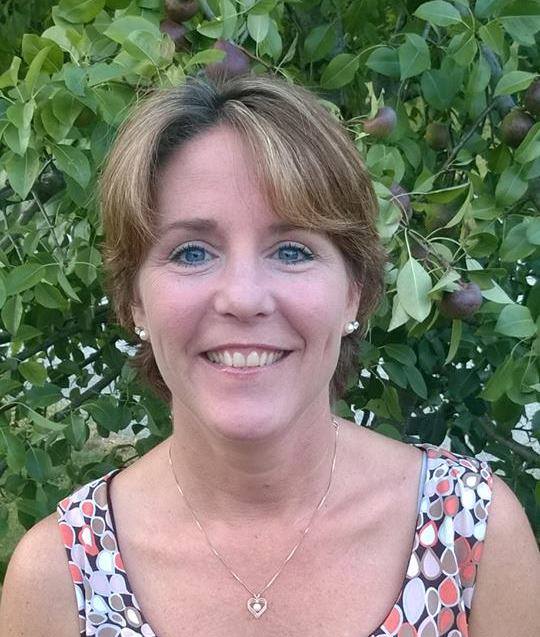
Ben Chin (Sun Journal Photo)

There were a few lessons to be learned this week for campaign operatives and political junkies in Maine.

1.) A financial war chest does not necessarily win an election;

2.) Voters in small communities become weary of aggressive campaigning that lasts for more than two or three months; and

3.) Negative campaign tactics still work, despite the fact that most people will say negative campaigning is a turn-off.

Lewiston’s mayoral race, in which Robert Macdonald won a third term, garnered national media attention. Tuesday’s run-off results were reported by media outlets across the country, including NBC News and the New York Times.

Although Ben Chin, a progressive Democrat, got the most votes during a five-way race for the mayor’s seat in the November 2015 election, a runoff election was required by the city’s charter because he did not capture at least 50 percent of the vote.

Democrats tend to favor run-off elections and/or a concept known as ranked choice voting, but Tuesday’s results bit them in the ass, when Republican Macdonald came out on top, 53-47 percent over Chin.

What would have otherwise been a small community election became amplified when the campaign took an ugly turn in October.

Several signs that featured a caricature of an Asian man were hung on buildings in Lewiston. Those signs contained a blatantly racist message: “Don’t vote for Ho Chi Chin. Vote for more jobs not more welfare,” according to the Lewiston Sun Journal.

Is cash really king?

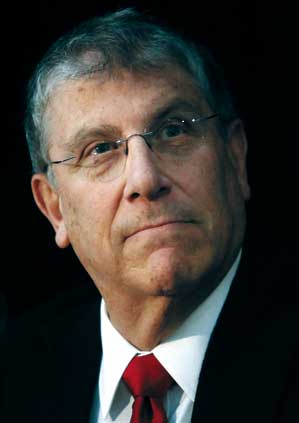
Robert Macdonald (Portland Press Herald photo)

Because of the national attention, Chin’s campaign was able to raise a whopping $87,800. Maine Democrats wanted to send a message and large amounts of money poured in from all over Maine and across the country. Chin, the political director for the Maine People’s Alliance, was able to turn on one of the state’s biggest political machines.

In total, Chin’s campaign raised roughly 15 times more than Macdonald’s campaign, which raised $5,800.

By contrast, in the city of Biddeford, a typical mayoral campaign raises somewhere in the neighborhood of $10,000. This year, however, Mayor Alan Casavant raised a paltry $1,270 and spent $818 of it to secure a third term. He got 2,494 votes at a cost of roughly 33 cents per vote.

Chin garnered 3,826 votes; spending nearly $23 per vote. Macdonald, on the other hand, garnered 4,398 votes; spending roughly $1.32 per vote.

Chin edged out second-place finisher Macdonald in November, but Macdonald won Tuesday’s runoff, despite being outspent roughly 15-1. Why?

Almost every one I speak to about this race has a different theory, but I think voters were turned off by an incredibly aggressive campaign that was raising so much cash from outside of the city.

It was a bit over the top.

Voter fatigue?

According to the city of Lewiston’s web site, 33.5 percent of the city’s registered voters cast ballots in the November election. That number dropped slightly on Tuesday, when 32 percent of the city’s voters cast ballots during the runoff election.

By contrast, slightly more than 30 percent of voters in Biddeford cast ballots in that city’s 2015 mayoral election.

Mayoral campaigns in cities like Biddeford or Lewiston usually have a shelf-life of between two or three months. Tuesday’s run-off election added another month to the process. I heard stories of voters being weary of door-knocking and incessant telephone calls.

Sometimes, too much of a good thing (grassroots campaigning and cash) can be a bad thing.

One friend of mine recently speculated that Lewiston’s voters are conservative (and perhaps just a tad racist). He failed to explain how Chin, a progressive Democrat, came out on top in November if a majority of Lewiston’s voters are bigoted or conservative.

In fact, Lewiston, which is a lot like Biddeford, has historically been a bastion for conservative, traditional Democrats (mill workers and Franco-Americans).

Macdonald, a former police detective and Vietnam War veteran, is  a blunt speaker and has a propensity for being “politically incorrect.”

When you consider all these factors, it’s no wonder that a small Maine city’s mayoral race attracted national attention.

It was a campaign that defied conventional wisdom, and it offered some lessons for all of us.


Down to the wire

DSCN4034I am so ready for this to be over. I have been counting the hours for the past two weeks.

As of this writing, we have 199 hours, four minutes and 54 seconds to go before the 2015 Biddeford Municipal Elections are over.

Nearly 200 hours before we know the results; nearly two hundred more hours of speculation about what will happen when the polls close.

We are down to the wire, with a little more than a week to go, and I can’t wait for it to be over.

Historically, fewer than 50 percent of Biddeford voters cast ballots in the municipal elections. The low point was two years ago when little more than 30 percent of registered voters opted to cast ballots.

The results of this year’s elections depend on how many people vote.

Just like the old days, slates of council and school committee members have lined up behind the two mayoral candidates. And this year, more than any other I can remember, has been especially vicious and vitriolic. You can blame the advent of social media if you want, but the sheer hatred and demagoguery goes well beyond the plethora of Facebook pages that have been created and then quickly deleted.

Most of these Facebook pages have been set up anonymously with the author unknown. When anyone attempts to post a contrary comment or different opinion, such posts are quickly deleted. These actions come from those who claim “transparency” and “accountability” is missing in local government. Yeah, right.

I have been covering Biddeford politics for nearly two decades, and I cannot remember a more nasty, vicious campaign cycle, replete with innuendo, rhetoric and half-truths, most of which is directed at Mayor Alan Casavant and some of which is directed at me.

Make no mistake: The driving force behind this campaign of hate and loathing is a man who has been working for several months to be a disruptor; a narcissistic malcontent with a penchant for slinging mud and hell-bent on destroying anyone who has the temerity to disagree with him.

The good news?

But there is some good news. Over the past few days, more and more community leaders (not elected officials) have been speaking up, calling out the anonymous coward whose sole purpose is to divide and spread hatred.

People like Joe LeBlond, a driving organizer of the city’s LaKermesse Festival; and Kenneth Farley, a past president of the Biddeford-Saco Rotary Club, have demonstrated courage and conviction in calling out this school-yard behavior, which is spurred on by a couple dozen of other malcontents.

I am increasingly optimistic that the voters of Biddeford will see through this cloud of smoke and mirrors. A vast majority of residents have had enough of the school-yard games.

A call for leadership

And I have more good news: the city’s two mayoral candidates (and most of the city council candidates) have stayed above the fray. Alan Casavant is hoping for a third term; and Daniel Parenteau is challenging him in the most professional manner. Parenteau has reached out to me privately to share his disgust and disdain for what some of his supporters have said and done to Casavant and to my family.

My only wish is that Parenteau would show real leadership and publicly admonish the tactics used by some of his supporters.

Where it gets personal

As I have previously detailed on these pages, the same narcissistic, juvenile prankster has gone after me and my family. He has threatened us with an “iron-clad” civil lawsuit; he has tried to get my wife fired from her job; he has made baseless, derogatory remarks about my son with fabricated tales of criminal activity. This man (and I use the term loosely) is a venomous leech with no moral compass or sense or self-control. This has been going for months. Read more here

You would think my family would retreat; that we would be intimidated or shy away from the public arena. Not quite.

My wife decided that the city needed other voices to step forward in this year’s election cycle. She asked my opinion about running for a seat on the city council; and I advised her against the idea.

“Why would you want to do that?” I asked. “We don’t need the aggravation. Serving on the council is an incredible time commitment. There is no money, no glory and it is a thankless job that only opens you to criticism. There are better uses for your time,” I reasoned.

But Laura was convinced, and called me later in the day to inform me that she had taken out nomination papers.

At that point, I was all in. I was going to support my wife’s decision 110 percent. I am a professional campaign consultant. I was suddenly in it to win it; and I watched my wife begin her campaign. She collected more signatures than she needed; she began raising money, designed her campaign signs and set up social media accounts. My advice was more often rebuked than accepted.

If there is one thing you should know about my wife, she is fiercely independent (and I would say stubborn). She began visiting various neighborhoods across the city, trekking alone and knocking on doors to meet residents and explain her campaign. She has been fearless and relentless.

It should be noted here that Laura’s four opponents (Marc Lessard, Doris McAuliffe, Joanne Twomey and Melissa Bednarowski) have run clean, honorable campaigns. There have been no smear tactics, just differences of opinion. The way it should be.

Two different perspectives

So, in 200 hours or so it will all be over. Laura is prepared and ready for a win or a loss. Regardless of the outcome, she is going to celebrate and breathe a sigh of relief. Although she is competitive, she is also relaxed and confident; comfortable in her own skin.

Me? Not so much. I am on pins and needles. I am fully vested in the outcome, but not just for Laura’s race: for all the races. I want to win. It’s part ego, and it’s part my competitive nature. I can admit that I don’t think I will handle a loss as graciously as Laura would in that event.

I want to win as a way to show the world that smear tactics and demagoguery don’t work.

I want to see Laura win because she is my wife. I want to see others win because they are my friends. I am tired of the innuendo, the hatred and the distortions by those (not most of the candidates) who have been invested in Biddeford’s future for less than 180 days.

I applaud Joe Leblond, Kenneth Farley and all the others who have taken a leadership position on social media and elsewhere.

Biddeford has many good leaders. It’s time for them to step up, too.

200 more hours; and I can’t wait for it to be over.

It’s been a slow turning

Laura Seaver
Laura Seaver

I have come full circle.

When I first met Laura, she was running for one of two seats on the Old Orchard Beach School Board. I was the editor of a local newspaper, and generally wrote endorsements for various candidates in five different communities.

In that particular race, I endorsed the incumbent, mistakenly thinking there was only one seat up for grabs.

I got an e-mail from Laura Kidman the next day. Part of what she wrote: “If I were a newspaper editor, I would get my facts straight. There are two open seats and three candidates.”

Ouch.

I was feeling defensive and returned her e-mail with a curt response, a half-hearted apology and also told her: “If I were going to write to the editor of a newspaper, I would be sure to spell the name of the newspaper correctly.”

This is how our relationship began.

Later in the day, I was complaining about the e-mail exchange to a reporter from another newspaper. That reporter empathized and added that Laura was really cute . . . and single. She offered to show me a campaign photo.

I was smitten, and I immediately returned to my office to write another e-mail to Laura. A response came into my inbox only moments later.

And that’s how it went for the next several days: a series of e-mails that became increasingly flirtatious, leading up to Election Day.

During our e-mail exchange, I made Laura an offer: If she won the election, I would actually bother to cover a meeting of the Old Orchard Beach School Board.  But if she lost the election, I would buy her a cup of coffee.

We had still not met in person.

On Election Day, my gut felt as if it were filled with shards of broken glass. I could not concentrate. I was planning to go to Old Orchard Beach and check the polls, knowing that Laura would likely be there, greeting voters as they entered the high school.

I saw her standing against a wall with other candidates, and my heart sunk. I knew instantly that she was way out of my league.

I shook her hand briefly, and then moved along quickly, trying to look important . . . as if I cared about the other races in Old Orchard Beach, and then left quickly without saying goodbye.

I drove away from the high school that night, cursing myself for believing that I might actually have a chance with this woman.

Long story short: Laura lost that election, and e-mailed me the next day to remind me that I owed her a cup of coffee. She provided me three different phone numbers to contact her.

There were more e-mails, and then a first date, a second date and so on . . .

Bottom line, it’s very unlikely that we would be married today if Laura had won that election.

Sometimes a loss is a big win.

What goes around comes around

After being married only a few years, Laura won other elections; serving two terms on the Biddeford School Committee. And today, she is a candidate for the Biddeford City Council.

This is where it gets tricky. I often get paid to work on political campaigns, but what do I do when my wife is a candidate?

I struggle with wanting to run her campaign, and she pushes back, saying she is going to do things her own way.

Make no mistake, she appreciates my support and advice, but at the end of the day this particular campaign is hers, not mine.

I am personally vested in seeing her win, but I am also reminded that even a loss could be a good thing.

Laura really cares about the city of Biddeford. She has a lot of good ideas about how our city can move forward.

My job is to sit back, and let her do her job; to help her when she asks, but otherwise keep my opinions to myself. And if you know me, you know that is a tall order.

Laura’s campaign won’t really start until Tuesday, and there are seven weeks to go before Election Day.

It just strikes me that if I didn’t make that mistake during my newspaper days, my life would be completely different today.

So, there are two lessons here:

Mistakes can turn out really well, and losses can be very big wins.

The Island of Misfit Toys

August 15, 2015

It’s not even Labor Day. Sweet Jesus take me now.

Already the political machinations are beginning in Biddeford, a city that treats their biennial municipal elections like the Super Bowl.

It’s not like this in the neighboring city of Saco, but on the south side of the river — local politics is a blood sport that rivals rugby or a Stanley Cup playoff game.

I should not complain. For years, I have been a season-ticket holder to these gladiator games. From time to time, I have even wandered onto the field, working as defensive coordinator for various candidates.

Casavant and I celebrate his second mayoral win in 2013

In 2008, for example, I was hired professionally to help defeat a referendum that would have closed the airport. The result? 86 percent of voters went our way.

Three years later, someone called me and asked if I could head up Alan Casavant’s effort to oust former mayor Joanne Twomey from office. I agreed to help, and we won that campaign with 68 percent of the vote. Not too shabby, especially since we were taking on a two-term incumbent.

Two years later, in 2013, Casavant once again asked for my help in his campaign. We won. By big numbers. Again.

I am a political junkie and a professional communications consultant. It’s fantastic when your hobby and your occupation collide. I was hired in 2012 by Casella Waste Systems to help ensure a successful city council vote that would ensure the MERC trash incinerator was no longer a part of the city’s skyline. The result? The Biddeford City Council voted 8-1 to purchase the MERC property and begin a new curbside recycling program.

Three years later, a private developer is undertaking a $50 million redevelopment of a property that abuts the former incinerator’s parcel. That investment would never have happened if MERC were still there.

In addition to those campaigns, I worked professionally on the Oxford Casino campaign. The result? Oxford became the first casino in Maine, despite many failed attempts by others in previous years.

Last year, I worked to help preserve Maine’s traditional bear hunting practices. We won.

But when you work on campaigns, you don’t always win.

In 2008, I was subcontracted by the Hillary Clinton campaign in an effort to sway Maine’s super delegates. By then, Senator Barack Obama had too much momentum heading into the nomination.

But there was an upside to working on the Clinton campaign. I got to be part of a conference call with Harold M. Ickes, a legend in campaign circles. There I was sitting on a bench swing in my backyard, listening to Ickes talk about strategy. It was a memorable moment and a highlight of my career.

With that bit of disclosure out of the way, allow me to finally get to the point of this blog post.

Alan Casavant and I are friends. —- Friends.

The Karl Rove of Biddeford?

Apparently, some people in Biddeford have delusions of grandeur. They think a run for the mayor’s seat is the equivalent of running for president.

Over the last few days, there has been much speculation that Alan Casavant is little more than my puppet; that I am somehow the man behind the curtain, keeping the residents of Oz in line.

These people are generally rabidly opposed to Casavant winning a third term. Somehow, they think that linking me to Casavant will further ensure his defeat in November.

Some of these malcontents from the Island of Misfit Toys think that when Alan Casavant farts it’s because Randy Seaver ate beans.

On social media, they keep a steady drumbeat, raising questions about Casavant’s recent press releases about a serious and troubling problem in the city.

“This has all the hallmarks of Randy Seaver’s political spin,” wrote Ryan Gavin on Casavant’s Facebook page, when the mayor announced that he had written a letter to the United States Attorney General.

Joshua Bodwell complained to the mayor that it seemed as if it is actually me who is writing Casavant’s press releases.

And Brian Keely has routinely blogged that I am essentially Casavant’s attack dog. Christ, even Joanne Twomey described me as “the devil.”

Note: If Joanne Twomey ever calls you the devil, you know you’re doing something right.

So let’s set the record straight. I am not helping Alan Casavant with his campaign. I am also not writing his press releases or shooting his videos. With the exception of suggesting which tie he should wear, I am not providing him any strategic advice.

Alan Casavant has close to 4,000 friends on Facebook, any one of them may or may not be giving him advice. How to hell do you get 4,000 Facebook friends? Must be a popular guy.

It’s easy to understand why the malcontents and some others from the Island of Misfit Toys would think that I am helping Casavant. I have helped him before, but I am not helping him now.

Why?

1.) I am far too busy at work to devote any time to the tedium of Biddeford’s political struggles. Today my clients stretch from the Bangor area all the way to Sierra Vista, Arizona.

2.) Casavant can’t afford to pay my billable rate, so my primary focus must remain on clients who pay me.

3.) I have some fairly serious health concerns that render me pretty much useless after 8:30 p.m. (more about that in a moment)

4.) I am enjoying a new-found and civil relationship with Matt Lauzon, the man at the center of troubling sex abuse allegations in Biddeford. Both Matt and I have gone through a lot in the last few months and it was simply too stressful to think about getting back into Biddeford’s political theater as anything other than a spectator.

I will most likely vote for Casavant in November. I will let him put a sign on my lawn. I will cheer him on from the sidelines, but I cannot afford (financially, physically or mentally) to be any more involved in his campaign. That is the God’s honest truth.

A true story

In closing, I’d like to tell you a quick story about Alan Casavant.

This story, I think, sums up Alan’s character, integrity and his loyalty to his friends.

Sometimes, just before bedtime, I become confused and disoriented. It usually means I need to take my medications and get to bed. But on this particular cold October night I wandered from my home. Laura was fast asleep. She did not know that I had wandered off.

I became increasingly confused, and I found myself near some woods and on the verge of tears. I was lost and frightened. Fortunately, I had my cell phone. I managed to punch the contacts list and hit the first number. It was Alan Casavant’s cell phone, but I did not know it.

He was already in bed. I told him I was lost and confused. He got up, got dressed, jumped in his car and went looking for me. I was only a 1/4 mile from my home, and he found me rather quickly near the intersection of May and South streets.

He brought me home and came inside to make sure Laura knew what was happening.

That, ladies and gentlemen, is what you call friendship.

In a few weeks, Laura and I are planning to join Alan and his wife, Patti, for dinner in Portland. If I give him any advice, it will be written on a napkin and passed under the table.

When love comes to town

Daniel Parenteau
Daniel Parenteau

And, they’re off!

The 2015 municipal election season in Biddeford has started with a bang, according to this story from the Portland Press Herald.

As someone who has worked professionally on local, statewide and federal campaigns over the last several years, I find all of this somewhat fascinating.

I have been covering Biddeford’s political landscape for nearly two decades, both as former newspaper editor and now as a blogger. I have witnessed more political maneuvering on this side of the Saco River than you can imagine.

But this year’s races are a bit different. There is a groundswell of opinion that says Biddeford needs a clean sweep, from the mayor’s seat all the way down to ward clerks and wardens.

So, because I am a political junkie and a Biddeford native, you can expect me to be keeping a close eye on the developments of these races between now and Election Day.

Today, we start with the race for the mayor’s seat, where two-term incumbent Alan Casavant is facing potential challenges from at least three candidates, including Daniel Parenteau, a self-employed consultant.

As I pointed out previously, this is not Parenteau’s first bid for political office.

Two years ago, Parenteau was one of six candidates for the city’s two at-large city council seats.

He finished in last place with 805 votes, despite support he received from Casavant.

To kick off his campaign, Parenteau has followed Casavant’s lead by creating a Facebook page.

But Parenteau has also gone a step further, deploying a campaign tactic that we generally see reserved for larger-scale campaigns, such as Congressional races.

According to his Facebook page, Parenteau will be conducting a “working tour” of the city. He will spend a few hours every week, working for free at a locally-owned business as a way to connect with voters.

On Friday, Parenteau was stocking shelves at Ray’s Market on the western side of the city.

This, to my knowledge, is a first in Biddeford campaigns.

Parenteau, who talks a lot about being innovative and connected to every day citizens, is putting those ideas into action. His campaign is being innovative, and he is connecting to people at the grassroots level.

It’s a brilliant strategy that positions him as a “man of the people.”

In his last two campaigns, Mayor Casavant used campaign events to collect food for local food pantries. At the time, it was a well-received move that showed Casavant understood the needs of the people.

Today, Casavant’s detractors paint him as a man who is “out of touch with the community.

Speaking of Casavant, the mayor has yet to take out nomination papers, leading some to question whether he will actually seek a third term.

It’s still very early in the process, and most voters — other than the political junkies and those with an axe to grind — will not begin paying too much attention to any of the campaigns until after Labor Day….summer in Maine is just too short.

But one thing is for sure, it’s going to be an interesting political season Biddeford.


We’re the kids in America

WARNING: If you are a partisan Democrat or Republican, you may not want to continue reading because this post will surely piss you off.

Me and Governor LePage
Me and Governor LePage in 2013.

Nearly 24 hours after the polls closed, there is still a fair amount of wailing and gnashing of teeth going on here in Maine, where Republicans had much to celebrate last night.

All the pundits, professional and otherwise, have bellied up to the bar to offer their “expert” opinions and analysis about what happened last night, so please forgive me for piling on to the fray of analysis and speculation.

Throughout the day, on social media and around the water cooler, I have heard a wide range of opinions about why Democrat Mike Michaud lost his bid to oust Republican Paul LePage.

Many people blame Independent candidate Eliot Cutler. I disagree, I think Cutler was a factor but not that significant, let’s say 5%

Other people said the controversial “bear-baiting” referendum brought out “conservative/sportsmen” voters who would have otherwise stayed at home during a midterm. Wrong again, in my opinion. But let’s give this “factor” another 5%

Others have said that Gov. LePage was able to latch on to the Ebola hysteria that dominated the final days of the campaign cycle. This one I find laughable, but let’s give it 2 percent, anyway.

Still others have said it was because Michaud was an openly gay candidate. I have a fair amount of Republican friends, and I never heard this issue raised in conversation. But I am also a realist, and I know that awful bigotry does lurk everywhere, so let’s give that factor another 5%.

So far, if you add all these factors together, you only have 17 percent of the puzzle.

So, what really happened last night?

In my opinion, it was two things that really mattered.

For almost four years Democrats have howled and railed about how awful governor Paul Lepage is. In this campaign cycle, they spent boatloads of cash driving home that message. He is a bully. He is an embarrassment. He likes to kill puppies. He spews dioxins.

Let’s, for a moment, assume the Democrats were right that Paul LePage is the worst governor to ever occupy the Blaine House. Let’s assume he is the great Satan.

Well, if that’s the case, how do you lose against such a God-awful candidate? You nominate a weak candidate to take him on.

Everywhere I go, I hear people tell me that Mike Michaud is a “nice guy.” And that is the truth. I have met Mr. Michaud. Off the top of my head, I can’t think of a nicer guy.

But you need more than being a nice guy.

Maine’s Democratic Party cleared the primary decks and anointed Michaud as heir apparent with no contest. On paper, it made a certain amount of sense. Michaud was from northern Maine, and he could probably carry southern Maine. He is a respected legislator and held his Second District Congressional seat for several terms. He is likable. A working-class guy just like you.

But Michaud’s campaign focused primarily on being “not Paul LePage.” Voters turn out to be for a candidate, not against a candidate.

LePage had the advantage of being an incumbent and trumpeted his accomplishments. No matter how you feel about the guy, he has a loyal fan base and they rallied like there was no tomorrow.

But all that only counts for 40 percent of why Michaud lost and LePage won last night.

What’s the missing piece of the puzzle?

History and voting trends.

Make no mistake, the President played a factor in this race and several others. Historically, the second-term mid terms are a major disappointment for the person sitting in the Oval Office.

The nation is weary and wants a new direction, away from the party that controls the White House.

Let’s take a quick trip down memory lane to 2006. George W. Bush was halfway through his second term in office. He lost Congress in 2006. But what was happening in Maine?

Gov. John Baldacci was seeking re-election. The Republicans nominated conservative Chandler Woodcock to take him on. But the Dems had other problems. Barbara Merrill, a former Democrat lawmaker from Appleton, filed papers as an independent. Pat Lamarche, the driving force behind Maine’s Green Party was also a candidate and threatened to peel progressive votes from Baldacci. Between them, LaMarche and Merrill got roughly 20 percent of the vote.

Baldacci still won because a.) he was a stronger candidate than Woodcock; and b.) because Republicans nationally and at home were useless during the waning days of the Bush Administration.

By contrast, Cutler only got eight percent of the vote, but it would be a major leap of speculation to assume that every one of those votes would have gone to Michaud.

In the end, Michaud was a mediocre candidate who ran an uninspiring campaign while his political party was suffering all over the country.

That’s what happened in Maine last night.


Radio Free Europe

Governor LePage: winner or loser in 2014?

There’s one aspect of this year’s Maine gubernatorial race that has received little attention: where will dispassionate Republicans land on Election Day?

Four years ago, in what was largely a three-way race, Republican Paul LePage became Maine’s governor by securing approximately 38 percent of the vote.

Since then, much has been said about plurality, the merits of run-off elections and the so-called Cutler effect.

But little has changed in how Maine will choose its next governor, and today LePage is again on the ballot with two opponents.

More importantly, we don’t have Independent Shawn Moody (9 percent) to kick around this time.

Moody was always a long-shot, a late entrant, dark-horse candidate with broad appeal. At least a third of his support likely came from Republicans who were less than impressed with LePage’s style and tone.

From my perch, it’s hard to see how LePage has done anything to build his base, to draw in moderates; and I wonder where will those folks go. Will they hold their noses and vote for LePage? Will they hold their noses and vote for Cutler? Will they clamp down on their noses and vote for Democrat Mike Michaud; or will they leave their noses alone and just stay home on Election Day?

Many Democrats blame Cutler for LePage’s election in 2010. They say he split their party’s voting block and could do it again this time.

So far, Cutler is only a shadow of the threat he was in 2010; but even then his support came late in the game. Say what you will, but Cutler’s numbers will likely rise over the next few weeks as LePage and Michaud busy themselves with tearing each other down.

Recent polls have shown LePage and Michaud in a very tight race. So, I want to know where the Moody voters from 2010 will go; all nine percent of them.

Nine percent may not seem like a big number, but LePage simply cannot rest on his base of 35 percent. This time, the Democrats are working harder and smarter than they did in 2010. They are more unified and reaching for the middle.

LePage has an opportunity to draw in some of those moderate voters in the middle, but so far there’s been no evidence that he’s willing to court their vote.

So far, Eliot Cutler is the only candidate working really hard for the middle, the place where a growing number of voters call home. I doubt it will be enough for him to win, but I am positive that it would be enough for LePage to lose.


Survey says . . .

Eliot Cutler
Eliot Cutler

Independent gubernatorial candidate Eliot Cutler is in trouble.

At least according to the latest All Along the Watchtower survey (and every other poll conducted over the last few months)

Whatever star power the independent from Cape Elizabeth had during the 2010 gubernatorial campaign has all but vanished.

Of the three major candidates, Cutler was the only one to see his support fade (a 40 percent drop) between my two surveys conducted on March 14 and July 24 of this year

Meanwhile, incumbent Republican Paul LePage saw a 19 percent jump in support between the survey period, but Democrat Mike Michaud maintained strong and commanding leads in both surveys, handily winning each with 48 percent in March; and 49.5 percent in July.

As I said previously, this was NOT a scientific poll. It was not restricted to Maine voters, and there are no cross-tabs to analyze. An eight-year-old girl from Toronto could have voted in this survey, so no one should get too wound up about the results . . . except for Eliot Cutler.

Before I proceed, it should also be noted that my latest survey (launched on July 24) had far fewer participants than the earlier survey I conducted in March.

In my March 14 survey, there were 2,411 participants. By contrast, only 122 people participated in my latest survey.

I am not sure how to explain the dramatic drop in participation. It could be that we are in the middle of summer. It could be that people are growing weary of politics and are waiting until Labor Day to get fired up. It could be apathy. It could be a lot of things, but Cutler’s team could have shared this survey widely among their supporters. They could have easily had a small win. 75 votes for Cutler would have resulted in a blog post that “Cutler wins survey.”

gov chart1What would be the value of a minor league blog announcing a Cutler win?

Well, it would be something that Cutler could point to as semi-tangible evidence of his campaign’s viability. It would likely help him more than saying he was asked by the Democrats to be their party’s nominee.

Instead, the results here are just more bad news for a campaign that has yet to have a sun-shiney day during the 2014 cycle.

It’s also further evidence that the Democrats don’t need to worry too much about Cutler, and it’s a bit of bad news for the LePage team that desperately wants Cutler to cut into the Democratic base.

That eight-year-old girl from Toronto probably had no idea about how much power she and her friends could have wielded in the 2014 campaign for the Blaine House.


The boys of summer

canvassI remember it well.  It was the summer of 1985.

I was 21 years old and working for the Maine Peoples Alliance, a progressive, citizens action organization that was then working to raise public awareness about a proposed Community Right-To-Know law that would require small and large companies to publicly disclose to their neighbors what types of hazardous chemicals they were using.

That didn’t matter much to me. What mattered was that I needed a job, and the gig paid $240 per week.

I was hired as a field canvasser. Basically, my job was to go door-to-door in targeted communities and try to raise at least $90/night (quota)  in order to support the financing of our good deeds.

Each day, around 2:30 in the afternoon, me and roughly nine other young and eager do-gooders convened at the MPA’s Portland office to go over our assignments for the evening. Then, we all piled into a Chevy Suburban and were driven to a selected community, where we would receive our individual “turf” assignments.

It was not a bad job for college kids in the summer. The weather was generally cooperative, and the communities were generally the more affluent type.

Before hitting the bricks, we generally were dropped at a local “house of pizza” to gain some nourishment and play epic games of hacky-sack while the canvass director scouted turfs.

Armed with only clipboards, our award-winning smiles and enthusiasm,  we were each set loose in our respective turf to begin hitting every house on the block for signatures on our petition and a pitch to donate.

Sure, I had a lot of doors slammed in my face, but  I could also tell you more funny stories about canvassing than what you would want to hear.

Know this, however: I hit or exceeded my $90 quota every night.

I also fell madly in love with a co-worker. It was an awesome summer, but she broke my heart on the same weekend that Hurricane Gloria hit Maine. I remember it well.

Hurricane Gloria’s damage could not compare to the damage done to my then bleeding, anti-corporate, progressive heart.

Go ahead, blame her for making me a Republican. She was an art student.

Go figure.

And these children that you spit on . . .

Flash forward almost 30 years to Monday night.

Laura and I just returned home after walking the dogs, and we spotted a canvasser at our neighbor’s house.

Laura ducked in the house quickly. She avoids confrontation.

The canvasser spotted me and sized me up as he began walking toward our driveway.

“Can I help you,” I asked, deadly curious about who he was and who he was working for.

I thought about that art student from three decades before. I thought about all the doors slammed in my face. I thought about all the funny stories I accumulated that long ago summer.

This kid . . . this snot-nosed punk . . .  had no idea what was in store for him.

“I’m looking for Laura or Timothy.” he said, glancing at his smartphone.

We never had smartphones.

“Laura is my wife and Tim is my son,” I told him. “Can I help you with something,” I repeated, wondering why he didn’t want to speak with me.

Maybe it was because we were his last house for the evening, or maybe he was just being polite. “Sure, I can talk to you,” he replied, glancing again at his smartphone and instantly pulling up my real first name. (Hint: It’s not Randy, Randall or Randolph)

He asked who I was planning to vote for in Maine’s upcoming gubernatorial election. I gave my answer, and his response was flat. This kid must be a good poker player.

By now, Laura has emerged from the house, and I told the canvasser to ask her the same question. Unlike me, there was no hesitation in Laura’s voice. Her answer was clear and purposeful: Republican Paul LePage had earned her vote, she said.

Trying to mess with his head, I muttered something about Eliot Cutler.

That remark got Laura fired up. “Are you kidding me?” she asked incredulously. The canvasser seemed to be enjoying himself.

So, the three of us spent the next 15 minutes or so talking politics, including Laura setting him straight on the issue of fraud investigators, right there on my front lawn.

This kid was working for the Maine Democratic Party, but he seemed more interested in genuinely hearing our concerns and frustrations than he did about trying to sway our opinions.

He came across as smart, polite and respectful. He held his ground perfectly. He was a good ambassador for his party.

Eventually, his ride arrived and we bid adieu to our new friend.

As I closed the front door, I began to wonder why we usually can’t debate politics with such civility on social media outlets.

The worlds of communication and political strategy are rapidly changing, but Monday’s experience reminded me that there is still tremendous value in knocking on doors and having face-to-face conversations.


Two for the show

Ryan Fecteau
Ryan Fecteau

Of the 151 seats in the Maine House of Representatives, only 19 of them will offer a primary option for voters on June 10.

One of those 19 Primary Election challenges is taking place right here in Biddeford, and I know both of the Democrats who are battling for their party’s favor.

Of course, since this is Biddeford, a city that consistently sends a Democrat to Augusta, at least in this central district, whichever candidate wins on June 10 will most likely be able to coast comfortably onward to Freshman Orientation Day at the Statehouse.

This evening (May 22) Ryan Fecteau and David Flood will participate in a televised debate that will be held in the Little Theater at Biddeford High School.

I will be live Tweeting from the event, but I encourage my fellow voters in Biddeford to attend and learn more about the candidates.

Expect Fecteau to lean toward progressive themes and talk about youth and new energy. Expect Flood to talk about his succesful business experience and moderate views.

Fecteau has been running a visible and strong ground game. It’s not yet clear where Flood’s campaign has been over the past few weeks.

David Flood
David Flood

Added Bonus: Former Mayor Joanne Twomey will be in attendance, rooting for Fecteau. Now, there’s a reason to vote for Flood!