Dead letter office

Source: City Clerk's office; 2004 data not available
Source: City Clerk’s office; 2004 data not available

I was speaking with a friend yesterday  about the recent municipal elections in Biddeford.

“I bet you’re glad it’s over,” he said.

“Over?” I responded. “It’s hardly over. Already candidates are lining up for local legislative races that will be decided next November. There’s always another election around the corner.”

He shook his head and smiled. “Who cares about who we send to Augusta,” he said. “It’s not like it matters.”

It’s understandable that most people feel a bit burned out by the political process.

Only a few weeks after arguing and ranting about Mitt Romney and Barack Obama, political junkies turned their attention to controversial referendum questions pending in South Portland and Portland. While local candidates were seeking city council and mayoral seats, Congressman Mike Michaud, the likely Democratic nominee for the Blaine House, announced that he was gay and thus strategically overshadowed Republican Gov. Paul LePage’s announcement about his own official re-election campaign this week.

I almost expected Independent Eliot Cutler to announce that he was bi-sexual, pledging allegiance to neither heterosexual nor homosexual preferences; a true Independent — just like Maine —  in a desperate attempt for some much needed press during a tough news cycle.

It’s no wonder that voters have become a bit apathetic and cynical about politics.

For the record, I could not care less about a candidate’s sexual orientation. I also don’t care about their favorite color or whether they like their chicken original or extra crispy. I want the candidates and the media to focus on the issues that are affecting every day people who are struggling under the weight of a difficult economy. I want to hear new ideas. I want to hear each candidate describe their vision.

Although I am pleased that an overwhelming majority of voters in my hometown chose vision over fear, positive over negative; I also expect those who won their seats to get real busy, real quick and to focus with laser-precision on economic development, creating streamlined efficiencies and encouraging private investment.

Voter turnout in Biddeford this year hit a 10-year low. Fewer than one-third of the city’s voters bothered to cast a ballot. Sure, there were no sexy referendum issues like a casino or marriage equality driving people to the polls; but the decisions we made yesterday impact every part of our lives: our roads, our schools, public safety, our sewers and yes . . . our tax bills. The people chosen on Tuesday will be responsible for making decisions that could have long-lasting impacts.

So why was voter turnout so pathetic? The weather was beautiful. There were no long lines at the polling places. What gives?

It’s always difficult to gauge voter sentiment, but there are a few likely reasons:

a.) Voters are content with the way Biddeford is being managed. They sensed Alan Casavant had a commanding lead and, therefore, their vote was unnecessary;

b.) Voters are upset with the way Biddeford is being managed and feel disenfranchised. You can’t fight City Hall;

Or c.) the most likely reason: voters just didn’t care. Period.

If you belong to any of the above three groups, you are an idiot.

Members of Group A risked a potential loss and a step backward for the city. Members of Group B missed a real opportunity to send a powerful message about their discontent; and members of Group C ought to be required to take a remedial civics lesson.

Voting is important. You are an equal shareholder in this community. Your voice matters. Imagine how different the election would have been if only 20 percent more of the city’s register voters had bothered to participate?

Of course, it’s too late to speculate. And those who did vote sent a pretty clear message. They want a fiscally responsible council. They want a positive and professional mayor leading the city. They are not afraid of making long-term investments in their community (all five state bond questions passed easily).

Sure, it’s more fun to get wound up about a particular, controversial issue, but if you can’t be bothered to exercise your civic duty, then be prepared to accept whatever comes down your path.

Voters tend to turn out for things they want; things they support.

Throughout this last election cycle, many of Casavant’s loudest critics failed to articulate who they supported. They were against someone, but for no one. A sure-fire prescription for voter apathy and a stunning loss at the polls.

Sure, Casavant’s opponents split their opposition, but looking at the results tells an even stronger story. Even if you add the total votes of each opponent, Casavant’s numbers were still higher. Fifty-seven percent is a clear victory. Winning each of the city’s seven wards reaffirms the voters’ decision.

If the opponents are struggling to accept the results, maybe they ought to spend a little less time bitching and a bit more time convincing their friends and neighbors to get to the polls two years from now.

I said it before, and I will say it again: Campaign signs do NOT win elections; Facebook or other social media tools do NOT win elections; debates or endorsements do NOT win elections. What wins elections? It’s about how many people you get to the polls. Game over.

Space Oddity

Joanne Twomey
Joanne Twomey

The city of Biddeford takes its politics seriously. Elections in this city are complex and vibrant, and they too often reveal a community at odds with itself.

Biddeford is a city in transition during difficult economic times. It is a city brimming with potential and possibility, yet it too often remains as one of its own worst enemies.

With another local election season now behind us, it is clear that there are lessons to be learned.

Of the 29 candidates who placed their names on the ballot, only five of them were political newcomers. This year’s ballot was hardly a composite reflection of this city in transformation.

Biddeford’s demographics are rapidly changing. We are attracting new interest and economic investment. We boldly stood up and put an end to burning regional trash in our downtown because we refused to be afraid. We refused to settle for scraps or to believe that was the best we could do for our local economy.

Biddeford recently competed against nine other southern Maine communities and overwhelmingly won a challenge by collecting more than 40,000 pounds of food and donations for the Good Shepard Food Pantry, a result that was more than twice what the second-place finisher was able to deliver.

People in Biddeford are generous. People in Biddeford are hard-working. Biddeford voters have consistently and overwhelmingly supported its local schools, never rejecting investments in public education, even when the economy is at its worst. Our community is far more than the challenges facing our downtown area.

So, why do so few people step up and offer themselves as potential city leaders?

Rebel, Rebel

Most reasonable, normal people loathe the shenanigans that are too often substituted for serious public policy discourse in this city. They have neither the time nor the inclination to suffer through the ad-hominem attacks of local politics, nor the charade of egos masquerading as civic duty. They have more important things to do with their time: their families, their careers or volunteering in civic organizations.

Reasonable people do not have the patience to endure a public process that grinds at a snail’s pace and requires suffering fools with patience. Who could blame them? If we want more people to get involved, we have to set a better tone.

Sure, every community has its own collection of rabble-rousers and malcontents: people who thrive on complaining and negativity.

It’s no different in Biddeford. But what these malcontents and rabble-rousers can’t seem to grasp is that they are grossly out of touch with their larger community. Instead they hide in the shadows, surrounded by their half-dozen fellow malcontents and bitch, and moan, and whine, and bitch, and moan  . . .

Over the last few years, Biddeford’s voters have consistently and loudly rejected these errand boys of despair. Biddeford voters are smart enough to see through the half-assed games and political machinations orchestrated by a handful of people who so desperately seek attention.

I spent a fair amount of time in my early adult years working in restaurants. It’s hard work. It’s noble work. I learned some very valuable life lessons while scrubbing pots and pans, slicing tomatoes, flipping burgers, pouring drinks and serving people who had far more money than me.

But today  any short-order cook with an internet connection can set up shop as a self-described pundit.

This is the struggle between old media and new media. This is the struggle of modern-day political campaigns. Journalism used to mean something; and juvenile bloggers often forget that public commentary is important and a reflection of something much larger than their desperate need to be noticed.

Sure, every voice matters and every voice should be heard, but whether you’re a short-order cook or a television salesman, you ought to carefully consider the damage you can cause by lowering the bar of civil discourse. You ought to consider what picture you’re painting about your hometown for the world to see.

World Leader Pretend

Enough about the wannabe journalists. What about the wannabe world leaders?

Former Biddeford Mayor Joanne Twomey lost her third consecutive election last night. She gathered just 25 percent of the vote, losing her challenge by a 2-1 margin. Two years ago, voters ousted her from office with just 37.5 percent of the vote. Last year, voters rejected her bid to return to the Maine Legislature.

If Joanne Twomey’s election trends were a hospital chart, it would be time to call the family priest. Two years ago, after learning of her defeat. Twomey told reporters: “The people don’t deserve me.”  Funny thing is, I completely agree.

Joanne has become a sad and pathetic caricature of herself. Her veneer has long since worn off. The voters see her clearly as vindictive and ego-centric. She keeps an enemies list and she will say or do whatever she needs to draw attention to herself under the guise of “it’s for the people.”

In 2009, just days before her election for a second term as mayor, she orchestrated a press conference to announce she had negotiated a deal to stop burning trash in the downtown area. She publicly hugged MERC representatives in front of the television cameras. People throughout the city were excited. Joanne had figured out a way forward. She easily won that election (the only time in her political career when she received more than 50 percent of the vote).

But a few days later, after securing her election, Twomey did a 180 and walked away from the negotiating table. She was passionately opposed to casinos, but then happy to jump in bed with a casino developer when she thought it would help get her re-elected.

Has Twomey learned that Biddeford’s voters are smarter than she gives them credit for?

Joanne Twomey is a Biddeford native who started her political career with the best of intentions. In the 1970s, former mayor Gilbert Boucher created a lasting legacy by keeping Biddeford’s beaches open to the public. Twomey fought to keep more open land available for all residents in the face of increasing sprawl, development and neighborhood gentrification.

But somewhere along the way she became bitter and jaded. She was corrupted by the thrill of political power and became everything that she once so adamantly opposed: a self-serving politician with an enemies list who would not tolerate anything less than complete conformity with her ideas.

Joanne Twomey could learn a lesson from Perry Aberle, the other mayoral candidate who finished third in the three-way race. As the results were announced, Aberle took a deep breath, left his supporters behind and walked over to Alan Casavant’s election party. He held his head high, shook hands with the mayor and congratulated him for his success.

Twomey, however, has yet to concede her first loss to Casavant in 2011. She sulked and cried, and stormed and raged. She was a victim. Once again, it was about her, not about Biddeford. She was the only living mayor who refused to attend Casavant’s inauguration.

Thus, Joanne Twomey is in a tough spot. She doesn’t understand how to win, and she doesn’t know how to lose. That’s just sad.

My Picks: Biddeford 2013

While a handful of folks have put a lot of energy into telling the world who not to vote for, I decided to share who I am going to vote for in Biddeford’s municipal election on Tuesday.

All of the 29 candidates on the ballot deserve our thanks and appreciation for their willingness to step up to the plate and serve their community. It’s not an easy job. It’s a thankless, time-consuming endeavor that comes with criticism at every turn.

It’s not just one meeting every other Tuesday night (as if those are not long enough); the job also requires hundreds of hours attending various committee meetings and workshops. The pay is lousy, the hours are long and there is no glory in serving one’s community.

Here are the folks I will be voting for.

Mayor Alan Casavant
Mayor Alan Casavant

Mayor: Alan Casavant. Although he is not a perfect candidate (there is no such thing as a perfect candidate) he is the clear choice for another term. His administration has moved Biddeford forward toward a brighter, more prosperous future.

Yes, taxes have increased.  Why?

1.) Two years ago, we needed to start repaying the $35 million bond that voters approved under the previous administration. I supported that bond because our high school desperately needed the renovations that were stalled for years and years because too few politicians had the guts to tell folks we needed this investment. We stalled. We argued.

The needed repair list got longer and more expensive. We kept arguing right past the deadline for state funds that would have cushioned the blow for local property taxpayers like you and me, Those bond repayments began in 2011, just as Alan Casavant was beginning his first term as mayor.

2.) As Casavant began the second year of his two-year term, the state opted to shift portions of its budget back onto local communities. Our mayor and city council struggled to absorb these cuts without cutting services that residents want and expect.

Mayor Casavant and the city council were able to finally solve Biddeford’s long-term problems with the controversial MERC trash incinerator. The city spent a lot of money, time and resources in trying to address resident and business concerns associated with MERC over 30 years.

MERC was forced to close because CMP did not renew its electricity purchase agreements. The loss of those contracts devalued MERC’s worth and tax rate. The city saw an opportunity to purchase the eight acres of riverfront land at a fraction of its worth. The city is now poised to attract new development to its downtown area.

How are we paying for that purchase? By a slight increase in tipping fees (waste disposal costs) from $45/ton to $55/ton (approximately) still some of the lowest tipping fees anywhere in southern Maine. The deal also provided the city of Biddeford an opportunity to begin a curbside recycling program, which is already saving tax dollars by reducing the amount of trash that needs to be disposed of.

roch
Roch Angers

In the at-large council races, voters have six qualified candidates hoping for one of two seats on the council.

I will be voting to re-elect Roch Angers. Roch represents the city well. He understands its dynamics and is deeply connected to the community he serves. He is old-school Biddeford politics; a careful eye on the budget and a cautious skeptic.

On the other hand, I will also be voting for Daniel Parenteau for the other at-large seat. Like many of my neighbors and friends, I believe the city needs a fresh perspective and some new blood on the council.

Parenteau is one of only five new faces seeking election in Biddeford. He has a vision for the city. He is thoughtful and purposeful. He will provide a good balance to the council. He is a man motivated more by vision than fear.

DParenteau
Daniel Parenteau

Our city needs that.

Regardless of who you are supporting, please join me in voting on November 5. It is our civic duty and our responsibility as members of a community.

Thank you.

Where are you going?

As he always does, General Wallace Nutting answered the door with a grin and his blue eyes sparkling.

We agreed to meet at his home, and he apologized for “being a bit disheveled.” He had just finished his daily workout, and was still wearing his workout sweats.

He is 85 years old.

To be in the same room with Gen. Wallace Nutting is simultaneously inspiring and intimidating.

This is a man who graduated from West Point and then spent a lifetime in service to his nation, his community and his family. As always, his wonderfully sweet wife, Jane, was standing beside him. They have been married for 62 years, longer than most of us have been alive.

Nutting is a four-star general. He is undeniably proud of his career, which included serving as commander of the U.S. Southern Command and as an advisor to President Ronald Reagan during a stint with the Pentagon. His modest condominium is adorned with mementos of his career, a living, breathing museum of an exemplary life lived with distinction.

But I was not there to talk about his distinguished military career.

It was just about 10 years ago, when Nutting was elected as Biddeford’s mayor. In many ways, he was an unlikely candidate: a Republican, protestant in a city chock full of Democratic Catholics. He once championed the secession of Biddeford Pool.

For a man who had spent the bulk of his life on battlefields all over the globe; life and death situations that required the execution of expert strategy, he was like a fish out of water when it came to Biddeford politics. He had previously lost a state senate bid a few years before, and it seemed like he fumbled his way into the mayor’s race.

But he won that election in a three-way race against two more traditional candidates.

Two years later, in 2005, he opted to seek a second term and for the first time in a very long time, the city of Biddeford had a mayoral election with just one candidate.

Today, some 10 years after he was first elected to office, Nutting remains as one of the city’s most popular and beloved mayors.

In 2011, Mayor Alan Casavant asked me to serve as the Master of Ceremonies at his inaugural. As part of that ceremony, I asked the audience to recognize and thank the city’s previous mayors who were in attendance that evening: Robert Farley,  James Grattelo, Donna Dion and Nutting.

As I called out their names one at a time, each received appreciative applause from the packed audience at City Theater. But when I spoke Nutting’s name, a bolt of electricity shot through the room with wild cheers and a standing ovation.

I wondered that night what made Nutting so popular? How had he achieved such support from his hometown?

And then I recalled an interview I conducted with him shortly after his first election. I asked him what he attributed to his unlikely election as Biddeford’s mayor:

“People have told me that they feel as if I speak with sincerity, truth,” he said. “I articulated my message positively. You have to radiate integrity. You don’t lead soldiers into battle in a half-assed manner.”

I find it sad that so many of can so quickly gravitate toward negativity; toward tearing down the ideas and the people with whom we disagree.

Driving away from Nutting’s home, I reflected on his words and his familiar trademark quote: “One should always be prepared to answer the call when one is asked to serve.” Nutting has volunteered for countless non-profits. He has been a champion for education and community service. He has lived his life with honor and distinction.

We should all aspire to be a bit more like Wallace Nutting, ready to serve, full of optimism and positive energy.

You don’t need an impressive resume or four-stars on your epaulet to be a role model and a community leader. You don’t need to graduate from West Point or be a trusted advisor to world leaders. You can lead by simply being positive and by a willingness to serve when asked.

In so many ways, Mayor Alan Casavant and former Mayor Wallace Nutting are very different men, but when it comes to community service, integrity, honor and a commitment to serving others, it is easy to understand that both men are true leaders, and it becomes crystal clear why Casavant is the clear choice to lead our community for another two years.

Paper Thin

863511_f520It was one of the worst places to watch the final game of the World Series.

But it turned out that it was the best place to watch the final game of the World Series.

I would dare say that watching the World Series from the confines of an in-patient psychiatric unit is about the most bizarre experience one can imagine.

I would have preferred to watch it on my flat screen, from the comfort of my living room with my wife and sons. I would have preferred to be among the throngs of fans hovering over Kenmore Square. I would have preferred to be hanging with friends, drinking beer and wildly cheering during the top of the ninth inning.

But instead I watched it with three other men who had few choices last night about where they would watch the historic event.

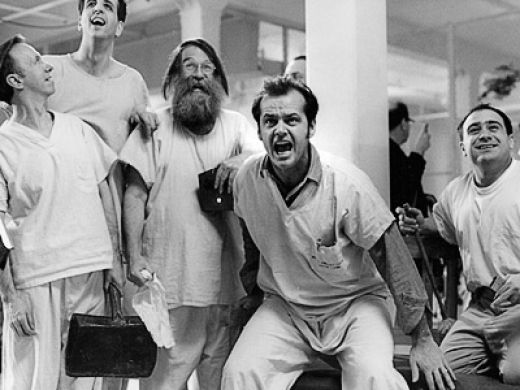
No, it was nothing like the scene from One Flew Over the Cuckoo’s Nest, in which patient Randle McMurphy (Jack Nicholson) battles with Nurse Ratched (Louise Fletcher) for the “privilege” of watching the World Series, but there is an undeniable spirit to the World Series. Unlike the Super Bowl, it is a series of games that drains and demands the very best from its players.

In fact, our charge nurse made popcorn and watched the game with us. We were bonded in our situation, yet simultaneously celebrating with a much larger community.

Last night, we celebrated triumph over adversity; hope over despair; light over darkness.

No matter where we are, no matter what we are doing or experiencing, it’s always good to celebrate.

‘Round here

Rich Obrey Photo: Sun Chronicle

Obviously, there are a lot of correlations between politics and football.

In both, I have been little more than a spectator. I know my limitations, but I admire those who suit up, take the field and are willing to take some hard hits to accomplish their objective.

Today our community celebrates the annual Battle of the Bridge, the longstanding and sometimes intense high school football rivalry between Biddeford High School and Thornton Academy in Saco.

I have lived in both communities. My passport is worn and tattered from so many trips across that bridge.

In so many ways Biddeford and Saco are one community; one regional economic engine. Most of us have family, friends and neighbors on both sides of the Saco River.

But today, we must choose sides. Today, we will be rooting for one team, despite whatever complications come from a dual citizenship or allegiance to Thornton or BHS.

There are some historic overtones associated with today’s game.

In the early 1920s, the Klu Klux Klan organized a rally and march in Saco. While the KKK is better known as belligerent, asinine racists, they also don’t care much for Catholics, especially those foreign Catholics who were working in the mill buildings across the river.

The men in white sheets, which reportedly included the mayor of Saco, gathered near the former Mutual Theater on Main Street in Saco. The old theater was being relocated across the street and its former home was being renovated and soon would become Most Holy Trinity Church.

Although the cowardly protestors planned to march down York Hill and across the bridge into the neighboring city of Biddeford, things did not go exactly as planned.

The dozens of KKK members, garbed in their white sheets, proceeded down York Hill, turning the corner toward the bridge and then suddenly froze in their tracks.

Waiting for them on that bridge was a contingent of Franco-Canadians, Greeks, Albanians and many others who refused to yield. These gritty, working-class men with their cheap clothes, worn shoes and funny accents were accompanied by a couple of pumper trucks from the Biddeford Fire Department, not to mention a contingent of police officers, farmers with pitchforks, fishermen with grappling hooks and dozens of men with steel bars and wooden bats.

Historical accounts are sketchy, but rumors persist that a shotgun or two could be spotted in the crowd of angry mill workers.

There was no bloodshed. No violence. There was only a few seconds of an eerie and lingering silence.

The KKK took a step back, pivoted 180 degrees and wisely marched back up the Hill toward Saco. And that was that.

They never made a second attempt to cross that bridge.

A lingering sense of envy and elitism

That battle of the bridge was a long time ago. Most of those wounds have healed but there is ample evidence to show that event had a lasting impression on both cities.

There is a strange dynamic of envy that still exists in Biddeford. On this side of the river, we too often tend to eat our own and tear down those among us who achieve even a modicum of success.

In Saco, there remains a lingering sense of elitism.

We don’t like to talk about it. We like to believe it is urban legend, an urban myth of bygone days. But it is there.

I recently interviewed Saco Mayor Mark Johnston. I have long admired Mark as a man never afraid to tell you exactly what he is thinking.

Sure, he is a politician. He knows and executes political strategy better than anyone I know.  Mark can look you in the eye and say, “I have to raise taxes because it’s the right thing to do for our community,” shake your hand and count on your vote at the ballot box.

Mark acknowledged the air of elitism that exists in his community, but he also talked about his city proudly. He spoke about his neighbors in Biddeford with respect and admiration. He (and so many others) would like to see the cities work more cooperatively to solve mutual concerns and problems.

Today’s football game will be played with dignity, respect and a certain sense of appreciation.

Sure, on both sides of the field, there will be a bit of trash talk, but one team will go home and celebrate and the other will mutter “wait ’til next year” as it leaves the field.

Do it like this, or do it like that

There are two ways to play a football game. A good football game is intense, raw and fiercely competitive. But it is also played by a set of rules, spoken and unspoken.

It’s no different in politics.

In Biddeford, we take our football and politics seriously.

Over the last couple days, as we head into the final stretch of the local campaign season, we have witnessed some distinct differences between the candidates seeking the mayor’s seat in Biddeford.

One candidate has opted to drag my wife and youngest son into the campaign. Another candidate has spent the bulk of the last 24 hours scouring social media to tell the world about a perceived sense of injustice he is enduring and threatening to file a lawsuit against me simply because I am actively supporting one of his opponents.

The third candidate? The one I am supporting? He never talks about his opponents. He is focused like a laser on achieving progress in his community. He is sharing his ideas and enthusiasm and looking forward to the end zone.

If you were to awake from a coma, and have no access to any information except for Alan Casavant’s website or his Facebook page, you would never know he was being opposed. Instead, you would see a man who repeatedly talks about the potential of his community. You would see videos of him discussing the city’s needs and its limitations.

You would see photos and read words that capture his enthusiasm for Biddeford. You would see a positive and professional leader who has proven he can get big things done to help our city move forward.

I do not know who is going to win today’s game, nor do I know whether Mayor Casavant will be successful in his re-election bid.

But I do know that I will be proud today.

Mark Johnston: Rocket Man

Mark Johnston
Former Saco Mayor Mark Johnston/ Marlee Hayes photo

Something strange is about to happen on the other side of the Saco River. It’s as rare as a blue moon and perhaps more difficult to understand.

Mark Johnston will not be running for mayor in Saco.

Johnston, 61, says he has spent nearly 40 years in service to his community. Now, he says, it’s time to let someone else take the reins.

“I’m tired. I’m going to be 62, and now it’s time for Mark,” he said during a recent interview at his Main Street delicatessen, which is often mistaken as City Hall with an amazing selection of wines and good sandwiches.

Johnston came into the world of politics in the usual way: He was a malcontent, a young man worried about a used car lot that was planned near his home.

That was nearly 40 years ago, when he was appointed to the Saco Zoning Board of Appeals. His political career would extend over the next four decades and he served under five different mayors, including Sam Zaitlin, Paul Jansen, Haley Booth, Fred Clark and Eric Cote. He also served on the planning board and the city council.

Of course, Johnston also served as the city’s mayor for the better part of two decades, beginning in 1989 with four consecutive terms that ended in 1997. Six years later, in 2003 he was again elected as the city’s mayor and served another three terms, 2003-2007; and 2011-2013.

Every time his name was on the ballot he easily won his election . . . except the first time.

Despite the fact that he was unopposed and his name was the only one on the ballot, Johnston was forced to sue the city in order to become its mayor because he did not get enough votes to meet the criteria of a provision in the city’s charter.

A superior court judge sided with the politician over the city, but Johnston did not escape unscathed. He was mocked on national television by David Letterman and Jay Leno.

Round and round

Johnston runs Vic & Whit’s with his ex-wife, Beth. They have been divorced 25 years but seem to have a successful working relationship.

Two years ago, I named Johnston as the single-most politically influential person in the Biddeford-Saco area, describing him this way:

Mark Johnston is the consummate politician….

He’s Bugsy Seigel, Charlie Lucianno and Meyer Lansky all rolled into one affable, near-sighted man with an uncanny resemblance to Sir Elton John.

______

This is not the first time you announced that you were stepping down from politics. You always seem to come back for more?

(Laughs) “I really meant it the last time, but I had to come back to correct some very serious mistakes that were made during the Ron Michaud Administration. My intent (in 2011) was to correct those mistakes: our bond rating was lowered, the city had blown through its reserve balances. It was a lot of smoke and mirrors because no one had the courage to raise taxes slightly in order to keep up with very basic infrastructure.”

Are you leaving now because people are angry about significant tax hikes?

“No. I think most people understand the position we were facing. It’s not easy to raise taxes, even a little bit. But leaders are not elected to do easy things. Leaders are elected to lead.”

What was your proudest moment as mayor?

“The train station, hands down.  We were entering a new century and thinking about new transportation. Passenger rail had long been abandoned, but having it come back has paid huge dividends for Saco. It really redefined this community. We have people who live here because of the train and such easy access to their jobs in Boston.”

You told residents it would not cost ‘one red cent’ in taxes. That didn’t quite work out, did it?

(Laughs) “People misunderstood me. I said not one red cent, it ended up being a whole lot of red cents. But seriously, this has become a huge asset for our community. We wanted to embrace it. A lot of things changed in midstream. None of us knew then that Guilford Rail was going to require us to have a $250 million liability policy. But we were able to use the Saco Island TIF and revenues from the MERC settlement and rental fees from the Chamber of Commerce.

“I am very proud of that station. It was the first green station built in the United States. It has geo-thermal heating; and the roof was made with a composite material from recyclables. It meets every standard of LEED certification. It was built by all Maine contractors, with wood beams from Maine forests.”

And the wind turbine

“I’ll take all the fault for that. It’s not the one I wanted, but I couldn’t get the council to approve the one I wanted. What we have is basically a kit that cost us $250,000. I wanted the million dollar one, which would have been much taller and as a result much more efficient.

“The council didn’t want to spend $10,000 for a wind survey study. But what we have is iconic, and it sends a message about our community: we are embracing the future, we are recognizing that we must wean ourselves off fossil fuels.”

What was the worst moment of your time as mayor?

(Pauses) “It happened roughly three minutes after I was sworn in for my very first term, when I publicly fired the city attorney (Mary Kahl). She was a good attorney, but I thought she was interfering too much in the city’s day-to-day business. She ended up going to work for the city of South Portland. I don’t regret what I did, but I deeply regret the way I did it.

“I humiliated her in public, and that’s not leadership. That’s not how you should treat people. We were able to be civil, but the wounds never healed. Unfortunately, she passed away a while ago, and I don’t know if she ever forgave me. I was young and brash, but I learned a valuable lesson: always be willing to talk to those with whom you disagree. Never embarrass or humiliate someone in the public arena.”

Who do you think will be Saco’s next mayor?

(Smiles) “All I can say is that I will have to work with whoever becomes the next mayor.”

Ok, so who do you think will be Biddeford’s next mayor?

“Alan Casavant. He is an outstanding leader; a leader for the future. He is helping Biddeford make huge strides forward. He is also professional, calm and always a gentleman; all those tiny words that define character.”

Who was your favorite Biddeford mayor?

“Roger Normand. He was a man of integrity. He was a normal, average guy who never let the power of being mayor go to his head.”

Do you think there should be term limits for mayors and city councilors?

“Yes. Absolutely. After four terms, it’s time for a change. It’s too easy to get cocky.”

What are your thoughts about the RSU 23 issue, considering some in Saco are advocating for leaving the regional school district?

“I’m a little disappointed by the way some members of our community have acted during this debate. I think it’s a disgrace that some folks have called Old Orchard Beach residents “free-loaders.” RSU 23 has failed because of Saco’s penchant for elitism. We never talked about test scores, we never talked about how to bring teachers up through the ranks. We never talked about the important stuff. I want Thornton Academy to have the test scores that Scarborough is getting, and stop hiding behind the façade of a beautiful campus.”

Elitism in Saco?

“Yes, without a doubt. I grew up on Middle Street, a neighborhood that was known as Little Greece. Many of those people from that neighborhood became important and respected members of our community, civic leaders. It’s like we never got beyond the days of the “Battle of the Bridge.” Why do we still use that name? We never used it when Thornton played St. Louis. There has always been a false air of superiority in Saco. It’s been here a long time.”

What advice would you give to the city’s next mayor?

“Talk less and listen more.”

What will be your legacy?

“The elimination of Maine Energy. It took a long time, but I helped (and so did a lot of other people) keep the pressure on. Joanne Twomey and others never let up the pressure. I honestly never thought I would see the day. I am so proud of what Mayor Casavant and the Biddeford City Council did. That took leadership and vision, but they were not alone. A lot of people helped set the stage for finally getting MERC gone.”

So, will you be back as mayor?

“No, I really don’t think so. I have a new woman in my life, and it’s turning into something special. I was mayor when I got divorced, when I had a granddaughter, when one of my sons went to the battlefield. I’ve given a lot to this city. It’s time for me to take some time for myself and my family.”

Obamacare: Myths and Facts, Part I

health-care-debateSome say that the Patient Protection and Affordable Health Care Act ( aka Obamacare) will provide the final nail in an already sluggish national economy, cost millions of jobs and further entrench every American into greater government dependence.

Others say the new law is a landmark piece of legislation that will literally save thousands of lives by making health care more affordable and accessible to all Americans.

Which argument is correct?

Given the hyper-inflated and strictly partisan rhetoric, it’s hard to know the answer and history will be left to judge the law’s merits and flaws.

In the meantime, I will attempt to examine the new law from both sides of the debate and offer some of the research I have conducted about the law. This week’s installment:

Comparison to Medicare: Myths and Facts

Supporters of the ACA enjoy pointing to the federal Medicare program as a primary defense of the new health care law.

This, in my opinion, is a dangerous proposition for several reasons.

1.) Medicare applies almost equally to all Americans, unlike the ACA, which primarily targets those Americans who do not have (by choice or income restraint) access to health insurance in the private marketplace. In fairness to the ACA, however, it’s important to note that the new law does offer universal protection to all Americans from rather abhorrent practices that were all too common in the health insurance industry, especially rescission clauses, coverage limitations and denial for pre-existing conditions.

The insurance industry argues those practices were necessary to stabilize costs, yet it remains difficult to assess how those savings were passed onto consumers. Thus, one of the more popular components of the new law requires insurance companies to direct a minimum 80 percent of premium revenue toward actual health care costs.

2.) Unlike the ACA, Medicare is not a mandate and you are not fined or otherwise penalized for choosing not to participate as a consumer in Medicare. Both programs, however, are supported by federal tax dollars. Supporters of the ACA argue that mandated participation is the only way to ensure an affordable marketplace. They also say that mandating purchase of health care coverage is no different from a state government mandating required liability insurance coverage on registered motor vehicles.

Comparing mandated auto liability insurance and requirements to purchase health insurance from the private sector is a seriously flawed rationalization that does not hold up under its own weight.

This is a matter of definition and it is outlined in law (both federal and state).

In the state of Maine, you are required by law to have liability auto insurance to drive a vehicle, as pointed out by Senator Angus King during his defense of the ACA on the senate floor earlier this week.

Senator King, formerly the governor of Maine, should know that both the Maine Department of Motor Vehicles and the Maine Legislature define driving as a privilege, not a right.

Maine’s law requiring auto liability insurance makes a lot of sense. It acknowledges and reinforces our shared responsibility to be accountable if we cause damage while driving, but it does not interfere with our rights to make choices, to exist as free people. We have the choice not to drive, whether we like to admit or not. Each of us has the option of walking, biking or using public or private transportation to get to and from wherever we want to go.

The ACA, however, requires, under penalty of law, every American to have basic health insurance. There is no choice. Either you have health insurance or the government is going to levy a fine upon you. Period.

Enter Chief Justice John Robert of the U.S. Supreme Court, a Bush-appointee who is considered a conservative. During a challenge to the ACA, Roberts tipped the scales of justice by opining that the ACA is a tax, and thus; the new law does not violate the Constitution because the power to levy taxes rests with the Congress and can be applied to all citizens.

ACA supporters, including President Obama cheered Roberts’ decision and validation of the new law. Strangely, those cheering previously argued that the new law is not a tax. But none of us should be surprised by the process of politics.

While participation in Medicare is voluntary, it should be noted that this federally subsidized form of health care is universally popular among both Republicans and Democrats.

3.) On a final note, Medicare was a bipartisan piece of legislation. The ACA was not. In fact, the ACA was passed via a straight party line vote only a few months before the Democrat Party was about to lose its majority in the U.S. House of Representatives. In the Senate, all eyes turned to the razor-thin party lines and the election of Republican Scott Brown of Massachusetts  who would stunt a filibuster-proof majority.

On Christmas Eve in 2009, the Senate voted 60-39 in favor of the ACA. (Not a single Republican voted in favor, including Sen. Olympia Snowe of Maine, who voted to approve a senate version in the Senate Finance Committee on the condition of subsequent changes she was promised in the final bill.)

The Senate version of the bill was approved in the U.S. House by a 219-212 vote on March 21, 2010 (Again, not one Republican voted in favor and they were joined by 34 Democrats in opposition. President Obama signed the bill on March 25, 2010.

Comparatively, there was a lot less drama regarding passage of Medicare in 1965. Of course, this happened before the internet.

In fact, Medicare was the result of much more compromise and its passage showed bi-partisan support.

In the Senate, 57 Democrats and 13 Republicans voted for passage of Medicare; seven Democrats and 17 Republicans voted against it.

In the House, 237 Democrats were joined by 70 Republicans in support of Medicare; 48 Democrats joined 68 Republicans in voting against it. The law was signed by President Lyndon Johnson on July 30, 1965.

Those who would say modern-day partisanship is to blame for the party line vote on the ACA, should be reminded that Democrats and Republicans have been able to hash out bipartisan compromises regarding updates and amendments to Medicare as recently as this year. Of course, this dynamic gives credence to Rep. Nancy Pelosi’s statement that the ACA can be “tweaked” as it moves forward.

Next: The financial implications and benefits.

A boy named Sue or a girl named Frank

I suck at baseball.

AM1I also suck at football, basketball, hockey, golf, bowling or pretty much anything that involves hand-eye coordination.

Although publicly admitting that I am the last guy you want on your sports team does not threaten my masculinity, I do hesitate to offer the next line:

I don’t like sports. That, dear readers, is a much bigger threat to my masculinity. Do you have any idea how many Monday mornings I have had to bluff my way through the proverbial water-cooler conversation at the workplace?

Yeah, yeah that was a hell of a game last night; brutal interception. Tom Brady seemed a little off, don’t ya think? Sometimes, when I am deep in the midst of this dishonest parade of masculinity I scratch my balls for good measure and look around for a beer to swig.

The really sad part? I am the only man in my particular department. I work with a team comprised of all women. They all know much more about sports than me.

In fact, most of my gay friends are much better athletes and far more passionate about sports. Even they shun me when it comes to choosing sides for competition on the turf or court.

So it was almost ridiculous that the only “writing” job I could land when I returned to Maine in 1996 was a part-time sports reporter for the American Journal in Westbrook. How hard could it be, I reasoned. I needed the job, and I got my foot in the door with a newspaper near my home.

For the first time in my life, I started avidly reading the sports pages of other publications. I read everything that Tom Chard or Steve Solloway from the Portland Press Herald wrote, right down to their shopping lists. I subscribed to Sports Illustrated. I even tried watching ESPN but there was always the lure of some old Bette Davis movie on another channel.

But my masculinity was about to be redeemed. I was a sports writer. I should have no problems getting a date now, right?   Not exactly.

That fantasy ended about six months later while conducting an interview with a girls’ softball coach. He told me that Heather struck out the side in the second inning. Struck out the side?

The coach had to explain what striking out the side means. That was it. I was done. I went to my editor (almost in tears). I can’t do this, I said.

My editor either took pity on me (or punished me) by re-assigning me to cover the general assignment news beat for the towns of Windham and Standish.

It wasn’t so bad. At least I didn’t have to go to any more football games. I no longer got paid to watch basketball tournaments. Instead, I had the pleasure of attending Zoning Board of Appeals meetings in Standish. I was in my zone (so to speak).

In today’s politically correct world, where self-esteem is more important than reality, even kids like me make the Little League team. Every player seems to get a trophy. We bend over backward to include everyone in everything. I’m not so sure that’s a good thing.

For three summers in a row, I tried out for Little League. For three years in a row, I was never included on the team. My neighborhood chums (Ricky Johnson, Scott Lettelier, Ron Mapes, Doug Murray et al) all made their respective teams: Maremont, Shaw’s, Hunt’s, etc.

Trust me. It felt awful. But is also served me well. I learned pretty early on to focus my efforts elsewhere. While Ricky and Scott were sweating it out on the diamond, I wrote my first book at age 10. I’m pretty sure I also illustrated that literary masterpiece, entitled “Hurricane,” a gripping, fast-paced story about a family that refuses to evacuate their home during a killer storm.

My parents both knew that I would never make the team, but they let me try. More importantly, they allowed me to fail. They allowed me to experience pain, rejection and humiliation; experience which came in pretty handy only a few years later when Cheryl Ridolfi actually laughed at me for asking her to “go out” with me.

Flash forward 25 years, and you find me married to a beautiful woman and “coaching” a T-ball team. One of the parents scolded me for congratulating my team on winning on our second game. “Randy, in T-Ball, we don’t keep score.”

My response? “Well, maybe you don’t keep score, but they do,” I said, pointing to the kids on the field.

Lessons about losing, rejection and coming in second place are hugely valuable. Let’s not rob our children of those wonderful educational opportunities.

The kids are alright

v1I remember it like it happened yesterday, but actually it took place a little more than two years ago.

I was standing in my back yard, practically screaming into my cell phone and more than annoyed with the obnoxious punk on the other end of the line.

I’ll get more into the substance of that conversation in just a bit, but here’s the kicker: the young man I was arguing with was incredibly mature and polite, best evidenced by how he responded to my venting anger about his arrogance.

“Mr. Seaver, I simply disagree with you,” he said more than once during that 15-minute call.  He called me “Mr. Seaver,” a sign of respect offered by a much younger person. It was both jarring and nostalgic.

My parents insisted that we always refer to adults (even their close friends who frequently visited our home) as Mr. So and So or Mrs. Smith . . .

It’s been almost 40 years since I was in the fifth grade, but I still call my fifth-grade teacher Mr. Flaherty, despite the fact that he is a Facebook friend. I know many of my peers do the same. It’s how we were raised. You know, back in the good ol’ days.

The good ol’ days weren’t always so good

Lately, I have heard what appears to be an increasing amount of complaints about Generation Y, those born between 1982 and the early 2000’s.

Of course, the criticism reached a crescendo recently in reaction to the performance by Miley Cyrus at this year’s MTV awards show.

A few days later, a good friend shared a link on his Facebook page about Generation Y, pointing to a familiar narrative about what is supposedly the most self-absorbed, narcissistic and generally lazy generation of all time.

It occurs to me that sociology experts said a lot of the same things about the generations that preceded those Generation Y twerps, Gen X and the so-called Baby Boomers (those born in the years following World War II).

In fact, no one seems to enjoy writing about and analyzing the societal impacts of Baby Boomers quite so much as other Baby Boomers.

For disclosure, I was born at the tail end of the Baby Boomer generation; and I often wonder about the real differences between Baby Boomers, Gen X, Generation Y or even the group that Tom Brokaw so famously dubbed “The Greatest Generation.”

With all due respect to Mr. Brokaw and to those amazing people he wrote about, I think we too often view history through rose-colored glasses.

Tomorrow’s not as bad as it seems

Kids today could not survive in the world I grew up in. Kids today are so disrespectful. Parents no longer teach manners. Kids today are so lazy, self-absorbed, belligerent, spoiled, blah, blah, blah . . .

Sure, I have caught myself yelling at a teenager to “turn down that awful music!” And every time I see a boy with his blue jeans hanging on the bottom of his ass, I have to work really hard not to slap him up side the head.

Within five or ten years, there is absolutely no doubt that I will be screaming: “Hey, kid! Get off my lawn!”

But are kids today really worse than they were in the 1980s, the 1960s, the ’50s, during the Depression . . .?

It seem as if many of us are more than happy to be armchair sociologists. We extract an abundance of anecdotal evidence over time, recognize a trend and react with a combination of resentment, anger, nostalgia and a sense that the world is going to hell in a handbasket.

What we see scares the living shit out of us. These kids are about to inherit the reins. Some day, they will be running this country. We need to do something, and quick.

Not necessarily.

Exception to the rule?

Remember that young punk I was talking to a couple of years ago?  His name is Ryan Gavin, and he came to my house on Sunday to interview me for a radio show he produces in Bangor.

RGA little more than two years ago this young punk took out nomination papers to be the mayor of Biddeford. Other than serving as an appointed student representative on the school board, this punk had zero political experience. He never owned a company or worked to support a family. He was a college student who had yet to finish his educational career. How friggin’ arrogant can one person be? How could he possibly think he was ready to lead an entire city or oversee development of a mult-million dollar budget?

But I was annoyed because I was supporting another candidate. I knew the perils of what could happen in a three-way race. I wanted a two-way race: my guy versus the incumbent, a clear, easy and obvious choice for every voter, regardless of their affiliation. A third candidate, I reasoned, would only muddy the waters. This arrogant punk was about to rain on my parade.

Other volunteers on Alan Casavant’s campaign thought I was overreacting. They did not see this young punk as a threat. I knew they were wrong. Ryan Gavin was no ordinary kid. Eventually, he dropped out of the race and joined our team, heading up the campaign’s social media efforts.

When he came to my house, he was prepared for the interview. He had done his research. He asked tough questions, and caught me off guard more than once. Just the two of us in that room. One of us was a pro, but it was not me.

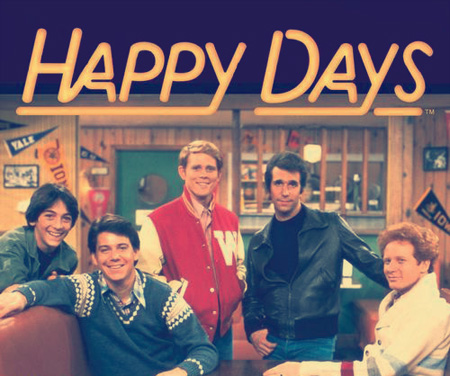
So here’s my own anecdotal observation. There are just as many Richie Cunninghams in the world today as there were in the 1950s. There are also just as many Fonzies, and Fonzie was actually (beneath the surface) a pretty good kid.

Ryan Gavin is much more Richie Cunningham than Fonzie. He was a stand-out student at Biddeford High School. He made older people feel comfortable. He is articulate, polite and wears his jeans on his hips. My wife served with him on the school board and often remarked about how we was always the most prepared, the most earnest of school board members.

In January 2009, Ryan founded WildbrookMedia, and now serves as its executive director, overseeing the creative process for some of the most recognizable content on the air and on social media in Maine.  In 2008, Ryan attended the American Legion’s Dirigo Boys State program, and joined the staff in 2009, currently serving as Media Coordinator. Ryan ran for Mayor of Biddeford in 2011, before endorsing Mayor Alan Casavant in the general election. He  represented Maine at the 47th Annual United States Senate Youth Program, and is a member of the United States Senate Youth Alumni Association.

In summary, this young punk offers a lot of hope for the future, and so do the majority of his peers. It’s just that we spend a lot more time talking about people like Miley Cyrus instead of people like Ryan Gavin.

Sure, this is just one piece of anecdotal evidence, but you don’t have to look very far to figure out that the only thing us old farts have to fear is fear itself.