Still haven’t found what I’m looking for

I am a racist.

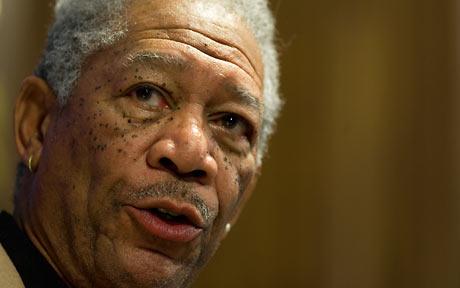
Well, at least according to actor Morgan Freeman.

During an interview on CNN this week, Freeman told interviewer Piers Morgan that racism is at the heart of the Tea Party and that racism has been made worse in the United States since the election of President Barack Obama.

Condelezza Rice

I wonder how Freeman would feel about supporting Supreme Court Justice Clarence Thomas as a nominee for the high court’s chief justice slot; or about a presidential run by Condolezza Rice? I’m betting he would not support either of them; just as he is not supporting Herman Cain, an African American who is also seeking the GOP nomination for president.

I also don’t recall Freeman hosting any fundraising dinners for Alan Keyes, a fellow African American who made two unsuccessful bids for the presidency.

From my perspective, Freeman is screaming racism because he cannot handle the real reasons that Obama’s re-election in 2012 is anything but certain.

The things that are making Obama increasingly unpopular, even among members of his own party, are the same things I listed as reasons for not supporting him in 2008:

  • His inexperience in the realm of business and finance;
  • His failed economic policies;
  • His desperate need to be liked rather than be strong.

I do think it’s worth noting that I actively worked on behalf of Hillary Clinton during the 2008 nomination process, and ultimately voted for John McCain.

I attended President Obama’s inauguration. It was an awe-inspiring experience; several days of basking in a revived sense of hope and change for a country that seemed tragically off-course and without direction.

Morgan Freeman

I’ve got news for you, Mr. Freeman: I do not want to vote for this hip, attractive and intelligent man because he is woefully out of his league, much the same as his predecessor was.

But unless John Huntsman gets the GOP nomination ( a scenario as likely as Susan Lucci receiving an Oscar) I will be forced to give Mr. Obama another four years of on-the-job training, because inexperience and idealism still trumps stupidity.

Does that make me a racist?

An American Girl

I like Sarah Palin.

I can almost hear the wailing and gnashing of teeth from my liberal friends, but…there it is . . . I said it. I put it out on the world-wide web for all to see. You betcha…

It feels good to have that off my chest, sort of like finally admitting that you are powerless over alcohol, corn dogs or soft porn — and are willing, even if only reluctantly, to accept a Higher Power to help you live one day at a time.

Well, she was an American girl, Raised on promises…

I like Sarah Palin, but there a lots of reasons why I don’t want to ever see her occupy 1600 Pennsylvania Avenue.(Liberal Democrats, please pause here and catch your breath)

So, how can someone like me “like” Sarah Palin and simultaneously be terrified by the idea of her sitting in the Oval Office, clutching for the suitcase with the ICBM codes?

It’s such a simple lesson in human psychology, yet it apparently lies beyond the grasp of most pundits, late-night talk-show hosts and even seasoned Democratic strategists. I like Sarah Palin because she is just like me.

She couldn’t help thinkin’ that there was a little more to life, somewhere else…

From my perspective, this is the disconnect that seems to fuel an ever expanding divide in American politics. In fact, it’s safe to say that Sarah was the spark, which ignited the roar of the Tea Party…those angry folks with their “Don’t Tread on Me” flags. I know some of these people…these Tea Party malcontents. In fact, one of my closest friends is a devout Tea Partier.

I asked him why he likes Sarah Palin and the Tea Party. His response?

“Not many people want to look at the facts,” he explained. “Our national debt is crushing, and it cannot be blamed on any one political party. We are driving off a cliff of spending, and Americans are busy on Facebook, contemplating their own navels and unwilling or perhaps unable to comprehend the madness that has become our federal government.”

After all it was a great big world, with lots of places to run to . . .

In his book What’s the Matter with Kansas? Thomas Frank discusses how many so-called Red States that were once bastions of Democratic power became the epicenter of resentment against Washington, D.C., academia, the media and all those other elites.

Recent political discourse, Frank says, shifted dramatically from traditional talking points that relied upon economic well-being, strong national defense and the virtues of democracy toward a new focus on hot-button cultural issues, including gay marriage, gun ownership, abortion and so-called “traditional family values,” which are as hard to define as the word irony.

Yeah, and if she had to die, she had one little promise, she was gonna keep

Palin has tapped into that anger and resentment better than anyone else in the last two decades. To her followers and supporters, the relationship is myopic and not sparingly ego-centric.

Sarah Palin is just like me, they say….although not always with such clarity.

Despite that painfully obvious and rather narcissistic response, too many Democrats sneer at the very mention of her name.

Oh yeah, all right. Take it easy, baby. Make it last all night…

Sarah Palin hunts, she shops for diapers at Wal-Mart. Her vernacular is combination of west Kentucky slang laced with Detroit rhythm and swing.

Watching the roaring crowds cheer her name, a housewife can almost imagine herself running for president while her NASCAR-watching husband cracks a beer and admires Sarah for many different reasons.

Face it, the woman looks damn good in a bikini. And maybe that is why so many of Sarah’s most voracious critics are women. Maybe not, but it’s not an original theory of mine.

The more Sarah is attacked, the stronger she seemingly becomes, not only to her base but her own inner strength and eagerness to go in swinging is only fueled by snide remarks, whether they come from Katie Couric or John Stewart.

Sarah Palin is class warfare defined. The more that middle America feels disenfranchised, the greater the odds that Sarah will be thrust even further into the stratosphere of popularity and adoration.

Otherwise normal, rational and level-headed people come completely unglued at even the mention of her name. They don’t talk about the values and importance of their own political ideals and policy goals. Instead, they attack Palin’s lack of education, her vernacular and her lack of sophistication.

They might as well drive into a trailer park and start swinging at toddlers with a baseball bat.

You don’t help someone see your point of view by giving them two black eyes.

When you attack Sarah Palin, you attack everything she has hijacked for her self-promotional agenda.

The vast majority of Americans do not consider themselves elite, yet few people are willing to stand up and proclaim their lack of cognitive reasoning skills, basic geography or limited vocabularies.

Sarah Palin is an American girl, and when you attack her, her beliefs or her simpleton viewscape of the world, you are attacking God, the Bible, gun ownership, simple living, rural values, the American family, people who shop at Walmart, motherhood, and a whole set of iconic images that are as subjective as they are varied.

The title of Frank’s book is evidence of the left’s arrogance and self-induced superioty complex. What’s the matter with Kansas implies that there’s something wrong with Kansas. A more objective title might be…How did the Democrats lose so much of the middle?

That latter title would require some painful introspection. Otherwise, the Democrats will continue to see themselves further marginalized by Sarah Palin and so many others who are following in her footsteps.

After all, Sarah Palin is an American girl…

Rebel, rebel . . .

It’s been almost 10 years since the United States decided to wage a war on terror by launching air strikes in Afghanistan. Back then, most Americans would be hard pressed to find that country on an un-labeled map.

Today, nearly a decade later– after losing 1,581 U.S. troops, and spending in excess of $440 billion on Operation Enduring Freedom — most Americans would still be hard-pressed to find Afghanistan with or without a map.

Rebel, rebel, you’ve torn your dress . . .

Unlike the ongoing war in Iraq, Operation Enduring Freedom has been somewhat more politically palatable, a bit easier to digest and certainly understandable, given the horrific events that transpired on a bright and clear Tuesday morning in September 2001.

In the days and weeks following Sept. 11, Americans were increasingly ready for revenge. We wanted Osama bin Laden’s head on a stick.

Nobody had to sell us on this war. We had all the justification we needed.

Rebel, rebel, your face is a mess . . .

Many of those who otherwise could be consistently counted upon to criticize use of U.S. military forces remained either silent or ambiguous during the ramp-up of Operation Enduring Freedom. Others became suddenly hawkish on the subject of the Afghan War.

You love bands when they’re playing hard. You want more, and you want it fast

Consider, for a moment, the remarks made by presidential candidate Barack Obama nearly seven years after the war had started.

“The greatest threat to that security lies in the tribal regions of Pakistan, where terrorists train and insurgents strike into Afghanistan. We cannot tolerate a terrorist sanctuary, and as President, I won’t. We need a stronger and sustained partnership between Afghanistan, Pakistan and NATO to secure the border, to take out terrorist camps, and to crack down on cross-border insurgents. We need more troops, more helicopters, more satellites, more Predator drones in the Afghan border region. And we must make it clear that if Pakistan cannot or will not act, we will take out high-level terrorist targets like bin Laden if we have them in our sights.” (July 15, 2008)

But as the war on terror continues taking its toll on the pocketbooks and the psyche of the American public, support for Operation Enduring Freedom is waning.

An Associated Press poll conducted shortly after the war began in October 2001, showed that nearly 94 percent of Americans supported the war on terror. By August 2009, support for the ongoing war in Afghanistan dropped to less than 50 percent.

As we approach the dreaded 10-year anniversary of the Sept. 11 terrorist attacks, the war on terror seems again at a crossroads. Events of the last few days do not bode well for those who say that Operation Enduring Freedom should continue.

On Friday, Aug. 5, following several weeks of an especially divisive Congressional debate regarding America’s burgeoning debt, Standard & Poor’s downgraded the credit rating of the United States government.

Less than 24 hours later, America suffered its deadliest single loss in the decade-old war when a Chinook helicopter carrying members of the elite U.S. Navy Seal Team Six was shot down in Afghanistan. Thirty-one U.S. soldiers, seven Afghan commandos and an interpreter were killed. The Taliban claimed responsibility.

According to a report in the Christian Science Monitor, Saturday’s loss of coalition forces renewed pessimism among the Afghan people about the possibility of ever diminishing the Taliban’s cling to power.

Here at home, as we begin the dog days of August, Americans seemed subdued.

Perhaps the reality of the war and its cost are finally starting to sink in.

Only weeks earlier, we celebrated the death of Osama bin Laden, thumping our chests with nationalistic pride. It seemed as if our mission was drawing to a close. As a friend of mine said several weeks ago, “You don’t fuck with U.S. Navy Seals.”

We had our revenge.

Or did we?

From my perspective, the objectives of the so-called War on Terror are as murky and as hard to explain as the bottom of . . .well, I don’t know.

Fighting a War on Terror is like fighting a War on Poverty, a War on Drugs or a War on Jealousy.

Noble in its intentions, perhaps . . . but never-ending.

Although I was only 11 years old, I can still recall watching as American military forces and civilian personnel were evacuated from a Saigon rooftop in April 1975. The Vietnam War was finally coming to a close.

I remained a political and news junkie through my adolescence and into my adulthood. I cheered for the Afghan insurgents who stood up to the mighty forces of the Soviet Union. The Russians invaded their southern neighbor on Christmas Eve 1979. Not quite 10 years later, the battle-weary and nearly bankrupt Russians withdrew without victory.

The words of George Santayana come to mind. “Those who cannot remember the past are condemned to fulfill it.”

But maybe Mr. Santayana’s other well-known quotation is more appropriate. “Only the dead have seen the end of war.”

Janie’s Got A Gun

It was 12 years ago last week when two students at Columbine High School used a variety of weapons, including homemade propane bombs, a shotgun, a semi-automatic rifle and a 9mm handgun in a massacre that left 12 of their classmates and one teacher dead before both shooters committed suicide.

In the days before the attack, the two students prepared several bombs and modified their weapons. These two students were in violation of several federal laws, including the National Firearms Act and the Gun Control Act of 1968, even days before the shooting began.

The incident shook our nation, and once again the national debate over gun control consumed media outlets all over the world.

In response, the U.S. Secret Service, in conjunction with the National Education Association, undertook a study of school violence and published their report three years later, in 2002

The Secret Service Report concluded that schools were taking false hope in physical security, when they should be paying more attention to the pre-attack behaviors of students.

There’s a reason all of this sounds familiar.

Nearly eight years to the day of the Columbine tragedy, a distraught student at Virginia Tech shot and killed 32 fellow students and injured scores of others on April 16, 2007. He also committed suicide.

There was more political fallout. Other nations criticized a U.S. culture that is seemingly enthralled with guns and violence. More gun control laws were introduced and passed. It should also be noted that the university had a campus firearms ban before that massacre happened.

Sadly, I could go on and on with more examples of gun violence and the ways in which those horrific events are exploited by politicians and pundits from both sides of the gun control debate.

But what’s the point?

The point, my friends, is not about the guns. It’s about people and human behavior.

I am treading into this topic as a response to a friend’s Facebook post in which she was commenting on an editorial from the Lewiston Sun Journal regarding a bill before the Maine Legislature that would allow lawmakers to carry handguns.

“In the wake not only of Tucson, but also the shooting at NY City Hall (’03 – one Councilman shot another dead) and various examples of ‘going postal,’ this seems . . . wise?”

I have immense respect for the woman who wrote the above posting on her Facebook wall. She is extraordinarily smart and equally passionate. If I’m going to debate her, I need to bring my A game, and even then the odds are stacked against me.

But it was just two words from her pithy post that jarred me: “going postal,” just another catchy euphemism that grants us permission to brush off and dismiss a much darker topic: The cost of mental illness and our society’s unwillingness to acknowledge the ramifications of a grossly insufficient treatment system.

The genesis of the term “going postal” can be traced back to the early 1980s, when a spree of shootings by U.S. Postal workers became a macabre trend.

The term is now comic relief, as best evidenced by frequent double entendres on the Seinfield show, in which “Newman, the postal worker” was often teased for his bizarre behavior and frequent angry outbursts.

We laugh.

Some say the definition of insanity is doing the same thing over and over while expecting different results. Keep laughing, if you can.

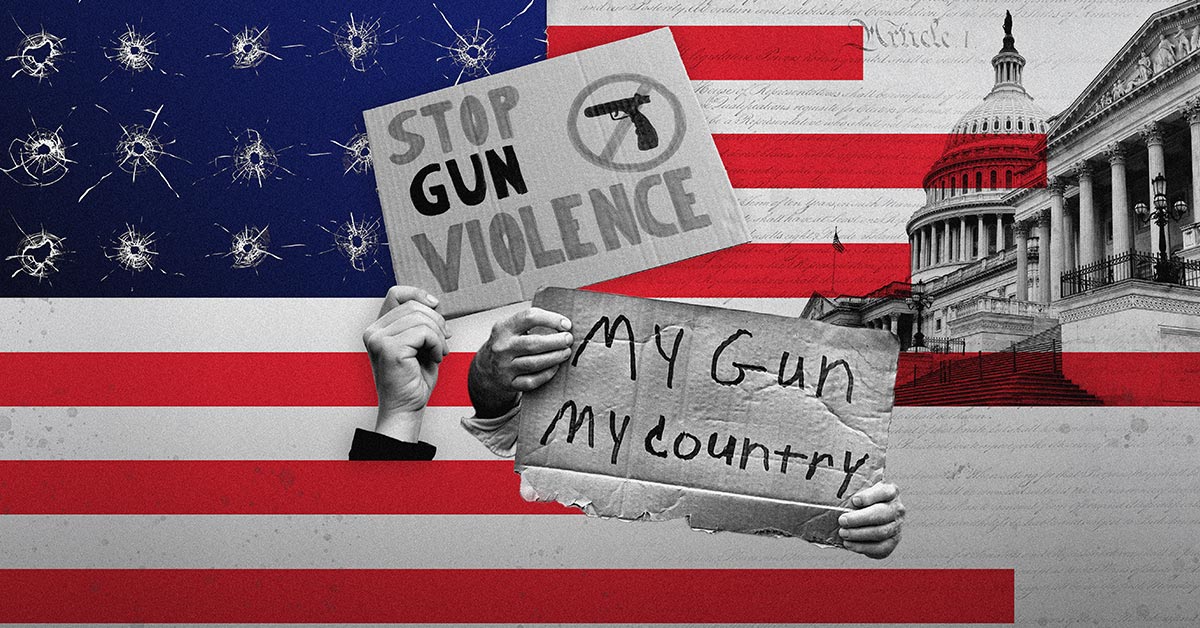
I am a big believer in the Second Amendment. I tell my friends that the Second Amendment ensures the continuation of the much more beloved First Amendment.

But I must admit that I am sometimes conflicted. After all, our society understands and accepts limitations on freedom of speech and expression. It is a violation of federal law to say, “I am going to kill the president.” It is also against the law to scream “Fire” in a crowded theater.

Former Supreme Court Justice Potter Stewart famously quipped “ I know it when I see it,” as he struggled to define what is and what is not pornography.

Reasonable people can agree to be reasonable, right?

Sure, but what about the unreasonable people? That is a different subject altogether.

The bottom line is this: Guns represent power.

You never see news footage of refugees slinging rifles over their shoulders as they are forced to leave their homeland because of a tyrannical government, do you?

Alan Keyes, a conservative African American and a perennial presidential candidate, once quipped, “This nation would have never had a slavery problem if the people of Africa were armed.”

Any half-rate student of history can rattle off a litany of government abuses, which all began with the collection of the public’s firearms.

Guns are part of our American culture and psyche. One of my core beliefs is that power should be equally distributed and held by the people.

Thoreau seemingly agreed with my stance, when he wrote, the government that governs least governs best. Of course, he wrote Civil Disobedience in 1849, so it’s hard to know where he would come down on the post Columbine gun control debate.

I own three guns (a .22 rifle, a 12-gauge shotgun and a 20-gauge shotgun). Ironically, I don’t allow firearms in my home. My guns are stored in a gun-safe at my father-in-law’s home, some 15 miles away. They are used for hunting.

There are two reasons for not having firearms in my home.

1.) I have teenage sons who are often alone at home while Laura and I are working; and

2.) I have a responsibility to acknowledge and manage my own mental illness.

I feel safer without firearms in my home, but I am also troubled by any further encroachments on my Second Amendment rights. It doesn’t mean I think everyone should own an Uzi. Then again, reasonable people can agree to be reasonable.

But what are we going to do about the unreasonable people?

Laugh, or introduce legislation requiring background checks on the sale of propane tanks?

Tucson shootings and the costs of stigma

(originally published in the January 11, 2011 Portland Press Herald)

The horrific event that transpired in Tucson on Saturday has inspired more than ample discussion regarding the tone and spirit of our nation’s political discourse.

Despite all the fervent commentary, there is one piece of this puzzle that remains largely glossed over, however.

And this is where it gets a bit personal.

When I was 22, I was living in Tucson and attending college part-time. Just like Jared Loughner, I was removed from school for many of the same reasons.

But I got lucky. I ended up at the Southern Arizona Mental Health Center (SAMHC) and spent the next several weeks there as an inpatient client.

I did not have insurance. I did not have any assets or even a job. My family was in Maine, thousands of miles away. So, my ability to receive life-saving treatment and long-term support services was funded primarily on the backs of Arizona taxpayers.

Nearly a quarter century later, I like to think that investment has, so far, paid significant dividends. But I can assure you, it was a long-term and risky investment.

Make no mistake. Mr. Loughner committed horrific, criminal acts that warrant the full weight of justice. But if society expects and demands justice, we must also recognize that there is a very deep and painful cost associated with scaling down or the elimination of community-based mental health services and treatment options.

According to its web site, SAMHC was officially established in 1962 as a state-owned and operated outpatient mental health facility under the aegis of the Arizona State Hospital.  The campus-style facility, then located at the intersection of Campbell Avenue and 6th Street, was purchased through legislative appropriation.

Nearly 50 years after its founding, SAMHC continues to provide crisis behavioral health services to the entire community, regardless of ability to pay, insurance status or age.

As of this writing, it is unclear whether Loughner attempted to access those services or if he or members of his family made any attempt to deal with his now-obvious illness.

What is clearly known, however, is the commentary our society freely tosses around when describing mental illness.

Unfortunately, the terms “sicko” “whack-job” and “nut case” are apparently acceptable on social media outlets, reader comment pages and even in the so-called mainstream media.

Yet, we wonder with righteous indignation why those affected by mental illness are reluctant to seek services or get help before their illness manifests itself into a deadly outcome.

If I were dealing with testicular cancer, I could expect to be described as a “hero” or as a “survivor.”  I am praised for my courage to acknowledge my illness and for my willingness to fight it tooth and nail with all available resources.

Heck, you might even put a bumper sticker on your car, wear a pink bracelet or post something supportive on your Facebook page.

But what if I tell you I have a diagnosed mental illness; an illness that affects me every day; an insidious, almost-invisible illness for which there is no cure?

I get some nervous head nods or even some encouragement in the form of: “pull yourself up by your bootstraps, try positive thinking, you should appreciate things more.”

Well-intentioned, perhaps, but the stigma and its costs are clear.

Though we have made much progress, I can assure you that we have a long, long way to go.

Only because I was able to access services and am willing to deal every day with my disease am I able to do things now that I once thought impossible: hold a job, enjoy a wonderful marriage, own a home and even hold a driver’s license.

So, some may choose to focus on the debate regarding our nation’s political rhetoric.

But whether we’re talking about John Hinckley, Mark Chapman or the more recent example of Jared Loughner, one thing we should all be able to recognize is that mental illness can be a fatal illness – and if left untreated, its costs are overwhelming.

According to the Centers for Disease Control, one of every five Americans suffers from some form of mental illness.

I hope you agree with me that an ounce of prevention is worth a pound of cure.

An Inconvenient Truth

Originally posted June 2009:

The tide has turned on our economy.

Millions of Americans are out of work.  The real estate market is in the toilet and consumer confidence is at an all-time low.

Our nation’s current economic picture is very similar to what was  happening in 1930s Germany, a country that was especially hit hard by the Depression that also rocked America in 1929.

The time is ripe to rise up  against the corporations. You know those legalized collections of people who
like to make a profit. It seems profit is a bad thing now.

In the midst of all this economic crisis, our country is focused upon “reforming” our nation’s health care system.

Many people, it seems, are fed up with the greedy insurance companies that would rather focus on profits than healing the  sick. But just beyond the sound bites and the rhetoric there are some  inconvenient truths.

Take, for example, the following nuggets of  information that you will not hear from the folks at Change For America or Michael Moore, a man who is making a pretty penny on his latest movie, which did not
use union workers.

According to a PricewaterhouseCoopers’ study, in 2007 health plans had an average profit margin of 3% (THREE  PERCENT)

According to a study by RAND Health for the California  HealthCare Foundation “…medical costs explain nearly 89 percent of [health plan]  revenue increases.”

According to Kaiser Health News (not exactly a bastion of conservative thought), “the major causes of health care’s escalating  costs are the rising prices and the increased use of medical services, including hospital stays, prescription drugs, new technologies and doctor  visits.”

According to CMS data, over 40 years, the real costs of private health insurance have grown at an annual rate of 5.2 percent. Benefits, as  measured by the cost of health care services to members, have grown at real rate  of 5.3 percent over the same time period. Administrative costs have grown more slowly, at a real rate of about 4.9 percent since 1966.

According to Kaiser Health News, “With the nation’s health care spending estimated at $2.5  trillion this year, even the elimination of insurers’ profits and executive  compensation would lower health care spending by just 0.5 percent.”

In 2006, health plan profits of the top 10 for profit health plans accounted for 0.5%of total health care spending; in 2007, 0.6%; and, in 2008, 0.5%.

Well, there you go.

There’s no question that our current system  needs reform and that working Americans should have access to adequate and safe  health care, but Congress ought to focus on solving the problem.

Don’t hold your breath. It will never happen because it requires leadership, not class warfare rhetoric.

Roland, the headless gunner

As we inch closer to the 2004 elections, we all seem to be getting either more stupid or lazy. Maybe both.

While we listen to the presidential candidates debate how they spent their summer vacations during the Vietnam War, a number of key issues seem to have fallen by the wayside. At the same time, it seems that the media and the American electorate could not care less.

Take, for example, a front-page story in the Sept. 10 Portland Press Herald regarding Bushmaster, Inc., a Windham-based gun manufacturer. According to the story by David Hench, the company has agreed to exhaust its insurance benefits in order to console the victims of the Washington D.C. snipers.

How can we read a story like this and not be outraged? Yet again, the liberal mentality is taking the path of least resistance and faulting the gun manufacturer as a way to appease concern about acts of senseless violence.

Somehow, we believe that getting rid of the guns will reduce crime. It’s akin to believing that Prohibition would save American families, reduce crime and prevent rampant alcoholism. Gun control appears to be the easiest, safest and least costly approach to solving an otherwise complex problem.

And when that doesn’t work, blame the corporations. Riddle me this: What consolation is $550,000 going to bring to anyone who lost a family member?

Although the folks at Bushmaster apparently believe they are not at fault for the snipers’ use of the company’s weapons, the lawyers believe that settling will be a lot less expensive than a trial. And so it goes once again; a company that reportedly employs 100 people will be held responsible for the idiotic lunacy of two criminals.

I don’t know about you. But I’m not going to sleep any better tonight.

This, dear readers, is just another example of our society’s constant push to assign blame rather than hold individuals accountable for their own actions. Under this logic, Mary Jo Kopechne’s family should sue General Motors, not the Kennedy family for their daughter’s tragic death In Oldsmobile Delta 88 under the Chappaquiddick Bridge.

People kill people, not guns or cars.

And for all my liberal buddies out there, my favorite bumper-sticker is still: “Ted Kennedy’s car has killed more people than my handgun.”

Handgun legislation did nothing to prevent the violent death of Nicole Brown or Ronald Goldman, either. Gun registration laws also did nothing to prevent a South Portland man from being beaten to death with a baseball bat four years ago.

I always find it ironic when my liberal colleagues blather on about the First Amendment but then speak with such disdain about the next item in the Bill of Rights as if it were nothing more than protection for duck hunters.

Our nation’s forefathers knew all too well what could happen to an unarmed citizenry. Despite the constant lessons of history, (from Kosovo to Cuba and from Pre-WWII Germany to South Africa) liberals still believe that “regular citizens” have no need for owning weapons.

But when was the last time you saw a refugee crossing the border of his former homeland, carrying a rifle across his shoulder? It doesn’t happen. What would have happened if the Africans could have shot back at their American oppressors?

I don’t own a gun now, but I did. And to think that the government believes it should have a list of anyone who owns a handgun should be chilling enough. But even if getting rid of all the guns gives you the soft and fuzzies, should we really hold the manufacturers responsible for the actions of criminals? I think not.

A while back, a man in California killed several pedestrians when he drove into a crowded public market. Where’s the consolation for those families? Where are the lawyers, drooling over the chance to sue the Ford Motor Company? It’s just that we hate guns — unless, of course, we find ourselves on the wrong end of a violent crime. When that happens, having a gun would be mighty handy.

My kids know that they will always be held accountable for their actions. And only by teaching them about discipline and personal responsibility can they ever hope to be truly free men in a world that is increasingly looking for someone else to blame.