
Interview: Michael Cantara

A retired judge, district attorney, state commissioner and former mayor from Biddeford reflects on his career and the changes in his community.

Hollywood movies often rely on stereotypes. Lawyers are frequently depicted as corrupt and self-serving. The district attorneys in those movies are not much better, using their power as glorified crime fighters for political gain. Mayors are routinely portrayed as bumbling, narcissistic egomaniacs; and judges wield their power with a rigid temperament and periodic fits of rage.
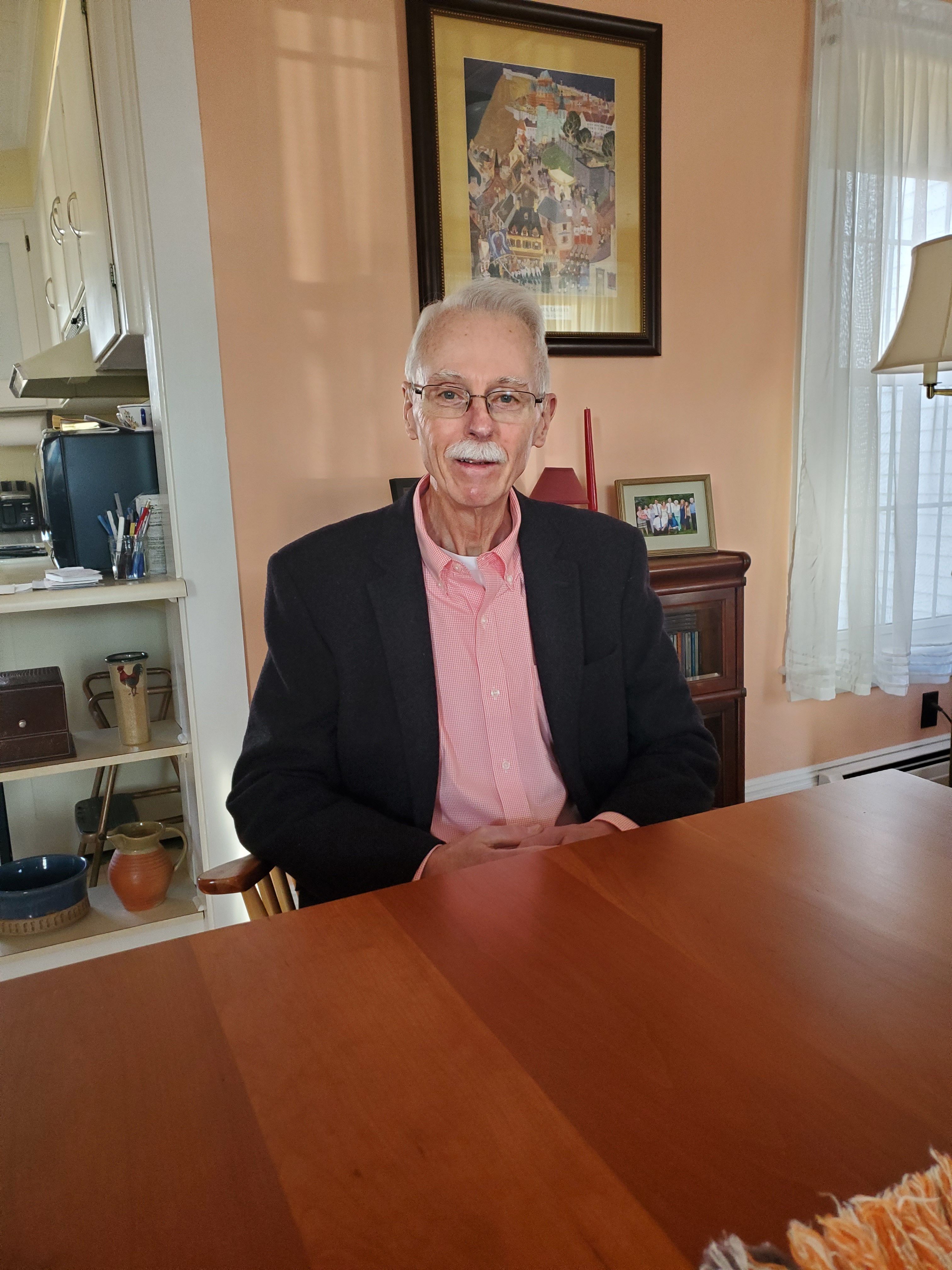
Michael Cantara/ Seaver photo

Michael Cantara of Biddeford has served in all four of those roles, but he is the exact opposite of those Hollywood stereotypes. Instead, Cantara is well-known throughout southern Maine as a man of principle, restraint, intellect and compassion.

Among many other awards and accomplishments, Cantara was inducted into the Maine Franco-American Hall of Fame and also inducted into the Biddeford Hall of Fame in 2022.

Cantara, 70, was adopted as an infant from the St. Andre Home in Biddeford by Jean Paul and Laurette Cantara. He and his two sisters were raised in a very modest home on Granite Street Extension. His father worked at the Saco Lowell machine shops. His mother worked at the Pepperell textile mill and later as a waitress at the Nutshell Restaurant in Biddeford.

He attended parochial schools, including St. Andre’s and later St. Louis High School, which closed just before his senior year. Thus, he graduated from Biddeford High School in 1971 before attending Colby College with the idea of becoming a pediatrician.

You planned on becoming a doctor but ended up retiring as a judge. A lot of things must have happened between those two bookends.

“Oh yes, they certainly did.” (Laughs) “I wasn’t exactly a clear career thinker when I went to school. I majored in French with a minor in biology. But my dream of being a pediatrician floundered on the shoals of organic chemistry. (Laughs) So, I reset the dial and decided to become a teacher.

“In my senior year of college, I was nominated for a Fulbright Teaching Scholarship. So, I got this wonderful gift of teaching in a French high school in Normandy, near the small town of Rouen, where Joan of Arc was burned at the stake.

“I taught American culture, history and language at a vocational school. My students were adolescent French boys from the local neighborhood. They were so receptive to the ideas I was teaching because at that time all things American were considered pretty cool.”

You returned to the United States and ended up going to law school.

“I had wanted to teach French on the college level, but was intrigued by political science and chose the mayoral election in Paris as the topic for my doctoral thesis. At that time, there was quite a bit of upheaval on the city’s political landscape.

“There was so much happening in the early 1970s. In general terms, it was a time of upheaval when young people were being encouraged to stand up for what they believed; to be a part of the social change that was happening all over the world.

“I wanted to go back to Maine, and the options for teaching French were practically non-existent, and I was exploring opportunities for public service. So, I enrolled at the University of Maine Law School.”

You were paying close attention to politics on the national, state and even local level, at a time when Maine’s own Senator Edmund Muskie was derailed from his presidential campaign because he allegedly teared up during a press conference.

“Yes, men – – especially back then — were not supposed to cry. I was very inspired by Senator Muskie and his dedication to public service. As you know he was the architect of the Clean Water Act. Without that federal legislation, which was vitally important for Maine, we wouldn’t be talking about the Riverwalk in Biddeford today had it not been for Ed Muskie’s leadership.”

“In fact, Senator Muskie gave the commencement address at my high school graduation, which was held at Thornton Academy because Biddeford did not have enough space.”

You were drawn to the Democrat Party and today remain as a party stalwart.

“I was very much influenced by my parents. Both my mother and father read the paper every day, and they were both Democrats who understood the importance of voting and paying attention to what was happening. Democrats were very pro-union.

“My uncle Henry, however, was anti-union. He worked at S.D Warren and was very much a company man. Regardless, my father was always very calm when talking to my uncle about the importance of labor unions.

“My father would listen patiently and spoke in a measured way, but always remained committed to his beliefs. I learned a lot from my father.”

You hung out your law practice shingle on a Crescent Street office without much money in your hand.

(Laughs) “Actually no money. My law partner Jim Boone and I were able to secure the lease by offering sweat equity. We would paint the building and sand the floors in exchange for the first few months’ rent.”

And then you decided to get into politics.

“What was I thinking? (Laughs) I decided to run for the Legislature in the early 1980s. At that time, I was living on State Street. And the occupant of that House seat in the Legislature was Lucien (Babe) Dutremble.

“I don’t know what possessed me, but I had the crazy idea of challenging Mr. Dutremble – one of the most respected and adored men in the city – in the Democratic primary. And, of course, throughout the campaign he couldn’t have been any kinder to me.

“What was so strange and incredible to me is that I lost only by 16 or 18 votes. I can’t remember exactly, but it was slim enough to invoke the city charter’s requirement for a recount, which was presided over by Luc Angers, the city clerk at the time. They were all paper ballots back then and the recount took place at the police department. The result didn’t change, but I thought that was probably the end on my political career.

“But then a couple years later, I was asked by Mayor [Robert] Farley to serve on the planning board, even though I was previously on the [William] Pombriant ticket who ran against Mr. Farley in the primary. I ended up serving almost four years on the planning board, and so I had a ringside seat to some of the issues affecting Biddeford: Affordable Housing, Land Use and Habitat Protection.

“Not much later, Gene Libby, who was the district attorney, asked me if I would join his office as an assistant district attorney. I enjoyed that work and was covering all three district courts, which were then located in Springvale, Biddeford and Kittery.”

And then you decided to run for mayor.

“Yes, and that was back when local elections were partisan, so there were primaries and a longer campaign season. There was no city manager. The mayor ran the city’s day-to-day operations, much different than it is today.”

Why did you only serve for one term?

“Because the seat for the district attorney was opening up. It was an open seat, and I was looking forward to the challenge.”

Bonnie (Belanger) Pothier told me that you practically hounded her to run for the mayor’s seat to replace you. She jokes that she just finally caved to your pressure.

(Laughs) “I knew that she was going to be a great mayor, and she proved me right. I didn’t always agree with her, but I had tremendous respect for her. She had a lot of uphill battles to fight, but she was a remarkable leader.”

While you were serving as district attorney, Governor John Baldacci appointed you as Maine Public Safety Commissioner for four years, and then during his second term, he nominated you to serve as a district court judge in York County.

“Yes. I was among five people nominated to fill new positions created in order to address significant backlogs of cases and to free up more judges throughout Maine to serve the newly-created business docket.”

You served as a judge for 12 years and retired in 2019. Do you miss it?

“I very much miss the people I worked with. I had the privilege of working with exceptional people; the clerks, the magistrates and the marshals. But the weight of some of the decisions a judge has to make – I don’t miss that particular kind of stress.

“It can be very challenging. You can provide a legal answer to a problem, but you’re not providing a life solution. There’s so much poverty – – financial poverty, health poverty, educational deficits and mental health issues, not to mention chronic unemployment.

“As a judge, you are witness to all of it and sometimes feel so powerless to change any of it.”

You are a true son of Biddeford. What challenges do you see facing the city today?

“I have been a citizen of Biddeford for most of my 70 years. Without question, we must address the issue of homelessness. Yes, it is a financially expensive and complicated issue, but we have an ethical obligation; a moral obligation to do more than just talk about the issue.

“I was taught that we are all children of God. I don’t want to let my brother or sister freeze to death tonight. We are living in 21st Century America, and I don’t think that’s too much to ask.

“It is an issue of dignity, and it is not insurmountable. We just need the political will to make it happen.”

From the humblest of beginnings, you went on to become a teacher, an attorney, a mayor, a district attorney, a state commissioner and then a judge. If they were alive, do you think your parents would believe how much you have been able to accomplish?

“I don’t know, but I do know that I learned life’s most important lessons from my parents, including the importance of service to your community; to volunteer for your school, your church.

“I certainly hope that I lived up to their expectations. I hope that I have lived a good life. I think that’s the most important thing.”


Originally published in Saco Bay News

I Wanna Hold Your Hand

Two rather interesting events happened this week, each painting a troubling picture for loyal, solid Democrats at both the national and local level: Senator Joe Manchin of West Virginia announced he would not seek reelection, and City Councilor Marty Grohman was elected to become Biddeford’s next mayor.

What do Manchin and Grohman have in common?

Bear with me, because I think these two stories serve as a bellwether of a changing political landscape that has long alienated people in the so-called political “middle,” the centrists who are weary of extremists on both the left and the right of the political spectrum.

Mayor-elect Marty Grohman

Currently, Democrats have a razor-thin majority in the United States Senate, including the so-called “Independent” senators Bernie Sanders of Vermont and our own Angus King, both of whom caucus with the Democrats and consistently follow the marching orders of both Chuck Schumer and President Joe Biden.

It’s really nothing short of a miracle that any Democrat could win an election in a state like West Virginia, which is more red than Biddeford City Councilor Marc Lessard’s campaign signs. Manchin’s decision spells very bad news for the Democrats and will no doubt reshape the battle for senate control in 2024.

“Manchin’s moderate positions have at times been a thorn in the side of his increasingly left-leaning party,” according to ABC News political analysts.

So how does this connect to the rather mundane and much less dramatic world of Biddeford politics?

Theoretically, Biddeford’s municipal elections are supposed to be a “non-partisan” affair. Biddeford voters approved a change to the city’s charter in the late 1980s to dump the partisan labels of Democrat and Republican.

But if you really believe our local elections are non-partisan, I’ve got an ocean-front home to sell you in Ohio.

Make no mistake, despite all the pontificating, hand-wringing and lack of primaries, local elections are still very much influenced by each candidate’s political label. Not by his or her merits, but by his or her political allegiance.

Local Democrat leaders like State Rep. Marc Malon will tell you that’s not true.

It should be noted here that on top of his elected office, Malon is also professionally employed by the Maine Democrat Party. He currently serves as Party Affairs Director for the party.

Malon is a good guy. He’s very smart, and he is passionate about his politics. He works hard, and has a unique perspective on Maine’s political landscape. It’s his job to make sure that Democrat candidates get elected in Maine, even in places like Biddeford that are supposedly “non-partisan.”

So why do I keep saying “supposedly?”

Because partisan politics still plays a big role in Biddeford’s political circles and games, despite what the city’s charter says about municipal elections.

That said, state and local Democrat leaders, including Malon, did absolutely nothing wrong. Let me repeat that in order to be perfectly clear: No one on the ballot (nor their supporters) did anything wrong during Biddeford’s most recent election cycle.

So why am I taking the time to write about an election with zero incidents of impropriety by any of the candidates or their supporters? First, I am a local political junkie. Secondly, because I see a major shift starting to happen in both local and national elections.

In a story I wrote for Saco Bay News just a few hours after the results were announced, I listed those who supported and endorsed each of the mayoral candidates: Susan Deschambault and Marty Grohman. I posted that story on my personal Facebook page with a teaser, asserting that the Democrat Party closed ranks on a local level and clearly lined up behind Deschambault over Grohman.

It’s understandable (and quite predictable) that Democrat leaders would line up behind a Democrat over an “independent” or a Republican candidate in a general election, even though party affiliation isn’t supposed to matter in a non-partisan election.

Overall, the city of Biddeford – like many other mill towns — has a long history of leaning to the political left. Today, however, it seems that it’s becoming a matter of how far left a candidate needs to be in order to win elected office in the city.

I have a theory about why notable Democrat leaders were so enthusiastic about supporting Deschambault over Grohman. In a nutshell, it was political pay-back. Allow me to explain.

Both Deschambault and Grohman served on the city council. Both candidates served in the Maine Legislature. They had very similar platforms. In fact, during an October head-to-head debate, the only real difference that was clear to the audience was that Grohman likes to ride a bicycle and Deschambault says she likes to avoid both bicycles and walking.

Just days before the election, Mayor Alan Casavant repeated his support for Marty Grohman to take over the big chair at City Hall. On that same day, the Deschambault campaign ran an advertisement in the Biddeford-Saco Courier, listing local politicians who were endorsing Deschambault.

Deschambault’s list of supporters was impressive: State Sen. Henry Ingwersen, the highest state official serving Biddeford, was on that list. The rest of Biddeford’s delegation, including Malon and Rep. Erin Sheehan, were on that list. Former Speaker of the Maine House of Representatives Ryan Fecteau was on that list.

Previous state representatives Megan Rochelo and Victoria Foley (who lost her own bid for mayor against Casavant two years ago) was on that list. Previous mayors Mike Cantara and Bonita (Belanger) Pothier were on that list. Weeks before, Malon and Fecteau both used their personal Facebook pages to endorse Deschambault.

Pretty impressive, huh? What do they all have in common? They are all active, strident and loyal Democrats. On a local level, these folks are all political heavy-hitters. If you want something done, these are the people who can make it happen.

But it wasn’t just local Democrats who were offering assistance for Deschambault.

According to campaign finance reports, Deschambault’s campaign also got the support of many individuals well outside of Biddeford, including Democrat Party activist and former legislator Justin Alfond and State Senator Joe Baldacci, younger brother of former governor John Baldacci, both of whom wrote checks for Deschambault.

I saw that ad and thought to myself, it’s all over for Grohman. I publicly predicted that Deschambault would win the race. Despite what some people like Alan Casavant say, Biddeford is pretty much a blue community. Or is it?

But then something strange happened. Deschambault lost. Wait. What?

Despite such an impressive list of Democrat supporters and the fact that Biddeford most often votes blue, the party wasn’t powerful enough to knock off Grohman, the more centrist candidate.

Deschambault’s track record in the State Senate was basically flawless. She did whatever the party leaders told her to do. She always voted the way they wanted. She played nice. She toed the party’s line.

Good for her. She’s a Democrat. She voted the party line. Yawn.

During his stint in the Legislature, Grohman sometimes had the temerity to look at issues from a more centrist position. Furthermore, he had the audacity to run as an “independent” candidate against Democrat Chellie Pingree for the First Congressional District race. That was enough, right there.

The Republicans may have the symbol of an elephant, but the Democrats are the ones who “never forget.” Deschambault was being rewarded for her party loyalty, Grohman was being punished for thinking for himself.

Shortly after I posted my story on Facebook, Malon went on the defense.

“As a staffer for the Maine Democratic party and one of the electeds (sic) who endorsed Susan, I am pretty confident offering this analysis: there is little to no impact on the political landscape in Biddeford for state/federal races,” he wrote. “This is based on previous municipal and state/federal results and my analysis of this particular race . . .”

I responded toMalon, “ . . . but there is no denying that party stalwarts lined up solidly behind Deschambault: Baldacci, Alfond, the entire legislative delegation (current and former).”

Malon came back:because they all knew her and liked her. Honestly that’s about the extent of it.”

Again, I like Marc. We have plans to get together for some good whiskey soon. We’re both political animals, but I’m not buying what he’s selling. Because they knew and liked her?? Are you freakin’ kidding me??

They all know Marty Grohman, too. What, exactly, did they not like about him? Because he rides a bicycle to work? Because he is a successful businessman? Because he has blue eyes? Because he volunteers at the skating rink and helps veterans? Spare me.

Biddeford is changing, including its political machinations, and that started more than 20 years ago, when MERC was still burning trash downtown. A Republican, Saco native (Gen. Wallace Nutting), beat two well-known, lifelong residents for the mayor’s seat. Ever since, the Democrats’ iron grip on the city has been slowly eroding.

I agree with musician Sheryl Crow, “a change will do you good.”

My advice to the Democrats? You’re gonna need a bigger boat.

Originally published in Saco Bay News

Deschambault stumbles during mayoral debate

Several people were less than pleased about something I posted yesterday on Facebook regarding Biddeford mayoral candidate Susan Deschambault.

Several of Deschambault’s supporters questioned my take-away observations of Monday’s mayoral debate, in which I wrote that candidate Susan Deschambault tripped over herself and made a big “gaffe.”

Some folks speculated that I was supporting the other candidate (Martin Grohman) and just looking for a gotcha moment. They accused me of “taking things out of context” and playing “loose with the facts.”

Well, I have some bad news for Deschambault and her supporters: The video record of that debate paints a rather unflattering picture, much worse than anything I posted on my Facebook page.

Former State Sen. Susan Deschambault (Facebook photo)

To those of you who demanded Deschambault’s “exact” words about the closure of the Maine Energy Recovery Company’s solid waste incinerator (MERC), here they are:

“I served under Joanne Twomey, and I served under General Nutting. I could mention to you that General Nutting and the council at that time bought MERC. How did they buy that? “

“We put out a referendum, we will buy it for 10 million dollars. You guys were smart, you said no. We went back to the drawing board, by that time we got MERC all upset, and they wanted to leave, we knew that. We brought it down to six million dollars and you, the taxpayer, paid for that. You wanted that and look what happened. Magic.”

Let’s examine the facts:

1.) Mayor Wallace Nutting and his council did NOT buy MERC. That facility was still operating many years later, long after Nutting left office. In fact, MERC was still there during Mayor Twomey’s two terms in office.

2.) There was only one municipal referendum, which was rejected by a margin of 2-1 by the city’s voters. There was never a second referendum.

3.) Magic??? Are you kidding me?? MERC’s closure took a Herculean effort by many individuals. It was most certainly not “magic.”

4.) The city finally found a way to end the nightmare in the summer of 2012, during Mayor Alan Casavant’s first term in office, The ensuing development was not instantaneous, and it took solid leadership and a new positive and professional approach from City Hall.

The transcript of this debate shows that both candidates were not really well-prepared for some rather softball questions, but if you watch the video, you will see Deschambault had a hard time staying on topic.

Those are the facts. Period.

I Am The Walrus

I have been covering Biddeford City Hall for nearly a quarter century, and I don’t recall seeing anything so silly and inane as what I witnessed during Tuesday’s city council meeting.

If you are a resident of Biddeford, you can let out a deep sigh of relief because City Manager James Bennett and his crack staff uncovered a little-known flaw in the city’s municipal ordinances.

Apparently, up until Tuesday, there was nothing in the city’s code of ordinances regarding improper or unauthorized usage of the city’s official seal.

Members of the city council, almost without question, dutifully voted unanimously to approve this important and vital change to our code of ordinances.

Phew! We narrowly dodged a bullet there.

But here’s the deal. It was already illegal. State law already prohibits any persons or entity from using a municipal seal in any inappropriate manner.

In fact, Bennett and his staff knew – before bringing this gem before the council— that it was already a violation of state law to use the city’s official seal in an unauthorized manner. But that didn’t stop them from drafting both a memo and new ordinance language in order to ensure that bad people clearly know that our city will not tolerate violations of state law within the city limits.

Wait. What?

In the classic 1978 comedy Animal House, Dean Wormer is vexed about a notorious fraternity on the campus of Faber College. In one memorable scene, the dean tells some close allies that he will place the Delta fraternity on probation.

“But the Deltas are already on probation,” says the chair of the student council.

“Well then,” the dean says with a smirk. “Now they are on double-secret probation.”

Our city manager earns a handsome six-figure salary plus a suite of lucrative employment benefits. Under his watch over the last few years, City Hall staff has ballooned. The argument always being “we are very busy and need more people.” At the same time, we seem to be doing a piss-poor job of retaining department heads and other senior staff.

In fact, I was surprised that Bennett didn’t recommend hiring a consultant to study the issue of inappropriate use of the city seal. Then we could send those recommendations from the consultant to the Policy Committee, where it would be dutifully reviewed and sent back to the council.

At this point, based on actual recent events, the council could then ask for “more information” and suggest that the Policy Committee should host a joint meeting with the city’s Conservation Committee in order to develop a joint resolution and appropriate guidance for the city council.

Meanwhile, residents are opening eye-popping property tax bills. Meanwhile, more and more of our neighbors are sleeping in doorways. Meanwhile, we can’t figure out how to paint the city’s clock tower. Meanwhile, we have a downtown parking debacle that borders on the absurd.

What’s next?

Is Bennett going to recommend to the council that we should amend our ordinances “to affirm” that murder is not allowed in the city of Biddeford?

I mean, right now all we have is the Ten Commandments and some rather explicit language at both the state and federal level that spells out murder is against the law. Sure, let’s update our municipal ordinances.

I don’t care if Bennett and his staff spent less than two hours on this issue. It was an epic waste of time and resources. Is the city manager just trying to justify his salary? Or does he and his staff have lots of free time to generate this sort of stuff?

Make no mistake. As usual, no one from the public spoke. No one from the public attended the meeting. Left to their own devices, this is the kind of stuff that happens in government when no one is watching.

This is your tax dollars at work. Happy?

Just remember: “Hooper drives the boat, Chief”

Originally posted in Saco Bay News

Bonnie Pothier: Interview

Bonita Pothier/ Seaver photo

Bonnie Pothier has been breaking barriers since before breaking barriers was a thing. She was the first woman elected as mayor in Biddeford, but she also had to break a lot of other barriers and overcome many other challenges before then.

Whether as a school teacher, a downtown business owner or even as a member of the local Rotary club, Pothier has always been willing to swim upstream, letting nothing get in her way.

 Born and raised in Biddeford, Pothier’s high school class was the first to graduate from Biddeford High School after St. Louis High School was closed in 1971. Bonita Pothier was the middle child of a large family that included her older sisters Charlene, twins Donna and Mona and two younger brothers John and Chuck. Pothier graduated from the University of Maine Farmington, earning a bachelor’s degree in education.

Today, she is one of five regional representatives for U.S. Senator Angus King, Jr., working in the Biddeford office that serves all of York County, a position she has held since King was first elected as senator in 2012. Recently, she announced that she will be retiring in just a few weeks.

“I have been working every summer since I was 11 years old, babysitting,” she laughed. “I finally decided that I wanted to just relax and enjoy the summer for once.”

Initially, it wasn’t your idea to run for mayor in 1989, was it?

“No, it wasn’t. (Laughs) My husband and I were just having dinner with some friends, including Mayor Mike Cantara. Mike said he would not be seeking another term because he wanted to run for the District Attorney seat. So, we all started talking about who would be a good fit to run for mayor. Mike looked over at me, and said you should run. I almost spilled my drink, and I burst out laughing. I was sure he was kidding. The room got quiet. Even my ex-husband thought it was a good idea. I was not at all convinced.

“Michael (Cantara) stopped by my house every night, working to convince me. At the time, I was the president of the chamber of commerce but I had no real political experience. I had a downtown business and young kids. I kept telling him I was too busy, but he persisted.

“I don’t think the city is ready to have a woman as its mayor,” I told him. “You’re putting your money on the wrong horse. Finally, I gave in. I told him I’ll run but you’re going to be sorry.”

You had a decisive win in the election, but your problems were just starting.

“Oh you bet. (Laughs) There were a lot of people who were very uncomfortable with the concept of a woman in power. Also, I was the first Franco-American to be become president of the chamber, so it wasn’t just my gender that bothered a lot people. When I marched in my first La Kermesse parade as mayor, I brought my children along to march with me.

“Over the next few days, there were lots of angry letters to the editor published in the Journal [Tribune]. People said it wasn’t appropriate for the mayor to be walking in the parade with her children. Others criticized my hairstyle.

“All that aside, being the mayor of Biddeford was one of the best jobs I’ve ever had. It was a fascinating experience.”

But a patriarchal sentiment extended beyond City Hall, right?

“Oh yes, I remember trying to join the Biddeford Rotary Club and [Richard] Dick Martin said there will be women in the Rotary Club over my dead body. That’s when the Saco Bay Rotary Club was formed. Dick and I came to a very good place of mutual respect. We worked closely together on the design of the new elementary school, MERC and the sewer treatment plant. He was an engineer by trade and he was appointed to the council when Tiny Frechette died.”

You were criticized for trying to work in a “man’s world” and how could you know anything about culverts and road repairs.

“It was, I think, a pivotal time for our city. A lot of people simply couldn’t understand why I wanted to do it, that I should just stay home, mind my own business and take care of my children. Back then, there was no city manager and people had a lot of doubts about department heads reporting to a woman.”

Back then, you were dealing with issues surrounding the MERC trash incinerator, needed sewer upgrades and an exodus of downtown merchants as the mills began to close. What do you think of Biddeford today?

“When I look around today, it’s so satisfying to see the vibrancy that is returning to our community. I believe things are always cyclical, but this is what I knew we would eventually become. I’m old enough to remember what it was like to be downtown in the 1960s. Honestly, the sidewalks were full of people shopping or going out to eat. You had a hard time walking from place to place because of the crowds.”

But you also saw the city’s downtown core begin to crumble in the 1980s.

“It was sad to watch so many things disappear. I remember when I wanted to open my business on Main Street in the early 1980s, so many people said I was crazy to be making an investment downtown. It was like we had all but given up on our downtown. The mills were closing and people began shopping at malls.”

Becoming mayor at that time, with a national recession and jobs leaving the area, what things do you consider were hallmarks of your one term as mayor?

“There were a lot of things, but one really just jumps out at me. Back then, there was no development west of the Turnpike intersection. The council had the foresight and vision to contemplate that area as a commercial growth district, and we went ahead and decided to extend the sewer and water lines there. Without that, you would have never seen all the development that has happened there since.”

How did you end up working for Senator King?

“You’re not going to believe this, but again it was nothing I ever contemplated or pursued. I was visiting a friend at the hospital and Senator King was there visiting the same person. I had known him for a long time. We just started chatting. He seemed interested by my experience as a senior manager at Key Bank, my time with the Chamber and other stuff. He actually pitched me the job, telling me you’ll never be bored working for me. Truer words have never been spoken (Laughs).

As a senate staff person, what’s your perspective on our national landscape?

“I feel like the tone of our political discourse has deteriorated. We have relaxed so many norms, so many people no longer practice good manners in public. The language is  . . . well, shocking. There’s so much anger and distrust out there.”

What do you think is driving that anger?

“I think people are afraid, but nobody wants to admit they are afraid. We’ve given ourselves permission to just be constantly angry. It seems more acceptable to be angry than afraid. I think people want to be heard. And that’s what I admire most about Senator King. Despite what some people think, he really listens to people, even when they are being critical of him. He really goes the extra mile.”

The mayor’s seat in Biddeford is opening up this year. Want to run for your old job?

“Are you kidding me? (Laughs). No. Absolutely not. I want to spend more time with my grandchildren and go to the beach.”

What would be your advice to the next mayor?

“What you do can have lasting impressions long after you leave public office. It’s important for all of us, I think, to consider our ethics and to be careful about what message you want to send. Your words matter. I would also tell them to try to bridge the divide that is developing between older and newer residents. I am very concerned about gentrification and the way we are moving forward.

“I think what is happening downtown is fantastic. But we also have to be mindful. While we have many more young people discovering Biddeford and moving here into the old mill buildings, you don’t see families moving into those units. And I don’t think a community can thrive without families.”

Originally published on Saco Bay News

Ryan Fecteau: Spotlight Interview

Originally published in Saco Bay News

Although he majored in political science and eventually became the Speaker of the Maine House of Representatives, Ryan Fecteau’s political journey had a rather innocuous and humble beginning.

Fecteau, 30, said he first became interested in politics when he was appointed as a student representative to the Biddeford School Committee nearly 15 years ago. In 2020, he became the youngest person to be named as Speaker of the House since 1842. He is the first Biddeford representative to hold that post and the first openly gay person to be named Speaker.

“I think I was picked because I was sort of quiet and reserved,” Fecteau laughed, recalling his appointment by former school superintendent Sarah Jane Poli. “I think Sarah Jane thought I would not make waves; unlike [some other students.]”

Fecteau was 16, and a junior at Biddeford High School. He wasn’t even old enough to vote, but he was admittedly intrigued by the political process. Some two years later, he decided to seek a seat on the Biddeford Charter Commission.

“There were certainly a lot of skeptics who wondered about this new kid and what he was trying to prove,” Fecteau said, pointing out that the commission was chaired by one of the city’s most well-known politicians. “I was only 19, and I think some people wondered about my motivations.”

From there, even though he was still a full-time student at Catholic University of America in Washington, D.C., Fecteau decided that he wanted to run for an opening seat in the Maine House of Representatives. “To this day, I have no idea what possessed me to do it,” he said. “But in my gut, I felt a lot of passion, and I really thought that young people should have a voice at the table.”

State Rep. Paulette Beaudoin was actually Fecteau’s next-door neighbor, and she was unable to run for re-election because of term limits. She was 82 years old when Fecteau announced in the summer of 2013 that he would be seeking her seat. He was 21. “Yeah, you could say it was quite a contrast,” he laughed.

Another Democrat also wanted to take over Beaudoin’s seat. Former newspaper publisher and downtown property owner David Flood threw his hat into the ring for the nomination. Fecteau won the nomination, 493-263. He says he won his race the old-fashioned way.

“I knocked on a lot of doors and met with a lot of people,” he recalled. “Because of school, I was doing a lot of early campaigning in January. That’s a big advantage actually because it’s really cold outside and people invite you into their homes.”

We caught up with Fecteau recently to discuss his time in the Legislature and his thoughts about the future of Biddeford and the state of Maine.

If you’re knocking on doors in January, you have to be pretty motivated. Something must have been driving you.

“When I think back, I really believe my main motivation was what I saw happening among my peers. So many young people just didn’t see a future for themselves in Maine. They were basically writing off the state because they didn’t see economic opportunities for themselves here.”

You served the maximum of four consecutive two-year terms in the House. Why didn’t you go for the State Senate seat that opened up at the end of your final term?

“I decided a while back that I really enjoyed the opportunity to serve in the House, but it would also be nice to just stop there.”

What about future political ambitions?

“I really haven’t given it much thought. I don’t know. It’s definitely not on my radar screen right now. I just started a new job. We just a bought a house, so it’s not something I am contemplating. Actually, I think it’s very hard to chart your political future in a state like Maine. We only have two Congressional districts and have a pretty significant and deep bench of candidates.”

What about local politics? We’ve heard your name mentioned as a potential mayoral candidate in Biddeford.

“What? (Laughs) Oh, no, no no. Definitely not. I don’t want to be that close to the fire (Laughs). Actually, I think very highly of municipal leaders who take on the tough tasks — with little pay — to keep our communities up and running. While I don’t have plans to run for mayor or council, I admire those who find a way to serve in any capacity on behalf of the public good.”

Looking back on your time in the House, what would you say were your proudest accomplishments?

“There are so many things. During my second term, I chaired the Labor, Commerce, Research and Economics Committee, and I re-introduced a bill to expand funding for CTE (Career and Technical Education) in high schools around the state. I had sponsored a similar bill in my first term. The last infusion of funds for CTE programs was in 1998, and the costs of those programs was falling onto the shoulders of communities like Biddeford.

“We know that we have to solve challenges in the work force and train our young people to fill critical positions. The bill was defeated again, but I kept at it because I knew it was the right thing to do.  Ultimately, last year, we passed a $20 million bond for funding to 29 CTE centers across the state, including $7 million for the Biddeford Regional Center of Technology.”

Also, we were able to expand dental care coverage for more than 200,000 Maine people. We had strong bi-partisan support for that bill. When you think about it, it’s really an economic development issue.

“When you have someone sitting across from you at a job interview and the applicant has really bad teeth, it’s a stigma issue. I saw it as part of our social contract. Previously, people were using emergency rooms as a last resort to solve terrible, constant pain. Something had to be done.”

You eventually became one of the most important and influential people in Maine politics. But your tenure as Speaker was markedly different.

“It was a very humbling and rewarding experience, but it sure was unique. I was elected in December 2020, and the pandemic had been raging for a little more than six months. There was no way that it was going to be business as usual. To say that it was a significant challenge for all of us is sort of an understatement.

“Although it was a significant challenge to adapt the Legislature to mitigate against the pandemic, the work we accomplished over those two years was transformational.

“We made long overdue investments in Maine people and infrastructure. From broadband expansion to upgrading vocational schools, to fully funding the state’s share of public education to making school meals free for all students, to providing child care workers with a wage boost to investing in the construction of affordable and attainable housing, we overcame unprecedented circumstances and delivered transformational results.”

Are partisan political battles better or worse today than when you first arrived at the House?

“I actually think that it’s better today. During my eight years in Augusta, I experienced a lot of political variables. There is a stark difference in the tone from the governor’s office. My first term, we had a Republican governor and a Republican-controlled state senate.”

What are the biggest issues facing Maine today?

“Affordable housing is definitely the big issue, and that sort of goes hand-in-hand with our state’s work-force challenges. We have this perfect storm of new and younger people moving to Maine. It’s hard to know what’s driving that migration. Is it people who want to live in Vacationland? Or are they just planning to stay a little while? That’s the big question.

“Regardless, we’ve got to build more housing. It’s simple supply and demand. If we want people to fill in the gaps of our work-force shortages, we need affordable housing for them, otherwise they’re not going to stay.”

You’re beginning a new job, appointed by Gov. Janet Mills.

“I was appointed as senior advisor for Community Development and Strategic Initiatives in the Governor’s Office of Policy Innovation and the Future.”

What exactly is that?

(Laughs) “It’s a long title, but basically I will be mostly focused on housing and work-force policy initiatives. It’s sort of a hybrid position. I’ll also be working closely with certain consulates that have ongoing relationships with Maine, such as Canada, France and others to explore economic development opportunities.”

Originally published in Saco Bay News

No woman, no cry in Biddeford

Critics of the Republican Party often say the GOP is the party of old, white men: a diminishing demographic  in a nation with increasing diversity.

Although I am hesitant to generalize the Republican Party, I can say with confidence that the Biddeford City Council is whiter than the Academy Awards or the snow that is piled six-feet high in my front yard.

Furthermore, the council is completely dominated by testosterone-driven men.

You would be hard-pressed to say that the current council truly represents a city that is one of the most diverse communities in southern Maine.

A couple of weeks ago, City Councilor Brad Cote abruptly resigned from the good ol’ boys club.

Thus, Mayor Alan Casavant (another old, white guy) now has a unique opportunity to help diversify the council. By mid-March, Casavant is expected to nominate a replacement for Cote.

From there, the old, white guys on the city council will vote on whether to approve or reject Casavant’s nomination.

Casavant is limited. He must pick a replacement from Ward 3, one of the city’s more affluent neighborhoods (although it has nothing on Ward One, which includes Biddeford Pool and Fortunes Rocks).

But there are plenty of qualified women residing in Ward Three. Off the top of my head, I think of Bonnie Pothier, a former mayor. That said, Casavant told me Pothier has work commitments that preclude her from serving.

Or how about Carrie Varney Pelletier, an outspoken conservative who does not hesitate to offer her views on social media?

Or maybe Valerie Pelletier, who previously served on the airport commission and like Cote had misgivings about the airport?

The point is that the current council could benefit from a woman’s perspective. Women tend to see challenges from a more global viewpoint versus the linear approach of their male counterparts.

There are many fine women in Biddeford (I know because I’m married to one).

The trick for Casavant is finding one who lives in Ward Three and wouldn’t mind spending a lot of time with a lot of old white men.

Signed me,

Another old white guy.

Mark Johnston: Rocket Man

Mark Johnston
Former Saco Mayor Mark Johnston/ Marlee Hayes photo

Something strange is about to happen on the other side of the Saco River. It’s as rare as a blue moon and perhaps more difficult to understand.

Mark Johnston will not be running for mayor in Saco.

Johnston, 61, says he has spent nearly 40 years in service to his community. Now, he says, it’s time to let someone else take the reins.

“I’m tired. I’m going to be 62, and now it’s time for Mark,” he said during a recent interview at his Main Street delicatessen, which is often mistaken as City Hall with an amazing selection of wines and good sandwiches.

Johnston came into the world of politics in the usual way: He was a malcontent, a young man worried about a used car lot that was planned near his home.

That was nearly 40 years ago, when he was appointed to the Saco Zoning Board of Appeals. His political career would extend over the next four decades and he served under five different mayors, including Sam Zaitlin, Paul Jansen, Haley Booth, Fred Clark and Eric Cote. He also served on the planning board and the city council.

Of course, Johnston also served as the city’s mayor for the better part of two decades, beginning in 1989 with four consecutive terms that ended in 1997. Six years later, in 2003 he was again elected as the city’s mayor and served another three terms, 2003-2007; and 2011-2013.

Every time his name was on the ballot he easily won his election . . . except the first time.

Despite the fact that he was unopposed and his name was the only one on the ballot, Johnston was forced to sue the city in order to become its mayor because he did not get enough votes to meet the criteria of a provision in the city’s charter.

A superior court judge sided with the politician over the city, but Johnston did not escape unscathed. He was mocked on national television by David Letterman and Jay Leno.

Round and round

Johnston runs Vic & Whit’s with his ex-wife, Beth. They have been divorced 25 years but seem to have a successful working relationship.

Two years ago, I named Johnston as the single-most politically influential person in the Biddeford-Saco area, describing him this way:

Mark Johnston is the consummate politician….

He’s Bugsy Seigel, Charlie Lucianno and Meyer Lansky all rolled into one affable, near-sighted man with an uncanny resemblance to Sir Elton John.

______

This is not the first time you announced that you were stepping down from politics. You always seem to come back for more?

(Laughs) “I really meant it the last time, but I had to come back to correct some very serious mistakes that were made during the Ron Michaud Administration. My intent (in 2011) was to correct those mistakes: our bond rating was lowered, the city had blown through its reserve balances. It was a lot of smoke and mirrors because no one had the courage to raise taxes slightly in order to keep up with very basic infrastructure.”

Are you leaving now because people are angry about significant tax hikes?

“No. I think most people understand the position we were facing. It’s not easy to raise taxes, even a little bit. But leaders are not elected to do easy things. Leaders are elected to lead.”

What was your proudest moment as mayor?

“The train station, hands down.  We were entering a new century and thinking about new transportation. Passenger rail had long been abandoned, but having it come back has paid huge dividends for Saco. It really redefined this community. We have people who live here because of the train and such easy access to their jobs in Boston.”

You told residents it would not cost ‘one red cent’ in taxes. That didn’t quite work out, did it?

(Laughs) “People misunderstood me. I said not one red cent, it ended up being a whole lot of red cents. But seriously, this has become a huge asset for our community. We wanted to embrace it. A lot of things changed in midstream. None of us knew then that Guilford Rail was going to require us to have a $250 million liability policy. But we were able to use the Saco Island TIF and revenues from the MERC settlement and rental fees from the Chamber of Commerce.

“I am very proud of that station. It was the first green station built in the United States. It has geo-thermal heating; and the roof was made with a composite material from recyclables. It meets every standard of LEED certification. It was built by all Maine contractors, with wood beams from Maine forests.”

And the wind turbine

“I’ll take all the fault for that. It’s not the one I wanted, but I couldn’t get the council to approve the one I wanted. What we have is basically a kit that cost us $250,000. I wanted the million dollar one, which would have been much taller and as a result much more efficient.

“The council didn’t want to spend $10,000 for a wind survey study. But what we have is iconic, and it sends a message about our community: we are embracing the future, we are recognizing that we must wean ourselves off fossil fuels.”

What was the worst moment of your time as mayor?

(Pauses) “It happened roughly three minutes after I was sworn in for my very first term, when I publicly fired the city attorney (Mary Kahl). She was a good attorney, but I thought she was interfering too much in the city’s day-to-day business. She ended up going to work for the city of South Portland. I don’t regret what I did, but I deeply regret the way I did it.

“I humiliated her in public, and that’s not leadership. That’s not how you should treat people. We were able to be civil, but the wounds never healed. Unfortunately, she passed away a while ago, and I don’t know if she ever forgave me. I was young and brash, but I learned a valuable lesson: always be willing to talk to those with whom you disagree. Never embarrass or humiliate someone in the public arena.”

Who do you think will be Saco’s next mayor?

(Smiles) “All I can say is that I will have to work with whoever becomes the next mayor.”

Ok, so who do you think will be Biddeford’s next mayor?

“Alan Casavant. He is an outstanding leader; a leader for the future. He is helping Biddeford make huge strides forward. He is also professional, calm and always a gentleman; all those tiny words that define character.”

Who was your favorite Biddeford mayor?

“Roger Normand. He was a man of integrity. He was a normal, average guy who never let the power of being mayor go to his head.”

Do you think there should be term limits for mayors and city councilors?

“Yes. Absolutely. After four terms, it’s time for a change. It’s too easy to get cocky.”

What are your thoughts about the RSU 23 issue, considering some in Saco are advocating for leaving the regional school district?

“I’m a little disappointed by the way some members of our community have acted during this debate. I think it’s a disgrace that some folks have called Old Orchard Beach residents “free-loaders.” RSU 23 has failed because of Saco’s penchant for elitism. We never talked about test scores, we never talked about how to bring teachers up through the ranks. We never talked about the important stuff. I want Thornton Academy to have the test scores that Scarborough is getting, and stop hiding behind the façade of a beautiful campus.”

Elitism in Saco?

“Yes, without a doubt. I grew up on Middle Street, a neighborhood that was known as Little Greece. Many of those people from that neighborhood became important and respected members of our community, civic leaders. It’s like we never got beyond the days of the “Battle of the Bridge.” Why do we still use that name? We never used it when Thornton played St. Louis. There has always been a false air of superiority in Saco. It’s been here a long time.”

What advice would you give to the city’s next mayor?

“Talk less and listen more.”

What will be your legacy?

“The elimination of Maine Energy. It took a long time, but I helped (and so did a lot of other people) keep the pressure on. Joanne Twomey and others never let up the pressure. I honestly never thought I would see the day. I am so proud of what Mayor Casavant and the Biddeford City Council did. That took leadership and vision, but they were not alone. A lot of people helped set the stage for finally getting MERC gone.”

So, will you be back as mayor?

“No, I really don’t think so. I have a new woman in my life, and it’s turning into something special. I was mayor when I got divorced, when I had a granddaughter, when one of my sons went to the battlefield. I’ve given a lot to this city. It’s time for me to take some time for myself and my family.”

Walking On Sunshine

Former mayor, state representative and city councilor Joanne Twomey announced Sunday that she would seek a return to the Maine House of Representatives.

At the Biddeford Democratic caucus, Twomey told a sparse group of fellow Democrats that Dist. 135 needs a “real” Democrat to stand up to Republicans in Augusta.

Twomey also said that she encouraged Rep. Paulette Beaudoin to seek the Dist. 135 seat four years ago, but decided that Beaudoin was either unwilling or unable to stand up to Republicans and should be replaced.

Joanne Twomey: A “real” Democrat?

Funny thing is: Twomey was not worried about Beaudoin’s performance until she lost her re-election bid for the mayor’s seat. Now Twomey needs a job. Now she is ready to fight Republicans and Democrats and anyone else who gets between her and her need for health insurance at taxpayer expense.

A video from the Biddeford-Saco Courier:

Joanne likes to talk about her “no-compromise/principled” position.

But does that hold water?

1,) The woman who once bemoaned the idea of a casino in Biddeford — testifying before the Biddeford City Council in 2003 by saying  — “In my Christmas village, there is no casino,” suddenly flipped when she got herself into a budget pinch, and she quickly became a cheerleader for a proposed casino. Principled? Really?

2.) The woman who built her political career on the backs of criticizing the owners of the MERC facility was giving them hugs in front of news cameras just two weeks before the 2009 mayoral election.

Just a few weeks later, after winning re-election as mayor, Twomey once again reversed her position. Principled? Really?

3.) On Sunday, during Biddeford’s Democratic caucus, Twomey said she encouraged State Rep. Paulette Beaudoin to run for the legislative seat that Twomey held until term limits forced her out in 2006. Now, Twomey says the people of District 135 need a “real” Democrat.

For such a principled person who professes to believe in the people, Twomey does not hesitate to play political hardball, but her victim routine is wearing thin.

It’s probably why Biddeford voters threw her out of office by an overwhelming margin in November. You can only fool people for so long.

But there’s also another reason Twomey lost by a 62-38 margin: She did very little campaigning.

Maybe she was overly confident. Maybe she was tired. Maybe she thought the city’s strong support for a proposed racino would ensure her easy re-election.

Twomey is a political quaqmire. On the one hand, she is a savvy politician. On the other, she is ruled by her emotions.

But this time, it looks like she is in this campaign to win. She’s accepting help from Ryan Fecteau, an eager beaver youngster with a solid grasp of 21st Century campaign techniques.

Twomey will likely do well in the Democratic primary against Beaudoin, a post-70-year-old woman who isn’t much of a campaigner and has never been challenged by her own party.

Former Biddeford City Councilor Perry Aberle, a man who describes himself as a “friend of Joanne,” is considering running as a Republican in District 135. If Twomey wins the Democratic Primary on June 12, Aberle will have his work cut out for him.

As I predicted on November 8, 2011, Joanne Twomey is far from done in Biddeford politics.

Are you experienced?

Biddeford Mayor Alan Casavant is expected March 6 to announce his nomination for the Ward Seven city council seat that was vacated last week by Councilor David Flood’s resignation.

Newly elected mayor Alan Casavant (right) celebrates with his campaign manager on Election night

Because of a serious flaw in the city’s charter, the voters do not get a say, even though Flood served fewer than 90 days of his term. That needs to be fixed.

I live in Ward Seven, and have spent the better part of the day talking with city councilors and the mayor about the candidate whom I think should replace Flood.

According to the city clerk’s office, 893 voters in Ward Seven cast ballots in the November 2011 election. Of those 893 voters, Flood received 390 votes (roughly 40 percent of the votes cast).

Bill Sexton finished second in the three-way race, earning 270 votes. Sixty six voters left their ballot blank when it came time to choose a Ward Seven councilor; there were four write-ins and Patricia Whitehurst received 160 votes.

For disclosure, I voted for Flood.

When Casavant ran for mayor, he campaigned on a promise to be “positive and professional.” He campaigned on the idea of restoring civility; of rejecting political cronyism; of engaging the entire community, not just those who agreed with him.”

Those were the reasons why I and so many others worked so hard to help get him elected.

We wanted a change.

But did we get change?

Word on the street is that Casavant is planning to nominate former city councilor Mike Ready.

I like Mike Ready. Mike served this city well, both as a city councilor and long-time member of the School Committee. Mike is principled, smart and hardworking.

In short, Mike Ready is a outsanding nominee, but he’s not the right nominee.

If Mike Ready had run for the seat last year, it’s quite possible that I would have supported him over David Flood.

But Mike did not campaign. He did not get signatures to be on the ballot. He did not knock on doors. He did not put up campaign signs or participate in debates.

Bill Sexton did. Bill Sexton wanted the job then, and he wants the job now.

Casavant, however, says he needs experience on the city council, pointing out that three of the eight remaining councilors are serving their first terms on the council.

Sexton supported a proposed racino. Casavant may also see Sexton as someone who may have supported Twomey for re-election during the mayoral campaign.

But those items never came up during a break at today’s Democratic Caucus, when Casavant told me that the council has too many inexperienced members. “We’ve got a tough budget ahead of us,” he explained. “We have a lot of complex issues facing us during the next few months. I need people who can hit the ground running, people with experience.”

That rationale may sound good on paper, but it doesn’t pass the straight-face test.

Maine Senate candidate, former city councilor and current school committee member Jim Emerson served as treasurer on Casavan’t campaign team.

Emerson launched his political career with zero experience after being nominated by Mayor Wallace Nutting to fill a vacancy created by the resignation of Phil Dumont in 2006.

Emerson served with distinction and honor. The city did not fall apart. Emerson later campaigned for and won the seat on his own merits.

Mayor Donna Dion appointed Roger Hurtubise to replace Roch Angers on the city council in 2003. Hurtubise figured things out pretty quickly.

It is clearly Casavant’s prerogative to nominate anyone he chooses. More importantly, it’s the council’s prerogative whether to accept or reject that nomination.

Casavant chose last year to run his campaign without a slate of like-minded city councilors. I respected and admired that decision, even though it seems politically naive.

But there’s no reason why Casavant should attempt to stack the council deck after the fact.

The right thing for Casavant; more importantly the right thing for the city, is to try to respect the will and intent of the voters.

By appointing Sexton, Casavant would be sending a strong signal that his campaign themes were at least a bit more than slogans.