
Remembering ‘Vinny’

Biddeford Mayor Marty Grohman and members of the city council set aside some time at the beginning of Tuesday’s council meeting to remember and honor one of the city’s most iconic Irish residents.

Patrick “Vincent” Keely, a former city councilor and the owner of the Wonderbar, died on April 8 this year. He was 90.

According to his obituary, Keely was born on August 20, 1934, in Galway, Ireland, to John and Delia (Walsh) Keely. He moved to Boston, Massachusetts in 1960 and later to Biddeford in the early 1970s, according to his son, Brian.

Grohman described Keely as a bridge builder and community leader who had a special talent for bringing people together to resolve their differences. “He also could pour a perfect pint of Guiness,” Grohman fondly recalled, describing the downtown Wonderbar as a popular gathering spot for people of all backgrounds.

Members of Vincent Keely’s family pose with Mayor Marty Grohman (far right) and members of the Biddeford City Council to honor a man who has left a lasting legacy of respect and cordiality (Seaver photo)

Brian Keely told the council that his father “fell in love with Biddeford,” recalling how his father moved his family to Biddeford more than 50 years ago.

“It was a big change from Boston,” the younger Keely recalled. “There was no mass transit and we all kind of wondered why we were here, but we quickly fell in love with this community, too. My father made us see what Biddeford could become.”

My father made us see what Biddeford
could become.”

— Brian Keely

Brian Keely told the council that his father knew everyone who came into the Wonderbar by name, and everyone — regardless of their political differences — was treated the same by the smiling man behind the bar.

“We could all learn a lot from my father,” Brian told the council. “About being kind to one another, about treating everyone with respect.”

Brian told the council that his father always envisioned Biddeford as a “gem in the rough.” He would be proud of what the city has become today, the younger Keely said.

Keely was also known for doggedly ensuring the annual raising of the Irish flag at City Hall to celebrate St. Patrick’s Day each year.

Patrick Vincent Keely

Grohman asked the council and members of the public to stand for a moment of silence to honor Keely’s legacy of community service in Biddeford.

Never miss another installment! Subscribe for free today!

Pour Some Sugar on Me

There’s no denying it. This is not your father’s news industry anymore. That’s good news, but it’s also very bad news.

I’m writing this because there were three significant local changes in the news industry that happened in just the last two weeks.

More about that in just a moment.

Traditional, legacy media outlets are no longer the sole guardians of truth and justice, and that fact — like it or not – will impact you — and it might even hurt you.

For centuries, newspapers, (and then later) radio and television news operations kept an immeasurable amount of gravitas in their pants’ pocket, like so many nickels and dimes. The publishers, editors (and oftentimes the reporters) took your trust in them for granted.

Nearly 300 years ago, Edmund Burke, a member of British Parliament, reportedly coined the term “Fourth Estate” to describe the press, pointing out its obligations as a check in government oversight and its responsibility to frame political issues as well as to be an advocate for the general public.

Pretty big responsibility, eh?

The industry that was once the trusted and almost sole gatekeeper of vital public news and information is now scrambling, desperately trying to find a way to remain relevant or at least financially solvent.

So, what are the threats and challenges facing both you as a news consumer and traditional media outlets?

First and foremost, social media platforms are taking over the distribution of news and information. There are no more paperboys and even newsrooms are shifting away from brick-and-mortar structures.

In survey after survey; in poll after poll, one fact becomes abundantly clear. Consumers want their news on their schedule (on demand). Readers also try to skirt paywalls, no longer seeing the value of paid news subscriptions.

Readers today gravitate toward click-bait headlines and “news” websites that match their own political ideology.

Photo: The Death of the Newspaper Industry | John W. Hayes)

Never-ending competition, a 24-7 news cycle and the disturbing rise of AI (artificial intelligence) all remain as threats to established and not-so-established news outlets.

And to top it off, reader trust in traditional news outlets is plummeting faster than shares of K-Mart stock.

In his Nov. 29, 2022 opinion column, Boston Globe columnist Jeff Jacoby pointed to a recent Gallup report, which revealed that just one out of three Americans claimed to have a “great deal” or a “fair amount” of confidence in the media.

We could talk all day about the national news scene and the spiraling demise of legacy media, but let’s take a deeper look at the news on a local level, right here where it hurts the most.

Today, almost everyone is a journalist – or so they believe. All you need is a keyboard and an internet connection and it’s off to the races.

While I love certain aspects of “citizen journalism” it does sort of invite a Wild, Wild West approach in reporting news.

While I love certain aspects of “citizen journalism” it does sort of invite a Wild, Wild West approach
in reporting news.

These citizens journalists typically do not have editors or the resources of an editorial board. They have no professional training. Ethics and objectivity are now electives, no longer requirements.

In other ways, however, these pesky citizen journalists and their social media followers do keep some much needed pressure on those Fourth Estate guys, the traditional legacy media outlets.

We’re not in Kansas anymore

Speaking of legacy, traditional media, the Bangor Daily News (BDN) – Maine’s preeminent source of political news – decided last week to shut down its editorial board. The paper will no longer have an Op-Ed (Opinion-Editorial) section.

I found that news strange. It struck me as counter-intuitive, especially since so many people are saying that readers are flocking toward opinion and away from objective news reporting.

In a Jan. 24 column, the BDN described the move as “the end of an era.”

Susan Young, the paper’s opinion editor, said the news was “bittersweet.”

“Far too few people read opinion content, so we have to try different things,” Young told me during an online conversation, saying the decision was influenced by the paper’s digital analytics.

The BDN’s decision will also mean the end of rigorous and highly regarded opinion columns from people like Amy Fried on the political left to Matt Gagnon on the political right.

Still closer to home, the publishers of the Biddeford-Saco Courier announced on Wednesday that they will now offer their subscribers a digital weekly update via email.

That “announcement” dropped exactly two weeks after I formally launched the Biddeford Gazette, a free digital newspaper dedicated to covering Biddeford news, opinion and events.

For more than 30 years, the Courier has relied upon free delivery of its print publication at newsstands or tossed into the driveways of private homes.

The Courier was founded and locally owned by David and Carolyn Flood. A few years ago, the paper was then sold to the owners of the Portland Press Herald who also own a number of weekly and daily publications.

Courier reporter Sydney Richelieu announced the “inaugural edition” of “Biddeford-Saco | Now” in an email sent to subscribers. The move, she said, is designed to offer readers another option in finding out what is happening in their community.

I have some unsolicited advice for Sydney and the Courier’s editors, please stop printing press releases and then labeling them with a byline of “Staff Reports.”

Otherwise, I am quite pleased that you guys finally want to step up your game in covering local news.

To be honest, I have a bit of an advantage over the other guys. I’m a Biddeford native and resident, and I have been covering Biddeford for nearly three decades. I have a stockpile of sources and lots of time on my hands.

Just a few days ago, a close friend of mine remarked that other local publications are now starting to pay more attention (deservedly so) to the city of Biddeford, since I launched the Gazette.

That’s actually really good news, especially for the people of Biddeford.

The other guys may not like the fact that I am now in the mix, but they should remember the folks at the Journal Tribune were none too happy when the Courier was launched in 1989; and the folks at the Courier were none too happy that Saco Bay News came along in 2019 and showed off the nimble advantages of being a digital publication.

Increased competition does not help the Courier, Saco Bay News or the Biddeford Gazette, but it does keep a fire lit under our asses; and that is good news for readers.

The people of Biddeford should not have to rely upon just one reporter for the news that matters to them.

Competition keeps reporters motivated, but more importantly – it keeps them in check.

The Biddeford Gazette is not trying to put anyone else out of business. In fact, the opposite is true.

The Biddeford Gazette uses its own social media pages on Facebook, BlueSky and X to round up and share local news stories from other media companies. No one else does that.

You read that right. We take the time to share news from the other guys on our social media pages. And when you click to read those stories, you are not directed to our website, instead all the postings will link automatically to whatever source produced the news, whether it’s Saco Bay News, the Courier or WGME-TV.

Please visit our new Facebook page and follow us to experience a new level of local news coverage.

Whenever or wherever news about Biddeford is published, we will be there to make sure you know about it.

That’s my mission. That’s my passion.

I value your trust.

I will not stop.

Never miss another update! Subscribe for free today!

Biddeford lawmakers brace for ‘tough’ session

With the 132nd Legislature now officially underway and facing a state budget shortfall, members of Biddeford’s legislative delegation are preparing for what is expected to be a battle of spending priorities.

Members of Biddeford’s delegation are all Democrats, the party that holds a solid majority in both the House and Senate; as well as the Blaine House where Gov. Janet Mills is now serving the final two years of her second term in office.

Last week, Mills presented lawmakers with a proposed two-year budget that is roughly 10 percent higher than the current $10.5 billion budget.

Mills has also cautioned lawmakers that the state will need to be especially prudent with its spending because of a potential $450 million deficit.

State Sen. Henry Ingwersen (D-Arundel) represents Biddeford in the 35-member state senate.  During a telephone interview on Sunday, Ingwersen said he is still going through the details of Mills’ proposed budget, which was released on Friday.

Sen. Henry Ingwersen

“I haven’t yet gone through all the fine print, but there is no question that we have our work cut out for us,” Ingwersen said.

Adding to his workload, Ingwersen has also been named as senate chair of the Health & Human Services Committee, which has the biggest impact on the state budget in terms of spending, especially for the growing MaineCare program.

The MaineCare program provides free and low-cost health insurance to residents who meet certain income guidelines

“Maine people have clearly shown support for the expansion of MaineCare, but we also have a tighter budget and facing increasing demand for services,” Ingwersen said. “It’s going to be a challenge for all of us.”

State Rep. Marc Malon (D-Biddeford) agreed with Ingwersen about the daunting budget process.

“We have to be willing to examine everything, but it’s also important to note that some of our past spending increases have provided Maine people with really good outcomes,” Malon said, pointing to the state’s relatively new commitment to provide 55 percent of local education costs in the General-Purpose Aid (GPA) for education budget.

It’s going to be a balancing act, but it will not be impossible.”

— State Rep. Marc Malon

Like Ingwersen, Malon is also beginning his second, two-year term in the Legislature. Malon will again serve on the Legal and Veterans Affairs Committee and was appointed this year to serve on the Housing Committee.

Rep, Marc Malon

“Despite some of the challenges we’re facing, I firmly believe that we will be able to deliver a balanced budget without tapping into our ‘rainy day’ fund,” Malon said. “It’s going to be a balancing act, but it will not be impossible.”

Malon said he has submitted nine bills for consideration, including one that will likely breeze through the legislative approval process.

Malon is the primary sponsor of a bill that would allow the cities of Biddeford and Saco to rename the bridge at the bottom of York Hill in honor of the late Gen. Wallace Nutting, a Saco native who became Biddeford’s mayor after an extraordinary military career.

That bill, LD 79, has already been referred to the Joint Transportation Committee and is being co-sponsored by every member of the Biddeford-Saco delegation, including Ingwersen; Sen. Donna Bailey of Saco; Reps. Marshall Archer and Lynn Copeland of Saco and Reps. Ryan Fecteau and Traci Gere of Biddeford.

Malon has also submitted bills intended to improve state review of proposed housing projects, new regulations related to medical cannabis sales and a bill that could place some limits on local real estate taxes by assessing only a parcel’s land value.

Although the budget will consume much of the conversation, lawmakers on both sides of the aisle say housing issues will be a top priority for the Legislature.

“Housing really affects so many other things,” Malon said. “Businesses need workers, but those workers need homes in proximity to their workplace. We need affordable housing, but we also need to increase our supply of modest starter homes that allow young families the opportunity to start building equity.”

To address the housing crisis, Malon says state and local leaders will need to look at and reconsider certain zoning restrictions and find ways to cut red tape for builders and developers.

“It’s not going to be an easy two years,’ Malon said. “But it’s not going to be the end of the world either. Maine has faced tough budgets before. We will get through this, keep our commitments to Maine people by working together and being creative.”

Never miss another update! Subscribe for free today!

Developer eyes Biddeford for affordable housing project near Rotary Park

If all goes as planned, the city of Biddeford could gain 60 new affordable housing units that would be built near Rotary Park and within walking distance of Biddeford High School.

On Tuesday, the Biddeford City Council heard a presentation from Nathan Bateman, vice president of Bateman Partners, about the Forest Green project.

The proposal would include construction of two three-story buildings near some existing housing on outer Main Street. The two buildings would share a “central atrium space” so that one elevator could service both buildings.

George Gervais, the city’s economic and development director, told the council that he is excited about the proposal and pointed out that it would help meet the city’s goal to create more affordable housing opportunities.

Because the developers are hoping to use state and federal tax credits for construction of the units, the rental costs of the one and two-bedroom apartments would need to meet state guidelines issued by the Maine Housing Authority for those earning at or below 60 percent of the area’s median income.

But the project is still facing some significant hurdles, most notably from the Saco River Corridor Commission (SRCC), which has oversight on any development within proximity of the river.

More than 50 years ago, in 1974, the then newly created Saco River Commission designated the land as part of a 100-year flood plain, preventing any further development of affordable housing on the parcel.

Bateman told the city council that technology has improved exponentially since 1974. Today it is documented that the parcel where the development would be located is actually well outside the 100-year flood zone.

According to Bateman, the Saco River Corridor Commission is willing to consider the project but only if the city first approved a “resolution” to change the current zoning designation, from “limited residential” to “general development.”

The council voted unanimously Tuesday to approve a resolution of support for the project, which will be presented at the next Saco River Corridor Commission meeting on January 22.

Bateman told the council that his firm has conducted significant research, including the use of GIS technology and low-level drones to record and analyze the area and its viewshed. “It’s a very appropriate location for an expansion of the project that’s already there,” he said.

Following the council’s decision, Bateman told the Biddeford Gazette that timing of the project is “critical” because there are limited opportunities for the state and federal tax credits that are administered by the Maine State Housing Authority (MSHA). Each year, affordable housing developers are forced to compete for limited funding.

Bateman acknowledged Tuesday that there is a long road ahead.

If the Saco River Corridor Commission approves the project, the developer will still need to go through the city’s planning board review process, a regulatory review by the Maine Department of Environmental Protection as well as funding from the Maine State Housing Authority in September.

“We certainly have a long path ahead, but we are excited about this project,” Bateman said. “If all goes as planned, we could begin construction in June 2026.”

RELATED STORY: Developer plans ‘substantial investment’ in downtown Biddeford Housing

Never miss another update! Subscribe for free today!

Developer plans ‘substantial investment’ in downtown Biddeford housing

Bateman Partners, a Portland-based real estate developer, announced Friday that they will soon begin redevelopment of the Summer Street Block, located at the corner of Summer and Alfred streets, near Pizza by Alex.

The $4.7 million project will “significantly improve” and update all 32 of the existing elderly and affordable housing units in the Summer Street Block, according to a project spokesperson.

The company says their goal is to completely “rehabilitate an important workforce housing project” that was originally built in 1880.

According to a press release, planning for launch of the renovations was complex, and construction is expected to be completed by the close of 2025.

The Summer Street Block (Courtesy photo)

“It was an arduous, six-year process to figure out what needs to be done, and put the financial building blocks in place to make this possible,” said David Bateman, president of Bateman Partners. “But we invest in Maine communities for the long-term, and the city of Biddeford is committed to expanding housing options that older folks and working families can afford. When we wrap this up, almost the entire building will be brand new.”

According to Bateman, the project will include new roofs for each of the buildings, as well as new windows, siding, doors hardware, decking and hand rails.

A new elevator will be installed and a “community room” will be added with flooring, kitchen, ceilings, furniture, computer with internet access. The project will also include life safety improvements and upgrades to existing sprinkler system.

The parking lot and all walkways will be resurfaced and striped, and current drainage problems will be repaired to address moisture rot in the complex.

Each of the individual units will include new kitchen cabinets, countertops and appliances; bathroom updates and energy-efficient lighting improvements.

Over the last 45 years, Bateman Partners has developed and built commercial and residential projects worth more than $380 million in Maine and New Hampshire.

The company is also well-known for developing some of Maine’s most iconic properties, such as the Portland Harbor Hotel and The Inn at Diamond Cove.

Never miss another update! Subscribe for free today!

World Leader Pretend

The city of Biddeford is now seeking public input about the hiring of a new city manager. You can take a quick, anonymous online survey by clicking this link to share your thoughts about the hiring process.

Our current city manager, Jim Bennett, announced his resignation in October. His last day on the job will be April 26, 2025. Roughly 1-1/2 years before the expiration of his current contract.

Few people – if any — have been as publicly outspoken in their criticism about Bennett’s performance as yours truly.

Biddeford City Manager James Bennett

But as I reflect on Bennett’s time in Biddeford, I realized that I was missing the real story – – the most important part of the controversy surrounding Bennett and his impact on the city.

Let’s back up a bit.

The Deadbeat Club

Jim Bennett came to Biddeford nine years ago. On paper, he was an ideal candidate to replace John Bubier who had announced his retirement.

Sure, there were lots of stories and rumors about Bennett and his performance in seven other Maine communities. There seemed to be a lingering dark cloud of controversy that followed Bennett wherever he went – from Presque Isle to Lewiston and everywhere in between.

In fact, Bennett only averaged five years in any one community over the last 40 years. Biddeford became his longest gig.

I have said it before, and I will say it again: Bennett is a smart and a well-qualified city manager – on paper.

But he also had a reputation for being arrogant, brash and condescending toward his subordinates and other members of the community, including business people and municipal officials in other communities.

Bennett also had a reputation for having a quick temper and for dodging responsibility when something went wrong.

Over the last few years, Bennett became increasingly arrogant, even when addressing the city council during public meetings. He demanded absolute loyalty from his subordinates and has a penchant for referring to himself in the third person. “Staff recommends . . . staff realized too late about the problem . . .staff thinks this . . .”

But he also had a reputation for being arrogant, brash and condescending toward his subordinates and other members of the community, including business people and municipal officials in other communities.

It was a perfect way for Bennett to deflect responsibility and accountability.  It was always “staff,” never him.

Bennett is very skilled in developing convenient narratives to explain away any problems. He excels at playing victim, being defensive and wearing his heart on his sleeve.

When announcing his resignation in October, Bennett said he was announcing his “retirement.” Mayor Marty Grohman and the city council supported that narrative, a much gentler version of events.

But it was all bullshit.

You don’t “retire” halfway through your contract. You don’t suddenly “retire,” and leave a $15,000 retention bonus on the table.

Bennett didn’t “retire,” he finally resigned — unless you believe that Richard Nixon actually decided to “retire” from the presidency.

Why did Bennett resign? Because the jig was up. Bennett’s back was against the wall. There was growing dissatisfaction about his job performance from the public. City Hall was in chaos. He had no other choice other than await the council’s vote of no confidence.

Bennett also used the announcement to pat himself of the back several times, once again avoiding responsibility and taking credit for work done by others without the slightest hint of gratitude.

He brazenly took much of the credit for the revitalization of the city’s downtown area.

He also defied reality, declaring that he was leaving the city in better financial shape than it’s ever been, conveniently ignoring the fact the city was not paying vendors on time, that property tax and sewer bills were delayed; that the city had failed to seek state reimbursements for general assistance for nearly a year.

He cherry picked a few examples of improvements and never shared credit for the successes.

I was so happy to hear that Bennett was finally leaving Biddeford that I forgot – or glossed over – a very important point. My criticism was focused on Bennett, but there are others who bear responsibility for the “toxic work environment” that was created inside City Hall.

Bennett was just being Bennett.

I don’t know why I love you

From the outside looking in, it appeared that Bennett was able to run amok because there was no one willing to stand up and call him out.

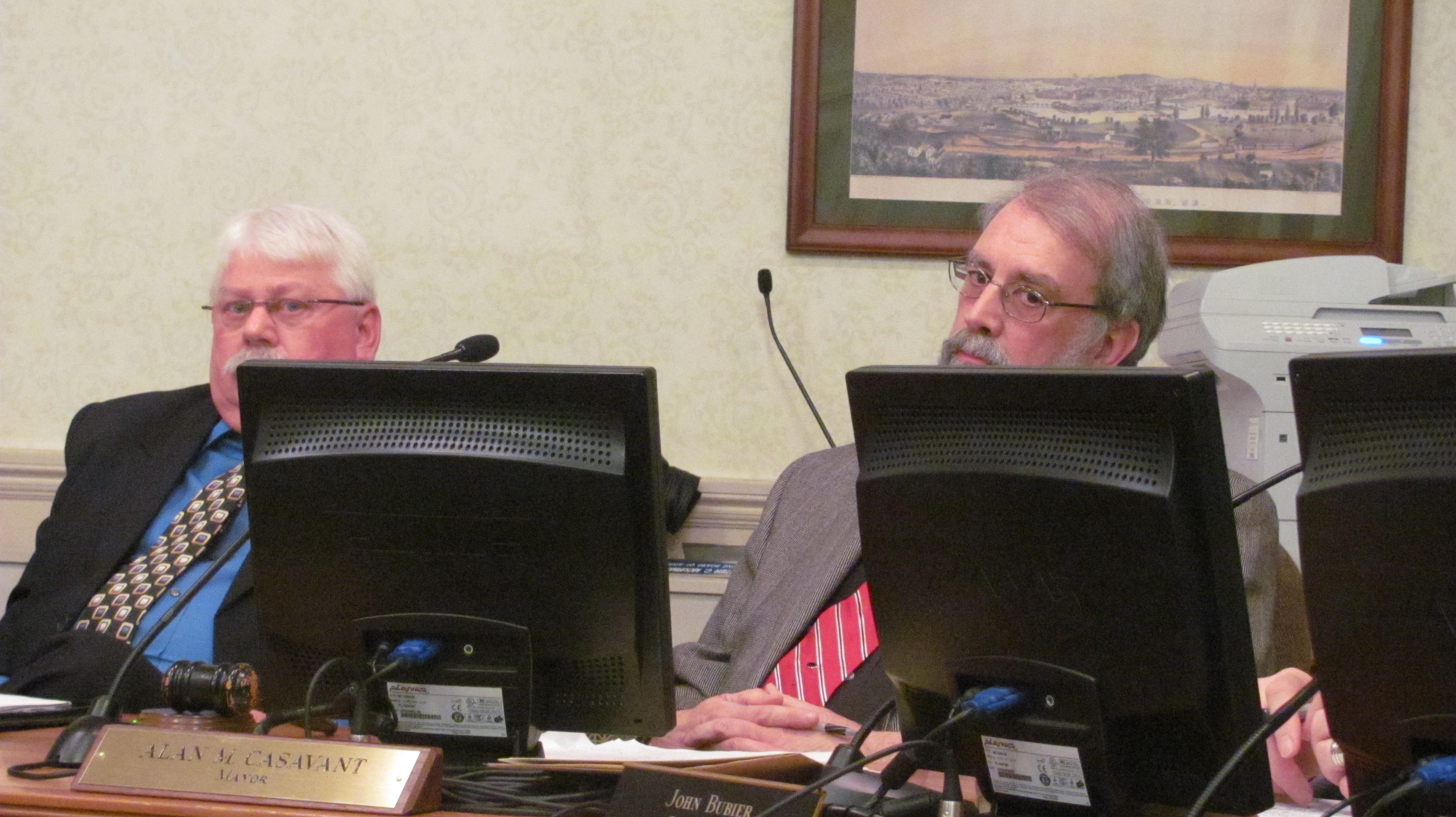
But you can’t lay all the blame on Mayor Grohman or the current city council. Bennett started leading the mayor and city council by the nose almost immediately after being hired in 2015, when Alan Casavant was in the middle of his 12-year run as mayor.

The city council then was different than it is today.

Biddeford was facing some big challenges when Bennett was hired. It became easier to just let Bennett run the ship. Casavant, especially, wanted to change the city’s reputation.

When Bennett was hired, the Teamster’s union was vocally protesting contract negotiations and the city was somewhat under siege regarding multiple allegations of sexual misconduct by a former police officer.

Council meetings were raucous, full of anger and controversial allegations. From a PR perspective, it was not a good look for the city. The escalating controversy was overshadowing efforts to change and improve the public perception of Biddeford.

It was all a bit overwhelming for the city’s elected leaders, and the council was more than happy to turn over the reins to Bennett.

Of course, things eventually calmed down. But Bennett had been given carte blanche by the city’s elected leaders. Over the next few years – even in the face of growing controversy – the mayor and council were either too intimidated or otherwise reluctant to rein in Bennett’s attempts to build his own empire within City Hall.

Yes, Bennett had a contract, and who knows what the council and mayor thought or said about Bennett’s performance during behind-closed-doors meetings regarding his contract extensions.

Again — from the outside looking in —  it would appear that over the last nine years, Casavant, Grohman and multiple city councilors were unwilling or unable to leash the barking dog that routinely intimidated anyone who dared crossed its path.

So, my advice to the current mayor and city council about a new city manager is this: hire the best applicant but be clear that you are seeking a professional manager, not a policy maker.

Hire a candidate who is strong enough to lead, but not a tyrant.

And finally, be willing to dig deep into the candidate’s past performance in other communities.

The city manager is supposed to report to the city council and mayor.

The city council and mayor are supposed to report to the citizens of Biddeford.

Remember that during the upcoming interviews.

Never miss another installment! Subscribe for free today!

Parking garage woes continue in Biddeford

More than four years after it was opened, several Biddeford officials remain frustrated about how the city’s parking garage is being operated, saying the garage operators still have no incentive to increase efficiency and lower the city’s financial obligations.

Over the past year, the city has paid the garage owners nearly $570,000 in stabilization payments in order to guarantee a profit from the garage.

On Tuesday, the city council heard a presentation from Premium Parking, a New Orleans-based company that operates parking facilities all over the country.

Councilors said they were hoping to hear and see more “hard data” about how the garage is used and what can be done to lower the city’s ongoing financial commitment.

“We got a lot of icing, but I was looking for cake,” said Councilor Marc Lessard during an interview after the meeting. “There was no substance. They [Premium Parking] have no incentive to increase efficiency and lower costs.”

Under a contractual agreement with the garage developers, every six months the city is required to make a “stabilization payment” to the developers in order to guarantee a profit for the private company, regardless of customer usage.

In June of this year, the city paid $208,227 as a stabilization payment. Previously, in December 2023, the city paid $169, 695; and in June 2023 the city paid $191,246 to the developers.

During Tuesday’s council meeting, Charlie Grab, a “market president” from Premium Parking made a brief and rather perfunctory presentation to the council.

Grab, who has handled his company’s New England operations for roughly six months, was scheduled to appear in person but said he was ill and conducted his presentation via ZOOM.

Grab told the council that almost half of customers use smart phone cameras to pay for parking over the last three months. Use of the company’s mobile app has increased 47 percent Grab said while direct cash or credit card payments at a kiosk have decreased by 41 percent.

Grab also said that most customers use either the garage or surface lots for a duration of two hours, making up 56 percent of all transactions.

Earlier this year, parking at the Washington Street parking lot was reconfigured converting to more short-term parking versus day-long parking. Grab described that change as a “nice success story” by doubling revenue at that lot.

But once again, Grab was somewhat vague when asked for recommendations about how to improve efficiency and usage at the garage.

Grab said many other communities with an open-roof garage use the space for things such as “beer festivals” and “pickle-ball tournaments.”

Grab also said his company is working on “an outreach effort” in order to form partnerships with downtown business owners and possibly creating a “newsletter” to explain how the garage operates as well as “fine tuning” signage.

Councilor Roger Beaupre said he was less than impressed after the presentation.

“It’s just the same old story,” Beaupre said. “It seems to be a constant problem. They have no incentive to do anything because they are guaranteed a profit.”

During his campaign to become the city’s mayor, then city councilor Marty Grohman had strong words for Premium Parking, promising to “get tough” with the garage operators and have them appear before the council on a regular basis.

“It seems to be a constant problem. They have no incentive to do anything because they are guaranteed a profit.”

— City Councilor Roger Beaupre

On Tuesday, the mayor’s tone about the garage and surface lots was markedly different, saying the company has been “very responsive” and saying that he liked their ideas for increasing usage.

Council President Liam LaFountain also said he was hoping to drill further down in the data and hear more concrete solutions on Tuesday.

LaFountain pointed out that the council – in August 2023 — asked City Manager Jim Bennett to provide the council with some ideas about parking companies that could be used in Biddeford.

Bennet said “things were going well” and that he basically forgot about the council’s request.

Betsy Martin, a senior citizen advocate and chair of Age Friendly Biddeford, said she has received a lot of negative feedback about the garage.

She suggested that the city should implement a shuttle service between the garage and downtown because “it’s not an easy walk” for seniors.

Grab said that he would personally attend the council’s next meeting in January.

Never miss another story from the Biddeford Gazette! Subscribe for free today!

City commits to paying contractor in-full

The Biddeford City Council voted unanimously Tuesday to find funds in its current budget to fully repay a contractor who led the effort to renovate the Seeds of Hope Neighborhood Resource Center.

Jim Godbout, a well-known community volunteer and philanthropist, appeared before the council Tuesday to provide an update about the project and its funding.

Earlier this year, city officials “cleaned out” an encampment of unhoused residents that was located adjacent to Mechanic’s Park on Water Street.

Part of the city’s plan to address issues related to the unhoused included funding a renovation project that would allow overnight respite at the Seeds of Hope building on South Street by renovating and improving the building’s second floor.

The Seeds of Hope building is a former Episcopalian church, built more than 100 years ago that takes up an entire city block.

On Tuesday, Godbout was asked to provide the council with a timeline of events that led to confusion about how the renovation work would be funded.

Jim Godbout, owner of Godbout Plumbing & Heating

“City officials asked me in mid-June if I could help with the project that would provide expanded resources for unhoused people,” Godbout said. “I was happy to help because these projects are an important element for our community.”

Godbout told the council that he immediately knew that the renovation would be “a good-sized project” that would require the help of other contractors. The city, he said, provided a budget of $800,000 to complete the task.

In June, City Manager James Bennett told the council that the $800,000 project would be funded with federal funds the city receives for Community Development Block Grants (CDBG).

With the funding source seemingly secured, Godbout said he and others jumped in feet first, even though he was still involved in another massive project to convert the St. Andre Church building into a teen center, a $3.5 million project that took almost two years to complete.

Despite being stretched thin, Godbout told the council that he was confident he and others could finish the job at Seeds of Hope before winter weather arrives.

“Before we could even start work, we had to remove more than eight 30-yard dumpsters worth of debris from the second floor,” Godbout explained, telling councilors that the building’s roof repairs were the first priority for his team.

But both Godbout and the city were soon presented with a glitch.

Because the building is on the historic register, the renovation project required additional approvals and permits.

Godbout said he was about two-thirds into the project when he received a call in mid-August from city officials telling him that there were problems securing the CDBG funds and applying for the necessary historic renovation approvals.

“I couldn’t just walk away at that point,” Godbout said. “I decided to keep moving forward because the community needed this project done.”

Godbout praised the help and in-kind donations he received from several other contractors, pointing out that his team was able to complete the project well under its initial $800,000 budget, for a total of roughly $655,000.

Although Godbout made sure that the other contractors were paid, the city was unable to pay him for the full balance of his work. Godbout said he was thankful that the city was able to pay him $400,000; with a plan for him to raise an additional $250,000 in private donations to cover the project’s total cost.

“I couldn’t just walk away at that point. I decided to keep moving forward because the community needed this project done.”

— Jim Godbout

“I have been doing projects in Biddeford for more than 40 years,” Godbout said. “I am happy to help, but the cost comes back to me.”

Following Godbout’s presentation, Mayor Marty Grohman expressed gratitude for the work done by Godbout and others, including volunteers.

“Thanks for getting this project over the finish line,” Grohman said. “The key is that this project is done. It was a team effort and a significant achievement.”

Council President Liam LaFountain then made a motion to direct the city manager to find possible funding sources in the current budget in order to pay Godbout the balance he is owed.

“We now have an opportunity to make good on our obligation,” LaFountain said.

Councilor Marc Lessard said he was in “complete agreement” that Godbout and his team should be “made whole.”

“We all have to pay our personal bills on time,” Lessard said. “It’s no different for the city. We need to be more efficient, and we need to show appreciation for the help we received.”

Bennett is expected to provide the council with suggestions about potential funding sources in January.

Never miss another installment! Subscribe for free today!

Meet The New Boss – – Same as the old boss: Fecteau returns as Maine House Speaker

Once again, State Rep. Ryan Fecteau of Biddeford will serve as Speaker of the Maine House of Representatives.

During a recent interview, Fecteau said there was “stiff competition and a crowded field” this year from other Democratic lawmakers for the speakership of the 132nd Legislature.

Fecteau, 32, who was “termed out” of office two years ago, is returning to Augusta representing a different district in Biddeford.

Former State Rep. Erin Sheehan, also a Democrat, decided earlier this year to not seek reelection for a possible third term representing House District 132.

Speaker Ryan Fecteau

“When I left the Legislature two years ago, I had no plans to return,” Fecteau said. “I could have run for the senate because Senator [Susan] Deschambault and I were termed out at the same time, but I felt like my time was over. I had no political aspirations at the time. I even threw away all my old lawn signs.” (Laughs)

From a historical perspective, Fecteau’s return as Speaker — following a two-year hiatus — last happened nearly 60 years ago when Speaker David Kennedy, a Republican from Milbridge, returned to the seat in 1966 when his party regained the majority.

Fecteau said a confluence of events led him to reconsider a return to the Legislature.

“In the two years after I left, we ended up buying a home that is located in another district, and then I found out that Erin [Sheehan] had decided to not run again,” Fecteau said. “I felt like I had more to give, and there’s a lot that needs to be done, but I’m not envisioning another eight years of being in the Legislature.”

Asked how he was able to once again clinch the seat as Speaker, Fecteau said many factors played a role.

“I think folks were hungry for experience.” Fecteau said. “I think I was sort of a known commodity. And I also put in a lot of work of helping others in their campaigns. I put a lot of miles on my car, and I’m almost sure that I hit every county in Maine — even some Republicans put in a good word for me.”

Fecteau is employed as a senior officer of policy and planning for Avesta Housing, a non-profit affordable housing developer that operates throughout New England.

“I think folks were hungry for experience. I think I was sort of a known commodity.

— Ryan Fecteau

Before joining Avesta, Fecteau was tapped by Gov. Janet Mills as a senior advisor in her Office of Policy Innovation & the Future just days after he was termed out of office in 2022.

Fecteau says he doesn’t see any conflict of interest between his day job and his role as Speaker of the House.

“There’s certainly always the possibility of having legislation coming before the House that could pose a conflict of interest with any member,” Fecteau said, pointing out that Maine’s citizen legislature is made up of 151 House members and 35 state senators, most of whom have day jobs.

“My employment role is independent from anything that would involve any pending or future legislation,” Fecteau said.

Asked about his top priorities for the 132nd Legislature, Fecteau said he hopes the House and Senate can find a path to address both affordable housing and childcare assistance.

Fecteau says the Legislature will need to “look hard” at possible revenue sources to provide a more sustainable approach in helping people get into affordable housing – especially since federal funds from the American Rescue Plan are no longer available.

“So many families across the state are struggling because the cost of childcare is skyrocketing,” Fecteau said. “You have many families who are deciding to either have mom or dad stay home because their wages cannot keep pace with the cost. On the flip side, wages for childcare workers have remained stagnant and are not competitive.

“It’s a huge problem, and there is no easy fix,” he said.

Editor’s Note: Earlier this year, I named Fecteau as the Number One most politically influential people in the Biddeford – Saco area.

Never miss another update! Subscribe for free today!

Malon returns to Augusta for Biddeford

By RANDY SEAVER

State Rep. Marc Malon (D-Biddeford) will soon begin his second term representing a portion of Biddeford in the Maine State House of Representatives.

Malon is one of three lawmakers – all Democrats — who make up the city’s legislative delegation. State Rep. Traci Gere is also returning to Augusta and represents Biddeford’s coastal area and the town of Kennebunkport.

State Rep. Ryan Fecteau was chosen by his peers to reprise his role as Speaker of the House following a two-year hiatus after being termed out of office.

State Rep, Marc Malon

Malon, 42, said he is eager to begin his work in Augusta. He was unchallenged for his seat in both the primary and general elections.

During his first term in office, Malon served as a member of the Labor & Housing Committee, and the Veterans & Legal Affairs Committee.

Although committee assignments have yet to be announced, Malon said he is ready to serve wherever needed.

The 132nd Legislature is creating a new Joint Standing Committee this year. The new Housing and Economic Development Committee is a hybrid from a special committee that was formed four years ago to tackle issues surrounding housing.

“Housing is one of the biggest issues facing Maine right now,” Malon said. “I would love to serve on that committee, but I’ll be happy to serve wherever – whether it’s back to the Labor Committee or Veterans & Legal Affairs.”

Because of his day job as director of party affairs for the Maine Democratic Party, some have question whether Malon can effectively avoid an obvious conflict of interest.

I think our delegation did an outstanding job during the last term, and I’m confident that we are going to hit the ground running.

State Rep. Marc Malon

Malon does not shy away from those conversations, and points to his previous service when he worked closely – and effectively — with several Republican lawmakers.

“I certainly understand why my work for the party may give some people a moment of pause,” Malon said. “But I also think it’s important to note that the bulk of the work we do is very bipartisan.”

In a previous interview, Malon explained the sometimes-subtle differences of what actually happens in the Legislature versus the rather partisan headlines that dominate political discussions on the national level.

“Before I decided to even put my name out there as a candidate, I went to the State Ethics Commission for an opinion,” Malon said last year. “Their opinion was that I could do both. To a certain extent, almost everyone in a citizen legislature faces the same concerns. For example, can farmers objectively serve on the Agriculture Committee and so forth?

“I think my professional experience and time working in the State House as a private citizen actually benefits my constituents. When I got elected, I already knew my way around and understood the procedures.

“My employer does not lobby me on any issue that comes before us. I think they know, and I hope my constituents know, that if it ever came down to it, I would choose my constituents over my job.”

Today, Malon says the Legislature is facing several important issues, most notably what has been described as a housing crisis and the struggles with sharply rising property taxes.

“We certainly have our work cut out for us,” Malon said. “I think our delegation did an outstanding job during the last term, and I’m confident that we are going to hit the ground running.”

Malon says that his close friendship with Speaker Fecteau will be a benefit to his constituents.

“Ryan and I have known each other for a while,” Malon said. “But I don’t expect any special treatment. We’re both going to be keeping in close touch with Mayor [Marty] Grohman and the city council.”

“Once again, I firmly believe that Biddeford will be well represented in Augusta,” Malon said.

Editor’s Note: This is the first installment of the Biddeford Gazette’s Local Legislative Preview. Further installments will be focused on State Sen. Henry Ingwersen, State Rep. Traci Gere and Speaker Ryan Fecteau.

Subscribe for free today!