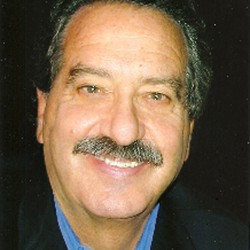
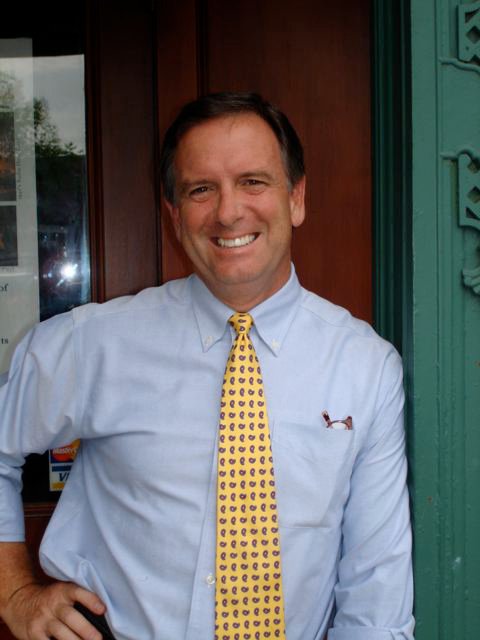
Former Saco Mayor Mark Johnston/ Marlee Hayes photo
Something strange is about to happen on the other side of the Saco River. It’s as rare as a blue moon and perhaps more difficult to understand.
Mark Johnston will not be running for mayor in Saco.
Johnston, 61, says he has spent nearly 40 years in service to his community. Now, he says, it’s time to let someone else take the reins.
“I’m tired. I’m going to be 62, and now it’s time for Mark,” he said during a recent interview at his Main Street delicatessen, which is often mistaken as City Hall with an amazing selection of wines and good sandwiches.
Johnston came into the world of politics in the usual way: He was a malcontent, a young man worried about a used car lot that was planned near his home.
That was nearly 40 years ago, when he was appointed to the Saco Zoning Board of Appeals. His political career would extend over the next four decades and he served under five different mayors, including Sam Zaitlin, Paul Jansen, Haley Booth, Fred Clark and Eric Cote. He also served on the planning board and the city council.
Of course, Johnston also served as the city’s mayor for the better part of two decades, beginning in 1989 with four consecutive terms that ended in 1997. Six years later, in 2003 he was again elected as the city’s mayor and served another three terms, 2003-2007; and 2011-2013.
Every time his name was on the ballot he easily won his election . . . except the first time.
Despite the fact that he was unopposed and his name was the only one on the ballot, Johnston was forced to sue the city in order to become its mayor because he did not get enough votes to meet the criteria of a provision in the city’s charter.
A superior court judge sided with the politician over the city, but Johnston did not escape unscathed. He was mocked on national television by David Letterman and Jay Leno.
Round and round
Johnston runs Vic & Whit’s with his ex-wife, Beth. They have been divorced 25 years but seem to have a successful working relationship.
He’s Bugsy Seigel, Charlie Lucianno and Meyer Lansky all rolled into one affable, near-sighted man with an uncanny resemblance to Sir Elton John.
______
This is not the first time you announced that you were stepping down from politics. You always seem to come back for more?
(Laughs) “I really meant it the last time, but I had to come back to correct some very serious mistakes that were made during the Ron Michaud Administration. My intent (in 2011) was to correct those mistakes: our bond rating was lowered, the city had blown through its reserve balances. It was a lot of smoke and mirrors because no one had the courage to raise taxes slightly in order to keep up with very basic infrastructure.”
Are you leaving now because people are angry about significant tax hikes?
“No. I think most people understand the position we were facing. It’s not easy to raise taxes, even a little bit. But leaders are not elected to do easy things. Leaders are elected to lead.”
What was your proudest moment as mayor?
“The train station, hands down. We were entering a new century and thinking about new transportation. Passenger rail had long been abandoned, but having it come back has paid huge dividends for Saco. It really redefined this community. We have people who live here because of the train and such easy access to their jobs in Boston.”
You told residents it would not cost ‘one red cent’ in taxes. That didn’t quite work out, did it?
(Laughs) “People misunderstood me. I said not one red cent, it ended up being a whole lot of red cents. But seriously, this has become a huge asset for our community. We wanted to embrace it. A lot of things changed in midstream. None of us knew then that Guilford Rail was going to require us to have a $250 million liability policy. But we were able to use the Saco Island TIF and revenues from the MERC settlement and rental fees from the Chamber of Commerce.
“I am very proud of that station. It was the first green station built in the United States. It has geo-thermal heating; and the roof was made with a composite material from recyclables. It meets every standard of LEED certification. It was built by all Maine contractors, with wood beams from Maine forests.”
And the wind turbine
“I’ll take all the fault for that. It’s not the one I wanted, but I couldn’t get the council to approve the one I wanted. What we have is basically a kit that cost us $250,000. I wanted the million dollar one, which would have been much taller and as a result much more efficient.
“The council didn’t want to spend $10,000 for a wind survey study. But what we have is iconic, and it sends a message about our community: we are embracing the future, we are recognizing that we must wean ourselves off fossil fuels.”
What was the worst moment of your time as mayor?
(Pauses) “It happened roughly three minutes after I was sworn in for my very first term, when I publicly fired the city attorney (Mary Kahl). She was a good attorney, but I thought she was interfering too much in the city’s day-to-day business. She ended up going to work for the city of South Portland. I don’t regret what I did, but I deeply regret the way I did it.
“I humiliated her in public, and that’s not leadership. That’s not how you should treat people. We were able to be civil, but the wounds never healed. Unfortunately, she passed away a while ago, and I don’t know if she ever forgave me. I was young and brash, but I learned a valuable lesson: always be willing to talk to those with whom you disagree. Never embarrass or humiliate someone in the public arena.”
Who do you think will be Saco’s next mayor?
(Smiles) “All I can say is that I will have to work with whoever becomes the next mayor.”
Ok, so who do you think will be Biddeford’s next mayor?
“Alan Casavant. He is an outstanding leader; a leader for the future. He is helping Biddeford make huge strides forward. He is also professional, calm and always a gentleman; all those tiny words that define character.”
Who was your favorite Biddeford mayor?
“Roger Normand. He was a man of integrity. He was a normal, average guy who never let the power of being mayor go to his head.”
Do you think there should be term limits for mayors and city councilors?
“Yes. Absolutely. After four terms, it’s time for a change. It’s too easy to get cocky.”
What are your thoughts about the RSU 23 issue, considering some in Saco are advocating for leaving the regional school district?
“I’m a little disappointed by the way some members of our community have acted during this debate. I think it’s a disgrace that some folks have called Old Orchard Beach residents “free-loaders.” RSU 23 has failed because of Saco’s penchant for elitism. We never talked about test scores, we never talked about how to bring teachers up through the ranks. We never talked about the important stuff. I want Thornton Academy to have the test scores that Scarborough is getting, and stop hiding behind the façade of a beautiful campus.”
Elitism in Saco?
“Yes, without a doubt. I grew up on Middle Street, a neighborhood that was known as Little Greece. Many of those people from that neighborhood became important and respected members of our community, civic leaders. It’s like we never got beyond the days of the “Battle of the Bridge.” Why do we still use that name? We never used it when Thornton played St. Louis. There has always been a false air of superiority in Saco. It’s been here a long time.”
What advice would you give to the city’s next mayor?
“Talk less and listen more.”
What will be your legacy?
“The elimination of Maine Energy. It took a long time, but I helped (and so did a lot of other people) keep the pressure on. Joanne Twomey and others never let up the pressure. I honestly never thought I would see the day. I am so proud of what Mayor Casavant and the Biddeford City Council did. That took leadership and vision, but they were not alone. A lot of people helped set the stage for finally getting MERC gone.”
So, will you be back as mayor?
“No, I really don’t think so. I have a new woman in my life, and it’s turning into something special. I was mayor when I got divorced, when I had a granddaughter, when one of my sons went to the battlefield. I’ve given a lot to this city. It’s time for me to take some time for myself and my family.”
Once again, we are on the verge of another election cycle in the fair city of Biddeford, where local political maneuvering is a blood sport.
According to the City Clerk’s office, some very familiar faces have taken out nomination papers for a variety of elected positions.
But wait, that’s not all.
Once again, a few dime-store strategists are enjoying some late summer shenanigans: several candidates have taken out various and multiple forms of nominating papers. One candidate, in fact, can’t decide if he should run for an “at-large” seat on the council, run as a candidate for his own Ward or serve on the school committee.
This strategy is meant to confuse the opposition and observers like yours truly. They will wait until the final moments before the filing deadline to turn in their papers, hopefully scaring off would-be challengers and leaving them with few options at the filing deadline.
Of course, former Mayor Joanne Twomey is looking for revenge. After being trounced two years ago by Mayor Alan Casavant (68-32 percent), Twomey is determined to get her old seat back.
Despite also losing a Democratic primary bid last year to replace State Rep. Paulette Beaudoin, Twomey is convinced that she is somehow still relevant.
She’ll have a hard time beating her last showing of 38 percent, especially if some of the declared mayoral candidates follow-through with filing their 125 signatures of registered voters.
Joining Twomey in the race for the mayor’s seat is former city councilor Perry Aberle and Karl Reed, Jr. Casavant is expected to take out nomination papers later today.
Thus, in a four-way race, Casavant would need to lose big numbers, which will then likely be divided by his three challengers.
But Twomey isn’t the only familiar face looking for a comeback.
Former city councilor and one-time mayoral candidate Marc Lessard is apparently thinking about returning to the council either for an at-large seat or representing Ward 6. Lessard, an early favorite in the 2003 mayoral race, ended up last in that three-way race. He hasn’t been heard from since.
Until now.
But wait, there’s still more.
Former city councilor Ron Peaker, who also serves as commander-in-chief of Peakers Squeakers ( a vocal group of three old white guys from coastal Biddeford who consistently oppose the school budget), is also thinking about a return to either the council or the school committee.
Peaker is joined by his pal, John McCurry, another former city councilor who was aligned with Lessard, Peaker and former mayor James Grattelo back in the good ol’ days. McCurry is considering a run for either the council or the school committee.
On the other side of the political spectrum, Jim Emerson, a former councilor and school committee member, is thinking about an at-large seat or a return to the school committee. Current councilors Mike Swanton, David Bourque, Bobby Mills, Brad Cote, Rick Laverierre and Mike Ready all seem dumb enough to endure another two years on the council.
But back to the mayor’s race for a second. Does Perry Aberle, a one-time staunch Twomey supporter, stand a shot?
Sure, anything is possible. The sun may also not rise in the east tomorrow, but don’t bet on it. Aberele got slapped hard when he tried a bid to replace Paulette Beaudoin last year.
What about Karl Reed, Junior? Little Karl will have to do a lot better than his old man did in 2009. Big Karl sank like an anchor in his first local political bid, a four-way mayoral race in 2009 (the last time Twomey won an election).
Big Karl earned 170 votes. Sounds impressive, right? Wrong.
That is 170 votes out of 7,876 votes cast. I guess you could feel good about less than 3 percent, unless you consider that nearly four times as many people left the ballot blank on the mayor’s race.
Maybe, Little Karl will bring some respect back to the family, but again . . . don’t bet on it. If he breaks the 10 percent mark, I’ll be surprised and Twomey will be in trouble.
Updated for corrections, August 21. Apologies to the city clerk’s office.
Biddeford Mayor Alan Casavant and I are standing in line outside the Biddeford Ice Area on a Saturday night.
Considering the hundreds of other people waiting in line with us, we both feel very out of place.
We didn’t know what to expect. We had front-row, ringside seats for a series of NEF cage match fights. Of the approximately 2,000 other ticket holders, neither Casavant or I spotted a familiar face. And that takes some doing.
Some two miles away, a non-profit group is hosting a performance dance event in one of the former mill buildings that dominate the core of our city.
I wouldn’t hesitate to bet my next paycheck that attendance at the cage match fights far outpaced the number of people attending the dance performance.
Both Casavant and I were a bit elitist about our initial perception of the fights and the crowd that seemed thirsty for blood. We were outsiders, and well outside of our element.
It was interesting to note, however, that Maine Secretary of State Matt Dunlap, a one-time Democratic candidate for the US Senate, “likes” the NEF page on his Facebook page.
If not for the complimentary tickets, you can be assured that neither Casavant or I would be there.
After more than two hours of watching raw, intense competition, Casavant and I left with a changed opinion about both the event and its participants. There was a mutual respect among the fighters. The violence ended abruptly at the end of each match as the contestants would embrace and indicate their admiration and respect for each other.
It was nothing short of a bizarre experience for me . . . on the eve of once again writing about cultural diversity and elitism.
Pride cometh before the fall
Here’s another picture, and take a good look.
It takes a community
It is a Saturday afternoon on Main Street in downtown Biddeford. I am standing outside Elements Book Store and Cafe, waiting to meet with Tammy Ackerman, and I bump into my friends Jim and Renee O’Neil.
The conversation quickly turns to my previous blog post, Fool for the city
As we talk about Biddeford’s cultural heritage and words like elitism and diversity, we are briefly interrupted by a strange convergence.
A couple that summers in coastal Biddeford Pool come onto the sidewalk, each holding paintings they had just purchased. Renee met the couple just moments before and she introduces me to them as the conversation about Biddeford continues.
Moments later, a man in his late 20s is in our midst. He is wearing a t-shirt, jeans and a baseball cap backward. His tanned, muscular forearms seem to be a canvass of tattoos, but most strikingly he has a very large boa snake draped over his body. He is accompanied by a little girl, maybe four years old. Just behind him, is a woman pushing a baby stroller and puffing on a cigarette.
We are — all of us —- on the other side of a giant window that looks into Elements. The patrons inside look up from their laptops and cappuccino, curious about this new picture on the other side of the glass. Me, Renee and Jim, a couple from Biddeford Pool and this man with a giant, scary snake.
Strangely, it does not seem even the slightest bit unexpected or awkward.
After a few moments, the man moves onward down Main Street with his entourage, and the rest of us continue our conversation.
Renee, a lifelong and well-known resident of the city, adamantly disagrees with my assertion that Biddeford continues to struggle with talk about cliques, elitism and a pervasive sense of class warfare. Her husband, Jim, is concerned that I am not accurately portraying the picture.
The funny thing? They both admitted that they had yet to read the what I had written the week before.
“It seems like you should be holding up a mirror, but instead are using a piece of stained glass,” Jim offers. “Mirrors simply reflect light, but stained glass filters the light to present a certain picture.”
They are both somewhat troubled that I wrote about Tammy Ackerman, a downtown activist, in a blog post that poked at the touchy subject of elitism and cultural diversity.
“Tammy is like Mother Theresa,” Renee quipped. “She’s the last person that anyone should describe as an elitist.”
More about my conversation with Jim and Renee in just a bit . . .
After reading last week’s post, Tammy Ackerman phoned me to share her thoughts and opinions about my half-assed attempt to bite down on an apple most people want to discard or at least ignore:
That people in Biddeford seem especially sensitive about the words elitism, cultural diversity and a push for change that is being driven by relatively newer, non-traditional stakeholders…
People from away.
Subsequently, we spent the better part of 90 minutes talking face-to-face yesterday at Engine, her gallery and multi-use space on Main Street. I very much enjoyed that conversation, and I left the gallery with a lot of conflicting thoughts and opinions.
Last week I wrote about how former Biddeford mayor Joanne Twomey described Ackerman (and others) as elitists at an April 16 City Council meeting during a liquor license application for Fatboys Saloon. I opined last week that Twomey was “maybe, just maybe . . . a little bit right.”
According to Ackerman, the more division we create; the more we use labels, the more we remain stuck. “I guess I bristle when someone calls me an elitist because I come from the same working-class cloth as anyone else,” she said during our first phone conversation on the subject.
But elitism doesn’t have to be solely identified or explained by economic capacity, I countered. A lot of people have talked about cultural or ideological elitism . . . the idea that Biddeford is lacking in culture or diversity makes many other people bristle.
On Saturday, Ackerman said the points I was trying to make were anything but clear.
“I guess I don’t understand what you were trying to say on your blog because I have done nothing to exclude anyone from anything,” she responded. “I don’t say bad things about Biddeford. We’re not creating gated communities here. I am imposing anything on anyone.”
My point, I conceded, was partially lost . . . or at least not very clear last week. When I said that Twomey was “maybe a little bit right” I was speaking more to the pace and the perception of the conversation, not necessarily the facts.
Ackerman and some of Biddeford’s other newer immigrants are incredibly passionate and motivated. Perhaps a little too motivated.
Ackerman’s efforts to heighten and amplify arts and culture in the downtown caught some people off guard. The push, at times, seems aggressive. Ackerman (and others) sometimes fail to understand a dynamic that is embedded in this community: an exaggerated sense of pride that is used to mask a lingering sense of low self-esteem.
Make no mistake. People who live in Falmouth, Cape Elizabeth or Camden are very proud of their communities, but they never talk about their pride. That would be uncouth, ill-mannered.
Pride in the name of love
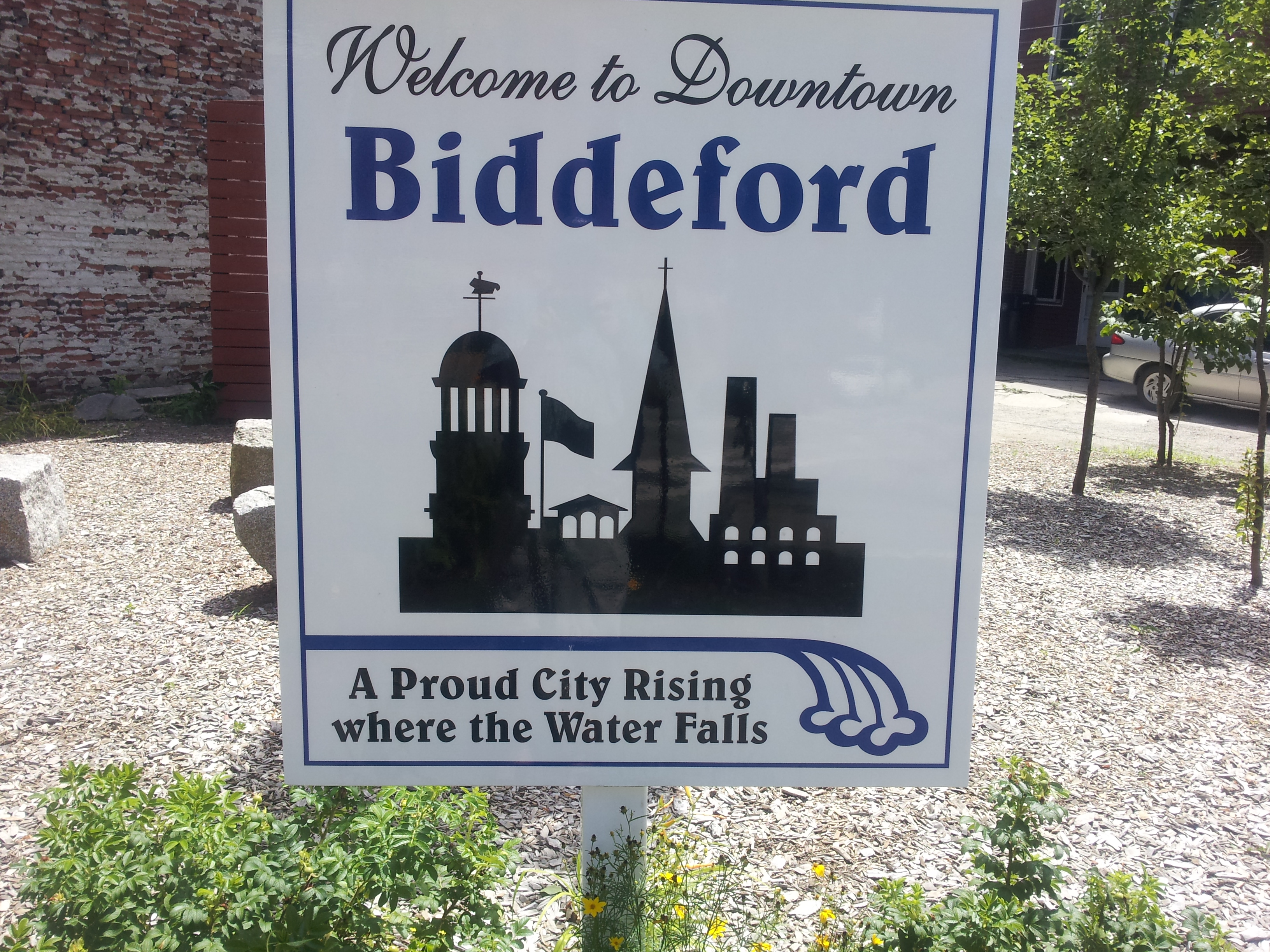
But in communities like Biddeford we wear our pride on our sleeves. A proud city rising where the water falls is our motto. Tiger Pride.
Maybe, just maybe, we’re not quite so proud. Maybe, just maybe, there is still a dynamic of self loathing going on here.
Maybe, just maybe, we are much more consumed with envy than pride.
It ain’t me; I ain’t no senator’s son
Ackerman says that issues such as elitism, the creative economy and quality of place are inherently subjective.
“Quality of life is important,” she said. “Ask one person to describe quality of life and you get one answer. Ask someone else and you get another answer. Ask 10 people, and you get 10 different answers.”
She also says she is perplexed how anyone could define her as an elitist, but she concedes that the term can have both negative and positive connotations, such as the pride associated among an elite group, i.e. the Navy Seals. But she also remains stuck on the apparent misnomer of elitism when it is attached to her efforts to promote a creative economy in Biddeford.
“I’m not a fancy person, so I guess I don’t get the ‘style police’ commentary,” she said. “If style police means I care about how our downtown looks, then maybe I am the style police, but I’m not sure why anyone would be opposed to our downtown looking as good as possible.”
Ackerman spoke at length about her experiences in Biddeford, her struggles and her vision. I plan to write a more detailed piece about that in an upcoming post, but we kept jostling with the tricky concepts of elitism and diversity.
Whether talking about Fatboys Saloon or the pushback to ideas about transforming downtown Biddeford, Ackerman repeatedly pointed to a Downtown Master Plan that was coordinated by the Heart of Biddeford two years ago.
The downtown master plan was a very open and inclusive process that sought input and guidance from any stakeholder who was willing to participate. An over-arching theme of that process resonated clearly: Almost universally, people in Biddeford wanted the downtown to be a ‘family friendly’ destination.
According to Ackerman, taking a position in Biddeford is a daunting proposition for many small business owners and others who worry about some sort of retribution for their viewpoints. “Who wants to go through that? It’s not fun, and it’s certainly not profitable,” she said. “A lot of people are unwilling to get involved.”
Ackerman says she wants Biddeford “to be a good place for everyone” and as inclusive as possible. She says peoples’ behavior often reflects the treatment they get. If all residential landlords took small steps to maintain their properties, it would enhance not only the appearance of the downtown, but also the attitudes of those who live there, which could lead to a greater level of respect and an enhanced sense of community ownership.
But in a follw-up e-mail she sent me, it seemed clear that Ackerman remains frustrated that I urged her and others to be just a bit more mindful of the city’s cultural history and a laundry list of perceived and some very real examples of elitism. She disagreed with my suggestion that maybe we should pause a bit to remember the past before pushing so headstrong into the future.
“I’m still not sure what “dial it back” means,” she wrote, responding to my point that some people are a bit uncomfortable about the pace of the conversation or the sudden (and admittedly positive) changes in our community. “I have the energy to help Biddeford discover what’s good about it now. I may not have this energy in a couple of years! Biddeford’s time is now. Decisions made today will impact the future just like the decision to bring MERC [the controversial, former downtown waste-to-energy incinerator] in impacted 25 or so years of Biddeford’s future.”
As clear as waves on the sea
I was honestly surprised by the reaction to last week’s post. While some people thought I hit the nail on the head, others thought I was far off base. Regardless of the opinions and their sometime surprising sources, I know one thing is beyond dispute. I had tapped something raw, something that makes people queasy.
One friend, another lifelong resident of Biddeford, told me my analysis was spot-on. There is again another battle of elitism happening in Biddeford, he said. “I don’t know how to define it, but it seems pretty obvious to anyone paying attention. It’s like heading to the beach and seeing the waves. I don’t necessarily know where they came from or exactly how they were formed, but I know that they are there.”
City Councilor Roch Angers grew up in downtown Biddeford, and says many of the dividing lines are self created, but often painfully obvious. “It’s been going on for as long as I can remember,” he said. “It’s like an embedded piece of our culture. I think it’s part of our Franco heritage. There has always been a push back against those who appear to be succesful . . . a certain sense of envy. I agree that it’s more perception than fact, but no one can deny that it is there.”
Angers agreed with the historical foundation of my argument: the way immigrants (old and new) are received by their new hometown. A lingering sense of suspicion, a healthy dose of skepticism and a maddening attempt to thwart any attempt at change.
It’s not a new phenomena. It’s been going on for quite a while: The division between the affluent coastal neighborhoods and the inner city, which included two secession movements in the 1990s (Ultimately, the Maine Legislature refused to allow Biddeford Pool to become part of Kennebunkport)
The push to keep the city’s coastal beaches open to public access, championed by Mayor Gilbert Boucher in the early 1970s; the town/gown divide fostered by both sides as it relates to the University of New England’s campus, students and administrators.
The way that it’s still okay and politically correct to make jokes about Francos or a city that comedian Bob Marley describes as “Lewiston by the Sea.”
“I think people like Tammy [Ackerman] and Doug Sanford add a ton of positive energy to this community,” Angers said. “I also think they sometimes seem to be in too much of a rush to do the things we can probably all agree should have been done a long time ago. I think we are on the right track, and we just need to remember some balance.”
But Joanne Fisk, a 1976 graduate of Biddeford High School and another lifelong resident, adamantly disagrees that those historical divides or perceptions still exist.
“That all may have been true 30 years ago or so, but not today,” Fisk says. “I’m not sure what you’re trying to accomplish other than opening a can of worms that we have moved well beyond.”
Fisk also says that Biddeford is not an anomaly, nor are any issues of elitism more pronounced here than in any other community.
“I guess it’s easier to talk about the things that divide us, but I also think we would all be a lot better off if we spent more energy talking about our common ground.”
On the other side of the coin, Mark Robinson, a Fortunes Rocks resident, says he knows what it’s like to be called an elitist, and how the label often doesn’t fit.
A lifelong resident, Robinson said his best teachers were those at Biddeford High School, despite his Dartmouth College degree. He says he learned some of his most important life lessons as a teenager working in a mobile dining cart that catered to late-night downtown mill workers.
“I think the new energy in town is fantastic, and all the new players have my support one hundred percent. I know almost all of them personally, and they’re great,” Robinson said. “That said, I do think once in a while it’s possible to get a little too exuberant about the way things should be.”
In an e-mail, Robinson wrote that he was also troubled earlier this year by the tensions created by the announcement of Fatboys Saloon pending arrival to the downtown business mix.
“I was out of state at the time, but I remember being very upset reading about the brouhaha over what was described as a biker bar,” Robinson responded via e-mail. “I thought that was way over the line. Don’t like a TV show? Hey man, don’t watch it. Don’t like a biker bar? Don’t go there. Hell, it’s even OK to hope the place fails miserably and goes out of business. I don’t have a problem with that at all. But he should have the right to sink or swim on his merits, and he was getting crucified before he even got the place off the ground. Not at all fair, in my book,”
Born to be wild
Delilah Poupore, executive director of the Heart of Biddeford, said she was “taken aback” by my earlier commentary.
“I think that having community conversations about these topics can be very constructive and helpful,” she said. “But when you isolate particular individuals as part of the conversation, you are doing little more than creating more tension and controversy.”
I pushed back. At the same time that Heart of Biddeford took its first ever public policy position about a specific business (Fatboys Saloon), public policy makers in Augusta were weighing public comments related to the closure of the controversial MERC waste-to-energy incinerator that was located in the heart of the city’s downtown.
Delilah and just about everyone else at the Heart of Biddeford agreed that MERC’s presence was a major challenge to the downtown’s ongoing revitalization efforts. In my professional capacity, I represented MERC’s parent company and knew that the Heart of Biddeford and other downtown stakeholders were crucial to our efforts to build public support for the plant’s sale and eventual demolition.
I arranged meetings with both the Heart of Biddeford and the Downtown Development Commission. Both groups allowed me to make brief presentations to their respective members. DDC members were somewhat less supportive, concerned about the significant losses of both property taxes and downtown jobs if MERC closed. Conversely, the Heart of Biddeford crowd warmly embraced my message about how the closure would dramatically improve downtown Biddeford.
But when it came time to make public comments, the Heart of Biddeford declined to make any formal statement. “It’s not our place to make public comments about a specific business,” they explained.
Then, BOOM! Only a few weeks later, the Heart of Biddeford offered public testimony, raising questions about the impact of a “biker bar” into the downtown business-residential mix. I guess they changed their policy. This one time.
And that, I think, is why some people had such a strong reaction. Apparently, a biker bar would be a much bigger problem than burning garbage on an industrial scale in downtown Biddeford.
Something didn’t seem right.
Poupore maintains that her organization’s concerns were meant only to help the city council consider the liquor license application from a “planning/zoning” perspective. But the organization had never before raised any public concerns about any of the other several bars in downtown Biddeford or their annual liquor license applications.
Tammy Ackerman, a former city council candidate and a Heart of Biddeford board member, voluntarily waded into The Fatboys controversy. That spark reignited a lingering flame of resentment among some self-identified stakeholders, who admittedly spend far more time complaining than participating.
Once again, accusations of elitism and class warfare emerged upon Biddeford’s public stage.
Next week: Part III (THUNDERDOME: Residents offer differing perspectives about elitism and cultural diversity in Biddeford).
Pop Quiz: Name at least one individual who signed the Declaration of Independence.
If you answered John Hancock, congratulations: you are in the majority.
John Hancock’s famous signature has been immortalized over time, becoming synonymous with integrity, courage and conviction.
When taking on the world’s most powerful army and navy; when telling a temperamental king to stuff it . . . well, that takes courage. The Declaration signers risked more than their reputation or the loss of some friends when declaring their independence. They put themselves at odds with those who had the power to imprison them, ruin their businesses and families and yes, risked their very lives by their willingness to stand up and be counted.
John Hancock’s name is the most visible signature on the Declaration. Its presence and boldness are unmistakable. It was signed by a man with no regrets and no fear of the consequences. It was dashing and principled, and thus it has become legendary.
But in today’s world of social media news distribution and opinion commentary, too many people prefer to protect their privacy by using monikers or posting their comments anonymously.
I can understand the reluctance to publicly stand behind your opinions, but I guarantee you that no one will name an insurance company ANONYMOUS.
Look, honey…there’s the ANONYMOUS skyscraper!
There’s been a lot of talk lately about what should or should not be confidential information; and newspapers large and small are constantly wrestling with ways to maintain a vivid online presence with reader interaction without being hijacked by anonymous posters who refuse to stand in the daylight and own their opinions.
A few days ago, I was contacted by the Lewiston Sun Journal because I applied for permission to post online commentary on that newspaper’s website. I was required to fill out a form with my name, address, e-mail and a phone number for authentication. Thus, if I feel like commenting on a Sun Journal story, the whole world will know who I am.
Being required to stand up and own what you say gives most people pause. You can’t be such a tough guy if other readers can quickly determine who you are.
I applaud and encourage rigorous, spirited debate on all public policy issues. Every debate is enhanced by multiple points of view, but if you don’t have the guts to sign your name, sit down, shut up and go back to watching Captain Kirk for a few more hours.
And finally, if you are completely gutless and must resort to sending anonymous letters, here are a few helpful hints from a writing professional:
1.) Buy a dictionary and use it;
2.) Double-check your grammar and punctuation;
3.) Do not lie, especially if you are pretending to be a “professional” writer and planning to correspond with other professional writers;
4.) If you are writing online, learn to use hyperlinks;
It’s a strange time for the newspaper industry — especially here in Maine, where we recently witnessed several seismic shifts in the media landscape.
Yesterday it was announced that Donald Sussman’s investor group will now own a 75 percent stake in the company that publishes the Portland Press Herald, Kennebec Journal, Waterville Morning Sentinel and the Maine Sunday Telegram.
Hedge fund financier and philanthropist Donald Sussman said he wanted to save a Maine institution and will keep his hands off the wheel of editorial decisions. (Bangor Daily News Photo)
That’s all fine and dandy, except for one small twist: Sussman’s wife just happens to be Congresswoman Chellie Pingree, and she shows no sign of leaving Maine’s First Congressional District anytime in the near future.
Sure, Sussman says he has only the best of intentions, and adamantly vows that he will not interfere with the newspapers’ editorial process. Yeah, okay…whatever. For the record, I actually have a full-head of hair.
I was lucky to work for a family-owned group of weekly newspapers. David & Carolyn Flood gave me a very long leash, but I was never foolish enough to forget that I was on a leash. The Courier was not my paper.
There were many times when my editorials and opinion columns came nowhere close to matching the opinions of my employers, but they sighed…rolled their eyes…and kept giving me a paycheck. For better or worse, I was promoted three times during the seven years I worked for David and Carolyn.
My salary steadily increased and the newspaper thrived. The Courier was the paper of record in Biddeford and Saco, but I always knew I had a boss…heck, sometimes I even paid attention to David.
But all good things come to an end, and it remains to be seen whether the Press Herald or smaller weekly papers such as the Courier will continue to survive in this brave new world of digital media.
Regardless of the financial implications of producing dead-tree news, the Press Herald and its sister publications have crossed a murky line, despite the financial necessity of the decision.
It’s a tough call. Do you fold, and allow a historical institution to become nothing more than a memory? Do you surrender and send hundreds of employees to the unemployment line?
Or do you hold your nose and make a deal with the devil?
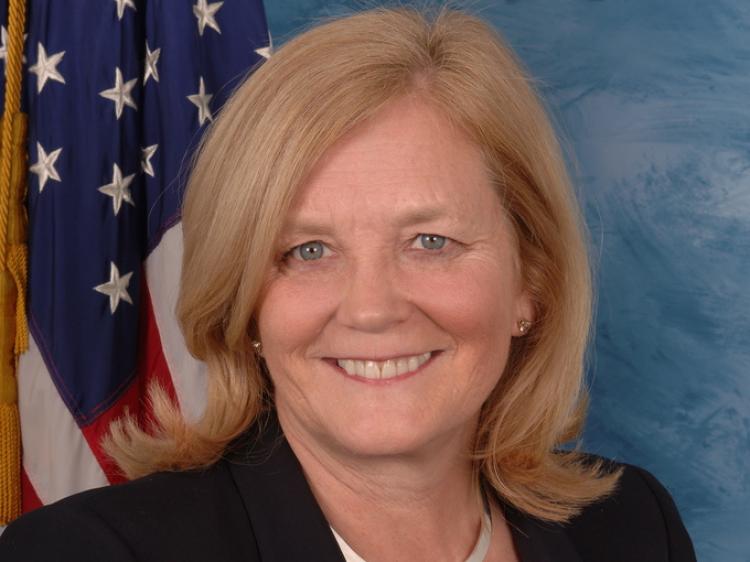
U.S. Rep. Chellie Pingree (D-Maine)
I’m sure Donald Sussman is a nice enough guy. I’ve never met him. But regardless of his Boy Scout oath to be ethical, every story that involves his wife, her decisions or her detractors will now be tainted with lingering doubt.
In November 2010, the Portland Press Herald surprised many of its readers by endorsing Republican Dean Scontras over Pingree during her campaign for a second term. If that happened now, we would have to wonder whether such a stance was motivated by an editorial board trying to make a public statement about its objectivity.
Journalists bristle when discussing ethical standards, so I do not envy the dilemma now faced by the reporters and editors at Maine Today Media. No matter what lines they feed themselves before going to bed each night, each one of them also knows that they also are on a leash . . . a very tenuous leash.
But before you criticize reporters being on a leash, consider the plight earlier this month for the more than 50 employees at the Village Soup newspaper who were laid off when that group of weekly newspapers suddenly closed.
Being off the leash feels good, right up until you discover that you no longer have a bone to chew.
Biddeford Mayor Alan Casavant is expected March 6 to announce his nomination for the Ward Seven city council seat that was vacated last week by Councilor David Flood’s resignation.
Newly elected mayor Alan Casavant (right) celebrates with his campaign manager on Election night
Because of a serious flaw in the city’s charter, the voters do not get a say, even though Flood served fewer than 90 days of his term. That needs to be fixed.
I live in Ward Seven, and have spent the better part of the day talking with city councilors and the mayor about the candidate whom I think should replace Flood.
According to the city clerk’s office, 893 voters in Ward Seven cast ballots in the November 2011 election. Of those 893 voters, Flood received 390 votes (roughly 40 percent of the votes cast).
Bill Sexton finished second in the three-way race, earning 270 votes. Sixty six voters left their ballot blank when it came time to choose a Ward Seven councilor; there were four write-ins and Patricia Whitehurst received 160 votes.
For disclosure, I voted for Flood.
When Casavant ran for mayor, he campaigned on a promise to be “positive and professional.” He campaigned on the idea of restoring civility; of rejecting political cronyism; of engaging the entire community, not just those who agreed with him.”
Those were the reasons why I and so many others worked so hard to help get him elected.
We wanted a change.
But did we get change?
Word on the street is that Casavant is planning to nominate former city councilor Mike Ready.
I like Mike Ready. Mike served this city well, both as a city councilor and long-time member of the School Committee. Mike is principled, smart and hardworking.
In short, Mike Ready is a outsanding nominee, but he’s not the right nominee.
If Mike Ready had run for the seat last year, it’s quite possible that I would have supported him over David Flood.
But Mike did not campaign. He did not get signatures to be on the ballot. He did not knock on doors. He did not put up campaign signs or participate in debates.
Bill Sexton did. Bill Sexton wanted the job then, and he wants the job now.
Sexton supported a proposed racino. Casavant may also see Sexton as someone who may have supported Twomey for re-election during the mayoral campaign.
But those items never came up during a break at today’s Democratic Caucus, when Casavant told me that the council has too many inexperienced members. “We’ve got a tough budget ahead of us,” he explained. “We have a lot of complex issues facing us during the next few months. I need people who can hit the ground running, people with experience.”
That rationale may sound good on paper, but it doesn’t pass the straight-face test.
Maine Senate candidate, former city councilor and current school committee member Jim Emerson served as treasurer on Casavan’t campaign team.
Emerson launched his political career with zero experience after being nominated by Mayor Wallace Nutting to fill a vacancy created by the resignation of Phil Dumont in 2006.
Emerson served with distinction and honor. The city did not fall apart. Emerson later campaigned for and won the seat on his own merits.
Mayor Donna Dion appointed Roger Hurtubise to replace Roch Angers on the city council in 2003. Hurtubise figured things out pretty quickly.
It is clearly Casavant’s prerogative to nominate anyone he chooses. More importantly, it’s the council’s prerogative whether to accept or reject that nomination.
Casavant chose last year to run his campaign without a slate of like-minded city councilors. I respected and admired that decision, even though it seems politically naive.
But there’s no reason why Casavant should attempt to stack the council deck after the fact.
The right thing for Casavant; more importantly the right thing for the city, is to try to respect the will and intent of the voters.
By appointing Sexton, Casavant would be sending a strong signal that his campaign themes were at least a bit more than slogans.
Councilor Roch Angers (left) consults the Council Rules for Color Selection while Councilor Richard Rhames urges Councilor Flood against choosing an official city color.
[Satire Alert]
If you thought watching the New England Patriots lose the Superbowl was painful, you should stay away from the Biddeford City Council’s next meeting on Tuesday, Feb. 7.
For the past few weeks, the council has been working around the clock to nail down some serious matters that could have grave consequences for those of us who live, work and play in Biddeford.
It’s been a hectic few weeks, so let’s take a quick recap and review some of the bigger accomplishments of this industrious group.
By a 6-3 vote, the council finally settled on a seating arrangement in the council chamber. Councilors Melissa Bednarowski, Brad Cote and Mike Swanton voted against the measure, mistakenly thinking they would have to swap seats each week so that one of them would always have to sit next to Councilor Richard Rhames.
Things settled down and the council then moved quickly to unanimously approve the color beige as the “official color” of the 2012-13 City Council, but not without some heated and long-winded discussion.
“I like beige,” remarked Councilor David Flood. “I can get along with beige. For whatever.”
Councilor David Flood
Councilor Roch Angers, however, seemed less than pleased.
“I really wanted red,” Angers explained. “Not some half-assed, pansy shade of pink, mind you. I wanted crimson red. It’s an angry color, and I’m feelin’ some anger.”
Councilor Bobby Mills seemed hesitant about casting his vote. Only hours before the meeting, Mills told supporters of the color Yellow that he was definitely on their side, somehow forgetting that he had also told representatives from the Blue caucus he thought their color made the most sense because of its soothing nature.
Mills tried to split it down the middle so as not to offend anyone by nominating the color Green as an amendment, but Council President Rick Laverierre ruled Mills out of order to prevent Angers from having an aneurysm.
Of course, Councilor Rhames held up the vote with a 98-minute monologue about why the Council should remain “color neutral” and lambasted the influence of color in the black and white world of city politics.
Of course, Councilor Rhames held up the vote with a 98-minute monologue about why the Council should remain “color neutral” and lambasted the influence of color in the black and white world of city politics.
“These sorts of things have a way of leading us all down a very slippery slope,” Rhames cautioned his fellow councilors. “If we take sides with corporate America now, where will we stop? Next thing you know, we’ll be endorsing a particular brand of shaving cream, a product I have not purchased since 1988.”
Mills, who just last week narrowly avoided being in violation of a longstanding Mills family tradition of running for elected office at least every 60 days, moved quickly to end the discussion. “Let’s just do beige,” he said.
Councilor Brad Cote shrugged. Councilor Mike Swanton rolled his eyes, silently praying that someone would shoot him; and Councilor Bednarowski called for a roll-call vote.
You can expect more of the same on Tuesday, when Biddeford’s team of nine takes up the contentious issue of whether to adopt a “code of ethics” for the Planning Board.
Other items to watch: The council will vote on Mayor Alan Casavant’s most recent political nominations, which include a suggestion that two of the city’s most well-known and respected downtown property developers be allowed to join the Downtown Development Commission.
Doug Sanford, who owns the North Dam Mill Complex, the former West Point Mill building complex, the St. Jean Baptiste Hall, the Puritan Building and just about every other building in downtown Biddeford, apparently thinks he has something to offer to the DDC, one of Biddeford’s most notorious “good ol’ boy clubs.”
Casavant’s other nominee for the DDC is Chris Betjemann, who got smoked in November when he attempted to run for an at-large seat on the City Council. Betjemann and his business partner own just about every other building in downtown Biddeford that is not already owned by Doug Sanford.
When asked whether Sanford and Betjemann would be good fits for the commission, DDC Chairman Brian Keely chose his words carefully.
“I don’t know,” Keely said. “It really depends if they know how to plant flowers and smoke cigars. We have a certain way of doing things downtown. I think it’s great that they want to join us, but I hope they’re not expecting to waltz in here and start demanding that we do stuff, you know?”
Randy Seaver was secretly pulling for the New York Giants. Send him your death threats, hate mail or credit-card numbers by e-mail to randy@randyseaver.com
Some guys will do just about anything for attention. Such is the case with Biddeford City Councilor David Flood, the representative from Ward Seven who has returned to the council after a two-year sabbatical studying gymnastics.
City Councilor David Flood will go to any lengths to get people’s attention; best evidenced by his recent pledge to stand on his head until his fellow councilors agree to some sort of new solid waste collection program. (Photo by Dana Johnson)
Those who follow local politics closely may remember that Flood made a run against Joanne Twomey for the mayor’s seat two years ago.
Flood’s mayoral race did not go so well, so he went back to the drawing board and began drafting the core elements of his “Plan B” to rule Biddeford: A stealth plan to quietly buy every single building on Main Street not already owned by Doug Sanford.
I probably know Flood better than I know most of the other councilors, and I don’t know him that well.
David and his wife, Carolyn, owned and operated Mainely Newspapers, Inc., the former parent company of the Biddeford-Saco-OOB Courier and several other weekly newspapers.
In all likelihood, you would not be reading this if not for David Flood, who made the tragic mistake of hiring me in 1998 and then naming me as the Courier’s editor in 1999.
So if you hate me or the stuff I write, go ahead and kick David. It’s not my fault.
If not for David Flood, I would not have the job I have today. I would not be married to Laura, and I would not live in the house where I am writing this. All of those things came about through the connections I made while working at the Courier.
David is not just my city councilor, he’s also my neighbor. You’ve probably seen postcards of his May Street home, which is often mistaken for the U.S. Embassy building in the Dominican Republic.
During my seven-year tenure at the Courier, Flood missed several key opportunities to fire me. Let’s put it this way, I often pushed the envelope of employee-employer relationship protocols as far as they could be pushed.
I think there are only two reasons that David didn’t fire me as frequently requested by folks such as then State Rep. Joanne Twomey, former Mayor Jim Grattelo and a slew of others who all shared a common hatred of yours truly:
1.) I worked almost as hard as David Flood, the hardest-working man I have ever met; and
2.) We both loved the Courier and its mission to be the best local newspaper possible.
David has been involved in re-energizing downtown Biddeford for a long time, way before it was fashionable, hip or cool to promote the city’s downtown.
But here’s some trivia you may not know about David Flood:
He was a standout wrestler in high school and once challenged me to a wrestling match, boasting that he could pin me in less than a minute. (True story, and I declined the challenge because he had a weird look in his eyes when he said it.
He really likes turtles (also true)
He actually thought Joe Biden would be a good president (Delaware boys stick together)
He loves baseball almost as much as he loves newspapers.
David is also on Facebook. So let’s see what we can find there, eh?
He has 229 Facebook friends, roughly .01% as many “friends” as Mayor Alan Casavant .(Who says social media doesn’t work?)
One of his favorite TV shows? Family Guy
His only interest/pastime? Guinness…okay, he’s Irish.
Of the other eight city councilors, only Brad “Cub Scout” Cote is listed as a “friend” on Flood’s Facebook page (as of today)
So, here’s the tricky part: What should his Delta Chi name be?
After much thought and consideration, not to mention input from the All Along the Watchtower staff…..
A new mayor took the city’s helm a little more than 60 days ago, but he’s not the only one getting accustomed to the slow and tedious grind of public policy making in Biddeford, where even routine matters, such as liquor license applications or a purchase of road salt, can quickly morph into a an all-out, fist-to-cuffs brawl that requires 32 legal opinions, 14 SWAT officers, two paramedics and one obligatory 35-minute monologue by City Councilor Richard Rhames.
Welcome to Biddeford, boys and girls!
Mike Swanton
Sure, Mayor Casavant should know better. After all, he spent several years as a Biddeford City Councilor during the Eisenhower Administration.
But what about the council’s political newcomers?
Brad Cote
Of the nine city councilors, three of them are just now waking up to the grave realization that they actually got elected to the Biddeford City Council.
So while Melissa Bednarowski, Brad Cote and Michael Swanton are learning the ropes at City Hall, we thought you should know a little bit more about them and about what makes them tick.
If I were a reporter, I would have to pick up the phone or actually go meet these people to get a better understanding of what butters their bread or frosts their socks.
Luckily, I’m not a reporter. Thus, I can do what every other basement-dwelling blogger does during those long stints between dates, experiencing daylight or bathing:
I looked at their Facebook pages.
We’ll start with the council’s most inconspicuous member, who represents the good people of Ward Three.
BRAD COTE:
It’s not hard to win an election in Biddeford when your last name is Cote. According to the U.S. Census Bureau, there are more than 387,000 people with the last name of Cote living in Biddeford.
Brad is an affable man who was born in 1981, five years after I was first arrested and three weeks before I flunked my driver’s exam for the second time.
He is the living, talking definition of easy-going, non-confrontational politeness. He graduated from Biddeford High School in 1999, and today works as an “internal audit consultant,” which makes him somewhat dangerous. Imagine a city official who can add and subtract without a calculator. The mind reels.
Apparently, Brad and his lovely wife, Lori, recently had a baby. Or his profile picture could be his own; taken by one of his 205 friends who were not at all surprised that this mild-mannered auditor would actually want to sit through long-winded, unproductive meetings about the perils of re-opening Bradbury Street Extension.
Brad went to St. Mary’s College, a school well-known for producing some of the nation’s most notable internal audit consultants.
His interests are almost as boring as his occupation. He “likes” Redbox, the Saco Drive-In and It’s ah Hair Thing Salon.
I wanna party with this dude.
In all seriousness, expect Cote to be on the same side as Mayor Casavant and fellow Councilors Mike Swanton and David Flood 99.9 percent of the time. But he will also deliver hand-written apology notes to councilors he disagrees with.
Brad, your Delta Chi name is “Cub Scout.” Let’s move along.
MICHAEL SWANTON:
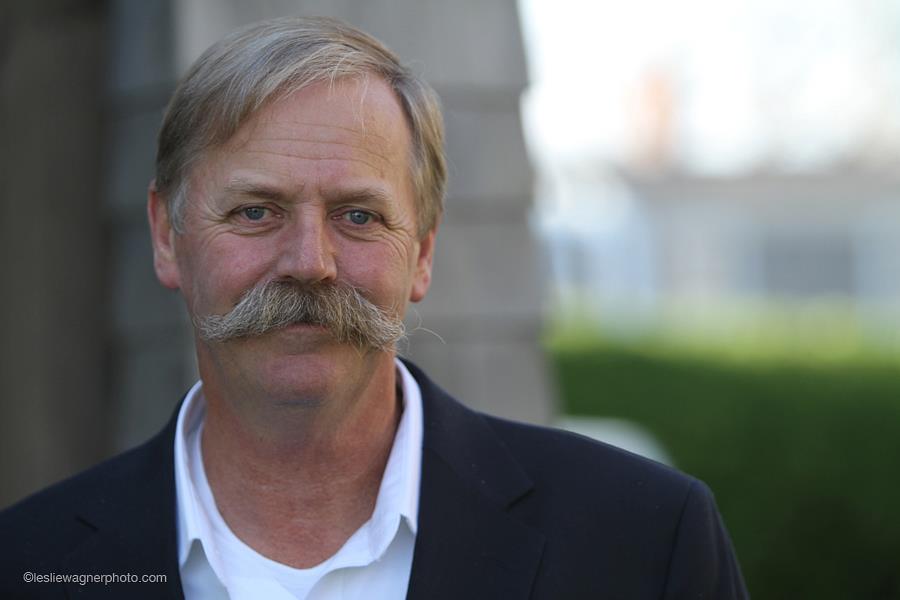
You have to respect a man with such a serious moustache. Swanton, a plumber who originally hails from Garden City New York, looks like a contract assassin from a Quentin Tarantino movie.
He attended Biddeford High School and rides a motorcycle in some of the city’s prettier neighborhoods.
Apparently, he’s not big into the whole “social media” thing. He has 18 Facebook friends, including yours truly, Mayor Alan Casavant and several of the other city councilors. He says on his Facebook wall that he “caved” to the pressure of his friends for not being on Facebook. Don’t expect this guy to have a backbone when a controversial liquor license application comes before the council.
But Swanton is his own man. He is quiet, studious and unassuming. The new councilor from Ward One also exceeds the council’s average height metric by a whopping two feet.
This next part is true: as of today, and according to Facebook, Swanton only has two things that “interest” him, one of which is this blog. Psst, Mike…time to get a hobby, dude.
Mike, your Delta Chi name is “Chipmunk”
MELISSA BEDNAROWSKI
Melissa Bednarowski’s Facebook profile pic
Finally, it’s time to meet the only female member of the Biddeford City Council.
A former planning board member, Bednarowski was unopposed for her Ward 4 seat. It’s a good thing because the city clerk’s office could not fit any other names on the ballot under Ward Four.
Originally from Manchester, New Hampshire, Bednarowski seems to take her new position seriously, listing it as her occupation on Facebook.
Melissa is a bit of an enigma in the social media realm. She keeps her list of friends hidden from public view, but apparently fellow Councilor Roch Angers and I belong to a very elite and discreet club known as Melissa Bednarowski’s Facebook friends.
Melissa spends most of her time on Facebook posting photos of herself, her dog and some of her friends. She also likes to share thought-provoking quotes that seem to match her matter-of-fact style.
It’s hard to know how Melissa will fare over the next two years of her term. Expect her to be independent, stubborn and well-prepared for whatever debates may come down the line. She is a stickler for details and a true-believer of “government service.”
Come on, don’t tell me you didn’t see this one coming.
That’s right, word on the street, yet unconfirmed, is that former mayor Joanne Twomey is at least contemplating a bid to recapture her former District 135 House seat, and may challenge the incumbent, fellow Democrat Paulette Beaudoin for a chance to take on Republican Perry Aberle in November. So far, Twomey has not registered as a candidate with the Maine Secretary of State’s office.
Joanne Twomey: Portland Press Herald Photo
If this plays out like I predict, it will be the trifecta of disgruntled Democrats in Biddeford.
For those of you playing at home, here’s the run down of Democrat on Democrat for the city’s three State House Seats.
District 135: Joanne Twomey may face incumbent Paulette Beaudoin, a sweet, little old lady who just wants a fourth and final term.
Twomey got trounced just a few weeks ago, when Biddeford voters overwhelmingly rejected her bid for a third consecutive term in the mayor’s office, but she is a fierce campaigner and that, combined with her name recognition, could spell serious trouble for Beaudoin. If Joanne is able to re-assemble her kitchen cabinet, look out!
I have been watching Biddeford politics for more than a decade, and this seems like a first. The GOP must be loving it, and the Dems in Augusta better break out the riot gear. This is one primary you won’t want to miss.










 LESSONS IN MEDIOCRITY | OUTLAW JOURNALIST