It is a well-known fact that participation in the world of politics – whether it is national, statewide or local — is often a rough and tumble affair.
But here in my hometown of Biddeford, politics is a blood sport and its machinations are not for the faint of heart, those with thin skin or fragile egos. You better put on your big-boy pants if you want to play in this arena.
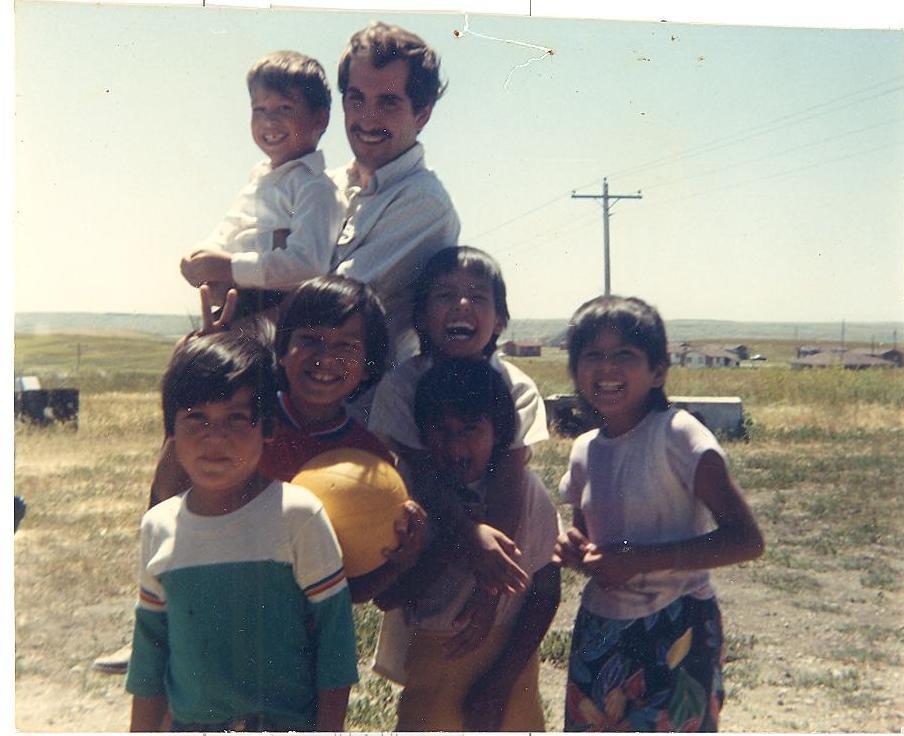
Me and the mayor in 2011
This was a strange election year in our city. Several city council seats were uncontested and the mayoral campaign between incumbent Alan Casavant and his challenger Victoria Foley was relatively quiet — right up until the last few days of the campaign.
So, what happened? Why did just a small handful of Foley’s supporters all of a sudden go rogue on social media and get their knickers in a knot?
Well, it was a couple of things, including a direct mail piece that the Casavant team sent out just a few days before Election Day. The reaction to that mailer from a few renegade Foley supporters was swift and scorching. Heads exploded, small children went missing and locusts began to ravage the city.
Relax. I’m joking.
(Disclosure, I was a member of Casavant’s campaign team.)
Foley, and an overwhelming majority of her supporters, ran a clean, positive and civil campaign. But some new terminology was introduced into the broader spectrum of campaign rhetoric this year: ageism and nativism.
What? Do I now have to feel guilty about being an old native of Biddeford?
The unhinged objection from a small group of Foley’s supporters on Facebook was likely sparked by Casavant’s use of a direct quote that Foley gave to a newspaper reporter several weeks ago. “My opponent says Biddeford is on a great trajectory,” Casavant wrote. “I appreciate her kind words.”
Another objection was the mention of Foley’s age on the Casavant mail piece. Again, that was from a newspaper profile of the candidates. I very much doubt that any member of Foley’s team wanted to storm the Biddeford-Saco Courier’s office because they had the temerity to list her age (38). For the record, Casavant is 69.
Throughout the campaign, there were many subtle comments made about the need for a more “energetic” candidate in the mayor’s office. I will not reveal the names of those thin-skinned Foley supporters, but I will quote some of their social media comments, which, by the way, were taken down very quickly once the Casavant team replied.
No worries. I have the various screen shots.
PR 101: Nothing is ever truly “erased” once it has been published on a public site.
A Foley supporter, who I will dub as Jane Doe, wrote a screed on Facebook attacking the mayor for invoking his experience and for the fact that he is a lifelong Biddeford native who bleeds black and orange.
“When I saw the first post on the socials for Alan’s re-election campaign weeks ago, I was repulsed by the nativism dog-whistle language, that only someone “from” Biddeford, who has deep roots here, is capable of being Mayor of Biddeford,” Jane Doe wrote. “. . . (and) mentioning Victoria’s age is a clear attempt to label her as “too young” to do the job.”
And John Doe wrote this: “There is a young, progressive female Democratic (sic) running for mayor of Biddeford, Maine. The current mayor is an old, entrenched, multi-term good ol’ boy Democrat.”
John Doe continues: “As with everything the current mayor does, there’s plenty of wolf-whistle nativism on the (Casavant direct mail piece.). The whole production looks and reads like an Onion joke about old, straight white guys desperately clinging to their fiefdoms…but unable to do more than make fun of the competent women around them.”
What John Doe conveniently forgets is that Alan Casavant appointed Victoria Foley to the city council. Casavant also appointed Councilor Amy Clearwater to the council. I could keep going, but you get the point: Casavant obviously recognizes the competency of female candidates.
The Casavant team created a campaign website, which included video endorsements from several “natives” but it also included profiles of newer residents who like the way our mayor is leading the city. Maybe that stung. Who knows? But I also know several lifelong residents of Biddeford who supported Foley’s attempt to capture the mayor’s seat.
Biddeford has a long and storied history of welcoming and embracing “immigrants” who flocked here to work in the textile and shoe mills more than 100 years ago. These people, and all the others who followed in their footsteps (Including Victoria Foley) contribute so much to the fabric of a truly diverse community.
In summary, we should all thank Ms. Foley for offering an alternative checkbox on the ballot. She has a lot to offer this community and she has a bright future ahead if she chooses to continue in the city’s political landscape.
Now it’s time for this old white guy to take a nap.
“Biddeford After Dark” is a five-part series of articles that I wrote more than 20 years ago while serving as the editor of the Biddeford-Saco-OOB Courier.
According to what I wrote at the time, the purpose of the Biddeford After Dark series was “to explore what was often ignored: what happens in our community after most people have gone to sleep.”
The Lincoln Mill Clock Tower removed from its perch, sits rotting near the side of the road in downtown Biddeford. (Seaver photo, Dec. 2001)
I have fond memories of writing those articles, all of which were written in a first-person, narrative style.
It was October 2001, and I think my publishers, David and Carolyn Flood, thought I was nuts for wanting to work all the extra hours necessary to accomplish my goal. But I wasn’t looking for overtime compensation or a break from my daytime responsibilities.
I just thought it would be fun.
The Biddeford After Dark series stands out today – nearly two decades later – as one of my favorite writing endeavors.
Clicks on these links to travel back to Biddeford in 2001:
In-depth conversations with the donut makers, factory workers and the guys who operate Biddeford’s downtown waste incinerator; all while most of the city sleeps.
(Note: For the life of me, I cannot find the files for Part Two of this five-part series. I guess the night takes its due without permission).
The 19th Century French novelist Romain Rolland once opined that “we are reckless in our use of the lovely word, friend.” Nowhere is that more true than on Facebook and other social media platforms.
As an example, as of today, I have 1,202 “friends” on Facebook. Really? Do I have more than a thousand people who would loan me $20, help me with a home repair project or drive me to and from a doctor’s appointment?
Probably not. Because when you look deeper into my life you will see that I am actually blessed with close to 20 real friends. These people do not judge me, but will also share their honest opinions if asked.
In a few weeks, one of my real friends will get out of bed at 6 a.m. in order to pick me up at my home, drive me to Sanford for an ECT treatment and wait roughly two hours before he can drive me home with zero compensation. Now, that is a friend.
What about all those other “friends” on social media? Well, for starters, they are better described as contacts in a very large and fluid Rolodex.
Sure, social media can be fun, interesting and sometimes informative, but it’s important to remember that, for the most part, you are looking through a carefully controlled lens as you scroll through the posts on your social media page. Few of us would go to the grocery store wearing only our underwear. (Some things are best left to the imagination.)
When you see a friend’s post on social media, more often than not you are seeing only what they want you to see: their happy family, pictures of their vacation or beloved pets, etc. What you rarely, if ever, see, is someone posting that they will need to file bankruptcy or facing divorce because of infidelity.
Instead, you are seeing only the beautiful posts, which can lead to feelings of envy and inferiority, especially among young people.
Teenage Wasteland
According to studies by the Pew Research Center and the Mayo Clinic, teenagers’ use of social media “allows teens to create online identities, communicate with others and build social networks. These networks can provide teens with valuable support, especially helping those who experience exclusion or have disabilities or chronic illnesses.”
“But social media use can also negatively affect teens, according to the 2018 study. Social media can distract them, disrupt their sleep, and expose them to bullying, rumor spreading, unrealistic views of other people’s lives and peer pressure.”
The risks might be related to how much social media teens use. A 2019 study of more than 6,500 12- to 15-year-olds in the U.S. found that those who spent more than three hours a day using social media might be at heightened risk for mental health problems. Another 2019 study of more than 12,000 13- to 16-year-olds in England found that using social media more than three times a day predicted poor mental health and well-being in teens.
Other studies also have observed links between high levels of social media use and depression or anxiety symptoms.
As a strategic communications consultant, I can tell you that maintaining your own online reputation is very important. Nothing is ever truly “erased” on the Web. Businesses and political campaigns need to be fully aware and consent to everything they post in the digital town square.
Remember: it is often better to just scroll on by posts that seem like “click-bait,” otherwise choose your words and images carefully. Because, whether you like it, people will judge you by the words you use.
There is no question that downtown Biddeford is going through a renaissance. From a run-down and neglected corridor of assorted and vacant mill buildings to one of the most desirable places for young people to live in southern Maine.
Suddenly, without warning, downtown Biddeford became hip.
Today, long-since abandoned textile mills in the downtown area have been redeveloped into high end housing stock, surrounded by small and eclectic restaurants, shops, a parking garage and a proposed downtown hotel with a rooftop pool.
How did this happen? And are there any drawbacks to this fast-paced revitalization of the city’s core: The Heart of Biddeford?
Let’s begin with the factors that began a little more than 10 years ago.
A group of citizens from both Biddeford and Saco became activists and they began pushing city leaders to close the controversial MERC facility, a downtown trash incinerator that served several surrounding communities but left its putrid stench in downtown Biddeford.
It took vision to close that plant because it was one of the city’s biggest taxpayers. That vision came into focus when Alan Casavant was elected to his first term as the city’s mayor.
Casavant pledged to close the plant and he won his first term by a healthy margin over incumbent Joanne Twomey, who said closing MERC would likely never happen and focused her attention instead on developing a racino on the outskirts of town.
(Disclosure) I was Casavant’s campaign manager.
Although closing MERC was likely the impetus of Biddeford’s revitalization, there were many other factors taking place.
First, rising real estate and rental values in Portland forced many residents to seek more affordable housing elsewhere. They could keep their Portland-based jobs with only a 20-minute commute from Biddeford.
Real estate developers saw a golden opportunity, and they began investing in neglected and crumbling mill buildings. More than a century ago, young workers from away flocked to Biddeford in search of jobs in the city’s textile and shoe mills.
Today, it is young renters and home-buyers flocking to Biddeford. For those already living in the downtown area, rental costs began to soar, forcing them out of the city to places like Sanford and Westbrook.
A classic example of gentrification.
Our house, in the middle of our street
Rising real-estate values have also had a significant effect on homeowners who have seen their property values climb at a phenomenal pace.
For example, Laura and I purchased a modest, working-class home not far away from the downtown area. Our neighborhood was created for the hundreds of baby-boomers returning from WWII and raising families.
We purchased this home in 2004. Today, based on real-estate comps in our neighborhood, our home has more than doubled in value. Yes, we made several improvements but not enough to explain such a dramatic increase.
Today, it is almost impossible for first-time homebuyers to find an affordable home for working-class families.
All of this may explain why there has been a lot of chatter on social media about establishing the concept of “rent-control” in Biddeford.
Let me be clear. Rent-control is a bad idea. Fostering the development of affordable housing, however, is a good idea. Relinquishing more power to government will likely stagnate growth and hinder new opportunities and investments.
While many people blame city leaders for the problem, their frustration is understandable but misplaced. Late last year, the city of Biddeford tackled the subject of affordable housing. Over the next five years, the city will work toward a goal of creating at least 90 units of affordable housing per year.
“This is a statewide issue especially in coastal communities,” said Mayor Alan Casavant. “There are limitations on what the city can do regarding private developers. Our tool box is limited,” he said.
Casavant says that many once worn down and unsightly apartment buildings are now being renovated by earnest landlords who want to increase the value of their properties. “They (landlords and developers) have a right to recoup their investments in our community.”
According to Guy Gagnon of the Biddeford Housing Authority, his agency calculates Fair Market Rent for various apartments every year. “The rapid rise in rent prices has outpaced the standard averages,” Gagnon says. “The real problem is a basic economic principle of supply and demand. We need much more supply of all types of affordable rentals and homes in southern Maine before the curve can be bent back in the right direction.”
Gagnon agrees that goal will be hard to reach as long as the real estate market is continuing to rise and he is worried about the plight of existing and long-time residents. “All these changes, improvements are great, fantastic and amazing,” he wrote on one of his Facebook posts. “It’s especially important to be able to keep our children from having to move away for affordable housing. It is very, very, very important that the change in buildings does not change the fabric of our community.”
I agree with Gagnon’s concerns, but as I said before: rent control will do little to nothing to solve the problem.
Ralph Waldo Emerson once quipped that “a foolish consistency is the hobgoblin of little minds.” This week, I offer a solid example in which society is best served from at least a little bit of consistency.
State Rep. Maggie O’Neil (D-Saco) has introduced a bill (LD 706) to lower the voting age in Maine from 18 to 16. No other state allows 16 year-olds to vote in general elections. In fairness, several states do allow 16 and 17-year-olds to pre-register but those states also require voters in a general election to be at least 18 years of age.
In North Dakota, however, there is no need to register to vote.
Do you remember when you were 16? I do. I had black-light posters, a crush on Farrah Fawcett and I listened to AC/DC on an 8-track player. I was also a political junkie who watched Nixon resign and board a helicopter on the White House lawn when I was 10.
When I was 12, I got to shake President Carter’s hand when he made a campaign stop in Biddeford. When I was 16, my father volunteered for Ted Kennedy’s failed presidential run in 1980.
Subsequently, without thought or curiosity, I became an ardent and passionate Democrat.
Today, I have had the experience of raising two 16-year–old boys. I love my boys and they both turned into fine young men, but there was no way that they were ready to vote back then.
Old enough to die; old enough to vote
In 1971, Congress overwhelmingly voted in favor of the 26th Amendment, which lowered the minimum voting age from 21 to 18. That amendment was fueled in part by the Vietnam War and the compulsory draft of 18-year-old into military service.
The 26th Amendment set up its own range of inconsistencies. For example, at 18 you are old enough to join themilitary but not old enough to purchase alcohol.
O’Neil’s bill, however, is riddled with many more inconsistencies. 16-year-olds are rarely, if ever, tried in criminal court for a criminal offense; instead they are tried in juvenile court and sentenced to a juvenile detention facility if found guilty.
While 16 is the minimum age of consent, they cannot act in pornographic movies and are too young to buy a pack of cigarettes. At 16, society says that you cannot sign a legal and binding contract, including marriage without parental consent. I could keep going, but you probably get my point.
When it comes to minimum age requirements, Congress mandates that you must be at least 25 to serve in the House of Representatives; 30 to serve in the Senate and 35 to be elected president.
While O’Neil acknowledged those inconsistencies, she also says her bill is designed to address some other inconsistencies.
“Reaching the age of 18 is a big milestone in all of our lives,” O’Neil says. “But the truth is [turning 18] does not signify some seismic shift in an individual’s ability to participate in society or civic life. At the age of 16, young people are working under our employment laws, paying taxes, and driving on roads. They are attending school–there’s no one more in touch with our education system than students and educators who are in school every day.”
O’Neil says she was motivated to submit the bill after working with several juvenile supporters during her campaign for office, specifically pointing to her campaign manager, 16-year-old Cole Cochrane, a sophomore at Thornton Academy.
Cochrane says “we don’t need to just focus about current responsibilities for 16 year olds, but about how we contribute and the ultimate outcome.”
According to Cochrane, lowering the voting age has proven to increase voter turnout rate in countries like Austria, andeven in some American cities. “One must consider the contributions we make to society. We are foundations of campaigns, go to schools that are run by the government, and take on jobs that support our economy. Although we may be considered children by law, it is time to consider us voters as well.”
While many scientists and neurologists say that a brain is not fully developed until one turns 25, both Cochrane and O’Neil point to other studies that say 16-year-olds are fully capable of making decisions and critical thinking.
“I already consider this argument somewhat irrelevant given this data point.” Cochrane says. “Decision making capabilities are developed by 16 years of age, indicating that we are able to make decisions despite these concerns.”
Overall, there are multiple benefits to lowering the voting age, Cochrane says. “From validation of millions of voices, to strengthening our democracy. It is time to act now, for the betterment of our state.”
O’Neil readily admits that her bill (currently stuck in committee) faces a “steep hill to climb to send the bill out to voters.”
“No matter what the outcome is, these young people have led an important conversation in the legislature,” O’Neil said. “I’m proud of the work they have done. Their voices are so important, and the legislature needs their perspective.”
As we continue our march through the 21st Century, there are still a great many people who are less than pleased about the various advances of technology and about how the so-called charge into a brave new world is affecting their lives and their nostalgic memories.
Henry Thoreau opined that “the mass of men lead lives of quiet desperation.” This is especially true when it comes to the Baby Boomer generation that is constantly trying to catch up with Gen X and Millennials on the technology choo-choo train.
Facebook is full of memes that disparage overweight, poorly dressed or otherwise ‘redneck’ people who shop at Wal-Mart.
Twitter or Facebook will not suspend your account if you share photos of a fat lady using a motorized cart while buying Twinkies and a case of Coca-Cola at Wal-Mart.
Boomers are those who write a check for their purchases at the supermarket. The ones who still pay cash for their Turnpike tolls. I’m not necessarily suggesting that all Boomers are a bunch of troglodytes, but if the shoe fits . . .
In a world where people are increasingly offended or feel marginalized, it is still acceptable to look down upon those who shop at Wal-Mart.
For all of its successes, Wal-Mart faces steep criticism from the pretty people who gladly shop at Target or Whole Foods.
Wal-Mart does not need me to defend it from gross mischaracterizations. (But if someone from their corporate headquarters wants to talk about public relations, please send me an email.)
Now, back to the talk of technology. We carry mini-computers in our back pocket. We have robots to clean the floors in our homes. We use Alexa for everything, ranging from setting the thermostat to maintaining a shopping list. Many people have satellite dishes on their roofs and satellite radio and GPS units in their cars.
In 1985, MTV only showed music videos. My girlfriend at that time said MTV wouldn’t last long because people would get “bored” watching videos. I wonder what she would say today about You-Tube? Today, MTV broadcasts “reality” shows such as “Jersey Shore” and “Sixteen and Pregnant.”
Would you like to join me and invest in opening a new Block-Buster store? Things change. And that’s not always such a bad thing.
Now back to Wal-Mart bashing.
Over the past year or so, dozens of social media memes have popped up, decrying the advance of the self-checkout lane option at Wal-Mart. They argue that this trend is poised to exterminate the need for cashiers. Really?
What other national retailer pays someone to simply greet and welcome you to the store?
Other memes include quips such as “when is Wal-Mart going to send me W2s if they expect me to work there?” Another meme: “if I wanted to self-checkout, I would stay at home and shop at Amazon.”
That last one leaves me scratching my bald head. Amazon is the epitome of technology and consumer trends. If you use Amazon, why are you bitching about Wal-Mart and its self-checkout option?
And why is Wal-Mart singled out for providing a self-check-out option? Hannaford grocery stores have self-checkout lanes. Target stores also have self-checkout options and even Whole Foods (gasp) is experimenting with a self-checkout option for its customers.
I went to Market Basket today. I only had a few items in my cart yet it took 11 minutes for me to get through the traditional checkout lane. Market Basket does not offer a self-checkout option (at least not at its Biddeford store.)
There is an old saying that time is money. If I have just a few items in my cart, I breeze through the self-checkout lane in less than three minutes, saving roughly eight minutes for me to do something else instead of waiting in line to buy a six-pack, a loaf of bread and a box of Twinkies.
To add insult to injury, I get on the Turnpike without stopping to pay a toll, simply by using my EZ pass device. I have to guess that EZ Pass is more profitable for our friends at the Maine Turnpike Authority because these devices decrease the need for human toll booth attendants.
When I was a young child, I remember that my father had a night job pumping gas at the Top Gas station in Saco. He would wash your windshield, check your oil, or inflate your tires upon request.
Today? There are no gas station attendants. Welcome to the jungle. At some point, the machines are going to become self-aware; and we all know what happens then. In the meantime: Thanks for reading! See you next week.
Originally published in Saco Bay News on May 13, 2021
Over the last 24 hours, many of my Facebook friends changed their profile pictures with a backdrop of the French flag.
I did not.
I have no criticism for my friends who did this, I can only explain why I did not.
What happened in Paris last night was an outrage. Those were cowardly acts perpetrated by cowardly people. Of course, we should stand in solidarity with our fellow men, women and children in Paris. We want to show that we are united. There is nothing wrong with that.
We are saddened. We are outraged. And yes, we are afraid that this form of terror will soon land again on own shores.
Paris was not the first attack coordinated by ISIS. The loose-knit terror organization has struck other nations, albeit not members of Western Civilization.
I did not change my Facebook profile when ISIS beheaded journalists. I did not change my Facebook profile when ISIS attacked a hotel in Tunisia. I did not change my Facebook profile when ISIS attacked a French Gas plant or when they attacked and killed people in Kobane or Hasakah in Syria; or in Libya or Egypt.
I was a newspaper editor when the 9-11 attacks on the United States took place. Shortly after those attacks, my publisher and I had a lengthy conversation about whether to place an American flag symbol on the top of the front page. Another local paper had made that move, but we decided not to. It was a difficult decision, but I think we both realized that we were dealing with raw emotion, rather than sound logic.
For example, how long would the flag symbol appear on the front page? Would it be like a Christmas tree, which should be taken down after six weeks? Were we suddenly becoming patriotic because we were attacked? Why didn’t we have the flag on the front page on September 10, 2001?
To us, it seemed like being exploitative in the days following a horrific attack on our nation.
As could have been predicted, that other newspaper stopped with printing the flag on their front page long before the end of the year.
Social media is different, however. I see nothing wrong with wanting to show solidarity. I see nothing wrong with wanting to affirm our common connection to the human experience, including its shock, grief and outrage.
I just fear that we are dealing with something so much larger than what we can comprehend; a force of evil that we cannot imagine.
Some say the United States is unable or unwilling to face this latest form of human terror. Some say we are complacent, self-absorbed and don’t have the will to fight any enemy like ISIS. Some even criticize western leaders like President Obama for being “weak” on terrorism.
To those people, I say you are wrong. The same things were said about America and her president on December 6, 1941. We proved the world wrong, if only reluctantly and waiting until we were attacked.
People have criticized Generation X, yet Armed Forces recruiting stations were filled in the days after Sept. 11, 2001.
America has what it takes to confront ISIS, but this will need to be much more than a social media campaign of altered Facebook profile pictures. This will need to be a worldwide effort, and it will require both resources and tremendous sacrifice.
I am not a foreign policy expert, and more than likely, neither are you. I do not know how to bring the world together on this issue, but I do know that it will require much more than symbolic gestures.
We stand with Paris. But we must also stand with Berlin, Tunisia, Prague, Beirut and people of every stripe across the globe, not just the ones who look like us.
Already the political machinations are beginning in Biddeford, a city that treats their biennial municipal elections like the Super Bowl.
It’s not like this in the neighboring city of Saco, but on the south side of the river — local politics is a blood sport that rivals rugby or a Stanley Cup playoff game.
I should not complain. For years, I have been a season-ticket holder to these gladiator games. From time to time, I have even wandered onto the field, working as defensive coordinator for various candidates.
Casavant and I celebrate his second mayoral win in 2013
In 2008, for example, I was hired professionally to help defeat a referendum that would have closed the airport. The result? 86 percent of voters went our way.
Three years later, someone called me and asked if I could head up Alan Casavant’s effort to oust former mayor Joanne Twomey from office. I agreed to help, and we won that campaign with 68 percent of the vote. Not too shabby, especially since we were taking on a two-term incumbent.
Two years later, in 2013, Casavant once again asked for my help in his campaign. We won. By big numbers. Again.
I am a political junkie and a professional communications consultant. It’s fantastic when your hobby and your occupation collide. I was hired in 2012 by Casella Waste Systems to help ensure a successful city council vote that would ensure the MERC trash incinerator was no longer a part of the city’s skyline. The result? The Biddeford City Council voted 8-1 to purchase the MERC property and begin a new curbside recycling program.
Three years later, a private developer is undertaking a $50 million redevelopment of a property that abuts the former incinerator’s parcel. That investment would never have happened if MERC were still there.
In addition to those campaigns, I worked professionally on the Oxford Casino campaign. The result? Oxford became the first casino in Maine, despite many failed attempts by others in previous years.
Last year, I worked to help preserve Maine’s traditional bear hunting practices. We won.
But when you work on campaigns, you don’t always win.
In 2008, I was subcontracted by the Hillary Clinton campaign in an effort to sway Maine’s super delegates. By then, Senator Barack Obama had too much momentum heading into the nomination.
But there was an upside to working on the Clinton campaign. I got to be part of a conference call with Harold M. Ickes, a legend in campaign circles. There I was sitting on a bench swing in my backyard, listening to Ickes talk about strategy. It was a memorable moment and a highlight of my career.
With that bit of disclosure out of the way, allow me to finally get to the point of this blog post.
Alan Casavant and I are friends. —- Friends.
The Karl Rove of Biddeford?
Apparently, some people in Biddeford have delusions of grandeur. They think a run for the mayor’s seat is the equivalent of running for president.
Over the last few days, there has been much speculation that Alan Casavant is little more than my puppet; that I am somehow the man behind the curtain, keeping the residents of Oz in line.
These people are generally rabidly opposed to Casavant winning a third term. Somehow, they think that linking me to Casavant will further ensure his defeat in November.
Some of these malcontents from the Island of Misfit Toys think that when Alan Casavant farts it’s because Randy Seaver ate beans.
On social media, they keep a steady drumbeat, raising questions about Casavant’s recent press releases about a serious and troubling problem in the city.
“This has all the hallmarks of Randy Seaver’s political spin,” wrote Ryan Gavin on Casavant’s Facebook page, when the mayor announced that he had written a letter to the United States Attorney General.
Joshua Bodwell complained to the mayor that it seemed as if it is actually me who is writing Casavant’s press releases.
And Brian Keely has routinely blogged that I am essentially Casavant’s attack dog. Christ, even Joanne Twomey described me as “the devil.”
Note: If Joanne Twomey ever calls you the devil, you know you’re doing something right.
So let’s set the record straight. I am not helping Alan Casavant with his campaign. I am also not writing his press releases or shooting his videos. With the exception of suggesting which tie he should wear, I am not providing him any strategic advice.
Alan Casavant has close to 4,000 friends on Facebook, any one of them may or may not be giving him advice. How to hell do you get 4,000 Facebook friends? Must be a popular guy.
It’s easy to understand why the malcontents and some others from the Island of Misfit Toys would think that I am helping Casavant. I have helped him before, but I am not helping him now.
Why?
1.) I am far too busy at work to devote any time to the tedium of Biddeford’s political struggles. Today my clients stretch from the Bangor area all the way to Sierra Vista, Arizona.
2.) Casavant can’t afford to pay my billable rate, so my primary focus must remain on clients who pay me.
3.) I have some fairly serious health concerns that render me pretty much useless after 8:30 p.m. (more about that in a moment)
4.) I am enjoying a new-found and civil relationship with Matt Lauzon, the man at the center of troubling sex abuse allegations in Biddeford. Both Matt and I have gone through a lot in the last few months and it was simply too stressful to think about getting back into Biddeford’s political theater as anything other than a spectator.
I will most likely vote for Casavant in November. I will let him put a sign on my lawn. I will cheer him on from the sidelines, but I cannot afford (financially, physically or mentally) to be any more involved in his campaign. That is the God’s honest truth.
A true story
In closing, I’d like to tell you a quick story about Alan Casavant.
This story, I think, sums up Alan’s character, integrity and his loyalty to his friends.
Sometimes, just before bedtime, I become confused and disoriented. It usually means I need to take my medications and get to bed. But on this particular cold October night I wandered from my home. Laura was fast asleep. She did not know that I had wandered off.
I became increasingly confused, and I found myself near some woods and on the verge of tears. I was lost and frightened. Fortunately, I had my cell phone. I managed to punch the contacts list and hit the first number. It was Alan Casavant’s cell phone, but I did not know it.
He was already in bed. I told him I was lost and confused. He got up, got dressed, jumped in his car and went looking for me. I was only a 1/4 mile from my home, and he found me rather quickly near the intersection of May and South streets.
He brought me home and came inside to make sure Laura knew what was happening.
That, ladies and gentlemen, is what you call friendship.
In a few weeks, Laura and I are planning to join Alan and his wife, Patti, for dinner in Portland. If I give him any advice, it will be written on a napkin and passed under the table.
Former Saco Mayor Mark Johnston/ Marlee Hayes photo
Something strange is about to happen on the other side of the Saco River. It’s as rare as a blue moon and perhaps more difficult to understand.
Mark Johnston will not be running for mayor in Saco.
Johnston, 61, says he has spent nearly 40 years in service to his community. Now, he says, it’s time to let someone else take the reins.
“I’m tired. I’m going to be 62, and now it’s time for Mark,” he said during a recent interview at his Main Street delicatessen, which is often mistaken as City Hall with an amazing selection of wines and good sandwiches.
Johnston came into the world of politics in the usual way: He was a malcontent, a young man worried about a used car lot that was planned near his home.
That was nearly 40 years ago, when he was appointed to the Saco Zoning Board of Appeals. His political career would extend over the next four decades and he served under five different mayors, including Sam Zaitlin, Paul Jansen, Haley Booth, Fred Clark and Eric Cote. He also served on the planning board and the city council.
Of course, Johnston also served as the city’s mayor for the better part of two decades, beginning in 1989 with four consecutive terms that ended in 1997. Six years later, in 2003 he was again elected as the city’s mayor and served another three terms, 2003-2007; and 2011-2013.
Every time his name was on the ballot he easily won his election . . . except the first time.
Despite the fact that he was unopposed and his name was the only one on the ballot, Johnston was forced to sue the city in order to become its mayor because he did not get enough votes to meet the criteria of a provision in the city’s charter.
A superior court judge sided with the politician over the city, but Johnston did not escape unscathed. He was mocked on national television by David Letterman and Jay Leno.
Round and round
Johnston runs Vic & Whit’s with his ex-wife, Beth. They have been divorced 25 years but seem to have a successful working relationship.
He’s Bugsy Seigel, Charlie Lucianno and Meyer Lansky all rolled into one affable, near-sighted man with an uncanny resemblance to Sir Elton John.
______
This is not the first time you announced that you were stepping down from politics. You always seem to come back for more?
(Laughs) “I really meant it the last time, but I had to come back to correct some very serious mistakes that were made during the Ron Michaud Administration. My intent (in 2011) was to correct those mistakes: our bond rating was lowered, the city had blown through its reserve balances. It was a lot of smoke and mirrors because no one had the courage to raise taxes slightly in order to keep up with very basic infrastructure.”
Are you leaving now because people are angry about significant tax hikes?
“No. I think most people understand the position we were facing. It’s not easy to raise taxes, even a little bit. But leaders are not elected to do easy things. Leaders are elected to lead.”
What was your proudest moment as mayor?
“The train station, hands down. We were entering a new century and thinking about new transportation. Passenger rail had long been abandoned, but having it come back has paid huge dividends for Saco. It really redefined this community. We have people who live here because of the train and such easy access to their jobs in Boston.”
You told residents it would not cost ‘one red cent’ in taxes. That didn’t quite work out, did it?
(Laughs) “People misunderstood me. I said not one red cent, it ended up being a whole lot of red cents. But seriously, this has become a huge asset for our community. We wanted to embrace it. A lot of things changed in midstream. None of us knew then that Guilford Rail was going to require us to have a $250 million liability policy. But we were able to use the Saco Island TIF and revenues from the MERC settlement and rental fees from the Chamber of Commerce.
“I am very proud of that station. It was the first green station built in the United States. It has geo-thermal heating; and the roof was made with a composite material from recyclables. It meets every standard of LEED certification. It was built by all Maine contractors, with wood beams from Maine forests.”
And the wind turbine
“I’ll take all the fault for that. It’s not the one I wanted, but I couldn’t get the council to approve the one I wanted. What we have is basically a kit that cost us $250,000. I wanted the million dollar one, which would have been much taller and as a result much more efficient.
“The council didn’t want to spend $10,000 for a wind survey study. But what we have is iconic, and it sends a message about our community: we are embracing the future, we are recognizing that we must wean ourselves off fossil fuels.”
What was the worst moment of your time as mayor?
(Pauses) “It happened roughly three minutes after I was sworn in for my very first term, when I publicly fired the city attorney (Mary Kahl). She was a good attorney, but I thought she was interfering too much in the city’s day-to-day business. She ended up going to work for the city of South Portland. I don’t regret what I did, but I deeply regret the way I did it.
“I humiliated her in public, and that’s not leadership. That’s not how you should treat people. We were able to be civil, but the wounds never healed. Unfortunately, she passed away a while ago, and I don’t know if she ever forgave me. I was young and brash, but I learned a valuable lesson: always be willing to talk to those with whom you disagree. Never embarrass or humiliate someone in the public arena.”
Who do you think will be Saco’s next mayor?
(Smiles) “All I can say is that I will have to work with whoever becomes the next mayor.”
Ok, so who do you think will be Biddeford’s next mayor?
“Alan Casavant. He is an outstanding leader; a leader for the future. He is helping Biddeford make huge strides forward. He is also professional, calm and always a gentleman; all those tiny words that define character.”
Who was your favorite Biddeford mayor?
“Roger Normand. He was a man of integrity. He was a normal, average guy who never let the power of being mayor go to his head.”
Do you think there should be term limits for mayors and city councilors?
“Yes. Absolutely. After four terms, it’s time for a change. It’s too easy to get cocky.”
What are your thoughts about the RSU 23 issue, considering some in Saco are advocating for leaving the regional school district?
“I’m a little disappointed by the way some members of our community have acted during this debate. I think it’s a disgrace that some folks have called Old Orchard Beach residents “free-loaders.” RSU 23 has failed because of Saco’s penchant for elitism. We never talked about test scores, we never talked about how to bring teachers up through the ranks. We never talked about the important stuff. I want Thornton Academy to have the test scores that Scarborough is getting, and stop hiding behind the façade of a beautiful campus.”
Elitism in Saco?
“Yes, without a doubt. I grew up on Middle Street, a neighborhood that was known as Little Greece. Many of those people from that neighborhood became important and respected members of our community, civic leaders. It’s like we never got beyond the days of the “Battle of the Bridge.” Why do we still use that name? We never used it when Thornton played St. Louis. There has always been a false air of superiority in Saco. It’s been here a long time.”
What advice would you give to the city’s next mayor?
“Talk less and listen more.”
What will be your legacy?
“The elimination of Maine Energy. It took a long time, but I helped (and so did a lot of other people) keep the pressure on. Joanne Twomey and others never let up the pressure. I honestly never thought I would see the day. I am so proud of what Mayor Casavant and the Biddeford City Council did. That took leadership and vision, but they were not alone. A lot of people helped set the stage for finally getting MERC gone.”
So, will you be back as mayor?
“No, I really don’t think so. I have a new woman in my life, and it’s turning into something special. I was mayor when I got divorced, when I had a granddaughter, when one of my sons went to the battlefield. I’ve given a lot to this city. It’s time for me to take some time for myself and my family.”
Biddeford Mayor Alan Casavant and I are standing in line outside the Biddeford Ice Area on a Saturday night.
Considering the hundreds of other people waiting in line with us, we both feel very out of place.
We didn’t know what to expect. We had front-row, ringside seats for a series of NEF cage match fights. Of the approximately 2,000 other ticket holders, neither Casavant or I spotted a familiar face. And that takes some doing.
Some two miles away, a non-profit group is hosting a performance dance event in one of the former mill buildings that dominate the core of our city.
I wouldn’t hesitate to bet my next paycheck that attendance at the cage match fights far outpaced the number of people attending the dance performance.
Both Casavant and I were a bit elitist about our initial perception of the fights and the crowd that seemed thirsty for blood. We were outsiders, and well outside of our element.
It was interesting to note, however, that Maine Secretary of State Matt Dunlap, a one-time Democratic candidate for the US Senate, “likes” the NEF page on his Facebook page.
If not for the complimentary tickets, you can be assured that neither Casavant or I would be there.
After more than two hours of watching raw, intense competition, Casavant and I left with a changed opinion about both the event and its participants. There was a mutual respect among the fighters. The violence ended abruptly at the end of each match as the contestants would embrace and indicate their admiration and respect for each other.
It was nothing short of a bizarre experience for me . . . on the eve of once again writing about cultural diversity and elitism.
Pride cometh before the fall
Here’s another picture, and take a good look.
It takes a community
It is a Saturday afternoon on Main Street in downtown Biddeford. I am standing outside Elements Book Store and Cafe, waiting to meet with Tammy Ackerman, and I bump into my friends Jim and Renee O’Neil.
The conversation quickly turns to my previous blog post, Fool for the city
As we talk about Biddeford’s cultural heritage and words like elitism and diversity, we are briefly interrupted by a strange convergence.
A couple that summers in coastal Biddeford Pool come onto the sidewalk, each holding paintings they had just purchased. Renee met the couple just moments before and she introduces me to them as the conversation about Biddeford continues.
Moments later, a man in his late 20s is in our midst. He is wearing a t-shirt, jeans and a baseball cap backward. His tanned, muscular forearms seem to be a canvass of tattoos, but most strikingly he has a very large boa snake draped over his body. He is accompanied by a little girl, maybe four years old. Just behind him, is a woman pushing a baby stroller and puffing on a cigarette.
We are — all of us —- on the other side of a giant window that looks into Elements. The patrons inside look up from their laptops and cappuccino, curious about this new picture on the other side of the glass. Me, Renee and Jim, a couple from Biddeford Pool and this man with a giant, scary snake.
Strangely, it does not seem even the slightest bit unexpected or awkward.
After a few moments, the man moves onward down Main Street with his entourage, and the rest of us continue our conversation.
Renee, a lifelong and well-known resident of the city, adamantly disagrees with my assertion that Biddeford continues to struggle with talk about cliques, elitism and a pervasive sense of class warfare. Her husband, Jim, is concerned that I am not accurately portraying the picture.
The funny thing? They both admitted that they had yet to read the what I had written the week before.
“It seems like you should be holding up a mirror, but instead are using a piece of stained glass,” Jim offers. “Mirrors simply reflect light, but stained glass filters the light to present a certain picture.”
They are both somewhat troubled that I wrote about Tammy Ackerman, a downtown activist, in a blog post that poked at the touchy subject of elitism and cultural diversity.
“Tammy is like Mother Theresa,” Renee quipped. “She’s the last person that anyone should describe as an elitist.”
More about my conversation with Jim and Renee in just a bit . . .
After reading last week’s post, Tammy Ackerman phoned me to share her thoughts and opinions about my half-assed attempt to bite down on an apple most people want to discard or at least ignore:
That people in Biddeford seem especially sensitive about the words elitism, cultural diversity and a push for change that is being driven by relatively newer, non-traditional stakeholders…
People from away.
Subsequently, we spent the better part of 90 minutes talking face-to-face yesterday at Engine, her gallery and multi-use space on Main Street. I very much enjoyed that conversation, and I left the gallery with a lot of conflicting thoughts and opinions.
Last week I wrote about how former Biddeford mayor Joanne Twomey described Ackerman (and others) as elitists at an April 16 City Council meeting during a liquor license application for Fatboys Saloon. I opined last week that Twomey was “maybe, just maybe . . . a little bit right.”
According to Ackerman, the more division we create; the more we use labels, the more we remain stuck. “I guess I bristle when someone calls me an elitist because I come from the same working-class cloth as anyone else,” she said during our first phone conversation on the subject.
But elitism doesn’t have to be solely identified or explained by economic capacity, I countered. A lot of people have talked about cultural or ideological elitism . . . the idea that Biddeford is lacking in culture or diversity makes many other people bristle.
On Saturday, Ackerman said the points I was trying to make were anything but clear.
“I guess I don’t understand what you were trying to say on your blog because I have done nothing to exclude anyone from anything,” she responded. “I don’t say bad things about Biddeford. We’re not creating gated communities here. I am imposing anything on anyone.”
My point, I conceded, was partially lost . . . or at least not very clear last week. When I said that Twomey was “maybe a little bit right” I was speaking more to the pace and the perception of the conversation, not necessarily the facts.
Ackerman and some of Biddeford’s other newer immigrants are incredibly passionate and motivated. Perhaps a little too motivated.
Ackerman’s efforts to heighten and amplify arts and culture in the downtown caught some people off guard. The push, at times, seems aggressive. Ackerman (and others) sometimes fail to understand a dynamic that is embedded in this community: an exaggerated sense of pride that is used to mask a lingering sense of low self-esteem.
Make no mistake. People who live in Falmouth, Cape Elizabeth or Camden are very proud of their communities, but they never talk about their pride. That would be uncouth, ill-mannered.
Pride in the name of love
But in communities like Biddeford we wear our pride on our sleeves. A proud city rising where the water falls is our motto. Tiger Pride.
Maybe, just maybe, we’re not quite so proud. Maybe, just maybe, there is still a dynamic of self loathing going on here.
Maybe, just maybe, we are much more consumed with envy than pride.
It ain’t me; I ain’t no senator’s son
Ackerman says that issues such as elitism, the creative economy and quality of place are inherently subjective.
“Quality of life is important,” she said. “Ask one person to describe quality of life and you get one answer. Ask someone else and you get another answer. Ask 10 people, and you get 10 different answers.”
She also says she is perplexed how anyone could define her as an elitist, but she concedes that the term can have both negative and positive connotations, such as the pride associated among an elite group, i.e. the Navy Seals. But she also remains stuck on the apparent misnomer of elitism when it is attached to her efforts to promote a creative economy in Biddeford.
“I’m not a fancy person, so I guess I don’t get the ‘style police’ commentary,” she said. “If style police means I care about how our downtown looks, then maybe I am the style police, but I’m not sure why anyone would be opposed to our downtown looking as good as possible.”
Ackerman spoke at length about her experiences in Biddeford, her struggles and her vision. I plan to write a more detailed piece about that in an upcoming post, but we kept jostling with the tricky concepts of elitism and diversity.
Whether talking about Fatboys Saloon or the pushback to ideas about transforming downtown Biddeford, Ackerman repeatedly pointed to a Downtown Master Plan that was coordinated by the Heart of Biddeford two years ago.
The downtown master plan was a very open and inclusive process that sought input and guidance from any stakeholder who was willing to participate. An over-arching theme of that process resonated clearly: Almost universally, people in Biddeford wanted the downtown to be a ‘family friendly’ destination.
According to Ackerman, taking a position in Biddeford is a daunting proposition for many small business owners and others who worry about some sort of retribution for their viewpoints. “Who wants to go through that? It’s not fun, and it’s certainly not profitable,” she said. “A lot of people are unwilling to get involved.”
Ackerman says she wants Biddeford “to be a good place for everyone” and as inclusive as possible. She says peoples’ behavior often reflects the treatment they get. If all residential landlords took small steps to maintain their properties, it would enhance not only the appearance of the downtown, but also the attitudes of those who live there, which could lead to a greater level of respect and an enhanced sense of community ownership.
But in a follw-up e-mail she sent me, it seemed clear that Ackerman remains frustrated that I urged her and others to be just a bit more mindful of the city’s cultural history and a laundry list of perceived and some very real examples of elitism. She disagreed with my suggestion that maybe we should pause a bit to remember the past before pushing so headstrong into the future.
“I’m still not sure what “dial it back” means,” she wrote, responding to my point that some people are a bit uncomfortable about the pace of the conversation or the sudden (and admittedly positive) changes in our community. “I have the energy to help Biddeford discover what’s good about it now. I may not have this energy in a couple of years! Biddeford’s time is now. Decisions made today will impact the future just like the decision to bring MERC [the controversial, former downtown waste-to-energy incinerator] in impacted 25 or so years of Biddeford’s future.”
As clear as waves on the sea
I was honestly surprised by the reaction to last week’s post. While some people thought I hit the nail on the head, others thought I was far off base. Regardless of the opinions and their sometime surprising sources, I know one thing is beyond dispute. I had tapped something raw, something that makes people queasy.
One friend, another lifelong resident of Biddeford, told me my analysis was spot-on. There is again another battle of elitism happening in Biddeford, he said. “I don’t know how to define it, but it seems pretty obvious to anyone paying attention. It’s like heading to the beach and seeing the waves. I don’t necessarily know where they came from or exactly how they were formed, but I know that they are there.”
City Councilor Roch Angers grew up in downtown Biddeford, and says many of the dividing lines are self created, but often painfully obvious. “It’s been going on for as long as I can remember,” he said. “It’s like an embedded piece of our culture. I think it’s part of our Franco heritage. There has always been a push back against those who appear to be succesful . . . a certain sense of envy. I agree that it’s more perception than fact, but no one can deny that it is there.”
Angers agreed with the historical foundation of my argument: the way immigrants (old and new) are received by their new hometown. A lingering sense of suspicion, a healthy dose of skepticism and a maddening attempt to thwart any attempt at change.
It’s not a new phenomena. It’s been going on for quite a while: The division between the affluent coastal neighborhoods and the inner city, which included two secession movements in the 1990s (Ultimately, the Maine Legislature refused to allow Biddeford Pool to become part of Kennebunkport)
The push to keep the city’s coastal beaches open to public access, championed by Mayor Gilbert Boucher in the early 1970s; the town/gown divide fostered by both sides as it relates to the University of New England’s campus, students and administrators.
The way that it’s still okay and politically correct to make jokes about Francos or a city that comedian Bob Marley describes as “Lewiston by the Sea.”
“I think people like Tammy [Ackerman] and Doug Sanford add a ton of positive energy to this community,” Angers said. “I also think they sometimes seem to be in too much of a rush to do the things we can probably all agree should have been done a long time ago. I think we are on the right track, and we just need to remember some balance.”
But Joanne Fisk, a 1976 graduate of Biddeford High School and another lifelong resident, adamantly disagrees that those historical divides or perceptions still exist.
“That all may have been true 30 years ago or so, but not today,” Fisk says. “I’m not sure what you’re trying to accomplish other than opening a can of worms that we have moved well beyond.”
Fisk also says that Biddeford is not an anomaly, nor are any issues of elitism more pronounced here than in any other community.
“I guess it’s easier to talk about the things that divide us, but I also think we would all be a lot better off if we spent more energy talking about our common ground.”
On the other side of the coin, Mark Robinson, a Fortunes Rocks resident, says he knows what it’s like to be called an elitist, and how the label often doesn’t fit.
A lifelong resident, Robinson said his best teachers were those at Biddeford High School, despite his Dartmouth College degree. He says he learned some of his most important life lessons as a teenager working in a mobile dining cart that catered to late-night downtown mill workers.
“I think the new energy in town is fantastic, and all the new players have my support one hundred percent. I know almost all of them personally, and they’re great,” Robinson said. “That said, I do think once in a while it’s possible to get a little too exuberant about the way things should be.”
In an e-mail, Robinson wrote that he was also troubled earlier this year by the tensions created by the announcement of Fatboys Saloon pending arrival to the downtown business mix.
“I was out of state at the time, but I remember being very upset reading about the brouhaha over what was described as a biker bar,” Robinson responded via e-mail. “I thought that was way over the line. Don’t like a TV show? Hey man, don’t watch it. Don’t like a biker bar? Don’t go there. Hell, it’s even OK to hope the place fails miserably and goes out of business. I don’t have a problem with that at all. But he should have the right to sink or swim on his merits, and he was getting crucified before he even got the place off the ground. Not at all fair, in my book,”
Born to be wild
Delilah Poupore, executive director of the Heart of Biddeford, said she was “taken aback” by my earlier commentary.
“I think that having community conversations about these topics can be very constructive and helpful,” she said. “But when you isolate particular individuals as part of the conversation, you are doing little more than creating more tension and controversy.”
I pushed back. At the same time that Heart of Biddeford took its first ever public policy position about a specific business (Fatboys Saloon), public policy makers in Augusta were weighing public comments related to the closure of the controversial MERC waste-to-energy incinerator that was located in the heart of the city’s downtown.
Delilah and just about everyone else at the Heart of Biddeford agreed that MERC’s presence was a major challenge to the downtown’s ongoing revitalization efforts. In my professional capacity, I represented MERC’s parent company and knew that the Heart of Biddeford and other downtown stakeholders were crucial to our efforts to build public support for the plant’s sale and eventual demolition.
I arranged meetings with both the Heart of Biddeford and the Downtown Development Commission. Both groups allowed me to make brief presentations to their respective members. DDC members were somewhat less supportive, concerned about the significant losses of both property taxes and downtown jobs if MERC closed. Conversely, the Heart of Biddeford crowd warmly embraced my message about how the closure would dramatically improve downtown Biddeford.
But when it came time to make public comments, the Heart of Biddeford declined to make any formal statement. “It’s not our place to make public comments about a specific business,” they explained.
Then, BOOM! Only a few weeks later, the Heart of Biddeford offered public testimony, raising questions about the impact of a “biker bar” into the downtown business-residential mix. I guess they changed their policy. This one time.
And that, I think, is why some people had such a strong reaction. Apparently, a biker bar would be a much bigger problem than burning garbage on an industrial scale in downtown Biddeford.
Something didn’t seem right.
Poupore maintains that her organization’s concerns were meant only to help the city council consider the liquor license application from a “planning/zoning” perspective. But the organization had never before raised any public concerns about any of the other several bars in downtown Biddeford or their annual liquor license applications.
Tammy Ackerman, a former city council candidate and a Heart of Biddeford board member, voluntarily waded into The Fatboys controversy. That spark reignited a lingering flame of resentment among some self-identified stakeholders, who admittedly spend far more time complaining than participating.
Once again, accusations of elitism and class warfare emerged upon Biddeford’s public stage.
Next week: Part III (THUNDERDOME: Residents offer differing perspectives about elitism and cultural diversity in Biddeford).