‘Round here

Rich Obrey Photo: Sun Chronicle

Obviously, there are a lot of correlations between politics and football.

In both, I have been little more than a spectator. I know my limitations, but I admire those who suit up, take the field and are willing to take some hard hits to accomplish their objective.

Today our community celebrates the annual Battle of the Bridge, the longstanding and sometimes intense high school football rivalry between Biddeford High School and Thornton Academy in Saco.

I have lived in both communities. My passport is worn and tattered from so many trips across that bridge.

In so many ways Biddeford and Saco are one community; one regional economic engine. Most of us have family, friends and neighbors on both sides of the Saco River.

But today, we must choose sides. Today, we will be rooting for one team, despite whatever complications come from a dual citizenship or allegiance to Thornton or BHS.

There are some historic overtones associated with today’s game.

In the early 1920s, the Klu Klux Klan organized a rally and march in Saco. While the KKK is better known as belligerent, asinine racists, they also don’t care much for Catholics, especially those foreign Catholics who were working in the mill buildings across the river.

The men in white sheets, which reportedly included the mayor of Saco, gathered near the former Mutual Theater on Main Street in Saco. The old theater was being relocated across the street and its former home was being renovated and soon would become Most Holy Trinity Church.

Although the cowardly protestors planned to march down York Hill and across the bridge into the neighboring city of Biddeford, things did not go exactly as planned.

The dozens of KKK members, garbed in their white sheets, proceeded down York Hill, turning the corner toward the bridge and then suddenly froze in their tracks.

Waiting for them on that bridge was a contingent of Franco-Canadians, Greeks, Albanians and many others who refused to yield. These gritty, working-class men with their cheap clothes, worn shoes and funny accents were accompanied by a couple of pumper trucks from the Biddeford Fire Department, not to mention a contingent of police officers, farmers with pitchforks, fishermen with grappling hooks and dozens of men with steel bars and wooden bats.

Historical accounts are sketchy, but rumors persist that a shotgun or two could be spotted in the crowd of angry mill workers.

There was no bloodshed. No violence. There was only a few seconds of an eerie and lingering silence.

The KKK took a step back, pivoted 180 degrees and wisely marched back up the Hill toward Saco. And that was that.

They never made a second attempt to cross that bridge.

A lingering sense of envy and elitism

That battle of the bridge was a long time ago. Most of those wounds have healed but there is ample evidence to show that event had a lasting impression on both cities.

There is a strange dynamic of envy that still exists in Biddeford. On this side of the river, we too often tend to eat our own and tear down those among us who achieve even a modicum of success.

In Saco, there remains a lingering sense of elitism.

We don’t like to talk about it. We like to believe it is urban legend, an urban myth of bygone days. But it is there.

I recently interviewed Saco Mayor Mark Johnston. I have long admired Mark as a man never afraid to tell you exactly what he is thinking.

Sure, he is a politician. He knows and executes political strategy better than anyone I know.  Mark can look you in the eye and say, “I have to raise taxes because it’s the right thing to do for our community,” shake your hand and count on your vote at the ballot box.

Mark acknowledged the air of elitism that exists in his community, but he also talked about his city proudly. He spoke about his neighbors in Biddeford with respect and admiration. He (and so many others) would like to see the cities work more cooperatively to solve mutual concerns and problems.

Today’s football game will be played with dignity, respect and a certain sense of appreciation.

Sure, on both sides of the field, there will be a bit of trash talk, but one team will go home and celebrate and the other will mutter “wait ’til next year” as it leaves the field.

Do it like this, or do it like that

There are two ways to play a football game. A good football game is intense, raw and fiercely competitive. But it is also played by a set of rules, spoken and unspoken.

It’s no different in politics.

In Biddeford, we take our football and politics seriously.

Over the last couple days, as we head into the final stretch of the local campaign season, we have witnessed some distinct differences between the candidates seeking the mayor’s seat in Biddeford.

One candidate has opted to drag my wife and youngest son into the campaign. Another candidate has spent the bulk of the last 24 hours scouring social media to tell the world about a perceived sense of injustice he is enduring and threatening to file a lawsuit against me simply because I am actively supporting one of his opponents.

The third candidate? The one I am supporting? He never talks about his opponents. He is focused like a laser on achieving progress in his community. He is sharing his ideas and enthusiasm and looking forward to the end zone.

If you were to awake from a coma, and have no access to any information except for Alan Casavant’s website or his Facebook page, you would never know he was being opposed. Instead, you would see a man who repeatedly talks about the potential of his community. You would see videos of him discussing the city’s needs and its limitations.

You would see photos and read words that capture his enthusiasm for Biddeford. You would see a positive and professional leader who has proven he can get big things done to help our city move forward.

I do not know who is going to win today’s game, nor do I know whether Mayor Casavant will be successful in his re-election bid.

But I do know that I will be proud today.

Mark Johnston: Rocket Man

Mark Johnston
Former Saco Mayor Mark Johnston/ Marlee Hayes photo

Something strange is about to happen on the other side of the Saco River. It’s as rare as a blue moon and perhaps more difficult to understand.

Mark Johnston will not be running for mayor in Saco.

Johnston, 61, says he has spent nearly 40 years in service to his community. Now, he says, it’s time to let someone else take the reins.

“I’m tired. I’m going to be 62, and now it’s time for Mark,” he said during a recent interview at his Main Street delicatessen, which is often mistaken as City Hall with an amazing selection of wines and good sandwiches.

Johnston came into the world of politics in the usual way: He was a malcontent, a young man worried about a used car lot that was planned near his home.

That was nearly 40 years ago, when he was appointed to the Saco Zoning Board of Appeals. His political career would extend over the next four decades and he served under five different mayors, including Sam Zaitlin, Paul Jansen, Haley Booth, Fred Clark and Eric Cote. He also served on the planning board and the city council.

Of course, Johnston also served as the city’s mayor for the better part of two decades, beginning in 1989 with four consecutive terms that ended in 1997. Six years later, in 2003 he was again elected as the city’s mayor and served another three terms, 2003-2007; and 2011-2013.

Every time his name was on the ballot he easily won his election . . . except the first time.

Despite the fact that he was unopposed and his name was the only one on the ballot, Johnston was forced to sue the city in order to become its mayor because he did not get enough votes to meet the criteria of a provision in the city’s charter.

A superior court judge sided with the politician over the city, but Johnston did not escape unscathed. He was mocked on national television by David Letterman and Jay Leno.

Round and round

Johnston runs Vic & Whit’s with his ex-wife, Beth. They have been divorced 25 years but seem to have a successful working relationship.

Two years ago, I named Johnston as the single-most politically influential person in the Biddeford-Saco area, describing him this way:

Mark Johnston is the consummate politician….

He’s Bugsy Seigel, Charlie Lucianno and Meyer Lansky all rolled into one affable, near-sighted man with an uncanny resemblance to Sir Elton John.

______

This is not the first time you announced that you were stepping down from politics. You always seem to come back for more?

(Laughs) “I really meant it the last time, but I had to come back to correct some very serious mistakes that were made during the Ron Michaud Administration. My intent (in 2011) was to correct those mistakes: our bond rating was lowered, the city had blown through its reserve balances. It was a lot of smoke and mirrors because no one had the courage to raise taxes slightly in order to keep up with very basic infrastructure.”

Are you leaving now because people are angry about significant tax hikes?

“No. I think most people understand the position we were facing. It’s not easy to raise taxes, even a little bit. But leaders are not elected to do easy things. Leaders are elected to lead.”

What was your proudest moment as mayor?

“The train station, hands down.  We were entering a new century and thinking about new transportation. Passenger rail had long been abandoned, but having it come back has paid huge dividends for Saco. It really redefined this community. We have people who live here because of the train and such easy access to their jobs in Boston.”

You told residents it would not cost ‘one red cent’ in taxes. That didn’t quite work out, did it?

(Laughs) “People misunderstood me. I said not one red cent, it ended up being a whole lot of red cents. But seriously, this has become a huge asset for our community. We wanted to embrace it. A lot of things changed in midstream. None of us knew then that Guilford Rail was going to require us to have a $250 million liability policy. But we were able to use the Saco Island TIF and revenues from the MERC settlement and rental fees from the Chamber of Commerce.

“I am very proud of that station. It was the first green station built in the United States. It has geo-thermal heating; and the roof was made with a composite material from recyclables. It meets every standard of LEED certification. It was built by all Maine contractors, with wood beams from Maine forests.”

And the wind turbine

“I’ll take all the fault for that. It’s not the one I wanted, but I couldn’t get the council to approve the one I wanted. What we have is basically a kit that cost us $250,000. I wanted the million dollar one, which would have been much taller and as a result much more efficient.

“The council didn’t want to spend $10,000 for a wind survey study. But what we have is iconic, and it sends a message about our community: we are embracing the future, we are recognizing that we must wean ourselves off fossil fuels.”

What was the worst moment of your time as mayor?

(Pauses) “It happened roughly three minutes after I was sworn in for my very first term, when I publicly fired the city attorney (Mary Kahl). She was a good attorney, but I thought she was interfering too much in the city’s day-to-day business. She ended up going to work for the city of South Portland. I don’t regret what I did, but I deeply regret the way I did it.

“I humiliated her in public, and that’s not leadership. That’s not how you should treat people. We were able to be civil, but the wounds never healed. Unfortunately, she passed away a while ago, and I don’t know if she ever forgave me. I was young and brash, but I learned a valuable lesson: always be willing to talk to those with whom you disagree. Never embarrass or humiliate someone in the public arena.”

Who do you think will be Saco’s next mayor?

(Smiles) “All I can say is that I will have to work with whoever becomes the next mayor.”

Ok, so who do you think will be Biddeford’s next mayor?

“Alan Casavant. He is an outstanding leader; a leader for the future. He is helping Biddeford make huge strides forward. He is also professional, calm and always a gentleman; all those tiny words that define character.”

Who was your favorite Biddeford mayor?

“Roger Normand. He was a man of integrity. He was a normal, average guy who never let the power of being mayor go to his head.”

Do you think there should be term limits for mayors and city councilors?

“Yes. Absolutely. After four terms, it’s time for a change. It’s too easy to get cocky.”

What are your thoughts about the RSU 23 issue, considering some in Saco are advocating for leaving the regional school district?

“I’m a little disappointed by the way some members of our community have acted during this debate. I think it’s a disgrace that some folks have called Old Orchard Beach residents “free-loaders.” RSU 23 has failed because of Saco’s penchant for elitism. We never talked about test scores, we never talked about how to bring teachers up through the ranks. We never talked about the important stuff. I want Thornton Academy to have the test scores that Scarborough is getting, and stop hiding behind the façade of a beautiful campus.”

Elitism in Saco?

“Yes, without a doubt. I grew up on Middle Street, a neighborhood that was known as Little Greece. Many of those people from that neighborhood became important and respected members of our community, civic leaders. It’s like we never got beyond the days of the “Battle of the Bridge.” Why do we still use that name? We never used it when Thornton played St. Louis. There has always been a false air of superiority in Saco. It’s been here a long time.”

What advice would you give to the city’s next mayor?

“Talk less and listen more.”

What will be your legacy?

“The elimination of Maine Energy. It took a long time, but I helped (and so did a lot of other people) keep the pressure on. Joanne Twomey and others never let up the pressure. I honestly never thought I would see the day. I am so proud of what Mayor Casavant and the Biddeford City Council did. That took leadership and vision, but they were not alone. A lot of people helped set the stage for finally getting MERC gone.”

So, will you be back as mayor?

“No, I really don’t think so. I have a new woman in my life, and it’s turning into something special. I was mayor when I got divorced, when I had a granddaughter, when one of my sons went to the battlefield. I’ve given a lot to this city. It’s time for me to take some time for myself and my family.”

Who do you love?

me and the manThere is only one subject I find more fascinating than politics: psychology.

Some of us spend so much of our time focused on the candidates or those elected to public office, yet we barely scratch the surface when it comes to examining the people beyond the headlines and the hype.

Who are those people? You and me, the people in the streets.

At the risk of being redundant to the extreme, I find myself falling back again to the words of Henry David Thoreau: “The mass of men lead lives of quiet desperation.”

My rather loose, modern-day translation?

The masses (you and me) tend to operate on a day-to-day hamster wheel of human obligations: family commitments, jobs and financial security, concerns about the future and the occasional circus: The Red Sox, rock n’ roll or watching Honey Boo-Boo.

The masses crave bread and circuses. And abundance of both typically leads to a sense of apathy when it comes to politics.

This dynamic was true in the days of Caesar, and it has changed little today.

An abundance of bread and circuses allows us the luxury of ignoring the machinations of the political class. But take away the bread or the circuses, and all hell can break loose pretty quickly.

You’re dumb, I’m smart

I spent the better part of this weekend representing one of my clients at the annual Maine Snowmobile Show in Augusta.

As it is every year, statewide political candidates attend the show to press flesh and talk to prospective voters. In about a year, Maine voters will choose the state’s next governor. Today, there are three leading candidates: Republican Paul LePage, the incumbent seeking a second term; Democrat Mike Michaud, a member of Congress; and Independent Candidate Eliot Cutler, who is making a second attempt to live in the Blaine House.

I had the opportunity to speak with all three candidates this weekend. These were brief, perfunctory interactions. Like them, I was there in a professional capacity so — of course — those conversations were limited, professional and cordial.

Because I was working, I did not have the opportunity to follow any of the candidates through the show or to observe all of their interactions with other exhibitors and attendees.

Thus, my observations were anecdotal and certainly limited; but I was able to observe the candidates from a decent vantage point and had the luxury of hearing public reactions long after each of the candidates left the civic center.

I began to wonder about the motivations of those who support LePage, Michaud or Cutler. What makes those people tick? What drives their political preferences? Why do they react positively to one candidate and not the other?

I got some answers to those questions only a few moments after I posted a photo of me and Governor LePage. The reaction from my “friends” was equally swift and clear.

Posting that photo on my Facebook page caused a visceral reaction that brutally revealed a harsh reality.

The angels want to wear my red shoes

One man who I consider to be a close friend made his assessment of the photo with just a pithy comment: “Maybe 100 total IQ points right there.”

Honestly, that comment stung. Without any other context offered, my friend was speculating that Maine’s governor and I had a combined IQ of 100 points, literally translated: on average, the governor and I have a respective IQ of 50 points, meaning that neither of us would be able to function at even the most basic level.

My friend’s comment was endorsed by a couple other Facebook “friends.”

These very same people will be among the first to bemoan a sorry state of political discourse or to champion “civility” and a bi-partisan approach.

Take this to its obvious conclusion: Governor LePage is stupid and so are the people who support him or even those who have the temerity to be photographed standing next to him.

Further commentary on this photo ranged from those who said they would “vomit” if they were within a few feet of the governor to another friend’s description of LePage as a “useless turd.”

What causes such a visceral reaction? Why do people react with such emotion? I suspect it is motivated by fear.

Make no mistake. We see this same dynamic on the political right. Just mentioning President Obama’s name in the wrong crowd can ignite a bonfire of emotion and even asinine comparisons to Adolph Hitler.

A while back I wrote a piece about Sarah Palin and her appeal to so many of my fellow Americans.

When we dismiss Sarah Palin, especially when we run off the rails and make fun of her penchant for shopping at Wal-Mart, her religious beliefs or her love of hunting, NASCAR or her limited education, we are subconsciously pointing the same critical finger at the millions of those who are undeniably loyal to her.

Democrats bemoan the loss of moderate Republicans (code: Republicans who tend to support Democrats).

John McCain was described by the left as an honest, independent maverick who exemplified the proud, glorious and bygone days of a better GOP – – – right up until the day he was selected as the GOP’s nominee to take on Barack Obama in 2008.

Hands down, Governor LePage received the warmest reception at this weekend’s snowmobile show. It was not universal, but it was clear and undeniable. People flocked to him, offering hugs and encouragement.

Whether you like it or can admit it, the 2014 gubernatorial race will be a battle for the political center.

Democrats are at a disadvantage, just as they were in 2010, because their own party is divided between two candidates. The Maine Democratic Party needs a major win in 2014, especially since they were crushed by an “independent” candidate in last year’s senate race.

Democrats would be well-served to better understand LePage’s appeal to those who they routinely dismiss. There are plenty of reasons to vote against LePage, but they also need some even better reasons to vote for Michaud. Otherwise, they can expect the same results we saw three years ago.

If you believe in forever

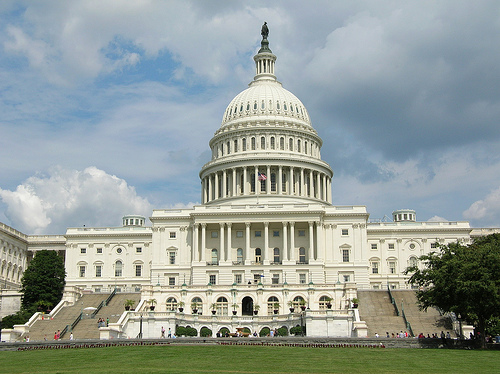
US_CapitolAnd so it was — amidst all this talk of a government shut down, an “unfair” system of health care delivery and a skyrocketing national debt — that my youngest son was assigned to read Animal Farm.

As so many of us learned in high school, George Orwell wrote Animal Farm as an allegorical reference to the Russian Revolution in 1917.

Matthew finished reading the final chapter last night, and now it appears that our government is about to end yet another temporary shutdown.

Which political party will be blamed for this fiasco remains to be seen. We’ll likely have to wait a little more than a year for that answer.

Allow me to pause here for a moment to ask you a question. Are you surprised that our elected leaders have behaved so foolishly over the past several days? Really?

Maybe we shouldn’t be blaming Congress. Maybe we should be blaming ourselves.

Consider this. Americans elected a man (Republican) who believes that wind turbines “slow down” the wind. We also elected another man (Democrat) who believes that the island of Guam could actually “tip over.”

We have elected members of Congress who enjoy taking pictures of their own genitals and then sending those pictures to porn stars. We have elected members of Congress who believe the internet is little more than “a series of tubes.”

Take these people, put them together in a room with broad Constitutional powers and tell me that is not a recipe for disaster.

But a penchant for stupidity does not end at the DC Beltway. It extends into every nook and cranny of our great nation.

Despite all the rapid advances in technology, we humans have changed very little over the last 2,000 years.

The popularity of Wikipedia should have been a wake-up call. But still, so many of us keep doing the same things and yet expect different results.

YouTube is the second largest search engine in the world. We have access to so much information, yet we operate politically as if children still learn on chalkboards

We all want a chicken in every pot and repeatedly fail to understand the consequences of actually believing political candidates who make such promises.

All politics is local

In my hometown we will soon be asked to choose a mayor and new city councilors.

The lawn signs have begun popping up all over town. The candidates are working their campaigns and making their promises.

This is where it starts. This is where the numbing process begins.

One of our mayoral candidates is promising “lower taxes” and “more jobs.” Although he is short on specifics, I’m almost certain that he also likes puppies, French fries and cold beer. Why wouldn’t you vote for that guy? Sounds good, right?

Most of us are too busy to peel back the layers of such a perfunctory campaign. We have jobs, families and the Red Sox are playing.

Some local folks are upset about property taxes. They are planning to take out their frustration on an incumbent candidate who is seeking re-election.

Sounds smart, right? Toss the bum out. Vote for one of his opponents.

There’s just a few things you should consider. The incumbent has only been the mayor for two years, and the city council decides the budget.

Why is this important? Four years ago, under the leadership of a different mayor, the city’s voters overwhelmingly voted to approve a $35 million bond in order to finally complete a long overdue renovation at the high school. I supported that bond question but sometimes it feels like I am one of the few people who read the fine print on the ballot.

Yeah, taxes went up because we borrowed $35 million to finally fix a project we ignored for decades. Duh!

When I purchased my truck, I drove it off the lot with no money down. A few weeks later, the bank had the nerve to start asking for payments. How arrogant of them! I am going to get a new bank!

Voters are not blaming the former mayor for the tax increase. In fact, the former mayor is today hoping to get her old job back, a prospect made much easier by blaming the current mayor for a situation that happened on her watch.

Our city has several infrastructure problems that need to be addressed. For decades we have ignored and stalled many of these projects to keep taxes low.

The front stairs of our high school were literally crumbling and the gymnasium roof was leaking before we were willing to invest a dime. Stalling those repairs did not make them less expensive. In fact, we stalled right past the deadline to qualify for some state funding for those repairs.

But hey, let’s blame the guy who has been in the mayor’s office for 22 months. It’s all his fault, right?

For 30 years, our city bitched and moaned about a controversial trash-to-energy incinerator that was located in the center of our downtown area. The stench of burning trash became a humiliating calling card for our community. Merchants and businesses complained. Economic development was thwarted and diminished.

The city spent decades in court, racking up huge legal fees in fighting against the facility’s former owner. Every mayor in the last 20 years pledged to get rid of the facility. It was politically popular rhetoric.

Then, after 30 years of complaining and wringing our hands, our current mayor (the new guy) led a team that was able to negotiate the closure of the facility. The problem is now gone. No more wasted time, energy and resources will be spent on that particular problem.

Results matter. Talk is cheap and empty promises are politically convenient.

We have a responsibility to pay attention. Otherwise, the wind may begin to slow and islands could start tipping over.

Alpacas, Obamacare and the thin line

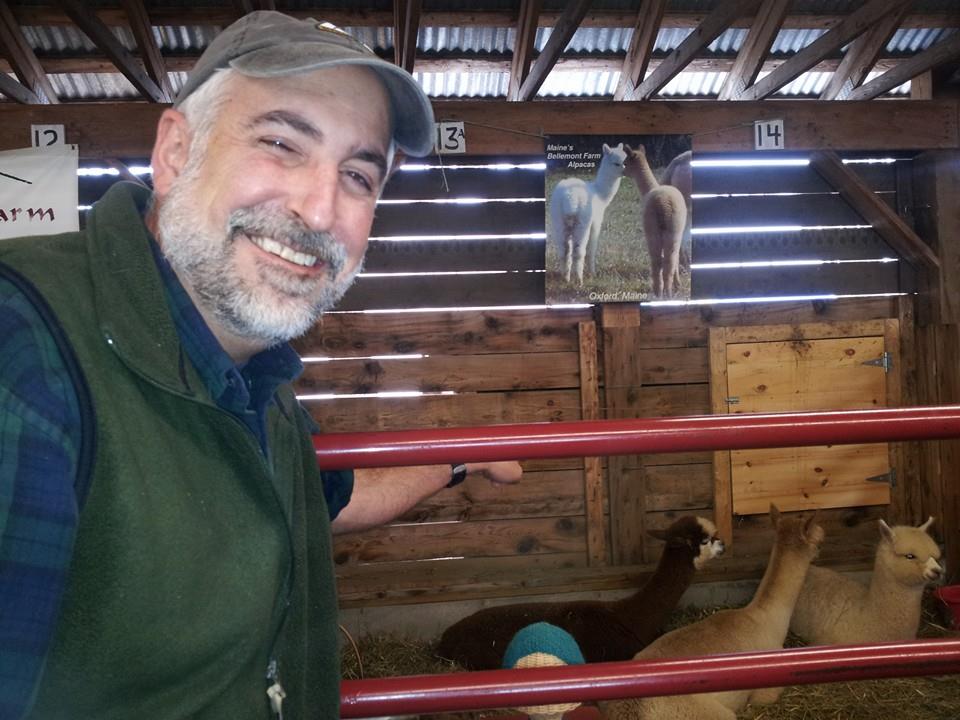
alpacasIt’s been a tough week for a lot of us.

The days are getting shorter, the economy remains anemic and political rhetoric is intensifying in the face of a so-called government “shutdown.”

Just in the last seven days, our nation has witnessed some stunning and bizarre examples of citizen unrest.

On Thursday, a woman suffering from depression attempted to crash the White House barriers. She had her infant daughter in her car. She then headed to the Capitol, where she was eventually shot to death by police. Fewer than 24 hours later, a man set himself on fire near the National Mall.

Of course, two weeks earlier, Aaron Alexis went on a killing rampage that left 12 people dead at the DC Navy Yard.

Despite those horrific incidents, the nation remains bitterly, stubbornly focused on an intensely partisan battle that is still raging on Capitol Hill. These other incidents were mere blips on the radar screen, generally ignored like those blips that signaled the advance of Japanese fighter planes approaching Oahu on December 7, 1941.

It is mind-numbing stuff; stuff that is too difficult to even think about,  much less the sort of stuff that we are willing to discuss in the sphere of public policy.

We avoid this stuff because it’s much harder to point fingers and assign blame. It’s not as convenient or simple as arguing about Obamacare. It’s stuff that we generally want to avoid.

What does this have to do with alpacas?

As a so-called “consumer” of mental health services, I have a wide range of my own diversionary tactics, a boat-load of coping tools I can deploy to ignore the obvious and the overwhelming.

I am also a semi-professional pundit, not to mention a professional consultant who spends the bulk of his time crafting public policy messages and strategies to help clients achieve their goals.

When those two worlds intersect, I need a distraction as much as anyone else. So, I began focusing on alpacas.

Go ahead and laugh. I will wait.

This week is also the week of the annual Fryeburg Fair. For many years, I have represented various clients at that fair, staffing booths in the Natural Resources building and thus unable to enjoy the fair like most people with my family.

Of all the animals on display at the fair, I have always had a soft-spot (literally) for alpacas. I have long fantasized about how cool it would be to have a pet alpaca.

It’s just a fantasy; it’s not the real thing

This year I did not have to work at the fair. Laura and I decided that we would go on Saturday. Our youngest son, Matthew wanted to join us and bring along his girlfriend. We began planning this day almost three weeks ago.

This year, we had other things to consider about attending the fair. Laura’s MS has been progressing. On Monday, the neurosurgeon ordered her to stay home from work. For the first time, I had to get serious about wheelchairs and their cost, function. Maybe I would not need it this year. But it is part of our family’s new reality.

Earlier in the week, I once again dreamed about how great it would be to own an alpaca. The little kid in me got very excited about this prospect. Matthew, in fact, suggested that we would name our alpaca Cameron.

I am terrified thinking about my wife’s MS. I want things to stay the same. The future looks so uncertain. This is the Fryeburg Fair, dammit. I just want an apple crisp, wager on a few races, smell maple syrup and hear reports about the Red Sox and their progress in the ALCS.

What happens if Laura can’t go back to work? What happens to our health insurance? How will we be impacted by Obamacare? What if . . .?

I went to bed early on Tuesday evening in a mix of anticipation about seeing the alpacas at the fair and worrying about my wife’s health. I wept like I have not wept in years.

I really wanted an alpaca. I researched alpacas, and the adult that also lives in me tried to be as gentle as possible. But reality won on Tuesday. Our yard is too small. Alpacas live in herds. We have no business, whatsoever, in even considering the purchase of an alpaca.

It was the clashing of reality and fantasy. This tool of distraction would soon need to be replaced. What do I do now?

Sometimes a fantasy is all you need

We had so much fun on Saturday. Despite the heavy traffic, the difficulty in finding a parking spot, we all laughed so much. People of all stripes, sizes and colors packed the fairgrounds. Yes, we saw the alpacas, and we even found Cameron.

The alpacas, goats, sheep and cattle all seemed somewhat oblivious to the incessant buzz of human activity that surrounded them. They were content to gnaw on hay, to root in piles of sawdust.

For several hours, I did not hear one word about John Boehner or President Obama. I did hear that the Sox scored another run in the bottom of the fourth. The air became cooler all around us, the night sky settled in quickly.

And then it dawned on me. There is a thin line that separates reality from fantasy, dreams from nightmares.

We spend so much energy fretting about the unknown.

Sometimes all you need is some hot apple crisp, a home run by the Red Sox, the company of those you love and the experience of petting an alpaca. That way, the buzz of human activity that surrounds you becomes little more than just another day at the fair.

I think I’m turning Japanese

Two stories I found on the pages of the Portland Press Herald today:

  • [Maine’s] Riverview Psychiatric Center faces the loss of an estimated $20 million in federal funding because the federal government has decided that the hospital in Augusta has not solved staffing and governance problems.” Full story
  • The mother of a Connecticut woman who was shot to death by police after trying to breach a barrier at the White House said her daughter was suffering from post-partum depression. Mother: Daughter in Capitol chase was depressed

Considering the earth shattering news that Republicans are opposing Democrats, it’s understandably tough to remember things that happened a couple of weeks ago, like the Navy Yard shooting where Aaron Alexis, a former Navy reservist, used a shotgun to begin a massacre that left 12 people dead.

A few weeks before, Alexis called police in Rhode Island, telling them that he was getting messages from his microwave, according to the Associated Press.

“The mass of men lead lives of quiet desperation,” wrote Henry David Thoreau.

But just look what happens when those desperate folks stop being quiet.

It’s easy and sexy to argue about the Affordable Care Act, gun control . . . my guy versus your guy.

But the silence becomes deafening if we dare mention other topics that (not surprisingly) have a direct and immediate impact on all the other stuff we love to debate.

Fewer than 24 hours after the incident in which a depressed woman was shot (justifiably) by Capitol police, that story has already become buried under the weight of Congressional bickering.

And the Aaron Alexis story did not fit into any of the convenient arguments for or against gun control. Don’t expect any tearful Congressional testimony there.

I return you now to the sport of pointing fingers and assigning blame. Enjoy.

Let’s give ’em something to talk about

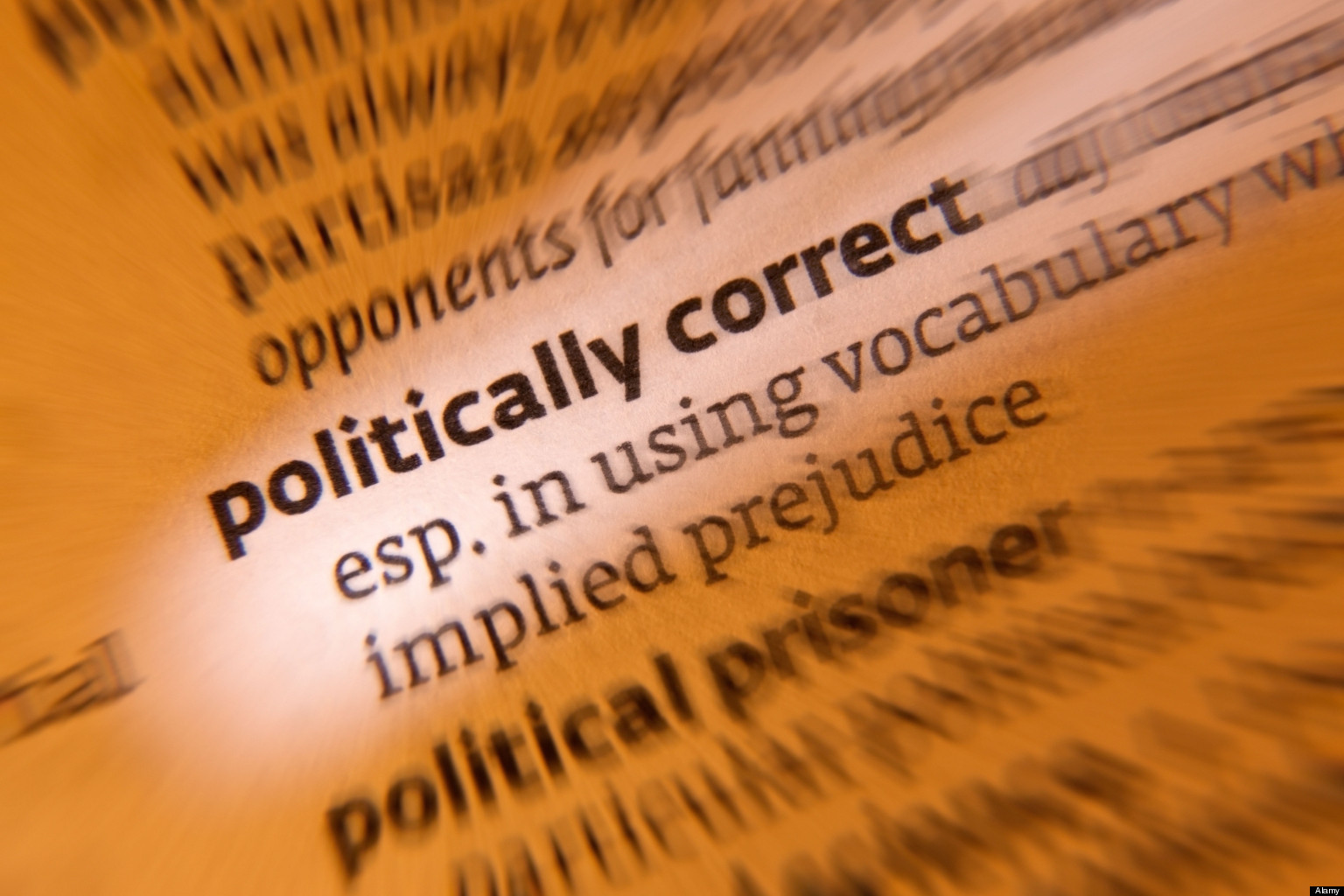
Concept - politically correctMany years ago, when I was still a teenager, my mother gave me one of those funny key chains that featured a picture of a gorilla and the following text: “If you can’t dazzle them with brilliance, baffle them with bullshit.”

That message seems to encapsulate the rather recent drive to create a Utopian society by imposing a vernacular corralled by the concept of “political correctness.”

Of course, my mother was not always so jovial or light-hearted, especially when it comes to politics. In fact, my mom makes most progressives seem like Bush-appointed circuit court judges. She is an avid reader and a regular subscriber to Mother Jones.  She was one of the first people in Maine to carry a Working Assets credit card. She read Bury My Heart at Wounded Knee as a bedtime story to me and my sister.

Okay, I’m sort of kidding about that last part, but let’s just say that my mother pretty much defines the word, liberal. May God have mercy on her soul.

It is without question that my political opinions and rantings have caused my poor mother many a sleepless night, wondering exactly where she went wrong.

Here’s where my mom went wrong: She had the temerity to teach her children about critical thinking. She taught us to question authority, and she loves us so much that she allows us to have our own voices, not merely reflections of her own pinko-commie-subversive thought process.

My mother, like most mothers, also had a handful of favorite adages that she never hesitated to repeat;

  • “The road to hell is paved with good intentions.”
  • “Sticks and stones may break my bones, but names will never hurt me.” And my favorite:
  • “Don’t put that in your mouth!”

Brave New World

My mother also encouraged her children to read; and to read voraciously. Although I caused my mother consistent grief, sorrow and disappointment, I generally exceeded her ingrained expectations about reading. I recall a lengthy conversation we had over Kentucky Fried Chicken about George Orwell’s Animal Farm, a study of the good intentions and the eventual pitfalls associated with the Bolsheviks and the Russian Revolution in 1917.

All of this brings me to my point (finally) and an admission that this post was written as a lengthy response to my eldest niece, Bre Kidman, a law student and Loyola graduate. (Also a card-carrying pinko, feminazi who apparently lives in a world where every little girl receives a pink pony on their eighth birthday.)

Actually, Breanne is one of the smartest people I have stumbled across during my near half-century of wandering this planet. She’s also a gifted writer and has a sharp wit. In essence, I am intimidated about tackling her logic. Bre had a visceral reaction to one of my earlier blog posts: Talking in Your Sleep  That post highlighted my contempt and loathing of the politically correct model. You can read the exchange that took place over the next three days by clicking on the comments link at the bottom of that page.

While I find “political correctness” to be a dangerous hybrid of processes envisioned years ago by George Orwell and Aldous Huxley, Breanne bases her rection on the false premise that being “politically correct” and being “polite” are essentially the same.

PC is just another way to be polite?

Breanne and I agree that people should strive to be polite, respectful and courteous. These are laudable goals and foster an ability to absorb differing perspectives and enrich our lives.

Surprisingly, especially considering that Breanne is such a strong “pro-choice” advocate, she fails to acknowledge that political correctness is too often imposed; while being polite is basically voluntary. Although I will concede that a failure to be polite has its consequences, those consequences are typically more severe when one fails to adhere to the dictates of our “newspeak.”

Breanne challenged me to provide tangible examples of when a political correctness failure has “bitten someone in the ass.” (My words, not hers)

Roll up your sleeves, Bre. It’s about to get tense. I will start with the words of a black woman. Note: I did not describe her as an African-American, but please hold your criticism until you finish reading her thoughts on the subject of political correctness and its unintended consequences

Yvette Carnell, a former Capitol Hill staffer and now a blogger, published a piece entitled Why is Pro-Black Being Attacked? The Unintended Consequence of Political Correctness.

Carnell wrote her piece in response to the uproar caused by the hiring of a white editor by the publishers of Essence Magazine, a publication specifically marketed toward black women.

An excerpt: The real cause of cognitive dissonance here is the political correctness which has returned to devour the very little angel faced darlings it was designed to protect.  Political correctness was initiated in an effort to soften language and expressions which could be interpreted as offensive to disadvantaged communities. 

So instead of ‘black’ or ‘colored’, those of African descent were assigned the glossier, new and improved, Negro 2.0 category of African-American, and so on.   A new school of words were employed to shave the jagged edges of the language which had been blamed for causing much of the emotional angst observed in the black community.”

Another woman, BJ Gallagher, writing in the Huffington Post, offers some salient food for thought in her essay: The Problem With Political Correctness

Excerpt: I wonder, do the TV talking heads understand the true definition of the labels they hurl at public figures: “racist,” “sexist,” “bigoted,” or worse — based on nothing more than a comment taken out of context, someone’s clumsy attempt at humor, or a photo or image that’s the artistic expression of a creative person?

How many of us understand these definitions when we call someone a racist or sexist jerk? Jerk, perhaps… but racist or sexist? Perhaps… perhaps not. Do we really understand the seriousness of those labels? Or, are we simply indulging in destructive name-calling based on political correctness?

Damn, I love Google! Let’s keep going for just one more because who doesn’t love a Top-10 list? For example: this list from Jay Carlson and our friends at the ListServe blog ( 10 Ridiculous Cases of Political Correctness,) is chock full of juicy tidbits, such as an office worker who filed a complaint and was deeply offended about the words “master” and “slave” to describe computer files.

You get my point, and I am confident that you can use Google without my biased guidance. But before you blather on about mind-numbing topics like political correctness, please at least acknowledge that its consequences are real, if only to force us into uniform conformity, like cattle headed for the slaughter.

Final note: If you think there are no consequences for living in a world that has gone overboard with a zealous push for political correctness, you may want to have a chat with four former lacrosse players from Duke University or the now-disbarred District Attorney who rushed to prosecute them under the pressure of political correctness.

Be polite, and try to keep your feelings in check because they are not facts and they belong only to you.

Obamacare: Myths and Facts, Part I

health-care-debateSome say that the Patient Protection and Affordable Health Care Act ( aka Obamacare) will provide the final nail in an already sluggish national economy, cost millions of jobs and further entrench every American into greater government dependence.

Others say the new law is a landmark piece of legislation that will literally save thousands of lives by making health care more affordable and accessible to all Americans.

Which argument is correct?

Given the hyper-inflated and strictly partisan rhetoric, it’s hard to know the answer and history will be left to judge the law’s merits and flaws.

In the meantime, I will attempt to examine the new law from both sides of the debate and offer some of the research I have conducted about the law. This week’s installment:

Comparison to Medicare: Myths and Facts

Supporters of the ACA enjoy pointing to the federal Medicare program as a primary defense of the new health care law.

This, in my opinion, is a dangerous proposition for several reasons.

1.) Medicare applies almost equally to all Americans, unlike the ACA, which primarily targets those Americans who do not have (by choice or income restraint) access to health insurance in the private marketplace. In fairness to the ACA, however, it’s important to note that the new law does offer universal protection to all Americans from rather abhorrent practices that were all too common in the health insurance industry, especially rescission clauses, coverage limitations and denial for pre-existing conditions.

The insurance industry argues those practices were necessary to stabilize costs, yet it remains difficult to assess how those savings were passed onto consumers. Thus, one of the more popular components of the new law requires insurance companies to direct a minimum 80 percent of premium revenue toward actual health care costs.

2.) Unlike the ACA, Medicare is not a mandate and you are not fined or otherwise penalized for choosing not to participate as a consumer in Medicare. Both programs, however, are supported by federal tax dollars. Supporters of the ACA argue that mandated participation is the only way to ensure an affordable marketplace. They also say that mandating purchase of health care coverage is no different from a state government mandating required liability insurance coverage on registered motor vehicles.

Comparing mandated auto liability insurance and requirements to purchase health insurance from the private sector is a seriously flawed rationalization that does not hold up under its own weight.

This is a matter of definition and it is outlined in law (both federal and state).

In the state of Maine, you are required by law to have liability auto insurance to drive a vehicle, as pointed out by Senator Angus King during his defense of the ACA on the senate floor earlier this week.

Senator King, formerly the governor of Maine, should know that both the Maine Department of Motor Vehicles and the Maine Legislature define driving as a privilege, not a right.

Maine’s law requiring auto liability insurance makes a lot of sense. It acknowledges and reinforces our shared responsibility to be accountable if we cause damage while driving, but it does not interfere with our rights to make choices, to exist as free people. We have the choice not to drive, whether we like to admit or not. Each of us has the option of walking, biking or using public or private transportation to get to and from wherever we want to go.

The ACA, however, requires, under penalty of law, every American to have basic health insurance. There is no choice. Either you have health insurance or the government is going to levy a fine upon you. Period.

Enter Chief Justice John Robert of the U.S. Supreme Court, a Bush-appointee who is considered a conservative. During a challenge to the ACA, Roberts tipped the scales of justice by opining that the ACA is a tax, and thus; the new law does not violate the Constitution because the power to levy taxes rests with the Congress and can be applied to all citizens.

ACA supporters, including President Obama cheered Roberts’ decision and validation of the new law. Strangely, those cheering previously argued that the new law is not a tax. But none of us should be surprised by the process of politics.

While participation in Medicare is voluntary, it should be noted that this federally subsidized form of health care is universally popular among both Republicans and Democrats.

3.) On a final note, Medicare was a bipartisan piece of legislation. The ACA was not. In fact, the ACA was passed via a straight party line vote only a few months before the Democrat Party was about to lose its majority in the U.S. House of Representatives. In the Senate, all eyes turned to the razor-thin party lines and the election of Republican Scott Brown of Massachusetts  who would stunt a filibuster-proof majority.

On Christmas Eve in 2009, the Senate voted 60-39 in favor of the ACA. (Not a single Republican voted in favor, including Sen. Olympia Snowe of Maine, who voted to approve a senate version in the Senate Finance Committee on the condition of subsequent changes she was promised in the final bill.)

The Senate version of the bill was approved in the U.S. House by a 219-212 vote on March 21, 2010 (Again, not one Republican voted in favor and they were joined by 34 Democrats in opposition. President Obama signed the bill on March 25, 2010.

Comparatively, there was a lot less drama regarding passage of Medicare in 1965. Of course, this happened before the internet.

In fact, Medicare was the result of much more compromise and its passage showed bi-partisan support.

In the Senate, 57 Democrats and 13 Republicans voted for passage of Medicare; seven Democrats and 17 Republicans voted against it.

In the House, 237 Democrats were joined by 70 Republicans in support of Medicare; 48 Democrats joined 68 Republicans in voting against it. The law was signed by President Lyndon Johnson on July 30, 1965.

Those who would say modern-day partisanship is to blame for the party line vote on the ACA, should be reminded that Democrats and Republicans have been able to hash out bipartisan compromises regarding updates and amendments to Medicare as recently as this year. Of course, this dynamic gives credence to Rep. Nancy Pelosi’s statement that the ACA can be “tweaked” as it moves forward.

Next: The financial implications and benefits.

A boy named Sue or a girl named Frank

I suck at baseball.

AM1I also suck at football, basketball, hockey, golf, bowling or pretty much anything that involves hand-eye coordination.

Although publicly admitting that I am the last guy you want on your sports team does not threaten my masculinity, I do hesitate to offer the next line:

I don’t like sports. That, dear readers, is a much bigger threat to my masculinity. Do you have any idea how many Monday mornings I have had to bluff my way through the proverbial water-cooler conversation at the workplace?

Yeah, yeah that was a hell of a game last night; brutal interception. Tom Brady seemed a little off, don’t ya think? Sometimes, when I am deep in the midst of this dishonest parade of masculinity I scratch my balls for good measure and look around for a beer to swig.

The really sad part? I am the only man in my particular department. I work with a team comprised of all women. They all know much more about sports than me.

In fact, most of my gay friends are much better athletes and far more passionate about sports. Even they shun me when it comes to choosing sides for competition on the turf or court.

So it was almost ridiculous that the only “writing” job I could land when I returned to Maine in 1996 was a part-time sports reporter for the American Journal in Westbrook. How hard could it be, I reasoned. I needed the job, and I got my foot in the door with a newspaper near my home.

For the first time in my life, I started avidly reading the sports pages of other publications. I read everything that Tom Chard or Steve Solloway from the Portland Press Herald wrote, right down to their shopping lists. I subscribed to Sports Illustrated. I even tried watching ESPN but there was always the lure of some old Bette Davis movie on another channel.

But my masculinity was about to be redeemed. I was a sports writer. I should have no problems getting a date now, right?   Not exactly.

That fantasy ended about six months later while conducting an interview with a girls’ softball coach. He told me that Heather struck out the side in the second inning. Struck out the side?

The coach had to explain what striking out the side means. That was it. I was done. I went to my editor (almost in tears). I can’t do this, I said.

My editor either took pity on me (or punished me) by re-assigning me to cover the general assignment news beat for the towns of Windham and Standish.

It wasn’t so bad. At least I didn’t have to go to any more football games. I no longer got paid to watch basketball tournaments. Instead, I had the pleasure of attending Zoning Board of Appeals meetings in Standish. I was in my zone (so to speak).

In today’s politically correct world, where self-esteem is more important than reality, even kids like me make the Little League team. Every player seems to get a trophy. We bend over backward to include everyone in everything. I’m not so sure that’s a good thing.

For three summers in a row, I tried out for Little League. For three years in a row, I was never included on the team. My neighborhood chums (Ricky Johnson, Scott Lettelier, Ron Mapes, Doug Murray et al) all made their respective teams: Maremont, Shaw’s, Hunt’s, etc.

Trust me. It felt awful. But is also served me well. I learned pretty early on to focus my efforts elsewhere. While Ricky and Scott were sweating it out on the diamond, I wrote my first book at age 10. I’m pretty sure I also illustrated that literary masterpiece, entitled “Hurricane,” a gripping, fast-paced story about a family that refuses to evacuate their home during a killer storm.

My parents both knew that I would never make the team, but they let me try. More importantly, they allowed me to fail. They allowed me to experience pain, rejection and humiliation; experience which came in pretty handy only a few years later when Cheryl Ridolfi actually laughed at me for asking her to “go out” with me.

Flash forward 25 years, and you find me married to a beautiful woman and “coaching” a T-ball team. One of the parents scolded me for congratulating my team on winning on our second game. “Randy, in T-Ball, we don’t keep score.”

My response? “Well, maybe you don’t keep score, but they do,” I said, pointing to the kids on the field.

Lessons about losing, rejection and coming in second place are hugely valuable. Let’s not rob our children of those wonderful educational opportunities.

Talking in your sleep

Susan Dench of Falmouth is my newest heroine.

Her essay in today’s Bangor Daily News is perhaps one of the clearest and most concise pieces that dares to tackle the soft and fuzzy slush associated with “politically correct” speech.

An excerpt:

Politically correct linguistic gymnastics is part of our everyday conversation. As panderers promote victimhood, multiculturalism and identity politics we’ve had to become excruciatingly careful how words trip off the tongue. It’s exhausting. After all, a little slip-up, and bam — you could find yourself on the unpleasant receiving end of a sermon, a scolding or even a lawsuit.

Read the full piece here: If you need to perform linguistic gymnastics, is it really free speech?

Ms. Dench offers us a wake-up call. I wonder how many of us are going to just hit the snooze button.