Feeling gravity’s pull

jc1
Justin Chenette/ Photo by Matthew Hayes

At first glance, the two men who represent the city of Saco in the Maine Legislature seem worlds apart.

One is 22 years old and openly gay; the other is 62 and married with children.

While Justin Chenette is serving his first term in the Maine House of Representatives, Barry Hobbins is serving his seventh term in the House and previously served five terms in the State Senate.

Over the years, Hobbins has become a steady fixture of pragmatic policy making. He is a successful attorney who knows how and when to pull strings to get things done. He has spent a lifetime building relationships, earning trust and observing the flow of subtle political currents that often shift without warning.

Hobbins is careful, patient and strategic: the hallmarks of a legislator who can deliver when it matters. Like Chenette, Hobbins was only 20 years old when he won a five-way primary race for the Democratic nomination to replace 84-year-old Camille Bedard as Saco’s representative in the House.

“Mr. Bedard gave me some great advice when I was starting out,” Hobbins recalled. “He told me: sit back and learn. He told me to pick my battles.”

Chenette took a different path, however, landing himself in hot water with the state party only hours after he announced that would be running in early 2012.

“I didn’t check in with anybody first,” Chenette said. “They didn’t know who I was or what I was all about. I sort of got scolded.”

Unlike Hobbins’ slow and steady start into Maine’s political machine, Chenette made national headlines earlier this year, when he was sworn into office as the nation’s youngest, openly gay lawmaker.

The issue of gay marriage was again on the ballot for Maine voters, but Chenette says he was not running to make a point about his sexuality. “I didn’t want that distinction,” he said. “I was running because I was frustrated about a lot of issues, so I had to thread the needle carefully.”

Chenette says some people judged him much more harshly about his sexuality rather than his political inexperience and youth. His campaign signs were vandalized with gay slurs. Undaunted, Chenette pressed on, working hard to earn voter respect.

“Some people told me I should get the police involved and do an investigation,” he said. “I didn’t want to do that. “I didn’t want to give people like that any power. They spray-painted my signs with all sorts of ugly things, but most people took the time to get to know me, to understand why I wanted to represent them in Augusta.

Chenette won his June 2012 primary with 78 percent of the vote and went on to defeat Republican Roland Wyman with 60 percent of the vote in November.

Who let the dogs out?

hobbins
Barry Hobbins

Unlike Hobbins, Chenette did not wait to begin picking battles.

He pounced on Democratic and Republican legislative leaders during his first speech on the floor of the Maine House, only days after being sworn into office.

Chenette latched onto problems he saw in Maine’s political machine, specifically the way lawmakers were using Clean Election funds to form PACs that are used to determine who becomes a legislative leader.

“I said that Democratic and Republican leadership was doing little more than participating in legalized bribery,” he said. “I said it was completely wrong to channel this money for special interests.”

If Chenette wanted attention, he got it.

“It didn’t go over very well even in my own party,” he laughed. “I got called into the Speaker’s office and got my ass chewed. That process became a pattern. I was not playing by any set of unspoken rules.”

Chenette said his first term has been “challenging,” yet he refuses to back down or change his firebrand style.

“We’re not sent to Augusta to sit on our hands, and behave like well-trained dogs,” he said. “The people sent us there to do their work, but on Day One, I was disgusted by the fact that we spent so much time talking about how to get re-elected . . . on Day One.”

Not surprisingly, Hobbins admitted that his colleague makes some people uncomfortable.

“Justin certainly has a different style,” Hobbins said. “He is outspoken and very idealistic. He seems in a rush to make his mark.”

But Hobbins also says Maine’s term limits law has changed the dynamic of how the Legislature works.

“When I first got there, you didn’t feel a clock ticking against you,” Hobbins recalled. “Today, it’s different, younger people feel a sense of urgency, as if there isn’t much time to accomplish their goals.”

Hobbins describes Chenette as conscientious, but certainly not pragmatic.

“There is no denying that there is a generational gap,” Hobbins said. “Justin feels strongly about issues and causes, but that does not mean that others do not feel just as strongly, even if they have a different approach.”

Hobbins said he is just as “progressive” in his political philosophy as Chenette.

“I know what it’s like to be young and full of passion,” Hobbins said. “I became the state party chair when I was 28, and I ran for Congress when I was 32.”

Hobbins said the Legislature is no longer dominated by a bunch of stuffy, old white men. “The president of the senate (Justin Alfond) is 36, and the Speaker of the House (Mark Eves) is also 36. Age is not so much of an issue as a difference of approach.”

Hobbins said a shift of legislative demographics is representative of generational shifts in other parts of society.

“Look, I don’t post pictures of myself every day on Facebook or use Twitter, but a lot of people do, and those can be good tools to keep your constituents updated,” he said. “I think it’s a significant compliment to the citizens of Saco that they choose people who have vastly different styles to represent them.”

Republican Joyce Maker represents the city of Calais in the Maine House. She is old enough to be Chenette’s mother, and concedes that she has taken him under her wing.

DSCN2402“I love Justin,” Maker said. “He is a wonderful young man, and he works very hard, but I do think he has some growing up to do.”

Maker describes herself as a moderate. She says she has been able to find a lot of common ground with Chenette, a Democrat who describes himself as further left of center.

“He comes across as strong and opinionated sometimes, but he is also a really good listener,” Maker said. “I think in time, he will catch on and learn the benefits of being a bit more pragmatic.”

Maker says she sees the value of Maine’s Clean Election Law, but agrees with Chenette about the inherent problems of leadership PACs.

“Justin would like to do away with Clean Elections,” she said. “I see some value to the program because it allows more people the opportunity to participate. But despite our differences, we have been able to work through that issue, and I think he is genuinely interested in hearing other points of view.”

Chenette says he is more than happy to work with his colleagues on the other side of the political aisle.

“I love having lunch with Republicans,” he laughed. “It’s always a good opportunity to learn about the people beyond their particular labels. You can find a common connection, and that helps make the process work better.”

Is Chenette becoming more pragmatic?

“I don’t know,” he confessed. “But I know that I will always stay true to values and core beliefs. Barry’s style has a place. We just have different approaches. I think we make a good tag team for Saco.”

Next installment: Justin Chenette: A rising political star?

Another Tricky Day

Angus King (Credit: AP/J. Scott Applewhite

It was — at best — a bit of a stretch.

The Maine Chamber of Commerce held its annual dinner and awards ceremony Friday and landed U.S. Senator Angus King as its keynote speaker.

Thus, the event’s theme was Mr. Smith Goes to Washington.

You probably remember the 1939 movie that made actor Jimmy Stewart a star, especially the famous filibuster scene that portrays the young and somewhat naïve Sen. Smith as an adorable champion of integrity, truth, justice and the American Way.

As the movie began production in 1937, Stewart was only 28 years old, two years shy of the minimum age requirement to be a U.S. Senator.  Angus King, on the other hand, will soon celebrate his 70th birthday.

In the movie, a young, ambitious and principled man from an unnamed western state is reluctantly chosen by a somewhat corrupt governor to replace a deceased senator.

Back here in Real-ville, King’s trip to Washington D.C. happened much differently.  He launched his campaign only days after Olympia Snowe abruptly announced that she would not seek another term in the senate.

King, a very popular, former two-term governor, instantly crushed the hopes of more than a dozen political hopefuls who all dreamed of sugar-plum fairies and huge PAC donations. He adroitly skipped the banality of the primary process by pulling his worn and tattered “Independent” card from his breast pocket.

He quickly raised $3 million, half of which probably came from the sale of a decked-out RV that he purchased to “tour the country with my family” after leaving the Blaine House.

Maine Democrats hung their heads in shame because they knew that they’d been beat. The state GOP, full of pride after taking back the Blaine House and the Legislature a year prior, hoisted up no fewer than four candidates, including three members of Gov. LePage’s cabinet.

Cynthia Dill, a far-left Democratic state senator from Cape Elizabeth — virtually unknown outside the three-mile perimeter that surrounds her home — bravely accepted her party’s nomination for Snowe’s seat and walked dutifully — with her head held high — toward a political slaughter.

Meanwhile, King coyly teased the Maine press corps, saying he wasn’t sure which party he would caucus with if he were elected. The gag order had been issued. The emperor had no clothes, but no one seemed brave enough to say: wait a second . . . dude is a Democrat!  Instead, we lathered ourselves in the premise that Governor King would be “independent” and fix all that was broken in DC.

In essence, King won his election approximately 38 seconds after he called Congresswoman Chellie Pingree to tell her what was what.

Mr. Smith? Hardly.

One hit to the body

So, there we were on a Friday night: various members of Maine’s business community, mingling near the cash bar, sampling local foods and waiting to hear from Maine’s junior senator.

Regardless of how you feel about King’s political positions, no one can deny that he is an incredibly smart guy and a skilled politician. He exudes warmth and confidence. He is likable, smart and often — sometimes painfully so — very human; revealing an unabridged and honest insight of “how cool and fun it is” to be a U.S. Senator.

King is also an exceptional public speaker and usually a diligent student of history.

While working as a reporter, I had the pleasure of interviewing Angus King. I spent nearly 45 minutes with him, one-on-one; and it was damn hard to walk away unimpressed from that conversation. In the years that followed, I also greatly enjoyed hearing King speak at numerous public events.

Therefore, I was surprised on Friday when King — for the first time ever — didn’t mention his favorite historical figure: Civil War hero and Maine native Joshua Chamberlain. Instead, King ran through a laundry list of frustrations about the current dysfunction in Washington. And who could blame him?

Currently, public opinion polling of Congress as a whole is running just three points ahead of Osama Bin Laden’s popularity rating.

King led off his assessment of beltway politics – – quite surprisingly — by delivering a pointed jab to President Barack Obama and his signature legislation: the Affordable Care Act. It’s not like Obama needs another critic these days. The President’s own approval numbers are hovering perilously close to George W. Bush numbers.

As we feasted on our salads, King relayed an anecdote about a text message he sent to his chief-of-staff a few weeks ago, when the healthcare.gov site was rolled out.

“If you want to know what the Soviet Union was like in the 1970s, go to this website because nothing works like it should,” King said. There were a few nervous laughs in the room as people turned to one another with puzzled expressions.

“I’m a supporter of the Affordable Care Act, but boy, have they screwed up the implementation,” King went on to say. “It’s really frustrating that they can’t even do a website right.”

Someone just got themselves removed from the President’s Christmas card list.

Shiny, happy people

King continued his rather populist bashing of DC’s political climate, focusing most of his energy into the sometimes stunning changes of a hyper-partisan Congress.

He bemoaned a lack of civility and expressed frustration about his colleagues who are genuinely worried about re-election in 2014 because of an ever-increasing gap of political polarization on both the left and right ends of the political spectrum.

He relayed a story about his interaction with another member of his incoming senate class, Republican Ted Cruz, by saying he found the conversation “interesting and productive” but drew a laugh when revealing that his wife witnessed them talking on C-SPAN and immediately castigated him with a call to his cell phone. “She wanted to know, why are you talking to Ted Cruz?”

It’s easy to be a populist and a centrist, but King’s story revealed that it’s a lot easier to talk the talk than walk the walk. King seems sincere about his willingness and eagerness to find bi-partisan solutions to our nation’s problems, but his own wife went ballistic when he spent just a few moments chatting with someone from the other side of the aisle — albeit someone from way over on the other side.

King also shared insights about some fellow members of the senate, revealing the human side that is often missed by MSNBC, FOX or CNN. For example, King said he learned that Senator Orrin Hatch, a patriarch of the GOP, grew up literally dirt poor in Pennsylvania. Hatch’s family lived in a home with dirt floors and one wall in their home was erected from a salvaged billboard that Hatch’s father was able to drag home.

Of course, King spent a fair amount of time Friday evening rigorously patting himself on the back, portraying himself as the great white hope in the U.S. Senate. He’s a politician, so it’s to be expected; but he conveniently skipped over some remarks he made just a few weeks ago during the government shutdown.

King, who doesn’t hesitate to show his annoyance, told a reporter earlier this year that Republicans who were stalling implementation of the ACA are “guilty of murder.”

Apparently, King’s pleas for a more civil discourse are reserved for those who disagree with him. It’s also surprising, given his penchant for history, that King buys into the half-cocked notion that our Congress is more hyper-partisan now than ever before.

King didn’t win his landslide election because of money or better television ads. Maine voters are smarter than that, especially when they speak so loudly and clearly.

Maine’s voters sent Angus King to Washington simply because they knew he was the right guy for the job. Even King acknowledges that he has difficult shoes to fill, pointing out the state’s legacy in sending remarkable people to Washington: Margaret Chase Smith, Edmund Muskie, George Mitchell and Bill Cohen.

Maine’s voters know that Angus King is stubborn, especially once he buys into an idea. They know who he is, and they respect his feisty temperament and keen intellect. They also know he’s a politician and will sometimes disappoint but rarely back down. King has a long road ahead. He’s not Jimmy Stewart.

King is a real person, complete with all the quirks and inconveniences associated with being human. He proudly led the charge to integrate technology into public classrooms, but yet goes old school with markers and an easel board to make his points. It’s damn hard not to like or respect the guy.

He’s human, and thus, flawed. And if you ask him, he will gladly tell you that being a member of the U.S. Senate is pretty damn “cool.”

Mr. King is not Mr. Smith, but if he wants another term in the U.S. Senate, all he has to do is call Chellie Pingree and tell her to wait another six years.

A whiter shade of pale

gun-k92I found it in the most unlikely of places. It was written by the most unlikely of authors. It intrigued me, and its aftermath terrified me.

It was a column headlined: “Let’s talk limits,” a well-written and balanced piece about the hype and rhetoric that surrounds our nation’s gun control debate.

It was published in Guns & Ammo, which describes itself as “the world’s most widely read firearms magazine.”

It was written by Dick Metcalf, a staunch Second Amendment supporter, who had the temerity to opine that reasonable gun regulations do not necessarily constitute an infringement on civil liberties.

“Way too many gun owners still seem to believe that any regulation of the right to keep and bear arms is an infringement,” Metcalf wrote in the December issue

“The fact is, all constitutional rights are regulated, always have been, and need to be.”

Gun advocates went ballistic. They felt betrayed by one of their own.

Jim Bequette, the magazine’s editor immediately apologized to readers for his goal of generating “a healthy exchange of ideas on gun rights.”

But that did not calm the storm. Metcalf was fired, and Bequette resigned his post a month earlier than he planned.

Apparently, too many of those who so staunchly support the Second Amendment have little use for the First Amendment.

If gun advocates feel as is if they are being discounted by the so-called mainstream media as “unreasonable,” perhaps they should try listening to other points of view and refrain from shooting any messenger with a set of talking points that don’t align perfectly with their own script, especially when that message comes from one of their own.

.

Detroit, rock city

Ward One City Councilor Mike Swanton

Even with the best of intentions, it’s too easy to screw up.

Case in point: The way Biddeford City Councilor Mike Swanton objected to a state law that allows municipalities to share a portion of proceeds seized following the conviction of a drug crime.

On Wednesday, fewer than 24 hours after the election polls closed, Police Chief Roger Beaupre went before the lame-duck City Council with a rather routine request to allocate roughly $2,100 his department received earlier this year from the Maine Attorney General’s Office.

Beaupre told the council that he wanted to use those funds to buy some new equipment for his department, including cameras for his criminal investigators.

Earlier this year, the same city council voted without objection to allow the fire department to use roughly $100,000 of money it received from the sale of an aging fire truck for the purchase of new equipment.

So far; so good, right? Wrong. 

Although Chief Beaupre’s request looked like a routine matter, and the council seemed ready to rubber-stamp it, something ugly was about to happen.

Beaupre was sitting in the audience, and said he was “stunned” by what happened next.

Swanton, voice cracking at times, bristled at Beaupre’s request and didn’t hesitate to do a bit of grandstanding, a tactic usually employed – and always expected from Councilor Richard Rhames.

Swanton said the police should not be getting “incentives.” He wanted the state money to go into the city’s general fund.

Let’s pause here for a moment.

A lot of people, including me, can see the logic of Swanton’s objection to directing funds seized from criminal activity to law enforcement agencies. Perhaps there is a slippery slope of ethical concerns that elected officials should consider.

But Swanton took it a step further, by implying that Beaupre, and by extension, the entire Biddeford Police Department is engaging in some sort of shakedown corruption scheme.

“I don’t believe the police department should profit directly from confiscated money or property,” Swanton said during the meeting. “It’s too much like the Detroit shakedown,” he added, referencing the recent conviction of former Detroit Mayor Kwame Kilpatrick on fraud and racketeering charges.

Beaupre said it was hard to swallow what he was hearing.

“I could not believe my own ears,” he said. “I have served this city with pride and integrity for than 40 years. By comparison to the funds the Fire Department was allowed to use, my request was a pittance. I was stunned.”

Four other member of the council supported Swanton’s motion to amend the order (Roch Angers, Melissa Bednarowski, David Bourque and Richard Rhames.)

No one, however, raised any objection to Swanton’s swipe. There was no declaration of conscience on Wednesday.

Swanton’s words were allowed to hang in the air and then archived in the public record without question.


Turn you inside out

Why does the City Council have different standards for the police and fire departments? Does the council have a problem with Chief Beaupre or his department?

Councilor Roch Angers seconded Swanton’s motion to move the funds to the city’s general fund.

I asked Angers why he voted earlier this year to let the fire department keep funds it received, but not the police department.

Angers said it was an oversight. “If I thought about it, I would have probably voted differently on the fire department issue,” Angers said.

On Saturday, Swanton apologized for the way he phrased his motion, but remained unapologetic for his intention. “The city should get the money; it should not be used to let the police go through a wish-list catalog.”

Swanton says he has no problems with the Biddeford Police Department.

“I love the police department,” he said. “I have tremendous respect for Chief Beaupre. I just think it’s a slippery slope. There should not even be the appearance of a quid pro quo.”

Swanton also said he has no plans to address the issue at either the state or federal level. “I just don’t think it’s a good way to do things.”

If Swanton has such an ethical concern, why was he willing to take the money in the first place? A more principled position would be to return the “dirty” money to the state.

But I guess when you’re an elected official in a cash-strapped community, there really is no thing such as “dirty” money.


A foolish consistency?

Before making their final decision, the council asked Beaupre whether it was okay to redirect the money for something other than law enforcement related expenses.

Beaupre explained that seized federal funds must be used for law enforcement. State-seized funds, however, do not come with the same requirement.

A day later, on Thursday, Beaupre received an e-mail from Biddeford High School Principal Jeremie Sirois.

According to the e-mail, Sirois is hoping to attract Chris Herren, a former NBA player who today tours the country speaking with youth about the dangers of drug addiction, for an appearance at Biddeford High School.

The cost to have Herren speak in Biddeford is $6,000.  

Old Orchard Beach is reportedly willing to co-sponsor the event with Biddeford and could kick-in $1,500 from its police department’s drug grant funds.

Beaupre said he could have used the $2,100 he just received from the state, but the city council took the money for its general fund.

Swanton said it was a missed opportunity that could be easily corrected at the next council meeting.

“I think that would be the most appropriate use for those funds,” Swanton said.

It remains to be seen whether the council will reverse its position on the money it received from the Maine Drug Enforcement Agency, but a few things are crystal clear:

1.)    Intentionally or not, Councilor Swanton smeared the reputation and dignity of one of the city’s longest serving public servants by connecting Beaupre’s routine request to a criminal conspiracy case in Detroit.

2.)    Swanton had ample time to review his council packet prior to the meeting. He could have approached Beaupre privately to raise his questions and concerns.

3.)    If Swanton feels so passionately about this issue, he should seek to change the state law or at least return the money to the state.

4.)    Roger Beaupre has served the city of Biddeford with distinction and honor for more than 40 years. This is Biddeford, not Detroit.

5.)    $2,100 is a piddly amount of money on which to make some half-assed stand on principle, especially if the Fire Department has a separate set of rules.

Mayor Alan Casavant and the rest of the city council screwed up by not objecting to Swanton’s callous remarks. Biddeford voters overwhelmingly opted for professionalism and civility on Tuesday. We didn’t see it on Wednesday.

The city of Biddeford should have a consistent policy on how funds are used by city departments.

When you are elected to public office, you ought to refrain from generalizations, especially when publicly discussing the men and women who serve your community every day to the best of their ability.

We ought to be rewarding our employees who present extra sources of revenue, increased efficiencies or cost savings, not shame or humiliate them in public.

Councilor Swanton owes Chief Beaupre a public apology, and the city council ought to take that $2,100 and direct it to bringing Chris Herren for a speaking engagement at Biddeford High School.

There are lessons for all of us here.

Smoking in the boys’ room

Portland-Maine-Old-Port
Portland, Maine

I have a friend — let’s call him Todd — who thinks that the city of Portland, Maine is so hip, so cool and oh so wonderful.

Todd fled the pace and grind of Boston in order to raise his family in place that is consistently ranked as one of the country’s most “livable” cities, whatever that means. Today, Todd has become one of Portland’s biggest fans.

I like Todd. He is a smart guy. He has a law degree.  Generally speaking, Todd arrives at his conclusions following a painstaking and multi-layered process of analytical and critical thinking. Todd has jumped into Portland with both feet. He recently bought a home in North Deering. He is a civic volunteer. He is an under-40 professional with a beautiful wife, two small children and a promising life ahead of him.

I admire Todd, but I want to vomit every time he feels compelled to tell me how great it is to live, work and play in Portland.

I know what you’re thinking: Dude, you live in Biddeford. You ought to shut to eff up and call U-Haul before you start dissing Maine’s largest city.

Go ahead and laugh. I can handle it. It’s not exactly an original thought.

Before we proceed any further, let me assure you that I know a thing or two about the city of Portland. I have some street cred when it comes to discussing the city I call pretentious-ville, a city that so transparently and desperately wants to be a mini-Boston.

I’ve lived in a brownstone, I’ve lived in a ghetto

I lived in Portland before it was considered hip; before you thought it was actually possible to bump into Jack Kerouac’s ghost.

I worked in the kitchen at 39 Exchange Street, a restaurant that has since been replaced by a much-needed boutique store in the Old Port. I worked as a janitor at the McDonald’s that was located on the corner of Oak and Congress streets. I made pizzas at The Bag on Free Street. I also had a corner office across the street from Brian Boru.

I lived on “The Hill” (Vesper Street) and the West End (well, sort of the edge . .Walker Street) I lived on the fourth floor of the Trewlawny building and survived on Italian sandwiches from Joe’s Smoke Shop. I remember the State Theater when it showed pornos. Christ, I saw mainstream movies at the Fine Arts Cinema before it decided to give the State a run for its money with John Holmes flicks. I was thrown out of Horsefeathers.

I remember when Dewey’s was located on Fore Street; when DiMillo’s was just a hole in the wall on the other side of Commercial Street. I rented a room on Sherman Street. We used to call that neighborhood “the student slums.” Today, we call it “Parkside.”  I lost my virginity on Alba Street in Deering Center. I got picked up by the police on Canco Road, and I was there when the cranes arrived at the Golden Triangle to begin construction of One City Center.

I ate mushrooms in the basement of a friend’s house on Spring Street and then swore I could see telephone poles melting on Winter Street. I worked third shift at the 7-11 on Congress Street; and passed out in the median of the Franklin Arterial. I shared an apartment with a gay roommate on Park Street. I lived on Peaks Island when the Portland ferry terminal was little more than a dilapidated building. I sold pipe, valves and fittings at W.L. Blake, an industrial supply wholesale distributor that is today the Old Port Sea Grill and up-scale office spaces.

I was evicted from an apartment on Preble Street; and fell madly in love with a girl who attended the Portland School of Art (today: Maine College of Art). I rode the escalators at Porteous, Mitchell and Braun. I ate scrambled eggs while hungover at Ye Olde Pancake Shoppe. I bumped into Sammy Hagar at the Sonesta Hotel, which quickly changed its name back to the Eastland.

I remember when WMGX had a studio on Cumberland Avenue and when Frank Fixaris announced high school sports scores on Channel 13 and Fred Nutter did televised editorials on Channel 6. I remember when you could get a great sandwich at Carbur’s or see the Kopterz play at Cayo’s.

Okay; you get the picture.

So, forgive me if I have a different perspective of Portland, Maine. Forgive me if I don’t buy into all the laddi-da crap about how wonderful and “livable” the city is.  Forgive me for believing that Portland is the most self-absorbed and obnoxious of Maine’s 457 cities and towns. Livable? Tell that to the people living in my old apartment on the third-floor of a Greenleaf Street triple-decker. Take a walk down Valley Street at 2 a.m. on a Thursday and tell me all about “livable.”

Suffragette City

Ironically, voters in the same city where the Temperance movement got its beginnings recently approved a referendum that allows the use of limited amounts of marijuana.

Neal Dow, the father of Prohibition and a former Portland mayor, must be rolling in his grave.

The referendum’s success was a much celebrated event among the city’s uber liberal progressives who spend their days dreaming about being free of “the man” and his corporate control over their lives; while simultaneously devising new ways to control and restrict the lives of their neighbors with a mountain of nanny-state regulations, from outlawing the use of Styrofoam to forbidding soft drinks on school grounds.

Portland — a once proud, prosperous and industrious community that hosted the North Atlantic Fleet during WWII — has today become the capital of hypocrisy and self-absorption.

I have no problem with legalizing the use or possession of marijuana. I am a Libertarian. But I wonder how a city that wants to celebrate individualism and diversity over everything else can keep a straight face when explaining the tobacco smoking ordinance the city council approved earlier this year.

In a March 6, 2013 Portland Press Herald story, Portland Mayor Michael Brennan said the city’s tobacco ordinance was created to address a serious public health issue: second-hand smoke.

“Secondhand smoke is a dangerous toxin,” Brennan told the newspaper. “Whether it’s children on a swing set or joggers circling the Back Cove or someone walking their dog along the Eastern Prom, we need to make sure we are doing everything we can to reduce the exposure to such a serious health hazard.”

Sure, it’s hard to argue with Brennan on this point, but I wonder if he can answer my next question: Why does the ban also apply to electronic cigarettes, which emit only a water-based vapor while delivering nicotine to the user?

I’m a smoker, so I can’t hold my breath waiting for Brennan to answer the question, but it’s really quite simple: Even the appearance of smoking does not fit with the fluff and pompoms of Maine’s most “livable” city.

Hiding behind the pretense of a public health concern (what is the city doing to control automobile fumes that I am forced to inhale while walking through the Old Port?) is little more than a ruse. Smokers are the ugly people, the less-than people. The NASCAR-watchin’, beer drinkin’ types who probably buy their clothes at Wal-Mart. That doesn’t quite match the image, does it?

And if there’s one thing we know about Portland, it’s that image is everything.

So, go ahead, Portland . . . keep patting yourselves on your collective backs.

Me? I’ll take cities and towns like Lewiston, Rumford, Sanford or Biddeford every day of the week.

Smoke ’em, if you got ’em.

Dead letter office

Source: City Clerk's office; 2004 data not available
Source: City Clerk’s office; 2004 data not available

I was speaking with a friend yesterday  about the recent municipal elections in Biddeford.

“I bet you’re glad it’s over,” he said.

“Over?” I responded. “It’s hardly over. Already candidates are lining up for local legislative races that will be decided next November. There’s always another election around the corner.”

He shook his head and smiled. “Who cares about who we send to Augusta,” he said. “It’s not like it matters.”

It’s understandable that most people feel a bit burned out by the political process.

Only a few weeks after arguing and ranting about Mitt Romney and Barack Obama, political junkies turned their attention to controversial referendum questions pending in South Portland and Portland. While local candidates were seeking city council and mayoral seats, Congressman Mike Michaud, the likely Democratic nominee for the Blaine House, announced that he was gay and thus strategically overshadowed Republican Gov. Paul LePage’s announcement about his own official re-election campaign this week.

I almost expected Independent Eliot Cutler to announce that he was bi-sexual, pledging allegiance to neither heterosexual nor homosexual preferences; a true Independent — just like Maine —  in a desperate attempt for some much needed press during a tough news cycle.

It’s no wonder that voters have become a bit apathetic and cynical about politics.

For the record, I could not care less about a candidate’s sexual orientation. I also don’t care about their favorite color or whether they like their chicken original or extra crispy. I want the candidates and the media to focus on the issues that are affecting every day people who are struggling under the weight of a difficult economy. I want to hear new ideas. I want to hear each candidate describe their vision.

Although I am pleased that an overwhelming majority of voters in my hometown chose vision over fear, positive over negative; I also expect those who won their seats to get real busy, real quick and to focus with laser-precision on economic development, creating streamlined efficiencies and encouraging private investment.

Voter turnout in Biddeford this year hit a 10-year low. Fewer than one-third of the city’s voters bothered to cast a ballot. Sure, there were no sexy referendum issues like a casino or marriage equality driving people to the polls; but the decisions we made yesterday impact every part of our lives: our roads, our schools, public safety, our sewers and yes . . . our tax bills. The people chosen on Tuesday will be responsible for making decisions that could have long-lasting impacts.

So why was voter turnout so pathetic? The weather was beautiful. There were no long lines at the polling places. What gives?

It’s always difficult to gauge voter sentiment, but there are a few likely reasons:

a.) Voters are content with the way Biddeford is being managed. They sensed Alan Casavant had a commanding lead and, therefore, their vote was unnecessary;

b.) Voters are upset with the way Biddeford is being managed and feel disenfranchised. You can’t fight City Hall;

Or c.) the most likely reason: voters just didn’t care. Period.

If you belong to any of the above three groups, you are an idiot.

Members of Group A risked a potential loss and a step backward for the city. Members of Group B missed a real opportunity to send a powerful message about their discontent; and members of Group C ought to be required to take a remedial civics lesson.

Voting is important. You are an equal shareholder in this community. Your voice matters. Imagine how different the election would have been if only 20 percent more of the city’s register voters had bothered to participate?

Of course, it’s too late to speculate. And those who did vote sent a pretty clear message. They want a fiscally responsible council. They want a positive and professional mayor leading the city. They are not afraid of making long-term investments in their community (all five state bond questions passed easily).

Sure, it’s more fun to get wound up about a particular, controversial issue, but if you can’t be bothered to exercise your civic duty, then be prepared to accept whatever comes down your path.

Voters tend to turn out for things they want; things they support.

Throughout this last election cycle, many of Casavant’s loudest critics failed to articulate who they supported. They were against someone, but for no one. A sure-fire prescription for voter apathy and a stunning loss at the polls.

Sure, Casavant’s opponents split their opposition, but looking at the results tells an even stronger story. Even if you add the total votes of each opponent, Casavant’s numbers were still higher. Fifty-seven percent is a clear victory. Winning each of the city’s seven wards reaffirms the voters’ decision.

If the opponents are struggling to accept the results, maybe they ought to spend a little less time bitching and a bit more time convincing their friends and neighbors to get to the polls two years from now.

I said it before, and I will say it again: Campaign signs do NOT win elections; Facebook or other social media tools do NOT win elections; debates or endorsements do NOT win elections. What wins elections? It’s about how many people you get to the polls. Game over.

Space Oddity

Joanne Twomey
Joanne Twomey

The city of Biddeford takes its politics seriously. Elections in this city are complex and vibrant, and they too often reveal a community at odds with itself.

Biddeford is a city in transition during difficult economic times. It is a city brimming with potential and possibility, yet it too often remains as one of its own worst enemies.

With another local election season now behind us, it is clear that there are lessons to be learned.

Of the 29 candidates who placed their names on the ballot, only five of them were political newcomers. This year’s ballot was hardly a composite reflection of this city in transformation.

Biddeford’s demographics are rapidly changing. We are attracting new interest and economic investment. We boldly stood up and put an end to burning regional trash in our downtown because we refused to be afraid. We refused to settle for scraps or to believe that was the best we could do for our local economy.

Biddeford recently competed against nine other southern Maine communities and overwhelmingly won a challenge by collecting more than 40,000 pounds of food and donations for the Good Shepard Food Pantry, a result that was more than twice what the second-place finisher was able to deliver.

People in Biddeford are generous. People in Biddeford are hard-working. Biddeford voters have consistently and overwhelmingly supported its local schools, never rejecting investments in public education, even when the economy is at its worst. Our community is far more than the challenges facing our downtown area.

So, why do so few people step up and offer themselves as potential city leaders?

Rebel, Rebel

Most reasonable, normal people loathe the shenanigans that are too often substituted for serious public policy discourse in this city. They have neither the time nor the inclination to suffer through the ad-hominem attacks of local politics, nor the charade of egos masquerading as civic duty. They have more important things to do with their time: their families, their careers or volunteering in civic organizations.

Reasonable people do not have the patience to endure a public process that grinds at a snail’s pace and requires suffering fools with patience. Who could blame them? If we want more people to get involved, we have to set a better tone.

Sure, every community has its own collection of rabble-rousers and malcontents: people who thrive on complaining and negativity.

It’s no different in Biddeford. But what these malcontents and rabble-rousers can’t seem to grasp is that they are grossly out of touch with their larger community. Instead they hide in the shadows, surrounded by their half-dozen fellow malcontents and bitch, and moan, and whine, and bitch, and moan  . . .

Over the last few years, Biddeford’s voters have consistently and loudly rejected these errand boys of despair. Biddeford voters are smart enough to see through the half-assed games and political machinations orchestrated by a handful of people who so desperately seek attention.

I spent a fair amount of time in my early adult years working in restaurants. It’s hard work. It’s noble work. I learned some very valuable life lessons while scrubbing pots and pans, slicing tomatoes, flipping burgers, pouring drinks and serving people who had far more money than me.

But today  any short-order cook with an internet connection can set up shop as a self-described pundit.

This is the struggle between old media and new media. This is the struggle of modern-day political campaigns. Journalism used to mean something; and juvenile bloggers often forget that public commentary is important and a reflection of something much larger than their desperate need to be noticed.

Sure, every voice matters and every voice should be heard, but whether you’re a short-order cook or a television salesman, you ought to carefully consider the damage you can cause by lowering the bar of civil discourse. You ought to consider what picture you’re painting about your hometown for the world to see.

World Leader Pretend

Enough about the wannabe journalists. What about the wannabe world leaders?

Former Biddeford Mayor Joanne Twomey lost her third consecutive election last night. She gathered just 25 percent of the vote, losing her challenge by a 2-1 margin. Two years ago, voters ousted her from office with just 37.5 percent of the vote. Last year, voters rejected her bid to return to the Maine Legislature.

If Joanne Twomey’s election trends were a hospital chart, it would be time to call the family priest. Two years ago, after learning of her defeat. Twomey told reporters: “The people don’t deserve me.”  Funny thing is, I completely agree.

Joanne has become a sad and pathetic caricature of herself. Her veneer has long since worn off. The voters see her clearly as vindictive and ego-centric. She keeps an enemies list and she will say or do whatever she needs to draw attention to herself under the guise of “it’s for the people.”

In 2009, just days before her election for a second term as mayor, she orchestrated a press conference to announce she had negotiated a deal to stop burning trash in the downtown area. She publicly hugged MERC representatives in front of the television cameras. People throughout the city were excited. Joanne had figured out a way forward. She easily won that election (the only time in her political career when she received more than 50 percent of the vote).

But a few days later, after securing her election, Twomey did a 180 and walked away from the negotiating table. She was passionately opposed to casinos, but then happy to jump in bed with a casino developer when she thought it would help get her re-elected.

Has Twomey learned that Biddeford’s voters are smarter than she gives them credit for?

Joanne Twomey is a Biddeford native who started her political career with the best of intentions. In the 1970s, former mayor Gilbert Boucher created a lasting legacy by keeping Biddeford’s beaches open to the public. Twomey fought to keep more open land available for all residents in the face of increasing sprawl, development and neighborhood gentrification.

But somewhere along the way she became bitter and jaded. She was corrupted by the thrill of political power and became everything that she once so adamantly opposed: a self-serving politician with an enemies list who would not tolerate anything less than complete conformity with her ideas.

Joanne Twomey could learn a lesson from Perry Aberle, the other mayoral candidate who finished third in the three-way race. As the results were announced, Aberle took a deep breath, left his supporters behind and walked over to Alan Casavant’s election party. He held his head high, shook hands with the mayor and congratulated him for his success.

Twomey, however, has yet to concede her first loss to Casavant in 2011. She sulked and cried, and stormed and raged. She was a victim. Once again, it was about her, not about Biddeford. She was the only living mayor who refused to attend Casavant’s inauguration.

Thus, Joanne Twomey is in a tough spot. She doesn’t understand how to win, and she doesn’t know how to lose. That’s just sad.

My Picks: Biddeford 2013

While a handful of folks have put a lot of energy into telling the world who not to vote for, I decided to share who I am going to vote for in Biddeford’s municipal election on Tuesday.

All of the 29 candidates on the ballot deserve our thanks and appreciation for their willingness to step up to the plate and serve their community. It’s not an easy job. It’s a thankless, time-consuming endeavor that comes with criticism at every turn.

It’s not just one meeting every other Tuesday night (as if those are not long enough); the job also requires hundreds of hours attending various committee meetings and workshops. The pay is lousy, the hours are long and there is no glory in serving one’s community.

Here are the folks I will be voting for.

Mayor Alan Casavant
Mayor Alan Casavant

Mayor: Alan Casavant. Although he is not a perfect candidate (there is no such thing as a perfect candidate) he is the clear choice for another term. His administration has moved Biddeford forward toward a brighter, more prosperous future.

Yes, taxes have increased.  Why?

1.) Two years ago, we needed to start repaying the $35 million bond that voters approved under the previous administration. I supported that bond because our high school desperately needed the renovations that were stalled for years and years because too few politicians had the guts to tell folks we needed this investment. We stalled. We argued.

The needed repair list got longer and more expensive. We kept arguing right past the deadline for state funds that would have cushioned the blow for local property taxpayers like you and me, Those bond repayments began in 2011, just as Alan Casavant was beginning his first term as mayor.

2.) As Casavant began the second year of his two-year term, the state opted to shift portions of its budget back onto local communities. Our mayor and city council struggled to absorb these cuts without cutting services that residents want and expect.

Mayor Casavant and the city council were able to finally solve Biddeford’s long-term problems with the controversial MERC trash incinerator. The city spent a lot of money, time and resources in trying to address resident and business concerns associated with MERC over 30 years.

MERC was forced to close because CMP did not renew its electricity purchase agreements. The loss of those contracts devalued MERC’s worth and tax rate. The city saw an opportunity to purchase the eight acres of riverfront land at a fraction of its worth. The city is now poised to attract new development to its downtown area.

How are we paying for that purchase? By a slight increase in tipping fees (waste disposal costs) from $45/ton to $55/ton (approximately) still some of the lowest tipping fees anywhere in southern Maine. The deal also provided the city of Biddeford an opportunity to begin a curbside recycling program, which is already saving tax dollars by reducing the amount of trash that needs to be disposed of.

roch
Roch Angers

In the at-large council races, voters have six qualified candidates hoping for one of two seats on the council.

I will be voting to re-elect Roch Angers. Roch represents the city well. He understands its dynamics and is deeply connected to the community he serves. He is old-school Biddeford politics; a careful eye on the budget and a cautious skeptic.

On the other hand, I will also be voting for Daniel Parenteau for the other at-large seat. Like many of my neighbors and friends, I believe the city needs a fresh perspective and some new blood on the council.

Parenteau is one of only five new faces seeking election in Biddeford. He has a vision for the city. He is thoughtful and purposeful. He will provide a good balance to the council. He is a man motivated more by vision than fear.

DParenteau
Daniel Parenteau

Our city needs that.

Regardless of who you are supporting, please join me in voting on November 5. It is our civic duty and our responsibility as members of a community.

Thank you.

Where are you going?

As he always does, General Wallace Nutting answered the door with a grin and his blue eyes sparkling.

We agreed to meet at his home, and he apologized for “being a bit disheveled.” He had just finished his daily workout, and was still wearing his workout sweats.

He is 85 years old.

To be in the same room with Gen. Wallace Nutting is simultaneously inspiring and intimidating.

This is a man who graduated from West Point and then spent a lifetime in service to his nation, his community and his family. As always, his wonderfully sweet wife, Jane, was standing beside him. They have been married for 62 years, longer than most of us have been alive.

Nutting is a four-star general. He is undeniably proud of his career, which included serving as commander of the U.S. Southern Command and as an advisor to President Ronald Reagan during a stint with the Pentagon. His modest condominium is adorned with mementos of his career, a living, breathing museum of an exemplary life lived with distinction.

But I was not there to talk about his distinguished military career.

It was just about 10 years ago, when Nutting was elected as Biddeford’s mayor. In many ways, he was an unlikely candidate: a Republican, protestant in a city chock full of Democratic Catholics. He once championed the secession of Biddeford Pool.

For a man who had spent the bulk of his life on battlefields all over the globe; life and death situations that required the execution of expert strategy, he was like a fish out of water when it came to Biddeford politics. He had previously lost a state senate bid a few years before, and it seemed like he fumbled his way into the mayor’s race.

But he won that election in a three-way race against two more traditional candidates.

Two years later, in 2005, he opted to seek a second term and for the first time in a very long time, the city of Biddeford had a mayoral election with just one candidate.

Today, some 10 years after he was first elected to office, Nutting remains as one of the city’s most popular and beloved mayors.

In 2011, Mayor Alan Casavant asked me to serve as the Master of Ceremonies at his inaugural. As part of that ceremony, I asked the audience to recognize and thank the city’s previous mayors who were in attendance that evening: Robert Farley,  James Grattelo, Donna Dion and Nutting.

As I called out their names one at a time, each received appreciative applause from the packed audience at City Theater. But when I spoke Nutting’s name, a bolt of electricity shot through the room with wild cheers and a standing ovation.

I wondered that night what made Nutting so popular? How had he achieved such support from his hometown?

And then I recalled an interview I conducted with him shortly after his first election. I asked him what he attributed to his unlikely election as Biddeford’s mayor:

“People have told me that they feel as if I speak with sincerity, truth,” he said. “I articulated my message positively. You have to radiate integrity. You don’t lead soldiers into battle in a half-assed manner.”

I find it sad that so many of can so quickly gravitate toward negativity; toward tearing down the ideas and the people with whom we disagree.

Driving away from Nutting’s home, I reflected on his words and his familiar trademark quote: “One should always be prepared to answer the call when one is asked to serve.” Nutting has volunteered for countless non-profits. He has been a champion for education and community service. He has lived his life with honor and distinction.

We should all aspire to be a bit more like Wallace Nutting, ready to serve, full of optimism and positive energy.

You don’t need an impressive resume or four-stars on your epaulet to be a role model and a community leader. You don’t need to graduate from West Point or be a trusted advisor to world leaders. You can lead by simply being positive and by a willingness to serve when asked.

In so many ways, Mayor Alan Casavant and former Mayor Wallace Nutting are very different men, but when it comes to community service, integrity, honor and a commitment to serving others, it is easy to understand that both men are true leaders, and it becomes crystal clear why Casavant is the clear choice to lead our community for another two years.

Paper Thin

863511_f520It was one of the worst places to watch the final game of the World Series.

But it turned out that it was the best place to watch the final game of the World Series.

I would dare say that watching the World Series from the confines of an in-patient psychiatric unit is about the most bizarre experience one can imagine.

I would have preferred to watch it on my flat screen, from the comfort of my living room with my wife and sons. I would have preferred to be among the throngs of fans hovering over Kenmore Square. I would have preferred to be hanging with friends, drinking beer and wildly cheering during the top of the ninth inning.

But instead I watched it with three other men who had few choices last night about where they would watch the historic event.

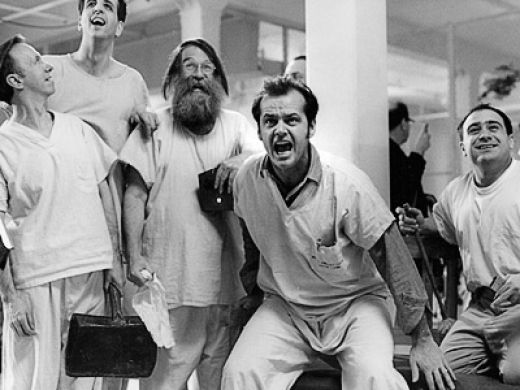
No, it was nothing like the scene from One Flew Over the Cuckoo’s Nest, in which patient Randle McMurphy (Jack Nicholson) battles with Nurse Ratched (Louise Fletcher) for the “privilege” of watching the World Series, but there is an undeniable spirit to the World Series. Unlike the Super Bowl, it is a series of games that drains and demands the very best from its players.

In fact, our charge nurse made popcorn and watched the game with us. We were bonded in our situation, yet simultaneously celebrating with a much larger community.

Last night, we celebrated triumph over adversity; hope over despair; light over darkness.

No matter where we are, no matter what we are doing or experiencing, it’s always good to celebrate.