
Facts are stubborn things

A protestor in Ferguson.  (CBS News photo)
A protestor in Ferguson. (CBS News photo)

I am at a distinct disadvantage writing these words.

I am white. I am also the husband of a former police officer, thus I am somewhat biased.

But I will proceed regardless; because all the news, all the commentary, and all the passionate debate about what happened in Ferguson, Missouri has sparked my memory, jarred my thinking — all the way back to my junior year in high school when I wrote an essay about the Boston Massacre.

The similarities are striking.

History has a funny way of repeating itself; and as George Santayana said, ” Those who cannot remember the past are doomed to repeat it.”

The Boston Massacre happened on March 5, 1770.

Five colonists were killed by British soldiers, who were serving as law enforcement officers to uphold the rule of law (including unpopular taxes) and other provisions of the Townshend Acts

On that fateful evening, Hugh White, a British private soldier, (Police officer Darren Wilson) stood on guard duty outside the Custom House on King Street. A young man, Edward Garrick, insulted another member of the British Guard, Capt. John Goldfinch, saying that Goldfinch had not paid a bill.

Private White injected himself into the debate and told Garrick that he should be more respectful of British officers. White, in fact, left his post, challenged the boy, and struck him on the side of the head with his musket. This attracted a crowd.

Tensions were already high between the British and the colonists. The boy’s insult and White’s reaction touched off a powder keg of resentment.

Within minutes, more than 50 colonists pressed around White,  throwing objects at him and challenging him to fire his weapon.

The crowd grew in size and the British dispatched more troops to quell the colonists, who were throwing rocks and snowballs at the officers. And  then muskets were fired. Five colonists were killed and six more were injured.

The first man killed was Crispus Attucks, an African man, who was labeled later as an instigator.

In the days and weeks that followed, there was a propaganda battle between the two sides. Everyone had an opinion.

Of the eight officers arrested, six were acquitted and two were charged with manslaughter because they fired directly into the crowd.

The attorney representing the British convinced the jury that the officers were in fear of their lives and acting in self-defense.

And who was that attorney?

John Adams, the man who would go on to become the second president of the United States, took the case because he wanted to ensure a fair trial, despite his patriot leanings.

Adams received threats and daily harassment. He feared for his life and for the safety of his family. Many colonists regarded him a traitor for representing the British.

At trial, witness statements were contradictory, and Adams seized upon those contradictions to paint an utter scene of chaos for the jurors, despite the fact that his clients were wholly unpopular.

But Adams also played the race card. Adams called the crowd “a motley rabble of saucy boys, ‘negros’ and ‘molattoes, ‘Irish teagues’ and outlandish jack tars.”

Popularity did not matter to Adams. He knew the stakes were too high to cave into the pressure of political expediency.

What John Adams said during his closing statement at trial should cause us all to pause before offering our own amateur speculation about the intent, competence or procedure of the Grand Jury in Ferguson, Missouri:

Facts are stubborn things; and whatever may be our wishes, our inclinations, or the dictates of our passion, they cannot alter the state of facts and evidence.

Flash forward to today and  yet another young man is dead, and a community is ripped apart.

We will probably never know what happened on that fateful night in August. Most of us (God willing) will never know the pain of losing a child, or the haunting nightmares of a police officer who felt out of options.

But what we do know for certain is this: that the rioting, which followed the non-indictment was not at all justified, but completely understandable. That there is still a rage and level of mistrust in many of our communities and it is there because of undeniable history.

We also know for certain that more than 100 police officers have been killed in the line of duty this year.

So let’s stop speculating and debate the things we know.

Let’s talk about how we move forward; because as history shows us, things can come apart very quickly.

 

A hidden message

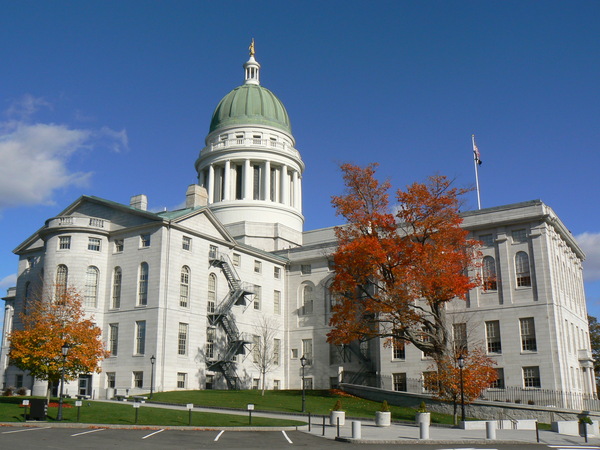
Maine_Capitol_Building_ba9aaba7950196e822e4_1My friend Alan Caron has some sage advice that each and every newly elected member of the Maine Legislature should read.

Alan’s column regulary appears in the Portland Press Herald, and an excerpt of his latest piece  ( Last election had a hidden message for Maine’s leaders) can be found here:

“Given the many challenges Maine faces today, nothing is more critical to our future than a nonpartisan, commonsense economic plan.

We’re a small state with limited dollars that’s in bad need of new economic energy. We spend more on government, as a percentage of our incomes, than just about any other rural state in America.”

If you want to read the full piece, you can find it here.

Just another new kid in town

Nate Wadsworth
Nate Wadsworth

Last week, I introduced two new legislators who are both Democrats from Biddeford.This week, we take a trip to the other side of the political aisle and the town of Cornish to meet Nathan Wadsworth, a young man who has been an acquaintance of mine for almost a decade. Nathan’s father, Jack, owns and operates Wasdsworth Woodlands, a family owned and operated company. I first met Nate and his dad while working various stints in the Natural Resources Building at the Fryeburg Fair year.

Now, the younger Wadsworth will be spending much of his time in Augusta as yet another rookie legislator.

He was gracious enough to answer my short survey about his hopes and goals for the next legislative session.

What are your top three priorities as a freshman legislator?

1) Vote for our economy first, especially any legislation affecting jobs, growth and taxes

2) be visible with my new constituents by attending functions in my five towns.

3) figure out how I can help best.

What is the most serious issue facing the state of Maine?

Currently, our economy is the biggest issue facing [the state]. The governor has brought us back from the abyss but there is still a lot more work to do.

What, if anything, can the Legislature do about it?

The legislature can do a lot about this issue with bills focused around tax relief, energy policy and job growth.

Do you support limiting the number of bills that a legislator can submit during a session?
I’m new to the process here so I’m not sure if the number of bills need to be limited. I do know if someone has 30 bills they internalize those costs by trying to promote all of them and it would be a difficult job. If were still in session in July then I will probably say there should be a limit.

How important will bipartanship be during the upcoming session?

Cooperation is going to be everything with a very evenly divided legislature. I have libertarian leanings so I should be able to find common ground with the other side of the aisle.


We were only freshmen

Democrats in Maine and across the country took a drubbing during last week’s elections, but there were a few bright spots, including the city of Biddeford, where State Senator David Dutremble easily fended off a challenge by Republican James Booth; and where two political newcomers held their party’s seats in the Maine Legislature.

In fairness, it’s not especially hard for Democrats to win elections in Biddeford.

In the western part of the city, voters overwhelming chose Ryan Fecteau over Republican Debbie Davis to represent them in the House of Representatives, holding the seat that is currently occupied by Democrat Paulette Beaudoin, who was barred from running again by term limits.

And Democrat Martin Grohman easily won a three-way race in the central part of the city to hold onto the seat that is now held by Megan Rochelo.

Fecteau and Grohman will both be sworn into office in December, joining several other freshman legislators from both sides of the political aisle.

We asked Fecteau and Grohman to tell us about their priorities. The following are their un-edited e-mail responses.

Ryan Fecteau

Ryan Fecteau
Ryan Fecteau

What are your top three priorities heading into your freshman year?

1. Focusing on ways to encourage and support the return of young people to Maine and also retain those that are still living here/going to school here.
2. Pulling Maine out of nearly dead last (currently 49th) as it concerns homes heated by natural gas (only 4 percent of Maine households) – careful attention to seniors who are especially vulnerable of fluctuating energy costs.
3. Pushing to fund education at 55 percent as mandated by voters. Currently, the failure to meet this mandate pushes the burden to the hyper-local level: property tax payers.
What do you think is the most serious issue facing the state of Maine?
Losing young people and families to neighboring states. Thus losing a skilled work force (in turn deterring businesses from locating here), future entrepreneurs, innovators, and a means to expanding the tax base.
What can the Legislature do, if anything, about that issue? 
We must set ourselves from neighboring states by providing incentive to move to Maine. Whether it be a program to assist in paying off student loan debt or creating /funding incubators for the creation of start-ups, the programs must be aggressively advertised across the country. Young people are burdened by student loan debt, they are mobile, and they are looking for opportunities!
Would you favorably consider a bill that would limit the number of bills a legislator could introduce?
I am not sure. Have not experienced or heard of any troubles with the number of bills introduced. The length of the legislative session is obviously a tight window for presenting and passing legislation; it would seem understandable for there to be a density of legislation despite the number of legislators. More focused on legislation that will positively impact people.
How important is bipartisan cooperation going to be during the next session?
It will be critical. Folks did not cast votes on Tuesday for gridlock; they voted their frustrations. They want results. A do-nothing legislature, gridlocked by partisanship, will not deliver the results that people are looking for. We need legislative leadership from both parties who are willing to work together for the best interests of Mainers.

Martin Grohman

Marin Grohman
Marin Grohman

What are your top three priorities heading into your freshman year?

Probably just to do the best job I can to represent Biddeford well.  Residents are interested in property tax relief, road and bridge infrastructure, and education.  And of course I’m a business guy – I want to see businesses grow, careers grow.

What do you think is the most serious issue facing the state of Maine?
I’m really interested in expanding access to health care.  Let’s think about a hypothetical parent, a single parent, mother of four, let’s call her Linda Smith.  Now if we cut her off of health care, you might think we’ve saved the State money.  But if she shows up at the ER, one of her kids shows up at the ER, we’re all going to pay for that one way or the other.  And in a world of epidemics and communicable viruses like Ebola, I don’t think having sick people without access to health care is going to work.  Plus, denying access to health care for ideological reasons just doesn’t make business sense to me – as I said, I’m a business guy.  Anyone in the health care business will tell you getting ahead of the problem saves money.
What can the Legislature do, if anything, about that issue? 
Man, I have no idea!
Would you favorably consider a bill that would limit the number of bills a legislator could introduce?
Probably not – I’d have to study it.  I think coming up with rules and regulations in reaction to a single case or a moment in time tends to cause problems.  But I’m willing to listen.
How important is bipartisan cooperation going to be during the next session?
Look, I’m new.  I’m a rookie.  I’ve served on a lot of boards, done some fairly high level stuff, national, international.  But I’ll have to learn the ropes.  That said, I kind of doubt I’ll just cast every vote along party lines, and hopefully my colleagues will value my viewpoint as I value theirs.

Take Five

LePageMy wife, Governor Paul Lepage, Bill Nemitz, a charity auction and the in-patient psychiatric unit at Maine Medical Center.

How did these random things become connected last week, causing a bit of a stir on my Facebook page last night?

Let’s start at the top.

Last week, just days before the election, Governor Paul LePage joked that Portland Press Herald columnist Bill Nemitz should be placed on a “suicide watch,” speculating that he was going to win his re-election bid and his nemesis might jump off the Penobscot Narrows Bridge as a result.

Boom! Instant controversy. Once again, the governor found himself in familiar territory with his foot in his mouth.

The governor’s critics (Democrats) went wild, talking about how insensitive the governor is to issues regarding mental illness.

Reportedly, some people who have lost loved ones to suicide were also  angry and upset about the remarks.

Other folks (Republicans) said the governor was joking and the comment was no big deal, pointing out that many in society make lighthearted jokes on similar topics.

Stop and think if you have ever said “I’m going crazy.” “That is a crazy idea.” “That guy is a nut job.” Have you ever laughed when hearing a joke about hearing voices? Late night talk show hosts had plenty of fodder more than a decade ago when actress Margot Kidder was found partially clothed, hiding in the bushes of an LA suburb.

The subject of mental illness makes us nervous. We laugh about it as a relief valve for our own anxiety and fear. But can you take it too far?

Who’s saying what

My wife  has multiple sclerosis. It is a progressive illness with no cure. She often makes jokes about her illness, speculating about when she will need a wheelchair and telling me we will need to completely renovate our home to accommodate her decreasing mobility. She laughs about these very real topics, appearing on the surface light-hearted.

Her jokes about MS really bother me. They trigger a rush of feelings and incredible anxiety. I know that her jokes are just part of her coping methods, but still I cringe when she talks about putting “bling” on her cane.

When Laura jokes about her MS, I try to give her a pass because she has MS, not me. It is her coping strategy.

It’s sort of like the “N” word. An African-American man can use that word in public without recrimination and make jokes about its connotation and meaning.

If I did the same thing, I could possibly lose my job, certainly many friends.

Society draws a line. If you got it, you can talk about it. Otherwise, keep your trap shut.

Unless it’s Hollywood or the media , and then all bets are off, especially when it comes to mental illness.

In the days following the 2007 massacre at Virginia Tech, “Nightly newscasts reported “no known motive” and focused on the gunman’s anger, sense of isolation, and preoccupation with violent revenge. No one who read or saw the coverage would learn what a psychotic break looks like, nor that the vast majority of people with mental disorders are not violent. This kind of contextual information is conspicuously missing from major newspapers and TV,” wrote Richard Friedman in “Media and Madness,” an article published in the June 23, 2008 issue of The American Prospect.

Friedman goes on to explain that “Hollywood has benefited from a long-standing and lurid fascination with psychiatric illness,” referencing movies such as Psycho, The Silence of the Lambs, One Flew Over the Cuckoo’s Nest and Fatal Attraction.

According to Friedman, “exaggerated characters like these may help make “average” people feel safer by displacing the threat of violence to a well-defined group.”

Since the 2011 Tucson shootings, I have been an out-of-the-closet consumer of mental health services. I have testified before the legislature, published an op-ed in the Portland Press Herald, spoken at community forums.

My mission is to show, in a tangible way, that mental illness is generally not scary and more often than not impacts everyday people: your friends, your co-workers, your neighbors and even your social media contacts.

My life-long struggle with mental illness is not particularly funny, but I do make jokes about it. Have you ever tried to eat a chicken cutlet with a spork? (They don’t give you silverware on the psychiatric unit. )

Did you know that nine out of 10 psychiatric units have aquariums? Fish, apparently, relieve anxiety and stress.

I make these jokes and others when speaking publicly because humor helps break down communication barriers.

I got in trouble

p6On Friday evening, Laura and I attended the Biddeford-Saco Chamber’s annual holiday auction and dinner. By pure coincidence, my bidding paddle was labeled P-6,  the abbreviation of Maine Medical Center’s in-patient psychiatric unit (located on the sixth floor of the Pavilion wing.) I held up the photo and had Laura take a shot of me and my label.

I posted that picture on Facebook.

Some people thought it was funny. Other people did not, questioning why I could joke about mental illness but Gov. LePage could not.

The tricky thing about humor is its intent.

For the record, I chuckled when LePage said Nemitz should be placed on a suicide watch. The two men have been battling for four years, and frankly, I’m not sure who hates who more.

But either way, I think humor is okay, so long as its intent is somewhat calculated and not malicious in nature.

As someone with severe and chronic mental health issues, it’s not up to me or anyone else to tell you what you can joke about. All I ask is that you think about the consequences and lighten up just a tiny bit.

———————————

If you enjoy what you just read, please keep in mind that this is a reader-supported blog, and I want to keep ads at a minimum. If you are so inclined, please consider a small donation to help maintain this site. You can donate by clicking on this link. Thank you!

Enter your email address to subscribe to this blog and receive notifications of new posts by email.

We’re the kids in America

WARNING: If you are a partisan Democrat or Republican, you may not want to continue reading because this post will surely piss you off.

Me and Governor LePage
Me and Governor LePage in 2013.

Nearly 24 hours after the polls closed, there is still a fair amount of wailing and gnashing of teeth going on here in Maine, where Republicans had much to celebrate last night.

All the pundits, professional and otherwise, have bellied up to the bar to offer their “expert” opinions and analysis about what happened last night, so please forgive me for piling on to the fray of analysis and speculation.

Throughout the day, on social media and around the water cooler, I have heard a wide range of opinions about why Democrat Mike Michaud lost his bid to oust Republican Paul LePage.

Many people blame Independent candidate Eliot Cutler. I disagree, I think Cutler was a factor but not that significant, let’s say 5%

Other people said the controversial “bear-baiting” referendum brought out “conservative/sportsmen” voters who would have otherwise stayed at home during a midterm. Wrong again, in my opinion. But let’s give this “factor” another 5%

Others have said that Gov. LePage was able to latch on to the Ebola hysteria that dominated the final days of the campaign cycle. This one I find laughable, but let’s give it 2 percent, anyway.

Still others have said it was because Michaud was an openly gay candidate. I have a fair amount of Republican friends, and I never heard this issue raised in conversation. But I am also a realist, and I know that awful bigotry does lurk everywhere, so let’s give that factor another 5%.

So far, if you add all these factors together, you only have 17 percent of the puzzle.

So, what really happened last night?

In my opinion, it was two things that really mattered.

For almost four years Democrats have howled and railed about how awful governor Paul Lepage is. In this campaign cycle, they spent boatloads of cash driving home that message. He is a bully. He is an embarrassment. He likes to kill puppies. He spews dioxins.

Let’s, for a moment, assume the Democrats were right that Paul LePage is the worst governor to ever occupy the Blaine House. Let’s assume he is the great Satan.

Well, if that’s the case, how do you lose against such a God-awful candidate? You nominate a weak candidate to take him on.

Everywhere I go, I hear people tell me that Mike Michaud is a “nice guy.” And that is the truth. I have met Mr. Michaud. Off the top of my head, I can’t think of a nicer guy.

But you need more than being a nice guy.

Maine’s Democratic Party cleared the primary decks and anointed Michaud as heir apparent with no contest. On paper, it made a certain amount of sense. Michaud was from northern Maine, and he could probably carry southern Maine. He is a respected legislator and held his Second District Congressional seat for several terms. He is likable. A working-class guy just like you.

But Michaud’s campaign focused primarily on being “not Paul LePage.” Voters turn out to be for a candidate, not against a candidate.

LePage had the advantage of being an incumbent and trumpeted his accomplishments. No matter how you feel about the guy, he has a loyal fan base and they rallied like there was no tomorrow.

But all that only counts for 40 percent of why Michaud lost and LePage won last night.

What’s the missing piece of the puzzle?

History and voting trends.

Make no mistake, the President played a factor in this race and several others. Historically, the second-term mid terms are a major disappointment for the person sitting in the Oval Office.

The nation is weary and wants a new direction, away from the party that controls the White House.

Let’s take a quick trip down memory lane to 2006. George W. Bush was halfway through his second term in office. He lost Congress in 2006. But what was happening in Maine?

Gov. John Baldacci was seeking re-election. The Republicans nominated conservative Chandler Woodcock to take him on. But the Dems had other problems. Barbara Merrill, a former Democrat lawmaker from Appleton, filed papers as an independent. Pat Lamarche, the driving force behind Maine’s Green Party was also a candidate and threatened to peel progressive votes from Baldacci. Between them, LaMarche and Merrill got roughly 20 percent of the vote.

Baldacci still won because a.) he was a stronger candidate than Woodcock; and b.) because Republicans nationally and at home were useless during the waning days of the Bush Administration.

By contrast, Cutler only got eight percent of the vote, but it would be a major leap of speculation to assume that every one of those votes would have gone to Michaud.

In the end, Michaud was a mediocre candidate who ran an uninspiring campaign while his political party was suffering all over the country.

That’s what happened in Maine last night.


Shit happens

863511_f520Originally published Sept. 8, 2012

Over the last few days, I have learned some valuable lessons.

First and foremost, I was reminded this week that I am extraordinarily blessed to have a diverse cadre of superior friends and family members.

I also learned a valuable lesson about ladders, not to mention a very painful experience that drove home the importance of why access to affordable and quality health care is so important for our national security.

But having so much down time has also allowed me to reflect on at least two other subjects: balance and perception.

During this presidential election season we have all heard a bunch of rhetoric about “self-reliance” and about “being in this together.” But which philosophy is correct?

Just like working with a ladder, the most important lesson is too often forgotten: it’s all about balance.

And we lose our balance when our perceptions become too narrowly defined.

A week ago, I broke my left arm in two different places while helping my sons with their landscaping business. The injuries, although significant, will eventually heal.

These last few days have been tough. It’s amazing how much you take for granted the use of two working arms. For example, try zipping up your pants with one arm. Or opening a bottle of pain meds; typing or driving a vehicle with a standard transmission.

Most people understand those limitations. They instantly empathize, and are quick to offer assistance. After all, my injuries are very obvious. My arm is either in a sling or set into a wrap-around corset to keep it in place. I have visible wounds on my legs and my elbow.

Strangers ask what happened with sympathetic voices, and they often share with me their own similar experiences. My friends laugh with me about how the accident happened. It’s okay and acceptable to make jokes about it.

We are comfortable with physical injuries. They do not frighten us. Shit happens.

Anyone who has ever smashed their elbow into a 3-inch-thick slab of stone knows that it is a painful injury. They know why you need to take it easy and sometimes need the use of medication to cope or just sleep through the night.

I say all this because these experiences provided me with a very stark contrast to my much less obvious injuries; the disease that is invisible to the eye, that is masked by perception.

On balance (no pun intended) my mental illness is far more painful than a broken arm. But you can’t see it, and I am reluctant to show it to you.

Imagine a disease that rarely allows you to sleep through an entire night. A disease that constantly impacts your perception of the world around you; a disease that clouds your judgment, alters your reality and makes it almost impossible to get out of bed.

Imagine an intense level of pain that without medication would have you think every hour of every day about ending your life; a disease that inhibits your ability to maintain relationships and function as a productive member of society.

Imagine having a disease that is commonly ridiculed and often dismissed as nothing more than “feeling sorry for yourself.”

I live with the challenges of that disease every day. I fight it with every fiber of my existence, only to know that it will never go away; that there is no cure or remedy.

I refuse to allow my broken arm to alter my life. This last week has been one of the busiest and most challenging weeks of my professional career, and I have risen to each and every challenge.

Am I bragging? Yes, but only to make a point. This is the way the overwhelming majority of people who suffer from a mental illness operate. They struggle through each day. They go to work. They mask their pain. They pay their bills. They follow the law. They take their meds and follow their doctor’s orders.

They wince when they hear the words “sicko, whack job and nut case,” but they swallow and stay silent for fear of being labeled, judged or excluded.

They are just like you. They are your neighbors, your friends and your co-workers. They did not choose to become sick any more than you would choose to fall off a ladder. They are some of the most self-reliant people you will ever meet. They have abundant courage and determination.

We all have limitations. The trick is learning to balance and to expand your range of perception. With those tools, you can fix just about anything.

Radio Free Europe

Governor LePage: winner or loser in 2014?

There’s one aspect of this year’s Maine gubernatorial race that has received little attention: where will dispassionate Republicans land on Election Day?

Four years ago, in what was largely a three-way race, Republican Paul LePage became Maine’s governor by securing approximately 38 percent of the vote.

Since then, much has been said about plurality, the merits of run-off elections and the so-called Cutler effect.

But little has changed in how Maine will choose its next governor, and today LePage is again on the ballot with two opponents.

More importantly, we don’t have Independent Shawn Moody (9 percent) to kick around this time.

Moody was always a long-shot, a late entrant, dark-horse candidate with broad appeal. At least a third of his support likely came from Republicans who were less than impressed with LePage’s style and tone.

From my perch, it’s hard to see how LePage has done anything to build his base, to draw in moderates; and I wonder where will those folks go. Will they hold their noses and vote for LePage? Will they hold their noses and vote for Cutler? Will they clamp down on their noses and vote for Democrat Mike Michaud; or will they leave their noses alone and just stay home on Election Day?

Many Democrats blame Cutler for LePage’s election in 2010. They say he split their party’s voting block and could do it again this time.

So far, Cutler is only a shadow of the threat he was in 2010; but even then his support came late in the game. Say what you will, but Cutler’s numbers will likely rise over the next few weeks as LePage and Michaud busy themselves with tearing each other down.

Recent polls have shown LePage and Michaud in a very tight race. So, I want to know where the Moody voters from 2010 will go; all nine percent of them.

Nine percent may not seem like a big number, but LePage simply cannot rest on his base of 35 percent. This time, the Democrats are working harder and smarter than they did in 2010. They are more unified and reaching for the middle.

LePage has an opportunity to draw in some of those moderate voters in the middle, but so far there’s been no evidence that he’s willing to court their vote.

So far, Eliot Cutler is the only candidate working really hard for the middle, the place where a growing number of voters call home. I doubt it will be enough for him to win, but I am positive that it would be enough for LePage to lose.


Lido Shuffle

The experiment is over, and it was a bittersweet experience letting it go.

As it is with so many things in life, it occurs to me that my endeavor to create a diverse group to debate differing political ideas with civility was both a phenomenal success and an utter failure. We called this group “Thinking Politics” and its membership quickly swelled beyond my expectations.

WP_20140906_18_48_58_ProLast night, I had the pleasure of participating in the phenomenal success part; but it was the utter failure part that led me to let go of the reins, end the “experiment” and let the group go wherever it wants; allow the other members of this “secret” social media group to experience true self-determination.

I started the group, and until last night served as its primary moderator. Admittedly, I tried to control the group: to maintain a balance between liberal and conservative thought.

My bigger mistake, however, was trying to appease all members of the group, and that caused a lot of anger and dissension.

A few months ago there was a schism of sorts. Roughly 20 percent of the members left the group after I announced that we would leave religion out of our political conversations.

I was angry that these departing members hijacked my group’s name and started a similar group entitled Thinking Politics/Free Speech, as if free speech has no limits.

But the bulk of the original group’s members remained, yet still the dynamic I envisioned never really materialized in a substantive way.

I wanted to see if there would be more intellectual curiosity; if members would be willing to re-examine and challenge their own political pre-conceptions and beliefs.

One of the problems is that the group quickly became dominated by one side of the political aisle. Those in the minority felt frustrated and stopped participating.

In a recent Facebook post, Robert Reich, former Labor Secretary under President Clinton, spoke of the value of having his ideas challenged by a good friend during a monthly lunch meeting.

Perhaps that is why last night was such a stunning success.

About 30 members of Thinking Politics convened for an impromptu dinner in Portland. All members, regardless of political affiliation, were invited. It was an awesome experience, full of laughter, shared experiences, good food and plenty of libation.

That experience reminded me of the Political Beer Summits I once organized with friends who often disagreed about political issues. Those summits inspired the creation of Thinking Politics.

When you’re sitting at a table, directly across from your adversary, it becomes instantly clear that you have much more in common than not. We all have funny stories, fond memories, shared experiences, including loss, fear, hope and dreams.

It’s almost impossible to establish that kind of intimacy on the internet. When you are separated by a keyboard and a monitor, it’s much easier to belittle your opponent, to say things you would never say if you were sharing a meal with them.

So, part of me thinks I failed; but as I looked around at the group last night, I also felt a certain sense of pride. The conversations were real, the friendships were plainly evident.

It was a good time for me to say goodbye, to let go of my moderator status and turn over the keys to six others.

Where Thinking Politics goes from here is unknown. What is known, however, is that I will no longer be at the helm of that ship.

My experiment is over, and I regret nothing.

A good friend from Rhode Island accompanied us to the dinner. Her observation meant a lot to me. “Look at all these people, they came from Texas, Illinois and all over, and they really want to be here and meet the other members in person. You started that, Randy, and that’s impressive.”

So, in the end, maybe my time at the helm of Thinking Politics was a stunning success; and thus, it was the perfect time to walk away and let others steer that ship.

Does anyone really care?


For those of you who are excited that the Lincoln Mill Clock Tower has been “saved,” it’s a bit early to put on your party hats and break out the champagne.

Sure, the clock tower was moved from the ground where it sat rotting for seven years, but it’s hardly saved.

It will likely take hundreds of thousands of dollars to restore the dilapidated structure, replace the missing bell and weathervane.

But now, I fear, the clock tower has been moved out of sight — out of mind.

It has been moved to another place behind the building so that its rotting carcass will no longer be a public nuisance, an eyesore.

The story of how the clock tower landed on the ground is a complicated one, and detailed here.

Along with a few dozen other curious spectators, I was there on Thursday night, watching the giant crane hoist what remains of the clock tower onto a flat-bed truck.

I spoke briefly with the building’s new owners and asked if the tower would ever be placed back on its perch.

The response? “No way.”

And who could blame them? They inherited a mess created by the building’s previous owners.

Everyone in Biddeford, it seems, has an opinion about the clock tower, ranging from “it should be scrapped” to “it should go back on top of the building.”

But only a handful of people have stepped up to help save this iconic symbol of the city’s storied past.

My hat goes off to a group of passionate Biddeford High School students who last year tried to raise interest in saving the structure and organized yet another fundraising drive.

Like the fundraising drive that I helped coordinate in 1999, neither effort met its goals. Though the students have not stopped yet.

Will the residents of Biddeford step up to truly “save” the clock tower?

From my perspective, it’s a long shot but one worth taking.

As I said before, we save what we care about. Now I wonder, does anyone really care?

******************

PREVIOUSLY:

A new fundraising effort

A look at the clock works from the late 1990s