Bonnie Pothier: Interview

Bonita Pothier/ Seaver photo

Bonnie Pothier has been breaking barriers since before breaking barriers was a thing. She was the first woman elected as mayor in Biddeford, but she also had to break a lot of other barriers and overcome many other challenges before then.

Whether as a school teacher, a downtown business owner or even as a member of the local Rotary club, Pothier has always been willing to swim upstream, letting nothing get in her way.

 Born and raised in Biddeford, Pothier’s high school class was the first to graduate from Biddeford High School after St. Louis High School was closed in 1971. Bonita Pothier was the middle child of a large family that included her older sisters Charlene, twins Donna and Mona and two younger brothers John and Chuck. Pothier graduated from the University of Maine Farmington, earning a bachelor’s degree in education.

Today, she is one of five regional representatives for U.S. Senator Angus King, Jr., working in the Biddeford office that serves all of York County, a position she has held since King was first elected as senator in 2012. Recently, she announced that she will be retiring in just a few weeks.

“I have been working every summer since I was 11 years old, babysitting,” she laughed. “I finally decided that I wanted to just relax and enjoy the summer for once.”

Initially, it wasn’t your idea to run for mayor in 1989, was it?

“No, it wasn’t. (Laughs) My husband and I were just having dinner with some friends, including Mayor Mike Cantara. Mike said he would not be seeking another term because he wanted to run for the District Attorney seat. So, we all started talking about who would be a good fit to run for mayor. Mike looked over at me, and said you should run. I almost spilled my drink, and I burst out laughing. I was sure he was kidding. The room got quiet. Even my ex-husband thought it was a good idea. I was not at all convinced.

“Michael (Cantara) stopped by my house every night, working to convince me. At the time, I was the president of the chamber of commerce but I had no real political experience. I had a downtown business and young kids. I kept telling him I was too busy, but he persisted.

“I don’t think the city is ready to have a woman as its mayor,” I told him. “You’re putting your money on the wrong horse. Finally, I gave in. I told him I’ll run but you’re going to be sorry.”

You had a decisive win in the election, but your problems were just starting.

“Oh you bet. (Laughs) There were a lot of people who were very uncomfortable with the concept of a woman in power. Also, I was the first Franco-American to be become president of the chamber, so it wasn’t just my gender that bothered a lot people. When I marched in my first La Kermesse parade as mayor, I brought my children along to march with me.

“Over the next few days, there were lots of angry letters to the editor published in the Journal [Tribune]. People said it wasn’t appropriate for the mayor to be walking in the parade with her children. Others criticized my hairstyle.

“All that aside, being the mayor of Biddeford was one of the best jobs I’ve ever had. It was a fascinating experience.”

But a patriarchal sentiment extended beyond City Hall, right?

“Oh yes, I remember trying to join the Biddeford Rotary Club and [Richard] Dick Martin said there will be women in the Rotary Club over my dead body. That’s when the Saco Bay Rotary Club was formed. Dick and I came to a very good place of mutual respect. We worked closely together on the design of the new elementary school, MERC and the sewer treatment plant. He was an engineer by trade and he was appointed to the council when Tiny Frechette died.”

You were criticized for trying to work in a “man’s world” and how could you know anything about culverts and road repairs.

“It was, I think, a pivotal time for our city. A lot of people simply couldn’t understand why I wanted to do it, that I should just stay home, mind my own business and take care of my children. Back then, there was no city manager and people had a lot of doubts about department heads reporting to a woman.”

Back then, you were dealing with issues surrounding the MERC trash incinerator, needed sewer upgrades and an exodus of downtown merchants as the mills began to close. What do you think of Biddeford today?

“When I look around today, it’s so satisfying to see the vibrancy that is returning to our community. I believe things are always cyclical, but this is what I knew we would eventually become. I’m old enough to remember what it was like to be downtown in the 1960s. Honestly, the sidewalks were full of people shopping or going out to eat. You had a hard time walking from place to place because of the crowds.”

But you also saw the city’s downtown core begin to crumble in the 1980s.

“It was sad to watch so many things disappear. I remember when I wanted to open my business on Main Street in the early 1980s, so many people said I was crazy to be making an investment downtown. It was like we had all but given up on our downtown. The mills were closing and people began shopping at malls.”

Becoming mayor at that time, with a national recession and jobs leaving the area, what things do you consider were hallmarks of your one term as mayor?

“There were a lot of things, but one really just jumps out at me. Back then, there was no development west of the Turnpike intersection. The council had the foresight and vision to contemplate that area as a commercial growth district, and we went ahead and decided to extend the sewer and water lines there. Without that, you would have never seen all the development that has happened there since.”

How did you end up working for Senator King?

“You’re not going to believe this, but again it was nothing I ever contemplated or pursued. I was visiting a friend at the hospital and Senator King was there visiting the same person. I had known him for a long time. We just started chatting. He seemed interested by my experience as a senior manager at Key Bank, my time with the Chamber and other stuff. He actually pitched me the job, telling me you’ll never be bored working for me. Truer words have never been spoken (Laughs).

As a senate staff person, what’s your perspective on our national landscape?

“I feel like the tone of our political discourse has deteriorated. We have relaxed so many norms, so many people no longer practice good manners in public. The language is  . . . well, shocking. There’s so much anger and distrust out there.”

What do you think is driving that anger?

“I think people are afraid, but nobody wants to admit they are afraid. We’ve given ourselves permission to just be constantly angry. It seems more acceptable to be angry than afraid. I think people want to be heard. And that’s what I admire most about Senator King. Despite what some people think, he really listens to people, even when they are being critical of him. He really goes the extra mile.”

The mayor’s seat in Biddeford is opening up this year. Want to run for your old job?

“Are you kidding me? (Laughs). No. Absolutely not. I want to spend more time with my grandchildren and go to the beach.”

What would be your advice to the next mayor?

“What you do can have lasting impressions long after you leave public office. It’s important for all of us, I think, to consider our ethics and to be careful about what message you want to send. Your words matter. I would also tell them to try to bridge the divide that is developing between older and newer residents. I am very concerned about gentrification and the way we are moving forward.

“I think what is happening downtown is fantastic. But we also have to be mindful. While we have many more young people discovering Biddeford and moving here into the old mill buildings, you don’t see families moving into those units. And I don’t think a community can thrive without families.”

Originally published on Saco Bay News

Homelessness in My Community

This page offers links to each installment of my three-part series regarding the issue of homelessness in northern York County. That series of articles was published between February and March 2023 on the Saco Bay News website.

Additional stories and resources regarding this issue can be found by simply using the ‘Category’ section on the far-right side of the page.

PART ONE: Warm Smiles On A Cold Day | Several unhoused individuals share their experience being homelessness on of the coldest days of the year.

PART TWO: I Never Thought I Would Be Here | An unhoused Biddeford man talks about how he ‘lost everything’ and city officials in both Biddeford and Saco describe the complexities of the issue.

PART THREE: Where Do We Go From Here? | Resource providers and state and local political leaders paint a bleak picture and say increased funding and cooperation will be essential in tackling the issue.

‘Don’t Waste Your Time With Saco’

Biddeford City Manager vents his frustration regarding the issue of homelessness and the neighboring city of Saco

City Manager Jim Bennett did not hold back his opinions about the neighboring city of Saco during a March 7 Biddeford City Council meeting.

City Manager James Bennett

The Biddeford council was in the midst of debating the merits of hiring a professional consultant to help the city take direct action in addressing the issue of unhoused residents in the community.

Bennett, who seemed clearly frustrated about the issue earlier in the meeting, decided to take a swipe against Saco officials and their response to the issue of unhoused residents.

“My two cents, for what it’s worth, if you want action — don’t waste your time having a conversation with Saco as it relates to this issue,” Bennett said.

Bennett’s unsolicited remarks came immediately after both Biddeford Councilors Doris Ortiz and Liam LaFountain raised the idea of working with Saco as part of a regional approach that could possibly save money and streamline resources.

Ortiz was clearly surprised by Bennett’s comments immediately raising her hands, leaning back in her chair and expressing shock.

LaFountain said he was disappointed by Bennett’s remarks and that both cities have many opportunities to work in unison on several issues.

“Working together as neighboring communities allows us to pursue more comprehensive solutions that benefit residents in both communities,” LaFountain said.

Saco Mayor Bill Doyle said he was also “disappointed” when he heard about Bennett’s public comments.

“Really, I’m sort of taken aback and at a loss for words,” Doyle said. “We’re sister communities. There’s no need in our local communities for this type of vitriol, which we see at the national level.”

Doyle said he was feeling optimistic about relationships between the two cities, especially following a joint council meeting in February. Both cities have appointed members to serve on a committee that will explore various ways the two communities can work together.

Saco’s deputy mayor, Jodi MacPhail, said she was “saddened” by Bennett’s “divisive” comment. “Growing up here, I remember the two cities having great relations, working on MERC, as well as many other projects over the years,” she said. “I will continue to take the high road and engage with Biddeford councilors and residents who appreciate both communities open dialogue without judgment.”

During a follow-up interview, Bennett said he is indeed “somewhat frustrated” both personally and professionally about the issue, but did not back down from his statements, including comments he made earlier during the March 7 meeting.

“I think most people know that I am a very straight-forward and direct person,” Bennett said. “My comments were honest and true.”

Bennett said collaboration with other communities may sound appealing, but often adds yet another layer of bureaucracy to an issue, ultimately slowing down the process of taking action. Bennett said the issue of unhoused people is not just a Biddeford issue, but that the city does need to “quickly make a decision” about how to proceed.

Earlier in the March 7 meeting, Bennett was clearly agitated, and he castigated those who raised concerns about spending $20,000 to hire a professional consultant who would help the city move forward in tackling the issue of unhoused residents.

Departing from his usual role in providing the council information about various issues and staff resources, Bennett offered more of a personal opinion to the council, questioning councilors and others who voiced concerns about hiring a consultant.

“I’m really tired of the misclassifications and all the other issues that happen around this damn issue,” Bennett said. “Personally and professionally, I’m tired. It’s time that the community make some decisions at this table,” he added, pointing to the council dais.

“I don’t think anybody should be really nervous that we want to bring a professional person in to help the council make a decision in full lights – and full FOIA [Freedom of Information Act] and where everybody understands what’s going on,” Bennett said.

“And if that makes you nervous,” he added, shrugging his shoulders. “Then I guess you ought to be concerned about what you’re doing and what your motives are.”

Bennett described the issue of unhoused residents as “probably the most difficult issue that a local, elected body can tackle,” citing a lack in resources from both the state and federal governments.

Ultimately, the council voted 7-2, with Scott Whiting and Bobby Mills in opposition, to hire a professional consultant.

Where Do We Go From Here?

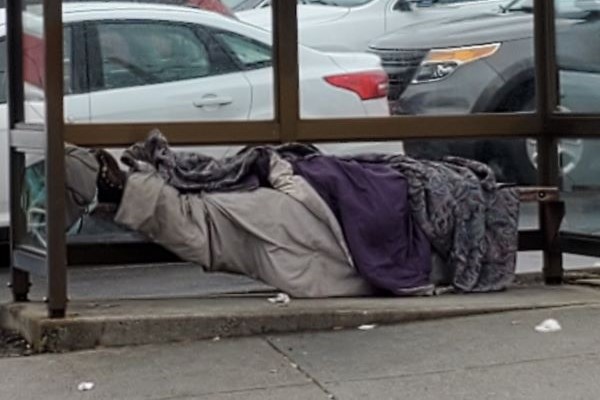
Imagine this. You have no family in the area. Your monthly rent just increased by more than 45 percent, and your paycheck no longer covers your basic needs. You have to leave your apartment. There are no available apartments in your price range. Where do you go? Who do you call?

Now ponder this. How many paychecks away are you from finding yourself without housing, food and medicine?

According to experts, service providers and government officials, a very large segment of the homeless population can be found just beneath the surface of public scrutiny. They work full-time, pay taxes and follow the laws, but they are either living in their cars or “couch surfing,” staying with friends for a few days at a time.

“I never thought I would be here,” says Alex, a 31-year-old man who grew up in Biddeford and works in the service industry. “I’m trying to save up some money so I can get the hell out of here and go down south. I grew up here. I went to school here, and now I can’t afford to live here. I guess it’s nice that Biddeford is getting better, but I know lots of people who can’t enjoy the change.”

Amy is a single mother now living in seasonal rental unit in Old Orchard Beach. She has a three-year-old daughter. She relies on public transportation to get back and forth from her job in Biddeford, where she earns roughly $18 per hour. She needs to vacate her seasonal rental by May 1.

“Daycare is really expensive,” she says. “I’m having a hard time finding an apartment for less than $1,500 a month, including heat and electricity. I have no idea where I am going to go after May 1.”

Stories like these are becoming increasingly familiar, especially in southern Maine, where the demand for housing and the cost of living has skyrocketed, far outpacing area wages.

And then, there are other issues that need to be considered when trying to solve the problems of homelessness. Mental health and substance abuse issues play pivotal roles for many of those who are living without a home.

“I’m not an expert of any kind, but mental health is a big factor for many of the people we serve,” said Vassie Fowler, executive director of the Seeds of Hope Neighborhood Resource Center in Biddeford. “Substance abuse is also common. A lot of the people we serve are feeling intense pain. It’s pain that is there every minute of every hour of every day. So, people use alcohol or drugs to self-medicate. To alleviate the constant pain and anxiety.”

But getting services or finding resources for the homeless is a daunting task, especially so when you are living on the streets without a fixed address.

Sweetser, headquartered in Saco, is one of Maine’s largest mental health service providers, and they are having a hard time trying to keep pace with the surging demand for services for both housed and unhoused people.

“Right now, we have a waiting list of approximately 2,000 individuals across the state,” said Justin Chenette, a spokesperson for Sweetser. “We currently serve approximately 4,000 people in York County alone. There is a huge need out there, but we are at a critical moment because we are experiencing the same staffing shortages that can be found elsewhere.”

Sweetser offers several different resources for those who are struggling with mental health and/or substance abuse issues, Chenette said, adding that there is no real hard data to compare services between the housed and unhoused.

“We don’t turn anyone away,” Chenette said, adding that Sweetser offers a mobile crisis unit that will “go to” wherever a client is staying. Sweetser also offers a 24/7 “warm line” that connects individuals struggling with substance abuse or mental health concerns to trained peer coordinators for emotional support.

Fowler says her agency does its best to connect people with resources, but there are long wait times. “We help folks apply for Medicaid and other benefits, but it’s still a struggle,” she said. “If someone is in immediate crisis, we do our best to get them evaluated and treated at the hospital, but there are limits to what hospitals can provide in terms of available beds or treatment options.”

According to Danielle M Loring, Director of Intensive Services/Emergency Department Crisis for MaineHealth, which includes Southern Maine Healthcare, roughly 50 percent of behavioral health patients seek voluntary services while the remaining 50 percent of patients are being brought to the emergency room by paramedics or police following a suicide attempt, substance use intoxication, acute aggression or acute psychosis.

Although Loring says the hospital does not track patients by housing status, she did say that the number of emergency room patients without secure housing has grown significantly over the past few years, especially during the height of the Covid pandemic.

“A considerable volume of unhoused patients are now seeking care in emergency rooms to access a full range of care, including inpatient psychiatric or medical hospitalization; in an effort to have their basic needs met, including food and shelter,” Loring said.

The increasing unhoused population in Maine has a significant systemic impact from a foundational level, with no greater attention to compounding this growing public health concern. Loring said. “Families and children at risk of losing their housing or unhoused, suffer considerable impacts to their education, careers and medical/behavioral health treatment resulting from the unstable and often unsafe living conditions they must contend with in order to survive,” she said.

A growing problem for Maine and York County

Although all cities and towns in Maine are required to offer general assistance (GA) programs, those funds are often exhausted before the budget year ends. The state provides 70 percent of the funding for those programs, the rest is shouldered by municipal taxpayers.

At the county level, quasi-government agencies, such as the Biddeford Housing Authority and the York County Community Action Corps, are doing their best to offer solutions for an ever-growing problem.

“It’s no longer just about the people you see living on the streets,” Fowler said. “An even bigger problem is the growing number of people who are right on the edge of becoming homeless because of the cost of housing, both rentals and home ownership.”

Two years ago, several organizations came together to help reduce and ultimately end homelessness in York County.  Part of a Maine-Housing statewide initiative, the Homeless Response Service Hub Coalition was created and includes York County Community Action Corp, York County Shelter Programs, Caring Unlimited, Seeds of Hope, the Biddeford and Sanford Housing Authorities and several other non-profit organizations.

According to Carter Friend, executive director of the York County Community Action Corps (YCCAC), the Hub is a “coordinated effort to restructure how organizations respond to the growing number of unhoused people.”

In 2022, there were nearly 2,100 people experiencing homelessness in York and Cumberland Counties, according to Abigail Smallwood, coordinator of the Hub program, who said the actual number is likely much higher because of the challenges in collecting real-time data.

YCCAC provides several services for unhoused individuals and families, including access to health care, childcare and a team of social workers who help unhoused individuals fill out with housing applications and identify local housing resources. But that agency is also trying to keep up with a growing demand for services, Smallwood said.

At the state level, there are also challenges to helping people who find themselves homeless or soon-to-be homeless.

Jackie Farwell, a spokesperson for the Maine Department of Health and Human Services, said the state offers several programs to assist those without housing, including MaineCare, which provides comprehensive care management to qualified individuals; the Bridging Rental Assistance Program (BRAP), a 24-month rental assistance program designed to assist people with securing transitional housing and serving those with serious mental illness or substance use disorder.

The BRAP program serves individuals for 24 months as a bridge between homelessness and more permanent housing options, such as Section 8 Housing Choice Voucher, or alternative housing placement.

And then there is the PATH (Projects for Assistance in Transition from Homelessness) program, which is designed to support the outreach, engagement and delivery of services to eligible persons who are homeless and have serious mental illnesses and/or co-occurring substance use disorders.

A double standard?

It’s relatively easy to find social media commentary that decries the use of taxpayer funds to support immigrants and asylum seekers while there are not enough resources to provide housing for long-term residents and U.S. citizens.

State officials, however, say that anyone seeking assistance much show documentation in order to be eligible for state programs and services. Thus, illegal immigrants do not qualify for state services and benefits but may seek housing in shelters.

Asylum seekers must also provide documentation in order to receive services and benefits at the state and federal level.  According to Farwell, there are three new overnight warming shelters in Portland, with a total of about 120 beds, that primarily serve asylum seeking individuals and families through April 30.

Additionally, the state provides hotel rooms for dozens more asylum-seeking households unable to access emergency shelters through April 30.

Since the summer of 2022, using funds authorized by the Legislature, the Asylum Seeker Transitional Housing Program in Saco has successfully assisted more than 115 families, made up of more than 400 individuals, with housing and daily services provided by Catholic Charities of Maine, including cultural orientation, transportation, school enrollment and connections with health care providers and adult education classes.

Farwell also said DHHS has also provided more than $15 million to 16 immigrant-led community-based organizations to provide public health, case management, and social service supports to asylum-seekers, using grant funds from Centers for Disease Control and Prevention.

State Rep. Marc Malon (D-Biddeford) is serving his first term in the Legislature and said it is important to note that programs and services for both asylum seekers and long-term residents are designed to address the “unique needs” of each group.

“I think we should avoid falling into the pit of a false choice,” Malon said. “The state is trying to effectively meet the demands of all people in Maine, especially those who are in the unfortunate position of being unhoused.”

Malon says asylum seekers have unique needs and challenges, including language barriers and the inability to gain employment because of federal labor restrictions. “In my mind, there is no question that our federal immigration system is broken,” he said. “I mean really, no one is coming to Maine just to sleep a few months in the Expo Center.”

Asked if the state should do more to address the growing housing crisis, Malon did not hesitate. “We absolutely must do more, starting with expanding the supply of housing of all types,” he said. “This is a statewide problem and it’s going to require statewide action.”

The lack of affordable housing presents a serious challenge in workforce housing. For example, a hospital needs janitors in order to function, but area housing costs exceed those wages. It is the same story for beginning teachers, new police officers and hospitality jobs.

“Workers need affordable housing,” Malon said. “If they can’t afford to live here or to buy a home here, then we are going to be hurt by labor shortages and supply disruptions. There are no easy answers, and this issue affects all of us.”

 Editor’s note: The names of the unhoused individuals interviewed for this story have been changed to protect their anonymity.

Originally posted in Saco Bay News

I Never Thought I’d Be Here

Citing a lack of both resources and guidance from the federal and state governments, Biddeford City Manager James Bennett recently said the issue of homelessness is “probably the most difficult issue” that any municipality in Maine can face.

And while some social media users say the city of Biddeford and surrounding municipalities are “doing nothing” to solve the crisis, others say that expanding resources will simply draw more unhoused persons to the area, placing an even greater strain on local resources and taxpayers.

“There are a lot of factors that play into this,” said Biddeford Mayor Alan Casavant. “And there are no easy answers. In my opinion, we have a moral obligation to tackle this issue but we also have a fiscal obligation to the taxpayers. The question then becomes how do you reconcile those two things?”

Casavant said the issue of homelessness is becoming a larger issue in communities all over the country, and across the river in Saco, Mayor William Doyle agrees.

“We all want to tackle this issue, but it’s not as simple as just passing an ordinance,” Doyle said. “The problem is really aggravated by a lack of affordable housing in the region. If someone can’t afford to live in a house or an apartment, their options are limited,” he said.

Doyle said the city of Saco is looking for a “comprehensive” solution, adding that he and members of the city council recently directed City Administrator Bryan Kaenrath to develop a list of recommendations for the council to consider regarding affordable housing.

“It’s pretty similar to what Biddeford is doing,” Doyle said, adding that proposals such as inclusionary zoning and other developer incentives are all “on the table” for discussion.

Earlier this week, the Saco City Council voted to approve moving forward with a Community Development Block Grant (CDBG) application that could clear the way for development of a 60-unit affordable housing development near the intersection of the Ross Road and Portland Road.

Kaenrath said he and his staff are “digging deep into the issue” in order to develop some “tangible and meaningful ways” to address what he acknowledged is a growing issue in the city.

“It’s not a problem that you can just throw some money at and have the problem solved,”Casavant said, pointing to other Maine communities that are still struggling with the unhoused crisis, despite spending millions of dollars to combat the issue.

According to the federal department of Housing and Urban Development, the number of people experiencing homelessness in Maine increased by more than 110 percent since 2020, and is up by more than 85 percent since 2010.

The Law Enforcement Perspective

Although the increasing number of unhoused people remains relatively hidden beneath the surface of day-to-day life, there is a growing strain on municipal services, including local police departments.

Joanne Fisk, Interim Biddeford Police Chief, said there has been a spike in calls for mental health services since the beginning of the Covid-19 pandemic three years ago.

“Of course, that’s not all related to our unhoused population, but it is a factor,” Fisk said. “it’s not illegal to be homeless. We are constantly looking for ways we can adapt and better connect individuals with appropriate services and resources.”

Fisk said Biddeford recently hired a community engagement specialist to work as a liaison between the department and social service agencies, including the Seeds of Hope resource center.

Sgt. Steve Gorton has been working for the Biddeford Police Department for 27 years. Today, he heads up the community resource division for the department. He says issues related to the unhoused population “ebbs and flows.”

“There’s no question that more people are struggling, but I have not seen a big spike,” he said. “Our unhoused population experiences the same challenges as every one else, whether it’s domestic violence, assaults and theft. These issues are nowhere near unique to the unhoused.”

Gorton said police sometimes receive complaints about pan-handling near certain, busy intersections in the city. “There’s not really much we can do,” he said. “It’s not illegal to pan-handle.”

According to the Bangor Police Department, nearly a third of annual police calls involve people experiencing homelessness and/or mental health issues. That city has also created mental health liaison positions within their police department.

The Lewiston City Council late last year voted 4-3 to create an ordinance that would prohibit people from sleeping on city property at night, between 9 p.m. and 5 a.m. That ordinance, which drew plenty of criticism from homeless advocates, is expected to go into effect on April 1.

On a recent warm afternoon, Robert, 57, stands on the corner of Main and Lincoln streets, directly across the street from Biddeford City Hall. He holds a sign he fashioned from a used pizza box: “Dammit! I need work.”

Robert says he moved to Maine a couple of years ago and has been struggling with alcoholism for many years. He said he is sober now, but that it is becoming increasingly hard to get “back on his feet.” When asked where he lives, he says he spends much of his time in Veteran’s Memorial Park.

“It’s degrading for a man my age to be out here begging,” he said. “It might be okay if you’re a young guy or something, but not for someone my age. Yeah, I made some bad choices, but now I have nothing. Literally nothing. I just want a job, but no one wants to hire a guy who doesn’t have an address or personal hygiene products.”

Bigger cities, bigger problems

“Some of Maine’s largest cities are spending a lot of money and still have a lot of problems,” Casavant said. “That does not mean that we can ignore the issue or just hope that someone else is going to fix it. I suspect that we’ll need to begin fixing a lot of little things that all contribute to the larger problem.”

By state law, every municipality in Maine is required to provide a General Assistance (GA) program to help residents with temporary emergency funding for things such as housing, heating and personal items. But even that program presents challenges for those on the bottom of the economic scale.

In order to receive GA services, applicants must demonstrate income and resource requirements. And although the city can provide temporary help for rental payments, it cannot provide housing or security deposits.

Municipal expenditures for General Assistance are funded by a 70 percent matching contribution from the state and 30 percent from the local community, presenting a bigger share of the problem for larger, service-center communities such as Bangor, Portland, Lewiston and Biddeford.

“It’s a regional issue,” Casavant said. “But unfortunately, it’s the larger communities such as Biddeford that have to bear the brunt of the cost.

Originally published in Saco Bay News

Warm Smiles On A Cold Day

For the most part, they live just beneath the surface of our day-to-day lives, but they are also our neighbors, our friends, co-workers and family members. In fact, the only difference between them and the rest of us is that they do not have permanent housing.

The issue of being unhoused is an issue being faced by cities large and small all across the United States, although the issue is often more magnified in communities that serve as urban centers, where public transportation is available and resources are consolidated.

An unhoused couple spent several hours recently at a Biddeford warming shelter.

On one of the coldest days in recent memory, we caught up with several unhoused persons at a warming center that was set up in Biddeford in order to provide respite while the outdoor temperatures were well below zero.

Louise is 66 years old. She moved to Biddeford from Portland two years ago. For many years, she worked as a restaurant manager and says she graduated from the University of Southern Maine. Although she has relatives in southern Maine, she says that being unhoused is her choice.

“I have a sister in Portland and a son in Brunswick,” she said. “But we don’t always get along, and I like to be independent.”

Louise says she has been homeless since 2018. She says that she came to Biddeford because she heard “some very nice things” about the city and the Seeds of Hope Neighborhood Center located on South Street.

Louise becomes quickly confused during our brief interview. She says that she and her boyfriend Bob would like to start their own homeless shelter. She also says that she is seriously considering running as a candidate to be Biddeford’s next mayor later this year.

“It’s my choice to be out there,” she says. “I don’t want to be a burden, and I want to help other people who have nowhere to go. I think of myself as a street angel.”

Vassie Fowler is the executive director of the Seeds of Hope Neighborhood Center, a non-profit organization that partners with regional communities and other service providers to assist those struggling with poverty.

“We don’t call them our clients,” Fowler said. “We call them our neighbors.”

Seeds of Hope provides many resources for those coping with homelessness, including breakfast and lunch during the weekday as well as providing donated clothing, personal hygiene products, tents, sleeping bags and other items.

“We have a very low bar set for people who are in need,” Fowler explains. “Basically, all we ask for is your first name. For a lot of people living in poverty, isolationism is a really big issue. We work to build real connections and real relationships.”

According to Fowler, Seeds of Hope serves an average of 60-70 people per day, a number that has almost doubled since last year.

Last year, Seeds of Hope provided more than 10,000 meals for people in need. The organization is supported and run by more than 30 volunteers and receives donations from local businesses and charitable organizations.

“Healthy people don’t live outdoors,” Fowler explained. “Some people may say they choose to be unhoused, but more often than not, they are simply trying to maintain their dignity. “

Fowler points to three rows of cots that were set up in the gymnasium of the J. Richard Martin Community Center on Alfred Street, the site of Biddeford’s emergency warming center. More than three dozen people mingle with others or try to sleep on a bitterly cold Saturday morning.

“We have a room full of people who basically have nothing but their name,” Fowler said. “But everybody has a name, and that’s the great equalizer. When we use names, it’s no longer ‘those people.’ It changes your perception. Sometimes, that’s all we can that we can give them, just respect and dignity.”

A big smile on a very cold day

Jane is 21 years old and eagerly speaks to us about what it’s like to deal with not having a place to call home.

Jane says her mother moved to Maine from Florida more than 10 years ago. “I have some family issues,” she explains. “I’m not working now, but I am looking. It’s not easy to find work when you’re basically homeless. There’s a lot of stigma.”

Jane says that she and her boyfriend often “hang out” at the Seeds of Hope Neighborhood Center. One of the biggest challenges to being homeless, she says, is a lack of public restrooms. “I get why not,” she says about the lack of public bathrooms, “but it sure would be nice.”

When asked how she survives living on the streets, Jane offers a big smile and says, “I take it day by day. I just try to keep a positive outlook. I just always try to be happy no matter what.”

Mark is 42 years old. He sits on a cot in the shelter next to his girlfriend, Amanda.

Originally from Massachusetts, Mark lost his job at the Federal Express distribution center in Biddeford a few months ago.  He said he is scheduled to begin a new job in Portland in just a few days. “It’s tough to find work,” he says. “When they know you’re homeless, they don’t want to hire you.”

Mark freely admits that he has struggled with substance abuse issues. Although he has a brother and sister living in New Hampshire, Mark says his past behavior left him estranged from his family. “Yeah, I kind of got into some trouble,” he says. “It’s my fault, but I’ve basically lost everything.”

Mark and Amanda live in a tent encampment located on the western side of the city. “The cops kicked us out of there,” Ryan said. “So we just moved to some nearby woods.”

Amanda is 34. She says she became homeless after leaving an abusive relationship with her husband. “My family has pretty much turned their backs on me,” she says. “Some people think that homeless people don’t want to work. That’s just not true. I worked in a hotel and a call center. For a while, I was the manager of a convenience store. Bu things just happened. Being homeless sucks. It’s hard because it’s always in your face.”

When asked how she copes, Amanda shrugs her shoulders. “You just gotta push through every day,” she says. “You just have to keep putting one foot in front of the other.”

Mark and Amanda say that it’s actually harder to be homeless as a couple because you always have to worry about the other person and whether they are okay. They also say that some other unhoused individuals often cause problems and sometimes steal belongings. “Some people really ruin it for others,” Amanda said.

Paul is 38 years old. He often hangs out at the Saco Transportation Center during the day. He admits that he drinks alcohol and smokes cigarettes. “How am I supposed to save money?” he asks. “Really, I get a check every month for about $600. How am I supposed to save up for first and last month’s rent and security deposit? If you were in my shoes, what would you do?

Jackson says he pan-handles to raise money, but he’d rather have a full-time job. Up until a few months ago, he worked full-time as a dishwasher at a local restaurant. He also worked in a factory. He lost his job after being hospitalized in a Portland psychiatric facility.

“I paid taxes just like you,” he says. “What did it get me? I’m outside and now nobody wants to know me. They don’t even want to look at me. A good day is a day when I can get some smokes. A bad day is when I think about stepping in front of the next train.”

Originally published in Saco Bay News

Achtung, Baby

Not too long ago, a very well-known and respected Boston Globe columnist opined that there are some good reasons why a growing number of Americans no longer “trust the media.”

In his Nov. 29, 2022 opinion column, Jeff Jacoby pointed to a recent Gallup report, which revealed that just one out of three Americans claimed to have a “great deal” or a “fair amount” of confidence in the media.

“It has been a long time since most Americans trusted the press to tell them the truth,” Jacoby wrote, adding that “in 1972, when Gallup first began assessing the public’s opinion of the news industry, 68 percent of adults voiced a high degree of confidence in the media’s credibility. In 1976, the year Robert Redford, Dustin Hoffman, and Jason Robards starred in All the President’s Men, public faith in the media’s integrity set a record: 72 percent.”

“Over the last three decades, that faith [in the media] has largely crumbled,” Jacoby wrote, saying “journalists and news organizations have increasingly abandoned the old ideal of unbiased news coverage, as media outlets have come to care more about getting the narrative right than getting the facts right.”

To support his opinion, Jacoby points to some recent news stories and how those stories have been covered by large and well-known media outlets.

I tend to believe that Jacoby is right, at least on a macro level.

(Photo: IMDb)

What is journalism?

The field of journalism has undergone a seismic shift over the last four decades. It’s not uncommon today to hear an older person say something like “I miss Walter Cronkite. He didn’t have an agenda.”

In all fairness, Cronkite was roundly criticized by many voices for being a bit less than completely objective.

I think our expectations of the media have also changed dramatically over the last four decades.  For better or worse, evolving technology – along with a relatively new emphasis on the importance of ratings – has produced a profound impact upon the media landscape.

But what is “the media,” and how do we define the practice of journalism? I think those are some loaded questions, and the answers are both complex and widely varying.

Today, thanks to technology and some societal changes, just about anyone can be a “journalist” or a media outlet. There is no requirement for any kind of training or experience. All you need is a notebook, a camera and an internet connection and presto – –  you are a journalist, or as we say these days, a “social influencer.”

Don’t get me wrong. There are many positive aspects of grass-roots journalism, but it’s also becoming increasingly difficult for news consumers to separate the wheat from the chaff when trying to discern what exactly is legitimate news coverage.

Another problem is that more and more consumers are trying to custom-tailor their news feed, aligning themselves with their own politically-flavored news perspective. If a news outlet produces a story that somehow disrupts the reader’s individual world view then it is automatically dismissed as “fake news” and further proof of media bias.

Almost three years ago, I wrote a similar blog post and interviewed two veteran Maine journalists from both sides of the political spectrum, asking them if the media is biased.

Dennis Bailey spent several years as a reporter working for the Maine Times and Portland Press Herald. He readily acknowledges that his personal politics are more in line with Democrats.

“I’ve never been a believer in objective journalism,” Bailey told me. “A good story is a good story, but it does come with some bias.”

Bailey pointed to certain realities about how a news story is produced. “A reporter often decides what story to follow,” he said. “From there, an editor decides the placement of a story and the headline of that story. These are all subjective decisions.”

On the other side of the political aisle, John Day, who spent several decades as a reporter and then as an editor of the Bangor Daily News, agrees with Bailey about media bias.

“I’m a big fan of diversity,” Day said. “But I was always a contrarian. Fake news has always been around. If all news outlets reported every story the same way, then it would be nothing more than a giant circle jerk.”

New media outlets seem to be popping up almost every-day. Cable-television introduced us to the 24-hour news cycle, and the creation of the internet ushered in the age of instant news coverage. The popularity of social media sites such as Twitter and Facebook only further obfuscate the definition of “the media.”

And we cannot ignore the financial pressures faced by those who produce the news that we read, watch or listen to.

Several months ago, I watched an interview with Christopher Wallace, a former anchor on Fox News Sunday and is now a CNN anchor. Wallace, who has a reputation as a hard-nosed journalist, was talking about how the media has changed over the last several years.

What struck me about that interview is that Wallace laid plenty of blame at the feet of his father, Mike Wallace, who is generally revered as some kind of demi-god by most professional journalists. During the latter part of his career, the elder Wallace was one of the lead anchors of 60 Minutes, a news magazine show that debuted on CBS.

“Before 60 Minutes, the networks generally considered news programming as some sort of public service,” the younger Wallace explained. “Then 60 Minutes happened, and suddenly the networks began to see news programming as a very valuable commodity.”

While the big media corporations continue to intensify their ratings war, many local and small media outlets are struggling to keep their heads above water as they desperately try to keep pace with the continually changing news landscape.

But how does that negatively impact you? Who really cares if another local newspaper closes shop? I’ll get to that in a moment.

The responsibility of the fourth estate

Nearly 300 years ago, Edmund Burke, a member of British Parliament, reportedly coined the term “Fourth Estate” to describe the press, its obligations as a check in government oversight and its responsibility to frame political issues as well as advocacy for the general public.

From Burke’s perspective, the news media played a very important role, at least as important as the other three estates: the clergy, the nobility and the commoners. Today, especially in the United States, the other three estates of government are considered as the executive branch, the legislative branch and the judicial branch.

That’s pretty heady stuff if you stop and think about it. A free and unencumbered press literally has the capacity to bring down even the most powerful of political leaders or organizations. We need the press to be our advocates at the table. We depend on the media to keep government in check.

It’s not just important during something like the Vietnam War (the Pentagon Papers, New York Times) or the Watergate scandal (Washington Post). It also matters in your own community and your day-to-day life.

For example, how exactly is the government spending your tax dollars? Who is paying attention to that new zoning ordinance and how it could impact your home value? What is the city planning to do to your kid’s school? Who is advocating for the less fortunate among us? Who is keeping us aware of the day-to-day threats to our peace and comfort?

Sure, I think it’s great that the city of Biddeford has its own, municipal news organization: The Biddeford Beat. But is that really a good replacement for an independent media source? I mean, really, how do we expect a government agency to provide a comprehensive critique of itself or an overview of its day-to-day activities? In fact, one has to wonder how much tax money is being used to produce local government-controlled news.

There are two main reasons why it is becoming more common to see local government create its own “news” coverage. First, the technology makes it relatively easy to do, especially if it’s just an on-line news source.

But much more troubling is the fact that many local government agencies are simply trying to fill a void left by a rapidly shrinking pool of professional reporters at the local level.

I fondly remember covering Biddeford City Council meetings more than 20 years ago. Back then, the council chambers were – politely speaking – often packed with opinions, rage and contempt. It was mostly civil, but it seemed as if there was always some sort of tension. Certain residents regularly attended every meeting, never hesitating to use their five-minute limit at the podium during the “public comment” period. It was awesome.

Back then, there were at least three reporters at every council meeting: Kelley Bouchard covered Biddeford for the Portland Press Herald. Josh Williamson represented the Journal Tribune, and I was there on behalf of the Biddeford-Saco-OOB Courier.

Each of us would have likely stabbed the others in the neck in order to get the story first. We scrapped it out on the streets, digging for the facts, looking at all the angles and always fiercely competitive. Frankly, it was humbling to work with professionals like Kelley and Josh.

According to the US Census Bureau, the city of Biddeford has a population of roughly 22,000 residents. I think a city of that size, although small, deserves and warrants a full-time reporter or two. Even more so, when considering that Biddeford is the largest city in York County and is a service center for residents from all over southern Maine.

Today, unfortunately, city council meetings in Biddeford are generally quiet, somewhat uneventful and not very well attended. There are no longer three reporters covering every meeting.

The Journal Tribune ceased operations a few years ago, and the Portland Press Herald closed its local bureau on Main Street. The Courier, a locally-owned publication, was sold to the owner of the Portland Press Herald, which basically uses the weekly newspaper to account for its coverage of the Biddeford-Saco area.

Today, Tammy Bostwick Wells, one of the finest and hardest working reporters I’ve ever met, is expected to cover not only Biddeford but also several other communities throughout York County. Tammy, who previously worked for the Journal Tribune and the St. Croix Courier, does an awesome job, but she is realistically limited in what she can cover. After all, she is only one person and there are only so many hours in a day.

That, unfortunately, is the new reality for local media across the United States. Reporters are basically forced to “attend” government meetings via streaming platforms such as Zoom because of time and staffing constraints. We’re lucky that we have people like Tammy who are willing to take on more and more work without an equal increase in monetary compensation for their efforts.

And I would be remiss if I didn’t extoll the virtues of my publisher and her commitment to the communities of Biddeford, Saco and Old Orchard Beach via the operation of Saco Bay News, an online local media source. Liz Gotthelf-Othot is another former Journal Tribune reporter who runs herself ragged every day in her efforts to provide coverage of news that may otherwise go un-noticed.

(Disclaimer: Liz pays me to cover Biddeford news for her online publication)

Yesterday, I posted something on Facebook that lacked appropriate context: “I’d take a dime-bag of outrage over a pound of apathy every day of the week and twice on Sundays.”

We need the media to provide that “outrage” in a meaningful and constructive way. If a news story pisses you off, good! Get involved and help make the change you want to see.

Yup, I do think that big media outlets are somewhat responsible for the erosion of public trust in the media, but I also think we need to challenge ourselves to view news differently than through the lens of our own opinions and our own biases.

I sleep better at night knowing that people like Tammy Bostwick Wells and Liz Gotthelf-Othot are watching my local government. And you may also want to avoid taking the media – especially the local media – for granted.

That’s enough rambling and pontificating for now. Peace.

Never miss another installment of Lessons in Mediocrity! Subscribe now for free!

Ryan Fecteau: Spotlight Interview

Originally published in Saco Bay News

Although he majored in political science and eventually became the Speaker of the Maine House of Representatives, Ryan Fecteau’s political journey had a rather innocuous and humble beginning.

Fecteau, 30, said he first became interested in politics when he was appointed as a student representative to the Biddeford School Committee nearly 15 years ago. In 2020, he became the youngest person to be named as Speaker of the House since 1842. He is the first Biddeford representative to hold that post and the first openly gay person to be named Speaker.

“I think I was picked because I was sort of quiet and reserved,” Fecteau laughed, recalling his appointment by former school superintendent Sarah Jane Poli. “I think Sarah Jane thought I would not make waves; unlike [some other students.]”

Fecteau was 16, and a junior at Biddeford High School. He wasn’t even old enough to vote, but he was admittedly intrigued by the political process. Some two years later, he decided to seek a seat on the Biddeford Charter Commission.

“There were certainly a lot of skeptics who wondered about this new kid and what he was trying to prove,” Fecteau said, pointing out that the commission was chaired by one of the city’s most well-known politicians. “I was only 19, and I think some people wondered about my motivations.”

From there, even though he was still a full-time student at Catholic University of America in Washington, D.C., Fecteau decided that he wanted to run for an opening seat in the Maine House of Representatives. “To this day, I have no idea what possessed me to do it,” he said. “But in my gut, I felt a lot of passion, and I really thought that young people should have a voice at the table.”

State Rep. Paulette Beaudoin was actually Fecteau’s next-door neighbor, and she was unable to run for re-election because of term limits. She was 82 years old when Fecteau announced in the summer of 2013 that he would be seeking her seat. He was 21. “Yeah, you could say it was quite a contrast,” he laughed.

Another Democrat also wanted to take over Beaudoin’s seat. Former newspaper publisher and downtown property owner David Flood threw his hat into the ring for the nomination. Fecteau won the nomination, 493-263. He says he won his race the old-fashioned way.

“I knocked on a lot of doors and met with a lot of people,” he recalled. “Because of school, I was doing a lot of early campaigning in January. That’s a big advantage actually because it’s really cold outside and people invite you into their homes.”

We caught up with Fecteau recently to discuss his time in the Legislature and his thoughts about the future of Biddeford and the state of Maine.

If you’re knocking on doors in January, you have to be pretty motivated. Something must have been driving you.

“When I think back, I really believe my main motivation was what I saw happening among my peers. So many young people just didn’t see a future for themselves in Maine. They were basically writing off the state because they didn’t see economic opportunities for themselves here.”

You served the maximum of four consecutive two-year terms in the House. Why didn’t you go for the State Senate seat that opened up at the end of your final term?

“I decided a while back that I really enjoyed the opportunity to serve in the House, but it would also be nice to just stop there.”

What about future political ambitions?

“I really haven’t given it much thought. I don’t know. It’s definitely not on my radar screen right now. I just started a new job. We just a bought a house, so it’s not something I am contemplating. Actually, I think it’s very hard to chart your political future in a state like Maine. We only have two Congressional districts and have a pretty significant and deep bench of candidates.”

What about local politics? We’ve heard your name mentioned as a potential mayoral candidate in Biddeford.

“What? (Laughs) Oh, no, no no. Definitely not. I don’t want to be that close to the fire (Laughs). Actually, I think very highly of municipal leaders who take on the tough tasks — with little pay — to keep our communities up and running. While I don’t have plans to run for mayor or council, I admire those who find a way to serve in any capacity on behalf of the public good.”

Looking back on your time in the House, what would you say were your proudest accomplishments?

“There are so many things. During my second term, I chaired the Labor, Commerce, Research and Economics Committee, and I re-introduced a bill to expand funding for CTE (Career and Technical Education) in high schools around the state. I had sponsored a similar bill in my first term. The last infusion of funds for CTE programs was in 1998, and the costs of those programs was falling onto the shoulders of communities like Biddeford.

“We know that we have to solve challenges in the work force and train our young people to fill critical positions. The bill was defeated again, but I kept at it because I knew it was the right thing to do.  Ultimately, last year, we passed a $20 million bond for funding to 29 CTE centers across the state, including $7 million for the Biddeford Regional Center of Technology.”

Also, we were able to expand dental care coverage for more than 200,000 Maine people. We had strong bi-partisan support for that bill. When you think about it, it’s really an economic development issue.

“When you have someone sitting across from you at a job interview and the applicant has really bad teeth, it’s a stigma issue. I saw it as part of our social contract. Previously, people were using emergency rooms as a last resort to solve terrible, constant pain. Something had to be done.”

You eventually became one of the most important and influential people in Maine politics. But your tenure as Speaker was markedly different.

“It was a very humbling and rewarding experience, but it sure was unique. I was elected in December 2020, and the pandemic had been raging for a little more than six months. There was no way that it was going to be business as usual. To say that it was a significant challenge for all of us is sort of an understatement.

“Although it was a significant challenge to adapt the Legislature to mitigate against the pandemic, the work we accomplished over those two years was transformational.

“We made long overdue investments in Maine people and infrastructure. From broadband expansion to upgrading vocational schools, to fully funding the state’s share of public education to making school meals free for all students, to providing child care workers with a wage boost to investing in the construction of affordable and attainable housing, we overcame unprecedented circumstances and delivered transformational results.”

Are partisan political battles better or worse today than when you first arrived at the House?

“I actually think that it’s better today. During my eight years in Augusta, I experienced a lot of political variables. There is a stark difference in the tone from the governor’s office. My first term, we had a Republican governor and a Republican-controlled state senate.”

What are the biggest issues facing Maine today?

“Affordable housing is definitely the big issue, and that sort of goes hand-in-hand with our state’s work-force challenges. We have this perfect storm of new and younger people moving to Maine. It’s hard to know what’s driving that migration. Is it people who want to live in Vacationland? Or are they just planning to stay a little while? That’s the big question.

“Regardless, we’ve got to build more housing. It’s simple supply and demand. If we want people to fill in the gaps of our work-force shortages, we need affordable housing for them, otherwise they’re not going to stay.”

You’re beginning a new job, appointed by Gov. Janet Mills.

“I was appointed as senior advisor for Community Development and Strategic Initiatives in the Governor’s Office of Policy Innovation and the Future.”

What exactly is that?

(Laughs) “It’s a long title, but basically I will be mostly focused on housing and work-force policy initiatives. It’s sort of a hybrid position. I’ll also be working closely with certain consulates that have ongoing relationships with Maine, such as Canada, France and others to explore economic development opportunities.”

Originally published in Saco Bay News

Beat on the brat

A lot of people have really strong feelings about President Biden’s plan to forgive up to $10,000 in federal student loan debt for individuals earning less than $150,000 a year.

Based on my social media feed, the debate pretty much runs along partisan lines: Democrats support the idea and Republicans vehemently oppose it.

From what I can gather, each side is flooding Facebook, Twitter and Tik-Tok with two very basic themes to support their arguments and position. Democrats are relying upon the virtues of kindness and empathy, castigating Republicans as selfish and mean-spirited. Just because I struggled to pay off my student loans, does not mean I think that other people should struggle to pay off their student loans.

Republicans, on the other hand, are trumpeting the virtues of personal responsibility, arguing that the loan forgiveness simply transfers debt incurred by someone else onto the backs of hardworking taxpayers who are already suffering under record-breaking inflation.

On the surface, I can see the merits of both arguments and it’s easy for me to see why the debate has become so heated and intense, but that debate – from both sides – does very little to address what is a very real problem in this country.

I get it. Republicans are playing the elitist card. Isn’t it lovely that Johnny or Susie was able to go to Harvard or Yale, but how about the hard-working people who went into the trades instead of college? It doesn’t take much to stoke that fire.

There is always a not so hidden layer of resentment just below the surface when discussing college education among the working class.

Democrats are quick to fire back that the world needs engineers, architects, chemists, doctors, nurses and pharmacists; and that the cost of the necessary education has skyrocketed, making it almost unbearable to be saddled with a debt that could take as much as 30 years to repay.

Again, I understand the validity of both of these points, but I don’t see how those arguments – and especially Biden’s plan – really address the fundamental problems: the crippling cost of higher education and the completely bungled student loan process itself.

Before we go any further, a quick bit of disclosure. I have two sons, one did not go to college but is doing very well as an auto-body technician in an employee-owned firm with insurance, a retirement plan, paid vacations and sick time. He is learning new things every day and building his skills.

My younger son chose to attend a private university in North Carolina and majored in fine arts. He is also hard-working, and is employed in the service sector. He will likely benefit from President Biden’s student loan forgiveness plan.

Both of my kids made their own choices. Laura and I obviously advised them, but ultimately they each chose their own path and understood that they are responsible for their own choices.

I made lots and lots of mistakes as a parent (I still do), but I like to think that we raised our kids to be responsible, hard-working and decent young men. It looks to me like those lessons worked . . . so back to the national argument.

Let’s first pause, however, and consider a couple of things:

  1. President Biden’s plan only forgives $10,000 of a student’s “federal loan” debt. This is a fraction of the debt that most college kids rack up in pursuit of their education. People like my youngest son will still have a ton of debt upon finishing college. No complaining, and yes, he is responsible for that debt. not you and me.
  2. We are all Americans and should be at least somewhat concerned about the well-being of our fellow citizens.
  3. In the United States, we have many taxpayer-supported programs that provide short and long-term assistance to all kinds of people across the entire economic spectrum. We routinely provide debt forgiveness to major corporations and every individual is able to file for various versions of bankruptcy as a final resort if they find themselves unable to cope with their debts.
  4. I know what you’re thinking: if someone files for personal bankruptcy, it is their creditors – not the taxpayers – who get screwed. Yes and no. Those creditors turn around and file those losses as tax write offs. So, yeah . . . the taxpayers (you and me) subsidize those losses.
  5. Yup, Biden is playing politics with this issue, making his decision just weeks before the mid-term elections, when Democrats are poised to perhaps lose control of the House and maybe the Senate. Imagine that. A politician playing politics. The nerve of that guy. (Remember, Biden talked a lot about this student loan relief idea while he was on the campaign trail.)
  6. The way federal student loans are structured, the government reaps plenty of interest (profit) from borrowers. Even with the $10k forgiveness, the government will still be making a profit on the repayments.
  7. Let’s also remember that FEDERAL student loan debt cannot be discharged by bankruptcy, like other kinds of debts.

Republicans, in my opinion, should tread a bit carefully on this topic without bloviating about “rugged individualism,” “personal responsibility” and debt repayment.

President Donald Trump’s businesses (casinos and hotels) filed for bankruptcy (more than once). No, he did not file personal bankruptcy, but his businesses sought bankruptcy protection during the days before he was an elected official. The media and other candidates harshly criticized Trump for seeking bankruptcy relief.

Then candidate Trump defended the move by arguing that “businesses often have to file for bankruptcy and that filing for bankruptcy was a financially sound move each time he did it.”

On this point, I agree with Trump. I also believe bankruptcy protection – whether Chapter 11 for a business or Chapter 7 or 13 for a person – should be a last resort and come attached with some consequences, such as determining future credit worthiness.

The meat of the matter

My friend Scott Jalbert wrote a piece about this subject on his Facebook page. It was one of the most cogent pieces I have seen about this issue. Scott and I, for the most part are politically aligned. I would describe us as center-right individuals. It would appear that we both tend to believe that the government that governs least governs best.

 Scott made several points on his post. 1.) That the ease and availability of federal student loans has allowed colleges and universities to jack up their tuition rates to astronomical levels while stockpiling huge endowments. 2.) The federal student loan program, itself, is fraught with bureaucratic gobbly-gook that is both confusing and misleading. 3.) There is a fundamental absence of reasonableness when it comes to lending money for education. (No bank in the world would allow me to borrow $2 million for a summer home on Rangeley Lake) Yet, with the backing and guarantee of the federal government, student loans are dispensed like candy at a street festival.

“I went to college 30+ years ago and since then public college tuition has increased by 200 percent,” Scott wrote on Facebook. “Private college [tuition has risen] by about 140 percent. It went from something that we could pay off by working summer and school-year jobs to a mountain of debt that takes 20 years to pay off.”  https://www.facebook.com/scott.jalbert.3

“Remove the federal government from the college business.” Jalbert continues. “Force colleges to enroll the best and the brightest instead of packing campuses by enrolling everyone to meet quotas and to boost profits. Have students secure loans from private lenders without government intervention. Stop the vilification based on career choice and stop applying the pressure that everyone should go to college. Period.”

An idea for consideration

I am empathetic to the plight of young college students and their families, but I also know many other young people who did not go to college and are also struggling during these tough economic times. Where is their bailout?

If I were president (now there’s a scary thought), I would propose the following: 1.) Immediately freeze interest rates and set to .5 percent for all student loans (private and public). 2.) Establish a commission to review and recommend changes to the student loan process and 3.) . . . well, here’s where it gets interesting.

I would make available up to $10,000 of student loan deferment for those borrowers who are college graduates in exchange for their commitment to pay back those funds through public service.

My plan would require 10 hours per week of public service, which could be through enlistment in the military, the Peace Corps, the Red Cross, AmeriCorps, Habitat for Humanity or many other programs. It could also be as easy as volunteering at a soup kitchen, a homeless shelter or helping remove litter from public roads and highways. This commitment of 10 hours per week would last a minimum of two years.

This way, we all have some skin in the game. I would also offer up to $10,000 to any American who wants to pursue non-traditional educational opportunities, such as apprenticeships.

The reason we establish governments is to make it easier to survive and thrive. Government provides for a common defense, public infrastructure and education. Imagine what the world would like without a government that addresses the needs of all of its citizens.

The money you have in the bank would not have the protection of federal insurance, there would be no ambulance if you begin having chest pains. There would be no public roadways or highways.

We have laws that prohibit price gouging, perhaps it’s time to examine the pricing practices of both public and private colleges and universities. It’s just a thought, nothing more and nothing less.

Subscribe for free now and never miss another installment of Lessons in Mediocrity

Tainted Love; Part Deux

It’s July, and according to the Old Farmer’s Almanac, the “Dog Days of Summer” are finally upon us. This is the time of the year when those of us in the northeast have a pretty good view of the constellation, Sirius – hence the “dog days.”

It is also the “quiet” month. The days are long and warm. It is time for frolicking at the beach, family barbecues and complaining about the tourists from Quebec and Massachusetts. Football has yet to ramp up its next season. The Celtics and Bruins are basically done for a few months; and the political season – my favorite – is just now gearing up for another relentless, knock-down, drag-out, hands-out- for-donations season on your favorite social media platform.

Here in Maine, the 2022 elections will feature what promises to be a sure-fire battle of the ages for the Blaine House as the once-every-four-years-gubernatorial election draws near.

Unlike the last three gubernatorial battles, this year’s match-up appears to be a straight-forward Democrat versus Republican race, pitting Democrat incumbent Janet Mills against Republican Paul LePage who is seeking a return to the Blaine House.

I will be watching this race closely because I am curious about how – or if – the absence of any real “independent” candidates will affect the outcome. But we still have some time before the campaigns really heat up and in only a matter of weeks, campaign signs will be littering every paved road in Maine – and on most of the dirt roads too.

Sure, staffers and volunteers from both campaigns are already working, but on the surface, I’m betting that things will remain relatively quiet until we get into the middle of August and especially in the days just after Labor Day.

Looking back

In previous gubernatorial races, Eliot Cutler, a so-called moderate who really likes children, was a spoiler in both 2014 and 2010, the races which LePage won with relatively narrow victories.

Republican candidate Paul LePage

Cutler is currently awaiting trial on child pornography charges, hence we will not be hearing much from him during this election cycle. That’s good news for Mills and bad news for LePage.

LePage won his first term as governor in 2010, capturing just 37.6 percent of the vote (218,065). Cutler, running as an independent, came in a close second with 35.9 percent (208,270) and Democrat Libby Mitchell garnered only 18.8 percent (109, 387) of the vote.

Cutler was hardly independent. Much like his role model, former governor and now Senator Angus King, Cutler is much, much more a Democrat than Republican. Maybe not a progressive Democrat like Libby Mitchell, but a Democrat for all intents and purposes.

Maine Democrats blame Cutler for handing the 2010 race to LePage. While he may have been able to peel off a few moderate Republican (is there really such a thing?) votes, Cutler was more centrist than Mitchell and thus was able to attract votes from the perennial “undeclared,” fence-straddle voters.

Four years later, LePage won a second term, this time capturing roughly 48.2 percent of the vote; Democrat Mike Michaud got 43.2 percent of the vote; and Cutler finished the three-way race, bringing up the rear with less than nine percent of the vote. The Democrats had learned their lesson, but it still wasn’t enough to beat LePage.

The 2018 gubernatorial race was pretty much a straight-forward match-up between Democrat Janet Mills, a former Attorney General for the state of Maine, and Republican Shawn Moody, a political outsider and successful businessman that founded Moody’s Collision, an-employee-owned company with several locations throughout southern Maine.

Gov. Janet Mills

Because of term limits, LePage was unable to seek a third, consecutive term.

Yes, we don’t want to overlook Terry Hayes, another so-called independent who lost her Democrat primary race to Mills in 2018, but still decided to go for the gold and wound up with a measly six percent of the vote in the November general election.

Mills won a solid victory with slightly more than 50 percent of the vote in 2018. Despite his political inexperience, Moody was still able to grab about 43 percent of the vote.

Looking forward

So here we are, facing the mid-terms and another gubernatorial election. Which candidate has the edge? Which candidate do I think will win?

Frankly, I think it’s going to be a pretty close race.

Before we go any further, let me say that this is just my opinion. I am not working or volunteering for either candidate. I don’t have any special insight or knowledge. Yes, I have a professional background in journalism and public relations, but I am really nothing more than an arm-chair pundit who loves politics.

My opinions and predictions are no more qualified than your opinions and predictions.

So, why do I think it’s going to be a tight race between LePage and Mills? Because I think a lot of issues on the federal level are going to impact the Maine gubernatorial race.

Gun violence, abortion rights and climate change could all play a hand in this year’s election. But this year – more than in any year for a long, long time – the economy is going to be a HUGE factor. As James Carville famously said roughly 30 years ago today, “It’s the economy, stupid!”

The incumbent, whether it is George H.W. Bush or Jimmy Carter, is always judged by the economy. Voters, whether it is right or wrong, primarily tend to vote with their wallets.

The last time, inflation was this bad, Ronald Reagan crushed Jimmy Carter’s re-election bid with just one sentence: “Are you better off today than you were four years ago?”

Many voters, including those in the middle, will hold Mills accountable for our current economic conditions. Just as voters are heading off to the polls, many of them will be feeling the pain of filling their home heating-oil tanks, still struggling with run-away inflation and soaring gas prices.

That said, other issues at the federal level could motivate more people, mostly Democrats and some middle-of-the-road voters, to the polls. Those upset with recent decisions by the U.S. Supreme Court and recent mass shooting incidents may want to make their opinions known at the voting booth. This could be bad news for LePage.

LePage is a strong supporter of gun-owner rights and he appeals to “pro-life” supporters. He generally holds the concept of renewable energy as a waste of both time and money. He is regarded by his base as a fiscal conservative.

From where I sit, it looks like both LePage and Mills will have to focus heavily on their ground game, especially their GOTV (Get-Out-The-Vote) efforts.

Just go back and look at the numbers.

In both of his previous bids, LePage never hit the 50 percent mark — and that was with two left-leaning candidates in each race.

Mills supporters cannot afford any missteps. Yes, she has a strong base but she will need more than that this time.

I suspect that the LePage campaign will work non-stop to hang the poor-economy label on Mills. I can almost guarantee that they will link her to President Biden’s dismal polling numbers. Meanwhile, the Mills campaign will focus on portraying LePage as Maine’s version of Donald Trump, an evil boogeyman who hates women, puppies and pine trees.

So, who do I think will win? Honestly, I don’t know.

I do know, however, that this will be one of the most brutal and intense gubernatorial campaigns that Maine voters have ever seen.

Now, let’s sit back and watch. Your predictions are welcome.