Interview: Michael Cantara

A retired judge, district attorney, state commissioner and former mayor from Biddeford reflects on his career and the changes in his community.

Hollywood movies often rely on stereotypes. Lawyers are frequently depicted as corrupt and self-serving. The district attorneys in those movies are not much better, using their power as glorified crime fighters for political gain. Mayors are routinely portrayed as bumbling, narcissistic egomaniacs; and judges wield their power with a rigid temperament and periodic fits of rage.
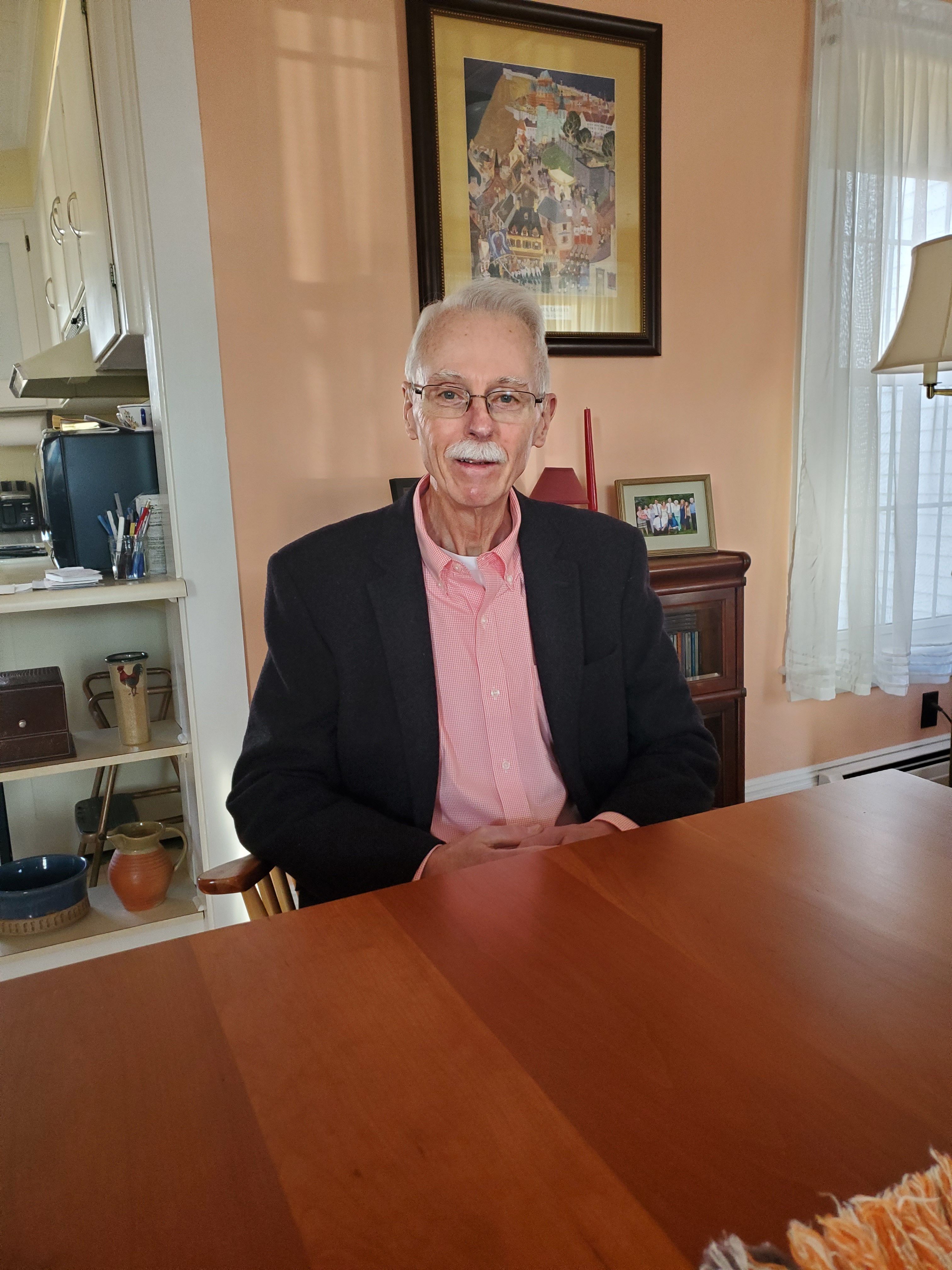
Michael Cantara/ Seaver photo

Michael Cantara of Biddeford has served in all four of those roles, but he is the exact opposite of those Hollywood stereotypes. Instead, Cantara is well-known throughout southern Maine as a man of principle, restraint, intellect and compassion.

Among many other awards and accomplishments, Cantara was inducted into the Maine Franco-American Hall of Fame and also inducted into the Biddeford Hall of Fame in 2022.

Cantara, 70, was adopted as an infant from the St. Andre Home in Biddeford by Jean Paul and Laurette Cantara. He and his two sisters were raised in a very modest home on Granite Street Extension. His father worked at the Saco Lowell machine shops. His mother worked at the Pepperell textile mill and later as a waitress at the Nutshell Restaurant in Biddeford.

He attended parochial schools, including St. Andre’s and later St. Louis High School, which closed just before his senior year. Thus, he graduated from Biddeford High School in 1971 before attending Colby College with the idea of becoming a pediatrician.

You planned on becoming a doctor but ended up retiring as a judge. A lot of things must have happened between those two bookends.

“Oh yes, they certainly did.” (Laughs) “I wasn’t exactly a clear career thinker when I went to school. I majored in French with a minor in biology. But my dream of being a pediatrician floundered on the shoals of organic chemistry. (Laughs) So, I reset the dial and decided to become a teacher.

“In my senior year of college, I was nominated for a Fulbright Teaching Scholarship. So, I got this wonderful gift of teaching in a French high school in Normandy, near the small town of Rouen, where Joan of Arc was burned at the stake.

“I taught American culture, history and language at a vocational school. My students were adolescent French boys from the local neighborhood. They were so receptive to the ideas I was teaching because at that time all things American were considered pretty cool.”

You returned to the United States and ended up going to law school.

“I had wanted to teach French on the college level, but was intrigued by political science and chose the mayoral election in Paris as the topic for my doctoral thesis. At that time, there was quite a bit of upheaval on the city’s political landscape.

“There was so much happening in the early 1970s. In general terms, it was a time of upheaval when young people were being encouraged to stand up for what they believed; to be a part of the social change that was happening all over the world.

“I wanted to go back to Maine, and the options for teaching French were practically non-existent, and I was exploring opportunities for public service. So, I enrolled at the University of Maine Law School.”

You were paying close attention to politics on the national, state and even local level, at a time when Maine’s own Senator Edmund Muskie was derailed from his presidential campaign because he allegedly teared up during a press conference.

“Yes, men – – especially back then — were not supposed to cry. I was very inspired by Senator Muskie and his dedication to public service. As you know he was the architect of the Clean Water Act. Without that federal legislation, which was vitally important for Maine, we wouldn’t be talking about the Riverwalk in Biddeford today had it not been for Ed Muskie’s leadership.”

“In fact, Senator Muskie gave the commencement address at my high school graduation, which was held at Thornton Academy because Biddeford did not have enough space.”

You were drawn to the Democrat Party and today remain as a party stalwart.

“I was very much influenced by my parents. Both my mother and father read the paper every day, and they were both Democrats who understood the importance of voting and paying attention to what was happening. Democrats were very pro-union.

“My uncle Henry, however, was anti-union. He worked at S.D Warren and was very much a company man. Regardless, my father was always very calm when talking to my uncle about the importance of labor unions.

“My father would listen patiently and spoke in a measured way, but always remained committed to his beliefs. I learned a lot from my father.”

You hung out your law practice shingle on a Crescent Street office without much money in your hand.

(Laughs) “Actually no money. My law partner Jim Boone and I were able to secure the lease by offering sweat equity. We would paint the building and sand the floors in exchange for the first few months’ rent.”

And then you decided to get into politics.

“What was I thinking? (Laughs) I decided to run for the Legislature in the early 1980s. At that time, I was living on State Street. And the occupant of that House seat in the Legislature was Lucien (Babe) Dutremble.

“I don’t know what possessed me, but I had the crazy idea of challenging Mr. Dutremble – one of the most respected and adored men in the city – in the Democratic primary. And, of course, throughout the campaign he couldn’t have been any kinder to me.

“What was so strange and incredible to me is that I lost only by 16 or 18 votes. I can’t remember exactly, but it was slim enough to invoke the city charter’s requirement for a recount, which was presided over by Luc Angers, the city clerk at the time. They were all paper ballots back then and the recount took place at the police department. The result didn’t change, but I thought that was probably the end on my political career.

“But then a couple years later, I was asked by Mayor [Robert] Farley to serve on the planning board, even though I was previously on the [William] Pombriant ticket who ran against Mr. Farley in the primary. I ended up serving almost four years on the planning board, and so I had a ringside seat to some of the issues affecting Biddeford: Affordable Housing, Land Use and Habitat Protection.

“Not much later, Gene Libby, who was the district attorney, asked me if I would join his office as an assistant district attorney. I enjoyed that work and was covering all three district courts, which were then located in Springvale, Biddeford and Kittery.”

And then you decided to run for mayor.

“Yes, and that was back when local elections were partisan, so there were primaries and a longer campaign season. There was no city manager. The mayor ran the city’s day-to-day operations, much different than it is today.”

Why did you only serve for one term?

“Because the seat for the district attorney was opening up. It was an open seat, and I was looking forward to the challenge.”

Bonnie (Belanger) Pothier told me that you practically hounded her to run for the mayor’s seat to replace you. She jokes that she just finally caved to your pressure.

(Laughs) “I knew that she was going to be a great mayor, and she proved me right. I didn’t always agree with her, but I had tremendous respect for her. She had a lot of uphill battles to fight, but she was a remarkable leader.”

While you were serving as district attorney, Governor John Baldacci appointed you as Maine Public Safety Commissioner for four years, and then during his second term, he nominated you to serve as a district court judge in York County.

“Yes. I was among five people nominated to fill new positions created in order to address significant backlogs of cases and to free up more judges throughout Maine to serve the newly-created business docket.”

You served as a judge for 12 years and retired in 2019. Do you miss it?

“I very much miss the people I worked with. I had the privilege of working with exceptional people; the clerks, the magistrates and the marshals. But the weight of some of the decisions a judge has to make – I don’t miss that particular kind of stress.

“It can be very challenging. You can provide a legal answer to a problem, but you’re not providing a life solution. There’s so much poverty – – financial poverty, health poverty, educational deficits and mental health issues, not to mention chronic unemployment.

“As a judge, you are witness to all of it and sometimes feel so powerless to change any of it.”

You are a true son of Biddeford. What challenges do you see facing the city today?

“I have been a citizen of Biddeford for most of my 70 years. Without question, we must address the issue of homelessness. Yes, it is a financially expensive and complicated issue, but we have an ethical obligation; a moral obligation to do more than just talk about the issue.

“I was taught that we are all children of God. I don’t want to let my brother or sister freeze to death tonight. We are living in 21st Century America, and I don’t think that’s too much to ask.

“It is an issue of dignity, and it is not insurmountable. We just need the political will to make it happen.”

From the humblest of beginnings, you went on to become a teacher, an attorney, a mayor, a district attorney, a state commissioner and then a judge. If they were alive, do you think your parents would believe how much you have been able to accomplish?

“I don’t know, but I do know that I learned life’s most important lessons from my parents, including the importance of service to your community; to volunteer for your school, your church.

“I certainly hope that I lived up to their expectations. I hope that I have lived a good life. I think that’s the most important thing.”


Originally published in Saco Bay News

I Wanna Hold Your Hand

Two rather interesting events happened this week, each painting a troubling picture for loyal, solid Democrats at both the national and local level: Senator Joe Manchin of West Virginia announced he would not seek reelection, and City Councilor Marty Grohman was elected to become Biddeford’s next mayor.

What do Manchin and Grohman have in common?

Bear with me, because I think these two stories serve as a bellwether of a changing political landscape that has long alienated people in the so-called political “middle,” the centrists who are weary of extremists on both the left and the right of the political spectrum.

Mayor-elect Marty Grohman

Currently, Democrats have a razor-thin majority in the United States Senate, including the so-called “Independent” senators Bernie Sanders of Vermont and our own Angus King, both of whom caucus with the Democrats and consistently follow the marching orders of both Chuck Schumer and President Joe Biden.

It’s really nothing short of a miracle that any Democrat could win an election in a state like West Virginia, which is more red than Biddeford City Councilor Marc Lessard’s campaign signs. Manchin’s decision spells very bad news for the Democrats and will no doubt reshape the battle for senate control in 2024.

“Manchin’s moderate positions have at times been a thorn in the side of his increasingly left-leaning party,” according to ABC News political analysts.

So how does this connect to the rather mundane and much less dramatic world of Biddeford politics?

Theoretically, Biddeford’s municipal elections are supposed to be a “non-partisan” affair. Biddeford voters approved a change to the city’s charter in the late 1980s to dump the partisan labels of Democrat and Republican.

But if you really believe our local elections are non-partisan, I’ve got an ocean-front home to sell you in Ohio.

Make no mistake, despite all the pontificating, hand-wringing and lack of primaries, local elections are still very much influenced by each candidate’s political label. Not by his or her merits, but by his or her political allegiance.

Local Democrat leaders like State Rep. Marc Malon will tell you that’s not true.

It should be noted here that on top of his elected office, Malon is also professionally employed by the Maine Democrat Party. He currently serves as Party Affairs Director for the party.

Malon is a good guy. He’s very smart, and he is passionate about his politics. He works hard, and has a unique perspective on Maine’s political landscape. It’s his job to make sure that Democrat candidates get elected in Maine, even in places like Biddeford that are supposedly “non-partisan.”

So why do I keep saying “supposedly?”

Because partisan politics still plays a big role in Biddeford’s political circles and games, despite what the city’s charter says about municipal elections.

That said, state and local Democrat leaders, including Malon, did absolutely nothing wrong. Let me repeat that in order to be perfectly clear: No one on the ballot (nor their supporters) did anything wrong during Biddeford’s most recent election cycle.

So why am I taking the time to write about an election with zero incidents of impropriety by any of the candidates or their supporters? First, I am a local political junkie. Secondly, because I see a major shift starting to happen in both local and national elections.

In a story I wrote for Saco Bay News just a few hours after the results were announced, I listed those who supported and endorsed each of the mayoral candidates: Susan Deschambault and Marty Grohman. I posted that story on my personal Facebook page with a teaser, asserting that the Democrat Party closed ranks on a local level and clearly lined up behind Deschambault over Grohman.

It’s understandable (and quite predictable) that Democrat leaders would line up behind a Democrat over an “independent” or a Republican candidate in a general election, even though party affiliation isn’t supposed to matter in a non-partisan election.

Overall, the city of Biddeford – like many other mill towns — has a long history of leaning to the political left. Today, however, it seems that it’s becoming a matter of how far left a candidate needs to be in order to win elected office in the city.

I have a theory about why notable Democrat leaders were so enthusiastic about supporting Deschambault over Grohman. In a nutshell, it was political pay-back. Allow me to explain.

Both Deschambault and Grohman served on the city council. Both candidates served in the Maine Legislature. They had very similar platforms. In fact, during an October head-to-head debate, the only real difference that was clear to the audience was that Grohman likes to ride a bicycle and Deschambault says she likes to avoid both bicycles and walking.

Just days before the election, Mayor Alan Casavant repeated his support for Marty Grohman to take over the big chair at City Hall. On that same day, the Deschambault campaign ran an advertisement in the Biddeford-Saco Courier, listing local politicians who were endorsing Deschambault.

Deschambault’s list of supporters was impressive: State Sen. Henry Ingwersen, the highest state official serving Biddeford, was on that list. The rest of Biddeford’s delegation, including Malon and Rep. Erin Sheehan, were on that list. Former Speaker of the Maine House of Representatives Ryan Fecteau was on that list.

Previous state representatives Megan Rochelo and Victoria Foley (who lost her own bid for mayor against Casavant two years ago) was on that list. Previous mayors Mike Cantara and Bonita (Belanger) Pothier were on that list. Weeks before, Malon and Fecteau both used their personal Facebook pages to endorse Deschambault.

Pretty impressive, huh? What do they all have in common? They are all active, strident and loyal Democrats. On a local level, these folks are all political heavy-hitters. If you want something done, these are the people who can make it happen.

But it wasn’t just local Democrats who were offering assistance for Deschambault.

According to campaign finance reports, Deschambault’s campaign also got the support of many individuals well outside of Biddeford, including Democrat Party activist and former legislator Justin Alfond and State Senator Joe Baldacci, younger brother of former governor John Baldacci, both of whom wrote checks for Deschambault.

I saw that ad and thought to myself, it’s all over for Grohman. I publicly predicted that Deschambault would win the race. Despite what some people like Alan Casavant say, Biddeford is pretty much a blue community. Or is it?

But then something strange happened. Deschambault lost. Wait. What?

Despite such an impressive list of Democrat supporters and the fact that Biddeford most often votes blue, the party wasn’t powerful enough to knock off Grohman, the more centrist candidate.

Deschambault’s track record in the State Senate was basically flawless. She did whatever the party leaders told her to do. She always voted the way they wanted. She played nice. She toed the party’s line.

Good for her. She’s a Democrat. She voted the party line. Yawn.

During his stint in the Legislature, Grohman sometimes had the temerity to look at issues from a more centrist position. Furthermore, he had the audacity to run as an “independent” candidate against Democrat Chellie Pingree for the First Congressional District race. That was enough, right there.

The Republicans may have the symbol of an elephant, but the Democrats are the ones who “never forget.” Deschambault was being rewarded for her party loyalty, Grohman was being punished for thinking for himself.

Shortly after I posted my story on Facebook, Malon went on the defense.

“As a staffer for the Maine Democratic party and one of the electeds (sic) who endorsed Susan, I am pretty confident offering this analysis: there is little to no impact on the political landscape in Biddeford for state/federal races,” he wrote. “This is based on previous municipal and state/federal results and my analysis of this particular race . . .”

I responded toMalon, “ . . . but there is no denying that party stalwarts lined up solidly behind Deschambault: Baldacci, Alfond, the entire legislative delegation (current and former).”

Malon came back:because they all knew her and liked her. Honestly that’s about the extent of it.”

Again, I like Marc. We have plans to get together for some good whiskey soon. We’re both political animals, but I’m not buying what he’s selling. Because they knew and liked her?? Are you freakin’ kidding me??

They all know Marty Grohman, too. What, exactly, did they not like about him? Because he rides a bicycle to work? Because he is a successful businessman? Because he has blue eyes? Because he volunteers at the skating rink and helps veterans? Spare me.

Biddeford is changing, including its political machinations, and that started more than 20 years ago, when MERC was still burning trash downtown. A Republican, Saco native (Gen. Wallace Nutting), beat two well-known, lifelong residents for the mayor’s seat. Ever since, the Democrats’ iron grip on the city has been slowly eroding.

I agree with musician Sheryl Crow, “a change will do you good.”

My advice to the Democrats? You’re gonna need a bigger boat.

Originally published in Saco Bay News

Deschambault stumbles during mayoral debate

Several people were less than pleased about something I posted yesterday on Facebook regarding Biddeford mayoral candidate Susan Deschambault.

Several of Deschambault’s supporters questioned my take-away observations of Monday’s mayoral debate, in which I wrote that candidate Susan Deschambault tripped over herself and made a big “gaffe.”

Some folks speculated that I was supporting the other candidate (Martin Grohman) and just looking for a gotcha moment. They accused me of “taking things out of context” and playing “loose with the facts.”

Well, I have some bad news for Deschambault and her supporters: The video record of that debate paints a rather unflattering picture, much worse than anything I posted on my Facebook page.

Former State Sen. Susan Deschambault (Facebook photo)

To those of you who demanded Deschambault’s “exact” words about the closure of the Maine Energy Recovery Company’s solid waste incinerator (MERC), here they are:

“I served under Joanne Twomey, and I served under General Nutting. I could mention to you that General Nutting and the council at that time bought MERC. How did they buy that? “

“We put out a referendum, we will buy it for 10 million dollars. You guys were smart, you said no. We went back to the drawing board, by that time we got MERC all upset, and they wanted to leave, we knew that. We brought it down to six million dollars and you, the taxpayer, paid for that. You wanted that and look what happened. Magic.”

Let’s examine the facts:

1.) Mayor Wallace Nutting and his council did NOT buy MERC. That facility was still operating many years later, long after Nutting left office. In fact, MERC was still there during Mayor Twomey’s two terms in office.

2.) There was only one municipal referendum, which was rejected by a margin of 2-1 by the city’s voters. There was never a second referendum.

3.) Magic??? Are you kidding me?? MERC’s closure took a Herculean effort by many individuals. It was most certainly not “magic.”

4.) The city finally found a way to end the nightmare in the summer of 2012, during Mayor Alan Casavant’s first term in office, The ensuing development was not instantaneous, and it took solid leadership and a new positive and professional approach from City Hall.

The transcript of this debate shows that both candidates were not really well-prepared for some rather softball questions, but if you watch the video, you will see Deschambault had a hard time staying on topic.

Those are the facts. Period.

I Am The Walrus

I have been covering Biddeford City Hall for nearly a quarter century, and I don’t recall seeing anything so silly and inane as what I witnessed during Tuesday’s city council meeting.

If you are a resident of Biddeford, you can let out a deep sigh of relief because City Manager James Bennett and his crack staff uncovered a little-known flaw in the city’s municipal ordinances.

Apparently, up until Tuesday, there was nothing in the city’s code of ordinances regarding improper or unauthorized usage of the city’s official seal.

Members of the city council, almost without question, dutifully voted unanimously to approve this important and vital change to our code of ordinances.

Phew! We narrowly dodged a bullet there.

But here’s the deal. It was already illegal. State law already prohibits any persons or entity from using a municipal seal in any inappropriate manner.

In fact, Bennett and his staff knew – before bringing this gem before the council— that it was already a violation of state law to use the city’s official seal in an unauthorized manner. But that didn’t stop them from drafting both a memo and new ordinance language in order to ensure that bad people clearly know that our city will not tolerate violations of state law within the city limits.

Wait. What?

In the classic 1978 comedy Animal House, Dean Wormer is vexed about a notorious fraternity on the campus of Faber College. In one memorable scene, the dean tells some close allies that he will place the Delta fraternity on probation.

“But the Deltas are already on probation,” says the chair of the student council.

“Well then,” the dean says with a smirk. “Now they are on double-secret probation.”

Our city manager earns a handsome six-figure salary plus a suite of lucrative employment benefits. Under his watch over the last few years, City Hall staff has ballooned. The argument always being “we are very busy and need more people.” At the same time, we seem to be doing a piss-poor job of retaining department heads and other senior staff.

In fact, I was surprised that Bennett didn’t recommend hiring a consultant to study the issue of inappropriate use of the city seal. Then we could send those recommendations from the consultant to the Policy Committee, where it would be dutifully reviewed and sent back to the council.

At this point, based on actual recent events, the council could then ask for “more information” and suggest that the Policy Committee should host a joint meeting with the city’s Conservation Committee in order to develop a joint resolution and appropriate guidance for the city council.

Meanwhile, residents are opening eye-popping property tax bills. Meanwhile, more and more of our neighbors are sleeping in doorways. Meanwhile, we can’t figure out how to paint the city’s clock tower. Meanwhile, we have a downtown parking debacle that borders on the absurd.

What’s next?

Is Bennett going to recommend to the council that we should amend our ordinances “to affirm” that murder is not allowed in the city of Biddeford?

I mean, right now all we have is the Ten Commandments and some rather explicit language at both the state and federal level that spells out murder is against the law. Sure, let’s update our municipal ordinances.

I don’t care if Bennett and his staff spent less than two hours on this issue. It was an epic waste of time and resources. Is the city manager just trying to justify his salary? Or does he and his staff have lots of free time to generate this sort of stuff?

Make no mistake. As usual, no one from the public spoke. No one from the public attended the meeting. Left to their own devices, this is the kind of stuff that happens in government when no one is watching.

This is your tax dollars at work. Happy?

Just remember: “Hooper drives the boat, Chief”

Originally posted in Saco Bay News

The Deadbeat Club

I grew up in a working-class family during the early 1970s. Actually, we were probably only one half-step above the poverty line, but both my parents worked very hard to give my sister and me a blissful and happy childhood with all the trappings of middle class America.

Despite the popularity of the rebellious, love-the-one-your-with attitudes of the “hippie” movement at that time, our parents instilled upon us some universal traditions. To be polite. To be respectful. To show decorum.

These days, it feels like those values are rapidly diminishing in the rear-view mirror of nostalgia. Today, it is apparently much more important to be comfortable, no matter how you define your own comfort level. The emphasis now is to feel good rather than to do good.

When we were growing up, we had three sets of clothes: our school clothes, our play clothes and our “Sunday best” clothes. Despite financial strains, my parents always ensured that my sister and I had new school clothes each year.

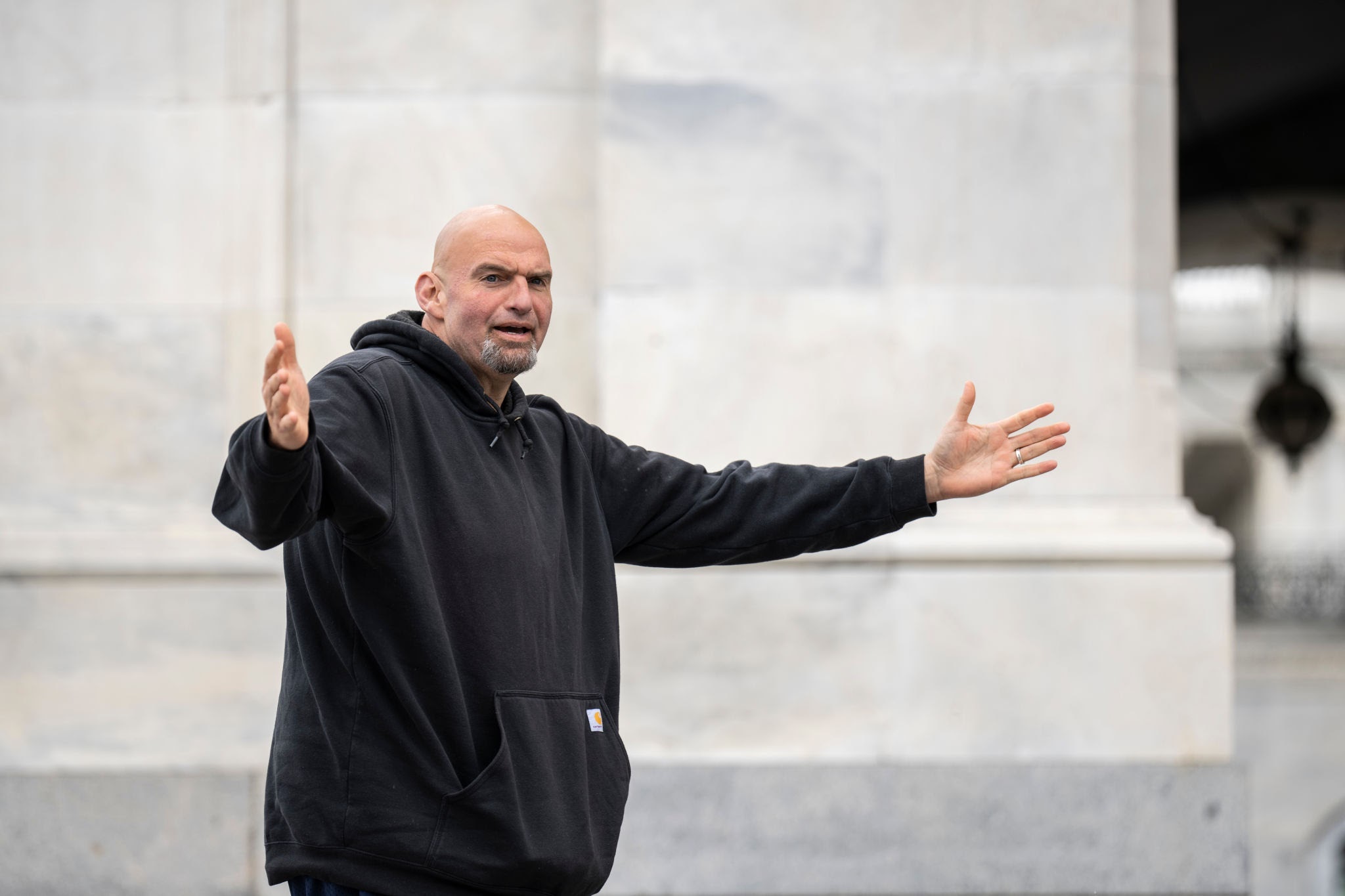
Senator John Fetterman. (Photo by Drew Angerer/Getty Images) Newsweek.

But it was a cardinal rule in our home that required us to change into our play clothes after school, before we went outside to play with our friends. When you’re pinching pennies, you want your clothes to last. And looking good at school was important.

Our Sunday clothes were just that. The more formal attire when attending church, a family function or a rare dinner at a restaurant. My sister would wear a dress. I had pleated slacks, a button-down shirt and a matching jacket. We both wore polished shoes. We made an effort to put our best foot forward.

But in today’s world such compliance of proper attire and respect are rapidly vanishing. Whether it’s in the workplace, our public schools and now — even in the U.S. Senate — being “comfortable” is the new standard. The new goal. It’s all about our feelings and unique needs. Dressing up to show respect is becoming somewhat passe’.

Although members of Congress today seem intent on hurtling toward a possible government shutdown in a hyper-partisan atmosphere, one Democrat senator is causing quite a stir with his fashion ensemble.

Senator John Fetterman, a newly elected representative from Pennsylvania, reportedly prefers wearing baggy shorts and a “hoodie” on the Senate floor and in the halls and offices of Congress. This week, Senate Majority Leader Chuck Schumer quietly threw out the Senate dress code rules. Now there is no dress code for the U.S. Senate.

Obviously, because both Fetterman and Schumer are Democrats, Republican lawmakers are literally flipping out about “a lack of decorum and a lack of respect.”

In fact, Maine’s own Senator Susan Collins has threatened to wear a bikini on the Senate floor. Please, Senator Collins, please don’t do that. Just the imagery alone hurts my brain.

Fetterman, who earlier this year was hospitalized for six weeks because of severe depression, has told journalists and others that he can work just as effectively wearing a hoodie instead of a jacket and tie. He’s probably right. But here’s the kicker: Fetterman is not just some guy roaming around the Capitol building.

He is a United States Senator. How he conducts himself in public is a reflection of America, not his own wardrobe choice. He is a member of one of the most powerful assemblies on the planet. He shouldn’t dress for that job like he’s about to go shopping at Walmart.

Republicans, however, show absolutely no bounds of hypocrisy in their battle cry for decorum and respect in Congress.

For example, earlier this year, U.S. Rep Marjorie Taylor Greene (R-Georgia) committed her own extreme fashion faux pas during the annual State of the Union. Dressed like a coked-out stripper from northern New Jersey, Greene acted like an emotionally-unstable eight-year-old, screaming almost uncontrollably at the President of the United States while he was delivering an address to Congress and the American people.

Republicans were silent about that horrid display of petulance run amok. So, I guess bad behavior is okay as long as you dress up? Really?

If my sister or I had ever acted like that in public, I guarantee our asses would be blistered for weeks. It seems to me that both Democrat and Republican lawmakers could learn a lot from my parents about respect, civility and decorum.

Promises In The Dark

This is a story about the Saco Transportation Center, also known as the place where green-energy dreams go to die.

Now before some of you have a stroke, I do believe our climate is changing. I also believe humans have an impact on their environment — but sometimes it seems we get just a wee bit silly – running around like Chicken Little, screaming that the sky is falling.

You’ll have to forgive me, but I’m just not a big fan of The Emperor’s New Clothes.

While the pursuit of cleaner energy is certainly a noble cause, it seems that we are too often willing to abandon common sense, and instead blindly follow a mantra that is born from fear, rhetoric and half-truths.

And if you have the temerity to question anything about the green agenda, you are immediately branded as a mouth-breathing “denier” with limited cognitive functioning. You better toe the line.

My biggest problem with the “green energy/zero-carbon” agenda is all the self-righteous virtue signaling that goes hand-in-hand with this issue. So often, the paradigm of “Green Energy” is built upon a solid foundation of hypocrisy.

Now, let’s take a closer look at the Saco Transportation Center. When the facility was formally opened in 2009, press releases were sent out. VIPs were in attendance and local, state and even federal politicians were tripping over themselves in order to pat themselves on the back about how “green” the new facility would be — a virtual “role model for other communities across the country.”

Breathlessly, city leaders in Saco extolled the virtues of the new facility, congratulating themselves for being such good stewards of the environment. The facility was hailed as state-of-the-art, dedicated to be a giant leap forward in the pursuit of a better world, where every boy and girl has a pet unicorn and we all actually enjoy eating kale.

From the press release: “The station is notable for being the first green design train station in the United States, featuring a wind turbine for electricity, geothermal heating and cooling systems, and a roof made from recycled soda bottles.”

But almost as soon as the dust from the grand opening settled, the illusion of green virtue became harder to justify. Saco taxpayers had spent roughly $200,000 for construction of the wind turbine that sat majestically atop the hill of Saco Island.

The magnificent wind turbine, however, did not produce the expected amount of electricity, and it became a “safety concern.” It was quietly removed and taken down a few years later. There was no press release. No senators. No platters of kale and tofu. No pontification from local politicians or environmental lobbyists. The taxpayers took care of the demolition expenses. We can only pray that the turbine was properly recycled.

Undaunted, the politicians, environmental lobbyists and members of the green energy brigade pressed on, and they soon sent out another press release. Oh Happy Day! Biddeford-Saco-OOB Transit (Transit) was going to take ownership of two electric buses. Another ribbon cutting. More speeches. We’re saving the world one bus trip at a time. The local politicians cheered. Abandoned puppies were all adopted and the planet heaved a heavy sigh of relief.

Those new electric busses cost approximately $1.5 million each, nearly three times the cost of a traditional diesel bus.

Don’t worry, the local politicians said. Taxpayers are off the hook . . . the buses were “free,” purchased under a federal grant that was coordinated by U.S. Senator Susan Collins. Ummm, where does federal money come from? Oh yeah, that’s right — from federal taxes, paid by you and me.

Chad Heid, executive director of Transit, told reporters that his organization will be applying for more federal aid so that additional electric buses can be purchased in the future. Heid added that there will be a charging station in Biddeford, and “on-route charging stations at the Saco Transportation Center will be installed later this year.”

Maine Governor Janet Mills and Senator Angus King, Jr. participate in the celebration of new electric busses. (Photo: WGME TV)

Flash forward a couple years later? Still no bus charging stations at the transportation center. In fact, the company that built the “green” electric busses recently filed for bankruptcy protection, according to the Bangor Daily News.

Apparently, green energy doesn’t work out so well for its investors.

Almost immediately after being purchased, the new electric busses presented several challenges for the local transit authority. The new busses nearly drained their batteries after only a few hours of use on cold, Maine mornings.

A bit of disclosure: I was hired by Transit last year on a short-term contract to help collect data about passenger/route efficiencies.  That contract ended last year. Over just a few weeks of riding several of the busses on various routes, I learned a lot about our local bus system and the people who ride the bus. (More about that in a minute).

On one cold February morning, those of us riding on one of the new electric busses had to be rescued by a passenger van, transported back to the Transit maintenance facility on Pomerleau Street and then re-loaded onto a traditional diesel bus. The passengers were not happy campers. I tried not to laugh.

Earlier this year, the University of New England began running a series of promotional television commercials including one in which several students praised the school for its “sustainability” practices and its commitment to the environment. Well, laddi-laddi-da.

Local taxpayers (you and me) help provide a shuttle trolley to go back and forth between downtown and UNE’s Biddeford campus, 14 times a day, seven days per week. The students who bloviate about “environmental stewardship and sustainability” apparently don’t like using mass transit, and instead prefer to drive their cars to have brunch at the Run Of The Mill and other downtown taverns.

That particular bus line (The Silver Line) operates for free. Throughout the day, basically every 15 minutes, that bus (trolley) also runs a loop up Main Street in Biddeford; right onto Lincoln Street, past the parking garage; right onto Elm Street and back to Main Street in Saco. Again, it is free to ride that line. How many people do you suppose take advantage of this service?

Over several days of riding that bus trolley, I saw two people use it. Two. Over a six-hour period. Two people. 30 Trips. Two people. Number of people getting on or off at UNE? Zero. Zilch. Nada.

We want to “save the planet” right up until the point when it’s not very convenient to do so. Where I come from, we call that hypocrisy.

Yes, Transit does serve a certain segment of our local population; mainly people without cars.

Meanwhile, the Maine Turnpike Authority recently withdrew its financial subsidy for the ZOOM Turnpike Express bus. They are focusing instead on spending more money to make the highway better able to handle an increasing number of cars.

Remember, the Saco Transportation Center has a roof made of recycled soda bottles. In the lobby, however, you can find vending machines that offer a wide array of beverages in plastic bottles. Good to know, in case we ever need to repatch, repair or replace the roof.

What about the train? Sure, the Amtrak Downeaster is a fun way to go catch a Bruins game or see the Celtics, but very few people use it as a commuter line. In fact, according to rail officials, overall ridership on the Downeaster is increasing, but the number of work commuters has dropped by more than 30 percent since 2019.

Really, would you ride the train from Saco to Portland for work? You would be dropped on the western outskirts of the city, on Thompson Point Road. Hardly convenient or efficient.

The municipalities of Biddeford, Saco and Old Orchard each contribute $250,000 annually toward the Transit’s operating costs, and I’m glad that my community offers public transportation.

But it pisses me off that the people who squawk loudest about “sustainability” and carbon emissions rarely – if ever – use public transit. And I think maybe we should be a bit more committed to efficiency rather than patting ourselves on the back for being green. Because, honestly, it’s literally not sustainable.

When it comes to meaningless virtue signaling, the city of Saco is giving Portland a good run for its money, but I guess it’s only an island if you look at it from the water.

Originally published in Saco Bay News

That’s Some Bad Hat, Harry

Biddeford City Councilor Marc Lessard and I have a long and somewhat tangled history that goes back more than two decades.

Lessard — who holds one of the two at-large seats on the council — is the longest serving elected member in the Biddeford-Saco area, and he can always be counted upon for a good quote, a clever analogy or a mind-baffling rationalization of his position on any given issue.

In all fairness, Old Orchard Beach Town Council Chairman Shawn O’Neill has held elected office in that tiny seaside hamlet since before the ocean was invented.

But back to Biddeford, its pristine beaches and a potential threat to public safety.

Earlier this week, the Biddeford City Council voted to table a potential change to its ordinances that would require all dogs to be leashed in Clifford Park, a rather densely wooded park that includes several walking and hiking trails near the center of the city.

Before we proceed any further, you should know that nothing drives your Google analytics better than the topics of food or dogs. Not abortion. Not climate change. Not gun control.

Dogs and pasta. That’s what really drives public engagement on the world-wide web. Serious as a heart attack. It’s true. Google it.

Anyway, Lessard is less than pleased that the council didn’t take more immediate action. He shared three graphic, personal examples of why dogs should always be on a leash. During the council discussion, Lessard told his peers that he has personally witnessed some gruesome attacks by unleashed dogs, including an attack on his four-year-old granddaughter and another story in which an unleashed dog killed another dog that was on a leash.

“If you saw what I saw, then you would support this change to require dogs to be on a leash,” Lessard said. “It’s a no brainer.”

But Councilor Bobby Mills, who rarely misses an opportunity either to pander to popular opinion or to be annoyed with what people say about him on the internet, said he sees no reason to change the ordinance that allows dogs “under voice control by their owners” to roam freely in Clifford Park.

“I have not heard an outcry to enact this,” Mills said, somehow ignoring the fact that more people have contacted the city council about this issue than any other issue since former Mayor James Grattelo changed his hairstylist in 1996.

Now it is well known that I am a huge fan of the 1975 movie Jaws. I have seen the film more than 250 times. I belong to three different Facebook Jaws Fans groups. For my Christmas present last year, my wife remodeled our upstairs bathroom to be “Jaws-themed.”

I am a Jaws fanatic. My father took me to see the movie on its opening weekend in 1975. I was 11 years old, and I haven’t gone above my ankles in the ocean since. True story.

So, how do we connect Marc Lessard to perhaps one of the greatest films of all time?

In response to Councilor Mills’ rather laissez-faire attitude about public safety, Lessard pulled out the big guns and decided to use the threat of not one, but of three great-white sharks near Biddeford’s beaches as an analogy for being pro-active when it comes to public safety.

Not just any sharks, mind you. But Great White sharks, Carcharodon carcharias, for you amateurs out there.

“Imagine if we knew that there were three great white sharks just off the shores of our beaches,” Lessard said. “Would we wait for a swimmer to be attacked before we closed the beach?”

Peter Benchley, the man who wrote the novel Jaws, which became one of the highest grossing films of all time, has said in recent years that he regretted writing the book because of how it generated such negative public perceptions about sharks, including the merciless and often illegal hunting of the species.

Look, you can feel bad for the sharks all you want, but Lessard is right. Those beaches should be closed.

In all seriousness, another very compelling reason to keep dogs on leashes in Clifford Park is the potential impact to other critters that live in what is widely considered to be a complex and thriving vernal pool habitat. Free-ranging dogs and these critters don’t mix well.

I get that people love their dogs and want to spend time recreating with them. I am a dog owner, but I am also keenly aware that not everyone loves my dog. Not everyone feels safe having a dog walk up to them in order to smell their genitals.

Clifford Park is a public park, not a dog park. Those beautiful trails are there for the benefit of everyone, including seniors, young children and even people who don’t own dogs.

My dog, Sasha, a Black Labrador, is very gentle and somewhat submissive. I have had two experiences in which other dogs (unleashed) pinned her to the ground with gnarling teeth bared.

If Bobby Mills wants to play the part of Amity Mayor Larry Vaughan, who said “those beaches will be open.” Well, so be it.

But if you’ve seen the movie Jaws you know that Amity’s Mayor was dead wrong, even if his kids were “on that beach, too.”

On Tuesday, Councilor Lessard played the part of Matt Hooper from the Oceanographic Institute on the mainland. “I think you’re going to ignore this particular problem until it jumps up and bites you in the ass.”

Hooper drives the boat, chief. And Lessard is right. Your right to swing your arms stops at my nose.

_____

My wife Laura says that Marc Lessard is more like Chief Martin Brody than Matt Hooper. You see, this is what happens in the case of an amateur trying to inject her opinion in a newspaper column.

Lessard has city hands. He’s been counting money his whole life. “That’s billions with a ‘B,’ boys” (Inside joke that only a few longtime observers of Biddeford politics will understand.)

Anyway, it’s only an island if you look at it from the water.

Originally published in Saco Bay News

Things to do in Denver when you’re dead

As I previously stated on Facebook, there are four topics that I now avoid discussing on any social media platforms: Abortion, Climate Change, Guns and LGBTQ+ issues.

The way I see it, it has become virtually impossible to discuss or debate any of these issues without the conversation dissolving into an abyss of bruised egos, hurt feelings and misunderstanding. I am NOT an expert on any of these issues. My opinion carries no more weight than your opinion.

Although I have staked out my positions, I am more than happy to discuss or debate any of the following topics with you in an off-line setting, preferably while drinking some craft beers or delicious coffee. I am always willing to hear alternative viewpoints — always ready to consider new information and perspectives, and ready to change my mind or outlook. Enjoy.

ABORTION:

Personally, I am opposed to abortions in almost all cases except when the mother’s life is in danger. That said, I also believe that I do NOT have the right to tell a woman what to do with her body. Thus, I am somewhat reluctantly pro-choice on this issue.

That said, I think it’s hypocrisy that we have the technology to detect bacteria on Mars and declare it’s a sign of life; and then say that an embryo or especially a fetus is not a living organism. It begins growing and developing from the moment of conception. That’s just science.

CLIMATE CHANGE:

I’ve written this before, and my position has changed very little over the past few years. First, Climate Change is real. Very real. The evidence is all around us and it is impacting, and will continue to impact, human life.

What bugs me about this subject is mostly centered upon the alarmist attitude of otherwise very intelligent people; and the sheer hypocrisy of those who often chant the loudest and want to impact my choices.

I am a huge supporter of renewable energy, including wind, solar and hydro projects. But that does not mean that all renewable energy projects are good. Some projects have an adverse impact on the surrounding environment, but for the most part I like renewable energy because it requires zero assistance from any other nation. It is truly independent energy. In some cases, I also support nuclear power and natural gas projects. [Disclosure: I have worked as a paid consultant on several renewable energy projects in New England]

I believe in being a good steward of our natural resources. I try to minimize my energy consumption. But the alarmists want to make my choices for me, that and the ever-growing bureaucracy of government regulation chaps my ass.

Furthermore, this issue is too often mired in fear and rhetoric, often ignoring science.

This ecosystem (Earth) is 4.53 BILLION years old. Think about that for a minute. We’re making declarations and pushing the panic button while ignoring the simple fact that we have basically NO idea about climate trends BEFORE humans began roaming the planet approximately 500,000 years ago.

Translation? Humans have been on earth for less than .01 percent of the earth’s life. Furthermore, we know (because science tells us) that this ecosystem has undergone numerous, significant and sometimes cataclysmic changes, sometimes wiping out various species, often referred to as “natural selection.” We’ve had Ice Ages, continental and seismic shifts, not to mention eons of volcanic activity that created huge dust plumes and particulate distribution all over the globe.

Bottom line? Our climate has been changing for a very, very, very long time and it will continue to change with or without us. I mean, really. Do you think you can alter the Earth’s ecosystem by driving a Prius? Do you think humans are powerful enough to somehow control or stabilize an ecosystem that has been evolving for 4.53 billion years???

Again, I think we should all strive to be good stewards of our planet and commit ourselves to better public health outcomes while also reducing global conflict by using renewable power, but I also think it’s still okay to drive a pickup truck, use a clothes dryer, microwave oven or a flat-screen television.

GUNS

I consider myself to be a strong supporter of the Second Amendment, but I do not believe that the Second Amendment — nor the First Amendment — is absolute. As a classic example, you certainly have the right to free speech, but you cannot yell ‘fire!” in a crowded movie theater; nor can you publicly threaten to assassinate the president or another person. Your FIRST AMENDMENT rights are not absolute.

The framers, I believe, were all too familiar with a tyrannical government and wanted to ensure that ALL power would rest in the hands of the people, not the state. There is ample historical evidence that the framers were not too keen on having a standing army, but saw the necessity of a citizen militia that could be called upon in times of need.

Thus, the Second Amendment reads: “A well-regulated Militia, being necessary to the security of a free State, the right of the people to keep and bear Arms, shall not be infringed.”

A lot of people conveniently skip over the first part of that sentence and instead focus on the last part regarding the “right of the people to keep and bear arms.” The Second Amendment is important to both our liberty and security as a nation, but it does not give my neighbor the right to own a rocket-propelled grenade launcher or an intercontinental ballistic missile.

We have, what I believe, some common-sense limits. Academics aside, however, this issue has become a flashpoint in American politics. It seems almost impossible to have a civilized conversation about this topic because of an increasing frequency in horrific mass shooting incidents, many of which involve school-aged children as the victims.

I am as horrified and as sick as you are of seeing incidents like these happen. I too want something to change. Now. Right now. However, as hard as it may be, we have to put our emotions in check and work together and across the aisle to solve this problem.

What I find disheartening and a bit peculiar is that so many people focus primarily on the guns. Typically, these are people who don’t own firearms and don’t like firearms. On the other side of the debate, people (typically from the political right) say it’s not at all about the guns. They do a mighty good job of pontificating about mental health services (right up until it’s time to fund mental health services).

From my perspective, both sides of this debate are a little bit wrong and a little bit right. When we hear the news about another drunk-driving related death, we are outraged at the driver, not the vehicle he/she was driving.

Each day, roughly 30 people in the United States die in drunk-driving car crashes, according to the National Highway Traffic Safety Administration (NHTSA). Data from the NHSTA shows that from 2010 to 2019, more than 10,000 people died each year in drunk driving car accidents. How many more?

Too often, when it comes to a mass shooting incident we miss (or perhaps ignore) the larger, more pressing question: Why?

Why does someone (anyone) feel compelled to slaughter a large group of innocent eight-year-olds? Firearms, including semi-automatic rifles and handguns, have been around a long time. But this is a relatively new phenomena in American culture, beginning sometime around the late 1990s.

Why are we so violent? Why is our country so far ahead of all other industrialized nations when it comes to gun violence? I think we ignore the why because it’s much more convenient to focus on the guns.

Bottom line: I think we need serious gun reform legislation to include limits on high-capacity magazines, tighten loopholes on the easy availability of firearms and require mandatory safety training. Even Ronald Reagan, perhaps the most conservative Republican president in the last 100 years, wrote to Congress in the early 1990s, urging them to take meaningful action in limiting high-capacity firearms.

This is not rocket-science. We can achieve meaningful and substantial reforms without taking away your guns. I also believe that an unarmed citizenry is a dangerous thing. History underscores my belief on that matter. [Disclosure: I have a significant mental illness and subsequently choose not to own firearms].

LGBTQ+

First, the good news. It is becoming increasingly easier for people to feel comfortable in their own sexuality, but this topic is yet another flashpoint of vitriolic discussion on social media.

My take? I don’t really see any negative impacts to allowing two men or two women to enter into a state-supported marriage contract. Numerous studies have demonstrated undeniable statistical data that reveals married couples are far less likely to be involved in crime or drug abuse and are far less likely to need government assistance and typically have a more positive impact than their single peers on regional economies. It doesn’t matter if the couple is same-sex or a more traditional heterosexual couple.

Look I don’t understand all the uproar and the wringing of hands about these topics, including gender identity. I am a middle-aged, straight, white guy. I don’t want to publicly discuss what happens in my bedroom, and I don’t care much about what happens in your bedroom, as long as it involves consenting adults. It’s really none of my business.

Yup, I do think there is a part of this issue that has become somewhat trendy. And I don’t like the whole “you’re either for us or against us” mantra. I think there are a lot of gray areas out there, and as a civilized society I think we can work out the kinks. Look, we figured out how to put a man on the moon, I’m relatively comfortable in thinking that we can address same-sex restrooms or trans-gendered athletics. As long as we can all take a deep breath and set emotions aside.

My default position on all LGBTQ issues is basically just be kind, tolerant and accept others who may be different than you are. I don’t need to fly a rainbow flag in order to be decent and kind.

That said, much of the emotional uproar on this particular subject focuses on children. Here’s my take: I think it’s perfectly okay and probably pretty smart to teach children how to respect diversity that they will encounter throughout their lives. Beginning, perhaps, in the fifth-grade, I think it’s okay for students to read books that focus on sexuality and gender.

At about this age, many children begin to have questions about these subjects, and it’s not always easy to have those discussions with their own parents or family members.

I never chose to be straight. My gay friends and relatives never chose to be gay. Either you are or you are not. A textbook or movie isn’t going to change that.

However, I am opposed to having these discussions with children under the age of eight. Any parent or teacher out there will tell you that seven-year-olds will gladly eat paste. Six-year-olds still believe in Santa Claus, the Easter Bunny and the tooth fairy. Their brains are basically mush. They have little to no critical thinking skills.

If a six-year-old announces that he or she wants to marry their best friend, I would hope you don’t go ahead and book a function hall or send out wedding invitations to friends or relatives. For me, it should be the same if your seven-year-old announces that he/she wants to change gender.

You certainly can be supportive of that declaration without embarking on life-changing medical operations. You can address your child by his/her preferred pronouns. I think it’s okay if you allow a child (age 12 or above) to legally change their name. It can easily be changed again. You can be supportive and loving of your child but it does not require you to hit the operating room.

In Maine, I believe the age of consent is 16. Still a bit low, in my opinion. But if 16 is the age of consent, then it should also be the age of individual gender choice. I’m more comfortable with 18, or better yet 21, but we’re not talking about me or my kids.

At 16, your brain has not finished the formatting process that allows for critical thinking. Society says at 16 you are too young to vote. Too young to watch porn. Too young to enter into a legal contract and so on. You can love, support and nurture your children without introducing puberty blockers, hormone treatments or irreversible surgery.

But if you encounter an adult, or even your own child, who says they are gay, non-binary or trans-gendered why not treat them with anything other than respect or kindness?

Gay people and transgendered persons have been around since the beginning of human existence. Now, they are able to feel more comfortable and included in society. Even if your own religious beliefs claim that homosexuality is a sin, you can still choose to be kind. You can always be kind. That is a choice.

And that’s a wrap for the four dreaded topics of social media. Peace to you and yours.

Fortunate son

I’ve told this story before, but I think it bears repeating, especially since we are about to celebrate the Fourth of July holiday and because our nation seems increasingly divided as our focus becomes more and more about our own individual concerns and less about the nation as a whole.

It’s also because today is July 2, the 41st anniversary of my Basic Military Training start date in the United States Air Force.

What you are about to read is all true: a little bit of humor, a little bit self-realization but mostly the justification for why I believe every American citizen should undergo basic training.

Continue reading at your own risk. Remember, I am sharing my story. Things may operate much differently today at Lackland Air Force Base than when I was there more than 40 years ago. Secondly, I may get some minor details wrong, but again I’m going back more than four decades.

******

It was a long day of travel, from waving goodbye to my mother and sister at the Portland Jetport, to a connecting flight in Boston, landing at Dallas/Ft. Worth and finally San Antonio. It was July 2, 1982.

I had no fucking clue about what I would soon experience.

I learned two very important lessons within 30 seconds after stepping off the bus at Lackland Air Force Base. First, if you are considering military service, work with your recruiter so that your first day of training doesn’t fall on July 2 in southern Texas.

It was so friggen hot!  The heat hit me like an unforgiving concrete wall. I was also tired. I had been awake since 4 a.m., filled with equal parts anxiety and excitement. By the time we got to Lackland, it was close to midnight, not considering I was now on Central Time.

Lesson Two: Pack Lightly. Seriously, there is no need — despite my mother’s best advice — to bring your own iron to boot camp. You will also not need several changes of clothes, a box of Twinkies or a camera or even a jar of your grandmother’s pickled dandelion greens. Trust me on this.

From the darkness, a voice began screaming at us. “Drop your bags next to your right foot!” Easy. So far, so good. This isn’t so bad.

“Now pick your fucking bags up!,” the voice screamed only two seconds later. Okay, dude. No need to yell. “Put your fucking bags next to your right foot!,” the voice screamed again. Wait. What? Didn’t we already do this? “Pick your bags up, you stinking piles of shit!” Okay, there’s no need to scream, and we can certainly do without the insults. Just make up your mind.

“Put ‘em down! Pick them up! Put them down! Pick them up!” This went on for a few minutes. Most everyone else had a very small bag. Maybe some toiletries and clean pair of underwear. I had like 165 pounds of shit in my bag. (Okay a bit of an exaggeration) But I did, unfortunately, catch the attention of my Technical Instructor (commonly known in other branches as a Drill Instructor).

It was my very first time meeting TSgt. Edward Ramirez face-to-face. It was not a pleasant meeting. “What is your major malfunction?” he screamed at me, only inches from my face even though I was about a foot taller. I didn’t know what to say. That, apparently, really pissed him off and pretty much set the tone for the next six weeks of training.

There we were. Roughly 50 of us rainbows standing there on the hot asphalt next to the bus, with no idea what would happen next.

When you first arrive at Lackland you are referred to as “rainbows” because you are all wearing different colored clothes. You stand out from everyone else because you are different. Rainbows get zero respect from either the instructors or other troops who are further along in their training.

In fact, a popular chant is: “Rainbow, rainbow, don’t be blue – My recruiter screwed me too”

We were marched to the place that would be our home for the next six weeks. It was a relatively modern building, not much different than what you see in the movies. There was a line of cots (no bunk beds) lining both sides of the room. Upon arriving, we were told to “Find a bunk, Now!” Fifty-one guys scrambled to find and stake out one of 50 available cots.

I was lucky.  Found one near the door. Airman Basic Stanton from Iowa was not so lucky, so — much to my chagrin — he stood at attention right next to me. We kept our eyes straight ahead but could hear the approaching clicking of Tsgt. Ramirez’s heels on the tile floor. “Are you two sweethearts gonna sleep together?” he inquired. “Sir, no sir,” I replied, as instructed.

                                                                                *****

Essentially, basic training in the Air Force (at least back then) is pretty much divided into three equal categories. During the first 12 days or so, your instructors do everything possible to break you down into your most basic form. You are no longer an individual. No one is concerned about your individual needs or wants.

On the first full day of training, your head is shaved. No facial hair is allowed. You receive your fatigues, a pair of combat boots, six pair of black wool socks, six white crew-neck t-shirts and six pairs of briefs. You are no longer rainbows. You are now pickles. All green and prickly.

On about the fifth day of training, you receive your name tags that are worn above your left pocket. Just your last name. No one gives a rat’s ass about your first name. Now you are canned pickles. You have a label. The tag above your right pocket reads: USAF. That’s it. No rings. No jewelry. Nothing. You are part of a unit. You are all eat the same food. There is no special treatment. You are an Airman Basic. E-1 on a scale that goes all the way to E-9 for enlisted men.

E-1. You are worth about as much as a pint of frozen cat piss. You get zero respect. You are worthless. You are nothing. You do not think. You follow orders without hesitation. You do not speak unless spoken to. You are worth less than a fart in church. You are not Catholic, Jewish, Protestant, Atheist or Muslim. You are not white, black or Hispanic. Nobody give’s a rat’s ass about your level of education, your parents’ bank statements or where you were raised.

None of it matters. None of it. You are now part of something far more important and meaningful than you. You are part of a unit. If the unit fails, you fail. If the unit succeeds, you succeed. There is no quiet time. You go to bed when told. You get up when told. You get five minutes (no more) every morning to “shit, shower and shave.” Enjoy it. That’s about as relaxing as it gets. At least for the first few days of training. You are responsible for every other man in Flight 016, Squadron 3704. They are responsible for you. There are zero exceptions and you do not ask questions. You follow orders. Period. End of story.

Back then, Basic Military Training in the Air Force lasted roughly six weeks. I say roughly because you must complete 30 days of training in order to graduate. Weekends and holidays do not technically count as days of training, but there is no such thing as a day off during basic training. Every day is a new challenge. Every day is a new opportunity to learn to become better, to exceed expectations.

Now you see why starting Basic Training on July 2 was such a bad move. July 2 (our travel day) was on a Friday. Saturday, July 3 did not count as a day of training. Sunday, which wouldn’t count, regardless — was the Fourth of July and Monday, July 5, was a federal holiday. That’s four days of shit with zero credit. It is tough and demanding. But if you can’t handle the rigors of basic training, what are you going to do if you find yourself in a combat situation?

****

A bunch of canned pickles. I am top row, third from right

Within 10 days or so, things start getting a bit easier. Make no mistake, it’s still rigorous but the culture shock has started to wear off. You begin to form friendships with your fellow trainees. You can perfectly execute an about-face maneuver; you begin to absorb military culture. The routine itself becomes somewhat comforting. You laugh to yourself when you see a new group of rainbows getting off the bus. You begin to look forward to that final week of training when you trade in your fatigues for your dress blues.

The bonding between trainees is inevitable and necessary. It’s basically one for all, and all for one. If someone screws up, they’re going to get shit from the instructors but they’re also going to get shit from their fellow trainees.

At first, it seems stupid to have to fold your underwear in six-inch squares. But as our TI told us, the Air Force is not going to let you work on Inter-Continental Ballistic Missiles (ICBMs) if you can’t figure out how to fold your underwear in a six-inch square. Pretty much makes sense to me.

Basic training is unforgiving. There is only one standard, and you have no choice. No variables. I could tell you lots of funny stories, including how I earned the name of “wet-man” while running the confidence course or about receiving a hand-written note from President Reagan, but none of that really matters today.

In retrospect, what matters is that Basic Training makes you a better person. What I learned during those six short weeks, some 40 years ago, made me a better employee. It makes me a better husband, a better friend and especially a better father.

But there is something much more important than all of that. Basic training made me a better citizen. It made me care about my country, about the world around me; about my fellow man.

In short, that’s why I think every citizen should undergo some form of basic training within a year of their eighteenth birthday. And now for the hard part . . .

******

For nearly 40 years, I have carried the following fact around with me like a chain of Kryptonite hanging on my neck. I did not graduate from basic military training.

Three days before I was scheduled to graduate, I was told to report to the medical office and a very kind Major told me that I was being sent home.

In my mind, I had failed. I was ashamed to my core. I washed out. I couldn’t hack it. I was a fuck-up. Those were the messages I played in mind that moment and almost every other day since then.

But here’s the thing, and both the Major and Tsgt. Ramirez told me: “You are receiving an Honorable Discharge. There is nothing to be ashamed of.”

 I was too busy holding back tears to absorb their words. For nearly two years, I had waited to join the United States Air Force. I bragged about it throughout my senior year at Thornton Academy.

I had come so close. But no cigar. Now, just as most of my peers back home were heading off to college campuses, I was coming home as a failure.

Essentially, there are basically three different types of discharges you can receive once you complete your military career. Dishonorable, which means you were a class-A screw-up or convicted of a felony. General Discharge, sort of a don’t ask, don’t tell situation where the military sends you on your way without any benefits; and Honorable, which means you met the standards of the military, but your service is no longer needed, your enlistment has expired or there is a medical reason that prevents you from serving.

Yes, my discharge was honorable, but I always – until fairly recently – saw it as a failure. Today, a copy of my discharge is framed and hanging in my office. Slowly, I am beginning to reconcile myself with what I always considered as my first epic blunder as an adult.

What happened? Why was I not allowed to graduate with the rest of my flight?

Essentially, about five weeks into my training, I began to sleep-walk at night. I was found wandering the corridors wearing nothing but my underwear. I was told to go back to my bunk, I had no idea how I got out to the hallway. It happened again on the next night, and then once more.

In order to serve in the military, you must first pass a physical exam and a routine mental health questionnaire. If you develop problems during your initial training, the government basically doesn’t want to spend effort or time on your recovery. It makes sense. If you have a habit of sleepwalking, you are essentially a security risk.

So, there it is. I try to give myself credit. You weren’t drafted. You volunteered to serve your country, I try to tell myself. It didn’t work out, . . . or did it?

 If I had to make that choice – about joining the military – knowing what I know now — the decision is easy. I would not hesitate to once again swear an oath to defend the Constitution of the United States against all enemies, foreign and domestic . . .

A little more than 60 years ago, a young and idealistic President John F. Kennedy – a Democrat who would be considered a Republican by today’s standards – implored his fellow citizens to “ask not what your country can do for you—ask what you can do for your country.”

Today, it seems, we spend so much time worrying about being triggered; being offended by a book or movie or even a friggen’ beer can. We want to be constantly and incessantly recognized for our own, individual uniqueness; our own individual wants, desires and beliefs. We have little room for those who have different opinions and perspectives. We endlessly expect more and more from government, but what are we giving?

What are we doing, as individuals, to help our fellow citizens –even those whom we despise? Our nation is becoming a trove of self-serving, overly-sensitive and rather greedy bunch of souls, all glued to the mini-computers in our hands, rarely looking up to see where we’re heading.

How would you answer President Kennedy if he were alive today? What can you — yes you – do for your country?

And there you have it: I think everyone would benefit greatly from six weeks of basic training.

*****

P.S. Thank you so much to the roughly 1.4 million men and women who are today serving and protecting me and my fellow countrymen in the United States; and to the millions more who have served. Roughly 6.4 percent of our population joins the military, according to the U.S. Census Bureau.

(The names of my training instructor and fellow trainees have been changed; they were all remarkable men, and I hope they are doing well)

Even the losers get lucky sometimes

Recently, someone on social media asked me why I think I’m “so smart” and “why should anyone listen or care about what I say (or write)?”

My answer is rather simple. In all seriousness, I’m actually not very smart. In fact:

I don’t know how to change my own oil;

I often get lost while driving in my own hometown;

For almost four decades, I sucked down an average of two packs per day of non-filtered cigarettes, resulting in serious and irreversible damage to my teeth and gums;

I dropped out of college, and then I dropped out of the seminary. For the first five years of my adult life, I couldn’t manage to hold a job for longer than four months;

I honestly do not swim in the ocean because I am very concerned about sharks;

Shortly after I turned 26, I thought it was a good idea to take a swing at a police officer. I ended crying like a little girl in a crowded Davidson County (Nashville) jail.

While mowing my lawn last week, I stepped in the same exact pile of dogshit three times.

On the eve of my 38th birthday, just a few hours before I proposed to Laura, my credit card was declined at the Samoset Resort. I had to call my boss and tell him I couldn’t get things set for our work conference because I didn’t have a credit card that would work.

I could keep going, but I’ll bet you get the point by now.

Sure, I know a lot of things about some subjects; but that’s just because my brain stores a lot of useless, trivial bullshit. Being a good player at your local tavern’s trivia night may sound impressive, but honestly — who really needs to know what SPQR stands for? (I bet you just Googled that).

Why do I need to know that Richard Nixon’s middle name is Milhouse??? I don’t know, but I do.

My home office looks like it’s occupied by an intelligent person. Looks can be deceiving. Sure, I have all sorts of books, including the works of Marcus Aurelius, Truman Capote, Jack Kerouac and George Orwell . . . . hundreds of books, Nietzsche, Descartes, Thoreau and Ralph Waldo Emerson. Impressive? Hardly, I haven’t even cracked the cover of most of those books. They accumulate dust in my bookcases because they look good . . .

My point? We should be careful with words like smart and stupid.

2002; On the roof of Biddeford City Hall, trying to save the Lincoln Mill Clocktower.

(2001: On the roof of Biddeford City Hall, doing a marathon to try and save the Lincoln Mill Clock Tower)

For whatever reasons, and only God knows why, I have the ability to string together words and make a living by doing it. It doesn’t make me smart. People often tell me that they really enjoy reading my stuff.  I like the compliments, but it has nothing to do with intelligence.

I think I do a good job of writing simply because I love doing it. Period. It doesn’t really matter that I don’t know all the intricacies of using a semicolon, but I know just enough to be dangerous. Never ending any of my sentences with a preposition.

I think people excel when they are following their hearts and passion.

Besides writing and storytelling, I love politics. I am a political junkie. When I was 10, I would read the newspaper about Watergate. When I found the opportunity to blend politics and writing . . . well then BAMM! I was off to the races.

As a journalist, I covered a wide range of stories and events, but my greatest passion was (and remains today) writing about the politics of my own hometown.

On a side note, my first opportunity to get paid for what I wrote happened many years ago when I was hired to be a sports reporter for a weekly publication in central Maine. The thing that makes this anecdote funny is the fact that I knew absolutely nothing about sports. What I know now about sports could fit on a postage stamp.

I sucked at sports as a kid, and I never enjoyed watching baseball, hockey or football. I could not name, off the top of my head, even just one member of the New England Patriots . . . but if you want to talk about Spiro Agnew, well then . . . I’m your guy.

So, when it comes to bloviating on social media about local politics, I can be . . . well, let’s just say a bit overly enthusiastic.

Frankly, I’m always amazed when I find someone who actually agrees with me. I don’t expect or need you to like or agree with me about Biddeford politics, but be forewarned . . . this is my wheelhouse, baby. I’ve been doing this over three decades and this (Biddeford/Saco) is my hometown.

This is my passion, well that and watching the movie Jaws more than 250 times (and counting).

Have a good night, and don’t forget to chase your dreams.